Ideacafe.agency started by Nabendu Bhattacharyya serial entrepreneur and angel investor, hires a host of key senior people to build ideas and content across all spectrums of brand communication.
Divesh Jadhav has been appointed as Creative Director to reinforce and strengthen the creative capabilities of the agency. Raj Mohanty an industry veteran of more than two decades with rich experience and expertise in the industry joins the ideacafe team as Vice President. In the East Sunny Sharma joins the team as Client servicing Director and Business Head East. In the West Mitesh Darji comes on board as Client servicing Director. In the South, Pavankumar Makani joins the ideacafe team from Madison Media as Branch Head Bangalore and will drive business from the agency’s Bangalore office.
Haldiram’s launches its new campaign to promote their Ready-to-Eat (RTE) food packets.
As part of the campaign, Haldiram’s aims to provide Indians with a healthy range of RTE food options, including popular curries like Dal Makhani, delightful combos like Rajma & Rice, and convenient instant cups like Poha and Upma, among others.
Divya Batra, Head of Marketing at Haldiram’s said: “Haldiram’s is an integral part of every household, serving as a staple brand for dry snacks and instant foods. Understanding the emotional connection that the Indian masses share with Haldiram’s on every occasion, we wanted to ensure that they never miss out on our astounding flavours, even when they are away from home. That’s why we encourage them to carry their favorite RTE foods from Haldiram’s by simply asking them, ‘Haldiram’s Pack Kiya Kya?’”
Photo source: Tweet by Neeraj Ghaywan (@ghaywan) at https://twitter.com/ghaywan/status/1666667224273403908?s=20
By Hamsini Shivakumar & Prabhjot Singh Gambhir
Hamsini ShivakumarPrabhjot Singh Gambhir
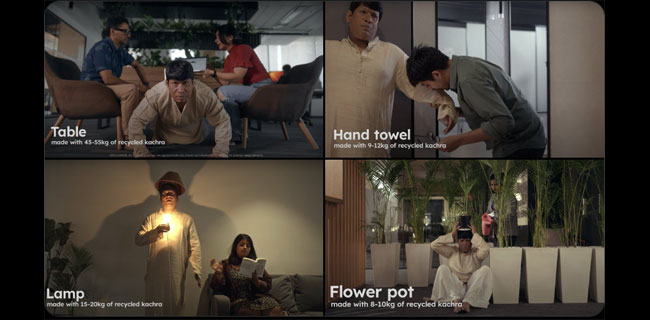
Zomato’s recent campaign aimed to raise awareness about recycling waste on World Environment Day. However, the use of the character ‘Kachra’ from the movie Lagaan inadvertently reinforced stereotypes and perpetuates the devaluation of people from a specific class. Although the brand intended to employ wordplay in the video, the end-result appears culturally out of sync. The humour in the video appears to be mocking the already marginalised rather than challenging those in positions of power. The video received a lot of backlash on social media, which eventually led to Zomato deleting the video itself from all platforms.
When faced with these social class divides, brands and their creative agencies are confronted with a unique challenge. Traditionally, marketing has approached class divisions as issues of affordability and accessibility for consumers. The solution typically involves offering products and services at various price points to cater to different segments of the market.
Think of shampoo sachets, and phone recharges priced at Rs 10. Market segmentation based on affordability addresses the problem of access, ensuring that every consumer can afford and desire products within their price range, whether at the lower end or luxury segment of the market.
However, addressing the social class divide as a brand in brand communication presents a distinct challenge, as it raises questions about portrayal and representation. It forces brands to examine their vantage point and ideological stance. If a brand aims to project itself as embracing progressive values, how should it navigate the complex issue of social class and class divides?
This is particularly relevant when it comes to the portrayal of domestic help and their treatment in advertising, especially for brands selling household cleaning products and related items. How should they depict domestic help? Should they merely reflect reality as it is, or should they encourage consumers to adopt more progressive behaviours?
To effectively navigate the intersection of brand communication and the social class divide, brands can draw valuable lessons from previous campaigns that approached similar subjects with sensitivity. Let’s take a look at some examples of how some brands have approached this issue in the past:
Ghadi Detergent:
In Indian popular culture, domestic help is often portrayed as solely responsible for the cleanliness and maintenance of households, perpetuating the notion that it is their sole duty while family members contribute little. Such stereotypes create a power imbalance between domestic help and the families they serve, with the latter holding all decision-making authority.
Ghadi Detergent’s campaign, #SaareMaelDhoDaalo, deviates from this stereotype. Instead, it encourages individuals to recognise the importance of every task, no matter how small, and to treat domestic help with respect. The campaign depicts a young boy with a callous attitude towards the work performed by the house help. To rectify his behaviour, his mother decides to teach him a lesson by having him clean the house under the false pretence that the house help is on leave. In the end, he learns to appreciate the domestic help’s contribution and even pays him extra to celebrate the festivities.
Women’s Day 2019 #YourSecondHome : An initiative by PregaNews
Similarly, PregaNews launched its Women’s Day 2019 campaign, #YourSecondHome, which highlights the importance of domestic helpers and their contributions to households.
The content begins with a woman scolding her domestic help and asking her not to perform her usual tasks. It appears that the domestic help’s job is at risk. However, as the narrative unfolds, we discover that the woman is actually reducing the workload of the domestic help due to her pregnancy and invites another domestic worker to assist. The campaign challenges initial perceptions by portraying the employer as caring and considerate, much like a family member would be.
The messaging of the campaign promotes progressive ideals, advocating for empathy towards domestic workers and providing them with benefits such as maternity leave or reduced workload during pregnancy, similar to practices in the organised sector. The brand, PregaNews, seamlessly integrates into the narrative of the ad.
Cadbury Dairy Milk – Driver
The work features a boss driving his driver to his child’s school so that he could attend the parent-teacher meeting. While the content is only 45 seconds long, it is quite impactful. We immediately get to understand the dynamics between the employee and the employer and how this is a routine activity. We understand how his boss is being kind and patient towards him and goes out of his way to help him.
The video shows how a small gesture of kindness towards one’s driver/staff can make a significant difference in their life. The brand integration of Cadbury Dairy Milk is also quite seamless, as it plays on the factor of the boss ‘being sweet’ and sweetness is associated with the chocolate in question.
Oswal Refined Soyabean oil
Oswal Refined Soyabean oil’s campaign portrays a positive image of domestic helpers by showcasing the relationship between the wife and her employee. While the husband is upset that the domestic help always leaves early to attend to her children, the wife, on the other hand, is accommodating as she knows that she works well and efficiently. One day, when the wife is out of the city, the maid bakes a cake for the husband and stays late at night just to celebrate his birthday so that he does not feel isolated on his special day.
The video emphasises that domestic help is not just the staff of the house, but a part of the family, and employers should be accommodating to their requirements.
However, while the ad’s story has a nice recall value, the brand takes a backseat here. The brand integration of Oswal is not quite as seamless because the story is not built around refined soybean oil. Even a slight mention of it in the narrative would’ve helped the brand integration.
Facebook | More Together – Pooja Didi
Facebook’s campaign, More Together – Pooja Didi, is a heart-warming portrayal of support staff. The content initiative can almost be categorised as a mini-short film, as it is about seven minutes long. It highlights the problem of unemployment during the pandemic and how the protagonist – Pooja, starts hiring people in large numbers to provide them with gainful employment solely out of her altruistic intentions.
However, when she cannot pay the salaries and bills to the people she does business with, she is in a state of crisis. That is when the hired staff of her sweet shop utilises the power of social media to narrate the story of Pooja’s altruistic actions, which end up attracting customers to the shop, thus enabling her to pay all her bills.
Conclusion
All the brands seem to take the high power distance between employers and domestic help for granted as a given in Indian society and thus mirror existing realities. They don’t show the possibility of a different future for domestic help (except the Cadbury ad to some extent) in which they can be empowered and assertive of their rights vis-a-vis their employers.
The convergence of brand communication and the social class divide poses both challenges and opportunities for brands. By being mindful of the implications of their messaging, brands can strive to create advertisements that promote empathy, understanding, and equality. Actively working to dismantle stereotypes and biases, brands can contribute to positive social change.
HamsiniShivakumar is a long-time culture-watcher, semiotician, brand consultant and co-founder of Leapfrog Strategy as well as Semiofest, the global unconference for applied semiotics.Prabhjot Singh Gambhir has done his Masters in Film Studies and is passionate about stand-up comedy. He has now turned his observant eye to cultural discourse and its intersection with brands.The views expressed here are their own.
“India for example, India is one of the countries which had many requests around the farmers protests, around particular journalists which were critical of the government. And it manifested in ways such as ‘We will shut Twitter down in India, ‘we would raid the homes of your employees’, ‘we will shut down your offices if you don’t follow suit’. And this is India, a democratic country.”
This is Jack Dorsey, founder and former owner of the social media platform Twitter, in a recent interview.
Before all the Clever Clogs jump into the argument, let’s make it clear than unlike all Clever Clogs, Jack Dorsey is far from perfect. He even went as far as to predict that billionaire Elon Musk would do a great job with Twitter, when Musk bought the platform. And all of us on Twitter know exactly how third-grade that prediction was.
But this is Dorsey on his experiences as the owner of Twitter. And he says that maximum demands for censorship of certain accounts critical of the government came from three countries – India, Turkey and Nigeria.
Don’t worry, though. If there are any incendiary TV “debates” on this issue, they will only be to cover up for Prime Minister Narendra Modi and his claims that India is the “mother of democracy”.
Since however there are no Hindu-Muslim angles to Dorsey’s comments, and at best our TV channels can manage short anti-Sikh segments, Dorsey may be ignored or washed over. Dorsey can be called part of a western capitalist plot or conversely a George Soros-funded communist plot or possibly both at the same time. Then our TV channels will immediately quote some survey which makes Modi the post leader in the Universe.
For journalists, Dorsey’s comments are a further confirmation of what we already know. That the Modi government – more than any other government in the past, I say this before the Clever Clogs Club reminds me of the Emergency and so on – has it in for journalists, for dissenters, for upholders of democracy and for all critics.
Some print journals have released the CAG report of 2021 which states that the Railways misused a special safety fund set up in 2017 to buy foot massagers, crockery, winter clothes, develop gardens, build toilets and more such safety imperatives.
Governments have fallen for less. Especially if a terrible three-train collision had just taken place, the worst in 20 years, as in Balasore on June 2. But instead of accountability, we have most of the mainstream media, especially television and our intrepid both-sides commentators, providing a protective shield – a “kavach” is it? – around the Modi government. Accountability will bring no results, they have been so good at safety, the railway minister is a sweet chap, can Modi be responsible for everything that goes wrong, don’t ask for resignations, let them do their jobs – these are the excuses being thrown around.
If the media does the work of the BJP IT and Propaganda Cell, then the BJP is bound to laugh itself silly at the polls.
The fact that personal data of thousands of Indians who logged into the CoWin app or website to get vaccinated during the pandemic has been hacked into, is also just one more news story. And the excuses made by the government?
Well, it is heartening in some small sense to see this counter:
Meanwhile, in Uttarakhand where I live, communal violence is being created and Muslims are being targeted. There have been several BJP governments here in the past. No other has been so successful in creating such divisions. No other has even tried.
JSW One Homes, the tech-enabled home construction solutions arm of JSW One Platforms, has launched its inaugural digital brand campaign, #HomeToDreamHomes.
The campaign’s central idea is that “certain dreams hold a special place in our hearts, and a dream home is one of them.” It recognizes that the dream of owning a home often takes root during childhood and evolves over time. JSW One Homes ensures that these innocent aspirations are transformed into reality. The campaign effectively communicates JSW One Homes’ brand purpose as an endearing expedition towards achieving one’s dream home.
Throughout the film, JSW One Homes emerges as the steadfast choice for families seeking to build their perfect home.
Gaurav Sachdeva, CEO, JSW One Platforms, said: “At JSW One Homes, we work with our customers and their families to build their dream homes. Our tech helps us and our network of contractors, architects and suppliers to simplify the construction process for our customers. Our new campaign highlights the joy and ease of building a home with JSW One Homes.”
The digital ad film has been launched on social platforms across Chennai, Coimbatore, Trichy, and Salem markets through the digital channels. JSW One Homes aims to reach 10.7 million customers through this month-long campaign.
Grapes, an integrated communications agency, onboards OT India, from the house of Origin Tea Collective, a wellness tea brand.
As per the mandate, Grapes will be handling the brand’s overall social media communications and media responsibilities, along with influencer marketing and e-commerce initiatives. The scope of work also expands to include product shoots and certain offline content development for the brand.
Said Gulshan Kumar Magon, Founder, Chairman and CEO, OT India: “India is a heritage rich country with a huge tea-loving consumer base, who take the tea business very seriously. Well, so do we! Which is why we are thrilled to reach this audience who appreciates our commitment to excellence. We are confident in Grapes’ expertise and their innovative approach to assist us in this endeavour.”
Added Shradha Agarwal, Co-Founder & CEO, Grapes: “The Indian consumer is undergoing a fundamental shift in income and consumption structure. With the High Income and Upper/Middle Income households primed to increase by 5% and 13% respectively by 2030, the consumers are becoming more quality-conscious, with a focus on design and aesthetics of the products. I believe that OT India is uniquely positioned to cater to these evolving consumer preferences with its premium mass market products. So, by leveraging strategic and engaging content, we plan to foster a deeper connection between OT India and its target audience, ultimately driving brand awareness and customer engagement.”
Art-E Media Tech Pvt. Ltd. wins the digital creative & media mandate for Buds & Berries, online brand of personal care products by CavinKare.
The agency would be responsible for enhancing Buds & Berries’ digital presence by formulating & executing performance marketing strategies and media creatives across platforms.
Speaking on the new mandate, Amit Dhawan, Partner & CEO at Art-E said: “Embarking on a new partnership with the dynamic and talented brand team at Buds & Berries fills us with excitement. We are eager to build a strong bond and enhance their media presence. With our combined passion and drive, we are poised to establish Buds & Berries as a leading name in the personal care space.”
Added Akash Basak, CavinKare’s Lead – Digital First brands: “Buds & Berries prioritizes clean, toxin-free formulations that are safe and effective. Our products are extensively tested and manufactured in-house. The brand imbibes the mantra ” Love yourself, First” to the core and understands the role of beauty rituals in consumers’ self-esteem and identity. With the creative and digital media strategies led by Art-E, we are confident in establishing the core of the brand to facilitate effortless discovery and instant recall, thus naturally paving the way for the brand’s success.”
NBA Style unveils a new campaign to mark the 50th anniversary of Hip-Hop. In honour, it has launched an all-new series, “All The Way Up”, which explores the convergence between hip-hop and basketball by highlighting the stories of artists who are revolutionising the industry not just with their sound, but also with what they have to say. With popular names like GD 47, Hanumankind, Irfana Hameed, and Fotty Seven, the series captures the rising hip-hop culture in India.
From uncovering their inspirations to discussing the influences that have helped them create their own unique sounds and personalities, the series delves into each artist’s journey, their craft and the close link to basketball.
NBA Style was launched as a community to showcase the convergence between pop culture and the NBA. It showcases the many ways that the league and its players influence and are influenced by music, fashion, art and entertainment. Since inception, the community has been growing tremendously to 144k+ in just over a year and generated more than 1B impressions for the 2021-22 season.
Life Health Foods (India) Pvt. Ltd., a health beverage company, launches a new campaign #FeelsSoGood for their flagship brand, So Good. The brand film, centred around plant-based beverages, aims to resonate with health-conscious individuals who lead busy lives and seek convenient yet healthy options.
Rohit Bhagat, Business Head of Life Health Foods said: “The company’s strong commitment to promoting plant-based options that deliver exceptional taste, versatility, and health benefits, all at an affordable price. By partnering with Tonic Worldwide, Life Health Foods aims to capture the essence of a busy lifestyle and inspire healthier choices among consumers through this transformative campaign.”
Sudish Balan, Co-Founder, Tonic Worldwideadded: “We wanted the brand film to capture the essence of a hectic lifestyle, emphasizing the importance of incorporating healthier alternatives into daily routines. It highlights how SO GOOD offers a refreshing and nourishing solution to individuals seeking plant-based beverage options that complement their fast-paced lives.”
Readers of MxMIndia and folks in the advertising, marketing and media ecosystem know all about the Advertising Standards Council of India (ASCI, in short). Over the last few years, the self-regulatory body has reinvented itself with a slew of guidelines issued (including one on celebrity endorsement), tightened its guidelines on surrogate advertising, and embraced the ever-growing world of influencer-led advertising.
Pradyuman Maheshwari, Editor-in-chief and Founder, MxMIndia caught up with Manisha Kapoor, Chief Executive Officer and Secretary General of ASCI, via an interview conducted over Zoom a few days after the conclusion of the 2023 edition of the Indian Premier League, which typically sees a large number of surrogate advertisements surfacing.
It’s a question, we’ve asked in the past. And we thought we should ask again, as things keep changing. Here’s Dr Bhaskar Das in the June 14 edition of Das ka Dum. Read on…
If you wish to access the archives, please go to the Das Ka Dum tab on the website’s top navigation bar or click here: https://www.mxmindia.com/category/columns/das-ka-dum/
Q. We are told you spent some students in marketing and communications in Ahmedabad earlier this week. With so much changing in the world, will B-school lessons learnt today be relevant two years from now?
A. It is always refreshing to connect with students as one gets the thinking pattern of the new generation, so there is an opportunity to learn for me too.
Secondly, management education or for that matter most disciplines need recontextualisation due to changing frontiers of knowledge, accelerated pace of technological development altering the learning landscape due to intersectionality of knowledge. An MBA is no exception to that. In fact most of the management schools are in touch with industry to continuously adjust the industry expectations without abjuring academic rigour. Students are also aware of it and they incorporate new subjects for their interest like blockchain, AR/VR, analytics and so on.
I am a firm believer that MBA education or for that matter any education would never be redundant. In fact when the work environment gets volatile, it is all the more important that one not only upskills in one’s core capability areas but also goes beyond the comfort zone and learn new skills which keeps one future-ready or rather future-proof. I know it’s a cliché that learning is life-long but it’s actually so these days, as every 18-24 months, the existing knowledge in any discipline gets dysfunctional. Hence to remain perpetually free from obsolescence, there is no choice to unlearn and relearn in areas that that ensure continuity of meaningful employment.
Wondrlab, the platform-first global digital network, has acquired majority stake in Cymetrix, the leading Salesforce consulting and data analytics company in USA & India to strengthen its customer transformation and technology capabilities. This strategic acquisition reinforces Wondrlab’s position in providing an interconnected digital transformation ecosystem to clients worldwide, at scale. Cymetrix is Wondrlab’s fourth acquisition since its launch in late 2020.
Cymetrix with a team of over 200 certified professionals, has established itself as a trusted partner in CRM and data analytics consulting and implementation services. It has operations in USA and India and is a leading Salesforce partner having deep expertise across the Salesforce solution stack. The company has a successful track record of delivering large-scale projects across industries such as BFSI, real estate, pharma, hi-tech, non-profits, healthcare, retail, and education, serving clients in North America, Europe, UK, Middle East, Japan, and India. Sandip Chintawar and Prakash Kolhe who founded Cymetrix will continue to lead the company into its next phase of growth and expansion across geographies.
Said Saurabh Varma, Founder and CEO of Wondrlab: “The convergence of data, content, and technology to drive transformation across marketing and business is rapidly accelerating. “At Wondrlab, our ambition is to build India’s first network with a singular focus on delivering on our proposition of a full funnel approach seamlessly to help our clients win in an increasingly fragmented marketplace. The acquisition of Cymetrix perfectly aligns with our strategy of expanding our capabilities in digital business transformation technologies and services. We are excited to welcome Cymetrix to the growing Wondrlab family. Globally proven expertise of Cymetrix in CRM, including specialized platforms like Salesforce, and their proficiency in marketing analytics will significantly enhance our ability to deliver impactful CX solutions to clients worldwide.”
Added Sandip Chintawar, Founder and Director of Cymetrix: “Cymetrix is experiencing rapid growth as CRM and Data Analytics become intrinsic to every organizational transformation initiative. We have observed that clients often face challenges extracting true value from their technology implementations due to the silos that exist between creative content solutions and martech platforms. Wondrlab’s proposition of an interconnected digital ecosystem is highly compelling for us, as technology entrepreneurs, we see a tremendous potential in converging deep platform capabilities. It is precisely the right partnership needed for Cymetrix to embark on the next phase of growth and expansion.”
Said Prakash Kolhe, Founder & CEO of Cymetrix, said, “In the face of increasing scale and complexity in CRM and analytics platform integration with marketing and business operations, deep industry and category knowledge emerges as a crucial differentiator. Our focus on developing industry-specific expertise in consulting and implementation services allows us to deliver high-impact solutions rapidly to our global clients. The partnership helps in providing end to end solutions and services to clients for CRM and marketing needs.”


 “India for example, India is one of the countries which had many requests around the farmers protests, around particular journalists which were critical of the government. And it manifested in ways such as ‘We will shut Twitter down in India, ‘we would raid the homes of your employees’, ‘we will shut down your offices if you don’t follow suit’. And this is India, a democratic country.”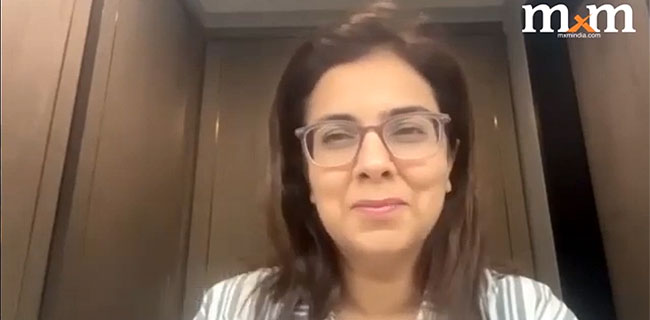
 It’s a question, we’ve asked in the past. And we thought we should ask again, as things keep changing. Here’s Dr Bhaskar Das in the June 14 edition of Das ka Dum. Read on…