Author: mxmadmin

  • Indian M&E sector grew 20% in 2022: FICCI Frames-EY report

    By Our Staff


    The Indian Media and Entertainment (M&E) sector grew 20% in 2022 to reach INR2.1 trillion (US$26.2 billion), 10% above its pre-pandemic levels in 2019. This was revealed in the FICCI-EY report titled ‘Windows of opportunity – India’s media & entertainment sector maximising across segments’ launched on Wednesday at the FICCI FRAMES 2023 in Mumbai.


    Digital media has grown significantly, reaching INR571 billion and increasing its contribution to the M&E sector from 16% in 2019 to an astonishing 27% in 2022. It is important to note that the digital segment’s share of the entire M&E sector would rise to 50% if data costs were also to be factored in.


    Said Ashish Pherwani, EY India Media & Entertainment Leader: “The Indian M&E consumer base is large but heterogenous, hungry for content but willing to pay only for value, and more than ready to experiment with technology, be it streaming, digital payments, online education, virtual experiences, e-commerce, social media, or gaming. The diverse consumer base, coupled with favourable macroeconomic and demographic factors, have translated into a very exciting time for the sector.”


    Added Jyoti Deshpande, Co-Chair, FICCI Media and Entertainment Committee: “It’s an exciting time to be in the M&E business, as we leverage the three pillars of the industry – content, commerce, and community, fuelled by technological innovation. The sector is expected to grow 11.5% in 2023 to reach INR 2.34 trillion and further grow at a CAGR of 10.5% to reach INR 2.83 trillion by 2025.  Through democratisation of the creator economy and disruption in digital distribution, I dream of an India with infinite storytellers finding infinite platforms to share their stories, engaging with audiences in every language, with India leading the charge across the global entertainment landscape.”


    Experiential (outside the home) segments recovered in 2022: Filmed entertainment, live events and Out-of-home media segments together contributed 40% of the M&E sector’s total growth in 2022.


    Advertising continued to outperform Indian GDP growth: At INR1,049 billion, advertising exceeded the INR1 trillion benchmark for the first time. In 2022, when India’s nominal GDP grew 15%, advertising recovered 19%. It is now 0.4% of India’s GDP, much lower than developed large markets like the US, Japan, and China, which are all between 0.6% and 1%.


    M&A activity continued strong in 2022: There were over 125 deals in 2022 compared to 118 in 2021, of which 65% were in digital, gaming, and new media segments.


    The M&E sector will grow at a CAGR of 10.5% to reach INR2.8 trillion in 2025: The key contributors to this growth will be digital, online gaming and television (together contributing to 65% of the growth), followed by animation and VFX (11%), live events (8%) and films (8%)


    Segmental performance in 2022

    • Television– Television advertising grew 2% to end 2022 just behind its 2019 levels, on the back of volume growth. Subscription revenue continued to fall for the third year in a row, experiencing a 4% de-growth due to a reduction of five million pay TV homes and stagnant consumer-end ARPUs. While linear viewership declined 7% over 2021, 8 to 10 million smart TVs connected to the internet each day, up from around 5 million in 2021
    • Digital advertising– Digital advertising grew 30% to reach INR499 billion, or 48% of total advertising revenues. Included in this is advertising by SME and long-tail advertisers of INR180 billion and advertising earned by e-commerce platforms of INR70 billion
    • Digital subscription– Digital subscription grew 27% to reach INR72 billion. 99 million paid video subscriptions across almost 45 million Indian households generated INR68 billion. Due to a plethora of free audio options, just 4 to 5 million consumers bought music subscriptions, generating INR2.2 billion while online news subscriptions generated INR1.2 billion
    • Print– Advertising revenues grew 13% in 2022 as print remained a “go-to” medium for more affluent and non-metro audiences. Subscription revenues grew 5% on the back of rising cover prices and has stabilized at 15% to 20% below the pre-Covid-19 levels. Digital revenues remain elusive for most newspaper companies.
    • Film– The segment grew 85% to reach 90% of its 2019 levels as theatres re-opened. Over 1,600 films were released in 2022, theatrical revenues crossed INR100 billion, and fewer films released directly on digital platforms. 335 Indian films were released overseas.
    • Online gaming– New players, marketing efforts, specialized platforms and brand ambassadors all worked to grow the segment 34% in 2022 to reach INR135 billion. Regulatory clarity improved, and this could lead to more FDI in this segment. There were over 400 million online gamers in India, of which around 90- 100 million played frequently. Real money gaming comprised 77% of segment revenues.
    • Animation and VFX– As content production resumed, service demand – both domestic and exports – increased, resulting in the segment growing 29% and crossing INR100 billion for the first time
    • Live events– The fastest growing segment of 2022, organized events grew 129% over a depleted base as weddings, corporate events and activations, government initiatives, and large marquee IP with international participation took place after a gap of almost two years
    • OOH– OOH media grew 86% in 2022 and reached 94% of 2019 levels. Capacity utilisation improved in 2022, but rates remained challenged.  Digital OOH screens increased to around 100,000 and contributed 8% of total segment revenues
    • Music– The segment grew by 19% to reach INR22 billion. Film music, which had reduced during the pandemic, returned at scale. 87% of revenues were earned through digital means, though most of it was advertising led, there being around only 4 to 5 million paying subscribers despite streaming reach of over 200 million
    • Radio– Radio segment revenues grew 29% in 2022 to INR21 billion but were still just 66% of 2019 revenues. Ad volumes increased by 25% in 2022 as compared to the previous year, though ad rates remained 20% below their 2019 levels.  Many radio companies are looking at alternate revenue streams to grow faster
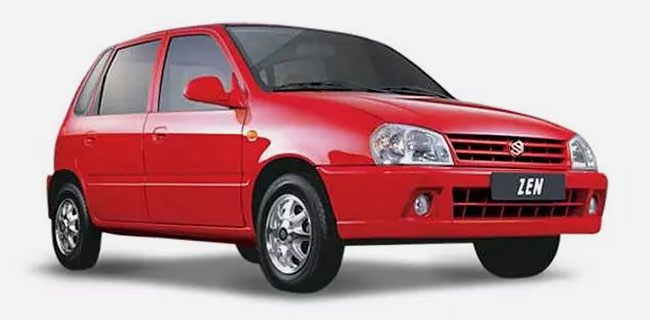
     

  • Happy 30th, little monk!


    By Avik Chattopadhyay


    Avik ChattopadhyayApart from being the International Labour Day, May 1 also happens to be the birthday of personalities like Balraj Sahni, Gordon Greenidge and Joseph Heller. And the Maruti Suzuki Zen.
     

    It was launched on that date 30 years ago, at the Maurya Sheraton hotel in New Delhi. Unveiled by then Finance Minister Pranab Mukherjee, the Zen went on to become one of India’s most loved brands. Codenamed ‘YE-2’, the little car was a big gamble that both Maruti and Suzuki played in the early 1990s as a new vehicle made for a new ‘liberalised’ India. For those of us who remember, 1991 is when we entered the third phase of our nationhood, the first being Independence in 1947 and the second being the emergency of 1975. This was a new India, wanting to open up to the world and dismantling the red-tapes and licence-controls that defined us in the first four decades of our development.


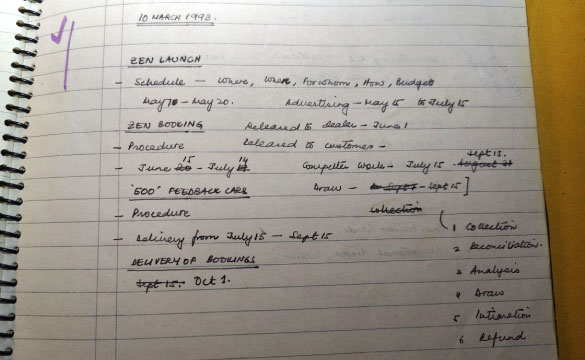
    Page from my notebook with notes on the Zen launch plan, dated 10 March 1993.


    The Zen defied convention. It was almost the same size as the popular Maruti 800 yet was a very different personality, beyond mere mechanical specifications. While it did have an aluminium engine as a novelty and major talking point, it did not rationally justify the price difference it commended over its older sibling. Till then, a product had to be physically larger than the other to command a higher price. The more the metal, the more the price. That was the only way to demonstrate greater value. Not with the Zen. It demonstrated that aspects like design, touch-and-feel, refinement, dynamic performance and comfort were, in combination, a higher value proposition than competition, even from your own family.


    Till 2006, the brand was built as a combination of some clever communication and lots of positive word-of-mouth. In fact, when launched in 1991, it took time to gain public liking. The Indian customer was used to the metal-price equation and the Zen was challenging that. The early adopters did the task of building the initial buzz around its performance and refinement that crucially helped in its gradual adoption and popularity. The initial seven / eight months were an actual struggle. While the network was given lots of “selling tools”, the value proposition was built only when the initial customers swore by it and the automobile journalists praised it sky high. I call this the “Sholay Effect” of hugely successful brands taking time to gain momentum from being almost written off, just like Sholay did.


    Magazine covers on the Zen in May-June 1993 – courtesy Team BHP


    There were four elements in the way the vehicle was launched which together helped build its formidable equity. First was the Suzuki badge on the vehicle. It was the first Maruti product to carry it, subtly stating that this was an ‘international’ product in the Maruti portfolio. There was a move to have the Maruti badge on the vehicle, but that was dropped in favour of the international narrative.


    Second was a term coined to describe its styling – ‘jellybean’. That was the best way to explain its harmonious lines, soft curves and aerodynamic shape, from the front bumper to the rear lights. That term caught the fancy of the media and it was all about jellybean styling after that.


    Third was the ultra-smooth all-aluminium engine which was so refined for its time that many, including Wikipedia, think the name Zen stands for ‘Zero Engine Noise’.


    Which brings us to the fourth element…the name Zen. It was given by me, in a competition within the company. The then director of marketing and sales Kozo Senga liked the name Zen. I explained that the vehicle was exactly as a Zen monk – you have the power within your outer calm that should be used responsibly and only when required. The vehicle looked sedate when parked but was a rocket when revved. Zen it was!


    Rare pic of a YE-2 with the Maruti badge in the plant – taken in Jan 1993


    The initial advertising for the Zen did not work. Though all the still photography was done by the amazing Hardev Singh, the advertising agency and the marketing team went overboard with the positioning statement of “Engineered for Exhilaration”. Nobody could either pronounce it properly or remember the statement. Thankfully, the word-of-mouth had started working its magic so the advertising really did not matter. The brochure however was a very popular item and almost all walk-ins into Maruti showrooms wanted one. It was a distinct square shape and the product in all its glory was the hero. Hardev Singh’s photography did the trick. People basically wanted a test drive and a brochure. Heady times indeed!


    Zen launch brochure of 1993 and one of 1996


    In 1994, the Zen started being exported to various countries, especially those in Europe. Badged as the Suzuki Alto, it was on the streets of London, Paris, Berlin and Rome. This made it the ‘world car’ for Maruti and India and that is what the next communication campaign was all about. This really worked in further building the brand’s appeal as the Indian was now driving exactly what a Londoner or Parisian was.


    By now, the sales numbers and growing popularity allowed the engineers in Gurugram to plan modifications and variants. A diesel Zen was launched in 1998 housing a Peugeot engine. Though it did not do very well, it demonstrated the company’s and brand’s engineering prowess as a trend setter. In 1999 a variant called the Zen Classic was launched but did not go well with the Indian design sensibilities. The reversals did not hold the company back from trying yet new things to cater to the Zen-clan.


    In 2000, Maruti launched the Alto and the WagonR, both hatchbacks catering to the same demographic target segment. In light of newer siblings, the Zen started losing some if its sheen and some crucial intervention was needed from both the product planning and engineering teams. To commemorate the tenth anniversary of the little monk, Maruti Suzuki did possibly its most audacious move of launching a limited edition 2-door Zen, exactly as it was sold in Europe. Out came 300 Zen Carbons in gleaming black and 300 Zen Steels in svelte silver, each vehicle individually numbered and badged. Even though just 600 units, they took the market by storm, being lapped up by both youth into their first jobs as well as retired couples. The brand was back in the reckoning with a very disruptive step. It was a statement that while the Alto and WagonR were selling in Japan, the Zen was being sold in Europe.


    The Zen Carbon and Zen Steel welcome letter – 2003


    Closely following the Zen ‘singles’ as they were called was a major restyling of the vehicle to give it a steroid boost. It did create some flutter primarily due to a high-decibel marketing campaign but the vehicle was on its old tired wheels. It had its best chance when Suzuki was planning its next big global launch in India codenamed the YN-4 in 2005. This vehicle would again disrupt the market in the way it looked and performed, just like the YE-2 had done 12 years ago. This should be the new Zen. That is the only way the legend could be revived in its new avatar. An attempt was made in the top circles to carry the Zen badge forward through this new vehicle. Consensus was otherwise. The new vehicle became the Swift, yet another uber successful brand till today.


    And the Zen? Well, a half-hearted attempt was made by slapping the name on a car that was a completely different personality from the Zen. It was called the Zen Estilo and launched in 2006. Thankfully the customers saw through the feeble game quicker than Maruti Suzuki had anticipated and the product sank without a trace in 2009. Thereby laying to rest one of India’s most loved and aspired for automotive brands, ever.


    Best wishes of the day, little monk.

    Rest easy!


  • 759 mn Indians Active Internet Users, to reach 900 mn By 2025: IAMAI-Kantar

    By Our Staff


    Fifty-two percent of Indians, i.e. 759 Mn, are ‘active’ internet users, accessing the internet at least once a month. By 2025, the number is expected to grow to 900 Mn. This is for the first time that the majority of Indians have become active internet users.


    The ‘Internet in India Report 2022’, jointly prepared by the Internet and Mobile Association of India (IAMAI) and Kantar reflects this data. The report also points out that out of 759 Mn ‘active’ internet users in India for 2022, 399 mn are from rural India, while 360 mn are from urban India, indicating that rural India continues to drive the growth of the internet in the country.


    Urban India, with approximately 71% internet penetration witnessed only 6% growth, with much of the overall gain in numbers coming from Rural India which witnessed 14% growth rate over the past one year. It is estimated that 56% of all new internet users in India will be from Rural India by 2025.


    A ’Digital Divide’, however, continues to plague the positive narrative with a huge disparity in internet penetrations across states, with Bihar (32%) having less than half the level of internet penetration than the leading state Goa (70%).


    Even though the gender divide persists till date with 54% male users, it is heartening to note that 57% of all new users in 2022 were females. It is estimated that by 2025, 65% of all new users will be women, which will help correct the gender divide.


    The report suggests that digital penetration has improved not only in terms of spread but also in terms of depth. For instance, while 100% of users access the internet via mobile, the use of other devices (tablets, streaming devices, ‘smart’ devices) has witnessed a considerable rise over 1 year (from 8% in 2021 to 13% in 2022) as Indians proactively adopt new technologies and services.


    In terms of usage, digital entertainment, digital communications and social media continue to be the most popular services in India. In fact, Indians are fast adapting social media platforms as the next e-commerce destination, with a staggering 51% YoY growth in Social Commerce.


    Digital payments have witnessed 13% growth over 2021 to reach an estimated 338 million users, of which 36% are from Rural India. 99% of all digital payment users are UPI users.


  • Prateek Bhardwaj is CCO & Head of Creative (India) at Lowe Lintas

    By Our Staff


    Lowe Lintas, the creative agency of MullenLowe Lintas Group, has announced the restructure of its creative leadership, with the appointment of Prateek Bhardwaj as CCO and Head of Creative (India).


    Under the new structure, PB will now supervise all of Lowe Lintas’ offices, which include Mumbai, Bangalore, Gurugram, and Kolkata, and will partner Subramanyeswar S, the group’s now-not-so-recently appointed CEO. Amongst other changes, Sagar Kapoor takes charge as Chief Creative Officer, Global Brands, and will also oversee the Mumbai creative operations.


    In response to the announcement, Subramanyeswar S, Group CEO – India & Chief Strategy Officer – APAC, MullenLowe Group said: “Prateek is a powerhouse of big ideas. He is one of the most celebrated and decorated creative leaders in the country presently and his work sparkles with the personality of a man who knows he is interesting enough on his own. His elevation comes at a time when clients are walking the tightrope between big data and big emotion and I’m sure he will make his idea revelations at this intersection the only (business) metric that will matter. A great quality of his is that he also cares about other people’s creative success as much as his own, maybe more. He’s an artist, explorer, storyteller all rolled into one and his taking charge as the Creative Head of Lowe Lintas India gives me the hope that the best years of big ideas from us are ahead.”


    Bhardwaj 24-odd years of industry experience, having won numerous accolades for his work, including the Grand Prix at Cannes Lions and Jay Chiat Awards, and the Black Pencil at D&AD. His notable campaigns include Sprite (Bujhaye only pyaas, baaki all bakwaas), Kinley (Boond boond mein vishwaas), Nescafe (stammering comedian), the launch of tech platform Kaam Wapasi during the pandemic, Vim Black (Vim’s satirical ad campaign), and the recent #TestedBySamsonite series. Prateek has also been a creative entrepreneur who founded and ran Eleven Brandworks out of Mumbai and Gurgaon.


  • Axis My India releases Consumer Sentiment Index

    By Our Staff


    Axis My India, a leading consumer data intelligence company better known for its exit polls, released its latest findings of the India Consumer Sentiment Index (CSI), a monthly analysis of consumer perception on a wide range of issues. The May report highlights that media viewership has increased for a significant proportion of households, with males and younger age groups displaying higher consumption rates. With the IPL fever gripping the nation, the survey shows that cable/DTH television sets are the favoured mode of watching for the middle-agedd population, while the younger demographic prefers mobile (Jio Cinema). The report also highlights the top brands that captured viewers’ attention, with Dream11 an Thums Up securing the highest recall among viewers. The May net CSI score, calculated by percentage increase minus percentage decrease in sentiment, is at +09, which has increased by 1 point compared to last month.


    The sentiment analysis delves into five relevant sub-indices – Overall household spending, spending on essential and non-essential items, spending on healthcare, media consumption habits, entertainment & tourism trends.


    The survey was carried out via Computer-Aided Telephonic Interviews with a sample size of 10,206 people across 35 states and UTs. 64% belonged to rural India, while 36% belonged to urban counterparts. In terms of regional spread, 26% belong to the Northern parts while 25% belong to the Eastern parts of India. Moreover, 29% and 19% belonged to Western and Southern parts of India respectively. 64% of the respondents were male, while 36% were female. In terms of the two majority sample groups, 32% reflect the age group 36YO to 50YO and 29% reflect the age group of 26YO to 35YO.


    Commenting on the CSI report, Pradeep Gupta, Chairman and MD, Axis My India, said: “Today’s media landscape is evolving at a rapid pace, and our survey results highlight some intriguing trends that businesses and marketers should take note of. From a growing appetite for environmentally conscious products among young consumers, to the increasing popularity of mobile viewing during events like the IPL, to the rising interest in AI tools like ChatGPT, there are plenty of insights here for stakeholders across a range of industries. By paying attention to these shifts in consumer behaviour, businesses can position themselves for success in the months and years ahead.”


  • Raj Kumar Rao endorses Traya

    By Our Staff


    Traya, the hair fall solutions brand, has launched a TVC featuring actor Raj Kumar Rao. This film is the first part of the campaign that focuses on “marriage rejections due to hair fall or receding hairline”. Sigh.


    Speaking on the new campaign, Saloni Anand, Co-founder, Traya said: “Currently, the market for hair fall products is saturated yet there is no sure-shot solution that customers are confident of, that works. A lot of our customers come to us after trying every product in the market and every home remedy they could find. They consider hair regrowth hopeless. Through this campaign, we want to give hope to more such people who are fighting hair fall. Setting our ad in the context of a marriage proposal, we remind them that all they need to worry about is compatibility and happiness, while Traya’s doctor-backed treatments will take care of their hair. The TVC is just the first part of the campaign, this will be supported by a lot of digital initiatives, channel tie-ups, partnerships and collaborations. We hope this bold move will help boost the confidence of millions of individuals facing hair fall issues.”


    Editor’s note: We are unsure about the efficacy of the brand, and if there are any health hazards due to the usage of the same. The only reason why we are publishing it is because of the advertising campaign. We also do not encourage social beliefs that one must arrest hair fall so as to not face rejections in the matrimonial marketplace.


  • Times Network expands its global footprint

    By Our Staff


    Times Network has announced the launch of ET Now, Mirror Now, Times Now Navbharat and Times Now World in the US in partnership with Sling TV, a dominant OTT player in the market. With a strong collection of influential brands in its portfolio across news and entertainment, the network has expanded its portfolio in the territory with four news channels in addition to Times Now and Zoom, which are currently available on the platform.


    Said Jagdish Mulchandani, COO and Executive President, Times Network: “We are thrilled to expand our content portfolio in the U.S. by launching our best-in-class news brands through our strategic partnership with Sling TV. Presenting a holistic reportage on global, national, local, financial and business news content, ET NOW, Mirror Now, Times Now Navbharat and Times Now World will serve as an enriching addition to the discerning viewers seeking superior news coverage. I am confident that with our latest offerings, we will continue to build resonance with our global viewers, keeping them informed and entertained.”


    Added Liz Riemersma, Vice President of Strategy, Business Development & International, Sling TV: “We’re excited to announce the addition of four additional leading news channels: ET Now, Mirror Now, Times Now Navbharat HD, and Times Now World HD.Our partnership with the Times Network underlines our position as the #1 distributor of Indian TV networks in the US and highlights our continued commitment to providing South Asian customers a strong connection to news and events from India.”


  • Kinder Joy brings Tom & Jerry and Hello Kitty collectibles

    By Our Staff


    Kinder Joy, the confectionery brand of Ferrero, manufacturers of sweet-packaged products, has launched its new TVC campaign continuing with the tagline ‘Iss Mein Kuch Khaas Hai’ in India. With this new TVC launch, the brand is now announcing their limited-edition Kinder Joy range of Tom & Jerry and Hello Kitty toys.


    With these limited-edition collectibles, Kinder Joy continues to strengthen its position in the Indian confectionery market and increase brand loyalty among its customers. The limited-edition collectibles are also likely to attract collectors of all ages who appreciate the uniqueness and novelty of the limited series.


    Speaking on the campaign film, Amedeo Aragona, Regional Marketing Manager Indian Subcontinent – Kinder Brands at Ferrero said: “We are excited to bring Tom & Jerry and Hello Kitty to India, as they have a great appeal with kids and adults. The new collection will have new figurines which are very different from the previous launches. And we can’t wait for the kids to experience Kinder Joy’s latest range. Also, the use of Applaydu app makes it extra special for the children to learn along with the parents.”


  • Ranjona Banerji: #161!

    By Ranjona Banerji


    Ranjona BanerjiReporters Without Borders issued its Press Freedom Index for 2023 on World Press Freedom Day, May 3. India has slipped down even further. In 2022, India was at its lowest ever at 150. In 2023, we have been ranked at 161. There are 180 countries on the list, for context.
    RSF has written a succinct appraisal of India’s media situation today:

    https://rsf.org/en/country/india

    Media ownership, political patronage and administrative harassment are all mentioned – which all of us know.

    One of the other reasons why we have slipped lower than the year before is presented to us in these two simple examples of media behaviour: protests by India’s wrestlers and the situation in Manipur.

    The first case we have discussed earlier. At any rate, since the Supreme Court told the Delhi Police to take action, the wrestlers have faced the wrath of a media that must side with the perpetrator, whether by order or inclination. Thus, independent reporters have been harassed by the police, family members of the wrestlers have been denied permission to meet protestors and people who have heckled PT Usha for not supporting the wrestlers have been vilified by these same sections of the media and by BJP supporters. Thus are complaints of sexual assault and harassment treated by the Indian media.

    The current result is that in spite of the Supreme Court, social media and popular pressure, the Delhi Police and the mainstream media, especially television, continue to treat the victims as the villains.

    And then there is Manipur.

    Through the BJP campaign for the Karnataka state elections, as he has during other state elections, the Prime Minister as star campaigner has stressed that the “double engine” model is best for every Indian state. The BJP at both the Centre and state governments, that is.

    Manipur is a prime example of a “double engine” state. If a political dispensation’s main purpose is to establish a single religion majoritarian state, then is it the media’s responsibility to hold the dispensation accountable as per the Constitution of India? Of course, if the bulk of the mainstream media had ever asked this question even once in the past nine years, we wouldn’t be in this position at all. Or fall to 161 in the press freedom rankings.

    And there is more than one crime when it comes to Manipur. That it is out of our radar because of its location: for decades the North East has not entered the consciousness of the Delhi-based media. Too far, too remote, too not all exciting enough to get me invited to fancy parties and meet important people. Newsgathering is expensive, why should we bother. Our readers and viewers don’t care about such places. These excuses have been trotted out and accepted for years.

    And thus we reach various points of alienation, dissatisfaction, and neglect. Then comes the double engine. It stirs up communal issues by attacking churches, favours the majoritarian group by granting it status over existing tribal rights, denies access to forests, lands and jobs. Manipur starts burning, literally. But the mainstream media once again ignores the violence and the anger, until evidence mounts via social media.

    It is only after shoot at sight orders are issued that we see increased media coverage.

    https://timesofindia.indiatimes.com/city/imphal/manipur-violence-army-stages-flag-march-curfew-in-eight-districts-mobile-internet-suspended-for-five-days/articleshow/99975468.cms

    The bigger picture however is almost never to be found in the ‘legacy’ media. For that, as ever, you have to search elsewhere.

    https://thewire.in/politics/manipur-violence-death


    There was a time when newsrooms would blame Bollywood and cricket for impinging on space which could be given to more serious issues. One almost craves for those days. Now you know that it is not the entertainment industries which are to blame. It is the Indian media itself. It has to toe the establishment line. It is more than willing to create social distress and increase dissonance. And it has no qualms at all about being a mouthpiece for the ruling party.

    This is not just a few rogue elements. This is all of it. It is only actual journalism which is treated as “rogue”.

    161 on the rankings did you say? Too high, maybe?


    Ranjona Banerji is a senior journalist and commentator. She writes on MxMIndia on Tuesdays and Fridays. Her views here are personal.


  • Das ka Dum with Dr Bhaskar Das | In large legacy news media entities in India, who actually calls the shots: a. The Editor, b. The Owner, c. The Sales Head, d. The Government or e. The Advertiser?

    Bhaskar DasThe last in our series of questions coincide with World Press Freedom Day (which was on May 3). This one obviously to provoke our Wizard with Words. Without further ado, here’s Dr Bhaskar Das in the May 5 edition of Das ka Dum. Read on…
     

    If you wish to access the archives, please go to the Das Ka Dum tab on the website’s top navigation bar or click here: https://www.mxmindia.com/category/columns/das-ka-dum/


    Q. In large legacy news media entities in India, who actually calls the shots:

    1. The Editor

    2. The Owner

    3. The Sales Head

    4. The Government

    5. The Advertiser


    A. In any organisational setup, one can’t take a siloed view of its functioning. It’s like asking which part of human body calls the shots. It’s a collective and well-synchronised functioning.

    As an enterprise, the buck stops with the investor/entrepreneur, as s/he has taken the risk of investment. But it’s the people in various functions who work in tandem to make the organisation successful. And in today’s operating environment, viewing any function in silos is a sure recipe for failure.


  • Sanjeev Kotnala: Create your memory of positive episodes

    Sanjeev KotnalaBy Sanjeev Kotnala


    Well, it makes absolute sense. Simple. Why would one create a memory bank of negative episodes and experiences from life? And then pause to reflect. The truth remains that we tend to remember the negatives more than the positives until something triggers us to alter our thinking and re-align our thoughts.

    My moment happened this week. I was in for a consultation with the doctor. Past few days, my autoimmune problem had flared up. With it came something new. Tremors so bad that it was tough to use the laptop or even hold a newspaper to read. A situation that would have anyway subsided with time. But, with age and the family getting worried, I found myself in the clinic explaining the hot and cold rushes and the tremors.

    The doctor asked me to hold my hands straight ahead, and I immediately saw the tremors.

    The doctor asked about any family history of Alchemiser’s, and the answer was negative.

    Any family history of Parkinson’s Disease: the answer was again negative.

    Then he asked if I could share what I had for dinner yesterday.

    I drew a blank.

    Dementia? For that, you have time.

    And he got busy writing the routine prescription, assigning the cause to my autoimmune issue.

    But it had me thinking, and as I have known the doctor for some time and we are more like friends, we ended up discussing a few things.

    And here is where the thought culminated.

    Train your mind to look at the positives in every situation.

    Train your mind to remember the positive, helpful and happy incidents in your life. Willingly forgiving others is an important part of the process, as is seeking forgiveness from others.

    Now when your mind is trained to look at the positives, has more recollection and an archive full of nice happy memories- when the need comes to access memories- chances are that you will reach a happy memory.

    You could better it by sometimes clicking these moments and capturing the moments and associated emotions in detail in writing.

    Albums do a great job of it.

    Think about it. If your library is full of happy moments, when you withdraw and access a memory, it will be a happy one.

    Not that I expect people to go through any of the above three diseases. But how excellent could it be to have happy memories when all your senses are working.

    Net-Net

    So start rechecking your library of life incidents. Close out the unhappy, negative memories by closing the chapters and forgiving wherever needed. Time for all of us to build our positive memories and images and hope we don’t need a doctor to tell us.

    Trust this will do two things. One, it will be a very positive change in attitude and approach to life. And two, you will come nearer to accepting the dualities of life.


  • Das ka Dum with Dr Bhaskar Das | According to a Spencer Stuart study, average CMO tenures dropped to 3.3 year (or 39 months) in 2022, a drop of a month since 2021. Are you surprised?

    Bhaskar DasWe’ve asked questions on CMO tenures in the past. But this one quotes a recent study. Without further ado, here’s Dr Bhaskar Das in the May 8 edition of Das ka Dum. Read on…


    Das in the May 5 edition of Das ka Dum. Read on…


    If you wish to access the archives, please go to the Das Ka Dum tab on the website’s top navigation bar or click here: https://www.mxmindia.com/category/columns/das-ka-dum/


    Q. According to a Spencer Stuart study, average CMO tenures dropped to 3.3 year (or 39 months) in 2022, a drop of a month since 2021. Are you surprised?


    A. I am not surprised. In fact when I interact with students, I refer to this on the basis of empirical evidence (neither through representative sampling nor through exhaustive research like Spencer Stuart) as I encountered in the real life marketplace. I must admit that I can’t generalise saying a definitive period of short lifespan of CMOs. It differs by sector, by legacy or start-ups, by individual etc. And one would get examples of both prolonged stay or short stay , depending on a combination of factors, I mentioned above.


    I may list a few factors:

    1) the pressure of VUCA and a concurrent pressure of performance, irrespective of sectors, 2) the imperatives of business and marketing have undergone significant shift including competitive dynamics , seismic shift in geo- political situation and shift in consumer behaviour,

    3) the marketing function have also undergone tangible changes due to the need for leveraging technology and catering to a variety of customer cohorts,

    4) the new age marketing guys need to be adept in multiple roles to deliver measurable marketing metrics,

    5) fortune change in case of Startups ( read valuation or winter of funding etc) are also causing early exit,

    and 6) asymmetry between velocity of aspiration for career growth of individuals and organisation’s plan for the individual.


    These are some of the immediate reasons, which are affecting the life span of CMOs. The writing on the wall has been, however, looming large in the horizon for quite some time.