Author: mxmadmin

  • New series/Relative Values | We are professionals first: Divya and Yogesh Radhakrishnan

    Starting today, and every Thursday, MxM will take you beyond our regular news and look at the people in the business of media and marketing. So on the first Thursday of every month, we will have a section titled ‘RELATIVE VALUES’ featuring siblings, parents-children, cousins etc who may be working in the same or allied sectors of media, advertising and marketing.


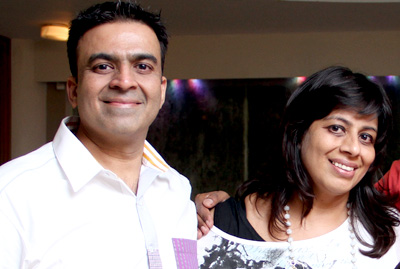
    It’s Raksha Bandhan today, and a good day to to start the series. So, meet brother Yogesh and sister Divya Radhakrishnan, both of who have done remarkably well in their respective careers and without work getting in the way…


    Yogesh Radhakrishnan and Divya

    By Meghna Sharma

    Everyone is talking about Kareena and Ranbir Kapoor finally working together on film as brother and sister. One can talk about the number of brother-sister duo working in the same field.


    According to some it’s no big deal, whereas others feel personal equations do change when they work together. MxMIndia spoke to one such duo on the occasion of Raksha Bandhan to find out their take on it.


    Divya Radhakrishnan and Yogesh Radhakrishan are forces to be reckoned with in their respective fields. Yogesh is CEO of Prime Connect which engages in the business of distributing satellite television and other allied services through traditional and emerging media across homes and commercial establishments in India; while Divya is MD, Helios Media – an integrated ancillary service company for television broadcasters.


    So when asked if it has ever led to rivalry between them, both were quick to refute it.  “I’m a media planner while he’s into broadcasting. So we have always been on the two opposite ends of the table. Hence, there is no question of competition,” said Divya. “Both of us are very professional and for many years people didn’t even know we were related!”


    “We know where to draw the line. Even while interacting for work…,” added Yogesh who is interrupted by Divya: “Actually, I’m a tougher buyer to him than to anyone else,” she laughed.


    Taking work back home is nothing new, so it isn’t surprising if the siblings end up having talking about work, even if they meet after office hours. According to Divya, both of them are in a field where work is bound to go back home with them and they do end-up discussing about the industry, at large and other healthy discussions related to it.


    “Rakhi has always been special day for us; although, we don’t believe in any rituals,” replied Divya, when asked if there were any special plans for the day and Yogesh, who is down with fever, agreed.


    So, be it any field, one can work without relationships getting in the way, by being mature professionals. Maybe blood is always not thicker than water!


  • Atul Phadnis: Industry must not duck core issues on measurement

    By Atul Phadnis


    Atul Phadnis

    All of us have read the astonishing news of a lawsuit in recent days in a New York court making allegations on the efficacy, integrity of TV Ratings in India. A lot of us in the TV Broadcast industry have perhaps turned to our nearest industry colleague the moment we heard this news and blurted – “See! I told you that something like this was going to happen one day!!”


    Unfortunately, for the entire TV industry this is bad timing when already nerves are frayed with the Cable Digitalization issue! I would consider this development as a time to reflect on how we, the TV sector, have got into this position and how all of us collectively have been responsible for the mess with TV measurement.


    Lets look at the key questions that need answers urgently before more damage is done that could potentially destabilize ad revenue structures within the industry.


    The Burgeoning Issues with TV Ratings

    There is no doubt that there have been problems associated with the way TV Ratings have been measured in recent years. Some of the methodology related issues have also played their part in getting things down to this latest litigation :-


    1. For instance, take the issue on the validity of some of the parameters used to select sample homes. More than a decade ago, a panel quota system called Primary Control Variables was introduced with 5 main factors to select panel homes. Some of the parameters have remained unchanged in spite of their doubtful use in recent times.

    2. One such question that needs to be asked in this regard – do we still have Colour versus Black & White TV sets – as one of the factors? If yes, is this factor relevant at all today? And by sampling on irrelevant factors what sort of panel would be constructed? If this is not a factor any more then what’s replaced this? Has industry approved (or is aware of) a new sampling methodology?

    3. Do we still sample homes on the basis of Terrestrial versus Satellite? Should the Satellite sampling not be modified to sampling within these homes by Cable/ DTH players-wise market-shares? Not having this correction means dreadful, crazy results for certain channel genres. Again ignorance is bliss for the industry at large with this question not being asked.

    4. Why should the 600th or the 650th channel be reported for minute-by-minute ratings by market and by target group? Are we not playing with fire with samples for that 600th channel down to 1 or 2 or 5 people within the panel! In fact, this sort of low samples thresholds could also make any research system extremely fragile and vulnerable for interference by external forces.

    5. A continuation to the earlier point is that why should India not follow the practice from other mature markets wherein channels falling below a sample threshold are not reported for certain analysis types. So you may get weekly Channel Reach but not minute-by-minute viewership sliced by markets and target audiences.


    So the question that begs answers is – how can we continue the panel home selection and reporting on criteria, parameters and rules that are a decade old? These need to be contemporized with todays realities. And with industry support and consensus.


    INDUSTRY APATHY

    Incidentally, at this stage I must ask you, the reader, to mourn for a minute, the sad, silent demise of the Joint-Industry-Body. The JIB that had taken birth in the early nineties to guide TV measurement initiatives in our industry passed away a couple of years ago. His daughter – the Industry Technical Committee, who oversaw critical issues such as panel home selection methodology, technology selection decisions also had an untimely death. They both died waiting for its members to come to their rescue.


    BARC – The Puzzling Enigma

    A lot of folks will recall enthusiastic announcements several moons ago about the creation of BARC – a joint initiative by three industry associations. The promise was to create a new TV Ratings system with the circulation of RFPs, finally leading to a Tendering and Commissioning process. The puzzling part that was unaddressed or unclear in the BARC strategy was what happens to the here-&-now even as the new system comes about. Read on…


    1. For instance, why could industry not take control of the way TV Ratings are being done today? One Option would be for the top 5 Media Agencies and TV networks to pool their current TV Ratings deals to pursue a unified conversation with the data supplier.

    2. Why should industry as a first step not address the ‘here-&-now’ issues and ask for weekly panel KPIs from the incumbent measurement company? Panel health indicators, number of suspect samples and observations, past complaints and their explanations – could easily be taken up in a structured manner. Why should everything rest on the ‘utopian’, ideal system that might take another 1 or 2 or 3 years to come by?

    3. What will it take for some of the allegations and accusations being made routinely in private quarters to be audited by an independent, neutral organization? Why cannot BARC be the redressal body to sort issues relating to TV measurement? After all it has the support (and mandate) from IBF, ISA and AAAI. If an effective redressal system existed would any player have gone to court in the first place?


    Agency Media Buyers : faith beyond belief!

    That the average media buyer considers TV Ratings outputs as the gospel truth is well known. Imagine this guy (or gal) who is perhaps sitting in the agency at 10pm churning data for the 633rd ranked channel. The analysis is minute-by-minute viewership for Jharkhand, SEC AB, 15-24 years and is being done since the Buying Head has a meeting with that Channel’s team the next morning.


    At that precise moment what should have happened is Helicopter Gunships should have descended on the rooftops of that agency, Black-Cat commandos should have whooshed in through the AC ducts and screamed at that buyer “STOP! You cannot look at min-by-min trends for a microscopic market-audience for the 633rd ranked channel!”. But none of these stunts will happen. The Buying Head will receive the analysis in time for the meeting and will happily use that data to negotiate ad rates, oblivious to ludicrously low sample sizes! Sad, but true.


    Conclusion

    My last word on this is that – as an industry if we continue ducking the main, fundamental issues in this space we will keep having disturbances that hit at the revenue stability and predictability that measurement brings in. It’s finally our choice – yours and mine!


    Atul Phadnis is CEO, Whats-On-India. He has been associated with all aspects of the measurement process – as a media planner, employee of TAM, a broadcaster and now a technocrat
     

  • Industry remembers V Ramani’s path-breaking work

    By A Correspondent


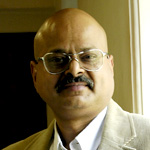
    V Ramani

    August 1, 2012 will be remembered as a sad day for  digital media as V Ramani, the man who championed the sector way before most others, , passed away. A prayer meeting will be held in his memory at 6pm on August 3 at the Bombay Tamil Sangham Hall in Sion in Mumbai.


    Mr Ramani worked as a media professional for nearly three decades, with years of experience in advertising with stints at Lintas, Draftfcb Ulka, McCann Ericsson, Contract and Euro RSCG.


    Mr Ramani helped establish Internet and Mobile Association of India (IAMAI) and was also the first Indian Cyber Jury Member at the Cannes. He is the Co-founder, Ignitee, and also the man behind the first ever branded programmes (Surf Mashoor, Philips Top 10).


    In 2011 he launched Pariental Innovative Solutions, a full service cross media consultancy and planning company, along with Harminder K Datta as co-founder and principal consultant.


    Remembering Mr Ramani, Ravi Deshpande, Chairman and Chief Creative Officer, Contract Advertising said: “From what I recollect during my brief interaction with V. Ramani at Contract, he was truly a passionate person and a professional who would always be committed to the task at hand. Sadly, today media industry has lost an important contributor.”


    Ishan Raina, MD and CEO, OOH Media remembers Mr Ramani as an outstanding mediaperson and a loyal friend: “He was an outstanding media person with a high degree of intelligence, and a loyal and an emotional friend. He would be remembered for a lot of path breaking initiatives, right from Philips Top 10 which is the first sponsored programme on television 25 years ago to various internet initiatives. But he would also be remembered as a good friend.”


    Said Atul Hegde, CEO, Ignitee Digital Services: “V Ramani was a true trailblazer, always pushing the boundaries to see new ideas come to light. He gave us gems like Philips Top 10; was the first jury member at Cannes for the digital category and always had an eye for great talent. He mentored many a career in the media industry and will always be remembered for making the media function in an ad agency ‘Creative’.”


    Even Twitter was abuzz after media professionals heard about Mr Ramani passing away, Former CMO, Tata Teleservices, Lloyd Mathias tweeted: “RIP V Ramani. A man who embraced digital long before it became fashionable.”


    Karthik Nagarajan, National Director, Social and Insights, Group M tweeted: “Just heard about V Ramani. Feel genuinely down. Rarely happens with someone you knew only professionally.”


    Lakshmipathy Bhat, Advertising Professional, New Media Enthusiast, Vice President, Draftfcb+Ulka - Bangalore tweeted: “Ad Industry veteran V Ramani passes away – he was one of the earliest in the digital space inIndia. Sad.”


    Dhunji S Wadia, President, Everest Brand Solutions, tweeted: “Sad to hear the news of V Ramani. RIP.”


    Faisal Farooqui, Founder – CEO, Mouthshut.com tweeted: “RIP. Ramani was one of the first who loved Mouthshut. Will miss him.”


  • We are a silent partner in DNA: Girish Agarwal (on Video)

    The Dainik Bhaskar Group has been making rapid strides in publishing and its expansion into hitherto uncharted territories like Maharashtra have led to questions on where the group will head next. Girish Agarwal, director of the group, spoke to MxMIndia’s Shruti Pushkarna in an exclusive interview on the sidelines of Ficci-Frames 2012.
     

    Dainik Bhaskar was among the first to innovate in order to get more readership. What are the new frontiers… where are you headed next?

    We operate already in some 14 states in India. We have recently launched a Marathi newspaper, so we have some time to spend in Maharashtra as well as Jharkhand. At the same time, the states which we are already present in, like Rajasthan, Gujarat and Punjab, we need to work a lot there also to grow, because those states have a huge potential for us to grow. A large part of the growth we’ve been seeing in last 10 years, is coming from our existing states, so we need to work hard there.


    [youtube width=”400″ height=”250″]http://www.youtube.com/watch?v=UN43L63SCoU[/youtube]

    Technology and internet hasn’t really taken off as well as it was expected to have taken off. What are your views on the same?

    Internet penetration in India is roughly around 7 to 8 per cent, so with this kind of penetration, I don’t think we need to fear anything that they would take away from us. But at the same time we need to prepare for the future. For example, our website in Hindi today is the largest website in Hindi news as well as the Gujarati one, so we are preparing ourselves for the future. But at the moment, is the business shifting from the print platform to the internet? No.


    How do the readership wars affect newspapers?

    I think it is pretty good because anything that’s good for the market is good for the organization too. For the readership war, you actually go out and try to take more readers, for that you need to ensure that you are still relevant to the reader, because if you are not relevant, the reader won’t buy you at all.


    There is talk about Dainik Bhaskar opting out of DNA, how true is that?

    Yes, it is true that DNA is currently managed by our partner, Zee Group, which has the majority in DNA. We are a silent partner.


  • @FF12: Digitisation will allow broadcaster to make money off ground: Tarun Katial

    Video and Text by Shruti Pushkarna


    Tarun Katial, the CEO of the Reliance Broadcast Network Ltd, spoke to MxM about how the businesses will have to rework their monetising strategies in the wake of digitisation


    On reworking the business model for digital era

    [youtube width=”400″ height=”250″]http://www.youtube.com/watch?v=r_uR54g7cbI[/youtube]

    For television, it will be a combination of content as well as marketing. The old model which was a combination of carriage and product, as it stands today won’t work. The business plan which currently has a very high rate of carriage will obviously see the content taking precedence.


    On Digitization bringing in transparency

    By transparency, I mean, it will allow the broadcaster to know the number of households it’s getting into, getting paid for and which value tier plan it is present on. It’s not like analog, where you give Rs150 and you have 500 channels available. The broadcaster will be allowed revenue share, he will be allowed to make money off the ground.


  • @FF12: Integrated media best way fwd: Vikram Sakhuja

    Video and Text by Shruti Pushkarna


    On the fundamental powers of digital:

    In digital there are few things that are exciting. One is that digital has the potential to burst from a sampling kind of mindset into a census kind of a mindset. By that I mean that a lot of measurement we do in marketing today is very sample based and digital, whether it is through set-top boxes, or through online behaviour, it is possible now to get the data at a granular level. So that leads to targeting a million, one at a time kind of thing, which is exciting. The other inherent power of digital is interactivity. The third area is the ability to link multiple devices. Last is the real time query, whether it’s query or the consumption of content. Linked to that is the entire thing about being mobile. So these four or five inherent powers of digital are game changers for marketers.


    How to engage in an increasingly digital world?

    [youtube width=”400″ height=”250″]http://www.youtube.com/watch?v=sIj_VeYzlPo[/youtube]

    The engagement part comes from the kind of content you put up and the entire viral or social nature which comes up. The framework we talk about is paid, owned and earned media. An example of paid media is when Mindshare got Dhanush to sing an anthem for Sachin Tendulkar, post Kolaveri Di. Within four days we got ten million views, and the anthem, in turn, got a viral life of its own. So I think the way in which you can use content is how it becomes engaging.


    What is the way forward?

    I think integrated media is the best way forward. Today when people think of multimedia planning, they do a separate TV plan, print plan, radio plan, internet plan and so on. I believe that if you actually look at media agnostically and at common metrics of each cost per thousand impressions, these are the ways in which you can construct a media agnostic plan. What it does is, it suddenly gets more money into digital, and when more money can come into digital, that’s when focus is going to come in.


  • @FF12: No alternative to the cloud: Manish Agarwal

    By Rishi Vora


    Manish Agarwal, COO, Reliance Entertainment (Digital) spoke to MxM India on the sidelines of a session called “Digital Entertainment with Connected Devices and Cloud Based Services”, in which the panel consisted of Umang Bedi of Adobe Systems, Richard Craig McFeely of Tata Communications, Sameer Pitawala of UTV Interactive, Manish Agarwal, and Ravindra Velhal of Intel.


    Takeaway points from the session

    Cloud technology is all about providing an experience to the consumer. That’s one thing. The second thing is, there is no alternative for any service providers to not to go to the cloud. There is no choice to anyone; everybody has to go to the cloud. The question is the benefit of the cloud and the extent of monetization that can happen on the cloud will be limited to the extent of infrastructure investments. So, the key message is that the cloud is a reality – everybody has to work around it, be it the producer or a retailer like Big Flix or a content aggregator…


    The question is when can you really monetize and how can you provide the best consumer experience.


    [youtube width=”400″ height=”250″]http://www.youtube.com/watch?v=sSJUNAh1X8E[/youtube]

    Video By Shruti Pushkarna

    How does Reliance use cloud technology for the services it offers?

    If you look at Big Flix, all the content user information is on the cloud. And we’re already kind of using that piece. That is the only way we can provide a seamless experience across devices – across desktop, laptop, smartphones, in your office, your home. All this is not possible without the cloud. So we’re using it extensively for Big Flix. We also use the same technology when we publish mobile games, so if you want to play a game, you can play on any platform using the cloud service.


    What it means to the consumer

    For the consumer it is very simple. Keeping aside the technical mumbo-jumbo, I can watch a video whenever I want on whichever device I want from the point I left – I can restart. So it gives me a complete seamless video-watching experience across devices and locations.


  • @FF12: Discovery to launch kiddie channel in India

    Video and Text By Shruti Pushkarna


    President & CEO of Discovery Networks International, Mark Hollinger announced the launch of its new network for children in India, ‘Discovery Kids’. The announcement came on the sidelines of FICCI Frames 2012 that is being held in Mumbai from March 14 to 16.


    The channel will be available in three languages. Mr Hollinger said, “We shall be launching a new network in India – Discovery Kids. It will be launched in early April and the network will initially be available in three languages – Hindi, English and Tamil.” The company plans to roll out the channel in Philippines and Indonesia later this year.


    Mr Hollinger said, “Discovery Kids will offer children a fun and entertaining way to satisfy their natural curiosity with stimulating and imaginative programming.” He added, “India is definitely poised for growth in this market. 30% of the population in this country is below the age of 14. In light of the massive digitization drive in India, we believe viewers will express their demand for such distinct television networks. I cannot think of any other country more poised for the launch of such a remarkable network.”


    [youtube width=”400″ height=”250″]http://www.youtube.com/watch?v=gzeqO3KTTww[/youtube]

    The company also expects a significant boost to its subscription revenues from satellite television digitization in India and expects the country to be its biggest satellite television market in the next few years, said Mark Hollinger.


    Speaking about the digitalization drive in India and the country’s subsequent growth potential Mr Hollinger said, “The fact that India is moving towards 100 percent digitalization presents an overwhelming opportunity for all of us. Digitalization of broadcast will make bandwidth usage more efficient, leading to a wider choice for the viewers and newer opportunities for media companies. Digitization means viewers will be more discerning and I predict that the programming with the best storytelling, compelling characters and stunning visuals will win out.”


    Talking about the share of revenue from India, Mr Hollinger said, “International markets account for one-third of our operating profit, of which India contributes a significant part. We don’t break it down on a regional level. India is one of the top five growth markets on a worldwide basis.”


    He also said that going forward the company is looking to enter retail, merchandising and licensing space.


  • Need for industry leaders to deliberate on biz of advertising: Sam Balsara

    Always the one with the questions, Madison’s Sam Balsara was his usual self at the sessions as he questioned a few ideas and provided his solutions on the same. MxMIndia got Mr Balsara to briefly share his stance on the sessions this year and sought his recommendations for Goafest 2013.

     

    What would be the takeaways from the sessions over the three days?

    I think the sessions this year have been excellent; the quality of speakers has been high this year. I think it’s all credit to the growing brand equity of Goafest that we have been able to attract so many international speakers of repute. There have been some good broad learnings; it’s not that we didn’t know about them but these speakers of stature have reinforced the belief that advertising is moving from one to many – from conversations to stories. Clearly digital seems to be the mantra of today. The sessions were woven around the magic of advertising, I think John Philip Jones came out with a refreshing and different quantitative view on how not to get carried away on what you think and I think are the required numbers. His basic message of not having share of voice or a good share of the market means that you are getting into a dangerous area. I think it is pretty important for many brands inIndiato take note of.


    A word on the Media Abby awards held this year…

    Though we did emerge a big winner, I think the enthusiasm among the crowd was low compared to the earlier years. This possibly may be due to the awards being distributed far more in quantity this time – but this is a good thing for the industry and will encourage more participation.


    What are your recommendations for 2013 to the Goafest committee?

    A significant recommendation that I have is more related to the Business Conclave, which I feel needs to be relooked at. The original idea of a business conclave is for a few industry leaders across the spectrum of advertising, media agencies and so on to sit together in a roundtable and discuss the issues of business of advertising and how to make it profitable. Also, we need to invest more in talent and learning. Right now I think it has become an extension of the sessions and we need a sharp a dividing line between the business of the advertising seminar and the knowledge seminar. I think we need to bring that back.


    Click here to view all Goafest 2012 stories


  • Don’t ignore TV & print: Joy Chakraborthy

    Joy Chakraborthy, CEO, TV Today gets candid as he talks with MxM India about the quality of sessions that were held at Goafest 2012 and what the committee needs to consider for 2013.
     

    How would you rate the several sessions that were held this year at Goafest?

    It’s good to see some good speakers at the sessions this year, but I would still suggest that they should have had some sessions on media because we are talking about future technologies while we are also talking about existing technologies like television and print – that is what I found missing. It’s always good to come back to Goafest because you get to meet all your friends, interact and network with them and partake of the nostalgia. So it’s great place to network, party and go back.


    Is digital receiving too much of a prominence at Goafest?

    Digital is getting prominence everywhere but people should not forget that all existing mediums are going to coexist; nothing is going to replace anything. The focus should also be on television and print and they should have got some speakers from these mediums too, as they need to be told what are they doing to sustain in these mediums because they are also growing. I have already put forth these recommendations to the committee. If you see, all sponsors are from print and broadcast, so they need to make these mediums inclusive in their plans.


    What are your views on the awards that were held this year?

    I think the awards got a little boring towards the end. Till Media Abbys were given it was good, but once it got to digital and other verticals it became boring. A few moments at the awards were interesting like the laser presentation made by Google.


    What are your travel plans for Goafest 2013?

    I think it’s always good to come here but I hope they accept our recommendations. I felt a bit let down this year, as you are setting standards of Cannes, you cannot afford to have technological glitches (as it happened on the first day at the Conclave); it reflects badly on us Indians. Such issues need to be addressed better.


  • Special to MxM: Shashi Sinha on Day 2

    By Shashi Sinha


    The good thing about the last day at Goafest was the quality and number of gold and silver metals that were given out this year. A number of members came on the jury this year and there were much more metals that were handed out this year compared to last year.


    As for the sessions, the big one for me was the one by John Philip Jones, which was media-based and I really found it interesting. It must have been a complex thing for the students and youngsters gathered at the venue, as it was based on investments and so on, but it was a good one for those in upper hierarchy. It was all about how one can spend clients’ money smartly; in fact I am going to do a detailed presentation for my team later on.


    While that was about sessions, the event had its share of fun too. Rain dance was an occasion that was enjoyed to the fullest by the young adlanders. It was good to see so many youngsters revelling together. Unfortunately for me, again I was stuck up with a press conference and had to give it a skip. But that said, I think the Creative Abbys were the highlight of the evening. Compared to Media, Creative Abbys had more Grand Prix on offer and were bagged by deserving candidates, including Ogilvy and Creativeland Asia.


    As the president of AAAI and we were discussing that if we had ten thousand to spend, how would we spend them. So while the focus till now was to get the event going, the plan going forward would be to plan three years’ ahead and see what can be planned for the future. But having said that, the event will continue to remain big and will continue to stay as relevant going forward.


    So it will not be only about 2013, but about the next 3-5 years because right now we have attained the critical mass and the focus would be to maintain the success levels going forward.


    Click here to view all Goafest 2012 stories


  • Tourism Australia launches Facebook app

    By A Correspondent


    The ‘Discover Australia Through Your Friends’ app – the first of its kind – merges the best of Google Maps and Facebook technology to create a unique travel planning tool to not only help choose where to go in Australia, but also provide advice from friends who may already have been there.


    The app provides users with a location-specific snapshot of where all of their Facebook friends have previously ‘checked in’, photos they may have ‘tagged’ and also any comments they may have posted about their travel experiences whilst there.


    Currently, Tourism Australia has 3.3 million fans. Tourism Australia Managing Director Andrew McEvoy believes that the new app will be welcomed both by travellers and the Australian tourism industry.


    “We know from research that more and more travellers are turning to their social media networks for inspiration to help them plan and get the best out of their holidays. Tourism Australia has been a global leader in the digital space for over a decade and this innovative social media tool will make word of mouth from your trusted network of Facebook friends even more powerful,” Mr McEvoy said.


    The launch of the new app follows new research findings, released by Tourism Australia earlier this month, demonstrating the growing impact of social media on the way Australians travel around their own country.


    “Facebook remains a key plank in Tourism Australia’s social media strategy to promote the country’s tourism credentials at home and abroad through the power of advocacy,” he added.


    Tourism Australia Executive General Manager Consumer Marketing, Nick Baker, who has led the national tourism agency’s innovative digital and social media approach, said Tourism Australia’s Facebook page now enjoyed over three million advocates.


    “The new Discover Australia Through Your Friends app is also a great tool for the industry – allowing us to simultaneously showcase these postings as fantastic examples of things for visitors to do nearby, whilst spending time exploring our great country,” Mr Baker said.