Author: mxmadmin

  • The Anchor: 5 ways mobile videos can become an ideal tool for marketers

    By Salman Hussain


    There’s no arguing that mobile video is hot, happening right now and is going to continue to grow in popularity in the near future. A recent Cisco report predicts that mobile video will generate 66 percent of global mobile data traffic by 2015. The question is how can marketers best harness the power of this amazing medium? Here are five tips:


    1. Tap into the rise of the social sharing phenomena. We’re seeing that in mobile video, social sharing is the new search. What better way to find content that is interesting to you than by recommendation from your trusted social network? What this means for marketers is that clever, compelling mobile video creative has just as much of an opportunity to go viral as the latest Bollywood trailer and this translates into amazing brand reach very quickly. It’s not unusual for mobile video views to be driven by social sharing on Facebook, Twitter and BBM by up to 65%!


    2. Create a direct line to a highly engaged audience eager to consume brand messaging that is in context and relevant to them. Video is a highly engaging medium. For example a recent survey of nearly 13,000 women in India found that 50% of women spend more than 30 minutes throughout the day snacking on mobile video content. This is significant because by way of comparison 53% of women said they spent a comparable amount time on television, radio and print media combined. And it’s not all just about entertainment. For example, news is another hot genre for mobile video as well. Marketers should use mobile video to deliver brand engagement that is in the context of the video experience consumers are already having, while communicating the brand’s values in a new and refreshing way.


    3. Seek inspiration from brands already achieving success with mobile video. Pepsi, Pizza Hut, Sonata are just a few brands that are already seeing success with mobile video. For example, in an effort to create awareness of Pepsi’s India “Change the Game” Campaign, a two-day roadblock featuring a new commercial starring Ranbir Kapoor was created. The roadblock yielded more than 16mn impressions and 160,000 video views. You can find additional ideas here from a number of case studies highlighting mobile video marketing wins from a broad range of companies.


    4. Efficiently ensure consistent user experience across all device types. Prior limitations are no longer in existence. Previously, brands needed to take the time to develop multiple versions of creatives, specifically for a variety of popular devices and screen sizes. Or users would have to suffer a less than optimized experience for their particular device, often visiting a landing page first. Now with innovative new ad units, you can automate a consistent user experience on 5,500 different device types with no manual adjustment required. Cadbury Silk is just one brand that’s already saved costs and time using this approach.


    5. Don’t be afraid to experiment. Mobile video marketing is an area ripe for innovation with opportunities for new trends being driven by the proliferation of low end but sophisticated feature phones. These innovations might take the form of new types of ad units or connections to social media sharing or innovations we haven’t even dreamed of yet!


    Salman Hussain is Vice President- BD & MD (India & Middle East), Vuclip


  • Anil Thakraney: Goofy newspaper desk

    By Anil Thakraney


    Mirror’s chief editor. Meenal Baghel, said something very interesting as part of the interview with her for MxMIndia. And it has set me thinking. She said deskies is a disappearing breed in the print media, and this is the reason our newspapers arrive with grammar goof-ups. And I have been searching for answers on why we no longer have high quality personnel manning the desk.


    One explanation could be that people consider the desk job as a stop-gap arrangement, their ambitions lie elsewhere. And therefore attention to detail is missing. This could be because of the boom in the Indian media, which means a whole lot of opportunities/jobs have opened up. Therefore, the concept of commitment has taken a beating. Perhaps this is so. But then, there are many opportunities available for the deskies in the western world too, but newspapers from there seldom carry mistakes. So maybe there’s some other explanation.


    Another theory suggests that the arrival of the SMS and the virtual media may have played a role in this. Just like everyone else, desk personnel are also busy murdering angrezi, and it’s possible this dirty habit has spilled into their work. But once again, the new media doesn’t seem to have damaged the skills of newspaper folks elsewhere in the world, so perhaps the answer lies elsewhere.


    Here’s my own view: I think we are looking for scientific and logical explanations to justify what is actually plain and simple carelessness that has crept into the system. With too many distractions these days, I suspect youngsters at the desk aren’t paying adequate attention to subbing and proof-reading. Perhaps a little penalty is called for against each grammar mistake? Ten rupees per goof cut from the salary? Sounds too harsh? It is, but this may be the only way to get the deskies off Chatting/ FB/ Twitter/ Flirting/ Whatever, and back onto the goddamned page.


    (Note to the editor: Please ensure there are NO typos in this article. Else, we’ll get lynched by the industry deskies!)


     [youtube width=”400″ height=”225″]http://www.youtube.com/watch?v=YRB0i9-AUQs[/youtube]

    P S: “She embodied every desirable quality I had ever wanted. In my mind, I was a peasant before a queen. And so, Susan Glenn and I were never a thing. If I could do it again, I’d do it differently.” Not only is this AXE commercial fantastic, the script has been written by a brilliant copywriter. Looks like fine writing has moved from press ads to television. No complaints, we need more of this.


    Anil Thakraney is a senior journalist and commentator. He is also Editor-at-Large, MxMIndia. The views expressed here are his own.


  • Triton understands the soul of India: Renton D’Sousa

    Renton D’Sousa, National Director – Creative & Strategy will now bear the additional responsibility of Chief Executive Officer for Triton Communications, one of the largest privately held Indian communications agency. Prior to joining Triton over 10 years ago, Mr D’Sousa was the creative head of a few units at Lintas Mumbai. Looking at the graph of some of the ad agencies which had a creative as the Chairman/CEO, looks like Triton and its clients are in for exciting times ahead. In a candid chat with MxMIndia’s Shubhangi Mehta, Mr D’Sousa discusses his future goals and additional responsibilities.


    With additional responsibilities now coming your way, what are the new responsibilities you forsee for yourself at Triton?

    Besides being the architect of ideas, the additional overarching responsibility now is to ensure the profitability of the business. The agency has to be financially stronger to plough back money into enhancing resources in the knowledge domain to enable the best end product. Above all, I now find myself asking about the “value of an idea”.


    Does the new role come with more expectations and pressure? How well do expectations work for you?

    The new role definitely comes in with a lot more expectations and pressures. My colleagues and clients can now look forward to more exciting times ahead. Expectations work for me as it poses a new challenge of living up to them. Cliched as it may sound, “there’s no smoke without fire”.


    Triton is very quiet when it comes to media exposure. Would you like to change that or does it remain as it is?

    We have always let our work do the talking for us. We have done path-breaking work on a continuous basis, but never gone to town talking about it. In the current scenario, it has become a norm to get written about, irrespective of the quality of the end product. We will not be as quiet as before. Having said that, we will talk about our work only if it adds value to our clients’ products.


    What are your focus areas for the coming year?

    I firmly believe that we are in the business of being creative. This belief has to percolate down to all levels and across all functions. This will be my single area of focus. For eg: Media can get more creative in finding innovative solutions in their area of operations and so can other functions. The franchise on creativity is not exclusive of the creative alone.


    Any further structural changes that we can expect from the agency?

    The new structure will be that of an agency without boundaries. We will operate as a single cohesive unit. My colleagues will be encouraged to assist across units and offices. This will encourage greater inter-office interaction, besides throwing up new opportunities and enhancing individual skill sets.


    How would you rate Triton’s journey over the years?

    It has been an interesting, arduous and successful. It has grown to become the largest privately held Indian communications agency. Over the two decades, Triton has enjoyed a successful run in partnering their clients in launching, building and nurturing some of the leading brands in the country across diverse categories.


    As a part of Triton, would you like to share certain specific highs and lows?

    The highs have been many. We have created many category leaders amidst well ensconced competition;  taken risks that have paid off and benefitted our clients immensely. The lows have been when we had to bid adieu to our long standing relationships either due to management takeovers or global alignments.


    What according to you does Triton offers to clients that differentiates it from other agencies?

    Triton prides itself on being an Indian agency that understands the soul of India. We believe that do business in India, you need to understand the business of India.


  • Family and wellwishers bid farewell to V Ramani

    V Ramani

    By A Correspondent


    Family and friends of late Mr V. Ramani held a prayer meeting on Friday evening at Bombay Tamil Sangham Hall to pay their final tribute to the man who championed the cause of digital media even before it became a sensation. Apart from family members, friends and other wellwishers from the industry were present at the prayer meeting.


    Mr Ishan Raina, MD and CEO, OOH Media, Mr Atul Hegde, CEO Ignitee Digital Services, Ms Harminder K Datta, Co-founder and Principal Correspondent, Pariental Innovative Solutions, Mr Sandip Tarkas, CEO Future Media and other well known dignitaries attended the prayer meeting.


    Family and friends remembered him as the man who was a perfectionist – passionate about sports, particularly cricket and a man who was fun loving, hardworking who always wanted to win. The prayer meeting started with a traditional Sanskrit prayer followed by family, friends and colleagues paying their final tribute to Mr Ramani.


    Mr Hegde remembered Mr Ramani as a man who got joy from the smallest things; who loved cricket and bonded well with those who loved that sport. He also defined Mr Ramani as a man known for his passion for work and sports. He also observed that it did not matter who his clients were – big or small, the passion remained the same.


    Ms Datta said that one of the things she learnt from Mr Ramani was that an idea could come from anyone. She remembered Mr Ramani as a man who was dominating but, at the same time was a childat heart, and very honest. She also said that the journey at Pariental Innovative will not end because Mr Ramani has given them a dream through which he will always be with them.


    One of Mr Ramani’s ex-colleague from Contract Advertising, Ms Devika Sharma, now Executive Director, Lowe Lintas remembered Mr Ramani as a man who always enjoyed a good fight; a man who always worked with passion and dedication, always wanting to climb new heights.


  • Mumbai completes 50% digitization target

    By A Correspondent


    A review by the Ministry of Information & Broadcasting has revealed that in Mumbai, 50 per cent of cable TV homes have already been installed with STBs. Mumbai has an estimated requirement of 34.85 lakh STBs, and so far 17.07 lakh STBs have been installed. The MSO-wise installation of STBs in Mumbai is:


    National level MSOs: Hathway – 6.16 lakh, Den – 1.40 lakh, Digicable – 2.57 lakh, IMCL – 4.77 lakh, WWIL – 50,000 Independent MSOs - 1.69 lakh.


    Mr Ashok Mansukhani, President, MSO Alliance and director with Hinduja-owned IndusInd Media & Communications (IMCL) said: “We are committed to complete the installation by the deadline. However, since there is no agreement with the broadcasters, it is acting as a hindrance.”


    In the absence of the agreement, the price of channels cannot be decided, and the same cannot be passed on to the local cable operators (LCOs). The LCOs then have a problem giving a clear price list to the customers.


    The Cable Television Networks (Regulation) Amendment Act, 2011 has made it mandatory for switchover from the existing analogue Cable TV networks to Digital Addressable System (DAS) by December 2014, in the entire country in four phases. In the first phase, four metro cities of Delhi, Mumbai, Kolkata and Chennai are to be covered by October 31.


    The Ministry has been coordinating with the stakeholders regarding the preparedness of the industry for digital switch-over. Installation of Set Top Boxes in cable TV homes is the most crucial precondition for digital switch over of cable television.


    The Ministry is holding fortnightly Task Force meetings with all the stakeholders to take constant stock of the progress and to chalk out the measures to address emerging concerns. So far 14 meetings have taken place. The meetings are held with National level and independent Multi-Systems Operators every 15 days to assess their preparedness in terms of head-end capacities to carry minimum 500 channels from January 1, 2012 and the progress of installation of Set Top Boxes in cable TV homes. They have also been advised to prepare micro plans for completion of the requisite task within the deadline and complete all the infrastructural preparations within time.


    Meanwhile, in order to enable the MSOs to up-load the data on the website of the Ministry, the Ministry has put in place a software and the website has been enabled for the purpose of real-time collection of data. The software will automatically generate analytical information based on the data uploaded, resulting in a clear view of the progress made. This will not only be useful for MSOs and other stakeholders but also for the Ministry, as it will infuse transparency in the system, and enable timely corrective action.


  • Star channels launch on IPTV Swiss Operator – Sunrise

    By A Correspondent


    Sunrise TV, the largest telecommunications company in Switzerland has announced the launch of the Indian entertainment pack including the premium flagship channels from the Star Network – Star Plus, Star Gold and Vijay TV.


    With this launch on July 19, Sunrise TV subscribers can now watch Tamil & Hindi entertainment & Bollywood channel with English subtitles that provide an innovative mix of drama, events, lifestyle shows, celebrity chat shows, religious & cookery shows, music & dance reality series and Bollywood blockbusters.


    Yeshpal Sharma, Vice President Star UK & Europe said: “We are pleased with our partnership with Sunrise TV for the launch of Star channels in Switzerland. This reflects our commitment to bring the best of Asian television entertainment to our viewers in Europe and we look forward to a continued relationship with Sunrise.”


  • Reviewing the Reviews: Critics snigger at Jism 2

    By Deepa Gahlot


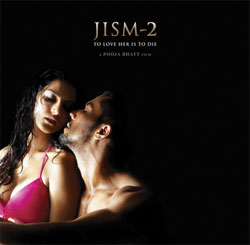
    The Bhatt camp got a whole lot of mileage– equal amounts of outrage and admiration– for signing up porn star Sunny Leone for Jism 2.  Right from the erotic poster (that so offended Mumbai’s mayor) to sizzling stills, the film – directed by Pooja Bhatt – offered viewers sex on toast… and then delivered a tepid, tedious love triangle.


    A few years ago, Sunny Leone’s skimpy clothes might have attracted male audiences at least, but now every A-list actress has a bikini body and every male star six-pack abs. So what is the big deal, a ticket buyer might ask.


    As can be expected the film got no higher than 2 stars, except of course, the Times of India’s 3.5. Almost every critic decried the lack of a sufficiently high heat quotient and sniggered at the cheesy dialogue. Indian Express’ Shubhra Gupta rightly headlined her review, Bare All Dare Nothing.


    Anupama Chopra of Hindustan Times wrote, “Neither a feminine nor masculine gaze can combine intense passion with such a ridiculous story. For an erotic film, everyone talks way too much. Of course, we get love-making, Leone’s bare back and ample cleavage. But the Bhatts – Mahesh and Pooja – also want to unveil some deeper truth about men, women and their obsessions with each other. So Jism 2 plays out like an unintentionally funny fever dream. Kabir is a sort of artist-assassin. He plays the cello and sings mournfully. He quotes Faiz to Izna and says lines like, Mausam guzar jaate hain, yaad nahin guzarti. Hooda is a fine actor but here he seems to be emoting for all three of them. Leone, who is very pretty, clearly wasn’t cast for her acting skills, but honestly, she’s not bad. She wisely finds a sort of half-bewildered, half-heavy breathing expression and then stays with it. When the emotion becomes too complex for her to handle, Pooja cuts to the back of her head.”


    Sukanya Verma of rediff.com commented, “In most movies of this genre, sex is employed as a sly tool to arouse psychological intrigue and suspicion, where lack of inhibition works as a disturbing element (Eyes Wide Shut, Sleeping Beauty, anyone?) instead of shabby titillation. But what can one say about a film so paranoid that characters react with such emotional exaggeration and neuroticism as if a nuclear holocaust is upon us? Things get irreversibly dreary after a while. I mean, how many times can one watch two people with zero chemistry going at it, again and again and, well, you get the drift. The one good thing about Jism 2 is the lush green resort it has been shot in — Galle, Sri Lanka. At one point, the possibility of getting a detailed tour of the resort or even its unoccupied rooms seems more exciting than yet another glimpse of Leone’s undressed torso.”


    Shubhra Gupta cribbed, “You sit back and wait for some hot action which is what porn stars are meant to show us, right? Or what are they porn stars, avowedly and loudly, for? I am here to tell you that on that count alone, Jism 2 is a crashing disappointment. Yes, there are several flashes of bare backs. There are several flashes of bare everythings, actually, especially in the chest department whose musculature, as they say these days, is awesome. You can see why Ms Leone would be a smash hit in movies which wouldn’t stretch her beyond the requirements of standard X-rated flicks: she’s really pretty, she’s got tumbling locks that tease her shapely shoulders, a constructed bust that proceeds into the room before the rest of her, legs that go on, and so on. But what the makers of Jism 2 didn’t see that for a two hour-and-some film where the leading lady would have to do a little more than moaning and groaning and heating up the bed clothes, Ms Leone would run into trouble. She is made to teeter about in stilettos while delivering dialogues about patriotism and true love. Yes, that’s right.”


    Srijana Mitra Das of the Times of India wrote, “Without such plot absurdities, Jism-2 could have been tighter. Slicker. And hotter. Instead, with unexplained turns (how does Izna go from good girl to porn star?) and over-acting, it’s often limp, salvaged by its last 20 minutes of suspense when Izna learns new facts about the IB. Still, Jism-2 offers one more surprise, earning it a couple more points. It’s pleasingly aesthetic, all its sensuousness clad in spa-like serenity, its lighting – golden gossamer, dusty hazes, cool, pale moonlight – actually its sexiest asset. Thank heavens for foreplay.”


    The usually effusive Taran Adarsh of bollywoodhungama.com couldn’t find ways to praise this film. “On the whole, Jism 2 has Sunny Leone as its USP, but the lacklustre screenplay and the sluggish pace act as deterrents. However, Sunny Leone in the driver’s seat, coupled with a generous dose of skin show and erotica, besides an attention-grabbing title, should act as a honey-trap to lure the audiences. But how one wishes this jism had soul as well!”


    Rajeev Masand of IBN wrote, “Unlike the earlier Jism that Pooja Bhatt produced but didn’t direct, this sequel has little of consequence to say about relationships based on lust. The previous film was a well-acted, adult thriller that had rare sexual frankness. In comparison, Jism 2 feels hollow and exploitative…a film in search of a story. Despite some terrific music and Pooja Bhatt’s neat production design, it’s let down by laughable dialogue and a pace slower than my 90-year-old grandmother on a race track.”


    Vinayak Chakravorty  of India Today panned it too. “After all the hoopla, what you get is a two-hour condom ad shot in Sri Lanka. Pooja Bhatt’s Jism 2 roughly divides itself into two moods: Sunny Leone striking sultry half-nude poses with Randeep Hooda/Arunoday Singh (which is what you will pay to watch), and Sunny giving a wide-eyed, clueless look as Randeep/Arunoday blabber, blather and yell. Classy, metaphorical, dramatic, gross, dirty, sad, funny – sex on the screen has been all these and more over the years. Pooja just gave sex a new twist: boring.”


    Aniruddha Guha of DNA wrote, “Jism 2 is hybrid cinema. A sort of B-grade sex thriller meets patriotic drama meets intense love story meets spoof. The film is all of the above and none of them. It also falls under a category much cherished by film lovers – the So Bad It’s Good variety. In the past few years, Prince, Haunted 3D and Players have made it to the illustrious list of films that are terrible, yet terribly entertaining. Jism 2 is a fitting addition.”


    The usually acerbic Kunal Guha of yahoo.in commented, “Why this film is more erratic than erotic is because it only borders on extremes. Neither of the actors can tread the line between screaming their heads off and being so subtle that they resemble the contents of a washing machine in action. Also, there seems to be some confusion about the role of a porn star as Izna admits to being one but functions as a prostitute. It’s like saying oranges and lemons are both citrus fruits, so oranges are lemons.”


    Quite… this one’s did turn out to be a lemon!


  • Pulp Strategy launches Augmented Reality app

    By A Correspondent


    Augmented reality (AR) is the new buzzword and augmented reality games have become a favourite with brands and consumers alike. Now introducing a new dimension to experiential marketing campaign, Pulp Strategy has launched a layar-based mobile application. The application is currently available for Android and Iphone users. This app is an excellent way to add digital content to printed media.


    Explainign about the app, Ambika Sharma, Managing Director & CEO, Pulp Strategy, said: “With the increased penetration of smart devices in the youth segment, the application allows the static creative advertisements and collateral’s traditionally used in on-ground activations to be infused with interactive digital experiences in real time. This means that a static poster or a standee – a method of delivering static information – can now be an information tool and an engagement prompter.”


    The possibilities of the application are amazing – consumers can be prompted for check-ins on Social media at the press of a button; drive ‘Likes’ or ‘follows’; go to the brand site or order a product or stream the brand video straight to the users hand-held device. The next time marketers plan for that poster creative in campus, or big branded wall in a mall activation, or even brand merchandise for a campaign, the app promises to bring alive each piece of static creative digitally for the consumers.


    “Marketers find value in such innovations, as not only is it useful and social media relevant but also breaks clutter, and adds pizzazz to existing branding elements increasing consumer engagement,” said Sharma.


    This thought is not new. RFID bands for check-ins have been used in activations before. However, they have been device restrictive and cost per user piles on if one scales up. It needs physical equipment presence to drive any engagement or check-ins.


    “But the Mobile app is device agnostic. All it needs is a smart phone and once planned it can be scaled up to unlimited consumers. It is not necessary to have a promoter or brand representative to drive the experience. Essentially, the added delight in experience for the consumer comes at a negligible cost as part of the ground campaign. It integrates, Facebook, Twitter, Google+ Linked In for social media,” said Ms Sharma.


  • Harshad Hardikar returns to OgilvyOne

    Harshad Hardikar

    By A Correspondent


    Harshad Hardikar has returned to Ogilvy after working for one year at rediff.com. At rediff.com, he was responsible for Rediffshopping. Prior to that Mr Hardikar was with OgilvyOne for 4 years as its Mumbai Head.


    A postgraduate from MET IMS, Mumbai, Harshad has over fifteen years experience in CRM/Loyalty, working with Select Direct, iContract, ICICI Bank and OgilvyOne. He launched India’s first coalition loyalty programme called iMint (now Payback).

    Harshad Hardikar, Senior Vice President, Ecommerce & CRM Practice, OgilvyOne India said: “I am glad to be back at OgilvyOne. We are witnessing unprecedented growth for e-commerce and ECRM in India. Our clients are actively looking for solutions to sell online as a cost efficient revenue stream.  My mandate at OgilvyOne is to lead this practice nationally and manage our clients Ecommerce/CRM needs end to end.”


    Kunal Jeswani, President, OgilvyOne India said: “The best service we can do for our clients is to bring in talent that can make a difference to their business. Harshad represents just that, the best available talent in CRM and e-commerce. Someone who understands the intricacies of digital relationship marketing and can use it to demonstrate a real impact on our clients businesses.”


  • Dainik Bhaskar Haryana gives ‘Pehle Se Bhi Zada’

    By A Correspondent


    Dainik Bhaskar Haryana celebrated its 12th Anniversary by making the news more reader-centric – reflecting the preferences of the new age readers.  The refreshing changes are encapsulated by ‘Pehle Se Bhi Zada’ which makes for enhanced reader delight.


    Based entirely on the pattern of news consumption by its base of 12.68 lakh readers in Haryana, Dainik Bhaskar has realigned its 12 page main issue to provide insightful focus on government and political issues. It has also added a weekly page talking about latest developments in agriculture practices along with opinion and interviews of experts for the agrarian state. The paper has gone even more hyper local in its approach providing depth of information and opportunities within the state with local news finding prominence in the special supplements on Hissar, Rohtak, Ambala and Sonipat.


    Along with the focussed localisation, investigative journalism finds its place with an aim to help empower the readers with information that is relevant. Speaking about ‘Pehle Se Bhi Jyada’, Ashu Pharkey, COO (CPH) Dainik Bhaskar Group said: “Over the last decade, the confidence of our readers is high as we remain relevant,  innovative and have continuously evolved with the changing reader ecosystem.”


    Commenting on the ‘refreshing’ strategy, Sanjeev Kotnala, VP Dainik Bhaskar Group said: “At Dainik Bhaskar Group, we always look at some way to contribute toward socio-economic development of our markets. There is a constant formalised research and informal feedback mechanism that allow us to track the changing needs of our readers and hence evolving with them.”


  • Debrief: Airtel Internet: Lacks the magic of ‘Har Ek Friend’

    By Anil Thakraney


    I was looking forward to see what Airtel does to extend their superb ‘Har ek friend zaroori hota hai’campaign. It was a maha cool idea, and enough has already been said about it. So let’s cut to the new ad for Airtel Internet.


    The TVC carries a brand new friendship message: ‘Jo mera hai woh tera hai’. It features youngsters riding around Mumbai on an open-top bus, singing, bonding, enjoying and sharing. The ad also, in a sing-song manner, talks about the constant sharing of pics and updates that happens in the social media. Sharing is at the root of today’s friendships, and that’s the insight the idea rides on.


    [youtube width=”400″ height=”225″]http://www.youtube.com/watch?v=nIuGHTAwi1g[/youtube]

    In principle, this is a good concept. The consumer insight is correct; kids, who are perpetually sharing stuff in the virtual world, would connect with this. However, the execution fails to replicate the magic of ‘Har Ek Friend’. This time the creative is a bit too literal, and ‘Jo mera hai woh tera hai’doesn’t pack in the natural charm of the earlier ad. And the song isn’t catchy. I think the creative team faltered at the last mile on this one, they needed to go a few steps further to weave in magic around sharing.


    Anyways, as they say, the proof of the pudding is in the eating. So let’s see if youngsters get hooked to the new song, and are found sharing it excitedly on the net. Personally, I doubt that’s gonna happen.


    Rating: (On a scale of 1 to 5): 2.5. Good insight. But the communication disappoints.


  • If we are divided as an industry, we will sink: Prasoon Joshi


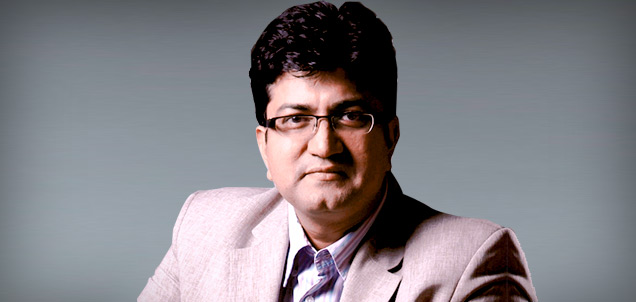
    Forty-one-year-old Prasoon Joshi’s has been a remarkable story. A young lad from the mountainous region of Tehri Garhwal (Uttaranchal), who once struggled to get a book of poems published, is not only heading a top ad agency today, he is much sought after in Bollywood for his superlative song writing skill.


    The Chairman and Creative Chief of McCann opens up on his multi-faceted existence, the challenges the ad world faces today, his approach to creativity and the things about the industry that disappoint him. Joshi also admits that ‘Bose DK’ made him frown. Despite his close friendship with Aamir Khan.


    By Anil Thakraney


    Excited about Milkha Singh?

    Yes, I have written the story, screenplay, songs and dialogue. It’s been two years since I started working on this project.


    Must have been a time-consuming project.

    Only in phases. One had to spend time with Milkha Singh, since this is a biopic. You have to know the person and his life very well. But there was enough time, and I only do projects which give me that kind of time. Because my first job is to run the ad agency.


    Don’t your big daddies at McCann get hassled with your moonlighting?

    No. In fact, I would say any intelligent boss would understand how it helps them in return. I do these things in my free time. Now, if this takes a toll on your free time, then that’s a choice you have to make. Today is a Sunday and I am sitting with you. After meeting you, I am meeting a musician who wants to collaborate. My wife understands this, my family understands this. This keeps me happy, and when you are a happy, satisfied person, everyone likes you. Your organization likes you, your wife likes you. I whistle at home and at work. People from my organization will tell you, no matter how difficult the problem is, I have a very positive attitude about life. And positivity happens when you are not frustrated. My organizational leadership has understood that this man has many needs. He is a musician, he is a poet.


    Which means you say no to many film producers.

    Yes. 90 per cent of them.


    You are the global creative director?

    Till now, I am the chairman of the global creative council. Soon this mantle will shift from me to our creative director of New York and London office.


    How exactly does the creative council work?

    You are like the global creative director for that period. You go through the work, advise people, send them feedback. There is a chosen set of seven or eight of us who meet quarterly and review the work. This was the idea of our new CEO, Nick Brien. It was his vision to start a council where the best minds of the company can collaborate.


    Don’t you want to play a global role now?

    I have been doing it. Working out of India, I am the global creative director. I am the Asia Pacific creative director as well. I heard this couplet when I was in college: ‘Phool wahi sar chadha jo chaman se nikal gaya, izzat usi ko mili jo watan se nikal gaya.’ And I thought this was wrong. Why do Indians respect only those people who leave the country? I decided I will be here, and I will do global work. In fact, I have been instrumental in getting the Commonwealth hub to Mumbai. This is an unprecedented collaboration between two rival groups, IPG and Omnicom. There will be four Commonwealth hubs around the world. Detroit, Milan, Sao Paolo and Mumbai. This means the global work for General Motors’ brands will be generated out of Mumbai. And I will head that.


    Why was the need felt for Commonwealth?

    What happened is that in the US, General Motors was being handled by Goodby Silverstein & Partners. And some other agencies around the world, including McCann, were handling this account. A collaboration of minds happened between Jeff Goodby, myself and a few others. And it’s interesting because Goodby is owned by Omnicom and McCann by IPG. The client felt that these minds are rare to get together, so why not start another set-up, which will be dedicated to GM around the world. So my ambition is to get India onto the global map, and not just Indians.


    What about growth plans for McCann in India?

    McCann has grown in leaps and bounds in the last three years. Last year we grew by 50 per cent, this year’s projected growth figure is 45 per cent. We are No 2 in Delhi. It’s amongst the top four agencies in India. And let’s not forget that McCann doesn’t have a history, unlike JWT, Ogilvy or Lintas. We are the youngest multinational agency in this country. We are fifteen years old, unlike the hundred year legacy of the others. Also, we are expanding beyond advertising. Into things like branded content and events. For example, we have launched ‘Chevrolet Jam’. What happens is that a veteran artist comes and introduces a young musical band, and then they jam together. And this not restricted to the club culture, it extends to the rural culture. There will be a series of such musical events, and this will finally lead to making of albums.


    You come from the Northern heartland, and this has played an important part in your success. Do you prefer to hire people from the North?

    We do hire people from the heartland a lot. We have a great combination of IIM grads and people who come from extremely different background, from smaller towns. This is because we have a large base of local clients. Dabur, Marico, TVS, Videocon, Britannia, etc.

     

    “We need IPR (Intellectual Property Rights). Our ideas need to be valued much more”

    Do you feel pressure has increased in the ad world? You said this to me when we met last.

    There is pressure of growth and it percolates down from the top. If the pressure is on the CEO, he expects more from his marketing head. Who then expects more from his team. And advertising being a very important part of the marketing mix, the pressure percolates down to the ad agency. There are aggressive growth targets. Also, people come and go very fast. The new guy comes in with new aggression, and he starts evaluating everything, even the ad agency. Which is why we need IPR (Intellectual Property Rights). In the older days, clients and agencies had a long term relationship. Today it’s different, you might be there for just one year, and the client continues to use what you created for him, and you hardly got returns for that. Our ideas need to be valued much more.


    “I think there is too much animosity in the ad world. This is the reason I desist from going for certain ad functions”

    Prasoon, here’s the problem: You ad guys talk a lot about these things but no one takes the lead in trying to change things. Shouldn’t you people get together and find solutions?

    That’s a good observation. I think there is too much animosity amongst each other. This is the reason I desist from going for certain ad functions. I think it’s high time we understand that together we will succeed. And if we are divided as an industry, we will sink. And I take part of the blame for this. As the youngest of the big agency leaders, I expected the older people to take the lead.


    Another observation is that you old world chaps have a TV fixation. And no one’s even trying to understand the digital space.

    I am a geek, I was the first to launch a virtual office in Asia. But let me speak for everyone. Age has nothing to do with it, and it’s not a TV fixation. Also, I must tell you Indians are very adaptable people, history will tell you we are the least resistant race. We have been invaded, we have dealt with many cultures, and we have emerged victorious. So there’s no resistance to digital. The needs are very complex. There are certain products which do not have any need for digital. In some categories, it’s really needed. The market needs out here are very different from those in the West. If we are doing a lot of television, it’s because of the market. You know, my driver bought his first TV set only last year! But I must tell you, at McCann, we have moved away from the copy/art model. Now it’s copy/art/digital. So there are three people working together.


    “The younger talent is in too much of a hurry. Today the patience is not there, they don’t dive deep into problems”

    The biggest challenge facing the ad world today.

    Client relationships are becoming very short term. There used to be a time when you understood the brand, there used to be consistency of people. Too many changes are happening at the client’s side. As a result, new expectations keep coming up. So we are re-inventing the wheel far too often. Also, on the advertising side, the younger talent is in too much of a hurry. And I keep telling them to nurture a brand for some years, to understand it. Else you’ll have one-offs in your portfolio but not great campaigns. Today the patience is not there, they don’t dive deep into problems.


    We didn’t do well at Cannes this year. What happened?

    Well, our agency did win a Gold. We have to understand that a number of new media have emerged, such as interactive, digital, etc. We don’t have that much of work in these categories to begin with, so our number of entries in these categories is very less. What worries me however is that we should be doing much better work on television. We need to introspect on what went wrong.


    Never thought of moving full-time into Bollywood? Surely they pay you very big bucks now.

    I have a lot of respect for Bollywood, and they have given me a lot of respect. The masses have accepted my work and I have won awards. But I don’t want to do too much of work in Bollywood, not every film excites me. Tell me which film you have seen, for which you wished Prasoon had written the lyrics? You’ll probably come up with one or two names. Also, I love advertising, I like the adrenalin, it keeps me on my toes. I come to know about the global perspective, the changes, it’s a business which keeps you alive and kicking.


    Given your sensibility, a song like ‘Bose DK’ must have appalled you. Did you speak to your friend Aamir Khan about this?

    I honestly expressed my point of view to him. I told him I would never do this. Because there is something called sanctity of a language. I feel it’s easy to abuse it and difficult to maintain it. I am of the view that you have to entertain people, but tehzeeb ke daerey mein rahe ke. But Aamir’s an individual, he believed there’s nothing wrong with it, and that he was having fun.


    An honest review of Satyamev Jayate.

    I believe in people who do something, I am against arm-chair criticism. Aamir went ahead and did something he believed in. And hats off to him.


    You really think the programme will make a difference on the ground?

    Will things change overnight? No. A taxi driver in Delhi asked me to thank Aamir on his behalf. He said, on the issue of child sex abuse, he (Aamir) told his children things which he was not able to do himself. So at the grassroots’ level, it does make an impact on the psyche of people. How far will this get manifested, is very difficult to measure.


    What is the ad sensibility you bring to Bollywood?

    Simplicity and single-mindedness. Every song of mine communicates something, and it’s crafted in a way that the message doesn’t get garbled.


    One Indian creative director you admire.

    Piyush Pandey. He leads by example, he is such a hard working man. He sweats it out. And that’s exactly what I am today.


    Why did you leave him in that case?

    After a point, you have to find your own world. My upbringing was of a certain kind. Piyush had the language of the street in him. I wanted to bring in literature and music. I wanted to bring in my surrealism, my minimalism. Which is why I chose McCann, they offered me an open platform, a canvas to paint on.


    One thing that disappoints you about the Indian ad world.

    There’s unhealthy competition. The talk is less constructive and more destructive. One-up-manship is the name of the game. We forget that this is only advertising, and we aren’t at war. When I asked a few of my clients to come to Goa Fest, they said, “You people are too much into mud-slinging and we don’t want to be a part of that.”