Author: mxmadmin

  • Arvind eyes Debenhams, Next’s businesses; to take over brand rights, stores from Planet Retail

    By Boby Kurian & Reeba Zachariah


    Arvind’s Sanjay Lalbhai may acquire the operating stores and rights of British fashion retailers Next and Debenhams from Planet Retail, triggering another retail industry consolidation , said two sources directly familiar with the developments.


    Arvind’s wholly owned subsidiary Arvind Lifestyle Brands is holding advanced talks to buy a large portfolio of retail assets, including Nautica stores, from Planet Retail. “Arvind is doing due diligence to takeover operations of Next, Debenhams and Nautica, and a deal could be clinched shortly,” said one of the sources mentioned earlier.


    Mr Lalbhai’s move follows Aditya Birla’s decision to buy department store chain Pantaloons and Reliance Retail’s continuing strategy of striking partnerships with a slew of international fashion brands. Arvind would gain control over high-street brands providing fresh impetus to its fashion and retailing business, which brought in more than Rs1,200-crore revenue in FY12.


    Arvind Lifestyle Brands owns value retail chain Megamart and a slew of international and local brands, such as Gant, Arrow , US Polo, Elle and Flying Machine. It also holds a 50 per cent stake in Tommy Hilfiger’s India unit.


    Arvind declined to comment on speculation, while Planet Retail chairman Ramesh Tainwala could not be reached for immediate comments.


    Mr Tainwala, who controls Samsonite’s Asia-Pacific and West Asia business, and NRI entrepreneur V P Sharma equally own 97 per cent in Planet Retail. Kishore Biyani’s Future Group holds the remaining 3 per cent. Planet Retail controlled several international retail brands through licensing deals, but the potential sale to Arvind would leave it with fewer brands like The Body Shop and Accessorize. The Mumbai-based lifestyle retailer had earlier sold the operations of another UK retailer Marks & Spencer to Reliance Retail.


    While Debenhams plays in the department store segment , Next, which retails home products and accessories globally, have been a pure-play clothing retailer in India. Both brands have underperformed with very few stores, even after five-six years in the country. Sources said Arvind would acquire stores with revenue topping Rs130 crore once the takeover of the three brands was finalized.


    The transaction will be multi-pronged with Arvind acquiring existing operations – stores and some staff – from Planet Retail. Arvind would simultaneously enter into fresh agreements with Next, Debenhams and Nautica (owned by US-based VF Corp) to strike a fresh licensing agreement and business development plan for India.


    Business valuations in fashion retailing are 1-1 .6 times topline revenue, according to industry experts.


    Wholly owned subsidiary Arvind Lifestyle Brands are already in talks to acquire some staff and retail assets, including Nautica stores, Arvind will also ink fresh deals with Debenhams, Next & Nautica for India business.


    Source: The Economic Times

    Copyright © 2012, Bennett, Coleman & Co. Ltd. All Rights Reserved


  • Anil Thakraney: Crime instigating journos need to be punished

    By Anil Thakraney


    We first heard about it during the Assam molestation incident. Now the same allegations are being made about the Mangalore party bust, where some youngsters were beaten up and molested by a bunch of goons. That, if not directly provoked, both incidents were encouraged by the media persons present out there. Find that surprising? I don’t.


    Here’s the problem: There are TOO many news channels in India. National and regional. No other country in the world has such a large number; it’s going insane out there. And to think more stations are waiting in the pipeline! Quite naturally, most of these channels are bleeding very badly; the market simply cannot support such a huge crowd. In such a crazy scenario, pressure on content heads to deliver viewership numbers is intense. And this pressure percolates down to the reporters and the camera crew on the ground. A couple of young TV reporters have told me, in private, that they have been warned to either ‘somehow’ get juicy stories or face the axe.


    And I believe this is the key reason behind the nonsense we are witnessing on the idiot box. It’s a very tempting idea. Not being able to get a story? Let’s create one. And we’ll worry about the consequences later. It’s the question of jobs and livelihood, food has to be put on the table, boss. So what we are witnessing these days is the inevitable result of the news channel madness in India.


    So what’s the way out, given that we are a free economy and entrepreneurs have every right to set up their own news shops? It’s simple, and the answer has already been given in the UK. When Murdoch’s editors crossed the Lakshman Rekha of ethics in journalism, they not only had to accept the closure of a newspaper, some senior staff members are staring at a prison sentence.


    Ditto needs to be done with editors/reporters who are found to have abetted or encouraged incidents like the ones in Assamand Mangalore: Loss of broadcast license for the channel. Jail term for the staff members found guilty. There is no other option. Inaction in these matters endangers the safety many young girls in this nation. And I am very sorry to have to state this.


    * * *


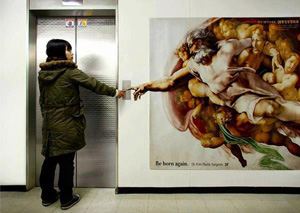
    PS: Art has often inspired advertising across the world, and particularly so when it comes to legendary paintings. This cult Michelangelo artwork has been used many times over, but must say it works perfectly for this particular client. Innovative thinking!


  • GullakMaster to launch in August

    By Tuhina Anand


    The enforcement of DND (Do Not Disturb) in many ways has spelt doom for SMS marketing in India. However, the same played a key role in the genesis of GullakMaster – a customer engagement platform for merchants. Still being piloted in Mumbai, GullakMaster is due to be launched in the last week of August in Mumbai followed by Bangalore and Pune and then in a span of six months time in Delhi and Ahmedabad.


    The venture is being spearheaded by Abhishek Dadoo who explained it as ‘intelligence on SMS’. Explaining the mobile advertising network, he said: “There is still a big market for SMS advertising which remains untapped because of the restriction. So what we are offering is on demand advertising. We ask permission and then sms promotions tailor made to the person’s requirement. We have TRAI approval and we do not fall into the DND list as we are not sending unsolicited messages.”


    So how does GullakMaster work? To start with when one visits a mall, if GullakMaster has an association there, then one could see information as one enters the mall. If interested, one could sms on the number given and get information on the deals available in the mall. Mr Dadoo explained that the concept can be taken beyond the malls; in fact anywhere that is close to the merchant’s location.


    For starters, the company will be advertising heavily in malls and outdoor locations like auto rickshaws to spread awareness of their offering. The same will be taken to the radio medium if their funding plan comes through.


    Mr Dadoo dubs his offering as providing a dashboard to the merchants to communicate to potential customers in an effective way. The company is a subsidiary of Dadoo Pvt Ltd, which is a Singapore-based company. The company is also eyeing the markets in Indonesia and Philippines.


  • InMobi acquires Metaflow Solutions

    By A Correspondent


    Bangalore-based mobile advertising network InMobi announced the acquisition of Metaflow Solutions, leaders in mobile app management and distribution solutions.


    Metaflow technology simplifies the global deployment and content management process for developers through its intelligent submission tools optimised through six years of operations, servicing the biggest publishers in the market.


    Metaflow’s management and distribution of content to consumer portals has consistently provided the fastest, lowest cost way to publish apps to hundreds of independent, OEM & operator app stores across the globe. “As a global leader in the mobile advertising space, InMobi is committed to growing the mobile ecosystem. Our acquisition of Metaflow Solutions will help us to continue to rapidly expand the distribution and monetisation of content for our developers and publisher partners,” said Naveen Tewari, Founder and CEO at InMobi.


    The Metaflow team will become an integral part of InMobi’s developer oriented efforts, led by Piyush Shah, VP and GM of Developer Platforms and Performance Advertising at InMobi. Mr Shah said: “With the recent acquisition of MMTG Labs, along with today’s acquisition of Metaflow, we will augment our value proposition by offering highly compelling distribution, monetisation, and engagement solutions to app developers globally.”


    “At Metaflow, our mission has been to simplify and unify the complex process surrounding content management and deployment of apps to a distributed and highly fragmented marketplace. The global reach and technology backbone provided by InMobi is hugely exciting for us. InMobi provides app developers with even greater opportunities to acquire millions of users and monetise their exciting apps,” said Charles McLeod, CEO at Metaflow Solutions.


    The Metaflow Solutions team will relocate to the new InMobi London office.


  • Timmy Kandhari quits PwC India, Smita Jha to take over

    By A Correspondent


    After a 15-year long stint with PwCIndia, executive director and leader, Hospitality and Leisure, Timmy S Kandhari has decided to move on. Mr Kandhari confirmed the same to MxMIndia.


    Furthermore, he told MxMIndia: “Ms Smita Jha will be taking over. She is currently a Director at PwC and she would be taking over as Head of Entertainment and Media.”


    Ms Jha currently holds the position of Director, PwCIndia. Like her predecessor, she is also a qualified Chartered Accountant.


    Citing personal evolution as one of the main reasons to move on, Mr Kandhari said: “One continually wants to evolve oneself as a professional and this move is largely to get closer to the next step.”


    Mr Kandhari did not disclose the next position he will be taking up but he said he might be able to announce the same in the next few months.


    Mr Kandhari is a qualified Chartered Accountant with over 20 years of experience. His past experience encompasses a range of industries including Healthcare, Consumer & Retail, Liquor, Auto and Entertainment & Media. He has been a frequent speaker on E&M platforms like FICCI, CII, CASBAA and so on. He’s also a member of the CII Entertainment and Media Committee.


  • The Anchor: 5 reasons why mobile advtg has a gr8 future

    By Sunny Nagpal, Co-Founder & MD, Httpool India


    We’ve come a long way since Martin Cooper invented mobile phone in 1973 as a portable handset, to early 1990s when they were actually available in the markets, or in 1994 when the first SMS was sent in Finland to 2000 when mobile advertising made its debut and still grows strong in the marketing scenario of the world.


    We have seen an exponential growth in mobile web and app usership, through the release and distribution of smart phones and open platforms like Android.Mobileis shaping up as an exciting medium for advertising and we have seen that the smart brands have already taken these first green shoots of growth as a sign to start investing in the medium.


    Mobile advertising, undoubtedly, has a great future as it begins to prove itself as the most effective digital advertising channel.


    Here is why the advertising on cellph”one” will be the most preferred one:


    1. One on One: (Personalized, location sensitive)

    One of the major reasons why mobile ads are so effective is largely due to mobile phones allowing advertisers to target their audience with messages that are intended just for the user. Users generally pay more careful attention to mobile ads (example: banner on a notification page). You see people adding utility and productivity tools to their phones in a very personalized manner. Advertisers have already started focusing here, creating such tools, applications which work as enhanced sponsorship and works well with mobile because it is such an intimate environment – people are looking to add more content to their phones and personalize them.


    Moreover, a mobile phone can provide information about the user’s movement and changing location that can be used for timely offers, such as a discount at a store or at a cafe in the food court as a user enters a mall.


    So, the next big thing is location-based marketing. This means the example that is often cited of someone walking past a coffee shop and getting a text telling him to come in and have a cup of coffee is not far off. Advertising for small local businesses can have a much stronger business case.


    2. Many to One: (Manifold Messaging)

    There are multiple points to deliver your brand messages, unlike other media, mobile advertising has a much richer menu of options to offer advertisers: voice (visual voicemail, ringback tones, missed call notifications), text (SMS), multimedia messaging (MMS), mobile Internet, billing touchpoints, handset clients and more.


    This allows an advertiser to create a trail with multiple messages delivered to same user through above means. However, here the attempt should be to deliver them as seamlessly and non-intrusively as possible.


    There are ads that can come across as real-time situations such as billing and location triggers, and can be highly effective in meeting immediate real-life needs and maximizing response rates.


    3. Two sided one: (Interactive)

    The interactive nature of the mobile phone removes barriers to responding and purchasing through direct user response capabilities.


    As mentioned, mobile’s targeting technologies make ads more relevant to users, while also delivering successful campaigns for advertisers. With mobile, the ads can become more effective and relevant to the user when they can engage in a conversation with the person with regards to the advertised product or service. Mobile advertising allows for users to click/touch the banner ad and then is prompted to their dial screens with the number already configured into their dialers. This functionality is called Click to call.


    There are also possibilities to do campaigns with a click to SMS/Purchase/Download/View Video/Email functions as well, all depending upon the campaign objective. Instant interaction will make the lead more valuable and in result lead to an increase in sales.


    4. “That” one: (Targeted)

    A mobile phone provides extremely granular details about the user. This allows advertisers to know exactly who the users are in order to target ads effectively. They can thus target by Geography (Country, City), Carrier (Airtel, Vodafone and so on), Channel (category of content – Entertainment, Business Finance, Travel and so on), Device (Nokia, Samsung, Micromax, iPhone and so on) and Operating System (IOS, Android, RIM, Symbian).


    Because targeted ads are inherently more relevant, they are more interesting. Users pay more attention to them, and advertisers get a higher response rate. This makes the medium really cost effective and ROI driven.


    5. Everyone has one

    Well, we all know that by now! Very often, we see people having more than one mobile phone. While volumes are great and will give you that reach, it is the way people use their phones that is of more interest to the advertisers. Mobile phones today are central to many aspects of people’s lives, and are a key access point for most media consumption – information, entertainment, communication, transaction, self expression and socializing.Mobileis a huge part of people’s live already and it continues to evolve its purposes.


    Think most developing countries. Think India, where most cities are still fighting to meet their power needs. In such times, mobile phones come up as a vital source of information, utility and entertainment. Broadband is still to cover whole of India, but mobile providers with 3G have changed the scenario of Internet browsing. This will only get better with time.


    Historically, it is clear that people don’t like to pay for content. So then, we shall see advertising fund the mobile content as it funds TV, Print and Online.


    Mobile advertising in current scenario remains a part of overall digital mix, rather than a standalone platform and therefore advertising spend is largely contingent on, and limited by, overall media budget mix. However, this is slated to change soon, with most advertisers and agencies realizing the effectiveness of the medium both as a standalone and an integrated channel. We see major agencies appointing media planners dedicated to mobile, and it would be an understatement to say mobile advertising has a very bright future globally and in India.


    And for the advocates against the perception, here is what Thomas Watson, chairman of IBM in 1943 said: “There is a world market for maybe five computers”.


    Sunny Nagpal is co-Founder & MD, Httpool India

     

  • Paritosh Joshi: Not another piece about the Ratings Battle

    By Paritosh Joshi


    You’ve already read enough of those so I’m not about to inflict one more upon you.

     

    However, if this week’s piece sounds like a lesson in elementary Economics, so be it. You were warned.


    Prices are not divinely ordained. As Adam Smith taught us, people enter a market when they wish to sell or buy goods or services. A process of negotiation follows. This depends at least as much on perception as it does on objective reality (whatever that is). An Alphonso orchard owner in Devrukh Taluka of Ratnagiri District believes that the output is plentiful, demand is scanty and he will be fortunate to sell his output at whatever price the Arhati (broker) offers him. You, in Delhi or Mumbai believe that unseasonal rains destroyed the crop, all good produce was immediately exported to grace the plates of Sheikh Al bin Mighty in wealthy Saudi and you must feel grateful for a dozen prized fruit at Rs1,000. So much for objective truth. The story can have a very different outcome if you add just one ingredient: inquiry. The orchard owner (who now owns a cell phone) calls up his office boy cousin in BKC who shares the street price in Mumbai… Yup, you can infer the rest.


    When people sell goods, they have the ability to warehouse their produce. I can sell my mangoes today or I can choose to hold on to them ’til tomorrow in the hope of a better price. When people sell a service, this is not possible. As a daily wage worker, I cannot carry forward my 10 hours of work from today and then do 20 hours for a higher realisation tomorrow. In general, therefore, services are far more perishable than goods. Their instant or near-instant perishability frequently translates to service providers being extremely vulnerable to extortionate price negotiations with buyers. This is where things begin to get really interesting. When the ‘perceived’ nature of a service becomes exceptionally rare, the price it commands becomes truly astronomical. A brilliant lawyer who wins suits for megacorporations and global telcos bills over a Million Dollars a week. We all pitch in, indirectly and sometimes directly, to pay a few exceptional, and exceptionally fortunate, cricketers eye-popping sums to bowl or bat. MJ, Elvis, Frank and Janis continue to weave musical (and commercial) magic from beyond the grave, their services having been warehoused to meet the needs of our hungry ears for years and years. Heck, even weight loss advisors called AM or VL pull down zillions to help you lose what you should never have gained. Most times, these incalculably precious eminences share a common secret sauce. Their raw material, which was admittedly of rare quality, has been honed and polished to a rich lustre by various players in the Media & Communications industry. They have in fact crafted the ‘perception’ of exceptional rarity that translates into astronomical price. They are the impresarios, the image-makers, artisans of myth, masters of smoke and mirrors. In a word, they are someone like you.


    If you were an extraterrestrial, say Ford Prefect, the galactic hitchhiker from Douglas Adams’s eponymously named trilogy in five parts, who happened to stumble upon the Indian M&C industry, what might you see? A bunch of talented creative minds building wonderful brand successes for their clients? Or a bunch of neurotic, insecure sales people unable to defend fair profit margins and constantly prostrating themselves before the extortionate buyer up the value chain from them?


    More likely the latter than the former, I have to say with the deepest regret.


    The very people who create images for their clients, thereby making them immune to the vagaries of elastic demand and endowing them with that ineffable je ne sais quoi, are the same people who have reduced their own business to a commodity-esque fish market.


    How did this come to pass? A friend worked for HTA Bangalore. Ivan Arthur, then NCD and already a legend of the industry, was visiting the office and decided to drop in on a Saturday morning. Said friend was toiling away getting press advert artwork pasted up in studio to hit material deadline for a Sunday Deccan Herald insertion. Ivan asked friend what she was doing in the office on the weekend. Friend meekly acknowledged demands of tyrant client who expected agency to be at his beck and call… around the clock. Ivan offered these three comments:

    Weekends are meant to regain the intellectual and emotional energy expended during the week, so that the professional can come back fresh and rarin’ to go on Monday.

    If you don’t respect yourself, why should anyone else?

    Abject surrender before the client is not only unjust to the agency; ultimately it is unjust to the client too.


    Read this metaphorically rather than literally and then address these questions to yourself. When the first agency offered to drop its commissions from 15 per cent of gross, (17.65 per cent of net billing) to some smaller number, the agency took a huge step back for the industry. When those commissions kept heading south for many years to come, a whole generation’s future in the industry was blighted by the long shadow of the small League of Damned Arbitrary gentlemen. I hasten to add that this kind of extortionate bullying of service providers was not just about agencies; the broadcasters succumbed to it too.


    No wonder then that as an industry, we have brought ourselves to this parlous place.


    We have cheapened ourselves.


    Paritosh Joshi was until recently CEO, Star CJ. He has been a marketer, a mediaperson and a key officebearer on industry bodies. He is Strategic Advisor, Ormax Media. He can reached via his Twitter handle @paritoshZero


  • The Anchor: Viren Popli on 5 things mobile advertising in India should adopt

    By Viren Popli


    It is not internet advertising:

    Don’t treat it like internet advertising – banners, spam, CTR, CPI. It didn’t work, doesn’t work and will not work.


    More co-operation needed:

    Handset manufacturer, content owner and telecom companies need to work together and maybe share 30-30-30 and give the tech/reseller 10.


    Don’t interrupt conversation:

    Use waiting times when we are staring at a blank screen, or listening to a dumb audio sound for advertising. Keep it out of my real conversation.


    Consumer is the king:

    Allow consumers to select brands he wants to hear from, and ads he wants people to see when they reach out to him. After all, many of us use brands to define our personality – give him a piece of the action.


    More engineers in creative agencies:

    Have creative agencies hire more engineers and put them on par with the “creative types” – create internal stress. You can’t separate the technology from the message. So no matter how interesting the idea… If the technology doesn’t deliver, neither will the message.


    Viren Popli is Senior Vice President – Strategy and Market Development at Mahindra & Mahindra


  • Bata calls for a creative partner

    By Shubhangi Mehta


    After a silent phase of a couple of years, Bata has invited agencies to handle its creative mandates. The account size for the same is estimated to be Rs8-10 crores. Industry sources close to the development have confirmed the news to MxMIndia.


    The last that was heard from the brand was in 2009 when it associated with Promodome Communications as its creative and media planning and buying partner. Before that the mandates were handled by Saatchi & Saatchi. Both the agencies are not participating in the pitch this time.


    Prior to Saatchi, FCB Ulka (now Draftfcb Ulka) used to handle the account. JWT and Euro RSCG have also been associated with the brand in the past.


    Set up in 1931, Bata India is a major manufacturer and marketer of footwear in India and is one of the largest players in the Indian shoe market. Though Bata India has seen lean times in recent years, it has managed to generate high recall for the Bata brand. It boasts of a retail network bigger than any other in the country.


  • Debrief: Reliance Comm: Girlfriend from hell

    By Anil Thakraney


    Reliance Communications has been running a campaign to hawk their various mobile products/services. All the ads feature their brand ambassador, movie actress Ms Anushka Sharma. And she does what she does best in every single commercial for all the brands she endorses: to play the feisty, high attitude chick. No issues with that, it’s a persona the actress has created for herself, so it makes sense for brands to exploit it. But in the Reliance campaign, they have gone totally over the top.


    What Ms Sharma does, in order to establish Reliance’s superiority over their competitors, is to insult her boyfriend (who uses rival brands). She does this in every single ad in the campaign, but the one for the 3G Tab has pushed things too far. She projects her boyfriend as a total loser; she humiliates him, and then to screw him even more, broadcasts her feelings to all her friends and family members. Any self-respecting chap would want to bury himself in the closet hole.


    Let’s get one thing out of the way: I am all for feminism, and girl going one-up over her man is fun stuff, so no issues with that. But I have reservations on militant feminism, where the woman abuses her man, treats him like shit and walks all over him. That’s repulsive, not cute. I am sure there are some wicked women like that out there, but must a mass advertiser feature such a sadistic creature? Does this generate brand goodwill? I seriously doubt it. In fact, I have read quite a few tweets (from women!) that express rage over these ads.


    [youtube width=”400″ height=”225″]http://www.youtube.com/watch?v=EURnQGeiwxU[/youtube]

    Reliance needs to ask Anushka Sharma to tone things down. Sooner the better. Let her be spunky, not offensive.


    Rating: (On a scale of 1 to 5): 1. Nasty, off-putting campaign.


  • Gagan Narang’s Bronze may well win him endorsements

    By Namrata Singh & Dipti Jain


    Gagan Narang (File pic: Fotocorp)

    Indian shooter Gagan Narang may have won a bronze at the London Olympics, but back home it has assured him of a golden opportunity with respect to brand endorsements. With this win, Narang, who was so far not in the spotlight for endorsements, joins the growing list of noncricket sports personalities whose value of endorsements have got a boost each time they clinched an Olympics medal.


    After Abhinav Bindra brought home a gold medal in the 2008 Beijing Olympics, endorsement deals worth Rs1 crore are understood to have come his way almost immediately after the win. Given this precedent, Narang, who opened India’s account at the London Olympics on Monday, may well rake anywhere between Rs25 lakh and Rs50 lakh per endorsement , media industry experts told TOI. The endorsement fee of athletes in sports other than cricket is said to be in the Rs10-20 lakh range. So for a nation where cricket is a craze, endorsement values of Rs25-50 lakh for a sport like shooting is certainly laudable.


    “After the medal win, Narang’s popularity in the brand world will shoot up 100 times. As of now, Narang has hardly been present in the brand world. This win will give him a push into the endorsement market,” said Navin Khemka, managing partner, Zenith Optimedia, a media agency.


    India’s growing list of noncricket stars used in brand endorsements include boxer Vijender Singh, who won a bronze medal for India in 2008, and Rajyavardhan Singh Rathore, who won a silver medal in 2004 Athens Olympics.


    “There is a lot more awareness , especially among youngsters and this will help sports like shooting with more endorsements,” said Melroy D’Souza , COO, Professional Management Group, a sports management company that handles Bindra’s brand endorsements.


    Supratik Roy, director, Affinity Cinemedia, said: “Considering that shooting as a sport does not have as much mass appeal as cricket, the popularity of sportsmen like Narang will remain concentrated on premium and niche categories like luxury, lifestyle, banking services, computers and such others. If the number of wins from India is not too big, Narang has a shot at earning more brand value.”


    Narang’s newfound glory has already attracted Milagrow HumanTech which, in consultation with Narang, will launch a special edition of TabTop PCs and robots in his honour. While this is not strictly a brand endorsement, 5 per cent of the sales proceeds of the products will go to Narang as part of the special promotion, said Rajeev Karwal, founder & CEO, Milagrow Business & Knowledge Solutions.


    Samsung, which is a global sponsor for the Olympics 2012, said the win will boost Narang’s image. “Narang is among our Samsung Olympic ‘Ratnas’ and we are sure a lot of brands will want to sign him up after the win,” a Samsung spokesperson said.


    Source: The Economic Times

    Copyright © 2012, Bennett, Coleman & Co. Ltd. All Rights Reserved


  • Broadcasters set to mix ideas & business @ITF

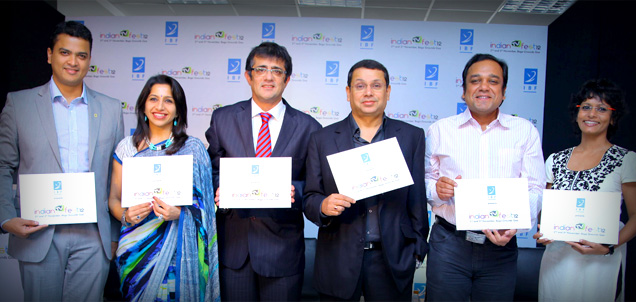
    Announcing the Indian Televsion Fest (from left to right): Keertan Adyanthaya, Monica Tata, Sunil Lulla, Uday Shankar, Punit Goenka and Lydia Buthello


    By Johnson Napier


    The god-like status that the medium of television commands in India today is indicative from the endless attention that gets showered on it from all and sundry. Whether for the advertisers who are willing to bend rules and swing  to their tunes or for the viewers who can take a liking to anything that’s thrown across at them (well, almost), the Indian broadcast industry is calling the shots in a manner that is pivotal to its growth.


    In fact, the popularity that it commands can be gauged from the growth that the medium has been throwing up in the past five years, which has been in the range of 12 per cent. This of course is backed by its ability to occupy a lion’s share of the ad pie and still remain a favourite medium for the advertisers.


    But while there are some obvious highs that ensue from the medium, the medium has been at the receiving end as well. Like the constant criticism it attracts for not being able to display a show of unity to voice common issues rather letting personal goals take precedence. Then there are also those who question the absence of a platform for the industry to come together and air and share views of common interest. But the last peeve may well be a thing of the past with the announcement of the Indian Television Fest 2012.


    The Indian Broadcasting Federation (IBF), led by president Uday Shankar of Star India and core festival committee members comprising Sunil Lulla of Times Television Network, Punit Goenka of ZEEL, Keertan Adyanthaya of NGC Networks, Monica Tata of Turner International India and Lydia Buthello of Star India announced the first-of-its-kind event for the industry. The two-day festival will be held at the Baga Grounds,Goa on November 2 and 3, 2012.


    The two-day fest would be a unique platform for the Indian and global broadcasting industry to network and exchange ideas through engaging panel discussions and master classes. Renowned names from India and across the globe are expected to participate in the mega event. And since it’s Goa, with the inviting beaches for company and some fun.


    Throwing open the idea to the gathering, Mr Shankar began by thanking his core team members, without whom the fest wouldn’t have been a reality. Explaining the thought process behind the exercise, Mr Shankar said: “The idea has been in the pipeline for almost a year now. We felt it was the right time to launch Indian Television Fest as the industry has grown big enough to manage an event of this scale. It basically stemmed from the need to create a platform where the entire broadcast industry could come together under a single roof – irrespective of the organisational and competitive background – so that there could be co-sharing and exchange of ideas and conversations on how the industry can take a big leap into the future.”


    According to him, what would make the event special would be its ability to get together honchos and industry persons from different verticals under television to come and be a part of the give-and-take. He affirmed: “Apart from some familiar and popular names the event will see the best in broadcasting brain trust from India and the world descend at the venue. The ultimate aim of ITF would be to service the larger Indian broadcasting community. It will also be driven with the dual need of being business-minded in its approach while at the same time having a social connect, as we believe the two are interlinked and cannot work in isolation from each other. All in all, we plan to make this event truly iconic in nature.”


    Giving a lowdown on the two-day event, Monica Tata of Turner India began by bringing to light some of the high points of the Indian broadcast industry. Providing a bird’s eye view of the current media scenario, she said: “India is the third largest market for media behind US and China. It has reported a growth of 12 per cent in the last five years which will continue to keep swelling. Further, the country boasts a reach figure of 500 million and is estimated to be worth Rs33,000 crore. This number is expected to triple to almost Rs100,000 crore by 2017. Needless to say there are tremendous opportunities that will enable the industry reach this figure in the coming few years.”


    Highlighting the tremendous opportunities that the Indian market presented for the future, Ms Tata said: “India has a penetration level of just 60 per cent leaving a lot to be achieved going forward. Further the C&S households are expected to grow to 88 per cent from the current 81 per cent. Also, the average time spent on television viewing is still low at 150 minutes compared to other countries that are almost double the number. And finally, with digitisation, DTH, HD taking off in a big way coupled with the unhindered growth of regional channels should see the industry enjoy prime status in the near future.”


    According to Ms Tata, some of the key themes scheduled at ITF include: best practices and masterclass that’ll be weaved around core areas of content, distribution, revenues, technology, etc; presence of visionary speakers like James Murdoch of International News Corporation, Andy Bird of Walt Disney, Hugh Johnson of Channel 4, Michael Lynton of Sony Corporation of America, Subhash Chandra of Zee & Essel Group, etc; debates and conversations; interaction with regulators and policy-makers; and finally encouraging cross-genre ideation.


    Presenting his viewpoint, Sunil Lulla of Times Television Network said: “There was no platform as yet in India where the issues and concerns of the Indian television industry were being raised and addressed. ITF will be a platform where one can learn, interact and demonstrate the road for the future. Three factors that’ll drive this event include the need for conversations, need for confidence to hold an event of this stature and need for commitment from the industry to take this industry from Rs33,000 crore to Rs100,000 crore by 2017.”


    On the key highlights to be expected at the event, Punit Goenka of ZEEL said: “We all know how New Media is going to be the platform of the future and we also know how regionalisation is going to take the industry further…and since regional has a lower base it is growing faster than the other genres. However, there are avenues that we need to discuss. Nobody has an answer as to how we will reach the Rs 100,000-crore mark but one has to start the process of thinking about it.” When asked if it would be a practically possible to reach the Rs100,000 crore mark in a short span of four years he said: “We have to talk about it and see how we get there. Nobody has an answer as to how we would get there. But unless you talk about it and bring it up in discussions how do we even make a beginning to reach there? I think the end goal is not important; it’s the journey which is going to be important.”


    When asked on the initial response that the event has managed to generate, Mr Lulla said: “Members from the broadcast industry have shown tremendous enthusiasm to the initiative, which can be seen from the initial buzz that is being created where registrations are concerned. As you know, we are a little late industry as we like to start things a little later. We hope the television industry supports us in a fashion by sending more members to attend the event. We have fantastic line-up of speakers from India and abroad; and of course, we would like the industry to stretch themselves a bit and sponsor many other themes and elements that we have lined up out there.”


    Mr Lulla added: “As you know, we are always a last-minute booking.com industry, so it’ll be a challenge to get a lot of people to attend the event. Also, there will be the challenge of generating advertising revenues so that we can stage the event successfully. But we are confident of putting up a successful event.”


    On the benefits that will accrue to IBF from the event, he said: “What IBF will particularly benefit from is take the ideas that come out and find out what will be the cornerstones for the industry going forward and what will become items of agenda. What people who come there to attend the event to take off is personal learning – so there will be ideas, new friends will be made…in all, it will be a mind-opening event, so to speak.”