Author: mxmadmin

  • Rumour Central: N P Sathyamurthy (Sathya) to head media across Mudra

    By A Correspondent


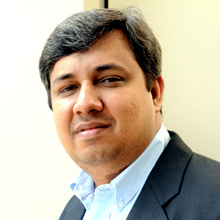
    Veteran media analyst and planner N P Sathyamurthy is reportedly moving on from Lintas Media Group (LMG). Sathya, as he’s popularly known in the trade, has been COO with LMG and CEO with Karishma Initiative and has worked with the media agency since October 2007.


    Although an official spokesperson at LMG vehemently denied the development, MxMIndia learns that Mr Sathyamurthy may have in fact accepted an offer from the Mudra group. The role at Mudra, it is believed, is a more challenging one and will require work across media and the diverse interests of Mudra.


    Prior to his current assignment, Mr Sathyamurthy was exec director at carat and director-general with MRUC from March 2003 to September 2005. He has also worked with Euro RSCG-MPG, O&M, Mudra, Cadilla Labs and a four-year stint at Heinz.


    While he is known to be a master at dissecting numbers, Sathya (Sathyamurthy Parthasaradhy Namakkal being his full name) is educated to be a zoologist. An MSc from Annamalai Univ, he has done his bachelor’s at the University of Madras having studied at the Presidency College in Chennai.


    Although his last day at LMG is not known, sources inform that he is likely to join by Mudra next month or latest by February 2012.

  • Suresh Balakrishna to join LMG, Premjeet Sodhi likely to replace NP Sathyamurthy (who is joining Mudra)

    By A Correspondent


    Senior mediaperson and former chief operating officer of Mail Today, Suresh Balakrishnan is getting back to the Lintas Media Group fold. He is likely to be CEO of one of the agency’s arms and will report to LMG chairperson Lynn de Souza.


    Confirming the news to MxMIndia, Mr Balakrishnan said he’s looking forward to returning to LMG after a gap of nearly a decade.


    In his 25-plus year career, Mr Balakrishnan started his career in publishing with The Times of India group and spent a fair amount of media agency business at Initiative Media. After he quit Mail Today last year, he took a sabbatical and taught media management at the Symbiosis Institute of Mass Communications amongst others.


    Meanwhile, as reported by MxMIndia on December 15, N P Sathyamurthy is moving to Mudra. He is likely to be replaced by Premjeet Sodhi who is currently with LMG as president, The Collaborative. Yesterday, LMG also announced the elevation of Deputy CEO Sudha Natrajan to CEO of Lintas Initiative Media.


    Image courtesy: Stratagem Media


  • Kotak Mahindra: See you, say me

    Elizabeth Venkatraman, Head of Marketing, Kotak Mahindra Old Mutual Life Insurance Ltd


    Campaign

    Kotak Mahindra


    The Insight

    We had conducted in-house research, the findings from which provided the stimuli for the campaign. The research threw up the following findings: In today’s recessionary phase the value of money is reducing, and I am looking for a way to not just beat inflation but actually grow the value of my money to maintain my lifestyle and take care of my needs. The global economic situation continues to be uncertain and with that comes job and income uncertainty and I am looking for a way to beat it. My own needs are growing with time – both aspirational needs such as a better car, new house etc. and non-aspirational such as growing school fees, medical fees etc. and the pace of organic income generation is not keeping pace (salary) and I need supplementary income


    The Creative Concept

    Arising from the Insight, the creative concept: In today’s day and age, work life revolves around targets, long working hours and hard to achieve deadlines. And all this even while we have responsibilities towards our home, family and friends. The pressure is even harder to handle if one happens to be the sole earning member in the family. In such times we often wish to have another like us in our lives who can take the pressure off once in a while and bring in some additional income.  Although as a brand we understand that no plan can ever replace or be what you are for your family, but a guaranteed plan such as ours can provide that much required additional help.


    The Product Proposition

    Our flagship product for the year, Kotak Assured Income Plan is a guaranteed plan with a 30-year term. With this plan you can earn a fixed amount every year starting with the 11th year, for a period of 20 years. The guaranteed aspect of the plan lends it a surety typically associated with the income you earn at work; and hence we had the idea to position it as a second income which is guaranteed. The product benefit also gels well with the consumer insight and providessole earning members the chance to take another pay cheque home.


    The Creative Idea

    Keeping the insight and the product benefit in mind, we came up with the thought of ‘another you’ who can support you to make your life better. The creative idea that stemmed from this thought shows ‘another you’ stepping in to lend a helping hand and allowing you to shoulder your responsibilities better. The ‘another you’ here is a personification of the plan and the certainty of additional financial support that it offers which only you can otherwise provide your family.


    The Audience

    Be it a accomplished chef; or a aspiring singer trying to make her mark or simply someone struggling through the daily maze ; everyone can do a with the little extra help – the additional income. Hence, the scenarios, much as the need itself, cuts across age and class to show different kinds of people benefitting from the ‘another you’ in their lives. The target group in effect is anyone and everyone who has ever felt the need for financial support or for some help at work. As this need is universal this thought will find favour with a large base of people and will be easy to relate to. The Film & Jingle


    The ad film is a peppy, optimistic and fun take on this insight and thought.  The jingle plays a very important role in the film as it puts the thought across in a succinct and fun manner. A re-recording of the old Bollywood song from the ’80s “Aap jaisa koi”; our jingle goes “Merejaisa koi meri zindagi mein aaye, toh baat bann jaaye!” In creative terms our ad messaging is that if you had another like you, your life would be made because that would mean having a second income. The scenarios in the film show people at work being helped by another who looks exactly like them. The film opens in a recording studio where a singer starts out by singing the jingle only to see someone exactly like her walk by and join in, to make the song more peppy . The next scene cuts to a chef in a restaurant kitchen tasting a broth and trying to figure out how he can better it, just when another one like him walks in and sprinkles some spice to help him complete his dish. Next up is a regular office going man trying to catch a bus that has left the stop. Ashe runs towards it an outstretched hand grabs his hand and helps him get in just in time, in the process ensuring that he does not miss his bus. The man with the helping hand looks exactly like our protagonist who acknowledges the effort. The VO comes on “Aap jaisa ek aur hota toh second income ho jati; Guaranteed Second Income from Kotak Life Insurance, Faidey ka Insurance”


    The Team:

    Creative Agency: JWT

    Production House: Keroscene Films

    Director: Rajesh Saathi

  • Anil Thakraney: The Bigg Boss Diary

    By Anil Thakraney


    Chances are, if I wasn’t hired to write a blog on media and advertising, I would have given Bigg Boss a quiet miss. Watching fishmarket fights right before dozing off isn’t really my idea of fun. But watch I did, now and then, and now that the show is done and dusted, some observations.


    I have to grudgingly admit that the show is a success in India. Viewership ratings have been climbing every season, and the fifth season opened with a very healthy 4.3. It later fell a bit and hovered around 2, but even that’s not bad for a 10.30 PM reality show. Of course, the grand finale must have recorded a much higher figure. Another indicator of its popularity is the media’s huge interest in the show. Hindi news channels kept a faithful coverage going (they went near orgasmic when the final results were announced) and the show has been a hot topic of discussion on Twitter as well. Much as I hate to admit is, Bigg Boss is here to stay.


    It was quite clear Salman Khan was calling many shots on the show, and was playing way beyond the designated role of an anchor. I would not be surprised if he had a part to play in the elimination rounds, and this makes me wonder. Is the channel not able to stand up to a top actor? Or, is Sallubhai planning to pick up stake in the network? Contestant Pooja Bedi’s absence at the finale raised many eyebrows. She had been tweeting about Salman and Mahak Chahal’s (another contestant) good ‘friendship’.


    Sanjay Dutt does not fit into this format at all. A crashing bore. Hope we won’t have to suffer him in the next season. There’s already enough grief coming from the insane inmates.


    While I understand the show needs crazy and edgy contestants to keep the fights going (and therefore the ratings), do all of them have to be loonies? Does it not make sense to invite at least a few intelligent people on the show to provide some balance? That way, in between ugly confrontations, we viewers can be rewarded with a few meaningful conversations. Surely that would boost TRPs a bit. Something for Colors to think about for the next season. Even a mental asylum has doctors and nurses.


    I failed to see the need for a porn star if she cannot strip on the show. What’s the use of burning so much money on a contestant who cannot do on a family channel that which she knows best? Also, the very burnt-out Shakti Kapoor was a terrible idea, a disaster. And Swami Agnivesh?? Makes you wonder if someone is thinking clearly on the casting.


    Finally, can we please be told how many people voted to keep a contestant in the house? Can we have some numbers please? Can we have some transparency please? So that the frequent charges of rigging can be diluted to a certain extent?


    ***


    [youtube width=”400″ height=”200″]http://www.youtube.com/watch?v=W7av4zOpUSk[/youtube]

    PS: England and Chelsea football captain John Terry has threatened the Indian government with legal action. A photograph of the footballer has been cleared for use on an Indian ciggie brand. Well, hope he does file charges and seek compensation. The government makes too much dosh on excise duty in this product category, and smokers will be happy if some of that goes to a footballer.


  • The Anchor: Narendra Kumar Alambara’s 5 tips when planning regional media

    By Narendra Kumar Alambara


    #1 One shoe does not fit all – Each of the regional (linguistic) markets are different from one another – they cannot and should not be grouped together. If Delhi cannot be same as UP (both being HSM), regional markets are even more different. With each regional market being insular and characteristic in its choices, you need to treat each one independently. Strategize for each market individually, based on client’s focus and consumer potential.


    #2 Think beyond TV, dig deeper – For most national brands, South channels are added on to boost deliveries in respective markets. But the market media consumption is distinct and different – with ample scope to use other media to effectively cover the state. Obvious examples include cinema theatres in Andhra Pradesh, and dailies in Kerala.


    #3 Visit the markets (should not be optional!) – There was a time this was done a lot during as IRS back-checks, but it doesn’t seem to be followed often. It is essential process to get a feel of the direct consumer feedback on media choices consumers make in the regions. Numbers and data can never replace the actual knowledge of what makes a certain media vehicle tick. Cultural nuances, prevailing political climate, power shutdown timings, distribution timings of newspapers, cable connectivity etc, which determine media consumption, can never be ascertained by any database.


    #4 Talk to colleagues / client teams in the markets – The next best alternative to actual market visits! Getting a local feel of the region (even if it is a second-hand POV) is still better than none. Helps make the plan be far more inclusive than just being optimized. Find out what they / their families watch and read at home. It might be a small sample, but it will give a good indication of what works in the market. Ask market-related questions to salespersons from regional media, especially seniors who may visit your office occasionally.


    #5 Numbers are only half the story – Use them as indicators, not the absolute truth. Talking to the local market – colleagues – or otherwise will definitely unearth potential options and trends that databases might have missed. For example, the impact of OOH in smaller markets can never be assessed in most databases.


    Narendra Kumar Alambara is the Vice President at Starcom Worldwide.


  • Ad Strat: Parachute Advansed Hot Oil

    Rahul Mathew, ECD, McCann Ericksonn


    Name of the Campaign/Ad: Parachute Advansed Hot Oil


    The Brief: Only Parachute Advansed Hot Oil gives deep conditioning in just 20 minutes


    Research: No one refutes the goodness of coconut oil, especially when it comes to conditioning the hair. But today’s young women have a grouse with traditional coconut oil – its efficacy takes far too long. They want the same efficacy at a fraction of the time.


    Parachute Advansed Hot Oil doesn’t just condition your hair. It deep conditions it, and in just 20 minutes.


    [youtube width=”380″ height=”230″]http://www.youtube.com/watch?v=7dhIxiJCpx8[/youtube]

    The thought process behind the creative: There are days when your hair is just not in the mood to listen to you. And that’s when it needs a little more than just a wash. It needs a little deep conditioning. Just to make it more manageable and a lot more cooperative.


    Media vehicles chosen: TV, Print, Outdoor.


    Key issues kept in mind while executing the ad: Imagery and visual language which is differentiated from the hair oil category. A relatable, relevant set-up which the audience can identify with.


    Does the treatment do justice to the brief?
    It captures a relevant emotion in a young woman’s life. And the brand comes as a quick, efficacious and effortless solution.


    What according to you is the differentiating factor about the campaign: It talks of all the goodness of hair oil with an imagery that’s young and aspirational. And it’s been seamlessly integrated into the film, even in the track that has been used. It’s from a 1960s film called Mere Sanam. A classic track made contemporary to appeal to today’s generation (by Dhruv Ghanekar), quite like the oil itself.


    Credits:

    Director: Sabyasachi ‘Zap’ Sengupta

    Production House: Gingerwater films

    Account Management: Loveleen Raina, Pradnya Sengupta, Rohan Parkar, Samruddhi Roge

    Creative: Rahul Mathew, Akshay Kapnadak, Trishay Kotwal, Ramchandra Patil, Godwin D’Mello, Deepak Jage


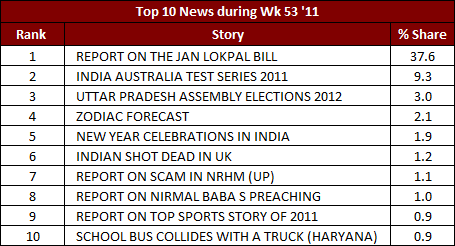
  • NCT Data Wk 53 ’11


    Source: News Content Track – A service of TAM Media Research Pvt. Ltd
    Channels: Aaj Tak, CNN IBN, Headlines Today, IBN 7, India TV, NDTV 24/7, NDTV India, Star News, Times Now, News 24 & Zee News
    Period: Wk 53 – Dec 25 to Dec 31, 2011
    Note : Analysis is based on the Telecast duration


    About TAM Media Research


    TAM is a joint venture between Nielsen Company & Kantar Media Research. Besides measuring TV Viewership, TAM also monitors Advertising Expenditure of Television, Print & Radio through its division AdEx India. Since 2004, it extended its presence in the PR Measurement & Analysis space for Corporate/Marketing Clients by setting up a separate division Eikona PR Measurement.


    In 2007, the joint venture introduced RAM (Radio Audio Measurement) service to track Radio Listenership for the Indian Radio Broadcast Industry. In year 2009, TAM launched a division, called TAM Sports that specializes in monitoring Sports Sponsorship ROI.


    TAM Media Research’s objective is to fuel media insights that will drive the growth of the Indian Media Industry.

  • Can we pay attention to what’s put out?

    By Ranjona Banerji


    There was an intriguing contradiction in the way Indians abroad were carried in the news in the last week or so. While the murder of Anup Bidve of Pune in Manchester and the ill-treatment of Indian traders in China got an enormous amount of coverage, the annual government mela for our brothers and sisters who no longer live in India was not treated with the usual fanfare. Does that mean that Indians who suffer when in foreign lands are newsworthy but non-resident Indians who return to visit us are no longer so valuable? Since the India story is now located in India, is the media now yawning about NRIs? I have no answers, but I find this trend interesting.


    Meanwhile, our TV channels have taken their outrage about suffering Indians to new levels. US Republican presidential hopeful Jon Huntsman has been subjected to some racial abuse in the US for his adopted children, who are apparently Chinese and Indian. This had our morning anchors foaming at the mouth. Also, according to the on-screen updates, US Hindus were also very angry. Is this a new category of people, US Hindus? Does it include people of non-Indian origins who might be Hindus? So why would Indonesians or Nepalis (for instance) be so angry about the anti-Huntsman ads? What about followers of the Iskcon movement in the United States? Are they US Hindus? Are US Christians, Buddhists, Muslims and Sikhs (who might be of Indian origin) not bothered? What about the Chinese (regardless of religion or regionality)? Or all people concerned about racism?


    It is a futile wish, but one still does occasionally hope that Indian TV channels paid a little more attention to what they put out.


    **


    As expected, Indian cricket has been under the scanner with all the accompanying hysteria. I understand that journalists have short memory spans but still, don’t they get bored of jumping from one extreme to the other whenever things go right or wrong. Sack the team, sack the board, worship the team (to be fair, almost no one says worship the board!), are the predictable mantras depending on performance. Then it’s an inevitable battle between oldies and youngies – strangely, whenever the selectors lean towards one or the other based on media and expert advice, there’s usually a disaster on the cricket field.


    Partly of course, the new belief (most prevalent in the new media) that India has to excel at everything it touches is to blame.


    **


    The travails of Anna Hazare’s movement against corruption continue. The Times of India on Saturday had a front page story about Shanti Bhushan’s duty evasions and on the edit page, there was Shanti Bhushan lecturing us about corruption! The Indian Express on Monday tells us that Anna Hazare’s followers and friends (of the pre-Jan Lokpal variety) have been redoubling their efforts to point out that India Against Corruption is “100 per cent pro-RSS”.


    **


    Mid-Day’ Mumbai edition carries a story about how the son of a former Mumbai police commissioner (RD Tyagi) has been accused of beating up customers to his beer bar and the Mumbai police have been slow in taking action. This misuse of power by the Mumbai police needs more exposure.


  • Mediaah!: RIP, Bal Mundkur

    By Pradyuman Maheshwari


    I was sad to learn of Bal Mundkur’s passing on Saturday. I got in touch with Mundkur thanks to my colleague Vidya Heble (her tribute @).

    We were doing a cover feature on 50 years of Ulka for Impact, and while we had interviewed the new captains, we couldn’t have done the story without speaking to the man who started it all: Bal Mundkur.


    Vidya and Rishi Vora met him for the story and since we didn’t get him photographed here in Mumbai, I asked former colleague and editor of O Herald O in Goa Sujay Gupta to do a quid pro quo. We would give him the story and he gets us the pictures. Mundkur wasn’t too happy with the story appearing in the Herald, I figured later.


    He had wanted to speak to me about the book project that he had undertaken. He also wanted to subscribe to Impact, and sent in a cheque for the subscription as well as wanted some 20 copies of the issue that carried the article.


    We would’ve done it without the cheque, but Mundkur insisted.

    Speaking to him on phone meant investing at least half an hour, because you had to hear him out and convince him about what your point of view.


    I met him on a Saturday morning at the Orchid. He gave me his room number a week in advance, and the first question I asked him when I met him was how did he know which room he was going to be in. “Because, young man, this is my room,” he said. And he then regaled with me with a countless stories, each of which threw light on a different facet of his personality.


    On how we was a naval officer, an aviator, a music enthusiast… how he got into advertising, his pet peeves and the projects back in Goa. I spent some three hours with him. Possibly three-and-a-half. I could’ve spent an entire day soaking in the old stories. But there was a lunch to be at and Mundkur too had a meeting to head to.


    The room at Orchid (near the domestic terminal of Mumbai airport) was given to him by hotelier Vithal Kamat who Mundkur said he had helped financially ages ago (note: info not verified).


    He spoke about his book, and how it was meant to be a volume on Ulka. But he firmly believed that no such historical account could go without talking of the other greats of the time (note: info not verified). He insisted on it and chose to get on to the Ad Katha project and finally succeeded in launching it at Ad Asia.


    I didn’t really stay in touch with him, though tried calling him after his book Ad Katha’s release. I also wanted to speak to him about MxM and seek his blessings.


    I also wanted a personally autographed copy of the book. I guess I’ll never get that. I am happy of course that I could spend some time with him.

    Perhaps we should request Vidya to write a biography on the great man. Am sure it will be an uputdownable account.


    Amartya Sen on what’s wrong with the Indian media

    Nobel laureate and Bharat Ratna Amartya Sen writes a loooong 2000-plus-word review of the Indian media and what’s wrong with it (@http://www.thehindu.com/opinion/op-ed/article2781128.ece).


    The last para of the piece sums up his argument:

    If the first problem I referred to, that of accuracy, is one of improving the performance of the news media through better quality control, the second, transcending class bias, concerns the media’s role in reporting and discussing the problems of the country in a balanced way. The media can greatly help in the functioning of Indian democracy and the search for a better route to progress including all the people – and not just the more fortunate part of Indian society. What is central to the functioning of the news media in Indian democracy is the combination of accuracy with the avoidance of bias. The two problems, thus, complement each other.


    It took me a second read to get a grip on what he was trying to say.

    While being told about the inaccurate reportage is embarrassing, I don’t agree with his second view on class bias. More on that some other day… you don’t want another 2000 words on the issue, do you?


    Vij is back at afaqs

    Guess we know why only afaqs carries the story about Sandeep Vij, co-founder of afaqs.com, quitting DDB Mudra. He is all set to do so, the story informs. And where’s he going? Well, to get back to Banyan Netfaqs! Private Limited (BNPL) which runs! and The Mobile Indian. “He plans to help usher BNPL into its next phase of growth in the online media space,” the report says.


    Should we be getting worried?

     

    Buzz me if you have a story to tell and gossip to share. Confidentiality assured. Andar ki baat will stay under. There are various ways you can reach me: pradyumanm[at]mxmindia.com, BBM @ 23050B5D, Whatsapp/Gtalk pradyumanm[at]gmail.com, @pmahesh, 98338 76278.


    Disclaimer: Although Pradyuman Maheshwari is CEO of MxMIndia other than being editor-in-chief, he chucks those hats while writing Mediaah! So, the views expressed here are entirely his own and not those of the website and the team that runs it (especially the National Sales Head!).
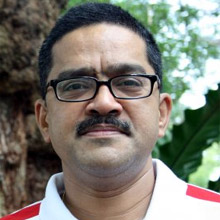
     

  • Obituary – Bal Mundkur: Slogans, spice and a bite of ‘song’

    By Vidya Heble


    “Bal Mundkur has passed away.” It seemed an impossible thing to believe, but the fell hand had indeed taken him, on the morning of January 7, 2012.


    It was on a winter day many years ago when I first met Bal Mundkur at his home, Surya, on the banks of the river Mandovi in Goa. He was, of course, a legend and I trembled inwardly at actually meeting him, albeit in a personal capacity.


    His career as a naval officer and aviator had been followed by an illustrious innings in advertising, which he had famously given up to retire in Goa. ‘Retire’ was only figurative, because he proceeded to put his unrelenting energy into designing and building his house, and then lending his prodigious talent to projects which he felt would benefit society, including restoration of a fort and setting up of a museum. He even found his way into an offbeat little film (http://wn.com/rare_indie_goa,_ma_cherie_part_1) which is quintessentially ‘Bal’.


    “For the Royal Society for Asian Affairs, where he contributed an article on ‘Incredible India: The Inconvenient Truth’, he described himself “as neither an activist nor a frustrated journalist but as a dispassionate commentator”.


    People in Goa looked on him with awe, and he was known as a man of exacting standards and uncompromising expectations. Even my “Hello”, I felt, would be subjected to scrutiny. But he was delighted to meet a fellow Konkani, and dwelt pleasurably on the joys of Konkani food, much of which he was not allowed to eat by then. Pickle, chutney and spicy food was out of bounds, but Uncle Bal, as I called him, managed to sneak teekha stuff onto his plate now and then. When he discovered that I can cook, he extracted from me a solemn promise to make him some standard Konkani dishes, among them potato ‘song’ – a simple dish of cubed potatoes cooked in well-sauteed onions, tamarind and a lot of chilli. I made a mental note to tone down the chilli for Uncle Bal, who of course read my mind and said, “Don’t forget, lots of chilli!”


    But Uncle Bal had so much else on his plate that he never did find the time to come over for a Konkani meal. With time and circumstances, I didn’t meet him again for some years. But being in the business of media news meant, inevitably, that our paths would cross professionally. When I rang him up after a long interval, to ask for an interview on Ulka’s anniversary, he remembered the long-promised ‘song’, and once again we assured each other that I would cook and he would eat, one day.


    As always, however, Uncle Bal had too much going on in his life. One never knew where he would be next – dashing between Goa and Mumbai, scooting off to Europe or South-East Asia or somewhere else – or what project he would take up. Perhaps fittingly, his last offering was the history of Indian advertising, Ad Katha, which was released at Ad Asia 2011 in New Delhi.


    But those who know him, know that he would not have rested after this. That fertile brain would have been working on something else, and he would have been ringing people up with exhortations to participate, to donate, to sponsor. His zeal was unwavering and his passion, perpetual. Somewhere he might even have found time to stop for a bite of ‘song’.


    We will all remember Bal Mundkur in different ways. I’ll recollect him with a dash of spice.


  • Bal Mundkur: Tributes by Shashi Sinha & Bunty Peerbhoy

    By Tuhina Anand


    Shashi Sinha, CEO, Lodestar UM

    Bal Mundkur did what he believed in and did that pretty well. He was passionate about advertising per se and was not among those who would look at action from far but get personally involved with work that he took charge of. I had the opportunity to work with him for 5-6 years and I can recall that ion those days advertising was really different ball game yet even then he would be pushing boundaries and not hesitate in taking chance. He would lead from the front and give his ideas to better creativity. He got into advertising pretty late but when he got into it he followed it from his heart.


    Bunty Peerbhoy

    I have known Bal very closely. I remember an interaction with him which he had with my father one day at Habour Bar in Taj where he was sitting alone. My father introduced me to him and he asked him how much I was being paid by my father. As a trainee, my father replied that I was being paid Rs 90. He made an offer to me to join him where he would pay me Rs 500. My father was stunned but Bal was unfazed. He said, “You are underpaying a smart young man, I am offering him what he deserves’. That was my first interaction. Though there is an aside to this story and that is when my father introduced me to Bal, I was sheepish because those days I used to play cards with Ulka people and Bal would drop in at times so in that sense we had met before but it was an introduction which I definitely didn’t want my father to know of.


    I have spent time with him and known him both professionally and personally. He has also been a speaker at the memorial lecture that we conduct every year in memory of my father called the Ayaz Peerbhoy Memorial Lecture. He was a lovable incorrigible person who always challenged the convention. He never shied away from being blunt. At time when agencies were doing speculative campaign he came out strongly saying that while people in advertising may talk against it but when it came to doing one for a prospective client they would not shy away from doing it. He stressed on the fact that one should not say things that they don’t mean. He always spoke his mind. He was certainly among one the colorful men of our business whose language too was equally colorful…but that was Bal.


  • Remembering Bal Mundkur


    By A Correspondent


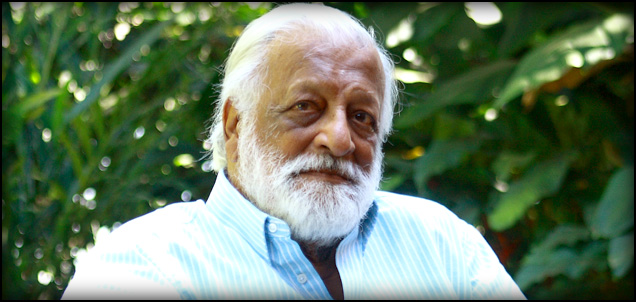
    Founder of Ulka Bal Mundkur, 86, passed away on the morning of January 7, 2012 of heart failure at his residence, ‘Surya’, in Reis Magos, Goa, overlooking the Mandovi River.


    The agency, now Draftfcb + Ulka, celebrated its 50th anniversary last year and is ranked the third largest advertising group in the country.


    Mr Mundkur was originally a naval officer, and later a commercial airline pilot. A modelling offer from his brother, who worked at Levers, marked his entry into the world of advertising which he joined in 1951. Ten years later Mr Mundkur founded Ulka, which means shooting star, and the agency’s career was indeed starry. In a span of 10 years, Ulka became the fourth largest agency in the country, and by far the largest independent Indian start-up.


    A release from Draftfcb + Ulka says, “An avid collector of all things rare and beautiful, Bal’s prized chess set starred in Satyajit Ray’s celebrated Shatranj Ke Khiladi. Bal was not just a businessman, but he was also an extremely passionate crusader for a wide range of causes, from a building for a cerebral palsy hospital to bringing the choir of Trinity College, London on a tour across India.


    “In the nineties, Bal retired… and moved to Goa, where he continued working for causes close to his heart – which included helping set up Asia’s very first Museum of Christian Art in Goa.


    “Bal remained full of energy and enthusiasm till the end – at 85 he set up the Centrum trust, which recently published Ad Katha, the story of Indian Advertising over the decades.


    “Bal has moved on, but he will live on in the hearts of those who knew him.”


    Read:

    Obituary – A dash of spice

    http://www.mxmindia.com/2012/01/obituary-bal-mundkur-slogans-spice-and-a-bite-of-song/


    Tributes – Warmly remembered

    http://www.mxmindia.com/2012/01/bal-mundkur-man-and-memories/


    Mediaah!: RIP, Bal Mundkur

    http://www.mxmindia.com/2012/01/mediaah-rip-bal-mundkur/


    Photograph: Shreta Arora/O Herald O