Author: mxmadmin

  • Bal Mundkur passes away

    Bal Mundkur
    Bal Mundkur

    By A Correspondent


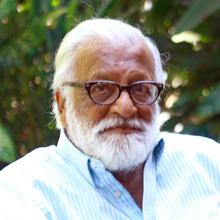
    Bal Mundkur, veteran adman and founder of what is today DraftFCB Ulka, passed away in Goa today. Mr Mundkur founded Ulka in 1961 and was recently seen mingling with the fraternity at Ad Asia 2011 where he also released Ad Katha, a special volume tracking the history of Indian advertising.


    He will be cremated tomorrow (Sunday).


    Notes a citation on the 50 years of the agency (at http://ulka50years.com/history.html):


    “50 years back, a gentleman felt that there was a need for an Indian agency that would challenge the then agency stereotype. He was convinced that the main cities had abundant talent and a community of entrepreneurial clients would embrace an agency that could do pioneering work based on the principal of ‘accountable marketing.’


    Bal Mundkur founded Ulka in 1961 and within the first ten years, the agency made a smooth transition from a creative hot shop to a large mainstream agency. Today, the agency is in the top 5 with 50 of its brands being category leaders.”


    * Please stand by for detailed report


    Also read: Seminar” href=”http://www.india-seminar.com/2004/543/543%20bal%20mundkur.htm” target=”_blank”>An Outsider in Goa (an article in Seminar magazine, published in 2004)


    Photograph: Shreta Arora/O Herald O


  • Debrief: Snapdeal: Deadly idea

    By Anil Thakraney


    It takes some guts, especially in a superstitious India, to run ads that feature the god of death as the protagonist. Well, the ‘great deals’ website Snapdeal.com has done exactly that, and no, don’t think the site will expire in a hurry.


    Termed ‘Yamdude’ in the campaign, the deadly god goes about having fun with scared dudes and the cool Snapdeal deals. He basically saves lives instead of taking them, being distracted by the product offers. In one ad, a sky diver’s ‘time’ has come, so Mr Yamdude arrives mid-air to get him. But when the chap flashes his discount coupons, the god gives him a chance to live, and instead buys himself goodies with the coupons.


    [youtube width=”400″ height=”200″]http://www.youtube.com/watch?v=zUJc1gyFVb4[/youtube]

    Good, fun advertising. And the wackiness will help get instant brand recall. This sort of an over-the-top idea is required for a new website that simply deals in great sales offers. Safe advertising would have killed the brand even before the god of death arrived. So, a pat on the back for taking the risk.


    Seems to have paid off already. Snapdeal.com, because of the cool Yamdude, is being discussed on the social media. Always a good sign for brands targeted at the urban youth.


    Rating: (On a scale of 1 to 5): 3.5 Funky idea, entertaining ads.


  • Newswatch: Oswald Pereira on crime reporters and their tryst with the underworld

    By Oswald Pereira


    There’s a world of a difference between the underworld in reel life and real life. Dons in reel life are most often glorified or caricatured beyond reality. But now it seems that impressionable young crime reporters and seasoned veterans too while reporting on the underworld have lost touch with reality.


    The result: they tend to romanticise their role as crime reporters, assuming a larger-than-life persona for themselves; they are apparently taking more than necessary risks under the guise of investigative reporting.


    It’s one thing to be a good investigative journalist; it’s another matter when a crime reporter foolhardily goes into the den of the underworld- virtually bang bang, with a pen against the guns of the mafia.


    The fact that some young whiz kid journalists are editors hasn’t helped matters. In the good old days, a seasoned editor would caution and restrain over-enthusiastic reporters, but young editors lack that experience and maturity.


    The consequences are there to see: The murder of a journalist and the arrest of another.


    Could these have been avoided with more mature leadership or would it have been a different story if the journalists themselves had taken the necessary precautions and there was a system of checks and balances within the organisation?


    There are no simple answers to these questions. But there is definitely need for some serious thinking on these issues.


    I recall how during the communal riots in Mumbai in the 1980s, there was a fleet of ambassador cars that took us around to cover disturbances. We would inform the editor each time we went out. When the editor thought an incident was too dangerous to cover, he would restrain us. On one occasion, we sneaked out into a dangerous trouble spot in the dead of night out of sheer bravado, without informing the editor. But we had hell to pay when the editor learnt about it and the fact that we were real close to danger.


    As a crime reporter, I myself did a fair bit of investigation, going out into the field, meeting the underworld and dons. But I always watched my step and kept my distance. I had realised then that to write the next story, you had to avoid putting your hand into the mouth of the lion.


    Even in those days, there were some heady journalists who went about their job without a thought. I can still picture a trembling photo editor, surrounded by threatening members of a top underworld don. Instead of clicking a photograph or two and sneaking away, the photo editor had gone wild with excitement and clicked numerous photographs of the don being escorted down the steps of the court after attending a hearing of a case of extortion against him. This attracted the attention of the gang members and they threatened him with dire consequences. I had happened to know the don’s nephew, a college dropout, who spoke impeccable English. He was a contract killer and warned that he had already half a dozen murder cases against him; so one more wouldn’t make a difference. I intervened on the photo editor’s behalf. The nephew relented and let the photo editor off, only after a firm promise that no pictures would be printed in the next day’s newspaper. Quite interestingly, Mumbai crime branch officials were around, but they stepped in only later and one of them finally escorted the photo editor to his office, pillion-riding on his motorcycle.


    My job as a crime reporter included taking down police remand notes from the courts to report in my newspaper. Sometimes, I would be tapped on the back and guys whose necks were as thick as my shoulder would mock, “Writing a story, ah, ah.” I would smile and they would say, “Good, good, continue working.” Sometimes, tough-looking guys with bloodshot eyes, working for some don or the other, would visit our office, after my newspaper published a big story that I had written, and casually announce, “Bhai, wants to see you.”


    “Okay, I’ll come,” was my stock reply. Senior police officers too would drop hints or openly propose meetings with dons.


    Crime reporters then-I’m talking about the 1980s- too had dangers and temptations. We also had plenty of inside stories on offer from the underworld. But personally, I considered it rather risky to write a story based entirely on information from the underworld, unless, of course, it was verified by official sources… but even if it was, one had to make doubly sure that the official didn’t have a motive themselves.


    And journalists were sometimes the targets of the underworld. A crime journalist of a suburban newspaper was hacked by criminals. I pulled up the police commissioner of the area, who happened to be a good friend, and accused him of sleeping on the job. He retorted, “You guys are feasting on the job.”


    “What do you mean?” I asked, angrily.

    “The journalist used to extort money from the underworld, showing them the stuff that he was going to print the next day. So they put him to sleep,” he replied and laughed.


    That was the case of a crime reporter who paid with his life for demanding a price, not once, but many times over for not printing stories. But there were other crime reporters whose lives were threatened for doing an honest job.


    Among the various beats in a newspaper, reporters covering crime seem to be the most vulnerable to attacks. In the profession itself, crime reporters are not an envied lot. But it’s not a beat meant for the faint-hearted.


    Personally, among the beats that I covered in newspapers and magazines-crime, politics, business-I found the crime beat the most challenging and interesting; even more satisfying and fulfilling than later senior writing and editorial positions and as editor of niche defence and infrastructure magazines.


    But there was nothing romantic or glamorous about the beat; it was hard and difficult. I believed then, and still firmly believe, that the best way to survive as a crime reporter is to draw for yourself a Laxman Rekha… that you should not cross, come what way.


    (The writer is the author of The Newsroom Mafia, currently among the top new releases nationwide recently published by Grey Oak Westland.)


  • Ghari ousts Wheel to be Detergent No 1 (in Oct & Nov 2011)

    By Sagar Malviya


    Twenty-five years after launching a laundry brand inspired by Nirma, Ghari detergent appears to have edged out, at least temporarily, Hindustan Unilever’s Wheel from the number one slot in the Rs 13,000-crore laundry industry.


    Ghari, manufactured by Kanpur-based Rohit Surfactants Pvt Ltd (RSPL), had a higher share in October and November than Wheel, a brand that contributes over Rs 2,500 crore, or 12%, of the Rs 20,000-crore top line of Unilever Plc’s Indian unit.


    “As per value market share data, on a 12-month average share basis, the gap between Wheel and Ghari now stands at just 30 basis points; however, Ghari’s shares were higher than Wheel for the last two months,” said brokerage firm Prabhudas Lilladher in a report, dated January 2, quoting numbers from market research firm The Nielsen Company.


    In November, Ghari had a 17.4% share compared with Wheel’s 16.9%, according to people familiar with the numbers. The market researcher will generate data for December in the third week of January.


    Ghari’s achievement is reminiscent of the feats of Ahmedabad-based Nirma, whose eponymous washing power evicted HUL’s Surf from the top slot in 1985. Nirma achieved this by pricing its products considerably lower than Hindustan Lever (HLL), as the company was then known as.


    The resultant rumpus and the incumbent’s fierce response are part of Indian business folklore and have made it to management textbooks.


    HUL, which contributed 6% to Unilever’s top line in 2010, eventually prevailed as Nirma’s challenge faded in the early years of this century, with the global consumer giant stepping up marketing and advertising spend to levels its homegrown rival could not match. Wheel, the detergent whose market leadership is under threat, is very much a product of that period.


    HUL still dominates


    A powder variant of Wheel was introduced in 1988 to take on Nirma’s challenge. Despite the wobbles in October and November last year, HUL still dominates the detergent market with Wheel as the country’s largest brand on a yearly comparison, though the gap has been narrowing each quarter. The Hindustan Unilever spokesman declined comment on the data.


    “Our laundry category has grown significantly ahead of market in both volume and value in the period from January 2011 to September 2011. Wheel also contributed significantly to this with strong double-digit growth driven both by volume and price,” the spokesman added.


    The company said it could not validate the Nielsen data. “We cannot confirm the factual correctness of the market share data you have emailed as it is proprietary data of Nielsen. We request you to contact Nielsen to validate the data.” The Nielsen Company’s spokeswoman said: “As per company policy, I will not comment on brand specific data and will not be able to verify and validate the data.”


    Big hitters from Kanpur


    Both Wheel and Rin, another detergent from the HUL stable, have increased their market shares compared with the same year, but have been lapped by the faster growth achieved by Ghari, which was launched in 1987 by brothers Muralidhar and Bimal Kumar Gyanchandani.


    The Ghari phenomenon, emerging as it did from Kanpur, a business backwater, has been widely celebrated by many as an example of small town entrepreneurial chutzpah. “Losing share isn’t as big as losing leadership in its largest brand.


    In trying to maintain its margins, HUL didn’t adjust the pricing at the challenger’s level and that did the trick,” says a former HUL senior executive who was directly involved with HUL’s operation STING (Strategy To Inhibit Nirma’s Growth) in the late eighties.


    In 2011, Ghari gained not only by growing faster than Wheel but also yesteryear’s price warriors such as Nirma, which has less than 6% share now. “While Wheel may have maintained its market share, its other brand Rin has been consistently gaining share clearly reflecting the company’s premiumisation strategy,” said Anand Mour of Ambit Capital.


    “On the other hand, Ghari has taken share from smaller regional players, especially brands from the southern states, where it entered last year.”


    Ghari’s expansion


    RSPL attributes its growth to a variety of factors, including expansion to more states. The company has entered 10 more states in the last three years and now peddles its ware in 19 states, through more than 3,500 dealers. It has 21 manufacturing units, 15 of which were added since 2006.


    “We will be setting up plants in Bihar, Raipur and Karnataka soon to catch up with our sales growth of over 25% in the last nine months. Even in volume terms, we have been growing more than 10%,” said Mr Sushil Kumar Bajpai, president (corporate affairs) & company secretary, RSPL.


    Also, what’s helped Ghari is the sheer size of its home market Uttar Pradesh, which contributes 17% to total FMCG revenues, according to The Nielsen Company. Judging by its past, HUL is likely to respond fiercely.


    “Hindustan Unilever has a tremendous capability to fight back and they will do it soon,” says Mr Amin Babwani, an independent consultant who has spent three decades with HUL.


    It clearly has the marketing muscle to do so. The company’s existing distribution footprint in rural India, where a brand such as Wheel would sell, reaches nearly 200,000 villages, which is nearly double the industry average.


    “The growth in soaps and detergents segment will come from gradual upgradation of cheaper alternatives, ” said Mr Vijay Chugh of BNP Paribas Securities India in a recent report.


    Source: The Economic Times

    Copyright © 2012, Bennett, Coleman & Co. Ltd. All Rights Reserved

  • Everest to handle Kotak Mahindra Mutual Fund

    By A Correspondent


    Hot on the heels of bagging Augere’s Wireless Broadband business in India, Everest Brand Solutions has now added Kotak’s Mutual Fund business to its kitty. No pitch calls preceded the account win. The company awarded the business to the agency based on the strategy and creative work presented by them.


    Dhunji Wadia, President, Everest Brand Solutions, remarked, “We welcome Kotak Mutual Funds to the Everest family. We believe in working with our clients and adding value to their business. More and more clients are recognizing what we bring to the table. It’s a huge vote of confidence for our way of working. This is a significant win for us.”


    Mr Wadia further stated, “Everest is in an exciting phase of transformation. The hard work put in over the last few months is bearing fruit now. We expect a lot of action in the coming months.”


    Rahul Jauhari, NCD, Everest said, “Our point of view on what Kotak Mutual funds should do, given the turbulent times in the market found favour with the Kotak team. And, of course, the vibes between our teams were great. It’s an exciting category as well. We look forward to a long and fruitful relationship.”


    Everest witnessed the onset of change with a change of guard at the senior management level and subsequent additions to the core team in 2011. Since then the agency has been in a ‘transformational’ mode, adding businesses like Danone B:lue, Ranbaxy Volini, GoAir, Augere’s Wireless Broadband, amongst others, to the kitty.


    Kotak Mahindra Asset Management Company Limited (KMAMC), a wholly owned subsidiary of KMBL, is the Asset Manager for Kotak Mahindra Mutual Fund (KMMF). KMAMC has over 10 lakh investors in various schemes.


    Everest is the second oldest agency in India, started in 1946. Everest has built some of the biggest brands in the market place – Parle Products, CNN-IBN, GoAir, Emami, Tata Housing, Akai, T-Series, among others.


  • Bobby Sista, Alyque Padamsee & Gerson da Cunha on Bal Mundkur

    While tributes keep pouring in for the ad legend and intrepid explorer who was ahead of his time, MXM asked his peers from the golden era to look back at the Bal Mundkur they knew.


    Gerson da Cunha, stage and film actor, social worker and author:

    Bal Mundkur was a man of immense energy; he was tireless. Once he decided to do something nothing would stop him. For instance, take the case of the book Ad Katha. There have been three previous attempts by the Indian advertising industry to write this book but every time it resulted in failure, because either the money could not be collected or nobody would be available to take on the writing task or both. But the key among the two was finding the money. Bal Mundkur then sat down and wrote off a series of letters to people asking them to donate money towards the cause. As soon as he collected the money it became a serious project and people began to join him. That’s what I mean: when he decided to do something he would go ahead and achieve it. The next important thing about the book was the drafting of the letter for the book. Otherwise you and I could also write to people and they would give a damn, but to Bal they responded. In fact many of them owed things to Bal – he had built a brand, he had given them a job, etc. So the book in a way represents the kind of person that he was.


    In fact we both met about a year ago in Goa and he told me about this book. He said to me, “Let’s do it.” I responded in the affirmative and thus began our quest. While I was in charge of the content, he was in charge of the money. While we were working on the book, I’ll never forget what he told me halfway through that project. He said, “You know Gerson, I have done many good things in my life but this by far is the best thing that I have done.” And he did it – he completed the job, and he left us.


    Also, there is something else about Bal Mundkur. There are people who, when they leave this life, take something irreplaceable away with them. For example Behram Contractor or BusyBee, as he was fondly known. When he died, he took away with him the bentwood Irani shops, the cuisines – that extraordinary part and spirit of Bombay, as it was known then, which no longer exists. He took it with him and went away. Or Mario Miranda, for example. He took with him a part of Goa and a part of Bombay – Colaba especially, and went off. What Bal has taken with him is a much more complex thing. Yes, it is an era of advertising that was professional, that was innocent… there was not the kind of cut-throat rivalry that was today. Even people competing for the same account were polite and would meet each other up for a drink in the evening. So that professionalism and innocence that existed in the advertising space then has gone with Bal Mundkur.


    He was also involved with a lot of public causes – for the crippled children, did his bit for cancer patients… in fact he he was the first to do a remarkable campaign around cancer. And there were many other causes that he supported. Not just advertising and marketing, he was involved in other facets of life like hosting seminars, promoting the industry to the outside world… he even got the Trinity College of Cambridge choir here.


    There was also a generous side to Bal Mundkur. He knew the value of money but what he did with that is what makes him even greater.


    Bal Mundkur has definitely left a void and he has taken a part of the world of advertising that we once knew.


    Bobby Sista, Founder and Executive Trustee, Population First:

    It’s not really easy to describe Bal Mundkur but he was certainly one of the most colourful and charismatic personalities in advertising. He was not your ordinary guy – he could be arrogant, he could be short-tempered, he could be very charming, he could be very helpful… all of these things, but certainly he was a very good adman.


    Bal Mundkur and I go back a long way. We were closely involved in mooting the idea for forming the Advertising Club of Bombay in the early days. We also discussed the idea of starting an agency together before he floated Ulka. We almost came close to an agreement and everything else was done but then there was a last-minute hitch and it didn’t work. A year or two after that he started Ulka. So while he became fully dedicated towards Ulka, I started working for a client. But we remained friends.


    He was very talented in what he did. Such was his stature that he could even walk into the cabin of an MD with full confidence and if certain things didn’t work out he wouldn’t hesitate in calling it off.


    I do know that he was highly respected by the advertising profession. He certainly brought in a new angle to how advertising could be created. He had that kind of leadership quality – making people think differently and come up with good work.


    One of his noteworthy works includes his effort around the book Ad Katha. I remember that when he conceptualised the idea, he came and spoke to me about it first. He wanted to form an advisory council to get help on this book. He was supposed to have named his book History of Indian Advertising. Bal had even written about 180 pages of the book by then. But then he got in touch with Gerson da Cunha and they went through 2-3 different changes before they renamed the book to Ad Katha. I am happy that he was able to complete the book and launch it at Ad Asia along with 1,500 people from the industry.


    Also, one of the things that you could say about Bal Mundkur and his extracurricular activities was that he was a great fund-raiser. He had the ability to collect funds for various causes, including for seminars around advertising, both in India and abroad.


    Alyque Padamsee, theatre personality and ad film-maker:

    Bal Mundkur was a pioneer who started his own Indian ad agency, even though all the ad agencies at the time were foreign-owned. He built Ulka Advertising into one of the big five agencies of the time. He was not only a superb account management honcho, but also an extremely creative genius. Bal Mundkur was known as a very frank and fearless adman, and pushed his ideas across with charm and force.


    Photograph: Shreta Arora/O Herald O
    
    
  • ASCI upholds complaints against 10 ads in Sept-Oct 2011

    By A Correspondent


    During the months of September and October, the Consumer Complaints Council (CCC) of the Advertising Standards Council of India (ASCI) upheld complaints against 10 advertisements, most of them being products of home shopping networks. During the same period, the CCC dismissed complaints against eight advertisements.


    TVC Sky Shop Ltd. released an advertisement for Sandhee Suddham Oil which made claims of ‘Immediate relief from joint pain (Arthritis) -100% effective; effective ayurvedic treatment to get relief from knee pain, all joint pain and arthritis; increases the flow of joint fluid; repairs and strengthens the damaged tissues to make your joints strong and give quick relief from pain and swelling and solves all your joint pain problems’. The claims had to be substantiated with technical data through clinical research and appeared to be gross exaggerations. They portrayed that the product, inclusive of its ingredients, possessed special properties, which were not yet proven scientifically. This was likely to lead to grave disappointment in the minds of the consumers. The complaint was upheld.


    GTM Teleshopping Pvt. Ltd’s advertisement of Divyarishi’s Kuber Kunji claimed ‘Kuber Kunji will protect you if you are continuously in debt, if your money is spent as soon as you earn, if you have to struggle for anything in life.’ In another advertisement of Badha Mukti Yantra, the TVC suggested that ‘All of a sudden the happiness of your family disappears, your shop and business goes into a loss, if you come under the spell of black magic, then Badha Mukti Yantra is the cure/solution.’ One more complaint was made against the Shani Shubh Yantra advertisement which claimed ‘Shani Shubh Yantra will protect you from your business failing, from your marriage being on the rocks, from you not getting interview calls for a job, from marriage proposals for your beautiful daughter breaking down.’ The TVC for AAA Teleshoping Pvt Ltd’s Maha Dhan Laxmi  Yantra encouraged the use of this product for ‘procuring the blessings of Goddess Lakshmi and better finances and assets.’ The TVC claimed that the Maha Dhan Laxmi Yantra has miraculous powers to provide financial advancement and stability to the consumers. In all the cases, the CCC concluded that, in the absence of any response from the advertiser, the claims made in the advertisements and cited in the complaints, were not substantiated and were likely to cause widespread disappointment in the minds of the consumers. The complaints  were upheld.


    In a complaint against Skymall/ Global Skyshop’s Sai Darshan Pendant, it was stated that the TVC encourages the use of this product for procuring fame, better finances and assets. The TVC professes different stones for different sun signs. The TVC claims that ‘Sai Darshan pendant has miraculous powers to grant everything one wants in life.  The product is said to have the blessings of Sai Baba.’ The CCC concluded that, in the absence of comments from the advertiser, the claims made in the advertisement and cited in the complaint, were not substantiated and were likely to cause disappointment. The complaint was upheld.


    Bharat Business Channel Ltd’s Videocon d2h advertisement claimed that ‘Videocon d2h is the No.1 DTH service.’ This claim was in clear contradiction of the fact, since Videocon is neither the oldest nor largest DTH service provider nor does it provide  the largest number of channels.  Moreover, no survey or study was conducted in the market which has given such “No.1” rating to Videocon. The advertisement was seen as being false and misleading. The CCC concluded that the claim was not substantiated with data or independent market research.  The complaint was upheld.


    Shri Lal Mahal Empire Basmati Rice’s recent advertisements also came under the CCC scanner with their claims on ‘Fat and Sugar Free Rice.’ The website claims, ‘Empire Basmati rice is India’s first sugar free, fat free rice with no cholesterol content’ while the TVC claimed the product to be ‘Sugar and fat free’. As per the complaint, being free of sugar, cholesterol and fat are general characteristics of rice, and are not limited to a particular brand. Moreover, rice is produced naturally, so one can’t change its nutritional value without genetically engineering the crop. These claims had to be substantiated with data from an independent scientific research. The CCC concluded that the claim was not substantiated and hence was misleading. The complaint was upheld.


    TVC Sky Shop Ltd’s advertisement of Dr. Slim Tea claimed that ‘Lose weight with a cup of Herbal Tea; Ayurveda offers a comprehensive approach to tackle this lifestyle disease; Dr. Slim Tea is a premium blend of therapeutic herbs like Garcinia, Gymnema, Licorice, Ocimum, Pippali, Marich and so on, formulated to boost your metabolism and digestion, improve your immune system and shed kilos of extra fat, weight and inches and you will feel a noticeable effect from the first cup of Dr. Slim Tea.’ It was stated that these claims needed to be substantiated with technical data based on an independent clinical research. In the absence of comments from the advertiser, the CCC upheld the complaint.


    There was a complaint received against the TVC of Popular Finance – Gold Loan, which is said to have appeared on Asianet TV. As per the complaint, the TVC claimed that Popular Finance is ‘India’s No.1 Gold Loan Company.’ It was stated that this claim is false, as Muthoot Finance isIndia’s largest Gold Loan company(in terms of Gold Loan Portfolio source, ICRA Management Consulting Service Ltd – IMACS report on Gold Loan Market inIndia). The CCC concluded that the claim, “India’s No.1 Gold Loan company” was not substantiated, and complaint was upheld.


    During these two months, the CCC received complaints against Idea 3G, Maruti Stepney, Lilliput Kidswear, Expert Dishwash Bar, Ceat Tyres, Tata  Docomo Mobile  Network, Mankind  Pharma  Ltd’s Manforce  Condoms and Max New York Life  Insurance amongst others. As these advertisements did not contravene ASCI’s codes or guidelines, they were not upheld.


  • The Anchor: 6 lessons radio can learn from abroad

    By Vehrnon Ibrahim


    #1 Throw a rock rather than chucking small stones:

    Heart FM London went after 25-44 women. About 20 percent of overall available listenership, but in a market where there are 20-odd stations 20 percent is actually a huge opportunity. I like to say it’s like throwing small stones at a target; you will hit it, always no matter how bad your aim is, but never leave an impact. Chuck a well aimed rock at the target and you will destroy it. If the proposal to allow more frequencies in major metros goes through we will hear many different formats of radio as all the new players will want to go up against players who target such wide demos.


    #2 Don’t just Post-it, stick to it:

    People listen to radio for entertainment and that mostly means music – so why loyalty in a market when everyone is pretty much playing the same music? Promise becomes important. Call it a brand, call it a position, and call it a culture, it’s all about telling the listener what you have to offer and making sure you offer that. K-Earth 101 in LA says “Classic Hits” and that’s all they ever play. So when you tune in you know what you will get.


    #3 Don’t be anti-social:

    Hitz.FM in Malaysia has a quarter of a million Likes on Facebook. They have cut down dramatically on marketing and messaging spends. Jake Abdulla demonstrated to me by posting a message which generated over 200 likes within 30 seconds! That’s huge, and it went on. It’s a bigger deal in India than we are giving it credit for, and in months to come we will all be using social media for our messaging to our core listeners, our existing CUME.


    #4 One promotion every sweep:

    Virgin radio stations around the world do this very effectively. This is an old chestnut in markets where ratings happen once every quarter or half etc… Anytime the diaries go out or the PPM come to town the radio stations send out the artillery and blast away for share. We are the only country in the world to have a 52-week diary. So that implies we should be doing a promotion all the time, and that’s exactly what we should do. Short bursts of firepower don’t win wars, it’s the long-term campaign that works.


    #5 Heavy ball, long chain:

    Lay down the boundaries of what the content will cover and make sure the programming team stay within it. London’s Capitol FM is a local station in a capital city. They cover entertainment and London, that’s it. If it’s happening in London or if it’s entertaining then it is happening on Capitol FM.


    #6 Character over content any day (my personal mantra):

    Terry Wogan of BBC Radio 2 has been on air for nearly 55 years but once upon a time he was a fledgling talent looking for a break. Though he is not even from the UK, he is a national treasure there. We need to approach recruitments at a different angle and hire for the future, rather than steal from competition and inherit a jock who will continue to give ratings to his old station for years to come.


    Vehrnon Ibrahim is the National Programming Head, Oye! 104.8 FM


  • How to get ideas (& climb the corp ladder)

     
    By Tuhina Anand


    Veteran adman and now business and innovation coach R Sridhar has come out with an e-book titled ‘How to get ideas – an incomplete book’. The book is a collection of insights from various people who have shared their mantras on how they get their ideas. Mr Sridhar, who is former chairman at OgilvyOne Worldwide and director at O&M, and whose website is at ideasrs.com, explained, “I am an innovation coach and I work with people to help them do things differently. So when it comes to doing things differently, idea plays an important role in achieving this. I have had several conversations with people on what triggers an idea in them and this led me to collate the responses and put it in a book.”


    Mr Sridhar calls it an incomplete book because he hopes to come out with version 2 in three to six months’ time, where he aims to include not just national players but inputs from global players. However, Mr Sridhar categorically avers that the book is not targeting advertising professionals as he adds that most in the business think they know it all, but largely aims at the corporate world.


    He added, “We are all creative in one way or the other but don’t really know how to express it.  While some may have the opportunity to express their creativity in the outer world many don’t. The purpose of the book is to help people find their own creative streak. There are many places when we are stuck and don’t know how to move ahead or are not comfortable asking for help. The book will help people in different situation by giving them cues and find their groove.”


    Mr Sridhar in fact says that the book will be handy for even professionals like doctors, lawyers and even homemakers. In your daily life if you are stuck even for simple things like planning a menu for an evening dinner, the book will give cues on how one can be creative and, with minor variations and combining different things, can come up with an innovative menu.


    He concluded, “Most importantly, in today’s corporate world there is a need to be innovative to lead. The person with ideas will move up the ladder at a quicker pace than any other and that’s where this book comes into play. For any ambitious person who wants to succeed, I would suggest he should keep a copy of the book on his laptop.


    Click on the image for larger view

    Excerpts from the e-book:


    Pulling strings in the head

    Few things I always do. Look out for interesting and unique stuff while I travel, watch TV,   read, talk with family, watch movies… I register it in my mind (luckily it stays there for ever). 🙂 When my sales team comes with a brand brief, I read a lot about the brand, understand it well  and thereafter,  my mind automatically starts pulling strings from all the available information in my head.


    Then…..I get the first spark of an idea… After that I go talk to different people about it, get inputs, shape it, modify it, answer their questions. If I scrap the idea I go back to step 2.


    Aparnaa Rajasekar


    Helicopter ride in the mind

    I remind myself that ideas are everywhere if I choose to look.  I try to take completely unrelated things and try to connect them to the problem. Something I came across in DeBono’s work really struck home with me. Roughly he said, everything can be connected  with everything else. Thinking laterally is like taking a helicopter ride and getting dropped off in an unknown location (unrelated object) and finding your way back home (the problem) by making connections.


    Among specific things I do to generate ideas: sleep on the problem and wake up early. I find I am in a great frame of mind at this time. I try to find someone who will listen uninterruptedly so that I can speak aloud, hear myself think. I am able to generate more ideas like this.


    I spend time by myself, retreating inwards; I spend time browsing the internet, looking for inspiration; I drive; I talk to my wife; sometimes my dogs; to my dictaphone; to my colleagues at office; to my clients.


    Santhan Reddy


    Ray of light passing through

    Ideas often are often like , a ray of light, it just passes through the mind while doing something totally unconnected. Could be while cooking, drinking coffee, reading a book, taking a walk, reading the newspaper, bathing and very often while on the pot (pardon me saying that).While travelling by car, is another time when ideas flash past. I personally use mind mapping to generate ideas and solutions to complex situations. Invariably I note them down as the thought is lost as we get busy in something else. If I need to generate ideas, thoughts I generally go to a room, sit down, relax and allow thoughts to flow. This is invariably while doing problem solving or looking at multiple options. Bouncing off ideas is with a close friend who will be objective and tell me if i am terribly wrong.


    Laila Sethna


    Just let it be

    I first surf the net for the subject and randomly follow links to related subjects. Almost like immersing myself in the topic. Someone somewhere has always faced a similar problem. I have found from hard experience that its best not to actively think about ideas. Just let it be and sleep over it. Then I talk to some selected people who are good sounding boards about the general subject (NOT ideas). They usually ask me some more questions during the discussion. Again I let all this be in my mind. Ideas then just come to me… sometimes inspired by imminent deadlines.


    What not to do (for me)


    Active brainstorming – I find this yields superficial and obvious ideas.

    Tell people that I am looking for ideas – again people limit their thinking and discussion and come up with the most top of head obvious stuff.

    Generate ideas without researching the material.

    Pressure myself for “ideas” – just doesn’t work.


    What works


    Talking to specific people who are able to think and talk at an abstract level – then I manage to find analogies from unrelated areas.

    Talking about the subject without a goal in mind.

    Talking to my kids – sometimes yields surprising ideas

    Surfing, surfing, surfing with broader and broader search terms.

    Thinking of the subject when I go to sleep. Often, I wake up with an idea.

    Nalini


    Just start writing

    I just start writing my ideas. If I wait for ideas to come, they never do. But when I sit down and start writing, then they seem to come out. Writing is usually on the laptop on the iPad.   When writing, I try to structure my thinking. Mind maps help quite a bit.

    Suman Srivastava


    Excerpted with permission from the writer.

    The e-book ‘How to get Ideas’ can be accessed at http://ideasrs.com/ebook/

  • The Anchor: 6 things an agency must keep in mind when pitching for a brand

    By Mahesh Chauhan


    #1 Individual(s): You do not pitch for a business! You pitch to win over an individual or a group of individuals. How much we know about them is as important as how much we know about their business.


    #2 Pitch presentation: Nothing, not even #1 will help you if you do not understand and deliver well on the brief. Read the briefing doc till every word is understood. And every delivery point covered.


    #3 Time-planning: Drawing up a daily plan leading up to the pitch presentation. It has to be exhaustive, inclusive and clearly assign responsibilities. Also adhered to religiously. Remember how during exams, we used to do ‘dil kada kijiye aur panna palatiye’. So if you are not ready to meet a deadline, so be it. Don’t kill the deadline!


    #4 The presentation: No democracy. Only as many people as required. Let the best presenter present. Let the best dancer select his best act and his accomplices. Devotees might kill me but Bob Dylan’s lyrics were the music to our ears, not his singing.


    #5 Till the fat lady sings: Most of us think the process gets over once the PPT is done. Well, it only gets started then. If you haven’t done well, seek ways to redress. If you have done well, kill it! As we all know, cricket is a game of glorious uncertainties, commentary and Shastri excluded!


    #6 Most importantly, it is not about coming first in class. It’s about being the best and the most loved in the batch!


    Mahesh Chauhan is co-founder of Salt Brand Solutions.


  • Focus on making SMG India a human experience company : John Sheehy

    By Johnson Napier


    For the Starcom MediaVest Group in India, 2011 was a particularly testing year. Apart from the top-level exodus that the network witnessed, it was also faced with the grim task of getting its three-pillared strategy, around Insights & Analytics, Digital and Content, deliver on its targets. But the mayhem didn’t happen. With the coming in of plenty of new and experienced talent, the agency was able to fire with renewed energy, with the result that it swept a record 18 wins, the best by the agency since its inception.


    Showering praises, John Sheehy, President, Global Operations, Starcom MediaVest Group says that this superb growth wouldn’t have been possible without the zeal and efforts of CVL Srinivas and his team. In conversation with MxM India, Mr Sheehy talks about the growth story in India so far, on the scope of emerging markets and how digital would continue to be the core focus area for the agency in 2012. Excerpts:


    Q: It was claimed that SMG’s growth story in India for 2011 was way ahead of what the industry average stood at. Does that give you a sense of accomplishment or do you feel that the growth story could have been even more stellar?

    With a revenue growth that was nearly twice the industry growth rate, 2011 was a very strong year for us in India. In fact, the strongest in three years. With 18 new business wins, this team has achieved great momentum in a relatively short amount of time working together.


    Yet, in many ways, 2011 was a building year for SMG India, with a new management team and a fair amount of restructuring. Importantly, the team has managed to attract some of the best talent in the industry and has established a strong foundation. We are focused on human understanding and creating experiences that go well beyond a smart media strategy, and as we’ve seen throughout 2011, it’s something clients are responding to.


    Q: The three-pillar strategy adopted by SMG was one of the talking points, both within the agency and outside amongst industry players. How would you rate the performance of each of these verticals in 2011 — Insights & Analytics, Digital and Content?

    Our three-pillar strategy, focusing on Insights & Analytics, Digital and Content, was key to helping us reach our goals of creating a differentiated media product, attracting quality talent and growing our business at a pace faster than the market average. On each vertical front, we will continue to push Digital forward aggressively. For example, 10 percent of our revenue comes from digital which is a strong performance for this market and I fully expect that percentage to double within the next two years.


    In addition, we are in the process of setting up a Centre of Excellence in Analytics in India. The Global team is working closely with the Indian management and we hope to leverage our existing knowledge and observations through this center.


    Q: As part of the restructuring exercise that the network engaged in last year, what stood out was your emphasis on attracting experienced talent from within the industry. How would you rate the performance of the new inductees, including the chief?

    Our new chairman, CVL Srinivas, is a world-class operator, who is very strategic and very focused. He’s a talent magnet, and he has been able to attract world-class talent, including CEO Mallikarjunadas C.R.; National Digital Director Arnab Mitra and Insights & Research Director Amrit Kaur. They set an agenda that aimed to create a differentiated product, attract quality talent and grow the business at a faster rate than the market average, and achieved these aims on all counts in the year.


    Q: SMG winning almost two dozen clients in an otherwise dull year may be an achievement that must have surprised many. How would you quantify the many (client) wins bagged by the network?

    We won 18 businesses in 2011, many of them coming in the second half. We will realise the full impact of these wins in 2012. What was heartening to note was that the wins came from across our four offices and from both our agency brands, Starcom and MediaVest.


    Q: While winning clients is one way of acknowledging success of being a good network, do you feel winning awards, too, should be another benchmark for rating the network?

    It can be a part of the measure to rate a network, and we celebrate our accolades (including “Network of the Year” at the Festival of Media and the Most Awarded Network at Cannes) as ONE. Our focus globally is one of creating meaningful experiences that connect our clients and consumers through a “future-proofed” practice of content, digital communications and consumer understanding. This drives all that we do and unites us to be the best, awards and accolades are a byproduct of a world-class product.


    Q: How would you rate SMG India’s performance compared to the siblings across APAC, and around the world?

    We had high expectations from our team in India and they have delivered. We have had our best performance in the past three years in this market. Overall, SMG continues to do well across the globe.


    Q: While you’d continue to channelize resources around emerging markets, are there any new markets that you plan to explore/pursue in 2012?

    From a geographic standpoint we have a leading global footprint, consistent with the changing global consumer, our focus is expanding core capability in key growth areas, which are Analytics, Insights, Digital and Content.


    Q: Given the volatile economic scenario, what were the impediments that SMG had to deal with from a global standpoint?

    Many clients are still in a “watch-and-wait” mode when it comes to 2012. I can say that early predictions of 15 percent industry growth have been significantly scaled back and are in the 8-10 percent range. Regardless, based on our 2011 performance, our large client profile, diverse revenue streams and the changes we’ve made to position us for growth in 2012 and beyond, we expect our agency’s growth to surpass the industry average. While TV is still our largest area, we do hope to double the percentage of revenue coming from digital media in the next 1-2 years. Right now, I’d say we have a “measured optimistic” outlook when it comes to 2012, but the first two quarters will be very telling.


    Q: What according to you were the key media trends of 2011 that may redefine the way we do business in the future?

    Consumer expectations drive and define our focus, going forward. To this point we will focus on creating meaningful human experiences by leveraging our core capabilities like Insights, Data, Analytics, Content and Digital.


    Q: What is the vision that you have chalked out for the network in 2012?

    Moving into 2012, we will continue to build on the three-pillared strategy as we move SMG India beyond mere “media agency” offerings to becoming a Human Experience Company, which grows client business by transforming behaviour through uplifting and meaningful human experiences. In doing so, we’ll become more than an agency that simply releases advertising across a variety of channels, but as a storehouse of research and insights that can help integrate communications plans across media and non-media channels. While others in the marketplace are still working in the commodified world of planning and buying, we feel we’ve carved out a unique place to operate that’s focused on where the industry is headed, not where it’s been.


    John Sheehy image courtesy: Starcom MediaVest Group

     

  • Dog days for pet mags

    By Archita Wagle


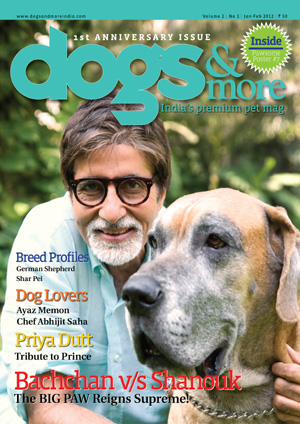
    From the Queen of England downwards, celebrities and their equally famous dogs are almost a cliche. Paris Hilton is frequently seen carrying her pet chihuahua Tinkerbell, who has a book called The Tinkerbell Hilton Diaries: My Life Tailing Paris Hilton to her credit. Closer home Gul Panag’s beagle Milo has a Twitter account. Amitabh Bachchan posed with his Piranna Dane, Shanouk, for the cover of Dogs & More anniversary issue, which was launched recently.


    It’s not just celebs, though, even ordinary people are increasingly getting pets to be a part of their families and participating in their activities. It should logically follow that these owners would be in need of news, views and information resources for their four-legged friends.


    But the pet magazine market is, albeit niche, also extremely small, especially when compared with the growing interest in pet parenting.


    As Shivani Darshan, publisher-editor of the now defunct Furs, Fins and Feathers said, “The pet industry is still a mom & pop kind of industry in India. Abroad, the industry has seen a growth of around 30-40 percent, but in India it is still at a very nascent stage.”


    Veteran journalist and dog lover Ayaz Memon concurs: “The idea of having a pet magazine in India is not fully fleshed out. Even the idea of having pets is not familiar inIndia, it is just growing.”

     

    The pet industry, though not very big, is dominated by dogs, as can be seen from the fact that most of the magazines in the market are predominantly for dog owners.


    Shweta Khurana, editor of Dogs & Pups said, “When we conducted our survey before launching our dog magazine, we found that dogs constituted the maximum number of pets. Also I am a dog lover; the magazine was just a way of turning my passion into a profession.”


    Dogs & More was started by Farzana Contractor, who is also the editor of the magazine. The idea for launching Dogs & More came to Ms Contractor when she realised that dogs teach us a lot about loyalty, patience and ability to love without question. Ms Contractor’s love affair with dogs started seven years ago. “I adopted a dog seven years ago, after a friend suggested it to me as a solution for the depression I was experiencing after losing my husband 10 years ago. I adopted a furry little black Lhasa Apso, and my life changed.”


    Magazines such as Dogs & More or the Delhi-based Dogs & Pups are effort to influence the people to get pets. These magazines, mostly bi-monthly, are reasonably priced and offered at a monthly subscription to the readers. But even then the concept is not taking off. “Considering the expenses related to taking care of a dog, this subscription fee is pretty reasonable. The content is nicely balanced,” said Ms Contractor.


    But a common grouse is that the revenues being generated are not enough. “Unlike a Cosmopolitan, which gets plenty of advertisers, we don’t get so many advertisers. The content is not a challenge but getting revenues is… that’s why we are still a bi-monthly. The content is not a problem,” said Ms Khurana.


    But Jaisurya Das, media professional and dog lover, disagrees: “The marketing strategy adopted by the pet magazines is not right. First, their advertising is not done right. They tend to approach only those connected to the pet businesses like vets, groomers, trainers and so on for advertising in the magazines. What is stopping them from advertising FMCG products? The reader who picks up a dog magazine will also consume the FMCG product. They should think of the end audience while going for advertisements, not the advertiser.”


    Ms Darshan however has a different point: “The industry we function in is still very unorganised, the advertisers we approached want free ads. I was bearing most of the cost of printing and distribution. In the end, we had to take a call and decided to stop printing the magazine.” The anniversary issue of Furs, Fins and Feathers on March 2011, which featured Paris Hilton and Tinkerbell on the cover, was the last one.


    Mr Das also points out that one more reason for bare minimum survival of the dog magazines in India is the visibility factor. “The pet lovers are not going to go out and seek out dog or pet magazines. These magazines should be available at the vets, pet shops, dog groomers and so on. The magazines should have tie-up offers with dog products to hook in the readers. Right now, they are surviving mostly on subscription.”


    Mr Memon agrees: “The information given in these magazines is very basic. It is good for those who have just got their first pet. If I need more in-depth information it is readily available on the internet. I feel that there is a lot of scope for dog magazines to grow.”