Author: mxmadmin

  • Disney XD launches Bengali and Marathi feeds

    By A Correspondent


    After garnering leadership status in the South, Disney XD, the quintessential action, adventure and comedy destination for boys is ready to capture attention of newer markets with the launch of Bengali and Marathi feeds.


    Natasha Malhotra, VP and GM, Walt Disney Television International India, said: “Disney XD, while including girls, mainly speaks to boys in the age group of 6-14 and delivers exciting stories around adventure, action, comedy while reflecting core Disney brand values of accomplishment and heroism. Disney XD has a unique content mix of live-action and animated programming. We are excited about expanding its reach by making it the first channel in the genre to be available in six languages. We will continue to build on it as we deliver great fun-filled, action-packed entertainment that is engaging and locally relevant.”


    Disney XD will launch a brand new show Scaredy Squirrel on January 9, 2012 (Mon to Fri 1 PM). Scaredy Squirrel is fun-filled series inspired by the popular book series by Mélanie Watt about a creative and quirky squirrel, as he tackles life’s daily challenges.


    “Disney XD enjoys loyalty and following from boys driven by Disney original animation shows such as Kick Buttowski: Suburban Daredevil and Marvel, the quintessential boy brand. These are wonderful examples of Disney’s on-going focus on creating great new properties with clearly defined character profiles and story patterns to position the channel as top of mind for boys,” Ms Malhotra added.


    The channel will also create a strong destination for Marvel branded characters and stories which have been a part of every boy’s growing up years with the launch of Spider-man on weekdays (Mon to Fri 2 PM).


  • Network18 and TV18 announce Rights Issues

    By A Correspondent


    Network 18 Media & Investments Limited, at the board meeting held on Tuesday, approved a Rights Issue of Equity Shares to raise an amount up to Rs 2,700 crore at a price to be determined by the Board in compliance with regulatory requirements, but not exceeding Rs 60 per equity share.


    TV18 Broadcast Limited has approved a Rights Issue of Equity Shares to raise an amount up to Rs 2,700 crore at a price to be determined by the Board in compliance with regulatory requirements, but not exceeding Rs 40 per equity share.


    Network18, being the promoter and holder of majority equity in TV18, would be subscribing to about Rs 1,400 crore in the TV18  rights issue – therefore, once this subscription amount is netted out, the Net Aggregate Rights Issue of both Network18 and TV18 will result in a fund raising of about Rs 4,000 crores.


    The contribution of the current Promoter Entities of Network18 in this Net Aggregate Rights Issue of both Network18 and TV18 will be about Rs 1,700 crores.


    TV18 will utilise the Rights Issue proceeds to repay the existing debt, fund the acquisition of ETV channels and fund working capital needs. Network18 will utilise the Rights Issue proceeds to repay the existing debt and subscribe to the Rights Issue of TV18.


    The promoters of Network18 will be subscribing to their entitlement in full. They also reserve the right to subscribe to any unsubscribed public portion of the Rights Issues.


    Raghav Bahl, the founder and promoter of Network18 and TV18, has informed that promoter companies have entered into an arrangement with Independent Media Trust, a trust set up for the benefit of Reliance Industries Limited, to secure the funding required for this purpose. Further, Mr Bahl will continue to retain the management and 51 per cent control over Network18 and 51 per cent control over TV18 through Network18.


    Both the Companies will be filing the Draft Letters of Offer for their respective Rights Issues shortly.


    Mr Bahl said: “This is a truly seminal moment in the 18-year-old history of Network18/TV18. By inducting such a significant amount of equity, our balance sheets will become among the strongest in the industry. Also, by acquiring this strategic control over several ETV channels, TV18 will have a bouquet of leading television channels. Riding on the imminent digital wave, I am convinced that this acquisition is a significant move which will catapult TV18 into the forefront of India’s broadcasting industry. The proposed preferred access arrangement with Infotel Broadband will ensure that our content & services will be available on India’s premier technology distribution platform. On a debt free basis, both Network18 and TV18 hope to strengthen their position in various media segments like news & entertainment broadcasting, consumer internet, digital & print publications, filmed entertainment, home-shopping, e-commerce and other emerging businesses.”


    The Board of Directors of TV18 Broadcast Limited (TV18) during its meeting also approved the acquisition of 100 per cent interest in Hindi news channels, namely ETV Uttar Pradesh, ETV Madhya Pradesh, ETV Rajasthan and ETV Bihar and ETV Urdu channel (ETV News Channels); 50 per cent interest in ETV Marathi, ETV Kannada, ETV Bangla, ETV Gujarati and ETV Oriya (ETV non Telugu GEC Channels); and 24.5 per cent interest in ETV Telugu and ETV Telugu News (ETV Telugu Channels).


    TV18 will have the Board and management control of ETV news channels and ETV non-Telugu GEC Channels. The Board has approved an outlay of up to Rs 2,100 crores for this acquisition. Legally binding agreements will be executed for this purpose. TV18 has an option to buy the balance 50 per cent interest in ETV non-Telugu GEC channels and an additional 24.5 per cent in ETV Telugu channels.

    Ernst & Young Pvt Ltd acted as advisors for financial and tax due diligence and valuation of the assets. The legal due diligence was carried out by Khaitan & Co.


    ETV is among the Top 5 most popularly viewed networks in the country. It was one of the first entrants in the regional markets and the channels have a considerable viewership base. One of the key strengths of ETV channels is their ability to attract and retain loyal viewers.


    On a combined basis, TV18 will be offering a unique mix of national and regional channels, catering to diverse genres like Hindi and regional entertainment, general news in English, Hindi and regional languages; business news in Hindi, English and regional languages; music, kids, devotional and infotainment channels.

    Including the soon-to-be-launched services/variants, this combined bouquet of over 25 channels will be the most powerful and potentially profitable TV operation in the country, especially since India’s television industry is on the verge of a digital revolution.


    As a part of the deal for acquisition of ETV Channels, Network18 and TV18 have also entered into a Memorandum of Understanding with Infotel Broadband Services Limited, a subsidiary of Reliance Industries Limited, under which the companies and their associates will have the right to distribute the content of all the media and web properties of Network18; and programming and digital content of all the broadcasting channels (including the ETV channels being acquired by the company) through 4G Broadband Network of Infotel, which shall have preferential access to this content on a first right basis as a most preferred customer.


    Infotel Broadband Services Limited is setting up a pan-India world class broadband wireless network, using state of the art technology. As per Images Year Book, more than 70 per cent of India’s population is below 35 years, and 50 per cent of the population is below 25 years of age. This young educated population will be keen to access quality content through wireless devices, thereby ensuring a rapid growth in subscribers similar to the growth of tele-density in India during the last ten years.


    The key advantage for millions of viewers will be the ability to enjoy an uninterrupted, high quality, 24-hour viewership, even while they are on the move. This tie-up with Infotel will enable Network18 and TV18 to build on their first-mover advantage for the distribution of their content through the latest broadband technology.


  • The Anchor: Prasoon Joshi on 5 songs he wishes he had written

    1. Ye dunia agar mil bhi jaaye to kya hai
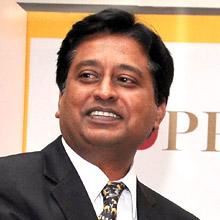
    from the movie Pyaasa. This is a legendary song and the kind of work that I like doing. The song has a philosophical bent and is almost cathartic. It reflects the feeling of people and a song that has a social impact. This is Sahir Ludhianvi at his best.


    2. Bird on the wire by Leonard Cohen. The lyrics present a compelling imagery. Like a worm on a hook, Like a knight from some old fashioned book… It is a brilliantly written song and I admire the whole construct of the song.


    3. Mora gora rang laile from the movie Bandini. This is one of the first compositions of Gulzar Sahab and the lyrics are sheer poetry. In India where fair complexion is revered, here the request is to make her dark-skinned just like Krishna so that she can hide in the darkness and meet him. Beautifully stringed words that touch the core of your heart.


    4. Jyoti kalash chhalke from Bhabhi ki Chudiyaan. Again it presents a powerful imagery and a superb play on words. Huye gulaabi, laal sunahare, rang dal baadal ke, jyoti kalash chhalke/Ghar aangan van upvan, karti jyoti amrit ke sinchan, mangal ghat dhalke. Writing poetry is different when it has to be set on music as one has to ensure that while the song is written well it must also sound well. This is a perfect example of such a work.


    5. Mr Tambourine Man by Bob Dylan. I love the lines – I’m ready to go anywhere. I’m ready for to fade. Into my own parade, cast your dancing spell my way. I promise to go under it.


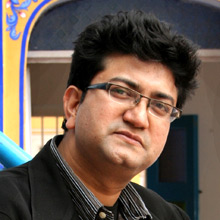
    Prasoon Joshi is the Chairman & CEO McCann Worldgroup India, Executive Creative Director of the Asia Pacific region and Chairperson, McCann Global Creative council. He is also an awardwinning lyricist.

    Photograph courtesy Shailendra Pandey/Tehelka

  • The Anchor: Suresh Srinivasan on 5 reasons IRS is an effective measurement tool

    By Suresh Srinivasan


    #1 The only indicator. Currently IRS is the de facto gold standard for measurement of newspapers and magazines. IRS is based on continuous study with fairly large data base. More importantly there is no other indicator and it is the standard used by the industry.


    #2 It’s not about just absolute numbers, but also gives the trend of the industry over the years. The trends are a valuable resource for media planners, publications and advertisers. These are not volatile numbers but have been slow and steady indicators of changes in the industry. This gives a meaningful picture of what’s happening in the industry.


    #3 Considering that we are a large nation, IRS proves to be a cost-effective, valid and timely method of assessment of consumption of media. The sheer magnitude and scale of collecting and collating this data involves lot of work but IRS makes this possible and a valid data is available its users.


    #4 Besides the readership data available on frequency and demographics, IRS has become a vital source of comprehensive information. It has become a repository of data that can provide information on various other parameters like intent to purchase.


    #5 With technology coming in IRS is poised to become much more robust and will take research to higher level. It is a continuous journey to present better data to its users.


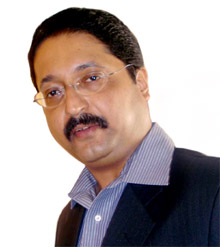
    Suresh  Srinivasan is the Vice President (Advt) of The Hindu Group of Publications.

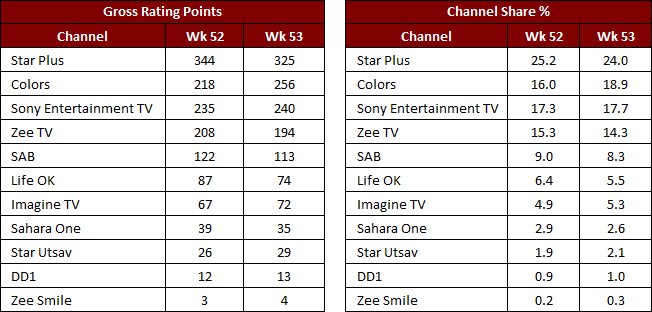
  • TAM Data (GRPs, Channel shares of HGECs)- Wk 53 ’11


    Source: TAM Peoplemeter System
    TG: CS 4+ yrs
    Market: HSM
    Period: Wk 52: Dec 18 to Dec 24, 2011
    Period: Wk 53: Dec 25 to Dec 31, 2011


    About TAM Media Research


    TAM is a joint venture between Nielsen Company & Kantar Media Research. Besides measuring TV Viewership, TAM also monitors Advertising Expenditure of Television, Print & Radio through its division AdEx India. Since 2004, it extended its presence in the PR Measurement & Analysis space for Corporate/Marketing Clients by setting up a separate division Eikona PR Measurement.


    In 2007, the joint venture introduced RAM (Radio Audio Measurement) service to track Radio Listenership for the Indian Radio Broadcast Industry. In year 2009, TAM launched a division, called TAM Sports that specializes in monitoring Sports Sponsorship ROI.


    TAM Media Research’s objective is to fuel media insights that will drive the growth of the Indian Media Industry.

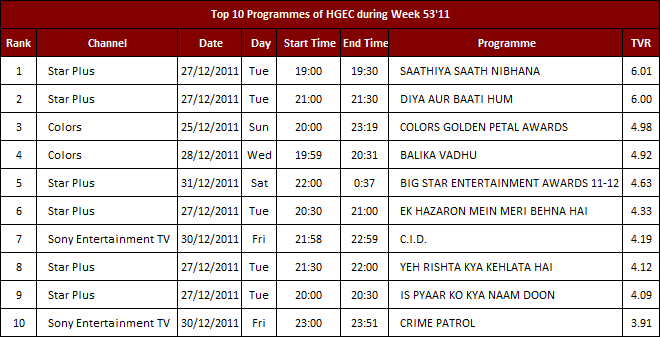
  • TAM data Top 10 programmes on HGEC – Wk 53 ’11

    Source: TAM Peoplemeter System
    TG: CS 4+ yrs
    Market: Hindi Speaking Market
    Period: Wk 53 (Dec 25 to Dec 31) 2011


    About TAM Media Research


    TAM is a joint venture between Nielsen Company & Kantar Media Research. Besides measuring TV Viewership, TAM also monitors Advertising Expenditure of Television, Print & Radio through its division AdEx India. Since 2004, it extended its presence in the PR Measurement & Analysis space for Corporate/Marketing Clients by setting up a separate division Eikona PR Measurement.


    In 2007, the joint venture introduced RAM (Radio Audio Measurement) service to track Radio Listenership for the Indian Radio Broadcast Industry. In year 2009, TAM launched a division, called TAM Sports that specializes in monitoring Sports Sponsorship ROI.


    TAM Media Research’s objective is to fuel media insights that will drive the growth of the Indian Media Industry.

  • Debrief: Pepsodent G: WTF, G??

    By Anil Thakraney


    Pepsodent G takes care of your gums. Fair enough. But what does Shahrukh Khan have to do with this promise? Unless it’s about Kabhie Khushi Kabhie Gum, which is not the case out here, hehe.


    The commercial features King Khan as a Sikh army officer. And it involves an exchange between him and his little son, on how the brand reaches the root of a toothache, and sorts our gum problems. Or some such thing. The only slightly cute thing about the TVC is that father and son address each other as ‘Pappu G’ and ‘Pappa G’. A take off on Pepsodent G. In fact, I think someone in the ad agency got the ‘G’ brainwave, and got so excited, he/she wrote a whole script on it, just to somehow make it work.


    [youtube width=”400″ height=”200″]http://www.youtube.com/watch?v=2XNovcMh7w0[/youtube]

    Total waste of money, G. What’s the point of hiring the super expensive Khan when all he has to do is become the brand window for Pepsodent G? Where’s the idea? Where’s the entertainment? Caught up in the weak G ‘masti’, the writer hasn’t even tried to inject some life into the dialogue. The result: a maha boring ad. Despite Shahrukh doing all he can to pep things up a bit.


    Not working, G. Back to the drawing board, G. Make the star pay for his fat fees, G.


    Rating: (On a scale of 1 to 5): 1. Lifeless script. Shahrukh Khan’s Ra.One was more happening. 


  • The Anchor: 6 tips to be productive working out of home

    Freelancing or working from home can be pretty tough and often not productive enough. On the other hand, it doesn’t make sense in investing in office space and infrastructure if your work doesn’t involve the need for a full fledged office… especially in the media space.
     

    Here are 6 tips on how to make the most of it and get good work done in the comfort of your home.


    1. Make a clear schedule with work hours and rest/ household chores times set in advance

    Most often the issue is that one doesn’t delineate time bands for all this and eventually it’s all rolled into one. This is the most important step, hence if it’s 10am-12noon for work in the first half, then only work happens, no matter what…


    2. Learn to concentrate and make the quietest space your work place

    Let not the home phone, the door bell  and so on intrude into your work time, whatever be the time you have allocated . Keep yourself armed with what you need before your start, even if it’s that flask for your coffee. This seems flippant but each time you get up to make a cup, you might just end up involving yourself in other stuff.


    3. Do not overload yourself and make everything around you a priority!

    The common problem with most of us is that even before we realize it, everything is a priority on the list!  Take what you can handle in a given time frame, given your flexible schedule. Personal work must be slotted on a separate list so that it doesn’t clash with your work list. Don’t forget, time management is in your hands and hence you can slot it accordingly.


    4. Discuss your schedule with the family /housemates

    Unless you make it clear that this is what you have planned, there will always be a thin dividing line. It’s important for the others to understand that you work from home but it’s just the same as working from office. The difference being that you monitor yourself and hence it’s actually tougher! They will come to terms with it and, without doubt, support your plan of action.


    5. Avoid distractions, even if you think you can manage

    Would you have the TV or Radio on while you work at office? If not, then don’t bring them near you, when you are working from home. It’s easy to say it’s a non-intrusive medium, but the fact remains, it’s not always easy to concentrate while listening to a RJ butting in every few minutes, just when you are working at your best.


    6. Time is money and your work space is sacred

    Not an old school thought. A reality. One needs to understand that your work takes time and effort and the sacred space, since it brings you the satisfaction of seeing your efforts pay off. Hence do not take the liberty of lying in bed and typing on your laptop when at work. Sit at a table and work just like you would at your office. No to quick beers, or a smoke too many either. It’s your office, remember!


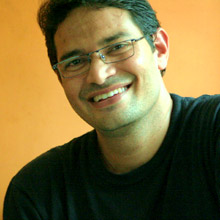
    Jaisurya Das is Director & Chief Mentor, Xanadu Consulting Group Pvt Ltd. He is Contributing Editor, MxMIndia and mentors readers @ DearMxM.


  • New English daily in Pune from Aaj ka Anand group

    By Akash Raha


    Pune is all set to welcome a new English daily. The 40-year-old Aaj ka Anand group is set to bring out the newspaper in a joint venture with  content firm Media Next Private Limited .  Aaj ka Anand publishes a Hindi morning daily, Aaj ka Anand and a Marathi eveninger, Sandhya Anand and has interests in real estate and also runs a budget hotel in the city.


    Media Next is a multimedia content service provider whose Chairman is senior Pune-based journalist Mr Anand Agashe. The managing editor of the newspaper will be Mr Agashe, and Ms Vinita Deshmukh, also a veteran Pune journalist and RTI activist, has been appointed as the editor.


    Speaking on this development Mr Agashe said, “Pune is becoming a cosmopolitan city and its demographics are changing, with the rise of middle class and upper middle class, whose preferred language for communication is English. The Aaj ka Anand group thought it was necessary to have a English daily which would complement its Hindi and Marathi newspapers.”


    While Aaj ka Anand will own the newspaper, the content will belong to Media Next. The application for the newspaper is currently being processed and the name of the English daily is hence still under wraps. According to Mr Agashe, the English newspaper is all set to be launched in the next two to three months.


    While Marathi dailies are the dominant players, Pune is already crowded with several established players like The Times of India, Indian Express, DNA and Sakaal Times in the English space. Mid-Day too has a Pune edition. The entire print revenue generated in Pune is said to be between Rs 500-525 crore.


    Speaking on this development, Jaisurya Das, Managing Director of Xanadu Consulting Group and a veteran on the Pune market said, “I admire their guts to come out with a English daily, because to get a product differentiated is going to be very difficult and they are not known as market leaders. Aaj ka Anand is a fairly low profile group, which has been active only in the Hindi and Marathi market catering to a B1, B2 or C1, C2 kind of an audience.”


    Mr Das feels that there are a couple of issue the group has to work on. “The first thing is, it is not a marketing savvy group, unless they are going to bring a whiz kid. The second is that they have to come up with excellent and differentiated content. I am not saying that there is no room in the Pune market for a newspaper. If you bring in a daily with highly localized local content, it might work. It’s a tough call and unless the group delivers differentiated content and comes up with an aggressive marketing strategy, there is going to be a lot of bloodshed ,” he added.


  • Journo-authors: Telling a story, both ways


    By Archita Wagle


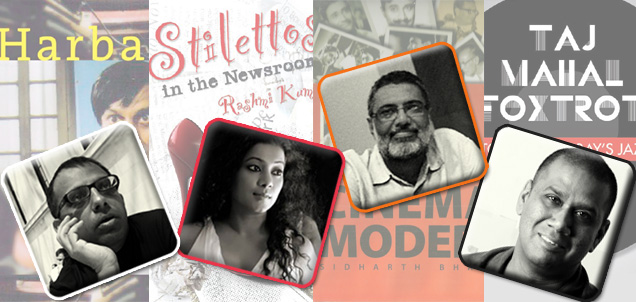
    “Modern journalism, which is about 100 years old, has a tradition of journalists going on to write books,” feels Naresh Fernandes, Editor, Time Out and author of Taj Mahal Foxtrot: The Story of Bombay’s Jazz Age, which was launched recently at the Goa Literary Festival.


    And probably that is the reason that so many take the plunge from writing a story to writing a book. So then in spite of having a day job, why does a journalist, whether a reporter or one of the editing team, take the time and trouble to write a book.


    Sometimes it is just the desire to share the experiences that the person has gone through like Rashmi Kumar, Features Editor, Deccan Herald, whose first book, Stilettos in the Newsroom is an effort to chronicle her experiences in the newsroom. “I felt that I was a misfit in the newsroom, I was not well-connected or aggressive or as street smart as others. I still am not. But I was always sure that I wanted to write,” she said.


    Sometimes it is a personal passion that translates into a book, as with Arunava Sinha, Head, ibnlive.com and cricketnext.com, who translates Bengali classics and contemporary literature. Mr Sinha said that he has been translating for a long time but he started publishing only five years ago.


    There is a story waiting to be told in every subject, so how does a journalist decide on the topic to base his/her book on? Is it something that they are passionate about, or something that they want to explore in depth? Mr Fernandes’ Taj Mahal Foxtrot was an idea that took root when he was doing an article on jazz for Man’s World. “While doing the article I realized that there was a story in there aboutBombay’s cosmopolitanism. I decided to explore the idea in-depth in a book.”


    For Siddharth Bhatia, author of The Navketan Story Cinema Modern and consulting editor, Asian Age, the book was something he had toyed with for years. “I was fascinated by films made in the 50s and 60s, especially those made by Navketan. I would have written this book much earlier but it was only recently that Devsaab agreed to give time for the book.”


    Writing a book while continuing with the day job of being a journalist isn’t an easy task. Sitting up late at night, working on weekends, fitting time around a busy schedule become a part of a journalist-author’s life. There are times when they suffer from the classic writers’ block. They go away, keep the book aside, take sojourns, or sometimes just keep hacking away. But they don’t give up. And if they do, the publishers are always there to remind them. “I pitched the idea to the publishing house and they accepted. After that I just kept it aside, it was they who reminded me that I had a book to write,” said Ms Kumar.


    If one were to look at the books that have been written by journalists over the years, one notices that there is a mix of fiction and non-fiction. Though almost all journalists agree that non-fiction is easier to write as it deals in facts, something that is a “natural progression from being a journalist” as Mr Fernandes says, but he is also quick to point out that writing non-fiction is tougher than fiction as “we have to construct the narrative out of facts, we can’t let our imagination take over when we hit a blank spot”.


    Writing is a book is never easy but what after the book is written or even halfway complete, how easy or difficult it is to get it published. Do the journalists pitch their proposals to the publishing houses or vice versa?


    Priya Kapoor, director, Roli Books explained the process of publishing a non-fiction book. The publishers have a commissioning program. Sometimes there might be an event of interest like the IPL controversy. They then research on what has been written about the topic, who has been covering it, how has the person covered the topic and then approach the person they feel is best suited for writing the book.


    “When we commission non-fiction books, 70 percent of the time, we approach them. Sometimes it is because the person has been covering the subject for a long time or because they have access and contact required to do the book or if writing about the topic excites them,” she added.


    She illustrated her point by citing an example: After 26/11, Roli decided to come out with a compilation of articles and perspectives on the terror attack in a book. Everyone was working around the clock. It was here that the journalistic discipline of sticking to deadlines came useful. The book was on the stands in January the following year.


    That makes it sound as if it is easy for the journalists to get their books published. But that is not the case all the time. “It is not very easy for journalists either to pitch for getting a book published. We might get an extra point for our ability to adhere to deadlines, but that is all that we get as an advantage,” feels Mr Bhatia. He is the first one to point out that he isn’t an authority on films, but when he approached the publisher, Harper Collins, something did click and the rest has been published as Cinema Modern, a look at Navketan, cinema in the 50s and 60s and India’s history along the way.


    But not all journalists stick to writing non-fiction. Some like Sidin Vadukut, Sonia Faleiro and Rashmi Kumar also venture into fiction. “I would not say it is all fiction. My book is part fiction and part autobiography. I have left it to the reader to figure out which is fact and what is fiction,” explained Ms Kumar, whose book Stilettos tracks the journey of Radhika Kanetkar’s slow raise in the world of newspaper and finally her wedding.


    Some even venture into other territories like translating. Arunava Sinha has already translated works like My Kind of Girl by Buddhadeva Bose, considered to be one of Bengal’s foremost writers of the 20th century, Harbart by Nabarun Bhattacharya and Three Women by Rabindranath Tagore. Mr Sinha would love to give up his day job but agrees that he doesn’t get paid enough to pursue his passion full time. “It is not a profession, but a passion. Money is not my primary consideration,” he stated.


    After the book is complete, it goes to the editor to be edited. How easy is it for a journalist to give up something that s/he has toiled for to another person who will very critically edit it? Most reporters say that they are used to the fact that their ‘copies’ would be ruthlessly edited. As Mr Bhatia very succinctly puts it, “The book editors have a particular way of editing. They look at continuity, the flow of the book, contradictions in chapters and so on. I was fortunate to work with one of the best editors of Harper Collins. He pointed out several things that I would have never noticed as I was too close to the subject.”


    Even Ms Kapoor agrees, “It is not as if journalists interfere more with the editing process than any other writer. But sometimes looking at a particular subject we might give them some leeway, with respect to their sources and contacts.”


    But Ms Kumar begs to differ, being from the editing side of the business. “I never had a problem with the way my story was edited. But I also edit copies and that is something that is now internalised. I made sure that the material I submitted was clear and concise,” she said.


    Mr Fernandes took nearly eight years to complete his book, working around his job. Bhatia could only focus full time on the book after he quit his job. Mr Sinha makes it a point to sit at night and focus on his translations. Ms Kumar is now ready with her second “tongue-in-cheek” book on a 30-something girl’s matrimonial adventure search. But they are not ready to quit. “After all one day I will retire from my day job, but I can continue to write as long as I want,” says Mr Bhatia. Indeed aptly summed.


    Coming attractions


    After the release of Mumbai Mirror editor Meenal Baghel’s debut novel Death in Mumbai, which Priya Kapoor, Director, Roli Books describes as a “well written and well researched book which makes the effort to get inside each character, 2012 will see the release of S Husain Zaidi’s book “From Dongri to Dubai” on Mumbai’s underworld and the history of gangsters.


    Mr Zaidi, resident editor of Asian Age/ Deccan Chronicle, already has two books on the underworld connection to his credit, Black Friday (which was made into a film) and Mumbai Queens, which chronicles the tales of Mumbai’s female gangsters.


    He took four years to complete the book according to Priya Kapoor. If there are no further developments or twists, the book is set to be released in the first quarter of 2012.


  • Vipin Dhyani: We create ads that our TG appreciates

    By Shubhangi Mehta


    Thoughtshop is a 360-degree advertising and communication agency started by Vipin Dhyani. With more than a decade of experience in advertising, Mr Dhyani has the unique distinction of working for a diverse portfolio of brands and being involved in more than 120 ad films over the last couple of years.


    Thoughtshop has conceptualised and created communication films for various products for Parle which include Hide and Seek, Hide and Seek Bourbon, Milano, MonacoSmart Chips, Mango Bite, Krackjack. It has also created the TVCs for Nirma Washing powder, D-Cold Total amongst others.


    In the recent past Thoughtshop bagged three awards in the Big Bang Awards 2011 in Bangalore. One gold for Krackjack radio spot titled ‘Ladies tailor’, a bronze for another radio spot, ‘marriage councillor’ for the same and another bronze in TVC category for Parle Milano featuring Hrithik Roshan. In 2010, the agency has also won silver in Goa Festival for its Nirma washing powder TVC titled as ‘Splash’.


    Prior to this, Mr Dhyani has worked with Everest Brand Solutions and Mudra as Creative Director. He has also had stints with Lowe Lintas and Grey Worldwide in Mumbai.


    Q: What makes Thoughtshop Advertising different from the other advertising agencies? Why does a client choose Thoughtshop over other agencies?

    Our in-depth understanding of consumer insights, sound creative and a real good turnaround time. We are not selling ideas we like. We are not even selling ideas liked by our clients. We create ads that our TG appreciates. Pure honesty, sincerity and a very no-nonsense approach helps us whenever we approach a new client.


    Q: How satisfied are you with the progress of Thoughtshop Advertising since its inception? Has the outcome matched your expectations?

    I am very satisfied with the way things are shaping up. Initially it took me some time to figure out how to go about it. On one side, there was that sense of calmness which you crave in your own place and on the other side you need that aggression which is required to win business. Fortunately I could acquire both. And I am more than happy to achieve that unattainable balance. Overall, it was a plunge worth taking.


    The outcome has been very fruitful, I should say, but expectations are higher than what we have achieved so far. The hunger for good creative work is never ending and never satisfying in our field.


    Q: You have worked with some of the biggest agencies in India and then started one on your own. Could you highlight some pros and cons of working with a bigger agency and starting something on your own?

    When you are part of a big atmosphere, all you need to worry about your brand and its creative standards. You don’t actually think about the business and the ‘survival’ part of it. But when you run your own set up, you are not just responsible for your survival but for the whole team.


    In simple words, with bigger outfits I felt like a civilian, while on my own, it’s like an army man on a border, always on my toes, alert and responsible.


    Q: How much importance do you give to winning awards? Do you think that awards justify the measurement of creativity?

    I would say it is very important to win awards. If we belong to the creative fraternity, we have our moments of escalation, moments of getting admirations and moments of being known. Fair enough. But the sad part of the business is that sometimes an award-winning entry could be completely plagiarized and a genuinely beautiful work may go unnoticed at the same time.


    Q: These days awards focus on not only creativity but effectiveness as well. According to you which out of the two is a focus point while creating a brand communication?

    Efficacy awards basically talk about the real strategy transforming to a sound creative that is being liked and owned by the real end consumer. It is like performing a play in front of the real audience who can appreciate or completely disown you, depending on your performance. On the other hand, a creative show ‘primarily’ prefers and promotes a disruptive and innovative entry whether it is from mainstream product or a service or not. That’s where it creates a separation line.


    I think if we believe in creating a brand and not just one-off clever ads, we can create genuine work worth celebrating at both levels.


    Q: Could you throw some light on the brands you are working on?

    We are doing two new launches for Parle this year. The communication package is ready. Apart from Parle, we will be working for Nirma for at least one project while for Bayer CropScience, we are going to launch two projects (Decis & ECB) very soon. Then there is one property we have created for 9xM channel. It is going to be the first female animated character. We have got one more account recently, GET Punjabi channel. After a huge success in US andCanada, they are launchingIndia’s first GEC in Punjabi. Ekta Kapoor is going to be the producer for them in terms of providing content and we will be looking after the advertising and promotions.


    Q: Independent agencies are doing fairly well these days and competing with the larger agencies. What are your views about this?

    Actually it is not about smaller agencies versus bigger agencies. It has always been about a sound, feasible and appropriate idea or strategy. If a client finds an idea sensible, he will appreciate it in whichever case, whether it comes from a small agency or a bigger one.


    Q: What is your growth strategy for the coming year?

    Apart from 360-degree creative services, we are expanding to fulltime production and direction services both for our existing clients as well as for new ones. Expansion with one more branch is also on the cards.


  • Den, Hathway join hands to sell set-top boxes

    By Meenakshi Verma Ambwani


    Cable TV companies Den Networks and Hathway Cable & Datacom will launch a joint media campaign beginning with Delhi this weekend, informing consumers about the need to install set-top boxes by June 30 as mandated by the government.


    The top two multi-system operators (MSOs) will also launch their set-top boxes at a promotional price of Rs 799, including installation charges and taxes, which is much lower than Rs 1,500-1,600 charged by the direct-to-home or DTH operators.


    As per initial estimates, the two companies are expected to spend Rs 20 crore on the campaign. Households in New Delhi, Mumbai, Chennai and Kolkata will have to buy set-top boxes before June 30 to watch television channels, as per the government’s plan to digitise the country’s cable TV network by 2014. Both houses of Parliament passed the Bill to this effect last month.


    “Consumers need to start buying the set-top boxes to access digital signals and this is a joint effort by two like-minded companies to make the consumers aware about digitisation,” said Mr SN Sharma, CEO of DEN Networks. The company expects to install between 2 and 2.5 million set-top boxes in the four cities. “The initial goal will be to upgrade our existing subscribers in these cities to digital addressable system. Only if we have surplus boxes will we look to add new subscribers,” he said.


    Hathway expects to deploy about 2 million set-top boxes in the four cities by the end of the first phase. The two companies are planning to rope in other MSOs for the campaign partly to share costs and fend off competition from DTH players. “This is an educational campaign and we think it’s best if all players come together to share costs and promote digitisation,” said Mr K Jayaraman, CEO, Hathway Cable & Datacom.


    Source:The Economic Times

    Copyright © 2012, Bennett, Coleman & Co. Ltd. All Rights Reserved