Author: mxm_india

  • New music world under the scanner at Nokia seminar

    By A Correspondent


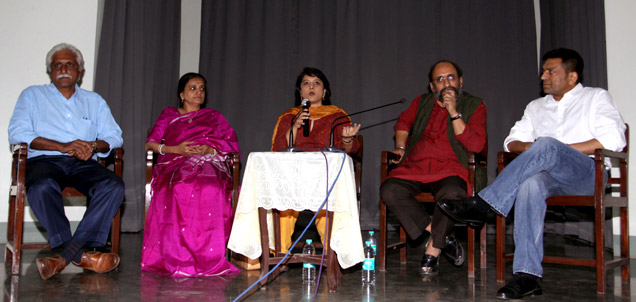
    The global digital music industry is growing significantly; Piracy across the globe will fall. The next few years will be a challenge for the music retailers. CDs today are slowly being replaced by digital format. The whole environment is changing with digital media. A lot of our revenues come from television stations or background music. These were some of the points raised at the day two of Nokia Music Connects event held in Mumbai on November 17, 2011. Nokia was the title sponsor of the event.

    Among the many sessions on day two of the Nokia Music Connects, one of them was ‘Digital Media, Global Landscape and the Future Ahead’. It was presented by Sandip Biswas, Director- TMT Practice, Deloitte. He spoke about the growth of physical format of music despite the enormous growth of the digital format. “Most of the assets are going digital. I believe that digital music will surpass the physical music format. However the physical format of music will also continue to grow and radio, television will contribute more.”

    One of the points this session raised was whether piracy is a legal or economic problem. He also pointed out that since the year 2008 piracy did not grow but, remained stable. Mr Biswas observed that the next few years will be a challenge for the music retailers and with the growth of digital format, CD prices will rise globally.

    The other sessions that followed ‘Digital Media, Global Landscape and the Future Ahead’ were, ‘Music Publishing- Soon a reality in India?’ This session discussed what the passing of the copyright act mean for the music industry and steps can be taken to foster the healthy development of the publishing industry in India.

    The session was moderated by Vijay Lazarus, President, IMI / PPL; the panelists were Achille Forler, Managing Director, Deep Emotions, Peter Jenner, Discoverer of Pink Floyd, subsequent Manager of many, Advisor to WIPO; Brandon Bakshi, Executive Director – Europe &Asia, BMI; Myles Keller Membership Development Director,PRS for Music; Rakesh Nigam, CEO, IPRS; and S L Saha, Managing Director, The Indian Record Mfg. Co. Ltd.

    The next session was Internet/Mobile radio and streaming services. One of the points this session discussed was revenue models for these players and the opportunities in store for the music labels and artistes with these new platforms?

    This session was moderated by Ted Cohen, Managing Partner, TAGStrategic; The panelists were Prashant Bahadur, Vice President & General Manager, The Orchard; T Suresh, Managing Director, EMI Music India; Raju Singh, Music Composer; Shehzad Azad, Head- Business Develeopment &Alliances, Spice Digital; Siddhartha Roy, COO – Consumer Business & Allied Services, Hungama Digital Media Entertainment Pvt. Ltd.; Jai Maroo, Director, Shemaroo Entertainment Ltd. and Pradeep Rao, Head – VAS,Aircel.

    The ‘Music Television, Reality Shows- The opportunities’ session discussed, music on television with new channels launching in HD running back to back music and its impact on music business and consumption. Reality shows such as Sa Re Ga Ma, Indian Idol, X-Factor have helped unearth talent. What has happened to them? Have they managed to make careers for themselves? How has the journey been? What sustains these shows? Why do broadcasters persist with them?

    This session was moderated by Anil Wanvari, Founder CEO, Indiantelevision.com Group. The panelists were Neeraj Vyas, Executive Vice President & Business Head, SONYMAX & SONYMIX; Aditya Swamy Senior Vice-President, MTV; Arvind Krishnan, Director – Marketing, Bacardi; Meiyang Chang, Former Indian Idol Finalist; Anushka Manchanda (Singer); Gitanjali Sriram, Founding Partner, Naked Communications.

    In the session ‘Of Live, And Independent Artistes’ discussed the emergence of independent festivals spurring a huge amount of opportunities for independent artistes and what it means for the music business? It was moderated by Brian Tellis, Chairman, Fountainhead Promotions & Events Pvt. Ltd. The panelists were  FarhadWadia, CEO, E18; Venkat Vardhan, Founder, DNANetworks; Joji George, CEO, Percept Sports & Entertainment; Sabbas Joseph, Founder Director, Wizcraft; Devraj Sanyal, Managing Director, Universal Music Group and Jayesh Veralkar, Label Head – Day 1, Sony Music Entertainment.

    The last session of day two was on ‘Artiste Management’. It discussed whether artiste management is becoming a profession like it is in more developed music markets? What role do they play with musicians in India? And how is it evolving keeping in mind the evolving music scene and the needs of the artiste today?

    This session was moderated by Brian Tellis, Chairman, Fountainhead Promotions & Events Pvt. Ltd. The panelists were Pakul Chaturvedi, Chief – Asia Pacific, Promo Sapiens; Robert Horsfall, Lawyer / Business Manager, SoundAdvice; Shaan (Singer); Jordan Berliant, Linkin Park’s Manager; Mark Wood, Imogen Heap’s Manager and John McLellan, Partner, Haldanes.

  • TV-wallahs eager for digital wave


    By Rishi Vora


    The television distribution scene in India has for many years seen the dominance of cable wallahs. Digitization only started in a big way when DTH players pumped in huge sums (there was no ordinance then) and succeeded in building a critical base of subscribers in the country. As a result cable operators were seen as laggards. Sample this: there are about 40-45 million DTH homes out of the total viewing population of more than 225 million households, so DTH has grown despite competition from cable and is likely to increase the subscriber base substantially with the recently passed ordinance by the government.


    As for the cable operators and MSOs, they are left with no option but to invest in infrastructure. Den Networks is investing Rs 1,000 crore and expects to get 2.5 million subscribers in the phase one. Hathway will invest Rs 500 crore and they are also bullish about increasing the subscriber base. Analysts feel that now is the perfect time for MSOs to increase their share in the business.


    So, while it seems all good for the industry, the fact is that digitization is something that was always talked about, and is now a work in progress as far as complete digitization is concerned. The government has, in a recent development, pushed the sunset day for four metros from March 2012 to June 2012. The date for cities with a population more than 1 million is March 31, 2013.


    For broadcasters, this is a big relief from the carriage fees, which in the past have resulted in loss of revenues. The four metros is a big market with 20 million households; and digital homes eating into cable and analogue… But, digitization, for broadcasters, also means that the consumer will now have a choice of what channel to pay and watch. That in experts’ minds is a challenge many broadcasters will have to face – to keep their viewers’ interest levels high and for the long run.


    Subhash Chandra, Chairman, Zee opines, “Digitization will only help the television industry further grow. The government’s decision on clearing the ordinance is a very positive move. It will give a boost to the cable and satellite industry and help create a more sustainable business model for the television industry.”


    On the growth of DTH players in the county, he said, “DTH is leading the adoption of digital technology. There are about 39 million gross DTH subscribers in the country. Now they have a great opportunity to consolidate their businesses.”


    However Dinyar Contractor, Editor-in-Chief of Satellite and Cable TV Magazine, has a contrary view to the whole scene. He feels that there is still some time for digitization to happen pan-India (2014) as the ordinance states. And that broadcaster are wary of going digital, or are wanting to delay the process of digitization of TV in India, as the profits are not much, plus there is the risk of losing eyeballs, as there will always be viewers who are not open to the idea of paying and viewing, as against the concept of free-to-air channels.


    Tarun Katial, CEO, Reliance Broadcast Network Limited, feels, “Digitization will bring-in fair reporting of subscriber base, which will lead to standard pricing and subsequently eradication of local monopoly. It will help companies increase subscription revenues and reduce down carriage fees for broadcasters in a phased manner.


    Ajay Chacko, President, A + E Networks | TV 18 JV, says that the move will bring in more accountability in the business. And apart from additional subscription revenues, he believes that digitization offers a whole new benchmark for broadcasters, and a platform which is more measurable than cable and analog.


    Neo Sports COO Prasana Krishnan welcomes the ordinance. “This is the much needed change in the industry. What it will do to the industry? I think it will revolutionize the broadcast landscape in India.”


    If the ordinance were not passed, Mr Katial is of the opinion that the current capacity constraints in analog cable would have stifled the growth of new channels and introduction of technologically advanced content. “The carriage costs paid by broadcasters which currently remain high in view of the limited bandwidth of analog cable would decrease post digitization. This would allow broadcasters to make higher investments in programming and marketing, thus improving the customer experience,” he explains.


    Another advantage the industry will see over the years in the fast adoption of HD television and 3D, which will open new revenue streams. As far as television distribution industry is concerned, the ordinance will lead to more transparency and greater accountability. It means opportunity for all stakeholders – broadcasters, distribution platforms including cable companies, MSOs and DTH.

    Photograph: Airtel Digital TV HD Recorder from airtel.in

  • Benetton’s shock treatment works, say creatives

    By Tuhina Anand


    Benetton’s Unhate campaign aimed at leaders and citizens of the world to combat the ‘culture of hatred’ with its Unhate Foundation has shocked many. One of its visuals showed Pope Benedict XVI in a lip-lock with Imam of Al-Azhar mosque in Cairo. This has caused such a furore that the ad had to be pulled off and an official statement on Benetton’s website said, “We reiterate that the meaning of this campaign is exclusively to combat the culture of hatred in all its forms. We are therefore sorry that the use of the image of the Pope and the Imam has so offended the sentiments of the faithful. In corroboration of our intentions, we have decided, with immediate effect, to withdraw this image from every publication.”


    Some of the other people in the lip-lock campaign are Barack Obama and Chinese leader Hu Jintao, Palestinian President Mahmoud Abbas and Israeli Prime Minister Benjamin Netanyahu, Angela Merkel, the Chancellor of Germany and Nicolas Sarkozy, the President of France and King Jong II, the Supreme Leader of North Korea and Lee Myung-bak, President of South Korea.


    The campaign is being used to launch the Unhate Foundation which champions a new culture of tolerance and combats hatred. What could be better than to show two political figures who are often at loggerheads kissing each other thus signifying the basic of love and reconciliation. Not to forget that the provocative images immediately catches the eye and even raises many eyebrows. So in that way Unhate Foundation and its advertising on its very first day of launch managed to create a stir.


    The campaign has been lauded by many in the fraternity. Prathap Suthan, Chief Creative Officer at iYogi, calls it brilliant.  He said, “I bet it’s taken them a million tons of conviction to come out with it. It’s not every day you get to showcase Presidents and Popes kissing each other. As a campaign, it doesn’t get much bigger, bolder or more controversial than this and yet remain hugely relevant. In the context of the world, where there’s violence, and gore, and all kinds of hate, unhate seems to be a great thought to own. Plus all the free PR this is bound to create.  This campaign has multiple layers – from colour to history to geography to homosexuality to religion to culture to love and peace. It’s a genuine Benetton campaign. And it comes at a moment when the brand is flagging. If you can get the world talking about your campaign, whether you like, love or despise the thought and the representation, the brand wins hands down. I would never have the spine, guts, and spheres to think/back this kind of a campaign. Not just me, none in India. Great campaign. Great brand. Lousy clothes, though.”

    In fact, the campaign is reported to have given a lift to Benetton’s flagging sales. But this is not a first for the brand. It has been championing social causes with its controversial ads even in the past. As Manish Bhatt, Founder Director, Scarecrow Communications Ltd, remarked, “If this attempt was made by any other brand one would dub it as a move to be controversial but Benetton has historically never been timid. It has been pushing boundaries hence the current ad very much adheres to brand personality. Creativity is known not to adhere to political correctness be it in art, poetry or advertising. Benetton has been consciously doing this for years.”

    Even earlier Benetton has pushed boundaries when it took on issues of racism and homosexuality with its simple, compelling but controversial advertising. Priti Nair, Founder, Curry Nation, says that it’s Benetton and the advertising remains true to its personality. She said, “I have read that Benetton is calling it a touch of ironic and constructive provocation. Which it is!”

    KV Sridhar aka Pops, the NCD at Leo Burnett said, “The intention of Benetton advertising is good, however shocking it might be, but then its Benetton. Hugging would probably be more easily accepted imagery but then it would not have caused any shock as the kissing is doing now.”

    The campaign is supported by film, guerilla actions across the world showcasing the visuals and the digital where a Kiss Wall is created and people invited to share their pictures of their kisses and opinions besides Unhate list, a Twitter-based list of the things and people that are not hated, which is constantly updated by visitors. There will also be an Unhate Dove, an art installation made using empty bullet shells sent in by residents of war zones around the world and recycled to make a dove, the symbol of peace, which will carry with it the Foundation’s message of peace.

    The campaign in that sense is encompassing an entire ecosystem to unveil the concept of Unhate which many may argue to be grammatically incorrect. The Foundation aims to be a think tank, attracting personalities and talents from the fields of culture, economy, law and politics, and people who have gone from simple citizens to leaders of movements, distinguishing themselves through their ideas and actions against the causes and effects of hatred.

    While the campaign is controversial and getting people to talk but the truth is that it is meant to just do that. Arun Iyer, National Creative Director Lowe Lintas, said, “The campaign is designed with all intention to court controversy and it’s successfully doing that. At the concept level, Unhate is something no will have any issue with whereas at the visual level this will cause lot of talk. I think it has succeeded in doing what it is supposed to do!”

  • Our fascination with Musharraf

    By Ranjona Banerji


    Wednesday night provided some interesting debates on television. NDTV looked at whether Manu Sharma, convicted for killing model Jessica Lal, should have been given bail to attend a family wedding, especially since he violated his parole conditions the last time. Headlines Today and Newsx both examined cricket issues – why ticket sales were down and the consequences of match-fixing. Times Now looked at the granting of bail to the Malegaon accused and whether there was institutional bias against Muslims, also examined parole then moved on to Mamata Banerjee and her changing stand on the Maoists. My cable operator has decided that I do not need to view CNNIBN, so I am a bit handicapped here.


    Is it heartening that the anchors behaved better than most of the guests? The tendency to shout, interrupt and refuse to allow others to speak is not just vastly annoying for viewers but also reflects quite badly on our standards of civilisation. For instance Mahesh Jethmalani did not even allow Kamini Jaiswal to speak on Times Now. Whatever their past animosity, a certain minimum level of decorum is expected here. Even Arnab Goswami seemed to have had enough. Interestingly, perhaps tired of being told that he does not do enough homework, he quoted chapter and verse of the parole laws to lawyers to make his point – and score a couple of brownie points.


    I saw on Twitter that former Pakistan president Pervez Musharraf had been shooting his mouth off in an interview on NDTV. I have never been able to understand the media’s fascination for this former general, who is so desperately searching for some space in the limelight, and as a result I did not bother to watch. Did I miss anything? Apparently that Dawood Ibrahim masterminded the 1993 Mumbai bomb blasts a few years in advance as retribution for the 2002 Gujarat riots, according to Twitter. I always thought that the 93 blasts followed the post-Babri demolition riots but am sure that NDTV and Musharraf know better. Or perhaps all the people on Twitter got it wrong. The point is, why keep going back to Musharraf if you’re not going to ask him about Kargil and his role in bolstering ISI support for the Taliban?


    **


    But on a similar note, is there any purpose served in getting Pakistani guests on a panel discussion on Indo-Pak relations and then allowing your guests to get into a slanging match? It makes for distasteful television for sure. It may make better sense to hold one-on-one interviews with relevant Pakistanis so that viewers can at least understand what is going on instead of having to watch people trading insults. Everything in life does not have to be a copy of Big Boss/ Big Brother.

    **


    After all the flak which Markandey Katju has faced for his remarks about the media in India, he did earn some kudos for his views on the defamation case on Times Now. He made it quite clear that Rs 100 crore for a mistake was excessive. He also indicated that India has a long tradition of judicial restraint.

    Perhaps it is time to build some bridges and a better relationship with the new chairperson of the Press Council of India?

    eom

  • Yummy launch event for BBC Good Food

    By Akash Raha


    BBC Good Food magazine from the Worldwide Media stable is all set to kick off its inauguration event on November 19 in Mumbai. The magazine was earlier launched on October 21, which was also the Good Food Day. MxM India got in touch with Mr Tarun Rai, CEO, Worldwide Media Group to know more about the launch event and how the magazine has being doing in the market thus far.


    Speaking about the response towards the magazine Mr Rai said, “The response has been quite overwhelming both from advertisers and readers. Our mailboxes are flooded with compliments from readers, many of who have actually tried out the recipes. Some others have gone and checked out restaurants that are recommended.”


    The launch event on Saturday is set to be a grand celebration of fine food with fine entertainment. The menu is a five-course meal specially put together for the occasion by chefs from India and abroad, and it is a sit-down dinner for a select group of people. It will be a room full of celebrated chefs, restaurant owners, food critics and writers, food retailers, senior corporate and the high-profile set of Mumbai including stars from Bollywood.


    Mr Rai went on to say, “We are the first international food magazine in the country and we expect to have the first mover advantage in the fast-evolving Indian food sector. I believe we spotted the opportunity well before the others and will reap the benefit. Besides just the business objectives we do expect BBC Good Food to contribute to the exciting new developments that are taking place with food in India. We want to help people experiment more in their kitchens and when they eat out. We want to showcase the young and dynamic Indian chefs who are making food so exciting. We want to introduce our readers to world cuisines… We believe India is ready for a specialist food magazine.”

  • Is Bobby Pawar quitting Mudra?

    By Amit Bapna


    It seems more or less certain now – the first big exodus from the Mudra group after the Omnicom-buyout may soon happen with Chief Creative Officer Bobby Pawar likely to hang in his boots and move from the agency that he joined in 2007. The industry has been buzzing with his imminent move for some days now.


    His next destination, according to industry sources, is JWT, one of the two big agencies of the rival group WPP in India, where he could be donning the hat of the chief creative officer. To an ET email, Colvyn Harris, CEO of JWT India, replied , “It’s still a rumour. If it were to happen, we will send you a mail.” If he does join JWT, Pawar’s most important task could be to help the agency’s Delhi office regain some of its glory, which has been perceived to be losing on people and accounts in the past few months. When contacted, Pawar refused to comment. Sources also said that Mudra is trying to retain Pawar and has made a counter offer.


    This would not be his first stint with Sir Martin Sorrel’s global network, but it surely is likely to surprise many industry-guys, considering his stint at Mudra has been a fairly awarded and rewarded one. At Mudra, Pawar’s mandate has been overseeing the group’s creative product across all the four agencies (Mudra India, DDB Mudra, Mudra Max and Ignite Mudra). Prior to taking over Mudra’s national creative responsibilities, Pawar has had a varied creative stint.


    Source:The Economic Times

    Copyright © 2011, Bennett, Coleman & Co. Ltd. All Rights Reserved

  • All set for Effies on Dec 14

    By Tuhina Anand


    The Advertising Club Bombay is gearing up for the judging that is slated to take place this week for Effie 2011. The Effie awards recognize effective advertising is slated to take place on December 14, 2011 in Mumbai.


    Ajay Kakar, CMO – Financial Services, Aditya Birla Group and Chairman Effies Committee, Ad Club Bombay said, “As a Marketer I view the Effies as the most coveted awards platform, because it recognises work that works – for the brand and the business. It is also the only award that is given to both the agency and client. With regards to the format, this year we have given greater focus and recognition to a wider number of categories. Also, as a first – we are going to have the judging take place in Bombay and Delhi.”


    What is different this year that the Round One of judging which has traditionally taken place only in Mumbai will also be happening in Delhi this year. The Mumbai judging will take place on November 22 and 23 whereas the Delhi round will happen on November 29. The Round Two will only take place in Mumbai.


    Talking about the development, Bipin Pandit of The Ad Club Bombay said, “The Advertising Club Bombay is a national entity and not just Mumbai-centric. We want the club to spread its wings and believe that it should include players from the industry across.”


    This year almost 275 entries are expected and if the number seems low then one must understand that each entry costs Rs 21000 hence the quality of entries is highly superior. The awards will be given in 15 categories. “This year I do expect the number of entries to exceed the record of last year and I see the entries come from a wide spectrum of agencies and brands, across categories,” added Mr Kakar.


    The awards are the only ones that involve client as well as the agency and are given to advertising that has worked in the marketplace. The Effie Case studies are also most sought after and will be presented as part of the event. Besides, there is an impressive line of marketers and account planners on board who will be judging the awards.


    Times TV Network and Marico are the Associate Sponsor for Effie 2011 whereas Brand Equity is the Category Sponsor for Bravery Awards.

  • Upclose with Paid News


    By Johnson Napier


    Imagine being told by a news channel or a newspaper that the minister you voted for was as right a choice as could be or that the zonal officer from your local municipal ward has done an inimitable task or that the food that you consume from a particular brand has the ingredients to unleash the hidden potential out of you or even better, that if you carry out an assignment on an auspicious day as predicted by the pundits your fortunes would change forever…? You’d fall for the bait, right? If not all, a majority of the consumers would be taken in by the promises being unleashed as the source that it is coming from couldn’t be doubted in the least. But that is the irony. From being the messengers of truth and entrusted with the task of upholding the morals of society, the fourth estate of India’s democracy is increasingly being looked upon with uncertainity. And there is every reason for readers’ and viewers’ apprehensions, as docu-filmmaker Umesh Aggarwal would want us to believe.


    Presenting his take on the sorry state of affairs prevailing in the print and news broadcast sector, Aggarwal presented a one-hour documentary titled ‘Brokering News—the inside story of paid news.’ The film is the initiative of the Delhi-based non-governmental, not-for-profit Public Service Broadcasting Trust (PSBT). The event was held at Mumbai’s Madame Cama Hall and was organised by Moneylife Foundation and Citizens Action Network with the support of industrialist Cyrus Guzder. MxMIndia was the media partner for the event.


    Being the first of its kind initiative on the sector, the documentary provides a harsh outlook on the filthy mannerisms being employed by most prominent newspapers and news broadcast houses where consumption of news is concerned. Spanning the streams of politics, business, sports and entertainment the film addresses a significant challenge facing Indian democracy today—which is the state of its media. The film looks at three aspects of paid news—how politicians are paying for positive coverage during elections, with the result that those who don’t pay are blanked out by the media; how the coverage and reviews of movies are orchestrated and paid for and of course, paid news about business and industry. It depicts in detail how journalists were forced to broker deals to offer editorial coverage to politicians.


    Following the screening, the event headed for a lively panel discussion and comprised of the following notable panellists: Umesh Aggarwal, director of News & Entertainment Television, Ayaz Memon, veteran journalist and currently consulting editor at IMN News, Paranjoy Guha Thakurta, educator & commentator, Bhawana Somaaya, noted film critic and columnist and Sucheta Dalal, Trustee of Moneylife Foundation and Managing Editor of Moneylife Magazine.


    When left to express their initial comments on the screening, Paranjoy Guha Thakurta began by highlighting the last action that was shown in the documentary – the disqualification of a local MLA from one of the constituencies in the North by the Election Commission of India because of the malpractice the individual resorted to with the help of the media. “It was the first ever such judgement that was carried out by the ECI and we hope to follow that when a judgement is pronounced on the former chief minister of Maharashtra Ashok Chavan.” According to Mr Guha Thakurta, while SEBI has made it mandatory for news and print houses to disclose their relationships and dealings with corporate hoses and influential individuals, there is still no transparency on such a ruling as nobody has even challenged the visibility or the outcome of this ruling as yet. “We hope to do a lot more and see a lot of action going forward.”


    Sucheta Dalal began by questioning the level of dishonesty that existed in business journalism. “Having worked as business journalist myself for many years, I can say that most of the stories that appear in newspapers are advertising-driven. And the sorry part is that it is a trend that is gaining ground with nobody doing a thing about it. I haven’t even heard of reports of anybody approaching the RTI for finding information of such corporate dealings with the business news organisations.”


    Probably, the most straightforward answer was unleashed from Ms Somaaya who vouched that in her entire career spanning over 30 years, she has never resorted to the concept of being entertained at the gesture of the entertaining parties. “I am an idealist. I can proudly state that I am not the same as the others in the space. Even today, there is a place for ethics and integrity in journalism,” she quipped.


    Presenting his rationale on the tale, Ayaz Memon asserted that there was a turmoil being currently witnessed in the media sector what with the explosion of several mediums in the space. “As a result there are not enough checks and balances leading to dangers lurking in every nook and corner of the business.” Citing the example of cricket, Mr Memon went on to describe the state of affairs of players who played in the earlier days and how they were paid minimal dues to the players of today who aspire to be paid huge sums. “This has led to match-fixing and spot-fixing being introduced to the sport today. While it is still not as widespread as is made out to be, the danger of such things going unchecked is huge.”


    When questioned by a member from the audience on which is the bigger worry – watching damaging news versus news that is paid for and how to distinguish between the two, Ms Somaaya reverted by stating the practice that she follows when reviewing films. “I’ve always refused offers for special screenings as after they lavish you with undue attention they expect that you judge the film in their favour. Reviewing films has become a big business today and one cannot predict the veracity of the reviews that get published.”

    Mr Guha Thakurta added here that it was largely the media that has played a huge role in giving damaging news or news that is paid for. “The need of the hour is to amend the Act and make paid news a cognisable offence.”


    Mr Aggarwal added here by saying that “we have our priorities misplaced. We need to figure out what kind of news gets featured and whether it is a pertinent one.” He cited the classic example of the small kid Prince that was covered live on almost all television channels for three days but another important news of 57 miners being trapped underground the same day was totally missed by everybody.


    Proceeding to the immediate solutions that were required to be taken by the industry, Mr Guha Thakurta called for an underlying need to have a regulation in place. “The thing about self-regulation is that in most cases it is not an effective thing to do. Recently there were two channels who were questioned for showing obscene content but what about the judgement? The problem is that we do not have an independent regulatory body which could govern and control the media; a body that acts as a statutory ombudsman for the electronic media.” Continuing further, Mr Guha Thakurta said that the issue was also how we strengthen the defamation laws in the country. “We need to go beyond individuals and focus on the systems. That should be the immediate priority.”


    Ms Dalal stated here that it was essential that media houses portray the right picture and not otherwise.”Most media houses are going in losses amounting to several crores of rupees but they are putting up are brave front and are getting help from the media to hide their plight. The owners need to question themselves as to what is it that we are doing to broadcast the right news?” Summing up, Mr Memon added that “we don’t live in a perfect society. It’s a time-bound initiative and will require the industry to come together and fight the menace.”

  • INS, IBF express shock on SC order in Times Now defamation case

    By A Correspondent


    The industry bodies have joined hands in expressing grief over the Supreme Court order in the Times Now defamation case.

    Close on the heels of the IBF, the Indian Newspaper Society has put forth its stand. Mr. Ashish Bagga, President,  the Indian Newspaper Society (INS) has said in a communiqué that the order has sent shock waves through media circles across the country. The quantum of damages awarded by a lower court and the direction of the higher courts to deposit the entire amount to allow an appeal to be heard for an unintentional technical error will potentially threaten the survival and existence of media in India, he said. While recognizing that the law of defamation is an important qualification of the fundamental right to freedom of expression, he said that the law of defamation should be construed in such a manner that it does not constrain the normal functioning of the media, indeed the very existence of media.

    The Indian Newspaper Society and its members hold the judiciary in the highest esteem, the communiqué added, and believe it has played a critical role in safeguarding the rights of citizens. There is need in the Times Now matter for a display of judicial sagacity, and INS hopes that the judiciary will find occasion to review its decision.

    Earlier, the Indian Broadcasting Foundation (IBF) expressed great surprise and concern over the impact of the recent decision of the Supreme Court that dismissed the Special Leave Petition filed by Times Now, a member channel, which sought relief against a high court decree that stipulated the channel to deposit Rs 20 crore and furnish Bank Guarantee for Rs 80 crore, to hear an appeal in a defamation case.


    The IBF agrees with the recent views that have appeared in the media on this case, that such decisions should be reviewed and reconsidered. Because if media is compelled to pay up damages of such quantum despite the issuance of a public apology for an inadvertent error, it would effectively cripple the functioning of the media and an economic burden of such nature would completely jeopardise media business as it directly impacts media freedom, independence and survival, the very essentials of a democratic set up in any country”


  • Debrief: A wing and a player

    By Anil Thakraney


    Many experts (and non-experts!) have given us their views on the Kingfisher airline mess. Many reasons why the airline is in trouble have been speculated upon. And all this while the man in the hot seat, Dr Mallya, only posts pissed-off tweets. But doesn’t tell us what really is going on.


    Here’s my theory, and I put it out despite the fact that I know as much about the airline industry as Rakhi Sawant knows about nuclear physics. And I do so because I believe the main problem isn’t really about the business itself, it’s about branding.


    Yes, Mallya and gang have messed up on the running of the company. Yes, they could have handled flight scheduling better. Yes, they should have hired better talent at the top, and yes, the government’s unhelpful policies have added to their woes. But the real problem is that Dr Mallya has fallen into a self-created trap. Because the Kingfisher airline is a brand extension of the high selling and very profitable Kingfisher beer, it must carry forward the brand values of the latter. Any deviance from those would hurt the beer brand, because they share the same identity.


    Now, Kingfisher beer is synonymous with good life and high living. And has been so for many years. If the airline goes totally cheap and down-market, it runs contrary to the mother brand’s values. I suspect this is the battle that Dr Mallya lost, because it has conflict embedded within. With the downturn in the economy, spiraling cost of fuel, heavy taxes on airline travel and some serious competition in the sector, downgrading Kingfisher airline, cutting off all the frills, was the order of the day. What Dr Mallya did instead was to spend more on comfort, food, service and entertainment. And sent the operational costs crashing through the roof. He HAD to do this because the Kingfisher brand = Good life. He had no choice. Dr Mallya cuts the good life on the airline, it comes straight back to haunt his cash cow Kingfisher beer.


    Make no mistake about this: Dr Mallya is no spring chicken when it comes to dhandha, he runs a massive, very profitable liquor empire. He knows a lot about costs, revenues and bottom-lines. Where he went wrong was in the branding strategy. That trapped him big-time. He ought to have coined a new, independent brand name for the airline. A stand-alone brand that fights its own battles and is unburdened of any legacy. In which case Dr Mallya could have taken tough decisions on his airline. He could have gone really low-cost, and may well have been saved from the miseries he’s facing today.


    Perhaps he should have called it ‘Deepika’ airline. His equally flamboyant son would have approved! 🙂


    ***


    PS: Very happy that the media left Baybee Bachchan alone. Maybe Justice Katju has got to them. Maybe the broadcast editor’s guidelines were taken seriously. Maybe an earlier post from me opened their eyes (hee hee). Whatever. But this incident could well be a turning point for Indian journalism. Let’s hope so!

  • Stand up and be counted against paid news!

    By Ranjona Banerji


    The best TV news programme I watched all weekend was the BBC’s Panorama on the August riots which hit England, with particular emphasis on the city of Manchester. As you might remember, the riots started in London over what appeared to be a clash between the police and residents of a locality over the shooting of a black man. However, it soon became clear that race had little to do with the rage of the citizenry as anger spread from city to city and then manifested itself in arson, looting and attacks on the police.

    Panorama concentrated on Manchester, how the police – who had spent officers to London as the capital was struggling – watched and waited. How many had little idea why the riots hit Manchester and how quickly they spread. How those who worked in the poorer areas – like Salford – were not surprised at the extent of the anger against the establishment.

    The programme spoke to the police, to some rioters and tracked the process of how video footage helped in making arrests. The home minister was also interviewed.

    However, there were no “general” experts who put forward any psycho-babble theories and nor did the reporter pontificate. Instead, here was an old-fashioned report, minus glitz and packaging. It made, perhaps obviously, for compelling viewing.

    I’ve heard endless theories, as have we all, about how TV news in India is in its nascent stages, how TV is all about rating points and can never look further and how sensationalism is the only way competition can thrive. But I have never yet heard or seen any competent research which proves that Indian TV news viewers are all uniformly dumb. In which case, surely once in a while, TV can allow some good journalism to sneak through?


    MxM partnered a film viewing and a seminar on paid news organised by Moneylife Foundation last Friday – paid news. Umesh Agarwal’s documentary Brokering News was a hard-hitting look at the scourge of our times – paid news. The film looked at the trend of media houses approaching politicians and political parties to sell them editorial space for positive coverage. The reader or viewer of course is not informed that the coverage has been paid for. This has become an across-the-spectrum practice during elections for four or five years.

    It has long been known that smaller newspapers particularly in the regional languages use their reporters to get advertisements as well as get stories. Sometimes, the information gathered is used to blackmail politicians and businesspeople to increase the newspaper’s revenue. Brokering News tells the story of Rakesh Sharma who decided he could not be used like this any more his employer – Dainik Jagran – and is now fighting a lone battle against the newspaper. Sharma pointed out that other newspapers – he named Dainik Bhaskar and Hindustan among others – were also involved.

    The film looked at corruption in the sports and entertainment sectors of journalism and ended with the Niira Radia tapes and its impact on the media. It was interesting to see Rajdeep Sardesai of CNNIBN, who was interview in the film, damning the practice of cosying up to PR people or subverting the cause of journalism and then copping out when it came to actually taking on the people exposed by the tapes. The biggest fish caught in the net were of course Barkha Dutt, Vir Sanghvi and Prabhu Chawla.

    The film should be seen by every journalist. There was a bigger caveat I think to the media, which can sometimes become too complacent. The film played to a packed audience, with standing room only in a hall which seated about 300. For a documentary, that is remarkable. The media ought to take heed that the general public is not completely oblivious to its shortcomings. The warning signals are quite visible.

    I think those of us who are not caught up in the seamy side need to come out and speak out, with more strength. The panellists – Paranjoy Guha Thakurta, Ayaz Memon, Bhawana Somaiya, Umesh Agarwal – and moderator Sucheta Dalal examined and slammed paid news and acknowledged the degradation in the media. Now we need more.

    eom

  • Corruption a symptom of governance: Mark Tully (Video Report)

    By Shruti Pushkarna


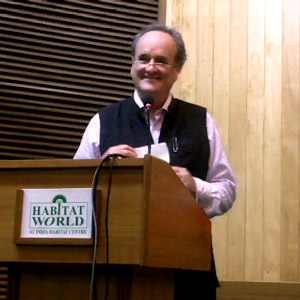
    Almost twenty years after he wrote ‘No Full Stops in India’, veteran journalist Mark Tully unveiled his latest addition to the India series, ‘Non Stop India’, in the capital on Saturday, November 19. Addressing a packed hall of avid readers, Mr Tully confessed that he was most nervous about talking to the Delhi audience. Citing an Indian cricketer’s concern, he said, “It’s hardest to play against a home crowd, and Delhi is very much my home and all of you all will be my severest critics.”


    Mr Tully also confessed that he didn’t want this book launch to be another one of the mutual admiration sessions that these things are often brought out to be. He admitted, “We journalists are actually very good at having self-congratulatory sessions.” He said he was delighted that his old friend, Karan Thapar, agreed to join him, “…as Karan would be the last person to give me an easy ride.”


    Acknowledging that much has changed in terms of how India looks at itself as well as how it is looked at in the international arena, since he wrote ‘No Full Stops in India’, Mr Tully said, “I think the danger in the Indian story, and this in a way is the point of this book, is that it can lead to ‘jugaad’, the concept that we are going to get there anyhow, so why do we worry about the problem which we have. It’s like the gentleman who I once met, who I asked, what does he think about India and he said, ‘Main bhagwan main bharosa karta hoon.’”


    [youtube width=”400″ height=”250″]http://www.youtube.com/watch?v=iUgdUEPanZA[/youtube]

    Known for his love and admiration for this country, Mr Tully also confessed to his audience that he didn’t find himself very settled in Britain so he thought that maybe his ‘karma’ has landed him here.


    Defending his work against one criticism made by Outlook reporter Pavan K Varma where the latter said that he would have liked Tully Saheb to leave the safer shelter of an observer and give his own views far more robustly, of what is wrong or right with India, Mr Tully said that it’s not entirely a negative book and it does warn about problems which lie ahead. He also added that for one to be able to criticize, one has to be extremely understanding and sympathetic of the issues at hand.


    Quoting a journalist who once said, ‘these are my conclusions on which I base my facts’, Mr Tully hoped that this book produces some facts which contradict some commonly held conclusions. A few of those that he has written about in this book include, the problem of Naxalites, the Dalit situation in the country today, the issue of privatization and the problem with ministers pouring money into troubled areas, like Kashmir. He said, “Overall the story is really about governance, something that you all hear about now. And I hope the story makes the point that this corruption that we are so concerned about, is, I think and many of the stories suggest this, more like a boil…boils are created by blood poisoning, they are not the blood poisoning themselves, they are a symptom rather than what is going wrong, And corruption in my view is basically a symptom of governance which needs reform.” Adding on, he said, “…And that’s why I fear that this whole Lokpal campaign. Yes maybe Lokpal will be a help but it would be more of a problem if everyone then sits back and says we’ve solved the problem, everything’s all right.”


    When asked how much of a problem was the Prime Minister himself, Mr Tully unswervingly admitted, “I think the PM has a major problem because we all know where the power lies very often and it’s not necessarily the PMO and we also all know that Manmohan Singh for all his many qualities, is not basically a politician who has grassroots experience. And in my view one of the problems with the Congress party is, at the Centre most of the people are not really grassroots politicians.”


    Probing him further on the issue of governance, Karan Thapar asked him whether the problem actually lies with Sonia Gandhi. To which Mr Tully candidly replied, “I think the difficulty and the problem with Sonia Gandhi’s position is that too much influence lies there when in fact it should lie in the PMO.”


    While Mark Tully spoke at length on the first two chapters of the book that concern the problem of Naxalites and Dalits in the country, he also remarked on the recent criticism of Indian media made by the Chairman of Press Council of India, Justice Markandey Katju. Mr Tully said, “I think that one thing that we should look at is, we are culpable as journalists because we don’t stand together, we don’t fight for our right to do our job, we are meant to be the professionals who know what goes on television screens, who should know what goes into newspapers and yet all the time we allow ourselves to be dictated to, by managements who basically have interests other than putting out the news in a readable and a fair and balanced way. And this is the problem everywhere. This is the problem which gives rise to this continuous obsession with breaking news and rolling news on Indian TV.”