Author: mxm_india

  • Bawa Group wants creative partner

    By Shubhangi Mehta


    Bawa group of Hotels are in a lookout for an agency to handle their creative mandates, sources close to the development have confirmed the news to MxM India.  The incumbent on the account is Palasa and their media mandates are also handled by them. The account size could not be ascertained at the time of filing the report.


    Bawa Group of Hotels has established four properties are located in the commercial capital of India, Mumbai, since 1984, Newly opened in Kolkata and Jaipur and very shortly coming up in Goa, Hyderabad, Amritsar and New Delhi. The hotels are endowed with comfort and elegance at affordable prices.


    The Hotel Bawa International, owned by the Bawa Group of Hotels, has recently achieved ISO 9001:2008 certification by the International Organization of Standardization (ISO)

  • More bite for toothless PCI?


    By Akash Raha

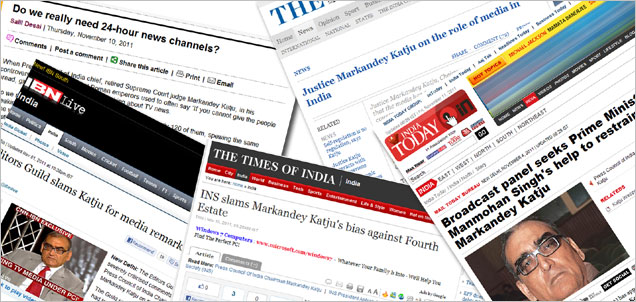
    Recently Chairperson of Press Council of India (PCI), Justice Markandey Katju triggered a volley of criticism and discussion after he lambasted the broadcast media, saying most of them suffer from “very poor intellectual level”. He went on to suggest that broadcast media should come under the purview of the PCI. MxM India asked some well-known media faces what they think.

    Arnab Goswami, Editor in Chief, Times Now and Vice President, Broadcast Editors’ Association (BEA) told MxMIndia: “I don’t know why Justice Katju is making these comments. There is absolutely no need to try and demolish the principle of self-regulation in TV news which ensures that electronic media is free and out of control of vested interests. Justice Katju should not make these sweeping generalizations.”

    Upset over Justice Katju’s comments on the media, former Chief Justice of India J S Verma too is reported to have recently called the PCI an “ineffective” body and said it should wrap up if it does not meet its mandate. Verma chairs the News Broadcasting Standard Authority (NBSA), which is set up by the News Broadcasters Association (NBA). In a recent statement Verma said that he is “deeply anguished” with the kind of language that Justice Katju uses which “sounds authoritarian”. NBA has requested the Prime Minister to stop the PCI from meddling with the dealings of broadcast media.

    On whether broadcast media should come under the ambit of the PCI, Rajdeep Sardesai, Editor in Chief, IBN18 Network said “I believe that the self-regulation mechanism which has been put in place by major news broadcasters must be allowed to strengthen itself. The Press Council has been unable to curb pernicious practices in the print media such as ‘paid news’, so I don’t see how mandating it to now to oversee the electronic media will serve any purpose.”

    Talking about whether he thinks electronic media should be brought under the purview of  PCI Paranjoy Guha Thakurta, an independent journalist and critic, said, “The electronic media needs to be regulated independently – this is because self-regulation is inadequate and ineffective under certain extreme circumstances. The regulator should be independent of both media interests – including the interests of the big corporate media – as well as the government. Even if the regulator is funded by the government, it can be truly autonomous and/or independent if it is Constitutionally mandated thus – such examples include the Supreme Court of India, the Election Commission of India and the Comptroller & Auditor General of India. Ideally the electronic media should have a separate regulator. Even if the ambit of the Press Council of India is widened to include the electronic medium, it has to be made truly independent and autonomous and, most importantly, empowered. The Press Council in its current form has no punitive powers and is hence akin to a toothless tiger.”

    To put things in perspective, PCI was established as a statutory print watchdog by an Act of Parliament in 1978. In recent times, PCI has come under question following chairperson Justice Markandey Katju’s recent remarks on the state of the media in India and its inability to keep a check on paid news.

    When asked if Justice Katju was trying to police the media, Mr Guha Thakurta played down the suggestion, saying, “The Press Council of India is a quasi-judicial body set up an act of Parliament. The way it is supposed to function has been clearly laid down. There is no question of Justice Katju (or for that matter, any Chairman of the Press Council) acting as either a good cop or a bad cop.”

    The question remains, should news broadcast come under the ambit of PCI? One of the reasons for opposing such a suggestion remains that since PCI has been unable to check the menace of paid news in print, there is no reason why it should make any positive change in the broadcast industry. Another argument says that the only reason why PCI has been unable to make a change is because it is still a toothless quasi-judiciary body and the government needs to empower it and give it some tooth. Either way, in this chatter and amidst much confusion is set Justice Katju and his criticism of media professionals as he sees them as naïve and stupid. Criticism which has obviously riled the veterans of the broadcast industry.

    In the wake of this controversy, several discussion forums are being organized on the PCI, the question of paid news, etc. The Foundation for Media Professionals (FMP) is organizing a panel discussion in collaboration with the Press Club of India on the topic ‘Media and Public Interest: Freedom vs Accountability’ on November 12 at Press Club of India, New Delhi. The panelists at this discussion will be Markandey Katju, Rajdeep Sardesai, Neelabh Mishra, Zoya Hasan, Pankaj Pachauri, Abheek Barman, Madabhushi Sridhar and Paranjoy Guha Thakurta with T R Ramachandran as moderator.

    Later, on November 18, MxMIndia has partnered the event ‘Paid News: Fooling People all the Time’ organised by Moneylife Foundation and Citizens Action Network with the support of industrialist Cyrus Guzder to be held in Mumbai’s Madame Cama Hall. The evening will see the screening of the documentary ‘Brokering News’ followed by a panel discussion with senior journalists and the film-maker Umesh Aggarwal. The panelists at this discussion are Umesh Aggarwal, Ayaz Memon, Paranjoy Guha Thakurta, Bhawana Somaaya, and Sucheta Dalal. This panel plans to discuss the issue of paid news, which has been a bugbear even for regulatory bodies such as the PCI.

    For more: http://www.mxmindia.com/2011/11/mxmindia-partners-%E2%80%98paid-news%E2%80%99-event/

  • 7 reasons why the IMPACT 7th anniversary issue is unputdownable!

    By Pradyuman Maheshwari

    Shocked and surprised that I am writing nice things about what is perceived as competition? The problem with the Indian media is that we are too full of ourselves and don’t like to say good or bad things about the tribe. Especially about our past employers 🙂

    However, I had good fun putting together the fifth and sixth anniv issues of the magazine and I was happy to see the seventh anniversary issue getting better than the previous years.

    #1 The anniv issue is a veritable ready reckoner of the industry, the people who make it and what’s happening in and around it.

    #2 It’s a must-read for any newcomer to the business.

    #3 The 7th anniv issue is bigger and thicker than the 6th. (aside: So will the 8th anniv issue have 400 pages?)

    #4 The issue: Nice, cool design. Interesting lot of writers… beyond the biggies and the usual suspects. Good cover and great idea to crowdsource the design.

    #5 Being the only standalone weekly magazine for the advertising, media and marketing business, IMPACT’s a must-read. Okay, I’ve not been reading the print edition in the recent past, and I access the PDFs online… but that’s good enough.

    #6 Preeti ‘VGC’ Vyas’s design is as refreshing as it was unveiled last December.

    #7 It’s the first test of a leader. Is your product as good as it was six months after you left it? I believe it is. And I am happy to see it’s in very good, safe and able hands of a publisher, editor, designer and a bright team. So when I update my LinkedIn profile, I can safely say that I was associated with the magazine for a bit. Wink, wink.

    Greetings to the IMPACT team and all those who helped put it together. Thanks for ensuring that the flag continues to fly high.


    MxMIndia editor-in-chief and CEO Pradyuman Maheshwari was until April 2011 group chief editor with the exchange4media group 

  • Haresh Chawla quits Network18 to pursue ‘other’ interests

    By A Correspondent

    Mr Haresh Chawla, who has led Network18 for well over a decade, is currently overseeing a seamless leadership succession plan at the half-a-billion-dollar (in current year’s revenues) media conglomerate spanning news and entertainment broadcasting, web portals, publications, filmed entertainment and ecommerce operations and Viacom18.

    Commenting on Mr Chawla’s decision to eventually pursue other interests, Mr Raghav Bahl, Founder & Editor of Network18, said: “Haresh is the kind a of colleague one can only dream about, so utterly honest, committed and focussed he is on delivering excellence. However, I fully understand his desire to explore other interests, being a person with such boundless enthusiasm and passion for success. Perhaps Haresh’s greatest achievement is the strong cadre of next-generation leadership that he has nurtured at several of our Group operations. Over the next few months, Haresh will work closely with me and this young crop of leaders to ensure a seamless transition of leadership. Finally, on a personal note, I wish to say that you never can quite say good-bye to an extra-ordinary friend and colleague like Haresh. He will always be around, as a friend, philosopher, guide and advisor to Network18, and me, personally. His can-do spirit is irretrievably woven into Network18’s DNA.”

    Adding to the sentiment, Mr Chawla said: “It’s very rare for a professional to play a part in setting up so many businesses in a lifetime, and to lead such a talented team as we have at Network18. I am forever grateful to Raghav for the opportunity and the faith that he had in me. And I am deeply grateful to all my colleagues who worked with me to build this Network. Together, we built an enviable culture of excellence and speed at Network18, and I will work towards ensuring this legacy is carried on with the new leaders in the Group. Personally, it’s been a most fulfilling phase of my life and I now look forward to taking on newer challenges”


  • Anil Thakraney: Any one for brief briefs?

    By Anil Thakraney


    A firangi ad pal has come up with a fantastic idea: Clients and ad agency client servicing people should brief creative people only on Twitter. That, no other method should be used, and all current briefing formats must be junked. Brilliant! Because this means the suits will be compelled to tell their creative folks what the advertising needs to communicate in just 140 characters. And it will cut the temptation to file pages and pages of irrelevant info and put out excessive demands from an advert. This will result in sharp, focussed communications.


    I recall some years ago when I was in the advertising biz, I did recommend a similar sort of thing. I once bought a wad of tickets from a Mumbai BEST bus conductor. And then circulated the little tickets amongst the agency client servicing people and account planners, insisting that briefs must only be written on the back of the bus ticket. One brief per ticket. Of course, they were outraged. How can one state everything on that size of a paper, was the common protest. Yes, they missed the point completely. Which is the need to keep the brief simple and single-minded, state one promise that the ad must deliver on, and remove all the so-called secondary data, which planners and suits feel very tempted to load on. And which is not just unnecessary, it confuses the hell out of creative people.


    Well, no need for bus tickets any more. Technology has provided the answer. Tell your creative people in 140 characters what the ad must communicate and who it should address. If you can do this, chances are very high you’ll get a much better creative output. And if you refuse to tweet and continue to dart out large e-mails, then don’t blame your creative people for coming up with laundry garbage.


    Now let me sum up the above column in exactly 140 characters and you’ll notice it still works! No reason a brief should not.

    My tweet: “Mr Suit: Tell me who the target audience is. The brand promise. The desired brand personality. The media vehicles. And then leave me alone!”

    Happy tweeting!


    ***

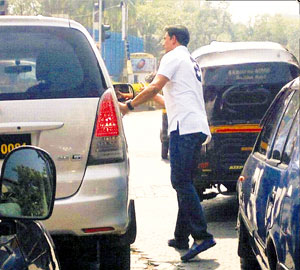
    PS: Loved it that hunky star Akshay Kumar chucked the empty ciggie pack back into the face of the car driver who had carelessly thrown it on to the street. We must all learn from Akshayji. Just one question: How did the hero manage to grab a picture of the incident? Does he take his publicist along wherever he goes? Hmmm.


    Image courtesy: Mumbai Mirror.

  • Newswatch: Katju, a harmless Rip Van Winkle

    By Parsa Venkateshwar Rao Jr


    Justice Markandey Katju, the chairman of the Press Council of India, has written a long-winded piece in The Hindu of November 5, expressing his views on the state of Indian society, economy, media and what to do with it all. It is a meandering argument with usual college textbook learning thrown in, with quotes from Firaq Gorakhpuri, Tulsidas, Shakespeare, some kind of socialist critique, some talk of a transition from the feudal age to an industrial age.


    The basic premise of the good judge is that India is in the age of 18th-century Europe, and what Voltaire, Diderot and Rousseau did then should now be done by the Indian media; fight the establishment, fight feudalism, fight superstition and worry about the plight of the poor people and the suicides of farmers as does P Sainath in The Hindu (Katju mentions Sainath by name). That is, fight the evil windmills.


    Then he talks of the need to regulate the media, especially the electronic media, which have programmes on astrology, devote more newstime to Lady Gaga and Kareena Kapoor’s wax image at Madame Tussaud’s than to the health and educational problems of the country.


    It is clear that Katju is a confused man. He has a bird’s-eye view of the situation, and he seems to miss both the woods and the trees. The judge is gravely mistaken in saying that India is passing from the feudal to the industrial age. There is no feudalism except in the minds of Marxist historians. The rural social set-up we find today, including the rightly hated caste panchayats, is not an example of good old feudalism but of an undeveloped rural bourgeoisie, with false sense of honour and tradition, with enough money and little wit. To think this is feudalism is reading the situation wrong with the help of dated textbooks, especially banal liberalism of the HAL Fisher-type A History of Europe, which is a silly book in retrospect or the CPI-type NCERT history textbooks in India.


    Katju is worried as to what will happen to displaced farmers moving to cities and not finding jobs because steel and automobile companies are producing more with less workforce. This is a perennial problem that has been with us for the last 60 years and more.  Farmers will pick up new skills as time goes along. All migrations involve changing lifestyles and working conditions.


    Then he makes the futile observation that more than 90 per cent of Indians are migrants, excepting the pre-Dravidian tribal populations. Now that statement is neither true nor false in any meaningful sense of the term.


    So, why was the media, especially the electronic media, getting angry with Katju? He uttered the word ‘regulation’ and said that no freedom is absolute. In themselves there is nothing wrong with the two ideas. Regulation if translated to transparent and fair rules is indeed the basis of any institution or sector. And even ardent liberals would accept that no freedom is absolute. We do not have radical liberals who argue for absolute freedom of speech, including hate speech. Our liberals are timid and politically correct.


    The real red rag in Katju’s long homily is that he wants to set himself as the watchdog of the media, which is what the Press Council is supposed to be. Either there should be no Press Council, or if there is one it has to be watching over the media. The only effective way of refuting Katju is to dissolve the Press Council. If the council is allowed to exist, then this Katju-type of exhortation – vain and in vain – will have a place in the public sphere. It will be interesting to pick holes in it. And it can even be ignored.


    Katju’s attitude does hint of paternalist socialism, the kind favoured by the Congress in its unconscious mind, where the government wants to tell people what is good for the people. Katju is no Stalinist – he would be horrified to know that there are intimations of Stalinism in his pompous obiter dicta – but he sounds very much a schoolmaster. It is, perhaps, nice to hear a schoolmaster once in a while, especially when you do not have to fall in line which is the case with Katju and the Press Council. But the truth is that Katju is a harmless intellectual Rip Van Winkle, speaking in the dead debating terms of a bygone era.


    The media should not have gone into a frenzy over what he said. As always, the media was looking for a good bone of contention and Katju provided one. The media should be grateful that Katju chose to be provocative in his own outdated manner.


    The writer works with the DNA newspaper at its Delhi office.

  • Fireworks less bright, but not media players outlook

    By Ritu Midha & Dhara Salla


    Picture this:


    – As per a recent survey India’s wholesale price index (WPI) likely rose an annual 9.6 percent in August
    – As per Government data released recently, India’s food price index rose 9.55 percent while the fuel price index climbed 12.55 percent in the year to Aug. 27
    – As per a Paris based think tank OECD, India, China and most of the developed world are witnessing strong signs of economic slowdown
    – August domestic car sales are down 10.1 percent. Total passenger vehicle sales are down 5.9 percentA recent AC
    – Nielsen study talks about the reducing consumer sentiment in India in the Q2, 2011
    – FICCI and CII have expressed concern on falling business sentiment

    And it is almost time to wish Happy Diwali!

    The point to ponder here is that, in this backdrop, would the consumer be in a mood to delight the marketers, and would marketers in turn be in a mood to delight the media owners? Or, would they rather use a big chunk of their promotional budget on directly delighting the customer, through special offers and discounts.

    As is known, the festive season in most years sees a remarkable increase in ad spends. Ms Punitha Arumugam, CEO, Madison Media Group, explains,About 30 to 40 percent of ad spends come from FMCGs spends in this category are, by and large, not too influenced by festivals. It is the balance 60 percent that spends more during festive season. Keeping that in mind, I would say spends in Q3 of the year would usually be higher by 20 percent or so as compared to the other quarters.


    Media players: optimism unlimited


    If one looks at print in isolation, spends during festival season increase even more due to the increased spends by categories like autos. Q3, as per Mr Peter Suresh, Head Strategy, Dainik Bhaskar Group typically accounts for almost 35 percent of the annual ad revenues.


    As for this year, stresses Mr Shantanu Bhanja,Vice President – Marketing, Hindustan Times Media Ltd,There will be an upswing during the season.


    But would the cash registers ring that loudly for media companies this year? Perhaps not.


    As per a few experts, ad budgets have already been cut down and the heat is being felt by print media first. To quote Mr Harish Bijoor, CEO, Harish Bijoor Consults, Ad spends are already affected. Marketers have reduced ad spends, and in many cases cut their spends on print altogether. Television is gung-ho as yet though, he adds, For the moment.


    And gung-ho it is. Mr Rohit Gupta, president, network sales, licensing and telephony, Multi Screen Media emphasizes, Even when we witnessed the biggest global slowdown a couple of years back, the television industry was not affected to that extent. Television is one of the most accountable advertising media, and therefore, slowdown if any, will not have much effect on advertising trends. Overall marketing budgets might be cut down but not the spends on television.As for his own network, he expects growth in ad spends to be to the tune of 30 to 35 percent.


    Mr Gupta has an ally in Mr Rahul Johri, Senior Vice President and General Manager – South Asia, Discovery Networks, Asia Pacific. He too is very positive that television is all set to gain this Q3 as is the norm every year, As the consumers gear up for the festive season, we can see a positive curve across a category of brands. Year-on-year we have witnessed growth in advertising during festive season on our channels and we anticipate the same trend this year as well.


    Do the television channels, then don’t need to be worried about ad budget cuts? The opinion here is divided. While a few television players believe there would be no impact, others have a difference of opinion. Mr Bavesh Janavlekar, Deputy VP Marketing, Zee Marathi and Zee Talkies simplifies the predicament, There is a huge splurge on the spends at the customers end during the festive season starting off with Ganpati, Diwali etc. The spike is for the simple reason that consumers are in a mood to spend, and advertisers amplify that opportunity. However, low GDP growth will definitely have an impact on festive ad spends to what extent, remains to be seen.


    The general feeling, however, is that the festive season just might bring the cheer back in the marketplace . Mr Bhanja explains, Advertisers want to make the most of this increased propensity to spend coupled with increased discretionary income that the festival time brings…This is also a great time for advertisers to launch new products, and capture the general positivity of the Indian consumer during the season.


    Mr Suresh too states that though there is a slowdown at the moment, festivities just might help in lifting the spirits all around. He states with cautious optimism, We have also been impacted with this slowdown along with other media players. It is quite difficult to issue a forward-looking statement in the current scenario. However, we do remain optimistic.


    Media experts: festivals have lost a bit of sheen

    The optimism of media owners, at this juncture, is not mirrored by media planners and buyers.We had predicted approximately 17 percent growth in ad spends this year, but by looking at the current scenario, in my view, it would be closer to 10 percent, states Ms Arumugam,Most marketers were expecting exponential growth this year however, nothing very dramatic happened in January to June 2011 quite a few companies saw single digit growth, and it has directly influenced ad spends.


    Does that effectively mean that one would not see any increase in ad rates this festive season. Explains Mr S Yesudas, Managing Director – Indian Sub-Continent, Vizeum Media Services,There is usually no increase in ad rates during festive season. And this year, due to market dynamics, I do not see this happening at all.


    As per the media experts, though, both TV and print would not see any noteworthy growth in ad revenues, print would be hit more. Ms Arumugam comments,Though both television and print would be affected by the slowdown, impact on print would be far more pronounced.


    But don’t the categories that spend more during festive season, also spend largely on print? Yesudas takes pains to explain, Categories that are print-centric like automobiles and traditionally advertise more on print  will continue to do so. Specially those which are under pressure due to falling sales will need to reach out to the consumers with their special offers. It is the categories which are not heavy spenders on print that would cut their print budgets further.

    The scenario does not look too festive at the moment. However, marketers definitely are getting ready to woo the consumer in a myriad different ways. In media too, one might see a lot of innovations and innovative offers to enable the marketers to reach the consumer in a more impactful way.


    Photograph: Fotocorp (www.fotocorp.com)
  • Sanjay Reddy rejoins Zee to head South Cluster

    Zee Entertainment Enterprises Limited has announced the appointment of Mr Sanjay Reddy as EVP–South Cluster. This will be his second stint with Zee after a gap of two years. In his new role, Mr Reddy will be heading Zee Telugu, Zee Kannada and Zee Tamil. He will report to Mr Nittin Keni.


    Speaking on the appointment, ZEE MD & CEO, Punit Goenka said, “We are delighted to have Sanjay back in our team. South has always been one of Zee’s key market and we are confident of consolidating our position, with a robust team headed by Nittin and Sanjay.”


    Said Mr Nittin Keni, Zee Creative Head: “In line with our strategy to strengthen our position in southern market, Sanjay will contribute tremendously to growing and expanding the Zee brand further. I am looking forward to working with Sanjay to steer the growth in southern market.”


    Said Mr Sanjay Reddy, “I am extremely pleased to join the group at such an exciting time in the history of the Zee brand. With such a vibrant team, my challenge now is to drive the change, in line with our Company objectives and strengthen the brand further in the southern market.”


    Mr Reddy has over two decades of experience in media and entertainment. Prior to ZEE, Sanjay has been associated with other media firms in India, which include Walt Disney, MSM Network, ESPN Star Sports, Bennett and Coleman and Co. Limited. His last assignment was with Sun TV Network as Business Head (Telugu Cluster).


  • Hathway HD to be launched

    By A Correspondent


    Hathway has confirmed that its new HD service is set to launch to subscribers in select are of Hathway Digital networks in Mumbai, Delhi, Hyderabad and Bangalore.

    The new Hathway Hi Definitions (HD) service will be enabled by Media Highway set-top box software, the service will be navigated through a state of the art user interface with an electronic programme guide (EPG) and enhanced features thereby providing a complete enhanced viewing experience to the viewers.

    Mr K Jayaraman, Managing Director, CEO Hathway Cable & Datacom Limited said, “Being the pioneers in the Digital Cable Service industry we are committed to offering premium services to our subscribers.”

    Hathway HD services is available at Stand Alone and Bundled Offering and the packages are called –. HD Lite,and HD Max and Max + ,with around eight HD channels currently being offered and 20 channels in the near future.

    Hathway Standalone Offering

    HD Lite Rs 6666/-(including tax)

    HD channels for 1 yr

    SD Channels for 1 yr (160 + channels)

    Service Tax for 1 yr

    HD Box Activation charges

    HD Box is free to use


    Note : This offering is only for Hathway CATV primary customers

    Hathway Bundled Offering

    HD Max Rs. 8888 (Excluding tax )

    HD channels for 1 yr

    SD Channels for 1 yr (160+ channels)

    HD Box Activation charges

    Broadband for 1 Yr – 2Mbps speed, 40 GB

    Download ( worth Rs. 4300/- )

    HD Box & Cable Modem is FTU

  • Taj TV extends partnership with Zimbabwe cricket

    By A Correspondent

    Taj Television Limited has extended the partnership with Zimbabwe Cricket for worldwide television rights till 2019. The agreements with Taj Television Limited cover the Zimbabwe Cricket Seasons in excess of an eight-year period from 2012 through to 2019. Over a period of these eight years, Taj Television will be telecasting 220 LIVE days of cricket including 15 days of LIVE India cricket.

    With the acquisition of these cricket rights, Taj Television Limited cements its position as the leader in cricket broadcasting. Taj Television has broadcast rights of five Cricket Boards – South Africa, Pakistan, West Indies, Sri Lanka and Zimbabwe.

    Zimbabwe has returned to Test after a self imposed exile of six years, with an inspiring win against Bangladesh. Over the next two years, Zimbabwe will be playing Test Cricket with New Zealand, Bangladesh, Pakistan and Sri Lanka providing Zimbabwe a benchmark to measure their progress in every area of cricket. Under the current administration, talented Zimbabwean cricketers will grow in confidence with an aim towards improving their performance on the world stage.

    Zimbabwe Cricket Managing Director, Ozias Bvute said, “We are happy to extend our existing contract with Taj Television Limited as this plays a pivotal role in ensuring that Zimbabwean cricket is seen by those who love the game as well as introduced to new audiences. With its superior telecast standards, world class television production capabilities and strength to telecast the Zimbabwe Cricket worldwide, Taj Television Limited will add a lot of value to game of cricket.”

    Taj Television India Pvt. Ltd. CEO, Atul Pande said, “We’re extremely pleased to extend our partnership with Zimbabwe Cricket. This is a testament to our commitment to the game of cricket and fans as we cement our relationship with Zimbabwe Cricket.”

    He further added, “Through our television channels–TEN Cricket & TEN Sports, our website www.tencricket.com and our various wireless platform initiatives, we are confident of taking the rights of Zimbabwe Cricket to new heights by working along with various partners and are committed to set new benchmarks in broadcasting and distribution.”

  • Much ado over 3D?

    By Akash Raha

    Even as High Definition (HD) television channels are entering the Indian market, blogs and social networks are already abuzz with talk of 3D channels coming soon, and how that will revolutionize the entire TV-viewing experience. MxMIndia took a closer look at these claims, to find out whether such a time is actually anywhere close at hand.

    According to Ms Anamika Mehta, COO, Lodestar UM, “India is already an underleveraged and fragmented market and such innovations will definitely add to the monetary burden.  Indian consumers are yet to fully embrace HD, and 3D in that context is still years away. While some manufacturers have launched 3D products, we still do not have ample content. 3D content would mean significant investment in content cost and advertisers and viewers alike are unlikely to pay in the short run for the experience. Secondly, perhaps barring live sports there isn’t any genre that could see demand for 3D broadcasting. The other genre could be movies in theatres for an experience… Lastly, you need high quality content which lends to 3D viewing and strapped for budgets, very few production houses will bite.”

    But all said and done, the success of Mr James Cameron’s film Avatar in Indian theatres is enough proof that when you offer visually appealing content in 3D, people will flock to see it. Even so, such a number still remains way short of expectations for a market such as India to actually implement a 3D plan. If media analysts are to be believed, making 3D content for television is a very difficult job and the cost is too high to bear. Even today, many media houses use age-old technology for programming and non-35 mm cameras.

    Interestingly, in the US a $14-billion, eight-year deal by ESPN with the National Football League (NFL) includes international rights and distribution of 3D content. This is despite the earlier reports that they might give up on 3D technology altogether. Several other broadcasting plans, internationally, for 3D broadcast of live baseball and basketball games are also on the anvil. MxMIndia’s efforts to reach ESPN-Star in India for their take on the issue failed to elicit any response.

    Mr Dinesh Vyas, Business Head, MEC said that any talks of 3D technology coming into India in the current scheme of things is certainly a gimmick. He said, “HD and 3D televisions are already available in the market, but people are still apprehensive about it, especially, 3D. People get headaches when they see 3D content for extended periods. Such a technology is not going to take off any time soon in India. The Indian market is not very receptive to technology and it takes a long time to appropriate it… Cost of technology too is very high – and currently no advertiser will be interested in it, which implies that even media owners will have to drop any major 3D plan. However, there will always be small news here and there about 3D which might get everyone excited.”

    So is it a good idea for affluent Indians and the upcoming middle class to splash out on 3D television – which is touted as the technology of tomorrow? The answer is a plain simple – no. Or at least, not yet… After all, what use is a large sprawling 3D television in your living room without any 3D content to support it with? That is excluding a handful of 3D movie DVDs and Blu-Ray discs.

    However, not all media planners are pessimistic towards the technology and some still see hope, however dim, for it. Mr Premjeet Sodhi, President, The Collaborative, Lintas Media Group, said, “High value, premium or luxury goods and services are not new to the India market and like any other such goods and services the 3D TV sector is also amenable to adoption and success. However, I don’t think I am qualified to comment on which consumer technology will be successfully adopted. Whether 3D TV will be adopted and when and whether it will be a viable business is something for the custodians of these businesses to dwell upon and work towards. But, as and when the penetration of the technology reaches a critical mass, I am sure the media and advertising services will equip themselves to support the technology.”

    There may well be a time in future when 3D channels and television will be in vogue, but apparently that time is not near. If analysts are to be believed, it will be a long while before demand meets technological advancements. However, India still remains an unpredictable market. It is the same country which discarded pager technology and yet usurped the mobile. To write off 3D technology’s viability in India could be presumptuous.

  • Hard Knocks: How the Indian media doesn’t champion the cause of ‘lesser’ children

    By Anil Thakraney


    Just as it happened with crimes against Priyadarshini Matoo and Jessica Lal, our news channels have been busy doing shows on the dead young men from Mumbai, Keenan and Reuben. Just in case you are a Martian, the two were killed by some drunken elements when they protested against sexual harassment of the girls accompanying them. And yes, it’s nice that the media stands up for such people and puts pressure on the system for swift deliverance of justice. So, good show.

    However, what I don’t like about what’s happening is that the Indian media only stands up for the middle class, for ‘people like us’. Because crimes in the metro towns attract more attention, and I daresay, they also excite the advertisers. Which perhaps explains all the campaigns for justice. But the media must also stand up for crimes committed against the have-nots from interior India and run similar campaigns for justice on their behalf, even if this doesn’t interest the advertisers too much. Not just because residents of rural areas are Indians (lest we’ve forgotten), but because they are human beings too and their lives are just as precious.

    To illustrate this apathy with an example, let’s take the case of the heinous crime that was committed in the ‘unhappening’ Khairlanji village of Maharashtra some years ago. Priyanka Bhotmange was attacked by twelve men. They strapped her to a bullock cart as one would a disobedient animal, and dragged her out to the village chaupal. Then, they took turns to rape her, following which they completely stripped her and paraded their ‘trophy’. This was followed by beating her naked body with bicycle chains and publicly gang raping her all over again… and this went on till the mutilated Priyanka stopped breathing. However, not satisfied, the goons continued. The teenage corpse was raped yet again. On realizing the dead body was no longer rape-worthy, the men shoved iron rods into her blood clotted genitals and used pickaxes to disfigure her face.

    [youtube width=”400″ height=”250″]http://www.youtube.com/watch?v=GnGI76__sSA&feature=youtube_gdata_player[/youtube]

    Did the news channel run aggressive campaigns on her behalf? Were candle light marches held in her memory? Did the media keep the pressure going to get justice for her? The answer to these questions is a sad ‘NO’. Aside from the odd, reluctant story, Priyanka was quickly forgotten. And this, quite obviously, is unfair.

    So yes, I am proud that the media fights for the middle class urban victims of crimes. But I would be happier if this passion is also on display for the children of the lesser god.


    ***


    PS: Lilting tributes continue to pour in for Steve Jobs. Here’s a lovely one from Jonathan Ive, the Senior Vice President of Industrial Design at Apple Inc. No, we can’t have enough of Jobs, keep them coming! What a man!