Author: mxm_india

  • 5 reasons why the Amul Butter Girl advertising is still relevant

    By Jayen  S Mehta

    #1 It’s topical.  Amul advertising is a comment on any recent development that has happened. It captures the flavor of the current scenario and then moves on to next subject that is making news. Also our brand ambassador, the Butter girl continues to remain young thus managing to remain relevant to many.

    #2 It’s not too intrusive. The advertising, while being topical, is not in-your-face.

    #3 It’s funny. There is wit and humour in the lines, which brings an immediate connect. The pun is always clever. It’s advertising that doesn’t try too hard to be funny, so it is subtle yet humorous.

    #4 It’s on time. The advertising is always on time, managing to capture what’s trending or the topic of conversation.

    #5 It’s available across media. This advertising has gone beyond the hoardings and is available across media platforms to better engage with consumers.

    Jayen S Mehta is the General Manager (Planning & Marketing), Gujarat Co-Operative Milk Marketing Federation Ltd.

  • Aaren is now a 100% LMG company

    By A Correspondent

    Lintas Media Group has completed its acquisition of Aaren Initiative, the country’s premier OOH agency that works for Hindustan Unilever and Nokia, among other blue chip accounts. The 50 percent stake held by the joint venture partner, Aaren Advertising, has been recently purchased by Lintas in an amicable settlement. The name of the agency will be changed to Lintas Initiative.

    Aaren Initiative Outdoor was set up as a 50-50 joint venture between Lintas and Aaren ten years ago when the presence of media agencies in the medium was still unknown.  Aaren Initiative was a pioneer in the space, professionalizing media planning, buying and monitoring in this relatively unorganized medium, and grew rapidly into a large agency billing over Rs 150 crores annually, with offices in 28 cities and a network of over 100 employees.

    Lynn de Souza, Chairman and CEO of Lintas Media Group and Chairman of Aaren Initiative will continue to be the Chairman of the wholly owned agency. She said, “Through this acquisition we hope to work with many more global clients and have made plans to invest in the right tools and people to transform Lintas Initiative Outdoor into a future ready OOH and retail player. We are grateful to our erstwhile partners, Aaren, for all their counsel and support during the formative years of the agency”.

    Hemanth Shah will continue to function as the Managing Director. Elaborating on his role, Mr Shah said, “The team shall have the independence to function and nurture non-network clients and the network clients shall experience seamless deliveries. The acquisition allows for the company to plan holistic solutions and integrate them into its offerings right from creative to all-media.”

  • Gouri Dange: Dealing with journos hungry for quotes

    Do you really want to be that rent-a-quote person?

    They’re polite, of course. And young. And completely unaware of how tiresome they can be. The phone call goes something like this: “Hello, I’m writing a story on thisthatandtheother, and I was hoping to talk about it to you.”

    At first, in the early years, you feel quite pleased to be called up in this way. You drop what you are doing, and whisper urgently to anyone who is sitting around you, “It’s The Press, they want My Opinion”.  People around you immediately go dead silent in deference to this Moment – it’s almost as important as if you were invited to address the nation from the ramparts of the Red Fort on Republic Day. [The woman who works in my house says that Republic Day is when there is good circus to watch on TV (the parade) and Independence Day is when all phaltus go on doing bud-bud on TV, and Budget Day is when some ‘chassmister’ (erudite looking person in glasses) gives you the bad news about fuel and vegetable prices so that your idle boozard husband can tell you that you need to pick up a few more dirty-dishes-doing jobs to stay ahead of prices.] But I digress.

    So, in the early years of being contacted by journos to give them ‘expert quotes’, you are inordinately happy to oblige. You proceed to hold forth on your subject, while the journo at the other end furiously scribbles or keys in as you speak. The rude shock comes a few days later when you ring up 60 friends and tell them that you are being Quoted, and not to miss reading the relevant article that day. You have made these calls before you have opened the paper and actually read your quote. Three things can now happen. A) The journo who you waxed eloquent to for 20 minutes has simply not used your quote – either she didn’t understand a word of what you spoke or there was no space for your quote. B) Worse, she may have misquoted you comprehensively, where you end up sounding like an envious whiney loser who hates everyone else in your field; as a bonus, she has got your name wrong. C) All your pearls of wisdom have been used, in fact what you spoke constitutes the whole article, but you have been given no credit. Your name is not mentioned at all. It is as if this article was born via immaculate conception.

    A few such incidents, and you get older and wiser pretty quickly. You’re at the next level of the rent-a-quote market. Someone calls, and you first get a good sense of what this journo is going to be saying in his/her article first. Then you carefully choose your words, keeping it all very very simple, and hope for the best. You are also now smart enough to request:  can you please call and read out or email me what you’re quoting from this conversation? This way you can clarify, I said ‘intuition’ not ‘tuition’ and other such things. But there’s nothing much you can do about being described by the journo as a music listener who “bubbles over with names, when asked about her favourite musicians”. Or being described randomly as ‘unputdownable’ or ‘peripatetic’ or ‘intrepid’ – all favourite journo adjectives. Makes you sound like some wandering pest.

    Some journos send you a list of questions to reply to by email. This may sound better than having to gabble on the phone and then get thoroughly misquoted. However, the level of detail required from you in replying to these questions would surely be the equivalent of writing the entire story yourself, and also perhaps could be that PhD proposal that you’ve been postponing writing.  Too much hard work.

    Some of them will pop up on Gchat and say the following: Hiiii….I need quotes from celebs, psychologists and young people on ‘Long distance marriages: Is it workable or a recipe for disaster?’ …need the quotes along with high res images in 3 hours. Can u help pllleeez??”  Your only option is to quietly log out.

    Here’s another double-edged thing about being quoted in newspapers and magazines, though. Whatever garbled version of your quote appears, the lay reader immediately takes you very seriously and your stock rises dizzily in your field. However, colleagues tend to go nudge-nudge and deduce that you are rather idle and/or have friends in the Press and are a bit of a Quote Bank. So it’s a bit of a toss-up – to be quoted or not to be quoted?

    If you choose not to be, then here are some ways to duck out. Tell the journo to call you four hours later. They’re usually plugging in quotes at the last minute, and it is likely that they don’t have four hours, plus you sound busy and important. So you’re safe. Or come up with something exotic. Huff and puff on the phone and say you’re climbing Kilimanjaro. The poor dears will hurriedly get off the phone so as not to cost you roaming charges.

  • Anil Thakraney: Why the media must boycott Abhi-Ash baby birth

    By Anil Thakraney


    Aishwarya’s yet-to-be-born baby has become national news. Front pages of newspapers and prime time programming on television carry minute details of the event. Astrologers have been consulted to predict the sex of the baby, and the whole nation knows which hospital has been chosen for the historic delivery.

    Well, I am not going into the importance of the story vis-à-vis more pressing matters, that’s for Shri Katju to worry about. I just find it appalling that the Bachchan-baby obsessed media has so quickly forgotten the humiliation of the recent past. Remember the Big Wedding? When journalists waiting outside Pratiksha and Jalsa for days together were completely ignored by the Bachchan clan. When some photographers were beaten up by Amitabh’s then chhote bhaiyya Amar Singh’s goons. When the newly wed couple didn’t even extend the courtesy of emerging for a single photograph.


    Yup, it’s all forgotten. The media is back to cover the baby birth with full gusto. And the journos are ready to get humiliated all over again. Have we no shame? Have we become so beygairat? In fact, according to Mumbai Mirror, a guideline has been issued by the Broadcast Editors’ Association on how TV channels must conduct themselves during the event! And to think this sort of a guideline ought to have been issued during the 26/11 terror attacks, and who knows… some lives could have been saved. Tells you how jumbled up our priorities are. While to some extent I can understand the junta’s interest in the new member’s arrival inside India’s ‘first family’ household, if we in the media have any self respect left, we should boycott the event.

    Of course, that’s not going to happen. Kya karein, we are like that only.


    ***


    PS: Speaking of Beygairat Brigade, here’s the whacko Pak band with their popular number titled ‘Aalu Anday’. An otherwise ordinary track that became a rage courtesy the social media. Intersperse faces of the lads with those of our popular TV anchors and the song works marvellously!

  • The future is rosy, says Ravi Dhariwal


    By Tuhina Anand


    Newspapers have a strong future ahead, says Ravi Dhariwal, President, INMA Worldwide and CEO, The Times of India. Sharing his views with the audience at INMA: 5th South Asia Annual Conference on the Global Newspapers and South Asian Opportunities, he said that the industry can unitedly face down the challenges confronting it, and continue on the growth path.


    Print players in developed markets when faced with pressure on profitability coupled with losing their revenues started focusing on the cost. The result was a cut in journalists, cut pages, and cut quality. They got seduced with the argument that the business was not well balanced, circulation not earning enough money and being too dependent on advertising to recover the cover price. On the other hand, the consumers have tons of option, multiple platforms while the truth of newspaper also exists that the brand has slimmed down from 48 pages to 24 and journalism was not of the same quality that they were used to. Consumers had to pay double the amount for a newspaper so the value equation particularly in the US got horribly wrong. This led to increased pressure of people but Dhariwal pointed that the situation is stabilizing now particularly on accounts of circulation, balance sheets and profitability pressure.


    He said, “I think the industry went through a phase of evaluation where they were came to a basic conclusion that digital is where the growth is and they must invest heavily there at the expense of print. That difference led them to doing things first for the digital and at the expense of print because they didn’t have monies to put both sides. They said all growth will be in digital so let’s invest there.”


    After making this point, Mr Dhariwal said that this assumption has a few problems, the first being that Digital at best in most advanced environment comprises only 10 per cent of the revenue, the rest being still from print. He said, “So if you put all your money in 10 percent and neglect the 90 percent there is a problem.” He also said that digital for a news media company is an inherent problem because very little of a person’s time on digital gets spent on news. As a result digital for a news company will always be the country cousin. Also the demographics in South Asia, with increasing urbanization, literacy, income and a young curious democracy, works as a great combination for newspapers to grow. He said, “The industry does grow in our country by 4-5 percent per annum. Readership doesn’t grow as fast, though it is not declining, but it doesn’t get reflected because of the way readership is measured in India currently.”


    Another reason why he remains bullish about the growth of newspapers is because the newspaper adds fantastic value to households. He said, “It’s a medium that allows an individual to spend 20 minutes of their quality time for less than Rs 3 and if you have a thrifty wife like mine you will get a rupee back at the end of the month by selling it in raddi. So for Rs 2 you get a newspaper at great pricing but what is even better is that it gets home delivered.”  Another reason for growth is because the editorial quality has improved. He said, “I think our editors are increasingly aware of what is happening to our readers and the newspaper reflects the interest of the readers – politics, local, community. Increasingly quality of newspaper is getting better and I am confident that the paper I read is getting better every day. Also in our country people in newspaper business are ambitious, they are not happy with just influencing people but want to see their business grow. They have brought multiple editions and geographic expansion; like it’s astounding that Dainik Jagran has 295 editions. Even at TOI, we have many editions but there lies tremendous opportunity in markets like Kerala, some big city in TN, AP. In expansion we not only give our readers great value but also great choice.”


    What one should worry about, he said, is how to manage cost and how to continuously innovate to give more to advertisers. He said, “As long as we invest behind innovation, quality of editorial product, keep price low, and the product is home delivered, then we don’t have to worry. We have a reason to celebrate.  The opportunity is that we have an editorially curated product which is now being able to be displayed and expressed in different platforms. We should go after that because the reader is going after that. I have always maintained that for us it’s not digital first or print first. It is not print dollars and digital dimes but Its Print and Digital.” Even media companies have realized this and have become multimedia companies, adapting to this change.

    The biggest of the challenges, he said, is that of managing cost, newspapers not being attractive to FMCGs who are the biggest advertisers and have turned to TV, environment where the government tries to create misunderstanding and rift among employees and lastly lurking fear of ‘what if’ digital expands dramatically and affects print. However, to a large extent he said that these challenges can be overcome by collaborating as an industry to find solutions and bring about a change.



  • INMA 2011: Membership targets in sight, says Tariq Ansari

    By Tuhina Anand

    At the concluding ceremony of INMA’s 5th South Asia Annual Conference, MXM India caught up with Tariq Ansari, INMA South Asia’s outgoing President and Managing Director, Mid-Day Multimedia Ltd. From Mr Ansari, Sanjay Gupta, Director, CEO and Editor, Jagran Prakashan Ltd takes over as President INMA South Asia.

    Mr Ansari has played a key role in bringing INMA to South Asia and has held the position of President for the last two years. Talking about his task at INMA, he said, “I have been responsible for running the INMA platform in South Asia, making conferences happen and ensuring we build a significant membership.  On all these, I think we have progressed significantly.  The idea is to be of use to the industry and give back to the industry. As past president I remain on the board and I am available when required.”

    Explaining why the INMA membership remained confined to just 13 organisations even though there are many players in this category, he said, “INMA had the target of going after large newspapers first. While we have only 13 newspaper organization members, there are around 500 people in this country who have access to INMA through these companies. As we come of age – and we haven’t been here for long as this is the 5th conference in South Asia – there will be conscious effort to build our membership and deliver its benefits to a larger audience.”

    Mr Ansari said he hopes that INMA delegates after attending the seminars would take away some questions on what is going to be the future of their enterprise and directions it can take both in terms of strengthening the business and where future opportunities might lie.

    Talking about what ails the print industry, he said, “Speaking from the perspective of an urban English newspaper, I think the readership is getting stagnant but on the other side the cost of inputs – the cost of journalism, newsprint, running the business – is driving the rate of advertising very high. So we have got a situation where readership is not growing but advertising rates are going up. That is the fundamental problem to the business to my mind.”

  • INMA 2011: New Oxygen, New Growth

    By Tuhina Anand

    Earl J Wilkinson, Executive Director and CEO, INMA spoke on New Oxygen, New Growth at the INMA-5th South Asia Annual Conference, titled ‘Roots and Wings – strengthening our core business and exploring new opportunities’. During his presentation, Wilkinson spoke about the transformation from being a newspaper to newsmedia which is where the opportunity for growth lies. The key is to identify the platform values of each medium be it newspaper, Smartphones  or tablets and use them accordingly.

    Wilkinson said, “The consumer view of newspaper is changing today as they are accessing news from webs or apps. With the changing view there is also need of new skill sets for the new media including next generation data analysis and deep understanding of consumer behavior among other factors.” He pointed that culture change is the foundation for growth story line.

    He listed three challenges that publishers are facing today- identify growth, how to remain relevant and manage complexity. He also listed the growth levers for news publishers which include operational efficiency, superior competitive strategy, best practices, sales excellence among others but what is relevant is that in this list culture change has moved up the ladder and become a key lever for growth.

    On Culture Change, he underlined the importance of listening to the market, focus relentlessly on differentiators and prioritize expenditure while putting away the rest. Wilkinson said, “Culture change is the only path to growth and in the new ecology to succeed one needs to prioritise platforms and diversify revenue streams.”

    He also talked about integration being the future and pointed how many print people are touching digital but not vice versa. He added, “While culture change is crucial to revenue, there is also a need to speak, understand and invest in readers and not indulge in one way conversation with them.”

    Opening the session and giving an overview, Tariq Ansari, INMA South Asia President and MD, Mid-Day Multimedia Ltd said that the sessions over the two days will look at imparting pointers on ways of strengthening existing business , understanding verticals where investments can be made and at the same time think on new horizons and take their business forward.

    I Venkat, Conference Moderator and Director, Eenadu talked about reinventing the print medium. He mentioned how print has undergone change with segmentation with introduction of city supplements and focusing on its target audience. He also highlighted the example of Filmfare and Femina which have enlarged their purview with awards and beauty competition. The newspapers are leaving no stone unturned to reach its TG by getting into festivals, awards, educations and job fairs too.

    He also talked about localized newspaper where Eenadu has gone beyond city, district, zone to constituency. He concluded by saying that for a newspaper every column is an opportunity. He added, “The print advantage is that while you can zap an ad on television, same is not possible in print.”

  • The Anchor: 5 reasons you shouldn’t miss INMA if you’re a print professional

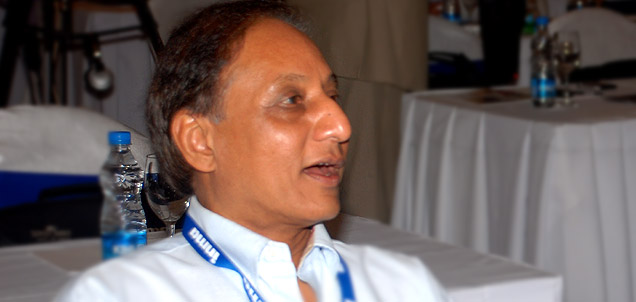
    #1 The theme and agenda of the INMA conference has always been useful to the print industry. Unlike other conferences where there is lot of gyaan and conference is reduced to either networking or picnicking, INMA’s focus is the industry. I am not running down anyone but the interest of the newspaper industry is really met at INMA, and therefore every publisher should attend.
    #2 There are about 30 speakers who will share their views over a period of two days. These people are experts in their field and present different aspects of publishing. So it’s not restricted to just one aspect of advertising or revenue but circulation, readership and other aspects are also discussed. At some conferences, the agenda is only one-dimensional but that is not the case here.

    #3 Newspapers themselves have treated various functions within their organization as compartments and not departments. There is little communication happening across functions but the way ahead is to change this way of working. This conference can give that kind of perspective and help people in the industry to practice collaboration within their organization and take advantage.

    #4 At INMA, subjects are not just discussed but opportunity is given to clarify and understand what is being said. It’s fairly interactive.

    #5 The conference is a good opportunity to network and the food is excellent. So why miss it!?


    Bharat Kapadia is the Chairman of Whatuwant Solutions.

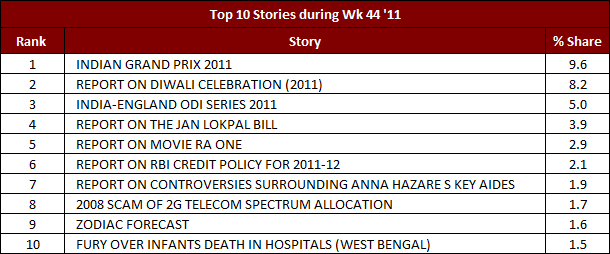
  • NCT Data Wk 44 ’11

    Source: News Content Track – A service of TAM Media Research Pvt. Ltd

    Channels: Aaj Tak, CNN IBN, Headlines Today, IBN 7, India TV, NDTV 24/7, NDTV India, Star News, Times Now & Zee News

    Period: Wk 44 – Oct 23 to Oct 29, 2011

    Note : Analysis is based on the telecast duration


    About TAM Media Research

    TAM is a joint venture between Nielsen Company & Kantar Media Research. Besides measuring TV Viewership, TAM also monitors Advertising Expenditure of Television, Print & Radio through its division AdEx India. Since 2004, it extended its presence in the PR Measurement & Analysis space for Corporate/Marketing Clients by setting up a separate division Eikona PR Measurement.

    In 2007, the joint venture introduced RAM (Radio Audio Measurement) service to track Radio Listenership for the Indian Radio Broadcast Industry. In year 2009, TAM launched a division, called TAM Sports that specializes in monitoring Sports Sponsorship ROI.

    TAM Media Research’s objective is to fuel media insights that will drive the growth of the Indian Media Industry.

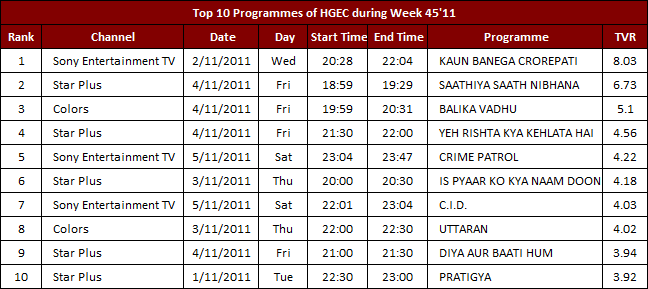
  • TAM data Top 10 programmes on HGEC – Wk 45’11


    Source: TAM Peoplemeter System

    TG: CS 4+ yrs

    Market: Hindi Speaking Market

    Period: Wk 45: Oct 30 to Nov 5, 2011


    About TAM Media Research

    TAM is a joint venture between Nielsen Company & Kantar Media Research. Besides measuring TV Viewership, TAM also monitors Advertising Expenditure of Television, Print & Radio through its division AdEx India. Since 2004, it extended its presence in the PR Measurement & Analysis space for Corporate/Marketing Clients by setting up a separate division Eikona PR Measurement.

    In 2007, the joint venture introduced RAM (Radio Audio Measurement) service to track Radio Listenership for the Indian Radio Broadcast Industry. In year 2009, TAM launched a division, called TAM Sports that specializes in monitoring Sports Sponsorship ROI.

    TAM Media Research’s objective is to fuel media insights that will drive the growth of the Indian Media Industry.

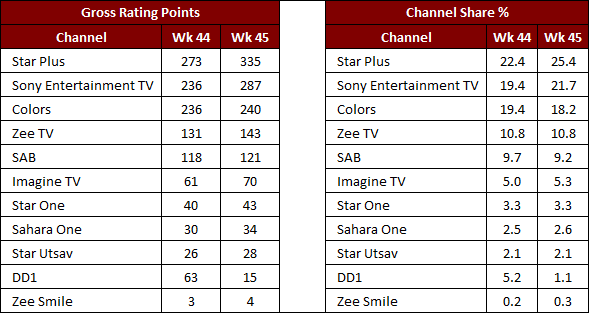
  • GRP & Channel shares of HGECs- Wk 45 2011

    Source: TAM Peoplemeter System

    TG: CS 4+ yrs

    Market: HSM

    Period: Wk 44: Oct 23 to Oct 29, 2011

    Period: Wk 45: Oct 30 to Nov 5, 2011


    About TAM Media Research

    TAM is a joint venture between Nielsen Company & Kantar Media Research. Besides measuring TV Viewership, TAM also monitors Advertising Expenditure of Television, Print & Radio through its division AdEx India. Since 2004, it extended its presence in the PR Measurement & Analysis space for Corporate/Marketing Clients by setting up a separate division Eikona PR Measurement.

    In 2007, the joint venture introduced RAM (Radio Audio Measurement) service to track Radio Listenership for the Indian Radio Broadcast Industry. In year 2009, TAM launched a division, called TAM Sports that specializes in monitoring Sports Sponsorship ROI.

    TAM Media Research’s objective is to fuel media insights that will drive the growth of the Indian Media Industry.

  • Why democracy can so easily be an ‘obstacle’

    Four days of a severe throat infection meant little TV news and or newspapers. This I thought would save me from minute by minute updates on the condition of Gujarat chief minister Narendra Modi’s fast for amity or goodwill or whatever he called it. But as it turned out, I was wrong. The fast may have been covered but Modi’s condition was left out of it. So unlike with Anna Hazare, whose weight, blood pressure and such were reported in detail, we were given few clues on how much weight Modi had shed. Also, since the earthquake struck Sikkim on Sunday evening, even our hysteria-obsessed TV channels realised that a natural calamity was more newsworthy than a man-made one.

    Unfortunately, not only is our knowledge about the North-East of India decidedly dim, so is our television coverage as few channels have correspondents or camera crew stationed close by or even perhaps adequate arrangements with local channels. Thus we had to depend on telephone reports and as usual it is not till you get the next day’s paper that you really know what’s going on. Also given our India-obsession, our channels behaved as if the earthquake only affected Sikkim, pretty much ignoring the damage in neighbouring Nepal and Tibet. This is, one assumes, a form of patriotism.

    The damage which obsessive TV – with regard to the coverage of the Anna Hazare movement in particular — can do was brought home to me quite severely while addressing students of a media course at a Mumbai college on Saturday , when one wanted to know how we can get around an obstacle like democracy when it comes to reducing corruption!

    Changes made to the Board of Control for Cricket in India were examined threadbare on television and with many anchors palpably upset that there had been no public executions or floggings after India’s losses in England. It becomes clearer every minute you watch TV news why democracy can so easily be an “obstacle”.


    **

    Newspapers covered Modi’s fast as well but with far more scepticism, many choosing to concentrate on the fissures within both the BJP and the NDA. The Telegraph, Calcutta, has a story with Bihar chief minister Nitish Kumar of the Janata Dal (United) making it clear than Modi was not a suitable prime ministerial candidate. Of course, all this jumping the gun a bit since the next general election is in 2014 and it is unlikely that Modi will be fasting all the way up to then, amity or no amity.

    Tuesday’s Hindustan Times underlined its scepticism of Modi’s amity fast with an editorial, a lead edit page piece by Sitaram Yechury as well as a column by its senior political analyst Vinod Sharma.

    The Times of India reduced Modi to a second edit, ‘Strange Sadbhavna’. The front page concentrated on its Social Impact Awards, to honour people who make India a better place. The Times of India has fine-tuned the knack of being all things to all people, greedy, socially conscientious, middle of the road and of course as with Times Now, decidedly rightwing.

    Also expectedly, newspapers concentrated on the devastation and death toll in all the quake-affected areas and not just on Indian casualties. Clearly, whatever the sure signs of degradation of standards in the Indian media, some of the better practices still manage to rise about the sludge.

    Most mainline daily choose to downplay or ignore US president Barack Obama’s plan to increase taxes to cut down the country’s budget deficit. The pink papers however could not. And weeks after Warren Buffett wrote an impassioned column in the New York Times on how he and his rich friends did not mind paying more tax, Indian papers picked up on it. Of course, this was because of a throwaway line in Obama’s speech – but since the speech was telecast live by all international and business channels, you could not escape it. Indian newspapers and channels seem to have one mantra down pat – never upset rich people. Obama apparently – and the New York Times for that matter – has no such qualms.


    **

    We need someone to explain our country’s nuclear policy to us cogently and intelligently as ever since the Japan tsunami there have been very real fears and very strong protests. Indian television goes overboard and Indian newspapers play it down. Help?!