Author: mxm_india

  • Debrief: Unbelievably silly of Volkswagen

    By Anil Thakraney


    So, the madness that Volkswagen is notorious for in the print medium (remember speaking newspapers and pages with holes?) has spilled onto the television medium. Except, while the print madness at least got the brand to be discussed, the TV ad is so stupid, you can only scoff and wonder what the hell the Volkswagen guys are up to.


    The commercial I watched deals with some ‘unbelievable’ offers on their two brands, Vento and Polo. It features a cross dresser at the car showroom, and he/she keeps harassing the salesman about the offers. And the latter, quite exasperated, berates the customer for repeatedly asking the same questions. This weird exchange goes on. The idea is this: Because the offers are so incredible, you won’t believe them and shall keep confirming them at the showroom.


    Completely ridiculous advertising. While I am all for mad, it has to be fun mad and not juvenile mad, if you know what I mean. Not only does this ad repel you, it also tells you Volkswagen thinks their consumers are morons and that the company salesmen have the right to treat them poorly. Let me also add this: If a trainee copywriter came to me with such a script, I would recommend the chap to a psychiatrist.


    Rating: (On a scale of 1 to 5):  A BIG ZERO. The joke’s on Volkswagen. 

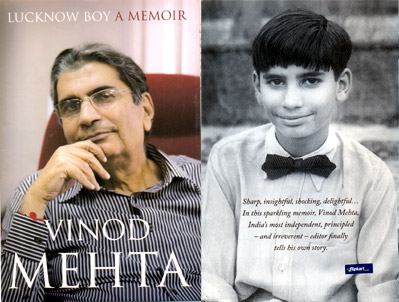
  • Book Review: Lucknow Boy is a fluent, easy & juicy read

    By Ranjona Banerji


    If you want a fluent, easy and juicy read there’s nothing quite like hunkering down over a weekend with Vinod Mehta’s Lucknow Boy – especially of course for a media person. Yet, thanks to the letters page on Outlook, where so many readers seem to know him so well, one suspects that anyone interested in the news or the way the media runs will want to pick this one up.

    The story starts at the beginning with a solidly middle class upbringing in quieter, gentler times in charming and civilised Lucknow, which Mehta describes movingly but not in a maudlin manner. All those Outlook readers who fume at Mehta’s secularism can blame his childhood and this rather inclusive town in which he lived – as he himself does. Not quite sure what he was going to do with his life – apart from being a table tennis champion – a young Mehta landed up in England looking for opportunities and it must be said, girls. The swinging sixties provided the latter in plentiful apparently and also a variety of odd jobs. Mehta returned to India still with little clue about what he wanted to do and then headed for Bombay and advertising.

    From here it was a few skips and jumps to becoming the editor of Debonair which some might remember as India’s first “girlie” magazine. Mehta is one of a small but significant breed which started a career in journalism as an editor, without doing the slog. Those who are old enough (waaaaah!) will remember that in spite of the uncomfortable semi-nudes, Debonair had some good reading matter, using the Playboy model.

    The next episode in Mehta’s life led to his becoming a legend – starting and editing two classy newspapers from scratch (Sunday Observer and Independent) and recasting one (Indian Post) and resurrecting another (Pioneer). All four were well-planned, classy, stylish and paid attention to good writing. There are and must be a variety of views on them and not all of them positive but there is no doubt that they shook the establishment and frightened the fuddy-duddies.

    Not all were successes and Mehta himself suffered for decisions taken or managements changing tack. It is here that he is at his most acerbic about his fellow journalists and editors. The debacle at Indian Post where owner Vijaypat Singhania could not withstand political pressure was followed by another at The Independent. Mehta quit this paper a month after it launched when a huge scandal broke out over a story which said that YB Chavan was an American mole.

    Mehta describes all these quite candidly. The animosity he mentions shown by Times of India staffers to The Independent was quite amusing for those of us who were outside both: where the nose-in-the-air ‘we are Times journos and no one can touch us’ battled against the ‘we are the intellectually and stylishly superior’ Independent brigade. To be honest, both sides were a bit full of themselves!

    Mehta doesn’t hold his punches when it comes to Dileep Padgaonkar, who was editor of Times at the time and later with Lalit Mohan Thapar, owner of Pioneer. The end of his one month at the Independent also led to his shifting to Delhi and then to The Pioneer. The creation of Outlook follows a low period in his life and from here on, the way is up which is where the story pretty much ends.

    Lucknow Boy is a good nostalgia trip for those who are familiar with the place and time and will remember names and incidents. It is also a good lesson for those starting in the profession.

    Mehta also adds his views on people he has known and who have influenced him (yes, Sonia Gandhi is in one section and Editor the dog in the other) as well as tips to budding journalists. Expectedly, there is both humour and insight here.

    I have to thank Mehta for the huge space he has given to my old friend, the late designer MG Moinuddin whom he met at Debonair. Moin was indeed a massive talent and we were colleagues for many of the years that he moonlighted for Mehta’s various papers.

    In this very compelling read, there are some negatives, primarily when we reach the Outlook story. It gets a bit tedious and self-congratulatory – perhaps acceptable but still mildly annoying: all publications after all can come up with lists of some good story or the other it has done. However the sections on the letters to the editor, full of communal rants, as well as the fights between Ramchandra Guha and William Dalrymple are amusing.

    Although Mehta writes about the Radia tapes, where Outlook played a sterling role, I would have expected also some more stringent comment on the fallout as far as journalism is concerned. Mehta discusses Vir Sanghvi’s decision to step back from journalism but lets Barkha Dutt off the hook.

    There is one error which I have to point out because I take it personally. Mehta mentions that Bombay magazine wrote an item after the launch of Outlook. As one of the last employees of that wonderful magazine I can very confidently state that since it closed down in early 1991, there was no possibility of it having commented on Outlook’s launch in 1995!

    Also I must admit that I do not know Mr Mehta – I have met him fleetingly a couple of times so it is unlikely that he will remember. But this was undoubtedly one of the most enjoyable books I have read in recent times. Personal anecdotes and revelations are sparse but they are illuminating and even endearing. Every autobiography is entitled to its one-sided-ness and its quirks and that of course is why we read them


    Lucknow Boy by Vinod Mehta, Penguin Viking, hard cover, 325 pages, printed price Rs 499.

    Flipkart price: Rs 349.

  • Best Citizen award for Mudra

    By A Correspondent


    Mudra Group has recently won the award for ‘Best Corporate Citizen, India’ at the GABM (Global Association of Billionaires and Millionaires). GABM has introduced the ‘Best India Corporate Citizen Award’ program, first and foremost, to give recognition to those outstanding Indian corporations who are engaged in good corporate citizenship practices.

    GABM was founded in 2000 as a private and exclusive non-profit society of billionaires and millionaires from all over the world. They represent a group of relentless philanthropists who firmly believe that the engagement be corporations in local Corporate Social Responsibility (CSR) programmes, or donations made by individuals to local charities does not suffice in terms of good corporate citizenship, or ultimately a way to escape our collective responsibilities towards the creation of a safe and better global economy for all mankind. Considering the enormous challenges facing the global economy of today, their philosophy is that real good corporate citizens must, as a matter of course, unite in a strong international collective to actively and physically participate in intelligently designed programmes, which significantly enhance international business development of entrepreneurship, and the creation of sustainable jobs etc.

    Commenting on winning the award, Mr Ajit Menon, Executive Director, Organisation Development, Mudra Group, said, “Mudra Group has always believed in the philosophy of ‘people first’ be it employees or the society. Being a home grown agency, we realize that it is this country and its people who have helped us become what we are today and strongly feel that we need to give back to the society that has helped us. Mudra is currently engaged in various CSR activities such as Blood Donation Camps, Protsahan India Foundation (NGO), Helen Keller Institute for Deaf & DeafBlind (NGO), Himjoli (NGO) and Udayan Care (NGO), in the country and will continue to do so.”

  • Online investor camp from moneycontrol.com

    By A Correspondent


    moneycontrol.com, India’s No1 financial portal, has launched an online investor camp starting 6am on November 16, 2011. The day-long event includes a host of investment experts answering queries from investors all over India.

    Master Your Money brings a unique opportunity to investors in India to go online and connect with leading experts, and get answers to their investment queries online. It provides a resource to millions of investors currently confronted with falling stock markets, high rates of inflation, skyrocketing real estate prices and the exploding value of gold.

    Master Your Money is open to all kinds of investors, from buyers of fixed deposits, government bonds and insurance, HNI stock and mutual fund investors, individual traders and corporate finance professionals. The unique online event covers stocks, bonds, insurance, gold and real estate.

    “As a leading national portal dedicated to serving investors in India, we conceptualized Master Your Money to provide knowledge to the entire community of Indian investors,” saidJoyson Thomas, COO, of Web 18, the company that owns moneycontrol.com”. Mr. Thomas added that this is the 2nd edition of Master Your Money and the first event attracted investors from all over the country.

    “As owners of the No. 1 financial national portal in India, it was logical for the leader to protect the interests of our audience,” said Mr Thomas.

  • Brand Kingfisher in the red


    By Tuhina Anand


    The King of Good Times is battling bad times, and all eyes are waiting to see how much the whole bailout issue will cost Brand Kingfisher. Right now, the airline business of Kingfisher is under deep scrutiny and the media focus has only heightened the negative atmosphere. Public memory, of course, is short and all ‘bailout’, ‘bleeding’ and ‘those who die must die’ phrases will be forgotten once Vijay Mallya is able to arrange the corpus to manage the airline’s functioning. Remember, Jet Airways employees’ protests against job cuts some years ago didn’t do much harm to the brand in the long run.


    Kingfisher, known primarily for its beer, is unlikely to be affected. The brand has been there for a long time and people vouch for it. Even in this scenario, it’s the airline business that is under the scanner. The airline business is diversification of the core business, hence the impact on Kingfisher the brand would not be much. But when it comes to Kingfisher Airlines, people – especially frequent flyers and privileged guests wooed with the airline’s promise of an extraordinary experience – would stay away, considering flight cancellations and the consequent inconvenience.


    Expressing his view, Harish Bijoor, brand expert and CEO of Harish Bijoor Consults Inc, said, “Kingfisher is a dominant brand in the Indian context. The brand for a start is a beer. And from there on has developed the brand equity of brand Kingfisher Airlines. To that extent, the recent sets of issues in aviation tends to hurt the equity of Kingfisher Airlines more than the beer. The airline is a service brand that touches the lives of hundreds of people. The beer is a product brand. To that extent there is less of an issue there.”


    “The negative publicity that hits Kingfisher airlines is really about the pains of the traveller more than anything else. A traveller faced with flight cancellations at the last minute is impacted the most. This is where the biggest pain point of Kingfisher Airlines’ brand equity vests,” added Bijoor.


    So at one level where the crisis has hit most is the frequent travellers, but that is more of a short-term problem. In fact, the brand has taken a beating but not as much. Even V Balasubramanium, Director at RainMan Consulting, is of the opinion that the brand would have been affected if the issues were that involving ethics or credibility but something like a ‘bailout’ and being cash-strapped will not impact it long-term as people already know that the airline industry is bleeding and the same goes for Kingfisher Airlines. So while the issue has not come as a surprise, it’s true that the rumours about large-scale layoffs or the airline shutting operations don’t exactly help Mr Mallya’s case.


    One view that also emerges is that whenever UB has tried to diversify and move away from its core business of alcoholic drinks, they haven’t really succeeded. Ramanujam Sridhar, CEO, Brand-Comm said, “The next two to three months will be critical for Kingfisher, and how they manage to emerge out of this crisis and do damage control. There will be close scrutiny and overcoming this will be a challenge. There is a negative undercurrent especially among those who have raised eyebrows over the extravagant lifestyle and now the financial mess. I think it’s a wait and watch policy and the next couple of months will be make-or-break as far as the Kingfisher Airlines brand goes.”


    As it stands, the Kingfisher brand which is primarily associated with liquor will not be impacted in any case, as it will have its loyal followers, but for the airline business, which is actually a brand extension, it’s time to be cautious and move carefully. “Kingfisher needs to get off the pedestal and talk and emote with its users and those sitting on the fence with reference to its usage. It’s important to be transparent and admit folly where folly lies. In reality nothing succeeds like success. I do believe this is a temporary blip in the brand equity fortunes of Kingfisher Airlines. With some degree of fund infusion, it will be business as usual,” concludes Bijoor.


    Image: Grab from Kingfisher Airline TVC

  • Hard Knocks: BCCI needs a third umpire

    By Anil Thakraney


    The first day’s play at Calcutta in the current India/West Indies series produced a real shocker. Near-empty stands at the Eden Gardens. Who would have imagined such a day would come in that cricket-crazy city? And this, despite a player like Sachin Tendulkar being in the house, and perched on the verge of a historic milestone of his 100th 100. Now, I realize cricket in India has become a television sport and that’s where all the money comes from. Still, it must be said there is no fun watching a match on TV with no cheering, booing, placards-carrying crowds in the backdrop. That’s the essential part of sports excitement. Already, the TRPs of test match cricket have taken a beaten in recent times, and with no crowds in the stadia, I am afraid more and more fans will give even television viewing a miss. And that would be an alarming situation for advertisers.

    There are many reasons why test cricket is dying a slow death in this nation. The obvious one is the BCCI’s greed, which has resulted in excessive cricket tournaments, leading to crowd fatigue. Then there’s the issue of New India’s impatience with a five-day game. These problems I would leave for the cricket pundits to tackle. However, I must say sponsors and advertisers must come together and set out a few guidelines for the BCCI if they don’t wish that the game, which is always a good marketing vehicle, dies out. Because today it’s test cricket, tomorrow it could be the one-day game. And if the BCCI chaps don’t listen, sponsorships should be cancelled.

    One thing the BCCI must be compelled to do is to ensure that the various cricket associations sell stadia tickets for a low price. Perhaps Rs 20 a ticket. And all minors and school kids should be allowed in for free. Also, facilities in the stadia should be improved so that going for a cricket match is a joy and not a pain in the you-know-where, which it currently is. The very very, very cash-rich BCCI can easily re-imburse the associations for their losses/expenses. This will make sure the stands are reasonably packed at any point of time. And we don’t have a situation where Sachin scores a ton and there’s no-one around to cheer him.

    Bottom line: The always greedy BCCI is determined to kill the goose that lays the golden eggs. And I think marketers must crack the whip and ensure this does not happen. It’s no longer enough being passive spectators in the game. It’s time to play the role of a strict referee.


    ***


    PS: Waiting for a cutting-edge column from Ms Shobhaa De on the Kingfisher mess. Mallya is the lady’s BFF, so let’s see if she gets after him like she does with all else. Will she risk missing out on a yacht invite? Take a guess!

  • Bride and, well, prejudice

    Every week, my least favourite life-form in the media changes. It’s confusing, with so many creeps and monsters to choose from. Not anacondas and sting rays and the rest of those. I mean humans.

    This week I watched with pissed-off fascination as those bridezillas, western and Indian, obsessed on their wedding. While they fume, fret and squeeze their parents dry so that they and everything around them looks fairytale etc on their wedding day, the merchandizers sponsoring the shows and the channels showcasing their anxieties and fears laugh all the way to the bank.

    When the western bride shows first appeared, it would have been funny, were it not so grotesque, to watch a grown woman steam rollering even the groom, let alone her parents, in her consuming need to live up to the fantasy in her head. Now it’s the Indians who are out-Shining everyone in the bid to be the reigning Bridezillas of the world. Helped along, of course, ably by anyone who has a stake in their delusions of grandeur – skin, eyes, nails, hair people, body sculptors, designers and tailors, jewelers, caterers, decorators, wedding card printers, photogenic priests, hired white guests, photographers, honeymoon packagers, planners, et al.

    Casting is simply not a problem, for these bride TV shows. All you need is a dullish looking girl, with even duller wits, and there’s your heroine! Of course it’s big business. The industry, estimated at $11 billion a year, is growing at 25 percent annually. And this does not count jewellery sales, which are growing at 7 percent annually, and are projected to reach $280 billion by 2015, is what we are told.

    At the risk of carbon-dating myself as a relic of the ’80s, I ask: Does anyone remember a time when such weddings were only something that the rich and famous indulged in? And the time when the average Indian simply got married; they didn’t have an ‘event’ which needed to be ‘managed’? The wedding was not at a ‘venue’. A local ‘badminton hall’, or a modest and pleasant wedding hall was booked for the day. The girl changed her sari once or possibly twice. Guests dressed well, but did not spend a month’s salary and man hours on what they would wear.

    Not any more, though. Like Woody Allen says, life doesn’t imitate art, it imitates bad television.

    The invitation card, as one of the shows on TV lovingly showed us, is the first indication of the shape of things to come. It is often bulkier than your local restaurant menu. These cards definitely have more zari work, silk, tassels and sequins on them than any piece of clothing that many of us possess. In fact, you could wear one of them around your neck, and carry it off as a piece of jewellery. Some people even produce little booklets – complete with Indian miniature paintings, shlokas, minor treatises on vedic rites and other fundas about the auspicious and holy act of matrimony… all in a more-Indian-than-thou kind of font, that was at one time used by royal calligraphers when kings bestowed citations on people they wanted to honour. Sometimes, the invitation card is not a card at all – but a CD, complete with clips of the bride and groom and their families inviting you; there could also be a little audio-visual bio-pic of the bride and groom, running you through their first baby steps, taking you on a tour of all their achievements in school, college, work – a mini-movie of sorts!

    In these bride-busting-papa’s-bank shows, when I watch grown people talking seriously into the camera for 10 minutes running about the relative merits of wearing Ostentatious Orange over Fussy Fuchsia, etc, I have this one thought: if we put even one-hundredth of the energy that goes into the making of a wedding, into what goes into the making of a marriage, there would have been much less aggro in our families.

    However, there are early signs that, in some circles at least, this psychedelic dream may not be for everyone. Already, in some families, it is becoming retro-fashionable to have a traditional but quieter wedding.  The kind in which the bride’s and groom’s parents didn’t have to quietly sell off their retirement home, and can feel proud that the education that they gave their girl child has trickled down into her psyche, so she doesn’t think that marriages are made in Bollywood.

    Perhaps someone will then do a retro-show on TV – and call it the Small Slim Indian Wedding.

  • FMCG retail will hit $100 billion by 2025: Nielsen

    By A Correspondent
    Nielsen estimates that the country’s rural FMCG retail landscape will grow from $12 billion in 2011 to $100 billion by 2025, as it unveiled its Consumer 360 report in New Delhi on Tuesday. Prashant Singh, VP, Nielsen, said: “The rural mindset is open to consumption of newer, more contemporary food categories and as a result, drives consistent growth.”

    The research firm has identified four key trends that will drive consumption: premiumisation, consumers switching from commodity to brands, from indulgence to regular consumption, and acceptability.

    “While small-sized packages are vital for entry into the market, as purchasing power increases, rural consumers are increasingly buying larger pack sizes to share with family and friends,” said Singh. Indian shoppers will increase spends on FMCG at modern retail stores from $1.8 billion to $5 billion by 2015.

    Sales at modern trade stores are up 31% since last year across the country’s socio economic spectrum.

    Source:The Economic Times

    Copyright © 2011, Bennett, Coleman & Co. Ltd. All Rights Reserved


  • Amod Dani is ECD, Leo Burnett

    By Shubhangi Mehta


    Leo Burnett India has promoted Amod Dani to Associate Executive Creative Director, Leo Burnett India. He will be based out of Delhi henceforth and will be directly reporting into K V ‘Pops’ Sridhar.

    Samir Gangahar, Executive Director, Leo Burnett, said, “Amod is one of the best talents of our country as well as a well awarded creative person. We are very excited to have him in the Delhi team and expect him to continue with the great work.”

    Mr Dani said, “The move is challenging, yet very humbling. It’s an absolute honour to be a part of Leo Burnett Delhi. Working with great people such as Nitish, Sam and Sai is truly exciting. Delhi is one of the fastest growing offices in the entire Burnett family. I hope to concentrate my efforts towards the upsurge and do justice to their faith in me”.

    Mr Dani has been in the industry for close to seven years. After completing his post-graduation from MICA, he joined Lowe, Doha as an intern. He then moved to Lowe, Mumbai, where he worked with Priti Nair for a year.

    He joined Leo Burnett in 2006, where he has worked on brands such as McDonald’s, Tata Capital and Reliance Mobile. The brands he handled at Lowe include Surf, Idea, Wheel and Liril.

  • Times for news media to report on each other

    By Ranjona Banerji


    Uttar Pradesh chief minister Mayawati’s move to divide the state up into four parts obviously hit the headlines on TV on Tuesday night, competing with tycoon Vijay Mallya and his attempt to save Kingfisher Airlines. Since every political party other than the Bahujan Samaj Party took exception to this plan on some grounds or the other, it had news impact. Also as was eagerly pointed out, this took the shine off just-launched Rahul Gandhi’s UP poll campaign.
    Oddly though, Hindustan Times decided that the news did not deserve the front page in Mumbai – although it made it in Delhi – and only scant treatment within. Most other papers decided that this bold move was front page-worthy. Perhaps HT is going with the old belief that Mumbai is not interested in anything that happens in its own backyard. In which case it could have given it a local spin like ‘If UP breaks up, then Maharashtra becomes India’s biggest state’ or something equally parochial.
    **

    The fact that most media bodies are taking on the judiciary in the Times Now-PB Sawant defamation case is most heartening. If Rs 100 crore is the penalty for using the wrong photograph, most media houses would have long been bankrupted and had to close down. While using Sawant’s photo instead of PK Samantha’s photo in a judicial bribery case was unfortunate, the channel did apparently correct itself and apologise. There does not seem to have been any malice on the channel’s part here. In which case, Rs 100 crore is excessive.
    It would be wise not to get into too many “freedom of the press” arguments here. Clearly, the media is not free to defame, slander or libel anyone. But the media is liable to make mistakes and those mistakes cannot be misinterpreted as being deliberate and malicious.
    Largely thanks to the aggressive and sensationalist posture taken by television news channels, the conduct of the media has itself become a topic of conversation in India. While in itself this may not be a bad thing, it is dangerous when it becomes obsessive and every sundry TV guest becomes an “expert”. The media is open to scrutiny but a Katju-like approach is unnecessary and unlikely to be fruitful.

    **
    Having said that, how about a contrarian point of view? Is it time that newspapers and channels started reporting on each other? The Guardian took on Murdoch and The News of the World over phone-hacking. The Independent has now exposed the BBC over a set of documentaries about Malaysia. But in India, we are terribly polite about each other. Barring the Hindu – which has taken on its competitors like exposing holes in the Hindustan Times’s Bhopal editions sensational stories about babies having sex change operations – most media outlets spare each other.
    Is there room for change or should we give this British method a wide berth and live together with each other’s mistakes in perfect harmony?
    It may well be likely that owners and journalists have two different viewpoints here. Owners stick together very closely and as we have seen, the Indian Newspaper Society operates almost as if with a single mind, often to the detriment of journalists and sometimes, journalism.
    Any ideas?

  • Mail Today celebrates 4th anniversary

    By Akash Raha


    Mail Today celebrates its fourth anniversary today in a year that has seen overwhelming change. The daily compact will celebrate the milestone by putting together a 56-page section dedicated to the ‘The Game Changers’. This section accompanied the main edition of 48 pages today.


    In the pages of the anniversary edition, the Mail Today team of reporters and editors across the country will profile a diverse lot of people. From Anna Hazare, who has reset the country’s political agenda, to Mamata Banerjee, whose gale force swept away the Left bastion in West Bengal, from the Supreme Court of Chief Justice S.H. Kapadia, which has turned the constitution into a force for change, to Subramaniam Swamy, the unraveller of the 2G spectrum scam, these change agents have given us reasons for hope even in the nation’s darkest moments.


    Speaking about the anniversary issue and the way ahead, Rahul Thappa, COO, Mail today said “Mail Today in its own inimitable way has been a harbinger of change in the newspaper industry over the last four years. Our fearless content and often irreverent voice has offered the new Indian an intelligent option to the content they otherwise had be contented with. We have grown from strength to strength over the last four years and in doing so have defied conventional thinking. We have made a significant dent in the Delhi/NCR market and shall continue to consolidate our strength in the High Net Worth homes of the region. Growth is the only imperative for us and we shall be a harbinger of change to in other parts of the country as well. In our fifth year we plan to continue to delight our readers and surprise our competition and in doing so cement our positioning as the voice of the new Indian.”

    Even though corruption may have dominated the news headlines, but these harbingers of change drivers, in their own ways, have redefined the rules of engagement in their chosen fields and made stellar (and sometime debatable) contributions to our lives and lifestyle. These men and women have changed the way we relate to politics, business, sports, films, fashion, cars, books, gadgets and gizmos, and the arts. The anniversary edition hereby celebrates the inevitable fact of contemporary India.

    The anniversary issue celebrates the achievements of many remarkable Indians too who have catalyzed change without getting the media attention they deserve. People such as Kumar Mangalam Birla, who has refused to pay ‘facilitation money’ despite losing out on project, or Suneet Singh Kohli, the creator of the world’s cheapest tablet, or the UP Lokayukta Justice (Retd) N.K. Mehrotra, who has got Mayawati to suspend four of her corrupt ministers, or Mahaveer Golechha, the AIIMS scientist who has invented a candidate drug for the cure of Alzheimer’s Disease, or even the farmers of Bhatta Parsaul, who at a tremendous personal loss took on the state government and a powerful lobby of builders to make land acquisition at just rates a national issue.

    The game changers in politics, government and business aren’t the only ones who have given us our moments of celebration. We’ve had Ekta Kapoor venture into territories where no film production company had gone before and Sameer Gaur pull off this year’s biggest international sporting spectacle — the F1; we’ve seen the hitherto unknown Abhinay Deo push the creative envelope with Delhi Belly and Kalki Koechlin become the unlikeliest of Bollywood success stories; we have celebrated Prabal Gurung’s designs being worn by Michelle Obama and the elevation of fashion designer Manish Arora as the creative director of the Franco-Spanish design house Paco Rabanne, making him the first Indian to head the creative side of a leading international high-street fashion label.

    Mail Today was launched on November 16, 2007 in Delhi by the India Today group, in collaboration with Associated Newspaper of the UK (publishers of Daily Mail). As per the IRS 2011 Q2 figures, Mail Today showed a growth in readership and is firmly placed in the number three position in Delhi market.

  • Rantings of a Federer fan: give us more sports coverage!

    By Ranjona Banerji


    I have to confess that my weekend was consumed by tennis – the last ATP tournament of the year before the finals in London, where of course only the top 8 men in the world compete. Roger Federer’s amazing run was my focus and Sunday night was a wonderful triumph as he defeated Jo-Wilfried Tsonga for his first title at the indoor tournament in Paris.

    Which led to Monday morning’s papers with great excitement. Yet, hardly to my surprise, the Mumbai edition of the Times of India was happy to reduce the news to a brief. Over the past few years, sports coverage in TOI has become rather pedestrian and predictable. It sticks to cricket and then willy-nilly fits in whatever other sport it thinks is the flavour of the week – again predictably, football and Formula 1. This is a far cry from the early 2000s when the TOI was lively and dynamic in its sports coverage. Even more strangely, in these jingoistic times, peppered with aman ki asha, the victory of the Indo-Pak tennis duo of Rohan Bopanna and Aisan ul-Haq Qureshi was also given short shrift.

    The Hindustan Times when it launched in Mumbai had an excellent sports section – good writing, mixed coverage, giving ample space to all the sports which people are interested in these days. Of course, they carried the Federer and Bopanna-Qureshi stories.

    Mid-Day has always had an excellent and comprehensive sports section and a good understanding of news.

    But my vote has to go to DNA’s Mumbai edition which had held firm against the falling standards in other sections of the paper by providing, for my money, the best sports mix in the country. Pictures are given importance as are stats and facts and there is an attempt to cover every sport. Hat’s off.

    I have to make it clear that I have worked for DNA, TOI and Mid-Day and enjoyed my time at all of them and have never worked at Hindustan Times.

    TV news channels are very fair to all sports in their sports bulletins. I might suggest to TOI that someone in their sports section might check exactly which events are shown by the sports channels to try and increase the scope of their coverage. Of course, then it might be all about golf and pro-wrestling!


    **


    The unfortunate death of former player and cricket writer extraordinaire Peter Roebuck was covered extensively in Indian papers and on TV. It took some time about his suicide and alleged sexual harassment/assault charges to emerge but the tributes certainly have poured in and continue to do so. Again, Mid-Day’s sports pages have a good package – a well-considered tribute by Clayton Morzello, details about his last moments and a gem of a Roebuck piece from the past.

    Ayaz Memon’s piece in Deccan Chronicle (and perhaps Asian Age as well?) on Roebuck is not just expectedly well-written but also insightful and moving.

    **


    The appalling attack on journalists by apparent henchmen of the sacked and perhaps disgraced Rajasthan minister Mahipal Maderna was covered by everyone. It should be noted by all such feudal Indians that this kind of behaviour will no longer be tolerated. Henchmen and goondas have to be either retrained to be acceptable bodyguards or vanish. Just like “public sentiment” is an unacceptable excuse for violence so is “love” for some invariably shady politician or fixer.

    **


    The imminent collapse of Kingfisher Airlines has taken up much air time and newsprint but perhaps no one has had as much fun as tweeters. It’s worth taking a trip there to check the jokes as well as the support!