Author: mxm_india

  • Uday Shankar re-elected IBF president

    By A Correspondent

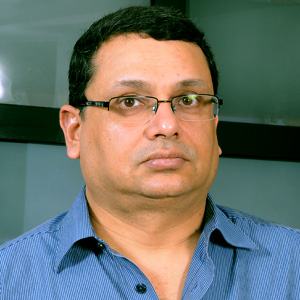
    Star India CEO Mr Uday Shankar was re-elected president of the Indian Broadcasting Foundation at its annual general meeting in New Delhi yesterday.

    Until recently treasurer, Mr Sunil Lulla, CEO and MD of Times Television Network will be vice-president. Zee Entertainment Enterprises Ltd CEO Punit Goenka will be the new treasurer.


    Detailed report on MxMIndia tomorrow

  • TAM Sports Data (F1 update – All India)

    Source: TAM Sports

    Market: All India

    TG: CS 4+ Yrs


    Indian GP garnered 6 times more average TVR compared to that of Any GP and 4 times more that of Top GP (Malaysian GP) of Formula One 2011.

    *Note: Any GP means Average of all GPs completed till now.

    *Note : The analysis is based on the Live telecast of Qualifying Race and Race Day


    About TAM Media Research

    TAM is a joint venture between Nielsen Company & Kantar Media Research. Besides measuring TV Viewership, TAM also monitors Advertising Expenditure of Television, Print & Radio through its division AdEx India. Since 2004, it extended its presence in the PR Measurement & Analysis space for Corporate/Marketing Clients by setting up a separate division Eikona PR Measurement.

    In 2007, the joint venture introduced RAM (Radio Audio Measurement) service to track Radio Listenership for the Indian Radio Broadcast Industry. In year 2009, TAM launched a division, called TAM Sports that specializes in monitoring Sports Sponsorship ROI.

    TAM Media Research’s objective is to fuel media insights that will drive the growth of the Indian Media Industry.

  • Newswatch: News cannot be customized

    By Parsa Venkateshwar Rao Jr


    It is the old story of a death foretold, and which is for ever deferred. The novel died and it has managed to live on. Poetry died, but a Swedish poet gets the Nobel for literature this year. Philosophy has died. And still there are a few too many philosophers around. So it is with the print media. The newspaper is dead. This was what that ostensibly venerable but really pseudo-ish news paper, The Economist, had prophesied not too long ago. And in the middle of market meltdown in the western world, most of the newspapers editors and owners are singing the dirge as well.

    India seems to be bucking the trend as of now. Newspaper circulation, including that of the English language ones, is rising and rising briskly too. Many social and economic factors have been invoked to explain the phenomenon. It is being said that the explosion of literary in a billion plus country means millions of readers every year, and that the high will persist longer than imagined. There is of course the cliche that we are a booming economic power in a world flattened by recession.

    Whether the newspaper survives as we know it is indeed a billion rupee question with long-term implications and with no philosophical or existential strings attached. Newspapers may change and even disappear but news will remain with what the 1930s British (Anglo-Irish really) poet Louis MacNeice summed up in a sardonic spirit, “Give us this day our daily news.” I an information age, news is not going to disappear into a black hole though there is the real danger of too much trivial news creating a mountain of information trash.

    Beyond the playful and woeful prospect of dealing with too much news, what seems to be of greater interest is whether the reader should be able to choose what he or she wants, the so-called customized news, whether in the newspaper, on the radio, on television and on the Internet. This seems to make immense market sense, and the idea is being bandied about as the ultimate winner in the business of purveying news.

    The dangers seem to be obvious to anyone except those who want to live by a new, untested and unexamined idea. News by definition should not be customized. The consumer – the reader in this instance – should not be choosing what he wants and ignoring the rest. For that he can walk through the libraries and go for the books he wants to read or even browse through racks of DVDs to get the sub-genre of films he or she is interested in. A similar exercise can be carried through on the iInternet as well, where you can Google and Yahoo the subject or theme you are interested in. You will not have to know anything about anything else.

    The idea of news is that a person gets to know things which one is not necessarily interested in. The Greek economic crisis is indeed of no interest to anyone but the Greeks themselves, and thanks to the overvaulting ambition of Eurozone, it has become the nightmare of rest of the European Union as well. News is all about something that has happened which may or may not impact you either in the immediate or in the distant future. The fact that it has happened needs to be noted – the word recorded sounds a little too pompous – for whatever it is worth and relegated to the archives. Someone interested in it will retrieve it sometime somewhere.

    So, those in the business of news cannot afford to package things for the consumers. That is a retail exercise that can take place lower down the supply chain as it were. The basic issue is that news – whatever has happened or said – has to be collected and gathered. Newsgathering is the primary function. The choices come much later. Customization of news cannot be made the basic premise.


    The writer works with the DNA newspaper at its Delhi office.

  • Fortune India releases ranking of 50 Most Powerful Women in Business

    By Akash Raha

    For the first time Fortune India ranked India’s 50 Most Powerful Women in Business in its November issue. Shobhana Bhartia, Chairperson and Editorial Director, HT Media Ltd. is one of the media personalities to make it to the top ten at number seven spot.

    Chanda Kochhar of ICICI Bank is in the first place, whereas Shikha Sharma of Axis Bank and Mallika Srinivasan of TAFE have taken the second and third place in the ranking.

    Kirthiga Reddy, India Head, Facebook; Lynn De Souza, Chairman and CEO, Lintas Media Group and Radhika Roy, Managing Director and Executive Co-Chairperson, NDTV Group are at number 21st, 39th and 45th spot respectively.

    Dibyendra Nath Mukerjea, Editor, Fortune India said, “Indian women span generations and today we find them in every field. Acquisitions, garnering profits, successful new ventures, pioneering concepts, snagging mega deals…all important factors, no doubt, when defining power. We looked at the changes they brought in, and the way they transformed businesses. In the process, we made some surprising discoveries. But then, surprise was what we expected when we put together Fortune India’s first ranking of the most powerful women in India Inc.”

    Other women who figure amongst the Top 10 as per the 50 Most Powerful Women in Business by Fortune India, include – Aruna Jayanthi, CEO, Capgemini India; Zia Mody, Co-founder, AZB Partners; Vinita Bali, Managing Director, Britannia Industries; Shobhana Bhartia, Chairperson and Editorial Director, HT Media; Chitra Ramakrishna, Joint Managing Director, NSE; Kiran Mazumdar-Shaw, Chairman & Managing Director, Biocon and Frenny Bawa, ex-MD, RIM India.


    Pavan Varshnei, President of Fortune India, said, “Fortune India’s Most Powerful Women in Business list is the most comprehensive ranking of influential women in Indian business.”


    The issue also carries a feature on the compensation package of the 10 highest paid Indian business women. The story gives a graphical comparison of the salaries of the highest paid women in India vis-à-vis their counterparts in US and the highest paid men in India.


    Fortune India’s 50 Most Powerful Women in Business


    Chanda Kochhar, MD and CEO, ICICI Bank

    Shikha Sharma, MD and CEO, Axis Bank

    Mallika Srinivasan, Chairperson, TAFE

    Aruna Jayanthi, CEO, Capgemini India

    Zia Mody, Co-founder, AZB Partners

    Vinita Bali, Managing Director, Britannia Industries

    Shobhana Bhartia, Chairperson and Editorial Director, HT Media

    Chitra Ramakrishna, Joint Managing Director, National Stock Exchange

    Kiran Mazumdar-Shaw, Chairman and Managing Director, Biocon

    Frenny Bawa, ex-Managing Director, RIM India

    Meenakshi Saraogi, Joint MD, Balrampur Chini Mills

    Naina Lal Kidwai, Group General Manager and Country Head, HSBC India

    Preetha Reddy, Managing Director, Apollo Hospital Enterprises

    Amrita Patel, Chairman, National Dairy Development Board

    Harshbeena Sahney Zaveri, MD and President, NRB Bearings

    Kalpana Morparia, CEO, J.P. Morgan India

    Mira Kulkarni, MD, Mountain Valley Springs India

    Sujata Keshavan, Co-founder, Ray+Keshavan Brand Union

    Roopa Kudva, Managing Director and CEO, CRISIL

    Renuka Ramnath, Founder, Managing Director and CEO, Multiples Alternate Asset Management

    Kirthiga Reddy, India Head, Facebook

    Priya Paul, President, Park Hotels Group

    Jasmeet Kaur Srivastava & Gitanjali Ghate, Managing Directors, The Third Eye

    as above –

    Rama Bijapurkar, Marketing Consultant

    Kaku Nakhate, President & Country Head India, Bank of America Merrill Lynch

    Rekha Menon, Executive Director, Accenture

    Neelam Dhawan, Managing Director, Hewlett-Packard India

    Sangeeta Pendurkar, Managing Director, Kellogg India

    Vedika Bhandarkar, Vice Chairperson, Credit Suisse

    Ekta Kapoor, Joint Managing Director, Balaji Telefilms

    Vishakha Mulye, Managing Director & CEO, ICICI Venture

    Reshma Shetty, Managing Director, Matrix India Entertainment Consultants

    Sminu Jindal, Managing Director, Jindal SAW

    Renu Sud Karnad, Managing Director, HDFC

    Ritu Kumar, Ritu Kumar Design

    Anuradha J. Desai, Non-executive chairperson, Venky’s, and chairperson, V. H. Group of companies

    Vandana Luthra, Founder and mentor, VLCC Health Care

    Lynn De Souza, Chairman and CEO, Lintas Media Group

    Bala Deshpande, Country Head and senior MD, New Enterprise Associates India

    Suvalaxmi Chakraborty, CEO, State Bank of Mauritius (India)

    Farah Khan, Co-founder, Three’s Company

    Meher Pudumjee, Chairperson, Thermax

    Ashu Suyash, Managing Director and Country Head, India, Fidelity International

    Radhika Roy, Managing Director and Executive Co-Chairperson, NDTV Group

    Rajshree Pathy, Chairman and Managing Director, Rajshree Sugars and Chemicals

    Swati Piramal, Director, Piramal Healthcare; Vice Chairperson, Piramal Life Sciences

    Manisha Girotra, Chairperson and Managing Director, UBS

    Meera Sanyal, Country Executive & Chairperson, RBS India

    Anita Arjundas, Managing Director, Mahindra Lifespaces
  • The Anchor: Sonal Dabral on 6 ads that will always remain in his mind

    Liril with Karen Lunel:  I remember waiting eagerly to watch the ad in auditorium just before the beginning of a movie. The entire packaging of the ad makes it compelling and I think it was a unique leap that Mr Alyque Padamsee and Lintas had taken at that time. It was a commercial to sell a soap but done in an impactful manner. Kailash (Surendranath) had shot it tastefully so it was not vulgar even if you have a girl frolicking under a waterfall.

    Lifebuoy:  Lifebuoy hai jahan, tandrusti hai wahan. It was a simple ad but also a great idea. Such a wonderful and simple line captured the essence of the product. In advertising, it often happens that in search of a good idea we tend to make life too complicated for ourselves. We try too hard to be clever, ‘creative’ but we just have to remember that in advertising in the end it is just about selling a product, selling an attitude and a shift in behaviour and nothing beyond that. If we realize this then that’s where simplicity comes. Lifebuoy advertising was unpretentious, simple and did its job for many many years.

    The Freedom Run: This ad came at a time when I was just about to leave NID and it rebuilt my faith in advertising as a profession. At that point, I was at a crossroads whether to go into pure design, films or advertising. Suresh Mullick’s Freedom Run was not an ad but a film that brought pride when you watched it.  It was meant to bring pride and you could sense the passion with which it was made.  It is the truth that if you do something with passion, it generally turns out to be good.

    Cadbury’s girl dancing on the pitch: I had the wonderful opportunity to work in O&M and at one point  Piyush Pandey and I decided that we would turn around the agency one day and be the top agency in India, the region and possibly in the world. After tremendous hard work came the flagship campaign on Cadbury Dairy Milk which was the girl on the cricket field. I had worked on the ad along with Piyush and the team, and I think the ad was a milestone in Indian advertising and was somewhere even dubbed as ad of the century.

    Fevicol: The work on Fevicol has been landmark. The idea is great and has been well executed.

    Virgin Mobile: The work by Bates on Virgin Mobile is again pathbreaking and stretched the morals, if I can say, to a certain limit. Indian Panga League was daring, risky and pushed boundaries. It created a new lingo. Since I have worked on it, it might be selfish to say but it’s a personal favourite piece of work too. It was audacity to come out with 115 films and put on the web. Daring, risky and an amazing idea done amazingly well.

    Sonal Dabral is Chairman India and Regional Executive Creative Director, Bates Asia.

  • Indigestion!

    Dabur Hajmola: Ad hazam nahin hua!

    Dabur has come up with a very ambitious idea in an effort to expand the market share for its digestive tablet brand, Hajmola. So far, if I recall correctly, the tablet was pitched at the over-eaters and the greedy pigs. But now Dabur wants you to have a Hajmola after every meal and snack! In short, they expect to net a whole lot of new consumers, many of who may never even have heard of the brand.

    Now when marketers attempt such a Himalayan task, it’s paramount that the advertising shines for them to harbour any notions of success. Sadly, Dabur has released a safe, dull, regressive commercial for Hajmola. It’s back to the ‘Desh ka choice’ route of the eighties. The commercial features all sorts of people eating all sorts of things and then topping it all up with a Hajmola. From burgers to paani puris to idlis to samosas to kebabs. ‘Hajmola kare khana complete’ is the new tagline.

    Total flop show. A tired idea and an even more tired execution. This is the sort of stuff we have seen over and over again. When what was needed out here was some advertising magic to go with such an ambitious project.

    Rating: (On a scale of 1 to 5): 0. Got a bad digestion!

  • Of Tarun Tejpal’s travails

    By Ranjona Banerji


    Last night on Times Now was terribly entertaining. The media’s romance with Mamata Banerjee as Bengal chief minister seems to be over and Arnab Goswami exchanged nation-saving passion for sarcasm while discussing with Banerjee’s rather odd decision to enter a police station to rescue party workers. Trinamool Congress’s spokesperson Derek O’Brien also bore the brunt as he spluttered and exploded his way through the discussion.


    He also made some strange digs at Arati Jerath, editor with Crest (and a former colleague I must admit). Arati very graciously laughed it all off but O’Brien did not show himself as a gentleman. Goswami put up a spirited defence and all the other panellists seemed quite amused.

    **


    Sadly, Wednesday mornings’ newspapers largely ignored Banerjee’s police station search and rescue but they did focus on the high-octane pull out threat on Friday which has now dwindled into a ‘if you ever do it again we shall think about it again’ damp squib.

    Sometimes you wonder why India needs Bollywood at all when it has our political masters for entertainment.

    **

    Having reported that LK Advani and Narendra Modi were at loggerheads on Monday, by Tuesday, the Times of India decided they were not – but then added the rider that the negative publicity had made the two BJP leaders decide to put up a united front. The Hindustan Times also reported the same thing so now everyone appears to be on the same page.

    **


    Deccan Herald reported that the Think Fest organised by Tehelka last week in Goa had run into all kinds of problems, starting with a controversial comment made by Tehelka founder and editor Tarun Tejpal, apparently exhorting his guests to drink and “sleep well with anyone you think of”. There was much outrage, either because he advocated sex or he insisted that they do it well or indeed because he implied that that’s why people go to Goa.

    Apart from this, Tejpal is already in trouble with Goa’s environmental activists and journalists for his apparent closeness to the government and the mining lobby.

    As a result, not must has appeared on the thinking that was done – if indeed there was any time for it amidst all these other admittedly more interesting activities.

    **


    Speaking of sex (well, in a manner of speaking), Indian politicians are very lucky that the Indian media does not chase or publicise their sexual escapades. Like most US presidential candidates, Republican Party hopeful Herman Cain finds himself tumbling down the ratings as at least four women have accused him of sexual harassment and misconduct.

    Perhaps one day the day will come?

  • Rajesh Jejurikar joins Zee as prez

    By A Correspondent
    Zee Entertainment Enterprises Limited (Zee) has announced the appointment of Mr Rajesh Jejurikar as President, Zee Entertainment Enterprises Limited (ZEE). Mr Jejurikar has resigned has Chief Executive-Automotive Division at Mahindra & Mahindra. He will report to Mr. Punit Goenka, MD & CEO, ZEE for his role. In a career spanning 24 years, Mr Jejurikar, has worked in the packaged goods industry and advertising before he joined Mahindra & Mahindra in 2000.

    Speaking on the appointment, ZEE MD & CEO, Punit Goenka said, “We welcome Rajesh to the Zee family and are confident that his joining will further add to our capability of being a fiercely competitive Organisation. His vast experience in marketing and brand building will add immense value to the Organisation.”

    Commenting on his new role, Rajesh Jejurikar, the newly appointed President at Zee said, “After having spent a fulfilling decade at Mahindra, where I have grown and learned so much, both personally and professionally, I am happy to now be a part of India’s pioneering television broadcasting company. The dynamics of the media and entertainment sector excites me and I look forward to working with the Zee team.”

    Mr Jejurikar is a 1986 batch MBA from S. P. Jain Institute of Management and is likely to join Zee in February 2012.


  • It’s a fact! Factual ent grows with History

    By Rishi Vora


    Factual Entertainment as a genre in India has been a niche segment for many years, dominated primarily by Discovery and National Geographic. The recent entry of History from the JV of TV 18 and US based A + E Networks, however, promises a lot of action. With only a month since its launch, the channel has already made an impact.

    According to TAM Media Research, it is now placed at No 2 in the line-up of factual entertainment channels with a market share of 28 per cent in the metros; and it garners the highest time spent per viewer in the genre (35 minutes against Discovery’s 23 and National Geographic’s 16 minutes). And by all means, the channel has expanded the genre by 30 per cent, all India, reaching out to 45 million viewers, in the CS 4+ market.


    What’s the success mantra?
    There is no denying that the Network 18 clout and the reputation of the US major A + E Networks, helped in the successful launch of the channel. But, as the company officials state, the success story has a lot to do with good programming, distribution and marketing.


    The channel embarked on a 360-degree campaign with Salman Khan, urging viewers to switch to a different kind of programming within the factual entertainment arena. Sangeetha Aiyer, General Manager – Marketing, shared her thoughts on the campaign. “All the research we’d done showed that there is a huge market in India for the type of content we had and that there is a lot of inherent weariness for existing content. This is the reason for our positioning as watching something fresh and new. Also, all our efforts during the launch campaign were primarily to broad-base the genre, whether it is the 360-degree marketing thrust, the 5 language feeds, huge distribution thrust, or using Salman as brand ambassador.”


    On why Salman as the brand ambassador, she explained, “Salman has a phenomenal appeal across demographics, psychographics, regions; he is inherently ‘cool’ and brings with him an element of unexpectedness. A combination which is impossible to resist. There was never anyone else we even considered. Also he’s not just our brand ambassador; we’ve also cleverly integrated him in our programming and packaging and have more plans with him in the pipeline.

    Cell 18, a division of Network 18 has worked extensively on the look and feel of the channel, the on-air promotions and packaging.   Zubin Driver, Group Creative Director, Network 18 and CEO, Cell 18 added to Aiyers point on having Khan on the channel as the brand ambassador. “The idea to go with Salman Khan was completely out-of-the-box, primarily because one doesn’t expect Salman to be the brand ambassador of a factual entertainment channel. And what he does on History and what the viewers are accustomed to see him as, is very different.  So that’s very clutter breaking and interesting.”

    Driver further added that the challenge was to match up to the international standards of A + E channels, as far as the packaging and the creative look and feel of the channel was concerned. Elaborating on the kind of work that has happened on the channel, Driver said, “There is a great amount of detailing which has gone into the campaign. Show specific designs, using mnemonics and graphics and to integrate that with Salman, was a huge challenge. And I’m glad at the end of it we’ve done a pretty good job.”

    Sudheer KG, VP and Programming Head shared the early apprehensions that the team share prior to launch. “We were very cautious right from the beginning, because History as the name suggest—immediately what first comes to mind is the boring sort of a channel with an old look and style, with no fun element in it. So our immediate task was to see how we could make one, the genre more interesting and second, to make our channel more entertaining. The idea of dubbed content helped us maintain the Indian flavour in every show.”


    The programming strategy the channel has adopted is pretty simple. To look at the huge library of shows that History channel in the US has, and pick up shows from there that could suit the Indian viewers. And of course, the customisation which follows to make shows more relevant and meaningful for Indian audiences. In the times to come, the channel will look at different formats and if need be, acquire international content as well.


    Passage Through India with Caroline Quentin, currently on air, is one of the popular shows, where the host travels all over India and introduce many aspects of Indian culture. Another show that is likely to be launched in the near future is Freddy Versus the World, featuring Cricketer Andrew Flintoff in trying some of the most extreme sports and challenges on offer.


    As it seems from here, the challenge is to keep the momentum going. And that could be achieved by doing innovative yet relevant content. Being a niche segment, factual entertainment as an industry was observed to be stagnant for a while. Now that History has announced its arrival, there will be a lot to watch out for in this small yet growing industry.

  • Sony touches new ratings high with Rs 5 crore KBC episode

    By Rishi Vora


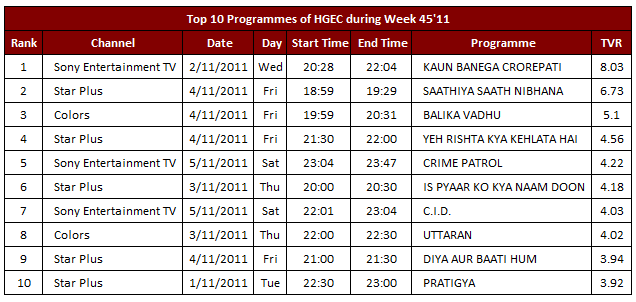
    Every Indian does seem to harbour the dream of becoming a millionaire. Last week’s ratings of Top 10 television shows reveal that Kaun Banega Crorepati (KBC) has, in its fifth season, registered a new high, becoming the highest TRP grosser among all weekday shows after Colors’ Uttaran did in 2009.


    The episode aired on November 1 registered 7.2 TVR while the episode on November 2 touched 8.03 TVR. The KBC episodes on these days were much-publicised and aired the winning of Rs 5 crore by a resident of Bihar. The channel has also upped its GRPs to 287 from last week’s 236, with KBC being the No 1 show in the week with an average TVR of 6.4. However, industry watchers feel Sony will see a dip in GRPs post KBC.


    Sneha Rajani, Senior EVP and Business Head, Sony Entertainment Television said, “The success of Sushil Kumar in KBC is an emphatic endorsement of the fact that KBC is not just a game show, but a melting pot of knowledge and aspirations of the aam aadmi, and the numbers show that KBC this season has broken all barriers of demography and geography and transformed lives of people all across the country.”


    In absolute numbers, the show has managed to reach out to 25 million people on November 1, and 27 million people on November 2, with 18 percent reach and 43 minutes of average time spent.


    Other channels too gained in week 45. Star Plus jumped to 335 GRPs from last week’s 273. Colors rose to 240 from 236 the previous week, while Zee TV rose from 131 to 143.

  • Arnab Goswami as a BJP adviser?

    By Ranjona Banerji


    Expectedly, the petrol price hike was top of the mind on Friday morning, as readers already depressed with the news the night before, groaned their way through morning chores. Most newspapers slammed the hike, pointing out that it would add to inflationary pressures, that this so-called drop in the rupee was not reason enough for a Rs 3 hike and that most of the price per litre went towards taxes anyway. In addition, the apparent move to push people towards diesel was short-sighted because one day diesel subsidy would also have to go and then, the environmental cost.

    **

    Hindustan Times’ Delhi edition lead with the new India-China standoff over oil exploration in the South China Sea but put the story on the fold in Mumbai, taking the petrol hike and a local municipal story on top. The Times of India gave prominence to its newly constituted Social Impact Awards.

    **

    The end of Jammu & Kashmir chief minister Omar Abdullah’s marriage was in the papers, but then everyone respected his right to privacy. This meant that the juicy stuff was left out. Interestingly, The Hindu, follows the media coverage in disapproval and finds out that a possible new wife named for Abdullah – as a sort of political alliance – is an imaginary or invented person. Of course, should one wonder whether anyone would care if Omar Abdullah looked like most other Indian politicians (ugly)? Or perhaps if it is time the media dropped the pseudo-coy line and went all out and attacked famous people? Or if it is fair to tempt the reader with titbits and then hold back, claiming goodie-goodie rights?

    **

    Sonia Gandhi’s return to a workday was frontpaged as was the United States dubbing the Indian Mujahideen a terror outfit. Most papers pointed out that the authorities were still a bit lost on solving both the Mumbai and Delhi blasts. The rains in north India – which are wreaking havoc – got little play in the rest of the country but were covered in the north, with the Tribune in Chandigarh warning of more rain in the next 24 hours. The Ahmedabad edition of The Times of India carried prominently the story of policeman Rahul Sharma describing how he was charge-sheeted by the Gujarat government for talking to the Supreme Court appointed amicus curiae Raju Ramachandran about the 2002 riots. Chief minister Narendra Modi’s fast for goodwill did not feature on page 1.

    **

    This is of course in stark contrast to our friends in the world of television. Modi’s fast is getting a minute by minute update on some channels. Times Now or at least its biggest hero Arnab Goswami could become adviser to the BJP on how to win the next election, since his News Hour debate on Thursday night brooked no opposition to his view that Modi’s fast for goodwill (sadbhavna) was in the rightness of things. This line appears to be in contrast to The Times of India’s coverage and editorials of Modi and the latest events, but who knows? It must be added that Headlines Today runs neck and neck with Times Now when it comes to the rightwing slant, but then it has far more practice.

    **

    The petrol hike was given its space and so was cricketer Rahul Dravid’s retirement from One Day Internationals. On Wednesday and Thursday, Indian television did what it does best and to good effect here – it showcased the story of Indian hockey players being given peanuts in prize money and so shamed governments into coughing up more. Several newspapers – Mid-Day particularly in Mumbai – also did their bit.

    **

    The images of Bihar policemen beating up villagers were frightening and truly a triumph for television.

    **

    Here’s to a promising weekend, with all our drama kings and queens in full flow!


  • Technology changes offer hope for broadcasters at Casbaa

    By Nibha

    The 2011 edition of the Casbaa Convention closed last week with high optimism at a time of rapidly altering business models and quick time technological change for TV services across the Asia Pacific.


    “The new models provide huge opportunity,” said Mr Simon Twiston Davies, CEO, Casbaa, “while more than 420 million non-terrestrial TV connections are being logged across the region. Meanwhile, there are already more homes with multichannel TV inAsiathan the rest of the world combined.”


    On hand to give expert opinions during a variety of insightful panel sessions staged during CASBAA 2011 were a roster of high-powered international executives including Jana Bennett, President, Worldwide Networks & Global iPlayer, BBC Worldwide; Andy Lack, CEO, Bloomberg Media Group; Olivier Barberot, Chairman & CEO, GlobeCast Worldwide; Shuichi Mori, President & CEO, Jupiter Telecommunications; Blair Westlake, Corporate VP, Media & Entertainment Group, Microsoft; Jeff Shell, President, NBCUniversal International; Shigeki Nishiyama, Representative Director, Chairman, SKY Perfect JSAT Corporation; and, Nobuya Wazaki, President, WOWOW.


    Mr Tetsuo Yamakawa, Japan’s Vice Minister at the Ministry of Internal Affairs – and some of the most influential international players in Japan – detailed opportunities for deepening pay TV penetration in a market hungry for global content and collaboration with international partners and investors.


    India, too, continues to be an important market in the region and the hugely complicated and expensive task of digitizing the Indian market was the subject of one of the Convention panels. Mr Ravi Mansukhani, MD of IMCL, said digitisation would lead to a huge amount of localization of content and value-added services being introduced into the market. It was clear that setting a deadline for the switching off of analogue services was just the beginning of the process.


    Mr Liang Xiao Tao, President, CITVC described how TV audiences are evolving in China, shifting to online viewing and social media, and how more open policies on broadcasting are likely to see a shift away from the dominance of the big players.


    According to a lively team of panelists discussing the future ofMalaysia’s multichannel market there’s plenty of room for new entrants to the market. “Nearly 50% of the population have never had pay TV and they’re the ones who aren’t having their needs met,” pointed out Ms Kathleen Syron, Chief Content Officer, YTL Communications.


    With technology evolving so fast, this is an exciting time to be in the broadcasting business. The role of social media in the TV viewing experience came under the spotlight where the multiplier effect of channel and programme fans recommending TV content to their friends was immense.


    As well, as consumers increasingly demand content everywhere and anytime, the industry is combining technologies to get the best solutions for all the devices people are now using to watch video. An example was given by Mr John Couling, VP Marketing, Products and Platforms, Dolby, who mentioned that the next frontier will be bringing top-quality sound to mobile and tablet devices, so that there’s greater continuity of content quality across platforms.


    While opportunities abound, the challenge is in revising pay TV business models that would be just as valid in a world of multiple devices as it is to when the industry was literally just a box in the living room.


    As the era of digital delivery continues to grow, however, the threat of online piracy looms large and there is an imperative need to effectively address this problem.

    Held in conjunction with the Convention, Casbaa’s Annual General Meeting of its 130 Member companies drawn from 17 Asian markets saw the re-election of Mr Marcel Fenez of PwC as Chairman of the Association and the election of Mr Mark Patterson, CEO, Asia Pacific, GroupM to its Board of Directors. As part of a global media investment management group, Mr Patterson will bring a strategic commitment to advertising to the Association board.


    Stepping down from the Board of Directors, Mr Tom Keaveny of Discovery Networks Asia Pacific was recognized with Casbaa’s prestigious Chairman’s Award for his contributions to the development of Pay-TV in the region and his tireless work explaining the overall value of Pay TV to advertisers.


    Finally, in recognition of the importance of being able to give back to the communities that we operate in, Casbaa raised nearly US$50,000 during the annual Charity Ball presented by Turner for Plan International’s Early Childhood Care and Development Project to benefit underprivileged children in the Philippines.