Author: mxm_india

  • Red Label Tea – the choice of every Smart Bahu

    By A Correspondent

    Red Label, the largest tea brand from the house of Brooke Bond, for the first time in its history of 140 years, has roped in Indian television’s smart bahu Hina Khana aka Akshara from ‘Yeh Rishta Kya Kehlata hai’ for its latest ad campaign. The latest Brooke Bond ad campaign starring four ‘smart bahus’ from across the country, aims at repositioning Red Label Tea as the trusted choice of a contemporary Indian housewife. The ad goes on air from October 1, 2011.

    The ad campaign focuses on re-positioning Red Label Tea as not just a healthy but also a reasonably-priced tea available in packs that fit every housewife’s budget. As a part of the campaign, the stars will be seen urging viewers not to trust everything they hear and see. The television commercial has the actress re-assuring the audience that contrary to general misconception; Red Label Tea offers not just superior-quality taste and health benefits but also suits every family’s pocket.

    Commenting on the new Brooke Bond Red Label campaign, Mr. Arun Srinivas, Vice President, Beverages, Hindustan Unilever Ltd, said, “Our latest ad campaign plans to establish Red Label as a tea that is not just consistent and high on quality and health benefits, but also fits every housewife’s budget. The actresses, perceived as the ‘smart bahus’ of the 21st century on the television shows will come to the forefront in their off-screen avatars and campaign for the country’s oldest tea brand, Red Label. The ad campaign will also feature their on-screen mother-in-laws which makes it even more interesting and engaging for the viewers.”

    Ms Hina Khan, on being inducted to the Red Label family, commented “Drinking Red Label has been a part of my daily regime since my teenage years. When Red Label offered me the chance to endorse the brand, I jumped at the opportunity. It was a wonderful experience to see my on-screen character Akshara, the smart bahu of Indian television blending in perfectly with the campaign. ”

    So Bahuranis! Pick your pack of Red Label tea-the best quality tea that is not only healthy but also affordable!

  • MTV Unplugged kicks off with Rabbi Shergill

    By A Correspondent

    Experience pure and acoustic music with your favourite singers starting Saturday, 1 October at 8pm and 10.30pm exclusively on MTV, as the Unplugged series begins with Punjabi music’s “true urban balladeer”, Rabbi Shergill.

    The Bullah Ki Jaan hit-maker doles out his popular hit songs in an acoustic format on Micromax MTV Unplugged in the first episode this week.  These include ‘Bullah’, a song based on the poetry of the 18th century Sufi saint Baba Bulleh Shah, ‘Jugni’, a folk special, ‘Bilqis’, a song that pays tribute to the unsung heroes of our nation, ‘Tere Bin’ from the movie Delhi Heights and ‘Heer’ based on a poetic love story and many more.

  • Anchor calls for creative pitch

    By Shubhangi Mehta

    Anchor Switches, a subsidiary of Panasonic Electric Works Co Ltd, has called for agencies to handle their creative mandates.

    The account size could not be ascertained at the time of filing the report.

    In June 2010, where Anchor Electricals communicated its logo change and being a part of the Panasonic group, the company then launched the second phase of the logo revival campaign. The campaign was conceived for the end-user to understand and accept the benefits of this change and to showcase the Anchor range of products. The outdoor campaign had been conceptualized by Primetime Outdoors. The overall investment incurred for the OOH campaign was in the vicinity of Rs 7-8 crore.

    Anchor has been around for more than 47 years, constantly innovating and bringing quality products to the market. Anchor changed the way people look at switches by introducing India to the piano switch in 1976. It then went on to create offerings like Roma, the finest modular range of quality switches and accessories.

  • Ashish Bagga all set to be INS president today

    Mr Ashish Bagga, Chief Executive Officer of the India Today group, is all set to take charge as president of the Indian Newspaper Society for the year 2011-12. The 72nd annual general meeting of the apex association of newspapers is scheduled to take place in Bengaluru today.

    Mr Bagga will succeed Mr Kundan Vyas of Mumbai’s Janmabhoomit Group. As is the custom, Mr K N Tilak Kumar of Prajavani who is currently vice-president is likely to be deputy president, a position that Mr Bagga occupied in 2010-11.

    A little about Mr Bagga (information culled from AdAsia 2011 website)

    Mr Bagga has been associated with the Indian media business for over 25 years. Other than the India Today group, he has also worked Hindustan Times as Director (Marketing). Immediately before re-joining India Today in 2001, Mr Bagga did a short stint as President & CEO with Business Standard for the paper’s e-initiative in association with Financial Times, London. Bagga has forged strong partnerships with several leading international media brands for the India Today group. He has been awarded a publishing scholarship by the Publisher’s Association of the United Kingdom through which he also worked with The Daily Telegraph in London in London.

    Mr Bagga is a Physics Honours graduate and an MBA and was also awarded the prestigious British Chevening Scholarship in 2003. He is exceedingly active in various industry bodies.

    Watch this space for more on the elections…


  • Saurabh Tewari on life after Imagine

    By Dhara Salla

    Imagine TV’s Head of Programming-Fiction Mr Saurabh Tewari has quit Imagine to start his own venture ‘Nautanki films’ with Abhinav Shukla along with BAG films and Media Ltd. He discloses his plans to MxM in an exclusive conversation. On talking about the stakes that BAG films hold, Mr Tewari said, “It is highly confidential, but I can say that BAG has bought decent percentage of stakes in the company and would back up with a lot of funding activities.”

    The operation of Nautanki films starts this October in which they will start the pre-production for the two films they are working on, one is a rom-com and other is a social thriller. The films will hit the floor in January 2012, and parallel to this are some TV projects.

    The first thing that Mr Tewari plans to do in this new venture is, “Make a wish list for the stars to cast in the films.” On a long term basis he reveals, “We want to develop a parallel business model for films with path breaking concepts. We would finance a film with a budget of Rs 2-2.5 crore to film makers and provide a platform to create that pool of talent which still needs to be discovered like Anuraag Kashyup films.”

    On a lighter note, while discussing about the name ‘Nautanki films’ he laughs and says, “In our internal discussions we thought the name should be striking, which we use in our daily lives and which gives a very earthy feeling and not an English Corporate name so that everyone could remember it easily. That would help in branding our company.”

    Saurabh Tewari had joined Imagine TV of Turner General Entertainment Networks India Pvt. Ltd as Head of Programming – Fiction, a year ago with over a decade of experience in the media and entertainment industry. He was the brain behind unconventional shows like Gunahon Ka Devta, Chandragupt Maurya, Baba Aiso Varr Dhoondo, Preeto, Dwarkadheesh, Uttaran, Balika Vadhu, Laagi Tujhse Lagan, Bhagyavidhata. Prior to his move to Imagine TV, he was Associate Vice President and Creative Director at Colors.

  • TT_026

    [singlepic id=6 w=200 h=180 ]

  • TT_026

    [singlepic id=6 w=200 h=180 ]

  • The Future is on the Shelves: Devendra Chawla

    As per Boston Consulting Group estimates, the size of the organized retail market is approximately $28 billion and is likely to grow nine times to $260 billion in 10 years. Modern retail is no longer testing the water but is all set to grow at a reasonable pace. And as is known, the Future group has played a key role in the growth of modern retail in India.

    Mr Devendra Chawla, President, Food & FMCG Category, Future Group, reflects upon the increasing importance of retail in brand communication, consumer insights and trends among other things, in conversation with Ritu Midha of MXM India.


    Customer engagement is the buzzword. What steps can a retailer take to keep the customer involved and engaged?

    The landscape for brands is undergoing a transformation. While media is proliferating from one channel to multiple channels and one screen to multiple screens, brands need to shout louder to get consumers’ attention in this age of the addictive remote. Yet, the bigger challenge for marketers is not to get attention but to engage with this consumer. While the media is expanding, retail is converging in the sense that a brand can reach and interact with more consumers under the same roof. Though in a nascent stage, modern trade is contributing in a major way towards the growth of categories such as breakfast cereal, cheese, packaged rice, toilet cleaners, liquid soaps, air fresheners and hair conditioners, to name a few. A retail store in that sense is the new media vehicle to create awareness about new brands/products for a large number of consumers visiting the stores.


    It is said that most purchase decisions are now made in the last leg  or seven minutes before the customer actually shops. Are marketersmaking specific point of sale strategies to influence customers?

    Last mile marketing is about engaging the consumer and most decision by the consumers are taken at the final consumer touch point, the store, where given new information, brands may interrupt the decision-making process and enter the consideration set. One can activate last mile marketing by engaging in the following effectively in the retail theatre.

    • Celebrating new product launch
    • Sampling
    • Category Dressing
    • Knowledge to customers  usage, recipes
    • Break-the-routine promotions
    • Multi/Combi Pack
    • Cross promo
    • High customer engagement activities like lucky draw
    • Education & upgradation of Customer


    As per a recent Forbes study in the US and Europe, customer retention is far more important now than gaining new customers  how true does it hold for India? And more specifically for modern retail?

    Modern retail penetration is very high in case of Europe and the US. So more and more players are targeting the same set of customers. But in India, modern retail is still nascent (7-8 percent of total trade), penetration primarily limited to Metros and state capitals. For India there is huge opportunity particularly in the tier 2 and 3 towns. The pie is so large that acquiring new customers is as important as retaining them. Having said that, loyalty needs to be worked on to create customer stickiness.


    Data and research seem to be gaining in importance; how do you track the customer behaviour? Can you give a few examples of learnings bringing change in your retail format?

    Interestingly for us, the stores also double as a live research laboratory and a constant source of feedback . There is as much feedback as one wants to accept on behavior of categories, the way they are consumed, what need gap exists giving way to valuable consumer insights.

    Some examples… Kids engagement with products is much higher in a supermarket environment where products are displayed at their eye level and are well within their reach. For example, in the ketchup category, we learnt how kids are dependent on grown-ups for usage, thanks to the heavy and breakable glass bottle. Consumers were indirectly asking for innovative solutions here as the bottle is consumer unfriendly for the primary consumer.

    We worked around the issue and launched an easy-to-use standee pouch with spout for our ketchup brand, Tasty Treat. Mothers instantly loved it since it made them anxiety-free and their kids self-sufficient. This pack reduced packaging cost by 30 percent and supply chain cost by 40 percent due to lighter weight, providing even more value to the consumer.

    We Indians are unique and unconventional in our own way. In a category like soups, speaking to consumers before the launch of our private brand regarding the ideal soup serving size brought to light the fact that 70 percent of them preferred drinking soups in mugs, in the comfort of their homes  while the form of consumption is in bowls under public gaze like in a restaurant!

    Apart from insights , POS data is also a huge repository of consumer behavior, but still nascent in India. Plus we also work on

    • ACN reports
    • Kitchen Audit where we study in which catchment what consumers are consuming so we can stock them.
    • Catchment Studies within a given radius of the store.
    • Community Studies  Food habits, Festivals.


    Experiential marketing is a much talked about phenomenon now  how important a role does a retail outlet play in it?

    It’s the retail theatre where imagination and the buying experience can be fired up. We enable market development and driving consumption, as India is still under-branded and under-penetrated in most categories. We gave away mugs during our soup launch with a campaign ab soup ka mazaa mug mein, and saw category expansion of 25 percent. Traditionally, category expansion role was played by the advertised brands. Future group has rewritten some of those rules.

    We follow a toolkit including a multi-sensorial engagement with the consumer in the retail theatre.

    • In food categories, where taste and palate play an important role in buying decisions, experience in terms of sampling is very effective.
    • We have sampling counters in all the family centres, live cooking/recipes.
    • In the non-food category, testers are provided to help customers with decision-making.
    • Promoters play an important role  eg, case of beauty products through demonstrations.


    Talking specifically of the Future group, how do you distinguish in brand experience across your retail formats?

    The focus obviously is on providing customer satisfaction  whichever food retail format store they shop in. We have segmented our formats keeping customer type and convenience in mind. We have KB’s Fairprice largely for the people who are looking for convenience. Store formats keeps limited assortment but we stock all the top brands and SKUs that consumers would require.

    Then comes the Food Bazaar  which is mainstream and for the aspiring class. As it is now a food shopping destination for a large urban and semi-urban class, the focus is on making brands available at different price points, and ease of navigation. These have wide and deep assortment play.

    Next is FoodRight, and the aim is to delight the customer by making available aspirational products. At the top of the pyramid is Foodhall  the new upmarket format we have introduced for the discerning customer. From layout to the products on the shelf, everything is for a specific customer  it is the outcome of a lot of research and consumer focus groups coupled with kitchen audits. The initial feedback tells us we are in the right direction.


    Talking specifically of food and beverages, how do you strike a balance to keep both the customer and the brand happy?

    The most important thing is driving consumption, working with national brands to upgrade consumers to more value-added categories , thereby giving choice and new status to the customer, and sales to the brand via category management .

    • Properties like Monthly Bachat Bazaar, Sabse Saste 3 din, Mahabachat, give an excellent opportunity to brands to interface with consumers.


    Would you say retail has far more to offer in terms of PoS experience, and brands need to take advantage of it?

    • The moment of truth for the retailer is the PoS, a gold mine to understand behavior, data, money spending patterns like share of wallet on various categories. Though data is extremely perishable, brands need to capture pattern/behavior on a regular basis by tying up with the retailer in lieu of remuneration.


    Any instances of Big Bazaar working together with a brand to make it a part of consideration set?

    Quite a few, and just to give some examples…

    • Coffee Category project with Nestle, Coke fixture for CSD category, PoS data sharing with elect sambandhis.
    • Juices project in leading brands.
    • Solution Centre for Chinese with brands like Ching’s.

    In the case of private labels, which are the categories where private brands are doing well?

    Future Group has significant presence in the private brands fashion, electronics and general merchandise categories. In Food and FMCG, though we are a recent story, our brands are no 1 or no 2 in a dozen product categories including staple food, ready to cook and home care. Our entrenched brands are Tasty Treat, Clean Mate, Fresh & Pure, Premium Harvest and rising brands are Sach, Ektaa and John Miller. Tasty Treat now ranks as the 5th Brand in terms of sales in our stores from the 3000+ brands that we offer in Food and FMCG categories.


    Has the customer mindset towards store brands changed for better?

    A label on the shelf becomes a brand by covering the two-foot distance from the shelf to the trolley. After all it is the consumer’s choice, the rest is marketing terminology we marketers use. For consumers everything on the shelf is a choice and are all brands. The proof of the pudding is in the eating, and the leadership status of many private brands shows the acceptance of these brands. We are creating independent brands like John Miller, Tasty Treat, Clean Mate and Premium Harvest, and these are not store brands as store brands use the store’s name as the brand.

    In many cases, our brands are manufactured by the same factories that produce for brands marketed by leading multinational and domestic companies. Our formulations are arrived at with rigorous development process. We work closely with our vendor partners for fostering high quality and long term relationships.


  • The weekend fare and is our media scared of taking on big business?

    By Ranjona Banerji


    The weekend papers…


    With the tenth anniversary of the September 11 2001 attack on the United States being top of the mind, Sunday Times carries something of a coup  a special article by US president Barack Obama, where he discusses the loss as well as US strategy to deal with terror, focusing of course on killing of Osama Bin Laden earlier this year and the targeting of the al-Qaeda. Obama reiterates that the US has never been at war with Islam.


    Other newspapers also concentrate on 9/11. The Hindustan Times carries a special section on the attacks with comment, analysis and related stories. It also does not carry its local Mumbai comments page, perhaps to accommodate this change, although the regular comments page appears at the end of the section.


    The rest of the news is a mixture of local Mumbai news the end of the Ganesh festival is prominent. The Hindustan Times in Mumbai leads with a local story on water contamination while the Delhi leads with 9/11 and the possible terror threat to the US. The opposition to the communal violence bill from the NDA and the Trimamool Congress is second lead in Delhi.


    The Times of India goes with party funding for its second lead and also highlights the communal violence bill. Half of page one is an ad, therefore limiting its options. Into this space however filmmaker Mahesh Bhatt’s son Rahul’s need for a gun to protect himself finds space. Curious.


    The Ganesh festival is played out on the inside pages of all Mumbai newspapers. Newspaper offices in the financial capital are closed on Sunday so there will be no edition on Monday.


    The Hindu leads with the communal violence bill and also gives prominence to Nalini meeting Murugan, both convicted in the Rajiv Gandhi assassination case.


    … and the news channels


    The weekend saw our television channels returning to covering whatever news they could find while international channels concentrated on the 10th anniversary of 9/11. The critical injuries to cricketer Mohammed Azharuddin’s son in a motorcycle accident in Hyderabad, an accident during the Ganesh immersion processions in Mumbai and renowned Sufi singers the Wadala brothers being caught with live bullets at Amritsar airport were the news items which got play on TV channels.


    The rest of the space was given to the back and forth between the government, the Congress and Anna Hazare’s advisers, the fight between sports minister Ajay Maken and former sports minister Mani Shankar Aiyar the dramatic essence which gives Indian television its raison detre.


    The memorial services in New York for 9/11 were sombre and the channels covered it like that, with solemnity and minus high anchor drama. Anderson Cooper of CNN is usually quite good at events like this.


    Is our media frightened to take on the rich?


    It bears comment that the CAG findings on contract violations by Reliance Industries in the KG basin have been tiptoed around by the media in general as well as by observers, commentators and opposition parties. Does it appear that we are not so concerned about corruption when our biggest industrial houses are involved, or that we are too frightened to take on the rich?


  • The anchor: Manish Bhatt on 8 things an agency does to keep the client in its pocket


    #1 Convince the client that an agency is not just an intellectual advisory but a partner in the company’s growth
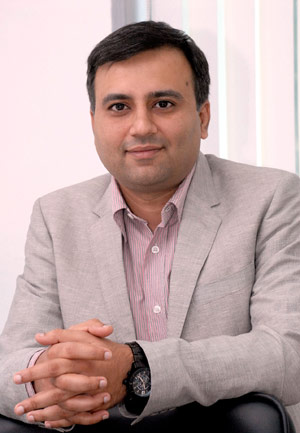
    The agency must be seen as a partner in achieving the company’s ROIs which may not necessarily be only in figures. Our role should not be restricted to that of being an advisory but should be seen as a stakeholder whose interest is in the growth of its client’s company.

    #2 Size does not matter; it’s the solution offered that matters

    An agency should not be seen as an ATL or BTL or any such term that is the stereotypical description. What matters is understanding the need of the client and offering the best solution to address his needs.

    #3 Show results on his brand

    It’s all talk unless you show results on the brand that you are working on for the client. One can start a relation like getting a business on the basis of your credentials but in the long term it’s the result that matters.

    #4 Make the client part of the process of the campaign

    While there is no denying that the client wants the aha moment or the magic factor from its agency but it’s also a fact that for greater success one needs to make client a part of the entire logical process of its communication. If the client is part of the process it will ensure that one is not still discussing briefs while making a presentation. Also this will ensure that the client is well aware of the building of the campaign and there is a common ground of discussion. Also reduces the chances of your ideas being rejected at the final stage when the client has been in the dark during the entire process and ultimately dislikes the communication presented.

    #5 Take him to Cannes!

    Make him part of a creative workshop that will help him in understanding the creative process and appreciate the nuances of what goes behind making an ad.

    #6 Show him that you eat, sleep and breathe his brand

    Any news on his brand or his category – just scan it and send it to him so that he appreciates your dedication to his brand.

    #7 Discounts are no deal

    This is a very common practice to make inroads into a client and his other brands. Give him a discount; reduce the retainer fee so that the business stays with your agency. This actually is a disservice to the industry as it reduces us to being mere traders and loses respect in the eyes of a client.

    #8 Jee Hazoori

    Agreeing to whatever the client says without applying any intellect. This clearly shows that you are more interested in keeping the business in your kitty and not in the growth of the brand.


    Manish Bhatt is Founder Director, Scarecrow Communications Ltd

  • The anchor: Shailendra Katyal on 5 ways to never get your media plan wrong

    #1 Adherence and application of past learning in developing an effective plan

    To get your future campaigns right, one has to learn from past campaigns. Your past experience to a large extent encapsulates elements that worked, helped the company achieve growth and let the brand establish its prominence over the competition. So, think about the future but don’t forget the past, because there may be valuable insights you can draw from previous successes and failures.


    #2 Consumer-centric rather than media-centric planning

    There is a tendency to ride with the popular and that is true in life too. Word of caution here, the flavour of the season just might not be meant for you. Even while drawing up the media plan, one has to understand the target group and the objective of the campaign. A media vehicle could be popular but may not address the need of your company, and brand and you will just end up wasting your money. Hence, target right with the specific tool.


    #3 Differentiate between short-term vs long-term campaign objectives

    There has to be a clear vision on the short-term and long-term objectives from a campaign. The short-term objective could vary from driving a festive promotion, to increasing footfalls at the shopfront. Long-term objectives could be to build brand awareness, connect with the TG, create customer loyalty and have a competitive edge. The long-term objectives cannot be clubbed with the short-term ones, which leads to losing focus and frustration at not achieving goals in a short span of time which was not possible at all in the first place.


    #4 Frequent monitoring of the plan and course correction

    The strategy should never be to chart a plan and then just adhere to it. This discounts the dynamic nature of the market. Constant tracking ensures that you can accommodate market changes, for example competition activity, media events affecting mid-level deliveries, etc. Periodic tweaking ensures that you are on track and gives serious thought to the brand map that one has created.

    #5 Make digital an integral part of the marketing plan. Only if digital is an integral part of your marketing plan, will it feature in your media plan

    The irony is that digital media is an after-thought and not a part of the media plan for many companies. Unless serious thought is given to digital, this medium, even though seen as a potent vehicle to reach its target group, will just be all talk and not yield anything tangible. To see results, adopt digital in its entirety and make it part of the media plan as one does for any other vehicle be it television, print or the other so-called conventional mediums.


    Shailendra Katyal is Director-Marketing, Lenovo India