Author: mxm_india

  • HT focuses campus appeal on youth

    By Akash Raha

    Hindustan Times has been constantly building into the youth market with several initiatives and campaigns for the young. HT draws a yearlong plan to activate all these events. MxM India spoke to Mr Diptakirti Chaudhuri, AVP – Marketing, Hindustan Times to learn more about this stress.

    The initiative follows the trajectory of a youth just out of school and entering the college. HT follows his/her campus journey all year round. It begins with Campus Calling where it tells the youth about the various opportunities to get into educational institutions and imparts counselling. Thereafter there are other initiatives like Fresh on Campus, Mission MBA, Youth Nexus, Study Abroad, Career Quotient and College Fests. Currently, Mission MBA is on, on full swing since the CAT exams are not too far away. In the coming months, there will be workshops and group discussions on how to crack the CAT. Also, Freshen Campus, which includes organising freshers’ parties across campuses, is currently on.


    Offerings for the young

    HT carries the more serious campus related issues in HT Education and the fun events in campus on HT City. Also, there is HT Edge a campus supplement especially designed for the youth. It is a 12-page newspaper which was launched a year back especially for especially for the youth. It is priced at Re 1 and is distributed across colleges and homes.

    Speaking about campuses Mr Chaudhuri said, “Campus is very important to us and we lay special thrust on doing well there as these are the people who write the future of our nation. We have observed that in the campus people don’t find the regular newspaper useful enough or cool enough. They are tired of reading about politics and corruption. Hence, we have revamped our content to give them exactly what they want to read.”

    He went on to say. “These days, our educational supplements include a lot of non-normative career options, such as those for RJs, VJs, chefs etc. We have done studies and surveys to get to know that the youth of today are moving away from the conventional professions of being a doctor, engineer, CA etc. We try to bridge such a gap.”

    Apart from the offering for college going students, HT also has HT Next for school going students. The newspaper is distributed to around 1,400 schools in Delhi region.

    When asked how they were leveraging their initiatives and campaigns on campuses further, Mr Chaudhuri said that online was their biggest medium to take the cause of the campus forward. The Facebook page (www.facebook.com/campuscalling) has over one lakh members and sees a lot of interaction amongst peers, where the monitoring (according to HT) is minimal.

    The initiative to help youth and students is a pan-India activity, with concepts and ideas developed in-house. Considering that India is only getting younger as a substantial part of the population is below the age of 25, the initiative is certainly going to reap rich dividends for HT for a sustained period of time.

  • Sushanto Biswas to lead Ford team at Mindshare

    By A Correspondent

    Mindshare, the flagship media agency of GroupM has recently appointed Mr Sushanto Biswas as Partner – Client Leadership. Based out of Delhi, Mr Biswas will be heading the Ford team at Mindshare India.

    Joining Mindshare from MPG, Mr Biswas has 13 years of rich experience in the media industry working with some of the top agencies. During this time, he has worked across a gamut of clients including HP, British Airways, Maruti, LVMH, Videocon, MTS and Reckitt Benkiser. He has also worked on the client side at LG and with Universal McCann on Gillette, Goodyear, Panasonic, MasterCard, GM and Microsoft.

    Commenting on his appointment, Mr Biswas said, “It is very exciting and at the same time very challenging to be part of the fastest growing agency in India. Auto as a category has always been a passion and I have had experience of the category, having worked on General Motors and Maruti previously. Ford has ambitious plans for the country over the next few years and I see this as a great challenge to craft media solutions in a hyper-competitive market place.”

    Welcoming Mr Biswas, Mr R Gowthaman, Leader, Mindshare South Asia, said, “Sushanto’s wealth of client and business experience makes him a vital asset to the Mindshare team. His in-depth understanding of behaviour and trends in the media industry will add incredible value to our clients.”

  • Channels show heart for Saffolalife

    By Shubhangi Mehta

    This World Heart Day, Saffolalife, an initiative from Saffola, is bringing together the largest media houses to further the cause of preventive heart care in India.  For the first time in the history of Indian television, Saffola has united the favourite stars of competitors STAR Plus, Colors & Zee TV in a brand new TVC that urges everyone to find your heart’s age through the Saffolalife “Heart Age Finder” Tool and celebrate their heart’s birthday.

    In addition, with another pioneering initiative, Saffolalife and Times of India are gifting readers in Mumbai, Delhi, Bangalore a free copy of The Times of India as a gift for their heart. This special gift has a delightful and novel way of actually experiencing a birthday celebration and watching print come wonderfully alive on one’s mobile phone.

    With the launch of the new TVC, Saffolalife is taking your heart’s birthday celebrations to the silver screen. Bringing together our favorite Pratigya & Krishna, Priyanka & Shaili Bhabhi, Anandi & Simar and many more, the TVC raises awareness about the fact that even though we celebrate the birthday of our favorite stars, we often forget the one who is the most important: one’s own heart. These stars from the rival channels Star Plus, Colors and Zee TV have united with Saffolalife on a common platform for a common concern: to highlight the importance of preventive heart care in a light and heart-warming manner.

    Commenting on the TVCs, Mr Abhinav Tripathi, Senior Creative Director, McCann Erickson Mumbai, said, “Everybody loves a surprise. So when it comes to your heart’s birthday, what better way to wish it? Which is why on World Heart Day we decided to gift it a Times Of India. Absolutely free, loaded with wonderful presents, compliments of TOI and Saffolalife.  From the first page on, every page will hold a special surprise, including an ad that literally comes to life in front of your eyes. And the rest of the gifts, well, why don’t we let your heart decide”

    Sushma Jhaveri, COO, Madison Media Infinity, said, “The key to any Impactful innovation is extending the creative idea seamlessly in media.  Saffolalife’s World Heart Day partnership with leading TV channels and The Times of India, succeed in doing this effortlessly by breaking through clutter to increase noticeability and enhancing Impact for the cause.”

    As India’s young population faces the highest risk of cardio-vascular diseases (CVDs), Saffolalife continues to work on its mission to bring down the incidence of CVDs across India. This World Heart Day, these two path-breaking initiatives by Saffolalife have united the media fraternity on the serious cause of heart health. With the aim to raise tremendous awareness on the importance of preventive heart care, Saffolalife is conveying a serious message in a manner that people will embrace and engage with.

  • Kamal Oberoi steps down as M&C Saatchi CMD

    M&C Saatchi, the Indian arm of the UK-based global advertising agency, has announced that its India Chairman & Managing Director Mr Kamal Oberoi is leaving to pursue other professional and academic interests. Mr Oberoi founded M&C Saatchi’s India operations in October 2005. Since then, the agency grew to become one of the top 20 best advertising agencies in the country. He leaves behind a team of highly seasoned professionals capable of taking the company forward.

    On his exit, Mr Oberoi said “It has been great challenging and rewarding experience. I am grateful for support from all colleagues and for clients for reposing their faith in us. The company is poised for the next stage of growth.”

    Mr Chris Jaques, CEO, M&C Saatchi Asia said, “Kamal Oberoi is a legend in the industry, and rightly so. He has been an amazing leader of M&C Saatchi since the day he launched our company in India in 2005. Thanks to Kamal, M&C Saatchi is privileged to have a blue-chip client list and a first-class management team – one that is ready to take the company into the next phase of its exciting development.”

    M&C Saatchi Communications has offices in 22 cities across 15 countries, including Mumbai and Delhi.

  • McCann wins Agency of the Year at Mirchi Kaan

    By Shubhangi Mehta

    The 8th Mirchi Kaan Awards  were announced yesterday in Mumbai. McCann Worldgroup continued its dominance this year as well, bagging the Agency of the Year award.

    Prasoon Joshi, Executive Chairman, McCann Worldgroup, said, “We are delighted to have won this award. McCann has outshined as a strong agency over the years in this award. This is also special for us as Radio is a difficult medium to write for, unlike television, hence the team is even happier to have won this.”

    Prashant Panday, CEO,Radio Mirchi said, “The Mirchi Kaan awards are a very emotional event for us. This is a night we spend with friends and recognize and reward their brilliance. For us, the benefit is when radio becomes as creative a medium as television or print. We are happy with the way the creative quality has improved over the past eight years. The pride for us is the quality of the jury, and we owe a debt of gratitude to them.”

    The 8th Mirchi Kaan Awards received about 250 entries across 16 categories. In addition there were special awards for the best writer, best voice and the crystal award for most outstanding radio commercial of the year.

    The jury this year consisted of Agnello Dias, chairman and co-founder, TapRoot, Deepa Krishnan, president, creative, Lowe Lintas, Prathap Suthan, chief creative officer, Iyogi, Rekha Nigam, managing director, Vihaan Communications, Sunil Thoppil, vice-president, McCann Erickson, Ashish Khazanchi, national creative director, Publicis ambience, Josy Paul, chairman and chief creative officer, BBDO India, Amit Akali, senior vice-president and national creative director, Grey, Ramanuj Shastry, chief creative officer, Saatchi & Saatchi, Malvika Mehra, national creative director and senior vice-president, Grey, Prasoon Joshi, executive chairman and regional executive creative director, McCann Worldgroup, Meera Sharath Chandra, K S Chakravarthy, national creative director, Draftfcb Ulka and Manoj Shetty, senior creative director, Ogilvy India.

  • The Anchor: Satbir Singh on 7 reasons advtg is a serious business that allows much fun

    #1 Planning communication strategy requires serious thinking. Being entrusted with planning a communication strategy for a brand is no easy task and requires meticulous planning and perfect execution.
    #2 Creating campaigns requires seriously long hours and weekends in the office. Zeroing on the right idea and taking it to its final step takes time.

    #3 Executing ideas and shooting films amongst others requires travel sans any sightseeing. It might seem glamorous that one gets to travel to various exotic locations while shooting an ad, but the truth is that it’s all work and hardly any play.

    #4 On the other hand, working on different brands and different briefs on the same brands means no monotony.

    #5 It is a profession of very young people. The atmosphere is always exciting and never dull. The industry is full of youngsters who are brimming with fresh ideas and it’s always a learning experience to work with young people who often open up a new line of thinking.

    #6 For those who find it a draw, you could be working with top cricketers and Bollywood celebrities. Now that could be a perk of working with an advertising industry.

    #7 Seeing work that you’ve created on TV and around you is a massive pleasure. It is a deeply satisfying experience to see the idea that one has been working on finally taking shape and then reaching fruition.


    Satbir Singh is Managing Partner and Chief Creative Officer, EuroRSCG India

  • Proximity is digital creative agency for Nissan

    By A Correspondent

    Proximity will handle all digital initiatives including social media for Nissan X-Trail, Nissan Teana, Nissan370Z and the Nissan Brand initiatives including the Student Brand Manager program.

    Proximity India is the youngest agency of Proximity Worldwide, and is globally aligned to BBDO Worldwide. Proximity India offers talented communications experts with skills across the full range of relationship, digital and direct marketing services. The agency is focused on providing solutions and initiatives that are designed to change individual consumer behavior by creating “acts not ads”.

    Commenting on the win, Mr Ajai Jhala, CEO, BBDO / Proximity said, “Adding Nissan to our roster is a real privilege. The critical role of digital in this space will give us an opportunity to create some really impactful interactive ideas.”

    Mr Ranjeev Vij, VP & Head, Proximity India added, “Nissan is a fantastic global brand and in India they have ambitious plans. We are really excited that we can partner Nissan in challenging the market leaders and be a navigator in their journey to meet their ambitious business goals.”

    Proximity India has offices in Mumbai and Delhi and has worked on campaigns like Aviva’s “Great Wall of Education” initiative, which helped collect over one million books for the underprivileged children.

    Earlier this month, Proximity India won the digital mandate for the VISA brand in India. They also manage the digital duties for Nicorette.

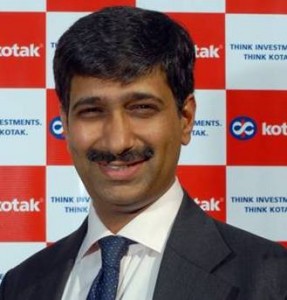
  • ‘Taking bets that pay off’

    Mr Karthi Marshan heads marketing for the Kotak Mahindra Group, India’s fourth largest private sector bank and BFSI conglomerate. In his role at Kotak, Mr Marshan oversees marketing efforts across all the verticals that Kotak is present in, including insurance, banking, brokerage, asset management et al.

    An alumnus of IIM Bangalore (class of 92), Mr Marshan started his professional career as a copywriter, then moved on to account management at Grey Worldwide, producing television content for Sony India, heading marketing at IDBI Bank, and founding Sharekhan, one of India’s leading retail brokerage firms, along the way. Prior to joining Kotak, Mr Marshan was based in Sydney, where he helped turn around an ailing DTH business that catered to the Indian diaspora in the ANZ region.

    In a candid one-to-one with Tuhina Anand, he speaks about Kotak’s age, both physical and mental, and why Facebook is better than the company website.


    What would you describe as the Kotak Mahindra edge among the other players in the banking sector?

    The first edge we can talk about is the fact that though our firm’s name is that of a bank, we are actually a unique, fully integrated financial services provider, which is able to serve all your financial needs under one roof.

    Beyond that, we have long had a sterling reputation among consumer segments with respect to our expertise in the various financial spaces we operate in.

    Finally, our relative youthfulness is, I believe, our most powerful differentiator. The fact is that our firm and its myriad offerings are all the progeny of the rapid pace of financial reform in this country over the last few decades. Thanks to this, we understand the emerging young post-liberalization India and are able to connect with, customize and serve it best.


    When it comes to banking advertising, relationship seems to have become the focal point of conversation for all banks and it becomes difficult to differentiate one brand from another. Agreed that relationship building is important in banking, but how does one succeed in creating a brand that’s not me too?

    You are absolutely right, the emphasis on relationships in BFSI communication has rendered the space quite commoditized and undifferentiated.

    While the insight is valid, that relationship management is at the heart of successful business in our category, I think a key fact which has been glossed over is that things like service and relationships are merely empty promises if used in advertising, since consumers don’t believe such claims without trying. If you see an ad for a new ketchup that promises something special, next time you can pick up a bottle and give it a chance. If a coffee shop promises great service, you can sample it and decide for the price of just a cup. Banks don’t have the luxury of letting you sample anything, making trial very difficult. And it is compounded by approaches that boast claims which are hard for consumers to digest without trying.

    As far as answering how one can succeed at creating a brand that’s not me too, I can only speculate. What we have been trying to do over the past couple of years is certainly an attempt in that direction, but only time will tell if our recipe worked.


    Kotak’s earlier campaign was It’s great to be 25; now the campaign is Money ka matlab. What prompted them and how do the campaigns tie with each other?

    The grt 2b 25 campaign was our response to what we saw as a disruptive positioning opportunity, rather than just a hoary anniversary celebration. It was our bet that the campaign would help us further enhance our credentials, create disproportionate growth in our recall scores and tell the story of our coming of age.

    The campaign did all that and then some. So when it was time to do another round, we sought to consolidate the good it had done, and build on it. So, for instance, we stayed with the strategic choice of allowing regular folks to speak their minds instead of doing brand propaganda, which had worked really well. Needless to say, we also wanted to ensure we kept the youthful flavor of the brand alive. Beyond that, with Money ka matlab, what we essentially are seeking to do is use our age and connect it with a distinctive insight we developed on the evolving role of money in our country.

    The bridges between the last and the current campaign are in the creative strategy, as also the fact that the current campaign also continues to celebrate our 25 years in the business.


    What is the aim of the campaign and how has it helped the bank?

    It is our belief that for categories like ours, as it is for categories like colas, the advertising is a part of the product. Hence a key aim of our campaigns is to make our brand one that people will prefer, at least from those segments that we are targeting. To this end, our research tells us that we need to constantly work on objective metrics like spontaneous and total recall, and soft measures like credibility, trust, et al. It’s too early to say if this campaign has helped move the needle or not, but I can say that the last campaign did certainly make a significant impact.


    How long will this campaign continue, and what do you expect going ahead?

    This campaign has just reached its most exciting part. We are in the last lap of the broadcast part, where we used TV, outdoor, radio and the internet quite aggressively to communicate the Money ka matlab platform. We have just now kicked off an engagement programme, where two motorcyclists are riding from Chandigarh to Bangalore, and asking people across India what money means to them. These interactions are being captured in video form and will be uploaded every day from along the route.

    At the end of the journey, I am hoping we will be able to produce a meaningful document, in video and other forms, which will provide rich perspective on what money means to the people of India today.


    As the campaign is active on the digital platform, it would mean you are looking at the young TG. How has the campaign fared with that TG?

    The bulk of our fans on Facebook are in the 18-34 age group. However, it is a misconception that our target audience is only youth. We are conveying the brand’s youthful stance, to ensure it resonates with people of all age groups with a youthful bent of mind. What I mean by that is that in mindset terms, we are targeting people who will be comfortable with mobile and net banking, net-based trading, as well as the use of social media etc.


    How much has been the spend on the Money ka matlab campaign? Would you say it looks like about Rs 100cr?

    I will tell you what I can say. We have taken some fairly radical media strategy calls on this campaign.

    First, we opted for very short length films, since we believe frequency is critical in this age of ADD (attention deficit disorder). Our average film length is 15secs.

    On TV itself, we took a bet that really paid off, where we eschewed the main general entertainment channels and focused on news, movies, infotainment etc.

    Next, we used outdoor as a primary medium, not a support medium. We spent as much or more on OOH as we did on TV. Our insight was that people in cities are spending more time on the road than they are in front of their TVs and its mostly idle time, waiting in traffic jams, providing us a receptive audience. Also, the format of the medium itself lends stature to the brand.

    Finally, we focused all our messaging to drive traffic not to our brand website, but to our Facebook page. This again is insight-based. Today, people want to hang out at the mall, not come to your branch. Hence, if we want to engage them, we have to go to the mall. Similarly, few people actively seek out and visit brand websites, but it seems almost everybody will soon be on Facebook. Hence the bet.


  • Tarun Tejpals’ Book Launch

    [singlepic id=6 w=200 h=180 ]

  • Tarun Tejpals’ Book Launch

    [singlepic id=6 w=200 h=180 ]

  • When Arnab’s panelists turned argumentative

    By Ranjona Banerji


    Today is the turn of newspapers, which saved the day. That is, it gave readers a sort of clue about what was going on in the government over the 2G note about the former finance ministry from the current one. Or at least, we have been led to understand that a serious damage control exercise is going on in the government and Pranab Mukherjee has sought to clarify that his note did not target P Chidambaram. It also seemed evident that Congress president Sonia Gandhi had stepped in to stop her ministers from getting into public spats.

    Television made much of the ruckus in the J&K Assembly over a possible clemency plea for Afzal Guru, sentenced to death over the 2001 attack on Parliament. The plea started with a tweet put out by J&K chief minister Omar Abdullah after the Tamil Nadu assembly asked for clemency for some of the people facing a death sentence for their part in the assassination of former prime minister Rajiv Gandhi. A recurring problem with TV is that it does put matters into perspective or indeed explain the pernicious nature of using parochial interests to put forward such clemency pleas. Therefore, the debate should have covered all three recent incidents – Sikhs asking for clemency for Devender Pal Singh Bhullar of the Khalistan Liberation Force for a bomb attack in ’83, Tamils asking for clemency for Murugan, Santhan and Perarivalan for their role in Gandhi’s death and Kashmiri politicians asking for similar clemency for fellow Kashmiri Afzal Guru. All these people were sentenced on charges of terrorism and either the same standards apply to all or our polity will be in serious trouble.

    However, Times Now could not conduct a proper debate on this mainly because the panellists were unruly and argumentative and all Arnab Goswami’s pleas went unheard. He should have just cut the sound and continued perhaps. Most newspapers meanwhile, chose not to give this incident too much importance which may well be the more intelligent way of dealing with it.

    The Calcutta High Court verdict in favour of the West Bengal government over the Tatas in the Singur land acquisition was given prominence by most newspapers, with The Telegraph. Calcutta and most business papers giving it the front page.

    **

    Even in the dumbing down of newspapers which we are so fond of, it was interesting to read an edit page piece on the neutrinos which travel faster light at the CERN lab in Geneva. Even if not all can understand what is going on, it is important to keep track of such events.

    One would have expected more analysis on the current face-off between the US and Pakistan over the ISI’s terror links and the allegations made by US Joint chief of staff admiral Mike Mullen, since the fall out has direct implications for India. Perhaps our top analysts are sharpening their knives.

    **

    A fascinating TV-print-social media back and forth is going on over the BBC’s interview with an investment trader, Alessio Rastani, over the current economic crisis. Rastani told the BBC that traders like him waited for such moments to make money and that the markets were run by Goldman Sachs and could not be controlled by government actions. The interview went viral on Facebook and Twitter. Newspapers and magazines claimed that Rastani was a hoax and one paper quoted him as saying he was an “attention seeker”. Rastani’s finances, as investigated by the British newspapers, seemed none too healthy. The BBC however stood by its decision to call Rastani as an expert. The general consensus seemed to be that whoever Rastani is and whatever his credentials, he seemed to have spoken some very bold and harsh truths!

  • Tring, tring! Maruti, Dabur & Co woo internal/external customers via mobiles

    By Nikhil Menon


    Between the Indian Premier League-3 and the FIFA World Cup, 2010 dished out a lot of high-octane excitement that was exceeded only by the marketing blitz surrounding these competitions.


    For Maruti Suzuki, getting a piece of the action was important, since it was launching a massmarket car (Eeco) and its new K-series engine around the same time as the IPL season. Also, the company wanted to be seen a young, tech savvy brand that the new generation of sports enthusiasts could identify with.


    Since competitor Hyundai was spending huge amounts as sponsor of both events, Maruti had to try something different. Instead of thinking megabucks or bigger promotions, India’s largest car-maker thought smaller – in pocket-size terms.


    “With the advent of the Internet on phones, young buyers have become keen users of digital media – so the mobile was an obvious place for us to be in,” says Maruti’s chief general manager, Mr Shashank Srivastava.


    Maruti jumped into the IPL fray with a cricket alerts service accompanied by a daily contest. The contest was the ‘hook’ used to reel subscribers into specially-designed ‘Maruti branded zones’ complete with verbal and visual cues related to the brand.


    During the FIFA Cup, Maruti ensured that its branding was visible across a portal , which gets a lot of traffic from Maruti’s core target of young, urban males. With 20 million impressions from seven million unique users, the mobile campaign generated significantly better returns for Maruti than all media formats. “We have doubled our digital media budget to Rs 15 crore this year,” says mr Srivastava. Last November, this campaign won an award from the Global Mobile Marketing Association.


    Maruti’s successful tryst with the mobile phone is part of a phenomenon that gurus have long been predicting – the rise and rise of the mobile device. Today a phone isn’t just personal; it is fast getting commercial. At last year’s Mobile World Congress in Barcelona, Google CEO Mr Eric Schmidt said in the context of business strategy, “The new rule is mobile first.”


    And it’s not just the Internet giant that thinks so. In India, the mobile revolution and rollout of 3G services have helped create a natural platform for engaging customers in transactional activity . However, the growth in mobile services is predicated on the growth of smartphones and most companies are still playing a balancing act across different generations of mobile technology . Apollo’s medical response service is one such model.


    As part of the group’s strategy to touch a billion lives, Apollo wanted to extend its healthcare services to people hailing from areas where the brand didn’t have a presence. Through group company HealthNet Global, Apollo tied up with operators Aircel and Idea earlier this year to provide SMS and voice services to their subscribers. While the SMS service pushed specific health tips to users’ phones, the voice call service was manned by a team of doctors who would collect the patient’s information and recommend medicines based on the symptoms described.


    Mr Rahul Thapan, global head of marketing and sales, Health-Net Global says close to half a million calls have already poured in so far and HealthNet Global is ready to take this service to the next level. It is now awaiting TRAI permission to roll out a 3G video consultancy initiative that allows people to chat with doctors on video-enabled smartphones and also upload relevant reports that can be viewed by the physician who can issue a printable prescription. “While we plan to charge Rs 60 per video consultancy for urban consumers, we realise that rural consumers may not have access to smartphones. The government needs to enable this programme at the rural level,” says Mr Thapan.


    Companies are using mobiles to target internal stakeholders as well. This has created opportunities for handset makers and operators alike, especially within business mobility. India’s largest mobile services provider Airtel uses its MATE (Mobile Application Tool for Enterprise) platform to offer over 30 enterprise consumer applications that include information sharing, tools for field staff, mobile learning and other tools.


    Mr Najib Khan, chief marketing officer-B 2B, Bharti Airtel says that as workforces go mobile, the cell phone will play a key role in keeping information and processes flowing smoothly. “The mobile workforce in India will grow to 205 million by 2015, and 65% of these individuals will have smartphones. Employers need to have a strategy in place to deal with this upcoming trend,” he says.


    For the last three months, Dabur has been using the mobile platform to efficiently measure sales, inventory and customer response in its rural markets. Mr George Angelo, executive director-sales , says, “We recently expanded its sales force in the rural market in a big way. But data archiving was a big challenge, and too much paper was being generated. The mobile app (application ) has changed all that.”


    The app is being used by approximately 500 sales staff across an initial batch of 200 districts in 8 states. Loaded onto the sales person’s mobile phone, it keeps track of inventory at the level of the village sub-stockist . As the salesperson visits different markets , he punches in sales of products from each village and issues replenishment orders from the district super-stockist . The data is also relayed to Dabur’s head office, and displayed on a giant electronic map. “This way, we know where the sales person has been, orders generated, inventory remaining, values of sales and buying activity from individual villages,” Mr Angelo says. Parallel to the rural app, Dabur also launched another app used by merchandisers to track whether retail stores are meeting their commitments vis-?-vis Dabur products.


    The B2B applications of mobile phones are catching on fast. Three years ago, Mr Siddharth Agarwal, founder and CEO, Mobicule Technologies perceived an opportunity in mobile workforce solutions for distribution-oriented businesses. Ironically, his first client was Mumbai’s largest Nokia distributor. “We installed an application on their phones which enabled them to check the retailer’s credit, punch orders into the system and receive approval for the same instantly,” Mr Agarwal says. It’s taken a while for other clients to see the point, but Agarwal says people are today far more comfortable with such ‘futuristic’ solutions.


    A case in point is Shoppers Stop, which uses Mobicule’s warehouse software product residing on high-end PDA devices, to scan incoming merchandise and verify it with the retailer’s enterprise software – something that was earlier done manually, with a much lower degree of efficiency. Mobicule claims that since post the implementation, there has been a 17% lowering of stock-outs and near-100 % accuracy in store dispatches.


    On the consumer front, companies have seized the opportunity to build services for the urban user whose increasing dependence on cell phones for entertainment and social networking has thrown up many possibilities. For DTH satellite television company Tata Sky, linking its services to users’ mobile phones was a natural move, since research indicates heightened levels of phone usage among youngsters during TV watching hours. “The majority of our users have smartphones and are heavily influenced by their peers on social networking sites,” says Mr Vikram Mehra, chief marketing officer, Tata Sky. The company recently launched a single, integrated iPhone app that subscribers can use to find out more about current and future shows, order new ones and pay online, record shows remotely , see what shows their friends are watching, and share their thoughts on Facebook or Twitter.


    While these services were already being offered individually via SMS, the integrated app brought them together. Mr Mehra says that within days of the launch, the app has been downloaded by over 100,000 users, and now the company plans to introduce something similar on the Android platform as well.


    HDFC, too, decided to take advantage of rising Internet usage on mobile phones, and moved its full-fledged NetBanking functionalities to a mobile GPRS site – claiming to be the first bank to do so. Mr Sanjeev Patel, EVP & Head, Direct Banking Channels , HDFC Bank says, “NetBanking has become popular in recent years, and since 3G-enabled cell phones offer much faster transactions, we thought it made sense to combine the two,” he says. While refusing to share usage details, Mr Patel says the response has been better than imagined. “We’ve already achieved 70% of our annual target for the medium,” he says.


    While most mobile initiatives in India are beginning, elsewhere companies have already latched on to the medium. The Financial Times reported that an iPad app used by Pepsi ‘s vending machine technicians saved it $7 million in 2010.


    Mr Amit Lall, head-mobile marketing, Mobile2Win says one of the factors instrumental in mobile marketing spends growing at a healthy clip, is that it’s possible to target phone users on many fronts -handset , number, operator, circle, usage patterns, etc. He states an example, “We created a tax calculator application for Bajaj Allianz, for people looking to save tax on their income . Their usage details were saved and the company called them back later to get feedback on the app and potentially engage them further.” While this is great for marketers, some worry about privacy being compromised. But Mr Lall says that the choice to interact with a brand is completely in the user’s hands.


    Mr Kevin Conway, global director of consumer brands at Missouri , US-based Savvis Inc says: ” The solutions that will prevail in mobile marketing are the ones that will put the power in the hands of the consumer to opt in or out of the services.”


    Security and simplicity are issues that will become increasingly important going forward. When Cleartrip launched its mobile WAP site in July 2010, the focus was to throw away any feature that would be seen as unnecessary, without compromising on security of transactions. “We went out of our way to ensure that the site was oversimplified and equipped for any user and handset,” says Mr Hrush Bhatt, Cleartrip’s founder and director (product strategy). Today, the mobile site contributes 8%- 10% of Cleartrip’s bookings.


    So what’s next for the not-so-humble mobile phone? According to EMC Corporation and Zinnov Management Consulting, the total cloud market in India, currently at US$ 400 million is expected to grow more than 10 times over the next five years and reach a market value of $4.5 billion by 2015. Mr V Ramnath, Director Sales, Nokia India says, “As enterprises migrate to the cloud – they are not only looking at ROI and scalability but they are also looking at an increasingly mobile workforce – workers who will be able to do business from anywhere in the world. Smartphones , therefore, will emerge as the biggest accessibility tool to access enterprise cloud data for the workforce at large.”


    Source:The Economic Times

    Copyright © 2011, Bennett, Coleman & Co. Ltd. All Rights Reserved