Author: mxm_india

  • The Anchor: Ramanujam Sridhar on 7 ways brands can stay relevant to their consumers

    #1 Be a student of brand history
    Why is that some brands struggled to remain relevant to their consumers. Will studying their life cycle and history teach us something to avoid? Remember, wise people learn from the mistakes of others and don’t make new ones.

    #2 Study the consumer
    Preferences are changing and consumers are changing even more dramatically and brands sometimes get left by the wayside. Rasna which was the leading soft drink concentrate in the country lost share of mind and market share as the consumer moved to bottled drinks in the nineties from the concentrate that they were mixing at home. Soft drinks became fashionable and the trend took over the consumer.

    #3 Is your brand evolving with the times?
    Immortal brands like Coke, Pepsi and Nike have evolved with the times and newer generations of customers continue to find them cool. Others have become dated however. Be objective in evaluating your brand.

    #4 How innovative is your brand?
    Brands like Titan continue to be relevant to their consumer as they constantly keep the excitement flowing with new product launches. Titan edge the slimmest watch in the universe at that time created a ripple in the market and gave consumers like me a reason to upgrade their watches. The market leader has to expand the category and Titan has been doing this for years. Ask yourself an honest question. When was the last time you had an innovation in the brand?

    #5 Is your advertising the best in the category?
    A simple benchmark is to strive to ensure that your brand’s advertising is the best in its category. Not in terms of awards but in terms of consumer preference, liking and interest. Don’t look for industry approval, look for consumer endorsement.

    #6 Is your consumer getting older?
    Constantly track the sales data. Is your consumer getting older? Are younger people looking at hepper brands? If I were McDowells’ No. 1 whisky, I would be worried that younger tipplers are drinking more of Royal Stag. It is important to be relevant to youth especially in a country of young people like ours.

    #7 Relevant brands engage their customers
    Too often companies forget that the real magic is in the customer engagement not only high decibel advertising. Do consumers talk about their experience with your brand or are they complaining bitterly about something that your company did in some blog. Watch what is happening around you. You just might be surprised.

    Ramanujam Sridhar is CEO, brand-comm.

  • Happy marriage for Samsonite


    By Tuhina Anand

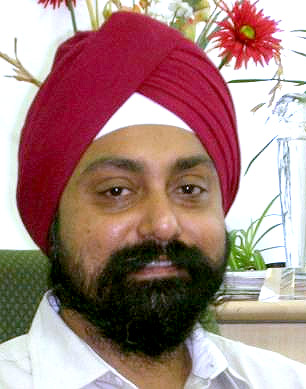
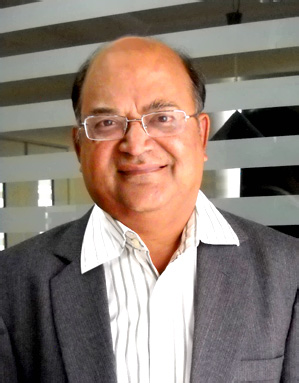
    “The client-agency relationship is like a marriage where one has to work on it to make it successful. It won’t last long if the client and the agency are on two sides of the table. The key is to have trust and transperancy in this relationship to make it work,” says Dr Ramesh Tainwala, President of Samsonite, Asia-Pacific and Middle East.


    “Also, one must be ready to part ways if the relationship doesn’t work,” he adds. Wise words from Dr Tainwala, who has just received the Advertiser of the Year at Spikes Asia 2011 for Samsonite, the global travel luggage brand. The award honours a brand that has set itself apart through the quality of its creative campaigns while also encouraging and nurturing innovative marketing techniques produced by their agencies across the Asia Pacific region.


    In fact, Samsonite had won awards at Cannes and even in other categories at Spikes Asia, but this award is special as it recognizes the advertiser, going beyond the creative. Talking of advertising in this category which in India is often led by brand ambassadors, Tainwala said, “I think it’s a shortcut method to ride on a brand ambassador’s popularity especially in India where most celebrities too don’t follow any discretion when signing on a brand, and are hence ready to endorse anything from banians to paan masala, creating confusion in a consumer’s mind. We have used Richard Branson a few years ago but the difference is that internationally celebrities are choosy when lending their name to a brand, thus succeeding in creating a brand connect.”


    In India, the company has earmarked US$19.2 million (close to Rs 100 crore) on its marketing budget for the current financial year. The company, which works with JWT, spends almost 10 per cent of its revenue on marketing and advertising every year. In India, its campaign is mostly TV led and outdoors including airports and railway stations and some print in smaller towns.


    Globally the company follows the policy of fixed remuneration for a year linked with incentives for its agency. They also follow a core creative idea which then is localized as per the need of market it is addressing.


    Samsonite has two of its brands, Samsonite and American Tourister, in India, and looks at this market as being among its key ones. It has seen a growth of over 52 percent over the last year, which definitely speaks volumes about the company being satisfied with their performance in the country considering that the market in this category has been growing at the rate of 15 percent.


    Talking about their plans in India, Dr Tainwala said, “We are currently in about 60 cities in India and mostly in Tier I and II towns but our focus is to increase this number to 300 and we will also look at Tier III and upcoming Tier IV cities too. This expansion will be a step-by-step process in the next three years’ time.” Samsonite also is looking at opening close to 100 retail doors every year in both existing and new cities to expand their footprint.

    Photograph: Facebook.com/SamsoniteIndia

  • Slowdown will get worse next year: Pranesh Mishra

    Mr Pranesh Misra, Chairman and Managing Director, Brandscapes Worldwide, launched the global data analytics and insight consulting firm after a career spanning 30 years in marketing, marketing research and advertising.

    With a team of domain experts who mine marketing data for insights, Brandscapes consults in the brand and marketing strategy spaces for consumer goods, retail and financial services sectors.

    Strategy, says Mr Misra, has long been a fascination with him. Having started his career in research with a job in Lintas and then Clarion, he moved to advertising and started Pathfinder, the research division of Lintas. When I look back I realize that it was the part of my career where I was far more intellectually engaged and therefore it was much more enjoyable for me as a person, he says.Strategy was always a passion for me.

    Read on for excerpts from an interview with Ritu Midha


    Is the grass greener on this side of the fence?

    The grass is always greener on the other side of the fence  depending on where you are. But this I can say it has been an exciting experience, because I am doing different things. I am learning new things for instance quantitative analysis, data at a level much higher than one was exposed to; we are also interacting with brands and clients globally.

    Also, starting something from scratch to an entity in itself is a fascinating experience we are now 85 people strong, and have about 25 regular clients. Considering that we started at the same time as the recession began, the fact that we are standing today is a good thing.

    Broadly, what are the work areas of Brandscapes?

    Brandscapes works in broad strategic areas. A large area of interest for us is Research Analytics we look at research data that clients already have, and get more value out of it, through further analysis and cross-fertilization. We also do Marketing Science Application, which is to predict the future based on past data, and Future Forecasting through sophisticated modelling.

    Marketing Dashboards is another service we are proud of. We realized that marketing data is all over the place and it is very difficult for anyone to take a holistic view. There was an opportunity to take sales data, market share data, and brand image data and put it all together on one screen It provides a holistic view, and has given us good traction.

    We also have a brand strategy service known as Strategy Maps.

    Have organizations become more conscious about research?

    If I look back over the last ten years, I can say there is a lot more orientation towards listening to the consumer. Has it has reached the global level? Obviously not. There is not enough awareness about qualitative research. For example, uninitiated marketers today ask, So how many people said this? In qualitative research you can’t answer that kind of question it is about what went behind.

    Having said that, the focus is increasing on listening in on the consumer rather than deciding everything on gut feel. There is definitely expansion of research beyond the larger companies and multinationals.

    I would also stress that research business, per se, needs to be far more accountable. I have noticed over the last few years that research business is far more engaged in downloading the data, than in helping the client take decisions based on the data. Which is why we started with data analytics.

    Moving to a specific area of interest, what are the essentials of brand building beyond logo and packaging?

    To my mind the brand should have seven to eight different dimensions that should be clear to everyone involved in creation of the brand. One, there should be clarity as to who is your competition. Very often you enquire with clients about their competition, and the answer is everybody in the category, or in some cases it is unclear. If I am selling a brand of soap, every soap is my competition. Now that cannot give you a very sharp strategy. Second, clarity on the target audience is very important very often it is not a decision that is very well thought through. It tends to vary from year to year. As a result, the brand architecture remains confused.

    The core insight about the consumer that we leverage into a brand is usually the most difficult one to decide. Very often there is no effort to define it. If you look at Google, the search engine, they said that people don’t want clutter they want information in a clutter-free way. So they want for a strategy where they didn’t want a landing page so it is insight that drove the strategy. Very often it is the most difficult thing to know, but it is a must for the structuring of the brand.

    Then there are elements that people tend to look at: Functional benefits, emotional benefits, and the brand personality. When the client comes up with the feature, the research agency has to check the benefit to the consumer from that feature. Often, that leap is not taken. You could say it is a germicidal soap but that is not enough, you need to look at functional and emotional benefit. For instance in Lifebuoy, the functional benefit is that your family could be free of germs. If your kid gets a cut, and you are using Lifebuoy, you can be free of concern. If you wash your hands with Lifebuoy before eating then you are germ-free. The emotional benefit was translated into Koi dar nahi (No fear). You feel in control because you don’t have the fear of germs coming in. This needs to be documented and discussed.

    Then, of course, comes the DNA and the key differentiator of a brand. These are some of the elements that need to be structured to create a holistic brand.

    Most brands do not succeed because they do not do proper brand planning.

    As per a recent Forbes study, globally customer retention is far more important than acquiring new customers.

    In India, if you look at segments like telecom the last seven-eight years has been about acquisition. If you talk to players about customer retention, you would not get as much attention because the whole game was about customer acquisition. That holds true of other growth sectors too. It is largely because of the country’s development stage and product lifecycle.

    But globally, markets have matured and retention becomes more important. You need to retain the customer for a longer time to get maximum value out of the customer and there is very little to acquire anyway.

    Coming to India, due to the exponential GDP growth in the last ten years, the focus will move to retention, so I see that becoming a need going forward.

    Coming to the obvious question, is the slowdown a reality or is India not that impacted? And is it impacting branding exercises?

    With GDP level at 7.7 percent, India is still seeing some growth. You cannot compare it with the USA and UK where they are either seeing negative growth or no growth. More than slowdown in growth, the biggest challenge is slowdown in sentiment. The optimism that we saw last year is now turning to a little less of optimism bordering on pessimism. And that typically affects the consumer spending pattern. Consumer sentiment has a long-term impact on growth. That is what we have to watch out for.

    It is the reasons inside India itself, rather than global impact, that is generating despondency in people. When they become so concerned they become conservative in their spends they will postpone buying of high-ticket items like houses, cars, etc and that impacts demand.

    Do you see the festive season bringing good news for marketers?

    I think everyone is hoping for that to happen. But marketers would have to come up with really good offers and discounts to start again. This year there is a dampened demand in durables and cars sectors  it is already visible  and it is not going up. So there should be many more cut-throat promotion offers during the festive season this year, as compared to the previous year.

    You are expecting the slowdown to continue to next year

    Unless something very good happens in the economy, the negative sentiment will pull down the demand. As interest rates keep going up, investments will start suffering. Prices are rising. I am not really optimistic about next year

    What about FMCGs, will they sail through?

    I don’t think so if you are talking of mass FMCGS. They did not see a lot of slowdown in top line growth in 2008. I think they are suffering largely due to inflation, because they have to pass on the price rise to the customer. So they might be getting larger value realization today, but automatically consumers will cut back  they will go from large to smaller sizes, they will use things less frequently. Volume growth will be impacted.

    A few companies may sail through because of the audiences they are catering to. If you are in the upper middle and upper segments, your chances of seeing a downturn are less. Companies like LOreal would be able to go through it much better because there is that rich segment, which is not impacted by the price rise because their disposable income is so high.


  • Radio Mantra celebrates birthday of Lata Mangeshkar

    By A Correspondent

    Radio Mantra will AIR an exclusive treat for Lata Mangeshkar fans that includes trivia about their favorite singer along with her all time super hits throughout the day. Action Replay will include her hit numbers from the ’80s and ’90s while Ticket To Bollywood will feature peppy numbers she has sung after the ’90s. RJ Rehan will talk about the “Cuckoo of Indian Cinema” in the late evening show Love Aaj Kal, spiced with her handpicked evergreen songs. Listeners can also call in and request for their favourite songs by her.

    In a career spanning over six and a half decades, Lata Mangeshkar has been featured in Guinness World Records between 1974 to 1991 for having made  most number of recordings in the world.  She has recorded songs for over a thousand Hindi movies and has sung songs in about36 regional Indian languages and foreign languages. She has won many awards and honours including: Padma Bhushan, Padma Vibhushan, Bharat Ratna, Dadasaheb Phalke and National Film Awards to name a few.

    Mr Kanwar Sameer, National Programming Head, Radio Mantra said, “We have planed an all-day special for the occasion, where apart from her classics, listeners will enjoy the best of trivia about Lataji, a living encyclopedia of singing in herself.”

    Radio Mantra 91.9 FM is an initiative by the Dainik Jagran group with a pan-India presence spanning eight cities namely Agra, Bareilly, Gorakhpur, Varanasi, Hisar, Karnal, Jalandhar and Ranchi. With a listenership base of 5.37 million, Radio Mantra is one of the top five radio stations in India.

  • Media as an Ingredient

    By Premjeet Sodhi
    There was a time when the usage of media was optional. Media was an add-on which if a brand so desired or if needed would use to spur sales.
    When, I look at this from the cooking perspective (since, I love cooking a lot) I would say that media was used just as a garnish. Yes, it did make the dish seem more desirable and added some flavours but one could certainly do without it.
    Media was never appreciated. When the sales were healthy – there was no need for media and when the brand was in dire straits and there was strain on profitability – media was the first to be curtailed.
    But, those were the times of the seller; the consumer then was a deprived citizen and had no say or choice in what was being served to him. The seller prepared the product and used media just to ‘inform’ the consumer either of its existence, its merits or its price. Media was never embedded in the value creation that the product or service promised; it was so far only communicating the value. Hence, the use of media was need based.
    The world has changed. Consumer is King.
    It is not about the seller asking the consumer about what they want and then manufacturing the product or service accordingly. The matters have progressed far beyond that. The sellers are no longer in control. They have morphed from brand owners to brand custodians to just being brand moderators. Despite all the theory that existed – the brand in the yester years was still in the mind of the brand owner (with due feedback and research of the consumer). But, now the consumer is in control of the brand.
    Here, when I say consumer  it is again different from the consumer of yester years. Earlier you would imagine the consumer as an individual (or a number of individuals – not connected to one another) but today the the consumer is a group – a group of connected and communicating people. Earlier, the consumer was a multitude of individuals but now is a Collective.
    More and more products and services are being designed so that their consumption also happens or heightens when consumed as a Collective. And, these are not being designed by just the companies. The companies are a participant in this collective along with the consumers. Media runs as blood in the veins of this collective binding the consumers to each other and hence media is intrinsic to the construction of the brand.
    Media is no longer an add-on; no longer a garnish; no longer need-based.
    Media is critical and essential to the construction of the brand and the consumption of the brand.
    Media has become an ingredient for the brand.
    Brands that still treat media as an add-on have a lot of thinking to do. And, the day brands change this perspective – I am sure they will start looking differently at how they select and integrate media into their value promise. This will change the value they attribute to media in their P&L and will also impact the remuneration they pay for those who advise them on media.
    Media is no longer a garnish, but is a critical ingredient in the brand.
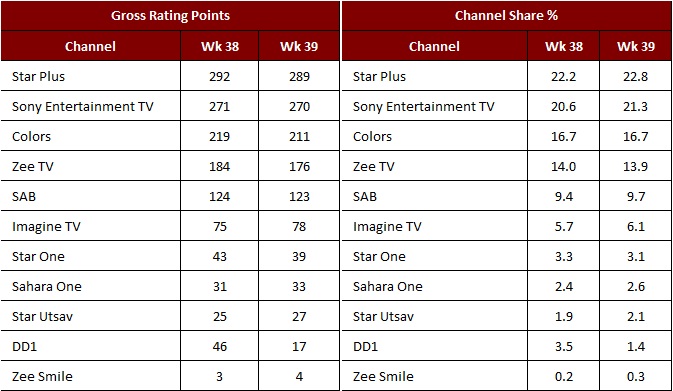
  • GRP Channel shares of HGECs- Wk 39 2011

    Source: TAM Peoplemeter System
    TG: CS 4+yrs
    Market: Hindi Speaking Market
    Period: Wk 38: Sep 11 to 17, 2011
    Period: Wk 39: Sep 18 to 24, 2011

    About TAM Media Research

    TAM is a joint venture between Nielsen Company & Kantar Media Research. Besides measuring TV Viewership, TAM also monitors Advertising Expenditure of Television, Print & Radio through its division AdEx India. Since 2004, it extended its presence in the PR Measurement & Analysis space for Corporate/Marketing Clients by setting up a separate division Eikona PR Measurement.

    In 2007, the joint venture introduced RAM (Radio Audio Measurement) service to track Radio Listenership for the Indian Radio Broadcast Industry. In year 2009, TAM launched a division, called TAM Sports that specializes in monitoring Sports Sponsorship ROI.

    TAM Media Research’s objective is to fuel media insights that will drive the growth of the Indian Media Industry.

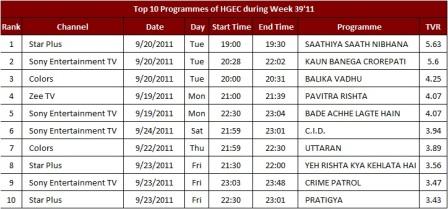
  • TAM data Top 10 programmes on HGEC – Wk 39’11

    Source: TAM Peoplemeter System
    TG: CS 4+yrs
    Market: Hindi Speaking Market
    Period: Wk 39: Sep 18 to 24, 2011


    About TAM Media Research
    TAM is a joint venture between Nielsen Company & Kantar Media Research. Besides measuring TV Viewership, TAM also monitors Advertising Expenditure of Television, Print & Radio through its division AdEx India. Since 2004, it extended its presence in the PR Measurement & Analysis space for Corporate/Marketing Clients by setting up a separate division Eikona PR Measurement.

    In 2007, the joint venture introduced RAM (Radio Audio Measurement) service to track Radio Listenership for the Indian Radio Broadcast Industry. In year 2009, TAM launched a division, called TAM Sports that specializes in monitoring Sports Sponsorship ROI.

    TAM Media Research’s objective is to fuel media insights that will drive the growth of the Indian Media Industry.

  • Newswatch: Covering the queer spectrum

    By Nitin Karani


    There’s little to be happy about the state of journalism today, but this piece will try to remain upbeat and offer constructive comments on coverage of LGBT (or queer issues). The focus is mainly on the English-language media. First, a pat on the back for doing by and large a good job, especially in the editorials department! A lot of the reportage is either by queer and queer-friendly journalists themselves or driven by them.

    These journalists are also the most innovative in their approach to queer issues and in touch with the pulse of queer communities despite not being on an ‘official queer beat’— another sign to management why they need diversity and inclusion in their organisation. Having people in your media house from different communities helps you understand them, reach out to the communities and broaden and strengthen your coverage. One editor deserves a special mention here. Aditya Sinha, currently with DNA, launched a weekly ‘Sexualities’ page (it was mainly about queer issues) back in April 2008 when he was with The New Indian Express. The practice continues at DNA, which has a monthly page. Quality may be ultimately important but for marginalised identities this is great exposure in the short run.

    This is not to say that there is no homophobia in the media. Of course there is sensational and sleazy reporting (TV9’s “sting” op in Hyderabad; “Central Park a Gay Paradise”: Mid-Day); insensitive, even biased writing (“A baby for gay, deaf, mute couple? It’s cruel”: Deccan Chronicle) and totally muddled, pseudo-scientific horrors as well (“Lesbian? Not quite, say psychiatrists” and “Trapped In Bad-Girl Taboo”: The Times of India). Then, there is the let’s-not-talk-about-it attitude, which is probably true of quite a few publications, but probably nowhere as ingrained as at the Reader’s Digest. However, change is inevitable and so is a debate on queer issues.

    What the media needs to do most is to go beyond the superficial, else both reader and writer will be bored! And which reader would like to start their day with a humdrum piece on a Pride parade when there are so many other colourful diversions? There are many interesting queer stories waiting to be told yet. If mainstream newspapers and channels won’t tell these, then the competition will (for instance online news magazines such as FirstPost.com). The White House has a new LGBT liaison but how many people know he is of Indian origin: Gautam Raghavan. Usually, the press goes gaga over desi achievers, even those who want to deny their Indian origins. So isn’t the Gautam Raghavan story worth an interview or at least some column inches? Let’s start with the basic issue though.

    The terminology: Admitted it can get confusing, especially with the never-ending acronyms (LGBTQI… – even The International Lesbian and Gay Association named its 2002 Mumbai regional conference ‘A-Z: The Other Asia’). However, journalists are supposed to know. Or find out! The latest NGO abbreviation is “MTH”, or men-who-have-sex-with-men, transgender and hijra. Label with care! Most people use ‘TG’ and ‘hijra’ interchangeably with eunuch. But hey, it’s all about letting people be themselves and choosing their own labels instead of imposing. Also, note that not only is the word ‘eunuch’ outmoded, but also a lot of queer people object to it as a derogatory term. Dictionaries can’t seem to keep up with these changes, so cultivate your go-to experts for advice on such matters. Ultimately, of course, people are more complex than labels.

    Pride marches: It’s been more than a decade since this annual event became a regular feature on the queer calendar in Kolkata, and every year new Indian cities are added to the list. However, in terms of visuals at least, our photographer colleagues give it the same hackneyed treatment – the usual close-ups of a hijra/transgender or of two transgenders kissing each other. The focus is always on the most garish. If they would only look more closely, and not get blinded by all the colour and pageantry, they will perhaps capture new stories of the gay couple with kid in tow, the gay bankers network, the lesbian elders who have been together longer than you have been a journalist and so on, instead of dismissing the rest of the crowd as ‘boring, normal-looking’ LGBs (lesbians, gays and bisexuals).

    TV debates/‘balance’: Twenty years of sat TV and all we have to show for it is a handful of coming-out stories and the same old discussion on every Oprah copycat show. These shows do face limitations because not many people are willing to out themselves on TV yet (even when given the honourable way out by hosts such as Simi Garewal). It’s a challenge that needs to be taken up, though, and tackled with ingenuity. Only ‘reality’ TV is pushing the boundary here, not the news channels. Although the distinction seems to be blurring!

    Meanwhile, newsroom discussions have the mandatory religious figure (to the point that it has become predictable which talking head will be on air and what they will say) even when the discussion on decriminalisation of homosexuality has nothing to do with any religion, especially Christianity. Politicians and ministers, who fight shy of the issue in public regardless of which side of the debate they are on, are never pinned down, unless they are also small-time politicians with a religious minority connection. Besides Tamil Nadu parties, which have shown some initiative on TG issues, no political organisation has been made to speak up on queer issues, although politicians are difficult to shut up on any other subject. When some of them do open their mouths to speak utter rubbish, like Ghulam Nabi Azad and Farooq Abdullah did, the media allows them to get away with it.

    On the other hand, sometimes journalists defend insensitive writing on specious grounds. In the name of religious celebration, it is common for people to dance on the streets of Mumbai to Sheela, Munni and Shakira numbers, and no one blinks an eye. What then would you say to a journalist specifically seeking out people who could have moral issues with Mumbai Pride week celebrations in suburban Bandra – just so that there is “balanced coverage” of the celebrations! That too in the midst of the Pride week, when some off-balance zealot might get provoked by irrational fears of children “getting into wrong things” expressed in the piece.

    The business of gay icons: Most stories about showbiz are created by PR people and so a new ‘gay icon’ emerges every few weeks. Often the actors too are fooled into believing their ‘iconic’ status by their producers. The rare actor does try to live up to the status with a sensible head on his shoulders and some genuine concern for gay equality. Seriously though, gay men have very diverse tastes, and rarely is an actor put on a pedestal by them. So most of the talk about someone being a gay icon, and asking every other actor what they think about being called one is, well, a con. Sure, let’s ask what actors think about playing gay on screen (though most will give you hypocritical answers as directors such as Onir will testify because they fight shy of doing such roles). But let’s also ask them the tougher questions, such as why they play the stereotypes and caricatures when they apparently root for gay equality.

    Staying with icons, how come we don’t read about lesbian icons in showbiz? Is it because it’s a male-dominated industry in a patriarchal society that still represses women’s sexuality? So the straight men will continue to enjoy the thought of girl-on-girl action but are unlikely to toast an actress as a lesbian icon anytime soon. The serious journalist would find enough genuine queer icons if they only looked.

    Reactive, not proactive: Most of what we read on the subject tends to be event-driven—a film festival, the launch of a business catering to the queer community, and so on—rather than being driven by the journalist’s imagination. With so much happening anyway (and so many press releases being dumped into the mailbox, not to mention the noise on social media), it may seem reasonable to forget about queer issues. However, bear in mind that the queer community works with limited resources (even if a certain set seems to party hard), can rarely afford to employ PR professionals and most community organisations are dealing with one crisis after another (such as suicides, threats from families, HIV-positive people falling seriously ill suddenly, hate crimes, ministers shooting their mouths off, big question marks over police permissions for public events and funders not releasing money on time). In such a scenario, the journalist needs to chase the well-networked individuals from the queer community for stories too.

    Outing, crime: Gossip is cheap but sometimes true. When it comes to a person being allegedly queer, the juice is passed around but rarely gets into print. Affairs of Bollywood stars and celebrities get written about endlessly, and not just in filmy magazines. Now even sports stars and politicians are making headlines for amorous achievements off the field. Only as long as it’s all heterosexual. Contrast this with the very polite treatment of gay rumours. Once in a while, a Shah Rukh or a Karan Johar will be asked about the enduring goss (okay, Karan, it wasn’t polite that one time). A Milind Soman will even admit that the silliest rumour he has ever heard about himself is that he had an affair with a man no less than Ratan Tata. However, even a quotable quote will remain buried, never receiving the same threadbare treatment of a hetero affair. Like Milind Soman telling Stardust years ago that had he not been in love with Madhu Sapre, he would have been in love with a man. No controversy there apparently, but great controversy about the Tuff in the buff ad!

    That is not to say that every silly rumour should be chased and every quote blown up into a headline. However, why the unequal treatment? The privacy argument should apply equally to queer and hetero individuals. Frankly, the privacy argument is bogus and just a convenient excuse to cover up. No one’s interested (okay, some may be) in who does what with whom in bed. How is privacy invaded though by just saying that you are gay, bisexual, transgender, asexual, intersexual, or whatever? In fact, unwillingness to answer that question, especially when you don’t tire speaking about every other mundane aspect of your life, can only mean one thing. If a person claims to be an environmentalist or feminist but runs a polluting industry or is a doormat wife of a bigamist, wouldn’t you point out the double standards at least? So if a closeted gay politician does anything to harm the queer community or a filmmaker produces a film with gay stereotypes or caricatures, shouldn’t such people be outed? Those are the questions that stare journalists in the face today.

    Once, in my journalism class, there was a group discussion where we students were given a hypothetical scenario. A cinema known for its gay porn gets burnt down and several male patrons lose their lives as a result. Among them are well-known, closed members of society. The newspapers have a choice to report the names of the dead, or hide them to spare the families of the dead person the stigma. Predictably, quite a few of my classmates recommended the newspapers should not publish the names. Many queer people would also agree, on the ground of ‘privacy’. However, not publishing the names, especially when that is the publication’s usual practice in case of such accidents, suggests and reinforces the sentiment that being gay is shameful. The dead person is not around to be affected by the ‘outing’, and we don’t even know what their choice would have been had they been alive: whether to come out, or not.

    As a matter of routine these days the police just hands out the names of queer murder victims whenever they think there is a ‘gay angle’ – sometimes one even wonders if they aren’t being overzealous about discovering a  sexual slant. The names get published, which is not problematic per se. What should bother us is whether any journalist even pauses for a minute and questions the police’s version of events in their minds.

    Dead people may be unaffected by the outing but it could be hell for closeted gay men abused, called names and forced to give out their names and contact details to the police simply for being at a party. If this isn’t torturous enough, they are put on display before an unquestioning, servile, insensitive media which has been ‘tipped off’ so that the pictures can be beamed to the world and played in an endless loop.

    How come no one argues for privacy when the cops ‘bust’ a private gay party? Who takes responsibility if one of the guys kills himself or gets beaten black and blue by his family? Even as the US President tells Manmohan Singh and the rest of the UN to protect their queer citizens, the Mumbai police won’t even let gay people party.


    Nitin Karani edits equity research for a living when he is not trawling the web for media reports on queer issues. He also blogs infrequently at queerindia.blogspot.com, and writes for Bombay Dost magazine.
  • Don’t poach our employees, JWT tells McCann

    By Ratna Bhushan & Rajiv Banerjee

    India’s largest ad agency, JWT, has asked its fast-growing rival, McCann Erickson, to refrain from poaching its employees. The move comes after JWT lost a dozen staff to an expanding McCann over the past few months.

    JWT has written to McCann more than once, two top executives familiar with the development told ET. McCann has not responded to this communication. Industry insiders characterise these letters as rare and unusual.

    JWT India CEO Mr Colvyn Harris said, in response to an email query, that the agency had merely cautioned its former employees. “We have a clause in our employee contracts which prevents ex-employees soliciting staff for a stipulated period, and as a process we remind them of their contractual obligation,” he said.

    Mr Prasoon Joshi, executive chairman at McCann Worldgroup and Mr Jitender Dabas, the agency’s senior VP and head of strategic planning, declined comment.

    McCann is on a hiring spree as it has bagged plum contracts, including those of telecom services provider Aircel, carmaker General Motors and paints company ICI Dulux. The agency has recruited at least 50 people over the past two months, with 30 in senior positions.

    JWT, on the other hand, has been struggling to fill 20-25 vacancies, an executive with a search firm told ET. The agency has recently lost half a dozen senior employees. “It is clear that JWT is trying its best to retain talent, particularly the people who have been working on the Airtel account,” another executive said.

    Mr Harris, however, disputed these claims. “This is the figment of someone’s imagination,” he said, “Factually, should we require people we have enough people applying to us.”

    JWT has been under pressure from some of its key clients who have entrusted independent agency Taproot with one-off plum assignments this year. These include beverage and snacks firm PepsiCo, which did not assign its biggest commercial of the year – the world cup campaign – to JWT, its creative agency for two decades. Bharti Airtel, too, turned to Taproot for a one-off campaign two months ago. Taproot is similarly working on a creative pitch for Mountain Dew, another brand handled by JWT.

    At the same time, McCann has been scouting for advertising professionals to service the two big accounts it has bagged recently – the Aircel contract, which is estimated at 200 crore, and the General Motors contract estimated at 150 crore.

    Source:The Economic Times

    Copyright © 2011, Bennett, Coleman & Co. Ltd. All Rights Reserved

  • The X in marketing


    By Ritu Midha


    Experiential marketing, or ExM, is not really a new phenomenon – even way back in the late 1990s and early 2000s, it was being used by a few savvy marketers. For instance, in 1996 HLL did a children’s connect programme in schools for Pepsodent, which led to high brand recall. In 1999, Reebok got people to try out its high-end DMX shoes – and converted nearly 10 percent of the people who tried the shoe into customers.

    However, back then, examples were far and few, and the growth rate sluggish. No one predicted that in approximately 10 years it would grow to the size it is today. It is no longer being looked at as a futuristic strategy. It is here and now – and growing. Marketers have separate ExM professionals, while agencies, both media and advertising, have experiential marketing arms and divisions.


    Understanding ExM

    The USP of ExM obviously is that it enables the brands to connect with consumers, and engage in a two-way interaction, unlike print and television – where it is by and large a one-way street. As is known, it has a right brain bias, and seeks to fulfil certain aspirations and feelings of consumers – it seeks to appeal to consumer’s senses… a rich cup of coffee, a quick drive in a luxury car, hair care by a well-known stylist, two days free stay at a resort – but would it work for a bad brand? Ideally, it should not!


    Global insights

    Global Experiential Marketing Research Industry Trend Report 2011 (Experiential Marketing Forum’s Global Research study conducted with IMI) indicates that ExM is getting attention from marketers the world over.

    A few insights from the study are:

    • Clients consider Experiential/Event agencies as ‘innovative, creative and engaging’
    • The client expectation, as per the study, is that experiential marketing agencies would provide better RoI and integration with overall marketing plan and strategy in times to come
    • Clients believe that Social Media, Digital Media and Experiential Marketing would see the largest market spend growth in the next two-years.

    (The study was conducted among marketing professionals across the globe.)

    ExM in India

    If experts are to be believed, the scenario is not very different in India, as far as percentage growth goes. As figures for experiential marketing (which, as per some experts, is no different from BTL) in isolation are not available, here is a quick look at Below the Line market size facilitated by Spatial Access. States Ms Geetanjali Bhattacharjii, CEO, Marketing Services, Spatial Access, “The 2007 annual report of The FICCI-PricewaterhouseCoopers estimated BTL spending in India to be at Rs 900cr, It was expected to grow to Rs 2000cr by 2011. Today’s estimates place BTL spends across events, retail, printing at Rs 9000cr.” She adds, “The ATL: BTL ratio is at 70:30 now with the BTL pie increasing to a 40 percent of marketing budgets.”

    Spatial Access is possibly one of the pioneering developers of The Activation Index.


    It is certainly an interesting phenomenon. Even today, while the slowdown is showing its impact on media spends, digital, social and experiential are expected to be the least affected. What is more, digital and ExM are expected to work together – online activities culminating in ground events is the buzz among youth brands.

    Experts believe that tradition media is not going anywhere, considering its reach, CPT and the place it already has in a consumer’s mind and household. But activity on it will increasingly be supplemented with ground activities to engage specific target groups.


    Positive outlook

    Mr Sam Balsara, Chairman and Managing Director, Madison World, believes that pace at which EXM is growing is phenomenal, “More and more companies are now focusing on integrated marketing and engagement. So directionally, it is the way forward. Marketers now know that they need to engage their prospective target group in a more meaningful and deeper way in order to convert them into customers and retain them. You need to seduce the customer in variety of different ways. Marketing spends in experiential marketing are substantially increasing.”

    Mr Josy Paul, Chairman & NCD, BBDO India, endorses Balsara’s view wholeheartedly, remarking that a standalone TV commercial might not suffice in most cases now. As he puts it, “You need an action-oriented idea based on behaviour.” He adds, “We have proved the power of the action-oriented idea with campaigns like Women Against Lazy Stubble started on Facebook, Aviva Great Wall of Education that started as a wall on the road, Lemon Patalum in Tamil Nadu, which we did for 7up – a platform to invite kids to play light-hearted, lemony, rubber-ball cricket with their superstar CSK. Today you need to create multiple platforms.”


    A few advantages

    Consumer engagement is taking place at various touch points like colleges, housing societies, and events organised with the sole objective of providing customer with a brand experience. However, malls and organised retail outlets are the ones utilised to the maximum – be it sampling of a new tea, a shampoo or even a car. As there is less time between awareness and purchase here, the conversion ratio can be much higher.

    Retailers, of course, are leaving no stone unturned in engaging the customer, in activities co-crafted with brands, or in isolation. States Mr Devendra Chawla, President, FMCG & Food, “We follow a toolkit including a multi-sensorial engagement with the consumer in the retail theatre. In food categories, where taste and palate play an important role in buying decisions, experience in terms of sampling is very effective. In the non-food category, testers are provided to help customers with decision-making. Promoters play an important role as in the case of beauty products through demonstrations.”

    Another interesting fact that has come out in a few global experiential marketing studies is that an experience often leads to a lot of discussion – 90 percent of people, in fact, tell their family and friends about participating in the activity. Word-of-mouth does create a lot of buzz around the brand.

    Direct engagement with a brand leads to emotional engagement, which increases loyalty and brand recall.


    A few examples

    Marketers are today generating tools and channels to make an effect on all the senses of the consumer, in 360-degree sight, touch and smell. However, one does wonder whether experiential marketing works for all product categories, or is it not-so-good a bet for low involvement categories. Explains Ms Bhattacharjii, “The types of companies that utilize experiential marketing tactics are typically contemporary consumer brands which are youthful enough to create the experience. However, the potential for such campaigns is currently growing, with a whole host of companies and brands hoping to gain the benefits from engaging with their customer base.” She also gives a few examples of Experiential marketing activity:

    Pepsi organized an inter-school cricket event for 425 schools across 14 cities, which worked wonders for it. This was the exact age group they wanted to target. Mass advertising is more general in its appeal, whereas through BTL you can focus your efforts better, customize better.

    Samsung discovered that BTL activities like product demonstrations and cookery classes helped in making people familiar with the concept of its microwave ovens and eventually helped in sales too. BTL helps you reach the audience on a one-to-one basis.

    Vodafone and Fever 104 planned a “Vodafone Fever” contest where every 104 minutes, one had the chance to win Rs.104,000! Whenever the RJ called, the contestant was supposed to say “Vodafone Fever” instead of “Hello”. This way, both companies reached their target audience in a jiffy.

    Kaya Skin Clinic finds it profitable to organize workshops and events on skincare for its customers. This way it generates more business from its existing customers.


    Issues

    Experiential marketing is growing but not without hiccups. Identifying the specific target groups, and the right place and activity to reach them, is one issue. One size fits all is not a workable model. Another issue faced is that consumer usually wants to participate in the activities for the brands they are already familiar with courtesy traditional media. The third and bigger problem is the absence of measurability and metrics. The argument by ExM agencies is that RoI for EXM should not be cost per reach but cost per conversion.

    If current indications are anything to go by, ExM is set to grow. However, it can never be a substitute for traditional media. Brands will continue to build on traditional media, and will use ExM for better customer connect, and better sales – and they will do so more frequently now.


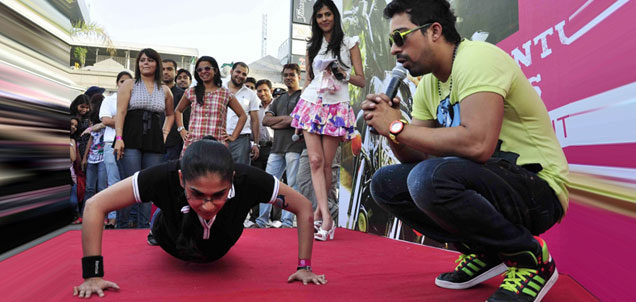
    Picture Credit : Fotocorp

  • Siemens, Medanta tie up for healthcare outreach

    By A Correspondent

    Siemens Ltd and Medanta – The Medicity, one of India’s largest multi-superspecialty institutes, located in Gurgaon and founded by eminent cardiac surgeon Dr Naresh Trehan, have come together to ensure that affordable and quality healthcare reaches the remote corners around Gurgaon.

    Sanjeevan is an indigenously-developed mobile concept from Siemens Ltd which is designed and equipped to operate as a mobile healthcare clinic and is fully-equipped with Siemens Healthcare technology. Medanta will be in charge of and operate the bus as well as provide qualified staff. The goal is to improve access to affordable healthcare to the many remote villages of Gurgaon.

    “Siemens worldwide strives to be an integral part of society, and our corporate citizenship initiatives promote social development by creating a viable future. The Siemens mobile healthcare clinic embodies this corporate value system as it delivers asustainable and self-sufficient solution to the locals’ need for healthcare”, said Mr Peter Loescher, President and CEO, Siemens AG.

    The keys of the mobile healthcare clinic were symbolically handed over to Dr Trehan by Mr Loescher.

    Even though the national capital region benefits from highly-advanced healthcare facilities, many rural areas around Gurgaon still lag far behind in basic healthcare services. Siemens’ mobile healthcare clinic will help to bridge the gap. In Dr Trehan’s own words: “The mobile clinic answers the needs of the Indian rural population. With facilities such as ultrasound, pathology, mammography, laboratory equipments and accessories, EGG and even a film development unit, it allows for advanced medical examination which will improve the lives of many individuals who find quality healthcare inaccessible.”

  • MediaVest grabs PIX media mandate

    By A Correspondent

    In what can be described as another note in its symphony of wins, Media Vest’s Mumbai office has bagged the media mandate of PIX, the leading English movie channel. Both the agencies will handle all the media planning activities for the channel. Media Vest will handle television and radio and Zoom Advertising will handle only print.

    MediaVest Worldwide is part of Starcom Media Vest Group. Starcom MediaVest being ranked one of the largest brand communications groups in the world. MediaVest will handle the operations for PIX in Mumbai.

    Commenting on the development, Mr Dinesh Rathore, VP MediaVest, Mumbai said, “Pix is one of the leading channels in India that provides excellent English content to the viewers. It has been broadcasting great content to the viewers consistently over the past few years. We intend to drive the channel to a leadership position in the English genre with our human experience strategy framework and hardnosed analytics, providing simple, real-time and meaningful solutions. We are excited to be working with the brand and believe that this partnership will translate into a success story for it.”

    Zoom Advertising became operational in 2004 and within a span of three years it managed to get INS accreditation. Delighted at their recent success,  Mr Chirag Barasia, Proprietor – Zoom Advertising commented, “Being an evolving agency we have established ourselves as a formidable agency in print action, so we take great pride in the way which PIX has put immense trust in us. We are also excited in bagging their print AOR & media buying duties which is a challenge and an opportunity for us to connect them to wider print options. We are extremely positive on our media buying capabilities and thus we will strive hard to ensure PIX achieves significant progress and success in their print portfolios. Similarly, PIX has given us a big boost to venture out in exploring and implementing other media opportunities for them and our other clients.”