Author: mxm_india

  • APCO partners with Condoleezza Rice’s consulting group

    By A Correspondent

    APCO Worldwide has announced a partnership with RiceHadley Group, formed in late 2009 by former US Secretary of State Condoleezza Rice, former US National Security Advisor Stephen J Hadley and Anja Manuel, former special assistant to the Under Secretary for Political Affairs at the US Department of State. The firm assists CEOs and senior executives at major corporations in expanding their businesses in key emerging markets such as China, India, Latin America and the Middle East.


    “We see in APCO a great opportunity to grow our global scope of services,” said Ms Rice. “We look forward to working with their seasoned consultants as we continue to expand our business.”


    “APCO brings the right mix of services, along with a global footprint and a strong reputation,” said Mr Hadley. “This partnership leverages our expertise with APCO’s on-the-ground resources in 20 countries.”


    APCO and RiceHadley will work together to assist corporations in their home and destination markets, partnering with them to address the challenges and take advantage of the opportunities that arise from a global corporate presence.

  • Ruby Bana joins Madison Media

    By Ritu Midha

    Ruby Bana has joined Madison Media Group as Chief, Strategy and Insights after a long and productive stint at Havas Media (where she was designated Chief Intelligence Officer for the APAC region).

    Monday September 26 was her first day in her new organisation, which she spent hobnobbing with the senior management at Madison’s Head Office in Mumbai. Says Bana, “I had a dream first day today… spent it interacting with the senior management at Madison. About 20 of us shared thoughts and ideas. I am really looking forward to days ahead.”

    While Madison has had centralized buying, it is for the first time that a cross-functional strategic planning role has been introduced.  And as per Bana, it indeed is a challenging assignment. She explains, “Madison is very solid, the challenge would be to add value to something so large. In Contract and MPG, I was a part of their evolution, as I was there from the very beginning. To make a difference in a very well established organisation would be something else.”

    Having said that, she has the conviction that her multi-country, multi-discipline experience would come in handy. She explains, “Strategy planning has always been my forte, and I have loads of cross country and cross discipline experience.  She adds, “Madison Canvas is much larger, the kind of clients Madison has – would lead to a much wider sharing and gaining of knowledge.”

    Bana believes that it is very important for a professional to be excited about what he or she does.  Says she, “I am, of course, excited to be a part of Madison.  However, it is not to say that I was not happy in my previous job. It was a great learning phase, and an exposure to multiple markets and global strategic minds.  I am always excited about what I do – if it does not excite me more than what else I could have been doing in that time, I would not do it.”

    While Bangalore would continue to be Bana’s base, she would be travelling to Mumbai and Delhi quite frequently – and contribute to ‘Madison’s solid specialised divisions’.

    She concludes, “I am like a sponge, always absorbing knowledge.  Time to use that knowledge across a very large canvas now.”

  • Chitralekha honours best of times

    By A Correspondent

    One of the most respected publications in the field of horology, Watch World, from the Chitralekha Group hosted the second edition of Watch World Awards on September 24, 2011. The jury comprised of several eminent and accomplished members from the watch making fraternities. Other jury members included connoisseurs of watches. The day was moderated by Mr Mitrajit Bhattacharya, President and Publisher, Chitralekha Group.

    When asked how this edition of the prestigious award ceremony is any different, Mr Bhattacharya said “We have not done anything differently this year and haven’t changed the format in any way – It is only a natural progression. It’s only that more brands have participated this year and we have more nominations.  Also, the overall presence of international brands has increased.”

    When asked what kind of a market Indian watches have, Mr Bhattacharya said, “I think the frequency of buying expensive watches in a certain target segment is really increasing. I will still like to add, that if you see the size of the market, it is perhaps not as big as what China (since we like to make China a benchmark). But perhaps, in the next five to seven years our market size will grow, perhaps even comparable to china.”

    The jury members for the awards included Mr Antoine Simonin, an extremely accomplished Swiss master watchmaker and author based in Neuchatel with over 50 years of watchmaking experience; Ms Chhaya Momaya, a leading image consultant; reputed journalist and a keen observer of the luxury space Mr Ayaz Memon and distinguished jewellery designer Ms Varuna D Jani, awarded leading watches across categories like ‘Watch of the Year’, ‘Complicated Watch of the Year’, ‘Sports Watch of the Year’, ‘Watch with Best Design’, ‘Concept Watch of the Year’ and more.

    Jury member, Antoine Simonin, on his second visit to India to judge the awards, commented, “I am honoured to be a part of the jury once again. There has been an exponential increase in the brands and quality of nominations this year. Seeing the response of global brands in the second year, Watch World Award has made a mark for itself in a very short span.”

    At the gala event were spotted industry heavyweights, corporates and bureaucrats like Stephen Forsey, the co-founder of Greubel Forsey watches; Romain Dezaux, Regional Brand Manager of Baume & Mercier,  Mukhtar Mohammed, Regional Market Director of Carl F Bucherer,  Ravinder Zutshi, Deputy MD, Samsung India, Anil Rajput, Senior VP, Corporate Affairs, ITC Limited, Amitabh Kant, CEO & MD – DMIC along with socialites of the city like Sanjeev Dalmia, Maharani Uma Gajapathi Raju, Ramola Bachchan, Sharik Currimbhoy, Raja Aditya Katoch, and other dignitaries.


    Awards


    The winners in the product categories were Zenith Christophe Colomb which won the award for ‘Watch of the Year’ and the ‘Complicated Watch of the Year’, making it the most successful watch of the evening. While the Tag Heuer Heuer Carrera Mikrograph 1/100th Second Chronograph won the ‘Sports Watch of the Year’ award, Corum Golden Bridge Automatic was adjudged the ‘Watch with Best Design’, Citizen Satellite Wave won the ‘Concept Watch of the Year’ award and Greubel Forsey Invention Piece 2 which was adjudged the ‘Limited Edition Watch of the Year’.


    Also presented were the ‘Jewellery Watch of the Year’ award which went to Harry Winston Rendez-Vous and the ‘Fashion Watch of the Year’ award which was won by Harry Winston Rosebud. While ‘The Watch with Most Innovative Material’ was awarded to Hublot “Cathedral” Minute Repeater Tourbillon & Column Wheel Chronograph, the ‘Watch with Highest Utility’ award was presented to Seiko Premier Kinetic Perpetual with Seiko Seiko 5 – 130th Year Collection bagging the ‘Value for Money Watch of the Year’ award.


    On the other hand, across the Marketing categories the ‘Best Campaign in Print’ award was picked up by Romain Jerome Moon Dust DNA whilst Titan Purple picked the award for ‘Best Campaign on Television’. While ‘The Best Out of Home Campaign’ did not have a clear winner, the Tag Heuer Connaught Place Boutique picked the ‘Best Boutique’ award and Breitling Air Show – Buochs 2010 and Parmigiani Montreux Jazz Festival 2010 were jointly adjudged the ‘Best Organised Event’.


    Watch World hosted MxMIndia.com at the venue of the awards do

  • Sam Balsara’s big plans for ABC

    By A Correspondent

    The Audit Bureau of Circulation (ABC) Council of Management for 2011-12 has been announced, and as expected Chairman and Managing Director of Madison World, Mr Sam Balsara, who was the bureau’s deputy chairman in the previous year, has been entrusted with the chairman’s responsibility.

    In a brief conversation with MXM India on his key focus area as the Chairman of the Bureau, Mr Balsara elucidated, “I would have a two-pronged focus. One, to convince the media planners, who do not realize circulation data’s value, about its significance. The second focus area is to make the Audit Bureau of Circulation a more valued body in the eyes of the Government and a few others.”

    There have been a few instances where publications have exactly not been delighted about the ABC rules. Would Mr Balsara also look at softening the rules? He responds with a strong No, adding, “Any audit organisation needs to have strict rules. If the rules are not stringent, and do not need to be followed – it is better not to have them at all. In the five years or so, ABC audit has had no, or very minimal, intervention in the publishers’ marketing plans.”

    As for the readership survey and the ABC working more closely now, considering that there would be only one readership survey, Mr Balsara says, “That will happen automatically, considering that 10 members of RSCI would be from ABC.

    Mr T Venkattram Reddy of Deccan Chronicle Holdings Ltd has been elected as the Deputy Chairman of the Bureau for the year, while Mr Shashidhar Sinha, Universal McCann Erickson (India) Pvt Ltd has been elected as Honorary Secretary and Madhukar Kamath, Mudra Communications Pvt Ltd is Honorary Treasurer.

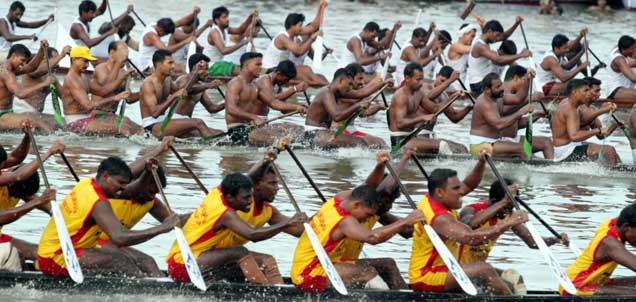
  • Can TOI win the Kerala race?


    By Tuhina Anand


    The Times of India has been giving the last-minute push to its entry into the Kerala market. Speculation was that the TOI would enter the market by early October – the launch date now seems to be October 24.  Mr Rahul Kansal, Chief Marketing Officer, Bennett Coleman & Company Ltd agreed that the TOI is looking to enter the market around this time but refused to name a date, saying that things do get delayed due to various reasons and hence he would prefer to refrain from specifics.


    The TOI in Kerala would have four main editions, he said, including Cochin, Trivandrum, Malabar and Cochin Upcountry, but in total the paper would be printed from 10 centres and would devote space to carry hyper local content.  So in that sense there will be 10 editions. However, Mr Kansal refused to divulge details about the number of print copies initially planned.


    He also said that TOI has entered into an alliance with the Mathrubhumi Group, which will aid TOI in providing logistics support. It is also possible, say sources, that there could be a combo offer available to Mathrubhumi readers.


    Mr Kansal said, “I think we are entering the Kerala market at an opportune time as it has a large literate population and English newspapers is largely a virgin market, with the presence of The Hindu as the dominant player.”


    The Kerala market is an interesting and unique market with literacy rate of close to 94 per cent and is dominated by Malayali dailies including Malayala Manorama, Mathrubhumi, Deshabhimani, Madhyamam, and Kerala Kumudam.  The English newspapers other than the Hindu include The New Indian Express and the recently-launched Deccan Chronicle. Advertisers include real estate players, but jewellery advertisers lead the pack.Players like Muthoot Finance and Manappuram Finance also have gone all out in the media lately with their gold loan schemes, and gained prominence.


    An observer of the market feels that there is a huge opportunity for an English newsppaper like the TOI in Kerala, especially with the young readers. The New Indian Express used to have a strong foothold which has declined over the years and The Hindu has following but is stronger near the Tamil Nadu border, hence there is a space for a strong English player. But it is also a tough market with the literacy rate being high, and readers well informed. So the strategy of entering the market with some sort of alliance with Mathrubhumi makes sense as by leveraging the strength of a vernacular paper, TOI could make impressive inroads. Also the challenge would be to tap the huge retail market like jewellery and textiles, where again it would help to have a regional partner. In terms of content too, the market thrives on regional content even more so than other parts of India, so even though TOI would have a strict template, its plan of having 10 centres of printing with four main editions, carrying localised content from other six markets, may prove to be smart strategy.


    Picture Credit : Fotocorp

  • No place for Sonal Dabral and Prasoon Joshi at O&M


    By Anil Thakraney


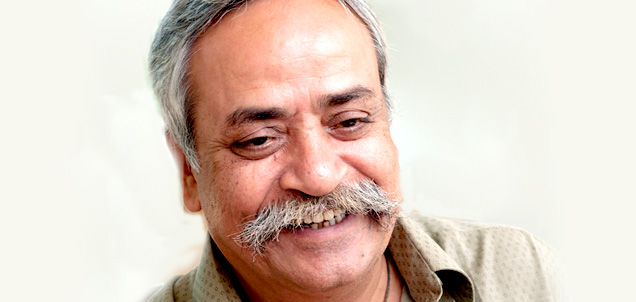
    It has been a fantastic advertising career, to put it mildly, for the 56-year-young Piyush Pandey. Enough has been said about Ogilvy & Mather’s top dog and the Indian ad industry’s most celebrated player. So let’s just sneak in some yorkers and see if the bat still packs in the punch. It’s always a joy to meet the man because of his joie-de-vivre and the on-the-tap humour. Tonight it’s even more fun as we lounge by his sea-facing apartment off Shivaji Park, with Piyush downing vodka shots.


    Q: Don’t see you much in the media these days. Finally got fed up of the over-exposure?

    I have never approached any journalist ever in my life. And I have never said no to any journalist either. Actually, I have been travelling quite a bit these days. But I have never felt I am missing out on anything. And sometimes journalists call to ask about things one doesn’t know. Anything that happens, I get a call! (Laughs.) Also, in the earlier days, I used to attend parties but now I seldom go. I even avoid judging (ad competitions) these days because it takes away five days of my time.


    Q: You’ve spent a lifetime in the ad world. Still get the same buzz? Aren’t you bored?

    The day I stop getting excited about this business I will go. You don’t know what a kick I get out of this profession. Gratification comes to people from various things. Some get it by playing golf. Others by spending a day at the club. I get my kicks out of meeting people in my office, and out of the ideas. I have never thought of my job as a burden, I am having a ball.


    Q: Oh ok. After you built yourself that palace in Goa, I thought Piyush would disappear to the beaches.

    It’s a three-bedroom house, not a palace! And when I am in Goa, I look at my watch and say, “Oh! It’s only nine o’clock!”


    Q: O&M’s big boss, Shelley Lazarus, famously said you are the brightest mind in the network. And we all thought Piyush would take global charge of the agency.  

    It doesn’t make sense to the company and it doesn’t make sense to me. I do sit on the worldwide board, I have a view on the worldwide policies. But I will never re-locate myself. Also, I don’t believe in controlling the world, I enjoy being in India. I think we are still on a graph which is unfolding. And I love having Indians around me. So I can give all that I have learnt to the world, wherever relevant, but I don’t think that burden is mine. (Laughs.)


    Q: I suspect the key reason for your huge success is understanding the Indian culture and ethos. By extension, that means you will struggle in other nations.

    Markets don’t scare me, I do help if there’s a need somewhere. I go there and discuss the idea and then leave it to the locals to express it. What I once hated happening in the good old days, how can I do that to the others now that I am a worldwide board member? I will never do all those things which I disliked. Even when I discuss ideas with Pakistan, I tell them I don’t think I am capable of understanding their local nuances.


    Q: Ah, I get it. You don’t want to do what Neil French did to you. Which is to try and interfere in your work. I remember you told him this: “Neil, come help me, don’t f*** with me.”

    I did tell him that. Because he tried to (interfere). But he couldn’t do it. My first conversation with him was, “I will show you some work we have done for Cadbury’s and I don’t want your comment on it”. (Laughs.) I must share another incident with you. Many years later at a creative meet near Jodhpur, Neil saw the Hutch boy-and-dog film and tried to make fun of the song. And in the evening my boys went and got the Rajasthani musicians to sing the same song for him! (Laughs loudly.)


    Q: Your rival agency heads are pursuing other passions and enjoying a lot of success in those. Making movies, writing songs. You don’t feel the need to experiment?

    Those things come to you when you are bored of what you are doing. And I don’t think three hours is a greater achievement than one minute. I did it once, I wrote the script for the film ‘Dus’ for Mukul Anand but it never got completed because he passed away. But it (movies) never excited me. The kind of people who wanted me and Prasoon (Pandey) to write… from Yash Chopra to Subhash Ghai to Dev Anand… and I told all of them this is stuff I would do on a weekend or at night. That my first job is advertising. I can only handle one thing at a time.


    Q: New media is upon you in a big way. Ready for it? Honestly.

    One, we are investing heavily in the new media. There is no technology that we haven’t provided to our youngsters. And two, in my working life, things aren’t going to change. I see maximum activity in the mass media at least for the next five years. So the idea is to invest for the future. Which we are doing.


    Q: And you aren’t on Twitter or Facebook.

    I am not even on the internet. I don’t even know how to start a computer.


    Q: You are joking.

    I am not joking. I did not study all these years to become a typist. Every computer user is a fantastic typist. (Guffaws.)


    Q: So if a client wants to know how he can promote his brand on the digital media, you are in trouble.

    I will sit with him (the client) to assess the solution. And tell him that I have people on my side who will help him. To give you an analogy, I know what a good ball is, but I can’t bowl it. So I will get Kapil Dev to bowl it.
     

    Q: I think you are a test match player who now has to deal with the T20 format. And you don’t understand that game.

    I am saying to the client, I will put together a team that can satisfy his needs. I will not play the T20 match. But I will come and watch every match. I will hire the best T20 players. And I will cheerlead them.


    Q: There’s a flip side too. Does it worry you the excess use of tech may make the youngsters get disconnected from the real world? Which is where big ideas come from.

    I didn’t write the MP Tourism ad, the kids wrote it. Also the Asian Paints work featuring the two brothers. They wrote it. So I think the next generation is very savvy. They know that even in the digital space it is the idea that will win. The idea is to know the medium, but express the same kind of engagement that we have done all these years. But yes, about being buried in technology, there is a worry, and for the world at large, not just for Ogilvy. I say to the youngsters: go to Facebook, but don’t become faceless. That, interface is the greatest way to connect with people.


    Q: The one big challenge facing the ad world?

    We need better remuneration from clients to be able to hire interesting people in the industry. I don’t have the answer to this challenge right now. But before I leave this company, I will make every attempt to make sure this is solved. If we don’t pay people well, how will we get the best people into the industry? Every agency is under so much pressure, we are not negotiating properly with clients. Maybe clients are better negotiators than us. If other industries are taking our people away, then we have a problem.


    Q: Does it hurt when you nurture young guys, train them, and then they go and head rival agencies?

    Sometimes, yes. But not with guys who are leaving to do the same job that I am doing. That is a natural progression of life. I regret losing those people who had misconceptions about themselves and their abilities, and left to do it on their own. And then disappeared. And all that talent Ogilvy alone hasn’t lost, the industry has lost it. Because in the next job, if the guy is a failure, he simply disappears.


    Q: If Sonal Dabral and Prasoon Joshi wanted to return to O&M, and you had place only for one, who would you pick?

    None of them. Because our people have grown. And in the last five years, they’ve done work that’s the best in the industry. So why would I put anyone on top of them? Sometimes when you vacate a position, others grow into that position so fast, it becomes difficult for them to be brought back. If you missed three matches, and Vinod Kambli came and scored three double hundreds, how do you get Kambli out of there? It’s important for all of us to be at the right place at the right time. Suppose I decide, before my retirement, that I want to be in Goa and am going to write my book. Then somebody will obviously occupy my position here. Now if I want this position back two years later, and if that guy has done so well in the meanwhile, they’ll say ‘Sorry!’.


    Q: Are you planning to write a book?

    I will write one. But it will not be a prescriptive book. I will write something that people read between the lines. It will apply to life and not just advertising.


    Q: Any red hot-tips for youngsters?

    One, celebrate life. Don’t crib. Because if you crib four hours a day, you don’t approach anything with a positive mind. Two, if you are passionate about something, go ahead and do it. Don’t worry about society. You might actually become the role model for that. And three, in the world of communications, respect your environment. If you don’t think of the receiver, you will never make a good giver. For example, on your way to Jaisalmer, did you notice, in that 48 degrees heat, those guys who are tarring the roads, they are singing songs to distract themselves from the adversity? That is what will give you insights.


    Q: Your retirement is due in exactly two years. Will you actually leave?

    Maine aaj tak life plan nahin ki. Did you, in your younger years, ever hear from me that one day I want to be the Chairman of this company? You didn’t. I don’t make long-term plans, I only make plans for tomorrow. That I will wake up at five in the morning and go for my walk. And even that may not happen! (Laughs.)
  • Malls are great for Digital: Ishan Raina

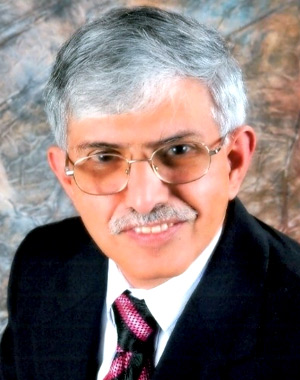
    Ishan Raina, CEO & MD, OOH Media India Pvt Ltd is an advertising veteran. An IIM Calcutta Alumni, Raina was one of the first industry experts to stress that it was important to engage consumer at various touch points.  The changing lifestyle today has proved his conviction true. In a conversation with Ritu Midha of MXM India, elaborates on the evolving OOH medium, advent of digital OOH and measurement. Excerpts:

    Q: How do you see Digital OOH growing in India vis-à-vis other media?

    The Out of home TV medium in India is about four years old and still in its growth phase. But the medium has grown a lot as compared to what it was four years ago. It was a conceptual selling at that point of time where the challenge was not only in growing the company but also growing the industry as a whole. Today people understand this medium and the future prospect of this medium. The change in the lifestyle trends of the consumers and media fragmentation has led to the growth of this industry. Time spent for consuming traditional mediums is also getting shorter. OOH TV being an SEC ‘A’ focused medium adds dynamism to the existing media plan of the clients for their brands.

    Today OOH industry commands 15-20 percent of the total advertising share.  Digital OOH TV has 15 percent of this share ie 1-2 percent of the overall advertising budget. The biggest challenge is to grow the size of the market which is still at a growth stage. We need to grow this to 4-5 percent in the next two years.

    Today we have over 300 clients from across categories from Automobiles, Finance, Telecom, Retail (Luxury, Apparels etc), Media, FMCG, Consumer Durables, Travel & Tourism, Education etc. using us for various reasons /campaigns. In brief, since the industry is still emerging and not yet mainstream media, there is immense scope for new clients, categories and growth. While starting new clients & categories has been difficult, repeat clients have been relatively easier, due to good formal (research) & informal (word of mouth) feedback.

    Q: In terms of new types of Digital OOH advertising, how does India compare with US, China and Europe?

    In India there is certainly a considerable change in the lifestyle of consumers today. People spend more and more time out of home whether it is in their offices, malls, multiplexes, restaurants, gymnasiums, bookstores etc. This change in the lifestyle trends of the consumers and media fragmentation has led to the growth of this industry. OOH television networks adds a great value as it follows these consumers wherever they are thus becoming the only medium present in a day of the life of a consumer.

    India is a growing market and thus provides tremendous opportunities to advertisers to reach out to their target group. This has also resulted in the development of various new media formats with digital OOH being one of them. In general, Digital OOH space is expected to see a tremendous growth in the future, given the expected infrastructural growth, increased amount of time spent outside home, and the general economy boom in the coming years.

    China is the largest market in the world for digital OOH TV, and our strategic partner Focus Media, is the global leader. In Europe as in the US this medium has become more of a point of sale medium and not a “day in the life of an SEC A consumer” as it is in emerging markets, such as India and China.


    Q: What part of media spends goes into Digital OOH?

    Digital OOH TV commands 1-2 percent of the overall 24,000 cr advertising industry. This will grow to 4-5 percent in the next 2 years. About 80 per cent of this would belong to 2-3 national players and we hope to continue being the revenue leaders of digital OOH TV industry. Digital OOH advertising is emerging as an integral part of the media mix for advertisers, and is being used by them for various companies and launches.

    Q: Is measurement still an issue with Digital OOH advertising and promotions? What kind of research is now being done to measure?

    In Digital OOH format, we understood the gap of measurement in traditional OOH and thus initiated OOH Metrics, which is today India’s first ever large scale digital Out-Of-Home TV research. Out-of-Home media conducted this research in association with Nielsen – world’s leading provider of marketing information and audience measurement.

    OOH Metrics is the only Metrics available in Outdoor Audio Visual space as of now conducted to understand the Demographic profile of the people and the audience behaviour. It is the study done across 8 cities, conducted by Neilsen, with a sample size of almost 15,000. OOH Media also does campaign research for the brand advertisers on OOH screens to quantify and qualify the viewership.

    We have done over 100 Campaign Evaluation Studies across categories like Auto, Telecom, Finance, FMCG, IT and many more to find the recall of ads through this medium. The results have been encouraging which have resulted in long term relations with clients.

    Q: If we look at geographical segmentation – do some parts of the country respond better to Digital OOH than others? Similarly would the trends vary in metros and non-metros?

    Digital OOH is value for money in metros but as you go down the chain that is tier 2 and tier 3 cities, it becomes an expensive option because of the availability of the regional formats. So Digital OOH is actually a medium for major 8 metros with good density & quality of audience or locations.  This will change over time.

    Q: To what extent has the advent of mall culture and modern retail helped the cause of Digital OOH. And how do you see it contributing five years from now?

    The OOH TV format has actually evolved tremendously in Offices / Commercial Bldgs and Tech Parks / Residential complexes, Gymnasiums as well as large format malls / multiplexes / Modern Trade. There is a constant evolution of infrastructure (malls and hypermarkets) which is bringing the radical change in lifestyle and spending patterns of consumers. These In-stores facilities offer a wonderful opportunity for Branding of various products at the “point of purchase”. Thus greater the increase in number of In-store networks more is the opportunity to utilize these networks as a medium of advertising and creating a top of mind recall. Digital OOH media is strategically present in In-store locations with more than 2000 screens in Malls, lifestyle stores, Supermarkets. Digital OOH adds a lot to the communication by being the only audio- visual medium and thus we can say the medium is increasingly becoming effective and is here to stay for a long time.

    Q: What as per you are emerging trends in Digital OOH advertising?

    Audience, not screens, is the Mantra:  The quality and quantity of audiences that the screens provide, is what is the ultimate driver for this medium and the differentiator between different brands in the medium.

    Localisation / Customisation of Messages: OOH Media has been the most flexible medium today and gives a chance to slice and dice the message of the campaign as per the kind of audience an advertiser would like to reach. The client can select the locations, cities, frequency and language as per their requirements. Flexicasting provides an advantage of getting as local as possible just like an outdoor but with the power and capability of Audio-Visual.

    Relevance is the new king: The role of content is thus becoming very important in this medium and OOH Media continuously experiments with content to make it more relevant for the audiences and thus attracting more eyeballs. Content Integration helps in creating a contextual connect for the brands. OOH Media customizes in-house content as per the client’s requirement and offering to make it contextual.

    Connect with consumer: The medium offers an advantage of Flexicreation i.e. creating customized ads and content according to the kind of audience the client wants to reach and also the kind of locations they want to advertise in. Flexicreation for the same medium is impossible in any other audio visual medium. The future will be and has to be the contextualization of the content and advertising messages.

    Q: How effective are touch screen kiosks and how best can they be utilized by the advertisers?

    It is still early  days – not currently scalable. Our model is ‘Push’ to the consumers, where as Kiosks rely on consumers to take some action.

    Q: A lot of money is being spent on airport advertising? Is it just the premium customer that lures the advertisers there – or is the recall value much higher of airport ads?

    Airports are a very effective locations –and of course brands advertise there to target a specific target group.

    Q: How powerful is OOH as part of experiential marketing?

    Its part of the experience currently, not really experiential marketing or interactive marketing. What OOH TV ensures is great recall across Sec ‘A’ and increasing also reach in select locations where due to media fragmentation and audience habits, OOH TV is actually the first time the audience is exposed to the advertising.

  • Peugeot seeking PR agency in India

    By Shubhangi Mehta

    Peugeot, the French motor car brand, has called for a PR pitch after its re entry in the Indian market, industry sources close to the development have confirmed the news to MxM India.

    The creative mandates for them are mainly handled by Euro RSCG globally and Peugeot is one of the biggest clients for Havas Media .

    Peugeot is gunning for the launch of the Peugeot 508 premium sedan in India before the end of 2012. The car will be priced in the range of Rs 20-25 lakh. Apart from the Volkswagen Passat, the 508 will have to compete for space against Honda Accord, Toyota Camry, Nissan Teana.

    After its exit from the country nearly 15 years ago, the company is cautious on its re-entry. Globally, the brand competes with Volkswagen and such brands and it is expected to be similar in India.

    The French company will set up a vehicle manufacturing facility near Sanand at an investment of Rs 4,000 crore ($650 million). At an initial capacity of 165,000 vehicles a year, the plant is slated to be commissioned by 2014 and can be expanded to 340,000 units in phases.

    The family business that precedes the current Peugeot company was founded in 1810. On 20 November 1858, Emile Peugeot applied for the lion trademark. The company produced its first automobile in 1891. Due to family discord, Armand Peugeot in 1896 founded the Société des Automobiles Peugeot.

    Peugeot’s roots go back to 19th-century coffee milling and bicycle manufacturing. The Peugeot company and family is originally from Sochaux, France. Peugeot retains a large manufacturing plant and Peugeot Museum there. It also sponsors the Sochaux football club, founded in 1928 by a member of the Peugeot family.

  • Anil Thakraney’s Hard Knocks: Why did telemarketers lose the game?

    Today morning, I sent a text message to 1909, and in a matter of seconds, forever banished telemarketers from my life. Or at least I hope I did. (This is India, where there are many laws, but many more people ready to flout them.) But at the same time it did make me feel a wee bit sad as a communication professional. Here is a powerful medium destroyed by the foibles of some very incompetent telemarketers.


    I am not a direct marketing guru, but here are three key reasons I think why the tele guys lost the plot. You can add your own.


    1.  Badly trained, poorly paid staffers who lack even basic communication skills. ‘Hello sir, main XYZ se bol rahi hoon, aapko ek free SIM card ka offer hai, kya aap interested hain?’ Imagine I could be doing 100 important things when this call arrives. Even hanging precariously by a cliff. Is it too difficult for callers to politely ask for a ‘good time’ to call?  We often do that with friends, leave alone strangers. Who knows, some courtesy may encourage people to at least have a conversation. And in telemarketing, that’s half the battle won. I really think some amount of smart training would help.


    1. Poor sense of timing: I would get calls at 10.30 AM Monday, the peak work hour, from someone selling me a holiday package to Macau. Or, on a lazy Sunday noon, from a chap asking if I want a computer printer. Worse, someone texts me at night offering Yoga classes. Is anyone even trying to think out there on when to sell what?


    1.  I know this is a cold calling business, but does have it to be like blind shooting in the dark? Is market segmentation so difficult in telemarketing? Can’t the proprietors invest some funds in market research before hitting the phone? I’ll give you an example. Once, an expensive time share resorts seller called my driver. Overhearing their conversation, I encouraged him to talk, so we could have some masti. Not only did the excited tele girl ‘sell’ him a Rs 2-lakh-worth worth life membership, she even agreed to drop by his chawl for a cup of tea. I told him to have fun!


    All said, it’s a pity, really. Because telemarketing is a very useful tool for one-on-one communication. And it’s failed in India because it’s run by people who just don’t get it.


    ***


    PS: Must say I am more than surprised with the overreaction and anger in India at Shoaib Akhtar’s book. The mud he’s flung at fellow cricketers in his book, as per reports, is totally consistent with his own brand personality. He’s lived an entirely controversial life, so why must his book be any different? What were people expecting? A collection of sweet lullabies? Hello? Branding, anyone?

  • India ranks 7th in Facebook timespend

    By A Correspondent

    An international study into the use of social networks by global information services company Experian reveals just how much time people living in different countries spend on Facebook. Singaporeans emerge from the study as those who spend the longest on the social network site, with an average of 38 minutes and 46 seconds per session, while people living in Brazil spend just under half that with an average of 18 minutes and 19 seconds per Facebook session.

    According to the analysis by Experian Hitwise, the average session time on Facebook in August 2011 across the eight countries varied significantly. The average time spent on Facebook in August 2011 per session was – Singapore, 38 mins 46 sec; New Zealand, 30 mins 31 sec; Australia, 26 mins 27 sec; UK, 25 mins 33 sec; US, 20 mins 46 sec; France, 21 mins 53 sec; India, 20 mins 21 sec; Brazil, 20 mins 21 sec.

    Understanding average time spent on Facebook, the world’s most widely used social network, illustrates the importance of brands needing to be on social networks, the study said. By knowing that an average social network user in Singapore, will for example, spend an average of 38 minutes on Facebook means that a brand can increase the likelihood of capturing an individual’s attention by running digital marketing campaigns through Facebook. Content and advertising which is compelling will ultimately lead to greater engagement in social networks and consequently greater sales, whether on the brand’s own website or indeed within Facebook.

    Mr Navin Chandani, Managing Director, Experian Marketing Services in India, commented, “The power of social networks like Facebook is that in some respects they don’t have any boundaries and make the world a much smaller place. Knowing the market share social networks have in each country and the level of usage is key to social networking success. However, our research shows that the way individuals use social media can and does change according to cultural and personal backgrounds – therefore ‘one size definitely doesn’t fit all’ when it comes to digital. For any international brands to be successful in their digital campaigns, they must understand the local, digital and personal nuances that exist.”

    Social networking is now one of the biggest online pastimes across the globe. In each country there are thousands of social networks, varying from 3,245 in Brazil to 9,000 in the UK. Despite being one of the most mature social markets, the UK has the lowest market share of visits going to social networks and forums (12.2 percent). Brazil has the highest percentage of Internet visits going to social sites (18.9 percent of Internet usage) with 43 percent of all social networking visits in Brazil going to Orkut, the most visited social network in Brazil.

    Mr Chandani said, “Understanding how long people spend on Facebook in different countries is vital for any brand on the social network. With Facebook still finding its feet in the emerging markets of India and Brazil, lower session times are to be expected – users won’t have as many friends or groups that they have signed up to. However that doesn’t mean brands should ignore Facebook in those countries – with market share for Facebook in India increasing by 88 percent year on year and 16 percent in Brazil year on year, its influence and dominance is only set to grow.”

    Further analysis of the data reveals how different industries attract website traffic as a direct result of social networks. Social network users in Brazil, India and Singapore rarely go on to visit retail websites after being on a social network highlighting that retailers in these markets have a significant opportunity to increase their presence on social networks, ultimately driving website traffic and sales. This contrasts with countries such as New Zealand, where nine per cent of retailers receive web traffic directly from social media.

    Entertainment topped the list of the sites visited after social networks in the nine countries polled by Experian, with well-known sites such as the BBC’s iPlayer and Sky Sports featuring prominently.

    Other key findings from the survey revealed:

    In Brazil the number one social network is Orkut.com with 43 percent market share. This has fallen year on year by 18 percent with Facebook experiencing an increase in market share August 2010 to August 2011 by 16 percent

    The country to experience the fastest growth in Facebook use over the past year is India, with the social network accounting for an increase in market share of 88 percent in August 2011 compared to August 2010.

    The US also experienced a market share increase from Facebook of 5 percent year on year.

    Approximately 1 in 4 Singaporeans (18 percent) jump from one social network directly to another, demonstrating their love of social networks.

  • KBC takes the Vritti bus for max recall

    By A Correspondent

    The results of a recently concluded survey by Vritti i-Media reveal that the ad jingle of Kaun Banega Crorepati has emerged as the most recalled ad at MSRTC-owned bus stands across Maharashtra. Sony Television has roped in Vritti i-Media’s audio advertising network to relay the famous jingle of KBC to serve the audience as a reminder to watch the daily quiz show, now in its fifth season.

    In line with the “Koi insaan chhota nahi hota” ad messaging, this is an effort by the marketing team at Sony to increase the viewership base of people residing in the semi-urban and rural parts of India. In order to reinforce this message, the KBC advertisements have been playing at regular intervals across ST bus stands in Maharashtra along with the bus arrival and departure announcements on Vritti’s audio network. The combined effect of the familiar jingle and the Bachchan baritone coupled with the compulsory listening format that is the advantage of Vritti’s medium, this jingle has emerged as the most popular and highest recalled ad across rural Maharashtra.

    Emphasizing the effectiveness of the medium, Mr Veerendra Jamdade, CEO, Vritti Solutions says, “For most of the people in small towns and villages of Maharashtra, MSRTC buses are the major mode of transport. While they are at the bus stand waiting to board the buses, advertisements played at the stand are the only mode of entertainment for them. Kaun Banega Crorepati has identified this and is reaping its benefits.”

    Insights from the bus stands in Maharashtra:

    ST buses are the chief mode of transport for the rural consumers.

    Each bus stand is frequented by at least 40,000 people each day.

    A frequent traveller visits the bus stand at least 2-3 times in a week

    On an average a traveller spends at least 20-25 minutes at the stand before boarding a bus.

    India resides in small towns and villages. And with Vritti’s networks, it has become lot easier for advertisers to reach this India effectively.

  • Education discussed at Sakal’s Dubai meet

    By A Correspondent

    Some 50 vice-chancellors from top Indian universities, industrialists and business leaders discussed the future of the Indian education system and formulated strategies and policies, at the Sakal Media Group’s three-day education conference, Sakal Educon 2011, in partnership with Dubai International Academic City (DIAC) between September 16 and 19, 2011.

    This is an annual event started in 2004 and this year the venue was Dubai. This year’s Chief Guest was Minister for Human Resource Development of India Mr Kapil Sibal. In his opening speech he reiterated the need for complete transformation of Indian universities. He also emphasized the need for embracing Internet based technologies to develop open courses which can be accessed from anywhere.

    Mr TD Joseph, Network Head – Events of Sakal Media Group said, “We are grateful to Dubai Knowledge Village (DKV) for its support and interest in partnering with us. This will help us to explore opportunities of creating synergies for better business, knowledge sharing and learning through expertise carried by both the nations.”