Author: Avik Chattopadhyay

  • Excess is success

    Excess is success

    Avik Chattopadhyay

    Avik ChattopadhyayWhile a significant part of the nation was busy with discussing dance moves and dresses of the rich and famous gathered in a little town on the west coast of India, a bunch of medical students danced around in joy on the east coast of the US. While one of the richest people on this planet spent a whopping 100+ million dollars on a family function, a retired professor at the Albert Einstein College of Medicine in the Bronx donated a mere billion dollars to ensure free tuition for all medical students, almost for life.


    It is cultural. Very very cultural. The two nations make up the world’s largest democracies, and have their own share of unemployment and poor, yet the two are poles apart. In a discussion with a social scientist who requested anonymity, I was reminded that we are basically a monarchy in the garb of a democracy. We celebrate 75 years of becoming a republic yet are deeply servile. We boast of some of the world’s biggest people movements, yet revel in creating demigods of the rich and the powerful. “We will always be a land of confluences, cross-connections and contradictions”, the social scientist commented, trying to explain to me how Indian brands are thereby quite different in their DNA from ones from the US or France or Germany or Japan.


    “Indian brands love to show-off. We love to live in the now, more than for the future. For us, excess is success!”


    What is wrong with showing off? Or for that matter, living in the now? Nothing wrong. It is just a matter of perspective. The same rich person who gave a pre-wedding bash will also go ahead and build a hospital or school, but the bash is very important as that sets a context. It is like when the ‘benevolent despot’ of an emperor used to throw silver coins in the air for the commoners to scuffle for at his child’s wedding. While the poor would get their clinics, night shelters and rations, they had to be reminded of the grandeur and graciousness of the mighty powers from time to time. The living in the present moment is a clever diversion from the present state of life into a world of make belief, with the subliminal message that this is a life that one could aspire for.


    When the personality of the brand is derived from the personality of the ‘promoter’, things get very heady. The socio-economic and cultural background of the promoter clearly determines the way the brand behaves. If one’s legacy has been mired in a fair bit of controversy, the need for periodic demonstrations of power and pomp are crucial to establishing authority. If the background has been less than average, then the attempt is always to go over the top. “It’s a natural response of the reptilian brain,” explained the social scientist, born out of some kind of inferiority complex. The need to set the narrative from time to time is important or such personalities suffer from inadequacy.


    This is why most Indian brands come across as more pompous than proud, more combative than competitive, more conflicting than collaborative. We see that in most of our communication. We experience it most in our service experience. We see that in the way most business leaders present themselves. We have an obsession with using terms like “#1” and “the best ever”, be it a toilet cleaner or an automobile. We love using pompous words like “unbeatable” and “unmatched” because, somewhere, the promoter or brand custodian is insecure and needs such posturing to reaffirm potency and power.


    “It is like a stand-up comedian starting a show with the words ‘Mind you, I am the world’s funniest guy’”, said the social scientist, to put things in perspective. An American brand is running an enterprise. An Indian brand typically wishes to run an empire. It could be a response to the fact that we were a colony for close to 200 years that we are yet to be out of the mindset while our colonisers have adjusted with a post-colonial world.


    We react positively to symbols of regality, power and authority. Which is why both our politicians and judges sit on quasi-thrones whether at a function or in judgment. Simple chairs will not work for either. It is the same with corporate India. Most board rooms I have peeked into have a larger chair and a fixed place for the leader. Everyone knows who the leader is yet the symbols are needed as constant reminders. The chair plays the role of omni presence.


    It is the very same mental wiring that makes millions of us take voyeuristic pleasure in an exhibition of excess that thrives on our culture code of the need to overtly establish leadership. And nothing really can change that. We thrive on contradictions. While we believe in rebirth and the after-life, we prefer to live as if there is no tomorrow. While we revere saints and seers who excuse themselves from worldly pleasures, we choose overt displays of wealth and grandeur. While we preach the power of ‘karma’, we portray the potency of the ‘fruit’.


    Avik Chattopadhyay is a Gurugram-based brand and business strategist and commentator. He is currently also working along with XLRI to set up the Indian School for Design of Automobiles. He writes on MxMIndia every other Thursday. His views here are personal. 
  • Avik Chattopadhyay: Bidrohi Rahman!

    By Avik Chattopadhyay


    Avik ChattopadhyayA fair amount of controversy has been stirred up amongst Bengalis about a song in the recently released Hindi movie ‘Pippa’ about the 1971 Bangladesh Liberation War.

    The song, ‘Karaar oi louho-kopat’ written and composed by Kazi Nazrul Islam, one of the most celebrated literary comets of Bengali literature, has been freshly rendered and presented by AR Rahman in the movie as it was one of the key driving literary forces for Mukti Bahini and the then East Pakistanis. Composed by the popularly termed ‘Bidrohi Kobi’ or revolutionary poet in 1922, it first appeared in a Bengali magazine called ‘Banglaar Kotha’ [Stories of Bengal] and was then included by Nazrul in his compilation called ‘Bhangaar Gaan’ [Songs of Breaking Free]. It is an integral part of the Bengali psyche, on both sides of the border.

    A large section of Bengalis have not liked what Rahman has done with the song. In fact, some have called it sacrilege and showing utter disrespect to the poet and his legacy. How can someone just put an iconic composition to new music and change the meter of the song? This is sheer blasphemy, some scream. They have even gone to the extent of wanting the song removed from the movie. What a storm in a tea cup, literally!

    Can iconic creations not be freshly interpreted? Can venerable ‘brands’ not be reviewed to be made relevant to present situations and circumstances? Are things cast in stone? Are creations so rigid that they cannot be recast?

    In this context, it is important to understand the very brand Nazrul. He is the revolutionary poet. He is the one who broke all preconceived shackles of faith and dogma to go ahead and compose close to 500 songs that are part of some of the biggest Bengali Hindu festivals in the form of Agamani gaan, kirtans and Shyama sangeet. In fact, in the last genre of poetry, he is considered the uncrowned king. Nazrul was an iconoclast and humanist rolled into one bright flame, full of passion for freedom and compassion for all. He had criticised both the Khilafat movement for its “hollow religious fundamentalism” as well the Congress for soft-pedalling on the independence issue. He was a poet, a composer, a dramatist, an editor, a founder of a workers’ party and also an army man in his youth.


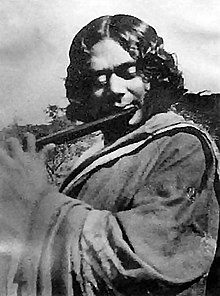
    Kazi Nazrul Islam
    Kazi Nazrul Islam


    In his landmark poem ‘Bidrohi’ [The Rebel], he roars…

    I am the burning volcano in the bosom of the earth,

    I am the wildfire of the woods,

    I am Hell’s mad terrific sea of wrath!

    I ride on the wings of lightning with joy and profundity,

    I scatter misery and fear all around,

    I bring earthquakes on this world!

    I am the rebel eternal,

    I raise my head beyond this world,

    High, ever erect and alone!

    The last thing that Nazrul would ever want is to narrowcast an idea or straightjacket a thought into chains under the garb of ‘tradition’. Tagore and Rumi were huge influences on his thinking and the philosophy he conjured up through his genre of poetry called ‘Nazrul Geeti’. He sent Tagore a composition called ‘Tirtho-Pathik’ in admiration of his writings. Tagore had famously said that darkness shall be banished when the first issue of ‘Dhumketu’ [The Comet], Nazrul’s bi-weekly publication was released. Tagore dedicated his play ‘Basanta’ [Spring] to Nazrul.

    Nazrul was invited to be the music composer by Naresh Chandra Mitra for the film adaptation of Tagore’s ‘Gora’. The Visva Bharati Board was of the opinion that the seven songs used in it did not do justice to the writings putting the film’s release was at risk. When Nazrul did a special screening for Tagore, he commented, “You have adapted my songs, and in what sense do they find you at fault? Do they understand my music better than you do? Can they honour it more than you have?”

    This is exactly what makes an iconic creation and a brand timeless – the flexibility to interpretations, the openness to debates, the ability to recast and the liberty to modify as appropriate. Brands have guidelines, not rules. Brands are open to evolution and modifications over time, not be cast in stone and locked away in a vault.

    The country today sings a particular tune of ‘Vande Mataram’ that has no connect with the original written by Bankim Chandra Chattopadhyay in 1882 and set to tune by Jadunath Bhattacharjee in 1883. What the cricket fans across India in the current ICC Men’s World Cup swing to is the 1997 version, interesting by Rahman.

    If we could so lovingly accept the new version of our National Song, wherein lies the problem in at least allowing the larger populace listen to the adaptation of Nazrul’s iconic song? The problem lies in letting go our own shackles in our minds and hearts under the garb of heritage, legacy and convention. Which is exactly what the Bidrohi Kobi fought against.

    Only the insecure and inept cannot cope with the shackles in the mind being broken. For, in the shrouds of convention and tradition lie their very existence.

    It is important to read the entire poem to smile at the sheer paradox of the current storm. The first two paragraphs of the original in Bengali are followed by an excellent translation of the entire composition by Sajed Kamal

    কারার ঐ লৌহকপাট

    ভেঙ্গে ফেল কর রে লোপাট,

    রক্ত-জমাট শিকল পূজার পাষাণ-বেদী।

    ওরে ও তরুণ ঈশান

    বাজা তোর প্রলয় বিষাণ,

    ধ্বংস নিশান উড়ুক প্রাচীর প্রাচীর ভেদি।

    কারার ঐ লৌহকপাট

    ভেঙ্গে ফেল কর রে লোপাট,

    রক্ত জমাট শিকল পূজার পাষাণ বেদী।

    Destroy those iron gates of prison,

    demolish the blood-stained stony altars

    of chain worshipping!

    O youthful Shiva,

    blow your horn of universal cataclysm!

    Let the flag of destruction

    rise amidst the rubble of prison walls

    of the East!!

    Play the music of the festival of Shiva!

    Who’s the master? Who’s the king?

    Who is it

    that punishes the truth of freedom?

    Ha! Ha! Ha! It’s a laugh–

    God is to be hanged?

    Rumour-monger–

    who teaches this pitiful “truth”?

    O you forgetful Madman —

    shake — shake the prisons

    with your forceful cataclysmic pulls!

    Send your Haidari call,

    play your war-drums–

    call Death

    towards Life!

    There, the Baishakhi storm is dancing–

    are you just going to sit through your days?

    Let’s see

    you shake up the foundation

    of that terrible prison.

    Kick – break the locks!

    All those prisons–

    set them on fire,

    burn them down, uproot them forever!

    Carry on, Bidrohi Rahman!


  • Avik Chattopadhyay: The Pilgrim Prince

    By Avik Chattopadhyay


    Avik ChattopadhyayThe Prince finally rose from his throne to speak. Cheers erupted like thunder for miles together, till one’s eyes could see. There was not an inch of vacant space anywhere. People of all ages had converged on to the Holy City to catch a glimpse of their beloved Prince. Many were seeing him for the very first time, it had been just so long since he left home. He had walked down a path covered with marigold and rose petals, flanked by tall light towers adorned with radiant suns. Caparisoned horses, elephants and camels lined the path to the royal palace.


    He stood erect, his frame frail but the face radiant. “Brothers and Sisters of our land,” he said as tears welled up in his eyes. He looked back at his wife and brother. They smiled and nodded, encouraging him to continue. The crowd erupted in joy once again on hearing his voice. It was soft yet firm.


    “We are back from our pilgrimage.”


    “It has been an amazing journey for us, over all these years. We roamed across this wide and vast land of ours, exploring every nook and corner. So many things to see, so many things to learn, so many things to do. Every single day of all these years was an adventure… fresh experiences, new learnings, new awakenings. We had never imagined how enriching this exile would be when we set off from here. Then we were a bit downcast. We did not know what lay ahead of us. To be frank, we were a bit anxious. But as days passed, the wonder that is this land unravelled before us, as if a massive flower was slowly blossoming, with every layer of petals opening up into a new world to bathe in.”


    “We met so many people along the way, different from us, yet similar. They spoke languages different from ours, they ate food different from us, their attires different from ours and they had gods different from ours. Some do not even worship god in any form. They have interesting symbols to denote their faiths. They have wonderful prayers, similar to ours, yet different. There were wise men, sages, seers and saints of so many types we interacted with. We realised that there is a world much larger than ours and it is the co-existence that makes this land so unique and vibrant.”


    “I had to fight one battle in all these years. Just one, but was fierce. Here again, people of all kinds came to my help for each of them knew that I was in the right. When I finally encountered him, face to face, he looked me in the eye, smiled and said, ‘I have ruled strong but not wise. I built a city of gold but riches and prosperity have no meaning if everyone cannot benefit from them. And you have burnt it all down. You have given my people the chance to rebuild and I thank you for that. Do not make my mistakes. May you rule kind and wise.’ I put him down but with a heavy heart for he was a valiant warrior and a very wise man. But such is life. Your sins of the past have to catch up with you some time. Everything comes a full circle.”


    “Once I met a man on the western coast. A very unique man. Very frugal in his way of life. Just a small piece of white cloth, a stick and a watch. We seemed over-dressed in front of him. He washed my feet and wished that once I return, I rule with fairness ensuring peace and prosperity for all. He said there are issues to take care of like poverty, malnutrition, child mortality, employment and equality of gender than build magnificent palaces, forts and temples. He said that this vast land has since been united but only on paper and not in spirit. He encouraged me to explore as much as possible before we return. My exile had turned into a pilgrimage.”


    “On my return, my brothers and the wise men suggested a new palace be built for me. I politely refused. We do not need a new home. If I am to live in your hearts, as I have all this while, then I need to use the same wealth to build hospitals, seats of learning, centres of art and kitchens. Not a single person should lose sleep over the safety and sustainability of oneself and the family. So, we will build facilities and institutions that will help us live better for generations to come, irrespective of faith, colour or gender. When people visit this city in times to come, they shall experience a model community for the rest of Bhaarata to emulate. That is the legacy I wish to leave behind.”


    “I would like to conclude by quoting some lines written by yet another remarkable man I met on the eastern coast. He had deep pensive eyes, a long white beard and wore a long robe. I thought him to be a saint or seer. He said he was a mere poet. He wrote a wonderful poem called ‘Bhaarata Tirtha’ that goes so…”


    “Here Aryans, non-Aryans, Dravidians,

    Chinese, Sakas, Huns, Pathans, Mughals

    in one body, lo, were united.


    The doors today have opened

    In the West bearing gifts,

    Behold they arrive.


    All shall give and take,

    Mingle and be mingled in

    None shall depart dejected

    From the shores of the sea of Bhaarata’s great humanity.”


  • Avik Chattopadhyay: Bapu Bhagat Bahadur

    By Avik Chattopadhyay


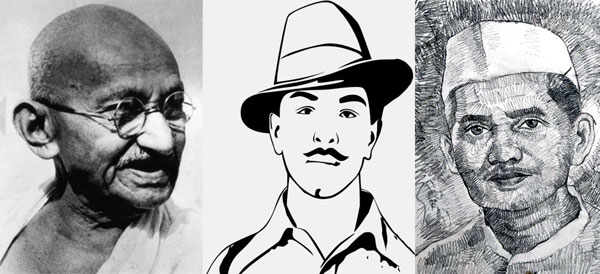
    Avik ChattopadhyayWithin a short period of just four days, the nation observed the birth anniversaries of three of India’s most talismanic statesmen, Bhagat Singh on September 28 and Mohandas Gandhi and Lal Bahadur Shastri on October2.


    Bhagat Singh and statesman: For sure, for he dreamt of a state and sacrificed his life for the cause. If Bapu is a statesman, so is Bhagat. Almost every 28th day of September, there will be a few media articles about the conflict between the two and as how the former could have done more for the latter. This debate is seemingly endless as the ‘camps’ the two have inspired want to score over each other. The two camps do not wish to realise that Bapu and Bhagat were almost inseparable in the freedom struggle. One needs to work hand in hand with the other to collaborate. The means and desired outcomes were different but the purpose was the same.


    Bapu and Bhagat were iconoclasts first and ideologues second. Their power lay in their ability to disrupt. Both realised that the systemic way of subjugated life had to be shaken up, at its core. Both had very clear goals before they went about their tasks.


    Non-violence was the paramount disruption. That is what really defines the Bapu brand. Many have brought freedom to their colonised people but he was the first one to lead a movement using non-violence as a strategic method. In the world of realpolitik it is as disruptively seminal as was the ‘Toyota Production System’ in the early 1990s. It emerges from a deep understanding of the psyche and sentiment of all the stakeholders and factor in all variables. If one needs to bind the entire 500+ kingdoms and principalities into a single line of action, it has got to be something that takes both the subject and the ruler by equal surprise.


    The history of this landmass had shown that the most sustainable and prosperous of reigns were those that focused on peace and non-violence. Yet every freedom movement adopted the conventional route of an armed struggle. While it might have worked in more homogenous scenarios, the heterogenous milieu of our subcontinent demanded a different tactic. An armed freedom fighter is instantly called a terrorist by the ruler. An unarmed one can at best be called a protestor. An armed one has to shun family life and be in hiding, always on the move. An unarmed one can finish cooking for the kids at home and step out to join a silent sit-down protest, wearing a black band and holding a placard in front of the police station. Violence begets violence. Non-violence begets sympathy.


    Parallelly, atheism was Bhagat’s disruption in an already deeply religious society that had now clung to faith as a collective solace against everyday oppression. Even Bapu had fallen victim to the same, espousing the concept of ‘Ram Rajya’ and encouraging prayer meetings at every congregation. Not for Bhagat. In his milestone article ‘Why I am an atheist’ written in jail through October 5 and 6, 1930, he says, “In God, man can find very strong consolation and support. Without Him, man has to depend upon himself. To stand upon one’s own legs amid storms and hurricanes is not child’s play. At such testing moments, vanity – if any – evaporates and man cannot dare to defy the general beliefs. If he does, then we must conclude that he has got certain other strength than mere vanity.”


    Through his writings while waiting for his inevitable death in March 1931, Bhagat was actively disrupting the mind of the youth across the country. He was not about collective action. He was all about revolutionary action, inspired by the thoughts and actions of Bakunin, Marx and Lenin. He propounded that criticism and independent thinking are the two indispensable qualities of a revolutionary. In one place he writes, “Because Mahatmaji is great, therefore, none should criticise him. Because he has risen above, therefore everything he says is right. Whether you are convinced or not, you must say, “Yes, that’s true.” This mentality does not lead towards progress. It is rather too obviously reactionary.”


    Both Bapu and Bhagat were convinced that their means justify the end. For Bapu, it was about carrying everyone together, from each corner of this landmass, with minimal collateral damage, along the path of non-violence, through meaningful peaceful negotiations, appealing to the human conscience of the ruler, towards independence.


    For Bhagat, it was about inspiring people, through his thought and action, to get up and protest, in whichever way they wanted and could, using whatever means. It was about lighting a million sparks all across the land that would finally lead to a huge conflagration unmanageable by the rulers, forcing them to capitulate.


    Both the means actually worked hand in hand leading to the final withdrawal, though not as dramatic as a capitulation would have been. The non-violent struggle would not have worked if not for the armed one dividing resources and attention of the administration and army. They had to fight on two open fronts, adopting two sets of strategies requiring teams of two different mindsets, stretching capabilities and patience.


    And their grudging respect for each other remained steadfast. Renowned historian Dr Chaman Lal says in an interview, “Bhagat Singh and his comrades thought that the Gandhian movement will end up in compromise, without achieving much. They wrote clearly that there will be no stable disciple of the ‘Sant of Sabarmati’. They respected him for his impact on the masses and asked revolutionaries to learn from his connectivity to the masses.”


    At the Karachi session of the Congress after Bhagat’s hanging, on being greeted with black flags and even flowers, Bapu said, “…I am trying to reach the same goal with them. Only I am following a method wholly different from theirs. In this country of self-suppression and timidity, almost bordering on cowardice, we cannot have too much self-sacrifice. One’s head bends before Bhagat Singh’s bravery and sacrifice. But I want the greater bravery, if I might say so without offending my young friends, of the meek, the gentle and the non-violent, the bravery that will mount the gallows without injuring or harbouring any thought of injury to a single soul.”


    Both were highly autocratic, Bhagat even admitting to being so in one of his letters. Guess the only time Bapu decided to shed his autocratic streak ended up in the Partition.


    Where does Lal Bahadur Shastri fit into this Bapu-Bhagat debate? He was the perfect blend of both personas, the left brain and the right brain working in tandem in the world of realpolitik for the greater good of this recently scarred nation. He was about carrying the people together towards collective and inclusive progress famously saying, “We must fight for peace bravely as we fought in war.” He understood the paradox well enough to create an operational template famously known as “Jai Jawan, Jai Kisan”.


    Three personality brands demonstrating a level of maturity, responsibility and mutual respect rarely seen today. They were distinct from each other, yet united by the common greater purpose of establishing and nurturing Brand India. Jai Hind!


  • Avik Chattopadhyay: India or Bharat?

    Avik ChattopadhyayBy Avik Chattopadhyay

    While the President of Bhārat has graciously invited G20 guests from across the world to an exposition of Indian [oops Bhāratiya] hospitality, cuisine and music, Salman is being taught by his colleague that when travelling by Delhi Metro, his name is Mukesh, has to know the Gayatri Mantra by heart, never carry any kababs to office even if from Tunday in Lucknow and, get his ‘new’ Aadhar Card pronto. Skills to save himself from getting lynched! 


    Welcome to Bhārat.

    Land of riches and home of the faithful.

    A land that knew answers to all the problems a human being would have in millennia to come much before you can ever fathom. We had all the answers for astronomy, medicine, governance, metallurgy, warfare, architecture and anything else one can think of before any other race. Our scriptures contain all measurements, predictions and remedies to alleviate human existence, right from the galactic system to the gastric system.


    Source: Cropped image of Page 9 from https://www.loc.gov/resource/llscd.57026883/?sp=9&r=0.262%2C0.146%2C0.258%2C0.132%2C0&st=pdf

    So what if a Meghnad Saha or a Jayant Narlikar questioned the narrative that we were the fountainhead of all knowledge, spread by the marauding Arabs to the rest of the world. We are the living centre of civilisation, unbroken for centuries. Sadly, we cannot claim the same for the birth of mankind, though we would have loved to. In fact, if the Homo Sapiens had actually originated from Jambudwipa, humanity would have been in a better state of being, already having spread to Mars and engaging in interplanetary travel over weekends. And our omnipresent faith would have ensured the galaxy wakes up to the reverberations of Om every solar day. That is the essence of Bhārat.


    Or is it Bhārath?

    Should it not be Bhārath instead of Bhārat?

    My friends from the southern part of the peninsula must insist it is spelt that way.

    Otherwise, the entire exercise will just not be inclusive enough. How can the ‘cow belt’ always have its say on everything of grave national interest? In fact, those in the south are the earliest settlers on this landmass and they have gone beyond their call of duty to preserve the core faith while the north has been soiled by outsiders. They adopted the caste system and implemented it to the hilt, so much so that the Brahmins are purer than the meat eating ones from Bengal, Bihar and Kashmir. They have let go their own languages to adopt Sanskrit and help it evolve over centuries. They have risen beyond the cause of the ‘lesser’ inhabitants in their lands to take up the cause of the pure Aryan civilisation. In fact, they are the original Aryans and not someone up north pretending to be one just by colour of eyes and skin. So, India must become Bharath, and nothing less, for that will be impure.


    Or is it Bhārata?

    Should it not be Bhārata instead of Bhārat or Bhārath?

    For those that want either of the latter two are an insult to the oldest living civilisation on earth and its language. It is not Ram but Rama. And it is not pronounced “Raamaa”… just simply “Raama”. Just like it is neither Mahabharat nor Mahabharataa, but simply Mahabharata. Similarly, it should be pronounced “Bhaarata” and neither Bhaarat nor Bhaarataa. And definitely not Bhaarath. As most of us are experts on the Vedas, Upanishadas and Puranas, we should have known at least how to pronounce the rightful name of our nation.


    For those who lament that India is a colonial name need to know that the word was first used by Herodotus in the 5th century BC in Koine Greek. And I do not think the Greeks really ended up colonising us. Even Megasthenes later used the name in his book “Indica”. The root of the word is “Indus”, the Greek name for the “Sindhu” river. If we are comfortable with the Indus Valley Civilisation, we should be pretty comfortable with India too. Someone needs to drill it down their hard heads that “India” is not a name given by the British, or the French, or the Portuguese, or the Dutch, or even the Danish. Least of all the Mughals, who preferred to call it “Hindūstān”.


    Also, to set the record straight, Bhārata or Bhāratavarṣa refers to the kingdom of the Bharata clan, starting with a king called Bharata. There are various versions of who really Bharata was, whether the son of Dasharatha or that of Dushyanta or Rishabhanatha. Even if we were to dismiss this triviality of historical accuracy, the region Bhāratavarṣa refers to the western part of the Gangetic plain, then recorded as the extent of Bharata’s kingdom. It does not even refer to the entire subcontinent and physical entity that we have known as India for the last 200 odd years. Hence, even considering such a name will be disrespecting the entire geophysical entity that we are today. And we cannot deny the simple fact that this entity was put together by the English East India Company in the first place.


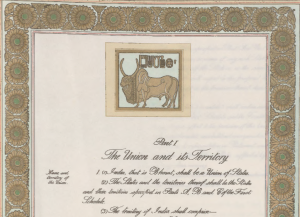
    Article 1 of the Indian Constitution starts as “India, that is Bharat, shall be a union of states…” clearly giving priority to the name India over Bharat. The decision was taken after lots of deliberations in the Constituent Assembly in 1948 and 1949. Three names were shortlisted from the various proposals which included ones like ‘Hind’ and ‘Union of Indian Socialist Republics’ – India, Bharat and Hindustan. Hindustan was dropped as it referred to a larger landmass which had been partitioned in 1947 and also the association with the word ‘Hindu’. Between India and Bharat, the former was given priority as the name the world has known us by for centuries. Bharat was included as the second name, hence the structure of the opening sentence in Article 1.


    At the end of the day, India shall be as our holiest book, the Constitution: states, a union of states, minds, thoughts, beliefs, isms and convictions… all uniting the country more than ever before.


    Jai Hind!


    Avik Chattopadhyay is a senior brand and business strategy consultant based in Gurugram. He writes on MxMIndia every other Thursday. The views here are personal

  • Avik Chattopadhyay: A ‘kalaam’ for Dr Kalam

    By Avik Chattopadhyay


    Avik ChattopadhyayYesterday was eight full years since he left us. There was hardly a requiem for Avul Pakir Jainulabdeen Abdul Kalam on national media or even social media. We have conveniently forgotten a President who most gallantly displayed the ethos that Brand India is.


    Like millions in the country, I too was inspired by ‘The Missile Man’ without needing to meet him. His words and action were enough to light a spark in any progressive and liberal Indian. And to typecast him as a missile man would be the gravest injustice to a citizen who demonstrated every value that is expected of an Indian as visualised by those who fought for our freedom and those who created our Constitution. Dr Kalam was a living embodiment of all the chapters and articles of the holy book of our nationhood.


    Most of us do not know that along with cardiologist Soma Raju, he developed a low-cost coronary stent in 1998 called the ‘Kalam-Raju Stent’. They got together again in 2012 to develop a rugged healthcare tablet computer called the ‘Kalam-Raju Tablet’. This was much beyond his syllabus of designing missiles and rockets for the country.


    In the early 1970s, he was a key member of Project Devil and Project Valiant where the then Prime Minister Mrs. Gandhi had secretly allocated funds to develop missiles from the SLV systems.


    In spite of all visible opposition and public outcry, he vehemently supported the Kudankulam nuclear power plant proposal even if it meant becoming unpopular with a large section of activists and common people. He believed that nuclear energy was the best solution for our country, given the on-ground realities, and stood his ground against popular opinion.


    He knew the Quran as well as he knew the Bhagavad Gita. His spiritual guru was Pramukh Swami, the head of the BAPS Swaminarayan Sampradaya and he went on to write a book on this unique relationship, making him no less a devout Muslim.


    Dr Kalam stood for all that India was supposed to stand for, when envisaged in 1947 by our founding fathers. He stood for inclusiveness in diversity. He stood for courage of conviction against all odds. He embodied the spirit of enterprise and experimentation that defined the 1960s and 1970s of our nation. He embodied the spirit of ‘karma’ in the right essence of living life to the fullest without amassing objects that would be of no rational use. However, he played the veena and write poetry in Tamil as they possibly helped him become a more culturally complete human being.


    His sheer sincerity in making hundreds of youth take his famous oath at every lecture of his will remain etched in the memory of both those who were there as well as watched on television and social media. Never before has a President of this country ever endeared himself to one and all. While Babu Rajendra Prasad and Dr Radhakrishnan were hugely popular, they were part of the freedom struggle and thereby had their draw. Since 1967, there was not one another who was a crowd-puller and inspiration for the citizen.


    And his ending could not have been more fitting, dying of a cardiac arrest while addressing yet another bunch of students, this time in IIM Shillong on 27 July 2015. Sadly, we do not have his memorial in the national capital. It should have been a pilgrimage for every young Indian to soak in the spirit of the man and be inspired by his idea of India.


    As a tribute to the man, the government should have popularised the “Kalam-Raju Tablet” beyond healthcare and taken it to the world as a demonstration of the Indian way to social justice.


    In his book ‘India 2020’, Dr Kalam writes: “I have identified five areas where India has a core competence for integrated action:

    1. agriculture and food processing

    2. education and healthcare

    3. information and communication technology

    4. infrastructure, reliable and quality electric power, surface transport and infrastructure for all parts of the country, and

    5. self-reliance in critical technologies


    These five areas are closely inter-related and if advanced in a coordinated way, will lead to food, economic and national security.” The sequence of the five areas could not have been more apt for a nation like ours.


    I end with the first four lines from an iconic Bengali poem ‘Adorsho Chhele’ [Ideal Boy] by Kusumkumari Das as my tribute to the ‘People’s [Forgotten] President’…


    আমাদের দেশে হবে সেই ছেলে কবে

    কথায় না বড় হয়ে কাজে বড় হবে?

    মুখে হাসি বুকে বল, তেজে ভরা মন

    “মানুষ হইতে হবে”এই যার পণ !!


    When in our country will that boy be born

    Who will grow strong by deeds and not by words?

    With a smile on his face, courage in his heart and energy in his mind

    Resolves to become “a true human being”.


  • Avik Chattopadhyay: Opportunities in Adversity

    By Avik Chattopadhyay


    Avik ChattopadhyayOn March 5, there was hue and cry on Indian social media. A video was shared on a set of banners and a tent set up on a quadrangle outside the UN office in Geneva when the UNHRC session was going on. The messages were disturbing, about child marriage, social oppression of women, atrocities on minorities, religious extremism and mistreatment of Dalits.


    It was a sure ‘diplomatic’ embarrassment with the UNHCR delegates getting to read all this in Geneva as well as coinciding with the G20 Summit in India. And then the wider exposure through social media!


    The government quickly swung into action right away branding the entire set-up as “malicious” and “anti-India”. The press carried the government’s message far and wide. And then of course social media machinery got into action of how such conspiracies are being hatched by the leftists, liberals, woke and anti-nationals who deliberately wish to do India down and break up the country at a time when it wishes to be the “vishwaguru” and teach the world lessons in democracy, social harmony, geo politics and economic growth.


    In every WhatsApp group I am a part of, there were outbursts. Incidentally, all by the male members. Not a single woman spoke against the banners. I found this singularly interesting. One reaction read: “These dirty works have been done by our own inhouse traitors who are living like parasites.” Another read: “This is how the ecosystem against India works. Keep your eyes and ears open always.” Yet another read, “The same scriptwriter as RaGa’s speech in Cambridge.” And then the diatribe quickly degenerated into open filth about certain categories of Indians and certain faiths. I directly reached out to a few otherwise women in the groups and asked them how they react. They all agreed the act was brazen but each was embarrassed to face certain harsh realities!


    Anger or embarrassment?

    This is the first thing that struck me – are we angry at someone spreading lies or are we actually embarrassed? If it is the latter, why did the men react so virulently? Do they actually believe India has no social evils like child exploitation, religious bigotry and untouchability? Do they think these are stories woven by vested interests for centuries to always bring us a bad name? Why did the women not react on the same lines then?


    This is so true for brands when they face such tests on issues like ecology, ethics and employee relations. Here too, their fundamentals are being questioned, not their existence. When protests are taken out against telecom or pharma companies how do they react? Do they get angry at the protestors or do they get embarrassed by their hidden realities that are now out in the open?


    Anti what?

    This is the second filter to be applied. What exactly is the protest against? Is it against specific deficiencies and ills in the country or the entire country itself? Is it based on concocted stories or realities? So, was the banner anti-child marriage or anti-India? Are we deliberately missing the wood for the trees? Would we be okay with the same protest happening in Gurdaspur in place of Geneva?


    What is true for a nation brand is also true for a product brand. If people in Kerala protested about mercury poisoning from an HUL plant there, they were not against the entire company but a specific operation. The company has to have the basic maturity to understand this and then respond accordingly.


    Introspective or seditious?

    The third filter is about the intended impact of the protest – is it to expose you on a particular aspect or create situations that encourage division and social strife. Does the action expose a certain method of governance or openly attack the Constitution of India? The latter is the only benchmark that allows one to measure any action as being either defamatory or seditious. If the protest does not attack the constitution but instead upholds the values of nationhood that it espouses, that protest is very much valid and within the rights of citizenship. Forget about applying Section 124A of the Indian Penal Code, the judicial system can uphold the very case for such a protest.


    The same applies to any other brand. One has to evaluate the protest as whether it allows the organisation to relook at its operations and improve or whether it is created by competitive forces to destabilise its very existence. The response will be accordingly either redressive or reactionary.


    Hubris or humility?

    This was such a wonderful opportunity for India to take the higher ground and react as a true “vishwaguru” that we so yearn to be accepted as. The Ministry could engage with the institution that put up the display and assure the world that we acknowledge and accept our shortcomings but shall certainly surmount them. “Thank you for reminding us of some of our deficiencies. Nobody is perfect but we are constantly striving to improve as a nation.” Instead we behaved as a typical bully, brandishing a hockey stick as offence is the best form of defence. We branded the entire exercise as “anti-India” and increased the embarrassment on the global stage, no better than how a Turkey or Russia would have reacted.


    Brands should never lose the opportunity of a protest to actually improve their connect with their stakeholders. Every adversity is another chance to renew ties and rebuild relationships. A protest is a warning to wake up, engage and improve. Not to refuse and rescind reality.


    Every time there is something like the Hunger Index, Happiness Index, Women Safety Ranking or a simple protest like in Geneva on March 5, as a nation we get into the ultra-aggressive mode of denial and denigration instead of engagement. And we lose yet another opportunity to take a higher, mature ground. Ending up being more anti-India ourselves than those banners on some quadrangle!


    On the occasion of the festival of colours (which has just passed us) I sign off with some words from Kanwal Dibayavi.


    Holi Mubarak!


    Avik Chattopadhyay is a senior brand strategist and commentator based in Gurugram. He writes on MxMIndia every other Thursdays and sometimes on other days as well. His views here are personal.
     

  • Avik Chattopadhyay: Does ‘provenance’ matter anymore?

    By Avik Chattopadhyay


    Avik ChattopadhyayAn ex-boss of mine currently heading a cutting-edge analytics firm in the automotive space shares this interesting infographic shown above from time to time. While the purpose clearly is to trace how Indian automotive brands are doing vis-à-vis others, this time I asked him a basic question: ”Does country of origin really matter to a customer anymore?”


    Source: JATO Dynamics
    Source: JATO Dynamics


    Being a brand practitioner for quite some time, this aspect of “country of origin” or, provenance, as the gurus address it, has been an important and integral part of a brand’s structure. German cars. French wine. Japanese engineering. Italian design. Russian vodka. The generation before me swore more by the country of origin than the brand by itself. German product, Grundig, is what my granduncle would say. That changed to ‘Sony makes the best television set… Japanese you know’, for my father. This generation buys a Samsung because it is a Samsung! Simple.


    Post WWII, the new world order saw legacy nations reinforcing their areas of strength while new ones entered he fray, the most notable being Japan and Soviet Union. In the case of the ‘softer’ products like fashion, food and movies, provenance played a key role in the cultural revival while the ‘harder’ products like automobiles, engineering, aircraft and electronics worked towards economic rebuilding. Thus, various countries developed their areas of ‘speciality’ or ‘association’ with the larger world. My colleagues in Peugeot used to lament that even after so many years, people typically associated France only with fashion, wine and cuisine and not for nuclear power, aeronautics or engineering. The Indian or the Brazilian would not associate Airbus, Areva or Alstom with France. They might easily come from Germany or Switzerland but… France?!


    My question to my colleagues in Paris remains till today – why do you want to be necessarily only French when you are already Peugeot? Provenance was an important ingredient of a product when the country it came from carried greater weight than the manufacturer of the product. So, if a machine made by an unknown company said “Made in Germany”, it automatically opened doors to business as the prospect naturally associated the country with engineering excellence. So, a “Made in Japan” television in the 1980s had to be good, whatever the brand. The country of “make” was a key factor determining choice.


    The other factor that supported provenance as a differentiator was the very origin of the product. An Italian pizza brand would certainly be the most ‘original’ and superior to any other. Similarly, the Russians would make the best vodka. And the Americans when it came to fast food. How could one ever accept a Mexican samosa? One could not simple imagine, let alone accept an actual physical product.


    So, post WWII, the country of origin became the calling card for organisations and corporation out to sell their products and solutions and become the new-age colonisers. For a common person to own or aspire to own such products or solutions coming from such countries was the coming of age. A German car. A Japanese television. An Italian coffee machine. A bottle of French perfume. A can of an American fizzy drink.


    All this worked very well in the fist phase of this new-age colonisation when production was largely based in the home country and markets were captured through importers and distribution channels. Also, many products took pride in the fact that they were only available in their home country and a few select markets and the customer had to take the pains of going there to own one. Hence the shopping lists from family and relatives when one visited Tokyo or Dubai or Paris. The artificially induced scarcity along with provenance enhanced the status of a brand and its universal appeal. One would get the latest VCRs only in Akihabara district in Tokyo. Or the latest Hermes perfume would be available only in London, Paris or New York. In fact, many fashion and cosmetic brands used to proudly write “London-Paris-New York” on their packaging for that added impact.


    The disruption came in 1980 with a man far away from all this who decided to “open” up his nation, break the shackles of an oppressive past and allow the average citizen to dream big. Deng Xiaoping started his reforms in a traditionally conservative and closed China. He famously said, “A cat may be black or white but as long as it catches mice, it is a good cat!” Pragmatic capitalism under the watchful eyes of the Communist Party was okay. That one move opened up one of the world’s biggest markets. The neo colonial organisations and brands had to have a share of this virgin market, waiting to be exploited. They were all welcome, but with a rider. They would have to necessarily manufacture in China to operate in the country, whether you wanted to sell fried potato wedges or supercars. This was to generate employment to improve the per capita income and maintain a low price to ensure affordability and acceptance. The world moved to China and we all know the rest of the story.


    The one milestone change for almost all brands in the world was the beginning of a label that said “Made in China.” You could be French, English, Spanish or Canadian but you were manufacturing in China. And manufacturing enough to sell to the world. So, the embodiment of all-things-that-are-good-are-American, Apple, started saying “Designed in California. Assembled in China.” Very soon, provenance was restricted to where a brand originated from and nothing more as there was a high possibility it was made in China.


    As globalisation spread, provenance contracted. Brands soon realised that they had to manufacture in all key large markets to be competitive and succeed. India and Brazil followed China. With the collapse of the Soviet Union, Russia followed too. And the global citizen was more interested in associating with a specific brand, irrespective of where it originated. The holy cows were being challenged. Finlandia made a vodka better than most Russian brands. Jacob’s Creek had nothing to do with French wine. One Plus could challenge any smartphone maker. Kia could win more Red Dot awards than a European carmaker. The South Koreans could be at the cutting-edge of lighting and not the Italians. Bang & Olufsen was not from Germany. Skagen could make a few Swiss watchmakers blush.


    The world was finally one flat marketplace where a brand could no longer take refuge in the country it came from as a key differentiator. And the post-war trip of nationalistic fervour that made you buy only brands that originated in your country had evaporated. India became part of the marketplace when we liberated our markets ten years after China did.


    The Indian market has matured enough to go beyond an anachronistic aspect like provenance. We buy Korean washing machines, Chinese phones, Bangladeshi apparel and South African wine. We are not emotionally blackmailed by slogans of “vocal for local” as we want that which is best for us. In his novel “Home and the world”, Tagore questions the very concept of ‘swadeshi’ through his protagonist Nikhilesh. If a home-made product cannot match the quality, durability and price of one imported from England, why should a value conscious commoner be forced to buy it?


    There has to be this balance of form, functionality, durability and price that allows us to make brand choices. Otherwise, we would have bought the Tata Indica by the millions by now. Or the Bajaj Chetak. If a Hyundai or a Honda offers me better value, I shall choose that. It is as Indian as a Tata or a TVS.


    Provenance is a vestige of the past.

    Period.


  • Avik Chattopadhyay: Maatrabhumi or Pitrabhumi?

    Avik ChattopadhyayBy Avik Chattopadhyay


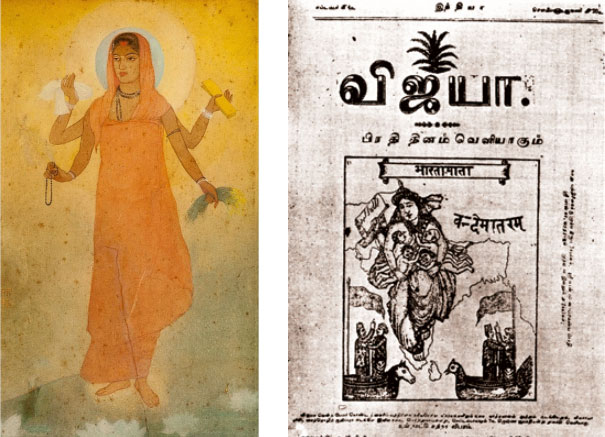
    As a child I was fascinated by Abanindranath Tagore’s painting of a fragile lady with four arms and a beatific face. My mother explained to me that it was ‘Bhārat Mātā’. Then I came across the mention of Bhārat Mātā when I read the Amar Chitra Katha version of Bankim Chandra’s ‘Anandamath’. The curiosity grew. So, Bhārat Mātā must be the mother of Bhaarat. No, I was told. Bhārat Mātā is the goddess of Bhaaratvarsha, the land we live in. And Bhaaratvarsha is the land belonging to Bharatvansha, the lineage of a great legendary ruler called Bharat mentioned in both the Rigveda and the Mahabharata.


    Abanindranath Tagore’s “Bharat Mata” of 1905; the cover of Bharati’s “Vijaya” in 1909


    So, a large part of north Indians come from the lineage of Bharat whereas all Indians revere Bhārat Mātā. The revolutionary poet Subramaniya Bharati had carried the concept of Bhārat Mātā from Calcutta to Madras when he published the image in his magazine ‘Vijaya’ in 1909. So, what was a concept in 1880 in Anandamath became a depiction by Abanindranath in 1905 and an adaptation by Bharati in 1909. And the rest, as is said, is ‘Bhārat Mātā ki jai’.


    The curiosity grew. So, what are we, a motherland or fatherland? Motherland, of course, said all!! If that is so, why are our mothers trudging 15 kilometres one way to get water while our fathers are tugging at their hookahs? Why does every government form ask for the father’s name and not the mother’s? silly boy, the land is the mother’s while the form is the father’s, okay? What really is the difference between a motherland and a fatherland? Why do some people address their nations as the motherland while for others it is the fatherland?


    After some bit of reading and probing social scientists, I have understood that ‘motherland’ typically refers to the physical landform whereas ‘fatherland’ refers to the race. The former is about the soil or landmass while the latter is about the forefathers that lived on a certain landmass. While the former is defined by a certain boundary of land, the latter is more about the lineage irrespective of the geographical spread.


    Hence, for nations like India, Russia, and Turkey it is the motherland whereas for Germany, Thailand, and France it is the fatherland. This has nothing to do with religion or faith, as for India it is ‘Bhārat Mātā’ while for Pakistan it is ‘Madar-e-Vatan’, both motherlands. Social scientists tell me that the reasons for such variances could go back to centuries when early man started travelling to various parts of the world out of what we know today as Africa. The fertile lands, full of food and water, were where the goddesses of fertility emerged, in various forms. And mother nature became a key deity to pray before and keep pleased. The soil was the “mother” and kept being addressed that way over the centuries, irrespective of faith. The inhospitable lands with severe weather were where more male deities emerged to help the community brave the forces of nature and move on. Hence the “father” becoming the pivot.


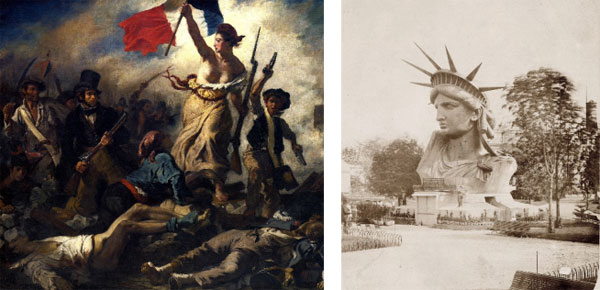
    Can we therefore infer that the more ‘settled’ and ‘content’ peoples are the ones who are blessed with the motherland while the ones who are ‘restless’ and ‘conquering’ carry the flags of their fatherlands? Are those having motherlands not as patriotic as those proclaiming fatherlands? We surely cannot arrive at such sweeping statements. The Spanish and the English have been some of the biggest colonisers while the Swiss and the Tibetans have been some of the most pacific! While France has called itself a ‘fatherland’, one of its most enduring national symbols of Liberty is a lady, explaining for the Statue of Liberty in the US too. Joan of Arc has been a symbol of French patriotism. And the word ‘patriot’ is has been derived from the Greek ‘patris’ which meant fatherland, evolving into the Latin ‘patriota’ and then into the French ‘patriote’ and finally the English ‘patriot’.


    Delacroix’s “Liberte” of 1830; Bartholdi’s head of “Liberty” in Paris in 1878, eventually into a full statue in New York in 1886


    Then there are peoples who address their nations as ‘motherlands of our forefathers’ like the Jewish ‘Eretz Ha’Avot’, Japanese ‘Sokoku’ and Korean ‘Joguk’. The Persians use two specific terms ‘Sarzamin e Pedari’ and ‘Sarzamin e Maadari’ that are often used with more or less the same implication. Even in India there are distinct concepts of ‘Maatrabhumi’ and ‘Pitrabhumi’, the former being where I belong to and the latter being where I come from.


    The subject is surely a bit confusing and has elements of intrigue and loving mystery for the same reason. And being still open to interpretations, it remains unbound by ritual and dogmas. In this context when I see bandana-clad, trident-laden, flag-wielding hirsute mobs shouting ‘Bhārat Mātā ki jai’ more to intimidate rather than endear, I wonder if they really bother with the subtleties and the underlying theology.


    But then, as Tagore says, “Into that heaven of freedom, my Father, let my country awake.”


  • Avik Chattopadhyay: Re-Kali-bration!

    Avik ChattopadhyayBy Avik Chattopadhyay


    “This time, Kali,

    I’m going to eat You up.

    I’ll eat You,

    I’ll eat You,

    Oh Compassionate to the Poor.

    I was born under an evil star

    and sons born then

    devour their mothers.

    Either You eat me

    or I eat You:

    we must decide on one.”


    These are the opening lines of one of Bengal’s most popular songs on Goddess Kali titled ‘Ebaar Kali tomaay khaabo’ composed by Ramprasad Sen sometime in the mid-1700s. One of the leading Hindu ‘Shakta’ saints of all times, he started a genre of Bengali devotional music later called ‘Ramprasadi’ in his honour. Siraj-ud-Daula the last nawab of Bangal was supposedly a huge fan of his.


    Ramprasad would be trolled today. The sheer nerve of even imagining that he would devour the goddess! Multiple FIRs would be filed across the country, and he would be spending a large part of his life between sessions of jail and interim bail. Add to that the handful of threats of being beheaded issued by the leading seers of the faith!


    Rabi Ghosh as Nataraj smoking a beedi in Satyajit Ray’s “Mahapurush”, 1965


    In 1965, Satyajit Ray made a delectable black comedy called “Mahapurush” about the proliferation of fraud ‘sadhus’ and ‘yogis’ in society. In one scene, Rabi Ghosh, a leading actor is shown dressed up as Nataraj [Shiva] smoking a beedi.


    Ray would be in jail today for such blasphemy as he would have refused to delete the scene. And the movie would have anyway been an OTT release as the Censor Board would have refused to even purify it with its holy ‘scissors’.


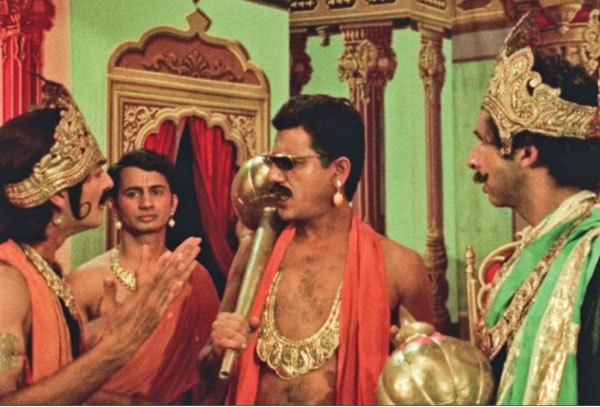
    Om Puri as Bheem in the Mahabharat episode in Kundan Shah’s ‘Jaane Bhi Do Yaaro’, 1983 


    The present generation needs to watch Kundan Shah’s masterpiece ‘Jaane Bhi Do Yaaro’. Made in 1983 it is a demonstration of what society and culture was like then. A cult film, the Mahabharat episode would have led to the set being burnt during shooting itself. Imagine Om Puri walking in as Bheem, wearing sunglasses remarking, “How can we let Draupadi go? We are all her equal shareholders!” Processions would be out on the streets and some Mr Shah might as well have interred this Mr Shah.


    The entire brouhaha around the Kaali poster for Leena Manimekalai’s documentary is quite amusing to me. People have been offended as the goddess has been shown smoking. There is a lesser blasphemy of showing her also carrying an LGBTQ flag. Twitter wars have been fought, orders for beheading have been issued and FIRs have been filed against the lady. Some politicians have also made the most of the situation, firing barbs and laying barbwire! Kali is trending, finally!


    It is good in a way. The goddess has always played second fiddle to her fairer counterparts across the country apart from in Bengal and Odisha. In these two states, she stands shoulder to shoulder with Durga. In Bengal, which is more matriarchal in matters of religion and society than the rest of the country, Kali is more a mother, a daughter, and a child than a goddess on a pedestal.


    She did not start from scratch on the Vedic pantheon. Regular mentions are made in Vedic texts only from around 500 AD. Some sources say that Kali was a pagan goddess to start with, going by her complexion and depiction. Tribals and groups like dacoits and thugs prayed before her. Over time she got assimilated into the mainstream and stories were woven around her integrating her into the narrative, along with Parvati and other symbols of ‘Shakti’ [power] like Durga. She is also depicted in contrasting styles across the country. The popular image of Kali is the one from Bengal, dark, menacing, hair open, wearing nothing but a garland of severed heads and a belt of severed hands, blood red tongue out seemingly in embarrassment over stepping on her husband Shiva! The very imagery is very non-conformist and unsettling to the uninitiated. She breaks all rules of conservative feminism. She is offered wine and meat, the staple of her earliest worshippers before the whitewashers came in.


    Kali manifests herself in various forms, going by the interpretation of her worshippers. Smashaan Kali. Bhadra Kali. Dakshina Kali. Samhara Kali. Raksha Kali. She is Ugra Tara and Krodikali in Buddhism. She is Sara-la-Kali for the Roman in France. She is the Jessoreshwari Kali in Jaipur and the Dhakeshwari Kali in Dhaka.


    ‘Brand Kali’ is omnipotent and omnivorous. She creates her own rules instead of readily accepting the old ones. She does all that the repressed Indian woman has not been allowed to do. She has the power to save as well as sever. She is not the stereotype ‘Sati Savitri’. She is complex yet confident to take the proverbial bull by its horns. She is as comfortable in the dark as she is in the light. She is the modern Indian woman who enjoys her mutton, red wine, and an occasional drag of the chillum. Bereft of rituals, bindings, dress codes, food menus, colour, and caste.


    And she scoffs at those who try to recalibrate her for their personal agenda. For it takes just a swipe of her ‘kharga’ to finish it all!


    Avik Chattopadhyay is senior business strategist living in Gurugram. He writes on MxMIndia every other Thursday. His views here are personal


  • Avik Chattopadhyay: Brand Ram in the 21st century

    By Avik Chattopadhyay


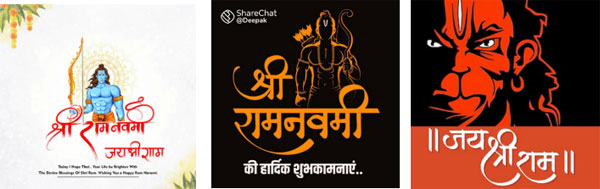
    Avik ChattopadhyayOn the morning of April 10, most of the WhatsApp groups I am part of were full of Ram Navami greetings, mostly with memes and a few without.


    Am sharing a few representative ones here…


    It was interesting to see six-pack Ram memes and angry Hanuman memes being shared. Gone were the days of the more traditional Ram-Sita-Lakshman images blessing us, with Hanuman at their feet, smiling in obeisance.


    Ram has got an image makeover.

    He is a symbol of manhood, thus has to be out of a gym.

    He is a symbol of protection, thus has to be with his bow.

    He is a symbol of control, thus has to have a stern look.


    He cannot be smiling, seated and unarmed. That does not do justice to today’s Ram who is less a symbol of justice and more a symbol of power.


    Brand Ram in the 21st century is a far cry from the obedient, selfless, optimistic, benevolent young man whose journey was more important than his destination. This journey of fourteen years built the foundation of his method of governance.


    He is indeed a far cry from a time in my land when he could be adored by all and adorned on all walls.  He is a far cry from the little child dressed up as him for the school Ramlila, sharing the samosa and nimbu pani with Ravan and Kumbhakarna. He is a full grown man now…,


    First, he was on the calendar.

    Then he was Arun Govil.

    Now he is Vidyut Jamwwal!


    Would Tulsi’s Ram enjoy his current avatar? I doubt, for the very DNA has been replaced. “Purushottam Maryada” has been misread as about mere ‘purush’ and not ‘purushaarth’. The means was what defined yesterday’s Ram. The end had to be an outcome and not the purpose. Today, the end justifies his current form on steroids. Then the protection was of values and society. Today, it is about dogma and oneself. The chant of Jai Shri Ram is less about reassurance and more about retribution.


    Gandhi had in fact revived the concept of “Ram Rajya”. And it was a big blunder according to me. In a cultural menagerie called India where monarchy was the one common factor, to tout the concept of “rajya” in a fledgling democracy was disastrous. The core concept of selflessness and governance was lost on most of us and of course twisted to the benefit of the politicians as is being done right now for reasons quite the contrary. Seventy-five years ago, it should have been the concept of “Ram Shaasan” and never “Ram Rajya”.


    Ram is what lies deep within… the soul. The character is the manifestation of the current state of the nation and sentiments that drive the average person. The multiple incidents of socio-religious unrest that we have seen this Ram Navami is a clear demonstration of the same.


    Ram was about benefaction then.

    Ram is about belligerence now.


    Brand Ram is what a large part of Indian society is today. For he is the prospect, proponent, and prophet rolled into one.


    I remember having experienced Aamir Raza Husain’s magnum-theatre “The Legend of Ram” around 20 years ago. Then it was a demonstration of the spirit that a person of another faith could put together such a splendid show. Today, the sets might get burnt down before the first show. The bandana-clad Ram would never stand such transgression while the beatific Ram would stand a mute spectator!


    I cannot think of a better way to end than reproduce the poem by Mohammad ‘Allama’ Iqbal called “Ram” whom he lovingly calls Imam-e-Hind, in Hindi and English scripts.


    लबरेज़ है शराब-ए-हक़ीक़त से जाम-ए-हिंद

    सब फ़लसफ़ी हैं ख़ित्ता-ए-मग़रिब के राम-ए-हिंद

    ये हिन्दियों की फ़िक्र-ए-फ़लक-रस का है असर

    रिफ़अत में आसमाँ से भी ऊँचा है बाम-ए-हिंद

    इस देस में हुए हैं हज़ारों मलक-सरिश्त

    मशहूर जिन के दम से है दुनिया में नाम-ए-हिंद

    है राम के वजूद पे हिन्दोस्ताँ को नाज़

    अहल-ए-नज़र समझते हैं इस को इमाम-ए-हिंद

    एजाज़ इस चराग़-ए-हिदायत का है यही

    रौशन-तर-अज़-सहर है ज़माने में शाम-ए-हिंद

    तलवार का धनी था शुजाअ’त में फ़र्द था

    पाकीज़गी में जोश-ए-मोहब्बत में फ़र्द था


    Labrez hai sharaab-e-haqeeqat se jaam-e-hind 

    Sab falsafi hain qhitta-e-maghrib ke Ram-e-hind

    Ye hindiyon ki fiqr-e-falaq-ras ka hai asar

    Rif-at mein aasmaan se bhi ooncha hai baam-e-hind

    Iss des mein hue hain hazaaron malak-sarisht

    Mashhoor jin ke dam se hai duniya mein naam-e-hind

    Hai Ram ke wajood pe Hindostan ko naaz

    Ahle-nazar samajhte hain iss ko Imam-e-hind

    Ejaz iss chiragh-e-hidayat ka hai yahi

    Roshan-tar-az-seher hai zamaane mein shaam-e-hind

    Talwar ka dhani tha shuja-at mein fard tha

    Pakeezagi mein josh-e-mohabbat mein fard tha.


    The best translation I could get from a member of an Urdu group I am part of follows…


    “The cup of Hind

    overflows with the wine of truth.

    Philosophers of the Western world

    are its devotees.

    The mysticism of her philosophers

    makes Hind’s star soar above all constellations.

    Thousands of angels have descended

    to proclaim Hind’s name before the world.

    And proud of his existence

    the discerning eye sees in Ram, a prophet.

    The glow from this lamp of wisdom

    makes Hind’s evening more radiant

    than the world’s daybreak.

    Valorous, brave, a master swordsman!

    In purity, in love, Ram was unmatched.”


    Jai Hind!


    Avik Chattopadhyay is a senior strategy consultant. He writes on MxMIndia every other Thursday on branding, culture and the confluence of both. His views here are personal.
  • Avik Chattopadhyay: The Poverty of Indian sport!

    Avik ChattopadhyayBy Avik Chattopadhyay


    Well, the games are finally over, and we have done our best in the ‘arena’. The euphoria around the medal winners will remain till the time our “men in blue” ‘conquer England’!


    While we celebrate and savour our first ever gold in athletics and a total tally of seven medals, we lie in the 40s in ranking. The question remains as to why we end up winning so few medals in every edition of the Olympics. Before Tokyo, our best performance was in London when we got six medals. Since 1980, we have not won a team gold and the only previous individual gold was in 2008.


    It is not that we do not create world champions outside of cricket. We have quite a few of them in boxing, shooting and archery over the last decade. This has been despite the state of Indian sport and our collective deliberate apathy.


    Indian sport is poor. The poverty is not in the talent and the individual drive to excel. The poverty of Indian sport lies in the ecosystem built around it, composed of administrators, sponsors, policy makers, media, supporters, public and business enterprises. The commitment and support of the eco-system lets the sportsperson down, time and again. The hypocrisy, grandstanding and posturing gets exposed. And it got exposed once again in these Olympic games…


    • When we had debates on television channels on how to become a “sporting nation”! Experts professed how all children should be made to play a sport and only then will the parents appreciate this aspect of growing up as well produce a huge talent pool. Given the obesity rates in children in the US, GB, and Italy right now, they surely cannot be sporting nations!! Sport is treated there as a viable profession for the athlete and as serious business for some of the world’s biggest brands, from apparel to equipment and supplements.


    • When we admire pictures of the less than humble living conditions of many athletes and talk of their ‘struggles’ without being ashamed of keeping them in such a state in the first place!


    • When the broadcasting channel shifts focus on the sports minister cheering from a studio while your national team is marching past in the opening ceremony.


    • When Amitabh Bachchan, Bipin Rawat, Akshay Kumar, Sudha Murthy, Sajjan Jindal and Kiren Rijiju are brought in to cheer your contingent and give ‘victory punches’ while PT Usha, Abhinav Bindra, Rajyavardhan Rathore, Dhanraj Pillay, Karnam Malleshwari and Leander Paes are ignored!


    • When not a single state government adopted a sport inspired by the way Odisha has done with hockey, instead of merely congratulatory tweets and banners up in their respective cities.


    • When you share lists of “India’s narrow misses in 4thplace finishes” and feel that is enough to satiate us as a nation.


    • When the broadcasting partner starts promoting an upcoming cricket series on its channels telecasting the Olympics as if directing the nation to go into its “comfort zone”!


    • When we do not have a single world-class sporting brand all these years while other developing nations have created a few that are endorsed globally and proudly displayed by the national teams.


    • When the national channel with terrestrial reach is not allowed to share the feed by the broadcasting partner depriving more than 60 million television owning households who watch only DD. It could have actually been a “Barshim-Tamberi moment” for Indian broadcasting.


    • When there are clear best practices available from lesser privileged nations like Ethiopia and Nigeria on how to develop talent, but we wish to be bound by archaic methods of grassroots development.


    • When state governments announce rewards for an athlete after winning a medal but provide no incentives and infrastructure to him / her when preparing for the same!


    • When corporates look for returns on investment from sponsoring sports that need long gestation periods while lamenting why we do not win more medals than Cuba or Kenya does!


    • When names of sporting awards need to be changed as a political gimmick after a certain team wins in the Olympic year and not in the normal course of time!


    • When most sportspersons look forward to getting a secure job with a secure salary in a corporate / PSU / government as a career in sports has none.


    • When the broadcaster wastes time on stretched inane discussions and debates instead of covering as much live action as possible.


    • When our sporting federations are headed by politicians or political appointments for decades, damaging all chances of progress through nepotism and corruption.


    • When a state government announces crores as prize for a medal winner and will build a stadium for him in his village after the win but not before.


    • When a football league for children folds up for want of Rs.20 lakhs per annum when brands vie with each other to spend the same amount on 3-4 ad spots on IPL.


    • When media covers foreign football leagues more than raising the issue of building local ones.


    • When we hunt for foreign coaches for our athletes but have no Indian coaches doing the same for other nations.


    • When the country’s premier football league boasts of international players and coaches who are either spent forces or come from second / third division leagues.


    • When the country’s national sport was not officially accepted as one by the Ministry till the chief minister of Odisha had to write to the Prime Minister to officially declare it so in 2018!


    • When e-commerce brands give you 15% off using code ‘HOCKEY’ after the games but have no crowdfunding initiative for the team when they train.


    Avik Chattopadhyay is a senior brands strategy consultant based in Gurugram. He writes on MxMIndia on most alternate Thursdays but sometimes on other days as well. His views here are personal.