Tag: YouTube

  • State of the Trade Media: Pre-Crisis Alert


    By Shailesh Kapoor


    Shailesh KapoorNews about government guidelines on content regulation and ‘censorship’ in the digital space, including social media and the OTT platforms, has been dominating the trade media over the last week. This topic has been in the discussion for a while, and continues to get written about extensively in business newspapers and online trade websites.

    But it is not as if the trade media covers digital content only when there are regulatory developments. There has been extensive reporting on content itself, including show launches, slate launches, content analysis, the works. For years, the trade media was largely focused on linear television as its primary industry of analysis, and print got its share of coverage as a secondary medium. But now, digital media is right up there, ahead of television, in terms of its visibility on top media websites in India.

    From an advertising perspective, free platforms like social media, YouTube and AVOD offerings of OTT players form an important domain to report on. Digital advertising is growing, and is shaping the future of how advertising may look like in a future. But SVOD platforms do not interest advertisers as such. And yet, they are being covered extensively. A platform like Netflix India gets more trade coverage than big TV channels whose daily viewership is 20 times Netflix’s India subscriber base.

    Evidently, it seems the digital story is an exciting one, especially because it’s evolving, and everyone, including the platforms, are learning on the go. Consumer tastes are still shaping up, and data is not easily accessible, which opens up the topic for explorations in various directions.

    While the extensive coverage given to digital media makes a lot of sense, the contrast between how digital media is being covered far more meaningfully in the trade than traditional media has been a pet peeve for me for a couple of years now. Search the internet for pieces on Indian television or print industry, and you will largely get press releases, or interviews that look more like plugs than actual interviews. As a student of media, if you looked towards the internet for some knowledge, you will get ample to read on the digital front, but very little insights coming your way on television or print. There is hardly any content analysis or marketing stories on TV or print brands, for example.

    The situation has been worse for the other traditional industry, i.e., films. Reporting on theatrical content has been limited to a few box-office and film trade sites. The latter are more promotional platforms than knowledge hubs. For the longest time, I thought this was the case because the theatrical medium is not ad-driven, and hence doesn’t interest the trade media. But with so much coverage on SVOD content, that argument is not valid either.

    Even at an overall level, trade websites have generally been reduced to being information disseminators than thought drivers. Very few like MxMIndia have regular guest columns from industry experts. Views, and not news, shape up the thinking of a human being. Young executives entering the industry can definitely do with more of them.

    Because of my work, I often get to speak to media trade journalists. If I were to make a list of those who truly understand the medium, the audience and the business, the list will come to less than a dozen.

    We may not realise it yet, but the Indian media industry is running into a crisis of poor reporting around it. This problem may even be linked to the larger issue of falling levels of journalism across domains. But B2B journalism doesn’t even have the excuse that it needs to cater to the lowest common denominator!

    Let’s hope that this growing industry gets a more nuanced B2B media ecosystem in the coming years. It surely deserves better.
  • Spending on videos to reach consumers yielded highest returns: Octane CMO Report


    By Our Staff


    Spending on video to reach consumers during the lockdown period yielded highest return on investment, said the ‘Digital 2021: Adapting to the New Normal, a report prepared by Octane Research and DMAasia.


    Octane Research engaged with 250-plus Chief Marketing Officers (CMOs) and leaders – as part of its research study to gain first-hand insights and perspective on outflanking the impact of the Covid-19 pandemic.


    According to the report, as many as 62 per cent of India CMOs said that spends on video for consumer outreach delivered the highest return on investment. “The digital industry and streaming video players like Netflix, Amazon, Facebook, YouTube and others decided to temporary default their video quality to SD. This initiative was in consumer interest to ensure better access to the internet by maintaining the robustness of cellular networks,” said the Octane’s annual state of online marketing report published on its 10th anniversary.


    The report said video continues to be the most stimulating type of content for the consumer, as well as offering maximum engagement.


    Marketers said that video-along with live streaming—gave their brands the maximum amount of customer engagement, only social media had more. It was also noted blogs and email campaigns have continued to be among the Top 5 channels for customer engagement. Promotion and updates through the use of traditional SMS is also among the Top 5.


    “Content Marketing in India has finally found its place as a separate line item on the marketers’ budgets. Online is driven through effective content management practices and we anticipate surge in this area for the 2021 Annual. Engaging new audiences emerges as the no. 1 area of opportunity for India brands,” it said.


    Video continues to be the most stimulating type of content for the consumer. It continues to offer a solid ROI (return on investment), as 61.8 per cent of our responders deploy content marketing strategies within the videos & webinars.


    The report revealed that a video for “Nutrela” titled #AcchaKyaHua, and promoted with minimal budget, managed to garner over half a million views on Facebook during the lockdown.


    “With movement of people severely limited during the lockdown and even after that, companies swiftly adopted digital mode to reach out to wider section of people, the evidence suggest that the strategy worked,” said Punit Modhgil, Chief Research Officer, Octane Research.


    The research report said about 51 per cent of India CMOs admitted having leveraged branded pages, microsites and social media handles for marketing promotions and consumer engagement. Promotional microsites allow consumers to have a quick, focused journey based on their immediate need, rather than dispersing their attention. They are also cost-effective in increasing a consumer’s engagement by promoting brand specific content.


    CMOs in India also leveraged their brand’s social media handles to actively reach out and engage with their followers. They used their Instagram and Twitter handles to showcase emerging creative talent—and commissioned select creative work to help tell the brand story. The brand ‘Converse’ ran a campaign on new ways to create progress together with consumers.


    As regards emailers and newsletters, 43 per cent of India CMOs participating in the study ranked email third in terms of impact & return on investment generated. According to Campaign Monitor, open rates for email increased by 16 per cent in March and email sends increased by 19 per cent.


    2020 is the year influencer marketing became mainstream with marketers in India and a majority of them plan to invest in 2021 in influencer marketing programs because of its high impact in driving awareness & engaging consumers. Celebrities regularly conducted “Instagram LIVE” sessions to engage their followers. In addition, a number of BFSI (banking, financial services and insurance) and e-wallet brands utilized influencers to inform consumers on how their services were relevant during lockdown. An overwhelming 88 per cent of the participants said they would be trying influencer marketing in the next 12 months as “Consumers trust what influencers say about brands far more than what brands say about themselves in their advertising”.


    Thirty-three per cent of CMOs feel they would be running seasonal campaigns on loyalty programmes and an almost equal number vouched such initiatives in the short-term.


  • Network18 selected to be a part of the GNI YouTube Sustainability Lab

    By A Correspondent


    Media conglomerate Network18 has announced that it has been selected by the Google News Initiative (GNI) for funding as part of the YouTube Sustainability Lab. The fund will support innovation in the area of financial sustainability for video news.


    Commenting on the selection, Pandurang Nayak, Chief Technology Officer, Network18 Digital said: “We appreciate the GNI’s effort to work with the news industry to help journalism thrive in the digital age and are delighted to have been selected to work on this initiative.  We believe that the financial support and peer interactions with media companies around the world will enable us to do greater innovation to deliver a world-class product that’s focused on India. We are committed towards forging greater integration between TV & Digital, and pivoting our philosophy to ‘TV first, digital always’, thereby mobilizing our strength of 1200+ reporters, contributing daily in 13 different languages, to do mobile journalism using AI/ML-powered tools and make it faster and efficient to publish premium news content on our websites, apps and social media properties.”


  • Asian Paints goes with YT creators for Viroprotek

    By A Correspondent


    To create buzz around the product launch, Asian Paints and its social media agency – Kinnect – collaborated with YouTube creators.
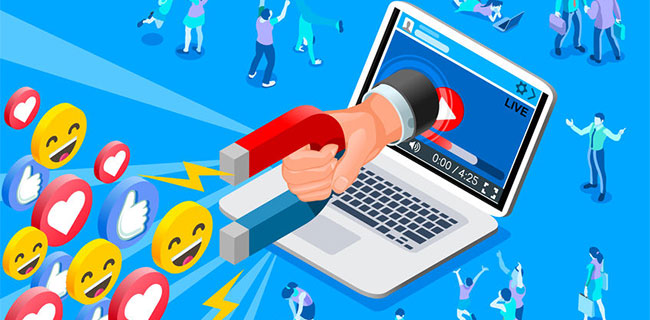

     

    Notes a communique: “The campaign garnered over 104+ million impressions, 27.7+ million views and 1.1+ million engagements. Most importantly, the call-out by YouTubers, along with the links mentioned in the description, resulted in 30K+ comments and over 8k+ website visits to buy Viroprotek’s range of products.”


    Note from Ed: The data provided above is not third-party, and not verified by MxMIndia. We urge readers to make their judgment.


  • The Big Bad World of Bought Likes & Trends


    By Bhuvi Gupta


    Bhuvi Gupta

    The business of news and entertainment is unique from other businesses as there is no underlying need for consumption and content is easily replaceable with similar alternatives. Hence, the entertainment industries have always relied heavily on glitz, gossip and glamour to garner consumption.


    This has taken many avatars through the decades. In the early 2000s, the Times Group innovated and changed the PR landscape when they launched Medianet, renamed as Optimal Media Solutions (OMS) since. It was very successful for the both the media and entertainment industries, because of the blurred lines between ads and news. The audience was oblivious as long as gossip and entertainment was delivered and hence many a film were boosted due to entirely manufactured gossip on link-ups and skirmishes on set. TV news followed soon after. NDTV was the front-runner of branded content in TV with shows like Earth Hour, Greenathon etc. Today, weekend programming across English news channel almost entirely comprises such branded shows.


    The digital equivalent of Medianet is the manufactured views, likes, followers and trends because the lines between the inorganic and organic are blurred. This is more dangerous than Medianet, because all social media platforms have Achilles’ heels which can be exploited to manufacture reach that is invisible even to the discerning viewer.


    All this changed when last month, the Mumbai police launched an investigation into the 75 Lakhs worth of YouTube views purchased by Aditya Singh Sisodia aka Baadshah for his 2019 single, ‘Pagal’. The song launch was a mega-affair with influencer marketing campaigns on Instagram and TikTok, YouTube advertising and other dubious means employed in an attempt to break records. Baadshah claimed that ‘Pagal’ was the fastest video to reach 75 million views on YouTube, which was promptly shot down by them due to inorganic means employed. This has subsequently lead to the ongoing criminal case filed by the Mumbai police and the investigation thereafter. The case has opened a can of worms, as newer unethical practices of the digital ecosystem of the entertainment industry began slowly getting exposed.


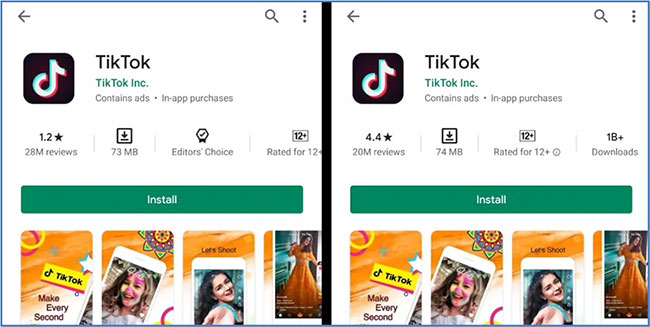
    To be honest, in 2020, Baadshah’s admission to buying views would not have come as a  shock to most of us. Even the undiscerning viewer sees enough chinks in the digital armour – screenshots of identical tweets from celebs (right down to grammatical errors) praising a government or a popular icon, TikTok’s Playstore ratings being brought down in a day and then restored are two of many examples. What is not common knowledge is the sheer mechanics and extent of what goes into digital influence manufacturing and the reasons behind it.


    In May 2020, TikTok’s app store ratings were restored after Google deleted 80 Lakh negative comments made in the span of a week in response to the Galwan Valley skirmish. The Chinese app has since been banned in India.


    Why do Indian Artists companies do this?

    Creating a buzz in the entertainment business is crucial to remain relevant. Social media metrics have come to define the salability of the artist for producers and distributors. It is a flawed ecosystem exploited by all the players. To elucidate –


    The problem with the Algorithm

    View counts on YouTube, don’t differentiate between paid and unpaid views or the viewership duration (a view is counted after only 30 seconds of consumption). Views are a key metric for YouTube’s algorithms, especially when it comes to search result rankings and recommendations, which help drive organic views and hence generate revenue. Hence, paying for views is a natural choice because they help recoup advertising investments through organic views, while adding the credibility that higher view counts get.


    Not only vanity metrics

    For films, OTT and satellite TV, rights are often sold after movie trailers are released and the view metrics of the trailer, contribute to the negotiating power of the producer. Likewise, in the music industry, licensing deals, terms of contracts, concert tours and appearances are often measured basis song popularity. Hence, paying for YouTube views is a natural investment that pays for itself many times over.


    The problem with the platforms

    It serves social media platforms to have higher view counts because, it drives up daily traffic on the platform, while generating ad revenue. This problem of fake news, fake views, and bots serves social media portals which rely on user metrics to help set ad rates. In the absence of stringent laws, while popular social media platforms do make the right noises about removing bots and fake profiles they have little incentive to actually follow through.


    It’s not a crime in India… not yet!

    Many countries across the world like Singapore, France and Germany, are enacting strict cyber laws that punish hate-speech, threats, and impersonations (under which fake followers lie) as criminal offences, liable to both imprisonment and fines. In the absence of such laws in India, manufacturing inorganic views becomes dishonest but not illegal. While the fake likes industry has been thriving for the last few years, the case against Badshah may just be a watershed moment in the creation of cyberlaws, which will bring more transparency in Indian cyber space.


    Till laws change, as a marketer, I leave you with my content checks to avoid being gamed. On YouTube, I check engagement (likes and comments as a percentage of views), for highly viewed content before investing the time to watch. If the number is low, it is safe to say that the views have been bought. And on Twitter, inorganically trended hashtags will have a majority of tweets with the same sentence structure and central thought – so a quick scan of tweets under a trending hashtag will help check ingenuity.


    Bhuvi Gupta is a marketer with over 10 years across industries, of which the last six have been in Media & Entertainment. She has been a part of many launch marketing campaigns – specifically at the Times of India group, Republic TV and the latest in marketing a Bollywood film. She will write on A&M (mostly marketing, but often on advertising too) every other Tuesday. Her views here are personal. She tweets at @bhuvigupta3


  • L’Oreal Paris collaborates with YouTube to hunt for India’s top beauty content creators

    By A Correspondent


    L’Oréal Paris has announced a collaboration with YouTube for the first edition of YouTube NextUp for Beauty Creators. This association aims at supporting the rise of beauty content providers/ creators on the platform.


    Commenting on the collaboration, Pau Gruart, General Manger L’Oréal Paris India said: “YouTube has built a global ecosystem of creators, who are gaining popularity and influence with every passing day. L’Oréal Paris, a brand synonymous with “You’re worth it” wants to be at the forefront of nurturing talent in the beauty creators’ space. This helps both the creators and us to build a world of beauty that’s inclusive, progressive and educational. We are proud to be partners with a platform that has risen to become the go-to destination for all beauty lovers across the globe.”


    Added Satya Raghavan, Director, YouTube Content Partnerships, India: “We are thrilled to associate with L’Oréal Paris, a pioneer in beauty across the globe, for the Beauty Creators edition of YouTube NextUp. YouTube is the hub for all beauty mavens and who better than L’Oréal Paris to coach the aspiring influencers to be their best. We aim to scout for passionate individuals who creatively showcase their love for all things beauty and help them develop their content along with our partners.”


  • Men Rule OTT in India. 66% males dominate viewership


    By A Correspondent


    The audience size of regular OTT (online video content) audience in India stands at 76.5 Million (7.65 Cr), according to the findings of The Ormax OTT Audience Report: 2019. Mumbai and Delhi lead the top markets, with 3 million regular OTT audience each, followed by Bengaluru, Hyderabad, Kolkata, Ahmedabad, Surat, Chennai, Pune & Jaipur.


    The study, conducted among 15+ age group, also profiles the OTT Universe. 66% regular OTT audience are men, while 34% are women. 25% belong to the 15-21 yrs. age group, 34% in the 22-30 yrs. age group, 21% in 31-40 yrs. and 20% in the 41+ age group.


    The research report covered a sample size of 10,000 audience over the period of May to September 2019, whereby audience were sized and profiled based on their OTT consumption behaviour, usage of various OTT platforms/ apps, and their content choices. The study defined ‘regular OTT audience’ as someone who watched two or more hours of OTT content every week, and uses at least one website/ app besides YouTube and social media to watch video content online.


    Speaking about The Ormax OTT Audience Report: 2019, Shailesh Kapoor, CEO – Ormax Media, said: “OTT is an emerging and fast-growing category in India. While individual platforms have a lot of a data on their own audience, there is little industry-wide understanding available on who the OTT audience in India exactly is, how many are they in number, where do they exist, how do they watch, which genres do they prefer, what are their subscription triggers, and many other such questions that are extremely relevant to any OTT business. This report, which will be an annual feature, answers many such questions in a manner that’s highly actionable, with direct implications in decision-making in the areas of content selection, target audience choice, media planning, market research and brand communication”.


    Among the OTT platforms, YouTube emerges as the most-preferred OTT brand, followed by Netflix, Amazon Prime Video and Hotstar closely vying for the second position. ALT Balaji’s Gandii Baat emerged as the most male-skewed show, while Amazon Prime Video’s Mind The Malhotras emerged as the most female-skewed show.


    The report also highlights how solo consumption is still the dominant viewing behaviour seen in the OTT category, with 82% audience typically watching online videos alone. Hindi emerges as the most-preferred language of online video consumption at 62%, followed by English at 22%, while regional languages, led by Telugu and Tamil, control the balance 16% share.


    The Ormax OTT Audience Report: 2019 is a syndicated report that’s now available for subscription.


  • Sony Pictures and Dentsu Webchutney launch an interactive game on YouTube

    By A Correspondent


    Sony Pictures Entertainment, in partnership with Dentsu Webchutney, has created a gaming video for YouTube. Inspired from Sony Pictures Entertainment’s latest release, Zombieland: Double Tap, the video features zombies and guns.


    Said Shony Panjikaran, Director & Head – Marketing, Sony Pictures Entertainment India: “Zombieland is one of the few unique films which has a cult following since years. This is despite the fact that the subject and its treatment is a bit niche for the Indian market. We recognized that a huge chunk of the target audiences are gamers. Therefore, to engage them with a thematic game was our unique proposition. After analysing what platforms would be the best to use based on numbers and also creatively befitting, we thought YouTube would be the most ideal platform for this. Also, the YouTube feature of double tap to forward was a perfect tool for us to display the tag line of our film. Hence, the team came up with a game around the feature. It is the first of its kind, simple and ingenious and is particularly apt to market a film such as this to our young TG. We have gamified the experience and have added levels to the ‘double tap’ to shoot and complete the user journey with a CTA to book tickets.”


    Added Pravin Sutar, Executive Creative Director, Dentsu Webchutney, said, “Social media numbers for YouTube say that it’s one of the most popular platforms and happens to entertain millions of people daily. With so much content being watched without having any interaction from the user’s end was an opportunity waiting for us to be explored. We changed the notion of just watching a video on YouTube by introducing an interactive element to the video wherein one could kill zombies by double tapping the video. Such small gaming hacks on a video platform results in disruption of sorts, which in turn creates a lot of engagement for the user.”


  • Aaj Tak achieves 20mn subscriber landmark on YouTube

    By A Correspondent


    News channel Aaj Tak has crossed the 20 million subscriber mark on YouTube, notes a press release fGlobally, it is the only news channel that has crossed this landmark.


    Speaking on the occasion, Kalli Purie, Vice-Chairperson, India Today Group said, “It is not just a number, but the faith shown by 20 million subscribers in Aaj Tak. It is the unshakeable commitment to always be ‘Sabse Tez’ that helps Aaj Tak wins hearts and respect across platforms and audiences.”


  • The Great Digital Displace


    By A Correspondent


    Digital streaming brands have turned the latest industry ranking by Brand Finance, the world’s leading independent brand valuation consultancy, on its head. Testament to their power to disrupt status quo, digital platforms have claimed five out of 25 spots in the league table, with two brands – YouTube and Netflix – jumping straight onto the podium behind Disney – the industry’s unchallenged leader. As a result of the rise in popularity of on-demand streaming, enjoyed by viewers who no longer need to rely on fixed cable television schedules, most traditional network and studios brands have felt the pinch, sliding down the ranks.


    Online heavyweights YouTube and Netflix have claimed second and third position in the ranking respectively. The last year has seen YouTube’s brand value swell to US$37.9 billion, up 46% from 2018. Meanwhile, Netflix more than doubled its brand valuation reaching US$21.2 billion this year, with its record 105% growth unmatched by any other Western media brand. Alibaba’s Youku (11th) and Baidu’s iQiyi (17th) as well as the Swedish audio-streaming app – Spotify (20th) – have also joined the Brand Finance Media 25 ranking for the first time.


    Competition from online providers has had a marked effect on traditional broadcasting outlets, as one in two of the ranking’s incumbents have either lost brand value or seen meagre growth in the past year. The digital revolution has taken its toll on both sides of the Atlantic, with UK-based BBC (brand value down 9%), Sky (up 2%), and ITV (up 5%), as well as ABC (down 41%), Fox (down 6%), and NBC (down 3%) in the US struggling with the challenge posed by new players in the sector.


    Commented David Haigh, CEO of Brand Finance: “Digital streaming platforms have revolutionised home entertainment, as they are better able to adapt to the needs of modern consumers seeking on-demand and advertising-free content. As customer preferences evolve at a faster pace than ever, the new platforms will need to continue to build relationships with consumers to stay ahead of the curve”.


    Disney’s dreams come true: Unchallenged by newcomers, Disney maintains its position as the world’s most valuable media brand, following an impressive 40% rise in brand value to US$45.8 billion.


    Over the last year, Disney has undertaken several strategic acquisitions in a bid to stay ahead of its competitors. Disney’s acquisition of Star India was an integral move to gain a foothold in the Subcontinent, which is currently the second-largest subscription TV market in Asia. The brand, which already owns a 60% stake in Hulu, is due to take full control of the service imminently, further demonstrating Disney’s pursuit of greater international exposure and dominance within the sector.


    In March 2019, Disney acquired 21st Century Fox for an eye-watering US$71 billion, in preparation for the launch of its own streaming service, Disney+, later this year. Disney now holds the rights to Deadpool and the Fox-owned Marvel characters, to add to its ownership of Pixar’s intellectual property and the Star Wars franchise.


    These purchases have placed Disney in a strong position within the digital streaming media landscape. At US$7 a month, its Disney+ subscription fee is going to be half the price of HBO Now and cheaper than Netflix, which raised its fee by US$2 in January 2019. These factors are set to place the brand as Netflix’s strongest competitor even before the official launch of Disney+.


    US brands dominate ranking: US brands account for 9 out of the top 10 and claim an impressive 18 spots in the Brand Finance Media 25 2019 ranking. Traditionally reliant on the Hollywood powerhouse and the reach of the network giants, the US is now staying ahead of the game thanks to digital players from Silicon Valley.

    However, the nature of the technology behind the digital disruption of the media market makes it easier for brands from other countries to break into the market. As the examples of Youku and iQiyi demonstrate, Chinese media brands may give the US monopoly a run for its money in the coming years. A further challenge can come from European start-ups such as Spotify.


    iQiyi is fastest-growing: With a whopping brand value growth of 326% to US$4.3 billion, iQiyiis not only the fastest-growing brand in the media sector, but across all categories in the Brand Finance Global 500 2019 report. As China’s answer to Netflix, iQiyi hosts over 500 million monthly active users. Recent reports of the brand setting its sights on China’s US$9 billion box office, suggests further rapid expansion over the next year.


    Disney-owned ESPN is strongest: Aside from calculating overall brand value, Brand Finance also determines the relative strength of brands through a balanced scorecard of metrics evaluating marketing investment, stakeholder equity, and business performance. Alongside revenue forecasts, brand strength is a crucial driver of brand value. According to these criteria, Disney-owned sports channel ESPN is the world’s strongest media brand with a Brand Strength Index (BSI) score of 88.9 out of 100 and a corresponding AAA brand strength rating.

    Following some instability over the past couple of years, resulting in the brand’s previous President, John Skipper’s, resignation, ESPN’s strength on the global media landscape has once again resurged. The appointment of new President, Jimmy Pitaro, in March 2018 was a clear sign of the brand’s intent to modernise and marked a shift in its operations. Most notably, the brand launched ESPN+, its streaming service, which hit the one million subscribers mark in under six months. More recently, the network has partnered with the National Women’s Soccer League for the FIFA Women’s World Cup, streaming 14 games live on the ESPN app, exposing the network to 25.4 million domestic viewers.


  • Nielsen adds measurement for Youtube Mobile

    By A Correspondent


    Nielsen has announced it has expanded advertising measurement on YouTube’s mobile app with Nielsen Digital Ad Ratings to 26 additional countries that includes India.


    Said Dolly Jha, Head – Media, Nielsen South Asia: “As more people watch video across digital platforms and devices, Nielsen’s comprehensive measurement of YouTube through Digital Ad Ratings is crucial to provide a complete picture of media consumption, especially since YouTube accounts for a large share of mobile video advertising in these countries.”


  • ABP News, Republic max views on YouTube on Counting Day

    By A Correspondent


    Although television is still the preferred medium for watching news television, that on the internet is rising steadily. A quick scan on Vidooly (https://vidooly.com/live-stats/indian-election-results-2019-on-youtube) by MxMIndia saw the ABPNews touch 8.32 lakh concurrent users at around 10am, and Republicworld had 65,000 users at 11am. These were the highest amongst Hindi and English news channels.


    Interesting, the Republicworld grew to around 80,000 users in the evening that of the Hindi news channels dipped by evening.