Tag: WPP

  • Exclusive: Sam Balsara on GroupM acquiring 76% in MediaCom India: In today’s world, you can be a partner and competitor to the same entity…


    By A Correspondent


    Sam Balsara

    In today’s world, you can be a partner and competitor to the same entity. That’s how MadisonWorld founder and chairman Sam Balsara sums up the new arrangement in the joint venture with GroupM on media agency MediaCom’s India operations.


    As per the original agreement, WPP’s GroupM reportedly had the right to acquire a majority stake after a period of eight years, which they just did.


    Earlier, Madison owned 51 per cent and GroupM 49 per cent. Now, GroupM has bought 25 per cent, making its total stake to 76 per cent. For Balsara and team, it’s matter of great pride that the jv was a success for the last eight years.


    And does this mean anything at all on possible ownership of mother ship Madison? “There’s no connection whatsoever,” Balsara laughed it off underscoring that this was a completely independent transaction.

    ~~


    At mid-morning on Tuesday, Balsara tweeted a clip from The Economic Times of last week where Madison Media had announced a tie-up with Bangladesh’s independent media agency Mediacom. Mediacom, the report noted, is part of Bangladesh’s industrial conglomerate Square Group and handles media planning and buying for Perfetti Van Melle, Asian Paints, Ispahani Group, Singer and some products categories of the parent company. As a part of the deal, Mediacom will have access to Madison Media’s tools and operating software.


    Less than 10 hours after this tweet, came in this missive from the GroupM headquarters in north-west Mumbai: The media services network had announced that it will be acquiring a majority stake in MediaCom India.


    While MediaCom India will continue operating as an independent brand, the agency will have the advantage of access to GroupM’s global infrastructure. This acquisition continues WPP’s strategy of investing in fast growth markets, new media and digital, notes a commuique. The news on the Bangladesh tie-up and what happened closer home had of course no connection. Except the timing of Balsara’s tweet.


    Stephen Allan

    “The majority acquisition of MediaCom in India represents a significant evolution in one of the world’s fastest growing economies. As India becomes a very attractive business hub for global clients, we are confident our talented team in India will deliver exemplary growth and results for all stakeholders.” said, Stephen Allan, CEO, MediaCom Worldwide.


    CVL Srinivas

    Speaking on the acquisition, CVL Srinivas, CEO, GroupM South Asia said, “MediaCom India has won several prestigious clients, developed a strong digital presence and has delivered award-winning campaigns for clients. As a network, we have taken giant strides globally and in India towards a more Data and Tech-led core to our business. MediaCom India can harness our world-class media infrastructure to provide more value to its clients and people.”Interestingly, the Mediacom Bangaladesh tieup allows that agency to dig into Madison’s tools and infra.


    Flashback to April 2008 when Balsara announced with much fanfare that he had acquired 51 per cent stake in MediaCom India. And also the coveted P&G business. Over the last eight years, MediaCom India has established itself as one of the Top 5 media agencies in terms of market share (Source: RECMA ratings 2015). In 2016, WARC ranked MediaCom India’s Mumbai office as one of the top 10 media agencies in the world based on performance in effectiveness and strategy impact for its clients.Its client roster includes Proctor & Gamble, Tata DoCoMo, Future Group Retail, Shell, Dell, Makemytrip.com, SAB Miller, Subway, Bose,Vespa and Urban Ladder amongst others.


    Industry observers meanwhile don’t read too much into the development. Although Mediacom may technically have been owned by a majority by GroupM, over the last few years, GroupM is said to be representing its interests very actively. A scenario which Balsara says was fine given that it was all for the good of MediaCom.

     

  • Advertising’s 16 richest people, by income


    It’s a list based only on income of public companies, so it may not necessarily be the last word, but the Business Insider’s list of top advertising agency executives, by way of compensation packages makes for interesting reading. The cut-off for the list is USD 2 million of annual compensation, so we would’ve seen more familiar names had we seen a list of the Top 50


    This list, as per an introductory note on the BInsider website has “most of the same familiar faces from last year”. And one more thing: the list only looks at ad agencies. Folks at some tech companies or even marketers who are integral part of the ecosystem don’t figure in this list.


    Meanwhile, here’s the Business Insider link to the story: http://www.businessinsider.in/The-16-richest-people-in-advertising-ranked-by-income/articleshow/55601627.cms?format=slideshow


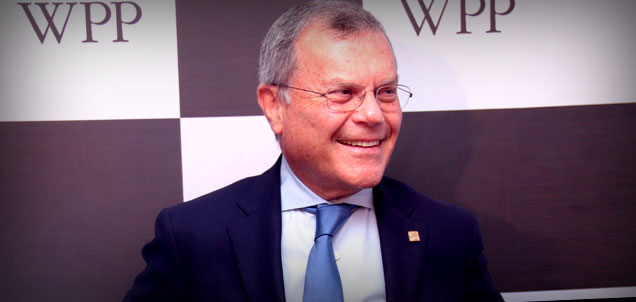
    1. Sir Martin Sorrell, WPP CEO,  Compensation: $87.5 million (£70,416,000)

    2. John Wren, Omnicom Group CEO, Compensation: $23,576,047

    3. Michael Roth, CEO of IPG, Compensation: $14,458,102

    4. Paul Richardson, WPP group finance director, Compensation: $14.3 million (£11,523,000)

    5. Philip Angelastro, chief financial officer at Omnicom, Compensation: $6,255,150

    6. Frank Mergenthaler, chief financial officer at IPG, Compensation: $5,603,572

    7. Philippe Krakowsky, IPG chief strategy and talent officer, Compensation: $4,769,162

    8. Timothy Andree, president and CEO of Dentsu Holdings USA and executive chairman of the Dentsu Aegis Network, Compensation: $4.4 million (Â¥497 million)

    9. Kevin Roberts, former head coach at Publicis Groupe and executive chairman of Saatchi & Saatchi worldwide, Compensation: $4.4 million (€4,137,786)

    10. Jonathan Nelson, chief executive officer of Omnicom Digital, Compensation: $3,937,950

    11. Scott Kauffman, chief executive of MDC Partners, Compensation: $3,260,776

    12. Michael O’Brien, general counsel and secretary at Omnicom Group, Compensation: $3,161,007

    13. Maurice Lévy, Publicis Groupe CEO, Compensation: $2.99 million (€2,833,333)

    14. Mark Read, global chief executive at Wunderman and CEO of WPP Digital, Compensation: $2.8 million (£2,219,000)

    15. Andrew Bonzani, IPG general counsel and secretary, Compensation: $2,411,663

    16. Alfonso Rodés Vilà, deputy CEO of Havas and CEO of Havas Media Group, Compensation: $2,277,474

  • WPP’s Interactive Television unveils Buzz Index

    By A Correspondent


    WPP’s Interactive Television has launched ‘Buzz index’, a buzz measuring tool to help advertisers make informed decisions for cinema advertising. With the launch of Buzz Index, Interactive Television is aiming to measure and identify film stars and films apart from the obvious ones, that are capturing the imagination of its audiences and are generating a healthy pre-release buzz.


    After combining information from all the data points mentioned above, Buzz Index will arrive at a benchmark score once the model for the index is run through Interactive’s Movie Buzz Database (2015 and updated yearly). All new releases will automatically be compared to the indexed number of 100 which is the average score or the Gold Standard for all films, primarily films that have done more than 100 crores at the box office. A film’s Buzz Index will be calculated regularly – (Week 1) 31 days before the film release, (Week-2) 24 days before the film release, (Week-3) 17 days before the Movie release and (Week-4) 10 days prior to the release.


    Said Ajay Mehta, CEO of Interactive Television: “We at Interactive also want to change the way cinema advertising is bought and sold in the country. Currently, cinema advertising peaks around 10-12 blockbuster movies and in the absence of any measure of a film’s buzz, advertisers miss out on movies which are being talked about by their consumers. Buzz Index aims to change that so that even a small movie which is creating buzz and has a possibility of opening well should come up on the radar of the advertiser.  With the launch of the Buzz Index, we want to make cinema advertising data driven rather than based on subjectivities. We aim to broad base the number of movies which can attract advertisers… Buzz Index is our second initiative in this direction after CAM and we will be launching a lot more such initiatives in the near future to ensure that cinema advertising is transparent and accountable by being data driven and tech enabled.”


  • GroupM launches ‘Live Panel’ for targeted media plans

    By A Correspondent

    Media services conglomerate Group M has announced the launch of Live Panel, a new consumer and media insight solution enabling its agencies to more efficiently develop precise and targeted media plans so advertisers can more effectively reach their audiences, measure outcomes and seize competitive advantage.

    With seamless access to a global panel of more than 5.5 million consumers in 30 markets, the solution will offer actionable insights needed to inform media decisions for both global and local campaigns. The new platform connects with multiple data sources across WPP group firm Kantar Media’s data and research assets and integrates with the planning tools of GroupM’s media agencies (Mindshare, MEC, MediaCom, Maxus and Motivator) to accelerate insights to planning to implementation. In India, Live Panel is spearheaded by Tushar Vyas, Chief Strategy Office, GroupM South Asia.

    “In an era of continually evolving consumer behaviours and media preferences across a wider array of channels, marketers who have the most intelligenceare at a distinct advantage, and our unique knowledge of audiences worldwide sets us apart in the industry,” said Irwin Gotlieb, Chairman, GroupM Global. “Leveraging WPP’s data and analytics investments, we know more about media use and consumption behaviors than anyone else. Live Panel operationalises this knowledge to turn consumers into audiences and audiences into customers more nimbly and efficiently for our clients’ advantage.”

    “GroupM’s use of our global Lightspeed consumer panels and the integration of a number of our unique data sources – BrandZ, TGI, Connected Life and Kantar Worldpanel ComTech – into Love Panel fully realises the power of Kantar’s insights capabilities by embedding them into agencies’ media investment management tools,” said Eric Salama, CEO of Kantar.  “This continues Kantar’s strategy of combining survey, panel and census data for the benefit of marketers by connecting us to the client rosters of the world’s largest media investment group.” Kantar incidentally also runs IMRB in India as well as a jv with Nielsen in TAM.

    Live Panel is launching with an extensive global hub survey generating media knowledge on 30 media and 40 touchpoints including consumers in Argentina, Australia, Brazil, Canada, France, Germany, India, Singapore, the United Kingdom and the United States.


  • WPP acquires jv Prodigi, launches marketing implementation agency Hogarth in India

    By A Correspondent


    WPP-owned world’s largest market implementation agency Hogarth Worldwide has announced the launch of its operations in India. The agency begins its India innings by acquiring Prodigi, a WPP and Smile group jv. Headquartered in London, the agency is globally headed by Barry Jones, Founder and Chairman and the India operations will be lead by Gopikaa Davar, the present CEO of Prodigi India. Through this expansion, the agency is looking to expand the India team from 80 people to a count of 300 by 2017.  The Smile group is founded by Harish Bahl who also has interests in many digital ventures including the SVG Group.


    Hogarth’s advertising production technology infrastructure presents huge opportunities for Indian brand marketers to gain swifter access to the agency’s unique offerings spanning advertising production across all media, propriety technology solutions, transcreation and language services, in addition to the digital marketing capabilities of Prodigi. Furthermore, benefiting from an efficient and consistently production cycle – at a fraction of the historic cost, while enhancing quality.


    With 22 recognised languages in India, brands are increasingly recognizing the need for synchronicity of marketing campaigns covering the entire gamut of advertising and communications making it relevant across markets – and the entry of Hogarth in India aptly addresses the demand of the growing domestic market.


    Commenting on the India launch, Barry Jones, Chairman of Hogarth Worldwide, says, “Hogarth has grown from 14 people to 3000 in eight years through the introduction of new ways of working and technologies. We will be using proven disruptive methodologies and proprietary technology to bring more efficiencies to the Indian advertisement market. I am delighted that Hogarth now has such a powerful production capability in the market, able to help not only Indian Companies access global markets but for our multinational clients to truly connect with Indian consumers. I very much looking forward to working with Gopikaa and her teamof already 80 in Delhi.”


    Sharing the same sentiment, Gopikaa Davar, CEO, Hogarth India, states “We are thrilled to be a part of the world’s largest marketing implementation agency, as their technology led integrated solutions address the needs of large scale advertisers in India across all advertising and communications channels.”


    Delivering services across 120 markets, the agency currently operates out of 25 offices across continents. Headquartered in London, Hogarth was founded in 2008 in an attic room in London, growing from a 14 start-up team (then) to becoming a home for over 3,000 people across countries. The agency has its offices in New York, Paris, Shanghai, Hong Kong, Singapore, Paris, Dusseldorf, Hamburg, Johannesburg, Mexico City and Jakarta, amongst others.


    Hogarth’s clientele includes many of the world’s leading multinationals, including Unilever, Johnson & Johnson, Nestlé, Procter & Gamble, Rolex, GSK, Vodafone and Coca-Cola.


  • Suresh Balakrishna quits IPG, to join WPP’s Kinetic

    By A Correspondent


    Suresh Balakrishna, CEO of the IPG Mediabrands agency BPN (short for Brand Programming Network) who also led media agency Initiative’s non-global accounts as well as Rapport, the out-of-home agency of the group, has resigned. He is set to join WPP’s out-of-home agency Kinetic India as CEO South Asia and Middle East in January 2016. For Balakrishna, although it’s a shift from a manifaceted CEO of a media agency to an essentially outdoorsy company, the regional role is definitely a huge plus. Plus his reporting will be directly to Global CEO Mauricio Sabogal who was incidentally Global CEO of BPN before getting into Kinetic.

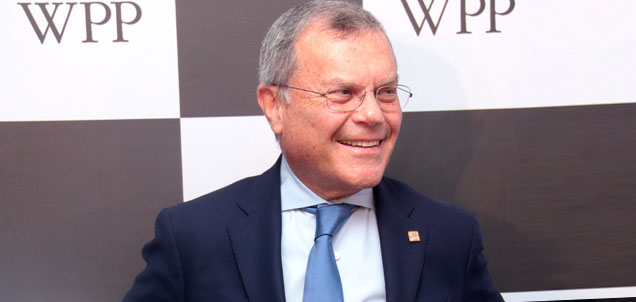

     

    Confirming the development, Shashi Sinha, CEO – India, IPG Mediabrands said: “I am sorry to see Suresh go. He’s been a great asset to the company and an excellent professional.”


    Said Balakrishna: “I have had four very exciting and fulfilling years here. Having said that I am looking forward to my new role. WPP is the world’s largest advertising group and Kinetic is India’s largest OOH company, so taking an established company to greater heights in the South Asia and Middle East region will be a challenge which I am looking forward to.”


    Balakrishna who has donned many hats in media and advertising has been with IPG since January 2012.He will be with IPG till December 31.


  • Rediffusion-WPP. Deal Or No Deal?


    By A Correspondent


    Is it a story done every year by the news media, as a senior Rediffusion Y&R executive told MxMIndia when we called her/him to verify whether WPP-Rediff was a done deal?


    We don’t know. We aren’t sure.


    Denials are regularly issued for many M&A deals, but then often these stories are leaked to put pressure on a company that is not buckling under.


    Then there are also stories like the one which said that Piyush Pandey was going to join nephew Abhijit Avasthi in his start-up. Pandey has rubbished the story in his recently released ‘Pandeymonium’.


    “In most cases, the ‘news’ is completely unfounded, even as the article carries authoritative quotes attributed to unnamed sources ‘close to the developments,” wrote Pandey as he went on to write about the speculative story on him establishing his own advertising as he turned 60 earlier this year.


    We don’t know, We aren’t sure.


    We can’t say that the Rediffusion deal story is unfounded.  We also ‘confirmed’ it from a couple of independent sources.


    Btw, we also spoke to a senior functionary at the Dentsu Aegis Network in India who told us that the 13.33 percent investment is from the Dentsu HQ in Minato, Tokyo in Japan, so we should be calling some ‘San’ there and saying: “Konnichiwa”.


    But, since we have rights to republish specific Eco Times stories, here’s what appeared this morning:

    WPP to finally take control of Rediffusion; Y&R to raise stake in Arun Nanda-led agency to 86%


    By Pritha Mitra Dasgupta


    In 2007, Arun Nanda, who started Rediffusion in 1973, had declared, “Not now, not ever,” to an offer from Martin Sorrell, chief executive of the world’s largest advertising conglomerate WPP, to acquire a controlling stake in his agency for Rs 500 crore. But at 72, Nanda, one of the last standing independent Indian advertising warhorses, seems to have finally put his sword down in the war that Sorrell has been trying to win since 2005. The battle has now been reduced to negotiations.


    WPP’s creative agency Young & Rubicam (Y&R), which owns 26.7 per cent in Rediffusion Y&R, is likely to raise its stake to 86 per cent in a deal staggered over the next few months. Y&R will first increase its stake to 51 per cent and gradually buy out Arun Nanda and Ajit Balakrishnan. Nanda and Balakrishnan currently own 60 per cent stake in Rediffusion Holdings Pvt Ltd.


    It has Everest Brand Solutions, Wunderman, Sudler & Hennessey and Rediffusion-Edelman as subsidiaries.


    The first stage of the deal – the acquisition of management control – will see Nanda and Balakrishnan take home a payout estimated to be around Rs 100 crore.


    “Your sources may be incorrect,” wrote Sorrell in response to an email questionnaire sent by ET. A mail written to Nanda did not elicit any response. But during his recent visit to India earlier this month, Sorrell told a number of WPP group CEOs about the agreement of the deal.


    The due diligence has already begun. According to multiple sources, while Sorrell, Nanda and Balakrishnan have the deal in principle, they will sign on the dotted line in the coming months. Once the deal is sealed, Rediffusion Y&R and its group companies will be rebranded as Y&R to reflect the new ownership.


    While Nanda is likely to exit the creative and media business completely, he will continue to oversee the PR business, and retain a controlling stake in PR agency Rediffusion-Edelman.


    “Of all the Rediffusion companies, it is the PR division Edelman that clocks in more than 50 per cent of the revenues…I think it will be best for Nanda to go with the Y&R offer,” said an advertising veteran aware of the deal.


    Nanda and Balakrishnan first diluted their stake in 1994 when Dentsu Inc and Y&R, each bought 20 per cent stake in Rediffusion, which was then rebranded Rediffusion DY&R.


    In 2000, WPP acquired Y&R. In 2004, the joint venture Dentsu-Y&R was formed in Japan, and the two agencies’ stakes in Rediffusion were redistributed as per a worldwide agreement. In India, Dentsu ended up with a 13.3 per cent stake, while Y&R held 26.7 per cent.


    Dentsu’s 13.33 per cent stake is also likely to be transferred to Y&R, said a source familiar with the deal.


    Source:The Economic Times

    Copyright © 2015, Bennett, Coleman & Co. Ltd. All Rights Reserved

    Licensed to republish


  • Sorrell bullish on India story


    By A Correspondent


    WPP chief executive officer Martin Sorrell isn’t an infrequent visitor to India. In India for his annual reviews and announcing some key business initiatives, Sorrell is bullish about the country, and as he is with Prime Minister Narendra Modi whom he met in the United States with media captains last fortnight.


    The India revenues for WPP are around USD 600 million, but it’s growing over 10 per cent, far above the global average.


    Sorrell announced multiple new business initiatives in the country. After the Cohn & Wolfe acquisition of majority stake in Six Degrees PR and Alphabet Consulting, as reported by MxMIndia a few weeks back, he also inaugurated the WPP School of Communication in association with the Indian School of Design and Innovation in Central Mumbai. He also announced the launch of the Data Alliance with the objective of helping clients exploit data and analytics.


    Part of the Sorrell agenda was the announcement of the coming together of Geometry Global and Encompass Network (GGEN). The merged entity fashions itself as the biggest experiential marketing player in the country. Sorrell also announced the WPP India Corporate Social Responsibility Foundation that orchestrates all CSR activities of WPP companies.


  • ISDI WPP School of Communication launched in Mumbai

    By A Correspondent


    WPP and the Indian School of Design and Innovation (ISDI), a fast-growing recognized leader in arts and design vocational education, jointly announced the establishment of the ISDI WPP School of Communication.


    Located on ISDI’s state of the art campus in the heart of India’s business capital, Mumbai, the ISDI WPP School of Communication marks WPP’s first foray into the Indian education sector. The partnership will help create India’s first professional three-year undergraduate diploma program in communication based on a unique work-study model that will bring together a strong academic and creative curriculum combined with practical application.


    The admissions process is currently underway through an online application form. The school recently hosted its first Accepted Students day where students and their parents had an opportunity to interact with the leadership team and faculty. The inaugural batch will commence in August 2015 with the first cohort of 60students.


    The ISDI WPP School of Communication is WPP’s second education initiative globally. In 2011, WPP in partnership with the Shanghai Arts and Design Academy established the WPP School of Marketing and Communications in China. The program has just successfully completed its fourth year with 220 students enrolled.


    WPP and WPP companies, which are globally recognized for their in-house training and development programs, have worked closely with ISDI to develop the School’s curriculum and hire full-time faculty. Radha Kapoor, Founder & Director, ISDI, will lead the School’s board of directors. Additionally, senior staff from WPP companies will serve as part-time faculty and act as mentors. Internship and training opportunities will also be provided to students. An Executive Council has also been set up to oversee the smooth functioning of the 3-year program. ISDI is represented by Dr. Indu Shahani, Dean HR College, Radha Kapoor & Siddharth Shahani, Directors, ISDI; and WPP India by Ranjan Kapur, Country Manager, Paul Mower, Country Finance Director and Madhukar Sabnavis, Vice Chairman & Country Head of Discovery & Planning, Ogilvy & Mather.


    While the list of visiting faculty will be marked by celebrated names such as Piyush Pandey, Executive Chairman and National Creative Director at Ogilvy & Mather, and Roshan Abbas, Managing Director at Encompass Events, the program directors will include the likes of Madhukar Sabnavis, and CVL Srinivas, CEO at GroupM for South Asia, among others.


    Commenting on the partnership, WPP CEO Sir Martin Sorrell said, “Amid strong growth in the wider economy and, more specifically, in our sector, India is facing a pronounced talent shortage, one that is expected to become even more acute in the future.” He added, “As the leading communications group in India and the world, WPP is committed to helping India to further develop the already high level of creative and professional talent in this sector.”


    Speaking on the supply-demand gap for fresh talent in the industry, Ranjan Kapur, Country Manager – India at WPP, said, “We employ approximately 15,000 people (including associates) and on an average, we need 3,000 new recruits every year, including replacements and first timers and this school is just a small beginning. We hope to expand this to be able to cover a significantly large part of our requirements and turnout 400-500 young men and women every year from our school. Our first batch of 60 students is just the beginning.”


    The School will offer students a three-year undergraduate program, wherein, the first year comprises of basic marketing and communication subjects and the second and third year offers students four major specialisations to choose from- Advertising and Communications, Media, Activation and Digital Marketing and Public Relations. WPP Lectures will run from Monday to Saturday, in the afternoons. Throughout the three years, students will be taught and mentored by top professionals from WPP and the industry, will work on live projects, build a portfolio, develop practical work skills, and have the opportunity to intern with WPP companies and get international exposure through student exchange and study abroad programs.


  • Smart, not Big Data: Jason Harrison


    In April this year, marketing services conglomerate WPP set up Gain Theory in India with an attempt to offer data analytics, technology solutions and consumer insight capabilities.  Gain Theory founding CEO Jason Harrison was in India recently where Pradyuman Maheshwari met him for an interview. Excerpts from the conversation:


    It’s been a couple of months since Gain Theory launched in India. How has it been so far?

    It’s been very exciting. We’ve had tons of interest and energy inside of WPP, which we’re a part of, as well as outside, from potential and existing clients, competitors, other parts of the industry and such. So far, it’s been really interesting and fun and busy.


    WPP is a large marketing services agency with loads of clients. But you’re obviously going beyond the WPP clients…

    Correct. While we have a few categories and clients that we’re targeting, we’ll work with any company that has the kind of marketing questions that we’re good at answering. Because we sit inside WPP, we have a few rules that we play by, so we try not to compete with our partners. Our preference is to collaborate wherever possible, and become very good at reaching out and putting together horizontal solutions across WPP, to be able to bring those to clients.


    But they’re already doing a fair bit of what is your core activity…

    Yes, that’s right. Gain Theory was set up inside of WPP’s media holding company, GroupM and we were set up as an independent data and analytics offering that would sit side by side with the GroupM media agencies. The point of doing that is so that we can be an independent analytics offering for clients who prefer separation between analytics and performance evaluation, and the actual planning and buying of media. We have existing clients for whom that’s an issue. So we only do the analytics and they work with a different media agency that may or may not be GroupM.


    You could also have a situation where a GroupM client is being serviced for analytics by the same agency. In a sense, then, you are competing with each other.

    We’re set up to not compete with each other. We try to not work on each other’s clients. Unless we agree in advance and work with one of our agency partners who has a client who has a unique problem that needs solving, they might bring us in on that. But in general, the focus and the emphasis is to work on separate clients.


    What’s the appetite for analytics? Would you say it has grown over the years?

    It’s strong and getting stronger. The marketplace is accelerating for a variety of reasons. There is increasing pressure on companies to better understand RoI in marketing, and there’s a variety of analytical players to help clients solve that problem. We’re seeing an inflection point in the industry that’s brought out by the availability of data. What we have now is an availability of measurement capability and just data points across the marking ecosystem that will make it easier for us to measure consumer response, the effect of campaigns and to use that foundation to use advanced analytics in a way that really hasn’t been possible until now.


    FMCG majors like Unilever or Procter & Gamble have always been doing a fair amount of analytics. But the real growth for you would happen when you have home-grown players who also get into that, right?

    Our source of growth will be both. We actually work for Unilever across 20 countries and do marketing, mixed modelling, data collection and advanced analytics for them in multiple categories across 20 markets. We’ll see growth from those types of clients. We’ll continue to work with Unilever and others like them. We’ll also want to work with anybody that is trying to solve the kinds of problems we’re good at solving, from any market where we’ve got a presence. The India market has tremendous potential and opportunity. Things are changing fast and there’s an appetite to try new things along with lots of innovation. Having a footprint in Bengaluru in the way that we do is tremendously exciting because we can potentially export some of the things that we’ve learned to work into other products and markets around the world.


    In the case of data analytics there’s a lot of confidentiality, so companies may not want to share that with you.

    I can’t speak for others but it hasn’t been a problem for us. We have data safe cards and privacy protections in place, and clients definitely put us under scrutiny on requirements around data security and privacy. And we’ve been able to measure up. We’re part of WPP, which is a world-class organisation that deals with the data of a variety of companies, sectors like e-commerce, banking and financial services, retail. We’ve been able to show successfully across WPP over a period of time, that we are good stewards of data. In order to get value out of the analytics that we do, we have to have sales data. If clients want the outcome of the analysis to help them answer questions, they’ll share the data with us.


    Marketing data, people don’t mind sharing, but, sales data is something that…

    We get sales data from clients every day. That hasn’t been an issue.


    Are there success stories you can share about the marked difference that you’ve brought to a media campaign?

    We have a bunch, actually! The work we’ve done for Unilever stands out as something that defines the way in which analytics can help a complex organisation address and answer questions around marketing tactics, pricing etc. Although Gain Theory has been [in India for] only five weeks old, we’ve been around for a while in the UK and US. We’ve combined around 50 years of having done this. There’s lots of history, maturity, capability that’s locked up in the company and under the Gain Theory banner.


    What about talent? Are you able to attract top quality talent?

    Certainly talent is a critical success factor for our business. Real good talent is real hard to come by. I think, this market is full of really good talent. So, we have some amazing super smart people in the India market and my hope would be actually, for us to continue to acquire…


    Lastly, what are your targets and plans for growth?

    Our plan is to grow, knowing the marketplace and the energy and the number of clients out there trying to solve those problems. Our hope is that our story will resonate and we will get involved in lots of client conversations. We have a good pipeline right now and hopefully, in some time, we’ll have gotten bigger.


    First appeared in dna of brands on June 22, 2015


  • Piyush is not a grumpy old man. Neither am I. WPP chief Martin Sorrell on retirement plans for the Ogilvy India boss and himself

    By Shephali Bhatt


    Piyush Pandey

    We caught up with WPP’s chief Sir Martin Sorrell on the last day of Cannes Lions 2015, to talk shop and to clear the air on some rumours. The latter first: Piyush Pandey, the executive chairman and creative director of Ogilvy & Mather (O&M) India and South Asia (a WPP company), celebrated his 60th birthday in Goa earlier this year. While David Mackenzie Ogilvy, the founder of O&M, retired at the age of 62; the industry has been abuzz for quite some time about Pandey’s imminent retirement plans.


    Is he finally retiring, we ask Sorrell. And he says: “I read an article featuring Maurice Saatchi, Jeremy Sinclair (founders of Saatchi & Saatchi and M&C Saatchi) and Bill Muirhead (executive director, M&C Saatchi) highlighting that these men were ruling their organisations at the age of 68-69. They said that the grumpy old men are going to carry on. Piyush is not a grumpy old man. He’s not dead yet. Neither am I.”


    On being questioned about the succession plan for both Pandey and him (since he’s 70 himself), Sorrell says, “We have succession plans across the top 200 employees, but I’m not going to discuss that with you.”


    Sorrell’s biggest concern

    His biggest concern about this business is that clients are too short-term focused. They think about the bottom line, and not the top line, especially since the Lehman Brothers crash that heralded the financial crisis of 2008. “Clients have been very focused on cost and not on developing brands and top line, for understandable reasons,” he says. The global GDP growth rate has been slow at 5% nominal and 3-3.5% real. There’s very little price inflation. “As a result you see the rise of procurement department on the client’s end. They get to their numbers, they’re focused on cost rather than developing the revenue. Which is why the irony that people are looking for growth from Western Continental Europe when that’s the one part of the world that hasn’t supplied growth for seven years, since Lehman basically,” he explains.


    Running a business between disruptors and investors

    Sorrell talks about running a business where on one end you have disruptors like Uber and Airbnb (in the old days it was Google and Facebook, and still is to an extent), on the other end you have zero-based budgeters like 3G, Valeant and Endo. And in the middle are investors like Bill Ackman and Nelson Peltz running a legacy business. “The businesses that do best are those that get the concentration of ownership,” he notes. “Indian oligarchs control the ability to make decisions which is good,” he adds.


    Narrowing gap between fast and slow growth markets


    At the moment, there’s focus on cost because growth is hard to come by. The fast growth markets still give you more growth than the slow ones but it’s getting more difficult, he says. “The gap has narrowed.”


    Why clients needs to shift focus from cost

    If you were a client faced with slower top line growth, no pricing power, the disruptors on one end, zero-based budgeters on the other, and the activist investors in the middle, there’s no running away then, Sorrell points out.


    “What you can do is map the top brands in every region using valuation techniques and you’ll find out that people who invest in brands grow their top line faster (which is logical, you would expect that). The biggest driver of total shareholder growth is revenue return, organic revenue growth,” he says.


    Trying to get someone to act on that when it’s for the long term is very difficult when everyone is thinking short term, he rues. “What we have to do effectively, is spend money on an online+offline campaign, which clearly lays out the argument that marketing is an investment not a cost.”


    Investing in tech, data and content – to differentiate the business meaningfully

    WPP has been focusing on bolstering their portfolio across technology – with AdNexus (ad tech for targeted marketing) and Xaxis (programmatics software); data – with Rentrak, Comscore and Kantar; and content — with Media Rights Capital (producer of ‘House of Cards’, ‘Ted’ and ‘Elysium’), refinery29, Snapchat, Truffle and more. “To differentiate the business meaningfully, to win businesses for factors beyond just the talent of the presenter and the price, we have to get the client to focus on these,” he asserts.


    On tech companies

    “Tech companies have gotten very active. Google may have got softer because of some regulatory issues but Facebook is more aggressive than ever. In a non-constructive way I’d think because they feel more ballsy about catching up to Google on Mobile. Yahoo is very hungry, constructively so. Apple is much more open now. Microsoft is much more coordinated. Twitter, LinkedIn and BuzzFeed have interesting opportunities as well.”


    Source:The Economic Times

    Copyright © 2015, Bennett, Coleman & Co. Ltd. All Rights Reserved

    Licensed to republish


  • WPP sets up Joule, full-service mobile agency


    WPP-owned tenthavenue, home to the media network’s ‘connected consumer’ agencies, has has announced today the launch of a new full service mobile agency model led by the groups’ mobile marketing arm, Joule. With this, Joule will attempt to simplify mobile marketing throughout emerging markets.


    Under the leadership of Sudipto Roy, CEO for Developing Markets, Joule has been structured to simplify the complex emerging markets mobile marketing landscape. To deliver this, Joule has partnered with well-known mobile innovators globally, allowing brands operating in emerging markets access to global expertise aligned with local understanding.


    Joule has a very client roster in India: Sudipto Roy


    Sudipto Roy

    We asked Sudipto Roy, CEO, Emerging Markets, tenthavenue, a quick set of questions via mail. Could you dwell a bit on India. What will the Bengaluru office do? What is the team strength in India? Are the teams in centres other than Bengaluru in India? Who are your clients in India? Various GroupM agencies are already doing a fair bit of work in the mobile space… will these now be zoned under Joule, or will they co-exist?


    He responded, highlighting two points made in the communiqué we received from his office. The pointers are in bold, and they are followed by his response.


    “The services offered span enterprise level mobile experience design, asset design and build, connected consumer data architectures, integration, analytics, personalization, social listening, content strategy, distribution strategy, mCRM, content sourcing and delivery.” Any media agency today only focusses on distribution (buying of mobile ad inventory). Digital creative agencies largely focus on creating banners/ rich media content for campaigns/ campaign micro-sites and other tactical builds. We want to address the enterprise level integration of mobile into the company’s business and marketing ecosystem. And hence we bring specialised skillsets to the market which will really help deliver the promise of mobiles to the business.


    GroupM and tenthavenue/Joule are separate organisations with different focus areas. It won’t come under Joule.


    “We are creating a model of the agency of the future; sitting at the crossroads between meeting brand objectives and delivering consumer needs. We are building a model which truly start to bring alive the ‘connected experience’ vision. This is our first step in Asia in that direction and there is much more to come.”

    We are not building a standard agency which is filled with bodies in every office. We have a very decent client roster in India (I cannot reveal that at this stage). They are serviced from various nodes (Mumbai, Singapore). The client teams are at the forefront and the rest are all focussed on the delivery of projects from the processing centres. That’s how modern business is re-organising itself to be more nimble, cost-efficient and more capable as compared to the standard agency model (which is built on headcount and man-hours and needs staff in every office and every account). For evolved services, we will see off-shoring happening in a major way across the globe.


    Tenthavenue, like GroupM, is a holding company under the WPP umbrella. There are several agency brands under this umbrella and Joule is one of them. As the holding group CEO for developing markets, the Joule organisation will report into Mr Roy.


    The services offered span enterprise level mobile experience design, asset design and build, connected consumer data architectures, integration, analytics, personalization, social listening, content strategy, distribution strategy, mCRM, content sourcing and delivery.


    Under this new model, Joule will have integrated delivery centres all over Asia, spanning Bengaluru, Shanghai, Beijing, Singapore, Hong Kong, Jakarta, Manila, Johannesburg and Ho Chi Minh, to manage production and give access to different capabilities.


    Said Mr Roy: “By addressing the larger enterprise challenges of integrating mobile with the marketing eco-system, we are moving far beyond the traditional agency or mobile ad-distribution play. Bringing together audience data, hyper-targeting, content personalisation and intelligent distribution that resonates with the consumer allows us to create dramatically more value for the marketer.”


    Meanwhile, Joule also announced the launch of Electra, an “emerging market” mobile communication platform using cloud-based technology to offer mobile solutions such as Interactive Voice Response, USSD (text), mobile incentives, payment, content personalisation and video content compression / delivery technologies. Electra has already been tested across more than one billion consumer interactions.


    Said Rupert Day, Global CEO, tenthavenue: “We are creating a model of the agency of the future; sitting at the crossroads between meeting brand objectives and delivering consumer needs. We are building a model which truly start to bring alive the ‘connected experience’ vision. This is our first step in Asia in that direction and there is much more to come.”