Tag: Uday Shankar

  • #FF14 Day 1: Frames takes transformational route in 15th year


    By a correspondent


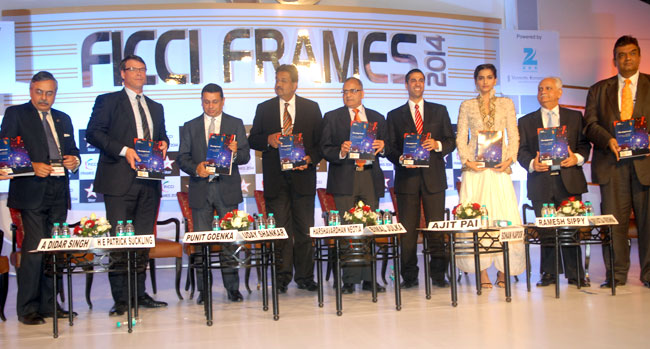
    The 15th edition of the much anticipated annual event of the Media & Entertainment industry – FICCI Frames 2014, got off to a captivating start in Mumbai on March 12, 2014. The event began with an inaugural session that saw the big guns from the media and allied sectors including the I&B Ministry delve on the theme of the conclave – Transforming Lives – while also highlighting the current state of the M&E sector and its scope for the future.


    The lineup of the dignitaries for the inaugural session included Harshavardhan Neotia, Vice President, FICCI; Uday Shankar, Chairman, FICCI Media and Entertainment Committee, and CEO, Star India; Punit Goenka, CEO & MD, Zee Entertainment Enterprises Ltd; Shri Bimal Julka, Secretary, Ministry of Information & Broadcasting, Government of India; Shri Srivatsa Krishna, Secretary, Department of IT, BT & ST, Government of Karnataka; H.E. Patrick Suckling, Australian High Commissioner to India and Ajit Pai, Commissioner, FCC, USA.


    Highlighting the state of the M&E industry in 2013, Uday Shankar said that while there was much talk about doom and gloom in the economy it was not the case for the M&E industry that grew by almost 12 per cent. But he cautioned that the goal of attaining the $100 billion landmark was a distant dream as yet. Mr Uday went on to highlight the role that the government could essay in simplifying several issues facing the industry and how it could work in tandem with the industry in resolving them.


    Echoing a similar point of view, ZEEL’s Punit Goenka too laid the pitch for a collaborative effort as he said that the M&E sector has played a key role in enhancing the prospects of the economy, especially on the jobs front. “The M&E industry has been a shining example of how an industry could work towards achieving a common goal of inclusive growth and being a facilitator to all concerned. It is a matter of pride for the sector to be employing more than 6 million people with the scope of providing employment to many more in time to come.”


    Mr. Goenka further highlighted the role that digitization has played in the year gone by, and how it would alter the broadcast landscape in the future. He affirmed to the audience that it was time to give back to the industry for whatever it has given us and that the same should be done by unleashing innovation and creativity as the core. In fact the collective aim should be to transform the lives of the global community and not just India, asserted Goenka.


    Having been introduced to the various loopholes and issues facing the industry at the introductory session, Shri Bimal Julka, Secretary, Ministry of Information & Broadcasting was vocal when he said that it was not just the government but the industry that should take responsibility in finding a solution to the problems at hand. “The role of the government is that of a facilitator, it would be great if the industry takes a collective stand on issues themselves and come to us if at all they face any hurdles.”


    Highlighting the several initiatives undertaken by the I&B ministry, Mr Julka said that the first two phases of digitization have met with reasonable success in about 42 cities and it could be credited as being the smoothest and fastest such initiative of its kind. The focus now would be on Phase 3 & 4 of the drive where an additional 110 million STBs are scheduled to be rolled out. “While there are a few issues concerning the digitization exercise, we are taking efforts to sort them out including at the level of broadcasters, MSOs, LCOs etc. But the good thing is that digitization has managed to bring in transparency in the broadcast sector, which was the main goal of the whole exercise.”


    Mr Julka said that the I&B ministry was also concerned about the content that was being shown to the viewers and urged the broadcasters to practice self-regulation. With 800 channels already existing and a further 250 plus awaiting clearances, it was important for broadcast companies to figure out how to dish out content that is accepted by the viewer.


    Mr Julka also touched upon the challenges facing the industry including control on monopoly & cross-media ownership, content monitoring, transponder capacity problem facing DTH players etc.


    The session proceeded to an engaging perspective on the US broadcast market that was provided by Ajit Pai, Commissioner, FCC, USA and also a keynote address by Shri Srivatsa Krishna, Secretary, Department of IT, BT & ST, Government of Karnataka.

     

  • #FF14 Day 1: Issues abound but collective stand will help boost industry morale

    By a correspondent


    Starting off from where the inaugural session left, the session on ‘De-bottlenecking the regulatory hurdles’ on Day 1 of FICCI Frames 2014 saw the panelists touch upon grave issues facing the industry and how the government could play an integral role in allaying the fears of all the stakeholders concerned.


    The panelists for the session comprised Bimal Julka, Secretary, Ministry of Information & Broadcasting, Government of India, Uday Shankar, CEO, Star India, Sudhanshu Vats, Group CEO, Viacom18 Media Pvt. Ltd, Punit Goenka, CEO, Zee Entertainment Enterprises Ltd, Rahul Johri, Sr VP & GM, South Asia, Discovery Networks and  Ajit Pai, Commissioner, FCC, USA. The session was moderated by Vikram Chandra, Group CEO, NDTV.


    Taking the opportunity to open up, Uday Shankar began by saying that the regulatory scenario in India was very diverse in its approach with some sectors being over-regulated while the others were under-regulated. “Lack of clarity on the intent of a regulation is something that is of concern. It has to be aligned with goals that have been set by the society”, said Mr. Shankar. He went on to highlight other issues that needed industry attention including the 10+2 ad cap provision and also the just introduced aggregator policy for stakeholders.


    Sudhanshu Vats presented a few indicators of his own as he said that there was a need to have a purpose to regulate. This, he said, could be achieved by having multiplicity of choice, have the need to operate like a free market and have adequate transparency and data. Adding further he said that the other essential needs were clarity, accountability and foresight.


    Rahul Johri pitched in by saying that there was indeed a need to have clarity on where the industry was headed on the issue of regulation and finding out what the core objective is. “We have regulated ourselves very well but there are too many regulations being imposed right now and we need to find a way to tackle them systematically. The aim should be to regulate well for the future of India.”


    Left to defend his turf, Shri Bimal Julka did a decent job of pacifying the panel as he said that it was a collaborative effort and that the responsibility rests with all stakeholders to get the job done. “Whatever the issues, we can agree in cohesion that it is the viewer towards whom our efforts have to be directed. Thus keeping such interests of the viewer in mind, the policies are framed with the intention of achieving inclusive growth,” he asserted.


    On the several impending problems facing stakeholders, Shri Julka said that the focus by the government was to throw open the field for a healthy discussion amongst all players so that they could arrive at an amicable solution. Mr. Julka asserted that despite the problems the digitization exercise was showing positive results as well including the carriage fees reporting a downward slide and more transparency being bought into the system.


    Mr Julka went on to add that the challenge would be to complete the phase 3 & 4 schedule of digitization and only after that could the issues of subscription versus carriage fee be resolved. But he cautioned that the stakeholders also had a role to play including deciding on how to make their content standout amongst a plethora of options facing the viewer.


    Sudhanshu Vats went to the extent of saying that there was no need to have a licensing system except for the spectrum allocation and that even if there is a licensing system there needs to be a fixed timeframe to address that. He added that things will be clear once the entire digitization exercise is complete but prior to that it was important that the industry take a hard look on addressability factor of digitization.


  • FICCI-KPMG study indicates M&E sector bucking the slowdown trend


    (L-R) Jehil Thakkar, Uday Shankar, Ramesh Sippy

    By a correspondent


    While 2013 may have been a slowdown year for most sectors, an opposite trend was observed for the Indian Media & Entertainment (M&E) industry that registered growth of approximately 12 per cent, according to the FICCI-KPMG report.


    Overall growth remained muted, noted the study that was caused largely by the slowdown of the Indian economy. The economic slowdown impacted advertising revenue dependent sectors such as TV and print the depreciation in the rupee also affected print, cable and DTH companies adversely but helped export oriented sectors such as animation and VFX to some degree. At the same time, this was countered by the impact of continued digitization of media products and services, and growth in regional media.


    Digitization of cable saw progress of television industry moving in the right direction, with the mandatory Digital Access System (DAS) rollout almost complete in Phase II cities. The impact was felt to the extent that carriage fees saw a reduction of 15-20 per cent overall, however the anticipated increase in ARPUs and subscription revenues for broadcasters and MSOs (Multi System Operators) is expected to be realized only over the next 2-3 years. Other key highlights in 2013 were the inclusion of LC1 (less than class I) markets in TV ratings, the 12 minute advertising cap ruling and the shift from TRP to TVT ratings.


    The study also noted that the film industry recorded a double digit growth, albeit slower than in 2012, with multiple movies scoring big on box office collections. Approximately 90-95 per cent movie screens are now digitized in the country, with a shift in focus to tier II and III cities. Going forward, multiplex growth is expected to slow down, in line with the overall delays and future expectations for retail sector and commercial real estate development, impacting box office growth in the short term


    The print sector too continued to buck the global slowdown trend. The sector grew at a CAGR of 8.5 per cent this year to reach INR 243 billion. Regional markets performed exceedingly well on the back of steady advertiser spends, state election impact and new launches. However, with the validity of IRS data called into question by the industry majors, the sector in the short term suffers from the lack of a robust measurement system, critical for decisions on media planning and allocations.


    The total internet user base in India grew to approximately 214 million by end of the year with almost 130 million going online using mobile devices. Mobile Internet users dominated the total internet user base capturing an overall share of 61 percent. Digital media advertising in India grew faster than any other advertising category. Streaming and download services continued to see growth in the music industry, with the growth in mobiles, in particular smartphones, contributing significantly to increased consumption of music ‘on-the-go’. However, with the continued decline in physical sales, compounded by the significant fall in ringback tone revenues (following the backlash of TRAI guidelines issues in 2012), the sector saw an overall fall in size by 10 per cent in 2013. Going forward, digital revenues are expected to drive growth in the sector. Further, the vibrant live events sector is expected to continue its role as a catalyst for driving growth in artists’ fan-base, and public performance royalties.


    Uday Shankar, Chairman, FICCI M&E committee said, “2013 has been an extraordinary year for the media and entertainment sector – a year of challenges and significant change which saw the industry dealing with a host of issues. Television saw the implementation of the 10+2 advertising cap and significant progress in seeding of set top boxes in DAS 1 and II – setting the stage of revenue growth and expansion in genres. The film sector continued to mature on the back of multiplex expansion and a wide variety of content. Radio and print continue to defy global trends and await positive regulatory intervention that will take these sectors to greater heights. I am certain that the insights and findings from this report will provide a comprehensive and useful lens for all of us in the industry.”


    According to Jehil Thakkar, Head of Media and Entertainment, KPMG in India, “2013 was a year in which many parts of the M&E industry paused and took stock. Focus shifted from top line growth to bottom line growth with companies focusing on operations and efficiency. Inspite of a very challenging macro environment, the industry grew 12 per cent, a far better performance than many other industries. The structural changes taking place in the industry – especially in television and digital, continued to take the industry down the path of fulfilling its potential.”


    This year, the report highlights opportunities that could come from tapping international markets such as the US and Middle East, with a special feature on opportunities in South Africa and Nigeria.


    Going forward, there is need for continued positive regulatory intervention, such as implementation of Phase III for the radio sector. In an increasingly digitized media world, the ability to create compelling and targeted content across multiple channels, will be the bedrock for creating differentiation in a cluttered market, the report observed.


  • Say Cheers! Madison predicts 16.8% adspend growth in 2014


    By Johnson Napier


    With so much being reported and analysed about how the oncoming Lok Sabha elections would benefit or harm the prospects of the economy, there is one section of the trade for whom the election year indeed holds good stead. Going by the growth projections that the election season are expected to bring in 2014, the media advertising business in India is in for a big surprise if numbers revealed in a recent report are anything to go by.


    According to growth projections released by the Pitch Madison Media Advertising Outlook 2014 report in Mumbai yesterday, the advertising revenues are expected to grow by a robust 16.8 per cent in 2014 at Rs 37,216 crores. This is a sharp rise from the healthy 11.1 per cent that was reported by the industry in 2013. In fact the growth in 2013 is much more then the benchmarked figure of 7.4 per cent that was initially predicted by the report.


    Presenting the numbers to the fraternity in Mumbai, Sam Balsara, Chairman and Managing Director, of leading media services conglomerate Madison World said that the time to be cautious – which was the state that the industry was in for much of 2013 – was almost over and that the year ahead would be even more fulfilling with growth projected in the range of 16.8 per cent.  The report was presented by Madison World in conjunction with the exchange4media group’s Pitch magazine.


    “It is great to be clocking a growth rate in double digits, which has come as a boon to the industry that was stuck in clouds of uncertainty given the economic downturn that was witnessed for much of last year,” affirmed Mr Balsara. “Compared to 2012 that registered revenues to the tune of Rs 28,694 crore, the year 2013 reported numbers equalling Rs 31,877 crore, growing by 11.1 per cent. In fact 2014 would outperform the previous year and would register an estimated growth of 16.8 per cent, with revenues totalling Rs 37,216 crore,” said Mr Balsara, beaming.


    According to Mr Balsara, the core factor that would bring in the growth for the industry would be the Lok Sabha and the state Assembly elections scheduled for 2014. This would also include spendings by individual political candidates that would be investing money in reaching out to the masses.


    Presenting a medium-wise break-up to the gathering, Mr Balsara said that like last year, this year too belonged to Print that emerged as the numero uno medium. Advertisers took a liking to the medium as it reported a growth of 10 per cent with revenues equalling Rs 13,167 crore. This was largely due to increased advertising by sectors such as FMCG that contributed by 12.3 per cent to the overall ad pie (replacing Auto from the top spot) and Auto that contributed around 11.7 per cent. Education though saw a decline to 9.71 per cent versus 10.6 per cent share registered last year.


    When asked by MxMIndia to share his observations on the projections for the medium of Print, Varghese Chandy, Chief General Manager, Marketing, Advertising Sales, Malayala Manorama said that the growth was indeed a bullish one for the sector. “I am excited by the numbers that we have managed to throw up as a medium. The fact that we have still got the advertisers attention by being the number one medium of choice is a big thing.” Sharing further on what will drive the sector in 2014, he said that the Lok Sabha elections and the assembly elections that will take place in 2014 will bring in the necessary revenue growth that the medium is known for. But he had a word of caution for the magazine sector as he said that it would still be a task for magazines to contribute as much growth as newspapers too. “While niche and regional magazines will continue to deliver good growth, overall the magazine industry will still be challenged on the growth front.”


    Following the medium print closely was Television that recorded a growth of 8.2 per cent with revenues totalling Rs 12,410 crores. This was in sharp contrast to 2012 where the medium registered a zero per cent growth. Where sectoral contribution was concerned, Media, Retail, Alcoholic Beverages and Corporates registered a negative growth with only FMCG registering a positive growth for the medium. The medium is further expected to grow by 15 per cent in 2014.


    The next medium to vow the advertisers was Digital that has now become the third-most preferred medium for advertisers on a consistent basis. With revenues totalling Rs 3,050 crore the medium grew by a good 32.4 per cent and is expected to grow by 29.5 per cent in 2014 as well. Of this, display advertising will continue to have an upper hand compared to search with revenue numbers totalling to Rs 2,150 crore.


    Siddhartha Mukherjee, Category Director, Chocolate and Media, Cadbury India, Mondelez International was optimistic of the returns that the medium would deliver in 2014. Affirming to this writer, he said, “Going by the projections that were presented today and by the points bought up by panellists, there is no doubt that digital will continue to remain a go-to medium for many advertisers. That is what would be of importance to us too.”


    The mediums of Radio, Outdoor and Cinema combined accounted for the remainder 12-13 per cent of the ad chart with Radio accounting for revenues totalling Rs 1,097 crore (18 per cent growth), Outdoor clocking a growth of 6.2 per cent at Rs 1,977 crore and Cinema registering a growth of 10.4 per cent at Rs 167 crore.


    The evening also witnessed keynote addresses being delivered by dignitaries including Adi Godrej, Chairman of the Godrej Group, Uday Shankar, CEO of Star India, and Girish Agarwal, Director, Dainik Bhaskar Group who presented a roadmap that the industry could adopt to change their business fortunes and also derive positive growth for the several mediums under Media.


  • Press Club Mumbai discussion on ‘what ails journalism today’

    By a Correspondent


    The Press Club Mumbai has convened a panel discussion to discuss and understand what ails journalism today, and what perhaps is the way forward. The theme of the discussion which will be held at the Club premises today (Feb 6) at 6.45pm is: ‘The Elephant in the Room: The Crisis in Journalism Today’.


    The panel includes Siddharth Vardarajan, former editor of The Hindu, Hartosh Singh Bal, former political editor of ‘Open’ magazine, Kumar Ketkar, editor of Divya Bhaskar, Indrajit Gupta, founder and former editor of Forbes India, and Uday Shankar, CEO of Star India. The session will be coordinated by Gurbir Singh, President of the Press Club.


    The discussion will be webcast live at https://www.youtube.com/channel/UCg2QhyGqq6dOjWknK94ZSaw.


  • Uday Shankar receives W Bengal govt award

    By A Correspondent


    Uday Shankar

    Star India today received the 2014 West Bengal Tele Academy Award for significant contribution to Bengali television through entertainment that’s progressive and sensitive.


    Uday Shankar, CEO of Star India, was conferred the award by West Bengal Chief Minister Mamata Banerjee. The award recognizes Star’s special contribution to Bengali television through Star Jalsha and Star Ananda (currently known as ABP Ananda and part of the Ananda Bazar Patrika group).


    “As a group, we are delighted to receive the West Bengal Tele Academy Award, as it clearly shows the society has embraced our focus on quality content,” Mr. Shankar said on receiving the award.  “I really believe socially sensitive content is the way forward for the future of a healthy society. The plaudits go to the entire team.”


  • Thirteen Reasons why 2013 was a #Fail for the Indian Media

    By Pradyuman Maheshwari


    Okay, so we are all going to down our sorrows tonight… in alcohol, in parties, stuck on the road in traffic, at office, on television watching Kapil Sharma for the nth time or an awards show or some other semi-entertaining stuff. Or just a quiet moment with family and friends.


    But before we do that, let’s take one last look at the 2013 and wish we could put some of the downers behind  us. Sadly, they can’t.


    Here goes my list of 13…


    Tarun Tejpal

    Tehelka founder. Alleged rapist. And as it has emerged, misused his position in recent years to achieve his ends.


    Mumbai Photojournalist Gangraped

    The media was at the forefront of the movement against atrocities to women through the year. And then one of our very own was gangraped. On an assignment, in daylight, in Mumbai, a city that prides itself to be safe for women. The lady is fine, but the scars will never go away.


    Hindustan Times Paid News

    And we thought that the corporate types running Hindustan Times knew what happens when you devalue a news brand by going in for a Medianet-like paid content service. Agreed there’s a footnote, but it’s in fineprint and the paid-for stories aren’t tagged ‘Paid Content’. Why, just why?


    Paid News still rules

    The recent elections saw many instances of paid news around the time of the elections with the EC asking the law ministry to make it an electoral offence. However,  what about the publications publishing the news? Shouldn’t those indulging in the corrupt practice also be suitably penalized, even if means losing the RNI registration/licence.


    Minister’s priorities

    Even the most sensible of politicians do bizarre things as I&B ministers. We’ve had one of the earliest ones in independent India banning film songs on Vividh Bharati. One went ballistic against news channels. Another frowned upon ads. Our current minister – Manish Tewari – isn’t bad news, but he could do with a better set of priorities. And not just talk about contradictions and paradoxes in his speeches. Also, not interfere in DD news.


    Industry divided

    The various industry associations in media,advertising and entertainment are a divided lot. The officebearers may be good friends otherwise, but their associations are often at loggerheads. And paying the price for all of this is the industry.


    Abby has really turned Shabby

    Of the various awards held in the country, the Creative Abby has turned out to be shabbiest. The biggest in the business (Lowe, Ogilvy) have not been participating, there are disputes about scam ads and last year we even had some complaints about a few awardwinning ads being plagiarized. All practitioners need to get together and discuss the future of the Oscars of the creative advertising business.


    State of magazine media in question as ABP sells BusinessWorld

    In a sense one should be thankful that it was sold, and not shut like the Indian editions of People, GEO and Marie Claire magazines. But BusinessWorld is an iconic brand and was owned by a large, prosperous media group like Ananda Bazar Patrika. The fact that the group lost interest in the magazine and found they couldn’t make the kind of money out of the publication was a sorry commentary on the state of the magazine media. Thankfully, Annurag Batra bought it on behalf of a group of unnamed investors.


    Professionals v/s Families

    There are many large and successful business conglomerates run by professionals, but in the world of media, not many professionals have done too well when the family gets active in the business. Two years back, The Hindu brought in professionals on the editorial and business front. It was a bold decision. But in 2013, both Editor and CEO were booted out. I don’t think any rightminded (or leftminded, given it’s Hindu) editor would ever want to join the paper at the helm after this.


    Corporate influence in media

    We all agree that the media must ask the tough questions, often being cynical when there is no need for being one. But that’s what it used to be. In a recent accident, the identities of the owners of a car that hit two others was hushed up by most media. The name of the corporate cropped up, but the news wasn’t investigated  in the same way as any other high profile accident case. Is this the influence of big business on the media? Why is it that media entities not directly owned or managed by big businesses also buckle under pressure? Wake up, guys. There’s no point being in the news media when you are going to crawl even there’s no one asking you to do so.


    Retrenchment rules

    Staff sackings are not a new story in the media. Some do it with a jhatka, others prefer halal. The best of newsmedia organizations have seen sackings. This writer has been involved with many over the years. The question is how you do it, and how sensitive you can be to the employee’s personal life. We hear of many cases of people opting out of journalism and media companies because of the way employers behave.


    Most media schools suck!

    The media wave of the 1990s and 2000s ensured a mad rush for the media and mass communication courses across the country. Everyone wanted to be a Piyush Pandey, Rajdeep Sardesai, Barkha Dutt and now Arnab Goswmi. But the faculty sucks at even the AICTE-approved institutes – mediocre professionals and trainers teach at these places, the curriculum is pathetic, fee cheques and not a rigorous entrance procedure is the only barrier for entry. The result: products of a large number of media schools are below par.


    Hold a mirror, News Media!

    What upset one most about the Hindu’s humbling of the Editor and CEO as well as the termination of edition and employee services at Outlook group’s publications was the way in which both were done. Is it the same media that otherwises sermonizes on how the world should behave? Hold a mirror, guys. Mr Ram, did you really need to write that looong letter detailing your misgivings about the editor and CEO? Thankfully, both of them have found jobs, but had it been in another era with no social media, people would’ve doubted their bonafides.  Ditto with the Outlook group, the same magazine company that has Vinod Mehta at its helm…. how could they not have the decency to even speak to employees who got to know about the closure from a tweet?


    But there’s hope…

    Indrajit Gupta fights for PR exec

    You don’t hear too often about editors taking up the cause of PR professionals who are subjected to harassment for a negative story in their publication. IG (as Indrajit is called) took up the case and cause for the late Charudatta Deshpande and continues to do so


    Arindam Chaudhari thrown out of Mid-Day

    Yes, Mid-Day actually junked his column after it realized that it’s giving the paper a bad name (now Kushan Mitra needs to do the same at Pioneer)


    Shashi Sinha cements the industry

    If there’s a Nobel Peace Prize for the Indian media, IPG Interbrands CEO Shashi Sinha should walk away with the awards. Hands down.  He tried his best to cleanse the Creative Abby at Goafest, in fact he did manage that and what happened in the 2013 edition was not really his doing. And now he’s building consensus on television measurement amongst broadcasters and advertisers and media agencies as head of BARC’s technical committee.


    Uday Shankar, Punit Goenka, Raj Nayak… entertainment merchants think big

    There’s hope for 2014 as our entertainmentwallahs are truly dreaming big. Uday Shankar is thinking big at Star India, Punit Goenka has planned some 10 new channels for Zee, and Raj Nayak pulled a mega serial in 24 with ease.  And you can’t keep Sony out of things for too long. Three cheers!


  • Mediaah! Who will be the Impact Person of the Year 2013 + Why Uday Shankar is the Mediaperson who created maximum impact this year

    By Pradyuman Maheshwari


    As I write this, I have been inundated with calls and smses asking me who the Impact Person of the Year is for this year. I was associated with the exchange4media group for nearly three years, but I am not much in touch with people from the group. So I don’t really know.


    And I am not invited for the IPOY event ever since I quit. Nothing alarming about it. This is how things work in the media. You will not find the Filmfare editor at the Screen awards or vice versa. You will not find the Overdrive boss at the Auto Car India awards. This isn’t how it works in advertising… many of Lowe’s competitors assembled for its internal awards earlier this year.  And you can be sure to find rival film-makers at each other’s film release.


    But that’s not the reason for writing this. The question is who will win the Impact Person of the Year to be presented this evening (Friday, Dec 6). Since IPOY is based on voting monitored by IMRB, the award-winner is selected as per voting from the fraternity. There have been rumours that it is Vineet Jain, Vice-Chairman of Bennett, Coleman & Co, and a little birdie has told me who the winner is, but let’s look at the nominees (in alphabetical order of their last names):


    Rajan Anandan Managing Director, Google India

    Punit Goenka, MD and CEO, Zee Entertainment Enterprises Limited (ZEEL)

    Vineet Jain Managing Director, Times Group

    Bharat Patel, Former Chairman, ISA and Hemant Bakshi, Chairman, ISA

    Rahul Sharma, Co-founder, Micromax Informatics

    CVL Srinivas, CEO, GroupM South Asia

    Sameer Suneja, Global CEO, Perfetti Van Melle


    Let’s start with the process of elimination. Messrs Patel and Bakshi have done some splendid work in their own professional lives and they need to be commended for the ISA to the stand up to the IBF in the controversy on the television measurement boycott, but I am not very sure whether they would quality for the IPOY.


    Sameer Suneja goes out next. His ascent is noteworthy, but he’s not the first Indian corporate honcho to go overseas. Rahul Sharma’s rise is well-known, but 2013 was not the year of Micromax. In fact, Nokia has been shining high.


    The four nominees in balance are Rajan Anandan, Punit Goenka, Vineet Jain and CVL Srinivas. Google has done great work for the last few years, but nothing buzz-creating in 2013. So the choice has to be from amongst Punit Goenka, Vineet Jain and CVL Srinivas.


    All three are good contenders, but the buzz around the time the voting is done was maximum for Vineet Jain, especially since The Times of India is celebrating 175 years.


    My vote though for the Person of the Year who created maximum impact in 2013 is Uday Shankar. The year has been clearly his – given Star’s major foray in sports, consolidating Star Plus, the rise of Life OK, his own stature as an industry leader and every thing else that Star India has been doing. Aaj ki tareekh mein, Uday Shankar is the man with the midas touch. Unfortunately, Impact magazine doesn’t repeat Person of the Year winners, which many think is unfair, but then that’s their rule. Uday was IPOY 2010.


    Next year, assuming the successful implementation of a BARC-administered television measurement system, I would think Punit Goenka and Shashi Sinha will be Persons of the Year. Both deserve huge accolades for the rapid strides being taken on measurement. Yes, it took BARC a huge amount of time to take off, but then building a consensus amongst three sets of stakeholders isn’t easy. The buy-in has to be complete because they all need to pay for the new service.


  • Gaurav Banerjee takes charge of Star Plus as GM

    Gaurav Banerjee

    By A Correspondent


    It’s an office that’s has seen various occupants in the recent past, but Gaurav Banerjee, who has been part of the Star India system for a while, should well reverse that trend.


    Uday Shankar

    Star India CEO Uday Shankar spotted his talent at Star News (now called ABP News) where he was CEO and at the TV Today (Aaj Tak) group, where he was News Director. Mr Banerjee joined Aaj Tak in 2000 and was the 9pm primetime news anchor and exec editor at Star News. A St Stephen’s and MCRC Jamia student, the new Star Plus business head was responsible for the successful launch of ABP Ananda, MCCS’s Bengali news channel (then Star Ananda), and later setting up the network’s regional channels and taking Jalsha to No. 1


    Mr Banerjee joined Star Plus in October 2009 and played a key role in shaping content around the “Rishta Wahi Soch Nayi” theme, we are informed. He also helped shape content strategy for Life OK and has developed popular shows like Mahadev, Diya aur Baati Hum and Sasural Genda Phool.


    The last occupant of the Star Plus biz head office was Nachiket Pant Vaidya who moved to MSM Sony’s movies division in September this year. Mr Vaidya took charge of Star’s flagship channel in July 2012 from Nitin Vaidya who helmed the network’s Hindi channels for a little over a year.


    Mr Banerjee will report to Sanjay Gupta, COO, Star India.


  • Star gets set for mother-of-all fund-raisers for Uttarkhand relief

    By A Correspondent


    Leading film icons Amitabh Bachchan, Lata Mangeshkar, Ajay Devgn, Kajol, Anil Kapoor, AR Rahman, and a cross-section of television stars have pledged their support for what promises to be one of the biggest fund-raising events ever held in the country.
     

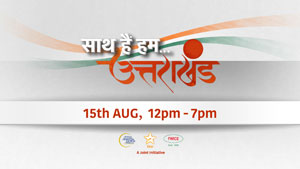
    Organised by media conglomerate Star India, the seven-hour event called ‘Saath Hain Hum Uttarakhand’ will be held in Mumbai at the NSCI and the event will be aired live Star Plus, Star Utsav, Life OK, Channel V and Star Pravah.


    The end-use of funds will separately be overseen by a body of independent auditors, Star has informed even as it announced partnering not-for-profit organizations — Himmotthan Society and People’s Science Institute — to channel the funds raised to help with the rehabilitation work in flood-ravaged Uttarakhand. Donations will be open from August 15 to September 7.


    Uday Shankar

    “The task of rebuilding is difficult. But it isn’t impossible if we can join forces,”  Uday Shankar, CEO Star India, said. “We are glad to partner groups that are not only focused on providing immediate relief but are building sustainable solutions to equip people prepare for the future.”


    The Film Producers Guild, Federation of Western India Cine Employees (FWICE), TV Artists Forum, Corporate Charity Trusts and several independent industrialists and donors will partner the fund-raiser.


    “The event is evidence that there is a strong desire in the community to help,” Mr Shankar added. “The unflinching support of the stars is humbling and in turn will help us extend a helping hand to those in need. The film world’s support also reinforces our belief in the power and reach of television, and its ability to be a force for good.”


    Said Sabbas Joseph, director and co-founder of Wizcraft which is organising the event: “Saath Hain Hum Uttarakhand is one of the biggest fund-raisers to muster support for any natural calamity. We sincerely hope that this initiative will go a long-way in helping the victims of this unprecedented tragedy. We are delighted to express our support and join hands with Star India and the film industry to celebrate the Independence Day, dedicated to the people of Uttarakhand.”


    The Himmotthan Society and People’s Science Institute have been actively involved in rehabilitation works in Uttarakhand after the floods. While Himmotthan is focusing on speedy reconstruction of livelihoods through innovative, novel techniques in agriculture, water and sanitation, livestock management and afforestation, People’s Science Institute is engaged in devising sustainable solutions and building robust infrastructure that’s better equipped to handle natural calamities.


  • Star joins hands with Bollywood, all fund-raiser event ad rev for Uttarakhand relief

    By A Correspondent


    Star India has pledged all revenues from an Independence Day seven-hour marathon fund-raiser for strengthening relief efforts in Uttarakhand. Leading film stars will join Star’s fund-raiser and all advertising revenues generated through the event on August 15 will be channelled to not-for-profit bodies working for the cause.


    Uday Shankar

    “The tragedy in Uttarakhand is a solemn opportunity for every Indian to lend a helping hand,” Uday Shankar, CEO, Star India, said. Early confirmation of stars supporting the initiative include Indian cinema’s icons Amitabh Bachchan, Lata Mangeshkar, Ajay Devgn, Kajol, Anil Kapoor, AR Rahman, Boman Irani,  Shankar-Ehsaan-Loy, Pritam, Prasoon Joshi, Mukesh Bhatt, Ayushmann Khurana and celebrities from top television shows of the Star network such as ‘Diya Aur Baati Hum’, ‘Pyaar Ka Dard Hai Meetha Meetha Pyaara Pyaara’, ‘Saraswatichandra’, ‘Savdhaan India’, ‘Devon Ke Dev Mahadev’ and ‘India’s Dancing Superstars’ among others.


    Ad agency Ogilvy & Mather will be the creative agency for the on-ground event that’ll be managed by Wizcraft. The Film Producers Guild, Federation of Western India Cine Employees (FWICE), TV Artists Forum, Corporate Charity Trusts and several independent industrialists and donors will partner the fund-raiser that will be attended by senior leaders from the state and central governments.


    The event will be telecast live on many channels of the Star India network including flagship Star Plus, Life OK, Star Jalsha, Star Pravah, Star Utsav and Channel V.


  • 3-day informational event fulfils tryst with destiny, almost!

    Actor and Convenor, FICCI MEBC East Prosenjit Chatterjee, Bangladesh Information Minister Hasanul Haq Inu, FICCI M&E chair Uday Shankar and co-chair Karan Johar, I&B secretary Uday Varma and Ronnie Screwvala, MD, Disney UTV


    By Johnson Napier


    If there was ever a platform that was going to foretell the future that lay ahead for the M&E industry in a manner that was befitting, it had to be at the FICCI-Frames 2013. After an invigorating, insightful, challenging and forward-looking three days of deliberations, the biggest informational event for the M&E industry in India came to an elaborate end yesterday.


    While the day began with a series of interesting sessions that centred around topics like the economics of running a sports business, long versus short form of content consumption, skills in the M&E sector, unleashing the power of data, single window clearance for films, reinventing regional media and electronic news media among others, an equally power-packed panel of speakers made sure that the delegates had a lot to take away as learnings from the sessions.


    Perhaps the mood that was prevalent over the entire three-day event at the venue was summed up at the valedictory session on day 3 at FICCI-Frames. The session once again saw a line-up of dignitaries who had words of wisdom and promises to make to the gathering.


    Union I&B Minister Manish Tewari was not present at the event but shared a recorded message with the audience. Affirmed the minister, “The I&B ministry exercises various limits – we are licensors, we are players and stakeholders and are also regulators… so it’s a mixed bag of duty for us. But it’s incumbent upon the government to try and play the role of a facilitator and enabler in order to ensure the growth of this sector takes place at a more rapid pace than what it has witnessed over the past few years.”


    Highlighting his observations over the entire digitization exercise and the demand to do away with the hike in duty on STBs the minister said, “In the first phase we went through a digitization process in the four metros and what was observed was that the STBs are important from also a regional point of view – South East Asia. In order to give a fillip to the Indian manufacturers the Union Finance Minister therefore decided to hike the duty from 5 to 10 percent. So while a rollback is not possible we should see it in the perspective that we as a country also have a duty towards seeing that the other sectors are also benefited and a robust mechanism be established. To achieve success in the second phase across 38 cities all the players, stakeholders and MSOs and LCOs have to come together and make it a reality.”


    Adding further Mr Tewari said, “The other issue that had been highlighted was the issue of pricing of talent and that is something I feel has to be handled between the private-public players jointly. While the government has its own institute for providing training and other skill-sets it will take the combined efforts from the private sector to make that dream a reality.”


    Sounding a word of caution to the industry, Mr Tewari said that where the issue of freedom of speech and expression was concerned, it is something that is guaranteed by the Constitution but it also carries certain restrictions. “The challenge is to see how we can find the golden mean between liberty and the reasonable caveats that have been imposed by the Constitution. If you ask me the freedom of speech and expression does include the right to offend but we also need to ask ourselves the question – what about the remedy? As we unfold the debate further, it is worth that the industry also introspect that there is a distinction between a debate that is honest, candid and something which can be corrosive to the national spirit.”


    Next it was the turn of Ronnie Screwvala, MD, Disney UTV to put forward his predictions as he presented the keynote address. “Some of the good things that have happened in the recent past is the onset of digitisation that has had a huge impact on us. But I think we should hold on to popping the champagne as it will be another 2-3 years before the monetisation from this exercise comes about. So while we have made the investments, the consumer doesn’t necessarily reflect them. But it’s good news that after 20 years of waiting the move has finally come to fruition,” said Mr Screwvala.


    Adding further he said, “Where new media is concerned there is a lot to celebrate about, but unfortunately we have not been able to monetize it. The fact that we are going to be a 150-200 million smartphones market in less than two years, and the fact that large digital and mobile players look at this market as the second or third in the world is phenomenal. There is a need to take this growth further.”


    According to Mr Screwvala the future will belong to dominance from a single screen. “We all talk about the second-television household but that will become irrelevant as it is going to be our personal screen. We will be surprised to see how consumers from all corners of India wake up to using mobile as their primary source for entertainment. The issue is going to be of bandwidth and pricing,” asserted Mr Screwvala.


    Taking over from Mr Screwvala, Uday Verma, Secretary, I&B Ministry began by thanking the industry and the stakeholders for the response that was elicited for the digitization exercise. He said, “The digitization exercise has come about to be because of the alignment of the industry and the stakeholders. It was a difficult task but we are satisfied with what we have managed to achieve. It is something that has happened in a record time and has happened in a smooth manner. Also, it is something that has happened with no intervention from the government where cost is concerned; it has all been borne by the industry.”


    “Where Phase 2 is concerned the progress has been satisfactory with more than 60 per cent conversion having already taken place. There are 21 cities that have reported more than 50 percent digitization and about 10 cities have reported more than 75 percent digitization. There are just four cities that have been posing problems with a conversion rate hovering around 30 percent,” added Mr Verma.


    On the issue of measurement, My Verma said that the option of the industry making its own rating system is already there and the IBF is working hard towards making it a reality. “If there is a consensus that the government should intervene in this matter in terms of guidelines we can do so for the benefit of the industry.”


    Mr Uday Shankar, chairman of FICCI Frames summed up the proceedings by announcing the rollout of a Centre for Regulatory Excellence in collaboration with the industry. “This won’t be limited just to M&E but the entire corporate sector. It will also act as a facilitator in aligning corporate India’s objective with that of the goals of the government and policy establishments. We hope we receive active participation from all quarters.”