Tag: Uday Shankar

  • #Frames2013 Time for the M&E sector to take the next audacious leap


    By Kshama Rao


    The 14th edition of FICCI-Frames started on March 12, 2013 at Hotel Renaissance, Mumbai with this year’s theme being ‘Engaging a Billion Consumers’. The first day of the three-day convention started with Karan Johar, Co-Chair, FICCI-Frames moderating it with FICCI President Naina Lal Kidwai kick-starting the morning event calling it an “annual Mecca where the media and entertainment industries came together to take stock of the year gone by”. This was followed by Uday Shankar, chairman, FICCI Media and Entertainment Committee, talking about the theme this year and another keynote address by Andy Bird, Chairman, Walt Disney International. Other key members on the dais were Dr Soon Tae Park, deputy minister, ministry of culture, sports and tourism, Republic of Korea (Korea being the partner country for this edition) and Perneet Kaur, Union Minister of State for External Affairs, Government of India.


    Text of Uday Shankar’s keynote

    While everyone made the right noises about digitization being the “significant driver of change”, the 100 crore b-o success “our next milestone has to be a 1000 crore one” and the various ways to engage a billion consumer through different media, it was Mr Shankar’s – he has got into the shoes of the late Yash Chopra to take on the mantle for taking FICCI to newer heights – fire and brimstone speech that had the audiences applauding the loudest. He said, “It’s time for the next audacious leap for the media and entertainment industry to take, setting a new milestone. The unthinkable is happening with digitization and though it’s taken a little while it’s happening for sure.” He then called for the government to align itself with the industry and its drivers for change. He asked for a pressing need to see the media and entertainment industry as any other business sector and work towards formulating policies and bring about change that could be a win-win situation for everyone concerned. He said it’s “time to nourish the industry and fuel it with policies and that in doing so, a change in the mind-set was required.”


    He also talked about a strong desperate need for “measurement” and that lack of data in terms of viewership and footfalls in theatres being the single-most deterrent in the progress and functioning of the industry. “No one really knows the size of the market he or she is catering to, we don’t know the exact viewership; a film producer doesn’t even know how many people have bought tickets to his film! Let’s not forget that rational business decisions are made and based on accurate numbers which we don’t seem to have!”


    Last but not the least, Shankar lamented about how despite being a largest democracy, we seem to have patience for those who practice intolerance. “Creative freedom comes with a premium. Freedom of speech is threatened here all the time.”


    He also wondered why a film like a Slumdog Millionaire or a Life of Pi couldn’t have been produced out of India and it’s time we did so.


    Andy Bird spoke among other things about the coming together of creativity, technology and the tapping of the international market at Disney as also the buying out of UTV and its contribution in helping Disney understand the Indian markets better.


    While Ms Kaur lauded the efforts of FICCI and wished them in their endeavor, she also stated that as the upholders of the Indian culture the “entertainment industry also should show some restraint”.


  • #Frames2013: Unlocking M&E’s true potential for a billion consumers

    By Johnson Napier


    That the media and entertainment sector in India is one of the liveliest and has been delivering a robust growth year-on-year is what makes it a favourite for many. Little doubt that when the economy is just about struggling to stay afloat the M&E industry surprised one and all by posting a 12.6 percent growth rate in 2012 (according to data from FICCI-KPMG).


    There have been a stream of avenues that have led the industry to achieve the kind of growth it is seeing thanks largely to the emergence of new mediums and technologies which in turn have led to a growth in the number of audiences out there to consume such mediums. The challenge going forward would be how the industry can engage a billion people in an era when the consumer will be king and would be faced with an array of choices for consumption. The panel discussion ‘Engaging a billion consumers in the M&E industry’ saw a high-profile display of knowledge and mantras from speakers including Ravi Dhariwal of Bennett & Coleman, Punit Goenka of ZEEL, Sidharth Roy Kapur of Disney UTV, Sudhanshu Vats of Viacom 18, Rahul Johri of Discovery and Shailesh Rao of Twitter Inc. The session was moderated by Uday Shankar, chairman of FICCI Frames 2013.


    Uday Shankar

    Uday Shankar, chairman of FICCI-Frames 2013, began by warming up the audiences on the quality of panellists that had assembled at the session who according to him were among the best in the business. “If any change has to happen in the M&E industry then it has to begin with us (pointing at the speakers) and if we cannot do it then nobody else can and it will eventually be a failure,” remarked Mr Shankar.


    Ravi Dhariwal

    Presenting the mantras that get practiced at his workplace, Ravi Dhariwal, CEO, Publishing, Bennett & Coleman began by saying that for him it was important to concentrate on the smaller audiences, which is roughly about 1 per cent of the total population, and try and make a business model out of it. “To get this going we lay more emphasis on hiring good creative people and give them the freedom to do what they feel like. Ours is a very federal system where we let our people do what they want to do whether it is television or Radio Mirchi, TOI etc. With this, we also make it a point to hire good marketing professionals as we believe that the creative people also need to understand where the market is moving and be able to hear the voice of the customer. We try and make this combination come together to develop brands.”


    Sudhanshu Vats

    On the question on whether the industry is geared to cater to the entire range of diversity in terms of content, Sudhanshu Vats, Group CEO, Viacom 18 Media said that the emphasis going forward would be to be able to build more of this ability and be able to segment and target. “In order to cater to a billion Indians we sharply need to segment and target them.” Pointing out to three trends that were helping the industry move forward, Mr Vats said, “The first trend is the mega-consumer trend where people generally tend to fall under the ‘collectible’ category and believe in sharing with the others around them and the ‘I’ category where people focus more on themselves and what they desire. The other trends include multiple screens that are here to stay and also the role that digitization will be playing in delivering focused content for both the mediums of television and print.”


    Punit Goenka

    For Punit Goenka, CEO & MD, ZEEL, the industry has just about taken baby steps and there is still a long way to go. “In fact if we are not geared for it then fragmentation is going to be the order of the day. And if do not do something about this then the consumer is going to go away.” Adding further he said, “From a television POV we have to stop calling ourselves as broadcasters and call ourselves content creators and aggregators. As in the end we will have to customise content even to the last individual. The problem is that the industry does not believe in working together today and if the entire value chain cannot work together then it cannot be done.”


    Sidharth Roy Kapur, MD – Studios, Disney UTV said that where films is concerned what has happened in ten last 7-8 years is that commercial and parallel cinema have learnt to co-exist and also become popular too. “Films have managed to bridge the gap where you have audiences who like a Rowdy Rathore and are also enjoying a film like Barfi at the same time. And these are not two different set of audiences. I think the massive gap that we have in our country is infrastructure. In India there are only 12 screens per million viewers compared to the US who have 130 screens for the same number. So you can see the unlimited potential that exists in our country. Even the scope of catering to the outside diaspora is large but we hardly are doing anything to cater to their needs. The thing is that we haven’t even scratched the surface of where we want to go with our content and as we keep experimenting I think our job is to keep expanding the footprint and it needs to be done collectively.”


    Rahul Johri

    Rahul Johri, Sr VP & GM, India – Discovery Networks said, “Where localisation of content is concerned we have our channels available across multiple languages. The fact is that we need to have a right mix today; the way we are looking at the market is that people come to our brand to see what is happening around the world. Today about 60 per cent of the population is in the youth category and how do we engage this set of audiences that is an important TG is what is core to us. For us it is not about ratings and creating sensationalism but about building strong brands.”


    Putting forth his observations, Shailesh Rao, Head of Global Operations, Twitter Inc remarked, “Where the Indian M&E industry is concerned I honestly think that it is one of the finest in the world in terms of creativity and diversity of content and product that’s brought out in the market. So while we have huge assets at our disposal we have to see what is it that will make us aspire to deliver more. And I think it is technology that will help us deliver that.” According to Mr Rao the way technology can  help connect the dots is in the following manner: “We have always seen broadcast and print as a push medium but I think there is a role for something like Twitter that is used to pull. We have to ask the audience what they like and communicate with them on a continuous basis. The other thing is to use technology for effective distribution. I see mobile playing a huge role in the way we communicate with the consumers, especially SMS.”


    The panel proceeded by discussing other ways, including regulatory challenges, that would make this industry amongst the most preferred and profitable for the economy.


  • Business, networking & more @ Frames 2013


    By Johnson Napier


    While you may be taking some time out to browse through this story, hundreds of delegates from different corners of India, and a few from around the world, would have converged at Hotel Renaissance in Mumbai. In fact it would suffice to say that those who have anything and everything to do with Media & Entertainment would have made it in large numbers today to be part of the biggest and only convention for the sector in India – FICCI Frames 2013.


    In its 14th edition, the event has a host of activities that have been planned out over a three-day course. To begin with, Day 1 would begin with a bagful of high-profile dignitaries who would be presenting their viewpoints and observations on the way forward for the industry. It would begin by a welcome address by Naina Lal Kidwai, President, FICCI and would be followed by a theme address by Uday Shankar, Chairman, FICCI Media & Entertainment Committee. Joining the two dignitaries on stage would be Uday K Varma, Secretary, Ministry of Information & Broadcasting, Govt. Of India who would be providing a vision statement for Information & Broadcast Industry. He would be followed by Guest of Honour Dr. Soon Tae Park, Deputy Minister, Ministry of Culture, Sports & Tourism, Republic of Korea who also would be highlighting his observations on the industry. Andy Bird, Chairman, Walt Disney International would be the next to hog the limelight as he would be presenting the keynote address at the event. Preneet Kaur, Union Minister of State for External Affairs, Government of India would be the other high-profile guest who would be delivering the inaugural address at the opening ceremony. The event will also see the felicitation of Subhash Chandra, Chairman, Zee Entertainment for his two decades of contribution to the broadcast industry.


    According to the organisers of the event, the aim of FICCI Frames 2013 would be to deliberate on the growth of the industry and find ways to maximize both its creative and economic potential by engaging with the billion strong consumer base in our country. To do that, there are key international thought leaders, studio heads and academics who’ve been lined up to speak on a range of topics covering the main objectives of the sector – digitization, making big budget films and being successful in Bollywood, censorship, marketing, exhibition, distribution, viability of the sports broadcasting business, the future of content consumption in an era progressively getting defined by the digital media, innovation and planning required in various policy issues within TV, cinema, animation and gaming.


    Uday Shankar

    Sharing his viewpoint on the event, Uday Shankar, Chairman, FICCI Frames 2013 said, “While the industry has made spectacular progress in the last 20 years in increasing the intensity of engagement with the Indian consumer through superior content, there is still a gap in our ability to monetize the engagement and use the resources generated to advance both access and content. The year 2013 is one of many milestones in the media and entertainment industry and Frames will offer an opportunity for us to put these developments into perspective, look at the larger picture and engage on such a bold and important theme.”


    Leena Jaisani

    Speaking on the core theme that has been shortlisted for the event, Leena Jaisani, FICCI senior director – M&E remarked, “This year the theme is ‘Engaging One Billion Consumers’. We work to make sure the entire media and entertainment sector takes the next big leap in maximising monetization, therefore the theme of engaging a billion consumers.” Adding further, Ms Jaisani said, “While the industry has made spectacular progress in the last 20 years in increasing the intensity of engagement with the Indian consumer through superior content – there is still a gap in our ability to monetize the engagement and use the resources generated to advance both access and content. Frames will offer an opportunity for us to put these developments into perspective, look at the larger picture and engage on such a bold and important theme.”


    Karan Johar

    Highlighting his outlook for the event, Karan Johar, co-chairman of FICCI Frames 2013 said, “It is a platform that brings best of the creative and business minds to engage with delegates. Delegates come to the event to seek different things. Someone’s agenda is to scout talent and another person may have just come to look for finance. Whatever time I have spent in attending sessions, I have learnt the most from them. In fact, I admitted this on the podium last year. There are certain things you are not aware of and sitting on the panel or in the audience you imbibe new things. This must be the experience that others also go through I guess.”


    In fact Mr Johar has a larger agenda that he’d be taking up where the film fraternity is concerned. He affirms, “The Rs 100-crore benchmark is limiting the growth and content of our films and we have to aim for Rs 1,000 crore from a film. It may not be possible today but we have to have a mandate to achieve that. FICCI will work towards a roadmap for Indian films to gross Rs 1000 crore for a film. It is not an impossible task. In fact we have a session on planning and creating a Rs 1000-crore blockbuster that promises to be interesting.”


    One of the reasons why the event manages to attract so many delegates is the quality of speakers who land up at the venue to share and dish out mantras and growth strategies. This year too there are a host of stalwarts that have been lined up including Andy Bird, Chairman, Walt Disney International, Anne Sweeney, Co-Chair, Walt Disney International & President Disney ABC Television Group; Bob Bakish, CEO, Viacom Media International, Teri Schwartz, Dean, University of California, Los Angeles (UCLA), Colin Maclay, MD, Berkman Center for Internet and Society, Harvard University, Andy Kaplan, President, International Networks, Sony Pictures Television, Mira Nair, film-maker, Dominic Proctor, President, Group M Worldwide, Seymour Stein, Vice President, Warner Bros Music, David Womart, the Producer of the Oscar-nominated Life of Pi, film maker Gurinder Chaddha, Jonathan Taplin, Director, Annenberg School of Innovation, The University of California school of communications and journalism, Andy Weltman, the international head of Pinewood studios, and Graham Broadbent, the British producer of the Best Exotic Marigold hotel.


    As is the norm, this edition of Frames too has a partner country and South Korea has bagged the honour this year. Pointing out the advantages of the association, Ms Jaisani said, “South Korea is the partner country at Ficci Frames 2013 and this year is significant as Korea and India celebrate the 40th year of the establishment of diplomatic relations. There is huge potential for collaboration in films, animation, gaming, technology and service offshoring between the two countries. Leading Korean companies in animation, broadcasting, mobile gaming and film will be available for biz matching. There is a huge synergy as India is looking at innovation from Korea and vice-versa they are looking at engaging Indian media companies for offshore services – especially in animation, gaming and VFX.”


  • Tryst with destiny @ FICCI Frames in March

    By A Correspondent


    Uday Shankar

    Announcing the launch of the 14th edition of India’s foremost business conclave on media and entertainment, FICCI Frames 2013, Uday Shankar and Karan Johar, the Chairman and the Co-Chairman respectively of the Media & Entertainment Committee, unveiled the theme of the conclave, ‘A Tryst With Destiny: Engaging a Billion Consumers’.


    Speaking on the occasion, Mr Shankar said, “While the industry has made spectacular progress in the last 20 years in increasing the intensity of engagement with the Indian consumer through superior content, there is still a gap in our ability to monetize the engagement and use the resources generated to advance both access and content. The year 2013 is one of many milestones in the media and entertainment industry and Frames will offer an opportunity for us to put these developments into perspective, look at the larger picture and engage on such a bold and important theme.”


    Mr Johar said, “The M & E industry has the potential to become the catalyst for social change and a force of good for every niche of society. FICCI Frames has been the most eminent platform for the M&E sector and its initiatives over the past decade have improved the quality of content generation, skill development and stature of the industry. We believe that our new agenda will be the change agent for social and commercial development, connecting a billion people, while shaping and informing their opinions and getting influenced by their collective needs in turn.”


    At Frames 2013, the aim is to deliberate on the growth of the industry and find ways to maximize both its creative and economic potential by engaging with the billion strong consumer base in our country. We have key international thought leaders, studio heads and academics lined up to speak on a range of topics covering the main objectives of the sector – digitization, making big budget films and being successful in Bollywood, censorship, marketing, exhibition, distribution, viability of the sports broadcasting business, the future of content consumption in an era progressively getting defined by the digital media, innovation and planning required in various policy issues within TV, cinema, animation and gaming.


    The line-up of stalwarts includes Andy Bird, Chairman, Walt Disney International, Anne Sweeney, Co-Chair, Walt Disney International & President Disney ABC Television Group; Bob Bakish, CEO, Viacom Media International, Teri Schwartz, Dean, University of California, Los Angeles (UCLA),  Colin Maclay, MD, Berkman Center for Internet and Society, Harvard University, Andy Kaplan, President, International Networks, Sony Pictures Television, Mira Nair, film-maker, Dominic Proctor, President, Group M Worldwide, Seymour Stein, Vice President, Warner Bros Music, David Womart, the Producer of the Oscar-nominated Life of Pi, film maker Gurinder Chaddha, Jonathan Taplin, Director, Annenberg School of Innovation, The University of California school of communications and journalism, Andy Weltman, the international head of Pinewood studios, and Graham Broadbent, the British producer of the Best Exotic Marigold hotel.


    Key stakeholders and regulators will also be present, from government to industry leaders. Attending for the first time will be the information ministers of SAARC countries, forming an exclusive panel on forging bilateral ties to augment growth amongst geographically and culturally connected countries.


    FICCI Frames 2013 will be held from March 12 to 14 at Hotel Renaissance, Mumbai.


  • Star India launches starsports.com

    By A Correspondent


    Star India has taken a new step in sports viewing on digital, with the launch of starsports.com to give Indian cricket fans a personalized audio-visual experience. Flagging off with the Pakistan tour of India, the website will present a video experience for cricket fans that includes high-definition video streaming, an advanced player that can be individually controlled, and the ability to catch up on the game through both a video scorecard and a video timeline that marks the key moments of the game.


    Uday Shankar

    Commenting on the launch, Star India CEO Uday Shankar said, “At Star, we have always focused on dramatically enhancing the overall consumer experience. Smart technology, combined with powerful content, can be disruptive and we are excited about offering Indian fans an entirely new way of experiencing their favourite game.”


    Starsports.com includes a video timeline for cricket that marks key moments of a match, while it happens, allowing users to go back, relive the moment and jump back into the action in real time. The commentary section has also been reinvented. It not only focuses on explaining the action ball by ball but also pulls in real-time conversations on social media while the match is on. A video scorecard brings statistics to life with video clips of key moments supported by detailed analytics and graphics. Fans can also catch up on games through replays and highlights.


  • Uday Shankar is new Chairman of FICCI’s M&E Committee

    By A Correspondent


    Uday Shankar

    The Federation of Indian Chambers of Commercie and Industry has announced the appointment of Star India CEO Uday Shankar as Chairman of its Media & Entertainment Committee. The position was held earlier by film-maker Yash Chopra who passed away in October this year. Mr Shankar will be supported by film-makers Ramesh Sippy and Karan Johar as Co-Chair of the Committee.


    Man Jit singh

    Mr Man Jit Singh, CEO, Multi Screen Media, will now be the new Chairman of the FICCI Broadcast Forum, a position held by Mr Shankar.


    On taking over as the Chairmanship, Mr. Shankar said that he would work with all industry stakeholders closely to formulate an agenda for sustained growth of the burgeoning entertainment sector and keep up regular and meaningful dialogue with policy-makers.


  • NDTV to handle own sales and marketing, ends alliance with Star India

    By A Correspondent


    There were many who thought the existing sales, marketing and distribution alliance of Star India and NDTV Ltd will transition into a stake buy by the Rupert Murdoch-owned Star in the leading news company.


    Although that eventuality can still not be ruled out, but Friday’s announcement of NDTV and Star India agreeing to part ways has put question marks on that possibility.


    Uday Shankar

    NDTV Ltd and Star India took a strategic decision to transition the sales and marketing function back to NDTV. Star has been an excellent  wonderful partner to work with, noted an NDTV communique. Uday Shankar, CEO, Star India  and Kevin Vaz , Star India EVP Ad Sales  have worked very closely with NDTV to build an excellent relationship, it continued, adding that the relationship will continue at a strategic level. However, as always planned, NDTV will take its sales and marketing destiny into its own hands and the transition process has already begun. This will ensure close integration with a number of fresh initiatives that NDTV is launching.


    While Star India will no longer represent NDTV for its sales, cross-platform sales and marketing will happen. Meanwhile, the current  Star sales team that was working on the NDTV channels will be transferred to NDTV.


    Commenting on the new arrangement Prannoy Roy,  Executive Co-Chairperson, NDTV said, “Working together with Star has been a great experience. We have developed a close professional relationship and plan to retain close ties at a strategic level”.


    ” It was always meant to be a short-term arrangement to enable NDTV to effect a transition. Now that the team is ready and NDTV wishes to take charge of its own destiny we are happy to pass on the baton and wish this great brand a success.” said Uday Shankar, CEO, Star India.


    NDTV inked an arrangement with Star soon after not renewing its contract with Aidem in 2011. Less than a year after Star India took up the sales and marketing functions of the NDTV news channels, Star India withdrew its brand from the Star News bouquet of channels. While industry sources suggest that it will exit the alliance with Ananda Bazar Patrika in MCCS soon, there have also been murmurs that Star may invest in another news network to complete its bouquet even as the government’s current regulations prevent majority stake of an international player in news.


  • Uday Shankar @ CII summit: 100 billion dollar dream is worthy dying for

    Text of Star India CEO Uday Shankar’s keynote address at the CII Big Picture Summit in New Delhi on October 29
     

    Good morning. Mr. Amit Khanna, Mr Andy Kaplan, Ms Shabana, my dear friends Andy Bird, Ronnie, the remarkable team of CII that has organized this fabulous event, friends from media, ladies and gentlemen.


    I am truly privileged to have this opportunity to speak to this august gathering.


    What makes it even more of an honour is the theme of this summit. Because, over the years we have come together on multiple forums to engage on critical and interesting issues facing the industry – taking a specific aspect of it: be it content creation, content regulation or more recently digitalization.


    But what is special about this summit is that – first and foremost it is one of those rare occasions where the whole industry has come together to look at the big picture. What is even more important is not only that we trying to paint a big picture, but we are also trying to paint a bold picture because of the tangible goal that the industry has set for itself: “A 100 billion dollar media and entertainment industry”


    Let’s see where we are and how difficult it is to get there.


    We are a 15 billion dollar industry  today, which includes television, print, radio, digital media – growing at around 14% a year. This, by some accounts has been impressive – benefiting immensely from the tailwinds of GDP growth of the last decade.


    At this rate, we will still take 15 years to get to 100 billion dollars. Obviously we want to get there much faster.The question is: Why and how do we do that?


    I do not pretend to have a ready reckoner with all the answers – I hope that over the next two days some of the best minds from Indian and global media will exchange notes on this.


    The benefits of pursuing this dream are obvious to the industry– larger size should lead to bigger profits, bigger share holding value and more wealth. It is easy for the industry to get motivated about the goal.


    Today, at $15 bn as an industry, we are about half the size of Google – a 10-year-old company ($26 billion revenues)


    Let’s not even go that far: if the entire Indian media industry was a company, it would rank 7th or 8thin India!


    Media and industry is a globally growing industry – but our participation in that eco-system is zero and India is hardly factored into the global thought process of technology or content.


    In the late 90s – when I first went to IBC in Amsterdam I remember that the first thought that struck me as a young television professional was the complete lack of attention for Indian visitors. No matter how early you made the appointment – the people one got to meet were hardly ever the most senior people. They showed little patience or enthusiasm. I notice how – 15 years later, because India is now a fast growing market, there is a clear shift in their focus. I do not frequent the IBC – however, with striking regularity I get invitations from technology and product vendors.


    However, it still has not changed as much as it should Technology is still not developed keeping India in mind. They are still not keen on developing products for the country, which is not the deal with China or the United States for example.


    Similarly, even in programming – Hollywood studios ARE keen to sell to India. However, because it is not meaningful in size – there is no customization in any aspect: sales, product contracts or content – to suit the needs of the Indian buyer. Not being able to sell to India has no material impact on their top lines. As a result, we are not able to fully exploit the potential of that content. Taking this argument a bit further – Hollywood content is sold in two categories as premium and classic. That classification in India does not work. But explaining it to them continues to be a struggle and there is no third bucket for the Indian consumer. Not having the scale does not give us a top seat at the table – our ability to maneuver business discussions the way we would like tois severely constrained.


    The question naturally follows: How do we achieve this scale?


    To start with – we are drunk on our own volumes: largest number of newspapers in circulation, largest number of television viewers at 400 million, 100 million digital consumers. Digital in particular – is an indictment of our creative and strategic limitations – we have 600 million mobile screens and yet we do not have a unique content proposition for the medium.


    So, our ability to convert that into corresponding value is disappointing – of course some of that value will come through economic growth but there is nothing that stops us from creating more value out of our volume today.


    And do remember, even at these volumes our reach as a % of population is not spectacular: we still have 100 million households with no television, their time spent on it is abysmally low when compared to global standards, 350 million people read the newspaper – but that tells how many do not read!


    Scale brings with it not only value but also greater reach. One place to look for scale is to gaze outside India. Our friends in the pharma sector have shown how this possible: 50% of the pharma sector revenues come from outside of India. These are from developed markets like US, developing ones like Brazil and newer markets like Africa.


    Our media and entertainment industry serves – what is arguably the world’s toughest media market: catering to a diverse culture, language, value systems and sophistication of tastes. If a pan-Indian broadcaster acquires the expertise to speak to an audience in over 5 or 6 languages, why should it not allow us to go beyond the Indian diaspora?


    However, whether it catering to an audience beyond Indians or just scaling for the domestic market – we all know that it is not that simple.


    In television for example we will need lots more content and will come not only by scaling production but a fundamental transformation of the eco-system – resources, talent etc: all have to evolve dramatically. For example – the production infrastructure in Mumbai studio space, access to talent is creaking and is unable to keep pace with the demand. However, it is not a problem that the industry can solve in isolation – it requires intervention from municipal corporations, state government, central government and perhaps even the initiative and support from other states. Similarly, look at distribution – for years this industry has reeled under the impact of analog. Finally the needle has moved when the UPA Government understood the needs for digitalization and passed an act to enforce this. Again – we are seeing how important it is for all state Governments to actively participate in this endeavor. The nature of the business is such that it is wide-spread and far-reaching in its relevance and impact.


    For all of this to happen, the entire society – whose interest the Government is supposed to represent must help us in this.


    Usually, it is easy to make the case to the Government and the Politicians when the benefits to society are clear and immediate. However, if the benefits accrue over the long-term and inflict short-term pain – I am one of those who believe that this is a struggle to get them behind us. So it is even more critical for us to establish a clear case for a 100 billion dollar M&E industry.


    Two of the goals that all establishments are worried about are financial resources and jobs.


    The sheer scale of a $100 billion dollars can generate over 5 billion dollars in taxes (assumption: 15% EBIT; 30% tax rate). Let us look at what that means: it is more than half the current allocation for NREGA (8 billion). The Government has passed the Right to Education act and as part of that efforts on Sarva Siksha Abhayan have been scaled up.


    At a 100 billion dollars our tax revenues would have been able to fund the entire budget of Sarva Siksha Abhayan (5 billion) or the National Rural Health Mission (6 billion).Perhaps, outside the I&B ministry, the media and entertainment sector is not taken seriously in the economic agenda of the nation. In the best of times it is seen a vehicle of glitz and glamour and most of the times as a source of irritation. At 100 billion dollars the significance of the industry will be difficult to ignore or undermine.


    The other big benefit will be in driving employment. For example, today we directly employ atleast 80 people when we do a drama on Star Plus and obviously this can be much higher depending on the scale of the show. This is just direct employment – you can imagine the number of people directly and indirectly that can be employed by the M&E industry.


    The beauty of the Media and Entertainment is that it does not place massive demands on technical and educational infrastructure. Most of us are born with the creative skills and this can be honed with marginal investment. This is quite unlike creating a pool of doctors, engineers and software programmers.


    We all know about the college drop-outs who have gone on to create enduring businesses – be it Microsoft or Facebook. While maybe not at that scale, the number of drop-outs who get embraced by the M&E industry and go on to be successful is a story waiting to be told.


    So, whether it is the industry or society this is a goal worth pursuing.

    Before we embark on this journey – we need to achieve clarity of vision and consensus on that clarity.

    Until that clarity comes in we will not have the commitment to pursue it.

    I look forward to the next two days to discuss such ideas and many more, which this august gathering will bring – to challenge status quo and put us on a trajectory to a 100 billion dollars.

    100 billion dollars is a dream, but it is certainly one worth dying for.
     

  • Uday Shankar: ‘Zee is a treasured peer’

    By Uday Shankar


    The success of Zee is a testimony to the remarkable vision and entrepreneurship of Subhash Chandra. He helped to spur and shape an industry in a short period of two decades.


    What I have always valued about the company is its resilience and attitude: every time it has faced competition in a new market or genre, it withstood the challenge and held its own. Zee has known when to hold back, and when to aggressively chase an opportunity.


    Zee is a treasured peer in the industry and I genuinely wish the company, its leaders and its hardworking team the best in the decades to follow.


    Uday Shankar is CEO, Star India


  • It’s incorrect to blame us on BARC delay, say ISA & AAAI


    By A Correspondent


    With news network NDTV suing television measurement body TAM Media Research and its principals, it’s become critical that stakeholders of the proposed Broadcast Audience Research Council (BARC) get their act together to provide an adequate framework for research and ratings.


    For, if industry bodies do not act speedily, the government could well step in. It was hence interesting to read IBF president Uday Shankar’s assertion that the apex bodies of advertisers (ISA) and ad agencies (AAAI) have been speedbreakers in the setting up of BARC.


    Nagesh Alai

    This statement of not showing enough urgency has not gone down too well with the Advertising Association of India and Indian Society of Advertisers. Said Nagesh Alai, former AAAI president and current ex-officio member: “It is unfortunate that such a comment has been passed. At the end of the day, who are the constituents of the industry? The advertisers, broadcasters and advertising agencies and each of them have a role to play. When all of these are stakeholders, how is it possible that ISA and AAAI will be uninterested in moving BARC forward? The fact remains that we have been engaging with them regularly and have come to an agreement on what the constitution of the shareholding would be; what should be the constitution of the board of governance and what should be the operating principles. All these have been captured in the draft of Memorandum and Articles of BARC, which is with the IBF.”


    He added: “We’ve met and agreed in principle on the key issues and have put down those things in the document as it is very necessary to start off. It is lying with them now. As I see it, it is work in progress. There is no question of us not being interested or not wanting to take this forward – how can it be? It is just not a rational statement. Just to recall, three years ago, AAAI was one of the prime movers on BARC – it was our idea.”


    On the current status of the draft, Mr Alai said: “As of now, the Memorandum and Article document that needs to be signed by all stakeholders is with IBF. All the recommendations in the draft have been taken jointly by the three member bodies. It is just the question of whatever is there in the draft is seen and accepted by them and we sign and move on from there. As I see it, it would take another one or two months for the signing process to take place; it all depends on how soon IBF responds now. But let me tell you that we will continue to work in partnership so that we are able to come up with a system that is robust and liked by all.”


    Meanwhile, when asked for its standpoint on the issue, the ISA reverted with the following statement: “The Indian Society of Advertisers, who initiated the formation of BARC based on the World Federation of Advertisers’ best practice of forming a Joint Industry Body (JIB) for television audience measurement, would like BARC to start tomorrow. We would not like to join the blamegame, as a joint industry body BARC is necessary for robust and transparent TRPs. As for NDTV versus TAM issue, we cannot comment on it as the case is still sub judice.”


    Bharat Patel

    When contacted, Bharat Patel, past chairman of Procter & Gamble and chairman of ISA admitted to BARC facing some tough times but said that it will be back on track soon. “There have been ups and downs but you must understand that this is a new baby and it is bound to take a long time. Also, there are huge investments involved. But then it should happen soon,” he said.


    On the IBF president’s statement holding the ISA and AAAI responsible for the slow progression, Mr Patel said: “It is incorrect. It’s got nothing to do with the AAAI or the ISA. As I said, these things take some time. We have reached a stage where we are finalising the articles and once that is done it should move fast.”


    “One must also realise that people have their own job/business to cater to,” Mr Patel added. “One has to have enough time on hand as people who are involved in BARC have their own jobs to look at too. For me, the real issue is that people are not finding the time to get together. I cannot give a timeframe at this stage as I cannot speak on behalf of other people but then it will happen soon. In fact, ISA wants to get started with it from tomorrow itself as we were the ones who initiated the global best practice JIB by the name of WFA. But you will see it happening soon.”


    While the statements from AAAI and ISA reiterate the commitment to the cause of setting up a credible measurement metric, it’s critical for the trio of IBF, ISA and AAAI to put aside differences and work amicably to safeguard the future of the industry. The ball for now is in the industry’s court. If it doesn’t act fast enough, the government could also be an active participant.


  • Broadcasters set to mix ideas & business @ITF

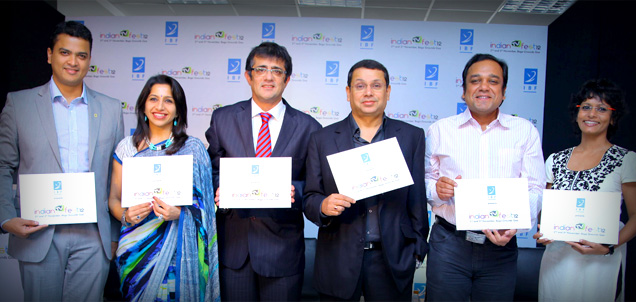
    Announcing the Indian Televsion Fest (from left to right): Keertan Adyanthaya, Monica Tata, Sunil Lulla, Uday Shankar, Punit Goenka and Lydia Buthello


    By Johnson Napier


    The god-like status that the medium of television commands in India today is indicative from the endless attention that gets showered on it from all and sundry. Whether for the advertisers who are willing to bend rules and swing  to their tunes or for the viewers who can take a liking to anything that’s thrown across at them (well, almost), the Indian broadcast industry is calling the shots in a manner that is pivotal to its growth.


    In fact, the popularity that it commands can be gauged from the growth that the medium has been throwing up in the past five years, which has been in the range of 12 per cent. This of course is backed by its ability to occupy a lion’s share of the ad pie and still remain a favourite medium for the advertisers.


    But while there are some obvious highs that ensue from the medium, the medium has been at the receiving end as well. Like the constant criticism it attracts for not being able to display a show of unity to voice common issues rather letting personal goals take precedence. Then there are also those who question the absence of a platform for the industry to come together and air and share views of common interest. But the last peeve may well be a thing of the past with the announcement of the Indian Television Fest 2012.


    The Indian Broadcasting Federation (IBF), led by president Uday Shankar of Star India and core festival committee members comprising Sunil Lulla of Times Television Network, Punit Goenka of ZEEL, Keertan Adyanthaya of NGC Networks, Monica Tata of Turner International India and Lydia Buthello of Star India announced the first-of-its-kind event for the industry. The two-day festival will be held at the Baga Grounds,Goa on November 2 and 3, 2012.


    The two-day fest would be a unique platform for the Indian and global broadcasting industry to network and exchange ideas through engaging panel discussions and master classes. Renowned names from India and across the globe are expected to participate in the mega event. And since it’s Goa, with the inviting beaches for company and some fun.


    Throwing open the idea to the gathering, Mr Shankar began by thanking his core team members, without whom the fest wouldn’t have been a reality. Explaining the thought process behind the exercise, Mr Shankar said: “The idea has been in the pipeline for almost a year now. We felt it was the right time to launch Indian Television Fest as the industry has grown big enough to manage an event of this scale. It basically stemmed from the need to create a platform where the entire broadcast industry could come together under a single roof – irrespective of the organisational and competitive background – so that there could be co-sharing and exchange of ideas and conversations on how the industry can take a big leap into the future.”


    According to him, what would make the event special would be its ability to get together honchos and industry persons from different verticals under television to come and be a part of the give-and-take. He affirmed: “Apart from some familiar and popular names the event will see the best in broadcasting brain trust from India and the world descend at the venue. The ultimate aim of ITF would be to service the larger Indian broadcasting community. It will also be driven with the dual need of being business-minded in its approach while at the same time having a social connect, as we believe the two are interlinked and cannot work in isolation from each other. All in all, we plan to make this event truly iconic in nature.”


    Giving a lowdown on the two-day event, Monica Tata of Turner India began by bringing to light some of the high points of the Indian broadcast industry. Providing a bird’s eye view of the current media scenario, she said: “India is the third largest market for media behind US and China. It has reported a growth of 12 per cent in the last five years which will continue to keep swelling. Further, the country boasts a reach figure of 500 million and is estimated to be worth Rs33,000 crore. This number is expected to triple to almost Rs100,000 crore by 2017. Needless to say there are tremendous opportunities that will enable the industry reach this figure in the coming few years.”


    Highlighting the tremendous opportunities that the Indian market presented for the future, Ms Tata said: “India has a penetration level of just 60 per cent leaving a lot to be achieved going forward. Further the C&S households are expected to grow to 88 per cent from the current 81 per cent. Also, the average time spent on television viewing is still low at 150 minutes compared to other countries that are almost double the number. And finally, with digitisation, DTH, HD taking off in a big way coupled with the unhindered growth of regional channels should see the industry enjoy prime status in the near future.”


    According to Ms Tata, some of the key themes scheduled at ITF include: best practices and masterclass that’ll be weaved around core areas of content, distribution, revenues, technology, etc; presence of visionary speakers like James Murdoch of International News Corporation, Andy Bird of Walt Disney, Hugh Johnson of Channel 4, Michael Lynton of Sony Corporation of America, Subhash Chandra of Zee & Essel Group, etc; debates and conversations; interaction with regulators and policy-makers; and finally encouraging cross-genre ideation.


    Presenting his viewpoint, Sunil Lulla of Times Television Network said: “There was no platform as yet in India where the issues and concerns of the Indian television industry were being raised and addressed. ITF will be a platform where one can learn, interact and demonstrate the road for the future. Three factors that’ll drive this event include the need for conversations, need for confidence to hold an event of this stature and need for commitment from the industry to take this industry from Rs33,000 crore to Rs100,000 crore by 2017.”


    On the key highlights to be expected at the event, Punit Goenka of ZEEL said: “We all know how New Media is going to be the platform of the future and we also know how regionalisation is going to take the industry further…and since regional has a lower base it is growing faster than the other genres. However, there are avenues that we need to discuss. Nobody has an answer as to how we will reach the Rs 100,000-crore mark but one has to start the process of thinking about it.” When asked if it would be a practically possible to reach the Rs100,000 crore mark in a short span of four years he said: “We have to talk about it and see how we get there. Nobody has an answer as to how we would get there. But unless you talk about it and bring it up in discussions how do we even make a beginning to reach there? I think the end goal is not important; it’s the journey which is going to be important.”


    When asked on the initial response that the event has managed to generate, Mr Lulla said: “Members from the broadcast industry have shown tremendous enthusiasm to the initiative, which can be seen from the initial buzz that is being created where registrations are concerned. As you know, we are a little late industry as we like to start things a little later. We hope the television industry supports us in a fashion by sending more members to attend the event. We have fantastic line-up of speakers from India and abroad; and of course, we would like the industry to stretch themselves a bit and sponsor many other themes and elements that we have lined up out there.”


    Mr Lulla added: “As you know, we are always a last-minute booking.com industry, so it’ll be a challenge to get a lot of people to attend the event. Also, there will be the challenge of generating advertising revenues so that we can stage the event successfully. But we are confident of putting up a successful event.”


    On the benefits that will accrue to IBF from the event, he said: “What IBF will particularly benefit from is take the ideas that come out and find out what will be the cornerstones for the industry going forward and what will become items of agenda. What people who come there to attend the event to take off is personal learning – so there will be ideas, new friends will be made…in all, it will be a mind-opening event, so to speak.”


  • TDSAT reprieve for broadcasters, stays TRAI’s ad duration rule

    By Shruti Pushkarna


    The Telecom Disputes Settlement and Appellate Tribunal (TDSAT) has stayed the Telecom Regulatory Authority of India’s (TRAI) notification to limit the duration of ads to 12 minutes per hour. The case will come up for hearing next on July 17.


    The TDSAT stay comes is a relief to broadcasters who slammed the TRAI’s move to limit the duration of ads on their networks. Uday Shankar, President of Indian Broadcasting Foundation (IBF) and CEO of Star India has confirmed the development to MxMIndia.


    In an earlier statement, Mr Shankar had said, “TRAI has no jurisdiction in the subject. Advertising is governed by the Cable and Satellite Act and the appropriate authority is with the ministry of information and broadcasting. The regulator is overstepping its brief.”


    Speaking to MxMIndia after the stay order by TDSAT, Mr Sunil Lulla, Vice-President, IBF and Managing Director & CEO of Times Television Network said, “Since the stay is only for a month, there’s another hearing coming up. It’s not appropriate for us to comment when it’s work in progress. As for our stand on the ad cap issued by TRAI, our stand is well known and it won’t change.” Mr Lulla, who is also on the Board of Directors of the News Broadcasters Association, had criticized the TRAI’s decision on limiting the duration of ads, in the past. He said, “This move is completely ridiculous. Self-regulation is the best regulation.”


    Broadcasters believe that low revenues from subscription leave them no option but to rely heavily on revenues from advertising. However, there is a large section of media professionals and consumer organizations which which believes that broadcasters have misused the leeway given to them so far, and the number of ads screened at peak hours mars the viewer experience.