Tag: TV TRAIL

  • Shailesh Kapoor: Male Characters Set To Rule Hindi GECs?

    By Shailesh Kapoor


    It’s been a category dominated by female viewers and female fiction characters. Hindi General Entertainment Channels (GECs) have behaved more like Hindi Female Entertainment Channels for more than a decade now.


    The stronghold of the women on the remote continues. But the other type of female dominance – that of female fiction characters – has been challenged. As per the latest Ormax Characters India Loves report (May 2014), for the first time since we started tracking character popularity in 2009, the top 10 fiction characters list has more male characters than female characters!


    Three years ago, this would have been unthinkable. The contribution of male characters has traditionally been a token one, rarely crossing two out of ten. In the last two years, three out of ten seemed more gettable, but the female dominance remained. Last month, the balance finally tilted, with five male characters in the Top 10 and ten in the Top 20. And remember, we are talking only of fiction characters. The top 5 non-fiction ‘characters’ are all men in the same period of tracking.


    What has led to this turnaround and what could be its possible implications? A significant part of the answer lies in the list of popular characters. The five male characters who made it to the top 10 list in May are Jethalal (Taarak Mehta), Maharana Pratap, Akbar (Jodha Akbar), Krishna (Mahabharat) and Inspector Daya (CID). The list offers a good mix of history, mythology, comedy and action-thriller genres.


    Contrast this to the female characters in the top 10: Jodha (Jodha Akbar), Sandhya (Diya Aur Baati Hum), Ishita (Yeh Hai Mohabbatein), Anandi (Balika Vadhu) and Gopi (Saath Nibhaana Saathiya). Lack of genre variety is striking. Most of these characters, and others in the top 20 list, are women on a journey, facing challenges on the way. It’s a template that was created starting with Tulsi in 2000, and then redefined with Anandi in 2008. Over years, this template has been exploited to create hundreds of daily serials and characters.


    The idea of a woman’s struggle-heavy journey and her eventual victory is a powerful one for female audiences, and shall remain so in the years to come. The problem is, of course, in the same-ness of execution. It’s as if the idea is so powerful that nobody seems to care about the quality of its depiction anymore.


    The only female characters in the Top 30 who do not fit this template is Daya (Taarak Mehta) and Dadi Sa (Balika Vadhu). Everyone else is on a ‘journey’, all the time. And while the destinations may be different, the routes are strikingly similar.


    Beginning to feel disenchanted by content that is highly relevant but unimaginative, female audiences have increasingly started preferring male characters. Mahadev’s dreamboat looks, Akbar’s attitude and Krishna’s life lessons are the new cool.


    GECs would do well to act on both fronts. For one, they should capitalize on the growing interest in male characters by creating some differentiated ones. Amitabh Bachchan’s Yudh is well-timed in this regard. Two, they should consider pushing the envelope regarding female characters. We need women who take the road less travelled in their journeys, while remaining relevant to the mass audiences at large.


    Up for the challenge?


    TV Trails is a weekly column written by Shailesh Kapoor, founder and CEO of media insights firm Ormax Media. He spent nine years in the television industry before turning entrepreneur. The views expressed here are his own. He can be reached at his Twitter handle @shaileshkapoor
     

  • Shailesh Kapoor: A Week To Remember: Politics, IPL & More

    By Shailesh Kapoor


    Television weeks can be fairly routine, except in periods like the Elections recently, or the week of a big-ticket cricket series. An odd launch here and there, like Satyamev Jayate, can spike interest. But in most weeks, it is the staple diet that dominates.


    In contrast, the last six days have been wildly engaging. I don’t remember a week that offered so much to watch and talk about, driven by politics but certainly not restricted to it. The gossip around the shift in power at Network18 has provided the off-screen masala too. But I shall restrict myself to on-screen material only. Here are my picks of TV events that dominated the week that was:


    1. The Swearing-In Ceremony: Swearing-in ceremonies can be dreadfully boring. But the upbeat mood around the new Government ensures that anything involving them gets people interested. The Monday that went by kept the news channels busy, first with conjectures on portfolio allocation, then with the informal but actual list of portfolios, and finally with the live telecast of the actual ceremony. The entertainment was provided by an alert President, who rebuked two ministers for skipping the oath-taking protocol.


    2. What A Match: The Mumbai-Rajasthan game last Sunday provided such a big dose of entertainment, it may have over-compensated for a low-key IPL. I don’t remember seeing a match ever, where a team won despite not meeting the originally-announced target. The math of it had most commentators stumped, even though it was fairly elementary, and in fact, should have been a part of the talk even while the chase was going on. The IPL is in its last leg this week, and game last Sunday will ensure this year’s IPL ends on a high – something we were not so sure about a month ago.


    3. Ministers In Office: In a first, media has covered ministers in the new Government taking charge better than ever before. A more pro-active Prime Minister and a young, media-savvy Council of Ministers has helped. If this week is anything to go by, we seem to have found our most media-friendly Government ever.


    4. Zindagi and Indo-Pak diplomacy: It can be termed as uncanny and highly coincidental. Zee’s new channel Zindagi, which plans to air content from Pakistan, was formally launched last week. As the campaign gained momentum this week, events engineered by our new PM led to Nawaz Sharif making a much-discussed India trip. Zindagi is bound to benefit from the sentiment of hope that Indo-Pak relationships may indeed improve under Modi. The photo-op between Sharif and the Essel Group Chairman Subhash Chandra was an icing on this rather intriguing cake.


    5. The Smriti Irani controversy – Much ado about nothing: The Congress party has started the witch-hunt for chinks in the new Government’s armour. If their attempts at creating controversy around Smriti Irani are anything to go by, they will do well to take a break from these desperate measures. Smriti Irani, the youngest member of the Modi Cabinet, has all the makings of a great minister. Her rise from a TV star to a political heavyweight may just turn out to be one of the most fascinating political anecdotes of modern India.


    6. Congratulations Tulsi: Did you see the Star Plus ads congratulating “hamari Tulsi”? A class act, in both idea and execution. That’s how leader brands grab opportunities that come their way.


    What a week!


    TV Trails is a weekly column written by Shailesh Kapoor, founder and CEO of media insights firm Ormax Media. He spent nine years in the television industry before turning entrepreneur. The views expressed here are his own. He can be reached at his Twitter handle @shaileshkapoor


  • Shailesh Kapoor: Reality Shows: Trendy No More?

    By Shailesh Kapoor


    When KBC first launched in 2000, the term “reality show” was not a part of this country’s lexicon. The long-running Sa Re Ga Ma Pa (1995) was then referred to as a singing talent show, not a reality show. But by end 2004, reality shows were emerging as a formidable force, fuelled by the launch of Indian Idol and India’s Best Cinestars Ki Khoj that year.


    The amount of activity this category saw in 2004-08 made one believe that its share of viewership would continue to rise year-on-year. But the reality shows genre in India has flattered to deceive. In 2008, 21% of viewers named a non-fiction show as their favorite GEC program. In 2014, this number remains in the 20-25% range, and that includes Comedy Nights With Kapil, which contributes to more than half the share.


    Why did the category stagnate? This summary of 2014 tells a story:


    1. Khatron Ke Khiladi Season 5 (arguably the best season of the show since season 1) ends this weekend.


    2. Dance India Dance, currently airing in the Li’l Masters variant, is into its ninth cumulative season, if you could the main show (4 seasons) and variants such as Li’l Masters, Super Mom and Doubles (5 seasons).


    3. Jhalak Dikhhla Jaa Season 7 is slated to launch this June.


    4. KBC 8 is calling for entries currently, and is slated to launch around August.


    5. As an aberration, only the second season of Zee TV’s Cinestars Ki Khoj is scheduled for a mid-year launch, coming back after a decade.


    6. Bigg Boss Season 8 should go on-air around October, like every year.


    7. Being an annual fixture, India’s Got Talent is likely to be on-air this year too, in what will be Season 6.


    You get the trend? All these properties are at least five years old.  All, barring one, are into their fifth to ninth seasons. We have fallen into a pattern. And the viewer is not exactly pleased with this turn of events.


    Except the two Zee TV formats, all other formats are imports. Four out of seven are talent show formats. Clearly, India’s ability to create original, homegrown reality show formats is highly suspect. Many attempts have been made, but have been largely unsuccessful. Imagine’s unofficial adaptation of The Bachelor got good attention, especially in the first season with Rakhi Sawant. But overall, it has been a tough ride for the industry.


    Doordarshan and Zee TV have been creating reality show formats even before the imports descended upon us. From Meri Awaz Suno in the 90s to Saanp Seedi, Antakashari, Sa Re Ga Ma Pa and DID, these channels had a lot to offer, though most of it was in the talent and games show space. When the industry showed growth and the market became ready to import foreign formats, it emerged as a low-risk option to go for. In the process, the homegrown formats began to get step treatment from most channels, in terms of attention and budgets provided to them.


    Today, the reality shows genre is facing imminent decline. The audiences who grew up watching these formats would have recently got married or are likely to get married soon. The impact of marriage on TV content preferences can never be overstated. And no young generation likes to inherit what the “oldies” liked. They want to create their own trends, their own hits.


    With a culture and heritage as rich as ours, we should be bursting at the seams with reality show ideas. The time can never be more right!


    TV Trails is a weekly column written by Shailesh Kapoor, founder and CEO of media insights firm Ormax Media. He spent nine years in the television industry before turning entrepreneur. The views expressed here are his own. He can be reached at his Twitter handle @shaileshkapoor


  • Shailesh Kapoor: News Channels on May 16: Never A Dull Moment

    Shailesh Kapoor

    Shailesh Kapoor


    Most news channels started broadcasting live on May 16 at 6am. The first results started coming in by 8am. And by 9.30am, it was all over bar the shouting. By 10am, it was certain that not only with NDA form a stable, majority government, BJP alone would cross the coveted 272-mark. By this time, some anchors were already wishing their guests ‘Good Afternoon’, well before 11am. Clearly, it happened way too fast for everyone.


    Since 1989, all General Election results have been marked by fractured verdicts in some form or the other. Hence, till leads begin to solidify, it is difficult to be sure of the verdict itself; let alone who the next Prime Minister will be. This time, it was all decided, and the focus of the coverage thereafter shifted to BJP celebrations, Modi speeches and state-wise analysis of the incredible Congress rout.


    Indeed, it was a Results Day like like no other. Here are some nuggets that caught my attention:


    :: Did Rajedeep Sardesai actually say the “Congress has f*&#ed up” on-air? The footage is not to be found anywhere on the net, but Twitter was indeed abuzz with the rather entertaining slip-of-the-tongue by the seasoned anchor.


    :: What’s with Arnab Goswami promoting 6am as the time for #May16WithArnab, but appearing on-air only at 7am, leaving it to his pupils to anchor a no-content hour? Arnab’s loyal fans, who woke up at 5.45am to watch him, want their money back!


    :: Did you notice those animated figures of Modi, Rahul and other party heads on Aaj Tak and Headlines Today? They also ran a three-minute parody called ‘Mitron main toh PM ban gaya’ (Watch here) under their well-cultivated humor brand ‘So Sorry’. Nice touch!


    :: I get the NDTV legacy of elections coverage, but it’s time to get rid of a static vinyl backdrop with hazy snapshots from across the country, variants of which they have been using in all their election results shows in the recent years!


    :: Also, did anyone toggle between NDTV and Times Now? I did, and counted number of words spoken per minute on each channel on an average. The ratio was a staggering 1:4 (which incidentally is also the ratio of their viewership in most weeks these days)!


    :: Anuradha Prasad ads in the run-up to May 16 surprised me. News 24 has never been a serious player, and here she was, promoting her May 16 show on radio and even other news channels, such as Times Now!


    :: Chanakya, the Delhi-based pollster, called their second elections right after the Delhi Assembly elections last year. News 24, coincidentally, were their on-air partners, and the channel was promoting its achievement on May 17-18 via radio ads. It was good to see Arnab Goswami congratulating Chanakya on-air, more than once, even as other exit polls, run by bigger agencies, got it all wrong, like most other times.


    :: On May 16, I learnt that there are three types of leads that can be reported – speculative leads, unofficial leads and official leads. Official leads were those available on the Election Commission website. Unofficial leads were those available on the ground via counting center information. I am still trying to figure out what speculative leads mean. At a time when most channels had information on 200-250 seats (official and unofficial), NDTV has information on 500+. Mystery still unsolved, at least for me!


    :: As someone on Twitter rightly pointed out, we heard Modi speak more words on May 16 than we have heard Manmohan Singh speak over ten years put together. Don’t know about the country, but the media must be rejoicing the election of an articulate, media-savvy Prime Minister. ‘Achhe din’ are here for TV channels!


    TV Trails is a weekly column written by Shailesh Kapoor, founder and CEO of media insights firm Ormax Media. He spent nine years in the television industry before turning entrepreneur. The views expressed here are his own. He can be reached at his Twitter handle @shaileshkapoor

  • Shailesh Kapoor: May 16: Mother Of All TV Battles

    By Shailesh Kapoor


    Cricket World Cup & IPL finals. Blockbuster movie premieres. Grand finales of big-ticket reality shows. Over the last decade, almost all the high-rating TV ‘events’ can be classified into these three categories. India does not have an annual showstopper like The Super Bowl. Our television highs are rather muted, very rarely attracting a pan-India audience base that cuts across demographics and viewing taste.


    The big day of election results, May 16, can be a rare exception. It has emerged as the most promoted television date by far in our television history, largely because it has become a political refrain. Across parties, “We shall talk on May 16” has been the default political response to many tough questions posed by journalists.


    Conducted over nine phases, these General Elections have been a long-drawn exercise in political theatre. And it will all climax in a matter of hours next Friday morning. News channels are set to start their live telecast from as early as 6am. The first leads will begin to come by 9am. And these days, they don’t trickle in; they come as a deluge. Before noon, the big question would have been answered: Will Modi-led NDA cross the 272-mark?


    Back in the 80s, this three-hour process would take three days. Doordarshan would entertain you with patriotic cinema (mostly Manoj Kumar films) with constant ticker updates and a news bulletin every two hours or so. EVMs have changed it all. Some from the old school may argue it’s taken the fun out of the counting process, but for me, EVMs remain one of the most significant (also one of the most under-rated) achievements of the Indian democracy.


    Coming back to May 16, the second half of the day will be more about reactions and analysis, even as the results begin to sink in. In the event of NDA falling short by a significant margin, the ‘event’ may extend itself beyond May 16, into the weekend, even the following week.


    Two factors, however, will stop May 16 from becoming a record-breaking viewership day in Indian news television history. One is the day itself. It happens to be a working Friday. I have strongly believed that all election result days should be Sundays. It will lead to higher awareness and participation in the democratic process over time. On a working day, TV viewership will take a beating, even though discussions around the results will continue to dominate offices across the nation.


    The second factor is a marketing problem. Historically, news channels have continued to market the results-day largely through on-air promotions. It should be an ideal day to get new viewers to watch, but there is a lot of promotion on the home channel, and very little outside. This time, by the sheer talk value these elections have generated, awareness about the results-day is very high. Hence, it will be a lesser concern to get the fringe, non-news viewers in. Now if only it was a Sunday!


    More than 20 news channels will fight a fierce battle on the results-day next Friday.  The results of this battle within the battle may have a long-lasting impact on our news television economy. So, fasten your seatbelts. And call in sick on May 16!


    TV Trails is a weekly column written by Shailesh Kapoor, founder and CEO of media insights firm Ormax Media. He spent nine years in the television industry before turning entrepreneur. The views expressed here are his own. He can be reached at his Twitter handle @shaileshkapoor


  • Shailesh Kapoor: Modi Ads: How much is too much?

    By Shailesh Kapoor


    For the first time in about two weeks (or at least it seems like that), the front-page jacket on The Times Of India Mumbai edition did not carry a BJP ad today. The Mumbai elections being done with, the print budgets are sure to have shifted to Punjab, Gujarat and Andhra Pradesh. But national TV ads will continue to make their presence felt for at least another three weeks.


    There has been enough talk about BJP’s advertising budget and the source of that money. What interests me more, however, is the thought behind such an aggressive media plan. Surely, if Congress or BJP wanted such a plan in the past, say 2004 or 2009, they would not have issues in finding resources to put it together. Hence, it comes down more to the will and the need, than the budget.


    Narendra Modi is omnipresent on television these days, barring the kids genre. Even websites and apps, including the most unlikely ones, throw up a BJP ad with him and the lotus symbol prominently displayed. If media planners had any theories on how many exposures you need to build reach or effectiveness, you can throw those theories out of the window. Here, you may as well ask: How many exposures do you need to build a “wave”?


    Yes, it comes down to that. BJP (or Modi, used interchangeably here on) has been smart in realizing that their best chance to get an absolute majority in these elections lies increating a “wave” or a “leher” across the country. The party does not have presence in several states, such as West Bengal, Kerala and the North-East. In several others, like Tamil Nadu, it is in alliance with the weaker regional parties. In effect, if BJP-led NDA have to cross the 272-mark, they have to win 272 out of 400-odd constituencies in the heartland states, not out of 543.


    That makes it two out of every three seats! A sizeable segment of “undecided” voters, led by first-time voters, can make the difference. After all, more than 50 seats in 2009 were decided by a margin of about 15,000 votes or less.


    BJP’s campaign message has been smartly selected and phrased. It wants us to “assume” that a Modi Government is only a formality. The headlines are phrased as statements of fact, not as pleas to the voters, ranging from ‘Hum Modiji ko laane waale hain’ to ‘Abki baar Modi sarkar’ to ‘Kamal ka button dabayenge, Bhajapa ko jitayenge’.


    Over many exposures, you would tend to believe that these “facts” are indeed “facts”, and a Modi government is only a matter of formality now. That would be enough to sway both the first-time voters and those sitting on the fence in general. Anything less than a campaign of this visibility may have arguably fallen short of giving credence to the claim that a Modi government is a given this year.


    A “wave” in today’s world largely stands for “buzz”. It’s more about talk value. The decision-making takes care of itself thereafter. As a country, we are in a phase where it is becoming increasingly easy to create buzz using the media, but at the same time, it is becoming increasingly difficult to sway opinions. With more sources of influence, media campaigns are now playing a “show” role than a “tell” role.


    So, is there a Modi wave? Yes. But does that wave mean a majority of seats for NDA, we will know only on May 16. But one thing is clear. If NDA does not cross the 272-mark this year, with this campaign and such lack of options available to the voter, they never will in the next few decades at least.


    To that extent, the pressure is on Modi. Even 230-240 seats may open up possibilities that he would hate to be a part of. On one day, middle of May, it will all be known in a matter of hours!


    TV Trails is a weekly column written by Shailesh Kapoor, founder and CEO of media insights firm Ormax Media. He spent nine years in the television industry before turning entrepreneur. The views expressed here are his own. He can be reached at his Twitter handle @shaileshkapoor


  • Shailesh Kapoor: It’s time for the ‘Indian Permanent League’

    By Shailesh Kapoor


    It’s that time of the year again, when the IPL begins to hog media attention. In the election season, the league had a relatively low-key launch yesterday. But don’t be fooled by the apparent lack of buzz. IPL has shown over the last four years that it can set new benchmarks in consistency. Irrespective of any input factor, be it the players, the teams, the venues, the scores, the marketing or the scandals, IPL viewership hits roughly the same sweet spot. And the same 3-4 teams drive this viewership, while others continue to struggle.


    As always, the trade media is keen to cover the IPL. The problem is: They are not quite sure about the pegs to take year after year. For the last three years, I am being posed roughly the same questions by various financial papers and trade websites, e.g. Will it do well this year, how will it impact GECs, how will GECs respond to IPL, will movies release during IPL, how will box-office be impacted, etc.


    These questions have gone from being relevant to puerile over the time continuum of 2008-2014. From being a novel idea that would grab the attention of the masses by the scruff of their necks, IPL has graduated to being a “fixture” in the real sense. It is now well and truly a part of the annual entertainment calendar. Viewers don’t have to “figure it out” every year. They can decide what to do with it with far greater ease than ever before. As a result, it can co-exist with other entertainment options in a manner far more harmonious than when it started. IPL has, now, become the Indian Permanent League.


    Being a fixture is both a sign of strength and a challenge. Sign of strength because it’s a comment on the inherent equity the league enjoys. Arguably, IPL doesn’t need to be “sold” anymore. It comes pre-sold. It only needs to happen. But the challenge comes in the form of the question that bothers many brands: “What next?”


    In the Lalit Modi era, innovation was a core value IPL had espoused. In the first three seasons, we saw new ideas being experimented with. Some worked, some didn’t. But in the second half of its seven-season history, IPL has slipped into maintenance mode. Being a fixture, that’s not such a bad thing. But extended lack of innovation can create brand fatigue, though there were no evident signs of this fatigue being very strong till last year.


    The next quantum jump in IPL’s equity can now come via only one route – building of team loyalties. Unless there is a strong, passionate fan base at least 3-4 teams enjoy, the league will remain entertainment-led than loyalty-driven. Chennai Super Kings, Mumbai Indians and Kolkata Knight Riders have achieved this to some extent. But it’s only the proverbial tip of the iceberg. There is a long way to go before IPL can ignite passions like EPL, an oft-quoted benchmark, does.


    So the IPL continues to exist, to make a mark and evolve, in its own “fixture-ized” way. Now, won’t it be heartening if the media commentary on IPL evolved too?


    TV Trails is a weekly column written by Shailesh Kapoor, founder and CEO of media insights firm Ormax Media. He spent nine years in the television industry before turning entrepreneur. The views expressed here are his own. He can be reached at his Twitter handle @shaileshkapoor


  • Top 5 Voices Of Sanity in Political Debates


    By Shailesh Kapoor


    The General Elections are finally here. Even as the nation goes to polls, the quality of political debate has hit an all-time low. From Rahul Gandhi’s imbecile answers to vitriolic personal attacks by stray politicians (including one who said he will chop Narendra Modi to pieces) to using the Indian Army to polarise votes, I thought I had seen it all. And then yesterday, Mulayam Singh Yadav decided to make light of gangrape by calling it as a “mistake” young boys could make.


    Expecting a bit of courtesy, intelligence and maturity in political discourse is perhaps asking for too much. Even Narendra Modi’s language comes across as uncouth at times; language that’s certainly not befitting a potential Prime Minister. But if one’s benchmark is a Prime Minister who hardly communicated for 10 years, one should not be too demanding.


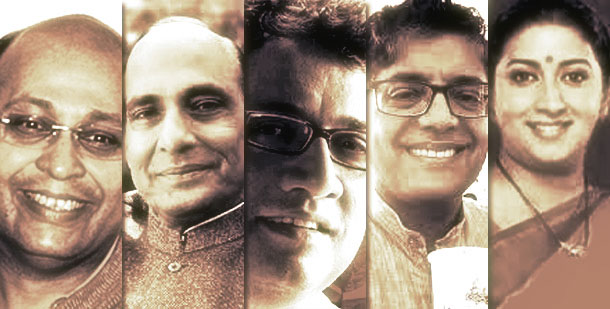
    In the midst of this class-less and even dangerous pitch, some politicians stand out as being the odd ones. Here’s my pick of five politicians who have brought some sanity to the degenerating political debate:


    5. Abhishek Manu Singhvi: It is difficult to pick a Congress talking head who makes sense these days, but Singhvi comes across as the most articulate and well-mannered of the lot. He is no political heavyweight himself, unlike some others on this list. But he communicates well, even in the midst of what are turning out to be by far the roughest elections for his party.


    4. Rajnath Singh: Even as Modi plays to the gallery via the lowbrow route, BJP chief Rajnath Singh has maintained dignity and composure throughout this campaign. He is evidently the back-end man here, keeping the pieces together, while leaving the talking to others. But when he speaks, he makes an impression alright, especially with his clarity of thought. Is there a chance he may be the compromise choice for the top position if NDA falls short by a small margin and other parties give support under the condition that Modi should not be the PM? Let’s wait for May 16.


    3. Derek O’Brien: The quizmaster turned Trinamool Congress leader has the unenviable task of defending the indefensible at times. His party chief Mamata Banerjee suffers from occasional bouts of the foot-in-mouth disease, but O’Brien is now well experienced in handling the mess. He has gift of the gab, and can even be cheekily entertaining at times. I have a feeling we will hear a lot more of him after May 16, as TMC may end up playing a crucial role at the Centre.


    2. Jay Panda: I find the BJD leader by far the most affable face in Indian politics today. He is always soft-spoken and dignified, and never short of deep knowledge and a clear view on the subject matter. Read his Wiki page to know what a model Member of Parliament could be!


    1. Smriti Irani: Throw the ‘actors can’t become serious politicians’ argument out of the window right away. Smriti Irani means business. Having struggled her way up the ranks in BJP, she has now got the exposure and the confidence that will catapult her in to top league soon. Irani is super entertaining too. Her sarcasm can be scathing at times, yet never unreasonably personal. In the true sense, she combines the qualities of a good politician and a good actor. Watch her recent Aap Ki Adalat episode with Rajat Sharma or her chat with Barkha Dutt earlier this week and you are sure to root for her. She is all set to stretch Rahul Gandhi in Amethi. More power to Smriti Irani and her commitment to a political career.


  • Shailesh Kapoor: Adventure? You’re in the wrong country!

    By Shailesh Kapoor


    The new season of Khatron Ke Khiladi (KKK), the Indian adaptation of Fear Factor, went on-air this March. In its fifth season now, KKK was the launch vehicle for Colors in 2008. Barring a forgettable season with Priyanka Chopra as the host, the show has offered top quality production and hosting. Yet, it has met with only limited success on the viewership front. The current season has opened better than the previous ones, and offers more content variety. If the numbers sustain, this may end up being the most successful season till date.


    The tough journey of the show does not surprise me. We are not the adventure-loving country where such TV show formats find natural traction. Adventure sports and activities are not only low on awareness in India, even those aware have little inclination to try them. Hence, the experience of any adventure-based TV show is unlikely to be immersive. The adrenalin rush is restricted because of the watch-from-a-distance mindset with which such shows are consumed.


    Two other successful television properties use adventure as a theme too. However, they focus more on the human angle to achieve viewer traction. MTV Roadies is about expression of the youth, than about biking. Man vs. Wild is about survival and the human spirit of excelling against all odds. Both are learning and inspiration led, albeit in very different ways.


    Go beyond these three shows and you will struggle to recall any other adventure shows in the two-and-a-half-decade history of Indian satellite television. Survivor India, Star Plus’ brush with the genre, was a washout, reinforcing that the success of Roadies and Man vs. Wild is also restricted to a limited audience base, and the wider GEC audience care little about this genre.


    Lack of adventure signifies that the market (India) is low on experimentation, exploration and curiosity. We like our lives well planned out, and the focus is on a collective unit (family) than on individual pursuits. This mindset also lowers the appeal of other genres such as travel, food and science, which are led by similar core needs as adventure.


    The infotainment genre is the most affected here. To their credit, they have managed to understand the Indian mindset well, and created a steady flow of local programming that is more conducive to the ‘safe’ needs the market caters to.


    Over the next few years, one may expect evolution as new generations take over. But with the subject being so inherently cultural in nature, this evolution may happen at snail’s pace, unlike other changes we are seeing around us, e.g. the whole-hearted embracing of technology our country has witnessed over the last decade.


    I’m glad Colors has pushed the envelope and kept faith in KKK. Television is a part of the larger pop culture, and one would hope that shows like KKK do their bit in making a small difference in creating more exposure for a largely inward-looking populace.


    TV Trails is a weekly column written by Shailesh Kapoor, founder and CEO of media insights firm Ormax Media. He spent nine years in the television industry before turning entrepreneur. The views expressed here are his own. He can be reached at his Twitter handle @shaileshkapoor


  • Shailesh Kapoor: Cricket under threat from the Digital Generation?

    By Shailesh Kapoor


    There was a time, not too long ago, when India-Pakistan cricket would bring life to a standstill across the country. When India played Pakistan in the World Cup semi-final on March 30, 2011, the country was unofficially shut on a middle-of-the-week working day. A rivalry that started in real measure with the Australasia Cup final in Sharjah in 1986, when Javed Miandad hit that famous last-ball six off Chetan Sharma, has seen many highs over 28 years.


    But there are signs that the battle is losing its edge. The recent Asia Cup ODI between the two countries (Sunday, March 2) rated less than what a moderately successful Hindi GEC serial does night after night. The World Cup T20 contest last week, scheduled well into the primetime on a Friday, rated about the level of a regular Diya Aur Baati Hum episode only.


    When you begin to look at the ratings of other India matches, like India-Sri Lanka or India-New Zealand, the real reason is exposed. Cricket is not growing. There seems to be an audience that is moving away from the sport completely, irrespective of the format. This audience is the younger lot (12-24 years) in the big cities. This shift may have started happening over the last 4-5 years only, and is now resulting in real impact.


    I have written several pieces in this column about the power of cricket in India. Lest I should be misunderstood, it is important to clarify that cricket’s de-growth does not make the sport irrelevant any time in the near future. We are still a one-sport nation, with football being a distant second. Cricket has a huge plus in the patriotic element it brings to the table. That is unlikely to be challenged by any mass sport for a long time.


    But when you are the only one, your competition is with yourself. So cricket has to find ways of maintaining its viewer base. The big idea of 2008, IPL, is now under some real threat of disintegrating, because of power-hungry officials who care little about the future of the sport. As the audience that was brought up on cricket in the 1980s and ’90s grows older, they will begin to matter less and less in size. The new generation needs to be coaxed into watching the sport.


    Star Sports seems to have understood this better than BCCI. Their online presence has been given the stature of a TV channel, no less. With quality Hindi commentary, they have changed the elitist mindset with which cricket coverage was handled for decades in India. They have the best platforms to market the sport, and the ability to create persuasive messaging to achieve the desired impact.


    But when your target audience is a generation that is visibly high on distraction, and perpetually so, the task is a mammoth one. Cricket needs to find its cool-ness back. An overhaul may be required sooner than later. But do those who are running the sport have the will to do it?


    TV Trails is a weekly column written by Shailesh Kapoor, founder and CEO of media insights firm Ormax Media. He spent nine years in the television industry before turning entrepreneur. The views expressed here are his own. He can be reached at his Twitter handle @shaileshkapoor


  • Shailesh Kapoor: Adult Television: A Matter of Time?

    Shailesh Kapoor’s ‘TV Trail’ column appears every Friday. Since he was travelling, the column due to feature last Friday (March 21) appears today. The next ‘TV Trail’ column will appear on Friday, March 28 – Ed


    By Shailesh Kapoor


    This week, Sunny Leone starrer Ragini MMS 2 opened to thundering audience response, especially in smaller towns across the country. Mastram, an adult-themed film based on the cult porn publication till about two decades ago, is set to release on May 1. Last year, an under-promoted BA Pass managed to find its audience and even critical appreciation. Sex is thriving in our cinema. Sunny Leone is a bigger star than the likesof Shahid Kapoor and John Abraham.


    But even as the censor board gets liberal with cinema, allowing fairly explicit content, albeit with an A-certificate, our television struggles. Star World chose to telecast the Koffee With Karan episode featuring Nargis Fakhri and Frieda Pinto at 11pm instead of the usual 9pm, because of explicit (verbal only) sexual references.


    About a decade ago, Zoom had launched Dangerous, a sex chat show at 11pm (again!), anchored by Kamal Sidhu and Sameer Kochhar. I was working with the channel at that time. Legal notices and complaint letters used to come in by the dozen. And then one day, we had to pull the content off air.


    In today’s age of the internet, where kids have access to the most explicit porn at the click on a button, adult content is a part of our lives. What could be so unnerving, then, about an adult channel, that stays away from any explicit nudity but covers erotica and sex awareness in equal measure, finding an audience that is currently seeking adult content elsewhere?


    The cinema argument is that when an audience goes to watch a film like Ragini MMS 2, they have made a choice by buying a ticket, while on television, you may just end up watching a channel involuntarily. But in today’s day of a la carte packaging, that argument does not hold true. An adult channel can be offered a la carte in the digital environment and cautious parents can exercise control features available with most digital service providers.


    But what are the chances that such a channel will happen soon? Bleak, on the face of it. For one, we are a country of protestors and it is easy for moral police to play spoilsport. More importantly, I can’t imagine a government challenging the status quo and belling the cat. It will take a really progressive Government to do that. And a party that supports Article 377 isn’t going to provide that.


    So, the idea may remain an idea for a while. But in an age when technology is challenging norms by the day, it’s only a matter of time. If not on the telly, then on the internet, we are sure to see India’s first 24-hour adult channel see the light of the day in the next few years. My bet is: Before 2020.


  • Shailesh Kapoor: Elections, Cricket& More: The Year of Male Viewership?

    By Shailesh Kapoor


    A little television trend has been developing over the last two years, of which (I suspect) the current TV ratings system has no solid evidence. It is about the increasing power male viewers are wielding while controlling the remote.


    Multiple factors have contributed to this slow but definitive shift over time. The socio-economic aspect is perhaps the most intriguing, but also the most arguable. As gender inequality becomes less stark in urban India, because of higher literacy rates in the new generation of women and growth in the still-miniscule population of working women, female viewers are beginning to access more avenues of engagement and entertainment. As their dependence on television, currently too high to be termed healthy, reduces, so will their desire to control the remote at all times.


    It must be mentioned that there is currently no quantification available for the trend above, and hence, the speed of this change is difficult to ascertain. But signs of change are evident, especially in post 9pm consumption behaviour. That the daily serials (barring a couple) have not managed to reinvent at the desired pace has contributed significantly to bringing in this change as well.


    2014-15 may just end up being a year where we will see acceleration on this aspect like never before. The T20 World Cup starts this weekend. An IPL is round the corner. There is a busy cricket season round the year, ending with the Cricket World Cup in Feb-March 2015, which India will play to defend.


    But the big event of this year comes in the form of the General Elections. Chaos and theatrics are par for the course in what are set to the messiest elections ever in India. News channels have been capitalizing the goings-on well. And we know it’s only the start. If we have a hung verdict, the drama may last well into June, even July.


    Cricket and elections, coming together, are going to create unprecedented disruption in viewership patterns. Over three months, this can impact habits enough to create an impact over a long run. New daily soaps of the staple variety have anyway been opening low and struggling to find loyal audiences. The GECs will find it progressively difficult to change that this year. I suspect they are left with little choice but to innovate, on stories as well as story-telling.


    Is a gender-balanced viewership a good thing? Definitely. Gender equality is good in everything. Period. And television viewership should be no exception. We are still a few years away from this “equality” in India, but this year can be the watershed in many ways.


    So, all you men, hold on to your remotes this season and be a part of the change!


    TV Trails is a weekly column written by Shailesh Kapoor, founder and CEO of media insights firm Ormax Media. He spent nine years in the television industry before turning entrepreneur. The views expressed here are his own. He can be reached at his Twitter handle @shaileshkapoor