Tag: TV TRAIL

  • Top 5 “Gamechangers” on Hindi GECs in 2016


    By Shailesh Kapoor


    This Top 5 yearender piece has been a regular feature on this column since 2013. (Links to previous articles: 2015, 2014, 2013). However, there has been one important change since 2015. The word “gamechanger” seemed too liberal to use for the 2015 list, and needed the quotation marks around it to qualify the liberal usage. I had secretly hoped at that time that this qualifier won’t be required at the end of 2016. But no such luck.


    It has been a fairly uninspiring year on the content front, and hence game-changers continues to be a liberal word to use. That being qualified, here’s the list of the five Hindi GEC shows that stood out this year, for the impact they managed to have on the category:

    5.  Diya Aur Baati Hum

    The Star Plus show features in this list for one specific reason – Star Plus’ bold move to end the show this year. Diya Aur Baati Hum wrapped up on September 10, after a five-year run that saw a glorious period of at least three years. Like many other shows, the channel could have dragged this one for another 2-3 years, even more. It would have understandably been a tough call to take. But wisdom prevailed. Colors’ Balika Vadhu also ended this year, after an eight-year run. Hope there’s a trend being set here, slowly but surely.


    4.  Kumkum Bhagya

    Kumkum Bhagya finished two years in April (though it seems like it has been on-air for ages). Through the year, the show single-handedly kept Zee TV afloat, even as the channel struggled to retain its No. 3 spot in the second half of the year. There’s a certain storytelling style that Balaji Telefilms has mastered, and Kumkum Bhagya’s consistent performance is yet another outcome of that.


    3. Naagin & Naagin 2

    Naagin had topped this list at the end of 2015. The first season ended on a high in June, and the second season has worked equally well since its October launch. Treated like a true sequel, with characters and story being taken forward 25 years from where the first season ended, Naagin 2 continued to rely upon the tropes that worked for the first season – dramatic storytelling, glamorous cast, deft special effects (at least by Indian television standards) and most importantly, a sense of urgency and pace that’s unmatched in the category by far.


    2. Shakti

    This post-IPL launch on Colors had one of the more intriguing campaigns in recent times, playing on a “sach” that would eventually be revealed several weeks later. With a eunuch (kinnar) as its lead protagonist, Shakti managed to create differentiation with social relevance. That, combined with smart storytelling that made the most of every dramatic moment, ensured that Shakti quickly rose to the top of the GEC fiction charts, in turn helping Colors usurp Star Plus at the No. 1 position, especially with Naagin also on-air.


    Will Shakti have an extended run over 2017-18? Only time will tell. But in a year of lacklustre weekday fiction launches, Shakti stood out as a genuine exception.

    1. The Kapil Sharma Show

    He had ruled the weekends for more than two years before parting ways with Colors. Yet, when he made a comeback with The Kapil Sharma Show on Sony in April this year, there was much scepticism about how the show would fare. There would be format fatigue after all, and Comedy Nights With Kapil didn’t exactly end on a high on Colors.


    But those fears, as it turned out, were unfounded. The Kapil Sharma Show grew from strength to strength during the year, acquiring the same cult status, if not even higher, that the predecessor show on Colors enjoyed. That Kapil Sharma did not have a feature film distraction during this year helped. As did the superbly conceived and performed character of Dr Mashoor Gulati.


    The Kapil Sharma Show took Sony to the No. 3 spot by the last quarter of the year. And unless Sharma messes it up with another feature film roadblock, 2017 is set to be a big year for this show.

     

  • Test Cricket Woes: Will Kohli Play Saviour?

    picture caption: Source: Twitter/@icc


    By Shailesh Kapoor


    It’s Test Cricket season again. After what seemed like a never-ending T20 fiesta, we finally have some white uniform cricket. In an unusually-designed tour, India is visiting the West Indies to play four Tests and nothing else. No ODIs, no T20s.


    Test cricket has been through its challenges in recent years. There is a loyal base of followers who consider it to be the most challenging and exciting format in the sport. But this loyal base is less than 10 million (1 crore) Indians in size. And the age profile of this segment is not exactly advertiser-friendly, with a large majority of these 10 million being 35+.


    It is not very difficult to sell India cricket in any format. ‘India in West Indies playing only Test cricket’ can be the toughest proposition to sell though. There are many reasons.


    The timings are unsustainable from a viewership perspective. 7.30pm to 2.30am is arguably worse than New Zealand Test cricket timings of 3.30-10.30am. Sleep deprivation can still be managed, but how does one get the control over the remote in the prime time of mainline GEC content that the family must watch?


    West Indies is not the most exciting team to watch in the long format. There are very few stars on the roster, and unlike India-Australia, India-South Africa or India-England, there’s no modern history to this contest.


    The telecast experience isn’t going to any better. The stadia are unlikely to be packed, if the first day last night was any indication. And the commentary ranges from functional to plain boring.


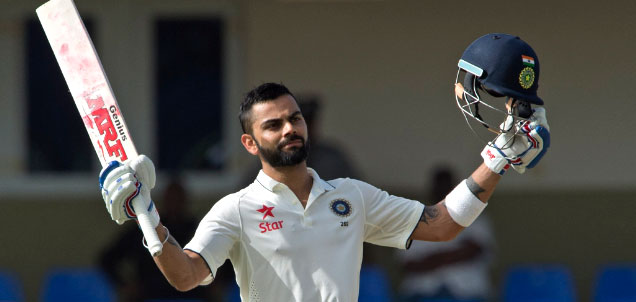
    In such a scenario, there’s just one thing that would make this Test series worth considering, even for the shrinking loyal base. Virat Kohli. This is Kohli’s first Test match since the T20 World Cup and the IPL, two tournaments where his stature as a modern great was firmly established. As I watch last night’s recording while writing this, I see that Kohli has announced his presence in the series early, scoring 143 not out in two sessions, well on his way to his first double hundred in Tests, probably more.


    How emphatically he dominates this series will decide if and how this series is remembered a few years later. Four centuries and it will be the Kohli series that will never be forgotten, especially if India win 4-0 under his leadership. But if the numbers are more modest, the series can fast lose its relevance.


    There has been a lot of talk about day-night Test cricket, and BCCI too has been championing the idea, it seems. But the larger problem with the format is that it needs a potential 30 hours of time investment from the viewer, an unreal number in today’s time, when even a 90-minute film can bore us to death.


    Test Cricket shall remain niche. The 10 million may go down to 5 million two decades from now. At some stage, Pay Per View (PPV) may be the only practical option to monetise this format in India.


    But the next decade is relatively safe. It will be the Kohli decade after all. And if he can grow the loyal base of the format purely on the strength of his charisma, he will be a media industry star too, not just a cricketing one.


  • Shailesh Kapoor: T20 Cricket: India’s ‘Second Sport’?


    By Shailesh Kapoor


    This Republic Day, India beat Australia in the first T20 International of the ongoing series. Earlier the same day, the Indian women beat the Aussies too, in a record run chase. Thus started a long season of T20 cricket for the Indian viewers; a season that will go all the way till May end, when the IPL concludes.


    India finishes three T20s in Australia, then plays another three with Sri Lanka, followed by the T20 World Cup in India in March, and the IPL in April-May immediately after. More than 80 T20 matches will be aired this period, not counting the women’s T20 World Cup, which is also scheduled for March.


    For those whose initiation into the sport of cricket was through Tests and ODIs, this may come across as a crazy cricket schedule, almost an off-putting one. But for a wide section of sub-25 audience, this is the cricket they enjoy seeing the most – the three-hour entertainment show, over the eight-hour or five-day drag.


    I may have made this point in this column a couple of years ago, but it’s worth saying again that the sport a person (and by extension, a country) grows up to love is the sport he (or she) grows up to watch (and possibly play) when he’s a teenager. Typically, 12-17 years is the age band when the mind is most impressionable regarding the sporting taste of a typical urban Indian.


    Times are changing, though. For many in the 12-17 age group, the “entertainment” that sports provided has been replaced by social options, loosely grouped under the generic category of activities (including the virtual ones) called “hanging out”. Hence, the challenge to engage them will continue to get tougher by the year.


    In the pursuit to find the ‘second sport’ in India after cricket, broadcasters and sports marketers have launched every possible sporting league. Some of these leagues have done genuinely well, while others are merely projected media successes, despite low viewership and financial losses to most stakeholders. A dozen leagues later, India has not got any closer to finding that second sport.


    But even as that effort continues, the sport of cricket is virtually getting split into two. Cricket 1 is the old cricket – Tests & ODIs – attracting a small section of 25+ male audience (40+ for Tests) and increasingly becoming a niche proposition, unless there’s a big event like the World Cup once in four years.


    Cricket 2 is T20, be it nation vs. nation or leagues (IPL primarily, for now, for the Indian audiences). Cricket 2 is entertainment first and sports later. It’s more gender-inclusive for that reason. It targets 15-30 as its core constituency, though the national team playing T20 would tend to get Cricket 1 audiences into it too.


    Year-on-year, the proportion of Cricket 2 audiences will grow, as the 15-30 year olds get older. A decade from now, Cricket 2 will address a much wider 15-40 audience, and be perhaps the only cricket that gets ratings.


    To that extent, India seems to have found its second sport (or the new first sport, more appropriately). Call it Cricket 2, Call it T20, it’s a new sport alright. And its strength will be on display, all the way till end May this year.


  • Top 10 Hindi GEC Characters For 2015


    By Shailesh Kapoor


    Character popularity is now well known to be singularly important driving force towards programme loyalty. In the last of the yearenders in this column, here’s the list of the top 10 Hindi GEC characters (including non-fiction) for 2015. This list is based entirely on the results of Ormax Characters India Loves, an ongoing survey that polls more than 35,000 Hindi GEC viewers over the year across more than 20 markets.


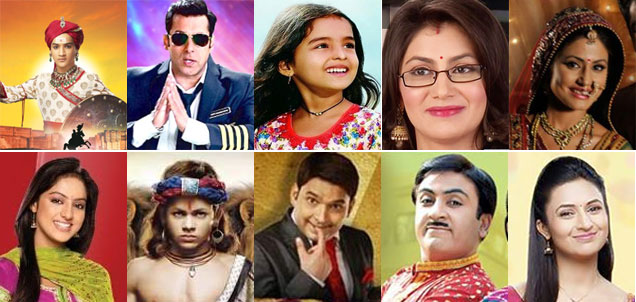
    10. Maharana Pratap (Sony): Warrior portrayals hold intrinsic appeal, yet they remain largely an under-served genre on Indian television and even cinema. With Bajirao Mastani succeeding at the box-office, we can expect more warrior ‘biopics’ on the celluloid. On television, Maharana Pratap kept the genre’s flag flying through the year, though with a lot less intensity by the time the year ended.


    9.Salman Khan (Bigg Boss – Colors): He had a great year at the movies, with probably his best film in the last decade (BajrangiBhaijaan). But for many television audiences, Salman Khan’s primary identity is that of the Bigg Boss host. Khan has been often accused of taking sides on the show, but even his hardest critics cannot fault his commitment that comes shining through every weekend.


    8. Chakor (Udaan – Colors): Chakor’s character lost considerable steam during the year, starting the year in the Top 5 but ending it outside the top 20.With innocence being a scarce commodity in adult characters on television these days, child protagonists tend to stand out even more. But only till they don’t start behaving like adults!


    7. Pragya (Kumkum Bhagya – Zee TV): KumkumBhagya is emerging as a long warhorse for Zee TV, and much credit should go to its lead pair played by SritiJha (Pragya) and Shabbir Ahluwalia (Abhi). As the year closed, Pragya grew to an even stronger position,  signaling a good 2016 for this popular character.


    6. Akshara (Yeh Rishta Kya Kehlata Hai– Star Plus):It’s been seven years since she first went on-air. Her character journey over years has mirrored various life-stages and challenges Indian women would tend to face in their life. In the largely-unrealworld of television soaps, Akshara has managed to infuse her share of relatability and warmth for many viewers.


    5. Sandhya (Diya Aur Baati Hum–Star Plus):Between them, Sandhya and Akshara represent two facets of the Hindi GEC heroine. Sandhya is a woman of aspirations, but one who strives to balance her work and her family in her journey, while Akshara is a nurturer at heart, willing to let go for others. Between them, Star Plus has a strong 9-10pm slot that’s currently their prime-time pivot.


    4. Ashok (Chakravartin Ashok Samrat – Colors): Another warrior prince story that was waiting to be told on the small screen. Aided by good casting and production, Ashok emerged as a strong character challenging the dominance of female protagonists in the GEC space. Can we now have a PeshwaBajirao show on TV, please?


    3. Kapil Sharma (Comedy Nights With Kapil–Colors):The comedian dominated the non-fiction list in 2015, no different from what he managed in 2014 and much of 2013. He’s Colors’ fourth entry in this list, and the combination of Salman Khan, Chakor, Ashok and Kapil Sharma accurately captures the formula behind the channel’s success. In 2016, Sharma will move to Sony, his original home from Comedy Circus. He’s come in for criticism on various things, ranging from misogyny (on the show) to unprofessionalism (off the show). 2016 could be a defining year for Sharma, at the end of which he would either emerge stronger or begin to fade out.


    2. Jethalal (Taarak Mehta Ka Ooltah Chashmah – SAB): SAB TV remains a one-show channel and yet a strong force to reckon. Jethalal (played by Dilip Joshi) is the centerpiece around which this show continues to thrive, now for seven and a half years. The ratio of Jethalal’s popularity among male audiences to female audiences is a staggering 8.2, highlighting the dichotomy of our mass television content, which is family viewing in practice, but often not in spirit.


    1. Ishita (Yeh Hai Mohabbatein–Star Plus):Yeh Hai Mohabbatein combines various genres and sub-genres into a unique show. It has romance, inter-cultural conflicts, social issues, family and a lot more. It has even ventured into the supernatural space recently, as if to tick that pending box. But at the core of this huge success remain its leads Ishita (Divyanka Tripathi) and Raman (Karan Patel). Her motherly love is the central quality that makes her no. 1, especially because it’s love for a ‘daughter’ she’s not given birth to.


  • Top 5 “Gamechangers” on Hindi GECs in 2015


    2015 has been an odd year for Hindi GECs. While long-running hits like Yeh Hai Mohabbatein, Saath Nibhana Saathiya, Kumkum Bhagya, Diya Aur Baati Hum and Sasural Simar Ka continued to dominate, most new launches failed to get going, many of them wrapping up even before the year ends.


    While the list of Top 5 gamechanger shows of the year for 2013 had a lot more variety, the 2014 list was a bit of a stretch, in the absence of any real impact properties besides Yeh Hai Mohabbatein. The 2015 list below has a peculiar problem of its own – It relies heavily on one genre (mytho-historical) which in not exactly on the ascendancy. The 2015 list lacks conventional daily soaps, where long-running shows have towered over new launches in a hopelessly one-sided battle that the former have been winning for over three years now.


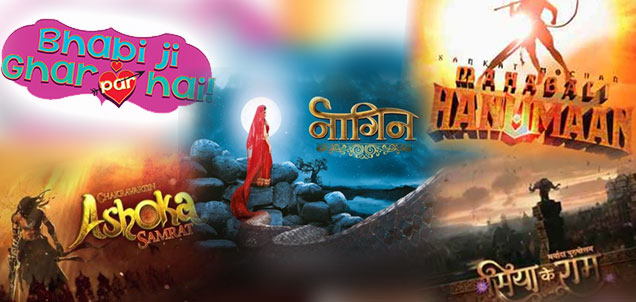
    5. Siya Ke Ram: Star Plus’ Siya Ke Ram makes it to this list largely for being a well-managed launch that ensured that the show opened very well. The interpretation of Ramayan is interesting, but the show lacks that operatic feel Mahabharat on the same channel had. Perhaps we would see more of it as the story progresses. Much else Star Plus launched this year did not work, but Siya Ke Ram has the ability to reverse that as it enters its third month soon.


    4.Sankatmochan Mahabali Hanuman: It’s perhaps the least-talked-about GEC success story of the year. On a platform where a regular fiction show struggles to cross 0.3 TVR, Hanuman has been clocking 1.5+ TVR consistently, with time-spent numbers at par with category leaders like Diya Aur Baati Hum and Kumkum Bhagya. The success of Hanuman, albeit limited by its platform’s current potential, proves yet again that viewers will discover engaging content, however cluttered the environment is.


    3. Chakravartin Ashok Samrat: The Colors show completes the hat-trick of mytho-historical shows on this list. The show has been on-air for about a year and perhaps past its peak too. But Ashoka has been the pillar (no pun intended) around which Colors built its strong challenger position to Star Plus during this year, overtaking it with great regularity in recent weeks. It also clearly separated Colors as being a variety-centric family platform, in contrast with Star Plus’ female-targeted fiction positioning.


    2. Bhabhiji Ghar Par Hain: &TV may have taken its time to find its feet, but its driver show, the modestly-mounted but sharply-written comedy Bhabhiji Ghar Par Hain, has managed to find an audience on its own. Fiction comedy is perhaps the most difficult genre to create formulaic hits in, given that a lot depends on performances and consistency of writing, episode after episode. This somewhat-saucy comedy has ensured &TV enters 2016 with at least one winner on hand.


    1. Naagin: There’s one thing common to this list in 2013-15: The winner stood head and shoulders above the rest. It was Comedy Nights With Kapil in 2013 and Yeh Hai Mohabbatein in 2014. This year, the extent of Naagin’s success has taken everyone by surprise.


    While those two list-toppers grew from modest beginnings to positions of strength, Naagin was a runaway hit, opening at levels most hit shows aspire to peak at, and growing further from there.


    Naagin deserves credit for infusing zest in an oft-told story, and upping the level of visual treatment and histrionics. But it’s also further proof of the Indian obsession with all things supernatural. And how that Naagin has hit the mark, watch out for more supernatural and creature stuff in 2016. You have been warned.


  • Two views on news on Chennai


    Shailesh Kapoor: For our Media, Chennai is no Mumbai or Delhi


    By Shailesh Kapoor


    Call it nature’s fury or a man-made calamity, or indeed a combination of the two, Chennai is reeling under one of the most severe crises a big city in India has seen in many years. And it doesn’t seem to be getting over in a hurry, despite great support from various constituencies, ranging from the Army to the social media.


    News of incessant rains in Chennai began to come in about two weeks ago itself. It was given the status of an also-ran headline, getting 30-second coverage in non-primetime, or a cursory mention in the inside pages of national newspapers.


    Earlier this week, when it became clear that the crisis is only deepening than solving itself out, media reluctantly began to cover Chennai. It was still outside the main hours and the front pages. Only about Wednesday (just two days ago) did Chennai become the main story in the Indian media. Ironically, the social media had taken up the subject at least two days before that.


    Chennai is no North-East. It’s not that obscure part of India that people have barely heard about, and have no social or commercial connect with. It’s a big city, traditionally classified as one of the four metros in India.


    But the media treatment of Chennai rains would make you believe something happened in Nagaland or Lakshadweep (not to say that these places do not deserve media coverage). It was news from the outside, through the lens of a media that operates out of Delhi and Mumbai, and looks at rest of India as if it’s only a matter of completion.


    Remember July 26, 2005? One day of rains and the resultant situation made the media follow the story full-throttle, for at least a week. Even this week, Delhi’s pollution story has competed with Chennai for coverage on most Hindi news channels.


    When it comes to showing and seeing Tamilian (or “Madrasi”) characters as caricatures in our entertainment content, most of us don’t bat an eyelid. But when it comes to covering a big story from Chennai, another section of the same media can develop cold feet. And “forced” to cover it, they carry headlines like “India stands united with Chennai”. What does that even mean? Chennai is a part of India. Why does India have to show its unity for one of its own?


    I call this the ‘Head Office (HO) Bias’. The editorial team tends to give naturally high weightage to stories from the city it is based in, or runs major operations from. There are two reasons for this. One, you see the story around you, e.g. if you are based out of Delhi, you can feel the pollution in the air. Two, you have some of your best journalists placed in these cities, especially the HO. So you are likely to get better stories and exclusives from there.


    Some would even give the ratings argument, such as Hindi news channels not being watched down South, and the story being of limited public interest in the rest of India. I would normally support that argument for a conventional political story, but when it comes to national crisis, a different lens can surely be applied. Or is that too much to ask for?


    Ranjona Banerji: Thankfully, the national media woke up to Chennai’s plight in December


    By Ranjona Banerji


    Tamil Nadu has been battered by rain for most of November. The city of Chennai has been particularly ravaged. Close to 150 people died from rain-related crises in November. But for the national media, especially television, all we saw was raging and fury over why Delhi chief minister Arvind Kerjiwal hugged former Bihar chief minister Lalu Yadav and how dare actor Aamir Khan’s wife express an opinion.


    It is unfair to claim this was just a north-south divide that we have seen in the media for decades. There was something more on display here. It was that sort of hysterical mindless race to find the subjects that could generate the most sound and fury that seems to have become the rule these days. It also demonstrated an obsession with politics and playing upon the political divide. When people’s lives and homes are being destroyed by unprecedented rain, you cannot really have a good noisy debate of Sambit Patra versus Sanjay Jha.


    One can grant them that many other things were happening. Paris suffered one more terrorist attack. The prime minister was travelling and meeting his overseas fan clubs. The climate was visiting the global stage once more. Election results had to be discussed threadbare. Artists and intellectuals continued to express distress. Rain, no matter how much damage it caused, was obviously not exciting enough.


    Thankfully, the terrible surge in rainfall in Tamil Nadu in December suddenly got the media’s attention. Newspapers had it on their front pages and news channels gave us 24 hour coverage. All of them were relatively sober in their coverage and until Thursday night had not descended into a political blame game. Massive efforts were made to coordinate with rescue services and to highlight the efforts being made by voluntary organisations and concerned citizens to help affected people in any way possible.


    Full marks must be given to all those reporters and camerapersons who braved rain and flood water to bring us their stories. It is they who are the backbone of this celebrity-driven TV media we are now surrounded by. TV has changed the dynamics of a newsroom to the extent that viewers cannot see beyond the anchors and young wannabe journalists only aim for that perceived fame and glory without realising background work that goes into making a story a success. Yeah, end of lecture and please watch Network (the film) if you haven’t already.


    But you have to feel for newsrooms here, even when it comes to getting politicians to comment on just about everything. We in India appear to have a shortage of experts who are well-known enough or articulate or can be easily located. It sounds odd to write this but it is something experienced firsthand when I was part of several edit page teams. We have partitioned our lives in such strange ways that academia is often aloof and also unwilling to communicate in a manner than non-experts will understand.


    Especially now when it comes to the environment and climate change and technology, we need public intellectuals to come forward and explain and share. If they don’t, we’re going to be stuck with Sambit Patra holding forth on everything…


    **


    December 1 was World Aids Day. There was cursory coverage in most newspapers and the horror story is that India, having done so well, is now back to the edge of disaster in controlling HIV/Aids, government funding having been cut and foreign funding having dried up. The best coverage of this impending horror came from the comedy group AIB, on their new very watchable show on Star World. Ya I know, but really. Go figure.


    Image courtesy: Press Information Bureau


  • The New Hindi GEC Fad: Supernaturally Yours


    What started as an experiment about a year ago has now gained in size and momentum. Hindi GEC fiction, often criticized for being behind times, is going through a phase that’s taken the viewers by surprise. It’s a phase when some of the top serials are relying on the supernatural – ghosts, spirits, black magic – to drive eyeballs.


    Now, this should not make much sense. Till not too long ago, the genre was understood as one that connects the ordinary Indian women to the world outside, giving her the confidence to learn what she otherwise can’t. What was routinely called “regressive” in the media was termed positive and confidence-building by the target audience. Shows that helped women navigate their relationships better were runaway hits. Where does supernatural even feature in all this? Channels may choose to put it on-air, but why is it actually working?


    Simply put, I believe the consumer is “compensating”. She’s compensating herself for having watched one type of content for almost 4-5 years now, which is based on broad constructs of navigating relationships. After a while, you are bound to get a feeling you have seen it all, and every new show is a version of an existing one or a fairly recent hit. Most new launches have not worked and shows launched in 2009-12 continue to rule the roost (an earlier column on this topic is here).


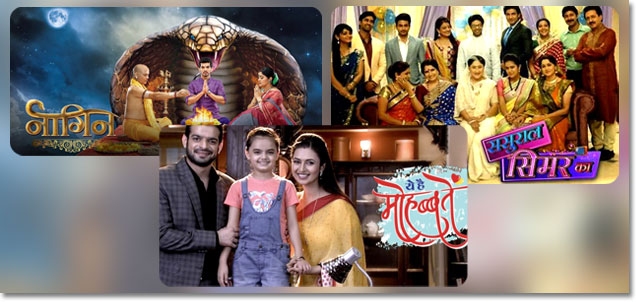
    The consumer is looking for variety;for something that she hasn’t seen before. That’s an eternal human need. When Sasural Simar Ka (SSK) first put supernatural content on-air, the viewer saw it with a mix of skepticism and intrigue, sometimes even as unintentional humor. Other shows have tried it subsequently, and recently, none less than Yeh Hai Mohabbatein (YHM), the epitome of contemporary Indian fiction for many audiences, took the supernatural route.


    Then we have Naagin, which launched recently as a weekend show and has gone on to become a blockbuster hit in its first three episodes. The snake theme has always interested Indian audiences, be it through cinema, television or cinema on television. Naagin is one of the best-produced Indian content pieces on this subject. With a full-throttle promotional campaign backing it, Naagin’s success is a rare case when all the right boxes get ticked together.


    But Naagin is a weekend show and weekend content promise escapism and relaxation. But on weekdays, the infestation of supernatural content is bizarrely interesting. Consumers don’t even know what to call this sub-genre of sorts. They are beginning to assign the word “horror” to it, which captures the ridiculousness of it all.


    But if it’s working, it’s working, right? That’s where the note of caution comes in. Both the big shows where it has been used (SSK and YHM) were on-air as regular fiction shows without a supernatural element for almost two years before they experimented with this sub-genre. Some new shows have tried going the supernatural route early in their life stage and it has not worked.


    What does this tell us? That if you have characters who are already popular, and the program has built a sizeable audience base around their popularity, a supernatural track can help manage viewer fatigue by providing the unknown element. But it will not help build a viewer base from scratch, unless it’s a show like Naagin, which delivers what it promises – unabashed snake-y entertainment.


    Am I suggesting that all hit shows with popular characters will benefit from a supernatural twist? Not really. It’s a fad, and another show or two go this route, we would begin to see viewer rejection instantly. She’s already not impressed, but watching it as something off the beaten path. If it becomes the beaten path itself, then this mini-trend could die a rather abrupt death.


  • Fasten your Seatbelts for The Big Bihar Sunday


    By Shailesh Kapoor


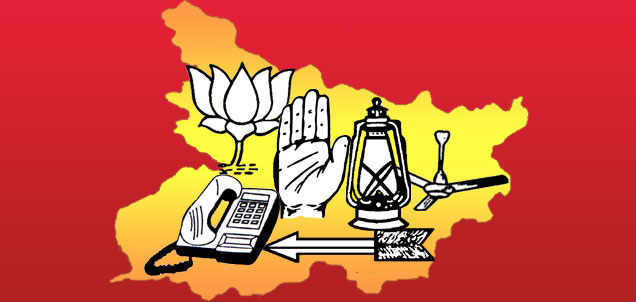
    An election results day is here again. And this time, it’s a Sunday too. Bihar elections have been a long-drawn process, with an extended campaign period and five phases of polling. It will all come to an end on November 8, when the counting begins. And it promises to be a cliffhanger.


    Election results coverage is perhaps the only form of structured programming of any significance that news channels still have, besides the ‘talking heads locked in a debate’ format. It all gets over in a hurry, but it’s great fun while it lasts, especially if you can identify the best 2-3 news channels on the day and watch within that set, than surfing across more than a dozen of them.


    Most exit polls show a close finish for these elections, though Today’s Chanakya, best known for their 300+ forecast for NDA in the 2014 General Elections, is predicting a clear majority for NDA in Bihar. Sunday will be a crucial day for Chanakya too, not just for the two sides locked in a prestigious political battle.


    When we shifted from ballot paper to EVMs, the nature of election results programming changed overnight. Till then, anchors had all the time to engage in deep analysis. Psephologists, political experts and politicians themselves with spend considerable time in news studios. No one would be in a hurry. It would all roll out at a leisurely pace, with banter thrown in for good measure. Dr Prannoy Roy shone through those days. This format really suited his personality.


    When the EVMs arrived, we witnessed a time collapse. The real action, from the first leads coming in to a clear picture emerging, would take anything from half-hour to maximum two hours, depending on how one-sided or close the battle is.


    Most news channels are still experimenting with an ideal programming format that delivers to this T20-type brief. The viewer is bound to focus primarily on the leads window, much like business news channels are watched in market hours. So should one create a show that presents the leads information to viewers in a direct, almost idiot-proof, manner? Or should one create engaging programming for the high-engagement viewers who are deep into politics, and let everyone else focus on the window on the side or the bottom of the screen


    This is where anchor personalities can play a significant role. Choices like above are not easy to make. But viewers eventually tend to watch election results programming because they trust certain anchors for their experience and knowledge of the topic. Every anchor has his (rarely ‘her’ in this case) style that he needs to bring to the coverage. Technology and talking-heads are only aids.


    Yet, after Dr Roy, we haven’t had a standout election results anchor. Most top news anchors (across languages) do a serviceable job of the day, but there’s no one who will be remembered for his election results coverage before anything else. Perhaps an outcome of the EVMs coming in.


  • Shailesh Kapoor: Silly Point: Taking Trade Communication To Consumers

    By Shailesh Kapoor


    It’s been a week of very little action on-air, but there haven’t been too many dull moments behind the scenes in the television business. As the atmosphere around the release of the first rural ratings three weeks from now builds up, so does the battle for top honours in the Hindi GEC category.


    Last week, Colors toppled Star Plus by a single GRP (in Hindi-speaking markets), and this week Star Plus took back the top spot, but with an even smaller gap than last week. We may just be seeing the beginning of a very exciting battle for leadership.


    Colors’ media response on taking the top spot last week was restrained, and we did not see any press announcements or electronic mailers. It’s also in line with the BARC India advisory on what constitutes responsible use of data in trade communication.


    However, the same cannot be said about many other channels. In a silly trend, we are seeing more and more channels promote their “leadership position” on-air, on their own platform itself. Then, there are ads in mainstream print, not just the pink papers, on a certain channel beating others in its genre. The target group, time bands and the period of reporting are selected to suit the output. Even after that, some of these ads promote “leadership” where the gap is less than 5%. And these are genres where total viewership is so low that even a 20% gap won’t constitute real leadership.


    This flow of ratings information in the mainstream media is something we could have done without. The usage of the term “TRP” by consumers has gone up significantly over the last two years. When “iski TRP sabse achhi hai” becomes the reason to like a show or a channel, you know there’s a problem.


    The problem is not very different from what happens in Bollywood. Box-office figures are central to a lot of communication around films. Consumers speak about the 100-cr club with a lot of false confidence, emanating from truckloads of media information but no perspective on how to read it.


    However, there’s a reason why the TV problem is worse. In films, at least the numbers being discussed have a physical meaning. They are in Indian Rupees after all. In TV, no one outside the media industry (and some would say, many within it too) knows how to read the ratings data. It’s just a notion, and hence, it is easy to be misdirected by what one sees and reads.


    Once in a while, you see a genuine e-mailer based on ratings data that makes you go: “Whoa, that’s some achievement”. But in the clutter of many claims and counter-claims, they just become one of the many things being said.


    But while one can debate the idea of good trade communication vs. poor trade communication, there cannot be much debate against the merits of sparing the end consumer of information on TV ratings.


    They, the end consumers, are the ratings themselves. If they start watching something because it rates well, we can be caught in an infinite loop of silliness.


  • Shailesh Kapoor: Split Personalities: TVF Pitchers & Rural Ratings

    By Shailesh Kapoor


    Two strikingly contrasting events highlighted the week that was. On Sunday, the season finale episode of TVF Pitchers went online. During the week that followed, BARC India conducted roadshows to share more information on rural ratings. I have written about both these topics here over the last few weeks, but their proximity in time is fascinating, even though it is purely coincidental.


    TVF Pitchers achieved a major milestone by featuring on the IMDB Top 250 TV shows charts, where it is currently ranked no. 38, ahead of Friends, Dexter, House Of Cards, and the likes. The show has also received considerable, some would say disproportionate, attention from online media. One such article (by Quartz India) is headlined “How an Internet show on startups delivered a stinging blow to Indian TV”.


    TVF Pitchers has watershed qualities to it, a lot more than its predecessor Permanent Roommates. The latter was a romcom, and while it differed from our regular television fare, it was not entirely unfamiliar, especially if you have seen some of the many Bollywood romcoms over the last decade.


    But TVF Pitchers enters an area Indian entertainment has never been able to capture authentically – the corporate world. Barring an odd Rocket Singh, most films that have dabbled in this world have caricaturised it, none less than one that was called “Corporate” itself (in which a management trainee gets a cabin to herself, of a size that most CEOs would be envious of). In our TV serials, we hardly see offices anyway, and work is just an excuse to get the men out of the house.


    TVF Pitchers manages to bring an authenticity of portrayal, in turn getting the appreciation of a fairly large corporate population of India, across industries. It is corporate but not elitist. It also does not have the shackles of censorship (or self-censorship) around it. It is just intelligent fun.


    At about 2 million views per episode, the numbers speak for themselves. But the perspective of mass vs. niche should not be lost here. 2 million is less than 10% of the viewership of an episode of a typical hit Hindi TV show. And these are shows that have hundreds (often thousands) of episodes. We are talking of different degrees altogether.


    But the 10% mark may just be the first step in a journey that the ‘parallel TV movement’ may have to make over the next five years. I say “TV” because that’s really what it will compete against. We would need more companies like TVFs and more shows in more genres to grow the market. There are a few others that already exist, but they lack the belief and confidence that shines through TVF Pitchers.


    Our mainstream television couldn’t possibly care less about these developments. The rural ratings are round the corner, and the gap between the two worlds is bound to widen. But if the 10% number grows to even 20% over the next year or two, more advertisers, especially those targeting the bigger cities, will begin to evaluate their options. It’s “our kind of TV” after all.


    But lest we should get carried away, every online show will not be a TVF Pitchers. And therein lies the real problem, the one of scalability.


    Let’s see what the future has in store. Besides, of course, Permanent Roommates Season 2.


  • Shailesh Kapoor: Prime Time News or Murder Investigations?

    By Shailesh Kapoor


    In the short history of news television in India, there would be very few weeks as bizarre as the one we are currently in. We are in the middle of a full-blown investigation of the Sheena Bora murder case, unfolding in near real-time across news channels. Everything else has to take a backseat then, including the disturbing state of affairs in Gujarat.


    It’s understandable that a high profile murder case would generate audience interest, especially when it has elements that point to decadence of values, much like the Aarushi Talwar murder case. I’m all for running a story that the audience want to watch. But is debating a whodunit with half-a-dozen talking heads the best way of reporting a murder case? I’m not too convinced about that.


    That Indrani Mukerjea, the principal accused here, has a broadcasting lineage has created that much extra interest in media offices. If you have spent at least three-four years in the media industry, chances are very high that you are within one degree of separation from everyone else in the industry. It’s easy for journalists to find colleagues and ex-colleagues who knew Indrani. But very few like Ravina Raj Kohli have chosen to go on record with their views.


    So, we end up with the same generic talking heads that we see all the time when a non-political story gets prime-time coverage. But when you see Rahul Roy as one of them, you know it’s getting really desperate.


    Last month, I read Avirook Sen’s book on the Aarushi murder case. Coming from a journalist who followed the case and the trial all the way through (for Mumbai Mirror), and continues to do so even now, the book was an eyeopener in many ways. I have spent a fair share of my primetime viewing on the Aarushi case, but when I read Sen’s book, I realised how little I knew about the case till then.


    I then googled a few news channel videos from the day of the verdict, and even found Sen on-air in a couple of them. But he got only about half a minute to speak on about three occasions, and while you sensed in that short time that he was the one who knew the case better than everyone on the panel, including the anchor, you never got to know his point-of-view in that short period of time.


    If viewers are interested in a story, investigative journalism of Sen’s quality would engage them a lot more than debates based on half knowledge and conjectures. But then, that requires some effort, doesn’t it? As Sen says in his book, there were several days in the Talwars trial when he was the only journalist at the Ghaziabad court.


    Are news channels getting addicted to this easier way out, where debates from the comfort of the studios are the new form of journalism? It would seem so, going by what we see all the time.


    One hopes that there are young journalists with fire in their belly wanting to change that perception!


  • Shailesh Kapoor: Rural Ratings: Interesting Days Ahead


    By Shailesh Kapoor


    It’s not been long since the official TV ratings of the media industry shifted from TAM to BARC. But BARC has moved ahead at good speed. When it was first announced that BARC will report only 1Lac+ towns data initially, and that urban LC1 (<1Lac) towns and rural will be added later, one was prepared for a long wait.


    But it’s good to be pleasantly surprised. As per a recent announcement, we may see urban LC1 and rural data as early as September 2015. Well done, BARC!


    Urban LC1 is not unfamiliar territory for broadcasters. TAM started covering this pop stratum in 2013, and broadcasters, especially the mass players, have made considerable investments in distribution, marketing and research in these markets since then. I’m sure BARC would refrain from the nomenclature “LC1”. I have been told it stands for two different things: Less Than Class 1 (Towns) and 50-100K population towns (L being 50 and C being 100 in Roman numerals). I suspect the former is the more accurate description. But who dreams up names such as “LC1” anyway?


    The addition of rural markets, in contrast, is an absolute first. There is no taste of rural ratings from the past, and there’s a mystery box feel to the whole thing. In one of their roadshows, BARC indicated that 50% of the universe would be rural, though the sample would be more skewed towards the more heterogeneous urban markets. We can expect ‘Urban+Rural’ and ‘Urban Only’ data cuts to be available soon.


    The inclusion of rural may not impact several genres, including those based on the English language, infotainment, lifestyle, etc. But it could wreak potential havoc for mass channels, read GECs and Movies. Two other categories that are likely to be impacted are News and Kids, though many advertisers may continue to buy them on Urban Only data.


    Impact on programming is likely to be significant as well, especially if the 50% weightage indeed becomes reality. Early prime is bound to gain more importance, and we should be prepared to see more mythology, culture reinforcement and patriarchy. It may not seem like a step in the right direction, but if it is closer to an accurate representation of what India watches, we can’t fault the logic.


    In a parallel universe, the internet and smartphones are enabling content consumption for a sizeable audience base (at least 10% of the Indian population). This content, as we know, looks nothing like what’s on TV. With the addition of rural markets to measurement, the gap will widen even more.


    At some stage then, an advertiser may have to choose which India it wants to target. Most research worldwide shows that television and Internet are complimentary media, and not competing ones. But the India story can pan out differently. We shall wait and watch.


    For now, it’s time to welcome Rural India to the world of television ratings. It was long overdue.