Tag: TV TRAIL

  • Shailesh Kapoor: The AIB & MSG controversies: Symptoms of a Larger Malice?

    By Shailesh Kapoor


    The mass resignation at the Censor Board, after the film MSG was cleared by the appellate tribunal in a hurry, set the tone for what was to follow. There was a bizarre little news on the word “Bombay” being beeped out in a music video. And now, the AIB controversy over the Ranveer-Arjun ‘roast’ has firmly set the agenda for 2015 – it’s going to be a chaotic year for entertainment content regulation and censorship.


    The AIB controversy, eventually leading to the comedy group pulling off the videos off their YouTube channel, has triggered off a lot of discussion, especially on the social media. The slant of most opinions expressed is around the idea of freedom of speech. A few who have spoken against AIB have centered their argument on the extreme use of profanity in the videos.


    Unfortunately, most such opinions come across as rants, which serve little purpose in the real world, because in reality, the subject of regulation, censorship and moral policing is far more complex than how it’s often positioned in the media.


    The central piece of this complexity is the structure of the regulatory mechanism, where separate laws or guidelines control different media. The film certification board (CBFC) has been liberal in granting ‘A’ certificates to a wide range of films that have pushed the envelope on language, graphic violence and adult video content. But the same content has to be censored again for home video and satellite, since those are technically different media.


    The audience may be the same, but the context of viewing, not the audience or the content, seems to be dictating what can be seen on a TV at home. The same TV channel, when streamed over the Internet, can still screen only the content that has passed the TV guidelines. But the ‘uncensored’ version of the same content is available on the Internet anyway.


    Then we have cases of Hollywood filmmakers refusing to release their films in India with censor cuts, and the anti-smoking warning to distract the audience every time a character smokes on screen, sometimes for less than a second!


    In this trigger-happy environment, where everyone has a view and all guidelines comes with their bagful of loopholes, we see ad hoc decisions being taken by all sides. TV channels are known to blur cleavage shots in foreign content, the kinds of which would be routine in a U/A censored Hindi movie. In the subtitles, there is a mass sanitisation of the language, and even words like beef are removed. No one wants to face the wrath of the moral police or a government body. After all, channels have been pulled off air for violating these vaguely-defined norms.


    This week, I figured that there is another set of guidelines for stage performances. Apparently, you can’t perform anything impromptu, because you need to submit a script for approval. It also turns out that there is no staff to read the script, but if there’s a controversy later, they do have a staff to match the script vis-à-vis the actual content, and pick holes.


    Essentially, if the AIB Roast had not made it to YouTube, all would have fine. Yet, the regulatory concern is about the stage show part of it, not the internet broadcast.  Internet remains the elephant in the room no one wants to address.


    As technology permeates our vast country, the prevailing confusion will continue to multiply. We may be in for a lot more randomness in the coming months and years. Like always, the entertainment industry tends to be at the receiving end, often the soft targets of the moral police for quick publicity. But there’s little doubt in my mind that our ambiguous regulatory norms fuel this moral police.


    There are no easy answers, except to say that what’s required is an overhaul, not a tweak. And no, this is not a discussion on ‘freedom of speech’, but one on ‘freedom from obsolescence’.

     

  • Shailesh Kapoor: The Kiran Bedi School of Entertainment

    By Shailesh Kapoor


    The week that went may have only been above average on its news-worthiness, but it was one of the best weeks in recent memories on its news entertainment quotient. The Modi-Obama trip provided ample light moments, both on-field (the ‘chemistry’ between the two leaders themselves) and off-field (the reactions on social media and the hyperventilation on television). But the News Entertainer of the Week (also the Month) Award was snatched away by the ever-so-incorrigible Kiran Bedi.


    For almost two weeks now, she has been finding innovative ways of providing us daily entertainment. The Ravish Kumar interview for NDTV India is one of the most exciting news interviews in India in a while. If you watched the entire 20-minutes of it (important, because the most entertaining parts are packed in towards the end), you would agree that Bedi can get the best out of journalists. Kumar was in fine form, tongue-in-cheek at times, politely sarcastic at others, and outright brazen on a couple of occasions. I don’t watch much Hindi news except when work requires me to, but I know audiences rate Kumar very highly. Sir, you had me at “Excellent”.


    I’ve grown up in Delhi to the legends of Kiran Bedi. I was too young when the PMO car was towed, but I remember being told that Crane Bedi could take a crane anywhere, anytime, and pick up any vehicle. It was a personal story for my family. Our family two-wheeler had been towed (craned?) once as well.


    There were some not-so-positive stories from Mizoram and some fairly progressive ones from Tihar, over the years. But largely, Bedi was out-of-sight and out-of-mind. In 2008-09, she found mass audiences in her TV show Aap Ki Kachehri Kiran Ke Saath. Star Plus dared to give the show a primetime slot, and it turned out to be a good decision. Bedi was her natural, policing self, solving family disputes of people from lower socio-economic groups. She could talk down to them, with many being illiterate and most seeking desperate help.


    The show worked and made Bedi a popular face in a generation that may not have known much about her till then. The second season didn’t find much favor with the audience, for both content and time-slot issues. But if Bedi indeed ends up achieving anything significant in her political career, she has enough reasons to thank Aap Ki Kachehri (and hence Star and Big Synergy).


    My respect-for-Bedi bubble burst when she did that one ghoonghat act at the Ramlila Maidaan in 2011. I was least offended by what she said. What irked me was that it was just not well performed. She did that act in the same Kachehri policing tone, much like she gives all her interviews these days (before the ‘voice rest’). It’s like an actor who impresses you in her first film because of her unique style, but then goes on to perform every character in the exact same way thereafter.


    Style apart, her content has not much going for it either. If BJP can pull off the Delhi elections with Bedi at the helm, it would be their toughest win in the last two years. Much as I’d like to be entertained for the next five years by her, I’m tempted to think of my original home Delhi first, and wish that this entertainment ends on February 10. Side-actor Kejriwal can take over then.


  • Amith Prabhu: Time for real Reputation Management professionals in Politics

    By Amith Prabhu


    There is an interesting piece of news last week on how the Andhra Pradesh Chief Minister is hiring a plethora of journalists to manage media monitoring and relations in the state. I wish evolved politicians like him thought differently and went beyond media managers to hire reputation managers. People who can advise on what is the right thing to do and also on doing the right things.


    That reminds me of another state which is largely managed by a few bureaucrats and a super chief minister which recently organised an international business event. The event was high profile and one of the biggest organised by a state government. But several shortcomings of the event were in the area of reputation management because the bureaucrat in charge thought he knew too much.


    Then there are states where friends and family are given the task of managing communications and building reputation with or without the support of consultancies. The question I repeatedly ask is why is that politicians can’t professionalise this aspect of their public persona. Of hiring professionals to manage communications and reputation who are trained and are experts.


    Well, the only three answers I can think of are: That politicians do not know that professionals exists. Or if they know they do not want to trust their reputation management with these professionals. Lastly, the professionals that exists are not good enough or according to the politician not well qualified for the task at hand.


    Political communications is tricky and at the same time it can also be a straightforward business. There are few who can pull off political campaigns from a communications perspective and they need to train more professionals to follow suit. I have been contemplating starting a programme to train political communications specialists because I believe it is the need of the hour.


    By the time we head into 2019 there will be a need for over a thousand political communications specialist. This is based on the back of the envelope calculation that at least two candidates in every constituency, if not more is looking for one. I hope this dream of seeing a new professions emerge can see the light of the day.


  • Shailesh Kapoor: And the Awards are Here… Are you Bored already?

    By Shailesh Kapoor


    It’s the first quarter of a new calendar year, and the awards season has started in its full glory. Every media house worth its salt has a business stake in at least one, sometimes two or eve three, award shows. Every weekend has at least one being aired. By the end of it all, everyone would have won something. Because it’s just fine to create a category to fit in a desired winner. Or just force-fit the desired winner into an existing category anyway, like Mary Kom being a social drama at a recently aired awards show.


    The television audiences, of course, watch the awards shows for their entertainment value. The winners’ list is generally out in the media well before the actual telecast. In any case, with less than 5% of the TV audiences being theatre-goers, they couldn’t care less for who won the award for the Best Singer or the Best Supporting Actor, for example.


    Unfortunately, even the entertainment factor is now commoditised across shows. All performances, across award shows, look interchangeable, like their sets. In general, we have song-and-dance routines set to contemporary Bollywood hits, intercut with star reactions (mostly cheat footage) and anchors trying to make the audiences laugh with their film industry jokes.


    With such homogeneity of content, the shows with the better anchors tend to rate better. The Salman Khan-anchored Big Star Entertainment Awards may not have the equity of Filmfare or Screen Awards, but often ends up being higher-rated than them. Kapil Sharma hosting Filmfare this year should boost its viewership prospects.


    About a decade ago, a television channel had two reasons to air an awards show. It would get them the bucks, and it would propel their image of being a complete entertainment channel with big-ticket offerings. Today, the second reason is no longer relevant. Audiences have poor recall of even the biggest award shows, beyond their limited window of promotions and telecast. And channel association has weakened considerably over time, as media clutter increases and properties change hands between channels.


    Expecting India to have its own Oscars or Golden Globes is, of course, wishful thinking. IIFA was set up with the ‘Academy’ approach, but the film industry does not share a common view on awards. In fact, many stakeholders do not have a view to begin with. They are happy to be present if there is prior intimation that they are winning an award, or if they are being paid to perform on stage.


    But even with all these limitations, can the conceptualisers of such shows not stretch their imagination and at least conceive “entertainment” that’s not a rehash of what we have seen for almost 20 years now, about 8-10 times every year? Wishful thinking, did you say?


    No one wins an award for guessing that nothing’s going to change in a hurry.


  • Shailesh Kapoor: World Cup 2015: The Lull Before The Marketing Storm

    By Shailesh Kapoor


    February 14 is only 35 days. No, I’m not counting it down to Valentine’s Day. That’s also the date when the ICC Cricket World Cup kicks off in Australia and New Zealand. The following day, February 15, is when India kicks off its campaign to defend the World Cup, with a clash that has a history of being a mini World Cup in itself, versus Pakistan.


    If you have followed World Cup Cricket and the hype and the hoopla surrounding it over the last two decades, you would tend to agree that we are in an inexplicably inert period, like the proverbial lull before the storm. No major media campaigns have kicked off. The current Test series has been focus of most cricket conversations. Dhoni’s Test retirement and Kohli’s giant steps towards batting greatness have kept the cricketing community, experts and fans alike, in India preoccupied.


    From 1992 to 2011, we saw six World Cup campaigns where the pitch, be it from brands or the broadcaster, hinged around patriotism and India’s campaign to bring the Cup back home for the first time after 1983. In 2007, it all went wrong when India made an unceremonious exit in the first week itself. I distinctly remembered a Visa ad (featuring Shankar Mahadevan et al), where the colours in the tricolour were changed to neutral colors, along with a copy edit, to ensure the ad could run in the second half of the tournament to burn the committed ad inventory.


    2011 was a World Cup at home and it had a momentum of its own. But compared to all the previous World Cups, the upcoming 2015 World Cup offers the best marketing opportunities to everyone with a stake in the game. Finally, it’s about defending the Cup, and keeping it home, than about “bringing it back”. The creative opportunities a “Defending the Cup” campaign allows are enormous. You can pack in pride, patriotism, optimism and heroism, all at one time, and yet not come across as trying to say too much.


    But where are these ads? Are they still in production or post production? Hopefully so, because we’ll then get to see them sooner or later. The Tendulkar ad released by Star Sports about two weeks ago may as well be a pre-cursor. But it builds the man more than the campaign idea, which is why I hope it’s just a stop-gap and there are better things planned.


    Traditionally, brands like Pepsi (remember ‘Nothing Official About It’ and ‘Change The Game’?) have spearheaded advertising innovation around the World Cup. I’m almost certain they are about to unleash something remarkable soon.


    India’s is a top ODI team. Yet, winning the World Cup is always a tough ask. The next time we play to defend the title may be as early as 2019, but could be as late as a couple of decades after that. That’s what you call a once-in-a-lifetime opportunity, right?


    So, let the drums roll, please!


  • Top 5 Gamechangers on Hindi GECs in 2014


    By Shailesh Kapoor


    2014 will not go down in Indian television’s history as a particularly memorable year. It was the year when the industry waited for its new ratings system, amidst possibilities of a ratings blackout. Some new channels launched, but none of them proved to be gamechangers, though Zindagi’s launch campaign was amongst the best in recent years.


    The sports genre saw more action than most others, with Kabaddi and Soccer leagues in the second half of the year. While they passed muster in their first essay, only time till prove if they have longevity.


    Established shows like Diya Aur Baati Hum, Saathiya, Jodha Akbar and Sasural Simar Ka remained strong in the Hindi GEC space. While high-profile launches like Yudh and Everest (particularly the former) struggled to make an impact, there were some other launches that influenced the category in 2014.


    Here’s a look at the Top 5:

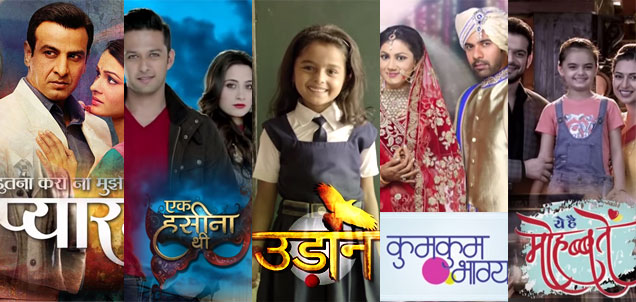
    5. Itna Karo Na Mujhe Pyaar

    In what was an otherwise forgettable year for Sony, the last quarter saw a mini-revival with the launch of Balaji Telefilms’ Itna Ka Karo Mujhe Pyaar. Mounted of familiar principles as Bade Achhe Lagte Hain (mature love story with a strong starcast), the show has emerged as one of the more ‘sticky’ show on primetime television today, albeit on a small audience base. Itna… looks very “written”, but its squeeze-the-emotion-out treatment and excellent use of obscure Bollywood songs as the background score makes it stand out. Let’s see if it emerges as the pivot around which Sony makes a comeback in 2015.


    4. Ek Hasina Thi

    Star Plus moved out of its comfort zone to dwell into the grey zone of a revenge thriller dished out in a soap format. Ek Hasina Thi was loosely based on the hit series ‘Revenge’. Though the show had a short lifespan of about eight months, it managed to catch the young audience’s fancy very early in this period.


    3. Udaan

    Colors revisited its roots, with child protagonist programming centred around a social issue (bonded labour this time), with Udaan. The show built a strong viewer base on the back of the growing popularity of its lead protagonist Chakor, who entered the list of Top 5 popular fiction characters on television within three months of launch. Udaan was also the prime reason why Colors managed to stay ahead of Zee TV in the second half of 2014.


    2. Kumkum Bhagya

    Balaji’s Kumkum Bhagya had a slow start, but gathered momentum once the story of its lead pair (SritiJha and Shabbir Ahluwalia) came into the forefront. This love story has been aided by great chemistry between its leads, aided by some good writing and treatment. Zee TV’s fate in early 2015 will hinge a lot on Kumkum Bhagya’s ability to keep the magic going.


    1. Yeh Hai Mohabbatein

    Launched in December 2013, this 11pm show is a mature inter-caste love story between a single father and a woman who can never become a mother. As it turns out, the potential of Yeh Hai Mohabbatein was considerably underestimated. Within weeks, it had opened up the 11pm slot, rating more than several shows airing in the thick of the primetime. Once Star Plus gave it the additional 7.30pm slot, Yeh Hai Mohabbatein found new wings, sailing over everything else, with combined ratings of the two airings making it the top show on television today. But for Yeh Hai Mohabbatein, Star Plus’ leadership position in 2014 would have been under considerably more threat.


    Another Balaji show (third on this list), Yeh Hai Mohabbatein has emerged as the quintessential all-in-one programme, that has good casting, performances, social messaging, family values, comedy etc., all rolled into it. But at the heart of it is a story of two cultures (Punjabi & Tamil in this case), a subject that would find increasing resonance with viewers in 2015-16, in both cinema and television.


  • Shailesh Kapoor: Time To Reinvent The Movie Marketing Template

    By Shailesh Kapoor


    It’s been a shockingly poor year for Bollywood. The domestic nett box office stood at about Rs. 17 billion in 2011. It grew a staggering 35% to Rs. 23 billion in 2012, and then a healthy 17% to Rs. 27 billion in 2013. Even if today’s release PK becomes the highest all-time grosser in the history of Hindi cinema, we are looking at the year ending at Rs. 25-26 billion at best.


    There are three problems that have contributed to this saturation, which became starker as 2014 progressed. Lack of content innovation leads the pack. In 2011, we are dishing out content that worked in 2011. The audience has moved on, even as the industry tries to recreate what has worked. The second problem is the ever-escalating ticket prices. Year-on-year, they have grown at about 15-20%. Effectively, that would mean a doubling of ticket prices in five years. Audiences now have virtually no incentive to watch mid-range films, which anyway look like me-too versions of past hits, at these escalated prices.


    But I want to focus here on the third factor – the marketing problem.


    For long, television has been the lead medium for promoting films, and it shall remain so for at least the next five years. While the internet and the social media have become more effective by the year, the reach television gives to a movie campaign is unmatched. While everyone understands the importance of television, how to use the medium well has been an area of poor understanding.


    The starting problem is measurement itself. The viewership currency (TAM currently) addresses a broad demographic. Only about 2% of Indians are regular theatre-goers. Conventional media plans, that relies on reach and frequency targets, has to be created for a wider TG, such as 15-34 SEC AB in 1million+ towns. The media wastage could be as high as 85% here. But instead of solving this problem of commercial efficiencies, producers have shown a tendency to over-spend and out-shout to compensate. At the end of it all, several films do not even recover their marketing costs at the box office.


    There are some dodgy media buying ‘rules’ that were set about 15-20 years ago, and still continue to exist. Buying on the so-called ‘trade channels’ (ETC, Music India and the likes) is the dodgiest of them all. The ‘trade’ community, which is by now highly amorphous to be treated as a unit anyway, supposedly watches only these channels, and if a film is not promoted on them, it is not ‘garam’ enough. There has been a change in the mindset in the more progressive studios on this count, but a large section of the industry continues to be trapped in age-old conventions that were never sound to begin with.


    At a more strategic level, there is a problem of exhaustion. Have you gone to watch a Hindi film in recent times and felt that you had already seen the best dialogues, jokes, songs, moments or action sequences in the promos? Watching most average films can create this sense of exhaustion, leading to audience attrition from theatres over time.


    Last year, the film industry got a boon in the form of Comedy Nights With Kapil. It has the right audience profile for a film, both in quantity and quality. It also allows for thematic integrations of the film’s marketing message. But within months, the show became a tick-off on the list of movie marketing activities that a film should undertake. The audience is, of course, smart enough to sniff the marketing peg. Another opportunity lost then!


    There is no reason why film marketing should not follow proven conventions of classical marketing, such as segmentation, targeting, positioning and media mix. Till a decade ago, we didn’t have professionals in the business. But that’s not the excuse anymore. Over the last decade, because the business was growing, no one questioned too many things anyway. But even that’s not the excuse anymore at the end of 2014.


    So, it’s time to reinvent the movie marketing template. Or we may see further decline in 2015.


  • Shailesh Kapoor: GECs’ Latest Challenge: The Urban Itch

    By Shailesh Kapoor


    As the year draws to an end, it’s increasingly clear that 2014 shall definitely not be remembered for being the year of content innovation on Indian television. In fact, as it turns out, it would perhaps be remembered as a year when status quo was given only a feeble challenge by new ideas, with little success. At the end of the year, most top shows on television are launches from 2010-13, barring an odd Udaan or Kumkum Bhagya, 2014 launches that walked the road traveled before.


    In the second half of the year, a certain pattern emerges if you study the new Hindi GEC launches. There seems a conscious attempt to go urban (read cosmopolitan), and connect with a more evolved and exposed mindset. This is evident across several shows launched over the last four months. (I’m choosing to not take show names as examples, as the point being made is a collective one.)


    Most recent launches have a liberal sprinkling of the English language, a dominant presence of women professionals and out-of-home situations, and an overall cosmopolitan ambience, in terms of styling, production and treatment. More importantly, the issues being tackled are urban in their relevance, with a resonance only in the upper echelons of our vast country.


    I have been watching these shows unfold on air over the last quarter. Most of them have performed average to below average on ratings. Covering topics like estranged familial relationships, divorces, extra-marital affairs and the likes, the conflicts in these shows are based on premises that are essentially against the core of the much-revered Indian culture (read “sanskaar”).


    Much as one would hope that such shows work, so that variety of themes can prosper, it’s a well-established marketing rule that relevance should be non-negotiable for a product to succeed. I know that most channels and even producers are well aware of this. After all, ratings have made everyone “research savvy” in one way or the other.


    Yet, we see concepts being written and treated in ways that lack resonance. Many young television writers believe that it’s their duty (and opportunity) to change Indian television. So far, so good. But their idea of what constitutes a positive, relevant “change” seems misplaced in a half-baked understanding of the target audience.


    That the channels actually end up endorsing such writing and production is our television industry’s version of marketing myopia, where consumer needs take a backseat to a mindset of product innovation and growth.


    There is an inherent manufacturer’s bias also at play here. We are humans after all, and if we like watching content of a certain type, we would want to make more of it. And because we essentially interact with more people like ourselves in our day-to-day lives, they also like similar content and the bias keeps getting reinforced by the day.


    In its truest sense, innovation is always customer-centric, where the idea keeps the user of the product (the viewer in our case) at its heart. Many may argue that the last year or so has been the year of innovation and failures, and that’s not always a bad thing. But I’d rather call it a year when the urban itch came to the fore. Real innovation is still being awaited, barring Satyamev Jayate.


  • Shailesh Kapoor: The Phil Hughes Tragedy: A Deathblow To Cricket

    By Shailesh Kapoor


    Twenty-five-year-old Aussie batsman Phil Hughes passed away last morning, after battling for life for two days, since being hit by a bouncer in a first class game at Sydney. There was high chance that Hughes, who would have celebrated his 26th birthday this Sunday, would play in the first Test against India next week. Now, the Test itself is under question, as players come to terms with the loss.


    Even as family, friends and the cricketing community grieves, fans have also been left shaken. I’ve invested more than 30 years in this sport, though the interest has admittedly reduced over the last few years. I have seen Mike Gatting being hit on the nose by a Malcolm Marshall snorter, Sanjay Manjrekar have a bloody debut, Sachin Tendulkar fighting it out at Sialkot after a nose blow, Kris Srikanth’s forehead blow against Wasim Akram, and many others.


    In recent times, ace South African wicketkeeper Mark Boucher had a nasty eye injury on the field, forcing him to retire from cricket, and start a recovery process that’s still on after more than two years.


    There are many other instances, including former Indian opener Raman Lamba losing his life after being hit by a shot fielding at forward short leg in a game at Dhaka. Lamba was not wearing a helmet. But with Hughes’ incident, even that little learning can’t be taken.


    There are two ways for a fan to handle such an incident. You can either pass it off as a one-in-a-billion case, convincing yourself that you are unlikely to see any other tragedy of this scale in your lifetime again. Or you can watch each delivery in each future game with a sense of trepidation, hoping all goes well. The reality, at least for me, will lie somewhere between these two ends.


    There’s so much media talk around cricket of late. Sachin Tendulkar released his wonderfully sterile autobiography recently, and the Supreme Court is going all guns blazing to clean up the IPL. But the Hughes incident dwarfs everything else, in terms of its potential long-term impact on the game. I shudder to think what could happen if this freak, one-in-a-billion incident repeated itself within the next few months with another International cricketer.


    The media coverage around the incident has been reasonably mature, though I haven’t seen much in the Indian media that’s insightful analysis with an eye on the future. On social media, some new agencies and publications were under attack for posting pictures of the on-field incident. The pictures are not “gory”, and one could question if there was indeed a need to exercise censorship here, or is it by now a stereotypical response to pan the media for being “insensitive”, when a tragic incident happens. But that’s another debate, for another day.


    Helmet-makers will find some answers. ICC will find a few other. But a promising International cricketer has died at the age of 25. For me, cricket may never be the same again.


  • Shailesh Kapoor: In Support of an All-Vegetarian MasterChef India

    By Shailesh Kapoor


    The contempt our social media elite have towards mass Indian television is well-known. Barring an odd Bade Achhe LagteHain, all fiction content on Hindi GECs (and most non-fiction too) is frowned upon by the upper echelons of Twitter. Even then, I was surprised by the attention MasterChef India going vegetarian in their latest season received over the last week.


    MasterChef India has never got media attention in the past. But earlier this week, a story in The Economic Times suggested that the show going vegetarian this season could have much to do with one of its two principal sponsors – Amul and Fortune (The Adani Group).


    Anyone who knows how Indian television works would laugh that conspiracy theory off. MasterChef India is not an ‘advertiser-funded programme’, where the creative control is shared between the channel and the advertiser.


    Twitter picked up the news, and soon, it was the hot topic of discussion, with a largely negative sentiment surrounding it. Not that Star Plus would be bothered. They would know that those commenting are not the target audience, and more importantly, they have little understanding of the real target audience.


    When we see the decision of turning the show vegetarian from the viewership lens, it makes perfect sense. I must clarify that I’m as non-vegetarian as one can get, and would have personally liked to see a non-vegetarian-only MasterChef. But TV shows are not made for individuals, are they?


    If you’ve been brought up in a progressive, cosmopolitan environment, it would be impossible for you to understand the issue at hand. That would have been the case with me as well. But over the last five years, we have conducted extensive research on food and lifestyle television. The disgust that the sight of meat can generate in certain audiences (and by “certain”, I mean 30-40%) has to be seen to be believed. We have had live examples of upper middle class housewives instinctively turning their faces away from the screen when something as basic as a bowl of chicken pieces is shown. We’ve seen this happen across India, city after city.


    I know there are studies that suggest that the consumption of non-vegetarian food is increasing in India. But there are many caveats on how to read that data. A lot of this consumption is infrequent, once in a fortnight, for example. Also, a lot of it is ‘out of home’. When we talk Hindi GEC, we are talking of ‘family viewing at home during dinner time’. All three parts of that phrase (family, at home, dinner time) support a vegetarian idea.


    In MasterChef Australia, meat is called ‘protein’ and if you fillet a fish well, you are ‘respecting’ it. In an episode a couple of seasons ago, a trout was called ‘lucky’ because it was going to be cooked on the show. In the latest season, when there was a vegetarian challenge, where all ‘protein’ was removed from the pantry, half the contestants cooked Indian!


    It’s easy to argue that Indian television channels should be ‘progressive’ and help India’s outlook evolve towards a more global one. I would totally support that point when it comes to issues related to woman empowerment, education, health, gender equality, sexuality, racism and the likes. But maybe we can leave food out of this? It has no social impact whatsoever. And there is a deep, religious aspect to this all, which should not be questioned in all fairness.


    Like always, the choice of viewing or not viewing is with the one who controls the remote. I think we may do well to respect the viewer before respecting the ingredients.


  • Shailesh Kapoor: Time to Redefine ‘General Entertainment Channel’?

    By Shailesh Kapoor


    Though largely an uneventful year for Indian television content, 2014 has seen some channel launches, after almost four years of status quo. Zee launched Zindagi mid-year, followed by Sony’s launch of its third GEC Sony Pal, and later this month, Epic goes on-air. We all know that Zee has its second (or third, if you count Zindagi) GEC in the incubator.


    Classically, back in the 90s, a channel was called a GEC (General Entertainment Channel) if it had something for everyone in the family. It was “general” enough to have a mix of content that should cater to a fairly generalized collective need. The term GEC is India-specific and was perhaps coined by the advertiser community to give a handle to the set of mass channels that existed at that time.


    Over time, as the number of ‘GECs’ increased, advertisers and planners started using GEC 1 and GEC 2 as reference terms for the top ranked and second tier GECs.


    However, look at things closely the way they exist today, and you would know that it’s time to question all the parlance surrounding the term ‘GEC’. Here are some thoughts, for example:


    1. Zindagi’s offering is anything but ‘general’. In fact, it’s a very differentiated, specialized-content based channel. Even if it did 100 GRPs, could it ever be called a ‘General’ Entertainment Channel with such content?


    2. The same argument applies with even more force to Epic, where the offering is catering to a content need that’s incredibly sharp and therefore, irrespective of its audience size, niche.


    3. Sab TV’s content filter (light-hearted family entertainment) is very specific as well.


    4. More than 95% original programming time on Star Plus today goes to fiction content targeting women audiences. Is that ‘general entertainment’?


    5. Movie premieres, that were a core part of the GEC offering in the 90s, are now increasingly being seen on movie channels instead. Does that make the GECs less ‘general’?


    It may seem a matter of semantics, but the implications of these semantics can be substantive. By clubbing all channels airing fiction and non-fiction content as ‘General Entertainment Channels’, we have created artificial segmentation of the content market. Channel V today is far more general in its offering than Sab TV is. But because it was historically a music platform, it has clubbed into another artificial category: Youth GECs!


    Now all this would not matter if the cost of getting 1% audience to watch your ad on all channels were the same. But it is not. CPRP (Cost Per Rating Point) wildly fluctuates across these artificial categories. GECs have a distinctive advantage over most other Indian language channels in this regard. And this advantage borders on being unfair.


    BARC can do well to discourage this artificial segmentation by not providing any of these handles (GEC, Youth GEC, etc.) in their planning tools, and even prohibit their data bureaus, as and when they come up, from doing the same.


    And while I wait for that to happen, I leave you with a question: Think hard and name the one Indian channel that you think has the most ‘general’ entertainment to offer to the country at large. Ask the question around too. Some of the answers may surprise you.


  • Shailesh Kapoor: The Art Of Mass Entertainment: Oh My Dog!

    By Shailesh Kapoor


    Performance of Bollywood films on television is a fascinating topic. It’s well-known that no direct correlation exists between box-office and television performance. Yet, a lot of movie-buying happens based on box-office collections. If one dig deeper, there are box-office measures that can be used to predict the ratings of a film’s premiere telecast. The single screen to multiplex box-office collections ratio is one such measure. Films that tend to get a higher percentage of their collections from single screens tend to work better on television, despite their overall collections being much lower than certain other multiplex-centric film.


    It is not very difficult to see why this should happen. Television audiences, especially the film-viewing ones, are skewed towards lower SECs and the smaller towns. They represent a mindset that’s closely mirrored by the single screen theatre audience. Their entertainment choices are more escapist in nature, with comedy and action being the driving genre, though a dose of traditional family values is always desirable.


    Last week, Akshay Kumar’s recent release Entertainment premiered on Zee Cinema and scored a whopping 5.5 TVR. To put it in perspective, this number is higher than the ratings of Kick and Singham Returns, the two biggest box-office grossers of this year, both in the mass action genre. It is 60% higher than the ratings of Dhoom 3, the biggest Bollywood grosser at the box-office till date. Ratings of hits like Queen and 2 States dwarf in front of Entertainment’s 5.5.


    Entertainment performed miserably at the box-office. It opened below par for an Akshay Kumar film and had no takers at the end of its first week, going on to be a certified flop. If you have seen the film, you would understand why. It’s a long 140-min slapstick comedy about the relationship between a man and a dog (playing the titular role). It could have been fun, but the jokes are all heard-before, and the film takes itself too seriously and tries to tell a story around an incredulous, spoofy premise.


    In one of the many nonsensical scenes, when the dog’s pulse drops to zero on the operation theatre table, Akshay Kumar magically revives him by a giving him a hard thump on the chest. It’s almost as if someone else made a good film about a man-dog relationship and this film decided to spoof it out.


    Yet, on television, all this and more is, indeed, Entertainment. Akshay Kumar is a very popular star with the masses, but his better work in recent times (e.g. Special 26) does not rate too well. But a film like Entertainment doesn’t even need a star. It has this element of sheer idiocy that is not worth the price of a movie ticket, but a good freebie for a mind that perpetually feels the need to de-stress.


    There has been a lot of talk in recent years, about how some films are designed for you to ‘leave your brains at home’ when you come to watch them in the theatre. I wonder where you are supposed to leave your brains when you are watching such films at home itself!


    In a parallel universe, in the same industry, the infotainment genre, which was largely driven by one type of programming for a long time (survival genre shows led by Man Vs. Wild) is now espousing more intelligent (though entertaining in no less measure) content. National Geographic has been actively pursuing its ‘Entertain Your Brain’ proposition with good success, with shows like Brain Games and Science Of Stupid.


    But even as television gets smarter on that side, mass numbers continue to baffle you at times. The irony is not lost on me. Neither is the dichotomy of it all.