Tag: The Times of India

  • Murdoch inquiry: the murky side of media highlighted

    By Ranjona Banerji


    The questioning of Rupert and James Murdoch in the Leveson inquiry into media ethics in the UK was undoubtedly the highlight of this news week. Both the BBC and CNN showed major portions of the inquiry live and it was fascinating to watch these two very powerful men being closely questioned on their closeness to British politicians as well as on the way they ran their business.


    James Murdoch followed the line he had had at the earlier Parliamentary inquiry after the phone-hacking scandal broke which led to the closure of The News of The World: he remembered nothing. This is, even though he had been the recipient of a chain of emails which explained what was going on. Murdoch the younger claimed he had not read any of the emails.


    Two days were devoted to Rupert Murdoch who seemed far sharper than he had been during the Parliamentary inquiry. However, he also claimed to remember nothing, in spite of there being sufficient documentary evidence to prove his various meetings with various British prime ministers. Murdoch claimed that politicians always wanted to meet editors and proprietors but that did not mean that he wielded any influence.


    However, by the end of the second day of questioning, Murdoch admitted that there had been a cover-up of the practice of phone-hacking in his newspapers, which went at least up to the editor and beyond. He apologised and called it a failure.


    The venerable and respected Harold Evans, the one editor of the Times who Murdoch sacked, was scathing in his criticism of Murdoch’s testimony and his supposed inability to remember anything significant at all, in his piece in the Guardian on Thursday.


    In the backdrop of this questioning were the revelations that a close aide of British culture secretary Jeremy Hunt had been leaking secret information to the Murdoch organisations about the BSkyB deal, which has since been scuttled. But with both sides of the political spectrum in Britain being in the pockets of the Murdochs, finger-pointing is going to be a little difficult. In Prime Minister David Cameron’s favour is the fact that he commissioned this judicial inquiry.


    The parallels with India are fascinating, if at the least because media tycoons here remain shady figures, lurking in the background, pulling strings and manipulating policies. Also, despicable as phone-hacking was, it is hard to remember the last time any newspaper really spent any effort on news-gathering. We, in India, follow the other Murdoch model – use PR agencies to get everything done.


    Needless to say, Indian TV was not much taken with the Murdoch case, although newspapers gave it the mandatory space on their international pages.


    * * *


    The one story which got almost no space in the Indian media, in spite of the verdict being shown live on the BBC and CNN on Thursday, competing with Murdoch, was the trial of Charles Taylor. The former Liberian president was charged with war crimes for his role in the brutal and bloody war for power in the neighbouring Sierra Leone. Although the film Blood Diamonds got considerable media attention in India, the man who was part of that horror story, was obviously not worthy of too much space. For example, The Times of India had nothing, the Hindustan Times, a brief and The Indian Express a story on the international pages.


    * * *


    Instead the Indian media had absolute hysterics about Sachin Tendulkar accepting a nomination to the Rajya Sabha. One would imagine this was the first time anyone had ever accepted a Rajya Sabha nomination (12 distinguished persons are appointed every term) for all the hot air expended on TV. Newspapers also saw this as headline news.


    So far of course no one knows whether Tendulkar will be a good, bad or indifferent Parliamentarian. Therefore, tedious before-the-fact discussions and camera-inspired rage are pointless. Much time was spent on why Tendulkar was joining politics. It occurred to no one that being nominated to the Rajya Sabha is not “joining politics”. That would be when Tendulkar fights an election. Many nominated members gone back to their distinguished lives after their terms finished.


    The only benefit of such discussions is that you see just how stupid some people are.


    * * *

    Sometimes I find myself in full agreement with Press Council chairman Markandey Katju that 90 per cent of Indians are fools. And most of those fools find their way to TV studios.
     

  • [MJR] The big wound in Indian newsgathering covered with Kareena Kapoor’s bandaid

    By Ranjona Banerji


    Even three years ago, my father couldn’t tell the difference between Kareena Kapoor and Shah Rukh Khan, if he even knew who they were. Now he can recognise every single Bollywood star and can even talk knowledgeably about their new films and their goings-on. He has not watched a film, I must clarify, in I-don’t-know-how-many years. But he is a news junkie. Therefore, when he told me on Saturday that the biggest TV news of the day was that Kareena Kapoor had a band-aid on her leg, I believe him.


    I think I also take back every criticism of Markandey Katju I ever made. I opened the e-paper of The Times of India this morning, to have a look at what was happening in the world. The front page of the main edition and the front page of Bombay Times opened next to each other. I have not read Bombay Times since Medianet began, so I did not look further. Why should I, when I already knew from opening the TOI website that Sajid Khan thinks that the Shah Rukh Khan-Farah Khan fight was meaningless and that Sachin Tendulkar had handed over the captaincy of the Mumbai Indians to Harbhajan Singh.


    Actually, it said ‘Bhajji” but by now we all know who that is. Should they have called Sachin “Tendlya” to keep the casual tone consistent? Maybe you’re not allowed to get casual with Sachin.


    I then went to Google to have a look at Hindustan Times. “Click for the latest Bollywood and cricket news” said the link. Ah well. I already know that, I thought. Kareena Kapoor has a band-aid on her leg and Sachin is no longer captain of the Mumbai Indians. Of course I was wrong. The most viewed story on the Hindustan Times website is “Akshay Kumar, John Abraham in a brawl”.


    I had foolishly thought that the Myanmar elections and Aung San Suu Kyi’s imminent victory was big news but couldn’t find it on the home page of these two worthy websites.


    So I went to the Times Now website and that is where normal service was resumed. Arnab Goswami, in save-India mode, looked at me sternly and I then knew all about Jaganmohan Reddy’s yatra as the CBI noose around him tightened, the fact that Team Anna was now taking on the BJP over Himachal Pradesh and the Lok Ayukta Bill, that the prime minister had refused to meet army chief VK Singh. I also saw Mynmar there.


    I hereby humbly take back all the nasty things I have ever said about Indian television. This I predict will last three days. Because I just remembered Kareena Kapoor and her band-aid.


  • Exclusive: BCCL President Bhaskar Das is now also Principal Secretary to MD

    By A Correspondent

    It was Holi. And time for colour and loads of cheer.  In media-land, we received this missive via our BBM: Bhaskar Das, the man who brought to The Times of India group most of its monies (as head of response), and the man who’s captained many industry associations and is known for his very interesting and intellectual questions at media industry conferences, will now be President and Principal Secretary to the Managing Director at Bennett Coleman & Co Ltd (BCCL). MD = Vineet Jain.
     

    In a signed office advisory, Mr Jain recognises Dr Das’s contribution to the company. “Bhaskar Das has always excelled in every responsibility entrusted to him – be that of leading Response function to newer heights, brand management, profit centre head or special projects in the area of Wellness, Times Foundation among others.” And he mentions that the new role “has the potential of becoming a gamechanger for the Group”.


    So what does this gamechanging role mean?


    In addition to the responsibilities he has been entrusted with at ‘Brand Capital’ (eka Private Treaties), Dr Das will now look after the following:


    * Exploring new revenue opportunities across the group’s media initiatives

    * Evolving a collaborative sales approach across various group properties

    * charting out a future roadmap for Optimal Media Solutions (that is, Medianet)

    * Facilitating a shared understanding an aligning all functions and group cos. to shareholder philosophies and objectives


    The end-objective is to “capitalize on the wealth of knowledge and expertise and to leverage the same across the Group”.  Given this, Mr Arunabh Das Sharma, Executive President – Response will report to Mr Ravi Dhariwal.


    See also: MxMIndia interview with Dr Bhaskar Das


  • IRS 2011Q4: Not much change in rankings but dailies witness significant growth

    By A Correspondent


    Top 10 Hindi Dailies:

    IRS Q4, 2010 v/s IRS Q4, 2011

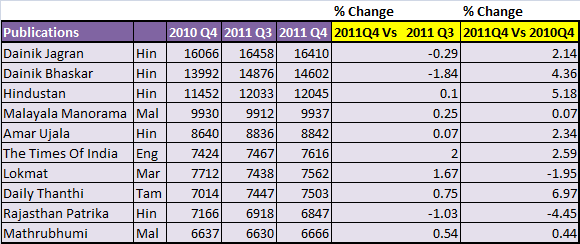
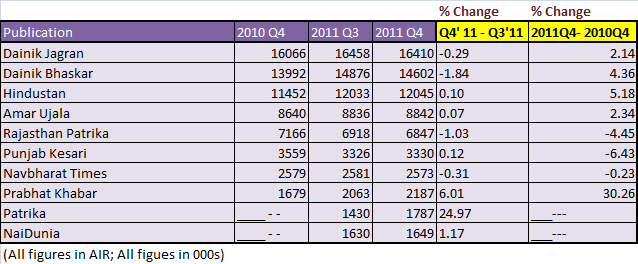
    There is not much of a difference in the rankings of the Top 10 Hindi Dailies. Dainik Jagran, Dainik Bhaskar,Hindustan, Amar Ujala and Rajasthan Patrika continue as the Top 5 Hindi Dailies. When compared to IRS 2010 Q4, IRS 2011 Q4 reveals the Top 4 Hindi Dailies, namely Dainik Jagran, Dainik Bhaskar,Hindustanand Amar Ujala have further strengthened their readership.


    A look at percentage change from Q4, 2010 to Q4, 2011 finds that Dainik Jagran has witnessed a growth of 2.14 per cent, Dainik Bhaskar grew by 4.36 per cent,Hindustanby 5.18 per cent while Amar Ujala grew by 2.34 per cent. The only Hindi daily to have witnessed double digit growth is Prabhat Khabar with a whopping 30.26 per cent growth in Q4, 2011 as against Q4, 2010. A total of five Hindi dailies have witnessed growth Quarter on Quarter.


    Q3, 2011 Vs Q4, 2011

    But the results for IRS Q4, 2011 Vs Q3, 2011 have a slightly different story to tell. The top two most read Hindi dailies – Dainik Jagran and Dainik Bhaskar – have witnessed a decline in Average Issue Readership (AIR), the decline is however marginal. Besides Dainik Jagran and Dainik Bhaskar, the Hindi dailies to have recorded growth in Q4, 2011 v/s Q3, 2011 are Hindustan, Amar Ujala, Punjab Kesari and Prabhat Khabar.


    Top 10 English Dailies:

    IRS Q4, 2010 Vs IRS Q4, 2011:

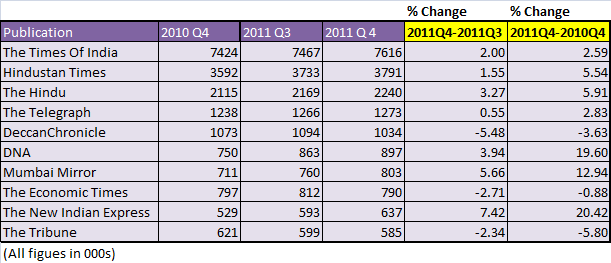
    The English dailies have performed exceedingly well in Q4, 2011. Seven out of the Top 10 English dailies have registered growth in their AIR. While DNA, Mumbai Mirror and The New Indian Express have registered growth in double digits, the top four English Dailies: The Times of India, Hindustan Times, The Hindu and The Telegraph have also witnessed growth quarter on quarter.


    IRS Q4, 2011 Vs Q3, 2011:

    The results for Q4, 2011 in comparison to the previous quarter also highlight the growth for most of the top Ten English dailies.


    Top 10 Language Dailies:

    IRS Q4, 2010 Vs IRS Q4, 2011:

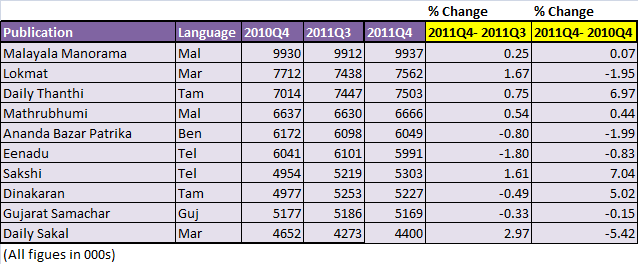
    The Q4, 2011 results as compared to the Q4, 2010 results have shown mixed reactions for Language dailies as only five publications witnessed growth since Q4, 2010 to Q4, 2011. Malayala Manorama continues to be the number one publication among the Language Dailies. According to IRS Q4, 2011 v/s Q4, 2010 findings, the Malayalam daily grew 0.07 per cent.


    Ranked second is Marathi daily, Lokmat which saw a decline of 1.95 per cent. The other Language dailies to have registered growth in their AIR are Daily Thanthi, Mathrubhumi, Sakshi and Dinakaran.


    Unlike the top two dailies, Daily Thanthi, ranked as third Language daily, grew by 6.97 per cent in IRS Q4, 2011 when compared to IRS Q4, 2010.


    It has been observed that the Malayalam dailies – Malayala Manorama and Mathrubhumi and the Tamil dailies – Daily Thanthi and Dinakaran have recorded growth in their AIR. Malayalam, Marathi, Tamil, Telugu, Gujarati and Bengali are some of the popular language dailies to have found a place in the Top 10 Language dailies.


    IRS Q4, 2011 v/s Q3, 2011:

    The top four Language dailies: Malayala Manorama, Lokmat, Daily Thanthi and Mathrubhumi have registered growth in their AIR numbers in IRS Q4, 2011 v/s IRS Q3, 2011. Besides the top four language dailies, Sakshi, the Telugu daily and Daily Sakal, the Marathi daily have also witnessed growth in their readership numbers.


    AIR or Average Issue Readership is defined as the readers of an average issue of a publication i.e. the estimated number of those who have read or looked at any issue of the publication within a specified time interval, which is equal to the periodicity of the publication (excluding the day of the interview). This is the preferred currency of media agencies across the country though often publications quote Total Readership (TR) when their AIR numbers are not impressive. MxMIndia only uses AIR in its IRS reportage.

  • IRS Q4 2011: Dailies flourish Year-on-Year


    The fourth quarter results of 2011 for the Indian Readership Survey were published on Monday and a quick look at comparing the numbers of IRS Q4 2011 versus Q4 2010 data, eight of the Top 10 publications – Dainik Jagran, Dainik Bhaskar, Hindustan, Malayala Manorama, Amar Ujala, The Times of India, Daily Thanthi and Mathrubhumi ­- have grown in their AIR (Average Issue Readership) Year-on-Year (YoY). Tamil daily Daily Thanthi and Marathi Daily Lokmat and Hindi Daily and the second most popular newspaper, Dainik Bhaskar  have registered the highest growths in AIR.


    When we compare Q3 2011 V/s Q4 2011, Dainik Jagran, Dainik Bhaskar and Rajasthan Patrika witnessed a slight decline in their readership. Dainik Jagran, Dainik Bhaskar, Hindustan, Malayala Manorama and Amar Ujala have retained their spots as the top five publications.


    After looking at the numbers, MxMIndia spoke to some of the publications for their views on the IRS Q4 2011 Topline numbers. Mr Rahul Kansal, Chief Marketing Officer, Times of India Group said: “Overall, I am quite happy with results, we have done pretty well in most of the markets including Delhi, Mumbai and Chennai, where we have seen very good growth.”


    However, Mr Rajiv Verma, CEO of HT Media Ltd, is disappointed with the IRS numbers but said in a statement, he will continue with investments in various markets. “While Hindustan Times has for long been No 1 in Delhi and No 2 in Mumbai, and Hindustan and Mint have consolidated their positions in their respective markets, as a group we are disappointed that these IRS numbers don’t reflect the full picture of our growth, and the reality of our investments and our efforts in the various markets across the country. However, we will continue to invest in various markets, to meet the needs of our readers and our advertisers, and will hope that the readership growth will be fully captured going forward.”


    Mr Sanjeev Kotnala, Vice President, Dainik Bhaskar Group said: “The IRS figures justify our focus on the urban, non-metro cities. Dainik Bhaskar is the only Gujarati newspaper to have a readership of more than 10 lakh in cities like Jaipur and Ahmedabad. If you see the figures for only the urban, non-metro cities, then you will realise that Dainik Bhaskar dominates the list. As far as the overall figures are concerned, we feel that it is a minor fluctuation, nothing major as far as our own perspective is concerned.”


    Speaking on trends from IRS Q4 findings, Mr Gautam Dalal, Vice President, Marketing, DNA said: “We observe that within Mumbai there is an increase in the overlap of English dailies readership – for every two readers there are three dailies being read. Mumbai, therefore, is seeing more penetration of English dailies and the trend of reading multiple newspapers is on the rise. Having such a high overlap percentage is a positive sign.”


    “In Mumbai we have had the highest number of growth for DNA, and these numbers are a testimony to our stand of having a high level of copy supported by the cutting edge editorial and by a focused market programme,” he added.


  • Freaking News: Mamata Banerjee, media’s favourite whipping girl

    By Ranjona Banerji


    This was an unexpected find: I had assumed (and from past experience) that the Hindustan Times would be strongest in local coverage amongst the national dailies in the national capital, given that New Delhi is (or was) its stronghold. But while HT does score on nitty-gritty local happenings, its biggest rival, The Times of India, is still going strong as far as blanket coverage of all news is concerned.


    This should be troubling for Hindustan Times because although it has the advantages of first choice as far as old-timers are concerned and its long history with the capital, its rival appears to be hitting where it hurts the most – with content. TOI and HT have been running neck and neck in Delhi for years, with both claiming ownership of the city at different times but conventional wisdom usually gave HT the edge. Now, I wonder.


    * * *


    James Murdoch has had to step down from the chairmanship of News International UK and is now being called a “shadow man with no role in the empire” (Sydney Morning Herald). This is of course the outcome of the phone-hacking scandal involving not just the defunct News of the World but other titles in the Murdoch stable of newspapers. Whether Junior’s moving aside is going to change company policy is another matter. Just as paid news and Medianet and its variations remain giant ogres for the Indian media to deal with, the dodgy practices of News Corp’s newspapers and journalists are the core problems. Removing James may not therefore be enough. As we have seen over the past year, the connections between the Murdoch empire and subsequent governments in the UK run deep and the favour system appears to have corrupted everyone, even the once highly-admired Scotland Yard.


    * * *


    The Mamata Banerjee government in West Bengal finds itself under greater media scrutiny with every passing day. The tendency of the chief minister to blame every event on the previous Left government and turn every criticism into a conspiracy theory has only made matters worse. Perhaps she needs some better media advisers and spin doctors? Right now, she’s the media’s favourite whipping boy (girl) and unfortunately for her, she, her ministers and her party only make matters worse every time they open their mouths!


  • [MJR] Quality of journalism has gone up: Mohan Sivanand

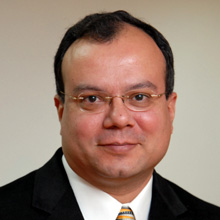
    Mohan Sivanand, India Editor, Reader’s Digest talks with MxMIndia’s Archita Wagle about his journey so far, touching on the changes in the field which he has seen in the past 36 years. Excerpts:

     

    Q: Tell us a little about your background and your life as a journalist.

    I have been in this field since I finished college in 1976. After my Senior Cambridge exams, I did a BSc in physics, then studied for an MA in English and a post-graduate diploma in journalism. Everything I studied has helped me in some way or other. I think and use, both, science and arts every day at work. I joined The Times of India as a trainee in 1977. I worked there for Science Today magazine (the magazine is not published any more). I worked with the TOI group for over six years, till 1983, when I joined Reader’s Digest. I joined RD as an assistant editor, when I was about 30.


    Q: Having been with RD for nearly 30 years, did you never feel that you needed a change or wanted to move to a different publication?

    No, I have not wanted to change jobs. I’ve liked it here.


    Q: How has the journey in these two companies been so far? What have been your learnings from them?

    Both the companies, TOI and Reader’s Digest, have been extremely good as learning experiences and dedication to journalism go.  I had very good editors to look up to, Surinder Jha of Science Today and Ashok Mahadevan at Reader’s Digest. Both these gentlemen gave a lot of importance to error-free content and laid emphasis on fact-checking. Ashok insisted that we learn to respect our readers and never underestimate them. That’s why our magazine is called Reader’s Digest.

    I follow those principles. One should never compromise on the quality of the content. I will hold an article back if I have some doubts about facts or if they have not been properly verified.


    Q: How does the process work?

    The process is the same for everybody, be it our US editor, myself, a staff writer or a freelancer. Even when I write an article, I have to give references and provide my sources to our researchers. The researchers have to double check every fact. They are, generally, the youngest employees who start out in RD with fact checking. Even I, sometimes, check and verify facts.


    Q: Over your 36 years in the industry, what are the changes that you have observed?

    In spite of everything, I feel that there has been a positive growth in the field. The quality of journalism has gone up in the past 30-odd years. I read a lot of articles and I feel that youngsters today are writing very well.  It is a pity that some of the better talent may be going towards the electronic media, but even the print media has people writing extremely well. I read a lot of good stories in many publications.

    Take the example of The Economic Times. It is much better today than it was 30 years ago. Maybe it is because business and markets have developed, and journalists today are well-connected via the Internet and they have access to a lot more information.

    In the past, most youngsters never thought of going for business journalism or working for technology magazines. In those days, we had just one Science Today, but today there are a lot of specialised magazines.

    Despite all the negativity, like ‘paid news’ or advertising interfering in editorial content, I feel that there is a lot of good stuff too. The vast majority today are proper journalists.


    Q: As a part of a magazine that places so much importance on content, what is your take on advertising interfering in editorial decisions?

    Actually, the ad people aren’t allowed to interfere in any editorial decision-making at Reader’s Digest. It is unethical. We have strict guidelines in place. Our ad colleagues can give us ideas just like anybody else, and that’s it. They can’t ask us to publish advertorial content and pass it off as editorial content.

    Most leading American magazines have the same policy. Indeed, some Indian publications bow to advertising pressure. By doing so, they are only killing themselves.

    If they continue to pass off advertising as editorial content, sooner or later the reader will realise what is happening and stop reading the publication. One can always tell the difference between an advertising plug and editorial content. The readership will drop and the publication is the loser in the long run.

    Often the ad executives are short-term employees who only look at short-term profits. They often don’t care about the damage to the publication’s reputation, so editors have to take a stand and refuse any such interference.


    Q: There have been rumours that Reader’s Digest editorial is being shifted to Noida…

    There is a corporate plan to shift to Delhi but nothing has been finalised yet. It has to be a very cautious move, since we can’t train new people overnight for our kind of journalism, our kind of writing and editorial practices.

    India Today Group, which is the Digest’s partner in India, wants to house all their publications under one roof.  We are the only India Today publication in Mumbai… but as of now nothing is finalised.


    Q: Will such a move, in any way, affect the editorial policy or content?

    There will be no change in terms of policy and the kind of content. Nowadays it doesn’t really matter where you are. One can work from anywhere. But as far as our content is concerned, we are the world’s, and India’s, highest-selling magazine, so why would anybody want to tamper with what has been working well so far?


    Q: We hear that RD is also going the digital way…

    Yes, from February 2012, RD can be accessed on tablets, including iPads for a subscription fee of about $1 a month, which is less than the cost of the monthly print edition. Our US parent edition launched its digital version last year. We were a little late, but I believe sooner or later, most of the print publications will have to go the digital way side by side. If you don’t do it, you are risking your future.


    Q: Has there been any drop in readership?

    We haven’t seen any significant drop in the readership. We print five lakh copies a month in India. But we had to move to a digital version before we witnessed any drop. Print magazines will never die out in India, but they may witness some decrease in circulation and that can hopefully be covered by increases in digital versions.

    As of now, the marketing of our digital version has not started with full force. But we will soon, and possibly have some more interactive content for our digital readers.


    Q: Apart from being the India editor of Reader’s Digest, you are also an artist.

    I was an artist before I became a journalist. When I was in college, I used to draw for Shankar’s Weekly, which was India’s equivalent of Punch magazine. I started oil painting in 1991. Between 1994 and1999, I held four solo exhibitions and some group exhibitions of my work.

    But after I became the editor, I stopped exhibiting as I don’t get enough time. My job takes a lot of my time. I still paint and draw, but as a means of relaxing. I will go back to painting full time after I retire.


  • Freaking News: How the media covered 10 years of Gujarat riots

    By Ranjona Banerji


    Interesting to see that Hindustan Times has gone for all out coverage of 10 years of the devastating riots in Gujarat, while The Times of India has played it down. This is particularly intriguing because at the time, TOI quite beat all other papers when it came to covering the Godhra train attack and the subsequent riots. Disclosure: I was deputy resident editor of the Ahmedabad edition of The Times of India at the time.


    Of course, it must also be pointed out that Hindustan Times does not have an edition in Gujarat, only a bureau and as Sujata Anandan, political editor for HT, then Mumbai bureau chief, pointed out in a related piece, she had to send people from Mumbai to cover the terrible events. It is possible however that the Delhi edition of TOI has not picked up the relevant stories, which is even odder because 10 years ago it was TOI Mumbai which shied away from riot-related stories and opinions. Apparently the resident editor at the time did not think it was relevant.


    On Tuesday, in the Hindustan Times, Harsh Mander, former IAS officer now social worker who works with Gujarat riot victims, hopes that there will be, well, hope soon. The day before Ashok Malik had asked whether it is time to forgive and forget. I wonder about that and our ability in India to behave as justice is an on and off system which we press when it suits us.


    Television, in particular CNN-IBN and NDTV, did focus on the riots and their aftermath: after all both their main faces Rajdeep Sardesai and Barkha Dutt did cover the riots extensively, perhaps for the same channel at the time, my memory fails me here. As a print journalist however, the strident hysteria of TV reporters and anchors, especially at such critical times, can often be more of a hindrance than help and so it was 10 years ago in Gujarat. Provocative people may make for good television but sometimes it can lead to irresponsible journalism.


    * * *


    Having spent a few days in Delhi, or more correctly Gurgaon, it is fascinating to see how crime dominates the papers. Is this because crime dominates events here or because local journalists look out for it?


    * * *


    On TV land on Monday night, Arvind Kejriwal’s remarks about Parliament being full of robbers, rapists and murderers got some play (see what I mean about TV promoting people just to create good television?). Karan Thapar on CNN-IBN wanted to know whether everyone agreed with Kejriwal and the Election Commission’s intent to tweak existing laws to bar people accused of severe crimes for contesting elections, within a certain time limit.


    The normally rambunctious Chandam Mitra of the BJP, normally quick to have hysterics was abnormally quiet as he hummed and hawed and said a debate was necessary and suppose the accused was later proven to be innocent? (Incidentally, this problem of later being proved innocent never bothers the BJP where Muslims accused of terrorism as concerned!).  An activist pointed out that the proposal was seven years old and surely that was enough time to debate the matter.


    Prashant Bhushan, who defended Kejriwal, said a few innocent people suffering was a small price to pay to keep criminals out.


    The Times of India, in its second editorial, slammed Kejriwal and Team Anna for swinging their “bludgeon in all directions while assuming partisan and authoritarian overtones”, which can only lead to the movement floundering.


    * * *


    On NDTV, Congress leader Renuka Chowdhury got into a made-for-TV fight with an anti-nuclear activist. This was more interesting than the issue itself – foreign-funded NGOs – which got nowhere.

  • Y’day’s Big Story: Print wins with ‘hat ke’ ideas


    Bharat Kapadia

    By Akash Raha


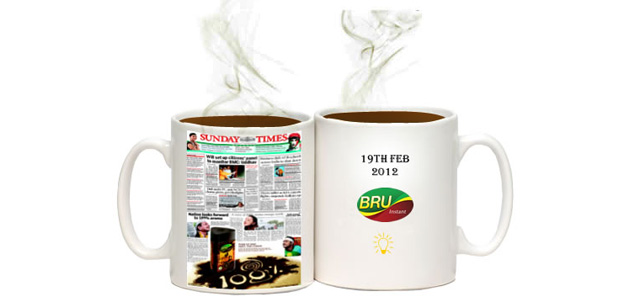
    The readers of The Sunday Times of India of February 19 woke up to a special surprise as they were served coffee with their newspapers. Well, not literally. The Mumbai, New Delhi and Bengaluru editions had a unique dimension – they broke the olfactory barrier. Each copy filled the air with the rich aroma of coffee, spreading the message for Hindustan Unilever’s flagship coffee product, Bru Gold. Veteran mediaperson Bharat Kapadia’s firm, ideas@bharatkapadia.com, unveiled its first big idea for its clients Hindustan Unilever and The Times of India group.


    “The objective was to drive home the richness of fine coffee and I knew that we could conquer this final frontier in a newspaper,” Mr Kapadia said. “The aroma of food products can create a sense of craving and can be very effective way to lead the reader to consume it.”


    In a world where it’s critical to stand out in a crowd, an idea when executed effectively can be a winner and this can be a unique consumer experience with every new fragrance. Mr Kapadia should know. Having spearheaded several ideas with the publications he has led over the years, ideas@bharatkapadia.com is a specialized ideas consulting firm in media and marketing. The fragrant newspaper concept has been tried out earlier editorially by Dainik Bhaskar and possibly some others too, but it’s the first time by a national advertiser across multiple editions.


    What experts feel on innovation

    The Times of India has been in the forefront with innovations. It’s been said and discussed in various forums that the only way the print industry can maintain its vitality is by constantly innovating and thereby evolving. That innovation is a driving factor for success is a no-brainer, yet is our print industry doing enough to innovate and create more value for the advertisers? Earlier, MxM India got in touch with leading advertising practitioners to know more about current trends and innovations that are happening in the industry.


    Pratap Bose

    When asked if the print industry is innovating enough of late, Pratap Bose, COO, Mudra Group said, “When it comes to print, there is very little innovation that you see. Whatever innovation you see, once it is done it is repeated time and time over again. Various forms of jackets – half, straight, up, down … Nothing fresh is coming out in print these days. The one category that continues to be beaten down is print. Barring one or two innovations from The Times of India group, which are of course very good, there is not much in terms of innovations that is happening.”


    When asked to compare print with other media, Mr Bose said, “Well, I consider all media as media, whether it is above the line or below the line. But essentially what you are seeing in the innovation space is largely happening in digital, out of home and promotions. To an extent video as well, if you want to include mainline media. Cinema is again, very few… So really, good innovation is not happening on either print or TV.”


    An issue of deliberation also is that whatever little innovation that we see in the market, is it happening in all print forms, across all linguistic barriers alike? Are print innovations happening in both English and language publications alike, or is the innovation limited to top English publications… only those who get top-end advertising moolah?


    Answering the question, Nandini Dias, COO, Lodestar UM said, “Print innovations often needs the publishing house to be able to carry out the difference. The leading publishing houses like the Bennett Coleman or HT Media manage to pull off innovations easily. For example the Cannes Gold that we won for Garnier this year was aided by The Times of India. The Times of India managed to print the day’s issue on recycled paper; for people who understand printing, they will appreciate the sheer thickness of the paper, the kind of paper needed the production team to alter their normal process , experiment and get it right before the 100% recycled paper issue got printed. So innovation happens with publications with a modern sophisticated printing and production unit. It has nothing to do with the language of the publication.”


    Divya Radhakrishnan

    Divya Radhakrishnan, Manging director – Helios Media Pvt Ltd, said, “There are lots of innovations happening in vernacular press as well. In fact groups like Dainik Jagran, Dainik Bhaskar have pioneered many an innovative concepts. The extent of innovation blends into ground activation and other media owned by the same group. A good example of that is Jagran activations.


    But while we talk about all the advertising riches innovation can drive, we cannot help but talk about the content aspect too. Often, innovations in print are condoned because they hamper its readability. Some innovations distracts an diverts the attention of a reader, thereby hampering with the content. However, Ms Dias said that it is not always so. Such a case only happens when an innovation makes reading content difficult. “For example the half gate fold is often disliked by a lot of readers as it makes holding the paper difficult or sometimes fonts in a colour, which make reading tough. Other than that innovations are done to enhance the product values and to bring it alive to the readers.”


    Yet, innovation remains a key factor for the print players for sustenance in the long run. Moreover, the ability to carry off good and meaningful innovation certainly brings more to the table and helps grab the advertisers’ attention.”


    Ms Radhakrishnan said, “Innovations for the sake of innovation is a no-go. The key objective for the innovation is to stand out of clutter and deliver the message appropriately. Given the time-spent on print media being on the decline, it’s very important that the message is delivered in a single-shot and therefore needs to be placed innovatively to grab reader attention. Another often repeated mistake is repeating the same idea often which by definition kills the concept of innovation. For example, jackets.”


    Nandini Dias

    Speaking on how important it is for print publications to innovate to be successful, Ms Dias said “It’s important to be able to carry out innovative options. As advertisers often come up with solutions which do not conform, publications which can help communicate their ‘hat ke’ thoughts will benefit.”


    As Steve Jobs once said, “Innovation distinguishes between a leader and a follower.” For print players, it is imperative to constantly dream up winning ideas. So, we are likely to see more ‘hat ke’ and out-of-the-box innovations like the one created for Hindustan Unilever.


  • Journos should learn a lesson from Mumbai’s voter turnout

    By Ranjona Banerji


    So, as cynical journalists had assumed, a quarter of the way into Anna Hazare’s movement last year, this great upsurge of feeling for the country by young India was something of a hoax. When it came down to it – exercising your franchise, the biggest right and responsibility in a democracy – Mumbai has been found wanting. Hindustan Times’ headline puts it most succinctly: “Typical. Apathetic. Mumbai”.


    Newspapers also concentrated on rich and young Mumbai, both of which failed to show up. The Indian Express didn’t hold back taking about Mumbai sticking to its normal habit, “with voter disinterest in a handful of plush areas dragging down overall voter percentages”.


    As The Times of India points out, “The tony neighbourhoods of Colaba, Churchgate and Cuffe Parade repeated their past record with a measly turnout of 34 per cent, the lowest in the city.”


    The various reasons given for this voter apathy have been the chance for a long vacation, confusion over voter lists and general disorganisation. One woman is quoted about complaining that it took hour half an hour to vote – obviously too big a price to pay.


    As Mid-Day says in its editorial, “It is all very well to tweet about how this city is going to the dogs, create a Facebook page on how the roads are pathetic or organise candlelight marches to protest against terror attacks. The proof of the pudding is always in the eating. On that count, Mumbai is starving itself.”


    The Hindustan Times also went straight for the jugular – young people who are all aware and concerned in cyberspace but cannot translate that fervour into real life. (Aside to Election Commission: how about online voting for our youth who can’t be bothered to walk to a polling booth?)


    * * *


    On TV on Friday morning, the focus, for me, had to be on the Hindi and Marathi channels since the English channels were not unnaturally concerned with other news – Amitabh Bachchan’s operation, a fleeting glimpse of Aishwariya Rai carrying a baby bundle, the killing of two Indian fishermen by an Italian ship and something to do with Salma Hayek, which I didn’t bother to find out about.


    Sahara Mumbai, Sahara Samay and Star News suspended their precious stones and astrological forecast sections to provide trends, results and analysis of the elections in Maharashtra.


    * * *


    Perhaps in Mumbai’s voting pattern there is a lesson for journalists not to be too taken up with marketing hype about young India and to get carried away with what is said on social media. You have to keep track of everything but need not believe everything you hear and see on the Internet.


    Also, it is important to consider that India is not a society or a nation under threat or on the verge of civil war (whatever TV may tell you every night). We have no need for a social revolution like the Middle East for instance. Therefore, passion in cyberspace will not necessarily translate into anything at all in real life.


  • Ranjona Banerji: Sena on shaky ground, polls to decide all

    By Ranjona Banerji


    Mumbai has elections on February 16 to select its municipal corporators. Since the Brihanmumbai Municipal Corporation has a bigger budget than some state governments, this is an important election. It is also a political test for the incumbent Shiv Sena-Bharatiya Janata Party and a signal for the Congress-Nationalist Congress Party alliance – which is in power in the state – about the roadblocks ahead for the next general election.


    Not surprisingly, election coverage has dominated Mumbai’s newspapers. Most seem to think that the ground is shaky for the Shiv Sena. This is, in a sense, a last bastion for the Sena – it has ruled the BMC for almost two decades. But everyday, newspapers are full of the shortcomings of the corporation and the corruption involved in most deals. Mumbai’s roads and water supply get the most attention and none of it positive.


    The general sense you get from newspapers is that this time there will be a challenge to Bal Thackeray from not just the Congress-NCP but also of course from his nephew Raj Thackeray and his breakaway party, the Maharashtra Navnirman Sena. Uddhav Thackeray – the son and the main bone of contention – does not have the requisite firepower, seems to be the overwhelming feeling. There is also a discussion on whether both the Senas will cancel each other out.


    The Times of India and The Indian Express both carry interviews with chief minister Prithviraj Chavan, who says he pushed for an alliance with the NCP this time – to avoid fracturing the vote as happened when both parties went alone in 2007.


    * * *


    All newspapers have also focused on the low voter turnout in Mumbai and have exhorted citizens to come out and vote. You could pick up any newspaper to find out all about the candidates from their bank balances to their educational qualifications. The new seat reservations have created some turmoil in parties, all of which have been faithfully recorded.


    * * *


    Interestingly, the high number of dry days – three have been decided by the Election Commission – has been cause for consternation in print. The bar and restaurant association has put in a plea reported in Wednesday’s papers to allow the sale of alcohol in the evenings of the dry days, after voting is over on Thursday. The right to drink is well-felt by most journalists, so it is easy to see why this forced abstinence should get prominence.


    * * *


    It is these little titbits which make newspaper reading so pleasant a pastime. The oddities of life rarely find room in the high-pitched breaking news landscape of TV land.


  • Need to relook at aid

    By Ranjona Banerji


    In a total break from television, let’s look at today’s newspapers and some thought-provoking opinion pieces. On The Times of India’s edit page, Ramesh Thakur looks at the conundrum of foreign aid which helps the donor more than the recipient. The issue has popped up again with the British media replaying Union finance minister Pranab Mukherjee’s year-old comment that the aid which India gets from Britain is “peanuts”.


    Thakur discusses how aid can often be crippling to a country trying to pick itself out of a crisis and what is most required is not handouts but forcing governments to perform. The Africa experience with aid has been much discussed and certainly no continent has suffered as much. Pakistan is also paying the price of too much and not even home-grown development.


    When India tried to stop aid from Britain, it was the British agencies which asked for the aid to continue. The call in Britain is to use that money internally, needed in times of cutbacks. It would make good sense perhaps for the governments of India and Britain to relook at aid to India. If we don’t need it and they do, why should we still take it?


    **


    In the Business Standard late last week, Mihir Sharma argued that contrary to popular belief, Indian governments give too many handouts to the rich and middle classes (“Handouts for the well-heeled”). It’s a well-argued piece, bolstered by facts, which should prove a shocker to middle class thinkers and people who usually see the poor as some undeserving, greedy, grasping lot who are a burden to the exchequer.


    **


    Sundeep Sengupta on the Hindu’s edit page puts into perspective how far India has strayed from its earlier stand on climate change and the consequences of conceding so much ground in Durban. Climate change no longer seems to be a hot ticket as far as the Indian media is concerned but that doesn’t make it any less important!
    Another subject which hasn’t perhaps been adequately discussed is the situation in Syria, especially from the Indian point of view. Krishnan Srinivasan, former Indian foreign secretary, has a look at the war-like situation in Syria and examines the role of UN sanctions.


    **


    Since it is Valentine’s Day, the Deccan Chronicle has looked at it seriously. Novelist Charu Nivedita questions whether India can know real love, hampered as it is by convention!


    On which note…