Tag: The Times of India

  • The Importance of being Sivakumar Sundaram


    By Pradyuman Maheshwari


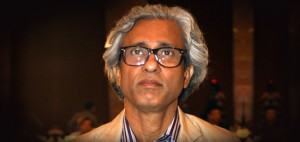
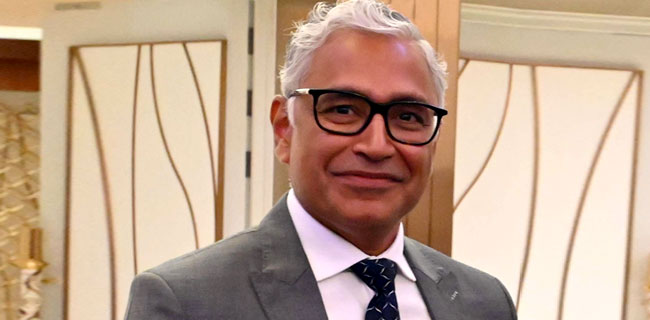
    The photograph doing the rounds of brothers Samir and Vineet Jain signing on the dotted line on the terms of dividing the vast media empire had three gentlemen in the background. One of them was a silver-haired bespectacled gentlemen with his wrists bearing a near-new red holy thread who is, as they say, is Samir Jain’s blue-eyed boy.
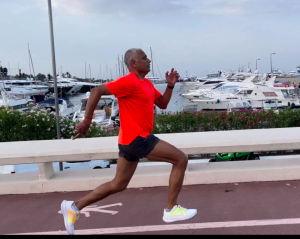
     

    Sivakumar Sundaram at his morning run at Cannes. Photograph source: Facebook
    Sivakumar Sundaram at his morning run at Cannes. Photograph source: Facebook

    Boy, well, a 55-year-old one. Delhiwallah, from Vijayawada in Andhra Pradesh. Non-MBA, but a Chartered and Cost Accountant, he joined Bennett, Coleman and Company Ltd (BCCL) in 1990 as a Management Trainee – an Assistant Manager in the accounts department, to be precise. Spiritually inclined, he’s an early riser and loves the run. Even at Cannes in France, where is attending an international advertising festival, he was spotted in his running shoes. Proof: Check his Facebook page.


    His credo, as per a LinkedIn post: “There are no right or wrong decisions in life. Any decision taken in compliance to one’s own values is the right decision. Be reliable and invest in yourself because success is the by- product of the well-being of body, mind, and soul.”


    We’re referring to Sivakumar Sundaram, the newly appointed Chief Executive Officer – Publishing. This is after being Chairman of the Executive Committee of Bennett Coleman & Company (BCCL) and a member of the BCCL Board as Executive Director. May appear to be comedown but CEO – Publishing is of course a key executive role, and he naturally becomes decidedly the most powerful professional in print and digital news in the country.


    As per his profile on LinkedIn (LI), Siva, as he is known in the fraternity, has worked across various corporate functions including finance, taxation, M&A, group strategy and innovation, response (BCCL’s sales department) and Brand Capital, the group’s ads-against-equity investment arm.


    Reads the LI note: “During this period, he  has been closely involved in the setting up of every new business of the group – from Times Internet to radio to TV and partnerships/joint ventures with international media houses,” and it continues: “In his immediate prior role, Siva was President – Revenue, responsible for leading response and Brand Capital, which generated nearly 85 percent of BCCL’s revenues. He was instrumental in setting up Brand Capital in 2005, a significant innovation in the global media industry, which now has assets under management of nearly US$ 2 billion and an ecosystem of 800-plus clients. The 1800-plus sales team of Response manages relationships with over 50,000 advertisers in India and abroad.”


    An article in a CA journal notes Sundaram last made his CV in 1994. No-brainer that. He had no reason to. He is Vice-Chairman Samir Jain’s eyes and ears in the organisation. And more.


    Sundaram runs marathons, not just a jog around Lodhi Garden or Shivaji Park. Which needs careful planning, long-term thinking and strong execution. And most importantly: Ironman-like endurance.


    Which Jain (VC, as he’s called) knows Siva has in plenty.


    Hence: the decision to appoint him as incharge of the publishing business was natural.
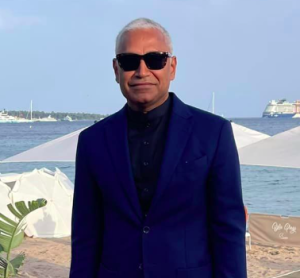
     

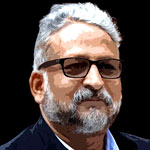
    Sivakumar Sundaram wearing dark glasses
    The Boss. Sivakumar Sundaram at Cannes. Photograph source: Facebook

    Sundaram though has quite a job ahead of him. At first a shrinking readership, and circulation numbers. The post-1990-born prefers tracking news via notifications, Instagram reels or at most Twitter. Newspaper these days are used more to line cupboard shelves or ripen papayas and mangoes.


    There is a fair amount of mediocrity that has set in and circulation numbers have fallen. The numbers for even Tier-2 cities like Pune where the edition was very strong have gone south. In Goa, the edition is a distant #3. Overall, while the advertising revenues are bright enough for company seniors to go to Cannes, the buzz that the paper once had has diminished.


    And if there’s anyone to blame for this, it’s the leadership at many levels.


    Sundaram knows that. Since he is a numbers person, he knows that they tell a story like a few other things can. He knows where there exists a wastage. And what needs to be propped up.


    Remember, an accounts job can also entail creative thinking.


    The road ahead could be like one of those potholed roads of Mumbai after that first major downpour.


    We spoke with at least a dozen former and current Times of India staffers to get a view on Sundaram’s ascent. And the tasks ahead of him. While most of them spoke with us off the record, there was only one person we spoke with who was willing to be quoted.
     

    Jaisurya Das
    Jaisurya Das

    Said Jaisurya Das (JD), a senior industry person, advisor and commentator (also a former MxMIndia columnist): “Sivakumar does have a tough mile to walk and I do hope he will as always start with a due diligence of the core departments. This may just be what will make the difference!”


    But we are being naughty. We’ve used a quote from JD to suit our story.


    This is what Das said before: “To be honest, I think this was long overdue and am truly happy to see these changes! The true ‘stars’ all figure in these movements and each one of them are the kind who can do immense justice to their new roles. For me, a clear indication of Samir Jain in the saddle.”


    And he continued: “As for Sivakumar as the CEO, it comes as no surprise since there really is no one better. He is an astute professional whose razor-sharp financial acumen, inclusive management style and unquestionable loyalty to purpose is well-established in the industry, be it BCCL or beyond. And yes, contrary to what anyone may assume, I do not curry favour. This is what it is and no one can refute it, no matter what they think.”


    Das knows BCCL like few others. As not only has he worked in key functions, his brothers Monu (MD Nalapat) and Chinnen have been BCCL veterans.


    As Sivakumar Sundaram returns to India from Southern France, he will certainly set things in motion. Some changes in the top deck have been effected. Some more are likely to happen. Some souls who have been under-performing or misbehaving will see the wrath of Siva’s Third Eye.


    Watch this space. The times, as they say, are surely a-changin’


  • So much safer to discuss the beauty of Jaipur’s carpets…


    By Ranjona Banerji


    Ranjona BanerjiA naked film star, Ranveer Singh, took over the news cycle and the internet this past week.

    We have had news about how many famous Indian men have posed nude in the past. On the male physique and its beauty. On the carpet that Singh posed on. On Jaipur rugs themselves and what they are made of.

    All this provided a distraction from the wilful naked destruction of India’s environment and wildlife in some parts of India and the destruction of India’s infrastructure by the monsoon.

    In Uttarakhand and in Maharashtra, trees are being cut down. In variance with court rulings and common sense.

    The bigger noise has been on social media than on the internet itself. Women claim to have been manhandled and harassed by the police in Helang and in Dehradun in Uttarakhand, for trying to protect trees using Chipko movement tactics.

    I found one reference to Helang in an online search:

    https://www.newsclick.in/uttrakhand-helang-incident-snowballs-major-controversy

    And one reference to Dehradun’s Sahastradhara episode:

    https://timesofindia.indiatimes.com/city/dehradun/uttarakhand-sahastradhara-road-protesters-accuse-cops-of-harassment/articleshow/93016417.cms

    This is how news is suppressed. It is limited to local editions. And it is not picked up by other agencies and media outlets.

    And environmental news as we have discussed before gets maximum short shrift.

    The Aarey controversy has got more traction, because Mumbai is a big city and because of the change in policy after the Maharashtra government was brought down and a BJP-led Shiv Sena breakaway party took charge. The first act was to allow the destruction of forest in the Aarey area for a Metro car shed.

    https://www.hindustantimes.com/cities/others/as-aarey-demonstrations-spread-to-other-cities-campaigners-in-mumbai-receive-police-notices-101658689609221.html

    You tell me, how many prime-time TV screaming matches have you seen on ecological damage from the destruction of natural resources?

    Monsoon fury and damage got a little more space. A new expressway at Bundelkhand was inaugurated with great fanfare by the Prime Minister and the state’s Chief Minister. Thus, when you check the context and the allocation of responsibility, please admire how mild the media admonition is.

    Contrast this with the rage of the TV reporter directed at a postman who came to make a delivery at the building which starlet Rhea Chakraborty lived in.

    https://timesofindia.indiatimes.com/city/kanpur/part-of-new-bundelkhand-expressway-damaged-in-uttar-pradesh/articleshow/93042102.cms

    The criticism of this collapse, such as it is, comes from the Samajwadi Party. The explanation comes from some officials. No questions asked of the great claims made during the massive inauguration. Well, obviously!

    https://www.ndtv.com/india-news/days-after-inauguration-by-pm-parts-of-up-expressway-damaged-after-rain-3180695

    This story is just bumpf and some Twitter comments.

    Now let’s look at another kind of social destruction: false accusations of “love jihad” with apparent BJP connections.

    Not much some up on internet searches.

    There’s the Wire: https://thewire.in/communalism/uttar-pradesh-hired-love-jihad-rape-charge

    And there’s an older story from The Times of India:

    https://timesofindia.indiatimes.com/city/agra/two-men-hire-delhi-woman-to-frame-muslim-businessman-in-love-jihad-case-in-ups-kasganj/articleshow/93082531.cms

    How much screaming in the evening TV programmes, accusing the ruling party of, well, anything at all?

    Why nothing about the ongoing controversy about Union minister Smriti Irani and her daughter’s restaurant and bar?

    What’s the point? Most of the “news” is about Irani’s bravery, legal notices to Congress and so on. Very little about the actual problem. And even less about the daughter’s connection to this restaurant and bar in Goa.

    Welcome to the courage of the Indian media.

    Of course, there is a strong reason why we’re so lacking in courage.

    It is incidents like this:

    Freelance journalist Ravi Nair who writes about financial improprieties and dealings gets slapped with a criminal defamation suit for writing about the Adani Group.

    https://thewire.in/media/warrant-journalist-ravi-nair-defamation-adani-group

    So much safer to discuss the beauty of Jaipur’s carpets.


    Ranjona Banerji is a senior journalist and commentator. She writes on MxMIndia on Tuesdays and Fridays. Her views here are personal.

  • Wunderman Thompson campaign for TOI

    By Our Staff


    The Times of India has launched its latest 360-degree campaign, ‘The Times of a Better India’. Conceptualised by Wunderman Thompson, the campaign celebrates India’s progress through the decades since Independence and the opportunities it has created for citizens.
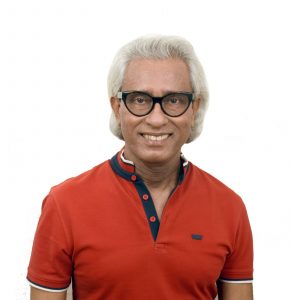
     

    Commenting on the launch of the campaign, Joy Chauhan – Managing Partner, Wunderman Thompson, Delhi, said: “We all intuitively know that there are amazing stories all over the nation that speak to an advancing India. But this campaign has been designed to platform such stories. As the chronicler of our times and many of these stories, The Times of India is perfectly positioned to inspire and seed hope. As Wunderman Thompson, we are proud to partner The Times of India and have enjoyed bringing to life these interesting stories of a changing India and how it is enabling individuals, organisations, and society to go the extra mile and achieve their potential.”


    Talking about the campaign, Kaustuv Chatterjee (Director, The Times Of India & Languages Brand) said: “The Times of a Better India brings to you inspiring stories, heart-warming narratives, and deep insights, cutting across a range of themes – from space research to sporting glory, from infrastructural changes to environmental sustainability and much more. It will delve into the change drivers of the past, their impact on the present and a status-check of what the future may hold. Critically, the campaign will also ask questions whether the success of certain sectors is indeed taking the country forward and what more could be done. In its essence, this initiative seeks to inform on realities in India beyond the polarized rhetoric, start conversations on the true nature of opportunities and challenges regarding progress. The initiative invites readers to join the conversation, give their viewpoints on key questions, ask them to share their own experiences and give them an opportunity to discover interesting stories and win prizes via interactive contests.”


  • So what’s next for Dr Bhaskar Das?

    By Our Staff

    There were telltale signs at Goafest last week.

    One of the oldest and seniormost delegates present at the three-day event was perhaps also the most energetic. Present at nearly every session held and of course the awards. He ran upto the stage to meet star guests. Selfies galore with all the people who matter. 

    He is decidedly one of the most cerebral advertising and marketing professionals, one of the few people in the industry who has done his Ph D in marketing twice (not once) and is now working towards his thesis. He is on the Governing Council of MICA, and on the advisory boards and faculty at a few other temples of learning. And then amidst all of this, he does five to seven sales calls a day, is a door-opener for meetings with people who are otherwise unreachable to even the big bosses at media giants. And, yes, he also answers to our questions in Das ka Dum Monday through Friday.

    So the telltale signs were that he was present at Goafest not as a representative where he has be Group President/Chief Strategy Officer/Mentor, but as Secretary of The Advertising Club. Yes, you read it right: he was not representing Republic at Goafest.

    We tried reaching out to Dr Bhaskar Das, he politely declined to speak. We wrote to Republic via the marketing and PR head. No reply. We wrote to Republic owner, MD and editor-in-chief Arnab Goswami via his secretary. Not once, but twice. No reply. News entities we feel should be concerned about authentic information getting out in the market, are often the last to cooperate with sharing of news.

    We also feel that there should be some graciousness, but this is not a story on morals and what’s not cool.

    Das’s exit, if indeed true, will of course significantly impact Republic. In the short run at least. For in the last two years, where many corporate and advertising biggies have been dubbing the channel’s content as toxic, Das and the former Group CEO Vikas Khanchandani have been holding fort. Das’s persuasive and self-effacing demeanour has ensured that even those who detest the channel and its face didn’t mind inviting him for a coffee.

    In the days when the channel was facing a lot of heat, despite friends in the industry asking him to quit, his only reply was: Yes, I am disturbed with the controversy. My age doesn’t allow me the strain. But I will never desert the ship at a time like this..

    While entities like The Times of India, Zee and Dainik Bhaskar have thrived even after his exit, all of them have had a much longer legacy and many leaders who have had a fair equity amongst the powers that be.

    Republic has had a string of senior and mid-level exits. COO and distribution head Priya Mukherjee, Group CEO Vikas Khanchandani and now Dr Das.

    So what does Dr Bhaskar Das do next?

    He has just turned 69. In fact a friend of the family told us that he put in his papers on his birthday on Sunday, on his return from Goafest. He wants to spend more than the hour-odd that he currently does at the gym and spend time with the family, but he also once told us that he wants to fight possible cognitive malnutrition by doing work.

    He is active with MICA, and has also been teaching at various other business schools. He also mentors a few start-ups. Is working on his next PhD. Gives gyaan and put things in perspective for whoever needs the help. And is everyone’s friend.

    Will he join another news entity?

    We don’t know, but we’ll be surprised if he is (or rather his services are) not lapped by anyone.

    He once told us: “Lord Krishna will take care of me. He knows it. I am a das, a loyal servant. I’ve always had cordial relations with whosoever I’ve left.”

    Hmmm.

  • #Mirrored! | Times of India Group Statement on Mumbai Mirror closure as a daily

    By A Correspondent


    This is the communique and statement issued by The Times of India group via its PR agency on Saturday, December 5. A revised statement was issued on Sunday, December 6. The text below is the revised statement. The text in italics is what has been changed in the revision.


    “Fifteen years ago, the ‘city that never sleeps’ had a new and good reason for staying awake – and for waking up, when it did manage to get some sleep: Mumbai Mirror. Feisty and fearless, energetic and enthusiastic, playful yet punchy, it lived up to its name from the day it was born, mirroring Mumbai in all its myriad moods. It was as local as Mumbai’s locals – the lifeblood that keeps the city on track and moving. The paper became such an integral part of the reader’s life, driving the narrative of the city, that it was decided to extend the experience to Bengaluru, Pune and Ahmedabad.


    “Sadly, just as the pandemic, lockdown and unprecedented economic crisis have laid low many great ideas and initiatives before they could fully take root, they came as a body blow for the still-young brand. Not only has the newspaper industry been among the hardest-hit in terms of revenues, it has been weighed down by an import duty that has added to newsprint costs. With the long-held hope of a stimulus for the newspaper industry as represented by the Indian Newspaper Industry (INS) not materializing and the economy now officially in recession, it is with a heavy heart that the group has decided to cease publication of Mirror in Pune and relaunch Mumbai Mirror as a weekly. They will, however, continue to have a strong digital presence.


    “The group in a statement said, “Following months of discussions and deliberations, we have made this extremely difficult and painful decision to recalibrate our portfolio of publications. We truly value the contribution of our journalists and other staff towards building such a strong brand in a relatively short time, and thank them for their hard work and great effort.”


  • #Mirrored! | Our battle is to out-think Times of India. Meenal Baghel interview in MxM in July 2012

    Meenal Baghel
    Meenal Baghel

    By A Correspondent

    On July 25, 2012, senior journalist and adperson Anil Thakraney had interviewed Mirror Editor Meenal Baghel.

    Given the announcement of the closure of the the bran as a daily newspaper in Mumbai and Pune, a re-read of the interview is a must. Here’s the link: https://www.mxmindia.com/2012/07/our-battle-is-to-out-think-toi-meenal-baghel/


  • Das ka Dum with Dr Bhaskar Das | Someone tweeted the other day: While Editorial is the voice of the people, the Advertisement signals the turning wheels of economic revival. Your view?

    Bhaskar DasIf you see the original tweet, you’ll know it’s a follow-up to yesterday’s question. So if you missed it, read it here. So without further ado, here’s the August 4 edition of Das ka Dum with Dr Bhaskar Das. Read on…
    If you wish to access the archives, please go to the Das Ka Dum tab on the website’s top navigation bar.


    Q. Someone tweeted the other day: While Editorial is the voice of the people, the Advertisement signals the turning wheels of economic revival. Your view?


    A. It’s an axiom that when business sentiments change, the need for communicating the offerings of various organisations go up. Don’t forget that even advertisements form a part of content for readers to consume as it offers them to make informed choices. In fact it’s true for any medium. Besides, monetisation through advisement route is an integral part of most of the media’s business model. So it’s pragmatic to surmise that when the economy shows green shoots after a prolonged Covid-led limbo, such an increase in the flow of advertisements definitely indicate a correlation.

  • 23 winners presented Ramnath Goenka Awards


    By A Correspondent


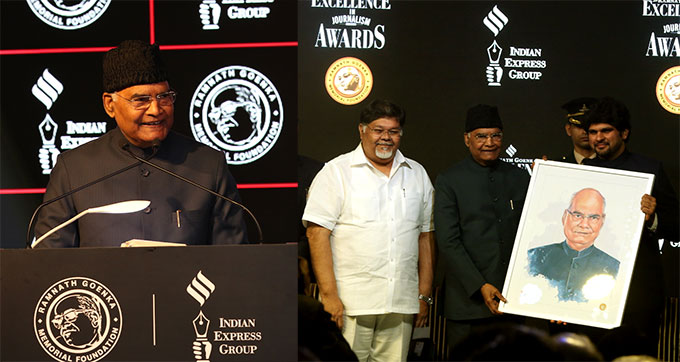
    “Democracy is meaningful” only if its “citizens are well informed…Truth is the only compass for good journalism, ” said President  Ram Nath Kovind as he gave away the Ramnath Goenka Excellence in Journalism Awards in New Delhi .


    Delivering the address at the 14th edition of the Ramnath Goenka Excellence in Journalism Awards in New Delhi, the President said: “The quest for truth is, of course, difficult and easier said than done. But it must be pursued. A democracy like ours deeply relies on the uncovering of facts and a willingness to debate.”


    At the ceremony,  awards were presented to 23 winners in 11 categories — across print, broadcast and purely-digital — for outstanding work done in 2018.

    In his welcome address, Viveck Goenka, Chairman of the Express Group, said: “We couldn’t have had a chief guest who better encapsulates the values we celebrate this evening”.

    Speaking about the winners, he said that “these stories also ask questions of fairness and empathy they take neither a no nor a yes for an answer” and search for what lies in between. He added that “they are firm in their resolve to embrace complexity, not reduce the story to either pro this or anti that… these stories tell us why journalism matters”

    Anant Goenka, Executive Director of the Express Group, presented Kovind with a portrait. Indian Express Chief Editor and author Raj Kamal Jha also spoke on the occasion.

    The RNG Award winners were chosen by an eminent jury that included Tom Goldstein, Professor and Dean, Jindal School of Journalism & Communication, O P Jindal Global University; S Y Quraishi, former Chief Election Commissioner; Pamela Philipose, journalist and Senior Fellow at the Indian Council of Social Science Research; and, former Supreme Court judge, Justice BN Srikrishna. Among those present at the awards ceremony were Chief Election Commissioner Sunil Arora, JD(U) leader KC Tyagi, former ABVP national organising secretary Sunil Ambedkar, Prasar Bharati Shashi Shekhar Vempati, Principal Director General of Press Information Bureau Kuldeep Singh Dhatwalia, eminent jurist Fali Nariman and D Raja, CPI General Secretary.

    The Express Group instituted the Ramnath Goenka Excellence in Journalism Awards in 2005 as part of the centenary year celebrations of its founder, Ramnath Goenka. The awards aim to celebrate excellence in journalism, recognise courage and commitment and showcase the outstanding contributions of journalists from across the country.


    List of winners:


    Here’s the full list of winners of the RNG awards this year

    Reporting from Conflict Zones

    Dipankar Ghose, Indian Express (Print/Digital): For Stories told from the deep jungles of Bastar that often get lost in the State vs Maoists binary

    Dheeraj Kumar, Late Achyuta Nanda Sahu and Mormukut Sharma, Doordarshan (Broadcast): The DD News team came under Naxal attack while covering the Chhattisgarh elections from Nilavaya village. Sahul lost his life in the attack.

    Hindi reporting

    Diti Bajpai, Gaon Connection (Print/Digital): For her seven-part series on rising instances of sexual assault on minors

    Shadab Ahmad Moizee, TheQuint.com (Broadcast): For his report on the agonising wait of families whose dear ones went missing in the 2013 Muzaffarnagar riots

    Regional Languages

    Anwesha Banarjee, EI Samay (Print/Digital): For her stories on human trafficking told through the livest of the women of a nomadic tribe

    Saneesh TK, Manorama News (Broadcast): For bringing out the devastation in Wayanad through people who lost homes, friends and relatives in the August 2018 floods.

    Environment, Science & Technology reporting

    Mridula Chari & Vinita Govindrajan, Scroll.in (Print/Digital): For their two-part investigation on how tax regulations allowed farmers to use at least 99 lethal chemical as pesticides.

    Sarvapriya Sangwan, BBC News Hindi (Broadcast): For capturing the impact uranium mining was leaving on the life of the indigenous people and the environment in Jadugoda, Jharkhan

    Uncovering India Invisible

    Hina Rohtaki, The Indian Express (Print/Digital): For her stories of people in Morni, Haryana, who would wad through the Ghaggar river or walk over a 20-foot high pipeline to get to school or work.

    Asmita Nandy and Meghnad Bose, TheQuint.com (Broadcast): For thier documentary that uncovered why lynchings carried out in the name of the cow have become a new normal.

    Business & Economic Journalism

    Nidhi Verma, Thomson Reuters (Print/Digital): For the economic and politics of sanctions, as India came under pressure from the US to stop importing oil from Iran.

    Politics & Government

    Sushant Kumar Singh, The Indian Express (Print/Digital): For some of the biggest breaks of the year – from Rafale talks to details of the Naga accord.

    Moumita Sen, India Today TV, Shikha, India Today TV (Broadcast): For their show ‘Election Influencer’ that looked at the nuts and bolts ot the giant election machinery.

    Investigative Reporting

    Teena Thacker, Mint (Print/Digital): For her stories detailing the pain that Indian victims of Johnson & Johnson’s faulty hip implants went through.

    Poonam Agarwal, TheQuint.com (Broadcast): For her investigation on whether donations made through the electoral bond scheme were, in fact, anonymous as claimed by the government.

    Civic journalism

    Aniruddha Ghosal, News18.com (Print/Digital): For his investigation that revealed that the UP government’s claim of having controlled encephalitis was based on data that didn’t quite add up.

    Photojournalism

    C Suresh Kumar, The Times of India (Print/Digital): For zooming into places, faces away from headlines, like the heat and dust of Jallikattu, and soccer players queuing up before a yellow plastic pot

    Books (Non-Fiction)

    Gyan Prakash (Print): For his book, Emergency Chronicles, which takes us back to Independence to try understanding the darkest two years in India’s democracy.


  • Sanjeev Kotnala: Every effort counts, but where does #Adswelove take you?

    By Sanjeev Kotnala

    Recently The Economic Times, under its popular Wednesday supplement Brand Equity started a unique monthly feature #AdsWeLove. It will recognise the best print advertising.The Times of India Group is undoubtedly the thought leader in print marketing. It has a presence in power and influencing centres of brand and marketing. #Adswelove is a small but significant step by Times of India Group. But it is hardly innovative or enough.

    #Adswelove Process 

    You have to appreciate it. Every effort to rejuvenate the print category and make the brands rethink its role and possibility is welcome in current times.

    So, the Times of India Group will good print advertisements published in the month in its group publications. An influential jury with Malvika Mehra, Josy Paul, Raj Kumble, Paraxit Bhattacharya, Prateek Bhardwaj, Sandipan Bhattacharya, Senthil Kumar and Kainaz Karmakar as members will evaluate them. The jury will judge the ads on excellence in art, copy, and how insightful and clutter-breaking ability. The winners will be featured in Brand Equity feature #adswelove.

    The feature was launched with the selected jury members going down the memory lane and picking the print creative that has impressed them.

    Do We Seriously Believe In Power Of Print?

    Few of the jury members are known pro-print. They have always helped print in such initiatives and programmes. However, were they really convinced and serious when they speak of things like ‘in today’s world, a print ad is the starting gun at the beginning of a race. It’s where brand action begins’ or ‘Print is not just a medium, it’s a culture’ (well said). Maybe the media teams and clients don’t know this secret, or they don’t believe in it. Otherwise, what could explain the situation print industry is in.

    However, what one of the jury members shared is a tip for the brands and an excellent way to approach the print medium. Respect the intelligence of the reader. Know the constraints of the medium so well that you can tailor-make the solution. Make sure there is an event on the page.

    The print owners must re-read the last tip and try concentrating for contextual position and placement of the ad. At least start with the contextual positioning of bigger ads and definitely for campaigns that are still using print for brand building and not just topical-tactical-sale-discount communication.

    Let us wait for next month’s feature to see what we get. The print industry can’t keep going the nostalgia way and keep referring to Think Small, nude models wanted and such ads. Referring to the time, when print was considered strong enough for brand building.

    As a reader of ET, I expect more than #Adswelove.

    Readers of Brand Equity may find # Adswelove a very biased initiative. For them, Brand Equity refers to MARTech.; Marketing, advertising, research and technology. It cannot be biased to any particular media and serve the readers needs across. And hence readers of Brand Equity would want to see a similar feature on TV, Radio, OOH and Digital.

    TOI should consider Inclusiveness? 

    If TOI is serious in rekindling the print fire, it must cast the net wide. It should include ads published in other publications. A leader like TOI can afford to do so. Or maybe TOI still believes that good print ads only get published in TOI Group publication?

    Print Power initiatives are not new.

    Different print groups have tried many initiatives in the past. Few have been consistent in their approach other than just harping on their readership and circulation.

    The Times of India can not be faulted on its interest and initaitives on print. It promotes print through ‘Power Of Print’ contests for Cannes and Kyoorius awards. The latest edition was recently launched  with the real brief ‘taking care of e-waste’ in association with Croma. It leads in print innovation and have time and again pushed to break new frontiers.

    Dainik Bhaskar brought out Mosaic, a collection of selected contemporary print ads for some three-four years. It remained just a coffee table books.

    Free Press Journal with IAA last year launched The Gutenberg Galaxy’, a coffee table book celebrating the power of press with 24 case studies and 14 articles. And coffee table books are not the solution.

    Meanwhile, once the flagship event of industry ‘The Print review’ is dead. D-Code is the new favourite.

    The Print Campaign contest conducted with the Abby awards and later on with Goafest is dead.

    No industry event features talks on print.

    Even the print owners participation in Print Publishers Abby ( Adclub / AAAI) is limitted.

    Print Power needs a Category initiative.

    I know, it will never happen. But you can’t stop me from thinking, wishing and dreaming. But, why can’t the big ones in Print; Dainik Jagran, DB Corp, Eenadu, Amar Ujjala, Patrika Group, Hindustan Group, Times of India group, Malayala Manorama and Hindu come together and make this as a category initiative?

    Pool in resources, make it grand, take it everywhere, showcase them to every possible stakeholder through their combined strengths in print and other media. Meet all stakeholders and demonstrate possibilities. If necessary, share their inherent print knowledge to provide solutions and use every possible relevant media to reach out. The print giants must understand that they can’t depend on the power of print to rejuvenate the power of print.

    Why can’t newspapers give special rates to the print campaigns they believe really demonstrate the power of print? Maybe that will push the brand owners to experiment with their media and creative agencies.

    Why not have Brand Owners and media decision-makers to chose effective ads and not only creative people #adswelove? Let their semi- testimonial speak to every stakeholder and impress how the print worked for them.

    The print teams must find a solution to push the brand owners apathy towards enthusiasm and engagement. In most ideal situations, the brand owners should be pushing for specific creative talents to work on their print campaign, like they do for the films and digital.

    In this, ‘interested only in digital’ world, why the print category ( which is one of the significant industry sponsors events ) insist and if need buys ( yes Buys) speaking and demonstration shots.

    There is wisdom in traditional knowledge.

    It is said, when the market is not the priority, you sell the market potential. When the market is a priority, you sell the media. When Media is a priority, you sell medium. But when MediaMedia itself is a question- what do you sell?


    Sanjeev Kotnala is a senior brand and marketing strategist consultant. He invested  17 years in advertising after graduating from IIM Ahmedabad (1987). He then spent a decade at the Dainik Bhaskar group as head of marketing before going independent. Other than consulting stints, he is an Adjunct Faculty and Senior Advisor at MICA, a proponent of Brand-I and PaRAM ( the self-enhancement process). He writes weekly on MxMIndia. His views here are personal.


  • Das ka Dum with Dr Bhaskar Das: Your view on the trend to hire MBAs and FMCG-trained execs for the top deck in media companies?

    Bhaskar Das

    Presenting yet another Q&A with ‘Wizard of Words’ Dr Bhaskar Das in Das ka Dum. Provocative questions, Thoughtprovoking responses.  If you wish to access the archives, please go to the Das Ka Dum tab on the website’s top navigation bar…


    Q. You’ve grown through the ranks in The Times of India and occupied the highest office there. But the trend now in media companies is to hire B-school educated, FMCG-trained executives for the top deck? Your view on this trend?


    A. Times change, markets evolve, contexts alter and imperatives of business get transformed. In a scenario like these, talent scouting is bound to be a challenge. In fact the pace of change of consumers and markets would generally be asymmetrical with corporation. That is expected as corporations have to balance continuity with change. They have to balance the capability and copability of the experienced with the audaciousness of the young.

    So it’s nothing about scouting talent from one sector or the other. So long the talent pool is constantly churned to be in sync with the operating environment, it should be fine. In today’s business environment, to remain uncomfortable is the new route to comfort. Hence orthodox approach to rejuvenate the workforce need to be a constant exercise. Ans since there is no one answer to ever evolving business landscape, any deterministic approach is a sure recipe for disaster.

  • TOI espouses cause of ‘Lost Votes’ in latest social initiative

    By A Correspondent


    Given that the general election are coming up in a few months, The Times of India has launched a nationwide campaign to generate conversations and make a real difference. The ‘Lost Votes’ movement calls for policy and electoral reforms to bring in the vote of Indian migrant into country’s general elections.


    Commenting on the campaign, Sanjeev Bhargava, Director, TOI Brand said: “We are the largest democracy in the world. But are we the most robust? To strengthen our democracy, it is important that the right to vote and the facility to vote both be made available to the entire voting population.”


    Added Senthil Kumar, Chief Creative Officer, J Walter Thompson: “The idea of the film is to evoke the voice of the lost vote. A voice that amplifies the angst and echoes the emotion of over 20 crore Indians losing their vote. To play the voice of the lost votes on loud speakers and yet feel the voice being drowned by the distance, lost in the middle class multitudes out there. Losing your right to vote is like that fading homing signal. It’s like missing the last train home and losing the hope of making a difference in your hometown from your distant work station. Mera Haq Kahin Pe Kho Gaya,”


  • Mediaah! HuffPost and Times of India — Great Match or Mismatch?

    By Pradyuman Maheshwari


    I am personally delighted to see the launch of the India edition of Huffington Post. Two reasons: One, we hear from politicians and the TV channels that India’s stock is rising in the world order, but it’s another thing to have an international news vehicle like Huffington Post enter India. And, two: I take great pride in the fact the Editor-in-Chief Sruthijith KK (SK) has been a friend. He was out there helping raise public opinion about this blog when it was in an independent avatar and was being taken on by a leading news daily.

    He was part of my team at dna in 2006-07, although he didn’t report to me directly. I was in touch with him till around a couple of years back, but met him at his office a couple of weeks back when I was in Noida.

    I am not very sure whether I have helped shape his career, but it surely feels good to see someone rise up the ranks to one of the most coveted jobs in the country. He was a good colleague, excellent at his job and went on to do some great work at Mint, Economic Times and later as editor of Quartz.

    The reason for this piece is not about SK or the fact HuffPo has entered the country, it’s about:

    1. Do we think HuffPo India it has a future?

    2. Is the Times of India-HuffPo marriage the right match or a mismatch?

    Does HuffPo have a future? Of course it does. Am sure the spreadsheets would’ve been done, but a lot depends a lot on how long the two partners keep investing in it. And, more importantly, how much the flavour of the US edition is retained here.

    There are a few other players who are into similar ventures in India: FirstPost, Scroll, Daily O, TheNewsMinute and Quartz. The last of these is where SK worked until recently, so he is obviously clued in to the kind of work HuffPo India needs. The scale is different of course. From the first look, HuffingtonPost.in appears to promise several stories every day, some original and many curated. It will have its set of blogs, and I am sure many of these will make for a good read.

    When I heard about HuffPo choosing Times of India as its partner in India, I was unsure if it would work. The internet requires a different style of operations which large media companies in India haven’t been able to establish. That’s one of the reasons why most websites of mainstream media print entities aren’t any great shakes. But the choice of SK and the dozen-odd journalists he has hired is excellent and could well get the team to produce compelling content.

    And finally to the point of whether TOI was the right choice for HuffPo India? My view: I am not sure. This isn’t the first time HuffPo has aligned itself with the big fish. In France, it’s partner is Le Monde. So TOI is not a special case.

    But what happens when TOI does some disdainful stuff like the focus on Deepika’s cleavage. Will HuffPo India damn it? Will it carry a campaign on Paid Content or something around the Arnab Goswami brand of primetime television journalism?

    I remarked on this when I met SK recently but didn’t push for an answer and get him on the backfoot. He obviously knows that it’s not easy to have a mainstream player like The Times of India as one of your parents.

    It’s not that one Times group publication hasn’t damned another in the past. I remember an editorial in The Times of India and Maharashtra Times taking on Vinod Mehta’s case on a  story on Maharashtra strongman YB Chavan in 1989.

    An India Today report sums up what happened following the publication of the YB Chavan story in the Independent (a daily that the Times of India ran from 1989 until the mid-1990s):

    “Intriguingly, the most scathing criticism of the report came from the editorial columns of the paper’s own sesquicentenarian sister. After excoriating “juvenile zeal for sensationalism”, the Times of India concluded: “The hysterical self-righteousness of sections of the press is only a facade for perpetrating politically-motivated intellectual terrorism.”

    So, Ariannan Huffington and Sruthijith KK  need not feel intimidated by Big Brother Times of India. There’s precedence.

    In a  2865-word opener Ms Huffington, talks about her views on India and what her site will be doing here. She writes:

    “And while HuffPost India will be reporting on all the challenges India is facing and all that is dysfunctional and not working, we’ll also be relentlessly telling the stories of what is working. To start with, we are spotlighting organizations that are tapping into Indians’ collective creativity and compassion to improve the lives of individuals and communities.”

    Just the kind of stuff that works in India and the rest of the world.

    Back to where we started.

    1. Do we think HuffPo India it has a future? Yes, it does. Will it be a financial success? We aren’t sure, but if The Times of India group isn’t able to manage this, who can?

    2. Is the Times of India-HuffPo marriage the right match or a mismatch? This isn’t going to be run by the TOI bosses at Bahadurshah Zafar Marg, but the boys and girls at Times Internet headed by Satyan Gajwani. So, things could well be different. But what happens when someone screws up in the paper or the channels or there’s a negative story in one of the various events that the group organises? We hope that there is no reason for such an eventuality, but given that there’s just too much at stake for The Times of India group in India, if things get too uncomfortable, no marks for guessing what will be given a go-by.

    But it would be fair to give Ms Huffington, Mr Satyan Gajwani and Mr Sruthijith a fair chance with the India edition of Huffington Post. Best wishes to them!