Tag: The Times of India

  • Ranjona Banerji: How Times & Bachi Karkaria gave in to the God of 140 characters!

    By Ranjona Banerji


    This column has to be dedicated to the power of Twitter. Or, as Bachi Karkaria, well-known journalist, columnist and noted punster would put it, “extraneous noise”.


    The Times Literary Carnival invited Tarun Tejpal as a panellist on the subject of the “Tyranny of power” in the first week of December. Manu Joseph, journalist, was to be the moderator, with journalist, editor, writer and now scriptwriter Basharat Peer and politician Mani Shankar Aiyar as the other participants.


    Is there anyone here who has forgotten the Tejpal story from last November? The apology letter from the founder-editor-owner of Tehelka, the “recusing” of himself from the job and the “penance of laceration”, the determination of the young colleague to expose his assault on her, the escalation of events from an admission of sexual harassment (hence the penance blah blah), the private mails made public, the police action on a rape case, the filing of charges?


    It did not stop there either. Tejpal evaded arrest, was taken dramatically to Goa and put in jail. Once the lawyers entered the picture, the apology mails were retracted and his accuser was blamed for, well, the usual defence in such cases, asking for it. Collateral damage in all this was the reputation of Tehelka’s managing editor Shoma Chaudhury and Tehelka itself. Certainly one of Indian journalism’s most sordid scandals, except that we have such short memory spans.


    Not that it ended there of course. Once Tejpal’s defence was settled on “the victim asked for it” or “why was she in a short dress” or “why did she get into a lift with me”, some attempt at rehabilitation was in order. It began with articles on video footage of the corridor outside the lift where the assault happened. Reams of high flown text on the corridor in defence of Tejpal from Manu Joseph, yes indeed, the man picked as the moderator.


    It was apparently Swapan Dasgupta, columnist and good friend and defender of the BJP, who first set Twitter off by pulling out publicly from the “carnival”. The outrage and protests grew on social media. Some people felt that the principles of free speech and presumption of innocence could be applied to the decision to invite Tejpal. Others felt this was just a way to rehabilitate him as a public figure and public “thinker”. And the overwhelming feeling was one of anger that such an attempt was being made at all.


    The problem with the presumption of innocence argument is that Tejpal himself apologised, publicly and privately before the matter became a police case. This was not a forced police confession to be retracted in front of a magistrate pleading torture or coercion or seen as inadmissible in law. Add to that the largely unaddressed issue of sexual harassment in media offices – for all our posturing and pointing fingers at other industries – and the problem is magnified.


    One assumes therefore that the Times Literary Carnival knew what it was doing when it invited Tejpal as a panellist. And yet it found itself unable to come up with an adequate defence against the anger on Twitter. So Bachi Karkaria, organiser of the literary festival, announced on Twitter that Tejpal had been asked not to attend because the festival did not want “extraneous noise”.


    I have discussed the notion of extraneous noise in a piece for the opinion website, DailyO, and will not repeat that here. Instead, let us salute extraneous noise and the power of public opinion on social media, which can make a behemoth notice a pesky ant and change direction. Not a retraction, not a “recusal”, not a “penance that lacerates” but at the very least, a shift in “adamantine resolve”.


    The God of 140 characters, I salute you!
     

  • Veteran musicologist and critic Mohan Nadkarni passes away

    By A Correspondent


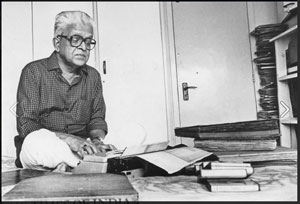
    Mohan Nadkarni, one of India’s most well known Hindustani musicologists and perhaps the most published author on the subject, passed away yesterday (Tuesday, July 22) in Auckland, New Zealand. He was 91.

     

    Mr Nadkarni was the music critic of The Times of India for over 50 years, having reviewed thousands of concerts between 1948 and 2000. He was also a columnist with mid-day in the 1990s. He has authored over 4000 articles mostly on Hindustani music, but also on Marathi and Sanskrit theatre and other cultural topics in leading publications all over India and abroad. He has had the rare privilege of reviewing the earliest concert performances of such legendary musicians as Pandit Ravi Shankar, Ali Akbar Khan, Fazal Qureshi’s father Ustad Alla Rakha and brother Zakir – and Fazal himself, besides several others, too numerous to mention here.


    In those years, he also consulted with recording companies like HMV helping produce the early LP records of many of these artistes in terms of repertoire and promotional notes that appear on the record covers. In the process, he developed lifelong friendships with musical luminaries of three generations and had fond memories of his discussions, arguments and the rare camaraderie he shared with them at different times in their successful careers. He has touched upon many of those experiences in the eight major books on Hindustani music that he authored, including the bestselling biography of Pandit Bhimsen Joshi that continues to be a fast seller on Amazon.com and which has been translated into several Indian languages.


    Mr Nadkarni has won several awards including the Karnataka State Government’s Kalashree award for lifetime’s contribution to music and the Shreshtha Sangeet Sadhak Award from the prestigious Bhatkhande Institute, again, for lifetime achievement. He is a permanent member of the Sangeet Research Academy, Kolkata, which continues to produce such talented artistes as Ustad Rashid Khan. He has lectured and held workshops on Hindustani music in several cities in India as well as in Switzerland, the Netherlands and the United Kingdom among other countries. He addressed the World Music Forum in Rotterdam in the Netherlands in 1995.


    Mr Nadkarni moved to New Zealand eight years ago to live with his only son and before migrating donated his entire musical library comprising thousands of articles and rare photographs, about 1200 rare LP and 78RPM records and thousands of cassettes to the music department of the SNDT University in Pune, where a musical library has been set up in his name.


    Mr Nadkarni would have turned 92 on September 22. Is survived by his lifelong collaborator, his wife Suniti, who assisted him with every piece of his writing by typing the manuscripts in real time while he dictated, his son Dev and his family.


    RIP, Mohan Nadkarni


    Photographs: Courtesy Dev Nadkarni


  • Taproot launches second phase of TOI campaign on farmer suicides

    By A Correspondent


    Taproot India has released the second part of the farmer suicides campaign it has created for The Times of India.  The awareness campaign began in April last year with an exhibition, traffic to which was driven by a print and outdoor campaign. As part of that communication, 12 portraits of dead farmers were created using dry, burnt hay. These portraits were displayed and auctioned and the proceeds from each portrait were given to the families of the deceased.


    “The objective of this campaign is to raise awareness of this issue so that steps are taken to support the farmers. In addition the campaign will also attempt to provide an alternative source of income  to the farmers families that have been affected,” said Rahul Kansal, Executive Director, Bennett, Coleman & Co Ltd, the publishers of The Times of India.


    Rahul Kansal

    Given the response to the initial phase, the second phase of the campaign was launched a few days back a two-minute TVC, which is also a part of a digital campaign that got implemented around the same time. Webchutney is the digital agency. Along with the television message, hoardings have been planned in different cities, starting with Mumbai. Followed by a print campaign and a second round of exhibition planned at Feb end in Nagpur, The whole agenda of the campaign is to have more and more people wake up to the issue and generate sufficient funds for the hugely affected farmer community, notes a communiqué.


    Santosh Padhi

    “One Indian farmer committing suicide every 30 minutes is indeed a shocking piece of news. Our attempt is to make people realise the seriousness of the issue and request people to donate or spread the message. The more we spread the message the higher our chances of saving a few lives,” said Santosh Padhi, Chief Creative Officer and Co-founder, Taproot India.


    All proceeds go towards helping the community learn alternative means of livelihood and to support the families of the bereaved. The initiative has been carried out with support from Samaj Sevak Charitable Trust, an NGO working for the same cause, thereby ensuring the funds reach those rightfully in need. The initiative has also gained support from the National Bank for Agriculture and Rural Development to ensure effective implementation of all its programmes.


    “India’s economic strength comes from the farmers and all that they produce. Close to 60 percent of people are still directly or indirectly dependent on agriculture. For centuries, the entire nation has been heavily reliant on the farmers. So it’s only right that now when they are suffering, we try and do everything from donations to awareness programs to ease their pain and put an end to their sufferings,” said Vivek Khilare, Secretary and Divisional Head, Samaj Sevak Trust, Mumbai


  • Ranjona Banerji: So why did Times make a front-page statement?

    By Ranjona Banerji


    Truth is, we have no political masters, nor do we have any hidden agenda. The only side we take is that of our readers.”

    So what compels a newspaper to make this statement, especially one that declares it is “the world’s largest circulated English newspaper”?

    The Times of India’s edition of January 23, 2014 carried this on the front page. The rather thin (leading to some very ugly hyphenation) single column headlined “To Our Readers” was a declaration that although the newspaper had been accused of first supporting and then turning against the newly formed Aam Aadmi Party, in fact it is for no one and against no one and will support whoever does the “right thing”.

    The newspaper also pointed out its philosophy, such as it is, which includes belief in “the primacy of the individual over the state, and that democracy in its truest sense is the power of one. We believe in personal liberty and in freedom of choice.” There is more in the same vein.

    As to why TOI decided to make this announcement is unclear, except for the allegations that it had switched horses mid-stream regarding the Aam Aadmi Party. But so what? As it itself declares, it has been accused supporting one or the political party in the past and has not bothered to make any front page announcements. Is it because the AAP is the new party of the middle classes, which is TOI’s core readership? Or has someone inside Bennett Coleman suddenly developed a very thin skin?

    The worst that The Times of India has been accused of is not patronage of a political party. The worst has to do with money: the introduction of Medianet where news items are sold for a hefty price and for private treaties, where certain business houses and entities can ensure good coverage for themselves.

    Obviously, there were no mentions of either in this intriguing, and if one may point out, clumsily written and punctuated, front-page editorial declaration.

    **

    However, it is also true that the media seems to be getting polarised politically in a manner last seen during the BJP’s Ram Janmabhoomi movement of the late 1980s. Journals and journalists both declared themselves to be pro-BJP and Hindutva, with an emphasis on a preference for economic reform as well as religious majoritarism. Much of this media anger was also against Congress hegemony and also showed itself in massive support for VP Singh’s breakaway movement.

    Since then, the media has been seen as supporting one or the other political direction although very often the accusations are quite wild. Right now the Indian media is clearly heading towards the Right – except for the gauntlet thrown down by the Aam Aadmi Party and its particular brand of agitation politics. And perhaps that is where TOI’s confusion begins.

    **

    The biggest current problem for the Indian media and television in particular is that it cannot see beyond Delhi. If the Gujarat chief minister was the front page hero for almost six months, he has been ousted by Arvind Kejriwal. Much as the AAP and Kejriwal have changed the game, they are certainly not the only stories in India. Yet day after day we are subjected to a series of Delhi-centric stories.

    Part of the problem is that Delhi has become the epicentre of journalism in India. As a result, once strong regional media entities have been forced to pay extra attention to the national capital. Most TV channels are headquartered in Delhi – Times Now being the notable exception amongst the top English channels. And our star TV anchors cannot see beyond their neighbourhood. Who knows what has been happening in India and the world over the past couple of weeks. All we know is that Sunanda Pushkar thought her husband was having an affair and then may or may not have killed herself and that Arvind Kejriwal slept on the streets next to his car for a few night until he was sent some hot paranthas.


    Ranjona Banerji is a senior journalist and Contributing Editor, MxMIndia. The views expressed here are her own. Ranjona Banerji can be reached at @ranjona

  • Reviewing the Reviews: Critics praise quality & performances in Ram-Leela, pan over-the-topness

    By Deepa Gaholot


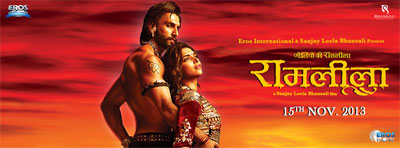
    Goliyon Ki Rasleela Ram-Leela

    Director: Sanjay Leela Bhansali

    Starring: Ranveer Singh, Deepika Padukone, Krishna Singh Bisht, others


    This is a rare film that gets crazily mixed reviews from 1 star by rediff.com to 5 stars by Times of India and every combination in between.


    Most critics praised the visual quality and performances, but also panned the excessive ‘over-the-topness’ of everything.


    Raja Sen of rediff.com ripped it apart, calling in an over-plotted bloody mess. “Goliyon Ki Rasleela Ram-Leela — an acronym of which unfailingly reminds me of Greater Kailash Residential associations — is a monstrously excessive film with a riot of colours, a girl who looks very pretty indeed and a daft hero, but despite that being the warning on the tin whenever you attempt (foolhardily) to buy into a Bhansali product, this can’t be what you bargained for. GKRR is an overplotted, bloody mess.”


    Meena Iyer’s review didn’t match its 5 star rave. “What new can a filmmaker do with William Shakespeare’s classic love story Romeo and Juliet? The answer is, if you are Sanjay Leela Bhansali, who is technically sound and artistically astute as far as art and craft go, you just become impudent, set the story in Gujarat, sign Bollywood’s currently best actress Deepika Padukone (Leela), team her up with `I’ve-got-fire-in-my-loins’ actor Ranveer Singh (Ram) and then let them loose on one another.”


    Rajeev Masand of CNN-IBN was mostly rave. “Bhansali brings all his tropes to the table – unabashed melodrama, stunning visuals, elaborately choreographed dance numbers. Yet, it’s the firecracker chemistry between his leads, and the genuine feeling he infuses into the film that separates Ram Leela from previously disappointing outings, particularly Saawariya and Guzaarish, that were weighed down by shameless manipulation and pretentious, heavy-handed filmmaking.”


    Shubhra Gupta of Indian Express was mostly rant “Bhansali’s ‘Ram-Leela’ is mounted as pure spectacle, no surprises there, because that is his style. The setting is the Rann, in Gujarat. The warring clans, the Gujju versions of the Montagues and Capulets, are attired in costumes where not one thread is out of place. Each scene is meticulously designed: the desert, the havelis, the swirling ghagras, the spurting of the blood. It gets to the point where you start feeling breathless, and that is exactly what Bhansali intends, for you to get encircled by his universe. And in that he succeeds. I was swept up by the way he builds up the love story, between Ram (Ranveer Singh) and Leela (Deepika Padukone). Where he fails– his old failing– is in the insistence on every little thing being perfectly choreographed: a messy love story requires messy emotions, and Bhansali doesn’t ever let his gorgeous Leela’s tears streak down her cheeks. No leaky nose, no hiccups, just back-lit loveliness, which becomes too perfect to be real.”


    Sudhish Kamath of The Hindu wrote, “Bhansali has figured out that he does not need to look far West for inspiration. Okay, it might have loosely borrowed a few things from Shakespeare’s Romeo and Juliet but diegetically, it’s Indian in form.


    So yes, the havelis from Hum Dil De Chuke Sanam are back. So are the chandeliers from Devdas and the folksy refrains from the former. In fact, the backdrop is not only picture perfect, the production design is so rich that you can rarely tell where location ends and set design begins. This is home turf and Bhansali knows the world in and out. While he has always had an eye for aesthetics and sensual shot taking, the director had also kept it contained. In Goliyon Ki Raasleela Ram-Leela, he lets it loose. This is certainly his most uninhibited film with raw sexual energy and explosive chemistry between the two of the best looking people in the country.”


    Saibal Chatterjee of NDTV.com was scathing. “The film doles out super large helpings of everything under its grandiose narrative canopy – be it the oft-repeated story of star-crossed lovers, the garish sets, the musical score, the choreography, the costumes, the pitch of the acting, the delineation of the principal characters or the saturated colour palette. Even on the rare occasion where he gives minimalism an attempted shot, as when he lets the characters articulate themselves only through physical gestures and facial expressions, SLB does not pipe down one bit. He goes for broke every which way. It all adds up to a somewhat disorienting sensory assault mounted by a filmmaker who believes that excess makes excellent sense. Goliyon ki Raasleela Ram-Leela is composed of such a riot of colours that the hues often bleed into each other, leaving behind blobs and blurs. ”


    Finally, seeing it from the point of view of an outsider, unaffected by the hype. David Chute of Variety summed it up well. “”Ram-Leela,” a gorgeous, boisterous, ultimately ineffective new Bollywood adaptation of “Romeo and Juliet,” does accomplish one thing that is quite unusual: it manages to keep you in suspense about the outcome almost to the last frame. Not a bad trick for a re-telling of one of the most familiar narratives in world literature. In fact, this points to a central weakness of writer-director Sanjay Leela Bhansali’s film, which for much of its length is such a brightly-colored song-and-dance entertainment that auds may wonder if it’s working towards a revised, happy Bollywood ending. (Some may even hope as much, as the movie doesn’t seem serious enough to merit a tragic one).”


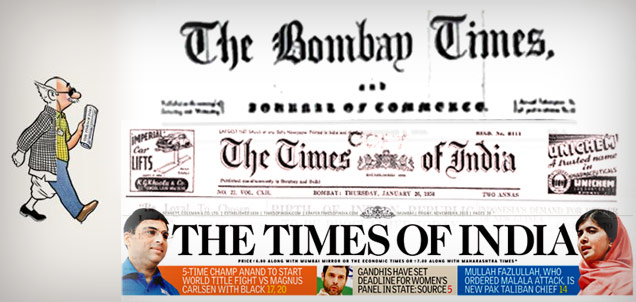
  • Happy 175th, The Times of India


    By Pradyuman Maheshwari


    I am often accused of being obsessed about The Times of India. That the previous, blog-only avatars of Mediaah!  (2001-03, 2004-05) would only dwell on the affairs of Bennett, Coleman & Company.


    Times @ 175


    CVL Srinivas | What makes TOI a formidable brand


    Sangita P Menon Malhan | Rediscovering… The Times of India


    Sidharth Bhatia | Times have changed, so has the Times


    Ranjona Banerji | Times@175: The Good, The Bad & The Ugly


    Shailesh Kapoor | BCCL 2.0: The Integrated Media Organization


    That’s not right. The Times of India only threatened to take me to court, yet another (leading, if I may add) daily actually did that. The matter was settled later via respective lawyers, and hence I wouldn’t like to name the media group.


    There were many other news media entities I’ve written not-so-nice things about. And continue to do so. And even if I don’t write them myself, some of our columnists do that on MxMIndia. There is no malice whatsoever. We may nail Channel X one day and gush about it on another.


    There are people who ask me why I single out BCCL for paid content, when scores of others  do the same. Yes, I agree, and I don’t do that any longer since TOI isn’t the only national daily doing charging for content in the open. In fact it pains me to see Hindustan Times and Mid-Day, two newspapers which wrote a fair bit about BCCL’s regressive act and I admire much, also succumbing to the lures of paid content. Both papers carry disclaimers as do Times of India’s supplements, but that’s not good enough.


    It’s got to have the conviction of this other newspaper’s publisher who has issued a diktat to his editors to not mask names of  hotels , restaurants and brands… not over his dead body!


    However, even though I hate the group for Medianet, I admire The Times of India a great deal. Since 2005, the year when Hindustan Times and DNA entered Mumbai, TOI has leapfrogged in editorial quality. No other news organisation spends as much energy, effort and dosh on its media products.


    My big peeve with BCCL is that it has squandered the opportunity with the web avatar of the newspaper. Sadly most newspaper managements don’t have their web act together.


    So is The Times of India our country’s #1 Newspaper? Yes, it is better than the others. It’s a better-produced, better-marketed, better-distributed and better-sold paper. However, in many ways, it stands for many of the ills that afflict our news media. Paid content, diminishing value to human capital and a desire to achieve revenues at any cost.


    I understand many top executives of The Times of India agree that Medianet should be dispensed with even though it earns the company revenues of Rs 100-150 crore. But they are too scared to tell the bosses that.


    Heck, this is celebration time. The MxMIndia special package is not to damn the Times, but to celebrate the birthday of the country’s biggest media brand.


    Here’s to The Times of India at 175. Happy 175th.  (Hey guys, just axe Medianet, will you? 🙂 )


  • Tracking the rise & rise of the Times: Q&A with author


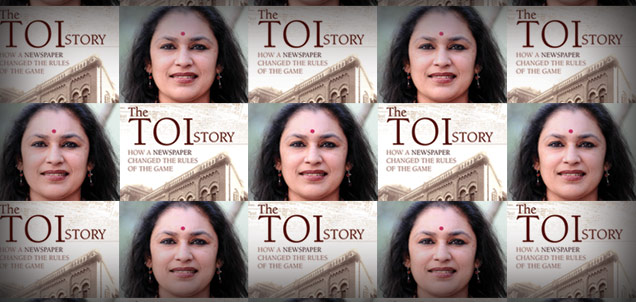
    Delhi-based Sangita P Menon Malhan was trained to be a pilot, but started flying high once she turned a full-time journalist and later got into creative writing. She has worked with The Statesman, Delhi Mid-day and The Times of India and published a book for short stories for children – Rastapherian’s Tales and a collection of poems in Urdu – Nusrat-e-Gham. The TOI Story has been in the works for 13 years, in fact as she told us, she almost gave up writing the book and then picked up the threads yet again to finally see it happen.


    Before you read this interview of Ms Menon Malhan with Pradyuman Maheshwari of MxMIndia, we suggest you read the extract at http://www.mxmindia.com/2013/09/the-toi-story-inside-the-mind-of-samir-jain/


    Would you say the Pritish Nandy quote on the back cover – “Commercially, Samir Jain was the best thing that could have happened to The Times of India. But he destroyed an institution and made it a great big factory” – possibly sums up your book best?

    Absolutely, although the factory seems to be doing a great job as far as net net results are concerned. His was the most explosive of the hundred-odd interviews. He was candid and voluble, and said several things that have not made it to book. His views, in spite of this quote, were pragmatic and honest. He spoke about what worked at The Times, and what did not, which really forms the core of the Bennett, Coleman success story. Decisions are taken based on their projected returns; dispassionately, even ruthlessly; and anything or anyone that comes in the way, is ‘allowed to’ fade out.


    It’s good to see several leading lights going on record. Any one who refused to do so (other than Samir and Vineet Jain) or who spoke and then asked for anonymity?

    Well. If I reveal those names, won’t I have ‘revealed’ it all! J Yes. There are a few who requested/ suggested anonymity. They shall stay ‘Deep Throats’until someone digs up their identity.


    You’ve worked with The Times of India for some years. Do you find many other newspaper groups are now emulating the Times way of doing things? Or should one say the times are such?

    That is undeniably true. Rivals and competitors of the Times began emulating it way back as the early 1990s when they realized that these moves worked. The pricing game, the focus on the citizen rather than the State, the added elements – supplements, religious nooks and corners, the pizzaz and glamour, the focus on profitability… have all been almost directly taken down from The Times’ model for growth and expansion; and for domination. We do live in an age of economics, as we always have. Today, however, there is greater acceptability for the term wealth generation. It is a legitimate pursuit. Like a Salvador Dali painting….you may or may not like it but you will certainly not be able to ignore it. That said, there is yet scope for ethical business.


    Your book and many previous accounts of The Times of India are centered around Samir Jain. Interestingly, it was he who demolished the indispensability of any individual in the team. But his stature (and that of his brother) has indeed grown. So is Times in effect also what we disparagingly call (many Indian managements) a lala company? Or are business and editorial biggies suitably empowered?

    The interesting thing about success stories is that irrespective of how many people or ideas form a team, it is the vision that matters. And, Samir Jain did have a plan, a purpose. He ensured that he had some of the best minds in the country around him so that he could hear them, assimilate what they had to offer and prod on. But the targets were ‘his’. And that makes all the difference. The greatest of leaders have used their armies to get to their destinations. To that extent, they are not redundant. It is the input that is king.


    Samir Jain is a man of enormous contradictions. Despite the aura around him, I do believe it is his squad/ battalion that keeps churning up ideas. I don’t subscribe to the view that Bennett, Coleman is a lala outfit. ‘If you have an idea that will work to benefit the overall aims of the company, you will be empowered at The Times Group’ is what I heard during the research. But you do have to align yourself with the reigning philosophy of the organization. And, I was told that high quality debates and differences of opinion are welcomed.


    He was among the first media barons to hire professionals from FMCG majors to bring in a certain rigour?

    He did that with a vengeance. I remember Satish Mehta telling me how enthusiastic Samir Jain was about having people from the ‘dark side’ around him. These were men and women who brought in a perspective that may have been alien to the editorial cadre at the organization during those tumultuous years in the mid to late 1980s and during the early 1990s.


    Once you’ve decided who are going to be, the strategies do fall into place. Therefore, since you – the newspapers – are a product, how can the ‘old’ shoe… fit!


    The next generation of the family is steadily taking charge? Would you see The Times of India change 30-40 years from now, when the Jain brothers relinquish charge?

    Don’t we all want to know the answer to this question! I’m not too sure if the next generation is adequately excited about this business. I have no evidence to prove what I just said, either. These are things I’ve heard. One can be certain though that a lot of thought is currently being put in at the organization to take on the future. There is no other option.


    I believe change is upon The Times of India already. With the combined pressures and challenges of the medium, the threat from the digital tsunami, the fast-changing needs of the new generation, the power of technology and shrinking revenues from the current streams, the model will have to change. Everything is infotainment-led. Easy access matters. Newspapers may need to change their ‘delivery’ methods.


    Your book mostly interviews and speaks to a lot of people in Delhi and is based on the time when the brothers – Samir and Vineet – took charge. An equally interesting period of the group was before when the editors were gods and Mumbai was where the action was?

    Indeed that was a great period. One can only imagine how power and glory rested elsewhere during those years both in terms of location and with respect to the ‘gods’ who enjoyed them. As a person, I’m fascinated with stories of victory. And, the more troubled and tortured, the better. I was naturally attracted to this tale and kept my focus here. I had heard enough of the ‘golden’ age from my father, who was also a journalist. Besides, the challenge was to unravel this piece, more so because it was reportedly (pun intended) impossible.


    As someone who has studied the group and now chronicled it, what do you think is driving the success of the Times: the business or editorial department?

    Like in the Mahabharata/ the Bhagwad Gita, it is the clear combination of both. I fight to win. That is my value system. I shall stand by it. It is clichéd to accept that the reorientation of the business ‘approach’ worked for The Times. Yet, the focus on the ‘product’ was equally sharp. You can have a great product launch based on claims and hype but if you cannot sustain that… with a genuinely strong product, how far can you go! The editorial department may have had to ‘suffer’ the change more than its marketing/advertising counterpart. But it had to be ‘converted’.


    You took 13 years over the book. Do you find the group has changed in this period? If yes: Anything specific…

    I find that most people who matter in the organization have ‘come around’. I still get a lot of unprintable stories, off-the-record, but there is a general ‘acceptance’ of the norm. Even journalists speak the language of the organization now. They seem quite convinced. The fusion has taken place. The two sides are one, at least for the record. Sitting at a coffee shop, far away from the headquarters, however, some skeletons do tend to tumble out. But appearances are kept up. It is all very well.


    Any reactions from Times House to the book? Or from the Jains? Do you think you’ll still get invited to write for the Times?

    Nothing yet. I did send Mr Jain a copy of the book with a handwritten note. I remember writing to him toward the end of 2000, informing him that I was planning to work on such a book. ‘This is a leadership study. And, it must not be halted,’ I had mentioned. It is creditable that the study was never halted. I walked into Times House so very often and interviewed so many people there. The brand managers at Times House were extremely helpful and courteous with even the most disturbing questions. That, and much else, couldn’t have happened without an ‘all-clear’ from ‘above’. My target was to write the book. How The Times reacts to it is its outlook. It is sheer serendipity that this book has somehow decided to come alive in this the 175th year of the newspaper. It has been written for the consumer of news and information in this country. And, I hope it has a great journey.


    The TOI Story

    (How a newspaper changed the rules of the game)

    By Sangita P Menon Malhan

    HarperCollins Publishers India

    Cover price: Rs 350*

    Paperback, 261 pages

    (check amazon.in, flipkart.com for a lower price)


  • Guest Column: Newspaper archives would be morgues if news would die

    By Anita Pujari


    It was my first day at work at the nation’s biggest newspaper house. I could hardly suppress my eagerness to see the famed old lady who had set sail in 1838 and had meandered into homes and lives across the country like no one else had. I expected to find the historic first issue befittingly holding pride of place in the Archives, probably in a temperature-controlled vault, safe and secure from man and nature.

     

    I was stunned to find that no one knew where it was and no one particularly cared. It was going to be six months of playing Sherlock before I prised out from beneath mounds of newspaper bound volumes, this solid paper box, boxes in fact with those priceless original copies of what everyone knows as The Times of India the name which came about much later in 1861. At birth on November 3, 1838 the name was The Bombay Times & Journal of Commerce. The bi-weekly at Rs 30 per year turned daily in 1850. The history of the newspaper is what legends are made of and one could safely say that ensconced in the pages of this longest running chronicle lies the history of India.


    Did I say history of India? I’ll add a rider – not chronicled always as it really happened. I will never forget the week spent going through the TOI of April 14, 1919 to a few days beyond. The issues had been preserved on microfilm and it was easy to roll from page to page, enlarging the tiny text and looking for Jalianwalla Bagh massacre (April 13, 1919) for a visiting researcher who had not found it. How could there be no coverage of the incident? We found it eventually – less than 100 words, lost amongst the other national news, saying there had been an incident of rioting in a public garden in Amritsar (!).


    In talking about newspaper libraries, one often comes up against the metaphor of the “newspaper morgue.”  I have often wondered on this choice of word and who or what led to its global usage. Was it apathy or lack of vision or perhaps both? As I see it, newspaper archives must have existed since the newspaper itself. Unless an effort was made to save a copy and put it into safe custody (the erstwhile morgue), the day’s edition would have been truly a ‘has been’ like its ephemeral nature.  This effort by publishing houses the world over to build and maintain an archive of what is said to be “a chronicle of the times we live in” has ensured that the history and socio-political-economic development of people, thoughts, events, and nations did not get lost. This primary information rarely if ever gets into books that one could easily buy or borrow. If not collated and preserved, the news happenings around the world would be lost for good.


    Several nations have their National Library as the depository (compulsory deposit of every issue of newspaper, book published) and the archive (ensuring preservation and access) of what is considered the nation’s heritage. Where nations failed, newspaper publishers have stepped in to preserve and share their news archives. The British Library’s newspaper collection comprises 52,000 titles from all over the world, dating back to the 16th century and is housed on nearly 50,000 km of shelving.  The National Library of Australia has a collaborative programme named Australian Newspapers Digitization Program (ANDP) digitising historic Australian newspapers published between 1803 and 1954 and making them available online. It uses Web 2.0 technology and is truly innovative and unique as it allows users to interact, contribute and add value to the newspaper content – tag, add comments and correct the electronic translated text


    Storage and access of newspaper archives has been a problem with every collection which was partly addressed by preserving on microfilm – high on long term integrity but low on search and retrieval, and in recent times as Digital Archives – high on ease of retrieval and dissemination but plagued with technology obsolescence issues. A mix is ideal if you have the budget.


    Having handled print, microfilm and digital archives, I can say that news research is medium-agnostic and has much to do with the archivist’s research skills and passion to find answers. Every newspaper house that has a Library/Archive would have a recollection of a person/s who made that difference and added that value to the business of newspaper production. Mr Roy of Anand Bazaar Patrika, Ram Kolhatkar of The Times of India archives, and many others that scribes would remember.


    News clippings, the most important source of reference and research in a news library at one time has been replaced now by Digital Archives, but the key to search and retrieval is still the indexing or in digital parlance – metadata. Else it will be as exhausting as Google. I often joke with my editorial colleagues that Google is not just exhaustive but exhausting – whether you admit it or not you rarely go beyond five pages of results and that’s when you are the diligent kind. What gets served therein rarely gets checked on authenticity let alone authoritativeness. How many bother about corroboration. Wikipedia has become the first and last stop for research, oblivious to its basic tenet of freely editable information. This makes it all the more critical for a newspaper house to develop and maintain its own authoritative and wholesome Archive and professional researchers.


    A newspaper archive is an important repository of the history of the paper’s interaction with its community. It is also a reflection of the changing mores of the community and society as a whole. I have seen research studies on umpteen anthropological issues get addressed from the archives of newspapers. Say the matrimonial columns over the decades – terrific insights on values, religion-caste, education, aspirations. Interesting study when ads by parents started getting replaced by ads by the groom/bride and how tone and tenor of expectations changed.


    Advertisements – the ever-changing creative sphere of communication between seller and buyer. Tracing back advertisements by say HLL, LIC, the colas or film releases through newspaper archives is like looking into a treasure trove and coming up trumps. You would be surprised to know that in the newspapers of yore, the front page was fully advertisements. Anything from a hat to a horse carriage found ad space. The creatives make for delightful reading of commerce in the 1800s and 1900s.


    I remember a particularly impressive exhibition held by the Delhi Public Library to celebrate their 60th anniversary in 2010. They called it – The Newseum – a unique display of their newspaper archives, presenting a visual history of Hindi & English newspaper advertisements since 1951 as well as memorable photographs, cartoons, articles giving a telling insight on those decades.


    At a conference held in February 2013 by the Association of Media Libraries and Archives (AMLA), a young research student of JNU Library shared his work on creating an Archive of Indian Newspaper Cartoons as a resource-base for socio-political economic research.


    So are archives and archivists important in the media industry? Yes, of course, and more so in the days of unauthenticated internet content and with the advent of a Digital Archives Management System (DAMS). Add to that the instantaneous needs of 24×7 news delivery and new media. Morgue? It is time for a new metaphor, perhaps.


    Anita Pujari was until recently Vice-President, Research Archives & Syndication at DNA and Head- Archives and Syndication of the Zee News cluster. She was head of the archives at The Times of India group


  • Taproot leads India with twin golds


    By A Correspondent


    Agnello Dias
    Agnello Dias
    Santosh Padhi

    When Agnello Dias and Santosh Padhi set up Taproot not many moons ago, one of their first benefactors was The Times of India. With reason. Aggie, as the Chief Creative Officer and Co-founder of the agency is better known as, had won his former agency JWT a Grand Prix in Direct at Cannes in 2008. The client in question was The Times of India.


    For, Aggie and Paddy (Santosh Padhi’s aka) have done some splendid work for the media group ever since.


    Rahul Kansal

    “The Times Group brand has an old legacy and is considered a great brand but I think with their association, Aggie and Paddy have managed to create a new buzz around the brand,” said Rahul Kansal, Executive President of Bennett Coleman and Company Limited. Talking of the duo the day the news that Dentsu had acquired stake in the agency, Mr Kansal told MxMIndia: “Aggie I would say is amongst the most versatile thinkers. He assesses the brand, market and consumer needs and comes out with a specific solution that will address the issue. Paddy then complements by giving the most appropriate treatment to the concept and that probably is their winning formula.” (Read full account at: Rahul Kansal: No shortcuts with Taproot).


    On Wednesday, even as Indian agencies had won a silver and 3 bronze metals in the PR and Direct categories, all eyes were on Outdoor where 43 Indian entries were shortlisted. Yes, there was Media too, but there were just two shortlists.


    While Media saw a blank for Indian entries, in Outdoor, there were as many as five metals, including two golds.


    Leading India in the metals foray this year is Taproot with two golds in Outdoor. Both are for The Times of India’s Farmer Suicides campaign. From amongst the numerous congratulatory messages he received on his Facebook profile, there was one from a senior creative: “To hear the word congratulations, must be so cliche for you. Boss how do you do it year after year!!!”


    The two golds are in the ‘Fundraising, Charities, Appeals, Non-Profit Organisations, Public Health & Safety, Public Awareness Messages’ and ‘Illustration’ sub-categories.  Meanwhile, Grey won two Bronze Lions for DHL and Duracell and O&M won its Bronze Lion for Philips Electronics.


    With this, India’s total tally of metals at Cannes Lions 2013 is 9: 3 in PR, 1 in Direct and 5 in Outdoor.


    But there are many shortlists in Press and Design. And the glamour part of the Lions – films, integrated are still to happen. The Cyber, Design, Press and Radio Lions will be awarded today (June 19) and Branded Content & Entertainment, Film, Film Craft and the Titanium and Integrated Lions will be presented on Saturday (June 22).


    Going past last year’s tally of 14 now appears easy, but will we cross the 2009 high of 25? We’ll know for sure before the week ends.


  • Tendulkar, Bindra launch ‘Sporting Times’

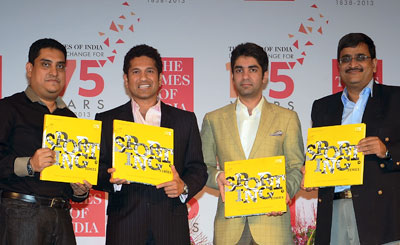
    Sporting Times launched by Sachin Tendulkar, Abhinav Bindra along with Boria Majumdar and Shrijeet Mishra- COO Times Group

    As part of The Times of India’s 175 years’ celebration, seven books highlighting the best from the last 175 years are being launched. The first of this titled ‘Sporting Times’ and compiled by Boria Majumdar was launched by Sachin Tendulkar, Abhinav Bindra and Shrijeet Mishra, COO, BCCL.


    The book is an attempt to document the Indian sporting story through the lens of The Times of India. It talks of 175 events that have made headlines in the history of Indian sport (and in the paper) in the 1838-2013 period.


    Both Tendulkar and Bindra congratulated the newspaper on its 175th anniversary and participated in a Q&A with the media. And, no, there was no question asked on the current controversy raging Indian cricket.


  • [RECALL] Inside the Times 175 years’ celebrations


    It’s celebration times in Indian media as The Times of India completes 175 years of existence. The exercise was kicked off in right earnest last fortnight with much fanfare. We posed a few questions on the celebrations to Rahul Kansal, Executive President of BCCL. And since it was Mr Kansal who was giving us a low-down, we also spoken on branding issues and asked him for finer details… beyond what’s already carried in the announcements.

    A veteran adman (Deputy Managing, Leo Burnett – 2000-02; Exec Director, Mudra 1994-2000 and Exec Director, Ogilvy 1989-94), Mr Kansal has been with BCCL since 2007, initially as CMO and since last year as Exec President.


    Excerpts from an interaction of Mr Kansal with Pradyuman Maheshwari:


    Q. One still remembers the 150 years sesquicentennial celebrations of The Times of India. What can one expect from the 175 years’ celebration? We’ve been seeing a celebration in the paper in the form of culling the best of the last 175 years…. Could you share a few specifics?

    Well, we’ve started with celebrating India’s journey over the past 175 years, and of giving readers a glimpse of how we’ve helped lead the change in the country over this period. We’re doing daily editorial spreads mining the best material from our archives and presenting them in a contemporary context.


    We’re also doing seven books on various themes, covering the defining moments over the past 175 years in sports, cinema, society and politics. The books are being anchored by acclaimed journalists and authors like Bachi Karkaria, Jug Suraiya, Santosh Desai, Boria Majumdar, Sandipan Deb and others. The first, Sporting Times, authored by Boria is being launched on May 23 in Mumbai, by some of India’s sporting luminaries like Sachin, Abhinav Bindra and Mary Kom.


    In a few weeks from now we’ll get into the heart of the 175 years’ celebration: a powerful activation programme called ‘I Lead India’. Being launched on a scale bigger than any of our earlier such interventions, the programme is basically an exhortation to India’s youth to stop whining about all that’s going wrong in our society, and instead start doing something about it. It asks our youth to say: Enough of pointing fingers, of blaming the ‘system’, of wanting them to change. I must be the change I wish to see in the world. I (will) Lead India.


    ‘I Lead India’ will peak in early November. This will be followed by a round of celebrations covering 25-odd cities, including, hopefully, some marquee programmes in some of the larger cities.


    Q. It started on April 23…. Till when will it continue (given that the ‘birthday’ is in November).

    The ‘I Lead India’ programme will reach a crescendo on November 10 – the actual birth date. And then we’ll go into a month-and-a-half of celebrations (musical and other cultural events across various cities of India)


    Q. Other than the ads in TOI group publications, we see a Ranbir Kapoor TVC, hoardings across Mumbai . Could you share some details of what the playout is going to be? Any more TVCs being planned?

    For the 175 years’ celebration there are several print ads, the Ranbir Kapoor film, various radio and outdoor messages. Besides, we are developing seven books, some very interesting merchandise (t Shirts, mugs etc) and some other interactive ideas. There will also be a stamp from the Government of India.


    ‘I Lead India’ will have an extensive communication package including 3 TVCs and an intensive package of print, radio and outdoor advertising.


    Q. It was good to see a TOI 175 years’ celebration ad take the HT Delhi Page 1 solus (and HT granting that to TOI). Do we see similar ‘tie-ups’ elsewhere?

    HT and we always agree to take each others’ ads in our papers, so long as they are not directly competitive or denigrating the other’s brands


    Q. The sesquicentennial had in many ways seen The Times of India (the paper) take a quantum leap, turning into a modern-day newspaper publishing company. Do you wish the 175 years celebrations to help you achieve a similar transformation?

    In the past 25 years, the TOI has already become a very robust brand, at the cutting edge of technology and of modern journalistic and management practices. The 175 years’ celebration is more to dedicate ourselves to the future rather than wallow over the past. It will seek to further cement its position as ‘The Masthead of India’, and in particular, as the voice of young India.


    Q. The Times of India footprint (@150) has increased much in the last 25 years. Do we expect a nationwide celebration or restricted to the publishing centres?

    Well, our publishing centres are ‘nationwide’ now. We will have ‘I Lead India’ chapters as well as the subsequent celebrations in 26 centres around the country.


    Q. While at one level you will be obviously talking of the 175-year history and heritage and at the same time you want to portray an image of a young, dynamic, forward-looking newspaper… is there a problem doing that? How are you looking at achieving the best of both?

    To our mind, modernity and heritage must go hand in hand, if either of them is to be meaningful. A first-generation industrialist may be dismissed as nouveau riche; an aristocrat old patriarch as a bore. ‘Money’ needs ‘class’ to become a well-rounded whole; ‘success’ needs ‘breeding’. Neither is complete in itself.


    Our 175 years’ campaign looks ahead even more than it looks back. Our archival stories are presented with a contemporary context. Besides, the centrepiece of the programme ‘I Lead India’ is entirely forward-looking.


    Q. You are a brand specialist… if one were to build a brand personality for The Times of India brand, what would it be?

    a. Sachin Tendulkar: old (in sporting terms), yet young and agile
    b. Ranbir Kapoor: young, energetic, hardworking, flirtatious
    c. Virat Kohli: young, brash, aggressive, streetsmart, a wtf-attitude to life
    d. Any other


    – Sachin’s track record is unparalleled, but his age is taking him to the end of his illustrious career. The TOI will hopefully go on for another long, long time.

    – Virat is probably India’s brightest new cricketing star. But he still has some way to go to reach the stature of some of the greats that preceded him.


    Amongst the above three, Ranbir represents perhaps a more balanced mix of proven achievement, heritage and a promise that ‘the best is yet to come’. To that extent I’d say he represents the values of brand TOI a little more closely.


    Q. And lastly, some finer details:

    How many people from BCCL working on the 175 years project. How many full-time on this? And at what levels?

    The TOI Brand and Edit teams are anchoring the programme, but the whole company is actively involved. Each department is creating its own interventions and celebrations.


    We saw the print ad was crafted by Taproot. Any other agencies?

    Mainly Taproot. Shop (Freddy and Naved) will also do some bits later.


    Any agencies for activation/digital/social media/etc.

    Gopika Chowfla designs for our books, stamp and merchandise.


  • Ranjona Banerji: Not too late for TOI to correct practices

    By Ranjona Banerji


    Watching the fury of nature is an awe-inspiring and fascinating experience, thanks to non-stop coverage of Hurricane Sandy by CNN. The storm that has hit the eastern seaboard of the United States is not the first but the sheer scale of water and wind, the potential threat to life and property and the peculiar timing with the US presidential election makes it even more compelling.


    CNN is very good with weather and takes it very seriously. Plenty of information is provided to the viewer about the meteorological aspects of the weather systems with enough scientific mumbo-jumbo to make you feel like you’re on the sets of The Day After Tomorrow. While the coverage is going on however, CNN does not venture into the whys and the wherefores. It’s more about the what.


    This is because not all media are infected by the Indian disease of making everything into a discussion. The global warming argument – and it cannot be far away – can be dealt with later. Nor were there any touchy-feely interviews with those suffering the storm, where bemused people are hard-pressed to find the right answers. Undoubtedly all those will come later.
    A shout out to all the intrepid reporters, star anchors and citizen journalists on CNN. This is a cruel comparison but one cannot help but compare this coverage to an abiding Indian image in similar situations: NDTV’s star anchor and now very very senior editor Sreenivasan Jain standing under an umbrella at Mumbai’s Milan subway, talking about flooding in breathless tones. As any long-suffering Mumbaikar knows, Milan Subway is so much lower than road level that it will flood if you pour a bucket of water into it.


    **


    Battles within the media and with the media seem to be getting tougher and are heading to the courts. Salman Khurshid against Aroon Purie and the TV Today group, Naveen Jindal against Zee News and Zee Business, the Bennett Coleman group against Zee News and Zee Business, Zee hitting back as well… Bennett Coleman has objected to Zee editors being heard on tape telling Jindal that news pages in the Times of India and Economic Times were up for sale.N


    BCCL CEO Ravi Dhariwal’s defence of Medianet goes thus: “We will make no excuses for Medianet. It is an initiative with a different purpose. It is for our advertorial and promotional supplements. But as far as our newspapers go, there is nothing that is bought or sold. No respectable newspaper will do that.”


    This is a weak argument since Medianet is at the heart of the current debasement of the media and had been picked up by every other news organisation as a legitimisation of “paid” news. To now argue that some parts of the newspaper are sold to advertisers but masquerade as news for readers is mere semantics. It took Bennett Coleman a very long time to add the line “entertainment promotional feature” to its glamour supplements like Bombay Times and it is still not clear that all readers understand that this means that the news in these papers has been supplied by the so-called newsmakers for a fee and not collected by journalists.


    As a “responsible newspaper”, perhaps it is not too late for The Times of India to correct its earlier practices. In many ways, Times of India is India’s most complete newspaper and unfortunately, this includes being complete with the good as well as the bad.


    Ranjona Banerji is a senior journalist and commentator. She is also Contributing Editor, MxMIndia. The views expressed here are her own