Tag: Star India

  • Peter Mukerjea: GoodCo, BadCo & NewCo

    By Peter Mukerjea


    So it has finally happened. The break up of a mega corp. And it’s happening before our very eyes, and like global warming, it’s a sign of the times. In years to come, students at media schools in India and elsewhere in the world will be reading how the media landscape evolved and how new media slowly, but surely, took it’s place in society. The demise of print and eventually, television, along with the numerous obituaries on the subject will all be in the history books eventually. How media moguls like Rupert Murdoch and James Murdoch were literally pushed off their lofty perches and new names and faces like Mark and Sergei took their places will all be a chapter or two in reference books. The erosion of the powerful dominance of print media brands will be replaced by brand names like Google, Facebook, Instagram. This period in social history will be seen by students of media studies as part of a process of evolution and not much more.


    But for those of us who are seeing this unfold, it’s indeed an interesting and captivating phase.


    Speaking to friends and ex-colleagues in New York, LA and in London recently, it seems many of them are seeing this as the transitioning of one company which comprises of both GoodCo and BadCo to several NewCos. Many of them are also now wondering how many more NewCos will emerge from this, and how soon, but more importantly for them, who will run them. The share price of the company stock has always been a subject of conversation amongst those fortunate enough to get share options, and the fact that it has been static or of negative value for long periods of time has been a source of annoyance. But the fact that this announcement has caused a flutter of activity and raised the share price is seen by many to be a good thing for them personally, so they can now actually make some use of the stock options and realise some value. Most also believe that this value will increase more dramatically when the family gives up control but that could be like waiting for Godot.


    Let’s not forget that it’s the profits of today’s so called BadCo that  were used to acquire, build and grow the television businesses in the first place, which are now seen as today’s GoodCo. Like God made little green apples, surely there will come a day, very soon, given that the seed of thought has been planted, when these very television businesses at GoodCo will also be spun off into individual entities, driven by the same principles that are the cause for the split today – providing better shareholder value and value creation. But that’s the way the cookie crumbles.


    The company which is the largest revenue driver within GoodCo could well find a viable financial spreadsheet reason and which showcases a scenario where better shareholder value could be created if certain parts of their GoodCo were then hacked off and cut away into separate entities as they were losing money or were no longer beneficial to their shareholders.


    I do think that the possibility that billions of dollars of further investments into the UK and Europe being stopped and being diverted to the US is more of a veiled threat than reality, but the possibility that the Euro Zone and their currency itself may not survive for too long, will have financial planners everywhere crunching their numbers and hedging their bets in all sorts of different currencies, anyway. So for Rupert Murdoch to say this so plainly in a recent CNBC interview is not altogether surprising but is reminiscent of childhood cricket games, where if one could not get to bat then, they would pick stumps, bat and ball and go home so no one else could play either. Maybe some of those billions will head to India or Afghanistan or Pakistan, where there’s plenty of low hanging media fruit and bargains to be had for those with pockets of cash.


    In India though, the trend compared to the UK seems to be the reverse and where each of the various media segments – print, television, cable, radio, outdoor and new media are all growing – albeit in an unregulated and pressure cooker kind of environment. This has to be great news for those working in the industry, and the business case for setting up several GoodCo, BadCo and NewCos would be different but the ethos and principles would of course be the same.


    Maybe it’s time for the head of an Indian conglomerate to sail across to meet the boss of the media company that is now busy setting up GoodCo, BadCo, NewCo and  ‘make him an offer that he can’t refuse’ as they say in Mario Puzo’s The Godfather. Not that this is in any way connected to the words used by British MPs in the select committee set up to investigate the hacking scandal in the UK – when asking James Murdoch if he ever felt that he was running a mafia company or words to that effect? James Murdoch was, of course, most offended by that question and as expected, he refuted it completely.


    Nevertheless, maybe it’s time for an Indian company to do what Rupert did some decades ago when he moved out of Australia and bought papers in the UK, thus  creating a global media company. For an Indian company now to own a few internationally acclaimed newspaper titles around the world, then cut losses by injecting Indian cost control systems and management into them would create real shareholder value – rather like the brilliant way in which Tatas have done with the Tata Motors acquisition of Jaguar Land Rover which was a real BadCo and is now a true GoodCo.


    Maybe this is where the NewCo will come in.


  • Will switching to youth ent work for V?


    By Meghna Sharma


    Prem Kamath

    Launched 16 years ago as a music channel, Star India’s Channel V is now turning into a full-fledged youth entertainment channel. Starting July 1, V will stop airing music programmes in India and focus on fiction and non-fiction shows. The reason: “Over the last two years, there has been an explosion of ‘music only’ channels, but everyone’s playing identical playlists,” says Prem Kamath, executive vice-president and general manager at Channel V. “In order to grow as a channel and as a brand, it has always been critical to have an offering that is unique in our competitive space,” he adds on being quizzed on the decision.


    Many experts feel that it was bound to happen as more and more channels try to mould themselves to stay connected with what their target audience wants. But there many questions arise: could this mean the beginning of the end of music on TV? What is the future of music genre? Where is it headed?


    The beginning

    The scene for Indian music channels was set with the launch of MTV in the early 90s. Soon after, Channel V was launched in 1994, and since then there has been no looking back.


    The launch of these music channels also led to a boom in international as well as Indie pop culture. However, it was shortlived and Bollywood music took over, and the two channels, along with many other launched afterwards, started playing popular filmi songs. But over a period of time, these two channels moved beyond playing only music with shows like Roadies, Splitsvilla and Dare 2 Date.


    Hemant Kenkre

    According to music columnist Narendra Kusnur, somewhere down the line for these channels, music took a backseat: “I’m sure any channel would do thorough research while trying to change their gameplan. So, if a music channel shifting towards being a youth entertainment channel is proved beneficial – for viewership as well as revenue – then it wouldn’t harm them to take such a step.”


    He’s not alone in voicing this. Even Hemant Kenkre, a former music channel professional and a corporate and brand communications veteran, feels that channels are now branding themselves differently to reach out to their TG. He, however, does blame the availability of music on various platforms – radio, cellphones, laptops, iPods – as the reason for this shift. “Today, the youth is moving towards reality shows and they want it from the channels meant for them. As for music, they get their share of it from other mediums too.”


    Luke Kenny

    Former VJ, musician, actor and 9XO programming head Luke Kenny, on the other hand, feels that the channel (Channel V) decided to shift long back and has been moving slowly towards it, but there are still many who want music on television. “If music was dead on TV, then how would you explain other new music channels cropping up and doing well too?”


    He added: “Having said that, I do believe that with more channels showcasing Bollywood songs, music channels have lost their niche and have just became promotional channels. Therefore, if a channel decides to change colours, it might work. And you never know, Star India might come up with a new music channel called Music OK.”


    Industry talk

    If one takes a look at various channels, be it music or a GEC, they will find that, there is a great deal of music in some or the other. We have music trailers/songs aired across all channels. Award shows, too, have musical performances and talent shows like Saregama, Indian Idol, DID and even celeb dance show Jhalak Dikhla Jaa  are high on ratings.


    Mohit Joshi

    Therefore, according to media planners, the existence of specialised music channels is a difficult game. “Today, unfortunately for the masses in India, music equals to Bollywood. This is the challenge. This was not the case in the ’90s when there were a lot of private music albums that were launched -Silk Route et al, and the music channels were used for their amplification. So, there was something more than Bollywood, which is not the case today. In the current scenario, if music channels do not experiment with music or the content, then there is a fear that they will dilute their relevance over a period of time,” says Mohit Joshi, managing director, MPG India.


    Adds Carat Media India’s senior VP Himanka Das: “Channel V’s decision to discontinue music is a welcome change and would offer interesting opportunities to build engagement content with the youth, considering the very little content that is available to them in entertainment beyond music. Music as a genre gets 6-7 per cent share in the youth segment of viewers with Channel V contributing 24 per cent to this share amongst 20+ channels. Channel V vacating this space is someone else’s gain!”


    Punit Pandey

    Meanwhile, other music channels aren’t perturbed and are waiting to see how the channel is accepted in its new avatar. As per TAM (CS4+, All India market), there has been a consistent growth in the music genre. In 2007, the genre share of music channels was 2.02 per cent whereas in 2012 (till week 24) the share has grown to 3.62 per cent.


    Punit Pandey, senior VP and business head, 9X Media Group, agreed with Mr Das and added: “Music has, and will continue to, work on television. It is close to a Rs360-370 crore industry (in the HSM belt) and growing. More and more people are ‘watching’ music, so there is nothing to worry about for music channels at large.”


    Nikhil Gandhi

    Similarly, the view from UTV Bindass which started out as a Youth Entertainment Channel (YEC) and has been a pioneer in the segment is that though in the recent past music channels, especially MTV and Channel V, have started shifting focus from music to fictional and non-fictional shows, there is no reason for sleepless nights. “We have an advantage over other channels entering the YEC genre as we have already created a connect with the TG,” says Nikhil Gandhi, Disney UTV Executive Director – Youth Channels, Media Networks. And adds an alert: “So, I would like to tell other channels entering the YEC genre to work on their strategies well.”


    Apprehensive marketers?

    The change in positioning is due to the feeling that youngsters now have a strong spending power. And, hence, are targeted by various brands more than ever before. TV forms a core part of advertisement for these brands as youngsters also spend a lot of time in front of the television sets.


    Simeran Bhasin

    But what happens to youth brands if a channel changes its content strategy? According to the various marketing heads, the apprehensions will emerge if the channel isn’t clear about the shift and isn’t able to help a brand reach its TG.


    “If the TG of a brand matches that of the channel, it won’t matter if they decide to change over a period of time. However, if there is a shift in TG then a brand would think twice before advertising on that channel,” says Simeran Bhasin, head – Marketing and Retail, Fastrack.


    Harkirat Singh

    MTV’s latest show Sound Trippin was partnered by Woodland because the brand feels that youth oriented channels helps them reach their TG. However, the brand is clear that it get associated with channels or shows only if it feels there is a connect between the brand and the viewers. “Like any other brand, while media planning, the TG of a certain channel is important for us. We look for shows which are able to reach and connect with our TG. So, if a channel changes its content plan, we will want to go through their new strategy to figure out where do we figure and how it can benefit us,” says Harkirat Singh, MD, Woodland.


    Will the shift work?

    According to the industry professionals, the change in content plan by a channel is done after a lot of research and only time can decide if it will work in its favour or not. However, they believe that a channel should remain true to its philosophy because otherwise it will lose its identify as well.


    Samyak Chakrabarty

    Expanding on it, Samyak Chakrabarty, MD, Electronic Youth Media Group and Chief Youth Marketer, DDB Mudra Group believes that ‘youth’ is a very misunderstood word and youngsters cannot be defined in one category as all depends on the exposure and the background one comes from. “In their perception to become ‘youth’ channels, they are getting muddled up and don’t know where they are headed. Today, a youngster cannot associate MTV or Channel V with anything like they do for other brands. For instance, technology means iPad, connectivity means Blackberry etc. I think music channels should have remained with what they started as, instead of losing their identify to gain more TRPs. Such moves will only lead to their downfall, in the long term.”


    From being largely optimistic to one predicting a downfall, we received mixed reactions to the proposed change in Channel V’s identity. However, one thing is clear, no matter what Star India decides, there will be many who will wait to see what this mean for them and the genre, at large.


  • Creative agencies have allowed themselves to be dumbed down: Vikram Sakhuja


    By Anil Thakraney


    Vikram Sakhuja heads GroupM, India’s largest media buying conglomerate. In a long and animated discussion, the ace number cruncher shares with us insights from the Indian media industry. As well as his own organization’s approach to the various challenges staring at the media business.


    Fifty-year-old Sakhuja is an IIT/IIM grad, and he did a number of years in marketing before he shifted to the world of media in 2001, when he signed up as Managing Director of Mindshare Fulcrum. During our meet, I could see that the outspoken GroupM boss is extremely passionate about his work, and is someone who could get easily agitated over provocative questions. Thankfully, we had a smooth run. Guess it’s all thanks to Yoga which Sakhuja has recently taken up. 🙂


    You were a hard-core marketing man at one point. What prompted the switch to media?

    I believe in taking the career as it goes, and taking decisions at different points of time. Let me take you through my career graph to explain this. After IIM, Calcutta, I was pretty clear I wanted to get into the marketing side of things. So I joined P&G and did eight years there. When I joined them, Richardson Hindustan Limited (RHL) was becoming Procter & Gamble (P&G). So when I started out, the company had RHL values and very quickly the organization got Procterised.


    And you were not happy with that?

    I was happy with that, but Procter believed in the system of specialization. So the guy who gets into sales, stays in sales. The guy who gets into advertising, sticks to advertising. I was in research and they extended that to marketing services. I learnt a lot there, but later on I wanted to move to brand management and P&G wasn’t allowing me that. And I didn’t want my epitaph to read ‘Marketing Researcher’. So I moved to Coca-Cola which was more flexible in these areas. Out there I managed the entire brand portfolio. That worked very well for 5 years. I was reporting to Sanjeev Gupta in those days, and he was handling both, marketing and bottling. And later he went on to take up a bigger job. So they got Shripad (Nadkarni) to head marketing, and I felt my job would get undermined a little bit. And so I left to join Star TV.


    And you lasted there for just one year.

    It was a mistake. I call it jawaani ki bhool. Peter (Mukerjea) said they wanted to start a strategic marketing function there, and it would include marketing of the creative product as well as on-air marketing, which is where the bulk of the spending goes. But it didn’t pan out like that because the programming department had a territorial interest in the programming piece. So it became very clear to me this was going to be an off-air game, and that didn’t have too many legs. And I left Star without a job. Later, Ranjan Kapur introduced me to Andre Nair (this is year 2001) who was looking for people to start Mindshare in India. We had a drink and one thing led to another. I felt a little trepidation in the beginning because I perceived ad agencies to be a little unprofessional. But later I thought about it rationally and it made sense. And so here I am.


    There are large media shops under the GroupM umbrella. How do you manage to give personal attention to each one?

    I am running GroupM, I am not running Mindshare or Maxus. There are capable people running those. I am a management by objectives kind of a person. One aspect of my deliverable is Profit & Loss, there’s no getting away from it. I have told my guys we should get growth from our existing clients. We should have the source credibility to go to them and manage 100% of their marketing investments. That is the agenda I drive. Then, I have to create an eco system for technology, talent and on how to do things better. The scope of service has actually dumbed down, clients are paying peanuts and they are getting monkeys. So I go and tell my clients if they want the right kind of talent and want to get the value out of it, then this is how it works.


    I suppose you operate more as a coach than as a player.

    Do I meet clients? Yes, I do. Am I directly involved in the day to day plans? No, I am not. Unilever is our biggest client. So every year at least one or two deals I will sit in on. Also for other clients. I love to be there for the sheer passion of it.


    What is Sir Martin Sorrell’s brief to you?

    Martin is pretty hands-on in most of the businesses. I rely on him more for counsel. I whet my new plans with him. For example, I went to him with the idea of celeb endorsements. And he felt it wouldn’t work, but asked us to try it anyway. And it didn’t work. Then there was a time we were offered some sweat equity in the IPL Deccan Chargers team. I took it up to Martin and he didn’t think it was a good idea, because he didn’t know the nature of the animal. But he’s brilliant, he is one of the few guys who understands our business, he wants to get in deeper.


    What is your stand on the shift from the commission system to the fixed fee system for media agencies?

    I definitely support the fee system. Though I would prefer a balance of commission and fee. Because in a growing economy you win with commissions. But when spends are not looking good at all, as is the case this year, fee bails you out. In principle, however, I like the fee system.


    How are the clients reacting to it?

    The people who take their marketing seriously believe in the fee system in letter and spirit. The top notch companies like Unilever, Ford, Pepsi, etc, totally get this. I believe clients should pay us Cost + for service, and a factor of that for the value we are able to demonstrate.


    What qualities do you look for in a media buyer in today’s time?

    You must understand that in our organization we don’t just buy media. I would like to believe that our agencies are actually driving the marketing agenda, probably more than the creative agencies. Most of the creative agencies have allowed themselves to be dumbed down, most of them are only interpreting briefs in a TV commercial format. They are only driven by the tactical creative idea rather than a long term view of the brand. All these wonderful creative minds should spend a little time thinking brand stewardship. Out here, we want people who can think account planning and communications. People who can understand the brand, the consumer, and then have the ability to unlock all the media solutions. So the media person needs to understand content, activation, digital, conventional media, and then he has to see how all this comes together.


    Key challenges ahead for media agencies?

    The clichéd one of course is that the commissions we earn are not allowing us to invest in the best talent. But we have to all individually work ourselves, show value and then ask for stuff. The other challenge is in the digital space. The erstwhile DNA of the media companies excluded digital. I believe integrated media planning is the way to go. This is distinct from multimedia planning, which had the TV plan, print plan, radio plan, etc, all working in silos. But with the increasingly multi media environment, the key is integrated planning. And digital is allowing that seamlessness even more. We have embraced this some time back.


    And yet, the media buying business, after the unbundling, has got totally commoditized. Shashi Sinha said to me the media planner has become a zombie.

    I was the first guy to bring the AOR into the country. So you can blame me for the disintegration of the full service agency. (Laughs) I would say each of our agencies has its own planning way. Maxus has something called ‘Relationship Media’, MEC has got ‘Navigator’, and so on. Each of them talks the consumer journey. They talk much more about the communication challenge. I am actually finding the plans looking more different now than they were earlier. So I disagree with my dear friend Shashi Sinha. Maybe I am not cynical. The planner is alive and kicking. It’s in fact the most exciting time to be in the media because of the large amount of fragmentation and the large amount of media choices.


    You did a stint with television. Do you foresee threats to this medium in the near future?

    Yes. The problem with TV today is that it has become a media game of the value of the inventory. At the end of the day, there are only about four million commercial GRPs being broadcast every year at an all India level. And that’s growing at 2 or 3% per year. This is the market for TV eyeballs. So like it or not, you have to extract value out of this. Today, at last count, we have 500 or 600 channels, and it’s getting fragmented. If an Imagine TV dies, someone else will pick up ratings. And if someone else launches, there’s further fragmentation. So the problem is that the same money is chasing some eyeballs. Until the new ratings system comes up and there’s a tectonic shift, you are talking about a metastable equilibrium. Now if the value has to go up, either you have to deliver more reach, or you have to deliver some associated imagery or sponsorships or incremental value.


    When do you expect the shake-out to happen in television?

    We’ve been expecting a shake-out since 1996. I guess some people seem to be having deeper pockets. I am not a finance guy so I don’t know how it works. But I can’t imagine many of them are making money.


    Think the IPL is losing some of its sheen?

    No. The ratings this year were a tad higher than the last year. But for all practical purposes, have held on to last year’s levels. It has stabilized at about 5 rating points. In fact, this year was the best year primarily because of the games, which went down to the wire.


    And it’s a good investment for team owners?

    For them it’s going to be a slow burn. You have do it sensibly, like the KKR franchise does, and I think they make money. Whereas a large number of other people don’t make money. It’s about how you manage the entire franchise.


    There’s a perception that you guys are not passing on bulk rates you get from the media to your clients.

    We have something called the WPP Compliance. And we take it very, very seriously. So we are making sure that we do everything as per our contract with each client. In letter and spirit. We are definitely not holding back anything which is due to a client. We have a media owner invoice and it’s backed by an agency invoice. If the clients want to audit us, they are most welcome to do so. We are a global leader in this space doing global deals, we won’t mess around with something where there’s a breach of trust involved. We can’t afford that.


    Perhaps this was one of the reasons Reckitt Benckiser came up with the idea of agencies paying to pitch, and compensating them in case of a drop in ratings.

    They invited us to pitch and we asked them if they were being ridiculous. We turned them down. If somebody has an obscene point of view, I cannot subscribe to it.


    And yet, some agencies pitched for that account. Isn’t the industry united in these things?

    I thought we were united on that but obviously we weren’t. What do I say now?


    You’ve done many years in this business. Ever thought of starting out on your own?

    The thought has crossed my mind but I didn’t pursue it. I am not a very entrepreneurial guy. My philosophy is: Don’t fix it unless it’s broken.


    Does the lack of adequate talent in the media industry frustrate you? Is it a constant battle to find the right people?

    Yes, it is. But we have to be able to pay right to get the right talent. And for that we have to work our own internal financial structures. The level at which we work, there’s only so much we can afford to pay people at the entry level.


    Is there corruption in this business? There are allegations of planners taking money and other favours.

    One hears about these things from time to time. There is an opportunity for something like this, and clearly we have to plug it. This is where I believe organization culture is very important. If conversations in an organization involving integrity are strong, then the one or two people who entertain these thoughts will find themselves in a very uncomfortable situation.


    Have you ever fired people from your company because of this?

    Oh yes, I have.


    I saw a Youtube video of yours where you mention something about getting stressed out at work.

    I tend to be very animated and passionate, and I do get worked up. But I have been doing Yoga and stuff like that. And that’s helped. I have also started taking it a bit easier now, we have a good team. And at the end of the day, tension lene ka nahin, dene ka! (Laughs.)


  • Ensure digitised feed from July 1: Broadcasters

    By A Correspondent


    Television broadcasters have urged the government to stick to the deadline of June 30 for mandatory cable digitisation in the four metros and slammed vested interests who were trying to create roadblocks.


    Cable digitisation in India has been hailed as the break of a new dawn for the entire broadcasting industry and all stakeholders – viewers, cable operators, multi system operators and broadcasters will benefit from it.


    “By and large, the industry has welcomed this transformation, but it is unfortunate that there are certain pockets of vested interests that are trying to create roadblocks,” said Uday Shankar, president of the Indian Broadcasting Foundation and the chief executive officer of Star India. “We remain confident that the government, TRAI, the parliamentary committee and for that matter even the courts will not allow these isolated voices to jettison what now is a national mandate.”


    Cable digitisation will to allow viewers to get more channels and will give them the option of refusing channels that they do not want. Being digital, it will also provide better quality of sound and picture. For MSOs, this would mean better transparency and ability to get a clearer idea of the number of subscribers. MSOs will therefore be able to declare revenues more precisely. With high bandwidth at their disposal, they will now be able to offer value added services and improve revenues.


    But some cable operators have cited unavailability of digital set top boxes and urged the government to extend the deadline.


    “The deadline must and has to be met. If it doesn’t happen on time, the confidence in this transition will completely evaporate and investments will not come in,” said Sunil Lulla, managing director and chief executive officer of Times Television Network, which runs Times Now, ET Now and Movies Now channels.


    In the current cable regime, broadcasters have been finding it difficult to generate revenues and scale up. “Broadcasters, particularly news broadcasters, have been crippled with huge carriage costs and poor subscription revenues. Digitisation changes all that. We will have far more resources to put into content, which will again benefit the consumer a great deal,” said KVL Narayan Rao, president of the News Broadcasters’ Association and executive vice-chairperson of the NDTV Group.


    Digitisation will benefit broadcasters as they will no longer have to pay large carriage fees and will now be able to get better subscription revenues. In the run up to the deadline, over the last two months, many television broadcasters have been communicating the shift towards digitalization at least five times a day.


    “Yes, there will be some disruption during this process but this is a game changing transition for the industry in India,” said Mr Lulla.


    Source: The Economic Times
    Copyright © 2012, Bennett, Coleman & Co. Ltd. All Rights Reserved


  • 54 Days to D-Day | Industry voices concerns on sunset date (Video)

    By Shruti Pushkarna


    With less than 60 days to go for the switch from analog to digital distribution, different stakeholders of the broadcast and cable industry are battling out their respective concerns with the government and the regulatory authority. Following the Tariff Order and Interconnection Regulations for the Digital Addressable Cable TV Systems issued by Telecom Regulatory Authority of India (TRAI), a lot of stakeholders have raised issues that will affect their business in which they deem the order to be unfair.


    While the News Broadcasters Association (NBA) protested against the carriage fee mentioned in the order, local cable operators (LCOs) carried out a black flag protest during the recent Assocham event attended by the Minister for Information and Broadcasting, Ms Ambika Soni. The LCOs have objected to the revenue share prescribed by the regulator and the Multi System Operators (MSOs) have expressed concern over the increased number of ‘must carry’ channels mandated by TRAI.


    MxMIndia spoke to a few representatives of the industry to understand their concerns in the run up to digitization.


    Ashok Mansukhani, President, MSO Alliance

    What’s your first response to the Tariff Order?

    The Tariff order has a mixture of good and bad. Fundamentally, it lays out the path for digitization but there are certain issues which worry us like the mandatory ‘must carry’ channels. We don’t think that’s a fair thing to do, if the broadcasters have the right to decide how many channels to bring to India or create within India, we should have the right to decide what should be the capacity, obviously the capacity is much larger in a big city than a small city. Apart from that, there are some issues on revenue share, which is based on a formula which is pending in the Supreme Court. Our worry is that if the Supreme Court decides otherwise, the whole business model would break down. These are the main two concerns.


    News broadcasters are objecting to the carriage fee mentioned in the order issued by TRAI, what’s your view on it?

    Now everything will be transparent. What is possibly going to happen is that carriage fee, which is creating such a big hoo-ha today, will get replaced by genuine pay channel ecosystem but that is about five years away. In the current process, we have to digitize about a 100 million homes and enormous sums of money are required but no fiscal incentive or tax incentive or infrastructure incentive has been given by the government. I think in the run up to digitization, the broadcaster should not derail the process; rather they should sit down with the cables operators and the MSOs and work packages with attractive content and at compelling rates to attract consumers. I think that’s really what they should be doing instead of writing editorials about carriage fees.


    Do you think the sunset date of June 30 is achievable?

    No, it’s not achievable. There are just 60 days left. The negotiations with broadcasters have not begun. The revenue shares are default revenue shares but no discussions with operators have taken place. No agreements are in place. Out of 10 million boxes, only 2 million boxes have been installed. Many of those boxes don’t have smartcards, in other words, they don’t have the conditional access system, and they are vanilla digital set top boxes. I think it’s high time for the government to carry out a reality check. I am sure this will be discussed in the next task force and I am sure government will fix a new date.


    Jehangir Pocha, CEO, INX News

    What’s your first response to the Tariff Order?

    The TRAI order has been a disappointment to news broadcasters because we were repeatedly told that there would be no carriage fee. We were repeatedly told that there would a mandated EPG or menu system, which has not been delivered. These two things add up to a huge financial burden on broadcasters, especially news broadcasters, an industry that is, contrary to public assumption, not doing at all well, that is facing huge financial burdens and many channels have gone bankrupt.


    Apart from carriage, do you see any other issues in the run up to digitization?

    I think the other issues are really about the willingness and commitment with which the policy can be rolled out because this is going to disrupt some vested interests, it’s going to disrupt a regular way of doing business and therefore, there is going to be a natural push back. But the concept of digitization is superb, it’s wonderful that the government and the regulator have pushed for it, but there have been some imperfections in what they have presented. Another thing that doesn’t make enough economic common sense to me is how the price was set so low for free channels and pay channels because the entire industry’s problems stem from the fact that the consumer is literally being subsidized by paying such low price for content, which in every other country, costs so much more. How this price has been set, by whom and who’s paying for the inherent subsidy in this, there hasn’t been enough transparency on this.


    Both NBA and the IBF have expressed disconcert at the carriage fee in the order issued by TRAI, but the TRAI maintains that there is no cause for dissatisfaction on carriage fee. As a news broadcaster, what will be your next step?

    I think we will have to explain to TRAI and the ministry just what the imperfections in this otherwise very positive bill are, and how they will create a huge financial burden for news broadcasters, how it will push us towards bankruptcy, how it will stop us from being able to create quality content and how it will, in fact, stop us from growing. If the government is interested in inclusive growth, news broadcasters play a very valuable role in this industry and in this nation. And our financial concerns should be addressed in some manner both by TRAI and the government.


    Do you think the sunset date of June 30 is achievable?

    Everything is achievable if the intent is there. There may be some practical concerns but let’s be realistic, while the policy is being presented now, we knew for 6 to 7 months that it was going to happen and I’m not sure if MSOs and LCOs spent adequate amounts of money, time and effort on preparing for this day, which they knew was coming. Now they are saying, this day has come and we need more time. We have seen consistent attempts to delay digitization, and I think we should have very little patience with more delays.


    Pulak Bagchi, VP, Star India

    What’s your first response to the Tariff Order?

    It’s a step towards the right direction and I think it will be path breaking in terms of the reforms it triggers in the cable space.


    What’s your view on the concerns being raised by news broadcasters over carriage fee?

    Carriage is a phenomenon which is certainly not new – it’s been around since the inception of the industry. What TRAI has done is only put a method into the madness, which should be commended. Earlier, there was no transparency in the payments that were being made, now atleast you’ll be having a foothold into the figures. You’ll also be able to determine whether they are reasonable or not. TRAI has also said that they will be intervening in cases of arbitrary levels. So there’s really no cause for concern. I think we should not be pressing the panic button; it has taken so many years for the government and the regulator to come up with these formulations. It’s important that we live up to the mandate and we must also give regard to the expectations of the people of this country. Given that digitization is a reality today, the sooner we embrace it, the better.


    Do you think the sunset date of June 30 is achievable?

    It is, because it’s targeted towards four major cities where it’s not an alien concept. Perhaps there will be some incremental approaches that will be taken in those respective areas and I’m sure that the deadline could be met. There’s no difficulty in abiding by the timelines.


    Are there any marketing initiatives or consumer awareness campaigns that you are undertaking in the run up to digitization?

    Star and IBF have made it mandatory for all members to spread awareness in their respective channels. We are carrying out marketing campaigns, we are also doing citizen focused awareness programmes where people can be brought up to speed with what digitization is all about. And we are also trying to infuse in the public sensibilities as to why it is good for them.


    Roop Sharma, President, Cable Operators Federation of India (COFI)

    What’s your first response to the Tariff Order?

    It’s very bad from LCO’s perspective. Since there is a vertical monopoly and no cross media holding, none of the MSOs will be negotiating with the cable operator and if they don’t negotiate with the cable operator, the latter will end up taking only a Rs45 share, with which the business becomes unviable and the LCO will be unable to give better quality service to the consumer. Even the set top boxes, which are going to be put, are of vanilla quality, they are very primitive boxes. Consumer will not be able to get internet, broadband or other services on the same box. Cable operator has to spend so much money in upgrading and the government has just mandated a technology. We are even ready to upgrade, but we must get a proper share. The regulator wants to be the controller of the business. As a result, lot of cable operators will be forced to sell off their network or the network will die its own death. There will be a lot of unemployment generated in the market.


    Do you think the sunset date of June 30 is achievable?

    No, the timeline is very short. First is the procurement of boxes – in Chennai none of the MSOs have given any orders for boxes. Even in Kolkata, we are hearing that the state government was not consulted.


  • Star to launch Movies OK channel on May 6

    By A Correspondent


    The offices of Star India are buzzing for more reasons that one. On May 6, not only is perhaps the biggest ever TV show on Indian TV being launched in the form of Aamir Khan’s Satyamev Jayate, but the network is also introducing to the world its second Hindi movie channel, Movies OK.


    Star has confirmed the news of the launch and test signals are on. So how will it be different from Star Gold? It will be part of the Life OK suite, and reinforce family viewing and togetherness.


    The channel is going to exploit the library it bought from Viacom 18 and starting May 28, it will have a week-long World TV Premiere… so a new film every day at primetime.


    The channel will be headed by Star Gold general manager Hemal Jhaveri.


  • Starry starry rights from BCCI

    By Rishi Vora


    Star India’s winning the rights to broadcast Indian cricket for six years – from 2012 to 2018 – is a significant development in the Indian sports arena where cricket is the only celebrated sport, and the one that attracts the maximum moolah.


    Though Star has won the rights much to the joy of the senior management team, the fact is that it has come at a staggering cost of Rs 3,851 crore for 96 matches.


    What this means is – for every single match played in India till 2018, Star will pay BCCI Rs 40 crore as part of the contract. The contract also says that Star will also have the rights for internet and mobile besides TV.


    Mr Uday Shankar, CEO, Star India said in a prepared statement, “BCCI is a great property and we are overjoyed to have an opportunity to develop it further. It was decided amongst ESPN Star Sports, ESPN and Star that Star would bid for the rights and if Star were to win the rights it would be exploited in collaboration with ESS.”


    So while it is great news for Star India for it augments its position as a network, there are some murmurs within the industry on whether it is a viable deal as far as profitability is concerned, especially when Indian cricket has seen one of its worst ever phases of late.


    A broadcaster of a sports channel who requested anonymity said, “It’s a move from Star to dissuade MSM from its cricketing interests. MSM already have the Indian Premier League which is one of India’s biggest properties, so the BCCI rights would have put them in a superior position in the industry. Hence it’s a setback of sorts for them, especially when they’ve been in the news on launching a sports channel.”


    He further said, “The price Star is paying is on the higher side. But it’s not very surprising that they’ve won it for the price they have, as they have the strength and the clout to pull off a high-value deal such as this one.” MSM came second to Star with a bid of Rs 3,700 crore.


    T Gangadhar, Managing Director, MEC India commented on the development: “Sports is a rights-driven genre and channels compete on that basis. As faras exploiting rights is concerned, Star India has announced they will collaborate with ESPN-Star Sports, an already established player. To that extent, life is as usual. However, going by the size of the winning bid, it is clear that Star is betting big on digitisation and increasing subscription revenue therefrom.”


    With the BCCI deal, ESS has now become a significant player in Cricket. They’re the official broadcasters of ICC matches, plus Australian and England cricket. Ten Cricket – the channel from the Zee stable airs matches played in South Africa, Sri Lanka, West Indies.


    Neo banked on World Series Hockey after having lost the rights for Indian Cricket. They however continue to own Bangladesh rights – the Asia Cup which was recently concluded was aired on Neo Cricket.


    Neelkamal Sharma, COO – Buying, Madison Media Group said, “For sports as well as for Star, it is really a big news – Star TV acquiring the rights for Indian Cricket for next six years. Since rights are with Star TV and not ESS, there could possibly be some more development on the way forward and time will tell what will those developments be.


    He further added, “There will be some consolidation of sports companies in the near future to leverage this opportunity. I will not be surprised if Star becomes a dominant player in sports as and fiction”


    According to Mr Mahesh Ranka, it will take some time before the investments could be recovered. “I can say that by the end of six years, Star will make money out of this deal on the back of subscription plus advertising revenues. It’s just not the Indian market. There are a lot of viewers who follow Indian cricket in other countries. Plus they have the mobile and the internet rights too. So it seems to me that it’s a good win for Star.”


    On what it means to other players in the sporting arena, Mr Ranka said, “Sadly cricket is the biggest game in India and quite clearly, other players such as Neo and Ten Sports would face a bit of a setback. They’ll survive, but that’s not the big question. The big question is whether they will be able to grow and build from where they’re now.”


    Advertising revenue may not be much in the first few years, and experts predict price points to range from 2 lakh to 3 lakh per 10-second spot. Profitability will be an issue.


    Star Network is poised to gain more strength. But will the Star shine yet again?


  • High EQ at Aamir Khan talk show Satyameva Jayate

    By A Correspondent


    From Lagaan to Rang de Basanti to 3 Idiots and the hard-hitting Peepli Live which dealt unabashedly with home truths – for Aamir Khan, the next logical step seemed to be tackling real life itself, live.


    His no-holds-barred talk show Satyameva Jayate has already garnered praise from industrywallahs – singer Sukhwinder Singh is gaga about it, for one – and, from all accounts, promises to be an eye-opener.


    Shooting for the episodes has begun and is said to be proceeding as per schedule.


    Besides the guests on the show, the live TV audiences have also been moved by the issues tackled on the show. While the mood is not always sombre to begin with, as the issues get revealed and the guests share their touching stories, it is often Mr Khan himself who is seen to have tears in his eyes. The actor with a heart does succeed in getting the guests to talk about the most difficult times in their lives, but not without also extracting mugfuls of tears from practically everyone, according to eyewitnesses.


    “I will put it this way, that the ‘EQ’ or emotional quotient is very high on this show,” said a participant who attended one of the studio shoots. “Aamir Khan is really dedicated and really cares about the people and their problems that are being discussed. He’s wonderful. We came because we are Aamir fans, but then we just forgot that he is a star actor,” she added.


    After heavy doses of manufactured reality programmes, the Star offering seems to be a breath of genuine fresh air, as the show sets out to reveal the India that lives in far-flung villages and only sometimes breaks out in the form of a headline.


  • Counting on digital to be M&E’s trailblazer


    @FF12: Day 1: Digital attracts ‘desirable’ status
    on Day1
    @FF12: Day 2: Seamless blending with traditional mediums – a big want!
    @FF12: Day 3: Industry expects thoughts to lead to pertinent actions
    @FF12: Takeaways: Digitization rules the roost @FICCI Frames 2012

    By A Correspondent


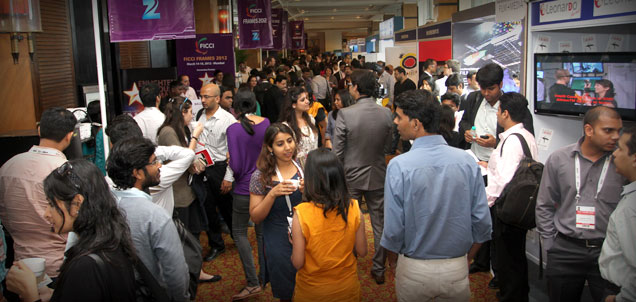
    Those familiar with the going-ons at FICCI Frames would testify how an infatuation gets displayed by delegates at the event each year so as to summarise the mood of the convention even before it broadly takes off across the three days that it is entitled to. But probably, the setting was a bit different this time around when the delegates – joined in unison by the media – were running ballroom to ballroom trying to ingest giveaways that were being thrown up abundantly across several sessions. May be, it was a year where each day had something new to offer to the delegates that kept them at tenterhooks throughout the 3-day event. And going by the loud decibels that were being emanated across every nook and corner of the venue, it was evidently clear that there was some motivating factor that was driving the gathering to go on an overdrive spree.


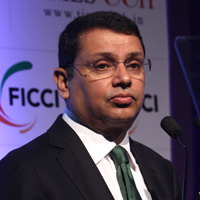
    The organisers of FICCI Frames 2012 have every right to take credit for coming up with a theme around a medium that attracted the attention of one and all. Having kept it on the sidelines till last year, digital was finally given its due at the convention as experts, authorities and enthusiastic youngsters came face to face to deliberate and come up with outcomes that would redefine the way the consumers consume the medium. From television to print to films and even radio, digitisation and the benefits and effects it would cast on these sectors were discussed in length at the venue. In fact Star India CEO Uday Shankar in his keynote address didn’t hesitate in thanking the FICCI committee for putting across a theme that would go on to redefine the way the industry functions in the future.


    What was apparently clear through the various sessions at the convention is that with the nearing of date for total digitisation across key metros by June 30 2012, and then across the country by 2014, broadcasters had to relook their distribution and content provision models so as to keep the consumer at the heart of every shift that will transpire in the future. Emphasising on the current digitisation scenario in the country, Mr Shankar said, “Most of the discussions that I have participated in are still around whether digitization will happen and if it indeed were to go through, how chaotic it would be. But all these are meaningless discussions triggered by a bunch of retrograde interests who are living in denial.” According to Mr Shankar, digitisation of distribution is a big reality and the 40-45 million homes that have bought DTH boxes at some point or the other are a conclusive evidence of that.


    Shooting back at critics who had doubted whether the makeover to digital would ever be a reality, Mr Shankar said, “To the critics and the cynics who are still wondering whether digitization would happen, my answer is: Look around, it is already happening and the rest of it is bound to happen because even in this country it would be difficult to undo such a momentous shift. To those who wonder how chaotic it would be, my response is that there would be some chaos, but chaos is not necessarily bad if the alternative is status quo or regression. When a transition at such a scale is happening that affects the illegitimate but strong vested interest in certain pockets, then there is an incentive to put up with chaos in the interest of the larger social objectives.”


    A broader outlook was provided by a few panellists who said that digitization will come in as a relief for broadcasters who will be benefitted from additional subscription revenue, relaxation on paying heavy carriage fees, and of course providing viewers with a superior content experience – MSOs and cable operators have to quickly respond to the digitization mandate by investing in set-top boxes – the cost that is only possible to recover after four years.


    Sounding off the challenges that digitisation would present for the broadcast sector, Tarun Katial, CEO of Reliance Broadcast Network Ltd said that, “For television, it will be a combination of content as well as marketing. The old model which was a combination of carriage and product, as it stands today, won’t work. The business plan which currently has a very high rate of carriage will obviously see the content taking precedence.” And as for content, it will be niche content that will call the shots for broadcasters as according to experts at the convention, niche isn’t niche any more as all niche channels put together command a share that is equivalent to the share of Hindi GECs and the mass channels, so to say.


    Perhaps the many advantages that digitisation will have on several mediums was rounded off by Vikram Sakhuja, CEO, South Asia, Group M who said, “The inherent power that digital brings along with it is interactivity and its ability to link multiple devices. Also the ability to enhance real-time consumption of content; linked to that is the entire thing about going mobile.” On the roadmap for the industry, Mr Sakhuja said, “I think integrated media is the best way forward. Today when people think of multimedia planning, they do a separate TV plan, print plan, radio plan, internet plan and so on. I believe that if you actually look at media agnostically and at common metrics of each cost per thousand impressions, these are the ways in which you can construct a media agnostic plan. What it does is, it suddenly gets more money into digital, and when more money can come into digital, that’s when focus is going to come in.”


    While digitisation was the mainstay of every discussion, the all-important issue of regulation too was taken up by panellists who chose to have the government respond to the many queries surrounding the topic. Uday K Varma, I&B Secretary, said that “if people at large seem to be happy with self regulation, I think the government would have no problem in legitimizing them. But I think the self regulation mechanism which has been set up by both the news broadcasters and the entertainment broadcasters, they’ll have to really prove it, not to the government but to the people at large.” He was joined in his cause by Prithviraj Chavan, Chief Minister ofMaharashtrawho said that the challenge would be to adopt the regulatory framework to new technology and ensure that over regulation doesn’t kill a good thing. The Chief Minister emphasised on the need for regulation and suggested that instead of the state regulating the media, the medium should look at regulating itself.


    The other important announcements that came up at the venue included the soon-to-be-passed Copyright Amendment Bill, the roll-out of the imminent phase 3 radio policy that would steer the growth of the medium and increased government aid for the film & entertainment sector.


    New ventures @ FICCI


    BARC takes wings

    In between the many promises and hopes that were being doled out at the sessions came the news of the Indian Broadcasting Foundation (IBF), the Indian Society of Advertisers (ISA) and Advertising Agencies Association of India (AAAI) announcing the official formation of a nationwide audience research joint body — Broadcast Audience Research Council (BARC).

    While IBF will have 60 per cent stake in BARC, ISA and AAAI will each hold 20 per cent stake. The Board of the council will have 10 members, six members from the IBF and two members each from the ISA and AAAI.


    Discovery Kids to flag off ops in April

    Another important announcement was made by President & CEO of Discovery Networks International, Mark Hollinger who announced the launch of its new network for children inIndia, ‘Discovery Kids’. Mr Hollinger said, “Launching in April, the network will initially be available in three languages – Hindi, English and Tamil. The channel will offer children a fun and entertaining way to satisfy their natural curiosity with stimulating and imaginative programming,” he said. The company plans to roll out the channel inPhilippinesandIndonesialater this year.


    Ten Golf tees off

    Taj Television India Pvt Ltd announced the launch of Ten Golf, a dedicated 24-hour golf channel. Ten Golf is the fifth channel from Taj Television India Pvt Ltd and began transmission on March 15, 2012. The dedicated golf channel will showcase a mix of live, non-live and feature programming. The channel will also broadcast live, high quality Golf action from around the world.

    Ten Golf has acquired rights for European Tour and Asian Tour till 2016, and has also entered into partnership with PGTI for three years to telecast the Indian Tour. Further, Ten Golf will be telecasting 400 hrs of golf programming in association with NBC.


  • @FF12: Text of Star India CEO Uday Shankar’s keynote

    Good morning.


    Senator Dodd, Secretary Uday Verma, Chief Minister Chavan, Prosenjit, Jehil and my dear friend Karan Johar, the remarkable team of FICCI that has organized this fabulous event, friends from media, ladies and gentlemen.


    A couple of years ago when I was asked by FICCI to take over the chair of FICCI Broadcast Forum, none of us had an exact idea of the timeliness of that decision.  FICCI was seized off the maturity and the size of Broadcast media and felt that the time had come for it to sharpen focus on this aspect of media and not merely treat it as an adjunct of films.  However the momentous changes that have happened in the Broadcast media landscape in the last 2 years clearly justify the wisdom of FICCI.


    I find a powerful validation of the significance of television and broadcasting in “Positivity” – a report by the IBF on the impact of television. IBF has gone ahead and spoken to our viewers – the key findings of the research are gratifying and humbling for the industry. I don’t want to give too much away, but must highlight two interesting results – Over 90% of our respondents believe that television is a source of encouragement and motivation and a similar percentage of women respondents believe that Television has given them the confidence to believe in the capabilities and potential.


    Gratifying as it may be, it is just the beginning. We are at the cusp of what is set to completely transform broadcasting in India forever.  I am talking about the universal digitization of television distribution.  This is a subject that has dominated all discussions at all forums in the last year and I presume will continue to do so for a long time to come.  But let’s pause a minute and recall what the discussion is centered around.  Most of the discussions that I have participated in are still around whether digitization will happen and if it indeed were to go through, how chaotic it would be.  With all humility may I suggest that it is a meaningless discussion triggered by a bunch of retrograde interests who are living in denial.  Let’s get some basic facts -The Cable Television Networks Amendment Act is not the beginning of digitization.  Digitization of distribution is a big reality and the 40 – 45 million homes that have bought DTH boxes at some point or the other are a conclusive evidence of that.  In fact as we speak, India may just have overtaken the United States as the world’s largest DTH market.


    What Minister Ambika Soni, Secretary Uday Verma and his team are doing is to create a structured, institutional framework for shaping this big social reality.  More than 25 crore people who have stated their preference for DTH over analogue cable have clearly spoken out that this country is now ready for universal digitization and the current move is merely to create a level playing field.


    So, to the critics and the cynics who are still wondering whether digitization would happen, my answer is: Look around, it is already happening and the rest of it is bound to happen because even in this country it would be difficult to undo such a momentous shift. To those who wonder how chaotic it would be, my response is that there would be some chaos, but chaos is not necessarily bad if the alternative is status quo or regression.  When a transition at such a scale is happening that affects the illegitimate but strong vested interest in certain pockets, then there is an incentive to put up with chaos in the interest of the larger social objectives.


    Actually my biggest concern now is a chaos of another kind that we are all set to create by our inaction.  Whether we like it or not, in a few years time, the vast majority of this country will receive its content through digital media – digital cable, DTH, 4G, wireless and internet.  But are we preparing for that? The answer is a big NO.  I worry that while we debate a digital future day-in-and -day-out we are doing nothing to transform or find business models for a digital world. Let’s face it – universal digitization is going to force us to change the way we do business and we are so not ready for it.  We often blame the cable operators and MSOs that they are not ready but I am afraid that even the broadcasters and the content creators are not ready for a digital world.  Are we then setting ourselves up to become uncompetitive and irrelevant?


    In case you think I am a scaremonger, let me ask a question – we all know how many people DTH services and now a large number of them have evolved services like HD, DOLBY sound and digital video recorder and yet what are we doing differently to service this segment?  DTH has been around now for about 6 years and is there one thing that we as broadcasters or the content community have done that we could point out as an example of a strategy to exploit the new technology?  This is despite an intuitive and an experiential understanding that the behavior and the consumption patterns in DTH homes are significantly different from analogue homes. The data also show that the average time spent on content in digital homes is much more and yet we do not treat them differently.


    It is perhaps scary how we have force-fitted an analogue broadcasting model into the digital domain.  Is that what we are going to do even after cable goes digital?  I am afraid if the past behavior is anything to go by, we are not ready to offer anything significantly different and therein lies the biggest crisis and risk of a chaos.  We have often spoken about how digitization would enable a multiplicity of niche channels to emerge.  Digitization of TV and even film infrastructure for that matter can revolutionize the way media is consumed in India.  There is enough global experience to suggest that digitization leads to de-centralization, regionalization or localization of content creation and distribution.  Creatively, it is a huge catalyst for innovation and diversity.  Essentially what it means is that with universal digitization the business models of broadcasting which are built on centralized creation and distribution of content and even a centralized advertising revenue model may come under a huge pressure.  I am proud to lead one of the finest media companies in this country and the world and yet I must confess that all of us have built our businesses in an environment where access to distribution was complicated, expensive and even impossible.  That is all set to change. So the big incumbent advantage is set to slowly, if not rapidly disappear. Socially, it is all very desirable because the plurality of this country is very valuable and digitization is a big catalyst for that plurality.  But, are we ready to re-tool our strategies and our businesses?  The cable community is still busy lamenting the potential loss of carriage fees not realizing what an amazing opportunity it has to participate in the local economic boom that is sweeping most parts of this country.  The first phase of digitization that covers the 4 metros will be a huge unshackling of broadcasting and content opportunities.  These are the cities that have crumbled under the weight of analogue frequency limitations.  Just imagine the opportunities that these metros also our economic hotspots present when, from the first of July access to frequency will no longer be a constraint.  So to my mind the MSOs and the cable operators may potentially become a powerful content creator that the traditional broadcasters have to contend with. There may be new creative talent ready to ride this technological transition.  As the subsequent phases roll on, the decentralization of broadcasting is bound to gain enormous momentum.  However, I don’t see anyone trying to race ahead to take a pole position here.


    Now let’s look at the content and the creative community that I myself am a part of.  But I am struck by our obliviousness to the opportunities and changes awaiting us.  Let me explain this with a slightly different example.  It’s been for a few years now that HD TV sets have been available in this country.  While many people were buying them, their off-take was still low primarily because there was no HD content and nobody was willing to invest in HD content because there were not enough HD consumers.  It was the classic chicken and egg problem.  However early last year, when we at Star launched 5 HD channels with DOLBY 5.1 surround sounds even we were surprised by the rapidity with which HD gained acceptance. Today, in less than a year there are around 25 HD channels. But, I have to admit with a touch of disappointment that I am yet to see an adequate recognition of the potential of HD and a superior sound possibility by my fraternity.  It is a classic case of the old mindsets struggling with a new technology.


    Are we going to stay locked into this struggle or are we going to create a new generation of television which would be designed for the digital world?  It will require all of us to change.  The creative and broadcasting community has to change their approach to content and the distribution mindset needs to change equally. If you are a cable operator or an MSO -  carriage fees is not the reason why you came into this business and people do not take a connection so that you can earn carriage fees. We are all in the business of delivering best television experience for the consumers and they will be happy to pay for it.  There is enough evidence that people want to consume content and lots of it – but they love it when it is customized to their taste.  Today there is an opportunity to do that and let’s put our heads together to take advantage of that opportunity.  Let’s determine what we require from the Government and the regulator. I have been an admirer of the current information and broadcasting dispensation which I think has shown more vision than any other dispensation in my two decades of interaction with the broadcasting establishment.  However, let me point out that we still need a lot of official and legislative enablers to remove the bottlenecks on this expressway.  For instance, a clear policy to enable multiplicity of beams and splits would be a powerful trigger for proliferation of content and revenue opportunities.


    I could go on.  But I would like to end by just reminding you of the latest Oscar success from Hollywood – The Artist – which is an amazing portrayal of how a talented and accomplished artist from the silent era could become completely irrelevant because he refused to see that the times have changed. Let’s not try to thwart a revolution which people are crying for.  We will only hurt ourselves.  The question is whether we will lead the change or whether we will vacate the space for a new set of entrepreneurs and visionaries who will replace us.  It is up to us to use it or lose it. Thank you very much.


    Photograph: Fotocorp

  • RBNL announces Big Star Young Entertainer Awards 2012

    By A Correspondent


    BIG Live, the intellectual property vertical from Reliance Broadcast Network Ltd. and Star India, on Tuesday announced the launch of their new offering Big Star Young Entertainer Awards, 2012. The awards have been conceptualized to appreciate and recognise the young stars that have risen quicker than their contemporaries across different genres of the entertainment industry including film, television, music and sports. These are stars that have spent less than 5 years in their respective industries and are poised to become the superstars of tomorrow.


    The Big Young Star Entertainer Awards will honour the dedication of these young superstars while applauding their achievements for the year gone by.


    These awards will be chosen by a set of esteemed jury members who will nominate the characters and then leave it open for India to vote, leveraging the vast network of RBNL’s radio brand – 92.7 BIG FM.


    This is the second initiative by BIG Live and Star India after the success of the BIG Star Entertainment Awards 2010 & 2011, which achieved a rating of 5.78 TVR in its first year and a rating of 4.63 in its second year.


    Partners on these awards stand to gain tremendously from the synergies within Reliance Broadcast Network, with promotions across 35 stations in the Hindi speaking belt of 92.7 BIG FM, BIG MAGIC – the regional channel exclusively for the Hindi heartland of UP, MP and Bihar, Spark Punjabi – India’s first international Punjabi Channel, its strong out of home arm BIG Street and a very robust digital marketing plan with BIG Digital.


    Commenting on this new initiative, the Company said in a statement: “This is another industry first, which, like all our intellectual properties, is influenced by a high degree of consumer centricity and delivered through engaging ideas and multiple touch points to create unprecedented impact. Our partnership with STARIndiawill ensure excellent synergies coming into play, as we offer the young stars the acknowledgement and encouragement that they deserve. ”


  • Peter Mukerjea: Rupert & Son

    By Peter Mukerjea


    So, it’s finally happened that James, or JRM as he is known within the company, has stepped down. I’d said that he should (see Firstpost.com article) and for whatever it’s worth, I’m glad that he has.


    Enough has been written and no doubt more will be written about the rights and wrongs of the people involved in the entire phone hacking case and we will never know who will finally go to jail for the crimes that are alleged to have been committed.


    But that would be looking back and surely it’s much more fun looking forward and trying to gauge what’s about to happen next. If Rupert is true to his word, JRM will now be spending more time on international operations and on the TV business at large . Now that leads me to suggest that he should for Newscorp’s sake spend at least 75% of his time in India looking at new business opportunities that exist in the country. STAR experienced it’s highest ever growth in it’s business under JRM’s watch when he was the CEO in Asia. That’s not a coincidence, I can assure you. Conversely, STAR experienced it’s lowest growth when JRM left the Asia region and handed it over to pixies in Hong Kong who had no clue about India. For example, the lady who was given the baton by JRM had never visited India ever in her life. Strange decision, it has to be said.


    JRM, on the other hand, was a respected executive and was seen as a path-breaking scion of his father. And the fact that not everyone loved him was simply par for the course and to be expected. He was effective in reshaping STAR’s fortunes and turning a loss making company into a profitable one.


    Incidentally I continue to believe that none of the new channels that popped up in 2007/8 would have happened if Rupert had not taken his eye off Asia but he moved JRM to London to run SKY and with that opened up the gates for newcomers. Some channels failed to make the grade – 9X & Imagine for example, and others did well – Colors & 9XM for instance, but none of these should ever have been allowed to get started given the complete dominance that STAR had on the market. And all the people that went to run these channels, including myself , were almost all from STAR.


    Since then STAR has held up well, although after a wobbly start. Credit for which should be given wholly to JRM for giving autonomy to the current leadership in managing their business and most importantly cutting them loose from the Hong Kong intermediary, which was rightly cut to size.


    JRM’s big opportunity is now to push ahead with developing a range of new TV and other media products for the India market and enable it to grow speedily to create a very clear leadership position with plenty of blue sky space between the No1 and the rest. And only he can make that happen by physically being there and making the big decisions which would otherwise be lost in power point presentations between numerous layers of management.


    This would in turn spur ZEE and Sony and MTV and the rest to do the same and compete with each other and with the pace that STAR would have set for them. This will then collectively turbo-charge and accelerate the industry as a whole and taking full advantage of the economic growth that the country is experiencing. The next 10 years for the media business in India will be huge and despite the slowdown in the global economy the pace of growth will be better than almost anywhere else in the world.


    JRM once said “let’s make the best use of a crisis” or words to that effect and I think this is a crisis that has presented itself for just that opportunity. He has moved to New York from London but may be he should have a home in Mumbai too and really shake up the market. There’s tons to do with a very exciting future for a 40-year-old – like JRM, which regular or even above average executives will simply not be able to take full advantage of. They can at best take limited risk, if at all – but JRM can and he should.


    Will he or won’t he? Or will he slip in and out of the country quietly, once very few months and leave the big opportunity to the pixies once again? If he ends up doing that he will have missed a great opportunity to grow the business and also to get himself back up and be recognised as being one of the best TV executives in the world. After all, he is the son of Rupert.


    Although it started as a fortnightly column, Peter Mukerjea’s Media Mullings will now appear regularly on MxMIndia, but with no definite frequency.