Tag: Sanjeev Kotnala

  • Decluttering Personal Branding


    By Sanjeev Kotnala


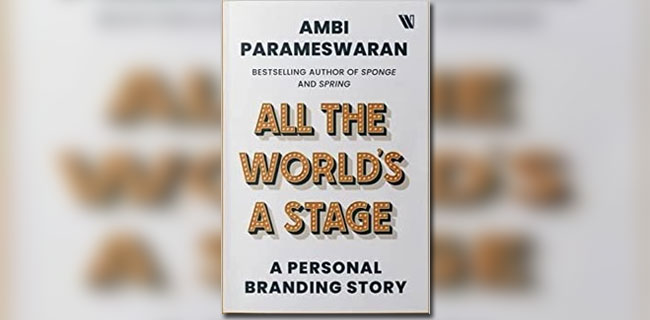
    Sanjeev KotnalaYou can read ‘All The World’s A Stage’, by Ambi Parameswaran, for a brief view of the ‘why’ and ‘how’ of personal branding. It is like the foundation course in an MBA institute – Personal Branding 1.0. So, after reading the course material- the book ‘All The World’s An Stage’, you know enough to hold attention and conversation on Personal Branding. However, there is not enough for you to push on a journey.


    Having read almost all the books by Ambi Parameswaran, I did expect something more. Something much solid. Something that could help a novice to start working on Personal Branding and not just think about it.


    As with all his books, in ‘All The World’s A Stage’, Ambi Parameswaran declutters and simplifies the subject matter. In this case, he oversimplifies the damn thing. It is an easy read with hardly any jargon. And wherever new terms are introduced, they are to create the opportunity to explain the subject – No complaints there.


    I do like the way the subject is approached. A conversation between friends Ambi, Shankar, Rita, Kunal and Joe during the Silver reunion at IIM Calcutta. Ambi plays the field expert role, amply supported by Rita, the HR expert, and Kunal, the almost convert. Shankar is the sceptic who gets converted by the end of 2 hours late-night walk late on the last night of the reunion.


    Now, in terms of personal branding, by naming the character of branding expert AMBI and suggesting he is much younger.


    Not that Ambi Parameswaran needs it, but demonstrating the nuances of personal, he uses the opportunity well. Ambi’s expertise, success with brands, networked connections, teaching assignments, books like Sponge and Spring, talks and references to keynote addresses are sprinkled throughout the book. Well, that is some real suggestion and hints towards Personal Branding.


    ‘All the World’s A Stage’ does an excellent job showing that each individual is a unique brand. Your responsibility is to care for and create your Personal Brand, as it is an influencing factor in your professional life.


    In the book, Parameswaran touches on various steps and questions that one needs to address in creating and nurturing a personal brand. However, it lacks a concrete roadmap and exercises that would allow the reader to gain much from the book. Maybe that is a flaw of the conversational storytelling adapted by Ambi Parameswaran in his books for the first time. But some exercises could have helped make the book more relevant and impactful.


    Discussing the process or the steps of Personal Branding will spoil the impact of enjoying reading ‘All The World’s A Stage’, which is not right.


    However, here is something that I can share without taking much away from the book. Brick by brick, the book brilliantly demolishes seven personal branding myths.

    1. Personal branding will conflict with corporate branding.

    2. Personal branding happens on its own.

    3. Personal branding is very different from product branding.

    4. Personal branding gets set in stone and is unchangeable.

    5. Personal branding can exist independent of your executive presence.

    6. Personal branding is very different from executive communication or executive voice.

    7. Social Media is a unidimensional one-way street for personal branding.


    Ambi’s book almost kills the book that I have been writing, which is still WIP. The idea of the book ‘You The Brand’ was seeded in our 30th Reunion at IIM Ahmedabad. There I took my batchmates through a small part of my ‘Brand-i’ workshop and empathised with my belief in being responsible for our Personal Brand. That night I ended up discussing the subject with a few of my friends at Louis Khan Plaza and a walk through the old campus. So, the book was almost a déjà vu and a reminder that the projects should be completed on time.


    I go further in my ‘Brand-i’ workshop on Personal Branding or individual coaching. I warn the participants that they better care and work towards the desired Personal Brand identity – impression and perception or be willing to be branded by default. Because branding anyone is as simple and naturally involuntary as breathing. Well, one does need to perform and have the desired skill sets. Still, a right Personal Brand – actual or perceived can definitely smoothen the process of climbing the organisational pyramid and exploiting business or personal opportunities. And here, as a true advertising person, I am more interested in how it is perceived than it actually is. Because perception is more potent than reality. I know I should have placed more importance on Executive Dressing, Voice and Presence than I did during my corporate life.


    To know more, read the book ‘All The World’s A Stage’ by Ambi Parameswaran. He does a pretty good job of explaining their importance.


  • Sanjeev Kotnala: Relevant VXP or MXP Employee with X-Factor

    Sanjeev KotnalaBy Sanjeev Kotnala


    Last week I wrote about the six types of employees in an organisation. Where I asked the ones employed by an organisation to evaluate which type of employee they were and which type they wanted to be. This question was also open to self-employed people. Naturally, I had a few polarised reactions and feedback. A few readers suggested completing the thought with actionable inputs. So, here I share what I teach about ‘Employee X-Factor’ in my Personal Branding workshops and interactions.


    The Employee X-Factor.

    It is a simple thought. Being employed is a constant race to the top of the pyramid. And if you are in that race, you know only a few will climb the pyramid. I believe you want to be one of the employees climbing that ladder of success faster than anyone else. Unfortunately, the people you are fighting for the spot up the ladder have similar education, experience, and success.

    In such a scenario, fundamental qualities like honesty, hard work, dedication, passion, being an extrovert, and being a team player are essential. However, they do not give you any advantage during appraisals. You and those in real contention for the next position, promotion, responsibility, or bonus demonstrate these traits almost equally.

    You need a relevant, impactful differentiator, and that is the Employee X-factor.

    In this era of expertise, you need to be the VXP- Very ‘X’ Person and, better still, the MXP – Most ‘X’ Person.

    Where ‘X’ is the relevant and desirable trait not for your current position of responsibility but needed for the next position or the responsibility you want.


    How To Find The Relevant Employee X-Factor.

    This is much simpler than it sounds. In the organisation, look out for people who have moved up the ladder and are branded successful. Observe them and analyse their work style, their qualities and interaction.

    Find the three critical factors that are relevant to the organisational success and which differentiate them. Analyse how they are internally branded? What are they known for? On what kind of work do the seniors seek their input? Someone will be the most proactive, innovator, and go-to person, and someone may be expert in scaling up, executing and detailing.

    Do this analysis for five-six seniors who are most successful in the organisation. You will have a list of attributes, and hopefully, you will find a few common attributes. Note down these common attributes and qualities.


    Actionable Employee X-Factor

    Now evaluate where you stand against the top two most common attributes among successful people. Find the gap and draw a plan that will help you work towards internally being recognised as the MXP for the first attribute and VXP for the second attribute.

    Just work on the top two attributes, and you will find that they will take care of other attributes too. There is no point in complicating things.


    Amplify The VXP And MXP Association

    Find ways to demonstrate these X factors for internal branding and recognition. Remember, it is not sufficient for you to have the X factor. You must be known and recognised to have this X factor- by the people who matter, people who will decide what step of the ladder you should climb.


    Net-Net

    Yes, you need all the skills and talent for the position you work and the position you want. You still need to demonstrate the performance and deliver the goods. However, the path to the pyramid top could be smoother and faster if your personal branding is right and is built around the most relevant X factor. It will be better if you are the VXP and MXP on the appropriate and relevant attribute ‘X’.

    Also, you will be branded by default if you don’t work on your personal branding. So, it is recommended that you avoid this branding by default and work on it. Because all things being equal, your personal branding will determine if you climbs the pyramid.


  • The Six Types of Employees


    By Sanjeev Kotnala


    Sanjeev KotnalaThe uncertainties associated with jobs are at an all-time high. The controlled unlocking, unpredictable economy, Hybrid and WFH priorities have cast further doubts on stability and continuity in employment. Currently, even the best of the performing employees feel threatened, knowing that past performance is no assurance of continued employment.

    Usually, one expects the decision to issue a pink slip to rational. That the managers would naturally retain employees best placed to help achieve their KRA. However, many examples have demonstrated that these decisions are quick and not fully logical or rational.

    Many times, the decision is based on the perceived employees brand image and its value for the manager and the organisation. The employee’s internal branding and alignment to the organisation’s and immediate senior’s dreams and aspirations critically influences the final decision. Ultimately, what matters is perception. The employee’s personal branding; Brand-I. Because perception is always stronger than reality.

    Irrespective of the industry and its ecosystem, there are six types of employees.


    THE INVISIBLE EMPLOYEE. 

    The unknown face. The stakeholders neither know nor do they care if the employee exists. The employee is a count and number on the register and does what the employee is told to do. The employee never exceeds the brief; think of alternative solutions. The employee suffers from low self-esteem due to the inability to hold the position. Hence, the employee shies away from additional responsibilities hiding in the crowd under the pretext of teamwork. As a result, organisations avoid giving higher responsibility or tasks to the employee who is anyway an unknown entity.


    REPLACEABLE KNOWN UNKNOWN. 

    The employee is known to the stakeholders and maybe the line manager. Perhaps they recognise the face and sometimes the name too. There is a degree of investment of the organisation into the employee. However, the employee is reasonably replaceable.

    The stakeholders do not have a clear perception of employee capabilities. The employee surprises the organisation with thinking, implementation and delivery even in sinking causes. The sporadic performance and frequent lie-low attitude work against the employee. There is not much the organisation expects from the employee.


    WISH THE EMPLOYEE WORKED FOR THE COMPETITION. 

    It is a surprise that the employee is still in the organisation. There are no hidden agendas or motivators to keep the employee. However, when the time comes, this employee will be one of the first to be given the pink slip. They are considered the reason for the team’s inefficiencies and deliveries.


    GOOD FOR THE ORGANISATION.

    The top-of-the-order employee. The reason behind the excellent performance. They are motivated and consistently deliver results. The employee is hungry for more and wants to expand their horizons. A career employee who chases position and power.

    The employee engine demands constant up-gradation of responsibility, talent, expertise, salary, and perks. One of the last to be sacrificed. Typically, there exists a level gap between them and the senior, to safeguard the insecurities of not-so-competent seniors.


    EMPLOYEES SHOULD WORK FOR US.

    This employee is a reasonably good performer and delivers most of the time. The employee Is disciplined and values organisation culture, and the only things that restrict him are expectations and SOPs. They are loyal to the organisation and good team workers. They survive by keeping a low profile and hate questioning. They take time to grow and, with time, specialise in routine tasks. Usually, in the changing scenario where headcount is to be decreased, they are retained as a performing known devil. And there is a higher version where this employee upgrades to ‘MUST WORK FOR US’.


    MUST NEVER WORK FOR THE COMPETITION.

    This is an upgraded version of ‘Must work for us’. The best employee. There are two-level. On the first level, the employer will hate if the employee was to work for the competition. On the second level, the employer will not want the employee to work for the competition; AT ANY COST.

    If there is no suitable role within the organisation, the organisation will create a position just to deny the competition an opportunity to hire. Many times, they are carefully contracted and outpriced from the market.


    WHICH TYPE OF EMPLOYEE ARE YOU?  

    If you are an employed with  an organisation, it is time to evaluate your position. Where do you stand? Which type of employee are you? What is your internal personal branding? How aligned you are with the Boss’s ambition. Dreams and KRAs? If you want to upgrade, what must you do? What will help strengthen the desired perception?

    The natural logical aim is to be at least ‘Good for the organisation’ category and if possible upgrade to ‘Must work for us’ and ‘Must not work for the competition’. It is where the strength and power begins and ends.  These build resistance against changing socio-economic scenarios and pink slips and command the premium.

    Be honest and answer to yourself: what type of employee are you?


  • Movies are no longer memory milestones


    By Sanjeev Kotnala


    Sanjeev KotnalaThe movie theatre experience has changed from a multi-week successful run on single screens to weekend success across multiplexes.  From a time people would smoke inside the theatre and even step out to their favourite tea shop during intervals to a highly closed, no concession experience.  Have not seen a song-and-dance or throwing of coins during item numbers or aarti done of the stars because they played god and goddesses in a movie.

    The small single screen slowly kept getting out of the system and the multiplexes multiplying. The movies released in multiple screens survived two weeks with decent runs became the new hit. The print, sound quality, projection, and VFX technology enhanced the experience. However, there has been a shift in audiences preferring to watch movies on TV and over OTT platforms.

    Movies for me have been more than entertainment. Some movie experiences are memorable life milestones. There were set timings, unlike today when you have a show starting every 30 minutes. The whole movie-going task needed planning. It was an event, the main event of that day. ‘First Day, First Show’ was a concept that many collegegoers religiously followed- at least when the movie featured their favourite stars. And the hero-heroines were Hero Heroines, part of one’s fantasies. There were no behind-the-scenes that killed the fun and awe of watching action.

    My life is packed with such milestone movie experiences  in the late seventies and early eighties, when I was in high school or moved to college. What about you?  I wonder why when I have seen so many movies in the last two decades, there is hardly a memorable experience.


    FAMILY OUTING: Hare Rama Hare Krishna, 1971

    I saw Dev Anand’s ‘Hare Rama Hare Krishna’ on the only screen in Lansdowne, Garhwal. Movie outing was a family affair but a rare occurrence. Dev Anand’s movie was considered a safe bet for family viewing. The highlight was Zeenat Aman in the song Dum Maro Dum.


    THE BUBBLY LOVE: BOBBY, 1974

    I was in Class 4 or 5 when it was released. I saw it from the second row of Imperial Talkies, Paharganj, right next to an uncle’s house. I don’t think it was rated ‘A’ and clearly there were no checks on who saw the  movie. One became a fan of Dimple Kapadia for a few years.

    I remember, When we reached home, we were royally scolded and punished because we were missing without informing anyone. But my cousin, elder brother, and I kept the secret.


    THE DIALOGUE LP: SHOLAY, 1975

    You could hear Sholay dialogues played in every community function event. In fact, we could recite the dialogue in sequence.  Kitne Aadmi The, Sardar Maine Aapka Namak Khaya Hai, Toh Tumarah Naam Kya Hai Basanti all iconic dialogues that became part of life. 


    THE RELIGIOUS FEVER: JAI SANTOSHI MAA, 1975 

    Jai Santoshi Maa took smaller towns by storm. It ran for weeks; Women watched it multiple times and did aarti of the screen. I remember going for it with my mother and her friends, sitting in the women’s section of Sharada Talkies in Gorakhpur market, Jabalpur.


    STAR TREK: THE MOVIE FROM SCHOOL, 1979

    At Kendriya Vidyalaya- GCF Jabalpur, the students were taken to the sci-fi movie of its time- STAR TREK. We were packed in to buses and then entered in a three-column to Sheela Talkies premises. The school did take students to a few more movies, but I don’t remember the titles.


    FIRST BOND: THE SPY WHO LOVED ME, 1980

    The Spy who loved me was my first ever James Bond movie. It hit Indian screens in the second half of 1980. I was unprepared for the start. In the beginning, Roger More jumps off the snow cliff and keeps falling for two minutes. I, the smalltown Jabalpur teenager, gaped at the screen, wondering if the hero who had jumped with no apparent precaution and support would die. I was getting ready for a flashback story when suddenly the parachute opened, and I relaxed.


    BROOKE SHIELDS ATTRACTION: BLUE LAGOON, 1981

    Who can forget Brooke Shields, the heartthrob of many? Blue Lagoon, when first released, was rated ‘A’. I had just entered college, and as per the ID card, still a few months from qualifying to watch it. One knew it was a bit easier to watch it at the Empire Talkies, not particular about who was buying a ticket or watching the movie. For Brooke Shields, we watched the movie more than a few times, and that too when we could hardly understand the dialogues, which were in English.


    THE RISKY MOVIE: TEXAS DETOUR 1981

    One bunked college to see it in the afternoon show, which was a safer show with fewer chances of meeting someone. It was rated ‘A’ and had a few shots that were the talk of the young crowd. It was an easy-to-follow movie; anyway, language was not a barrier, as sex needed no language. And trust me, there was equal fun in watching a movie that you were not supposed to watch and planning in such a way that you were not caught watching the movie.


    LOVE IN AIR: LOVE STORY & EK DUJE KE LIYE, 1981

    The two movies were released within six months of each other. After watching ‘Love Story, I became a big fan of Vijyeta Pandit. Her poster and pictures were on the walls, and I must have seen the movie Love Story eight-nine times. Looking back, it does seem silly.

    Ek Duje ki leye’ meanwhile became the trivia question at the ragging in engineering college. The question was simple, who plays the role of Madhavi’s brother. And the person who knew the answer had no option but to slap his batchmates hard, or the senior would hit him, demonstrating how hard slaps are delivered.


    COMEDY CROSSFIRE: BLAME IT ON RIO, 1984

    I saw this movie twice. Once in 1984, when it was released in India and after many years on a VHS. From the first time, I had a sketchy memory of the story. I was in the theatre not to see the movie but to have a private time with someone in my life. We were in the couple’s balcony at Empire Talkies, the opera-styled twin-seat balconies with independent access. There was no better private space for young adults in Jabalpur.

    This was also the day my elder brother decided to bunk college and watch the movie. In that single screen theatre with a semi-circular structure with posters of coming shows, my brother and I came face to face. He caught me. But after the movie, I reached home earlier than him and told my mother that bhai bunked college to see a movie. There was no reference to me being at the movie. So, when he came home, he was scolded for bunking college, and I stood innocently denying I was at the movie. The argument: if I also bunked and watched the movie: would I be telling- won’t I plan with Bhai that no one knew. The argument held its ground, and I was saved while bhai got a earful.


    THE LAST MOVIE WITH FATHER: LAMHE, 1992

    I do not remember seeing many movies theatre with my father other than a few like Jai Santoshi Maa and Har Har Mahadev. So, Lamhe we saw in 1991 in Odeon in Connaught Place, Delhi, was a new experience. My wife, my father and I watched this uncomfortable storyline that I believe was much before its time. Today, it would have been a blockbuster, and it was the 10th biggest success of 1991 and did decent business abroad.


    THE HAIRLINE FRACTURE: KAMOSHI, 1996

    My wife, my four-year-old son and I went for the late-night show at PVR, Vasant Kunj, New Delhi. We reached a bit late when the hall was already darkened. While searching for the seat, my wife twisted her ankle. I spent most of the time outside pacifying my son who had decided to cry. The next day as her ankle was swollen, we met the doctor to realise there was a hairline fracture.


    NET-NET

    I have seen many movies at the theatre. Some months as a family we saw four-five movies, but they were just movies, pure entertainment- if I can use that term. As luck would have, nothing happened outside the movie that would make it a milestone, an episode remembered for something more than the movie.

    How many of your movie outings have side memories to make them milestones and a memory which is more than the film.


  • Brands like Dhara & Sabhyata show how to do it the right way


    By Sanjeev Kotnala


    Sanjeev KotnalaFestive times are the times to celebrate. Time to understand and appreciate the positivity of rituals and practices. Time for inclusive togetherness and not the time to point figures.

    There are enough issues, problems, and opportunities relevant to the brand category and promises that can be exploited. There is no need for brands to look at religious rituals and practices to question. This year we have seen fewer brands opting to question religious rituals and practices. It seems brands have understood that it does not make strategic sense to risk business for some fancy agenda of change.

    Some brands understand the subtle need and nuances to strengthen their positive connect with their audiences. They have a purpose, maybe even a real purpose. They remain sensitive to their ecosystem and do it the right way. Here are some examples.


    CADBURY

    Cadbury has used festival time and Diwali, in particular, to add freshness and smiles to people. The efforts are enormous, and the impact is measurable. They address real problems and provide real-time solutions within festival mood and ethos. There is a genuineness in creating inclusiveness in business and a consistency in approach through the years. The purpose here seems genuine. This year’s effort- Jinki Dukan Nahin Hoti– for people with no fixed place to set the shop is brilliant.


    DHARA.

    Dhara’s new ad in the series Khane Pe Kehna’ celebrates the festival. Dhara does not ask the audience to change; it asks them to return to the original ritual and practice of sharing and distributing handcrafted, homemade sweets. The family gets together and shares responsibility. In the process, the tradition and the art of making sweets get transferred through the generation.

    Maybe the older generation will remember it more. The current generation is happy sharing and delivering e-commerce goodies. The line ‘Tyohaar Ke Rivaj mai Zara Sa Badlav lana Hai. Apno Ko Ane Haath Se Khilana Hai’ is apt and well-presented in the ad. In fact, the way the daughter places the suggestion is full of grace and respect.


    SABHYATA DIWALI 

    Sabhyata’s Diwali ad is a simple story. It demonstrates an understanding of the new-age women’s aspirations and issues. And there is a different hiring ritual – that’s it. The leisurely build-up aligns with how it wants to steal your attention. Sabhyata, the ethnic wear brand, as something to wear to the interview connects. Though there are a few questions, is the message to hide the pregnancy the right message? Is that empowering, or is that re-instating the fear?

    I believe sometimes we should stop being too critical and stop debating every frame from a logical point of view. The communication must be seen in its totality. The only issue is that the advertisement may only work with people aware of the brand. The product does not really stand out and speaks to the potential future consumers- which it could have done to expand its base.

    Sabhyata has challenged the expected stereotype and practices in past. Here is another ad from the brand where mother-in-law and daughter-in-law team together to trap the husband into making tea.


    DABUR RED TOOTHPASTE

    Indian dental care market has seen everything. The concept of ingredients that help dental care has come a complete circle. People understand the Indian brand’s formulation and benefit outweighed the MNC-created products. The MNCs, which once denied and rejected Indian understanding of dental products, now outshout each other in telling the consumer they have it all, from Salt to charcoal.

    Dabur Lal Dant Manjan is one such product. The contemporised format Dabur Red Toothpaste promises the same results and uses modern-day science’s power to extract the best of Ayurveda.


    So, you have Amitabh Bachchan presenting the logical part of communication. And there is a song and dance version made on the 80th birthday. It uses the famed AB song- Ek Rahe Bir … They bring in three ‘gora’ and their dental issues while AB continues enjoying the fruits of strong teeth. It works. The song, ‘Eer Bir Phatte’ remade for Dabur Red Paste, nicely presents the story and the product benefit- maintaining problem-free healthy oral care.


    HP WORLD STORE.

    HP World Stores’ #ThodiSiJagahBanaLo (make a little space) calls for supporting the local Indian artisans to showcase their art and scale it up. It is a simple story but powerfully presented. The brand has taken the thought to the street with HP WORLD STORE across some cities bringing alive the idea in real life.


    REAL ‘ME’ DIWALI

    Primed with tradition and the meaning of the festival is the Real ‘ME’ Diwali advertisement. An overload of emotions and a story that may resonate with the new generation is a meaningful brand expression.


    And then there is BharatMatrimony  I discussed in the last blog, and Tasva– the Naya Nazariya– which was nothing new.


    NET NET

    The above are rich examples of change. They do not question religious practices but operate within the gamut of collective togetherness and the spirit of festivities celebrating the possibilities. The brands are sensitive to the business ecosystem, and the communication is powerful and relevant to the category.

    There are enough issues, problems, and opportunities relevant to the brand category and promises to be exploited impactfully. There is no need for brands to look at religious rituals and practices to question, and maybe the brands will understand it.


  • Are Hindu rituals the favourite hunting ground of brands?


    By Sanjeev Kotnala


    Sanjeev KotnalaIt is festival time, and every brand is trying to make a difference. Some work with the functional advantage to create a preference and charge a premium. Many brands adapt to the new purpose-led communication to influence customers. And a few rare breeds of brands, in the name of change, question rituals and their understanding and relevance in today’s world. Invariably the questions are targeted at the majority – Hindu. To an unbiased observer, the need and scope for reconsideration and rethinking of customs, traditions and rituals that exist only for the Hindus and other predominantly minority religions are perfect. There is nothing to change or question.


    Recently, SC rejected a plea to ban firecrackers. It said you are an opportunity and are coming right before the festival and should have come early, asking why and what they were waiting for. And this is right. Festivals are for the celebration of tradition, culture and rituals; raising issues and objections and suggesting new ways to the concerned community is absolutely hitting below the belt. I do not appreciate any brand – service, or organisation raising issues with the traditions of any community. There are positive and negative ways to do things, and brands should consider what is better.


    Why just Hindu?

    Most likely, it is a result of four simple things.

    Every brand wants to connect with the largest possible base of customers. Hindus form the largest chunk of the population and hence the natural choice for the creative and brand team to deep dive into it whenever they have a brief about change or community.

    Second, the Hindus have repeatedly demonstrated their incapability of taking any such attack on their culture, ritual, religion, or mythology to its logical end. They just raise their voices in protest on social media, suggesting boycotting the brand, and that is where they stop.

    The Hindus are victims of their own brand imagery of being secular and tolerant. Sanatan Dharma, in existence from time immaterial, pushes for adapting and inclusiveness. It has survived repeated attacks through time and is expected to continue doing so.

    It is old with a rich tradition of oral continuity and learning. As a result, the people of today readily believe that many truths have become fictionalized or exaggerated through time. And everything is anecdotal mythology lacking historical evidence. And hence the revered gods and goddesses and their messengers are mere characters in a story, which makes them an easy pick for suggestions and remoulding as per the brand’s liking.


    Science v/s Belief?

    So, from time-to-time, brands stretch the boundaries taking potshots at Hindus. Not all such instances are bad or wrong, they are progressive, and the new generation would agree with the brand thinking. However, there is only one option against the regular onslaught by brands challenging Hindu religious practices and thinking – defend everything questioned. Don’t not critically re-examine them as an isolated case. The fear remains that if one did not object to any of these instances, it would open the floodgates of questioning. Hence, at every opportunity, the challenge must be defended.

    Unfortunately, Hindus get trapped and forget that the defence cannot be based on scientific reasoning. It should be based on belief. Belief kills every doubt and reason for questions. Belief is the tactic and the tool that the minority uses so effectively, making the argument short.

    At times, a regular counter-argument is raised by the so-called secular forces. Is the Hindu religion so weak that advertisements can threaten it? Well, the direct answer is NO. However, if the attempt is continuous and on multiple fronts, there is bound to be an increase in doubts and levels of questioning.


    Blame the Brand and the Creative Team

    It is futile for Hindus to question the actors and the celebrities enacting the stories of change in brand communication. It is a deep strategic initiative of the brand after considering possibilities and potential reactions. They are in the business and think through their strategy. And, If they cannot do this simple thing, some consultants and advisors can help them with the possible reaction with analysis like SMEAR.

    So, whatever brand communication is finally in the public domain, it is approved. It is the brand thinking; this is how the brand sees Sanatan dharma. Maybe the followers should forget what the religious leaders, facilitators and guardians tell them. The brand knows better how Hindu practices must be shaped to remain relevant in today’s world.

    This reminds me of a simple, strong line from the recent movie Goodbye, and the brands should think about it. Everything that you don’t understand is not wrong. Brands having differential self-regulation beyond the guidelines and legality is highly desirable.


    Every brand communication could not be wrong?

    The problem is simple: the majority and the minority cannot allow any brand to question religious practices. There is no room for error or negotiation. Hence, every communication should be evaluated in isolation. The brands often suggest a little rethinking and point-of-view without questioning the basics. They use elaborate storytelling to create a situation – while suggesting a change. Not everything is bad, but no single body can define what is good and bad, what is acceptable and what is a cause for concern. Everyone has to take their own call.


    AU Bank – Badlav Hum Se

    The AU Bank advertisement is a case in point. It presents the flip side of the coin. Here the groom is coming to the bride’s home as a ‘Ghar Jawai’ for some reason, like the wheelchair-bound bride’s father. Usually, the bride stepping into the groom’s home would walk through the plate with Alta leaving her foot marks and kick a pot of rice. However, here it is playfully suggested that as it is the groom who is coming to the house, he should take the first step. What’s wrong with it? And if we allow our insecurities to raise such flippant questions, we will kill the art of storytelling. How come we understand that the breed of new authors in mythology space create contemporary fiction and not question the beliefs. Still, we forget when it comes to advertising.


    BharatMatrimony #BeChoosy

    This is a different case by Bharat Matrimony , a provocative thought. Breaking of Karva Chauth fast. No married woman will think breaking the fast is for her husband’s long life. This is a celebration of the thought. It is collective working towards what is good for the family and adapting to the situation. This is the celebration of culture with a strong positive statement- if I can fast for your life, I can also break my fast for you. This also shows that a negative portrayal is not the only way to question tradition or culture.

    In the past, the Stayfree communication – touch the pickle was the right suggestion with new solutions. And every year, we find new brands getting caught in this trap of questioning- where the celebration would be a far better option. Earlier brands like Tanishq and Manyavar did face the Hindu music.


    Net-Net

    The change will happen- it is a natural process. Questions will be raised- and they will be full of agenda. Suggestions will be made even by the least interested and knowledgeable in trying to hasten the process. However, suppose the brands think through the initiatives and stop poking fun only at Hindus. In that case, life could be much more straightforward. Conversely, Hindus may be better off by not questioning every brand communication that even remotely suggests a different perspective. However, personally, I think and reiterate that these brands under their purpose and change have no right to raise finger on the rituals and traditions of any community. And if they start raising issues with traditions of other communities, it does not solve the purpose or address es the issue. Such changes have to come from the communities and start at a group level. Brands taking on position and using mass media is not the way. The time is over and the brands may encounter harsh reality and retaliation in the place it matters- the market place.


    Sanjeev Kotnala is a senior marketing and business strategist. And an educator. He writes on MxMIndia every Wednesday. His views here are personal


  • Gift someone The Ramayan Map?!


    Sanjeev KotnalaBy Sanjeev Kotnala


    MapMyIndia has been at the forefront of digital mapping in India since 1995. I used MapMyIndia maps extensively before moving to the mobile-led Google maps, with better control and features.

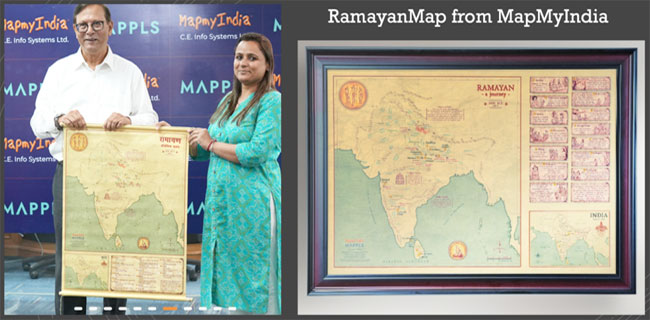
    Recently, MapMyIndia launched ‘Ramayan Map‘, a cartographical tribute representing ‘The Legend of Shri Ram’ on a vintage map canvas, right from his birth to the establishment of Ram Rajya.

    Gift Ramayan Map this Diwali

    Ramayan Map is something I wish people consider gifting during the festive season. By now, most orders for festival gifting may have been placed but do not see RamayanMap as a topical gift. I bought the Hanging Canvas RamayanMap as to gift. MapMyIndia also has the option for bulk Purchases for Institutions with a promise of free shipping all over India.

    It is available at INR 1990 for a roll-up Canvas print (25 inches X 33 inches) like the maps we hang. And also, a framed canvas (38.5 inches X 28 inches) is more suited for hanging on walls of corporate and institutions, and this one cost IR 7990


    Features of Ramayan Map

    There are some unique features claimed for the Ramayan Map

    It is India’s approximate map from 5000 BCE, i.e. 7000 years back. Shows locations with their original and current names, creating ease of relatability and building on historical relevance.

    It is printed and designed on a beautiful backdrop canvas with a lovely textured feel and antique-styled cartography.

    It gives a quick refresher course on the Ramayana story with location and descriptions of key events of Ramayana. This feature is fully appreciated by #IgnorantHindu.

    It is created using advanced geospatial technology to show scaled maps in kilometres and yojanas both. This is a silly claim as it is nothing more than showing the relationship between the two distance measurement units.

    Rakesh Verma, Co-Founder, Chairman & Managing Director of the company making it, says ‘the initiative is very close to his heart. It is a state of self-actualization, where life’s work meets spiritual being’.


    Reaction to Ramyan Map

    Many people on social media read too much in this statement and with MapMyIndia doing a Ramayan Map. To them, this is religionising and not secular in nature. MapMyIndia is a private business entity and fully in its right to create products which may have market demand. Suppose there are other such products with business possibilities. In that case, the company could consider Buddha’s travels and Shankaracharya’s movement. But then one can see how small the demand could be.

    I may want an interactive map of Maa Narmada Parikrama. Still, it may have very few wanting or buying into the service. The effort cost-benefit analysis may not work for the company.

    Are there more such region- religion- political theme-based opportunities, or is the Ramayan Map the only map in the making? Maybe the travels of Mahatma Gandhi could be considered. Still, one can see that it may be viable as a commissioned project from some sponsor but not a commercially viable product for direct marketing to potential buyers.


    Net-Net

    Take advantage of this initiative. Buy it for gifting and buy one for yourself. And #IgnorantHindu project supports this initiative. It is time that the next generation reads and understands their heritage.


  • Sanjeev Kotnala: Khela Hobe! Bigg Boss 15 on the right track

    Sanjeev KotnalaBy Sanjeev Kotnala


    Many of you know I have been a huge Bigg Boss fan, and I even went for the audition in one of the seasons when the show was looking at commoners. I have attended a few weekend shoots with family and would love to do that again. This piece was written before the start of Bigg Boss on October 1 as ‘Unsolicited Advice To Big Boss’. However, after watching the first few episodes, it is clear that Bigg Boss 2022 is on the right path to rejuvenate my favourite reality show and make an impact.

    To me, the concept of Bigg Boss is interesting and exciting. There were so many things to look out for. And if someone was interested in understanding human psychology, group interplay and dynamics, the basics of ‘give and take’ and the ‘expectation v/s experience’ imbalance. Bigg Boss is a deadly social game worth watching. However, the 2020 season was not something that I liked watching. While my interest levels dipped in the last two seasons, many loyalists have complained that the show no longer had the same pull.

    Every show must evolve, outgrow the earlier audience, and pull in a new audience with higher lifetime value, but not at the cost of originality and the show’s basic format. Bigg Boss, for some time, has been avoiding changes. Reality shows must think about audience engagement and involvement, which may not even reflect in TRPs. In the current era of perceptions and viewpoints, social media interaction and engagement go a long way. Every year, for one or the other thing, we keep listening for boycotts and banning the show.


    Reality Shows

    Colors TV’s other big reality show, Khatron Ke Khiladi, also suffers from a ‘task repetitiveness’ syndrome. This stunt-based show is hosted by a director known for blowing cars. It is different that he only talks and never gets into the act… unlike the season, which was handled by the Khiladi star Akshay Kumar. Contestants know they will need to swim, interact with animals, and bear some amount of current. Yet, they walk in as zombies without preparation!. This year, the number of aborts in the KKK was unprecedented, and so was the number of proxies. Not something that the audience appreciated, and it did not leave a good taste.

    Reality shows on Indian television are well-established in dance, singing, talent and comedy. The judges sometimes show a bias in defining talent and a specific skillset. The audience does not want dance and singing to be considered in shows like India Got Talent, but channels have other thoughts.

    One of the reality shows I miss is  Iss Jungle Se Mujhe Bachao. Additionally, Indian Idol and Roadies with Saach Ka Samana and Emotional Atyachaar have had their own followings. As aside, my friends have a concept for another exciting reality show. But, currently, the channels are not biting at this hour.


    Back to Bigg Boss and the few factors that make the show. Or what the show should do. Thankfully, some action is already evident in the first few episodes.


    The Format

    The Bigg Boss format, an adaptation of Big Brother, keeps participants (housemates) in a controlled location (living space) without access to the outside world. Their life is controlled through tasks defined by an outsider, a proven format that has worked across countries. The participants are under 24-hour multiple-camera surveillance.

    The audience, who cannot think of being in the same situation as the participant, gets voyeuristic pleasure in seeing celebrities bear it out.

    There is ample space for demonstrating leadership, groupism and individuality. Participants negotiate, keep secrets and share revelations. Almost all possible human expressions and emotions are displayed, bringing variety and spice to the show. The participants know it is tough to keep the mask on under pressure, and their reality would emerge in the reality show.

    However, the show needs to innovate, keeping the basic format. Bigg Boss 2022 getting into Khela mood and controlling it tightly is the right thing to do. Remember, if you keep doing the same thing, you will get the same results. For a different result, you need to do things differently. Clearly Bigg Boss’s creative and production team have understood the situation.


    The Host

    Most Indian reality shows are strongly associated with the host. KKK with Rohit Shetty. KBC with Amitabh Bachchan and Bigg Boss with host Salman Khan. In the past, Bigg Boss has been hosted by Shilpa Shetty, Arshad Warsi, Amitabh Bachchan, Farah Khan and Sanjay Dutt. But Salman has been there for the longest. What matters is how he conducts the show on weekends. Most participants have respect/fear for Salman. He is also expected to guide them and does it wonderfully well, but at times the host and the creative team’s biases are on full display. There is a definite difference in how a celebrity and a non-celebrity are addressed on the weekend.


    The Discipline

    One of the most significant factors that made Bigg Boss a hit was the unknown voice – Bigg Boss Chahatey hain. And the strict discipline. Penalty and decisions were swift.

    The rules are simple. Use Hindi as a spoken language, do not tamper any electronic equipment, only sleep when lights are switched off, no physical violence, no personal attacks, don’t share any information from the outside and don’t leave the house unless evicted or there is a genuine emergency.

    Celebrity participants have tested Bigg Boss’s discipline in the last few seasons. They gamed the system and were surprised how far they could go without being reprimanded or penalised. Even physical violence was treated differently depending upon the instigator. The penalty for sleeping during the day or ignoring Bigg Boss commands was minor. It seemed that the control was of the participants, and Bigg Boss was just not interested.

    It is time for Bigg Boss to create an example, even if it means timely and justified eviction or jail. There must not be compromise on physical violence, personal attack and harmful gender stereotyping or racism, or class divide. This time (the 2022 edition), Bigg Boss has demonstrated that he is willing to bell the cat at the very start. That rules are rules, and they must be followed. This is good news for the show and the audience. The audinece mostly appreciated the newfound action in the recent episodes.


    Bigg Boss 2022 promises to be different

    The promos of Bigg Boss 2022 promise a definitive shift. Bigg Boss will play the game- aab Khela Hobe. Well, Bigg Boss was always playing games, but the discipline and control were missing in the last few seasons.

    Whatever one may say, this promise heightens the expectation- hope the experience matches; otherwise, the show would suffer. And the ball is set rolling in the first few episodes.


    The Participants

    BiggBoss no longer looks at the general masses, and the celebrity participants are religious, regional, or political players or, at the least, a person with a decent social media following.

    This season, the housemates are a volatile mix. It has an senior director, a pageant winner, a rapper, two friends from the TV industry with a huge following, a failed budding politician and a social media influencer and more. It makes for highly imbalanced interpersonal equations, which is good for the show. Polarity and skewed emotions help, and Bigg Boss has gone out of its way to nudge them into action. The new eviction format and the undefined tenure of the captain are some of the simple moves which will have a significant impact. All is good on this front.


    The Tasks

    Like KKK, the tasks in Bigg Boss for the captaincy or the weekly budget are routine and repetitive. The teams need to rekindle the interest by weaving in some innovative tasks. Salman Akahada is not something that interests the viewers. Still, the silly, playful question-answers and the penalty for wrong answering have been a hit. As is the balloon bursting of perceptions.

    One has to wait and watch to see what new innovative task Bigg Boss will bring to surprise the housemates and the audience. This is something that is very much needed. In addition to the tasks given by Bigg Boss, the house tasks and their allocation among the housemates always makes for an exciting watch.


    The Insider-Outsiders

    Like any other reality show, Bigg Boss has a set of earlier winners, participants, media, and celebrities, including fortune tellers and Panditji. The show banks on them for exciting interactions. However, they are too predictable, and the excitement is missing. No, don’t think they need to change them. They are fine, but their roles, interactions and expected deliveries need to be closely monitored. And, if need be, expand the list.


    Net-Net

    See Bigg Boss as a social experiment and can get many insights into human behaviour. The trade-offs, negotiation, partnerships, trust, faith, rebellion, isolation, group dynamics, and loneliness is all on display.

    The audience always questioned how the housemates lived in such a scenario and if they could survive it. The Covid-led pandemic and WFH have given audiences an insight into such an isolated situation. This may affect the way the audience interacts and consume the content. The cameras or participant-based live unedited feed could be interesting. And, if the channel works well, the Bigg Boss Camera Gully–set experience to interested viewers could be amplified.

    After some seasons Bigg Boss has woken up to actively controlling the game narrative. I worried that it had become an irritating concentration camp rather than an entertaining one. However, I believe that the creative-production team will do justice to the format and the audience in 2022. Long Live Bigg Boss!


    Sanjeev Kotnala is a senior marketing and business strategist and educator. He writes on MxMIndia on Wednesdays (and sometimes on other days as well). His views here are personal

     

  • Should repeat offenders of ASCI guidelines be debarred from awards & felicitations?


    By Sanjeev Kotnala


    Sanjeev KotnalaI have repeatedly written about the thankless self-regulation job ASCI has been doing by discussing, suggesting, recommending, and trying to make brands follow the guidelines. I sincerely believe that self-regulation as the name suggest is an individual and organisational call. No moral and ethical policing works.


    If one was to analyse the roaster of defaulting brands every quarter, they are a mixed lot. One could understand the fly-by-night operators and small businesses not really following the guidelines. However, the list of repeat offenders has large brands and companies working with well-known advertising agencies. It is tough to presume that these agencies and the brand team are unaware of the guidelines. Hence, when they fail to follow the guidelines, it is natural to assume that the act was voluntary and intentionally exploiting the loopholes for business. The brands were fully aware of ASCI procedures and prepared for the action.


    The answer to the question of who is responsible for this situation is simple. It is the brand owners and the agency leadership. Because they have decided to overlook their team’s work. It is a question of attitude, ethics, and morality. A question of the culture that permeates the teams. A business call is made knowing the pros and cons. And, if the seniors in the team turn a blind eye or do not guide the teams on proper systems and operations, no number of guidelines will help. Until those exploiting loopholes or not following the guidelines is no way a black mark on your resume or employability. Till it is seen as intelligent working, no set of guidelines will work. And if the industry keeps celebrating the seniors working on the brands and companies breaking the guidelines, no guideline will work.


    Why can’t brands and their teams repeatedly not following the guidelines be debarred from industry awards, individual felicitations, discussions and addressing, and holding a post in industry bodies? Can people reject a candidate knowing they were part of the team called for not following the guidelines? Can the CMOs and the agency heads ensure that every marketing, branding, and communication person is aware of the guidelines for the category they work on? Can an ASCI guideline certification be a minimum requirement for creative and strategic teams? Would it be too much to do?


    For self-regulation, you need self-discipline. It is as simple as that. It is just like you deciding to use a seat belt or not while driving, knowing fully well that by not wearing the seat belt, you are not violating a guideline but a law. And moreover, you are risking yourself and no one else. You do not wear it knowing that the traffic police cannot fully monitor it, and people are not shamed for not wearing the seat belt. You decide not to wear the seat belt despite its availability, and wearing it is as simple as clicking it in. You don’t wear it because you think you can get away with it and nothing will happen to you. The same approach is visible in people and organisations not following the ASCI guidelines. They think they can get away with it and lack something as basic as self-discipline.


    Checking if the brand is not violating guidelines should not be a Standard Operating Procedure (SOP) but a habit. It should happen naturally. And, if it does happen naturally, indeed, after some time, the teams may not even need to check as their internal working will weed out the wrongs. SOP reeks of checks to see we are within the framework and technically cannot be faulted for not following the guidelines. There is no question of exploiting the loopholes when it is a habit. It is not about technical grounds but more about realism and ethicality of action. As naturally as brushing your teeth.


    Guidelines keep evolving. Maybe some have lost their relevance. ASCI is always there to discuss and re-evaluate. Remember, all the guidelines have been developed in consultation with Industry experts and after they have been publicly open for discussion and input. The guidelines are not ASCI- the guidelines are of the industry. And by following them, no one does a favour to ASCI. We help the industry stay within the scope of self-regulation without governmental interference.


    Net-net

    So, decide, you want to be the smart one who exploited the guidelines under technical loophole. Or you were morally ethically correct to have followed the guideline. It is typically a business call that must be made individually. And it is finally all about – the culture and attitude promoted in the organisation. Think again about what you teach when you turn a blind eye or knowingly violate the guidelines on technical grounds.


    ASCI doing its part

    ASCI has been upfront and transparent in its dealing and communication, but it needs industry support. As per an ASCI report, It processed 52% more ads in 21-22 compared to 20-21. Digital contributed 29% of all complaints, and Education remained the largest violator of the guidelines followed by Healthcare and Personal Care. And 94% of all ads processed needed some modification. Important point- 21% of complaints originated from consumers, and 7%5 were Suo-moto action by ASCI. Both are good signs. Print and digital led with 47% and 48% of the complaints.

    As per ASCI’s sector report 21-22. For example, in the personal care category. There has been a 261% increase in ads, where 69% were informal resolutions not contested, and 31% were upheld. Most ads, 88%, came from digital space, Print contributed 4% and Tv 6% of the contested ads. 371 ads were found violating influencer disclosure guidelines, and 4 ads featuring celebrities were found misleading!


  • #AnythingForTaste


    By Sanjeev Kotnala


    Sanjeev KotnalaEvery brand has brand stories— some real and some crafted. The brand’s strategic and creative teams must identify the ones that can be explored and exploited. KFC Cape-town, South Africa, picked one and ran with the urban legend of a fake quality control inspector. Watch the final communication, and then we get to the story. KFC’s official Twitter account posted- The Taste… it’s all about the Taste, and after 50 years of licking it off your fingers, we’ve realised that some of you will do #AnythingForTheTaste. Don’t believe us? Watch this story based on real events.


    First, KFC released a press note declaring they would get to the urban legends’ roots. Setting up a private investigation to find one who has been posing as a fake food inspector, getting free KFC items. The story goes back to 2019- though not fully substantiated. “KFC plans to track down an alleged fake food inspector soliciting free food from KFC stores across South Africa.” It also led people to attempt pranking KFC in real life- completing the cycle. For example, Foktv and JTube became fake health inspectors to try to get free food but also try shutting down a fried chicken restaurant.


    Here is news on SouthAfrican.com and many other South Africa-based digital sites like Capetown covering the Press release.


    Beckett Mathunzi is hired as the chief investigator. A hotline is set up for the public to share tips and information. This one led to three creative, the Brief, The chase and the verdict. One could follow the detective developments at KFC South Africa.


    Net-Net

    It is noteworthy to see how the brand has picked up an urban legend and taken it to its somewhat logical conclusion. It is simple and highly focussed creative, taking you on a ride with the detective and the fake inspector. And watch how #AnthingForTaste and the #Fingerlicking have been smoothly weaved in. I love such simple, focused communication and storytelling.


    Meanwhile, here is another brand doing the same. Focussed storytelling, and where they take one aspect and go the whole way. The client and the creative understand that it is better not to be greedy and overload the communication. Here Samsung exploits the one chink in the competition’s armour- just when the competition makes its annual ritualistic statement of new products.


  • Special days need Special Effort. So how did we do with Teacher’s Day 2022?


    By Sanjeev Kotnala


    Sanjeev KotnalaOn special days we see brands releasing communication celebrating the specific day. People take to social media and flood it with messages. Some are relevant and thoughtful, but most of them are a rehash of some old thought. These special days are usually around religion, region, festivals, birth and death anniversaries, historical milestones, politics, events, sports, or anything else that is topical or tactical.

    In the case of certain special days, brands have the opportunity to present their point of view. For some categories, these days open a window of customisable unique advantage to relate to their wider audiences. Like Valentine’s Day for romance, love, care, and Chocolates. Father’s Day for all the relationships and cheeky messages from condom brands. Teachers’ Day for the education and coaching category.

    Unfortunately, most brands fail to exploit the opportunity and end up doing lip service. The stale jokes and the repeated unexplored strategic focussed messages make no sense.

    Yes, one understands but fails to accept the statement that after so many years of brands trying to explore these days, there is no new thought possible. Maybe it is true. Perhaps, all nuances around them have been explored, if not fully exploited. However, it tells us that to make a difference and impact, brands better roll up their sleeves and think deep, and even if it’s an old thought- freshen it in execution. Otherwise, the energy and resources are misdirected, and there is a colossal waste of effort and energy. It is, in fact, true about most special days.

    Here is what happened with Teacher’s Day.


    Navneet Education- #Trforteacher

    Navneet Education wants to roll out a petition so teachers could use Tr as a prefix identifier, just like a doctor uses Dr, Engineers use Er. And so on. Not a bad idea, but not the first time. Though the execution style of ”We asked few people is so jaded, it is not impactful. Though the brand did float it across Facebook, Instagram, and Twitter with all the possible hashtags, this was one of the best efforts of the day- it is itself making an example.


    Day in a teacher’s life.

    Teachmint showcased what a teacher’s day looks like and what keeps them going. Presenting Teachers as the heart of schools. The brand wants everyone to join in showing love for Teachers, and, yes, again, there was this hashtag barrage- as if the brand was unsure what would really work.


    CONTINUOUS LEARNING- BYJUS

    The biggest online and now hybrid coaching – created the not so unexpected – learn at every stage campaign. It had decent success with huge views. A simple thought of learning being a journey with multiple pit stops but no destination. Teachers learn something new at every turn, with the flip of every page, on a cold night or a tough day. Celebrating the biggest student through it all, the one that never stops learning – a teacher. It is not the best way- but at least in sync with their brand communication. Candid Teacher, the earlier communication by Byju’s, allowed students to ask questions. It was more fun and playful- maybe with more impact- however, the treatment left much to be desired. You expect a brand like Byju’s to do far better.


    CLASS PLUS

    In 2020, during the [andemic, Class Plus celebrating teachers’ efforts was a friendly communication- topical and relevant. How teachers shifted to online, sharing their wisdom and knowledge. And slowly inserted the message that they have helped more than 1 Lakh+ teachers to grow during the lockdown. #EmpoweringTeachers to grow. Earlier, Class Plus had also communicated about the hard work teachers put in. The sweetness they bring, the care they undertake and the conduct they display. This and more define how kids learn to view the world in their own right. They really make the world a better place to learn. Unfortunately, another good idea could have been far better executed.


    FILTER COFFEE TEACHERS

    Better in all this seriousness is the cheeky Filter Coffee communication- types of teachers you can relate to. There is fun and sincerity; the episode reminds you of some teachers and expands the audience range.


    OTHERS BRANDS

    Then other brands tried to take advantage and, according to their efforts and resource, hugely mismanaged the show. For example, Orchid International trying to communicate that Teaching is the profession that teaches all the other professions. Orchids wishes happy teachers’ day. Or the learnapp rehashing the ever-safe formula of teachers moulding the students. And Himalaya Baby Care with many views trying to exploit the overhyped and most basic thought of parents as a teacher. Extramarks, the leading teaching app for K-12, promotes its functionality. And even Bandhan Bank went into drive telling us we have teachers all over and the opportunity to learn. Maybe a wasted opportunity or a non-strategic move. And if you have to watch- do watch this from Naya Educator– very apt work on teachers’ day. It is functional, relevant and a tribute too.


    NET-NET

    Special days allow the brands an opportunity- to define or strengthen their relationship with the stakeholders in their ecosystem. However, to exploit the possibilities, brands need to believe in the strategic importance of the special days and not treat it as another item to be ticked.

    It is advisable for a brand to not waste time and resources on some poorly executed, half-baked communication.

    Indian culture and mythology are full of Guru Shishya parampara. There are rich anecdotes that the brands can use if they are willing to deep dive and really believe in the strategic importance of special days. Unfortunately, one has hardly seen any brand use this rich heritage.


    CHALTE-CHALTE

    Here is an ad from Raymond’s that seemed to me as one of the best functional synergistic Teacher’s Day ad.


  • Is Mr Sachin Khurana a headache for self-regulator ASCI?


    By Sanjeev Kotnala


    Sanjeev KotnalaLaw is always a step behind reality. And guidelines and regulations are a few steps behind. The victim suffers, and the perpetrator keeps finding new loopholes to exploit. But, when the perpetrator violating the ASCI guideline is a well-known big pharmaceutical company, we expect them to be totally aware of the guidelines and the loopholes. And when they act like this, it is time to rethink.


    Yes, the advertisement by GSK appeared in TOI. The publication’s internal quality cell could/ should have highlighted the issue and refused, but they did not. Karthik (@Beastoftraal) mentioned the objections on Twitter and I complained to ASCI. Hope they do see the problem. Karthik has also pointed out how toothpastes use unfamiliar faces and how celebrities act like people of influence in white coats.


    WHITE COAT= DOCTOR or SCIENTIST.

    It is as simple as ABC. The audience relates White Coat to a person of expertise and influence. Mainly as a doctor, pharmacist, scientist or at the least a lab attendant who knows what he or she is doing.


    There is no doubt that in this advertisement for Crocin, the brand wants the audience to infer it as someone who knows what he is recommending. But, then, the brand cannot have a doctor suggesting/ recommending Crocin, an OTC (Over Counter Drug) that is available without a prescription.


    FIND A WAY OUT.

    Enter the loophole. Feature a model wearing a white coat. And then identify the model with its name. Brilliant- as he is an actual model. No Dr. prefix. So, we have clearly shown that he is not a doctor, but he recommends Crocin. Problem solved.

    But why would a company like GSK, known for its pharmaceutical products, vaccines etc., have any Tom, Dick or Harry recommend the product? It does not make sense.


    MANY QUESTIONS.

    Hopefully, ASCI will ask the questions Karthik asks in his tweet.


    Why is the model named at all in this ad? Is that the company practice? Does the company do it every time there is a recommendation?


    Why add “Mr.” before ‘Sachin Khurana’? Is it to differentiate him from “Dr.”?


    Why is “Mr Sachin Khurana” wearing a white coat? Is he a doctor, lab attendant or scientist? Should we trust “Mr.” Sachin Khurana’s words about Crocin just because he’s dressed like a doctor?


    NET-NET.

    There is no denying that the brand tried to exploit some loophole and pass the model as a person of expertise. To most OTC drug buyers, Crocin would mean just that, and it is not expected of a large brand and company to do so.


    SELF REGULATION.

    ASCI is an industry body doing its best within its limitations. It has well-formatted guidelines.  It is ultimately the responsibility of the brand managers, creative agencies, and media partners to self-regulate. There are enough big companies and brands who instead of setting example do not follow the guidelines. It cannot happen if the industry representatives do not share the responsibility. Following ASCI guidelines will actually strengthen the industry.  Suppose self-regulation fails and is not followed in spirit. In that case, the industry should be put under government regulations, at least for the medical field. And the errant brands must be penalised for their discretion.