Tag: Sanjeev Kotnala

  • Sanjeev Kotnala: Bigg Boss Season 10: What worked & What didn’t

    By Sanjeev Kotnal


    Okay, now that I have done my annual pilgrimage to the Bigg Boss house at Lonavala for the third year, and we are in the final leg, it is time for me to reflect on the season. I have been an ardent and compulsive viewer of the show. I still harbour the dream of hitting the show as a contestant or a house visitor. May be, some day I will.


    Last year, when at the Bigg Boss 9 finale, the channel promised Aam Aadmi a chance to participate in Bigg Boss10, it raised many questions. Has the channel taken an undue risk for rejuvenating the show? Will the audience that loved the format for its voyeuristic peep into discomfort of celebrities, now lap it with the same fervour? How will they be selected? It also gave rise to many hopes and doubts…


    By now, some of these have been answered. To start with, in its restricted blinkered sense, it was a mixed bag of semi-celebrities and ‘Aam Aadmi’. They were branded in a very ‘racist’ way. The Aam Aadmi was christened ‘Indiawaale’. The divide was apparent. Bigg Boss had sown the first seeds of dissonance, which will pay the dividend throughout the season.


    The channel played safe. Real safe. The Aam Aadmi was really not the awam ka saksh, but people with idiosyncracies and past histories. They were clearly the one who could and would create the desired drama in the show. You cannot fault the channel for it. Moreover, the channel and the Bigg Boss always held the trump cards like wild card, eviction and tasks allowing it to control the participant mix as the show progresses.


    It is true that you need a mix of divergent, polarised, extroverted, expressive, explicit, scheming and smart set of contestants when creating a show like Bigg Boss. Raj Nayak of Colors said so in his interview with Indian Express. He said: ‘We take the contestant basis, their personalities and the contribution they can make to the show. BiggBoss is a show on human psychology. Whatever happens in real life, happens in BiggBoss. The only difference is that unless you have different kinds of people, it won’t be reality.”


    The early evictions of Aam Aadmi representatives like Priyanka, Navin, Swami Om, Akansha and Lokesh must have put doubts in the mind of channel controllers and viewers. The sudden injection of four non-aam aadmi into the show was a kneejerk reaction. The audience sensed and assumed for their valid reasons that the show has a possible bias and unstated support for the so-called minor celebrities.


    Something inevitable happened, the unceremonious exit of Elena, Shail and Jason. Yeh audience hai, yeh saab kuch jaanti hai, show banaati hai toh barbaad bhi kar sakti hai. This is the audience. It knows everything, if it can create a show, it can also break the show.


    The performance of Aam Aadmi and more so the non-performance of the mini-celebrities was apparent in every episode. The tide had to turn. The sequential eviction of Rahul and Gaurav showed audience was an answer to  real Aam Adami wishes.


    It was at this stage. Aadm Aadmi graduated to be a full Bigg Boss participant, but the divide had been inked hard. The camps and the lines were drawn. No efforts by the BiggBoss and the star host of the weekend, could change it.


    This season was no different than the rest. It was a bit higher on the decibel level and some record creating silly stupid acts of participants.


    Love and strong friendship have been a constant factor at the Bigg Boss House. Season 10 was no different but remained a bit low in it. Nitibha exited the show without getting her answer from Manveer. Bani and Gaurav friendship was headed nowhere. Manu Punjabi and Monalisa are very tenuous as they walk into the last phase. Poor Rohan does not know what to make of the makeup Queen Lopamudra. If you have been watching the show, you will realise how interesting the evolution of relationships is.


    No Indian drama can be without villains. Swami Onjee and Priyanka Jagga rewrote the definition. Swami Om would have made a record for the show of having been evicted or stepped out with regularity on Day 21, 48, 78 and 81. Priyanka Jagga first stay ended on Day 7 and the next which started on Day 42 just lasted until Day 69. Both were evicted without being nominated on ground of excessive bad behavior and attitude. Having them on the show was both, a source of fun and disgust.


    People may see it as a failure of the channel show in selecting the participants. I doubt it. Such polarised, vocal, drama queen and kings have been in every season. They are needed. Meethey ka swaad janney keay liyeh khatta khana zaroori hai (To taste and appreciate sweetness you need to taste the sour). This time, they just crossed the undefined line. In reality, If you remove Priyanaka Jagga and Swami Om, Bigg Boss 10 has been very low in its drama quotient too. And may not get the same following. They were the surprise packet. You never know to what level could they go.


    New meteorites took birth in the show. Manu and Manveer. Audience favourites are now celebrities in their own rights. One who could benefit a lot would be the Bhojpuri star, Monalisa ( Antara Biswas ) who found herself a miscast among the Mumbai mini-celebrities and has been riding the friendship wave to remain alive in the show. Lopamudra came across as a very sensible person though with her own quirks. Bani decided to be the pulsating stars. Nitibha was warming up to the game too late in the show, and her exit closed the chapter.

    Truth is rarely has someone gained long-term from the show. However, the show does give a new boost and wide familiarity to the engaging participants. This year is anyway the first with aam aadmi.

    The audience strongly sees Manu Punjabi and Manveer as the potential winner. Bani, audiences feel has an external support of channel and star host, as someone who could spoil Manu Manveer party. Lopamudra has been as deserving. Monalisa and Rohan are the two aberration, that the loyalist uses to demonstrate channel fair and just voting system. Whatever may be the doubts, the final five strongly reflect national choice.

    Bani has been a let-down to her fans. A section of audience still doubts that the channel manipulates the vote count. They believe Bani has some kind of understanding and support. The rumours will be fueled if she becomes the final winner.

    There is a huge time lag between what happens inside the house and when it is telecast. Today, with the news leaks in social media, it has taken away the mystery and charm of watching the daily telecast. The time lag is irritating. Ten years is too long a time for a reality show version to remain paralysed with its constraining format. It is something that channel, and the format owners need to rethink.

    When, I started writing this column, Color’s app was launched. It was primarily positioned and promoted as the live voting device for another singing reality show. Today, audience is unsatisfied without instant gratification. They demand not only greater participation and control but also greater transparency in vote counting which anyway remained a state secret. I was thinking, what if the channel used it in Bigg Boss.

    I was pleasantly surprised on that on Jan 14, when in an effort to extra boost the app downloads, Bigg Boss decided to go live on voting. A sensational moment in Indian reality show history was lost. The experience was bad. The live was just a question about ‘How many see a contestant to be in the final’.

    The app did not work well. I have many loyalists sharing their disappointment. If the picture wall in the show was any indication, it showed a poor response, someone from the channel could have better managed it.

    With such an experience, there is nothing wrong if the audience sincerely believe that LIVE was a farce, the in-show audience (like Jhalak) voted. Live to them in Bigg Boss would mean the changing bars as the votes come in. Possible!

    If at all the channel was doing a large-scale test run for ‘Rising Star’ which is dependent on this disruption, then it did not go well. This is purely based on the experience of my friends, family and me. Large enough sample size for me.

    As I write this column, it is 10 am on Sunday morning, and the app still shows Nitibha as a contestant nominated, where as she was evicted around 10 pm last night, which the show shot on Friday. The channel cannot afford to take such liberties. App = tool that is instant and updated.

    The host holds the show. The host has a very Counsellor – teacher – friend and parent kind of relationship with the participants. BiggBoss has a history of good hosts. I found, Arshad Warsi and Amitab Bachchan to be a great host. Shilpa Shetty managed to keep the tempo. Only Sanju Baba and Farah were minor aberration at the edge of being classified failures.

    Salman Khan is someone audiences love as the show host. There are moments where they do questions some of his antics and apparent bias in his addressing and supporting delegates. They even see it as channel interference. Salman finds appreciation for his more-than-vocal support for women dignity and his love for mother. He, in his own special way, continues to charm the audience over weekends.

    Brand association and sponsor’s interface is a business reality. This time at Bigg Boss it crossed the line. Are we just milking the star cow before it becomes non-performing asset?

    Tasks are an integral part of the show. They are interesting to watch. They are the fuel and the catalyst for the discussion and imbalance in the otherwise peaceful house. The show is being unimaginative and lacks innovation. Tasks have been repeated. Other than for the Iggolo and the Planet task, there was an utter lack of originality and newness. They need to InNoWait for the next season.

    The tasks seemed repetitive and mismanaged. They became interesting and if I can use the word entertaining only because of the sad influence and highly irritating TRP garnering influence of the ‘Entertainment Ke Liye Kuch Bhi Karunga’ Swamiji.

    Bigg Boss seems to be losing the command of the show. Or is it planned? The omnipresent Bigg Boss was impotent with participants challenging his authority. The discipline in the house found its own low. Participants did not think twice before taking a nap, found escape routes for every possibly conceived agenda and some of them used English as a dominant language. The participants gave no respect to Captain and hardly listened to the BiggBoss. This is a huge erosion to the concept and viewer expectation.

    These issues cited may seem trivial, but to an ardent fan, they are upsetting and alienating. They want newness. They want real people and a real representation of life. They want right entertainment.

    I hope and feel that Bigg Boss has few more seasons left in it to entertain us. And I am sure that the team at channel is aware that the TRP success is not the only yardstick of a reality show’s success and is deeply concerned about the real entertainment quotient.

    Long live, Bigg Boss! Note, I am taking no calls between 9 and 11 pm on January 28, 2016. All said and done, one cannot miss the finale of Bigg Boss Season 10.

    Sanjeev Kotnala is a senior marketing and media practitioner and consultant. The views expressed here are his own and do not necessarily represent those of MxMIndia.com


     

  • Sanjeev Kotnala: CELEBRATE Goafest & Abby: STOP ASKING DEAD QUESTIONS

    By Sanjeev Kotnala


    There is an industry and then there are people who for reasons best known to them make every attempt to break the fragile fabric of star events. It holds true for Goafest and the Abbys too.

    Are egos involved? The industry most likely will answer with a loud YES.

    I believe in a simpler truth. They are like that only.

    It is time we start valuing and accepting positive critique aimed at improvement and disregard all the static. It is not a MAdTech house of Bigg Boss we want here. MadTech, I like this word I read in WARC, it has the inclusiveness and reflects the growing importance of technology in advertising and marketing.

    Let us stop unnecessarily raising dead questions like ‘Who is boycotting’ or not taking part. Such agencies will have their valid reasons. Why debate their open-eyed conscious decisions. Let’s celebrate creativity and the 25% growth in the number of entries.

    Let’s also avoid questions like big v/s small jury. Who is and how are they nominated for jury duties?

    There is ample transparency. Agency heads-nominated people are on jury duty. There is wide representation. Respected names chair the jury. There is a third party audit of the process. Discussing this is not worth spilling the free beer at Goafest. I hope we are continuing with the free beer and no one has taken my suggestions of 2016.

    I appreciate Ramesh Narayan’s comment on ‘Bestmediainfo’ on this subject. He says: “I would urge all to look at last the year’s jury, which has the best people from the Indian advertising industry. If they are not fit to judge, then who are? If you have any names, then tell me.” I agree that the AGC is doing a great job. The jury selection ensures right representation. The process is transparent and fair. That’s what counts.

    Ramesh Narayan

    No doubt, there is enough transient damage and Ramesh Narayan is right on target when he says: “the biggest challenge for the Abby Committee is to preserve the equity of the Abby brand and grow it. It is something that has been nurtured over the years, and we owe it to the industry to enhance its cachet”.

    I think we have a good team of seniors in the industry just trying to do so. “Remember, Most of the work done for industry events is from very busy people who give of their time, energy and money only to feel a satisfaction of giving back to an industry from which they have received so much. This motivation to promote an industry initiative comes from the heart”. Ramesh Narayan is again bang-on with this observation.


    Ashish Bhasin

    Nevertheless, as everywhere else, we too have armchair stalwarts, who find fault in every possible agenda. So, I go yeah and punch air when Ashish Bhasin says: ‘We are doing a damn good festival with a damn good award show. Our sole motto is to put up the best award show in the best possible way for India’.

    We may have our own impressions of the fest. However, this is the time to leave those prejudices and celebrate the fact that, The ‘Abby’ is the only awards for the industry, by the industry and of the industry. It is also the only wholly original  “Indian” award. Judged by Indians for Indian work.

    ABBY CAMPAIGN. The current ABBY (print and digital) campaign is developed by Scarecrow. Remember it is all pro-bono work. So it makes sense when Manish Bhatt of Scarecrow says: ‘My attempt has always been to generate opportunities for everyone who work’s at Scarecrow to do the most meaningful work that they are proud of in their career, during their stint at Scarecrow. Doing something meaningful for our industry is noble. And it is very Scarecrow’.

    Unfortunately, the 2017 campaign is not really awe-inspiring. At a basic level, it tries to tick all the boxes. I doubt, if it wins an award for creativity, even if there was an award for such work. Manish defends the current campaign with: “Abby 2017 campaign focuses on functional / tactical aspects of Abby… it re-introduces the award in its true glory… the campaign has allowed us to highlight great people this industry gave birth to, some really important topical things or some really memorable creative work… we feel it is a unique way of paying tribute to the industry”.

    Manish Bhatt

    I find the campaign purely functional and not sure whether it will push entries. Manish Bhatt believes: “We need to make every piece of work hardworking but not at the cost of creativity. After all, it is for the hard-to -please creative fraternity of our industry too”. He adds: “Working with Raj Nayak and Ramesh Narayan is really inspiring… they are dynamic, sharp, fast decision makers. I cherish the liberty to bounce off ideas as soon we conceive them. And I get their reactions immediately… that helps the momentum going for the team.”

    Though I am not privy to the media plan, AGC ascertains that the campaign media reach permeates into all areas where adverting emanates from. I doubt, but will play along on. Hopefully, the net is wide enough to reach Tier-II and III towns like Ahmedabad, Kochi, Madurai, Indore, Lucknow, etc

    ABBY AWARDS. I have always wondered if there is a protocol on adding and deleting award categories. I am not sure, not that I really tried finding out. However, I understand that AGC reviews it every year. My point is to have clear transparent policies in addition to the review by AGC. It really offends when you hear a comment like ‘Creative awards are like cricket statistics, tomorrow you could win for launching toilet cleaner between 8 and 10 pm on TV in May’. A wide one that Ramesh Narayan rightly refused to comment upon.

    Publisher ABBY is one of the such categories. Initiated in 2014, it has seen limited participation. The quality of entries has been good but can’t say that same about the number of entries. They have remained low. I have no doubt, there is good work done by many media houses and standalone publishers. Unfortunately, for some inane unknown logic, they do not enter. I hope, this year the story will be different. Otherwise, AGC should rethink.

    NEW AWARDS. I welcome AGC, initiating Abby for ‘Gender-Sensitive advertising’ and the ‘Young Abby’ in 2016. This year we will see digital being split between Digital and Mobile, which makes sense. Also a relevant and deserving award: ‘CHAMPIONSHIPS OF EXCELLENCE’, established by the Advertising Club to honor clients who support great creative work, will make its mark.

    Like the last year, there will be no ‘Best Agency Award’.

    No bronzes will be awarded on stage, and that’s a promise Ramesh Narayan has made. I have raised this subject in the past. I am excited, as it will stop the discriminatory treatment in the last two years, where in for a few categories, bronzes were delivered in stage.

    ON THE SIDE. Yes, I miss the BEACH part of the Goafest. And I know of the constraints. Not sure, what is the venue this year, but just dream that we have it indoor in a property that has a beach worth strolling? Bring in that GOANESS back in.

    TRIVIA. Manish Bhatt, while he was at Contract did the Goafest 2008 campaign, including the Goafest logo and font. In 2016, he worked with AGC to sharpen the positioning to ‘For the industry/ by the industry/ of the industry…. Truly Indian Advertising Award’ and the #ThatsWhyAbby.


    DISCLOSURE: I have been an ardent supporter of Goafest and Abby. And I have attended Goafest since inception. I have been there as a delegate, sponsor, gurilla marketer, enterant, winner, jury and media. I have enjoyed every moment.  I will be there this round too. Though most of my wishlist remain unfulfilled. The article draws from e-mail conversation with Ramesh Narayan (Chairperson, Abby) and Manish Bhatt of Scarecrow, the creator of Abby 2017 campaign. And few snippets from remarks that appeared in BestInfoMedia interviews of Ramesh Narayan and Ashish Bhasin (Chairperson, Goafest 2017) find their way.

    Sanjeev Kotnala with 30 years of corporate experience is the founder of Intradia World; a Brand, Marketing & Management Advisory. His focus area includes Ideation and Innovation; he also conducts specialized workshops like IDEAHarvest, Liberate and InNoWait. For soft skill training, he follows SHIFT (Specific High-Intensity Frequent training), a process of continuous training with frequent shorter sessions. Email sanjeev@intradia.in tweet @s_kotnala web: www.intradia.in www.sanjeevkotnala.com. The views expressed here are his own.


  • Sanjeev Kotnala: The midway problem of giving up on yourself

    By Sanjeev Kotnala


    Happy New Year.

    It is the time when you have so many brilliant thoughts. When you are dedicated to change things and be more positive. In some time, these thoughts mellow down and practicality sets in. Like a stretched rubber band, you come back to your original self, as if nothing ever changed. That is the stage when you give up on yourself. Think again.

    We all are natural coaches. Check out your last three-month interactions and you will see moments where you have acted as a coach. Oh yes, you have been coached too. Here, I am focusing on a third dimension, YOU BEING YOUR OWN COACH.

    Coaching oneself is such a satisfying experience. You enjoy the success. You live and appreciate issues. You give your 100% and more. However, there are instances when motivation is lost and energy drops. The signs are there to see. You lose interest. One of the primary reasons is the goals set at the start. It may have shifted, no longer relevant, seem too distant or impractical.

    It is possible to enhance successful execution? Yes, if you understand the cause. If you can see what makes you give up their dreams? What stops you from self-improvement? Why do the resolution and the fire to succeed fizzles out? What is causing disappointment? Why are you not finding it effective? You will agree that the one person you completely understand and are in control of, is YOU.

    CHECK 1. While being your own coach setting up those lofty resolutions, you have missed at some critical elements. Have you at the time of Goal Setting, Progress Monitoring and sustenance been as charged and disciplined as you should be? Have you underestimated and erred in time estimation, dedication, distraction, result and sustenance efforts required?

    REMEMBER. It is you, who makes the change. It is not the plan and the dreams but the adherence, implementation and practicing that make the difference. Hence, every one of your effort is set to fail from the first day, unless you willingly subscribe to the idea, process and result. It is your responsibility to look inward than finding scapegoats and excuses outside.

    SELF-MOTIVATION is one of the prime pillars for you to succeed in your endeavor of coaching yourself. You need to commit yourself to act. You need to believe in the process. And you have to be patient with the results. You do not start any act as a possible test ride. If you ever enter in that frame of mind, you will see it as an experiment and a formality. Soon, you will find that you do not own your objective and process, and you will give up.

    SELF-COACHING is all about helping yourself. It is action oriented. It is aimed to achieve something that is inside driven. It is not something where you are imposing things. It has to be willful dedication to the cause, benefit and result. In case you find a flaw somewhere, it is better to redraw the path than to unwillingly drag yourself.

    OVERSTIMATING capabilities and UNDERESTIMATING the time required is a genuine human problem. It is true for anything that we attempt. It is always at a later stage when we realise it takes longer. We are forced to re-evaluate the time-effort-output benefit. And here we do so from a biased viewpoint.This is where we most likely give up.

    Take a VERY PRACTICAL VIEW of the possibilities and rightly estimate the time required to get the desired result and impact. It is essential that you take into account your own habits and work ethics, your behaviour and your decision-making process. Layer it with criticality and importance of the change you want and the result you are striving to get.

    YOU CAN’T WISH THINGS AWAY. It has taken you so long to be wired the way you are. There is no real switch that you can trip to change the way you think and act. It is never easy to overwrite the already smudged slate.

    We all also Like UNDERESTIMATE THE DIFFICULTY of the task, change and impact. Thinking wishfully, dreaming requires no efforts. Planning and execution are two different things. It may look too easy and simple while planning. However, it could be real tough to execute.

    YOU DO KNOW. How easy is to stop smoking? It is about keeping a smoke handy. It is simply about not lighting one and not bending your elbow or not taking the drag. However, it is tough to do. Results are always long term. Expecting instant gratification is a fallacy.

    EXECUTION NEEDS PASSION, COMMITMENT AND DISCIPLINE. Just the desire is never enough. Hence, you will do yourself a favor if you examine the difficulties at the start. Stop being casual in your efforts and taking too much on your agenda. Take delta steps but in the right direction.

    REMEMBER ANYTIME IS A GOOD TIME TO START. So what if you failed, and your conviction on self is hanging by hope. Regroup your energies, think again, evaluate of goal, process, impact, time-effort equation, layer it with your behavior traits and redesign the perfect plan. Real changes require real efforts.

    There are many DISTRACTIONS IN LIFE. There are changing priorities that will place that extra pressure in your capabilities, passion and time. Things will be there that will pull you away from the path that you so brilliantly designed and had every intention to follow. You are human and a social being with a personal and professional life. There is no way you can possibly think of all the crisis, challenges and distraction. Hence, it is impossible for you to plan for all of them. You can’t build all the downtime you will require in your schedule.

    You are aware if them. Maybe it is time that you do seek an FRIEND, COACH OR MENTOR, who in spite of your distractions will help you remain focused and committed to your plans. For this, downtime needs to be built-in the process. If you do so, you will realize coaches facilitate your efforts. They help you set up realistic timelines and ensure that you achieve the results.

    You are EXERIENCED. You know what the biggest challenge is. It is not to think, plan and start. It is to maintain the changed process, habit, behavior or relationship. You would most likely have friends who have left smoking for a long period and then started again. And that is a good demonstration of what it is all about.

    THERE IS NOTHING CALLED HALF-PREGNANCY. You have to remain focused and maintain the new desired planned process, habit and behavior. It is you, who has to be passionate and committed to it.

    ONLY YOU CAN HELP YOURSELF.

    Coaches have a definitive responsibility in telling their clients that it is they who have to do the work to get to the goals they have agreed. Coaches are just facilitator and nothing more.


    Sanjeev Kotnala with 28 years of corporate experience is the founder of Intradia World; a Brand, Marketing & Management Advisory. His focus area includes Ideation and Innovation; he also conducts specialized workshops like IDEAHarvest, Liberate and InNoWait. For soft skill training, he follows SHIFT (Specific High-Intensity Frequent training), a process of continuous training with frequent shorter sessions. Email sanjeev@intradia.in tweet @s_kotnala web: www.intradia.in www.sanjeevkotnala.com.


  • Sanjeev Kotnala: 10 Books to read from 2016


    By Sanjeev Kotnala


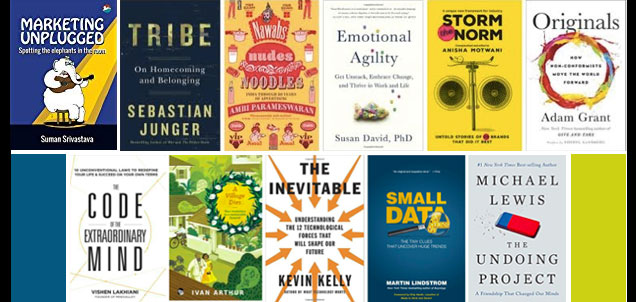
    As 2016 comes to an end, here I am with the round-up of books I recommend reading. And right at the top comes the disclaimer: I have read most of them, but not all of them. A few of the books get featured here are recommendations of people I would blindly trust on the subject. Go ahead read them and share your feedback. Let me know what you feel about it.


    Tribe: On Homecoming And Belonging

    By SEBASTIAN JUNGER

    Tribe is a strong group deeply bonded with known values and defined aims. A concept that is no longer alive in a fragmented world, where individuality supersedes everything. Could there be an answer in TRIBES for the new world? Maybe it is all about closeness that makes the bonds become stronger. It’s time for us to learn from Tribes. Rework on loyalties and meanings associated with togetherness of purpose.


    Nawabs, Nudes, Noodles: India Through 50 Years Of Advertising
    By AMBI PARAMESWARAN

    A real compact narrative on Indian advertising. 50 years delivered through eyes of brands and campaigns. Read how the advertising approaches evolved, how brands and consumer morphed into new forms. The relationship between culture, politics and economy – all in this book.


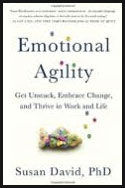
    Emotional Agility: Get Unstuck, Embrace Change, And Thrive In Work And Life

    By SUSAN DAVID

    You need to be high on Emotional Agility to achieve your goals. This book will help you to adapt and synchronise your actions. It will take you towards a more fulfilling life. Success and achievement have that effect.


    Marketing Unplugged

    By SUMAN SRIVASTAVA

    A smart well-organised book that aims to unplug your thinking. It tries to make you  see and hunt the 10 elephants in every marketer mind, if not the room.  You need to read just to check how big is your herd of elephants. By the way, even the elephants have an expiry date, as consumer get smarter and read every trick of marketers.


    Storm The Norm

    By ANISHA MOTWANI & RANJAN MALIK

    Initially, I was not impressed by this book. The second reading and discussion with other readers made me re-look at it. Did I miss out something? Maybe the case studies were too open-ended and the framework was not too complex. However, I must respect the review and feedback of many of my friends I trust. So, here is my recommendation: read the case studies and get some motivation to storm the norm.


    Originals: How Non-Conformists Move The World
    By ADAM GRANT

    Go ahead bring alive your individuality. Get your courage working. Challenge the status quo and work toward changing your defined world. This is some of the advice you get here with highly insightful observations from Adam Grant.


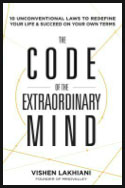
    The Code Of The Extraordinary Mind: 10 Unconventional Laws To Redefine Your Life And Succeed On Your Own Terms
    By VISHEN LAKHIANI

    Let’s take down the age-old wisdoms that define love, education, spirituality or work. Break free of old ideas and rules that limit your thinking. Maybe that will help you redefine success.


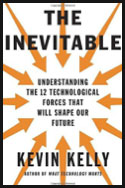
    The Inevitable: Understanding The 12 Technological Forces That Will Shape Our Future

    By KEVIN KELLY

    Want to remain ahead of the curve? Then this is the book for you. Get exposed to the twelve technological imperatives that Kevin believes will be shaping the next 30 years. It is bound to happen… The levers are all in the right places, and the chain reaction is already in operation. .He shows you how these trends will redefine the way we buy, work, learn, and communicate.


    Small Data: The Tiny Clues That Uncover Huge Trends

    By MARTIN LINDSTROM
    I am a big fan of Martin Lindstrom. Here is he again going against the grain and presents how small data may have all the clues to our future. In his words, he connects the dots. And unravels for you the deep hidden meaning, enhances your curiosity quotient and shows the vignette of human emotions and behavior.


    The Undoing Project: A Friendship That Changed Our Minds

    by MICHAEL LEWIS

    This one is fresh from the press types. I have not read it, but this comes very highly recommended. And I have nothing else but the extract to build on. ‘How a Nobel Prize–winning theory of the mind altered our perception of reality’. A story of Israeli psychologists Daniel Kahneman and Amos Tversky who are also blamed for the powerful trend to mistrust human intuition and defer to algorithms. The Undoing Project is a compelling collaboration between them. It is one of the greatest partnerships in the history of science. It is a story of the human mind and is explored through the personalities of two fascinating individuals so fundamentally different from each other that they seem unlikely friends or colleagues. In the process they may well have changed, for good, mankind’s view of its own mind.


    And here’s a bonus recommendation. A work of fiction by a veteran adperson which I would rate as one of my top reads of the year:


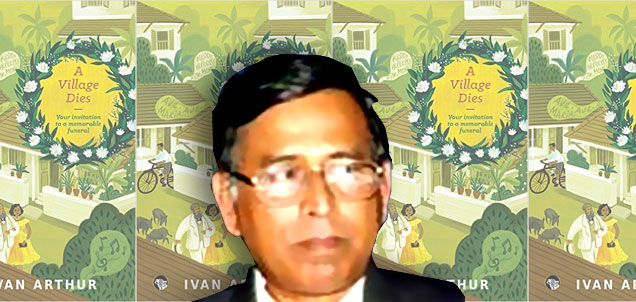
    A Village Dies

    By IVAN ARTHUR
    After a long time, I read a book that is an example of brilliant storytelling. ‘A Village Dies – your invitation to a memorable funeral’, a story in convenient flashbacks. It is a story of two villages Kevni and Amboli, in erstwhile Bombay. A mixed community of East Indian, Anglo-Indian, Goan and Mangalorean live there. Through ages, the genes naturally get mixed. The attitude and approach to life changed just that bit. However, the village slowly dies.


    Sanjeev Kotnala, with 28 years of corporate experience, is founder of Intradia World; a Brand, Marketing & Management Advisory. His focus area includes Ideation and Innovation; he also conducts specialised workshops like IDEAHarvest, Liberate and InNoWait. For soft skill training, he follows SHIFT (Specific High-Intensity Frequent training), a process of continuous training with frequent shorter sessions. Email sanjeev@intradia.in tweet @s_kotnala web: www.intradia.in www.sanjeevkotnala.com. Kotmartial, Sanjeev Kotnala’s column on MxMIndia.com, appears every Wednesday. The views expressed here are his own.


  • Sanjeev Kotnala: Why I fail to understand ASCI’s proposed guidelines on celebrities

    By Sanjeev Kotnala


    The ‘Celebrity in Advertising’ is something I fail to understand.  As per tradition, certain highly influential people, business leaders, religious leaders, politicians, government functionaries, Bureaucrats and people like doctors, authors, activists and educationists have been treated with kid gloves.

    To me, any guideline must cut across all segments and not necessarily the so-called, identified celebrities, the one in fields of entertainment and sports.  The guidelines are discriminatory in nature. They are restrictive in treating ‘celebrity’ strong influence as a negative. A barrier. A constraint. A block.

    So, I have few innocent questions:

    ::  Who will certify, if a person is a celebrity or not?
    :: What is the level of success and following that defines a celebrity?
    :: Will playing just one Ranji match, being an Olympic probable, having done a 5-minute role in a film or even having spent a week at BiggBoss house qualifies you to a celebrity status?
    :: Will the hero of a flop regional picture be treated at par with Dabang and Mr Perfectionist?
    :: Will certain number of followers on tweet qualify you as a celebrity?
    :: Will ASCI routinely publish the list of current people qualifying as a celebrity?
    :: As the fortunes change,, so does the status. After how many years of leaving a field will the status be reversed?
    :: Oh, why should the ads featuring celebrity should not be ‘misleading, false or unsubstantiated’?
    :: Do we in our wisdom believe that the degree of individual consumer harm is different from a misleading advertisement that features or does not feature a celebrity? Alternatively, as a large nation, we only get sensitised when a large number of people get affected.
    :: Why do we always take these silly escapist routes?
    :: Are we endorsing as a fact that a celebrity featured or endorsement advertisements gets more publicised and has a higher influence, then maybe an emotional or logical or even satire based advertisement?
    :: Or we are just doing it, as celebrities are a soft target?
    :: Will this discretionary treatment stand in the courts of law?


    Remember this stance in case of bar dancers and 5-star events have been negated in the court. The only part that is right in this approach is that the guidelines are developed in order that Advertisers are guided to produce and release appropriate advertisements.

    Oh, by the way, celebrities are expected to have adequate knowledge of these Codes.

    Does every person in advertising industry know how to make good ads?

    The onus should stop with the agency and the client.

    It is the duty of the advertiser and the agency to make sure the communication developed for the brand is not misleading. Their duty does not start or finish with need to make a celebrity aware of the guidelines.

    You want action? You want results?
    Here is what you can do. Ban the advertising agency and the client from advertising. Hit them where it hurts the most. Nevertheless, that is sacrilege to think in that direction. The industry may come to a standstill.
    HENCE, WE WOULD WANT TO BLAME THE CELEBRITY.

    The guideline says vaguely that when a person signs a testimonial or used phrases, like ‘I use’, ‘I advise’ or ‘In my opinion’ or such interpreted words than it should reflect a genuine, reasonably current opinion of the individual(s). Perfect, what if the opinion is wrong, but that is the personal opinion. Should celebrity not have an equal right to broadcast their genuine opinion?  NO, WE WOULD WANT TO BLAME THE CELEBRITY.

    Then there is this layer of the celebrities GENUINE opinion must be based upon adequate information about or experience with the product or service being advertised.

    In my view, the blame should rest only with the advertiser and the agency. They, in spite of being part of the industry and having access to the best of the information and possible questioning, argument, soul and insight searching end up making misleading claim.  WE WOULD WANT TO BLAME THE CELEBRITY.

    If the agency cannot grill the client on the communication stance and statements.  If the agency is unable to do due diligence to ensure that all descriptions, claims and comparisons made in the advertisements are capable of being objectively ascertained, substantiated and not misleading or appear deceptive.

    If they could not get the information or take a conscious open eyed decision, and end up making a misleading communication.  Just like the couple blaming the pandit for unwanted pregnancy.  WE WOULD LIKE TO BLAME THE CELEBRITY.

    On the other side, the appeal to celebrities not to participate in any advertisement of (I) a product or treatment or remedy that is prohibited for advertising under The Drugs & Magic Remedies (Objectionable Advertisements) Act 1954 or (ii) The Drugs & Cosmetic Act 1940 and Rules 1945: (Schedule J) or (iii) a product which by law requires a health warning “……is injurious to health” on its packaging or advertisement is nice.

    It can only be an appeal to senses and sensibilities. If it is a product that is LEGALLY allowed to be produced, consumed and advertised, then celebrity should have equal opportunity to be part of it. Alternatively, just stop advertising it. Hell, we have a better option. WE WOULD WANT TO BLAME THE CELEBRITY.

    Yes, leave the option to the celebrity. Put the blame square on the advertiser and agencies.

    ASCI can make an appeal to the celebrities. And these are few overused, overexposed group of people, who can even be contacted on one-to-one basis.

    HOWEVER, FOR THE BLAME, IT MUST LOOK AT THE ADVERTISERS AND THE AGENCIES.


  • Sanjeev Kotnala: Five memories test for ‘BRAND-i’

    By Sanjeev Kotnala


    Take a piece of paper and keep your pen ready. When I ask you, just go ahead with the first few thoughts that hit you. Do not think, compare and evaluate. The sheet of paper is your confidential note. No one is going to read it, unless you share. So, it is possible for you to be brutally transparent and naked.

    Here we go. I am asking you to capture your whole life in five incidents. Just five incidents.

    These incidents can be from any part of your life. Go ahead, pick them from childhood, teenage years, education, love, marriage, parenthood, professional life. Capture the emotions; love, hate, success, failure, indifference, anger, joy, togetherness, dependency…. The choice is yours. However, remember, just Five Incidents.

    You are not to list many and then try to select the five you want to highlight. The game is to pick the five that come to your mind instantaneously.

    Chances are that these incidents are captured from recent times, a block of time, or they are equally spread across your life span. There is nothing wrong in what timeline these memories refer to and what they refer to. This is a synopsis of life impressions concerning you.

    There may be certain patches of life that your conscious mind may have even blocked your access. Maybe, a recent flare-up of brilliance has superseded other episodes from the past. On the other hand, an over emotional episode could have over-written everything else.

    The events you pick up, depend on how your mind reacted to the trigger. How with its own unknown algorithm it interpreted the instruction and decided to visit your distorted, deleted, generalised archive of memories.

    Additionally, jot down few of the incidents that were hovering in your mind as you captured the five on paper.

    Now take that sheet of paper and revisit the incidents. Think about these incidents.

    This is the important part.

    Who do they involve? What was happening? What were the dominant actions? What was the superimposing belief and emotion? Did they involve your family and spouse / partner/ lover? How did you play your role in these situations? What was expected of you? Why did only these selective incidents flashed through your mind? What makes them so relevant and deep rooted? What was your dominant emotion and experience in these incidents? They may point to a deep hurt or failure that you have not been able to completely burry?

    These incidents and dominant memories captures and reflects your ‘BRAND-i- I’. Your internal image of yourself an impression of your ‘BRAND-i’. An image you may be proud and happy with. An image you may want to change.

    The decision is always yours. Do not worry, ‘BRAND-i’ is after all a work-in-progress product.

    Now comes the difficult part. And again I ask you to be brutally honest with yourself.

    Think about these incidents, however, do not evaluate. Again, I expect you to pen down what comes to mind first.

    Think of five people among your friends, colleagues, family, stakeholders and your target group; people from professional or personal life.

    If these important stakeholders in your life were to do the above exercise sincerely and honestly, in how many memories of theirs will you feature? Do not piggy ride on the expected memories of your spouse and family members to include yourself?

    That’s why, I asked you to do the exercise first.

    There is no benchmark of the number of memories you should find yourself being featured. Nevertheless, the more memories you are part of, better it is.

    Congratulate yourself, if you are one of the fortunate ones, who features in the memories of these identified stakeholders. It shows that you have not been a passive passenger in life.

    So far, so good. Now dive deep into each of such incidents. Be the ‘fly-on-the-wall’ approach to the whole memories where you do feature, being re-enacted. Try visualizing yourself as a part of those episodes.

    Check, why are the memories important to them? What is your role in those memories?

    Are you the instigator in the episodes in their lives? Are you the hero of the situation? Are you active or a passive mute spectator to be remembered? Why do you think these memories are important to them?

    This is an interpretation of ‘BRAND-i-E’, the external presence and strength of BRAND-i.

    Check, if there commonalities in ‘BRAND-i-I’ and ‘BRAND-i-E’.

    Do you really like, appreciate and want any of the two images as your BRAND-i .

    Most of you will find gaps you want to bridge? There will be things you want to work on.

    You will have to design your own strategies to help create the desired ‘BRAND-I’.
    However, it is better to be part of other people five salient memories, irrespective of the emotions you evoke in them. Hopefully, you do have memories you are part of.

    Go ahead, work on improving the quotient of memories and create new impressions and experience. Create experiences that are relevant to the stakeholders. Be part of the episodes that the stakeholders, your redefined target group have as their top five memories.

    It may be tough for you to redefine the memories. The past is just a story. You cannot change the character, the reaction or the net impressions. All you can do is write fresh chapters. Give a consistent honest relevant experience.

    Remember, you can only control the message and episodes and not really the decoded message or the final impression. However, you can make attempts towards leaving experiences that will be better interpreted.

    Take that step and work towards, recreating the brand experience and in process your ‘BRAND-i’ is re-crafted. Take charge of the situation.


    BRAND-I, is a specialised workshop conducted by Sanjeev Kotnala the founder of Intradia World; a Brand, Marketing & Management Advisory. Email –  sanjeev@intradia.in tweet – @s_kotnala web: www.intradia.in  Blog – www.sanjeevkotnala.com  and www.fireurambition.wordpress.com 


  • Sanjeev Kotnala: A BRAND-i called AMMA

    By Sanjeev Kotnala


    Yesterday, actress-turned politician, xix times Chief Minister of Tamil Nadu, the leader of masses and a national leader of stature J Jayalalithaa was laid to rest draped in her favourite green saree. An epic era came to an end. The uncertainties continue, even though her close associate, tea-vendor turned politician OP Panneerselvam took over as the next CM. No one remained untouched or unimpressed with the power Amma radiated. The first-time ever gesture of the opposition to place billboard in her honour, is just one of the few indications of respect and awe she bargained for.


    There are people who saw her populist schemes along with her unforgiving nature as a polarity imposed by being a political leader trapped in a landscape of power.


    It is not that she was the first leader where the news of her demise led to near shutdown status in the city and state. However, the calmness against the earlier predicted chaos with the news was a welcome sign, a perfect response from people who she protected and served. Even demonstrations on Babri IMasjid scheduled by various Hindu and Muslim organisations were cancelled.


    It will be wrong to propose that the Brand Amma was a result of just the schemes and services with her ever smiling face staring at you from every possible corner. Amma Canteen (Amma Unvagam), Amma People’s Service Centre (Amma Makkal Sevai Maiyyam), Gymnasium, Medicine, Mineral water (Amma Kudineer) , free laptop, Mangal Sutra and other household durables targeted at specific section of the population (Voters) had their influence, but it was always more than that.


    The real contribution was the clarity for what she understood. There was no ambiguity in the expectations, behaviour, response or what used to drive her in her work. Moreover, what worked was her clear thinking and bridging of the two gaps that at times places brand in a vulnerable position. She bridged the gap of ‘What she claimed to be’ and ‘how she behaved’, just by sticking to a closely drafted script.


    Her bigger victory was bridging the second and more crucial gap. There was not much difference in ‘How she thought she was performing’ and ‘how people thought / perceived she was performing’. What she said talked is what she did. The degrees of uncertainties were restricted in her case.


    This uncanny ability to remain true to her guidelines, thought and desire helped her create an ecosystem of expectations and a well-articulated promise of possibilities. She then did not allow anything to come in the way of her delivering on these stated and unstated with a high degree of regularity. Operating in almost a six-sigma trueness to the created persona, trust was a natural outcome for the Brand Amma.


    Normally at this stage with high trust and the implied momentum, Brand Amma would have been excused for minor lapse in service and delivery. However, she completely worked in one philosophy of not only ‘why repair once broken’ but coupled it with ‘once broken never repaired’. This was evident in the schemes, plans, and associations. This further strengthened, the trust of her followers in expected service delivery.


    Brand Amma may have had flaws. Her semi-dictatorial stance and at time unilateral crushing acts of defiance were not appreciated by many. She at times did leverage this belief but rarely took it for granted. Her checkmating arch rival K Karunanidhi in the 2011 election with a spate of populist announcements is an apt example of it. This weapon of populist freebies was not her creation. She can be credited for re-branding it as ‘Free of cost’ and attaching a personal signature to it. And she ensured that there was no deficiency in the delivery. She created a hugely successful mass brand that was well created serving a large lower and middle class. She promised. You Voted. She delivered.


    There are strong linkage and branding. I am sure that they will survive the current and near future short-term political turmoil that is predictable in the state. The long-term impact and a possible dilution will always be a threat. The physical service and deliveries of Brand Amma may stop being significant and relevant in some time, but the BRAND-I; the real BRAND AMMA is perpetual legacy.


    A known person with muffler around his neck has been trying to do the same but with hardly any class. And the other prophet of Aache Din should learn that their constituencies are critical evaluating the ever enlarging chasm between promise and delivery.


    Maybe it would be a good idea for some of the known business institutes to start teaching students the power of creating Brand-i. At the end; it is not really your skill or talent that leads to success, but how you are branded in the environment. AMMA maybe just the right case study.


  • Sanjeev Kotnala: You control the emotions or they control you!

    By Sanjeev Kotnala


    Like you are pregnant, or you are not. There is nothing called half-pregnancy. There is nothing like, in partial control of emotions. The grey does not exist. You are in control or you are not.


    None of us have a professional or personal life where everything is fine. Perfection is anyway a work-in-progress, so is satisfaction and happiness.


    It is said, ‘Everything can be taken from a man but the last of human freedoms – the ability to choose one’s attitude in a given set of circumstances, to choose one’s way’.


    It is the reaction that dictates who is in control; you or the emotion.

    We all have walked that road. We have been disappointed with results, unmatched expectation, unfair interactions, biased evaluation, misplaced credits and lot of such episodes in life.

    We as part of our DNA have a choice to Flight, Fight or freeze. It is so easy in the personal life to decide to sulk or shout or to ignore or sometimes take the best option; no action. Professional life does not allow you this freedom. Because every action is going to reflect and impact in your ‘BRAND-i’, the net emotion / perception people have about you.

    Managerial work environment is a lot full of stress. Moreover, you are mostly working in a team where the efficiencies and competencies are being balanced, expertise and labour units being negotiated. It can become a nightmare if you do not have emotions in control. It may define when and if at all you get kicked to a bigger role and responsibility.


    No matter what the situation is, one is always free to choose how to react.

    There is a simple way to improve yourself in handling of emotions. It is about rightly choosing reactions to situations? Most of us believe that the positive emotions like joy, excitement, achievement, celebration and empathy are easy to control. They anyway rarely have an adverse impact. We end up trying to manage negative emotions.

    According to the research by Professor Cynthia Fisher at Bond University in 1997 titled “Emotions at Work: What Do People Feel, and How Should We Measure It?*” the most common negative emotions experienced at the workplace were frustration/irritation, worry/nervousness, anger/aggravation, dislike and disappointment/unhappiness.

    Now, each of us has our own set ways to evaluate and react to these emotions. Here are some more suggested ways and what works for someone else, may not work for you. So choose with caution, it’s your life, it’s your ‘BRAND-i’


    FRUSTRATION is one of the most common emotions. As a tribe we over estimate our capability and build expectations. So, when we get stuck or trapped and are unable to move forward or are dependent on others for success, we feel frustrated.

    Now, here is a word of caution. It is better and recommended to try tackling frustration quickly at the nascent stage, or it can blow up into something more lethal and negative, maybe like anger or revenge.

    Stopping and evaluating is a right place to start with. Check yourself and your reaction. Ladder your cause to find out, what is that is really irritating you? Be precise and note it down. Then try thinking positively or finding something good in it. This will help you look at the situation differently.

    The small shift in outlook has the potential to change your reaction. It may change your mood. It may make you realise that it isn’t something intentionally being done. And it is not definitely something personal.

    Many people find it easy and effective to remember a situation where they felt irritated and frustrated initially, but the situation worked out well. This makes the anxiety levels go down as the mind is tricked into lowering the risk evaluation.


    NERVOUSNESS.. There are many reasons for worry. Important ones are insecurity and lack of expertise or capabilities to deliver what is expected. This can get out of hand and lead to lower performance and a decreased willingness to take additional responsibilities or risk.

    Worry amplifies when you surround yourself with it. It can dent your confidence and self-esteem. So, in addition to finding and then working to bridge the knowledge, skill gap, you can try being with people with positive attitude.

    You may try the age-old trick of controlled slow breathing. Breathing slowly for 5-6 seconds and breathing out equally slow is known to slow down heart rate. It does not do anything to the situation other than making you more in control of your reaction. Post this concentrate on improving the situation.


    ANGER is one of the most brutal and destructive emotions. At work, this could be a career limiting emotion. Fact is that most of us do not handle our anger well. It is an internal emotion which finally ends up in an external manifestation. So, it is you who recognizes its buildup within you. You know the signs. And it is only you who can take steps to stop your anger early enough to control.

    If you fail in controlling it early, stop doing what you are doing and take deep breaths. It works as it breaks your chain of thoughts. Here is when you have to think positively.

    One of the simple tricks is to visualize yourself angry. See it from an external point of view. How do you look? What are you doing? How does it impact your surrounding and your BRAND-i? You will find that this sudden short visualization is good enough to put brakes in your anger. Bet, you can’t do this without getting irritated with yourself.


    DISLIKE. We are human being and hence we are selective in our like and dislike. Sometime there is a reason for it and many times there is no real reason to dislike someone. In work, you do not have full control of who all you will work or meet. So be respectful. Set aside your pride, ego and prejudice. Deal with the situation professionally.

    If you do not like someone’s approach, and the person is unprofessional. Just because you are in a team does not mean that you have to copy or mirror the approach. Explain your stance and leave calmly. Remember to follow ‘CYAUYH’- Cover your ass using your head. Let it be known to right set of people your reason and logic for this step.


    DISAPPOINTMENT is the toughest to deal with. It impacts us overall and productivity at work. We get drained of our energy and positivity. It works negatively on us, and we hold ourselves back.

    Remember you are not perfect. All things will not go your way. Failure and success are two outcomes, and you are bound to encounter both. It is not a leveled straight road. Professional life is full of twist and turns and ups and downs.

    Adjust to the situation and / or adjust the expectations. Then instead of trying to find out what went wrong, it may be better to see it with a different lens. Try understanding what you could have done better to make the situation work for you. So, learn from the situation and move forward.

    Write down, what happened and what should have happened. I find it interesting and relevant to write, “What I have learnt from the episode take a lesson for future and snap out of it”. Remember, you always have the power to change your situation but in the future. What happened is now just a story. You cannot change any character or episode and hence why live in the past. Go ahead, define your future, define your BRAND-i .

    Laugh or smile. It is tough to weep while you laugh and feel sad / disappointed when you are smiling. This is a simple key to your body. So when you feel disappointed, please go ahead laugh or smile, it will definitely help.


    …………………………………………..

    Sanjeev Kotnala is a Brand and marketing advisor, trainer, facilitator and ACF accredited coach. He has over 30 years of corporate experience He runs a unique workshop ‘BRAND-i’ that teaches you to treat yourself as a brand. Other special workshops by him are IDEAHarvest ( Ideation), Liberate ( inclusive processes) and InNoWait ( Innovation Now and here) Email – sanjeev@intradia.in tweet – @s_kotnala web: www.intradia.in Blog – www.sanjeevkotnala.com and www.fireurambition.wordpress.com

    ………………………………………….

    *© Copyright Cynthia D. Fisher and the School of Business, Bond University.


  • Brilliant Storytelling…


    By Sanjeev Kotnala


    After a long time, I read a book that is an example of brilliant storytelling. ‘A Village Dies – your invitation to a memorable funeral’ by Ivan Arthur. Published by ‘Speaking Tiger’.

    It is a story in convenient flashbacks. TVD, is a story of two villages Kevni and Amboli, in erstwhile Bombay. A mixed community of East Indian, Anglo-Indian, Goan and Mangalorean live there. Through ages, the genes naturally get mixed. The attitude and approach to life changed just that bit. However, the village slowly dies.

    Ivan Arthur captures this through the prism of the tomboy Kitty. She is attending the funeral of simpleton gravedigger Hanging Gardens and is remembering the life of the village she knows so well.

    There are stories within stories. I liked that. Rather I really enjoyed it. They are intrinsic interwoven episodes of life. Every character alive to the real life around them. The thoughts, beliefs and eccentricity are all evident and amplified in the simple narration.

    Sharing a paragraph from ‘The Village Dies’ (from Page 81): “On her subsequent visits to Byculla, she persuaded him to bring his guitar along. They would sit on two separate chairs across the room, she singing from those little pop songbooks that the Furtados had made popular, he improvising his own chords by ear. This discreet live stereophony (the concept had not yet caught on in Bombay) didn’t last long. The two chairs across the room were given up for the couch. They sat at the two ends of it—singer and accompanist—till songbook, and daylight was consumed. In time, the distance between singer and accompanist had shrunk until strings ad voice had merged into one indiscreet live monopoly.

    A craftsman playing with short sweet sentences. Ivan Arthur makes it so easy on mind. He captures your attention from Page 1 and pulls you through the rest of 223 pages. Like an Indian movie, he does slacken the grip, a wee bit around the 200th page mark. There he speeds through ‘The Gulf of Kevni and Amboli’ and you tend to get upset with sudden introduction of pace in otherwise silent waters. However, right at the next corner, with ‘The Sultan’s Man’, he catches you back in the web.

    I am surprisingly reminded of R K Narayan’s style of storytelling. There are loving families, changing attitudes, unsaid love and polarised reactions captured within compact paragraphs with easy, flowing narration. Ivan Arthur style of narration is a bit more complicated compared to simplicity of RKN, but it still has the same DNA.

    ‘The Village Dies’ is a compulsive reading. Too tough to put down. The village comes alive. You know each of the frames and turns. Though there are no visual references, nevertheless, you get a clear picture of every house and roads taking you there. You are with the characters. You are part of their lives, just over their shoulder. You fall in love with them and hate others. You feel their emotions. And that for me is great storytelling.

    Here is another pick from ‘The Village Dies’ (from Page 184): “The story does that one of the younger ladies from these hutments had struck up a tender relationship with a bachelor from the East Indian home she was working in. What started with affectionate words and furtitive caresses swelled into a cataract of uncontrollable passion. Their affair didn’t go unnoticed. She overheard his mother to tell him not to be an idiot. The woman working in the neighboring home called her aside and said, ‘Be sensible. These Christians will beat you up, and so will your husband’s people. Stop this foolishness’.

    Every chapter is a complete story in itself. It is isolated. It is like steps on a ladder. You can halt at any one of them to take rest. Each step ultimately taking you that closer to a logical conclusion.

    ‘A Village Dies’ will have a place of respect and honour in my collection. I am sure it is not going to be uncaged for long unless I find a right reader to present it.

    I have not read Ivan Arthur’s earlier works. Four of his books are: ‘Pavement Prayers’, ‘Once More upon a Time’, ‘Jossie’ or ‘The Fourteen Stations’. I think I read the fifth book ‘Brands under Fire’ but am unsure. However, with ‘The Village Dies’ I am hugely tempted to get my hands on them.

    Ivan Arthur is former national creative director of JWT India (then Hindustan Thompson Associates or HTA). He spent 38 years in advertising before retiring in 2002. A Village Dies – Your invitation to a memorable funeral is available on Amazon.in at Rs 239. Sanjeev Kotnala, well-known marketer, columnist, management consultant and a voracious reader, writes for MxMIndia every Wednesday

  • Sanjeev Kotnala: The forgotten art of ‘Managing By Walking Around’

    By Sanjeev Kotnala


    In my career, I worked with a lot many professionals managers, who were also great human beings. They helped shape my approach in life. Under their expert tutelage, I was introduced to the hugely potent management tool; the art of ‘Managing By Walking Around’ (MWA). I am a great fan of it. Most of the places I have had the opportunity to work for, MWA was a necessary part of organisational culture.


    The new breed of managers, over-dependent on whatsapp, mails, SMS, chats, Skype is missing a trick or two. Let me share a small story here.


    During the period, the incident happened, I was directly reporting to one of the directors (D) in one of my corporate avatars. Every morning, ‘D’ while walking to his cabin would interact with as many employees as he could possibly do. My cabin was right in his path. Invariably ‘D’ stopped by and would toss a harmless innocent question ‘What’s happening’. The question would result in triggering a nervous reaction in me. The result, I would start ticking off the list of problematic items with him.


    It took me time to realise: it was D’s way of remaining in touch with the team. This MWA allowed him to conduct a cool no-negative check in the fastest possible time.


    One of my juniors, who was long in the organisation came to my rescue. He shared a secret with me. He saw the problem in my listing of points in reply to D’s otherwise harmless question. He recommended that instead of listing problem areas, I should start sharing jobs that were on track, Jobs, where the team was really doing well. Events that were under control. He with his experience came to a valid conclusion; ‘D’ did not remember the jobs with his direct managers, and MWA was his tool of keeping his finger on the pulse of the departments. The junior whispered, do not lie even if you do not share the complete truth. Share more only when probed.


    Once I adapted the practice, my life became simplified. Moreover, ‘D’ was happy hearing everything was good. In effect, his perception of me as an effective team leader reached newer heights.


    Stopping at the canteen, eating together, the morning review over a coffee, finding time for informal get-together, meeting after office hours, celebrating successes, wiping away failures over a beer and peeping into team’s work area for a quick conversation is some of the tools used by MWA practitioners. I should know. I was one of them.


    MWA makes you to be perceived as more approachable, trusting, connected, part of the team and less intimidating. Tags, we all want to carry. The positive result of MWA is quick reaction, proactive behaviour, openness, knowledge transfer and trust that naturally emerge with such interactions. You get to know of the problems, much before they turn serious. You are better placed to guide and coach the team through a relevant solution. You are able to tap on the organizational grapevine. Tactical information is easy to get and people are surprisingly more willing to help you out, because they want to and not because they should.


    A win-win solution!


    MWA can be of great help in creating your ‘BRAND-I’. When you want to take those deliberate planned steps to help create your personal brand. MWA practitioners are seen as more knowledgeable, culturally right and organizationally active leaders. Well handled, it can become one of the pillars of your success.


    If you are one of the seniors in an organisation, you may vaguely remember your frontline days and agree that the landscape of business is literally morphing at a fast pace. Trust me, you can leverage MWA to tweak and update your knowledge sphere. You become more alert, alive to the business requirement and develop an in-depth understanding of front-line issues.


    MWA is a deliberate strategy of frequent informal wandering through the office area. Creating a participating environment of spontaneity of discussing work, asking questions and helping wherever required.

    It sounds simple, but it is a twin-edged sword. If not practiced rightly, it can be an efficiency killer.

    MWA is all about your approach to interaction and engagement. It is not about a mere physical presence. If the teams see you actively listening and contributing, they surely will appreciate and become co-drivers of your agenda. You are in the crosswire. People are watching you. They will detect biases, even when none exist. So, if they get the sense of excessive supervision, or it being faked, they will be smart enough to find their own way out.

    MWA cannot be forced. It is something that you should want. You are into MWA it or you are out of it. There is no part-MWA. MWA demands an inclusive way of working. It is for you to define what you want from MWA and take proactive actions in attaining the results.


    When you are out in your MWA rounds, you must listen, suggest and guide. You must only make promises that you have intentions to keep. Just like alumni makes an institution, your action and implicit behaviour define the success of MWA and your ‘Brand-I’. You need to earn trust, otherwise you can end up being seen as a spy to senior management. You need to understand individuals and teams, and their need for intangible support. You cannot paint everyone with the same brush.

    If you are new to MWA, your inability to start the practice is understandable. You need to nudge yourself and stop using your busy schedule as an excuse. Many of you will be tense just visualising the ritual. It helps being a natural extrovert. However, you do not always have choices.

    Remember, the teams can easily sense your nervousness. To be successful MWA manager, you need to be relaxed and inviting for people to respond positively. For this, you need to adapt to the norms of the arena you walk in. Being one of the teams is an easy statement and a tough practice.

    If you are now ready to take your baby steps in the glorious world of MWA. You should be on guard to self-evaluate and fine-tune your actions. Differentiate between being assertive versus aggressive, listening versus hearing and inquisitive versus intrusive. You should be willing to observe and listen more. Get the team to contribute to success and changes that makes their lives simpler and pleasant.

    MWA needs your complete attention and dedication. The aim is to build quick rapport. Watch out and keep your side of the deal.  There is more harm in sharing half-truths or being the source of rumours than being transparent and honest in your dealings. .

    If you make a promise, keep it. If there are issues or obstacles that prevent you from delivering, please come back and share with the team.

    As a practitioner MWA, your approach is under scrutiny. Keep your interactions straight, seek result areas and look for success. Compliment people doing great work. Create warm personal positive environment around you. Use MWA interactions to drive home company’s culture, vision, mission and values. Create that alignment of individual, team and organizational goals.

    The other challenge in MWA is to achieve a balance between personal and professional life. Chat with team members about their non-professional life. Gauge their comfort level and try knowing their families. In advertising, I was taught to know the client’s family, his dog and spouse. It really did wonders, but you may not need go that far.

    There is a thin line between MWA and irritating-MWA. Too much and you get branded with over supervision and an insecure senior. Something that will work against you and the process of empowering teams. Do not overdo MWA to an extent that it starts becoming a distraction and a legitimate excuse within the team.

    The worst you can do is to be predictable in your MWA timing. Everyone will be extra-aware and alert for that walk. You will lose the element of spontaneity and randomness. Let me rephrase, you lose.

    So, be spontaneous. Be regular, frequent but random in your timing of MWA. And remember, It helps to be warm, fresh and a good listener at all your MWA stops in the organisation.


  • Sanjeev Kotnala: Arnab Goswani, the Newshour is over but Picture Abhi Baaki hai Dost.. The game has just begun

    By Sanjeev Kotnala


    I always hated the Newshour with Arnab Goswami on Times Now. And as I look back, maybe I hated this person called AG routinely playing right. Doing what many of us would have wanted to be doing but are too afraid to do.

    As I write this article with today’s debate in the background, I see a softer smiling Arnab Goswami telling the panelist ‘I have come after few days, that does not mean you can walk all over me’. It seems he has read the viewers mind. Maybe celebrating his own freedom to turn entrepreneur (that’s most likely), for a change, he took a backseat at times and allowed people more than 13 seconds of free speech. A sign that Newshour is changing even as he conducts his favourite game tonight. It will never be same!

    With Arnab pulling himself back for few moments, the Newshour on Times Now is as bad as any other news channel.

    The passion continues, and you can see it right there on the screen. However, the voice is a bit slow in its famed rebukes. Is that an emotional not-in-control Arnab going through the notion. I am sure; it is not the case. On the cue, slowly, the martyr and nationalistic emotions make him warm up. I am liking this guy; I always hated.

    Frankly, I never could stand what was going on by the name of debate. However, as a person interested in branding and running specialised workshops on ‘Brand-I’, there was always that dose of admiration and awe.

    Arnab was the Baba Ramdev of Times Now. One who has brought the back of the pack on to the limelight? One does not make sense without the other. Both of them were driving changes in their area, in process redefining and repainting the canvas they operate in.

    There are clearly defined boxes that only Arnab could tick.

    A classic case of clear positioning, something very rare in the media world.

    A well-defined promise of against anti-nationalist.

    A well created platform of nationalism and patriotism.

    A rich consistency in performance.

    A polarity in response from stakeholders. You could love or hate him but never could be neutral to his style and work.

    The ‘Y Security’ and threats were part that game along the path he decided to walk.

    Arnab is a classic example of a person deliberately, consciously and successfully creating a BRAND-i. There was never a contender to what he was creating. And I doubt if there will be.

    It was not a Newshour or debate; it was Arnab style of debate and journalism. The Newshour was just an external face of all the changes he was doing and the culture of journalism he was proposing.

    It was only possible with the support of a media organisation like Times Now. Arnab could not have been Arnab without it. But, Times Now … the question will remain unanswered and hypothetical.

    It allowed him the freedom to help him ensure that there was hardly any gap between the promise and delivery ‘Brand-i-Arnab’, between how he thought he was performing and how the outsiders saw him performing.

    A true iconic role model in many ways.

    Many want to be the next Arnab Goswami, unfortunately there never will be.

    Newshour will not be the same at Times Now.

    The next innings will be the real test of Brand Arnab Goswami.

    Remember, the audiences have a very fickle memory.

    It does not take long for the needs, demands and desire of the nation to swing a different way.

    Arnab has the giant backing of viewers because of his nationalistic, patriotic, no-nonsense approach. At least on his hour, he seemed to believe in transparency, openness and very demanding interrogative journalism.

    There are many like me who hate his apparent direct confrontation with pre-conceived notions. And there are many who applaud when he accepts his error (which is rare) or slams a politician for not respecting family members of a martyr or speaking frivolously to a lady panelist.

    Somehow, I have a feeling (and I wish) it does not happen with Arnab, who seems to be an otherwise sane voice demanding a space for individualistic independent journalism.

    However, the statement that Newshour on Times Now is not going to be the same for sure, is like a broken record. The organization is expected to tide over this hitch and serve the Nation something they would want to watch. .

    Meanwhile, there are some in the businesses around feeling relived temporarily. There still remains a mystery on why Arnab said Tata to the channel and who are his future partners.

    In true Arnab style, though the nation wants to know, what made him exit and what he plans to do, it will be told only when he is ready to share.

    His future actions and success with definitely be built around the passion and the support that he gets into the act, he puts up.

    Arnab Goswani, Yeh toh Trailer Hour the News Hour is over. Picture Abhi Baaki hai Dost.


  • Sanjeev Kotnala: Stop writing the print epitaph

    By Sanjeev Kotnala


    Last week, newspapers were in focus. I read this article ‘What If the Newspaper Industry Made a Colossal Mistake?’ by Jack Shafer who is Politico’s senior media writer and ‘The Slow, Painful Death of the Media’s Cash Cow’ by Megan McArdle a Bloomberg View columnist. They made some much-delayed valid points. The inference was simplistic: ‘Newspapers got it all wrong in extending their content on to the web without and instead of strengthening their offline product.’ A digital strategy in the absence of any really effective revenue model was anyway a non-starter. Additionally, the free access to news (content) via search engines further weakened the already non-viable net strategy. Apps and ‘Digital first’ strategy became the buzzword across print industry.


    Though the article has a US perspective, I find the thought holding ground in Indian situation too.

    The digital wave in India has always been suffering from an Accessibility, Availability and Affordability issue. The Indian audience is sick and tired of comical breaking news oriented treatment by digital and TV. As if the secret of us having morphed into instant gratification fed voyeuristic bastard’s was out in open.


    There is a general aversion to access and read detailed news and analysis on their mobile or laptop’s screen across generations. Even the so-called millenniums are averse to the idea. The result, the audience that advertisers seek in UnMetro (and to a large extent in metros too) are better accessible through newspapers. Newspapers continue to be the champions on ‘Accountability Journalism’ and Government support or criticism, local happenings and developmental projects.


    Unfortunately, the print industry, individually and collectively, instead of taking proactive efforts towards survival, has been suicidally pushing itself. It is they who’ve hit the ventilator when they checked into the ICU for a treatment that needed a meeting with a General Practitioner.


    ‘Digital First’ and the multi-purpose newsroom for synergistic leveraging the capability across mediums, created more issues. It affected the way content was now being sourced, analysed and presented to the audience. In many places, print titles tried to imbibe the so-called new line of thinking and expected lower engagement levels. It forgot to concentrate on reader engagement and tried to provide too much content but shortened analysis.


    India is still a growth market for print. The circulation is growing. Advertising is still healthy for the leaders. If one goes by the FICCI-KPMG report on media and entertainment, print is still years away from being delegated to the position of third largest media. Meanwhile, digital has to prove itself and sort out the issue of credibility of impressions, it faces worldwide. I know there a lot happened in this area. However, I am a strong believer in print still having more time then the doomsday predictors shout. Moreover it is possible to give print another blip with rejuvenating steroids.


    So when Jack Shafter (referring to a report by Chyi and Tenenboim) points that the Top 51 US newspapers not only failed to show any growth but also reported drop in online readership in the recent past, this seems as a verdict echoing the future Indian conditions. We forget the lifestyle, the cultural difference, the social nuances before blindingly taking it to heart.


    India has had the advantage of being behind the curve, at least in this media environment. There are lessons to be learnt. It is surprising that even with these advance indications, the industry walked into a trap. Aware of the pace of accelerating adaptation of western culture across areas in India, we expected the media (primarily newspapers) to follow the trend. Was that really logical?


    Taking a strategic call that never pinched them, print moved in with the same staff being given additional responsibility or moved to online space. The approach of it still being just ‘News’, and a simple 7-15-day training is all that is needed; they compounded the mistake.


    Meanwhile, not learning from past, newspapers continued to allow technology to define their space. In the past, they never reacted when overnight technology advancement changed the nature of OOH media. The new improved printing and vinyl allowed for advertisers starting afresh an affair with OOH. Print repeated the mistake when they continued to focus and promote the myth of newspapers as the best medium for tactical and faster reach built up. Brand building and differentiation be damned.


    Moreover, post the IRS fiasco, the print industry embarked on a fast suicidal track and failed to close, commit or create a unifying currency of readership measurement. The revenue ecosystem pushed them back to an unscientific regional feedbacks, circulation and relationship selling.


    Does the industry have time on hand? Can something happen? Not a miracle, but there is time for print in India to slow down its rush towards doom day. It has been pushing to capture the new generation on the smaller screen. The attempt to push the offline readers to shift to online versions has been half-hearted. Not that it would have made any difference. The category image has taken so many beatings in last few years that in this area, we will most likely follow the west behavior. There the offline readers have migrated to the news and view aggregators like Yahoo, Google and CNN (Chyi and Tenenboim).


    Let me step back and share an incident. It is a comment made by a reader in an interaction with a leading newspaper. That young gentleman spoke with fire and vengeance. He told the newspaper team ‘you must feel obliged that I buy your newspaper, as there is nothing, I find that is worth my attention, interest or differentiated enough’.


    He left a pregnant question that went unanswered at that time: “Can you provide me a newspaper with rich content? A content that will make me involved, engrossed and cement my currently crumbling relationship with you. Something that will make me read your newspaper from column to column. Make me refer to it again in the evening to read. If that is too much to expect, can you at least make me carry it to work, to read it during his break. Why must it die within the gratifying 20-22 minutes that I give you?”


    I am not sure if there was anything shocking about this question. Content is King and Reader the Queen. Is the time to look inward and still magical create something for such readers over? However, some of the leading newspapers went head-on into following the new lucrative path of native advertising with a twist. Readers have started to question the credibility of content. This is something that may have the worst impact on the print industry. The reader is not averse to such content, all they wish is that the publication should specify and clearly highlight content of this nature, so that they can consume it accordingly.


    Many newspapers have tried creating new newspaper navigation rules for their readers, but the efforts have been sparse and sporadic. It included the shift from ‘Readership from Circulation’ to ‘Circulation from Readership’. ‘Happy Mondays’ by Dainik Bhaskar, the retail geographical focused division by Eenadu, the creation of a phenomenon called ‘Bombay Times’ and ‘Mumbai Mirror’ by Times of India, the education and development columns by Dainik Jagran, the niche rich content by Mint, the editorial focus by DNA and the progressive social campaigns by Hindustan Times, TOI, Bhaskar, Jagran and Patrika are few such examples. Unfortunately, every success bred complacency.


    This continued with their experiment with online version. Was the different than the offline version? The answer would be an empathetic ‘NO’. Newspapers attempted a short cut. They created a mirror image in e-newspapers and maybe a disguised parallel world of news portal. An experience that reading friendly and the new generation, both find the less than satisfactory.


    I have no reason not to believe that print has a lot more to offer. It has a far longer than predicted life in India. Remember, the print readers are the loyal kind and online version readers like a flirtatious adventure. I feel vindicated when Chyi says, ‘But for all of its faults, the newspaper remains a superior format and much would be lost if our neglect caused its premature demise’. She captures the situation in a nicely crafted analogy. “Newspaper had been running the equivalent of a very nice high-end steakhouse,” she says. Then McDonald’s moved to town and started selling untold numbers of cheap hamburgers. Newspapers thought, “Let’s compete with that,” and dropped the steak for a hamburger, even though it had no real expertise in producing hamburgers. “What they should have done is improve the steak product’. Megan McArdie also takes a potshot with this question. What do you do when you’ve been given a death sentence? Do you live your remaining time to the fullest, or do you spend that time taking long-shot chances at a cure?


    It is worthwhile to read the above paragraph again.

    Maybe, it is when print should stand united. I know it is tough but not impossible. It is a critical need of the industry, a first step towards collective action. They should find ways to connect with clients and re-educate them on effective use of print. Encourage experimentation and even promote creativity in print. Re-evaluate and check on over innovation and in the process morphing newspapers to a stage which is an intrusion to satisfactory reading experience.


    For a moment, print should stop milking the cow dry and give it some enriched fodder to fight the times ahead. Quickly move in revamp readership measurement. Move on for studies that measure media amplification or multiplier impact. Take a rate freeze and rationalise rates instead of a persistent upward climb that anyway looks good only in theory. Get back some sanctity on rates. Go all out, reward, award and educate client and agencies in the craft of effective print communication. Find ways or at least encourage clients to run long duration brand building campaigns to reduce the tactical topical pressure and perception. Print should even consider offering incentives for brand building campaigns.


    Will such a thing ever happen? Unfortunately, I have my own doubts.

    On my side, I am not imagining things. I know a few of print titles have ventured into these areas, but the individualistic attempts cannot break the client’s inertia or pick momentum.


    Can the industry leaders, for the next twelve months, take a hike of 10 paisa on their cover price and give it to fund such an initiative? We will be looking at a corpus of Rs 90 crore-plus.


    It does sound impossible for the industry. Here, everyone has doubts. The whole environment is not trust-friendly. Until the time the cover price remains the biggest tool of self-destructive entry barrier, chances are the holy cow of low cover price will survive. Doubling of newspaper cover prices will definitely impact circulation. Nevertheless, it will reduce the financial burden. It will make funds available. It can help streamline advertising rates. It can take the fringe readers out of equation. It can upset the raddi economics. The true strong newspaper with real reader’s interest and engagement will come out stronger from such a move.


    Dreams exist. The reality keeps questioning them. I am reminded of A G Krishnamurthy’s quote: ‘To realise a dream; you need to dream first’.

    In reality, the choices newspapers had were never simple. Print was playing almost a forced hand. Forced to take few decisions that seem wrong, but I respect the judgement of the industry stalwarts; they were logical at that time. One can’t really find fault with them.

    The industry talent pool remains incestuously limited. There is pressure on talent retention. The younger talent seems to be shunting print. The oldies work within the big bias of their experience, expectations and exceptions. I don’t have any idea on how this can be challenged and minimised, but it needs to be tackled. In the absence of any action, we know the path we are choosing to walk.

    Abroad, print has given up on the fight without a protest.

    Should India do the same?