Tag: Sanjeev Kotnala

  • Sanjeev Kotnala: What type of Whatsapp university student are you?

    By Sanjeev Kotnala


    There are many who hate ‘Whatsapp’ and many who swear by it. For few, it is a cause of anxiety and for some the way out of loneliness. Yes, there is a lot that happens on Whatsapp. And a great deal more can happen over Whatsapp. Every parent of 10th and 12th class students in India hates it and yet in many places it has been used as an education enhancement tool. Every couple complains about it and then bonds over it! It is a magic wand.

    Since WHATSAPP has come into life, it is an unexplained circus. In one moment, you are romantic and the next moment is a surge of patriotic emotions. Immediately after that comes Sunny Leone. You know what kind of mess you are in. Even before one could recover, someone pushes four lines from Swami Vivekananda. It is followed by some frustrated soul sharing jokes in an attempt to make you smile. The moment you find peace and stabilise, there is that threatening message of some god- or Saint, which you need to forward to 10 people in your network for instant good luck. Failure to do so will make unexplained unsaid things happen to your life. Meanwhile, someone has found a decently crooked quiz or puzzle to send you in a differential chase… this fast vignette of emotions and feelings can only be experienced for Whatsapp… whenever you open it… it seems like the mythical ocean of unfathomable knowledge… I bow my head in respect to all the knowledge sharers in the world of Whatsapp. I don’t know what I could have done without you. (This is a translation of a message received in my timeline)

    In fact. It reminds me of a saying in Hindi. It loosely translated would mean, ‘the knife – you could use it to cut vegetables or to harm someone. The choice is always yours.’ It is true for double edged swords like social platforms, including Whatsapp.

    Whatsapp is the new-generation information sharing tool. It is just one of the many channels to achieve faster uninterrupted real-time communication. It carries text, images, videos and audio with least distortion. It is free and unlimited. The 256 group member limitation is a boon too. It is accessible on WiFi network without a data plan, all of it and more on a simple device called mobile. It also has a smooth web avatar for PC and laptop screens. Which makes it a true anywhere anytime resource.

    Corporate teams leverage closed group interaction, that too with data encryption. Companies adapt Whatsapp for quicker knowledge transfer across the organisation. It is an apt tool for real-time status updates. In some places even educators have used it as a real-time link between learner, facilitator and information.

    It is hard to believe that the successful social media platform is just eight years young. It was in 2009 when Jan Koum and Brian Acton created it. In 2014, Facebook paid $19 billion for it. Today, it is the second largest social media platform with more than 1.2 billion monthly active users (MAU), seventy per cent of them using it daily. Across 180 countries, 50 million-plus messages fly over Whatsapp every day.

    Whatsapp is a necessity in life. This highly addictive platform has advantages like convenience, being cost-efficient and real-time messaging. However, it is known and blamed for negatively impacting the intensity and frequency of in-person interactions.

    There is so fluid exchange of authenticated knowledge in suspension of fake and unverified information. It is possible to be misled from multiple interpretations, point-of-views and stances scrolling on your screen. The radicals and lenient, the moulded and ready, the prolific commentator and the spectators; all find it easy to be heard on Whatsapp. A study of messages traded on Whatsapp can help us understand the attitude of the mobile owner. Here are some stark examples.

    THE PUSHER. He collates and shares content with every group and individual in his network. He is not bothered about the authenticity of content, need and interest of receiver and the possible impact.

    Some of them suffer from FFF (fastest finger first) challenge. They push content immediately on receipt. They are members of irrelevant groups only to keep the funnel of ‘content to push’ wide open. Just to ensure you do get the message, they will send content to you in the group and individual account too. They are unbiased in selection of the content to push. Their biggest fear is to someone else will share the content before them. FFF is a religion for them.

    In their college and friends’ network, they are responsible for enriching the collective intellect by providing interesting content.

    THE CURATOR. They are serious about Whatsapp. They are selective in sharing the content. They do not just cut-paste or push content. They always add or delete from the original content. When you get a video content from them, it comes with a clear descriptor and recommendation.

    CREATORS. A fast disappearing breed. With so much freely available, who wants to create something fresh. Few remaining creators are found in companies with interest in data and content sharing. They have business need to seed fresh content. Whatsapp survives on discovered, borrowed or re-circulated content.

    THE TAU. They are the advisors, only interested in answering queries and facilitating others’ existence in this planet earth. They are hugely passionate in their resolve to solving issues and problems. They selflessly work toward making other members feel better.

    THE BUDDHA. They believe sharing ‘Good Morning’ messages with a picture of rose, god or a smiling beautiful face is all it takes to have a good start to the day. They share pre-indexed, mostly borrowed and mutated motivating thoughts to bring a change in this world! They expect to be seen in a different light. Coaches, trainers and facilitators dominate this category. With nothing much to share, they share to remain in circulation.

    THE GURU. They have links and extracts for any question you may dream of. They are the one with fastest 4G network and an operating system that is cutting edge. They try impressing with a series of (some time even distilled ) information bullet’s firing faster than ‘James Green alias Sudden’. Guru of today’s generation, go find who ‘Sudden’ was.

    THE ADMINISTRATORS. These are people with polarised attitude. This is the only important role in their lives. Some lonely types live in the reflected glory of being an admin. This is nearest they come to managing life.

    The genuine administrators create groups and passionately work toward realizsing the objectives. A rare breed of administrators work towards a real benefit to the community. The IIM Alumni network, the EXPERT networks, The CSR and even HR group administrators fall in this subset.

    THE BROADCASTER. For them, it is god-sent business tool. They use it for frequent business opportunity realisation. They share less but at a pre-defined frequency. The content is overloaded with their views, blogs/website links, personal achievement and developments.

    This breed is dedicated and different than the pushers. They mostly share judiciously, and the content is most likely curated from other platforms. They are good storytellers and look forward to using Whatsapp as an image changer.

    THE SILENT MEDIATOR. They do exist. It needs and keen eye to observe them. They silently observe conversations in the group. At a relevant moment, they participate. The interaction happens in bursts. Once exhausted, they are like a dormant volcano.

    THE INSTIGATOR. They are bored with an excitement devoid life. For their daily dose of excitement, they selectively venture into group conversation on Whatsapp. They take polarised positions with radical statements, insensitive jokes, half-baked informations and then wait for others to clean the mess.

    Whatsapp is a complex behavorial matrix. People demonstrate a range of traits based on need of the situation and who they are interacting with. Nevertheless, a short observation of timeline is good enough to identify their major Whatsapp religion. So what is your type? If you have a different take or discover a new category, do write to me, and we will collectively expand the understanding.

    ………………………………………………

    BONUS. WHATSAPP is a time guzzler. It is addictive. Checking for non-existent updates with notification turned off is a fast-spreading epidemic. If you have more unfinished work than before, the answer most likely is in your social media and e-mail usage habits. Trust me, if there is really something important, people will reach out and call you. Phones were primarily meant for it.

    DEFINE YOUR SOCIAL MEDIA SLOTS. Switch on WiFi and data exchange only when you need them. Schedule your social media interaction slots. Indulge in it at these predefined slots and never go back more than two-screen length to check what you missed. You will find extra energy without the health supplements.

    Believe it or not, there are few lucky ‘Whatsapp negative’ people. They represent an endangered tribe of digital laggards without activated Whatsapp. They constantly fantasizse about Whatsapp. However, they are hesitant to make the first move.

    …………………………………………………

    Sanjeev Kotnala has over 30 years of corporate experience and is founder of Intradia World, a brand, marketing and management advisory. Additionally, he focusses on ideation, innovation, design thinking and BRAND-i (be the brand). Email sanjeev@intradia.in tweet @s_kotnala web: www.intradia.in www.sanjeevkotnala.com.

     

  • Sanjeev Kotnala: Can India’s 10 Most Dangerous Celeb list be surrogate for popularity?

    By Sanjeev Kotnala


    The seemingly hot looking women could lead to disastrous results. This learning was reinforced last week. I discovered ‘THE MOST DANGEROUS CELEBRITY’ list. Curious, I opened it to be better educated. It is interesting how things get interpreted. McAfee, yeah those computer safety guys officially release this list every year. These are the riskiest celebrity sportsmen, actors and politicians across the web.

    They get on to the list not by choice, but cyber criminals use them to get the unsuspecting gullible internet users to websites with malicious software. They are the bait and never the prize. The ranking reflects the % of malicious software leaden sites using the celebrity.

    I see it as an interesting surrogate reflecting success and fan following or even HOT QUOTIENT or desirability. Cyber criminals are smart they follow the latest fad. They leverage people’s fascination with the celebrities. They hook on to the desire of Internet user to be up close to the celebrity and have them as part of his or her virtual life.

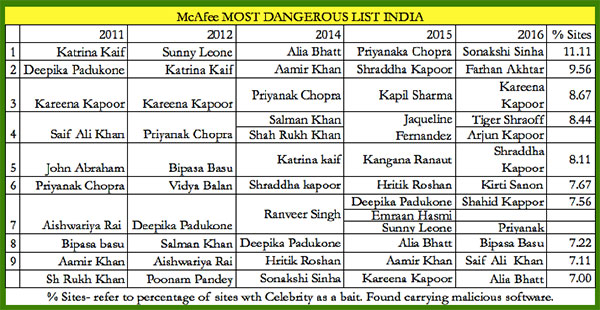
    The 2016 India list of MOST DANGEROUS CELEBRITIES is topped by Sonakshi Sinha replacing Priyanka Chopra, who topped the list in 2015


    These sites set up the bait. The malicious software gets ready to load as you type in the search window. The tags like the celebrity names with strings like ‘hot pictures, ‘sexy’, ‘Sex video’, ‘screen savers , ‘Nude Pictures’and ‘free downloads’ gives you a high probability of getting infected.

    McAfee is in business of cyber safety and protecting. Use f their product or services ensure you safely continue to do the dangerous searching and surfing with confidence. The MOST DANGEROUS CELEBRITY LIST, which is available on a Global and country basis. It is a great IP event, not yet fully exploited.


    Not much of a surprise that Sunny Leone, Katrina Kaif and Priyanka Chopra have topped this list at different times during their career. Once you place the annual list in an chronological order, the observations you can make are more than interesting.

    It is a good indicative list. It is based on Intel Security study using McAfee® WebAdvisor site ratings to determine the number of risky sites generated by searches, on Google*, Bing* and Yahoo!*, that included a celebrity name and commonly searched terms (noted below) likely to yield malware.

    The annual release keeps the hype and interest. Ten seem a good number as the list goes, and anyway they are not in a calendar business to take the list to 12. Temptation to do a monthly list would always be there.

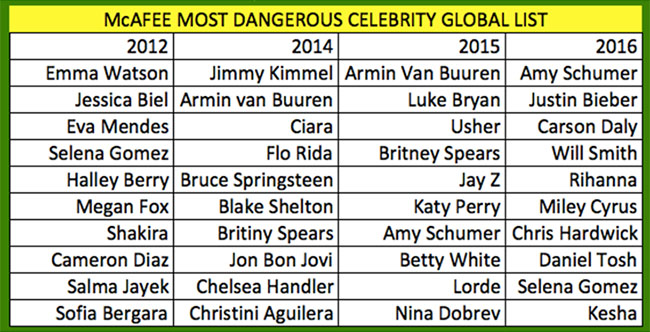
    The international list has more than the actors. It has been dominated by comedians like Amy Schumer, Chris Hardwick, Daniel Tosh, Nikki Glaser and Kevin Hart, Musicians like Justin Bieber, Rihanna, Miley Cyrus, Selena Gomez Kesha, Drake, Katy Perry, Jason Aldean, Justin Timberlake, Jennifer Lopez, Lady Gaga and Beyoncé.

    For this to happen in India, we will need more than solving the issue of data accessibility, affordability and availability. I can’t see Arijit, Abhijeet, Sonu Nigam or Lata and Asha in the list. I think that the list of 2017 will find Parineeti and Kangana Ranaut in the list.


    We also have one year where the list was dominated by men. That seems to be a exception. It is women who populate and dominate the list. And we know the reason, why.

    TWO OBSERVATIONS

    If you now go ahead and check for McAfee, Most Dangerous Celebrities India lists. It would seem that the list was only released in 2015 when Priyanka Chopra topped it. Was this a PR clouding of the search as the 2016 list (latest list) one has to drill down the pages to realise Sonakshi Sinha topped it!

    In the global list, there is one celebrity at every rank. In the Indian list, there are cases when two celebrities have been ranked the same and in 2015 Deepika, Emraan and Sunny all were ranked 7th. Is this a real result or again someone working behind the scenes to ensure to accommodate more than 10 on the list?

    …………………………………………………………………………………………………

    As a BONUS on this post, let me share some quick tips from McAfee to avoid catching the computer virus or malicious software loaded on your screens. * Think before you click! And get your content directly from the original source * Avoid searching for “torrent.”, it is the riskiest term on net. *  Keep your personal information personal. Just don’t share it * of course browse safely using protection like McAfee WebAdvisor software. *  Use cross-device protection. These are solutions that work across all your devices to deliver protection against threats, such as virus, malware, hacking and phishing attacks.


  • Why do Brands – Big & Small – flout ASCI guidelines?


    By Sanjeev Kotnala


    I am not sure. What should be the reaction? Should one be happy, seeing 10-plus pages of more than 12,000 words in repetitive boring style listing details of the upheld complaints, keeping it transparent and open? Should one be sad, that after so many initiative, tie-ups, education, there are repeat offender category, brands and companies that still try to be smarter than the industry self-regulatory body?

    Don’t they understand that they have to change?

    Or do they find ASCI a toothless tiger that barks!

    Whatever may be the reason, there has to be a far more stringent penalty for repeat offenders. Otherwise, it becomes waste of time.

    So, as per the press release of June 2017, which details with ASCI CCC ( Consumer Complaints Council) upholding complaints against 214 out of 280 advertisements… a good 76%.

    It may be a good idea to share the source of complaints. Is it coming from competing brands? Are the complainers past offenders? Are people outside MAdTec making complaints? Or is the ASCI direct complain system working with increased citizen participation?

    It may be interesting to see where dd these communications appeared. Are there titles that are prone to misuse? Is there geographical concentration? It may help in redefining and addressing the problem.

    The Healthcare Category accounted for 81% (175/214) of the upheld complaints, and 10% ( 21/175) were from Education. We need to recheck the argument that complaints mostly refer to small regional healthcare brands operating with small-time creative agencies. In the list, we do find brands with large distribution network and decent advertising budget.

    Healthcare communication suffered from either misleading or false or not adequately / scientifically substantiated claims. Many places the copywriter on weeds has been able to create a disjointed copy that when contextually placed or read makes for important discovery.

    As per the ASCI release, many brands went against the provisions of the Drug & Magic Remedies Act. What does ASCI do in these cases? In fact ‘are considered to be, prima facie, in violation of the DMR Act and the D&C Act ‘ appears like repeatedly like a broken record. It is a serious concern.

    I am aware that when a person is suffering from an ailment, the promises made by the medicine, treatment or hospital seem so inviting. The patient and the close friends and relatives fail to question believability of these exaggerated claims. It happens with people who are known to be literate, rational and logical in their approach. So, you can think how big the problem may be.

    Could ASCI do something more?

    Could it it share this finding with appropriate bodies and associations?

    Could something be done to question the use of Dr prefix that many carry while misleading consumers?

    Could media help in exposing and detailed stories to put some sort of a reverse pressure on the brands?

    Can we in MadTec area pick relevant brands and use the power of social media in letting people know of the unsubstantiated claims or promises?

    Consider this. Slimming & Beauty is trapped in its own world of promises and claims. “Five kilogram weight loss guarantee and five-inch figure correction.” . It is openly misleading and is a gross exaggeration.

    Gross exaggeration is an effective creative device when the reader is fully aware of the exaggeration and knows that the promise cannot be true. The case in healthcare is different. Diabetes, Weight loss, fertility, contraceptive, knee and joint pains seem to dominate objectionable ads.

    The sexual powers and stamina could be treated as a separate category. It is notorious for its innovative advertising styles. “Now more power,” “Get Back the Fire,” are the words you find here. They do sound so very motivating.

    ASCI is right in interpreting them in conjunction with pack visuals and the other copy. It doesn’t knowledge of any rocket science to notice it is nothing more than a promise of sexual pleasure enhancement.
    What would “Effective for Energy, Excitement and Power” or “Massage daily and experience the height of happiness? Only for Men,” “Increase sex time up to 35 minutes” or “Feel the power. Hour – after – hour” mean in such advertisement.

    Healthcare like the media industry seems to suffer from ‘No 1’ syndrome. Another is the wrong interpretation and intentional misuse of Trusted Brand, Lakhs of patients cured- all without any third party validation.

    Shree Maruti Herbal (Stay On Power Capsules and Oil), Trophic Wellness Pvt. Ltd ( Nutrigain range of products) , Rajnish Hot Deals Pvt. Ltd. (Play Win Capsule), Dindayal Aushadhi Pvt. Ltd. (303 Capsules) and Star Ayurveda (Star Homeopathy) have a series of complaints upheld against them. Maybe ASCI needs to meet the client, and creative agency or the in-house team as the case may be.

    I must share the omni-cure ad by Manjeeram Holistic Centre. It claims, “Provides treatment for any kind of diseases without any medicine. Should the management not be tested for mental soundness to conduct business and put behind bars? Want to check specificc brand complaints click here..

    When names like Complan, Airtel, Aaj Tak and CNN News18 get complaints upheld, you start questioning the industry intent. Do they notunderstand the ASCI code?. Are they not in competent hands or are they playing a game, consciously punting on getting away with the act?

    On the lighter side can someone in sync with ASCI initiate awards for MOST OBJECTIONABLE BRANDS and COMPANIES. Shame them, in public. Maybe this self-regulation will work.


    ASCI screens a lot of ads; however, if you have a complaint against an advertisement- you can complain here. To know more about ASCI click here.. You can watch a small clip on ASCI here.. For further information, please contact: The Advertising Standards Council of India Shweta Purandare, Secretary General, ASCI Phone: 91 22 2495 5070 / 91 9821162785 | Email: shweta@ascionline.org


  • Sanjeev Kotnala: The Good, The Bad & The Ugly

    By Sanjeev Kotnala


    THE GOOD

    The best if in recent times been the interview of Army Chief Bipin Rawat. It is direct from heart and shows what true leadership is all about. I am sharing it here not for the action- inaction and what is the situation in Kashmir, but to show, what leadership is all about.


    I liked this simple TVC of Volini the pain masking gel. It shifted from occasions of pain to fast relief to expand its communication. Someone is definitely thinking. For a change, there was a story that kept you in the game, and the message delivered loud and clear.

    Now, here is something worth sharing. GOOD IDEA WELL EXECUTED. A seventeen member My FM leadership team was on  its annual trip. This time it was for a week in US. Thirteen members of this team have small children. Definitely, they are the one who misses the parents the most. Harrish Bhatia, the ever peoplecentric man, initiated a small gesture with the Corporate HR and executed across the five different cities – Chandigarh, Indore, Jaipur, Nagpur and Noida. A day before they were to return the families got a goodie bag with an emotional message to the kids. Now, in some case the families were not even at the station, and the team reached out wherever they were. I personally see a huge people story here. A smile gesture that means a lot more to the families. Even the team travelling was unaware of the surprise planned by their organisation. Here is the reaction of one of the employees on trip “VIDHI: This was overwhelming! Vidhaan received his gift when I wasn’t around. It was more a surprise for me than him. Message on the gift said – Mom Missing you baby. I couldn’t have asked for more. I can’t Thank You enough Sir & HR team for being so caring and thoughtful.” Definitely, it was a ‘Jiyo Dil Se’ moment.

    This is not surprising, as My FM believes in creating the bond not just employees but with their family members too. For example, at My FM in addition to birthdays of the employees, birthday of their family members, including parents is celebrated. Sometime back, My FM celebrated its 10 years with a four-day musical and cultural extravaganza – Jalsavaad in Ahmedabad. Here it surprised air-travellers flying into Ahmedabad airport with goodies.

    THE BAD

    The cacophony of AR.NAB continued, and it is scary as to who is being patronised by the audience now days. How thin is our understanding and how flimsy things can be taken and stretched by miles without any guilt? Not only, the first Sunday Debate hinged on a phone number and a conversation promoted as a confessional statement of a cybercell terrorism.

    It was a circus out there and even the Pakistani clowns had a day. It is beyond my understanding what makes these sitting duck Pakistanis come to be massacred.

    However, it is all OK. We know, the good intending self-proclaimed over the decibel limit warrior at times gets swayed and flows with his unidirectional non-apologetic headstrong assumptions. Pardon him for it.

    What went bad was the use of resources created during his earlier stint to promote and launch the channel. The tapes exposing Shashi Tharoor in Sunanda murder were Times Now property. Use of them by Republic TV was unquestionably, utterly unprofessional.

    THE UGLY

    The NBA assault on BARC by backing out of the ratings was one of the ugliest moments. BARC was justified in releasing the data. They were doing their job by recording and sharing what India watches even if its What the nation wants to know.

    BARC is not the regulator. NBA is. And NBA does not seem to have a clear directive restraining channels from adapting multiple LCN. Moreover, if one believes what is said, it seems its members have in past resorted to such tricks. It’s time NBA re-evaluates its stances and creates new norms to be followed.


  • Sanjeev Kotnala: Do you have your unique BRAND-I MAP?

    By Sanjeev Kotnala


    Explorers don’t need a map. They are adventurous. They love taking risk. However, most of us are navigators. For us, life is a journey. And most of us don’t have a map for it. We work with vague sense of direction.

    We keep defining the destination and the road that will lead us there. We have untested ideas. We brilliantly follow other’s template; including the professional Institute, we join. We are happy waiting for failure before we take action.

    Life is far too complex and fluid for us to have a complete map. We appreciate it and hence enjoy the milestone-to-milestone approach to life.

    We are highly adaptive and flexible. Minor aberrations and failures do not affect us. However, we are impacted by society approach of materialistic success. House, car, vacation and lifestyle become a surrogate of status.

    Is that the real success? Both ‘Yes’ and ‘No’ are acceptable answers. What matters is what you have been looking for. It’s your race, your journey, and hence you define and decide the benchmarks.

    At the risk of offending a few; I push for the need of a more holistic success, where emotions and relationships are also importance. To appreciate, you must stop measuring success with the lens of a societal telescope and use the internalised microscope to explore what real happiness and success means to you.

    Once you buy into this philosophy and approach, you are ready to attempt creating a framework of your MAP. It will be a good indicator to tell whether you are moving in the right direction.

    MAP has standard points of references like origin, destination, alternative paths, mode of transport, travel accessories, a compass and identifiable milestones. MAP is a waste unless you know how to read it. Hence I believe the traveller must draw his own MAP.


    START. WHERE WE STAND.


    The origin is your current status. It is about you. In your map, you are always at the starting point. Your name, age, professional assignment, role is just a factual statement with no fire. It will never do justice to your potential and capabilities, while it may identify you.

    It is not easy to deep dive inside and understands self. Are your values and belief system strong enough to withstand a debate? Maybe the best way to make a beginning is to define the five most memorable; not necessarily happy or sad moments of your journey called life. Evaluate your behaviour from a third person’s point of view. Maybe you will not recognize yourself.

    The starting coordinate in your map has all the elements that create the inner you and the societal experience in day-to-day interactions. Your knowledge, talent, acquired skill and reflex actions define you. Today is a result of the choices we made. Tomorrow will be the result of the choices we will now make.

    Do take a simple test. Answer these questions. What is your stance on gay marriage or love jihad or khap panchayat? Write it down as clearly as possible. Now put a dear one in that situation, does your approach changes? What is your view on cow slaughter or Gau Rakshak? How secular are you? Do you believe that women with short skirt got nothing to do with the increasing cases of sexual offences? Who do you really serve? And to whom do you pray? Does it have a form? Does it have to manifest itself in different ways? What is perfection for you? What is your definition of a good brother, son, mother, daughter, husband and wife? What does success mean to you? Are you prepared for success? What are you willing to sacrifice or pledge to be successful?

    These are the framework and position on the grid that defines your Brand-i-MAP.


    END. DESTINATION.


    To start the journey, you need an idea of the destination. There is no guarantee if you ever reach there. Maybe like Christopher, you may discover something new. Note it down; life is about shifting target and values. They change as you evolve, as your needs, desire, ambitions reshape continuously.

    You can define the destination in many ways. You could start the journey with a vague hint of direction to take. Remember, you have answered this question many times. Where do you see yourself after 15 years? What is the reason for your existence? What do you want to achieve in this life?

    Do you answer in form of designation and materialistic ownership? Do you have another way to define success? Is your life all about earning status by flaunting materialistic items? Is it about making people smile with joy?

    Don’t be surprised if the questions stump you for a moment. Most of us (including me) will fail to answers them with complete confidence and honesty. To finish the argument, we are capable of answering. We will defend it knowing it is not the truth. We, can lie to everyone, but not lie to ourselves.

    The destination you chase in real life is multidimensional like you. It can be measured across mental, social, emotional, physical, monetary, sexual satisfaction, hunger and desire … and many more dimensions. Our life is all about balancing our numerous roles and emotions, no doubt that the destination is a series of complex equations. An equation that only we can see, solve and resolve. Only if we understand self.


    ROUTE WE TAKE.


    Even in the physical and metaphysical there are alternative routes to reach the same destination. There are possibilities in every interaction we make. For your life goals, we need to be a bit more cautious in defining the route.

    To be a successful entrepreneur, we could take the IIM- earn- invest- plunge route of take the plunge right away. Only time will have the answer, if we succeed as per our definition and yardstick.

    The route to success requires clarity, confidence, passion, dedication, flexibility and openness to new ideas.


    VEHICLE. MISSION TO RIDE.


    Having an MAP and being able to read it is not enough. It shows us the start and the destination, the alternative routes and the chosen path but not the pace.

    What defines our pace is the vehicle you ride. A vehicle is the means to reach the destination. We call it vision, or mission in life. And our current co-ordinates, self-awareness defines it. Many of us start with a hint of a vision, and later change it due to circumstances. There is nothing wrong in it. Nevertheless, if we change it too often, it may be better to re-examine our starting points, destination and the chosen route.


    BAGGAGE. ACCESSORIES WE CARRY.


    The journey is a long one. What come handy are the experience, knowledge, passion, dedication, skills, attitude, aptitude, talent and a fire to keep learning. These are interlinked as comes as part of our upbringing and outlook. It’s tough to be yourself by separating, replacing or modifying them. They are because you are.

    In our journey, we pick things, modify and even discard them. We pack according to the journey. Hence, before formally starting, we need to understand the requirements and the things we will need. At times, staying a bit longer at the starting coordinates and acquiring more accessories (knowledge and experience) before embarking on to the journey may be the best choice.


    GUIDES AND MARKERS.


    In our journey, we need markers to help monitor progress. Our achieving them define how true to the path we have been traveling. The journey of life is too long and the far too complex. Moreover, we never have the complete map; we discover the new piece at every milestone. Hence define the journey and break it down in measurable SMART segments, which are specific, measureable, achievable, relevant and time bound.


    BARRIERS AND FACILITATORS.


    The MAP is simple. We can trace the path without any problem. We need to identify our facilitator and barriers. There are speedways and potholes. There are places where bridges need to be created and places where you need to take a detour. No one has really seen the path. No one understands it. Each one of us takes a path that is newly discovered and unique to us. Every experience, failure and success is unique too. There is no one to blame.


    WRITE THE STORY.


    We must learn to enjoy smallest of happy moments. We must be strong to leave behind bad experiences and move ahead with the learning’s. The journey and the map are unique. Every moment we are writing a new story. The past is gone as I write this. We can’t change the characters, the incidents or the results. However, we have the option of changing the story that is being written with every choice we make for our future. What is the next chapter? It is something that we only can define.


  • Sanjeev Kotnala: Return of the Stereotyped Mother

    By Sanjeev Kotnala


    Nothing has changed. Women empowerment and all. The situation is much different than what the advertising fraternity will want us to believe. In some Hindi film, there was a dialogue, ‘Yeh saala itna kameena hai ki apni maa ko baych kayega’. No, we are not that bad, but we still  overtly trigger desired  sentiments and can’t help pushing the guilt lever more often than that of love and care. Mother’s Day be dammed.

    Advertising been scratching guilt wounds more than applying balm to them. It continues to paint the stereotypical socially politically and culturally right picture of a Mother. The one we are comfortable with.  Not surprising that most brands remain in a safe territory. Everyone is cautious of the hypersensitive hawks on social media waiting for that one slip. They can make or break a brand managers day.

    Every year I search out for brands that will prove me wrong. Brands that are more confidence be little bolder. In absence of real tectonic movement, even a simple push like RELIANCE FRESH #JeeLeZARA on Women’s Day or NISSAN helps.

    Annually, in this period, brands feel that extra urge to pay homage to mother. We see some humourous communication on social media and we enjoy it. Take for example the one featuring Nirupa Roy, the mother who lost her kids in every movie or the re-crafted motivational quote ‘Behind every successful kid is a Mother. They make us smile. Meanwhile, the real situation is  a bit different and is best captured in cartoon below.

    The agencies brainstorm in brightly lit halls focusing their energies to re-define the emotional connect and guilt trip levers still available to be exploited. They evaluate and try picking the most  relevant and differentiated one that is in sync with the brand promise and culture. It is not an easy task. Then they put it through the acid test of revenue potential and possible brand impressions. It is what  finally decides if the idea is finally executed and the budget that is  be put behind it. The agency pushes the potential award winning execution with a loud over amplified  promise of it being commented, liked, shared, viewed and reviewed to become a viral. So what you end up seeing is something good. Anyway, every client gets the creative they deserve.

    If there is not much left in stereotypes, then brands like Nivea feebly attempts to strategically expands the group to #JustLikeMAA or reverse the role as GOOGLE does in its First-Day communication. When it remains a bit forced, the audience fails to connect.

    Surprisingly, I find this simple message form MICROMAX ‘What Maa Really Wants’ relevant. Every one of us knows how true it is. And then I am immediately reminded by #MilnaZarooriHai by The mommom on Facebook that roles can be reversed.

    Some brands like WAGHBAKRI do not want to leave things to chance. They very politely and somewhat hesitantly push the product. Something you could buy her on Mother’s Day. Somehow, giving Green Tea on Mother’s Day does not cut ice.

    TANISHQ tells you to express your love with jwellery. Their sales pitch is a bit more softer and emotional and it got nothing to do with the possible price difference.

    Some communication connect well. They make you think and feel the real emotions. The  product is silently weaved in for comfort. It is not intrusive in nature. This time a communication from a real estate business by ZILLOW AD- the sad kid missing his mother, and you remain with the thought for a lot longer.

    INSERT ZILLOW AD visual

    Yes, mothers do swear. However, mostly we have seen male in the house being aggressive and releasing their irritation just by swearing. It is  relaxing. Somehow, moms go through their super-active pressure cooker role without swearing. And  KRAFT asks you to swear like mom,. Definietly an insightful start but the execution is too constipated.

    Why not change the equations. GODREJ EXPERT flipped it differently. It is likeable. And am sure that I many soap writers and Balajee Tele-films would hate to see a world like that. And then IndiaBulls  goes to milk dry the exression #Maa KabhiThaktiNahi

    Oh, by the way, quite a lot of this is on digital. It’s here that the clients with not a strong foundation for the event allow agencies to play. Long format communication is  a basic format here. Activation is suport. Many forget that  audience watch, share or comments when the content is interesting, emotive or humorous. In 2015, CELLO tried defining the sacrifice and thing’s mom done for you. It was a 7 minutes long torture that sincerely fails to deliver. Brands must wake up. Check it out for yourself.

    It is worth noticing that most of these communications comment on a daughter-mother relationship and the father is not in the frame. Maybe, homage will be paid to this less celerated breed on June 18, Father’s Day. Brands you have enough time. I can not resist sharing this real mom in FILTER COPY, fashion conversation with MAA.

    Let me call my old-fashioned MAA and salute her for being herself. Here Hyundai tells you how they behave. Not a great execution but there is a lot of truth in it. Thank you mom.

    At the end. I think agencies will have to work that extra hard in further exploiting such a strong relationships. They will need to be bold and adventurous, to be with the new generation. A large part of the audience ( I hope) have had enough of stereotyped moms, and NO please leave our BUA, TAIJI, MAUSI, while stereotyping these emotions.  And remember even a 10-year-old has a mother and so does a 45 year old. Be bold – Change the recipe- a bit like Tata Sampann


    Sanjeev Kotnala with 29 years of corporate experience is the founder of Intradia World; a Brand, Marketing & Management Advisory. Additionally, he focusses on   Ideation, Innovation, design thinking and BRAND-I, be the brand. Email sanjeev@intradia.in tweet @s_kotnala web: www.intradia.in www.sanjeevkotnala.com.


  • Sanjeev Kotnala: Shan, Ikea, Nike… Work you can’t ignore

    By Sanjeev Kotnala


    This week I am taking a detour to share some of the work which I believe must be appreciated. Storytelling is a key pivot for the communication business. And if one can make a static medium like print come alive with a story that involves and engages the reader, the job is done. Unfortunately, such examples are rare.

    In the last few weeks, I have been fortunate to be exposed to some work that has immediately hit the chord. The work for Shan Foods, a big spice and recipe brand in Pakistan executed by Ogilvy India and Ogilvy Pakistan is a good example of simple storytelling. Use of an eastern coupe as the just moved in neighbours is interesting. The basic brand propositions of flavour and taste were delivered on the foundation of ‘ sharing food can break all barriers and start new friendships.

    When two offices from not-so-neighbourly countries come together to create this magic, the flavour gets enhanced. You can feel the audience engagement when you see the consumer enact their own stories and parodies keeping the framework of the campaign intact.

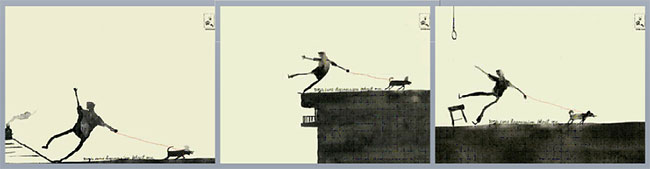
    The next creative I first experienced on Whatsapp when I was sent these images and was asked to zoom in. Wow, initially I just saw them as images that circulate in digital media as no thought or promise or brand name was associated with it. It is later that I realised it was work for ‘World For All’.

    The work was powerful for me to Google for World seeing some more relevant work from 2013 ‘Dogs cure depression, adapt one’. It is a simple thought that has been brilliantly executed.

    Prega, more imprinted as the Shilpa Shetty pregnancy announcement brand, surprised by taking a detour and silently entering the thoughtful world of celebrating approaching motherhood with care. This time, instead of husband or mother-in-law or mother, it moved into the tough office environment.

    The thought of such consideration in an office environment looks too far-fetched in the current reality. Normally, we associate these moments with ‘Who will do her job’, ‘Now she will go on leave’ on one side to ‘there goes my career, will I ever be able to get back’.

    Nevertheless, there is no harm in thinking positively and visualising an idealistic world. It will be great even if one office or one colleague or one boss is inspired by the thought.

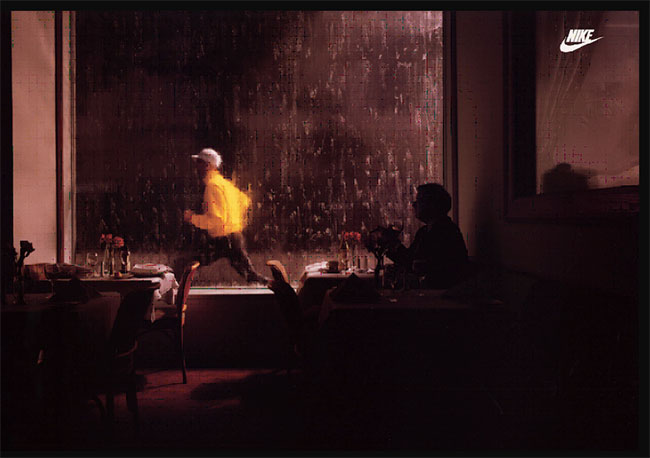
    Then Adweek exposed me to this Nike print ad. Wow. This is where the visual says a lot more than copy could have ever explained. The involvement is so complete. It is an engaging visualisation.

    And then recently what one may call cheeky, and some may call as ‘released in public interest’ stunt. It is Ikea’s reaction to Ballenciga 2154$ bag. This high priced bag seems a replica of Ikea’s 0.99 $ tote bag.

    See the communication released by IKEA. The copy is straightforward and simple. It reads;

    How to identify an original Ikea Frakta bag

    1) Shake it. If it rustles, it’s the real deal. 2) Multifunctional. It can carry hockey gear, bricks, and even water. 3) Throw it in the dirt. A true Frakta is simply rinsed off with a garden hose when dirty. 4) Fold it. Are you able to fold it to the size of a small purse? If the answer is yes, congratulations. 5) Look inside. The original has an authentic Ikea tag. 6) Price tag. Only $0.99.

    And then the mother of all BREAKING2 by NIKE fell just a wee bit short of the target when Kipchoge finished the race in 2:00:25 in the Monza F1 Track in Italy. This was the attempt to run a marathon in under two minutes. He did break the official timing of 2:02:57  and it did not matter that this record breaking time was not eligible as a record.

    As a concept and activation, it was an engagement success. It was almost like Sir Roger Banister breaking the 4-minute mile record in 1954.

    Let’s hear it from the  Nike CEO Mark Parker: “I’ve seen the magic of gold shoes and swift suits. I’ve seen iconic athletes leave it all on the track. But I’ve never seen anything like what we saw today,” sound so true and genuine. He further added, “This achievement represents more than a race. It’s a moment of global inspiration that will encourage every athlete, in every community, to push the limits of their potential.” And that is what it was really about ‘Unlocking the Human Potential’. Impossibility is after all an opportunity to envision the future of sports. It allows bringing inspiration and innovation to every athlete on the planet.

    The race was live on Twitter, Facebook and YouTube. It generated enough conversation pre, during and post the event. With 5.3 million views (as I write) on Nike’s BREAKING2 Facebook Page, the experience can be relived for some time. And later in the year National geography will produce a feature-length documentary on it.


    Wonderful reacting and enjoying these good works. Hope you liked this compilation. Do share if there are ads – campaigns that I must cover and share in this platform.


  • Storytelling Unlimited?!


    By Sanjeev Kotnala


    Who doesn’t love storytelling? I love the stories, where a chapter is closed in duality compounding the ambiguity. It forces the reader to acknowledge the power it wields, and the reader ends up turning the page for more. How many times have I been held captive by such narrative, ending up finishing the it in one seating!

    In marketing, a few adventurous brands have taken the plunge and have braved the risk of storytelling through definitive episodic chapters, revealing the story through a series of films exposed in a  slow pre-determined gaps. They try to  hold the audience, tease a bit, have fun, create that extra bit of engagement and involvement to extend the campaign.

    After the advent of digital and fast buildup of a video addicted audience, I expected brands to create web-alone series. It did not happen. You can’t blame the marketing head, the brand manager or the agencies in isolation for not taking the expected step in natural evolution.

    Few brands ventured into this space of serialised or sequential storytelling campaigns, where each standalone episode (AV*) is part of a larger social reflection or a bigger story. The recent campaign by Amazon ‘Chonkpur Cheetah’ is an example of such thinking. The story of the team getting its supplies, finding a female wicket keeper and a lucky charm has its own share of smiles. There is also a  series Chonkpur ke Chowk se where you find interview with Bret Lee , a Rap face with the coach and the team meeting with the nutrition specialist.


    I think digital will push the creators and the curators towards simplified storytelling format and highly rich video content. Sequential approach of story telling will soon have its glory.

    At this stage, I must differentiate between ‘Sequential Advertising’ and ‘Multiple Execution’. Sequential advertising is when each of the advertising messages (episode**) builds on the last episode and lays the foundation for the next. Like a novel, each episode is part of the same story. Sequential advertising is multiple executions with character and storyline continuity. The characters evolve with the audience and have a continuity in their expression, attitude and behavior.

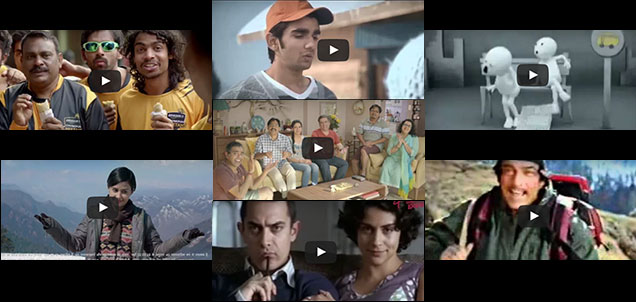
    The one brand that has experimented with sequential communication is Tata Sky. And they got it largely right with Chotta Recharge. Here is the compilation of ads that slowly revealed the story and naughty innocent playfulness between a shopkeeper’s son and a girl who would come everyday for the eight-rupee recharge.


    If I am right, this was primarily a TV campaign. In a digital space, such communication may seem like slowburner but most likely will get the relevant revenue generating clicks.

    On the other hand, the ZooZoo campaign of Vodafone can be termed sequential because it involved central characters that were same. Even as they were very standalone.


    Here is another very sequential communication from Airtel and the life of the now-famous Airtel Girl. The same ads demonstrate part of her life and interacts to deliver the brand promise of widest network, MyPlan, One app to the fastest network….


    Here is my favourite. Voltas Murthy. The loveable South Indian who is transferred across India. He is exposed to different climatic conditions, but he is not let down by his all weather Voltas AC. Slowly with the episodes (TVCs) you get to know the family, including his in-laws. It is very ‘slice of life’ presentation that makes you love the character, and the message gets delivered.


    He is a character who has survived seasons. This year, he is riding the low-power consumption message. And by the way, he is now president of the housing society.

    There is another Aamir Khan campaign with Gul Panag for Tata Sky, an example of a sequential campaign.

    Multiple Executions is the standard default mode for the agencies. It has been the safest and the easiest way out. Here the same brand proposition or promise is presented in different episodes. These episodes stand alone, and they do not inform, establish or impact the next one. They are conceptually same. The characterisation changes. They are like an anthology; the central theme or proposition remains confined to narrow possibilities but the episode / incident, incident or story celebrates widely different framework.

    Here is a legendary communication that enthralled audience when it was released. The ‘Thanda Matlab Coke’ campaign. Aamir Khan acts as Bengali Babu, Manu Bhabhi episode, Jat and Japanese and others bringing a definitive smile in the face of audience and helping establishing the brand proposition.


    Sequential storytelling in advertising can be effectively used for brand awareness, and perception built up. It can be very effective for action driven or conversion campaigns.

    If crafted rightly it can leverage huge engagement and involvement for a new brand entering the communication and audience-relationship space.

    Today, everyone is a storyteller, a content creator and/or curator. Most of them are conversant or rather addicted to the audio-video format.

    Sequential ads can have more impact. However, to get them right, needs a deep focused understanding of the target audience, prosumers and influencers. The opportunity lies in slowly unveiling multiple layered brand promises in a collective conspiracy with the audience.

    The art lies not allowing a sharp funneling of audiences. You cannot afford for a slice of consumers to drop at every new episode. In fact, new audience must be added to the franchise.

    It is only possible if each episode is complete in itself and yet makes you want to know what happens next. It is like TV soaps that leave you with an ending which pushes you to come and watch their next episode.

    To create this magic, the advertising creative and media agencies and the client need solid in-depth understanding of their audience. Then only will the audience will enjoy and move with the story.

    I am aware that sequential campaigns need smart creative execution and media budgets to back it. I believe that impact of such media and creative constraints can only be softened and not eliminated completely.

    Digital platform gives you multiple advantages in this space of the sequential campaign.

    It allows for a sequential static campaign that could be developed with still frames. The sequential campaign can be targeted geographically and filtered on attitude and physiographic segmentation. Proper execution can profitably prime the audience before reminding them of hard sell on social platforms. You can control the sequence of episode exposure. So, the audience can see the nth episode only if they have watched the n-1 episode. Moreover, you can control the twist in the story as per segments and / or mood of the audience. Is this freedom really a constraint?

    There is no straight answer to the question whether a sequential campaign is better than multiple execution campaigns? Will it work or not? And the risks associated with them are poles apart. In multiple executions, one can control the exposure of the versions according to the audience reaction, whereas in the sequential campaign you are almost committed on the front foot. Hence, the brands with better understanding, kind of self-assured and willingness to experiment will be the first one to use sequential campaign to its fullest advantage.

    There are no set rules and templates available for sequential advertising. One needs to experiment with it. Every brand, and category will have to find the format, storylines and patterns that is engaging the audience. Meanwhile, the brand will have to remain true to its promise. This requires the brand to speak the same language across mediums.


    * I am using a term AV to overlap between TVCs of 30-45 or max 1 minute and Digital Films, which normally are of a longer duration. ** episode represented separate pieces of communication. They may or may not be f the same duration. 

  • Sexual Harassment – Raising the voice early is still the best solution


    By Sanjeev Kotnala


    In the recent times, there have been multiple high-profile cases of sexual harassment reported in the media. Some of the prominent ones are Arunabh Kumar, RK Pachauri, Tarun Tejpal, Ashok Kumar Ganguly, Mahesh Murthy and Sumant Bhattacharya.

    In September 2016, The Economic Times reported that there was a 26 per cent rise in cases of sexual harassment in NIFTY50 companies. Here, out of a total of 525 reported cases, Wipro (111), ICICI (87) and Infosys (62) make an unhealthy 50 per cent of the cases. ET in a mild tone hinted that this rise in reported cases may be a result of more robust processes and systems in the corporate world to handle the situation, increase in the number of women employees and lack of women in senior positions. In fact in case of IT companies a large chunk of cases are reported from abroad. Does it make any difference?

    In an article by Cassandra Jaramillo on August 18, 2016, Wall Street Journal noted that as per the new study by American Association of Advertising agencies, more than 50 per cent of the women in advertising have faced sexual harassment at least once in their career. It included cases of sexual discrimination and not being included into meetings and discussions. March 2016 saw male Chief executive of a large multi-national advertising company sued by a female subordinate for unending stream of racist and sexist comments.

    Every one of us has heard of rumours about sexual harassment in the advertising industry. Sometimes, we have also indulged in the washroom banter and laughed about things that did not concern us. However, we don’t have any data or report to refer. At least, I am not aware of any data available for companies operating in the Advertising, Media and Marketing sectors, which does have a large women employee population. Is it possible for voluntary disclosure by member of AAAI, IAA, Ad Club? It will be a welcome and relevant information that women may want to know while making their career decisions.

    It is not that men have suddenly turned predators, and hopefully the situation has not worsened. It’s most likely is the case of more women finding courage to raise their voice. In fact, one has seen that whenever there is a sexual case against any position of power, it opens floodgates of fresh allegations and reporting. They no longer accept it as a cost to career growth or as something that just happens.

    Thankfully, the times are changing. No longer, people accept its as ‘Chalta hai’ . The predator’s confidence is shaken if not broken. He no longer roams the power corridors and sits in his own small jungle waiting for the next prey. He is finally unsure of his ability to get away with it without risking injury to his pride, status or image.

    However, we are far from idealistic situation. A small step would be to plant shame where it belongs. Unfortunately, the injury and damages are still more on the woman, be it physically, mentally or emotionally.

    So, what are we talking about?

    Sexual harassment is every single incident of unwelcome sexual behaviour. Anything that can be expected to make the person feel offended, humiliated or intimidated is sexual harassment.

    It can be physical, verbal or written. It includes acts like indecent exposure, stalking, sexual assault, obscene or threatening communications, by phone, letter, emails, SMS, or posting irrelevant damaging material on social platforms.

    It includes sending suggestive letters, notes, or e-mails, displaying inappropriate sexual images or posters in the workplace, telling lewd jokes, or sharing sexual anecdotes, making inappropriate sexual gestures, staring in a sexually suggestive or offensive manner, or whistling, making sexual comments about appearance, clothing, or body part, inappropriate touching, including pinching, patting, rubbing, or purposefully brushing up against another person, asking sexual questions, such as questions about someone’s sexual history or their sexual orientation and making offensive comments about someone’s sexual orientation or gender identity. And this is not an exhaustive list.

    Mostly reported known cases centre around physical contact or advances, demand or request for sexual favours, making sexually coloured remarks, showing pornography, and other unwelcome physical, verbal or non-verbal conduct of sexual nature.

    Sexual harassment can be clubbed in two distinct categories.

    ‘Quid pro quo’, where a gain/ something is promised in return to willingly suffering and accepting sexual harassment or exploitation. There is a specific promise made that hints towards a particular path the career of the victim will take due to acceptance or rejection of the sexual act.

    The other is a hostile work environment created within the organisation. Unfortunately in this case, a single incidence cannot be construed as a hostile environment. Hence, it necessitates that the victim proves a series of incidents and situations to make her case. It makes it a lot more difficult to pursue or prove. The victim knows this and at times ends up compromising with the situation.

    Breaking some myth regarding sexual harassment.

    Sexual harassment at work is not confined to the work premises. Law sees a wider scope and agrees that it can take place at work, at work-related events, between people sharing the same workplace and even colleague outside the workspace. It further expands its scope to include contractors, agents, clients, vendors and any other stakeholder or business associate the women need to interact during her job.

    In 2014, in reply to a question, Menaka Gandhi in Parliament stated that said that only 8-10% of the sexual harassment cases reported to her ministry happened in what we loosely refer as work premises.

    Not objecting to an objectionable act / behavior at a point of time, does not mean acceptance or consent. ‘No is NO’ and a ‘no- yes’ is also a ‘NO’. Men unfortunately believe otherwise.

    The law clearly leaves it for the woman to decide that what makes her discomfort able and what she is comfortable with.

    I am not sure how many women are aware of their internal committees, guidelines and processes in their organisation dealing with sexual harassment. Click here for the Sexual Harassment handbook, everyone should read it.

    Any organisation with more than 10 employees is expected to implement the guidelines for complaints’ handling and must have an ‘Internal Complaints Committee’. Many don’t have it and the ones who have it have done nothing to educate and sensitize women and other employees. It is not mandatory that the sexual harassment incident must be reported to the boss. As many fear collusion and man bonding to prevent unbiased hearing. The internal guidelines must specify the process and usually have a differential route to report in case the instigator is the boss himself.

    No one speaks. Most take the easy way out.

    They change jobs, request internal transfer, stop working and in some cases compromise with the situation. Most victims fear pointing fingers at the instigator who is causing discomfort or creating a hostile environment. It is never easy. For many victims, it is a choice between having a job and being jobless. There usually is a power imbalance or a financial need.

    On one side, in the social matrix, the stigma is always attached to the women, and on the other side news of such incidents kills future job prospects. No one wants trouble makers!

    We as a society have rarely demonstrated the desired sensitivity to make the victim comfortable to report. There are many people and levers in the life of the victim, pushing her to sacrifice and suffer in isolation.

    One of the victim’s worry is the big question. What if the complaint is not taken seriously. The working situation in the organisation anyway becomes difficult for her. More challenging are the unsaid questions and rumours where many things are left for the recipient’s imagination to complete the loop.

    The fear that the investigation / case may drag and there are more chances of it remaining inconclusive is high. It is seen that in such cases, it benefits the accused and is not in favor of the victim.

    Nobody stops to read the hidden meaning of being inconclusive. It just means that there is not a sufficient reason to believe if the incidents happened or not. Not being able to prove an allegation does not mean that it is a false/malicious complaint. The case remains inconclusive because of lack of evidence. Hence, at least in the case of creation of hostile environment, it is advised that the victim keeps records of the incidences in writing. It allows for confrontation and confirmations, as the facts do not get fogged with time.

    At every stage, the woman is faced with a tough question. Is she willing to take the legal route?

    The internal committee though directed by the law has repeatedly failed to protect the identity of the woman. The penalty for this lapse is negligible. The judiciary has failed to raise the confidence that there will be a swift terminal conclusion to the case.

    In the new world, social and media justice favours the victim but it bars no one from taking pot shot at the accused. The reputation is at stake at both the ends, but it is the woman who has more to lose. Sorry, but that is the society we have created and live in.

    There is something erratically wrong within the system. It always needs a whistle blower to give courage to other victims to come out in open. And then, the society looks at them with suspicion and questions their motives for remaining silent for long. Media takes a unilateral decision and uses a biased brush to paint one of the sides as a possible victim, and that necessarily may not be the woman.

    Sexual harassment is normally a slow burner. The signals at the start are much softer and disguised. One is usually in a better position to take preventive steps at the initial stages than by waiting for a conclusive favourable twist to the case. It is better to report early and snip the behavior in the bud. The predator normally tests his victim’s reactions and capability to react and easily backs out if snubbed at the start.

    Mostly, it works, But in some case the accused may not stop / mend/ change the behavior. Then, it seems that it becomes the responsibility of the victim to generate proof. Not sure, if one should recommend investment in the new miniature-recording devices to collect the evidence. Nevertheless, it is always better to keep records of incidences, work progress and reviews. If they are with you at home, you will not be left stranded knowing that they are no longer accessible to you. Keep the message / call details if they are used to harass.

    Do note that delay in reporting, it tends to lesser the chances of favourable decision and closure?

    Unfortunately until women speak out, sexual harassment will go unnoticed. No one will comes to know about it and anyway no one else wants to speak and take action.

    Everyone acts like an ostrich. Nothing like it happens in their organization! And if it does, they don’t want such issues to come out in open. Their impact on brand value is seen as more damaging than the effect on the victim. HR and Management motivation is to sort it out. From the start, it smells of an un-natural bias to prove the complaint unfounded.

    It is still in everyone’s interest to prevent such behavior from a minority of employees. Every organization must find time to make an effort to create awareness, share their process and policies and across gender. It is time that individually we act.


    Sanjeev Kotnala, Contributing Editor, MxMIndia.com, is a senior industryperson, strategy consultant and trainer. The views expressed here are his own.


  • Sanjeev Kotnala: Celebrity endorsement guidelines and why self-regulation is not ASCI’s job

    By Sanjeev Kotnala


    Self-regulation must begin with ‘I’ before it can migrate to ‘We’ and ‘US’. So, when Advertising Standards Council of India (ASCI) President Srinivasan K Swamy, suggests that ‘be it an advertiser briefing an agency or an agency briefing their team, it’s time we add the ASCI code signoff to every advertising brief’, for a moment it sounds so nice. If only such things could help. We all know what happens to such lovely things, they become a blind spot. Nothing can change, until each one of us ant to adapt it as our own motto and make it an involuntary reflex action. However, for the few that will read them, I will endorse adding it as a signoff.


    Adherence to ASCI code is is the responsibility of every true-blooded advertising, marketing or communication professional. If only each one of us could take the onus of no deviation on our beat, the situations would be far better. ASCI is all about advertising with a conscience; Honesty, Decency, Responsibility and Fairness. Trust, no-one has any argument against the thought. They don’t follow it, is a different case altogether.

    If we really want to see some tectonic change in the attitude, ASCI must get some teeth. We need some examples of real action of exemplary damage or penalties. In the absence of it, ASCI will remain a guideline that people will willingly and understandingly break with full knowledge. Let’s, for example, take the celebrity code of conduct.It is an issue that has kept raising its head at frequent intervals.

    The chase is partially over in the case of celebrity endorsement of misleading ads. Finally, new set of ASCI guidelines on celebrity endorsement are out. They ask celebrities to do the necessary due diligence of the claims made in the ads/ products they endorse. They have been created to help and encourage celebrities and advertisers to refrain from endorsing misleading advertisements.

    The guidelines have a very pious objective. They are meant to protect the interest of consumers. It is understood that celebrities have the power to sway consumer decision and choices, thus impacting usage and consumption with a large set of audience. It is the moral responsibility of celebrities, clients and agencies to ensure that this power is not misused. It is different than in the era of information parity and easy access, the credibility of celebrity endorsers is being questioned by liberated audiences.

    The guidelines asks agencies, advertisers and the celebrity to ensure the product/ brand they endorse to remain true to the claims being made. However, we are a bit too far from the orgasmic explosion of nirvana. There is no ‘MUST’ or a clear ‘THREAT’ of action. I am not sure, if the clients, agencies or the celebrities are really afraid of violating the ASCI code.

    “Celebrity should do due diligence to ensure that all descriptions, claims and comparisons made in the advertisements they appear in or endorse are capable of being objectively ascertained, are capable of substantiation and should not mislead or appear deceptive…. Testimonials, endorsements or representations of opinions or preference of celebrities must reflect the genuine, reasonably current opinion of the individual making such representations, and must be based upon adequate information about or experience with the product or service being advertised”

    I appreciate the effort and the process in creation of this guideline. I welcome the ASCI guideline asking celebrities not to endorse product requiring a health warning (as per law or are prohibited by various laws like the Drugs & Magic Remedies (Objectionable Advertisements) Act 1954 or The Drugs & Cosmetic Act 1940

    My fight is that it still remains at a milder really non-threatening ‘SHOULD NOT’. It only creates morally and ethically defendable escape routes for the stakeholders.

    I agree ASCI or anyone else can do nothing about it until the law bans these products, its advertising or the advertising with celebrity. Personally, I believe, no one should be stopped from advertising any product that is legally made, distributed and sold. If consumers are not stopped from consuming, why stop celebrities from endorsing. If they are really harmful, stop the sales of it.

    I am delighted for the guidelines to have further expanded the scope and definition of celebrity. In addition to people from the field of Entertainment and Sports expands to include well-known personalities like Doctors, Authors, Activists, Educationists, etc. who get compensated for appearing in advertising.

    This last phrase of ‘being compensated’ is another escape clause. It is irrelevant to the power of persuasion and or impact. It unnecessarily sparks the debate, if it is all right or is that not really endorsement if the person is not compensated. Hopefully, it will be taken care of in the next revision.

    The best part of the ASCI guidelines is in trying to fix the responsibilities. It says, “Celebrities are expected to have adequate knowledge of these codes, and it is the duty of the Advertiser and the Agency to make sure that the Celebrity they wish to engage with is made aware of them. Testimonials, endorsements or representations of opinions or preference of Celebrities must reflect a genuine, reasonably current opinion of the individual(s) making such representations, and must be based on adequate information about or experience with the product or service being advertised.’ Here the usages and expectations are squarely defined, and in a way one knows where the buck should stop. At least one little loophole of celebrity famed selective ignorance has been plugged.

    I like ASCI’s clarity on the actionable agenda. It sets up the process. According to the ASCI advice, the celebrity is absolved of his act or omission or commission if the Celebrity follows the recommended procedure and seeks Advertising Advice from ASCI on potential suitability of the advertisement, and it not breaching the ASCI code.

    And once it does so, it has to then absolve itself of the liability. So, ASCI’s Advertising Advice will not be construed as pre-clearance of the Advertisement.

    Now before we keep drilling holes and forget that perfection is always work-in-progress, we should be happy that ASCI is active and working on different fronts to create the right environment for truthful advertising. Everything needs time. ASCI is more nimble and agile now. We all can see the steps being taken, and we must first applaud it.

    ASCI as per agreement with AdEx India, a division of TAM, checks on a continuous basis all newly released TV and Newspaper print advertisement for violation of ASCI’s advertisement code related to unsubstantiated, misleading or false claim. Though we do not have an idea that since its start how many cases have been reported with its National Advertising Mionitoring Service ( NAMS)

    ASCI is ready to help educating clients and agencies on the ASCI codes and guidelines. It has an ASCI e-Learning Course  devoted to it. I bet most of my readers would never have clicked on the link and will not click even today. Should marketers and agencies not include ASCI code and e-course in their induction processes? I am sure it will help bridging an unstated gap.

    By the way, making a 60-second commercial encouraging practitioner like you to undergo ASCI e-learning to understand the ASCI code could make you win prizes. Last date April 30, 2017.

    Before I close, I must restate what I started with. We need citizen vigilance to control act of terrorism. And we need industry vigilance to stop misleading celebrity endorsements and ads. Misleading advertisement is a terrorism of a different style.

    I request each one of you to take the control of your beat. Your area of operation. Take the internal challenge and be the ASCI warrior in your organisation. Question every brief and the advertisement that you create or react to as a consumer. If it violates ASCI guidelines, don’t stop, go ahead and file the complaint here..

    Stop having a ‘Chalta Hai’ (It’s Ok, it happens, it’s normal) and ‘Dekh Lengey’ ( we will see later; we will manage) attitude. The moment you do, self-regulation will become truly powerful. We all are responsible to raise our collective voices on advertisements violating codes. It is the job of we all. It is not the job of ASCI alone.

    PS. Once in a while do visit the ASCI website. You will get updated information on many issues in this subject area. In my last visit, I ended up knowing a wee bit more about Comliance with the Emblems and Names ( prevention of improper use ) act 1950, MOU between ASCI and Ministry of AYUSH for monitoring of AYSUH advertisements, action on the advertisements violating the Indian Medicine regulation act as well as the University Grant Commission notice on Distance Education Programmes.

    Sanjeev Kotnala ( B.Tech, PGDBM- IIM Ahmedabad) with 29 years of corporate experience is the founder of Intradia World; a Brand, Marketing & Management Advisory. Additionally, he focusses on   Ideation, Innovation, design thinking and BRAND-I, be the brand. Email sanjeev@intradia.in tweet @s_kotnala web: www.intradia.inwww.sanjeevkotnala.com.


  • Dinshaw unveils new look & campaign

    By A Correspondent


    Nagpur-based Dinshaw’s Dairy Foods has unveiled a new brand architecture for all its products as well as an all-new campaign. Intradia World and Lokus Design have worked on the brand architecture for all products and the new packaging is based on research conducted by Ormax.


    Said Zervin Rana and Jamashp Bapuna of Dinshaw’s Dairy Foods: “The pre-packed cone format is one of the largest contributing formats in ice-creams and we selected brand ‘Dil-Hi-Toh’ as our offering in the segment to spearhead our consumer communication. The packaging re-design banked on interesting insight delivered by Ormax (Mumbai) and creative strategy came by triangulating mother Brand Dinshaw’s long-term vision, Brand Dil-Hi-Toh format specific consumer insights and the real-time consumer expectations.”


    Speaking on the strategy, Sanjeev Kotnala, founder, Intradia World said, “While developing their Summer 2017 strategy for ice-creams, Dinshaw’s looked at getting back to consumer celebration of togetherness moments with ice cream and to basics of ice-cream fundamentals. We decided to stay away from over-saturated use of seduction, overt enacted happiness and took on ‘Heartfelt Togetherness’ as the foundation. We were cautious of the fact that the name may overtly suggest romance, which is not the intention and hence believe that the creative agency, Curry Nation has done a great job”.


    Said Priti Nair, founder, Curry Nation: “We were very happy to get a decently focused brief that was not another ice-cream seduction or happiness approach. It allowed us to connect the brand in the real terms and work with the youth segment and connect with them in an emotional & engaging manner. The tag line ‘Dil Ki Dosti Pighalti Nahi’ works at multiple levels. Truly, truly happy to be associated with a brand that has been so much a part of our growing years. I still hum the Dinshaw’s ice cream yum yum…”


    RK Swamy is entrusted with the traditional media planning and buying focusing in it core markets of Maharashtra, Madhya Paradesh, Chattisgarh and AP / Telengana, where the brand enjoys high emotional connect and preference. Tonic Media is implementing the digital part of the activity


  • RIP, Ramesh Chandra Agarwal


    He didn’t just dream big…


    He was just 73. And had a heart attack as he descended at Ahmedabad airport on work yesterday (Wednesday, April 12).Ramesh Chandra Agarwal, who co-founded the Dainik Bhaskar group with his father, was a mediaperson who believed in his dreams. Not content to be leader in Madhya Pradesh, he launched his newspaper in Rajasthan, fought Rajasthan Patrika fiercely and later entered Gujarat and eventually Mumbai in the English market.

    Now a diversified group – with interests in real estate, power and education, Agarwal was a firm believer in being hands-on in everything he did. Something he instilled in his sons – Sudhir, Girish and Pawan. So, for instance, when he launched Divya Bhaskar in Gujarat, he ensured the leadership team not only understands the state and the aspirations of the people there, but also learn the language and its nuances.

    Although the group entered cable television in a limited way, he chose to stay away from television broadcast. Though his group’s forays in radio and digital have grown in a big way.

    That Dainik Bhaskar is not just India’s but one of the world’s largest and most successful newspaper-led media groups speaks a lot for Ramesh Chandra Agarwal’s vision and all that he stood for.

    While we will all remember him for being one of India’s most successful media barons, there are many who remember him for his journalism. At the time of the Bhopal gas tragedy, his newspapers were the first to expose the mismanagement and the sufferings of the people. Even later, while he was close to many governments, he also ensured that his papers were perceived to be fiercely independent.

    Many in the ad and media fraternity may not be familiar with Ramesh Chandra Agarwal, but the fact that he was the chief promoter of one of India’s largest media-led conglomerates is testimony to his influence and contribution to the world of media.

    While his passing is a huge loss for the closely knit Agarwal family, it is a great loss for the country of a pragmatic and successful media owner.

    Our condolences to the Bhaskar family. And may we all help realise Ramesh Chandra Agarwal’s dream of a powerful media.

     – Pradyuman Maheshwari
    Editor-in-Chief, Founder and CEO, MxMIndia


    Presenting tributes to Ramesh Chandra Agarwal by Bharat Kapadia and Sanjeev Kotnala


    Tribute by Sanjeev Kotnala: The Man who Accelerated Dainik Bhaskar ride with Escape Velocity


    By Sanjeev Kotnala

    Ramesh Chandra Agarwal, the patriarch of the successful Dainik Bhaskar Group, left us yesterday. It is a great loss to Indian journalism and media as a whole. As news of his sudden demise spread amongst friends and former colleagues, it brought back some fond memories and reflections on him.I worked with Dainik Bhaskar for 10 years (2004-2014) and in that period, I had a few opportunities to interact with Rameshji. Each short interaction was a masterclass in smart thinking, a rich experience that led to new learning. I bow my head in respect to him.

    Rameshji was a simple man with a sharp analytical business mind. He had an uncanny ability to go through the whole slide deck, flipping through the pages and catch a discrepancy in data. He was of the school where raw data and direct experience and impression counted more than any external inputs. While on one hand, he raised the most pragmatic practical questions and on the other, he refused to accept the impossible as an answer.

    He believed in the belief of ‘ULTA SOCH’ (think inversely) and ‘WHY NOT’ and also felt that it’s vital to find the barrier that is stopping you and then break it down, which the industry called the Bhaskar Way … that came from him.

    When you see a large vision and decide to build on it, many friendly and not-so friendly relationships are created. In the early 1980s, he seeded the vision of expanding the footprint rather than living in the glory of being the #1 newspaper of Madhya Pradesh.

    Amply supported by a collective force of divergent expertise of his sons, Sudhir, Girish and Pawan, he pushed the boundaries and found ways to realise the dream.

    Knowing Rameshji’s constant devotion to think and plan, I am sure there will be some unfulfilled dreams that his sons and the group will look forward to realising them as planned. The concept of sooner or later was never a part of his vocabulary. He just wished a date on a project and then went about ensuring the successful completion. He knew when and where the right triggers and levers had to be pushed for the project to get the escape velocity or to get to the orbit.

    He harboured no political ambition. He dedicated his life to the group and ensured there was no political alignment that placed constraints on the newspaper delivering on ts promise. He wanted to be in control – and not controlled by the external forces. You naturally respect a person for such passionate dedication to a cause.

    There is a story I must share. I am not sure how much of it is true; but it represents Rameshji in many ways. I have heard different versions but here is what I know.

    It was in the early 80s when he called his sons to check if they were happy being the #1 in MP or they had the dream of being India’s largest. The young sons wanted more success and dreamt big too. Rameshji then told them that success would not come easy. It will mean fighting against all odds. Nevertheless, if they were sure and ready to work relentlessly and dedicate themselves to the dream, success will be theirs. This is when he is supposed to have said you have to think differently and may need to make social sacrifices because to go to heaven, you should be willing to die. Something that is ingrained as a work culture in Bhaskar.

    Ever-smiling and looking for ways to expand, to grow and consolidate at the same time, he was always willing to converse and spend time over a thought that smelled of any new opportunity. He was a perfect optimist who believed in his own capabilities to realize the dreams.


    Sanjeev Kotnala, Contributing Editor, MxMIndia, is a senior media industry strategist and consultant. He is also an accomplished trainer. He writes for MxMIndia every Wednesday.


    Tribute by Bharat Kapadia: Ramesh Agarwal’s Mantra: Vision + Aggression + Hardwork = Success


    By Bharat Kapadia
    When the whole world was predicting doom for the newspaper industry, here was a man who saw a boom and saw to it that his vision comes true.
    Rameshji, as he was known, came across as a simple, ever smiling, unpretentious newspaper publisher but once you started talking to him you could see an entrepreneur, a visionary and a go-getter media believer.
    What set him apart from the other media owners is that he believed in creating a market rather than worrying about how much share one can get from the existing players. His vision, ably supported for fine execution by his sons Sudhir and Girish (joined later by Pawan), was to enter a new market as a leader. “#1 from Day 1” was his goal and would leave no stone unturned. Door-to-door survey supported by huge outdoor campaign in a target city of a new launch was a very unique idea which actually did pre-selling in the guise of a survey.
    In  half a century post-independence there was hardly any case where an established #1 newspaper was overtaken by any other competitor. Eenadu, probably became the first major newspaper to do so. Limitations of printing technology and physical distribution made it difficult for publishers to think beyond their established territory.
    Although Ramesh Agarwal was not very tech savvy but he knew how to deploy the changing technology and create an impactful entry into a new market. He created modern printing presses, gathered a team and aggressively went to become a market leader in almost everywhere he entered.
    What surprised many is after MP and Rajasthan, he set eyes on Gujarat. It was an unknown territory and a language for him and other Bhaskarites.
    Gujarat was a lucrative market which had been suffering from biased reporting, very poor production values and poor working conditions for the journalists and the management staff.
    With Divya Bhaskar launch, things changed dramatically. I had first hand experience to interact with him when I joined as the Executive Director. He would carefully listen to you and would give you full freedom to implement any idea if he saw confidence and conviction in you.
    He was a workoholic and would not take a no for an answer if he was convicted about his plans. He would not spare anyone, including his own sons if things were not moving according to the plan and targets set. He can be credited to create an unprecedented growth in the Print industry and make India as the only growth market when the world showed a continuous decline in circulation and readership.
    Ramesh Agarwal has left a ray of hope to believe in oneself and work relentlessly to achieve what others think as impossible. He has given this mantra to us: Vision + Aggression + Hardwork = Success
    Bharat Kapadia is a veteran mediaperson and a former publisher. He had known Ramesh Agarwal before the joined the Bhaskar group as Executive Director and Publisher. 

    See Also:

    DB Post: Some images

    http://epaper.dbpost.com/bhopal/12/13042017/3/

    Business Standard: A booklover who created a media empire

    http://www.business-standard.com/article/current-affairs/ramesh-chandra-agarwal-1944-2017-a-book-lover-who-created-a-media-empire-117041300078_1.html

    Business Standard: “Bhaskar (group) should be professional, like the Tatas, and aggressive, like the Ambanis.”

    http://www.business-standard.com/article/beyond-business/ramesh-chandra-agarwal-chairman-of-dainik-bhaskar-group-dies-at-72-109121800038_1.html