The latest round of IRS report is out. The reported readership figures have given soulless Print Rudalies a chance to cry in mourning or smartly find ways to celebrate minor victories.
The comparative game has begun. Everyone is flogging the tired horse. The fight to sliced the data continues. Everyone is wishing for that somewhat relevant claim which can help them fight the festive season battle. And there will be some lazy advertising for these claims. The biggest game in print is on.
It reminds me of the Kabuliwala poem that one has read and sung many times. A bit of a twist and a tweak somewhere and the bhands in newspaper title get to sing a new IRS song.
IRSwala, IRSwala, IRSwala, English Newspaper kyun kumhlaya tera mukhda pyara Hindi Paper kyun kumhlaya tera mukhda pyara Kya khoyi hai Readership teri ya kisi ne circulation me mara, Roonth gaya kya tera reader, toot gaya kya hawker, Roonth gaya kyat tera reader, toot gaya kya hawker, Ya phir tujhse bichhad gaya tera koyi advertiser, IRSwala ha ha, kya wo quarterly report wala, Abhi mila dey tumko use, dekho khel nirala, Chalo readership ke paar jaha engagement ki hai war, Kabhi Number 1 boley koi innovative kahani, Chalo readership ke paar jaha loyalty ki hai war, Kabhi Number 1 boley koi innovative kahani, Jaane sabka wo haal, usse sabka hi khayal, Badi sachchi hai, Readership ki badalti wo syani,
Everyone wants just that slice of data to help claim a share of advertiser wallet. No one is bothered about its relevance. There is no question about how the numbers match? What do the numbers mean? Will they engage the uninterested advertisers and immune media buyers?
No one in the print media is willing to change. Something inside has broken. The sales team soul is not into the business. Everyone is looking at the brightness towards the end of rainbow called digital. Is it time to give up? I am not sure.
There is a strong inertia to change. No one wants to invest in understanding the root cause of the audience behaviour. Everyone has theories which have been strengthened by the multiple nods of heads inside boardroom presentations. Everything is directed towards boosting numbers. It’s different that IRS is a huge (scientific) extrapolation of a robust but limited data. Here is where the print industry has gone wrong. It cannot be the start and end of everything good or bad.
They have explanations. They have scapegoats. The undeniable truth keeps circulating in the corridors of print powerhouses. The enhanced availability, accessibility and affordability of data. The decreasing concentration of audiences. The fragmentation or multicity of interest.
In all of this the voice that calls spade a spade is ost. It is print’s inability to continue giving a differentiated, relevant and not necessarily impactful content. Play on its strength of Trust and Faith, which itself is under threat. However, there is high inertia in thinking and ideation. No one wants to move and take a call proactively. Everyone wants safety first. The choice of failing and falling is not acceptable to print stalwarts, and that is the reason they are failing their audience.
Nothing will change. IRS report will keep coming out. The changes will stop surprising the inert advertisers, media planners/buyers and the print saviours. We will find the IRSWALA and sing the last part of the song.
Tara rum, tara rum, Readers se punchhenge hum, kyu roota hai who Tara rum, tara rum, Advertiser se punchhenge hum, Kyu badti TV digital se uski doosti. Pal pal chhin chhin kum hota jaye, Social linkage tode jaye
Pal pal chhin chhin involvement kum hota jaye, change ke pankh lagaye, TV jhoome Digital ghoome, har dam chakkar chalta jaye, TV jhoome Digital ghoome, har dam chakkar chalta jaye, Pal pal chhin chhin reader segment jaye, samay hawa ke pankh lagaye,
On its 60th anniversary, Fevicol has pleasantly surprised its audience with a gem of a 90-second TVC.
Art Vs. Commercial Films
Earlier there were art films of what was known as parallel cinema and commercial films. Then someone bridged the gap by making art films that were a commercial success. Films like Arth, Salaam Bombay, Chakra, Masoom, Saaransh, Ardhsatya, Akrosh, 36 Chowringhee Lane, Mirch Masala, Utsav, Newton and others defined a new paradigm by engaging the audience. Now, we no longer have the term art films, but we have a parallel cinema of a different order. Cinema with empathises on experimentation, sequels and bold differential storylines.
Are We Seeing Birth Of BrandOperate Films.
In the advertising world, there have been classical corporate films and brand films. They were all about corporate glory and not really meant to make the consumer react to increase revenue, and they had a shorter life and audience. On the other hand, there was the 30-second Brand TVC meant to work in the market. Some brand like Tata Steel, Tata Tea, Ambuja Cement, Hamara Bajaj, Maruti were successful in bridging the gap to some extent.
Come Fevicol, maybe the first real example of a BrandOperate Film. It has all the ingredient of a corporate film, including the occasion and subtle message and the power to engage the audience.
What Makes Fevicol’s BrandOperate Communication Work?
Here the client thoroughly trusts the agency. They have a DNA of experimentation. They understand that the team consistency, along with adherence to the brand tonality and a clear benefit/purpose/role/focus is a must for engaging the audience and strengthen the brand. Remember the old ads of illogical examples having a foundation in real-life understanding. Fevicol took you places. You met the fisherman, an overcrowded bus, Boatman, a Mooch that gets stuck through generations, an egg that does not break and many more. These films stayed with well-defined film and brand grammar. Even in this 60th-year communication, the graph moves through locale, type of houses, people and growing affluence, as the colour pallet kept moving with the time.
The team and client must be complimented in their belief and eye for detail, not that we expected any less from the team at Fevicol, Piyush Pandey, Prasoon Pandey and the name Ogilvy.
Learning From Fevicol BrandOperate Communication.
It does prove that no commercial is long if its story engages the consumer. And when the brand has a focussed engaging and involving story, it does not need a celebrity to push the cause. If the brand idea is focussed, if it has been delivering the promise consistency through the ages, If it has adapted and evolved with the time and changes in the brand ecosystem, the brand name, logo or product shot tend to become immaterial to a large extent. It develops Positive Immunity. Similar thoughts were expressed by Anant Rangaswami in his article ‘Five Reasons Why The New Fevicol Commercial Sucks’.
Possibilities
I believe, brands like AajTak, Amul, TataSteel, Bajaj, Mahindra, Makemytrip, Stayfree can attempt such BrandOperate communication successfully.
Here are some other Fevicol films for watching again.
I liked Chandramouli Venkatesan’s first book ‘Catalyst’. The blurb of his next book ‘Get better at getting better’ interested me. It suggested some similarity in thinking. Getting better afterall is very evolutionary thought and the escape to survival from Darwinian time.
Chandramouli Venkatesan identifies four ‘core abilities’ that we need to focus professionally.
1. People skill / relationship / leadership / personal value system.
2. Analytical skill/comfort with numbers / logical reasoning.
3. Conceptualisation and intuitive skills / creativity / insightfulness.
4. Organised / disciplined / planned / efficient.
He says to get better in these ‘core capabilities’, one needs to develop the capability to succeed and continuously improving. He refers to it as ‘Get Better Model or GBM. This GBM seems to be the differentiator.
GBM is all about:
1. Getting better by yourself. Deliberately getting better from what you do on a daily basis by yourself, without external help.
2. Getting better by leveraging others. Deliberately leveraging all external resources available to you to get better.
3. Making others get better. Deliberately building an ecosystem around you that multiplies your efforts.
4. Making and implementing a get-better plan. Deliberately making a plan and implementing it to get better in a few areas of focus.
Read the book to know how to get better at getting better. It can help you unleash your potential at both personal and professional life.
Venkatesan proposes a doable practical model. It is based on his own experience and experimentation through his career. It is ultimately a question of mindset and your approach and attitude toward being successful.
What I find right with the book is the simple, easy to read and understand language. There is hardly any jargon. No heavy stuff. In fact, Chandramouli Venkatesan tries his best to simplify everything using some mathematical interpretations.
On the other side, I find the thoughts too iterative, and an attempt to address all the possible stakeholders in one book dilutes the notion.
In a nutshell, the simple thought is the process of always looking at trying to improve, not necessarily seeking and learning the answers but the process to arrive at the answers. This whole process has to be deliberate. Once you build the habit, once you build the discipline, it becomes quite easy, as it then becomes your default process.
I recommend reading the book. However, if you have to pick between the two books by Chandramouli Venkatesan, I will recommend ‘Catalyst’ over ‘Get better at getting better’.
It is true that ‘Success is not about how good you are, it is about how powerful and effective a model you have to improve how good you are’. And in my Brand_i sessions, I add ‘ Success may not be completely a function of your skills and talent, but how well you are branded within the organisation’. GBM may actually help your Brand-I to be relevant and impact your career positively.
Venkatesan nails it when he says ‘At work, the responsibility for each one of us getting better rest squarely on our own shoulders’. There is no point expecting help unless you demonstrate the hunger for getting better.
Another thought that makes me back; this is the area of being selfish. This is what I endorse and share. I have been propagating that people must give more to their profession, Be-selfish in achieving what you aim for. And when Chandramouli Venkatesan says that ‘results are transitory and results belong to you, the team and the company. However, the extent to which you have got better solely belongs to you. The purpose of getting better is to be able to respond better to the future, if we get better, then our response will be better’. Well, it does echo well.
One chapter that all professionals must-read is about raising the effectiveness of meetings. Chandramouli Venkatesan provides a practical solution of leveraging meetings and How do we get better at meetings?
I will stop myself from sharing anything more in the book. This is a self-help book, which can only help if you read, Pause, Reflect, absorb, and move on to reflect again. Absorb, include the aspect of putting in to practice what you learn, without which nothing matters. Because knowing is not about embedding and changing and ‘Getting better is not an indulgence’.
…………………………………………………….
‘Get Better At Getting Better’ by Chandramouli Venkatesan. Pages 231. INR 299. Penguin.
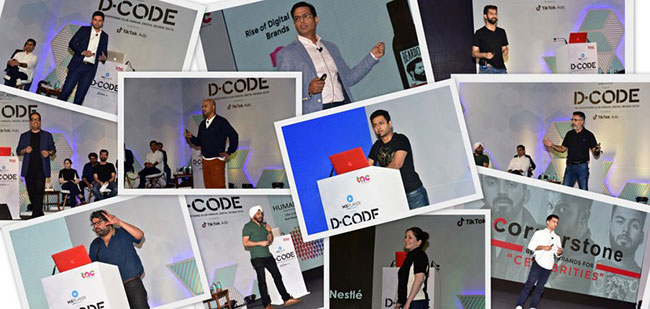
The Advertising Club completed the trilogy of Media, Creative and Digital review by introducing ‘D-Code’ in 2018. ‘D-Code’ has a definitive promise.
1. Industry experts expected to focus and share “One Best Work of Theirs”, the genesis, strategic intent, logic, and the result of the successful digital intervention.
2. Share ‘3 Tips On How To Break The Digital Code’, like trends, expectations or tips to maximise outcome.
3. As a bonus, the format promised dhtat industry experts will boldly walk into the not so comfortable arena outside their ecosystem. They will pick ‘One Best Work Of Another Brand’, and share their take on.
The industry experts are expected to do justice to all this in 10 minutes each.
D-Code 2018 Raised Expectations.
2018 proved that the D-Code format was excellent. The speakers were engaging. It was a ‘Paisa Vasool’ event. The audience was hungry with expectations raised bt the D-Code 2018 edition.
D-Code promised to be a quickie with multiple orgasms. Who won’t fall for it?
Unfortunately, D-Code 2019 edition did not raise the bar. It once again endorsed Content is King, and content more than the speakers is the secret ingredient essential to carry forward a successful format.
D-Code 2019
The organising team at the Advertising Club did an incredible work behind the scene. You cannot fault them as all speakers turned up and surprising them. The audience was ready for a long session with 13 speakers. They expected the speakers to engage and weave magic with their content and the passion for sharing.
Few speakers made futile attempts to test the Einstein Gravitational Time Dilation theory. In the process, they messed with the concept of relativity in time. It is a known fact that for the audience, time moves fast when the content is relevant and engaging. Sorry, there were hardly examples to talk about in the 2019 edition of D-Code.
D-Code Format Needs Tweaking And Disicpline.
No, the format was brilliant. What was needed is additional guidelines and strict adherence to the code of 2+4+3 format.
1. Two minutes for the ‘Who Am I?’ plugin and the tips.
2. Four minutes, for ‘One Great Work of Theirs’.
3. Three minutes for ‘One Good Work From Other Brand’.
More than a few speakers managed to bring in a superficial reference to the work outside their area of influence and control. The ‘One Good Work From Other Brand’ dissected to add to the audience knowledge. This is what an expert is required to do. Share the ‘Fly on the wall’, an outsider perspective not restricted to the title of the work title as ‘Inspiring’ and move on.
No Decoding Digital Code.
Maybe the ‘Tip’ business, decoding the digital code forced organisers to select the Speaker by name, brand and designation, not necessarily in that order. It placed additional pressure. Many came back with the most used escape route of ‘There is no code in digital’. Wow, so much for the experts and D-Code.
Here, is a silly suggestion: Maybe the organising team can consider doing away with this Digital code-tips business. It is anyway inferred and part of the other two subjects. Perhaps, we could have one speaker focussing and summarising all the tips and trends that other speakers contribute. It will surely save time and repetition.
D-Code Speakers.
We miss the truth that all industry experts are not best presenters. The Bell Curve is omnipresent. I bet the organising team knows it. What I may be suggesting could be highly impractical but worth considering. I know the names matter in such a format. Pre-select the work, which most likely been done. And then let the associated organisation ask their best presenters to be on the stage. Who may or may not be the CxO.
D-Code is a colossal event. A speaker must respect the opportunity. It is silly for anyone to share working on the presentation until 2am last night. The audience sees that as a last-minute compiling of factsheets. No speaker should take the captive audience through their resume substantiating and justifying what they share and where they come from.
More importantly, in digital, where a quarter is like a decade, stop presenting dated work or meandering and rumbling through the allotted time. These are digital experts. Having done scores of successful presentations, adhering to time should be least to expect. Yes, the speakers spoke of an alarming drop in attention span of consumers. However, they choose to ignore this vital truth while delivering the talk!
The Digital Code Shared @ D-Code 2019.
Everything is not lost. The industry experts and in the process D-Code did not let down the audience. There were some gems of collective wisdom shared in the event. Few presentations were right at the target. And if the gems from D-Code I share below seem cryptic and tough to understand, maybe you should have attended the event.
1. Digital is not about the output; it’s about the outcome. It is valid for any and every initiative, engagement or interruption across media. It is a brilliant observation.
2. Don’t expect the consumer to be perfect, do allow for and/or exploit the spelling errors and exploit it in the search business.
3. Stop attempting to do ‘something cool’. This should guide or kill few discussions.
4. ‘Authenticity’ is an essential ingredient. So is follow-through and amplification.
5. Content needn’t be paid, or a minute long, or 10 seconds short. The idea and the message needs to resonate, and the story need to be told- if it’s a bad idea, 10 minutes isn’t enough. We all know but rarely follow it.
6. Ideas can come from anywhere. Spirit of innovation and ideas must be fostered- whether internal creative, or creative agency / brand partner , or social agency. It is immaterial. Global truth-I.
.Be comfortable with having a couple of ideas that don’t work. If you are not failing a all. You’re not pushing the boundares hard enough. Global truth-II.
8. Brand relevance must be intrinsic to the idea.
9. Organisations have been slow in embracing technology and digital into their core competencies. What was science fiction at a point of time has become a part of real life? Technology is powering our ecosystem. No one will dispute it.
10. Every medium has its own grammar. Build the idea according to the grammar of the media. Do not cut-copy-paste or just make adaptations. It may be worthwhile to spend more on production than media. I seriously endorse it.
11. No matter what the agencies tell you, there is no code for cracking viral communication. If it is timely, apt, relevant, innovative, engaging, and the audience is tempted to share, it becomes viral. Keep listening and latch on the opportunity as and when it comes.
12. Mass marketing is essential to brand marketing and growth. Okay, go and debate it.
13. Deep dive and use consumer data. Listen to the consumer.
14. The biggest truth. The consumer is still a human being. Now we call it being analogue. There is no difference in ‘brand building’ in an offline and online environment. The most important learning.
My Take From D-Code 2019.
Thank god the industry still finds it reasonable to refer to the consumer as an analogue and not some AI-based algorithm. Emotion and irrationality is still part of the package. Even with big-data and implicit research, consumer reaction cannot be easily predicted. Triggers and levers, as well as right positioning, still matters.
The brand ownership is moving to consumers, and the brand teams now remain just the custodian like the bank manager where you have a locker. Meanwhile, the brands are dying to stay relevant by searching for the elusive cause.
D-Code Special mention Kenny Sabastian.
I suspect that the audience missed the seriousness in stand-up comedian Kenny Sabastian’s presentation. He used his tradecraft to deliver his insightful observations in the garb of humour.
Kenny Sabastian almost single-handily raised the mood. His mantra had a deeper meaning and direction. Be authentic, consistent, intellegent and fearless. Stop boardroom masturbation when you discuss ideas, brands and executions. Stop seeking answers in the numeric led matrices for self-pleasure. Stop taking yourself too seriously. Just be alive, do your best and keep moving forward.
His three wonderful tips for you to decode and imbibe.
1. Learn to create before you sell.
2. Technology chnages, people don’t.
3. Make fun of yourself. ( Don’t take yourself seriously).
D-Code 2020.
D-Code also reintroduced me (and hopefully to a large section of audience) to few o campaigns I have otherwise missed taking note of. I personally loved revisiting Ask Nestle, HaggleBot, Kingfisher’s Instant Beer mix prank, Pepsi Swiggy Swag, Omnipresent Radhika by Netflix, Swiggy’s voice of hunger campaign and the pirated URI implant.
I love the format and the efforts put in the advertising club team, moderator Vikram Sakuja, narrator Punitha Arumugam and the speakers. With minor tweaks and some more discipline, it is bound to a great event. I am in for D-Code 2020.
~~
List Of ‘D-Code 2019’ Speakers In Alphabetical Order. (1) Amarjit Singh Batra, MD, Spotify (2) Jogesh Lulla, COO, Cornerstone Sport & Entertainment (3) Karan Bedi, CEO, MX Player (4) Mustafa Ghouse, COO, JSW Sports Pvt Ltd (5) Nirmal Pulickal, Head–Facebook Creative Shop (6) Partha Sinha, VC& MD, McCann Worldgroup (7) Rashi Goel, VP- Consumer Communication Media, CRM & NHW, Nestle (8) Sachin Sharma, Director – Sales & Partnerships; Bytedance (Tik Tok) (9) Sidharth Rao, CEO & Co-Founder, Dentsu Webchutney (10) Srivats TS, VP Marketing, Swiggy (11) Sumeet Narang, Vice-President – Marketing, Bajaj Auto (12) Vikas Agnihotri, Country Director, Google (13) Kenny Sabastian Standup Comedian
Sanjeev Kotnala is a senior business strategy consultant and educator. His views here are personal
Digital is no rocket science. Employ analogue ideas. Don’t stress too much about algorithms. And ensure a good marriage of ideas, storytelling and technology.
That seemed to be the message of what 13 top marketing services professionals said at the second edition of the Advertising Club’s D-Code digital review.
Addressing the forum were Amarjit Singh Batra, Managing Director, Spotify; Jogesh Lulla, COO, Corner Stone Sport and Entertainment; versatile Standup Comedian, Musician & Filmmaker, Kenny Sabastian; Karan Bedi, CEO, MX Player; Mustafa Ghouse, Chief Operating Officer, JSW Sports Pvt Ltd; Nirmal Pulickal, Head – Facebook Creative Shop, Facebook; Partha Sinha, Vice Chairman and Managing Director, McCann Worldgroup; Rashi Goel, VP- Consumer Communication Media, CRM & NHW, Nestle; Sachin Sharma, Director – Sales & Partnerships; Bytedance (Tik Tok); Sidharth Rao, CEO & Co-Founder, Dentsu Webchutney; Srivats TS, VP Marketing, Swiggy; Sumeet Narang, Vice-President – Marketing, Bajaj Auto and Vikas Agnihotri, Country Director, Google.
Said Vikram Sakhuja, President, The Advertising Club, as he started the proceedings: opened the evening saying: “With D-Code we aim to break the definitive code of digital marketing. Today, most marketers are exploring various formats, forms and platforms to bring business value using digital marketing and the insights of our speakers today will go a long way in paving the best success stories for the industry in the coming years.”
Added Aditya Swamy – Managing Committee Member, The Advertising Club: “The goal of D-Code is to inspire and be inspired. With a range of speakers from across the eco system showing work by brands, platforms and talent, I hope we were able to raise the bar and give marketers thought starters to crack the Massive digital opportunity.” And this is what Punitha Arumugam – Managing Committee Member, The Advertising Club said: “26 case studies and 39 tips on digital in one evening was time well-spent. We had great feedback from the audience with inputs on how to make D-CODE even larger and better in 2020.”
Next week: Look out for a report on the event by industry veteran and MxMIndia columnist Sanjeev Kotnala
In 2018, VistaPrint released the TVC ‘Professional’. It uses a very myopic definition and understanding of the term Professional.
Tailoring is a profession, and many tailors are professional. In the PrintVista TVC, the young tailor is rejected by his potential future father-in-law. The father of the would-be-bride wants his daughter to marry a professional.
It is a cue for the prospective groom, the ‘Very Good Tailor’ to flash multiple branding items. He presents a visiting card. Then goes on to offer a branded pen, cap and T-shirt. The father is wonderstruck. He now speaks a different language. He wants to know the marriage date.
The branded items flashed by the young tailor does magic. It changes him from a mere smart tailor to a professional tailor. There is newfound respect.
On the surface of it, VistaPrint is doing its job. There is nothing wrong or illegal. No point bothering ASCI with it.
WHO IS A PROFESSIONAL?
It raises a question. Who is a professional? Sometimes it is a question of impressions. A smartly dressed person at work easily qualifies as a professional. Though appropriate dressing for the job is a part of being professional, it is not the end of it.
Professional and non-professional jobs are mostly differentiated by the need for a higher level of learning. It then tends to exclude people who are great at their work, learning the skills on the job or inheriting a vocation. It is restrictive in nature and leads to unnecessary polarisation.
For some, Professional is equated to advanced degrees or certificates hung on the work area.
PROFESSIONAL?
Going by the dictionary, a professional is both an adjective and a noun.
As an adjective, it defines that the person relates to or belongs to a profession. He or she is engaged in a specified activity as the main paid occupation rather than as an amateur. As a noun, it merely relates to a person engaged or qualified in a profession. And hence, the tailor, bus driver, mechanic or anyone engaged or qualified in a profession is professional.
The VistaPrint communication blatantly discards the definition.
In our country, Rahul Bose’s two bananas, Viral Kohli’s squad picture without Rohit or the religion of a Zomato delivery person creates much buzz in the social media. However, the professionals have nothing to comment on Vistaprint commercial. Maybe, they don’t consider such communication diluting their tag.
ARE YOU A TRUE PROFESSIONAL?
Being professional is easy. ‘True Professional’ is a different ball game. It requires exceptional job performance and a distinctive attitude. The attitude called professionalism.
PROFESSIONALISM IS AN ATTITUDE.
On a superficial level, professionalism is about behaviour and delivery. It includes compassion for others, responding appropriately to the emotional response, demonstrating respect for others and being helpful to people in need.
At the same time, it is about being reliable, competent and ethical in work situations.
There are simple traits that qualify professionalism. Ethical behaviour based on intrinsic knowledge. The capability to differentiate between what is right and wrong and the confidence to act on it. An altruistic attitude demonstrated by responsible conduct. Knowledge and expertise in their roles. Continuous engagement aimed at intellectual development.
ARE WE PROFESSIONAL AT WORK?
Now, this is becoming tough. Many of us will fail the above definition. Most of us are okay as far as appropriately dressing for the role is concerned. However, it is different when it comes to respecting other people time. Are we on time for assignments and engagements? Do we really work efficiently? Do we deliver on promised timelines? Sorry to have touched a raw nerve.
PROFESSIONALISM AT WORK?
Here is a small test. Answer the questions and check how professional you are? More the Yeses, more professional you are. Now no one is asking you the score, so be as transparently naked and honest as possible.
1. Do you have a positive attitude towards work and life?
2. Are you reliable in your role?
3. Do you always try to deliver above expectations?
4. Do you engage and purposefully work towards developing your capability and skill?
5. Do you regularly pause, reflect on your work, absorb the learnings and move on?
6. Do you communicate clearly?
7. Do you have the required written and oral communication skills?
8. Do you speak up when you see something wrong happening? Ethically or morally or process-oriented.
9. Are you open to critic?
10. Do you willing to accept feedback?
11. Are you respectful to your co-workers across levels?
12. Do you discourage politics at work?
13. Do you encourage or discourage work gossip and rumormongering?
14. Do you promote gender equality?
15. Do you raise voice against sexual harassment at work?
16. Do you know the difference between being professionally friendly and friendly Professional?
A score below 12 should make you think. As professionalism is not a percentage score. Just like there is no half-pregnancy or half-cancer, you are professional, or you are not!
“When You Don’t Have An Alternative, You Don’t Have A Problem”. I love it. It is one thing I learnt at IIM Ahmedabad. I regularly use it in my workshops. When you have no alternatives to choose from, there is no problem. A problem has to do with alternative solutions. Just like a lock must have a key; otherwise, it is just a paperweight. It is possible, you may not have a solution, but the alternatives do exist even in the most constrained ecosystem.
The Class of 1987 credits the statement ‘When You Don’t Have An Alternative, You Don’t Have A Problem’ to Prof V.L. Mote. My batchmates believe Prof Mote voiced this gem of knowledge while teaching decision tree in their first year. The debate is on about when did Prof V.L. Mote say the famous line? What did he precisely say? And what did he exactly mean to say?
Sadly, we can’t check it with him, as our dear respected Prof V.L. Mote passed away recently (July 23) on the way to attaining Nirvana.
The No Alternative No Problem Guru.
Prof Mote passing away, created a hyper debate in various IIMA groups on WhatsApp. The Class of 1987 was no different. His profound Jeevan Mantra was discussed in WhatsApp University.
The debate helped me correct and sharpen my understanding. I realised I may have misunderstood it all this time. The discussion was sharp. Someone in the group had to remind the two sides not to take the debate seriously. Another batchmate almost shouted, ‘Chill! Chill! You are no MBA. Just PGDM.”
Applying The Filters.
Now Prof Mote was no mere IIMA professor. He was one of the founding professors who has taught many industry stalwarts. He gave us one of the best fundas for life, “If You Don’t Have An Alternative, You Don’t Have A Problem”.
I don’t expect everyone to agree with it. So, it was natural for one of the Gyani’s (GYANI-I) in the group differed. He countered, “If you do not have an alternative, you do not have a solution. You certainly can still have a problem”.
Another pious soul (PIOUS SOUL) interrupted. He added and questioned if whether Prof Mote did say, “no alternative. No Problem. Is Nirvana”.
Bringing You The Debate On Alternative.
The IIMA87 group is reasonably active. They discuss global issues for breakfast. On this day, they conferred, among other things, President Trump freak ‘Mr Modi asked me to mediate’ statement, and how in a good economy he can be easily re-elected. Nearer home, they deliberated on Urjit Patel, pointing out what is wrong with banking. But, the most engaging discussion took play on Prof Mote;s mantra. It has been a tough task to read through hundreds of screens and cryptic clues and bring you all a reasonably well-articulated synopsis.
Listening To Alternate Point-Of-Views.
We have a lady in the group who thinks differently. She prides herself having facts for every argument she supports. She can take anyone in the group and debate any subject. She has strong views and a perfect way to present them.
The lady said: “Prof Mote fundas was, What’s the problem? And when he said that he was referring to the case. What are the solution alternatives? If it’s only one alternative as a solution, then there is no problem. There is no decision making or evaluation involved. The only solution is a state of Nirvana. It is my understanding of what Prof Mote said, so many times.”
The penny dropped for me. I have been missing this crucial bridge.
The Debate On Alternatives And Problem Picks Up.
You can’t allow someone else’s points of view to win so easily. Not when the bricks of IIM Ahmedabad have influenced you, and you are expert in raising counter-arguments. Some times just for the fun of it. Sometimes, such discussion in the Whatsapp group goes long to productively add to groups collective learning.
So the GYANI-I politely disagreed with the argument. He pointed out: “for example if I am a homeless person and do not have money to rent or buy a shelter. And if there are no homeless shelters. Then, I may not have any alternatives and hence, no solution! Being homeless is a problem for me, and lack of alternatives does not prevent it from being a problem. Just because I cannot escape homelessness, it does not make it a state of Nirvana.’
I understand there are always alternatives. Status-co itself is an alternative. But, I liked Gyani-I’s argument.
I smiled when the Lady went for the kill. “There are still ‘alternatives’, albeit ones that may not meet your’ objectives,’ e.g., sleeping on the footpath, out on streets, forceful break-in and more.”
Maybe she did get it wrong this time. Gyani-I was not going to give up so quickly, “Sleeping on the footpath and out on the street is NOT an alternative to homelessness!”
The lady relented a bit. She paraphrased her argument again; she said “Prof Mote said that, but I disagree. If you do not have an alternative, you do not have a solution. You certainly can still have a problem. And if Prof Mote said “If you have no alternative you are in a state of Nirvana” because you have no decision-making problem. I agree. However, it does not mean “you have no problem”.
Wow, I was getting re-educated.
The Crowd Provide Alternatives
The vagabond guru (VG) chipped in. “When Mote spoke about alternatives, pretty sure he was talking about legal alternatives and so forceful break-in does not qualify.”
A section of group uninterested in this academic debate wanted to leave the Professor in peace and stop the discussion. There were alternatives before the group. They could continue the conversation, stop it, take it one-on-one or open a new WhatsApp group for people interested in the debate.
Thankfully, before the group could engage in democratic debate on what to do, some said ‘Managerial Problems is always about the problem of choice’, and it reignited the discussion.
Gyani-I was still stuck at Nirvana, so he added “I do not agree with Nirvana. Just because one does not have a decision-making problem, does not mean he or she is at Nirvana. In the homeless example, I may not have alternatives and hence, no solution. Being homeless is a problem for me, and lack of alternatives does not prevent it from being so.’
The academician (ACAD) in the group jumped in with a fresh perspective. “See, This person’s problem is not homelessness, but pennilessness. Surely there are alternative solutions to that as a problem. I do agree with what Prof. Mote said. No alternatives do mean there is no decision to make and instead one should focus on something else”.
It seems someone in the group had his fundas right.
Gyani-I felt challenged with the way the discussion was shaping up. He pointed out, “I agree no alternatives mean no decision to make. I am responding to the comment that no alternatives mean no problem. I also agree one should focus on something else, but that is hardly Nirvana. Additionally, a homeless person may not be broke. He may have money for food but not for a home. So cannot say the problem is not homelessness but pennilessness”.
The lady decided to hedge her bets as the discussion was going no-where. “Did Prof Mote say: “No alternatives means there is no decision making and hence focus on something else’. If he said it, I have no alternative but to agree. However, If Prof Mote said “If you don’t have an alternative then you don’t have a problem’, I disagree with that. I have not heard him directly so depending on what he said, I either agree or disagree”.
I now understand why she always wins an argument.
Absolute Take On Alternative And Problems.
“If you have alternatives, you have a problem. If you don’t have alternatives, you are well and truly F****D! ”
Then the one who now lives innovating carpentering lives (ICL) in western India broke the rule. He reminded the Lady. “Yes, Prof Mote did teach section-A, your section. Remember, Prof Mote took the Western India pharmaceuticals case. He threw duster at me! Maybe it was the introduction to the case method, but definitely, it was section A”.
He quoted Prof Mote: ‘If there are no alternatives, you do not have a decision problem. There is no mention of the problem vanishing. It is in the context of the decision trees. There, If you don’t have alternatives, you are in a state of Nirvana. You have only one path to follow. It does not say that the problem ceases to exist. It suggests you don’t have any choice but to follow the only solution on hand.”
The above explanation sounded conclusive enough. However, I am surprised at people remembering the cases they discussed in the early eighties. Throwing the duster was irrefutable proof from Section A. The discussion should stop.
The lady further made her point, “I very clearly remember what Prof Mote said. If you don’t have any alternative, you are in a state of Nirvana. Then he explained that it means you have only one path to follow. It does not mean that you can do something else or that you don’t have a problem. It only means that you have no choice but to follow that single path”.
Discussion Thrives On Alternatives.
Another Gyani ( Gyani-II) woke up to provide his input to the discussion. “If you don’t have a problem, and don’t have alternatives, you have achieved Nirvana”. And in an authentic style added, “Time to draw a two by two. The problem, no problem, on the x-axis. Alternatives, no alternatives, on the Y-axis.” And I started thinking about what quadrant would be ‘No Problem. Many Alternatives’.
A Bird (BIRD) who keeps coming in and out of discussions chirped in “I think we should write a case study on this and develop a model. Its Pucca HBR material. We can draw on the fields of psychology, epistemology, game theory, logic, sociology, and python programming”.
I noted, the group still holds HBR in high esteem. Maybe the ‘H’ hangover remains.
Alternative Leading To Nirvana Gets Interesting.
Now the IIMA Alumni can never leave the discussion to die a natural death. So the promotors of the homeless angle brought it back. “Not escaping homelessness is still a sense of Nirvana. Once you recognize, there is no way to solve a problem. It will merely unmask the problem (Zen &TAOMM). No decision or cause for exercising free will and the unhappiness associated with choice. Nirvana will descend. Decision making among choice is the root of all problems, symbolized by Adam’s apple”. I did not understand the last part, but I let that go.
The ex-academician (EXA) ring-side view and stated in his self-alluded magnanimity. “Prof Mote actually said “If you have no alternative you are in a state of Nirvana” because you have no decision-making problem. That does not mean “you have no problem”. No one had time to remind him. It has been discussed before.
The EXA made the ultimate CP. “If you have alternatives, you have a problem. If you don’t have alternatives, you are well and truly F****D! being well and genuinely F****D is Nirvana.”
Closing The Alternative Gap.
The initial propagator of the discussion Gyani-I was openly feeling ill at ease. He fired his last shot: “Just saying the situation without any alternatives is Nirvana. You can’t do shit about the situation, so accept it. It will help one make decisions on the next goal and the path to take. One can’t be in a defeatist mode. Apologies if I started something.”
The person from Allahabad (PFA) shot in like the hot iron, “You guys are talking about acceptance as if it is as easy as flicking a switch. So click, and Nirvana appears. There is no sensible alternative to live in. So every living being is in a state of Nirvana? Did you ever have a situation in life did you accept totally without any questions? The journey to real acceptance goes through hell. Because the barriers to real acceptance are your cravings and aversions, and it is difficult to eliminate them fully. Yes, you can mask them by playing tricks with your brain, but they do not become extinct and resurface stronger at the right time. So what’s the alternative?”
The batch of 1987 has to feel its age. So the Gyani-III in the group had to remind them. “The alternative at this age and stage in life is gradual renunciation. Those hurdles go poof. Nirvana appears. As you say, renunciation seems like “going thru hell. If it is forced.”.
A rebuttal to it came immediately. “What you are saying is true. If you understand you are not renouncing, but with age, gradually your desires and aversions are running out of fuel.”
Smart Closures.
The academician tried closing the discussion. “It means if you have only one solution, in the absence of any alternative Accept and implement the only solution for the problem. Focus on other related aspects like how to improve/maximize the solution, perhaps. Applies to any life situation, both managerial or non-managerial, where one is facing a problem or decision-making”.
The final shot came from the Spiritual Guru (SG) in the group. “Out of clarity emerges confusion. After great debate and deliberation, Clarification leads to obfuscation, Which is the fodder for further discussion. Proposition, Interrogation, Elaboration, Disbelief, Clarification and Confusion. Till the next thread starts. And everyone finds at least one more person who will agree with them:) So, everyone is happy. and the confusion wins!!! Respected Prof VLM is perhaps now confused too, not just about his clarity, but about what he even said”
When I threatened to share the content of this discussion in my next column, the conversation shifted to another subject. They had no alternative. That means there was no problem. And a state of Nirvana.
……………………………………………………………………………..
So once again Prof Mote by igniting this discussion, made me get clariety.
1) Lack of alternative solution does not mean the problem does not exist.
2) The problem may continue to exist even if you do not have any alternative solutions.
3) If you have just one solution. It is not Nirvana.
4) If you have only one solution. Accept it. Focus on it and deliver it to the best of your abilities.
…………
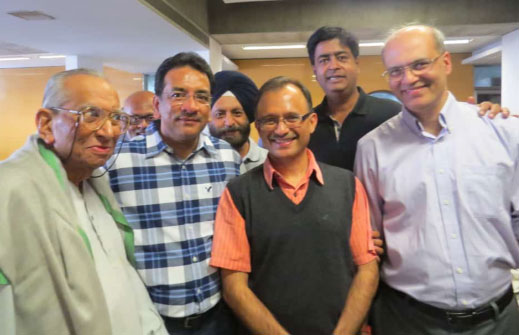
Prof VL Mote at the silver Jubliee reunion of Class of 1987. IIM Ahmedabad.
In India, China Airline has a biweekly service between Delhi and Taipei. It accounts for some 0.1% of the total international air traffic in and out of India. Most likely that I would have missed seeing this brilliant communication from the airline, thanks for one of the updates from Campaign magazine.
Brands usually associate with advantages, opportunities and positivity in life. They want the target audience to link these with their usage. They want to engage and involve the target audience, mostly good things. Many times all the brands start getting guided with the same category ethos and promises.
It is no different in the case of airlines. Safety, Luxury, taste, entertainment systems, the gourmet serving, comfort and pleasing smile of the in-flight crew are hygiene for airline brands. It has long been so. Earlier in the year 1995 or even 2010, China Air spoke a language deeply soaked in category clues.
Fortunately, China Air has moved on. It has broken free of the category expectations, the constraints and the blinkers. Thankfully, unlike KLM, it is not another purpose-led #FlyResponsibly Campaign.
China Air Is Seriously Taking On The Unexpected.
Getting married or even pregnant, injured or cursed, love and hate- everything is an unexpected possibility. Flying takes you to different cities and countries, creating that window of uncertainty when you are in a new place and meet new people. China Airline “What Travel brings you,” Campaign is a beautifully crafted disruptive work by the agency Leo Burnett Taiwan that speaks to the new tribe of travellers.
“What Travel brings you” is the celebration of the unexpected. It is an insightful and engaging campaign. It speaks the language of a traveller and connects at multiple levels.
Travel adds to the life of a traveller. With every journey, a traveller becomes richer with the knowledge and experience after every travel. Some of these are planned and expected, some really unexpected. Each of these experiences impacts the way the traveller shapes future decisions. Travel impacts our lives. Trust me, it is the unexpected that makes the journey worthwhile.
A for the unexpected, “You never know what travel will bring into your life…. Let’s go find out”, is a powerful summation of the thought and an invitation to travel.
The Unexpected – Unexpected China Air.
The team has thoughtfully picked up brilliant examples of the unexpected. A campaign like this can remain as fresh as the list of unexpected consequences. As every city, community, tribe, nature and geography has something unique, the campaign also boosts the traveller seeking more than mere physical experience. I have a huge expectation from the unexpected. And wish that the China Air brand association with the thought were a lot stronger. Till now it seems to work for travel promotion, not necessary China Air promotion.
It is a bold campaign. You do end up watching it a few times. It breaks free of the stereotyped over-exploited category clues and charts a new territory that the audience relates to. Here are some of the unexpected you encounter in the China Air campaign. Plastic surgery from Seoul, and now her face does not match the ID. The marriage certificate signed at Las Vegas’ instantaneous no-question asked weddings. The injuries one got at the Ski trip. Surprises win at a casino in Macao. The extra inches at the waist after the Bangkok trip. A tattoo that is no longer wanted. A statue that is spooky from Edinburgh. And even the unexpected pregnancy a souvenir from a Gold Coast trip.
On first viewing, it seems the airline has purposely picked up the bad experiences. Slowly when you start looking back at your own experiences, you start appreciating the campaign more. It does add a smile to your face.
On the side.
I don’t know, but there are reports that China Air invited 60 women with an unexpected pregnancy and discussed the geographical origin of the pregnancy, ultimately awarding one of them with a three-week stay to revisit the destination.
…………………………………….
China Air’s earlier campaigns
It is not that China Airline always talked this language. This particular ad made me check and see their earlier communication “The Trip You Have Promised,” Wow, another gem. The guilt of postponing promised trips. It was a great way to remind a large section of potential travellers of their own bucket list and promises.
And way back in 1995, you really did not expect anyone breaking the category code. The campaign “We Blossom Every Day”.
Earlier like everyone else in the 1980s, they were also busy Cherishing Every Encounter.
………………………………………………….
PS.: AIR CHINA Vs. CHINA AIR. Air China (CA) was founded relatively recently in 1988 and is the national airline of China. It became a member of Star Alliance in December 2007. China Airlines (CI) was founded in 1959 and is both the flag carrier and the largest airline of Taiwan.
Seriously, someone has to be quirky and disruptive sounding with a ‘Fly Responsibly – Take a Train’ to catch attention.
We live in an era where brands are being forced to demonstrate their commitment to a purpose. Look at #ToxicMasculinity, #ShareTheLoad, Jago Grahak, #OrgasmInEquality. All of these are bold and in some way disruptive. Some of them are justified but many of them questionable in their focus and commitment.
The information has been democratised. Marketing a bit deglamourised can no longer hide behind vanilla promises and functionality.
Many categories uniquely fulfilling some need of consumers are now finding out that they are harmful to the whole ecosystem. They are doing more wrong than right. And the consumer expects them to f*$%king take responsibility for it. As none of these are illegal, the companies want to continue doing business.
Airline Industry Has To Fly Responsibly.
The airline industry is one such case. High-flying climate ambassador has questioned its carbon emission impact from 32,000 feet and above. Carbon emission will continue to rise until sustainable fuel usage takes off. Currently, airlines account for some 2.5% of global emission.
The Airlines Can Fly Responsibly.
The possibilities exist, and many airlines are making some progress in the area. Airlines can shift to more green or sustainable fuel and even commission Hybrid planes. The airline can work on rationalising route, fleet and size. The seat configuration between first, business and economy class can be reworked. Maybe they can start charging people by weight.
KLM Point Of View.
KLM has been working on the service part of the ecosystem. KLM realises that working only on the airline side of the ecosystem is never going to be sufficient to address or make a sizeable contribution to the cause. Hence, to make it more effective, the airline wants to involve the demand side of the ecosystem, the customers the flyers.
Till the option of flying cheaper faster to a destination for business or pleasure remains available, people are going to opt for it.
KLM wants to nudge the passengers (the demand side of the ecosystem) to help make a positive contribution. This thinking is the foundation of the campaign FLY RESPONSIBLY. Here is the quote from the KLM website. “Fly Responsibly is KLM’s commitment to taking a leading role in creating a more sustainable future for aviation. With the introduction of Fly Responsibly, we’re making the world aware of our shared responsibility. We can only succeed if we work together, so join us today for a more sustainable tomorrow.” And it is already one of the world’s more fuel-efficient airliners.
How To Fly Responsibly the KLM way.
The airline wants the flyer to consider other travel options, like a train. It gives an example that flying from Amsterdam to Brussels takes longer than going by train. Maybe it wants to get out of uneconomical shorter routes!
KLM ask the flyer to evaluate if the travel is really needed. Or one could use the various technology tools like Skype and web-links etc. to conduct the business. It is nothing new; many of companies have already adopted this system of doing business.
KLM wants a flyer to pack light to help burn less fuel.
It wants the flyer to voluntarily pay to offset their travel carbon footprint. The cost of carbon print offset is around 1 to 1.5% of the total cost of travel. However, when flyer opts for CO2ZERO service of KLM, he or she contributes to the ‘CO2OL Tropical Mix’ reforestation initiative in Panama where so far at least 3,5 million trees have been planted.
These are small steps. The airline hopes these suggestions will nudge the customers to mould their behaviour.
No One Wants To Take The Harder Route.
KLM could have been the first one to charge passengers by the weight. So if a passenger is above a certain weight (just like baggage allowance), they have to pay extra. In the process, forcing some frequent flyers to reduce weight and be health conscious. Or it could have promoted healthy ways by giving a discount to lighter people.
It could have increased the extra baggage rates exponentially, thus nudging passengers to pack light.
It could have stopped services between the towns where other modes of travel are faster and equally comfortable & convenient.
It could start charging rather than asking flyers to voluntarily opt for CO2 footprint offsetting.
Thus, the airline could have forced the consumer to think again.
We all know it is impossible for a single airline to do so. It will be priced out of the market. However, the Government can bring in laws and policies equally impacting all airlines.
Is KLM Serious About Your Not Taking The Flight?
Yes, I believe it is. This communication is not like the fake COKE or the ‘Stop eating Tide Pods’ communication. It is not even like the ‘HT NO TV DAY’, where a newspaper was asking people to have a no-TV day.
It’s the airline wanting you to just fly responsibly.
Before you raise your eyebrow, they have no intention to stop flying.
The airline tells you “It is our business and we want to stay in business… We are stepping up to speed up progress towards a sustainable future, but we are a company that needs to make a profit to survive and to continue to invest in sustainable solutions. We want to still be around when we have succeeded in our efforts to make aviation sustainable.” And it tells you in, FLYING RESPONSIBLY is a two-way street, we the airline and the flyer both are equally responsible.
A Good Gimmick Or A Responsible Act.
Frankly, in spite of all the explanation in the website and umpteen videos available on YouTube, for some reason, KLM ‘Fly Responsibly’ looks gimmicky. Maybe it is the distrust in such campaign that makes me think so. I think we will have to wait and watch how the campaign develops and what further steps the airlines take to engage, involve and nudge the passengers.
The airline has definitely taken the lead. It seems to be ahead of possible politically and global regulations that may hit the industry sooner than later. Being the more fuel-efficient airline with experience with sustainable fuel is Fly Responsible a great PR lobby idea to push the Government to impose a Carbon Footprint Offset tax or cess, it will benefit KLM.
FLY RESPONSIBLY has helped KLM garner a thought share. Whatever may be the reason, I do hope it succeeds in its attempt to nudge the consumer. Every step counts.
ASIDE.
Meanwhile, I don’t think it is going to make anyone of us shift from Delhi-Mumbai flights to Rajdhani or Mumbai-Nagpur to Duranto. We are an equality-operated economy. The airports and air-travel are as uncomfortable and inconvenient as the train. Hence if AIR-INDIA or INDIGO or VISTARA will talk Fly Responsibly, it could only hint for the flyers to behave appropriately, stand in the queue, don’t should and fight, follow instructions.
I will leave you with this DON’T EAT TIDE PODS message, just for fun. Very impressive, very purposeful.
Is it time to co-create? You have to decide. Are you going to leverage the potential of co-creation NOW or willing to regret later?
The IPL is over, rains are settling in, and the World Cup is reaching towards its climax. And the festival period is still some time away. The Cannes Advertising Festival is over. The party and congratulatory messages will dry out soon. The fire for missing out will die quickly. There is no better time than now to start afresh.
The month of June has ended and the brands are busy firming up their strategies. The proactive ones are briefing their agencies. The real smart one is getting into research to evaluate creative.
Soon the laptops and servers in media agencies will start heating up. The media owners will start racing up to client and agencies for their share of advertisement investment.
The silos working within the industry silos will come alive with a heightened buzz. They will create an illusion of working as well-oiled machinery.
Everyone across brand ecosystem is interested in getting his or her point of view in the final brand strategy and execution. The ego will start popping up uninvited. The bitching will start. Idea ownership and emotional attachment to the ideas will further deepen the gap between silos and define the new turf.
Soon the year will be over. The independent units in the ecosystem of interdependence would have once again failed to co-create. You have to decide. Are you going to leverage the potential of co-creation NOW or willing to regret later?
Management will haul HR. Some of them will get a consultant to speak and introduce Co-creation and celebrate it as a contribution of learning and development programme.
Co-Creation is a must for the brands?
Come to think of it. Co-creation is the basis of life on the planet. There is hardly anything ever created, destroyed, administered, implemented or achieved without co-creation. It is almost like nature has been serving you the secret of sustained success and growth. But that is the discussion for some other day.
Failure to co-create is a disservice to the brand. In absence and resistance to co-creation, the brand continues to remains chained to creativity as experienced, expressed, exploited and explored in our area of expertise or profession by the brand custodian and team. Newton’s law of communication.
Co-creation helps to get leveraged cross-pollination of ideas. It allows for positive evolutionary mutation. Darwin theory of evolution.
Co-creation uses every creative superpower of Making, Hacking, Teaching and Thieving. It builds on the medium and brand promise with Saam (Logic, rational, inference), Daam (Price or opportunity), Dand (Penalty, constraints, frugalism) and Bhed (differentiation, uniqueness, relevance doubt) philosophy.
Co-creation raises questions and seeks collective wisdom to make things possible. Collective wisdom is a level of knowledge, understanding and wisdom that is impossible to be accessed by any individual. Just having people in the room does not evoke collective wisdom. Collective wisdom is only in operation in groups responsible for a joint action addressing singular probortunity wit complete freedom and empowerment. It stretches the capabilities and breaks the barriers for the best results.
Co-creation is omnipresent in the advertising-marketing arena.
The creative agency and the client co-create the campaign, and research, insight and concept testing represent the consumer. The media, event and activation agencies play an essential role in co-creating the whole experience and engaging the desired audience.
In all of this process, one critical silo remains traditionally unengaged. The media. And in the process, the brand is ultimately losing out on the chance of co-creating some unique media solution.
Involve Media In Co-Creation!
It’s rare when the clients and agencies include media in the co-creation process. Maybe they find media entirely transactional. The media is always fighting the war for a share of wallet. They have rarely shown interest in understanding the brands probortunity.
No doubt, the client and creative agencies have not considered them worthy of a brand communication discussion. Most in media have no experience of the fun, charm and fruits of inclusive co-creation through multi-functionary teams?
However, people in media know how the brand strategic direction can be best leveraged in media through innovative usage and representation.
Can Media Take The First Step?
Maybe the media can take the first step. Perhaps it is time for media owners to work with their most innovation savvy, creatively inclined, quick decision making clients and brands. Time to experiment with co-creation.
This is best done with a classical cross-functional team in a two-day offsite workshop. Workshops like InNoWait and ideal harvest, and the one based on designing thinking, constraints breaking, collective wisdom and/or brain-swarming in a liberate framework works the best.
I personally swear by the controlled positive rivalry infused in these cross-functional teams. Each of them pushed to explore the possibilities. The results are nothing short of being magical.
Ideas left at directional developmental stage usually die archived in presentations that are never reassessed. Hence, I suggest co-creation events and workshop take that extra leap of faith and complete the loop by developing the whole idea, including implementation routes.
It does cost time and money, but the results you get are disproportionate. Efficient communication, lowered media weights, revenue and enhanced brand imagery, are some of the by-products.
Co-Creation Team.
The most effective co-creation team has a comprehensive representation. It is an inclusive team with consumer, influencers, research, client, creative, media agency and media owner team as members. Getting media production department representation further strengthens the team.
More To Co-Creation?
Co-creation expects that all the members be on the same page on probortunity (Problem or opportunity) definition. This includes brand positioning, strategic intent, experience and possibilities.
The members are chosen not for their designation and seniority, but for the mind-set, attitude and passion.
Co-creation is like the roulette table. You need to play big to win big. Most importantly, you are empowered to make the call. The decision makers are at the site as an unbiased observer.
Get An External Pied Piper For Co-Creation.
That’s the final requirement. The Facilitator.
You need a Pied Piper to excite the child inside the participants. One who will ensure that the game is played with complete transparency, honesty and curiosity?
The facilitator job is to channelize ideas and keep the heat on. The facilitator ensures participants are not trapped within the coordinates of constraints and excuses. The ideas are not killed in mind. The participant continues to indulge in a childlike curiosity allowing them to question all barriers with a simple ‘Why Not?’ Hence, the facilitator must not represent any of the participating silos.
Co-Creation Is Collective.
Co-creation is format, category and media agnostic. It can be used for a tactical or thematic purpose. It can lead the communication or act as a support.
The real fun of co-creation is that everyone is creative and curator. The best idea emerges with collective ownership and increased passion pushing its chances to succeed.
PRINT Can Best Benefit From Co-Creation.
Though co-creation can happen across every silo in the brand ecosystem of a brand. In the advertising arena, Print media, both newspaper and magazine are the most promising area for co-creation and its benefit.
Co-Creation – Don’t Kill The Golden Goose.
Co-creation works when all the participants have a singular objective. In the business of communication, that is the universal uniting force, the best for the brand. In such a situation, the frame of mind needs to be of expanding the range of possibilities.
The associated Media should be set reasonable charges for execution; they should freely help execute the idea in another media. It’s tough, but in an idealistic situation, if it seems so, they should willingly acknowledge that the brand would benefit more when the idea is executed in a different media. The ‘Go-Giver’ attitude is something that will be appreciated by anyone and sooner or later benefits the brand and the media.
Caution
Co-creation is for equal accountability and responsibility. If you get credit for the excellent work, the team collectively must be willing to take it on the chin when the idea fails to give the expected results. Also, do remember that neither advertising nor co-creation is the answer to every probortunity.
How To Fail In Co-Creation?
It is easy to fail in co-creation. Carry your ego inside the co-creation room. Create a situation of negative rivalry among teams. Make it a place to demonstrate capabilities. Seat, talk, discuss hierarchically. Make a singular department responsible for co-creation. And then the absence of engaged senior with decision-making capabilities are some of the ways to make it ineffective. Otherwise, just follow the nature secret- Co-Create.
IAA’s Retrospect and Prospects last week dealt with the CMO curiosity and desire to know. The need to know what next? To know of the next trend going to hit the market and communication. It is very human.
So instead of going to soothsayers, crystal ballgazers, experts, pundits and predictors to help read and connect the current and past dots, the India chapter of the International Advertising Association (IAA) went to Neil George, MD, Nivea (India and South Asia). On June 27, 2019, to a packed hall at Mumbai’s ITC Grand Central, Neil presented the ‘revenge of the client’. Retrospect and Prospects from a CMO point of view. Not surprising, to help clear the fog, Neil banked on the last 18-month trends and the interpretation of his expert group from five continents.
Neil George’s Five Important Observations.
1. Loss of Trust.
2. Pessimistic optimism. The pessimists are as many as optimist are there in the ecosystem.
3. The emergence of female superstars.
4. Growth of voice search (mainly pushed by Amazon Echo)
5. The new emerging platforms like Instagram and Netflix are dominating the content space.
Retrospect And Prospects In A Different Way.
All of us would agree that today, the technology crossover is fast. However, this was a session in India with an audience that was not necessarily in sync with global needs. Still, the truth remains that few brands in India have the budget empowered CMOs and active management to operate and support the level of technology infusion and creativity used as reference points in Neil’s presentation.
I personally would have appreciated if the presentation remained India-centric.
It is not about this session. It is true for every presentation in such forums. The speakers have a love for expressing the numbers in dollars, billion and millions. Keep them, but why not also state them in the Indian way of counting. Why speakers can’t take that extra pain in converting numbers and statistics.
Neil to make a point had to stress 2.4 billion with a “B not an M”. Well it takes Indian mind a few seconds, but the connection is lost. What is wrong in saying 240 crores. Or that someone charges 5.25 crore instead of saying USD 750,000.
Anyway, everything is not lost. The presentation synthesised the trends and Neil’s point-of-view beautifully. We may not agree with all of them and find fault with few. But this was his POV, and we should appreciate the speaker taking time in putting it all together.
Personally, just using few picked up examples of film clips and TVCs to support a point is a weak format. I would have loved to have Neil explaining and getting into details with arguments and counterarguments to make the point.
It is tough to get into each of the trends in detail in this article. This is for the lack of space, decreasing attention span and the author’s inability to presents someone else’s synthesised understanding. Trust me, such sessions are best absorbed first hand.
The Eight Trends by Neil George. Retrospect
Hope – Restored? The question mark reflects the doubt Neil has. There is an attempt by various brands and audience that shows there is HOPE- everything is not lost. Watch the ‘GULLY BOY’ example used by Neil to make his point.
Trust – Regained? Due to information democratisation, ease of message sharing and the fake vs real issue, the industry has lost trust. Not enough has been done in the area of regaining trust. Neil used the New York Times ‘The Truth is worth it’ and FCK ( KFC ) examples. But I share the brilliant Indian example he used to make the point; Samsonite- Kerala- we are open.
Real Stories. Romanticised. There is a trend for real stories being romanticised in movies and art. I would ask you to see Gully Boys and URI. Neil used a reference of Bruce Springsteen Broadway show.
Celebrities – They Have Become Brands And Stronger. Oh, they are the same people topping the chart on Instagram and Tweeter! Oh, “Cristiano Ronaldo has 2.5 billion likes from 700 posts in 2018, and he charges US$ 7,50,000 (i.e. INR 5.25 crore per Instagram post). Oh ‘Girls Like You’ featuring many female celebrities topped YouTube charts and has 2.2 billion views. It is the 25th most viewed and liked video ever on youtube. The argument may be valid, but the explanation and support were weak. Take the top of the pyramid representatives in any category, and you will get similar biased results.
Male Superheroes – RIP? Only two movies in 2018 which featured real male superheroes topped the charts in 2018. Does that make ‘real male superheroes’ dead? Certainly not. And the question mark cleverly used by Neil comes to his rescue. He has said it and not said it. It’s the famous Journalistic trick used by newspapers.
Creativity Twist- Revitalised. The examples used of Taco Bell fries launch, every ad is a tide ad, and the Hidden flag are not sufficient to say, creativity is now more powerfully used.
Production Values – Revival? I liked his representation and comment on smaller production houses. I agree smaller production houses can produce great content. But is that a trend! I request the Industry to test the success-hungry craft passionate smaller production houses for content creation. Give in to Giving is an example and so is the famed Viva la Vulva, but again isolated famed cases cannot be used to generalised and taken as a trend. And really, there was no need for Neil in his presentation to introduce the Viva La Vulva communication- with some prelude- including ‘Fastion your seat belt’. It spoke of some bias.
Machines – Are They Coming?. Oh, we all know they are coming. Voice search (Amazon), IOT and Big data all are pointing towards machine facilitation if not dominance. I thought the question mark was not required in this case. Maybe it is there to question the positive use as demonstrated in the Pizza delivery in a jam and Revoice or the possible harmful use.
The Future. The Prospect.
Oh, here are somewhat apparent suspects and no surprise
Brands That Have Purpose-Driven Communication Will Succeed. I don’t think so. I would just tweak it a bit to make it real. Brands That had Relevant True Purpose Driven Communication integrated with real consumer experience will succeed. That also means that many brands who are trying to connect the dots and trying to find a purpose that they can ride to purpose wave will fail. And If I were to bet, there would be more of failures on purpose led than successes.
A Rapid Increase In Data And Technology. All thanks to the rise in voice search. My take. Absolutely expected. True. And more lethargy will be built in. More conflict it will create.
Personalisation At Scale. My Take. I agree it will happen until there comes a time when the audience will rise to fiercely fight against deep customisation. When it will become snooping and a distraction. The mass appeal and addressing may not rise again, but communication, tribe creation and grouping – in other terms – Niche Segmentation – will once again make its mark.
Great storytelling will emerge to be stronger than before. I perfectly agree. Expected. With all the ease of execution with technology and platform, this will further become stringer. Emotions stirring will again be the forefront of triggering the audience reaction.
More On Future.
I like his quick but profound summation ‘The future is about sinless consumption’. Neil shared the example of successful Meatless’ Impossible Whopper’, zero per cent beer does point to it. And maybe we are working toward a frame of reference where obesity, carbon positive and water wastage will be a real sin.
At the same time, I believe he missed touching on the fact that brands in their own wisdom will purposefully exploit the big data with hyper-personalisation. It will be the SINFUL BRAND CONNECTION AND COMMUNICATION, misusing of personal data and fragile permission marketing. This may give rise to an upsurge for privacy and data sharing. Newer protection models to be debated. And create a new battleground for the marketers to defend.
The Battles Of Future.
Neil mentioned two crucial battles that are important from the Advertising, Marketing and communication prospects. These are big battles where lines have already been drawn. Where the industry has started taking sides and has their favourite potential winners.
:: Entertainment battle. Netflix Vs Disney
:: Technology Battle. Amazon Vs Google
Overall I enjoyed the presentation. It was engrossing and engaging.
Sanjeev Kotnala is a senior strategy consultant and educator. He writes every Wednesday for MxMIndia, and sometimes – like this comment – when there’s something topical. His views here are personal.
Agencies are trying to go beyond the brief and pleasantly surprise clients. It is an excellent thing to do. The new purpose-led advertising is keeping the client happy and the agency busy. There is some talk of this purpose-led advertising strategy, engaging the consumer and resulting in some revenue realisation.
This is the era of niche. Everyone is an expert busy connecting the dots. Some are busy creating the new dots that the new purpose-led campaign will rationalise at a later date. All are interested in riding the new wave, trapped in a cycle of deliberate differentiation and disruptive design. And now you have dots of different creed and importance. The emotional dot that makes the consumer feels. The functional dot explains the product or unique service features. The yellow and red coloured e-commerce dot shouts how much the consumer can save.
There are too many dots searching for the invisible thread that will bind them together. Maybe it is best to get that invisible thread and then create or pick the dots that you want to be the part of your brand necklace of promises and experience.
Connecting Dots Is An Illusion.
No one captures the illusion of connecting the dots better than Steve Jobs. “You can’t connect the dots looking forward; you can only connect them looking backwards. So you have to trust that the dots will somehow connect in your future. You have to trust in something – your gut, destiny, life, and karma, whatever. This approach has never let me down, and it has made all the difference in my life.”
Jobs knew what he was talking about. He focussed on creating fantastic product design and interface experience for the consumer. He was ruthless in his philosophy of no compromise.
Consumer Connects The Dots.
It was the consumer who was connecting the dots. The brand ‘I’ or and Apple were forming the experiential dots; an incomparable brand and company.
Samsung, IBM, Nike are examples of perfect understanding of the current dots in the ecosystem. They are all aiming to further enhance an already nice experience. No doubt, the consumer sees them differently.
For the dots to connect themselves, the brands must remain focussed on their karma. Their identified reason for existence. It must continue to have the hunger to create a new pattern by re-arranging the dots.
With a focussed approach, with time, many unconnected dots get created. More the dots easier it is to see or create a pattern. And for that, the brand must survive the threat of time and constant rejuvenation in sync with changing consumer needs and profile.
The world desires Instant gratification. Brands must survive to fight another day. The solution lies in speeding up the process of delivering customer-centric relevant dots in highly information-democratised market.
Connecting Dots Does Not Give You Purpose. Purpose Gives You The Way To Create Fresh Dots.
Every brand wants to be purpose-driven and disruptive. It is complicating things. They are driven by the desire to find the purpose they can claim from the dots in the business ecosystem. Many patterns are being forced. They are sometimes not relevant and many times not natural and fluid. They don’t exist, so they don’t survive. Then a Nokia, Polaroid or a Kodak happens.
Like an acquired taste, strategic planners on brands now only think outside the box. The box is defined differently in everyone’s mind. The brands are jumping in without mastering what has been inside the box. What they really good at. The need they are really catering to. Every project is an exercise in design thinking. Divergence and convergence are spoken as if it was the most refreshing and most straightforward task at hand.
Dots Are Never Permanent.
Every marketing head is busy making a dot that will pass the test of time. The marketing managers and custodians know these are like lines on sand. They are trying to create and understand the patterns before the next tide of shifting consumer priorities strikes. They force their perceptions and unique model of the market understanding reflecting the biases and experience.
The stakes are significant. The failures are costly and the fears real. The success is transitory. Success and failure are also the new dots that help re-define unspoken boundaries, barriers and facilitators. There is a whole world of dreams full of unwarranted inefficiencies and doubts. Everything and everyone is a suspect. No research complete. Everything is always uncertain and probabilistic.
Wanting to see the larger picture and lead the brand on a dream run, brand custodians rightly taking time. They remain consumer-centric. And sometimes they try for a tectonic shift in the consumer profile and gender. That’s when the toxic masculinity and orgasminequality happens.
Dots And Purpose Are Different.
The teams have forgotten the art of keeping the message, medium, promise and delivery simple. They are trying to force a purpose led message in a clutter. They are demanding higher involvement from the audience challenged for attention. Not sure where this is leading.
To create a pattern that can be justified as consumer-centric and consumer dictated trend, new ecosystem push and justifications are used to show dots where there were none. The UK gender stereotype ban, the Indian Government ban on condom advertising between 6 am and 11 pm are not consumer-centric or reflective of the need.
Let the brand take the challenge. Experience, interact and engage with the known dots at every possible touchpoints. It must not be forgotten that when the brands use the singularly positive converging experience from all relevant dots in the consumer’s mind, it leaves a stronger impression.
It will always be far stronger than a pattern that is forced to justify the action.
I believe that the consumer can judge and decide. They do. They can infer and see if the pattern is logically defined or just an act of strategic desperation.
Don’t allow dots to confuse.
Brands should just concentrate on every one of the multiple dots. Giving a real that goes much beyond expectation. Reflecting the true brand-consumer ecosystem and need not be politically correct. When it happens, magic happens. Brands like Apple, OnePlus, Fogg, Kelvinator, Rasna, Nirma, Amul, Maggie, Cadbury, Dream-II, Swiggy, Coke, Pepsi, Parle, Uber, Indigo are some of the examples.
Don’t waste time, searching for the invisible thread that will hold the dots, connect the dots. Just pick that invisible thread and keep adding new and relevant consumer experiential, emotional dots to create the brand necklace.
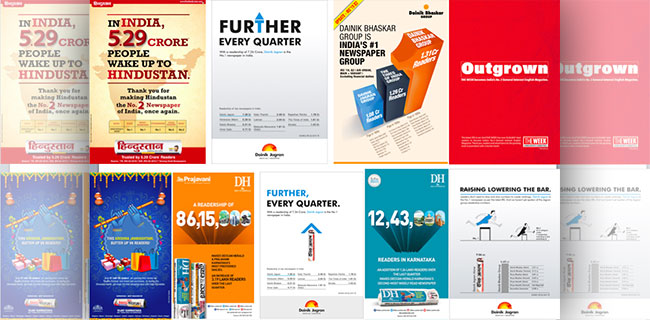

 On its 60th anniversary, Fevicol has pleasantly surprised its audience with a gem of a 90-second TVC.
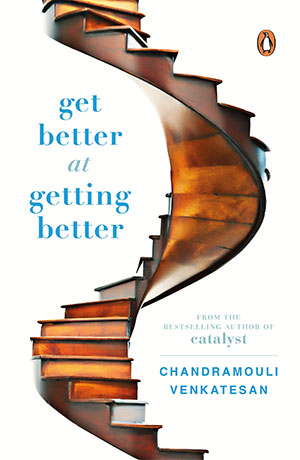 Read the book to know how to get better at getting better. It can help you unleash your potential at both personal and professional life.