Tag: Sanjeev Kotnala

  • Sanjeev Kotnala: Every effort counts, but where does #Adswelove take you?

    By Sanjeev Kotnala

    Recently The Economic Times, under its popular Wednesday supplement Brand Equity started a unique monthly feature #AdsWeLove. It will recognise the best print advertising.The Times of India Group is undoubtedly the thought leader in print marketing. It has a presence in power and influencing centres of brand and marketing. #Adswelove is a small but significant step by Times of India Group. But it is hardly innovative or enough.

    #Adswelove Process 

    You have to appreciate it. Every effort to rejuvenate the print category and make the brands rethink its role and possibility is welcome in current times.

    So, the Times of India Group will good print advertisements published in the month in its group publications. An influential jury with Malvika Mehra, Josy Paul, Raj Kumble, Paraxit Bhattacharya, Prateek Bhardwaj, Sandipan Bhattacharya, Senthil Kumar and Kainaz Karmakar as members will evaluate them. The jury will judge the ads on excellence in art, copy, and how insightful and clutter-breaking ability. The winners will be featured in Brand Equity feature #adswelove.

    The feature was launched with the selected jury members going down the memory lane and picking the print creative that has impressed them.

    Do We Seriously Believe In Power Of Print?

    Few of the jury members are known pro-print. They have always helped print in such initiatives and programmes. However, were they really convinced and serious when they speak of things like ‘in today’s world, a print ad is the starting gun at the beginning of a race. It’s where brand action begins’ or ‘Print is not just a medium, it’s a culture’ (well said). Maybe the media teams and clients don’t know this secret, or they don’t believe in it. Otherwise, what could explain the situation print industry is in.

    However, what one of the jury members shared is a tip for the brands and an excellent way to approach the print medium. Respect the intelligence of the reader. Know the constraints of the medium so well that you can tailor-make the solution. Make sure there is an event on the page.

    The print owners must re-read the last tip and try concentrating for contextual position and placement of the ad. At least start with the contextual positioning of bigger ads and definitely for campaigns that are still using print for brand building and not just topical-tactical-sale-discount communication.

    Let us wait for next month’s feature to see what we get. The print industry can’t keep going the nostalgia way and keep referring to Think Small, nude models wanted and such ads. Referring to the time, when print was considered strong enough for brand building.

    As a reader of ET, I expect more than #Adswelove.

    Readers of Brand Equity may find # Adswelove a very biased initiative. For them, Brand Equity refers to MARTech.; Marketing, advertising, research and technology. It cannot be biased to any particular media and serve the readers needs across. And hence readers of Brand Equity would want to see a similar feature on TV, Radio, OOH and Digital.

    TOI should consider Inclusiveness? 

    If TOI is serious in rekindling the print fire, it must cast the net wide. It should include ads published in other publications. A leader like TOI can afford to do so. Or maybe TOI still believes that good print ads only get published in TOI Group publication?

    Print Power initiatives are not new.

    Different print groups have tried many initiatives in the past. Few have been consistent in their approach other than just harping on their readership and circulation.

    The Times of India can not be faulted on its interest and initaitives on print. It promotes print through ‘Power Of Print’ contests for Cannes and Kyoorius awards. The latest edition was recently launched  with the real brief ‘taking care of e-waste’ in association with Croma. It leads in print innovation and have time and again pushed to break new frontiers.

    Dainik Bhaskar brought out Mosaic, a collection of selected contemporary print ads for some three-four years. It remained just a coffee table books.

    Free Press Journal with IAA last year launched The Gutenberg Galaxy’, a coffee table book celebrating the power of press with 24 case studies and 14 articles. And coffee table books are not the solution.

    Meanwhile, once the flagship event of industry ‘The Print review’ is dead. D-Code is the new favourite.

    The Print Campaign contest conducted with the Abby awards and later on with Goafest is dead.

    No industry event features talks on print.

    Even the print owners participation in Print Publishers Abby ( Adclub / AAAI) is limitted.

    Print Power needs a Category initiative.

    I know, it will never happen. But you can’t stop me from thinking, wishing and dreaming. But, why can’t the big ones in Print; Dainik Jagran, DB Corp, Eenadu, Amar Ujjala, Patrika Group, Hindustan Group, Times of India group, Malayala Manorama and Hindu come together and make this as a category initiative?

    Pool in resources, make it grand, take it everywhere, showcase them to every possible stakeholder through their combined strengths in print and other media. Meet all stakeholders and demonstrate possibilities. If necessary, share their inherent print knowledge to provide solutions and use every possible relevant media to reach out. The print giants must understand that they can’t depend on the power of print to rejuvenate the power of print.

    Why can’t newspapers give special rates to the print campaigns they believe really demonstrate the power of print? Maybe that will push the brand owners to experiment with their media and creative agencies.

    Why not have Brand Owners and media decision-makers to chose effective ads and not only creative people #adswelove? Let their semi- testimonial speak to every stakeholder and impress how the print worked for them.

    The print teams must find a solution to push the brand owners apathy towards enthusiasm and engagement. In most ideal situations, the brand owners should be pushing for specific creative talents to work on their print campaign, like they do for the films and digital.

    In this, ‘interested only in digital’ world, why the print category ( which is one of the significant industry sponsors events ) insist and if need buys ( yes Buys) speaking and demonstration shots.

    There is wisdom in traditional knowledge.

    It is said, when the market is not the priority, you sell the market potential. When the market is a priority, you sell the media. When Media is a priority, you sell medium. But when MediaMedia itself is a question- what do you sell?


    Sanjeev Kotnala is a senior brand and marketing strategist consultant. He invested  17 years in advertising after graduating from IIM Ahmedabad (1987). He then spent a decade at the Dainik Bhaskar group as head of marketing before going independent. Other than consulting stints, he is an Adjunct Faculty and Senior Advisor at MICA, a proponent of Brand-I and PaRAM ( the self-enhancement process). He writes weekly on MxMIndia. His views here are personal.




  • Don’t dodge the Plagiarism & Pitch bullet!


    By Sanjeev Kotnala

    Plagiarism and creative coincidence have survived far too long in the Industry. Sometimes pitches have been blamed and many times inability to act has been the favourite excuse. Many times they have been termed as inspired and adapted versions.

    The recent high profile case created a few conversations. Trade portals, social media and business newspapers recorded and reflected many points of views. And then, the calm settled in. The conversation moved to a new subject.

    I am here trying to keep the conversation going. May be it will someway help to generate some momentum and discussion on the subject.

    We once again are dodging the bullet. 

    We believe it won’t happen to me, or at least I am not the one doing it. In the worst-case scenario, I can’t do anything about it. We won’t act. However, we will expect colleagues and the Industry to support us when it happens.

    None of us has the answer. Even the solution I shared a few weeks back is a non-starter. I searched for inspiration, and I found it in work ‘Don’t Dodge The Bullet’ by a young Canadian agency called ZULU ALPHA KILO.

    Only collective action can rein Plagiarism.

    It will keep raising its ugly head again and again unless we the industry collectively decides to bite the bullet. There is no escape till the time pitches are speculative, till they are not based on processes and demonstrated capabilities. Or till the time agencies keep making speculative ideas pitches in the name of new business development. And consulting firms keep winning the pitches. Sound familiar watch this data – data approach.


    Maybe it’s time to ditch spec creative! Don’t think it is going to happen. I have myself been part of this circus, and it is tough for individual agencies to break the cycle. However, I am happy that some of the agencies are in reality, refusing to do speculative pitches and pitch without a fee.

    The problem of Plagiarism can only be addressed collectively through industry-approved process and guidelines. And when the leading agencies and clients set an example for others to follow.

    SAY NO TO SPEC!

    Yes, I am borrowing from Zulu Alpha Kilo. I love this Agency and its way of raising industry issue while self-promoting itself.

    So, I blatantly pick this gem from their site, “Architects don’t give away their blueprints. Diners don’t fork out free meals. Personal Trainers don’t sign over their intellectual property on spec’. It is part of the brilliant video poking fun at the speculative pitches and the process.

    May be it is time for us to look at Zulu Alpha Kilo to share the insights at Goafest. The Agency has rallied  against creating spec work for potential clients. Watch the video and this time think a bit more than smiling and laughing.


    Pitches are essential, but the process needs tweaking.


    Suggest the clients and agencies visit http://www.SmarterPitch.com. It is a website by who else but Zulu Alpha Kilo. Here, you will find ways for the client and the Agency to improve the pitch process.

    We are, in fact, tired of listening to the same Sh*t. Just like politicians, everyone mouths the same emotions; we are looking for a relationship. In truth, they land-up evaluating the transaction. The result, the client is dazzled by the pitch creative and has orgasm discussing how it will win awards and they also work for the brand. The partnership is all but buried at this stage.

    In some cases, the deal (yes, I said deal) does not go through. The client, because of no possible backlash, presents the creative as a brief to the Agency. They give enough directional ideas and successfully nudge the Agency to create a version similar to the one that gave them orgasm during the pitch process. Being a co-created process, the lines are blurred, and everyone ( except the two parties who know the truth) believes it is original work. Anyway, no one questions the similarity. And if someone does talk, the conversation dies in no time.

    The Agencies Must Collectively Decide.

    In HTA, young joiners’ were asked, if they wanted to be a doctor or a tailor. You don’t question a doctor, like Mohammed Khan, Piyush Pandey, or Ivan Arthur. Or be a tailor, where you tell him, how long the trousers should be, what kind of pockets it must have to the extent od how many belt loops should be there. We know where the Industry has moved.

    Now, the question is different. And I love the way it is expressed simply in the website. https://www.smarterpitch.com.

    But agencies aren’t cattle. When a client invites everyone and their kitchen sink to a pitch, it’s a clear signal to us that they have no idea what they want from a potential partner”. Or maybe they are

    It is clear that when a client calls more than 3-4 agencies for a pitch, it is a clear reflection that the client has not done the homework. They don’t know what type of Agency they want and need.

    Maybe There Is A Way Out.

    Maybe the clients should engage a consultant to understand their needs and culture and narrow down the field for them to evaluate. They could share the process and criteria of evaluation. Restrict the pitch to a maximum of 3 agencies.

    The pitch should be for the process and demonstrated capabilities, not speculative ideas. If ideas are presented, the agencies must get a date-stamped and presentation signed by both the Agency and the client. These should be upped on a cloud-based archive managed by an Industry body.

    Till this is done, the physical presentation docket could be signed and archived.

    We will at least be able to fix one of the co-ordinates. It will be clear, who presented the idea to whom and on which date. The question of similarity, creative coincidence, idea shopping and possible penalties should then be discussed.

    ZULU ALPHA KILO

    Zulu Alpha Kilo is the young Agency that won Ad Age’s 2017 International Small Agency of the Year and 2016 Small Agency of the Year (the first time the overall honours has gone to a non-U.S. shop). The Agency keep doing work as self-promotion that makes a statement about real life in the Industry. Here watch Zulu Alpha Kilo created most terrifying (and humorous) recruiting video, called Scared Straight: Out of Advertising. It was made for Strategy magazine’s Agency of the Year event. Geared towards wide-eyed ad students entering the workforce. It was before the famed “Say No to Spec” spot.

    And here are the four rules Zulu Alpha Kilo thinks may work.

    https://youtu.be/sMcXuEkgijw


    ZULU ALPHA KILO pitching for Trump and Clinton business in a humorous note but in an insightful way.


  • Finding the Balance in Newspaper Advertising during Festivals


    By Sanjeev Kotnala


    On Monday, October 28, my newspaper was drastically underweight. It was not the usual cubby overweight I was getting accustomed to. It was slim, light with sporadic advertising. It felt like what my newspaper used to be, before the festival. Somehow I missed the thick festival sale and discount catalogue sheets masquerading as newspapers.

    Like every festival, this time also on a few days, I navigated through more than 48 pages. There were days when one literally had to search for news between the advertisements. Sale and discount written all over it, it was a catalogue of images seeking your attention. The best of the newspapers too turned a blind eye to reader discomfort and skewed edit-advertisement ratio.


    Festival Advertisement in Newspapers.

    Only advertisements on prime position or the one that is huge get traction. Majority of the messages are lost in the Kumbh Mela of advertisements inside the super-fattened editions. Taking an ad in such a cluttered environment makes no sense. It is beyond logic.

    How agencies and clients justify such newspaper advertising? What is the agency or the client expecting? What is their model of newspaper-reader interaction? All this when the time spent on newspaper is going down.

    Media-owners rightly aim to maximise the revenue during festival time. The Top 5 festivals account for 60% of advertising revenue. Festival defines annual newspaper realisation.

    I am more surprised that media-owners show no sign of attempts to enhance newspaper advertisement efficiency. They ruthlessly create blocks in the reader’s interaction with the medium with skewered edit-advertisement ratio. It seems that media-owners are no longer interested in reader involvement and engagement.


    What Could Be The Reason?

    There is no logic or rationale for this wasteful advertising in the highly cluttered newspaper editions during festivals. It would be safe to presume that clients are doing it as a shagun (auspicious act). May be it is just a habit they are finding tough to break. Or it is a must at a local level for the relationship with the newspaper. Or they fear some kind of retaliation unless they advertise. And hence, no one is interested in knowing if the ad is seen or is missed.

    It could be the smart spaceseller who has sold a fairy tale to the client and media agencies. Just like the Hakim (doctor) from the Pushtani Davakhana (hereditary clinic) selling miracle drugs to the die-hard optimist.

    No one wants to miss the chance. No one knows which is the effective medium. The fear to miss out at times on the local level is one of the biggest triggers for advertising in the cluttered newspapers. Salespersons uses this to their advantage.

    May be the client and agencies know a secret. Perhaps it is not illogical to believe that ‘During festival time if the readers pick the newspaper, it is for the sale and discounts advertisements and not the news. The innovative catalogue type advertisements are disruptive enough to engage the audience who is in the market searching for the next discount, cashback or exchange scheme’.

    Media planning and buying were never logical or rational. They can not be. Yet, this excessive wastage is beyond explanation. Or are there some other unstated understanding that must not be questioned?


    Are We Missing Something?

    Something is definitely wrong. It will be interesting to know the thinnest of theories, the bizarre rationale, the disruptive logic, or anything explaining the phenomenon of clients taking ads in the cluttered newspapers during festivals at peak rates.

    Are the agency and client not interested? Are they not asking the simple questions? How many pages will the newspaper be publishing? Where will my advertisement be placed? What will be the edit-advertisement ratio of the newspaper and pages near my ad?

    Come to think of it: the media owners, media agencies and the client are doing a disservice to the newspaper industry by overloading newspapers? Such things are not going to give them the ROI they expect?


    Newspapers Always Had An Unfair Advantage.

    Unlike most other media like television and radio, newspapers are not constrained for advertising space. The newspapers can always add another page if they find enough interested clients to fill the space.

    This seems unjustified. It is not a level playing field. Moreover, when the business reach or the newspaper subscription is supported by the predatory prices. It has done no good for the newspaper Industry. They have used it to build imagery inflated numbers.


    What About the Environment?

    There is an environmental angle to the whole subject. Proper recycling of newsprint can help conserve natural resources, saves energy and reduces greenhouse gas emissions. Some reports suggest that the entire paper and printing sector contributes less than 1% of the global greenhouse gas inventory.

    So, when you look at the carbon footprint of the newspaper, it is not alarming at an individual level. However, we are one of the few countries where newspaper circulation is still on the rise. Now when you know that just the Top 10 newspapers have a collective circulation of more than 2.40 crore copies a day, the picture changes.


    Cap The Number Of Pages In A Newspaper.

    What about some disruptions? Making life tough for the editorial. Forcing newspapers to really understand what the readers are interested in? They have to select news of interest to create traction for the clients, enhance reader interest and interaction.

    Cap the number of pages in a newspaper. Any additional pages must be taxed disproportionally to discourage adding pages. May be it will make the life of the editorial team a lot tougher. Perhaps it will force the newspapers to once again invest in understanding their readers and their interests. May be it will lead to judicious use of space for more relevant and better-curated news and help advertisements to stand out.

    It will put pressure on the advertisement rates. Some brands may go out of the client net the newspapers have. However, it may end up enhancing the efficiency and impact of the newspaper advertisement, something that is always questioned in every media meeting. Maybe it is the oxygen that the print industry needs.


    Enforce Minimum Cover Price For Newspapers.

    This is a dream subject. Don’t think it will ever happen. But what the hell, think the newspaper industry can do with a minimum cover price based on the number of pages and circulation. Call me mad. It/s silly to even think of this.

    It is okay if this is even an unofficially understanding among top newspaper groups. It will benefit the industry in the long run. Newspapers anyway will be forced to do a subscription and cover price correction soon, why not use the opportunity for something positive.

    Yes, newspapers may lose readers. However, every simulation will show the industry and the newspaper titles will benefit.

    We know how fragmented the newspaper industry is. It does not believe in collective action. So, we all know, there will never be capping on pages or the cover price is corelated to the pages and circulation.


    Sanjeev Kotnala is a senior marketing strategist and trainer. He spent 17 years in advertising after graduating from IIM Ahmedabad (1987). He then spent nearly a decade at the Dainik Bhaskar group before going independent. Other than some consulting stints, he is an Adjunct Faculty and Senior Advisor at MICA coaches senior to junior executives and. He writes weekly on MxMIndia. His views here are personal


  • Is there a way to check Plagiarism in Advertising?


    By Sanjeev Kotnala


    Brand David (from the Ogilvy stable) took Dentsu to court for a claimed plagiarised creative (‘Light Up the Night’) for Vivo. It is a welcome act for the Indian advertising industry. Dentsu, as expected, has categorically denied the accusation. In an official statement, Dentsu said: “What we created is completely our original work, and we have always maintained this before the Hon’ble Court, as this is the fact”.

    No one other than Vivo, Ogilvy and Dentsu knows the facts. I am not raising an accusing finger on the Dentsu. However, this one seems a case of copying an idea completely. I am personally unable to explain it as ‘Creative Coincidence’. I find it impossible to give it the benefit of the doubt though I have no doubt on the integrity of people heading Dentsu.

    It was Ogilvy claiming it presented the idea to the client. There is a possibility that the idea came up in a discussion, and the client team pushed the agency to work on it. The agency may not be aware of Ogilvy presenting the script to Vivo. However, when Dentsu says it is an original work, there is no reference to the client being part of it as co-creator. With this, in a way, Dentsu exonerates Vivo of any misdoing.

    I expect that in the end such acts will be internally be tracked down to a few individuals with good intent and questionable motives. If it is a case of plagiarism, it can happen with and without the knowledge of management and individuals. Sometimes, people who know the history and remain silent, doing more damage to the industry.


    Creative Coincidence And Plagiarism

    Creativity is subjective. In the Indian advertising arena, it is loosely protected. Rules do exist, but rarely anyone has taken someone to task. It has helped the disease to spread.

    We have protected the acts of creative plagiarism under various excuses. Creative Coincidence, category insights, inspired by and obvious thinking has been some of the excuses we as an industry used to defend it.

    Plagiarism And Idea Shopping

    The concept of Idea Shopping and calling for pitches is not new. Unsolicited pitches with no obligations have further amplified the problem.

    May be it is time for the agencies to get the client to acknowledge the ideas presented. Or to create a service, where ideas presented can be date-marked and kept for future reference. Just like what is done for a novel or a film.

    No Excuse For Plagiarism

    No excuse is good for plagiarism. Client-agency relationship, timelines, conflict of business, cost consideration or any other reason is purely a post-rationalisation. It can never be acceptable for a client to get the idea executed by an agency, which is not the original creator of the idea unless it is done in mutual agreement.

    Creative Coincidence Does Exist

    Ones we agree that agencies can come out with the same consumer and category insights. We must agree that the summarisation of expression may use the same words. If we take it further, the execution can be the same.

    This defeats the argument that the executions need to be different. However, in this case of Ogilvy, Vivo and Dentsu, it goes to a frame-by-frame comparison. It makes ‘Creative Coincidence’ hard to believe

    Pitch Fee Is A No-No Solution

    Pitch fee is a non-starter. The industry has seen hungry agencies flocking to a pitch for a client based on a Facebook post.

    Some larger and smaller agencies do ask for the pitch fee. The result: they get invited to fewer pitches. No one wants to be in that situation. In this chaotic industry scenario, no one wants to not be considered for pitch.

    The pitch fee must be properly understood. It does not give the idea ownership to the client. It is for the effort made by the agency. In no way, is it a compensation for ideas.

    There is no point in asking agencies to state the idea fee openly. It will be wrong to expect agencies to pass the idea ownership to the client on payment of an idea fee. Creative ownership, passion and legacy come into play. If we give the client the freedom to execute it with a different agency, we will be weakening the very fundamental part of the business.

    Can Agencies Give Their Work A Certificate Of Original Work? 

    May be the clients and the celebrity or producers to protect their image can ask agencies to provide a certificate of ‘Original Work’ before the campaign is released or approved. That way, the onus will ultimately be on the agency.

    Ogilvy Case A Wake-Up Call For The Industry

    The Ogilvy case is a wake-up call for the industry. The advertising association and industry bodies need to come together on plagiarism. There is definitely a need to define the process, set rules and guidelines for pitching.

    Documented Cases Of Plagiarism

    Plagiarism was the reason for Malaysia 4As disqualifying two of Dentsu Utama Kancils winners many years back. Dentsu held its ground and in fact (not ascertained) resigned from the 4As.

    Manish Bhatt, Founder Director, Scarecrow Communications accused ‘Jai Jawan Tea ‘ to blatantly plagiarising the much appreciated ‘Bagh Bakri’ tea creative. He once again questioned the uncanny similarity of positioning ‘Go with the Flaw’ with Spykar ‘Flaunt your flaws’.

    ‘Bang In The Middle’ saw its Jabong positioning ‘Be You’ very similar to a UK-based fashion brand, Sainsbury’s Tu.

    Sunny Lite, complained to ASCI against the Aashirvaad Atta brand.

    In 2013, many entries in the biggest advertising award (Goafest )were accused of plagiarism.

    Plagiarism Raises More Questions.

    How do you safeguard your ideas in a pitch?

    Who defines what unintentional plagiarism is?

    At what level of similarity does plagiarism start?

    When along with constrained research methodologies, the agencies have similar consumer insight leading to obvious executions, who will decide if it was plagiarised or a mere creative coincidence?

    Is there any other way than the victim agency can seek legal options?

    Can industry bodies create an ecosystem where plagiarism is challenged at every stage?

    What punishment and sanctions can an industry body impose on erring member – non–member client or agency?

    In the past, Philippines’ Department of Tourism ended its partnership with McCann when there were complaints that the ad was similar to a South Africa tourism ad. And it was a rare action by the client.


    A Different Question?

    Who owns the creative? Most employee contracts give the agency the ownership for all work created and developed by the employee during his or her tenure with the agency belongs to the agency.

    What happens when the person moves from one agency to another? Is he or she not expected to use the accumulated expertise? Are they barred from benefiting from the ideas they generated during earlier engagements?

    How can you compartmentalis creative ideation?


    Industry Must Come Together Against Plagiarism

    To set an example, bigger agencies and like-minded organisations must come forward. It is a space where AAAI, IAA, ISA and ASCI could collaborate. The Indian advertising association and industry stalwarts must take a position now. It is not something that can be addressed on an individual agency or client level.


    Here Is An Idea Industry Can Support

    It is an attempt to create a data bank of presented creative that can be referred by the client, agencies, and if required help, decide the case legally.

    1. Advertisers and agencies enrol for the service.

    2. Every advertiser and agencies are given a unique code with double authentication.

    3. Every advertiser calling for a pitch informs this Idea cell of the pitch. This creates a link that the agencies later use to upload creative presented in the pitch.

    4. Advertisers sign an NDA with the pitching agencies. And call not more than five agencies for the pitch.

    5. Advertisers pledge not to go with the incumbent agency irrespective of the pitch result. This will ensure that pitch is only called when the client is sure they want to change the agency.

    6. Just like any other creative (songs, stories and films), the pitch creative is uploaded by the pitching agency.

    7. The client accesses and in a given timeframe certifies that it was the pitch presentation.

    8. The pitch presentations are then date-stamped. This date-stamp becomes the reference point for any dispute at a later day.

    9. The client pays a fixed fee for the service. The agency pays to keep creative protection alive.

    10. Agencies do not participate in a pitch until the client agrees to be part of this body.

    11. Only the agency has any future access to the creative.

    12. The date-mark creative are protected using Blockchain Technology. The creative with all details is made available in case of plagiarism issue.

    13. The agency removes the creative from the watch list whenever they want to do so.


    I would love to discuss possibilities with like-minded people and interested industry bodies.


  • Sanjeev Kotnala: Bigg Boss hit by controversies, again

    By Sanjeev Kotnala


    Controversies and Indian television, particularly about the reality shows are not new. Roadies, Splitsvilla, Emotional Atyachar, Bindass, SuperStud, Rakhi Ka Swayamver, Saach Ka Samana, had their fair share of objections.

    There are some minor controversies like shows are scripted, there are fake injuries, fake health issues or even a phoney marriage. Then there have been some significant controversies like Shweta Tiwari bathing in ‘Iss Jungle Se Mujhe Bachao’ and objection to the concept of Balika Vadhu.


    Can’t Blame It On Formats.

    There is pressure on cast, producer and channels to grab eyeballs for business interest. It does force them to experiment and go to the edge. It is a business requirement to engage and involve the audience in a very cut-throat environment.

    It is natural for some of the content not finding acceptance with a section of audience and influencer bodies. Formats is a creative decision, and so is the edits. The channel has complete control of what is finally aired and made available to the viewers.

    Bigg Boss 13 and the Recent Controversy.

    Bigg Boss, through its history, has suffered many controversies. Seasons 13 is no different. In an attempt to further enhance the viewer experience, the channel has rightly experimented with the inner play between the contestants.

    Bigg Boss was trying to implement too many changes at the same time. Polarised audience reaction was a natural outcome.

    Finally, a section of the audience found it too much to accept and decided to seek a ban on the show. The diligently played the classic “Indian culture, traditions and vulgarity” card which gets major purchase in media.

    The protesters may be right and do have a right to their opinion. After all, vulgarity, and influencing little minds is after all subjective.

    Things are no longer straightforward. There is a petition to the President. The protest outside the host Salman Khan house has led to the strengthening of security for him. The Minister of Information & Broadcasting Minister has sought a report on the subject.

    Surprised no one from the fraternity coming to help the channel. I don’t know when and where we will find solidiarity to deflect such attacks.


    So, Why Protesters Want Bigg Boss 13 To Be Banned?

    Now one of the contentions of a leading protester is sharing of bed. It has been provocatively termed ‘Bed Friend Forever’. Additionally, ‘Couples of different communities were made bed partners, which was unacceptable’. The latter part is debatable. Every contestant is an adult and knows their choices before entering the show. They are sharing a bed, not doing anything else. There are 93 cameras in the BiggBoss house. Why are we hell-bent on bringing communities, religion and regions in such issues? Are we all not Indian?

    They claim Bigg Boss 13 is unfit for family viewing as it had some intimate scenes. Children and minors are watching television and have easy access to shows like Bigg Boss, where some content almost adult content. Moreover, such shows are available on the Internet too further easing the access. In the case of Bigg Boss13 the content ( including unseen footage) over Voot and Hello.

    We must note that Bigg Boss 13 follows the guideline of a late telecast. In the ‘Weekend Ka Vaar’ telecast on Saturday and Sunday at 9 PM, the host along with the channel, intervene and do course correction. If we want to take any action, we may have to blanket a lot of such content.

    Yet again, there are voices seeking censoring mechanism for content aired on television.

    When there is no issue of availability, availability and affordability issue with any content, do we want to go back to the dark era of censorship? We must allow the audience to decide which of the shows cross the line.

    Earlier Petition Against Bigg Boss 13.

    Earlier too there have been petitions on Change.or claiming Bigg Boss is sending out the wrong message. It is abusive, mannerless, arrogant, vulgar and cheap in its aim to earn TRP.

    That is the format. And when you place a set of people in such surrounding with different assignments and task to be accomplished to win the show, fights and argument are a natural outcome.

    So, Are The Protesters All Wrong?

    There is some validity in the protesters’ argument. Yes, there is a possibility that Bigg Boss may end-up impacting impressionable minds. The young viewers may start believing that it is okay to abuse, pass racist comments, make a vulgar gesture, and attack people personally. Moreover, they may think that it takes just a lame sorry to get back on the track.

    If, we were so concerned about arrogance, being mannerless and abusive, well it is our task to show and teach why it is wrong. Alternatively, let us ban everything that is arrogant, mannerless, provocative on air.

    Anyone finding the show not worth watching has the option of switching to the channels where relevant, scientific, culturally sound shows of their interest can be found.

    Caution Advised.

    In the current situation, it is in the best interest of the Industry and the channel, if makers of Bigg Boss 13 took some extra care in the edits that are aired or shared. I am not of the view of censoring, but some amount of self-regulation will do a lot of good to the formats.

    Meanwhile, all I can pray, the Information & Broadcasting Ministry gives Bigg Boss, my favourite show a clean chit. In past when there were objections to ‘Balika Vadhu’ based on the concept of child marriages, a clean chit was given to the show.


    At The End It Is All About The Way Your Glasses Are Coloured.

    No show can have all the audience on its side. We all have our own biases and coloured glasses through which we see everything around us. The protesters may have a point when a show goes to the edge in its experimentation. On the other side, I continue to maintain that there is enough learning in the show if one is watching it from a different perspective.


  • Forwarding Festival Wishes Syndrome


    By Sanjeev Kotnala


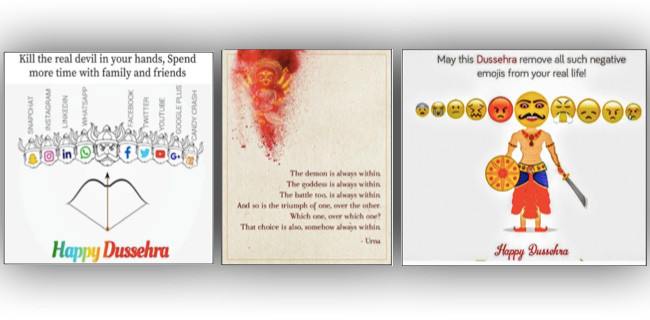
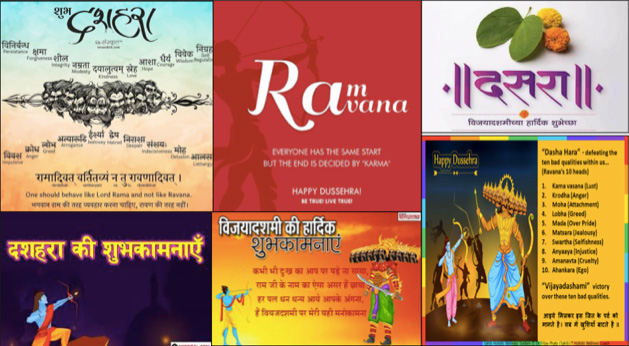
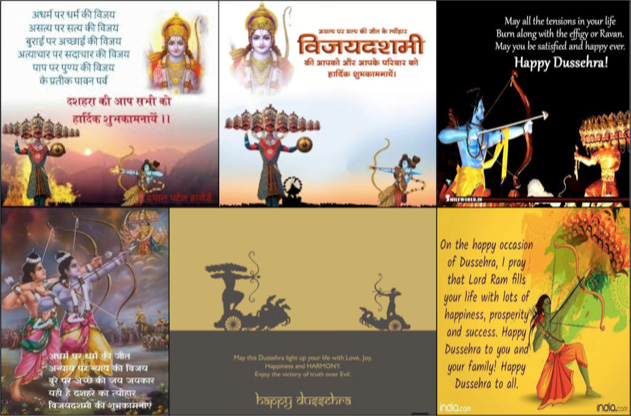
    Is the Digital Termite disturbing your festivities? I would believe that just like my WhatsApp timelines your timeline was also overcrowded with Ashtami and Dassera wishes rendered in different ways and formats.

    Sending greetings to near and dear ones has been a tradition. Traditionally, calling your friends and relatives and meeting them has been a norm. I fear the coming generations may remember it as a useless ritual. And someday the ritual of forwarding greetings will die its early death. Darwin’s theory of evolution will strike again.

    Our numbness to the festival wishes and greeting delivered in the most non-personalised way is leading toward extinction of that excitement and collective euphoria during festivities.

    Why go when you can call.

    Why call when you can WhatsApp.

    Why send an individual message when you can broadcast to the list.

    Why even bother about creating when you can forward the greetings.

    In the process, we are merely loosing out the purpose and relevance of these festivals. We are getting slowly but surely desensitised to festivities, emotions and collective euphoria of celebrations. We are ourselves getting nearer to what we express and explain as the REAL ARTIFICIAL INTELLIGENCE WITH TEMPLATIED EMOTIONS.

    THEY COME IN EVERY SIZE.

    The greetings are carelessly forwarded. Some of the messages are simple and do their job of exchanging greetings.

    Some messages are evolved explanation and thematic nudge for you to understand the meaning and apply it in your life. Rest be assured the sender neither complies with the message or stand guarantee to the social reaction.

    Some then try to be witty. These are the one where the audience may get again involved with the message, forward it and not remember who sent it.

    Some of the forwarded messages try to be the Yellow Rose on Valentine’s Day. They try too hard to stand out. Unfortunately, in the process, they no longer remain a greeting and morph into some intellectual Gyaan on the platform.

    WHO IS RESPONSIBLE FOR THIS MESS?

    The era of cut-paste from various formats and platforms on the digital ecosystem is leading to forward with a lack of patience and engagement. We are busy playing fastest finger first, and yet we do not remember which group and the friends wished us and who did not.

    It does not matter.

    Because you still call people who matter.

    It would be reflective of the real network and touchpoints in your life.

    One can safely hide behind silly quotes like “People who matter don’t mind, and people who mind do not matter”. However, we feel disengaged and uninvolved with people who fail to enclose them in their ecosystem of information, greetings, sharing’s and invites.

    In the current era of non-evaluative forwards and cut-paste, people should not mind. Touch your heart and say, which side do you fall. You do mind, and you matter or You do not mind, and you do not matter.

    Remember we can not hold our so-called hectic busy overloaded lifestyle for this slowly creeping cultural numbness. Machines and platforms are not responsible for it. If there is anyone accountable, it is you. If there is someone who can still turn the tide- it is you.

    THE DASSERA GREETINGS FLOODING TIMELINES.

    Here are some of the Dassera greetings that landed in my WhatsApp timeline. Check how many greetings in your timelines are from the numerous bouncing boards across groups and individual well-wishers.

    Your numbness is increasing.

    Now you easily swipe/click/ignore greetings that do not engage you and have zero impact in your life.

    The sender is not expecting replies to every greeting.

    His dharma is to send/forward the greetings.

    The sender is in the game of just sending and ticking a box of having wished people who during the day will safely ignore or flick the greeting out. An excellent creative message will find engagement with the communication and not necessarily the sender. I presume that was not something you planned.

    I would like to know and see messages that someone took exceptional care and pain in crafting it, especially for you?


  • Dinshaw’s gets into festive mood with new ad

    By A Correspondent


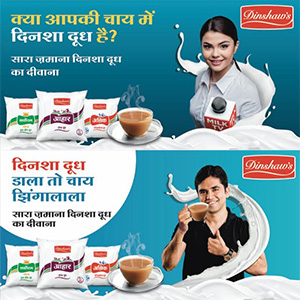
    With the onset of the festive season, Dinshaw’s Milk has unveiled its latest ad campaign across outdoor, digital, radio and local cable.


     

    On launching the new campaign, bosses Zervin Rana and Jamashp Bapuna said: “It is a strategically crafted milk campaign. We are sure the campaign communicates the trust and confidence that the brand enjoys. Moreover, it also brings focus to the milk features and qualities that make Dinshaw’s Milk a far better choice for the consumers.”


    Added Sanjeev Kotnala, Advisor 0 Brand and Marketing with Dinshaw’s: “We have been watching a trend in social media where people very playfully adds the name of the product and features to a book – film titles and dialogues. Moreover, traditionally in advertising, brands have borrowed imagery from films- like gabbar- Jai Veeru- Devdas- Mughl-e-azam just to name a few.  So, when our agency ‘Tonic Worldwide’ came up with such an idea, we found it interesting and decided to take this somewhat different if not unique disruptive route developed.


    So, it is a humorous way in which we have been engaging with the customers. We have integrated the three primary modes of consumption and use of milk. It is a three-phase campaign covering the use of milk for Tea, directly as nourishment and as an ingredient for making various dishes. The first phase of Dinshaw’s Tea with Tea is over and line like ‘Dinshaw’s Doodh dala toh Chai Jingalala’ and ‘Kya aapki chai mai Dinshaw’s doodh hai’ has been appreciated.”


    Said Sudish Balan of Tonic Worldwide: “The idea was to stay away from cliched routes that dairy product marketing has taken. As a brand Dinshaws is recognised for its quality products and hence with this campaign we wanted to focus on how we can generate buzz and recall for a category like milk. The quirky campaign, in a way, pays ode to the iconic ads, movie dialogue at the same time makes it buzzworthy and build recall.”


  • Sanjeev Kotnala: Bigg Boss 13 – No commoners, but still a great show

    By Sanjeev Kotnala


    My favourite programme Bigg Boss is back on Colors. The new format is the original format of celebrity guest without any commoner. I still believe it is a great show to watch, and there are many learnings.

    The inaugural episode on September 29 showed that the Colors team had got their act right. However, it is yet to be seen if the delayed telecast time of 10.30pm on weekdays is going to impact the audience size. Maybe this delayed telecast time will push Voot viewership and help develop a new set of followers. The options in Voot are exciting to get additional traction.

    However, the next two days have been party games being olayed by whatever of the house Amisha Patel. Bigg Boss may lose initial traction if this continues for long.

    There are lot of No’s in Bigg Boss and some of them can well make you say Yes to the show.


    NO MORE LONAVALA FOR BIGG BOSS.

    Does the location of the set matter? If one was to believe the followers of Bigg Boss, there is a lot to the location. Lonavala, away from Mumbai, had its mystic value.

    Film City brings it down to a set. May be there will be some added opportunity in term of BiggBoss tourism and visits, but that’s it. It is not going to do much about the travel time but could dilute the franchise. The contestants are in-house, the behind-the-scene team needs to camp-in. Only host Salman Khan is impacted with the travel issues. And it seems, he may have had some reservations about it.


    NO MORE COMMONERS IN THE HOUSE.

    The host, an integral part of the Bigg Boss franchise, says that there is no commoner and no celebrity –  every commoner is a celebrity. And every celebrity is a commoner. One knows the statement is far from the truth. Bigg Boss sufferred from perceived differential treatment for celebrity and commoner. Having no commoner is expected to be a plus, as all may start at an equal footing.


    NO HOST FATIGUE FOR THE ‘BIGG’ SHOWS

    Surprisingly the two shows KBC with Amitabh Bachchan and Bigg Boss with Salman Khan have not suffered a host fatigue. If you ask viewers, they somehow cannot imagine the show with anyone else.

    Bigg Boss has earlier experimented with a different host, but Salman Khan has been holding fort for the last 10 years. He has an excellent command on the format and his equations of idiosyncrasies that channel know well. Though he is senior in the industry and a powerhouse in many ways, the respect or fear he commands from the celebrities on the show is phenomenal.


    NO MORE LONG WAIT FOR THE TICKET TO FINALE IN BIGG BOSS 13.

    There is a quickie finale in just four weeks. That is something unheard of. But, trust Bigg Boss to have multiple twists and turns built in the process to keep the excitement on.


    NO PET POLICY NO MORE.

    Fluffy is in the show. It is a welcome move and will help the contestants. If the pet remains through the season, it will lead to additional responsibilities, which is going to add to the fun.

    The pets naturally will build polarised relationships with contestants. This itself can be fun to watch and pull in the generation that is pet-friendly. Additionally, I expect Fluffy to become a celebrity on social channels.

    Will the Bigg Boss team go as far as treating Fluffy as a contestant and get it nominated for eviction? I would love to see the votes pour in and have no doubt that it will survive.


    NO JALLAD. NO SINGLE BED.

    Most of us ardent viewers of the show will miss Jallad. There was that uniqueness in his character that made the viewers ultimately side with him. The audience will welcome the triple beds as it is going to be fun watching how the configurations roll out among the contestants.


    NO FIGHT OVER DUTIES.

    Well, as a change, Bigg Boss has taken some fun out of the game. Duties of the house are allotted in a planned manner. There is enough woman power in the house and men seem sensible enough. It led to enough good banter and polarised behaviour of contestants. It was fun to watch the strategies of contestants to negotiate them.

    The Bigg Boss game is on. And I am in. Hope the season lives to the expectations. I have full faith and trust in the Bigg Boss team to create those planned and forced interceptions that will liven up the show. Till that time, wait and watch.


  • Amazon v/s Flipkart: The Big Sale Fight


    By Sanjeev Kotnala


    In all likelihood, over the next few days, you will buy some item on the ‘Amazon Great Indian Festival Sale’ or the ‘Flipkart Billion Days Sale’. And at the end of the sale period, one of them will claim some astronomical figure of realised sales.

    Through the years, Amazon and Flipkart have successfully redefined ‘the biggest sale’ in Indian festival calendar. It is now nearer to Dassera than Diwali, an attempt to sweep the market before the traditional sale period.

    Sales in India on a single day are nowhere close to the eye-popping record $30.8 Billion ‘Single’s day’ sale of Alibaba, which was more than the ‘Black Friday’ and ‘Cyber Monday’ sales combined. But we are getting there with growing e-commerce, better logistics, infrastructure and some help the banks and payment gateways.


    STRAIGHT FIGHT BETWEEN AMAZON AND FLIPKART.

    Ladies and Gentleman, the man/woman with a high-end mobile and slow connection and the laptop babu with a fast connection. The fight is opening soon. Guaranteed you will benefit in this ‘diwalia hone ko tayyar‘ (Ready to get bankrupt) sentiment associated with such sales.

    In the red corner of this ring of festival annual sale fight is the Amazon Great Indian Festival Sale with its very cultural centric motif that is scheduled for September 29 to October 4. Amazon Prime members can try it out from September 28 itself.

    In the blue corner is Flipkart, which has mastered the art of sale throughout the year. Its Big Billion Days Sale will start on September and 29 and end on October 4.


    This is a straight fight no consumer worth his or her last spending INR wants to miss.

    The banks are joining the fun with further cash backs and easy EMIs. Somewhere there is a hint of cashback within 72 hours of sale! Additionally, to keep the excitement, there is a promise of new additions on hourly sale, which is expected to boost repeat logins. And the exchange offers are not missing from the sale. Don’t have money, well, there is some 1,00,000 credit possibility with Flipkart.

    Both Amazon and Flipkart want you to keep your wishlist ready. No doubt this is the best sale one can aim at. But as per the earlier pattern, one can see additional Dassera sale, Electronic sales, Diwali sale online and offline. Maybe the only issue is too much option for the consumer that may delay decision-making.


    CONNECTING WITH THE CONSUMER.

    Now both the e-commerce sites have upgraded their systems and made arrangement to smoothen the consumer experience. But the campaigns by Flipkart seem heavy and lacking conviction. There has been a Billion Day Sale for production and media. It is overloaded.

    Deviating from ‘children acting like adults (adult kid)’ theme that predominates Flipkart as a brand, it seems to have gone back to the safety of celebrity advertising. Flipkart has cornered and employed every possible top celebrity interested in selling the idea of getting ready for the sale. Virat as a Cop and Deepika as a Lawyer, Amitabh as a Godown owner and Alia as a newsreader. Regional skew and for every region worth as a priority market, they have a regional star selling the Big Billion Day sale. Don’t know if the celebrities came in some sale.

    Meanwhile, Flipkart continued with the strongly associated Adult Kid format borrowing the characters of Circuit and Munnabhai for its Rewards Programme.

    Amazon is playing on the brand pull and the past experience of the family as the purchasing unit. And whoever I have spoken with, seems to have a strong perception that the discounts- delivery- experience at Amazon is far better than at Flipkart.

    This, in fact, will be a more significant factor in deciding which way the match swings. Because, people know in India that sale and discount is one thing, delivery, service and protection is something totally different.


    THE COMMUNICATIONS.

    AMAZON GREAT INDIAN FESTIVAL SALE


    FLIPKART BIG BILLION DAY SALE.


    In the past, Flipkart has used their strong Adult Kid format for the Big Billion Day Sale.. But for some reason, most likely it not giving then enough ROI, they have opted for the celebrity safety net.


    https://youtube.com/watch?v=FHD_yTkx9Dk

  • Sanjeev Kotnala: Paulo Coelho disappoints in The Spy

    By Sanjeev Kotnala


    I am a big fan of Paulo Coelho. In fact, two of his books ‘Veronika Decides to die’ and ‘Eleven Minutes’ are in my list of books I wish everyone would read.

    I picked up ‘The Spy’ as much for Paulo Coelho as for ‘Mata Hari’(Margarethe Zelle) the Dutch courtesan and her intriguing image of a double agent during World War-1.

    I must confess Paulo Coelho has desperately tried telling the story of Mata Hari in his style. It just does not fit in. It does not feel a Paulo Coelho book. It’s like ‘Painted House’ by John Grisham. Not a John Grasim novel.

    No one is sure if Mata Hari was a spy. The truth remains buried in some unmarked grave in France. The weak circumstantial evidence produced during her trial could not prove her spying for the enemy. Maybe, France needed a scapegoat, and a well-known figure being executed for spying could have been the most desirable signal to the masses. I have read so many articles on Mata Hari, that when I saw ‘The Spy’, it was natural for me to pick.
    The life of a dreamer, the brush with harsh realities, the transformation, the confidence of performance, the differential viewpoint of seeing her own act of courtesan along with the semi confessional letter fits Paulo Coelho style. The other part of the book has her lawyers presenting his version of the failed trial in letters written by him.

    There is high self pride, followed by collapsing of self-image and the willingness to stand for values and dreams. Paulo Coelho philosophy and point of views somewhere start sounding repetitive.

    At the very start of the book, there is a statement Mata Hari makes which describes and sets the trend for the narration. It is as powerful as any Coelhism.

    “At this moment, I look back at my life and realise that memory is a river, one that always runs backwards.”

    A few more powerful statements of Coelhism are tucked in between the chapters.

    “Everyone flirts with danger, so long as the danger does not really exist.”

    “When we don’t know where life is taking us, we are never lost.”

    I felt no connection while reading ‘The Spy’. His other works always appealed to the person within, took me on an emotional journey and feelings for the protagonist. One lived the life through their attempts, efforts, failure or success.

    ‘The Spy’ is flat. It lacks undercurrents that gave Paul Colheo novels an edge and engaged me as a reader.

    It is a fictional re-enactment of a lonely person’s life. It is not a biography. It lacks the detail that could hold you on the journey with Mata Hari. It does not add a new dimension to the characters.

    There is no Paulo Coelho taste or Mata Hari intrigue even as I finished reading and closed the book.

    Yet in between the pages, you do find Paulo Coelho buried in sparsely separated Coelhism. Here is the one that I picked as a good reference.

    Mata Hari mother gives her seeds and says

    “They’re tulip seeds, the symbol of our country. But, more than that, they represent a truth you must learn. These seeds will always be tulips, even if at the moment you cannot tell them apart from other flowers. They will never turn into roses or sunflowers, no matter how much they might desire to. And if they try to deny their own existence, they will live life bitter and die.”

    “So you must learn to follow your destiny, whatever it may be, with joy. As flowers grow, they show off their beauty and are appreciated by all; then, after they die, they leave their seeds so that others may continue God’s work.”

    “Flowers teach us nothing is permanent: not their beauty, not even the fact that they will inevitably wilt, because they will still give new seeds. Remember this when you feel joy, pain or sadness. Everything passes, grows old, dies, and is reborn.”

    I do think I will sometime in future pick up Femme Fatale: Love, Lies, and the Unknown Life of Mata Hari by Pat Shipman and try bridging the gap.

    Paulo Coelho, ‘The SPY’ is an okay read for a fan.

    Maybe it will be more liked by readers who are getting introduced to him with this book.


  • Sanjeev Kotnala: What Next – Dream Dominating Advertising

    By Sanjeev Kotnala


    What do dreams have got to do with brands? Maybe nothing. Maybe it was always about dreams. Perhaps, it is we who have never understood the art of creating real dreams.

    Brands have moved from a functional USP to emotional dividends to being purpose-led. Whatever may be the format and trigger, differentiation was always there to help the audience decide favourably. A purpose-led brand is also a differentiation of a different order. Not necessarily, differentiation of a higher order.

    Advertising has always been aspirational. It has played with emotions and impression while the person been awake. It has attempted to manage the five senses. Dreams are aspirational too. However, no brand aimed to dominate reality in the dreams of its target group.

    DREAMS MEAN A LOT.

    Dreams hold important memories and impressions. They express what the person wants or desires or what has been in mind, something that the person may have learnt, experienced or wishes to experiment.

    Dreams ate calibrated experience helping to get rid of unimportant memories. It is said that dreams reflect the true nature of emotions and relationships with people, objects or experiences. They unconsciously conditionally push for a stronger craving or desire to own or experience.

    MEMORABLE DREAMS.

    I remember some of my dreams. The dreams about travelling Business Class, sitting in a Jaguar, owning a Sheaffer, a suit by Reid & Tailor, talking to Ms Hoss; the prettiest girl in the class, meeting English teacher after school and Ms Bhatt agreeing to have a coffee. Some of these drams have relentlessly raided my sleep cycle with high frequency.

    In a wired way, the dreams present an opportunity to explore and experience what is forbidden or out of range. We all have dreams. Moreover, to realise the dream, we must first have them.

    DREAMS INDUCED BY EXPERIENCE.

    I bet books and movies have given each of us dreams that we loved or hated. Stephen King showed me the power of storytelling and how someone can intrude uninvited into dreams. I have dedicated many sleepless nights to Cujo and Pet Cemetary. At that time, if and when I closed my eyes, Cujo would be waiting for me. It was in my dream that I took my first flight or travelled first class on a train.

    DREAMS AND ADVERTISING.

    Now, that leads me to an interesting question.

    Can we create compelling advertising and deliver the message or experience strong enough to get into our target group’s mind space as a recurring dream?

    Can Big Data, Artificial and Alternate intelligence coupled with Machine learning, help us?

    Can self-generating algorithms give us clues to infiltrate dreams our target group has? Alternatively, is the real intuitive emotional creative the only solution?

    THE BUSINESS OF DREAMS. 

    It is said, dreams help us retain the mental, physical and emotional balance. They are uncontrolled random thoughts and images from our memory. How deep is the memory? or what level of the archive is accessed for it is again debatable.

    So if the dreams are random, why few selective images and experiences tend to visit us repeatedly?

    We also know that dreams can be controlled, just like a video game. One can learn Lucid dreaming.

    I do not question the possibilities.

    Can we purposely exploit and commercially leverage dreams? I believe we can. However, we have not graduated to a stage, where we understand how to manage dreams.

    Can we develop the capability to manage the dreams of a target group?

    I believe without reason that soon, we will be able to create compelling communication that will trigger the right nerves and deliver the dream we want to an identified target group. We will be able to do so commercially for the brand, product or service. Imagine how powerful advertising will be!

    DREAMS, SUBCONSCIOUS IMPLANTS.

    Aha! Most people do not remember their dreams. Many people create stories to make sense of unrelated non-sequenced series of images that they partially remember from their dreams. However, the message undoubtedly remains on a subconscious level.

    The way forward will be to graduate to managing augmented lucid dreams. Dreamers will identify and remember the Dream. Moreover, while dreaming, they will know they are dreaming. Does it make sense?

    Technology will advance to add fun to lucid dreams. The choice of exploring and managing or controlling the dreams will be available to the dreamer. Competitive brands will want to disrupt other implanted dreams and dominate the dreams target group sees.

    HOW TO CREATE DOMINATE DREAM?

    Do not ask me how will this happen? What is needed to make it a reality? What will help us do it? How will we know it is happening? How will it be monetised and researched?

    I write because I see a possibility. I write as I do have recurring dreams.

    A simple answer could be misleading. Maybe there will be apps that will ensure intended dreams get served to the target group. Service providers will programmatically insert dreams. The dreamer target group will be paid an access fee for allowing the advertiser to invade their dream space. The dreamers will have the power to decide if they wish to remember or to forget their dreams.

    I SEE FUTURE IN DREAMS.

    Once inserting and managing dreams becomes the mainstream, the dream app will become the most sought after media. In its logical evolution, the dream space will get cluttered. Undoubtedly, we will witness mushrooming of training institutes and hospitals providing a cure for remembering or erasing dreams.

    DREAMS MANAGED OVER WAVES.

    No, I do not think an app will be required, or the app will manage dreams.

    What I think will happen. From central antenna, dreams will be sent out seeking pre-identified dream subscribers. Rouge brands will send disguised nightmare message warning the dreamers what they risk with the competition?

    Dreams dominating advertising will work wonders.

    Then there will be some self-erasing dreams. Just like cleaning the browser history, the dreamer will have no recollection of the dreams.

    New innovative delivery and control mechanism will be pushed in the market. Education will take place when one is asleep. All the waking hours will be available to realise the dreams.

    Self-governing norms will define the limits and the type and quantum of dreams that can be served. The government will announce new rules. You may have to buy a license to watch adult dreams. New standards in travel tourism and pornography will emerge.

    DREAMS AND DÉJÀ VU.

    The dreamer, when awake, will have a feeling of déjà vu whenever they manage to experience the product, brand or service in real terms.

    There will be service recovery systems like PDDMS ( Post Dream Dissonance Management System) and managing Cryptomnesia to manage these repeated instances.

    Cryptomnesia is a state where information learned is forgotten but remains stored in the brain. A similar event or experience or a visual then invokes the earlier trapped knowledge to resurface.

    I AM DREAMING.

    I have been trying to understand the dream business. I am crystal grazing the possibilities. Martin Lindstrom work has always interested me and has accentuated the thoughts.

    I read and interpret dreams. I believe they have a logic and a reason to exist.

    There has to be some sense in dreams and dreaming. Moreover, maybe the state we call as awake is the dream stage and dreams, in reality, THE REALITY.

    I AM NOT HALLUCINATING. e

    I share the Dream I have seen frequently. As I said, I am a lucid dreamer. I remember details of dreams. They are imprinted and readily available to interpret when I wakeup. I can even wake between dreams go to the washroom, have water and join the same Dream.

    So, this Dream is about winning an award for innovative research in Dream Dominating Advertising. It is for the first ever validated case of creating and inplanting dreams. There must be a reason for such a dream. I am trying to find out what and who has been triggering it.

    Maybe technology masters will realise the potential and work to ‘Dream Dominating Advertising’ as a possible business.

    ……………………………………………

    As dictated in my dreams and not written under the influence of Marijuana, which I do think should be legalised.


  • It’s not just about Gold at Tanishq


    By  Sanjeev Kotnala


    It is the festival and marriage season. And gold is crossing all known limits. It’s also Tanishq time.

    It is natural for the middle-income household to be doubting purity and buyback values of their gold that they are buying, exchanging, repairing or melting.

    Karat meters are working overtime across more than 280 Tanishq showroom across the nation are busy shaping dreams.

    Diamonds after Nirav Modi are failing to find favour among jewellery buyers. But at Tanishq, it’s a bit different. There is trust which gets amplified with the 100% buyback on them at current prices. Diamond start getting a new sparkle.

    TANISHQ HEARTFELT GOLD.

    I recently saw these three beautiful films on the Tanishq website. I have not seen them on TV, and not much is spoken about them on social media. Maybe I missed them. They seem to evoke the right emotion and reactions from consumers and people I could check. wit

    What I was interested was in seeing how far does the brand take what it promises on its site. And that took me to the showroom at Borivali and Oberoi Mall in Goregaon.

    I was suitably impressed by the near-templatised humanly perfected identical treatment. I can endorse what Tanishq says about their customer service. “We strive to ensure that every employee at Tanishq is welcomed into the folds of our protective family with their best interest being one of our main concerns. Our Karigars are provided with world-class facilities, a safe and supportive environment and are well taken care of with benefits like health care and financial aid. With the advancement of jewellery making equipment and technology, our workers also gain training and access to these top-of-the-line machines to aid in the creation process of their masterpieces.”

    TANISHQ JEWELLERY MAKING CHARGES.

    Tanishq has become a benchmark of purity and customer service in gold jewellery. People, after experiencing carat deviation between claimed and actual on their old jewellery, have shifted. They are now willing to pay a premium on making charges once they are assured of the purity and carat of the gold they are buying. Though Tanishq talks of every jewellery piece being crafted to give it a signature finish and the availability of a wide range of gold jewellery where the making charge start at 8% only. Now, this is the standard ploy; you hardly find much jewellery at 8% making charges. Mostly it is around 18-20%. Maybe a Tata brand could be a bit more transparent than starting at 8% gimmick.

    PUSHING THE PURCHASE VALUE.

    The team of salesperson take good care and keeps you engaged. It is their role to push the value of the purchase. Hence if you say you want a jewellery costing Rs 1  lakh, they will show something starting at 1.5 lakh. This strains customers from the middle-income household who walk in after doing their complete maths.

    The customers finds themselves constrained in the ambience of the showroom. They feel hesitant voicing their concern. Their body language closes out. There would be a feeling and a question if they were better at the family jeweller.

    The joy of buying gets threatened. Maybe it is nice to show 1.5 lakh but please show then the lakh piece too.

    THE KARAT METER MAGIC AND ISSUES.

    The state-of-the-art Karatmeter present in every Tanishq store is a very accurate way of measuring the purity of Gold. I have personally experienced the trust it evokes and has seen it tilt discussion in favour of Tanishq.

    THE MELT BEFORE YOUR EYES MAGIC.

    When a customer brings old gold for exchange at Tanishq, he or she sees the old gold melt in front of their eyes. The pre-and-post melt weighing is done right in front of you. The result, the weight and the karat reading are always right.

    THE MATHEMATICAL CHALLENGE CUSTOMER.

    Here is what I witnessed at one of the Tanishq showrooms. The Tanishq team takes the pain to explain to mathematically inclined jewellery exchange couple how a 40 gram 23-Karat and a 10 gram 20-Karat gold after melting can become 50 gram of 18.3-Karat. They are convinced only when another customer who is watching the argument and steps in to explain. It is all about soldering – tanka in the old jewellery.

    The couple understands and compliments, saying they have got their old jewellery checked in two towns across three Tanishq showroom getting precisely the same reading. Maybe some amount of pre-explanation is required.

    THE GOLD HARVEST SCHEME.

    You should see how the salesman, while selling a small piece, is busy upselling dreams. He is pushing the Gold Harvest Scheme. Where one can accumulate money over a period of time and at the end of the period, buy the jewellery they want. With the Tata brand, the security of money is guaranteed. I would presume Tanishq showroom at least the one I visited on that particular day was showing a minimum of 50% GHS subscription.

    BIG HEARTED RELATIONSHIP.

    Tanishq is taking personalisation and emotional touch to a new level. When you unsubscribe to their mail, what you read before you say click is so endearing. “We’d be terribly sad if we can’t send you emails any more. But if you’ve had enough, with a heavy heart, we say this. Click here to unsubscribe.”

    This service standard is apparent across Tanishq, Zoya, Mia, Caratline, Helios World Of Titan, Fastrack, Titan eye plus Skinn. It is how the complete brand trust is retained and strengthened.

    TANISHQ, BEYOND GOLD AND SELLING.

    It feels good to know some more facts about Tanishq sincerity. So, what if my source is just its website. I will trust the brand to tell me the truth.

    • Over 70% of the water used in manufacturing is recycled.
    • 30% of the energy used in manufacturing is renewable.
    • 40% of the Gold used comes from recycled sources.
    • The Titan Kanya Initiative helping educate more than 34,000 girls.

    It’s a Tata brand- is there anything more to say.