Tag: Sanjay Gupta

  • Urban Ladder strengthens brand identity with new credo

    By A Correspondent


    Urban Ladder has recreated the brand’s identity with a new logo and tagline – ‘Let’s Create’. It symbolises the process of creating a beautiful home with Urban Ladder, a process of collaborative creation. The brand wants every individual to unleash their creative side, starting with their home to make it unique and personal.


    The new logo depicts the four walls of an empty room. Like a canvas, it’s brimming with possibilities. Orange is the colour of creativity and joy. The blend of bright hues capture the energy and passion that accompanies the act of creation. The logo encourages every individual to bring out the artist in them, hoping to inspire customers to create something new every time they look at the logo.


    The new brand identity also reflects the philosophy that will define the brand’s strategy going forward “You’ll see us live this philosophy in many ways. Our new lines of products will reflect the changing sensibilities. We will launch new experiences and technologies that let every individual play designer. Also, a new look and voice that reflects our renewed purpose,” said Sanjay Gupta, Chief Marketing Officer, Urban Ladder. The new logo and brand identity has been developed in-house by Urban Ladder’s creative and brand team.


    Meanwhile, the e-tailer is now opening up new distribution channels to reach out to new customers.  “In the past we have feared dilution of brand Urban Ladder on other distribution channels which are not controlled and owned by us. But all the work on distinctive product design and an excellent customer experience will now ensure that the brand experience will be very consistent across different platforms. Today it is easy for our customers to walk into a friend’s home and identify an Urban Ladder product from a distance. That is the level of coherence and consistency we want the brand to have. Our new brand identity and brand purpose will help us achieve that across many new platforms and touchpoints,” said Ashish Goel, CEO and Co-founder, Urban Ladder.


  • Ogilvy scripts nayi campaign for Star Plus

    By A Correspondent


    Star Plus may have pioneered saas-bahu soaps in the early 2000s, but over the years, the general entertainment channel has tried to reinforce itself as a channel with a new thinking. Rishta wohi, soch nayi.


    That was circa 2010. Te spotlight is on half a billion women of India, notes a communiqué. Taking this legacy forward, Star India unveiled its new credo ‘Nayi Sochi’ with an out-of-the-box theme crafted by Ogilvy. The campaign kicked off with on Sunday with the first match of the India- New Zealand ODI series.


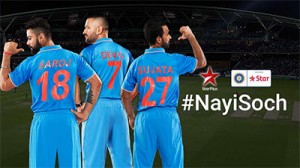
    In the campaign, India’s cricket icons – M S Dhoni, Virat Kohli and Ajinkya Rahane proudly wear their mothers’ names on their jersey instead of their own names or father’s surnames, acknowledging the fact that one derives one’s identity as much from one’s mother as one’s father. However, the stereotypical societal notions around lineage and identity fall short of acknowledging the role of women – a thought supported and celebrated by BCCI through this campaign as well.


    The campaign is built around real-life examples from the lives of these 3 cricketer icons, and the philosophy on how they are what they are, in large part because of their mothers.


    Said Sanjay Gupta, Managing Director, Star India: “We at Star India are very happy to partner with BCCI for an iconic brand initiative of ‘Nayi Soch’. Star Plus has been a lighthouse brand for women. We have always put women first, told their stories, and are now set to take it to the next level – by challenging orthodoxy and stereotypes that come in the way of progress for women.”


    Hmmm.


  • Shining Star


    By Suman Layak


    It was Holi in Uttar Pradesh in 1991. Sanjay Gupta, at the time a young management trainee at Hindustan Lever (now Hindustan Unilever), had organised a short film show in Etah, a town in Aligarh. Gupta’s plan turned into a nightmare when revelry among the audience deteriorated into a drunken brawl. In desperation, Gupta went back to his room to get his katta (countrymade revolver). His host in Etah had asked him to keep it under his pillow when he slept, just for safety.


    Gupta fired the katta in the air (for the first and only time) and managed to break the fight. While that day, in end February of 1991, is etched in his memory for the wrong reasons, Gupta swears by his learnings in Etah. It made him live the life of his consumers and soak it in. Today, Gupta, who has just been elevated as managing director of media giant Star India, makes sure that his team members spend a lot of time in the homes of their audience. A Star India team is scheduled to fan out across Uttar Pradesh next month. Gupta recalls how, after joining Star in 2009, he did his own bit of such touring.


    In Surat, he met one Mrs Shah who helped her husband in his diamond business. She was well known in her locality. But he realised that she wanted to be more than Mrs Shah; she wanted to be known as Minal Shah, a jewellery designer. Gupta explains how aspirations for such transformations are part of his target audience’s lives, and have inspired Star to build their soaps around women who come from humble beginnings and want to make it big time. A transformation along similar lines was celebrated in the recently concluded Star soap Diya Aur Baati Hum , about a girl, married young, who becomes an IPS officer. Transformation is also the reigning buzzword in Star India.


    Chairman on His Feet

    It starts in the corner office. On the 37th floor of Urmi Estate in Mumbai’s Lower Parel commercial district, Gupta’s boss and Star India chief Uday Shankar works standing at his workstation, which is a raised table without a chair around. The room, with glass walls on two sides, looking over central Mumbai’s concrete jungle, has three separate seating areas and a large television screen. Shankar, who has just been elevated as chairman and CEO of the company, has his own storyline for transformation. He says: “The company was started and designed as a small operation. It was not created to handle the growth we are seeing now.” He started off last week by carving up the company into five business verticals and elevating the business heads as CEOs of those businesses.


    There is a lot to keep Shankar on his feet — mainly the financial goals set by his boss James Murdoch, CEO of Star India’s parent 21st century Fox. Shankar has to take the company from a negative operating profit position in 2014-15 to deliver half a billion dollars of profit by 2018 and then double it by 2020. Shankar has to make good on a Rs 20,000 crore bet that sports will be profitable, and make money out of a digital platform, Hotstar, that Star India has pioneered.


    The Good News

    Growth is a great place to begin with. In the last two years, Star India has doubled its turnover. From Rs 5,204 crore in 2013-14, it went up to Rs 7,164 crore in 2014-15 and now is at Rs 10,800 crore for 2015-16 (around 65% of Star’s revenues come from advertising). Star India has been valued at $14.3 billion (a little over Rs 91,000 crore) by Edelweiss in January 2016, putting it way ahead of its rival Zee Entertainment.


    With 51 channels in eight languages, Star’s overall network share among Indian broadcasters is 22-23%, making it the king of the hill. Star has a deep presence in general entertainment channels (GECs) and is among the top three in Hindi, Bengali, Malayalam, Tamil, Telugu, Kannada and Marathi. It leads in sports, with Star Sports owning the rights to BCCI and ICC events up to 2018 and 2023, respectively. It has the rights to Wimbledon and two European football leagues and also coowns Indian leagues in kabaddi, hockey and football.


    The Bad News

    While that is the good news, here is the bad. Year 2014-15 produced Star India’s biggest ever net loss — Rs 1,273.88 crore as a standalone entity and Rs 1,467.35 crore when consolidated with its subsidiaries. The sports model still revolves around cricket, which may be high on visibility but not on profits, not yet. Last August, Star India paid $420 million to get out of a contract with the BCCI to broadcast the Champions League T20. This will hurt the profit and loss account for 201516. In other words, the company will again be in the red. Hotstar, the digital platform, is still hungry for investments. Star is facing a tough challenge in Hindi GEC space, with Colors from Viacom’s stable often outdoing it in weekly ratings from BARC. In late 2015, its major gambit, Amitabh Bachchan-hosted Aaj Ki Raat Hai Zindagi gathered low ratings and was later taken off air.


    The Gameplan

    Shankar points out that Star India is in a unique position as it is unlisted and has a parent that is ready to pump in cash whenever needed — as it did for Star India’s acquisition of Telugu broadcaster Maa TV in February 2015. Also, the company barely has any loans. The acquisitions of Vijay Television and Asianet provided Star with a strong footing in southern India, and Fox was happy to invest through separate subsidiaries, keeping it out of Star India’s balance sheet. CFO Sanjay Jain points out that the two companies, Vijay Television and Asianet, are profitable (a combined net profit of around Rs 450 crore) but are not consolidated with Star India. For any plan to succeed, Star’s sports business must turn around by 2018. Shankar admits that the sports broadcasting model in India is broke and that broadcasting top cricket events is not profitable. He sees a turnaround of the sports business by pushing sports programming into regional channels and markets. To realise this vision, Star India has invested in a sports studio in Mumbai in the same building that houses its headquarters.


    The recent World T20 had multiple commentary teams in different languages, creating regional language feeds. In search of profitability, Star also wants a flotilla around cricket and to look beyond urban audiences. That explains investments in different sports leagues like football, hockey and kabaddi. To garner a larger viewership, kabaddi was also put on Star Gold. Star India has eight sports channels, with a clear focus on separating the audience that wants English content from the one that Shankar is seeking out. “The focus is to make sports available to a larger number of people, in local languages, Hindi as well as others,” says Shankar.


    Is Star India’s bid to create new sports media properties sustainable? There are a few sceptics. Ronnie Screwvala, owner of U Mumba kabaddi team, lauds Star for promoting kabaddi, but adds: “I have a mixed view, as media companies cannot use media expertise to build a sport, because then the DNA and the thinking will always be from the ratings, viewership /audience and advertising points of view. While there may be nothing wrong with any of that, just those can’t be the objectives because then we will not build a longterm sport but a long-term media property.”


    Take football. Star India created the Indian Super League (ISL) in a joint venture with Mukesh Ambani’s Reliance. The assessment within Star itself is that running two national football leagues, the ISL and the I-League, is not viable in the long run.


    The Digital Design

    Star also has to turn around Hotstar, its digital platform that has seen 58 million app downloads in 14 months — a record of sorts. Hotstar can be accessed through an app or directly on the web through mobile web and website. Star expects 100 million unique views for the 2016 IPL season, for which it has the digital rights. Ad revenues on digital for this IPL are expected to touch 12-14% (3% in 2014). Also, more people today watch the English Premier League on Hotstar in India than they do on television. Star India is planning a paid version of Hotstar.


    Streaming video is not cheap, and Star’s MD Gupta figures that anyone who is able to watch videos can also afford to pay more for premium content — for shows like Game of Thrones or even the English Premier League. Gupta says: “We expect an overall explosion of television-watching time in India and we want to grab the new advertising and subscription opportunities.” The search for audiences has taken wings, with the Star soap Iss Pyaar ko Kya Naam Doon? becoming a rage in Turkey.


    The digital platform allows Star India to seek subscribers outside India, wherever the diaspora is spread out. As a relief to the company, the film business has seen two successes in 2016, with both Neerja and Kapoor & Sons promising good returns. Shankar says Star India is changing gears in films. The profit and loss statement of Star India for 2014-15 shows that the company has upped its spending on programming and programme rights by more than Rs 2,500 crore to Rs 5,597 crore. So profitability will only come via greater revenues. Edelweiss analysts Abneesh Roy and Rajiv Berlia wrote in their report in January: “Star is best placed to charge premium ad rates due to a higher demand for prime-time slots. Zee TV’s ad rates are 0.75 x Star Plus rates, which shows the premium commanded by Star.”


    Closer to the Audience

    Shankar, doubtless, sees an opportunity for closing the gap between expenses and revenues. The regional thrust is a push for profitability as these channels often enjoy a 30-40% margin. The South is clearly a focus area. In the shakeup last week, managing director of Asianet, K Madhavan, has been elevated as managing director (South) for Star India. Madhavan says, “The South is a very profitable unit. About 30% of the television population resides in the four southern states and most of these markets are priority for advertisers.” Shankar wants to ride on the top line growth to a healthy bottom line and has decided to pump prime the content pipeline and create content ahead of its time. “I want our teams to work on at least 100 projects in Hindi and another 100 in other languages simultaneously,” he says. One of the initiatives he has taken has been to diversify recruitment.


    “We hire from the top management and engineering colleges but now we have started going to universities in places like Allahabad and Benaras,” he says, stressing on the need to avoid sameness in hiring and the key role that diversity plays in keeping alive a content-generating company like Star India. So to find Bengali writers, a Star team went to Santiniketan. To help bring in more creative people on board, Star has introduced flexible contracts that do not tie professionals to the company in the manner of a job. To retain women employees, the company introduced flexible maternity leave—six months of paid leave and then another six months of leave at half the pay, or full pay for half the working hours. In various ways, through programming and hiring and the changes initiated last week that drive the decision-making powers down the line, Star is trying to get closer to its audience, deep inside India, in tier-2 and tier-3 towns and villages. These are places like Etah where Gupta started his career. Television today ensures that in these towns, no one needs to wait for a film screening on special days like Holi. For Star, this audience can be key.


    Source:The Economic Times

    Copyright © 2016, Bennett, Coleman & Co. Ltd. All Rights Reserved

    Licensed to republish
     

  • Is there more to the rejig at Star India?


    By A Correspondent


    Ever since a town hall was announced to happen on April 13, there has been a buzz about what it could mean? Was there to be a big acquisition? A high profile exit or entry?


    We had got our friends in small places at Star India to keep us informed. Whatsapp Zindabad! We even suggested keeping the phone lines on for a listen-in, but that could be dangerous.


    So what did we finally hear. An organisation rejig with formations of easier-to-manage strategic business units (SBUs) and many elevations. Uday Shankar will be Chairman and CEO. COO Sanjay Gupta, COO was elevated to Managing Director,. Star India and K Madhavan will be Managing Director-South. Both Gupta and Madhavan will continue to report to Shankar. These changes position the organisation to meet its future growth ambitions on the back of a decade of rapid growth, noted a communiqué,  but keen Star India observers hint there could be more to it.


    “We are proud of its success and look forward to the next chapter of growth under Uday’s transformational leadership,” said James Murdoch, Chief Executive Officer of 21st Century Fox on the developments. Murdoch wasn’t present for the town hall.


    So here’s how the SBUs will be run, all reporting to Sanjay Gupta:

    :: Amit Chopra will be CEO of Entertainment, which spans drama and movie channels across national and regional channels in Hindi, English, Bengali and Marathi. So: Star Plus will have a new CEO
    :: Nitin Kukreja, CEO of Sports, which includes a portfolio of channels under the Star Sports banner
    :: Ajit Mohan, CEO of Digital, which oversees Hotstar, the digital platform
    :: Vijay Singh, CEO of Fox Star Studios, which produces and distributes Bollywood and regional films


    Meanwhile, Kevin Vaz has been appointed as CEO of South, reporting to K Madhavan. The South business unit incorporates all of Star’s business interests in the Southern states of Kerala, Tamil Nadu, Karnataka, Andhra Pradesh and Telangana. Also, a pan-India Content Studio will be set up to drive innovation in programming under Gaurav Banerjee who will report into Sanjay Gupta. The corporate roles will continue unchanged.


    “I congratulate Sanjay, Madhavan and the CEOs on their elevation. We have set ourselves a bold growth agenda and these changes will deepen the leadership bench, unlock entrepreneurial energy and position Star better to deliver on its ambitions,” said Uday Shankar, Chairman and CEO, Star India.


    We spoke to a cross-section of stargazers, and while the general sentiment was that it was just a set of elevations and restructuring of the way the business will be done, there were a few notables that deserved a mention.

    :: The Murdochs continue to repose their faith in Uday Shankar. So while he has made Chairman, it’s an executive role that he will be essaying as CEO. He’s the boss.
    :: Sanjay Gupta is the clear #2. There was no doubting of the fact, but this elevation clearly makes him the operational head of Star India. Of course K Madhavan is there, but he will be look after the Southern operations
    :: Great boost for Amit Chopra. He is incharge of the primary fuel of the company: the non-Southern languages entertainment network. This of course includes the all-important Star Plus. Chopra has been leading revenues until so far and has a rich past as a CEO at HT Media and earlier with HUL, so it’s not that he’s a newbie in running an SBU, but, then, Star Plus is a tricky cookie.
    :: Elevation for Kevin Vaz, but Star Plus going off rather early from under his charge is sad. He needed to be given more time
    :: Status quo for Ajit Mohan, Vijay Singh and Nitin Kukreja
    :: Innovation in programming is a good idea, and am sure as Uday Shankar’s trusted and old-time lieutenant Gaurav Banerjee will be entrusted with the responsibility of bringing in more


    The new structure has been announced, but Shankar has reportedly assigned a six-week window for the transition and handovers. The new financial year for Star India starts in July and with BARC ratings for the flagship channel looking better than before, there is a promise of achche din at Star. Naya Structure. Nayi Ummeed!


  • Urban Ladder appoints Sanjay Gupta as Chief Marketing Officer

    By A Correspondent


    Urban Ladder announced the appointment of Sanjay Gupta as its Chief Marketing Officer. Sanjay brings in twelve years of experience in branding and marketing, and has been instrumental in building brands in the consumer goods industry. Sanjay will lead the company’s marketing strategies, including branding, creative and content and digital and product marketing. Joining Urban Ladder’s strong leadership team, Sanjay will further advance the company’s vision of making a million homes beautiful.


    With a successful record of growing major brands across food, personal care and automotive sectors on sales and marketing, Sanjay will actively contribute in building The Urban Ladder brand. Sanjay was previously associated with Accenture, Purple Squirrel Consulting and Marico Ltd.


    Ashish Goel, CEO and co-founder, Urban Ladder said, “Over the last 3 years, we have made significant progress in creating a brand our customers strongly relate to. It is now time for us to take the big leap towards becoming India’s most loved consumer brand, and reach out to a much larger audience.  I’m confident that Sanjay will take brand Urban Ladder places, and continue to enhance our brand identity.  Sanjay will play a key role in our next phase of growth by integrating our marketing efforts and aligning them with our business strategy.”


    Sanjay Gupta

    Sanjay Gupta, Chief Marketing Officer, Urban Ladder said, “Urban Ladder is making significant progress in its transformational journey. I strongly believe in the company’s vision, and feel it has the potential of becoming a global success story. I’m especially amazed by the company’s focus on customer experience, design, and most importantly an outstanding culture of innovation excellence. I’m excited to join the team and look forward to being a part of the journey.”


    Sanjay is an alumni of Shri Ram College of Commerce and has a Master’s in Business Administration from Management Development Institute, Gurgaon. He also did a course on Strategic Marketing from Harvard University.


  • M&E can be $100 bn if ground rules are changed to unblock capital: Star India COO Sanjay Gupta


    Sanjay Gupta

    Speaking at the CII Big Picture Summit in New Delhi on Monday, Sanjay Gupta, COO, STAR India lamented the fact that the Media and Entertainment Industry’s (M&E) target of reaching $100 billion in turnover has continued to remain out of reach.


    Addressing delegates at the CII conclave, Gupta revealed that from 0.8% of GDP three years ago, the industry had resolved to grow to 1.5% within a decade. But in the past three years, media as a percentage of GDP has instead fallen by 2 basis points and the $100 billion dream has continued to remain distant. The biggest hurdle has been the choking of investment. To meet ambitious targets, a business either needs to generate large profits internally, which are then invested back into the business or they grow on the back of external investments – national or international. But the M&E industry boasts of neither.


    During the past 15 years, the M&E sector has barely seen any new entrants and only around $4 billion FDI. To garner $100 billion, the industry needs to invest at least $50 billion over the next decade – something that seems farfetched, given the present circumstances. With M&E remaining an unattractive destination for investments, investors have no interest to invest in a fragmented and unprofitable business. Despite the 12% year-on-year growth touted for the industry, the sector is paradoxically riddled with a host of unprofitable verticals. For example, sports is a $2 billion industry that could easily grow to around $10 in the next five years. Be it Hockey, Football, Kabaddi or Badminton, the new sporting leagues are being lapped up by the audiences.


    Yet, the M&E industry has been unable to take off on the back of these investments. Although STAR India has been investing almost Rs200 crore every season for the past two years, dividends are not commensurate. For this to happen, one needs to scale up the volume of content. In other words, more teams, more players and more days of Kabaddi are required annually to capitalize on this opportunity.


    “A bizarre challenge confronts us here, however,” Gupta continued. Although Punjab and Haryana contribute large numbers of Kabaddi players, one cannot add more teams based in either of these two states because they do not have a single indoor stadium that could host a Kabaddi match. In Mumbai, the game is hosted at the NSCI Dome, but the biggest constraint is the availability of this facility for a reasonably long period of time. One venue for a city with more than 1,000 Kabaddi clubs simply does not make sense. In this case, consumer interest and the ability to invest are no hurdles, but the fact that the sporting infrastructure required is simply non-existent. Worse, there are no plans to address this situation.


    The movie business is no different. With around 7,000 screens, India has one of the world’s lowest screen densities. Despite breakthrough movies such as Queen, PK or Bajrangi Bhaijaan, revenues are stagnant, although the cost of producing these movies has soared dramatically in the past decade. Therefore, a $2 billion industry that sets a billion hearts racing earns zero profits.


    News channels fare no better. Without a robust business model, news channel have no money to invest in their business. Whether English or regional, number one channel or last, none of the channels make any money because none earn any money from subscription. Globally, subscription contributes as much as 60-70% of the total earnings of a news channel.


    Television distribution is roughly a third of the total value of the media industry. In the past few years, immense investments have been made in both DTH and the cable business. But the tragedy of this sector is that even after many years of continued investment not a single company or business makes any money. Since the sector is considered a basic need from a consumer viewpoint, the prices at which content is sold by creators to platforms is regulated – prices frozen in 2003 haven’t changed in the past 12 years. In the same 12-year period, even the price of milk has jumped from Rs12-15 a litre to Rs35-40 a litre!


    Such anomalies are making the sector bleed. But no one seems to care, lamented Gupta. In Delhi, for example, the new government has doubled entertainment tax. Consequently, almost 30% of revenue is paid as entertainment tax. The lack of political alignment and consistency of policy in the sector makes it impossible to plan a sustainable business model.


    In 2015, where millions across the country receive their daily dose of news from Facebook feed, radio broadcasters can only air news snippets from All India Radio. In the US, radio has gone hyper local and people spend an hour daily listening to radio. This gives a fillip to local brands since a quick and cheap platform is available to build their business. In India, conversely, there are a limited number of radio stations and limited content that can be aired – and without any news. It is no surprise then that even in large cities where FM exists, the time spent on radio per person is five minutes. Can any industry on Earth make money in such circumstances?


    Gupta concluded by asserting that unless we “unblock minds” we cannot “unblock capital”. Accordingly, there is an urgent need to make distribution profitable, position animation as the next wave of export-oriented growth, support a serious scale-up of exhibition screens and sports stadiums and allow content innovation in radio. A hugely attractive pitch for domestic and international investors is required, giving them clarity on the policy environment for the next 10 years and confidence of generating sizeable returns on the investments.


    All stakeholders, businesses, policymakers and regulators need to stop being happy with the status quo and incrementalism. In the new era backed by technology, every sector from automobiles to financial institutions and even grocery shopping have witnessed dramatic growth and serious disruptions on the back of serious flow of capital. Media and Entertainment too need to see brave new entrepreneurs, disruptive ideas and unconventional business models, stresses Mr Gupta, but this will only happen if we unblock the capital.


  • Star India’s Sanjay Gupta shares broadcast mantras at FICCI 2015

    By A Correspondent


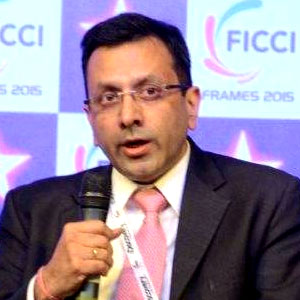
    The broadcast subscription side of Media & Entertainment Industry alone has the potential to grow ten-fold to Rs 300,000 crore a year, provided it moves from a pre-liberalization mindset of price control to free market, addressed Sanjay Gupta, COO, Star India, to an audience of M&E professionals at FICCI Frames 2015. He was speaking at ‘Vision 2020 – laying a transformative roadmap for Indian Broadcasting’ with other leaders from the M&E industry and MIB and TRAI in a thought-provoking discussion moderated by celebrated media writer Vanita Kohli Khandekar.

     

    Even as the FICCI-KPMG Indian Media & Entertainment Industry Report 2015 revealed that the total industry had grown to Rs. 102,600 crore in calendar year 2014, Gupta said that the true value of the industry is far from being unlocked.


    “All broadcasters are creating as much as 100,000 hours of fresh content each year, engaging 700 million consumers in this country, which is not a small number,” Gupta said, “but what are people paying for consuming all of this content? Around Rs 30,000 crores a year. See how that compares to a simple market like soaps and detergents, for which people are paying Rs. 100,000 crore a year in India!”


    He raised the question on how big this industry can be: “I believe it (broadcast subscription) can be Rs. 300,000 crore, instead of Rs. 30,000 crore. How do we get this to happen?”


    “The fundamental issue is that we have regulated this industry from a very wrong perspective.” He brought in the example of Telecom industry which has shown dramatic growth in the last 10 years – from 40 million subscribers to 900 million subscribers and from an $8Bn to a $100Bn – on the back of de-regulation and players themselves taking measures to benefit consumers.


    Citing glaring and illogical price disparities in media, Gupta said: “We charge Rs.10 for Star Plus, which caters to a very large consumer base; for Star World, where only a small set of consumers watch English content, the price is Rs 2.5!  It is ironic that in India the pricing for premium content is less. Another example – in Kerala, we had priced Asianet, the No.1 channel in that market, at Rs. 5.35 and the regulator asked us to take out that extra 0.35 paise! I don’t know what the right price should be, but let the market determine that.”


    Explaining how pricing is still genre-based and not driven by nature of content, he said: “In sports, despite the big difference in costs between World Cup cricket, which possibly everyone is watching, and UFC – which many would not have even heard of – the pricing remains the same!”


  • #FF14 Day 2: Despite advent of multiple platforms, television still rules

    By A Correspondent


    With the explosion of a host of content delivery platforms in India, it is increasingly becoming demanding for traditional mediums to spruce up their offering and do it in a manner that is platform-agnostic. The observation is particularly true for the medium of television that is being confronted with newer challenges as a host of platforms are making a beeline to offer content in their own unique ways.


    The session on ‘Television is Dead – Long Live Television’ on day 2 of FICCI Frames discussed how content providers can reach out to consumers in a multi-platform world and who will be the ecosystem winners and losers in the future. The panelists comprised of Anuj Gandhi, Group CEO, Indiacast Media Distribution; Sanjay Gupta, COO, Star India and Todd Miller, CEO, Celestial Tiger Entertainment. The session was moderated by Vivek Couto, Executive Director, MPA.


    Mr Couto began by shedding light on how the traditional medium of television was still ruling the viewership pie and was not being as impacted by the emergence of other digital options including mobile. He presented the example of a developed market like US that was still seeing a healthy growth trend. Asserting that the future will be about consolidation, Couto said that the medium needed to get away from its garb of being a defensive medium and rather play the role of being an aggressor.


    Sanjay Gupta began by taking the audience back to a decade ago where it was prophesied that the medium of print would die with the invasion of television. “But that is obviously not the case with the medium of print growing by two times its total share today. We therefore are living in exciting times as new mediums are providing newer opportunities.” Mr Gupta advised that instead of looking at it as a TV business, the players should be platform-agnostic and receptive of changes that the newer platforms have to offer.”


    For Anuj Gandhi, the last two years were indeed exciting for the Indian broadcast industry largely for the digitization exercise that was undertaken on a national level. “While there were more than 40 companies that were launched, more than half of them shut down after facing challenges. The problem is that we lack scale,” said Gandhi. Mr Gandhi affirmed that it was still looking at opportunities on the digital platforms in terms of providing content for ‘binge viewing’ format.


    Todd Miller pitched in by saying that whatever the prevailing trend, the important medium to connect with the viewer still continues to be television. Despite the emergence of multiple platforms, television will still be the preferred vehicle as that is where the viewer’s tend to be the stickiest, he said.


    Offering an advice to the audience, Sanjay Gupta said that there was no attempt being made in terms of scale for viewing content of choice on linear platforms. “That is a challenge that the content creators need to resolve,” he said.


    According to Anuj Gandhi, the challenge still remains that the bandwidth speeds for accessing data on internet continues to be problematic. And this is despite the explosion of smartphones and tablets in the country. He cautioned the gathering that brands needed to be ready with high-value content when technologies like 4G etc take off. But come what may, television will continue to evolve as a medium and will become more ‘pull’ medium for attracting viewers than being a ‘push’ medium.


  • Sports on the Go from Vodafone & Star India

    By A Correspondent


    Vodafone India has entered into a strategic partnership with Star India for multi-sports offering called ‘Vodafone Sports’ portal on Vodafone Live.


    The initiative will give consumers access to sports content on the go – on feature phones and smartphones.


    Powered by starsports.com, Vodafone Sports will offer sports such as Cricket, Football, Tennis and Hockey and going forward it will also cover  F1 and Tennis.


    Said Vivek Mathur, Chief Commercial Officer, Vodafone India, “The launch of Vodafone sports is an industry first initiative to bring across best of premium live and curated sports content blended with interactive platform and content delivery.”


    Sanjay Gupta

    Sanjay Gupta, Chief Operating Officer, Star India, noted, “Star India’s ambition is to shape the future of entertainment on a mobile screen and sports is a first big initiative for us. Starsports.com has already set a new standard for sports fans hungry to consume sports without being tied to their television. This partnership will bring the power of our service to a whole new audience.


    As part of the content offering, Vodafone Sports will offer unadulterated content such as  news, trivia, scores, instant access to live matches, interactive video scorecards, exclusive insights and analysis, columns, photos and wallpapers.


    A special feature for cricket fans  is an interactive video scorecard that allows users to watch the fall of a wicket, replay of individual innings, highlights for a particular player.


    Snack pricing plans

    • Watch a match at INR 10/INR 20
    • Watch a video clip at INR 3 /INR 5
    • Adorn your home-screen with Cricket wallpapers at INR 3


    All you can eat plan

    • Sign up for an individual series at INR 49/INR 99/INR 150
    • Watch archived video clips (e.g. Sachin’s best knocks) at INR 30/INR 50


    Subscription-based plans

    • Rs. 5 per day
    • Rs. 150 per month


    Customers can avail Vodafone Sports by visiting live.vodafone.in/sports or sending a simple text message SPORTS to 111. If not for the smartphone users, this one would be a great offering for feature phone users, who wants to enjoy sports on-the-go.


  • Star completes full control on India cricket by turning Team Sponsor till March 2017

    By A Correspondent


    If it’s Cricket, it’s Star. Watch out for its familiar ogo across cricket as Star India extends its broadcast, internet and mobile rights-owner status for July 2012 – March 2018 to the ground.


    Star India has bagged the bid for the Team Sponsorship Rights for various cricketing events including the Senior Men’s Cricket Team title and logo sponsorship rights from 2014 to 2017 at the price of Rs 1.92 crore a match. This is a sharp drop from Rs 3.34 crore that Sahara India is paying as well as the Rs 2 crore that Star India is currently paying for the title and logo sponsorship.


    The base price was recently revised to Rs 1.5 crore from Rs 2.5 crore, and the Star bid was Rs 0.42 crore higher.


    The Team Sponsorship Rights cover BCCI Events, ICC Events and ACC Events, for the period January 1 2014 to March 31, 2017. The rights include the right to be called the ‘Official Team Sponsor’  and to display a commercial logo on the team clothing of the Senior Men’s Cricket Team, the Under-19 Men’s Cricket Team, the Men’s A-Team and the Women’s Team.


    The decision was taken at a meeting of the BCCI’s Marketing Committee yesterday (December 9). The tender document, which was available from November 11, 2013, was picked up by seven prospective bidders (Bharti Airtel, Games Unlimited, Multi Screen Media, Sahara India, Star India, UB Group, World Sport Group). Bids were accepted until 3 pm on Dec 9 at which time the bids were opened and evaluated. Two bidders – Star India Pvt Ltd and Sahara India Financial Corporation – were in the fray. Although Sahara’s bid was higher, it was found to be ineligible.


    “Star is the Title Sponsor for BCCI international and domestic matches for the period October 2013 to March 31, 2014, as well as the Holder of the Broadcast, Internet and Mobile Rights of cricket in India, for the period July 2012 – March 2018. Star has a deep understanding of the game of cricket, and what it means to the nation. We are pleased to extend our association with them,” Sanjay Patel, Honorary Secretary, BCCI, said.


    “Star is delighted to become the Official Sponsor of the Indian cricket team. It’s a team of brilliant talent and we are proud to be associated with them. This is further endorsement of Star’s deep commitment to Indian cricket and Indian Sports in general,” added Uday Shankar, CEO, Star India, said.


    Sanjay Gupta

    Star India COO Sanjay Gupta has indicated that the sponsorship will be used to promote any of his brands – be it the sports channels or even entertainment offerings like Star Plus and Life OK.


    Meanwhile, there have been murmurs that the BCCI decision to award the rights to Star India may be contested. Sahara India is peeved that it was not informed that it was ineligible for the bid given its ongoing litigation with the Board on the IPL team disqualification. The Sahara bid was higher than that of Star at Rs 2.35 crore per match.


  • Gaurav Banerjee takes charge of Star Plus as GM

    Gaurav Banerjee

    By A Correspondent


    It’s an office that’s has seen various occupants in the recent past, but Gaurav Banerjee, who has been part of the Star India system for a while, should well reverse that trend.


    Uday Shankar

    Star India CEO Uday Shankar spotted his talent at Star News (now called ABP News) where he was CEO and at the TV Today (Aaj Tak) group, where he was News Director. Mr Banerjee joined Aaj Tak in 2000 and was the 9pm primetime news anchor and exec editor at Star News. A St Stephen’s and MCRC Jamia student, the new Star Plus business head was responsible for the successful launch of ABP Ananda, MCCS’s Bengali news channel (then Star Ananda), and later setting up the network’s regional channels and taking Jalsha to No. 1


    Mr Banerjee joined Star Plus in October 2009 and played a key role in shaping content around the “Rishta Wahi Soch Nayi” theme, we are informed. He also helped shape content strategy for Life OK and has developed popular shows like Mahadev, Diya aur Baati Hum and Sasural Genda Phool.


    The last occupant of the Star Plus biz head office was Nachiket Pant Vaidya who moved to MSM Sony’s movies division in September this year. Mr Vaidya took charge of Star’s flagship channel in July 2012 from Nitin Vaidya who helmed the network’s Hindi channels for a little over a year.


    Mr Banerjee will report to Sanjay Gupta, COO, Star India.


  • Cricket sponsorship touches new low as Star, ESPN get title rights at throwaway price

    By A Correspondent


    Star India and ESPN Software India Pvt Ltd (ESIPL) have won the BCCI title sponsorship rights for all the BCCI international and domestic matches for the period October 2013 to April 30, 2014.


    There are 13 international fixtures in all by way of the two international series scheduled during the season – the seven-match ODI series and a T20 game between India and Australia, followed by two Tests and three ODIs against the West Indies. The sponsorship rights will extend to BCCI’s domestic events such as Irani Cup, Ranji Trophy, Duleep Trophy, Vijay Hazare, Deodhar Trophy and the Raj Singh Dungarpur Trophy.


    Vijay Rajput

    Speaking on the occasion, Vijay Rajput, Chief Operating Officer, ESPN Software India Pvt Ltd, said, “We are delighted with the outcome. BCCI’s title sponsorship offers immense value especially with the prospect of India taking on strong teams like Australia and West Indies at home during the festive season. It offers a unique opportunity of extending the brand proposition of our network to sports fans across the country in a radically new manner.”


    Star India COO, Sanjay Gupta said, “We are delighted to extend our relationship with BCCI. This will help Star India strengthen its connect with its loyal viewers as well as help the network reach out to newer audiences.”


    Sanjay Gupta

    Earlier, the Marketing Committee of the BCCI met at the Cricket Centre, Mumbai, on Thursday (Oct 3) to receive the bids made for Title Sponsorship of International Series and Domestic Tournaments to be played in India in the 2013-14 season. Bidders had the option of bidding for either the series between India and Australia or the series between India and the West Indies or both.


    The Marketing Committee has awarded the Title Sponsorship Rights for all series to be played in India in the 2013-14 season to Star India Pvt. Ltd and ESPN Software India Pvt. Ltd, at a fee of Rs 2 crore per international match, said a communiqué signed by Sanjay Patel, Honorary Secretary of the Board.


    It may be noted that the amount is around 40% lesser than what Airtel paid last for title sponsorship. Mobile device company Micromax is had evinced interest in the bid for the 13 international matches and a slew of domestic tournaments, but is said to have opted out in the final round.


    Sports media observers believe that it’s too early to say that this should be considered a correction in the cricket sponsorship rates. A lot depends on how India performs against both Australia and West Indies, a senior marketer told MxMIndia.


    Since Star is already airing the matches, is there any point in the title sponsorship? “It’s already paying Rs 38-40 crore for each match’s telecast. Now for an incremental Rs 2 crore, it’s getting it all. If it works for Star, don’t be surprised if this is how rights will be sold in future,” said the senior marketer who chose to be anonymous.