Tag: Rohit Ohri

  • The wait is over for the CCO at FCB Ulka is over. It’s Swati Bhattacharya!

    By A Correspondent


    Swati Bhattacharya

    This comment may seem uncharitable, but it’s not. After all if a CEO finds someone good and the right person for the job, why not take her or him along wherever he or she goes. When Rohit Ohri joined Dentsu as CEO, he brought on Swati Bhattacharya, then one of the three NCDs at JWT, as Principal Partner of Mama Labs. And now that he has joined FCB Ulka as Chairman and Group CEO, Rohit Ohri has ended the suspense over the appointment of the Chief Creative Officer. Swati Bhattacharya is on board. She had put in her papers at Dentsu recently.


    Bhattacharya, who joined JWT as a rookie, spent 22 years at JWT with the last four-odd years as National Creative Director and in 2015, Swati set up Dentsu Mama Lab as Principal Partner.


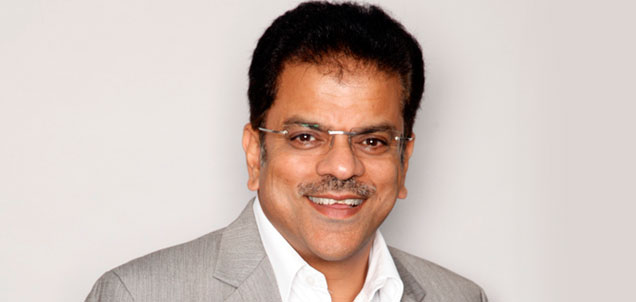
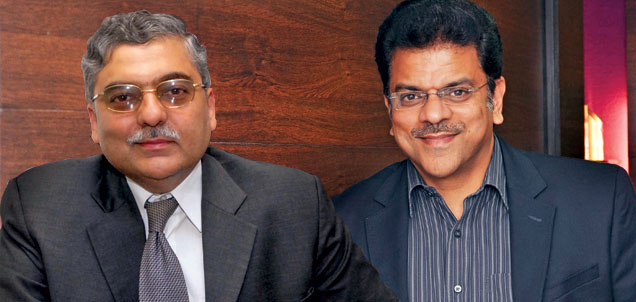
    Rohit Ohri

    Commenting on the appointment, Ohri said: “I’m delighted to have Swati as the creative leader of FCB Ulka Advertising. Swati is a humanist. Her work always finds that magical connection between human and brand truths. Horlicks, Maggi sauces and noodles, Close up, Airtel, Kit Kat, 7Up, Pepsi, Pizza Hut, Unicef, Sunrise and Slice have all seen the Swati magic at work. Her human stories have won her India’s highest award in cinema, the DadasahebPhalke Award, in 2014 for best screenplay. Her short film ‘Double Shift’ featured in the Toronto, Vancouver, Kolkata and Mumbai International short film festivals and went on to win in the best short film, best soundtrack and best cinematography categories. This is an exciting new chapter in the history of FCB Ulka in India. I’m glad that Swati will be partnering me and the leadership team at FCB Ulka in writing it.”


    Speaking on her new role, Bhattacharya said: “There isn’t anyone you couldn’t learn to love once you hear their story. That’s just as true for brands as it is for people. Intimacy is the true algorithm of creativity and that is why, I believe, stories are at the core of what we do. FCB Ulka has created some of the best brand stories we have ever heard…I am looking forward to adding some new ones”.


    Susan Credle, Global Chief Creative Officer, FCB added, “When I had the privilege of meeting Swati many months ago, I was first and foremost drawn to her passion for art that drives this industry and her commitment to finding the human truths that ignite game-changing ideas. I’m excited to work more closely with such an incredible creative leader and strategic thinker who will harness the creative strength of one of our network’s strongest offices.”


  • Nitin Karkare appointed CEO of FCB Ulka

    By A Correspondent


    Rohit Ohri, Chairman and CEO FCB Ulka Group has announced the elevation of Nitin Karkare to the position of Chief Executive Officer, FCB Ulka Advertising. Prior to this Nitin worked as Chief Operating Officer, FCB Ulka – Mumbai & Bengaluru.


    Nitin has been with FCB Ulka since 1986, when he joined the agency as a Management Trainee. Over the years at FCB Ulka, he has worked on some of the oldest agency brands like Amul, Zee, Tata Motors, Wipro, ITC, Zodiac, Nerolac and many more.


    Commenting on the elevation, Rohit Ohri, Chairman and CEO FCB Ulka Group said, “My first priority in my new assignment is to ensure that we have the right people in the right leadership roles. Nitin’s passion for advertising, his love for the Company, his deep bonds with our clients and, of course, his charming, and affable work style make him the right person for the position of CEO, FCB Ulka Advertising. He has an impressive track record of building some of India’s most loved brands. His commitment to our clients is true testimony to FCB’s spirit of partnership. I’m confident that Nitin will lead FCB Ulka Advertising to new heights and will be a great partner to me in realizing our vision for the Group.”


    Nitin combines an easy going nature with a keen creative eye to forge an effective partnership with his creative team, who is ever ready to give their best for him at all times.


    Shashi Sinha, CEO – IPG Media Brands India, added “I have worked with Nitin from 1986 and am thrilled that he will lead FCB Ulka advertising – he knows the clients, the people and more importantly the culture. This is true testimony to growth from within.”


    Nitin Karkare

    Speaking on his new role, Nitin Karkare, CEO – FCB Ulka Advertising said, “From starting out as a management trainee at Ulka Advertising to becoming the CEO of FCB Ulka Advertising, it has been an exhilarating journey. FCB Ulka has been built on the foundation of long term partnerships with its clients and its people. I would like to build on this legacy while infusing a new creative energy into the system.”


  • There are sharks everywhere, I am one too: Rohit Ohri


    Ever since it was announced in July last year that Rohit Ohri would take charge as Group Chairman and CEO of the FCB Ulka agency network there has been a buzz about the winds of change that we could see blowing in the 54-year-old agency network. After all, it’s got clients which have been around for several decades. But, as it happens, several senior hands have either retired and Ohri’s predecessor Nagesh Alai has taken on a global role. Rohit Ohri joined the agency on January 4 and spoke to Pradyuman Maheshwari three days later in his Nariman Point office hours before addressing the team in a townhall. In the interview, Ohri makes a reference to partnering Shashi Sinha and media agency Lodestar. Sinha, it may be noted, is CEO, IPG Mediabrands India of which Lodestar UM is just one of the many arms, albeit a significant one. The day-to-day operations at Lodestar are headed by its CEO, Nandini Dias.


    Excerpts from the interview:


    So what made you join FCB Ulka? What was your perception of the agency when you took the decision?

    This is a question a lot of people have asked me. And you know one of the reasons I decided to join FCB was the fact that it was the people and the quality of people in this organisation for the longest. I have the deepest regards for Arvind Wable as a friend in Delhi, for Ambi, Nagesh. And Shashi. So you know there were bunch of people with a great degree of integrity. And not just integrity in terms of professionalism but also intellectual integrity. They have always kept that as you know like the holy grail of the FCB. And to my mind I had the deepest regard for it because one of the most important thing in an agency is the quality of people there you know. And fact is I have seen lots of people now at senior levels, mid-levels and junior levels and there is a lot of integrity and honesty. There’s a very ‘let’s get the work done’ and ‘let’s not get in to politics’ kind of environment here, which is really for me kind of like home you know.


    So unlike an advertising agency, right? You need to have some fun, some politics, a little bitching etc. Is it too sanitised?

    Yes, but that’s what I think I will bring here (laughs). But there are a bunch of really good people, which is the biggest reassurance. Honestly, in the five-month break I had before joining, I was wondering if I really need to go back to this again. Because transforming an agency from the inside, and creating a new culture in an organisation, is a lot of work, as my four years in Dentsu showed.


    Dentsu was a new project, but FCB-Ulka is a 54-year-old agency. You have some rather large and old clients there. If you tinker around too much, other sharks will grab the clients…

    There are sharks everywhere, but I am one too. With a lot of clients, we have a deep-rooted relationship, but as far as creativity is concerned, you need to stay current and fresh. So what I’m going to bring to these agencies is new energies, some fizz and fun….


    In fact, FCB Ulka is seen as a fuddy-duddy agency. It has done some great work, but in the past…

    It has done some absolutely fantastic work, even in recent years, for [brands like] Docomo. The idea is to add some freshness and newness. And I think that’s the reason the FCB Ulka board as well as the global management, wanted to bring in new leadership and look at some fresh ideas.


    But the fresh ideas need to come from a creative head, and right now you don’t have one in the agency…

    It’s fresh ideas not just in terms of what you are producing, but also when it comes to a way of working. To me, creative transformation is about setting a new culture in the organisation which looks at generating creative ideas.


    But that’s dramatically difficult to achieve right?

    Not really. Fundamentally, FCB is always been about solid ideas. I am really going to actually look at the big shift from solid and I think future is about not solid but liquid ideas. And that big shift is really about making ideas which actually work across the whole host of mediums. It’s not just in to television, not just in to traditional advertising but really about you know taking every single touchpoint and bringing that liquid idea alive for consumers at every single point.


    Have you identified anybody who can take charge as CCO?

    It’s only been my second day at work, I believe I am fast, but not that fast. Yes, we are thinking about it. I don’t think that one CCO, however, can come and transform the fortunes of an agencyThat model is kind of old model right. It is traditional advertising…


    There are not too many names to choose from…

    That’s a very traditional way of looking at it. I think it’s about getting a group of talented people together – from digital, those with media expertise or outdoor — and getting them to work together. And that’s what I mean about liquidity of talent. It’s about new teams starting conversations with clients and consumers. It is no longer about one person in today’s context.


    I have just come from a client meeting, and they told me that they don’t want that one big film any more. They want to see a complete package, and I want to see that idea come alive across every single touch point. That’s the most important thing.


    You’ve obviously seen things change dramatically over the yers when you were at JWT…

    Absolutely and this is the new paradigm. This is the paradigm of liquid ideas, liquid talent, liquid networks and liquid structures. I am saying that today what we have to do is put the creative idea in the centre and then move along every single touchpoint. It is no longer that the creative agency sits in the middle and then the media agency or the activation agency they are revolving around that one single creative.


    So will we see a younger CCO? Sorry to get back to the question again…

    I know that’s one thing you definitely want out of me! To my mind, it’s not about age but calibre. What I am looking for is freshness and a new sensibility.


    Are you sure your old clients won’t be upset about your speed of change?

    The clients are very used to the speed of change today, because they are in the market. For the next 100 days, I’m going to put a plan together after speaking to clients and getting their perspective on what strengths and weaknesses and delivery [systems they need us to work on]. I will also meet with people in the agency and understand what they consider their strengths and how we can move forward. So more than a CCO, Brand FCB Ulka needs to stand for something. We have a global positioning, but how does that translate for the Indian market, is the starting point. Fundamentally, in an elevator in one-and-a-half minutes, if I need to be able to tell you that this is the reason why FCB as an agency is what you need to work with. This is the reason why it is best in the game. So this very reason needs to be very sharply articulated and articulated in the context of today’s volatile world. And in today’s world the challenges are enormous in terms of communication.


    One of the things creating a buzz around your taking charge is about the change of guard, and what it would mean for the old guard in the agency. There are quite a few people who have been there for many, many years. Could you shed some light on what has been happening?

    Nagesh is now working global projects and directly reporting to Carter Murrey. I think Ambi retires in March, and with his depth of knowledge, he always been like the planning head of the agency. So we would like to recast his role going forward, perhaps making him a mentor on some of the brands he’s been working with closely. Arvind would also become a consultant and mentor. Both he and Ambi have spoken to me, and since this is a company they have built, FCB is like their life’s work, they would like to help in whatever manner required. So for the group, it is really about putting and knitting a lot of the agency together and making sure that all the offices, all the different verticals, work together.


    FCB Ulka has a lot of offices. Are you going to integrate some of them?

    Not integrate because FCB Ulka and Interface are separate agencies, and it’s important to keep that separation. But we are going to put a working methodology in place. To work closely with Lodestar, and the digital agencies FCB, then there are opportunities in activation. The fundamental cultural shift that I want to bring in, is the  resource and capabilities of thinking in a holistic manner.  But Shashi and I are going to partner and work together to take this thing forward. There are a lot of occasions for Lodestar and FCB Ulka to work together. So in today’s day and age, if you can leverage that, the value we can give to the client is enormous.


    This partnership thing sounds very good, but at the end of the day, one person has to report to the other. So how will that work between Shashi Sinha and you

    Shashi is not going to be reporting to me. Up to now, the agency has been like a brotherhood, with five people running it. And there was a seamless matrix… it is an amazing matrix.


    But even the ’Paanchayati Raj’ has to have one leader who will drive the organisation and whack the others into shape, if necessary, right?

    So clearly I am going to lead the creative agency, and he is going to lead the media assets. The whole thing is about collaboration. If you cannot work in a collaborative manner then frankly, you are not fit for today’s marketing environment.


    Six months or 100 days. When can we expect to see a difference in the agency

    That’s what lot of people have asked me. My thing is that I have entered the agency with no plan. There is no plan in my mind. How can that be?But you know the the worst thing would be for somebody to come into an agency with a preconceived idea of what he wants to do. I know broadly the objectives we want to achieve, but I will evolve a plan after getting a good understanding of what the business needs and what the clients want. If you have a plan and force it on people because you think it’s a good one, that would be the worst thing to do. It’s important to evolve a plan in partnership with the existing leadership of the agency.


    You have existing long-standing relationships with many clients. Do we see you pulling them now that you here?

    I think now my first priority is to look at our client base here. I think we’ve got fantastic list of clients and there are some deep, deep relationships. Protecting a relationship is almost a heritage. If you have 50-year-old relationship with a client, that’s really something to be proud of and something to build and grow. So the first port of call is about existing client relationships and that’s I am going to focus on. And of course when we go out, we will be looking at every other opportunity.


    The agency hasn’t done much on the awards circuit. It may have won some awards, but not too many. Do you see that as an indicator of the quality of work that’s being done?

    That’s a big conundrum and [references the] question of what kind of culture do we want to create. Are we going to chase awards for the sake of awards and do a lot of scams, or do we want to create famous advertising — campaigns that build famous brands and as a result, fame for the agency as well?


    Will we see you do any acquisitions?

    Yes, we will be open for them.


    You have been in Delhi and in Singapore. How do you feel about moving to Mumbai for the first time ever in your career?

    Oh, yes. I have built a career in advertising without ever stepping foot into Mumbai. When I was at Dentsu, we were building a Mumbai operation with the acquisition of Taproot and then Webchutney. But you know, Dentsu as a creative agency didn’t have much of a presence here. So I used to come to Mumbai, but infrequently. Now I will be here and I am looking forward to it.


    The move to Mumbai should be interesting. You moved to Delhi from Kolkata where the advertising business was headquartered in Kolkata…

    It would be very interesting. I find this city fascinating, especially the cultural complexity and diversity of people. I took a walk down Marine Drive this morning in an attempt to ‘embrace’ Mumbai (which you can’t do from a hotel room). And during the walk, I saw Mumbai and the spirit of the city and the beauty of the different types of people you see here. [In Delhi you only see people] from Jatland in Haryana. But here it was fascinating.


    Cleaner air too?

    Cleaner, yes though after the odd and even scheme, hopefully Delhi air would be clean as well.


    If FCB Ulka is a senior citizen taking a walk on Marine Drive today, what do you think FCB Ulka under Rohit Ohri would be like, a year from now?

    That’s a bit uncharitable, and really just a perception. If you meet the people here, they are all buzzing with ideas and talent. So it’s an unfortunate perception that has come about. And one that I would like to change.


    And no names of a CCO yet?

    No (laughs!)


    This interview first appeared in dna of brands dated January 11. The interview also appeared on BrandStand on Zee Business. Watch it at https://goo.gl/9QyIrM


  • Rohit Ohri takes charge at FCB Ulka

    Rohit Ohri

    By A Correspondent


    As you read this, Rohit Ohri has taken charge as Group Chairman and CEO of FCB Ulka. The former Dentsu India CEO was until recently serving a cooling off period. Ohri is scheduled to address employees at a town hall later this week.


    As may be recalled, in July 2015, Carter Murray, Worldwide CEO of FCB, had issued a confirmation on Ohri’s appointment and that he succeed Nagesh Alai who, after 25 years with FCB who was scheduled to move into the role of Global Vice-chairman at FCB, working on special initiatives for Murray.


    “I want to thank Nagesh for dedicating his career to our FCB operations in India and for helping FCB Ulka become one of the strongest agencies in the country. I look forward to working with him on special global initiatives,” said Murray.


    On Ohri, Murray said the following in a communiqué: “When Nagesh and the Board introduced me to Rohit as someone they felt fitted the culture of the company, I was struck by his passion for what we do, his focus on great work and strong client relationships, and his natural gravitas. If you add his track record in the industry, Rohit is someone whom I think will lead FCB Ulka forward with vision and energy, and keep the flame strong.”


    With FCB’s newly restructured global company, Ohri will serve as a member of the global operating committee and report directly to Murray in New York.


    “FCB has gone back to its roots and is reigniting its brand essence under Carter’s leadership. The opportunity to partner with him, in what could be the most defining time in the history of FCB convinced me to quit my regional assignment and come back to India,” said Ohri in a statement.“FCB Ulka has a rich legacy of creating solid brand-building work. It’s a company that values partnerships, people and culture. The opportunity to build on this legacy and to take a great agency to greater heights is truly exciting. I’m delighted to be at the right place at the right time and with the right people.”


  • Satbir Singh quits FCB Ulka

    By A Correspondent


    Satbir Singh has decided to move on after spending a year as Chief Creative Officer at FCB Ulka. During his stint, Singh led some memorable work across brands like Snapdeal, Tata Salt, Zee and such.


    On moving on, Singh said: “It has been a short but enjoyable stint with FCB Ulka. In this brief period I have been fortunate to have worked with some excellent people who created much-talked-about campaigns… From clients to brands to people, 2015 has been a good year.”


    According to an FCB Ulka client, Satbir Singh brought to the agency a degree of freshness which the agency will need to ensure is sustained.


    Meanwhile, Rohit Ohri is set to take charge at the agency next month. According to the grapevine, he is set to cause some disruption and is said to be keen in bringing in younger, top draw talent.


  • It’s official. Rohit Ohri to join FCB Ulka as Group Chairman and CEO


    By A Correspondent


    It’s now official. Former Dentsu India chief Rohit Ohri is joining FCB Ulka as Group Chairman and CEO. This is effective January 2016. Ohri, who is currently in Singapore, told MxMIndia that he will serving a cooling off period as per the Dentsu contract and is looking forward to the FCB Ulka stint.

    Ohri told MxMIndia that he would be located essentially in Mumbai when he joins FCB Ulka. This will be the first time he will have Mumbai as his permanent base, having worked first in Kolkata and more recently in New Delhi NCR.

    So did he decide on the FCB offer before he accepted the new opportunity at Dentsu in June? Not at all, said Ohri. “I signed on the FCB papers only last week and moved to Singapore in June itself,” he said.

    Meanwhile, Carter Murray, worldwide CEO of FCB, issued a confirmation on Ohri’s appointment. Ohri will succeed current CEO and Group Chairman Nagesh Alai who, after 25 years with FCB, is moving into the role of Global Vice-chairman at FCB, working on special initiatives for Murray.

    “I want to thank Nagesh for dedicating his career to our FCB operations in India and for helping FCB Ulka become one of the strongest agencies in the country. I look forward to working with him on special global initiatives,” said Murray.

    On Ohri, Murray said the following in a communiqué: “When Nagesh and the Board introduced me to Rohit as someone they felt fitted the culture of the company, I was struck by his passion for what we do, his focus on great work and strong client relationships, and his natural gravitas. If you add his track record in the industry, Rohit is someone whom I think will lead FCB Ulka forward with vision and energy, and keep the flame strong.”

    With FCB’s newly restructured global company, Ohri will serve as a member of the global operating committee and report directly to Murray in New York.

    “FCB has gone back to its roots and is reigniting its brand essence under Carter’s leadership. The opportunity to partner with him, in what could be the most defining time in the history of FCB convinced me to quit my regional assignment and come back to India,” said Ohri in the statement.“FCB Ulka has a rich legacy of creating solid brand-building work. It’s a company that values partnerships, people and culture. The opportunity to build on this legacy and to take a great agency to greater heights is truly exciting. I’m delighted to be at the right place at the right time and with the right people.”

    Ohri will be supported by FCB Ulka’s management board, which includes Shashi Sinha, Executive Director, Lodestar Media and CEO – IPG Mediabrands; Niteen Bhagwat, Executive Director, Interface Communications and Asterii Analytics; MG Parameswaran, Executive Director of FCB Ulka Mumbai and Bengaluru, FCBi, Cogito and Arvind Wable, Executive Director, FCB Ulka Delhi.


  • Rohit Ohri quits Dentsu. May be joining FCB Ulka: ‘dna’ report

    By A Correspondent


    Rohit Ohri

    Even as the Dentsu Aegis Network has confirmed the news of the exit of one of its key stakeholders in the APAC region, there are rumours that his next port of call may be FCB Ulka. According to a report in newsdaily dna’s website dnaindia.com, “former Dentsu India CEO Rohit Ohri is set to join FCB Ulka.” Attributing reliable sources, the report addes that the announcement of Ohri taking charge at the Mumbai-based agency network will be made soon.


    Meanwhile, this is the official statement from Dentsu Aegis: “Rohit Ohri CEO Dentsu Asia Pacific (ex Japan) has resigned after four years at the company. He has made a great contribution and we thank him for that. New leadership of Dentsu brands in Asia Pacific will be announced in due course.”


  • We want Dentsu Aegis Network to be #2 by end-2017: Ashish Bhasin


    Hours after it emerged that Ashish Bhasin, Chairman and CEO – South Asia of the Dentsu Aegis Network, would take overall charge of the network in India and South Asia, he spoke to Pradyuman Maheshwari on the advantages of an integrated agency network and his plans for the next few years.


    Other than you getting overall charge of the Dentsu Aegis Network for South Asia, what does this development mean for your business?

    What we’re actually trying to achieve is have just one P/L for the country. We believe we can service the needs of clients seeking special help – be it digital search or social media, in outdoor etc, without the work being done in silos. The legacy creative agencies, each about 100 years’ old, aren’t able to move talent freely. With Dentsu Aegis Network, we are able to do that.


    It’s been in the works for some six-odd months now, right?

    These things do take time. We are a large organisation now, with 1700 staffers, 700 of who are in digital alone. We have15 standalone companies, four of these being in digital.


    Rohit Ohri is looking forward to regional role as CEO, Dentsu APAC (excl Japan)


    Rohit Ohri who has moved out of his role as Executive Chairman, Dentsu India and CEO, Dentsu Asia Pacific (South) to a more regional one as CEO, Dentsu Asia Pacific, spoke briefly to MxMIndia.


    Having worked 26 years in India, he says this is an opportunity that will help him “see regional brands and look at greater challenges”.  “The agencies in India have turned around, we have some strong CEOs handling each agency and the next step was to build a strong regional network and get on board non-Japanese clients,” he said


    Ohri moves to Singapore this month, but will be at Cannes Lions later this month and will also take a short vacation. Although he didn’t indicate it to us, most likely he will settle into his new role in July.


    As CEO, Dentsu Asia Pacific, Ohri will continue to oversee the five creative agencies currently under him, the head of which will also report to Bhasin.


    The reporting of the Dentsu-branded agencies will be quite like the individual agencies at GroupM. Dual reporting – one to your agency regional head and the other to the GroupM head in the country.


    Dentsu is known to be a full-service network.

    That’s right. The difference between 50-100 years ago and now is earlier it was a bundled offering now, it’s no longer that because we want specialisations. Media and everything is unbundled, each of those businesses have to be standalone. You can’t go to a client and say, just because it’s part of my network, therefore you should use it. You have to go and say because this is the best in class, as it so happens it’s also a part of my network. That whole thing, we’re able to bring it together by this one P/L and that’s the idea of bringing Dentsu Aegis Network together under one management in every country.


    Yes, one figured your structure was a lot complicated when we interviewed Rohit Ohri some months back.

    For historical reasons, they were two different businesses. No doubt about it. The Aegis media business which I’d brought in to India and the Dentsu business which Rohit was looking after. Now with this merger, we’re going through the entire process of bringing it all together. When a client is talking to us, we will be able to satisfy his/her entire communication and marketing communication-related needs, whether it’s creative, media, outdoor, digital, retail, whatever.


    Isn’t there a flipside to the building of the group image given that it’s critical to build each of the individual agency brands to attract competing clients?

    It still is the same. They are standalone individuals, separate agencies. Each with their own front-end managers, planners, creative folk. There are some areas where you can take advantage of the collective. For example, in the media area, wherever it’s feasible, we try to bulk up clients together so that our clients get benefit of larger volume. Wherever a benefit can be drawn for our clients, we bring it together. Think of it as a garden with many gates. A client can enter into this garden with any of the gates that they want. Obviously, we try to cross-sell and upsell all our services in the group. But a client has the option to choose one service or several or three which are most relevant to him etcetera. That’s the advantage it gives us. We make sure there are complete Chinese walls between each of the businesses. There’s no commonality on the front end of each. Each has its own managing director.


    What are the targets you have set yourself post this integration?

    In India, we had a very small and late start. We only had Carat on the Aegis side and Dentsu has also been a relative young network. Our competitors have been here for 90 to 100 years. We have a long way to catch up. I have a clear vision that by the end of 2017, we must be the distinct No 2 group in the country. At the moment, WPP is clearly the largest. IPG is quite big and then there is us, Omnicom and Publicis being roughly of the same size. So, we’re at No 3 today and there are other contenders too. We want to be the distinct No 2 in two-and-a-half years. If we have to do that, it has to be a combination of good organic growth, up-selling and cross=selling all our services to our clients. So, if today a client is buying only media services from us, tomorrow we should be able to bring digital services to him or search to him or creative services. Our own clients who we know well and already have a relationship with, it’s much easier for them to trust us for a larger repertoire.


    End-2017 is pretty ambitious.

    We’ve been the fastest growing agency group for the last two years. We’ve come a long way from where we were and the way I look at it is that there are still competitors who are a long way ahead of us, so we have to make sure that we don’t look back and we just have to make sure that our growth is disproportionate to the market. We’re growing at least two-and-a-half to three times of the market growth rate. If we can sustain this for another three years or so, we’ll be a very clear No 2 in the market.


    But some of the biggest media accounts are still with your competitors.

    They are, that’s why we’re still not the market leader. If you look on the media side, for the last seven or eight months, we’ve won the Microsoft business, we’ve won the General Motors, Nokia, British Airways, Allied Blenders, Panasonic, Sony and so on. On the media side alone, we’ve won nearly Rs 2000 crore business in 6-8 months. I don’t think any agency has seen this growth. So, we’re not No. 1, clearly GroupM is. But, we’re by far, the fastest growing and now our scale is significant. So, we hope to keep building on it. Jet Airways came in last year, the number of clients that have come are… of course we have our existing clients and now we’re pulling all our muscle together collectively. We’ve got Dentsu Media, Vizeum and Carat… they’ll continue to be independent agencies because they have independent clients and wherever it’s beneficial for us to pool our volumes together, we’ll try to.


    Dentsu Creative is headquartered in Delhi, thanks to Rohit being there. Earlier too, it had a large base in Delhi. Will that shift to Mumbai now?

    No, Dentsu has four creative agencies. Two of them were headquartered in Delhi. Taproot Dentsu is in Mumbai, Dentsu Communications has been headquartered in Bengaluru. Dentsu Marcomm and Dentsu Creative Impact have been in Delhi. That will continue exactly like that and each of them will have their head who’re already in place. Simi will continue to head Dentsu Communication. She now reports directly to me. I’m going to be announcing a new Executive Council very soon. Each of the representatives of the media as well as creative agencies will also be members of that and collectively that executive counsel will run the full country.


    Are you looking at any second-in-command or a COO for the network?

    No, our model is slightly different. We have a managing director or a CEO for each of the businesses and all these heads will all form the Executive Council.


    And will you have a centralised buying arm like the CTG of GroupM?

    We’ve appointed a trading head in Harsha Joshi and we’ve already started seeing the benefits and our clients are already getting the benefits. Yes, we’ll have a centralised trading. It won’t be a company, the buying and trading will keep happening in the companies but it’ll all be brought together.


    Any acquisitions on the anvil. One hears that the Dentsu Aegis Network is hungry for more!

    Yes, we are. See, the thing is I’m 90 years late in this market


    Dentsu Aegis Network has been slow on the awards front. We don’t see a Carat or Vizeum winning big at the Emvies or the Media Abby

    If you notice for the last few years for most of the places, we didn’t really have much of a business in India so our focus was on building the business. Two years ago was the first time when we started entering awards and we said we’ll focus on international rather than the Indian awards. Campaign Asia, we won the agency of the year, South Asia, not just India. The same year, Carat won Gold, Vizeum won Bronze, Isobar got…


    So only international awards for you?

    Well, all awards matter and Posterscope has won more than 45 or 50 awards already in this year. They’ve swept every award function.


    Hmmm, Posterscope is active and so are your digital arms. But your media agencies aren’t

    We’re very new to the game. so to speak. It’s only in the last year or two that we’ve even started of entering into awards. We’re so busy building the business and getting it. Going forward, we’ll concentrate a little more. It’ll be on a selective basis. It’s not that we’ll enter every single media award show.


    On a personal front, is it good to get back to creative?

    Of course. I started off and two-thirds of my career has been in creative. Obviously, there is the thrill and joy of going back to it, looking at good creative work, interacting with creative directors. I think the exciting today is given the technology and business prospects being so vast, how do you take it to the next level?


    What’s more fun and creative? The media or creative part of the ad business?

    The biggest fun, challenge or opportunity is bringing it together. I don’t think creative or media should work separately from each other. That doesn’t mean I’m saying they should be bundled together. That’s not going to happen. The door is bolted on that one. If we can find a way to make our digital, media and creative agencies work together, we’d have created magic which no one else can. That’s really the philosophy of one P/L , because; today if you look at any agency; somebody creates a campaign, somebody else goes and briefs it to the media and in the end you’re trying to force-fit thing to see how it can be brought together. On the other hand, if you can conceptualise it together, you can really create magic and to me, that’s a big opportunity. That’s the big thing we’re looking for.


    Obviously, you’ll now be spending more time on creative than media.

    Yes, I will have to, because, for one it’s an area where a lot of activity is happening at the moment. The second thing is that with Rohit’s moving out there’s a little vacuum that I’ll have to step in and fill up on the leadership. The media, outdoor and digtal part of the business is something I am familiar with it so for the next few months, I’ll have to spend more time there.


    Are there going to be any new people or any change?

    At the moment, we’re not envisaging any new people. There isn’t any immediate change or anything as such, because we have enough people running each of our businesses. But, if opportunities arise, if there are better career prospects and great talent available, we’ll obviously look at adding on. But the structure is in place. I’m in that happy position where I don’t need to make a change at the moment.


    The fact that Rohit has moved to Singapore indicates that like is the case in GroupM, you will see people from India also moving to regional roles

    Yes, of course! In fact, we believe completely in liquid talent. When I was running South East Asia and South Asia for six years for the Aegis Media part of the business, there were quite a few people who we moved. V S Mani, who runs Carat in Vietnam has moved. Anupriya who runs ZenithOptomedia now used to run my Singapore operations. There are tonnes of examples of people who’ve moved up and down. We’ve actively encouraged that and we’ll definitely have much more of that. I think Indian managers are best in class! We completely underestimate them. There will always be a very high demand for Indian managers, because they are of such good quality. But, however, you do have to respect the sentiments of the country you’re in. It’s a very fine balance you have to keep. Some of our competitors have a problem that they’re seen as Indian mafia in some countries. I hope we never get into that scenario. It’s an issue of balance.


  • Ashish Bhasin takes overall charge of Dentsu Aegis in India


    By A Correspondent


    His designation is already rather long. It goes: Chairman & CEO – South Asia, Dentsu Aegis Network, Chairman, Posterscope and psLive – Asia Pacific. And now there may be another two: Executive Chairman, Dentsu India and CEO, Dentsu Asia Pacific (South).


    Okay, it’s been spoken about much over wine and single malts over the months. First soon after the general elections. We interviewed Rohit Ohri last year and asked him this, which he laughed at. We asked him about the entire structure at Dentsu Aegis and who reported to whom, and he explained what appeared to be a complex structure. We were a shade too lazy to detail it and just deleted the question.


    The rumours of Ohri relocating to Singapore have been doing the rounds for a few months. In fact a shade too long for us to start dismissing them. But now it’s confirmed, lah.


    He may as well start getting used to the Singaporean style of suffixing everything with a lah.


    So here’s the communiqué which we received from the communications office which until yesterday only serviced the business head quartered out of Bhasin’s office:

    Dentsu Aegis Network today announces the geographic expansion of Rohit Ohri’s role. Having previously led Dentsu in India and Asia Pacific South, Rohit is now appointed CEO Dentsu Asia Pacific (ex Japan) covering all markets in the region outside of Dentsu’s home territory. In doing so Rohit relocates from Delhi to Singapore.


    Nick Waters CEO Dentsu Aegis Network Asia Pacific said: “Rohit has done a fabulous job transforming Dentsu in India. Across Asia, Dentsu has an extraordinary track record of innovation and as the largest agency in the region has an unmatched depth and breadth of capabilities. Sano-san and myself are really looking forward to working more closely with Rohit to unleash the full potential of the business.”


    Commenting on the move, Hiroaki Charlie Sano, Executive Officer of Dentsu Inc. and CEO of the Dentsu Branded Agencies within Dentsu Aegis Network said: “Dentsu is an agency network with a long standing history and a strong footprint in Asia Pacific. Rohit shares our creative ambition and strong vision for Dentsu and the way we work with our clients. I’m delighted he will be taking on a more central position within the network to help guide the business outside of Japan”.


    The release we received didn’t mention about who’s taking charge from Ohri. But our sources at Densu Aegis Network India tell us that Bhasin took charge from June 1. Guess we’ll hear the official version soon.

  • Vipul Thakkar appointed NCD at Dentsu

    By A Correspondent


    Dentsu India Group has announced the appointment of Vipul Thakkaras the National Creative Director, Dentsu Communications Pvt. Ltd.The former Creative Head- South & East of DDB Mudra Group, Vipul is a seasoned advertising professional withover 19 years in the business.


    Vipul joins from DDB Mudra Group, where he was Creative Head – South & East. He has created work for an enormously wide variety of brands from categories such as lifestyle, finance, beverages, fashion and FMCG.Vipul has worked in agencies in Mumbai, Bangalore and Egypt. At DDB Mudra he was responsible for some iconic work on Royal Challenge, McDowell’s No.1, TTK Prestige, Peter England and Jos Alukkas. Prior to DDB Mudra, he was at Ogilvy Bangalore, where he created some brilliant work for ITC Bingo, Sunfeast Yippee, Allen Solly, MTR and Titan watches.


    In his new role, Vipul will be the creative leader of Dentsu Communications and will work towards strengthening the agency’s southern network and expanding the Mumbai operation. His appointment is part of a broader strategy to strengthen on the group’screative caliber.


    Rohit Ohri

    Speaking on the occasion, Rohit Ohri, Executive Chairman, Dentsu India Group said, “I am delighted to have Vipulas a part of the Dentsu Communications leadership team. ‘Work that works’ has been Vipul’s mantra. His work has worked not only for the brands that he’s worked on, but also for the agencies he has worked in.  He has built motivated integrated teams, seamless agency networks and a solid creative reputation for the organizations he has worked for. I’m confident that Vipul’s creative leadership, will take Dentsu Communications to greater heights.”


  • The Most Annoying Buzzwords of 2014


    We asked the industry’s finest for buzzwords they grew heartily sick off in 2014. Big Data and Viral were the big losers. Read on for the rest:


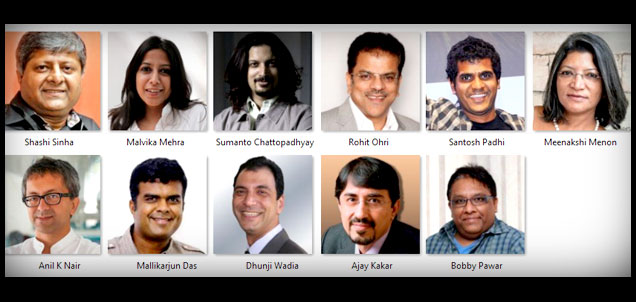
    Shashi Sinha, CEO, IPG Mediabrands

    1. Talent

    2. Compensation

    3. Digital

    4. Television measurement and

    5. Analytics were annoying as the more people spoke, the less they did anything about these things.


    For 2015, for starters, I have high hopes from the new TV measurement which Barc will put out, media agencies getting into content production, collaboration between all constituents of the ad ecosystem, budgets which will hopefully be at landmark levels and the World Cup which we should win again.


    HALL OF SHAME 

    Viral – Most of the time it is just an ad that runs way too long. Get some scissors, people


    Big Data – The ultimate Brahma Astra for the advertising charlatan


    The only viral I know of is the one that requires the intervention of a doctor

    Perhaps the most, abused & misused terminology in the year. Runs the danger of being called ‘Pig Data’.

    It’s just analytics. People have been doing this ever since humankind stepped on this planet.


    Malvika Mehra, National Creative Director and Executive Vice President, Grey

    The 5 most oft used words in 2014 were 1. Guys 2. Let’s 3. Make 4. A 5. Viral.


    Also ‘Take your time (4-5 minutes is great), but please don’t take my money. No budgets this year. And while you are at it, make it so stunning that it is ‘organic’ (unpaid distribution)’. Ji Sirji. ‘But ultimately make me a TVC. And I want a ‘BIG, LAUNCHY’ feel for our product in 30 seconds or less. Chal, paanch second aur le lo’. Ji sirji.


    The Pitch Bitch: ‘Of course we love you guys! We are just opening it up to 10 other agencies to inject some freshness into the brand (and test how much lower will they drop their price vis a vis yours for the same or more amount of work)’. Par Sirji?


    Femvertising: From soap brands, to makers of shampoos, sanitary towels, watches to home appliances and mobile network providers, everybody suddenly wanted to ’empower the woman’. I get the noble intent, but wish the brands would really ‘walk the talk’. Else it’s just a ‘token’ gesture. And consumers see through that inauthenticity.


    Interactive Pre-rolls: With stern warnings of ‘If you skip this ad, I will have to kill not only Jack and Jill and Mary and her little lamb, but also Old MacDonald along with all the cute animals on his farm’.


    Research: Gut instinct is officially dead. It got replaced by the R word. Heard about ‘No guts. No glory’? Not lately.


    Sumanto Chattopadhyay, Executive Creative Director, South Asia, Ogilvy & Mather

    Native Advertising: I imagine people wearing grass skirts and clapper boards singing jingles.


    Vlog: At times we Bengalis mix up our Vs and Bs. That’s what I thought this was all about!


    Content: As in, ads vs. content, content marketing. Like ‘traditional’ advertising has no content? I’m content to pass on this one.


    Social: Yeah, why not? Let’s party. And get paid for it! That’s what I say.


    Seamless: Every element has to seamlessly work with everything else. Imagine if our clothes were like that too! Now that would be some fashion trend.


    Santosh Padhi, Co-founder and Chief Creative Officer, Taproot India

    Pitch: If you do not respect yourself nobody will.


    Research: Like sex determination, it should be banned


    Low Budget: Instead of 300 insertions can we do 280 and improve the quality of the creative?


    Urgent: Premature babies forcefully welcomed will always run a risk


    Celebrity: They are the super highly paid creative directors, why do you need one more creative agency?


    Rohit Ohri, Executive Chairman, Dentsu India and CEO, Dentsu Asia Pacific (South)

    Integrated: Integration is the process, co-creation is the magic.


    360: 360 degree campaigns are consumer conversations in bursts, 365 is everyday relevance.


    Alignment: Alignment is passionless, belief runs deep.


    Structure: Structure constrains, open source liberates.


    Procurement: Vegetables are procured, ideas are partnered.


    Meenakshi Menon, Chairman, Spatial Access

    Big Data: That has to be on the top of my list. It’s just analytics. People have been doing this ever since humankind stepped on this planet.


    Twitterati: Everybody has become an instant expert on Twitter. I’d replace the term with ‘scum.’


    ISIS: ‘Isis’ is supposed to be the goddess worshipped as ideal mother and wife. Our vocabulary keeps evolving, sometimes not in the right direction. I’d call the group as a distortion than assigning them the name of a goddess.


    Homechef: Where mothers cooking for their families had some dignity to it, now we have a whole new concept of women cooking for complete strangers that they invite at home. The food is charged, of course. It’s just a little pretentious a term. Just call them plain old cook, maybe?


    Climate Change: It only gets talked about. Never acted upon. Perhaps replace it with – learn to breathe under water? Or ‘Grow gills?’


    Anil Nair, CEO and Managing Partner, L&K Saatchi & Saatchi

    Integration: The term liberally used when you don’t have a clue of what to do with your brand. It’s been institutionalised now. We will have Chief Integration Officers everywhere in no time. Put an end to this painful word. Replace it with ‘We need to have an idea,’ Sirjee.


    Social Listening: It’s something that our good old researchers have been doing for ages. It’s nothing more than trend analytics, only instead of taking a dictaphone out to record voices, you’re recording them off Facebook and Twitter. Just call it ‘consumer understanding’ and do not make an unnecessary tool out of it, please?


    Viral: The only viral I know of is the one that requires the intervention of a doctor and loads of medicine to go away. I don’t care where this term came from, it needs to disappear. It’s an epidemic that needs an antidote.


    SEO, SEM: Why are we making a mountain out of a molehill? Can we not get caught up in the process and its terminology and revert to a simple non-jargonised world?


    Big Data: For God’s sake, the database just got bigger. But it always existed. The most successful political campaign of this year was based on pure emotional advertising and not big data. Let’s stop jargonising information. Call it what it is (read: information).


    Mallikarjun Das, CEO, Starcom MediaVest Group (India)

    Big Data: A phrase bandied too easily and too much, especially by those who pay scant regard to rationality. The ultimate Brahma Astra for the advertising charlatan.


    Programmatics: A term used in context with media buying, especially on digital, when what they are doing is just using the optimiser.


    Fragmentation: The only problem with using the said buzzword is that it’s often used in a wrong way to strike some sort of terror in a client.


    Storytelling: Need I say more?


    360 degree: This term is like that sugarcane that’s passed through the machine 300 times. There’s no juice left in it and yet it’s being rolled one last time.


    Dhunji Wadia, President, Rediffusion Y&R

    Big Data: Perhaps the most, used, abused and misused terminology of the year. It runs the danger of being called ‘Pig Data’. There are questions regarding the implications of the approach and also the way it is currently done. It needs to look at data holistically – Total Information.


    Digital Evangelists: Don’t need them as you cannot preach to the converted.


    The ‘Selfie’ Contest/Promotion: Replace it with better imagination.


    E-commerce ‘Discount for the Day’: That runs for years together.


    Free App Download: With more and more retailers and brands reaching for e- and m-commerce, there is an explosion of apps to be downloaded. Begs the question, ‘Why would anyone pay to download such an app?’


    Ajay Kakar, CMO, Aditya Birla Group – Financial Services

    “Isse viral kar do!”: Which is what every client says. It’s content, not viral, please.


    “Facebook has 50 million visitors!”: So what? VT station has more people visiting, does that mean we put all our ads there?


    New media: Let’s just say ‘customer’ as opposed to new, old, traditional, or any other kind of media. Creative awards: Awards should be for creatives that work.


    Pitches: Here a pitch, there a pitch, everywhere clients flirting. Serial pitching must end. Let’s call them ‘Brand Custodians’ and not pitchers, shall we? Clients and agencies must stop playing the blame game. If one is the crutch to your success there’s no way one should let go.


    Bobby Pawar, Director and Chief Creative Officer, Publicis Worldwide

    Viral: For the love of likes, it’s just a video until lots of people see and share it. Most of the time it is just an ad that runs way too long. Get some scissors, people.


    ATL/BTL: It implies a caste system of ideas. The good ones go above, the so-called ‘hard working’ ones slide under. It shouldn’t matter where the idea lives, it must be good enough to move your audience. People don’t care, therefore you must.


    But: This is phaasi ka phanda for ideas. It is crueler that a blunt ‘no’. Why? Because it is preceded by some waffling words that give hope to the creative, then ‘but’ shows up and yanks the handle.


    Deadline: Nothing induces a creative butt-clenching moment like this word. Yes sir, three bags full sir, our work is time bound, but does it have to sound so, erm, deadly?


    Purchase: It’s the leading cause of hair-loss among agency CEOs.


    Source:The Economic Times

    Copyright © 2015, Bennett, Coleman & Co. Ltd. All Rights Reserved

    Licensed to republish



  • Shashi Sinha, CVL Srinivas, Pratap Bose & Rohit Ohri present Outlook for 2015


    Interviews by Shruti Pushkarna


    2015 is acid test year for our industry:

    Pratap Bose, President, The Advertising Club

    I don’t want to sound pessimistic but honestly I have spoken to a lot of people in the industry. It’s a view that everyone’s taking which is the whole thing of being very cautious. There is optimism but there’s cautious optimism. And therefore I think, 2015 is really the acid test year, both for the BJP as well as for our business. The promise is large, the delivery is yet to happen. The strain on the government to actually do something concrete, pivotal around strategy, around implementing, to make things happen is huge. People say it will happen, give us time… I understand that. So there’s a lot of optimism that things might happen but unfortunately we haven’t seen the fruits of that yet. I don’t want to sound like a pessimist but I think we have to take the wait and watch approach. Even if you see the Congress men talk about Narendra Modi right now, they are saying that we’ve heard a lot, he’s made the right impression, the mood is right, but we need to see real time action. To summarise what I said, 2015 is the acid test year for our industry. There’s a lot of hope but I’m still pessimistic about it because it needs to transpire into concrete decisions that grow the economy and move the economy forward. That’s not been seen yet. I tread very carefully.


    Digital is finally kind-of becoming a strong reality:

    Rohit Ohri, ‎Executive Chairman, Dentsu India & CEO, Dentsu Asia Pacific (South)

    I think 2015 will be a promising year for everybody because I think a lot of the work that the new government has started, should show some results. And we are hoping that the positive sentiment will carry through to 2015 and 2016 as well. The other thing is, from the entire advertising and media industry I think digital is finally kind-of becoming a strong reality. It’s no longer just good to do, I think brands are realising that it’s an interesting part of their plans. And I think we are going to see a big change in the next two years in how brands actually communicate online. And what we have seen in 2014 was this big thing about brands creating content, which they did in a mini movie kind of format releasing online. I think that’s something we’ll see a lot more of going forward in 2015. All in all, from a creative perspective, and from a media spends perspective, I think the industry is looking up.


    Government has great plans but they have to push it through:

    Shashi Sinha, CEO, IPG Mediabrands

    I’m hoping and praying that the next year is good. I am hoping that Budget works out well for the government, whatever they decide, they implement because to me, that’s important. This government has great plans but they have to push it through. As we speak, currently GST is held up… so if they pull off a great Budget, life will be good. To me that’s vital. And not because it’s will be a great Budget but that will show their ability to push through and resolve things. But if they still get caught up in this religious thing that is happening, then there’s trouble. So we hope the government succeeds.


    In terms of adspend growth, it’ll be pretty much similar to this year:

    CVL Srinivas, CEO South Asia, GroupM

    We see 2015 to be a good year. On an overall basis, I think in terms of adspend growth, it’ll be pretty much similar to this year. But one must remember that this was an election year so we had a bit of a bump up to growth because of elections. Next year, despite it not being an election year, we see the growth rates to be more or less similar. We see digital growing upwards to 35 per cent like it has been over the past two or three years. We also think television is going to continue its strong growth in healthy double digits and so will the regional print dailies. So, all in all, it looks like an interesting year. We have the ICC World Cup coming up next year so that will lead to spends at some level.