Tag: Rajiv Dingra

  • Could Nestle have handled it better in a world of social media & 24×7 News TV?


    By Dyanne Coelho


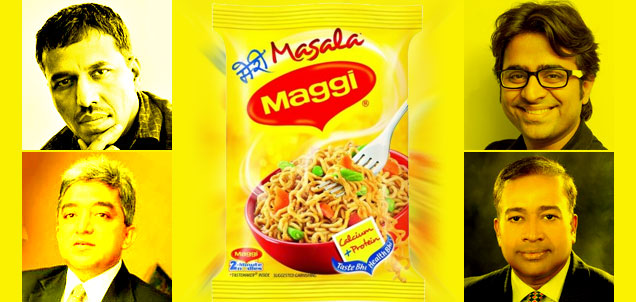
    The boycott, the pull-out of stocks and the subsequent bans have put the popular Maggi noodles in an avoidable mess. The brand has been brought under severe scrutiny for high content of lead; above the permissible limit as well as MSG; a taste enhancer. While at a press conference convened last Friday, Paul Bulcke, Global Chief Executive Nestle, defended the brand saying it is safe for consumption, regulators point out otherwise. The controversy has hit Nestle hard and communication with the consumers and others seems to have taken a backseat, causing distrust and confusion. MxMIndia spoke with senior marketing and media professionals (in alphabetical order of their last names) Manish Bhatt (Founder-Director, Scarecrow Communications), Harish Bijoor, Brand Advisor and Commentator, CEO, Harish Bijoor Consultants, Rajiv Dingra, Founder and CEO, WATConsult and Lloyd Mathias, Marketing Head, Hewlett-Packard India and requested them for some insights on what went wrong for Brand Maggi, how such a crisis ought to be handled in the age of the digital media and 24×7 news television and the role of celebrities as brand ambassadors.


    Would you say the controversy around Maggi has been badly handled in terms of the way the company has communicated with all stakeholders especially consumers?

    Manish Bhatt: No, I would not say that. I would say that this happens. There must have been something that went wrong. This is a decision between the company and the food and drug authority. It’s a very scientific matter. It’s a scientific and chemical lab kind of matter. Marketing and communication is an absolutely different thing. We can’t command authority and say whether they are right or wrong, especially with a reputed company whose products we have grown up with. Now communication is a completely different ball game and this can happen to anybody.

     

    Harish Bijoor: Most certainly yes. Each of the stakeholders need a different degree of communication. The regulator, the traditional media, social media and consumer communication needed to be quick, forever-on and active, more active than what was seen.



    Rajiv Dingra: The handling has been efficient but not effective. During crisis it’s not only important to clarify or state facts but it’s also important to come across empathetic and concerned for your consumers. Nestles responses have been defensive and at some point dismissive as well, which is why they have been ineffective even though they have been quick to react.



    Lloyd Mathias: I think Nestle could have been far more proactive when the issue first surfaced by directly communicating with stakeholders and clarifying issues.  Their initial silence – on both paid and unpaid media – has complicated matters and contributed to the issue spiralling out of control.


    Has the presence of a hyperactive news media – especially 24 x 7 news television and the social media make matters worse in handling crises?

    Manish Bhatt: Yes, but this can happen to the media also, some things can go wrong. Everyone wants information round the clock. Today news is not like a morning event, where the newspaper comes in the morning and you get your news. With social media, the news is not getting analysed by the right kind of people. It is done by anybody and everybody.


    Harish Bijoor: Absolutely. Today, brands cannot escape the scathe and scythe of television and social media.  If you are not agile, you need to pay the price. At times an unfair price of reputation erosion even. I do not believe Maggi deserves the kind of reputation-erosion it saw in the last week.


    Rajiv Dingra: The world has changed and the power is in consumers hands since the advent of social media. It only grows in their hands and brands need to embrace and not fight this reality.


    Lloyd Mathias: No. 24×7 news and social media is a reality and one must come to terms with it.  For corporations it means devising communication strategies and means to stay responsive to this medium. Consumers tend to air their grievances and concerns on social media and these need to be addressed effectively.


    Would you say that the social media and TV news media often becomes a mob and hence all consumer-facing organisations need to train themselves better to interact with both?

    Manish Bhatt: Today people get swayed by these things. But after sometime there will be more maturity and there will be more understanding and people won’t get affected by it. Today it becomes a mob and if any issue happens, people throng to social media, twitter, etc. It’s uninvited, but social media is at such a stage. But maybe after some time, it will mature and people will not get affected by these things. What happens on social media is really out of your hands. People also are 24×7 sitting at Ramlilamaidan, and if any issue happens they protest, it’s the same attitude on social media. It makes everybody nervous. I’ve worked with the present company, and they are pretty systematic and organised and very concerned and responsible. But what can one do in such a situation?


    Harish Bijoor: Absolutely. This is the new reality. No corporate and brand entity is perfect and infallible. You need to have the ability to manage the tender and weak-points of possibilities in this day and age.


    Rajiv Dingra: Mobs happen when you frustrate people by either not answering them or try to talk over them in a loud voice. People have busy lives no one wants to indulge in non-productive banter. But when products that concern them let them down they do speak up. Brands need to realise that consumers place their trust in them and hence when trust is broken there will be noise. Brands need to be more caring and humane in the era of social media.


    Lloyd Mathias: The viral effect of social media together with 24×7 news certainly tends to magnify issues – often unreasonably. Consumer facing organizations and indeed all businesses must devise strategies to address this. Keeping communication lines open, putting out clarifications, responding real time to social media posts, having spokespersons addressing live media – help considerably in crisis situations.


    Would you have advocated Nestle to be apologetic in their assertiveness about the safety standards as against being defensive and uncommunicative?

    Manish Bhatt: It is not right for us to comment on this. It is absolutely none of our business. As a consumer if it affects us, then yes, the sales would be affected, but I would not say that anybody is right or wrong right now. It’s like the law. You have to wait for the law to take its course now.


    Harish Bijoor: No. I do believe Nestle has handled that well. It has taken the high ground of quality and it has withdrawn packs occupying that high-ground.


    Rajiv Dingra: Maybe apologetic is too strong but certainly more empathetic and more concerned for consumer health. The war is not proving oneself right, it should be about ensuring consumer safety. A great way could have been to pause Maggi supply and redo packaging which reassured consumers and relaunch. They could also release videos on how Maggi is produced. Cadbury did that when worms were found years back. It showed commitment to consumers on ensuring they upped their safety and product standards.


    Lloyd Mathias: Being communicative always helps.  I think stating the facts clearly while highlighting safety standards the company adheres to both locally and globally would have helped.


    Do you think it is appropriate for celebrities endorsing brands to take the heat and while legally they may be protected, they must take the moral authority for the product’s attributes?

    Manish Bhatt: Whoever the celebrity may be, he/she is not a chemical engineer or anything. He can’t really check what is there in the product. Beyond a point, nobody can go into anything to that extent. You really can’t accuse them. They can’t check everything. This is the technical and moral responsibility of the company who produces it, or it is the duty of the governmental authorities to keep on checking things on time. You can’t accuse the endorsers.


    Harish Bijoor: No. Celebs are really indemnified. No celebrity can be 100% certain of everything about a brand.


    Rajiv Dingra: Consumers don’t think legally but logically. Logic is that if you endorse it and I eat it and I fall sick then I will hold you responsible.Consumers will always question celebrities on their actions because celebrities are there due to consumers love and fandom. Though it’s an opportunity for the celebrity brand too to take a higher moral ground and win more fans.


    Lloyd Mathias: I think celebrities must be selective and fair in their selection of products, as their endorsement often swings public opinion.  So, yes, they carry a moral responsibility. However, in specific instance of Maggi, I don’t think the brand ambassadors are to blame at all. Instant noodles are a relatively safe category and if the food safety authorities had cleared the product, the celebs would obviously believe them. Clearly the brand ambassadors can’t be expected to have independent labs checking on product safety beyond what food safety authorities do.


    And lastly: Do you think celebrities need to be more careful in their selection of products while signing up endorsement deals

    Manish Bhatt: They should have one more clause added in the agreement that says that they will not be responsible in such an event.


    Harish Bijoor: Yes, celebs need to be and will be more careful in the future.  And celebs will continue to take risks in the future as well. Let’s accept it. What one celeb refuses, another will pick with glee.


    Rajiv Dingra: Maggi is an iconic brand and no celebrity would be able to say no. What comes across from this incident though is that brand aside what’s the actual impact of products on consumer health is also to be considered. The future is one where the consumer is an evolving and educated being and his needs and reactions will be far more evolved than consumers of yesteryears. He will be more profound in his articulation of needs and wants and will also create more movements together due to social media. The powerful thinking and action oriented consumer is here. Brands need to be ready for him.


    Lloyd Mathias: Yes, they always need to be careful.  As I said above their endorsement is meant to swing public opinion, so they need to be very careful.

     

  • Dentsu Aegis Network acquires majority in social & digital media agency WATConsult

    By A Correspondent


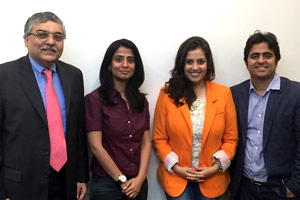
    Left to Right: Ashish Bhasin, Heeru Dingra, Nipun Kapur Dingra and Rajiv Dingra.

    Dentsu Aegis Network has announced the acquisition of WATConsult, a leading social and digital media agencies, with over 160 professionals in Mumbai, Delhi, Bangalore and Kolkata. WATConsult will become part of  Isobar, Dentsu Aegis Network’s global digital marketing agency and will be referred to as ‘WATConsult – Linked by Isobar’.


    Founded in 2007, WATConsult, which is led by CEO Rajiv Dingra, has evolved from being a social media agency to a full-service digital agency. WATConsultalso provides its client base with creative and technology services across mobile, digital and video. Clients include the Godrej Group, Nikon, Tata Chemicals, Bestseller Group, Bajaj Allianz and more than 70 other national and global brands. According to a newspaper report, the valuation of the company is in the region of Rs 180 crore, a figure dismissed by a few industry professionals MxMIndia spoke to as way too high even for a future-ready digital agency.


    Said Nick Waters, CEO Dentsu Aegis Network Asia Pacific: “The acquisition of WATConsult marks another significant step for our group in India.  This is a high quality award winning market leader specialising in one of the fastest growing and critical segments of the market.  Alongside Isobar, iProspect, and WebChutney we have created the largest and highest quality digital services capability in India.  We view India as a priority market and will continue to seek scaled and quality investment opportunities here.”


    Ashish Bhasin, Chairman and CEO South Asia Dentsu Aegis Network added: “Having WATConsult, a leader in social media, as a member of our family will further enhance our digital offering to our clients and support our growth in the market. WATConsult, will join iProspect, Isobar and Webchutney in making our digital offering the most comprehensive in India.”


    Said Rajiv Dingra, CEO WATConsult: “We are delighted to join hands with Dentsu Aegis Network, and our entire team are looking forward to taking WATConsult – Linked by Isobar to even greater heights. We are confident that by becoming a part of a digital focused network like Dentsu Aegis Network we will gain a competitive advantage in the fast consolidating Indian market. As an agency we see huge growth opportunity in digital advertising, particularly social media, digital video and mobile, and we are geared to capitalising on it.”


    Rajiv Dingra will continue as CEO ofWATConsult – Linked by Isobar, reporting to Ashish Bhasin, Chairman and CEO of Dentsu Aegis Network South Asia. His key management team, including Nipun Kapur, COO of WATConsult and HeeruDingra, CFO of WATConsult, will also continue in their respective roles. Mr Dingra will also join the Digital Council of Dentsu Aegis Network India, alongside the CEOs of Isobar, iProspect and WebChutney. This ensures that digital specialists at Dentsu Aegis Network in India now exceed 600 professionals.


  • Mobile marketers discuss trends & future at IAMAI Summit

    By Sneha Johari


    The number of connected Indians is also going to exceed the English newspaper circulation in India by ten times and will exceed the English speaking population in India by 1.5 times. These and a variety of other facts and figures were discussed and deliberated on at the Mobile Marketing Summit 2014, organised by the trade association IAMAI at the Hyatt Regency in Mumbai on Wednesday. The event saw a turnout of around 200-odd marketing enthusiasts learn about future marketing trends, understanding consumer behaviour, the mix of social and mobile media among a host of other topics.


    Rajesh Jain

    Rajesh Jain, Chief People Officer of netCORE Solutions spoke about the integration of marketing and technology which is already upon us (and is slowly merging). Tushar Vyas, Managing Partner Interaction of GroupM South Asia took some stand-out numbers and presented them in the context of the Indian online population.Talking about the next 100 million users (the upcoming generation as well as people who are converting to smartphones), in the near future, the number of connected Indians is going to be larger than the US population. India is the world’s second largest online user base. He also gave the stats on the number of connected Indians exceeding English newspaper circulation cited earlier. Mr Vyas added that the tolerance for delay (in any service) is decreasing as the information gap closes in and more and more things become available to a consumer faster. “The mobile web is increasingly becoming visual and discoverability is now social,” said Mr Vyas.


    Neeraj Roy

    Neeraj Roy, MD and CEO of Hungama Digital Media Entertainment stressed on the statistics of mobile consumers. “79% of smartphone owners are also smartphone shoppers. The Asia Pacific region will have the largest in B2C e-commerce in the near future,” said Mr Roy. Content is consumed across devices and people want a uniform experience across devices. The CEO of Proscape Services, Michele Raspone demonstrated how Proscape helped in cutting costs and enabling technology for their clients.


    Nishant Rao

    In the midst of all marketing talks, Nishant Rao, MD, LinkedIn India spoke about how mobile could be leveraged to become more productive professionals. He stressed on the importance of having a simple app for your business which worked efficiently and delivered the content or service. “Mobile is a mindset,” said Mr Rao. It should not be viewed as a technology separate from our lives. When asked by an audience member whether it would be best to have an all in one app, a mix of Facebook and LinkedIn, Nishant said that although that would be a nice idea, people prefer to keep their personal and professional lives separate.


    As the Summit progressed, a session on Marketing APPeal: Nuances of Mobile App Marketing discussed important aspects of investing in apps, best methods for a marketer to retain users on the app, native ads, how to use push notifications effectively while increasing consumer engagement and how to prevent overexposure of information. Rohan Tyagi, Digital Product Head of ABP News, said that push notifications helped in increasing their user engagement fourfold. This led to higher consumption of news. “You need to study your app as well as its users carefully. We segregated our users based on their engagement (high or low engagement) and delivered notifications accordingly,” Mr Tyagi said.


    Veer Chand Bothra, Chief Innovation Officer of netCORE Solutions said that looking at the app as content was necessary. He also mentioned that content is the king. His advice to marketers using apps? “Integrate all your information channels- voice (call), SMS, push notifications and email. As a marketer, take an omni-channel approach where the experience remains uniform across platforms,” Mr Bothra replied. Jay Jain, Director and Co-Founder of m-AdCall Digital Media, an app which lets you earn incentives for watching ads, said, borrowing from experience, “Give points to your consumers to bring them back to your app.”


    Nitish Tipnis, the ‘old-school’ Director of Marketing & Sales, Hover Automobile India neatly demonstrated Nissan’s social-only approach to the launch of its SUV, the Terrano and the phenomenal results they got from this medium last year. Nitish elaborated on how the customer is interested is knowing how technology works for them, that as marketers we should not bombard them with high-end tech specs but rather simplify and explain. In his research, he found that 95% of automobile-buying prospects research online before making a decision to purchase an automobile. “Create conversation, ensure quick responses, use multiple channels to engage with customers,” Mr Tipnis suggested.


    Rajiv Dingra

    The last plenary session explored the symbiosis between Mobile Marketing and Social Media. Rajiv Dingra, Founder and CEO, WATConsult, talked about using the right kind of content for social and differentiating correctly between the print, TV and online, especially social media.


    Snehi Mehta, Head – Client Solutions, Facebook India said, “Brands must have a voice on social platforms. Facebook is not just a social media platform, it is a mass media platform. We have to simplify planning metrics. Planning metrics have changed. It’s not about a 30 second advertisement anymore. The need of the hour is optimum reach.”


    Different case studies were also presented towards the end of the Summit.


  • Bajaj Allianz launches video campaign around road safety

    By A Correspondent


    Leading private insurance company, Bajaj Allianz General Insurance Co. Ltd launched a digital Video campaign titled- Can You Drive Like Your Dad? Bajaj Allianz roped in WATConsult, a leading digital media agency in India, to execute this campaign.


    A first of its kind initiative by an insurance company; Bajaj Allianz, with this video, hopes to connect with its audiences at an emotional level. The video features two kids emulating their dads to trump each other’s claims of whose dad drives faster on the road. The claims get more aggressive by every passing moment with one of them saying, “My dad drives the car at 200 kmph while talking on the phone”. The argument escalates to an actual race between the two on their cycles, eventually ending in a crash. The video ends with the two kids being friends again. With the premise of making roads safer for children, Bajaj Allianz’s underlying message through this video is simple- A play accident today, can be a real one tomorrow. Make the roads safer for your children!


    Commenting on the launch of the Digital Video Commercial, Aditya Sharma, Vice President and Head – Digital Marketing, Bajaj Allianz General Insurance, stated, “Bajaj Allianz has been involved in various initiatives that promote road safety and has been running the Drive Safely campaign for over 3 years. The visible frequency of unfortunate incidences of people getting injured in road accidents has increased tremendously, and the need of the hour is to create awareness and make people understand that the result of their actions could sometimes lead to someone else dealing with the consequences.”


    Commenting on the idea, the execution of the DVC, Rajiv Dingra, Founder & CEO, WATConsult says, “The insight we came up with, was very strong that parents’ habit of rash driving does affect how children view what is doable on the roads. I feel this insight is very strong as it is connected to the reality of today where everything parents say or do becomes fodder for their children’s imagination. We feel the DVC rightly captures this and addresses parents for the issue of road safety.”


  • The Anchor: 5 errors brands made on social media in 2012

    By Rajiv Dingra


    #1 The brands assumed that everything that works offline also works online. Just because you might have a sexy campaign offline, does not imply that it will remain sexy on social media.


    #2 Purely looking at marketing, and not looking at social media as a customer-relationship medium.


    #3 Focusing more on content more than communication. There is too much focus on gifts, contests and participation, with very little focus on what message is being passed through.


    #4 Inability to differentiate between customers and users. There are people who come to your fan page and ask serious queries about products. But we are chasing numbers of fans instead of individually replying to those customers.


    #5 Larger number of fans or spread of platforms does not mean presence on social media. Social media is as good as your last update, or campaign, or how it engages the fans. Social media is an ongoing daily effort to be responsive, interactive. Presence on platforms does not imply that you are doing social media.


    Constant innovation, and constant upgradation, is the need of the hour.


    Rajiv Dingra is CEO of WATConsult.com


  • Sigh! What makes Gangnam Style and Kolaveri Di such a rage?

    Photograph courtesy: Music channel M-Tunes which had premiered Psy’s Gangnam Style earlier this month


    By Tuhina Anand


    Who would have thought that a rather stocky looking guy mouthing Korean lines would have become a rage around the world? Gangnam Style by South Korean rapper Psy has become a viral hit just like Kolaveri Di which took the digital world by storm. Last, Gangnam Style had 474,915,766 views since being uploaded in July 2012 while Kolaveri Di has 62,798,000 views since it was uploaded in November 2011. The popularity of Gangnam surpasses that of Kolaveri, and it is digital that has played the key role in the video becoming such a rage. How is it that some videos catch the fancy and become such huge hits, whereas others just die out eventually? Dhanush’s Kolaveri Di was such a rage but his next video where he pays tribute to Sachin… errrrr what is it anyway… did not match up to the success of Kolaveri even though it is about a cricketing legend that the nation is crazy about.


    Rahul Nanda

    Rahul Nanda, COO at Webchutney, explained, “There is no science that can work out a formula for the success of a viral. I think it depends on the quality of content.” Giving a peek into creating a viral he pointed that one should stick to the basics and remember that content is always the king. He added, “Gangnam Style video doesn’t really feature a handsome hero but the dancing catches the eye. It is then essentially about providing that hook which could be humour or having an emotional connect which has the potential of catching viral and being shared by people. Also to keep in mind is that what catches peoples’ attention is usually something that is simple and easy to understand.”


    A Kolaveri Di could not have been such a hit had it just been an audio. The video which captures behind-the-scene moments while recording the song makes it extremely delightful to watch, it shows fun while making the song which many enjoy watching. Similarly, if Gangnam Style was just a song it would probably not be so popular, but the video element adds to the song thus making it extremely watchable and shareable.


    Rajiv Dingra

    Rajiv Dingra, CEO of WATConsult.com categorically puts that going viral and a hit depends on two factors- it should be unexpected and original. People would want to watch and share only if there is an element of surprise like in Gangnam Style the dance moves and in Kolaveri Di the lyrics. There has to be a surprise element, besides of course the content has to be original. He adds, “The content while being original should allow people to create their own versions thus giving people a sense of identification.” This definitely happened in the case of Kolaveri considering the various versions that came out and they too enjoy a decent number of views.


    Zafar Rais

    On the success of Kolaveri Di or Gangnam style, Zafar Rais, Founder and CEO, Mindshift Interactive, said, “Kolaveri Di owes 80 percent of its success to the entertaining content it brought along. That is the element most brands forget in wanting to create the next ‘viral’ concept. An agency does have the capability to use the right strategies in increasing visibility to help you reach out, but without an insightful approach towards the content apt for your consumers, you just won’t make it. Humour, music and emotions are the key riders of all viral marketing efforts. Likewise, for the Gangnam style of dancing. Additionally, originality and unexpectedness are the superpowers in the viral race. It’s time for simple ideas to take over big ideas, Beyond One Language: strengthening the concept that regional innovations with a mix of global touches, does add to the concept. If it’s funny, it got to be viral and youth connect: connecting with the youth via their daily experiences in their diction is the key.”


    One cannot overlook the role of professional players in making a viral gain epic proportion. Like in the case of Gangnam which has been around for 6-8 months but gained popularity only once Sony Music took over its distribution and splashed it across various networks to garner better mileage.


    Same was also the case with Kolaveri Di too which Sony Music and the agency Jack in the Box Worldwide worked on to devise its viral strategy.


    Carlton D’Silva

    Carlton D’Silva, Chief Creative Officer at Hungama Digital Media Entertainment also pointed that the ridiculous nature of the video is what has helped in making Gangnam popular. He said, “I have seen that humour though not the only factor but is an important driving factor when essaying out a viral campaign. It’s not necessary to just bank on humour to make inroads into the digital medium and reaching the consumers. However, humour works well on the internet medium.” He also cites the example of Johnnie Walker F1 campaign where they put videos of behind the scenes which has caught on well on viral and this doesn’t necessarily stick to taking the humorous approach.


    Arvind Nair, Business Head, Social Wavelength echoes the humour element that all the digital players have expressed. However, he added, “It has to do with creating content that cut across all type of people. However, there have been brands who have experienced great success on digital by taking the route of a cause. Aircel with Save the Tiger campaign has done it successfully and has sustained it for long thus becoming relatable with this cause and also a viral hit.”


    So it is clear that original with a surprise element does best for going viral. Humour is the best route but not the only route when brands want to go viral. Keep in mind though that it is always the content that rules.


  • The Crucial Social Media Question: Have fans? Now what?

    By Tuhina Anand


    Every marketer worth his salt wants his brand to have a presence on social media. However, the truth is that the marketers are still trying to figure how to navigate this medium.


    Having heard that it’s a ‘cost effective medium, can be tracked and is ‘the’ medium’ where the customers hang out, the marketer obviously wants to be there too. But the social media still has a long way to go before it is seen as the ‘vehicle of choice’ and not just as an afterthought.


    Yes, one agrees that marketers are warming up to the medium but they are still testing waters barring a handful who have taken the medium wholeheartedly.


    Once a marketer decides to go on social media, the next move is to create a presence on Facebook and maybe on Twitter. We have often heard the marketers talking about the large number of fans they have acquired on FB, so what do these number of fans mean to them and how are the marketers leveraging these fans to engage effectively with consumers?


    Chhaya Balachandran Aiyer, Founder and Managing Director, BC Webwise agrees that there is peer pressure to acquire more fans and clients often bow to that demand: “The number of fans and likes is a visible number, hence one can’t write it off completely even though many of the numbers could be dormant fans. These numbers are an opportunity to engage those fans in a meaningful way to create brand loyalty and brand recall.”


    She added: “Two years back, the common demand of a client was to be on Facebook, but we have seen a shift now where they have realized that it’s not the ultimate answer but social media too needs a 360 degree approach.” So it’s clear that there are different kinds of marketers and the early adopters are clearly asking the right kind of questions.


    Some of the brands that have effectively used the communities on FB are Fastrack, Café Coffee Day, Sunsilk while more are getting on the engagement bandwagon. Explaining the significance of the numbers, Rajiv Dingra, CEO, WATConsult, said: “While all readers of an ad do not become buyers of the product, similarly with FB, the marketers become a publisher of its page to reach out to the consumers. The aim is not always conversion to transaction for all people on its FB page, but with a large fan base the number of potential buyers definitely increases.”


    Mr Dingra is clear that there is no replacement for good content. He added that the numbers might reflect various objectives of a brand at different points, but if the content is good, the engagement with brands will become only much more involved and meaningful.


    Vineet Gupta

    Vineet Gupta of 22feet has been relentlessly engaging with brands to enable them to use their social media tools effectively. He explained: “We have brought out exclusive sale for Fastrack fans on FB and the brand has been doing a lot of stuff exclusive to the community. Scale has its own benefit and one can’t deny that. With people becoming familiar with social media, there are lots of activities happening which take people beyond the likes and the fans.”


    The agency has recently done activation for Lee titled ‘Shadows of City’, where people were encouraged to present their photographs of the city and the shadows they create which would then be put up in the stores.


    CCD is another brand that has been using FB to listen to its customers and also engage them via the medium. Ramakrishnan K, President- Marketing at CCD elaborated: “At CCD, we not only have numbers, but also a high level of engagement. Our fan base is 2.6 million and our monthly engagement level is 60 per cent, i.e. 60 per cent of our fans interact in some form with our page every month.”


    He added: “At CCD, we use social media base for regular tailor-made communication on happenings in CCD. We have a direct consumer feedback on cafes across the country which gives us instant information that keeps us on our toes. Most importantly, we use the fan base for co-creating many of our offerings – be it new menu, suggestions for improvement, live tasting of new introductions, choice of music among others. We engage fans to co-create their brand. As a result, we drive a very high level of consumer engagement, which in turn helps us drive sales.”


    One concern is that many fans on FB might be dormant, so then do the numbers really mean anything? Sanjay Mehta, Joint CEO at Social Wavelength explained: “I think that the key is to deliver message to interested people. If people receive the message but not respond, that is not a concern, but if they do not get the message in the first place, then it’s a bigger challenge. I think one should not be dismissive of the dormant numbers, but focus more on getting the right kind of messages that will get them to engage.”


  • WATBlog announces CMO conference

    By A Correspondent


    With an aim to give marketing professionals key insights into digital media, WATBlog announced the Digital CMO Conference. The event will have top CMOs of the country come together to showcase case-studies that have witnessed ground breaking success in digital media. The conference will be held on August 31 in Mumbai.


    WATBlog’s Digital CMO conference will showcase insightful presentations by the biggest brands that have emerged as the thought leaders in the digital media space. The conference will cover all aspects of digital marketing, including the role of social media in Customer Service and how the digital platform can help build brand reputation. The delegates expected to attend the conference would be a mix of CEOs, entrepreneurs and marketing professionals.


    “Digital marketing in India has gained significant momentum over the past year. A lot of brands are now looking at social media as an integral part of their marketing mix. We have organized the Digital CMO Conference to help these brands understand the best practices and soak up valuable insights from those who have run successful campaigns in the digital space” said Rajiv Dingra, Founder and CEO, WATMedia.


    Key speakers at WATBlog Digital Marketing CMO conference will be: Krishnakumar P, Executive Director, Marketing, DELL; Virginia Sharma, Chief Marketing Officer, IBM; Kavita Joshi, Head of Digital Marketing, HDFC Bank; Arun Nair, Head – Digital Marketing, Mahindra Holidays & Resorts; Dharini Mishra, Global Head of Brand, Suzlon Group


  • The Anchor: 6 things every marketer must pay heed to on social media

    By Rajiv Dingra


    Dialogue

    The rise of social media has brought about an important change in terms of communication between a brand and its audience. This is the magical two-way dialogue that social media offers. The days of a brand ‘communicating’ alone with its audience are gone. People and users are talking with brands online, and in many cases successful relationships are being forged because of this. A modern marketer should design marketing campaigns with this in mind. Being open and honest in your communication is the way to go.


    Equality

    Social media has given everyone a voice. This is good because now you as a brand can get access to some ‘real’ feedback and insights. The thing a modern marketer needs to note is that every person’s opinion and feedback holds value. You cannot just concentrate on the good things being said about your brand. You cannot afford to ignore anyone on your social platforms anymore. Instead delve deep into criticism and focus on how you can make it better for the person who has complained. This action will firstly get you a loyal consumer and all your fans and followers on your social pages will see this and react well to your brand.


    Brand reputation

    A brand’s reputation on social media hangs by a thread. One small negligent step can snowball into a huge media avalanche which can tarnish the brand that you have worked so hard to build. A lot of importance should thus be given to the content that you post on your social media platforms in terms of topic, context and viewpoints. It is good for a brand to believe in something, but at the same time ensure that whatever you post, it should not be construed in a negative way by your audiences. Stay away from controversies in your updates and even in your conversations with your audiences.


    Innovation

    Far too many times has the word, innovation been abused by peddlers of jargon. Real innovation is much more than that! First, you as marketer need to understand that innovations can be brought about by changing the way you view social platforms. Social media is not just your everyday media platform. It lives and breathes as a giant collective. The real question is ‘how do you inform and engage audiences instead of shoving your product down their face all the time?’ The second thing is to accept that not everything will be ‘viral’. As opposed to popular belief in marketing circles, you don’t conceive a viral video; it gets viral because it is good and marketed in the right way. Don’t let things settle down into a comfortable process. Experiment with your brands and your communication and then maybe you will succeed in getting something ‘viral’ done.


    Different platform, different strategy

    You can call it ‘Social Media’ for your ease but do not treat individual social media platforms as one. Ever. The ‘horses for courses’ approach is what needs to be taken to do well on Social Media. Every platform is distinctive in terms of features, UI, brand communication possibilities and its audience. You must learn to differentiate between platforms based on the parameters mentioned above. It might be easier to develop a broad social media strategy and deploy it, but trust me, it does not really work well for your brand. Learn the platform. Figure out the platform’s strength and weaknesses and position yourself accordingly. LinkedIn is a professional social network. How can your brand leverage this? If you can find more than one meaningful way, then get onto it and work your magic.


    Social is all about real-time

    Things move fast these days. The technology, the devices, the platforms and finally your audience. Never let anyone move faster than you. If your brand has to resonate with your consumer then it has to be perceived as fast, hip and trendy! This translates into a lot of effort for marketing. Dive headlong into the latest things, trends and crazes and figure out the potential they hold for your brands. Like I said before, take more risks! Don’t wait for someone else to try something out first, as this will only affect you negatively. These days there is a lot of buzz about Pinterest! If you are a retail brand or a restaurant, it is brilliant because of its visual nature. The first mover advantage is really very crucial in social media. Be prepared to think real-time or be prepared to be left behind!


    Rajiv Dingra is Founder and CEO of WATConsult