Tag: Radio City

  • Radio City launches online Malayalam station

    By A Correspondent

    PlanetRadiocity, the country’s first web radio portal, has launched Radio City Malayalam, its second regional offering after Radio City Tamil that was launched a few months back. The ‘station’ went live on January 19.

    Radio City Malayalam (www.planetradiocity.com/internetradio/radiocitymalayalam.php) caters to the strong fan-base of regional music lovers on the internet across the world. The playlist features popular Malayalam tracks and all-time favourites like EnteEllaamEllaam (MeeshaMadhavan), Chandanacholayil (Sallapam), Vaathililaavaathilil (Ustad Hotel)

    Speaking on the launch, Rachna Kanwar, SVP & Business Head, Digital Media & New Business, said, “Since the time we launched our first regional web radio station, we have been flooded with requests for more regional content on our portal. For us, Radio City Malayalam marks a foray into a hitherto untouched territory – Malayalam music. We hope to touch base with Malayalam music fans all over the world through this effort.”

  • Shut down by fire, Radio City takes it online

    By A Correspondent


    For FM stations, the fire on the night of January 5 at the Pitampura TV Tower in New Delhi brought relaying services in the capital city to a standstill.


    The problem is expected to be resolved by January 11, but Radio City 91.1 FM is not waiting until then – it has found a solution to the problem by going live on http://www.planetradiocity.com/radiocitydelhi.


    Ashit Kukian, President and COO, Radio City 91.1, said, “As of now, your guess as good as mine as to when it will be back on air… the last we heard is that the work is underway and the technicians are working real hard to put things in place in a couple of days.”


    Mr Kukian told MxMIndia, “We were obviously taken aback. It was a bad accident, the cause of which we are still unaware of, but what it meant was that we along with a few other FM channels would not be able to broadcast for a few days. So we had to quickly put our thinking hats and figure out options.”


    The station decided to put programming on the web, and managed it in a day’s time. A delighted Mr Kukian states, “We accomplished the task in about 24 hours. If you were to knock off the time lost because of the weekend, we put up the stream in under six hours.”


    The station is optimistic about attracting listeners to the radio station online as it already has a web presence. Mr Kukian says, “There is a huge traction we already have for web radio. We are sure to aggregate a greater number of fans. Going by the great initial buzz, we are confident that we will be able to aggregate a large number of listeners.”


    The silver lining in this particular cloud may well be the long-awaited rise of web radio, which will enable listeners to access music not by city but by listening choice.


  • The Anchor: Why Web Radio will be the next big thing

    By Rachna Kanwar


    Digital music consumption: As music consumption on digital media crosses any other medium, web radio will gain massively from the trend. More and more people will turn towards web radio for music that has been curated by radio and music experts and saves them the hassle of searching for it. Web Radio equals uninterrupted music experience online.


    Music discovery: Bollywood wary music lovers are looking for alternate sounds of music. On the net they can find this diversity, as there is no paucity of space. You are not restricted by genres or languages and can enjoy music be it Indie, Devotional, Ghazals or English. You’ll get your choice of music. Web Radio is and will become an essential medium of music discovery.


    Artists endorsed: Newer artists are waiting to be ‘discovered’ on Web Radio. They are no longer struggling to get their music heard as Web Radio is providing a readymade platform that promotes new music and sounds. For the artist community, it will become a big draw.


    Ease of access: There is a huge jump in web radio listenership at the workplace People are tuned into web radio at work as a background medium and apart from getting what they want they love the convenience.


    Reach:  As Internet literacy spreads outside the big cities and towns, there is a growing trend of web radio listenership from small towns where entertainment options are limited. As web radio is not limited by boundaries, it will grow into a preferred mode of entertainment for an Internet savvy listener. And the pull of nostalgia will bring the NRIs.


    Engagement: The level of engagement through RJ-driven shows will maximize the scope of the medium. It will provide the much-needed boost to the Internet revenues through the opportunities that arise from live interactions of the listener and the RJs.


    Rachna Kanwar is SVP and Head, Digital Media and New Business, Radio City


  • Fourtifying media & brands with research


    By Meghna Sharma


    In today’s world where there are plenty of brands for consumers to choose from, an in-depth knowledge about the target audience is as much as a necessity as breathing for any brand to become successful. Research now plays an increasingly important role in a brand’s lifeline.


    Entertainment industry today is growing at a fast pace and with number of options available to the TG, the brands need to know what will make the TG choose them over others.


    Ormax Media, a media & entertainment research and consulting firm, entered the industry four years ago (July 28, 2008) with a motto of helping brands understand and retain not only their target groups, but also help them grow in their respective fields.


    Clients Speak
    Raj Nayak, CEO, Colors

    Raj Nayak

    Ormax Media has opted for a very focused media research approach, which was a definite need gap for the industry, especially TV. Ormax has managed to capitalise on this opportunity with their innovative and robust tools specifically designed to cater to these needs. At Colors we have always had a research-oriented approach towards content development. In that context, we have been working with Ormax Media since the very beginning (interestingly both Colors and Ormax Media came into existence around the same time!).


    It has been a fruitful association so far, and I would believe this to be true for both the parties. While working on some really interesting projects together, there has been a lot of learning that has enabled us to know our viewers even better. An effective promo creative measurement tool, which builds in the crazy timelines of the creative getting ready and it hitting on-air, is something which I feel is still a need gap at this point of time. Keeping in line with their record for building research tools which have catered to the needs of the industry, this is one area where we see tremendous potential for Ormax.

    ____________________________________


    Chandramohan Puppala, business head, Saam TV

    Earlier, most of the companies used to rely on gut feelings or follow TAM to get an idea about what their audience wants. However, one couldn’t predict the change in trends or know their TG’s mindsets. It was a big challenge for channels, especially regional channels, to know their viewers. It was an even bigger challenge for regional channels, where Hindi was also the majority language. For instance, in Maharashtra, Hindi is also spoken by people. Also, in smaller markets, no matter how the sampling is done, choices differ from region to region. Hence, when research entered the entertainment industry, it helped channels to have a direct connect with the audience and guided them on how they can change their course to gain the most.


    Ormax Media adapts very quickly to what the clients’ want and provide a customized research which enhances their role among their TG.

    ____________________________________


    Ashit Kukian, COO and president, Radio City

    Ashit Kukian

    For any industry today, research is an important element. However, it is important for an organization to be very clear about what they want as an end result. The brief we gave to Ormax and their own learnings have made it a win-win situation for both. The inputs we get from research are visible in the results. So, as the industry gets more mature, there is going to be a robust growth in the field of research as well.

    ____________________________________


    Jai Lala, principal partner, Mindshare

    Jai Lala

    Since there is no syndicated data available, there can be a lot of fangs to it, especially in the television industry. Take sports broadcasting for instance, there are a lot of ground partners, so it is a complicated process. Hence, research helps us to understand the market and how to maximize from an event. Last year, for IPL we had done a joint research with Ormax Media and it was quite fruitful for us.

    ____________________________________


    Atul Phadnis, founder and CEO, What’s On India

    Atul Phadnis

    Ormax Media is spearheaded by people like Shailesh Kapoor who have practical knowledge about channels. So, it gives the organization an uncanny ability to know what the key questions are which need to be answered. This helps them to not only know what a channel wants, but also how the research must be conducted. Also, the organization offers customized and structural services which have helped the industry grow.


    As the firm celebrates its four years of existence, MxMIndia spoke to the founders to get an insight on how research has evolved over the years and how the journey has been for Ormax Media so far…


    Vispy Doctor

    “Till a few years ago, the phrase ‘consumer knowledge’, which is our prime derivable, wasn’t a common phenomenon. When we went to media clients in the entertainment space, for many of them research was a new thought.  So, we had to explain how it could help them create better products which will help them grow,” recalled Vispy Doctor, founder and managing director, Ormax Media.


    Over four years, Ormax Media has worked with 76 leading media and entertainment brands as business partners. In the first year, it focused on television, and GECs in particular. In the second year, the focus was expanded to other television genres as well as radio. In the third year, Bollywood became the priority. And now, at the end of the fourth year, the organization is set to offer unique and relevant offerings.


    Shailesh Kapoor

    Elaborating on Ormax’s four years, Shailesh Kapoor, CEO said: “The first four years of Ormax Media have been very eventful and successful. We have received great support from the media & entertainment industry, especially in our endeavour to create unique research products and approach entertainment research in ways that are unconventional and challenging, but also result oriented.”


    Growth matters

    The entertainment industry has its pros and cons and one of the biggest ‘cons’ of the industry is that it comes with a fairly low success rate – as low as 15 per cent. Therefore, the organization hopes to help the industry increase its success rate, even if by a small percentage.


    “Since we have been able to explain it to our clients, they have appreciated and accepted the concept of research. Hence, our growth has been fairly steep, and I can say that we are growing at a fairly high rate of 75-80 per cent, as we add more and more partners in our kitty,” said Mr Doctor.


    According to Mr Kapoor, the television industry has its cyclical changes, but is in a fairly stable state, vis-a-vis what it would have been 5-6 years ago. However, he does add that the definition of “stable” in television is very different from that in packaged goods and other sectors.


    As for the film industry, it is in an evolution stage, much like what the TV industry was in the late 90s and early 2000s. And one can see exciting times ahead for Bollywood, especially in research, where it has seen growing acceptance year-on-year.


    As far as Radio is concerned, it hinges a lot on the Phase 3 licenses. “Media & entertainment is a growing business, and research will continue to become more and more important as the market matures. We are all set for the challenges ahead,” Mr Kapoor added.


    Procedure: Easy or difficult?

    The organization offers a number of research products for various sectors of the entertainment industry. The list includes broadcast television networks, radio networks, film studios, newspapers, media agencies, DTH service providers, digital entertainment companies and production houses.


    So, when asked how difficult or easy the research procedure is for each variant, Mr Kapoor explained: “The larger GECs are the easier ones, as they are far more professional and they understand the value of research. Whereas in the more touchy-feely areas like films and creative companies, it becomes a little difficult as it is more about sentiments. However, it is difficult to rate them as it might be easier to work for a GEC, it might be more interesting for a film.”


    He added: “As a good service company, it becomes our job to orient ourselves to the client’s needs, but without compromising on the research rigor and correctness. That’s the balance that may be easy or tough. But it’s a part of our job.”


    A correct sample size plays is essential for any research to become successful and come out with results which will benefit the researcher. So how does the organization choose its sample?


    “For every client, the TG might different so we have to be careful about what attributes are they looking for in a sample size. For example, for a serial, it might be cultural overtones. So, how that serial is perceived in a city like Mumbai will be very different from how it is perceived in a small town like Indore. And if we are able to find this difference and collate preferences, it will help the channels,” explained Mr Doctor.


    Expansion plans

    The organization’s focus is to consolidate through new clients and repeat business. It now has 21 products for various sectors and plans to entirely focus on these products and getting them to become bigger and better in their own right. Also, it plans to target media agencies and advertisers through products like Celebritix, which was launched on July 25.


    “I’m often told that whichever channel you go to, Ormax gets mentioned in conversations consistently. We have a young team which made this happen. Four years ago, I would have bargained for much lesser. But again, this is only the start, and we know that we can achieve a lot more than what we have so far…” said Mr Kapoor.


  • The Half-Year That Was


    By A Correspondent


    It’s July 2 today, and the first six months of the year have passed. While the slowdown has impacted spends in a major way, most of the 182 days from Jan to June have been eventful. On the positive side: new television channels, new agencies – media and creative, consolidation, people and account movements, government issues, digitization, awards… the list could go on. And on the negative: a channel being shut, pink slips, pay cuts, appraisals deferred, digitization delayed… the list could go on here too.


    We have already embarked on the second half of the year, but as we do that, here’s a quick look at how industry captains review the half-year. We present you the half-yearly review in two parts… the first today and the second mid-week… on Wednesday.


    As you would gather, there is much gloom in the industry, though no despair. Not yet.


    ADSPENDS:


    Nagesh Alai, President, Advertising Agencies Association of India (AAAI) & Executive Director, India Operations, Draftfcb Ulka Group

    Nagesh Alai

    If I were to summarize the indications of the economy, then one has seen softness beginning last November and December leading to a situation of downturn. The macro-economic indications like rupee falling, impact in production and fall in demands have also reflected in the consumer behaviour in a negative way. The last quarter of 2011-12 (Jan-March) has seen a fall in GDP to 5.3 per cent. All this have impacted the manufactures as well as service providers, with the mood being that of postponing a decision. While some would have thought that the situation would not impact FMCG, but that one has seen a resistance from that sector too.


    So in terms of advertising, the impact being in terms of ad outlays and remuneration; while the latter has been up for constant negotiation and any further would only impact the quality of service being provided, it’s the latter that is being hit now. I think this year one would see a growth of maximum 10-12 per cent as compared to 14-15 per cent in the past. While print and TV still comprise 80 per cent of the spends, but advertisers are looking at newer mediums, where the spends is not high and get better mileage for monies being spent.


    I personally believe that even if government were to take corrective measures, one will only begin to see the recovery by mid-2013. The mood can be aptly summarized as being that of cautious approach.


    PRINT:


    Narendra Kumar Alambara, COO, Thanthi Group

    Narendra Kumar Alambara

    In terms of the regional publications, I would say that the past six months have been good and bad. If one looks at readership and circulation, the regional dailies have seen an increase vis-à-vis the English language publications. However, there is a need to be bold and unconventional when it comes to regional publications, both by those selling this space and advertisers themselves. In today’s time when every paisa has to be accounted for in terms of returns, I think regional publications would have been an excellent answer to have targeted reach because of the value they provides for the money and reach.


    However, we have failed to do that. Today when most media houses are not restricted to being uni-dimensional and have different platforms for advertisers be it television, print, digital and even regional newspapers and channels under their umbrella; I think the solution lies in integrating various offerings, including the regional to get a better value and growth.


    Krishna Prasad, Editor-Outlook

    It’s difficult to put a number as yet on the kind of growth that has been witnessed, but you will always see print being challenged by television and other mediums. As far as the past six months are concerned, I would say the growth of print has been at par. By this I mean that even though most advertisers have huge monies, they are shying away from advertising with this medium. This is somewhat similar to what was observed during 2008, where companies didn’t have any reason to opt for cost-cutting, but were up for it. Many advertisers are seeing this downturn as a reason to go easy with their spending and not be too extravagant.


    Most newspapers today, especially in Delhi like Delhi Times, Hindustan Times and others appear chunky in their appearance, which gives you a sense that all is well but that may not necessarily be the case. Most of them are actually going slow with their spending and are trying to play it safe. I expect things to look better from October onwards – around the festival period. So largely, the growth of media will be dominated by how the economy transforms itself; it’s not operating in a vacuum. That’s the best case scenario.


    But the worst case scenario is that it may take a little bit longer for things to get better; perhaps with the elections coming up soon, with the country seeing a new Finance Minister and the markets going topsy-turvy, the print industry may still take some time to stabilise itself.


    RADIO:

     

    Prashant Panday

    Prashant Panday, CEO, Radio Mirchi

    The radio industry has been hit just as hard as any other segment. Maybe a little less than print and a little more than TV. The economic slow-down and the policy freeze has made advertisers a little wary. They are not exactly cutting spends, but they are demanding more from broadcasters. A broadcaster can either cut prices or offer more for the same. In some sectors, the advertising cut has been more severe like telecom, real estate and so on. But there are other segments that have done better – like core retail, and even auto.


    Given the economic conditions, and the lack of new frequencies, radio has done as well as it possible can.

     

    Rabe T Iyer

    Rabe T Iyer, Business Head, BIG FM

    The last financial year was alright, but the last three months have been pretty flat. The reason for that is because categories like BSFI, Auto and some of the campaigns of the usual summer categories were a bit slow. Nevertheless, we expect the next three to six months to be a good run. This is because people ultimately want to keep their goods moving, and hence the next three to six months are going to be good. The last three months were flat for the industry because the dollar exchange hit the sentiments and some categories which were expected to fire up in the month of May-June have taken some more time, mainly because of the overall economy conditions and the sentiments attached to it, and also because of the fluctuating dollar prices. This has directly impacted the ad spends, not just on radio, but across the portfolio on media brands.

     

    Ashit Kukian

    Ashit Kukian, COO, Radio City

    The last six months has been very good for the radio industry. One of the reasons I would say is because the core advertising categories in radio namely: Telecom, FMCG, and Entertainment channels to name a few, had increased their advertising spends on radio.


    DIGITAL:


    Chhaya Balachandran Aiyer, CEO and MD, BCWebWise

    Chhaya Balachandran Aiyer

    More and more brands are getting ready to seriously look at digital media and those who have been using it already, are increasing their spends. Digital is expected to deliver more cost-effectively. Amazingly, even production charges of films are expected to be cheaper, if they are being produced by digital agencies. It would help if brands which see real value in digital and see it delivering, also realize that results won’t come if they tighten their purse strings so much. Fortunately, there are a few clients who have realized the quality v/s quantity value and are waking up to the real digital age and extending their budgets.



    Rajiv Hiranandani

    Rajiv Hiranandani, Co-founder and Executive Director, Altruist, Mobile2win

    I think the mobile industry has underperformed in last six months, as per the overall outlook was supposed to be, in terms of number of handsets sold and amount of value-added services (VAS) consumed. Mobile industry has seen its slowest growth, and this has been also because of the negative outlook in the economy. Some of the reasons have been people waiting for better handsets models, the overall mood of economy not being good, and mobile VAS seeing a lot of restrictions in terms of TRAI guidelines.


    OOH:


    Noomi Mehta, Chairman and Managing Director, Selvel One Group

    Noomi Mehta

    The last six months have not been good for the out-of-home (OOH) industry. The month of June, however, has seen a significant improvement, which is perhaps because the IPL campaigns in the months of April and May have fructified. Otherwise, I believe, the industry figures have been down. The markets, by and large, seem to be in a depressed state, along with the economy. Going forward, one of the basic steps needed to improve the industry’s performance is the need for a common currency for measurement. OOH is part and parcel of the country’s economy, and hence it will also be subject to the same pressures as the economy.


    Image: Rafiq

     

  • Ten years on, is radio still an insignificant medium for advertisers? (Text & Video)


    By Robin Thomas (Videos by Insiyah Rangwala)


    Radio is said to be a medium that has been re-born. With the FM Phase III rollout anticipated this year, radio is expected to penetrate further into the country, as a result not only will there be an increase in revenues but, also the fact that newer revenue streams will open up. Multiple frequencies, allowing news and current affairs, sports broadcasting will also bring more innovations in radio, new genre radio stations and great amount of differentiation in content.


     

    Radio’s share of media spends, according to industry estimates, is expected to rise from 4 per cent to 5 per cent in two years. Among categories that advertise on Radio, Real Estate, Telecom, Retail, Education and TV channels are the ones advertise the most.


    What radio players say?

    Harshad Jain
    Joy Chakraborthy
    Joy Chakraborthy
    Apurva Purohit
    B Surender

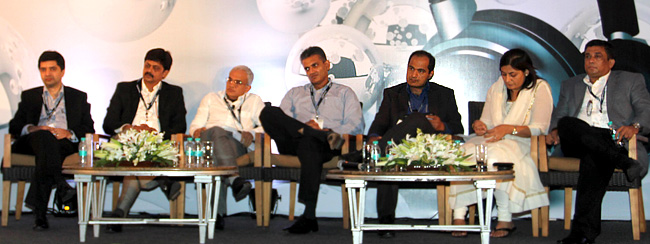
    So, does radio still need to be evangalised? Is radio still insignificant to for advertisers? The India Radio Forum (IRF) 2012 discussed these issues. According to Mr Harshad Jain, Business Head – Radio and Entertainment, HT Media: “From a client standpoint, radio is still an insignificant medium. It all boils down to value addition of the medium – how can radio, as a medium, ensure value addition to its advertisers? The entire orientation has to be more than just vanilla FTCs. Radio is still an under-penetrated medium and has still a long way to go.”


    Mr Joy Chakraborthy, CEO, TV Today Network (which includes Oye! FM) pointed out that the Indian radio industry needs to stand united, not only on issues related to government regulations, but also for business related issues. “There needs to be some amount of unity among the radio fraternity. For the industry to survive we must stand together, not just for regulatory issues but even for businesses. Today radio is the most underpriced medium and unity within the industry will help us drive our sales.”


    Ms Apurva Purohit. CEO, Radio City was of the view that radio is still at an infancy stage and like any other medium, it will also take some time to evolve. She was quick to point out that television took many years to be what it is today. “Today the ad pie of radio is 4 per cent, the geographical coverage of radio is merely 30 per cent but, with Phase III the geographical coverage will see tremendous increase. Every year the number of advertisers on radio has only been growing, what we need to do now is to encourage these advertisers to spend more on radio and reach out to newer advertisers.”


    Mr B Surender, Senior Vice President and National Sales Head, Red FM said: “In the last two years radio saw tremendous growth. With the launch of Phase III also expected soon, the future of radio is certainly bright. Even radio stations outside metros saw tremendous growth, innovations in smaller towns and cities were high and in the next two years radio’s advertising pie is expected to reach 6 to 7 per cent.”


    The client perspective:

    Few years ago, radio was seen as a supplementary medium for advertisers wherein they would spend only the left over media spends on radio. This is said to be changing, slowly and steadily as advertisers are beginning to take radio seriously. There has also been an increase in the number of on-ground activations which has more or less become complementary for radio stations as a value addition to their clients. However, digital media, which was at one point in time an even smaller medium than radio is today, said to have become an even larger and a more powerful medium than radio and a possible reason could be because Internet, unlike radio, is a highly measureable medium.


    Giving a critical view on radio as an effective local medium, Mr Vinay Bhatia, Customer Care Associate and Senior Vice President Marketing and Loyalty said that radio has a very low share of mind and share of value medium to advertisers today. Digital on the other hand, which started off from 2 per cent of advertising share has a much higher share of mind and share of value. “To maximize assets, radio has to deliver business. Radio needs to world closely with clients, it can also look at which area of a city or town works better for clients. It can also partner with retailers to play radio in stores while customers are shopping. Radio is a response medium, therefore it allows a lot of engagement and interaction with listeners. However, there needs to be more innovations for advertisers on radio because clients love innovation and as a result innovation will bring more money for the radio station.”


    Arpita Menon, Head-Media Planning & Buying, Star India Pvt Ltd
    Premjeet Sodhi, COO, Lintas Media Group
    Harshad Jain, Business Head- Radio & Entertainment, HT Media

    Mr Shubhranshu Singh, Marketing Director-India and South Asia, Visa explained: “As far as Visa is concerned, radio has delivered us handsome returns. Radio, I believe, is economical and one can expect higher returns, it is certainly a cost effective medium. However, radio must come to clients as an industry and not as one single radio channel – it should be bolder in its approach towards clients and thus stay on top of mind of clients.”


    Mr Kartik Sharma, Managing Partner, Maxus had a slightly different take on the medium. He was of the view that radio is the oldest form of social media platform, it allows great amount of interactivity and engagement with the listeners. “Radio is in the business of producing great contents and so are the brands, I believe that both radio and digital can depend on each other. Radio is in the business of providing great content, the power of radio is sound and creativity therefore the mindset to learn this medium is very different.”


    Ms Shubha George, COO, MEC noted that in order to maximize radio’s asset and gain share of market spends, it needs to market itself more. She stated that radio today is sold and not marketed, what it needs is more marketing. She also pointed out that the industry must find ways to monetize every single phone calls and SMSes it receives and market them extensively.


    The Indian radio industry still needs a lot of evangelizing or marketing of the medium. Radio needs more nurturing, it needs to probably find newer ways of achieving better ROIs and thus increase greater share of media spends. More innovations in radio will also bring in more money and help it stay on top of advertisers’ minds. Radio needs to partner their clients and find newer ways to generate better ROIs for their clients. Radio needs to vigorously market itself to the advertisers and explain the power of the medium so that it becomes a primary medium for marketers.


    Image: Clipart, Imaging: Rafiq


  • The Anchor: 6 reasons a listener can never fall out of love with radio

    By Ashit Kukian

    #1 Radio gives listeners different genres of music and a fresh playlist all through the day. And that is further packaged with warm and friendly RJs, topical banter, guest appearances and lots of surprise elements to keep listeners wowed every minute of every day.

    #2 Radio is credited with being the ‘Theatre of the Mind’ since it engages one’s imagination more actively than a visual medium does.

    #3 The level of engagement and interaction that Radio enjoys with its listeners is incomparable to any other medium.  From conversing with listeners on a daily basis, to celebrating their joyous occasions of life, Radio touches the lives of all its listeners.

    #4 Radio provides listeners with Infotainment – relevant and topical information presented in as entertaining a way as possible. Radio then serves as a mood-enhancer by catalyzing one’s mood and uplifting the spirit of the listener who tunes in.

    #5 Listeners can relate to the medium in a very personal and intimate way. It can be a loyal friend to some and a confidant to others. So much so that you’ll often find listeners confiding in RJs about their deepest fears and problems.

    #6 Being a local medium, Radio fits seamlessly into the fabric and framework of the city. It serves as a lens through which listeners can get a glimpse of the pulse of the city.


    Ashit Kukian is COO, Radio City 91.1 FM.

  • FDI’s 26% allowance: Are radio players happy?

    By Shubhangi Mehta


    The government has enhanced the foreign investment limit for FM radio to 26 percent from the earlier 20 percent.


    This change ensures conformity of the foreign investment limit with other similar activities in the Information and Broadcasting sector.


    Rana Barua

    Is the increase adequate or was there more that was expected?

    Mr Rana Barua, Chief Operating Officer at RED 93.5FM, put forth his views by stating,” it’s a positive sign for sure for the industry .

    Whether Red Fm is looking at upping the Astro stake, Mr Barua said, “We will try and look at that but this will all depend on internal decisions hence there is not much to be said on this as of now”.


    “It is a welcome change but we will be able to gauge its real value closer to the bidding date of phase3 when migration policy is clear.  While radio in india is possibly one of the highest CAGR media in the world, the global economic situation needs to be accounted for in order to ascertain foreign investment’ interest,” said Mr Vineet Singh Hukmani, MD, Radio One.


    Apurva Purohit


    On this Ms Apurva Purohit, CEO, Radio City 91.1 FM said,”The increase in FDI in Radio sector from 20 to 26 percent is not really going to make any dramatic impact on the industry. It is too less and even now not on par with other media like TV or DTH.”


    Prashant Panday


    Mr Prashant Panday,CEO,Radio

    Mirchi, remarked, “A higher FDI limit will help FIIs to trade more in radio stocks that are listed. Till now, the limit was 20 percent and when FIIs approached that number, they had to take special permission from RBI to buy more. Now that limit has been raised to 26 percent and that will help increase volumes on listed radio stocks.”


    Will this encourage more foreign players to invest in the market?

    On this Mr Panday said,” Whether it will have any impact on strategic investments from foreign companies in India or not remains to be seen. On the one hand, the radio sector in India offers tremendous growth opportunities. But on the other hand, the sector’s profitability has been in question for much of the last five years. Even going forward, if bidding in Phase-3 becomes unreasonable, profitability could be in serious jeopardy. Further, foreign ncompanies are themselves operating under uncertain conditions in their own markets. Whether they will be willing to invest in India at this point in time remains to be seen.Also, given the condition of the money markets in India right now, it is unlikely that fund raising will be very easy. Given all of this, I think FDI investments into the radio sector in India will be limited.


    Mr Barua on the same said,” I’m still not sure if the rise will encourage new players to enter the market. The rise is there but when it comes to analysing it, I have always encouraged a higher percentage. In my opinion this rise is not high enough and leaves us with a doubt if it will actually egg on more foreign players”.