Tag: Radio

  • Case Study: Honda Brio: Love Ka Connection

    By A Correspondent


    Campaign: Honda Brio: Love Ka Connection


    Aim and Objectives:

    The core objective of the communication was divided into two levels. The first one was to inspire more and more people to test drive Honda Brio and feel the experience of being loved back and, second, that the dealers of Honda feel excited about the whole campaign and are inspired to sell more.


    The Background:

    According to Honda Brio’s current brand positioning – there’s no happier feeling than being loved back and that’s what you get every time you drive Honda Brio. It always goes the extra mile every time to make sure the love story never ends.” Keeping this promise and idea intact, BIG FM came up with the concept to give an experience of loving and getting love back.


    Timelines:

    The campaign was spread across 30 cities and executed within 21 days, Touch basing more than 40 dealer outlets. Apart from the 23 92.7 BIG stations, the activity was also done on 7 non-BIG FM stations which was co-ordinated by BIG FM.


    How the strategy was implemented:

    The core idea was to promote the voice of Honda Brio where consumers test drive Honda Brio. RJ called up the customers who have taken a test drive and asked them to share their experience. The customer who shared the best experience was called on a show every Friday to co-host a show with the RJ. Also every weekend, RJs went to Honda Showrooms and promote the activity at the dealers shop through games and music.


    In addition to the Voice of Honda Contest, Dealer Delight was also taken into consideration as one of the main objective was to uplift dealers moral as well as making them feel good by sending them to the corresponding radio station and meet the RJ and thus get an opportunity go come on – air.


    The activity was executed in four phases with each one having its own level of communication. In the first phase, a 7 day on-air promotion was done with the help of On Air Promos and RJs informing listeners about the activity and the dealer. In the second and thirds phase the activity went on-ground at dealers shops where games were played for the contest ” Voice of Honda Brio.” In the last phase, the dealers were called to the radio station and did a one to one interaction with RJs on-air.


    Expectations v/s Outcome:

    Honda had two core expectations from the campaign- one, delighting the dealers about the campaign and the other, to increase the test drives of Honda Brio. 92.7 BIG FM met the expectations by delivering more than what was expected from the campaign which resulted in 24 per cent increase in footfalls at the dealer shop and an astounding 34 per cent increase in test drives. The Honda dealers were highly satisfied with the activity and were kicked out about the brand.


    Constraints and challenges in implementation:

    The biggest challenge of the activity was co-ordinating 30 stations and communicating the same thought in 9 different languages. Also that the whole activity was in 23 BIG FM stations and 7 non-BIG FM stations required a smooth running of the activity at Honda dealerships and engaging both consumers and dealers.


    Since the activity was planned for a time span of 21 days in 30 cities, the execution needed to be perfect in every way possible. Regional language creative needed to be updated frequently as per dealers requirement as well as taste.


    Challenges/Difficulties in Execution:

    As the creative were in 9 different languages, the same communication was scripted in different languages. With addition of dealer’s feedback, each creative was given a regional flavour, keeping in line the communication. RJs doing the activation at the dealers store were also aligned to the campaign and the core thought across 30 cities. Also daily consumer bytes from the activity were aired on a day to day basis.


    Take-homes:

    • Radio can be effectively used to support on-ground activation
    • Non-Metros have a higher inclination towards Radio


    Credits, Strategy & Execution:

    The Team: Praveen Pahuja, Neha Goel, Kinney Mishra (National and Local Programming team)

     

  • India@Cannes: Shortlists announced today: 2 in Radio, 8 in Design & 0 in Cyber


    By A Correspondent


    India drew a blank in the digital domain yet again with zero entries shortlisted. However, in the other shortlists announced today, there was reason for cheer. Two Indian entries were shortlisted in Radio Lions and Eight in Design Lions.


    In Radio, McCann (for Lasky Herbal) and Leo Burnett for Strand Book Stall were shortlisted.


    In Design, the following entrants were shortlisted:


    BBH India for Movies Now

    DDB Mudra for Volkswagen Beetle

    TBWA Gurgaon for MKV Household Products (Elephant Combs)

    DDB Mudra for Geebes Beverage (Coffee Gold)

    DDB Mudra for Volkswagen (Attention Assist System-Moustache)

    DDB Mudra for Volkswagen (Attention Assist System-Jingle)

    DDB Mudra for Ministry of Tourism (Incredible India)

    DDB Mudra for Ministry of Tourism (Incredible India-Hinglish)

    [please await detailed reports]


  • The Anchor: 5 ways to keep audiences coming back to your channel

    By Amogh Dusad


    Extensive variety in offerings

    India remains largely a single TV market. Therefore, a channel should offer an array of genres and appeal to all members of the family. Variety also ensures that viewers find the channel fresh and vibrant.


    Extending beyond the TV screen

    Gone are the days when television channels just aired promos and expected to keep viewers glued. The need of the hour is to create brand extension programs. It is also important to be a part of local festivals and important historic days which make the viewers feel closer to the channel – for example Christmas or Independence Day


    Exclusive content – premieres

    In the age of hyper-competition, it is important to be the first and the only one to offer great content /movies. Television premieres make the viewers look forward to channel announcements and promotions along with making the channel an exciting destination.


    Enjoyable viewing experience

    Watching a channel must be enjoyable for it viewers, otherwise they will simply move onto another channel. Therefore, it is essential that the content is showcased in a viewer friendly style to enhance viewing experience.


    Engaging the viewer – starting conversations

    A channel has to interact with its viewers to keep them glued to the channel. A consumer today is constantly bombarded with one-way conversations through print, outdoor, radio, and television but how much of it really resonates in their mind! One must engage with the viewers and remain in constant dialogue with them. Digital is great medium to create conversations.


    Amogh Dusad is Programming Head, PIX


  • The Anchor: Ruby Bana on 6 reasons FMCGs need to look beyond TV

    By Ruby Bana


    For years I hear again and again from FMCG clients that 90 per cent of our budget goes into TV first, we need to handle that well. Sure we DO! TVCs are what helps us stay in place (unless a brand is a new entrant). TVCs help us maintain SOV, and hence market share by helping remind consumers close to purchase that we are still there. But TV is such a passive medium and consumers are becoming active. They are educated, demanding and skeptical…. So to complete our communication we need to look beyond TVCs


    1. Tell the whole story: Nothing does it better than magazines.


    2. Immerse the consumers in the brand experience: Nothing does that better than the events.


    3. Interact and engage them: Nothing does that better than online website or social networking and consumer forums.


    4. Win credibility: Nothing does that better than Socially Responsible Marketing.


    5. Become local: Nothing does it better than newspaper or radio.


    6. Become part of lifestyle: Nothing does it better than ambient media.


    All of these add competitive advantage to our brands and help us get noticed, remembered and enrich our interaction with our consumers. The older and better established a FMCG brand becomes, the lesser and lesser must it rely on TV. It’s a fundamental truth… the strategies/tactics that get us to the top are not necessarily those that keep us there OR help us evolve to the next level.


    Ruby Bana is Chief Strategy Officer, Madison


  • Ormax launches brand track tool for TV & radio

    By A Correspondent


    The India n television and radio industries now have their own brand health & equity tool, called Ormax Brand Matrix (OBM).


    Launched by Ormax Media, OBM is the first brand-tracking tool customized to address the needs of broadcasters (both television and radio) in India. The product design is based on a mix of qualitative and quantitative consumer research.


    Speaking about OBM, Shailesh Kapoor, CEO, Ormax Media said: “There are various conventional models for brand health and equity measurement available in the research industry. However, none of these catered well to broadcaster requirements. Unlike FMCGs, television and radio consumption is very different. There is no monetary consideration, but there is time cost instead. Also, the viewer or listener consumes multiple brands everyday. The broadcasting industry deserves its own brand-tracking model. We are finally ready with OBM, after extensive research and testing over the last two years.” OBM is not only customized to television and radio, it also has custom-made variants for various television genres, such as GECs, movie channels, youth channels, kids, niche channels, and others.


    Mr Kapoor added: “More than a research product, we have conceptualized OBM as a strategic framework. If used well, it can enable brands to take sound business decisions based on statistically robust and qualitatively layered consumer evidence.”


  • Takeaways from IRF 2012 (+Vdo)

    By A Correspondent


    The seventh edition of Indian Radio Forum (IRF) discussed quite a lot of issues on the strength and opportunities of radio, the road ahead for the medium, especially with FM Phase III expansion, how to maximize radio’s assets and how to gain share of market spend; the use of social media and monetizing it and much more. MxMIndia spoke to couple of industry veterans on their takeaways from the IRF 2012.


    Mr Premjeet Sodhi, COO, Lintas Media Group:

    One major takeaway with which I am going back is that while there are issues on how radio is performing commercially, there are certainly people who are passionate about the medium, and therefore, there are a lot of possibilities on how to do well on radio.


    The second major takeaway is the use of social media and radio, we had never thought of a subject as such. Radio has a lot of potential to work along with social media and be commercially successful as well.


    Third, I don’t think we are doing enough for radio, overall as an industry. There is, however, a lot of scope for improvement in this area.


    Mr B Surender, Senior Vice President, and National Sales Head, Red FM:

    I think the RAB (Radio Advertising Bureau) style of evangalising the medium is needed because UK’s RAB is so active in not only the developed markets like the UK, but it is also quite active in developing markets like South Africa.


    InIndia, probably, this kind of promotional activity is required for radio as a medium, because in India FM radio started very late and it did not get enough time before social media and the online or digital media arrived. Therefore, I believe there is a different need for a RAB kind of body which promotes radio.


    Mr Vinay Bhatia, Customer Care Associate and Senior Vice President – Marketing, Shoppers Stop:

    I think each industry within radio should develop its own tools, and this is really important in judging the input-output in efficacy because I am not chasing radio just for reach, OTS or number of impressions. Radio, as a channel, is a response medium and so it must deliver much beyond intermediary variables, it must deliver final business variables and I think radio can do that. However, it depends on how well a radio channel partners with a client, wherein the client is also willing to share some amount of data and information and a radio channel is also willing to partner it and jointly experimenting which works for all of us.


  • Ten years on, is radio still an insignificant medium for advertisers? (Text & Video)


    By Robin Thomas (Videos by Insiyah Rangwala)


    Radio is said to be a medium that has been re-born. With the FM Phase III rollout anticipated this year, radio is expected to penetrate further into the country, as a result not only will there be an increase in revenues but, also the fact that newer revenue streams will open up. Multiple frequencies, allowing news and current affairs, sports broadcasting will also bring more innovations in radio, new genre radio stations and great amount of differentiation in content.
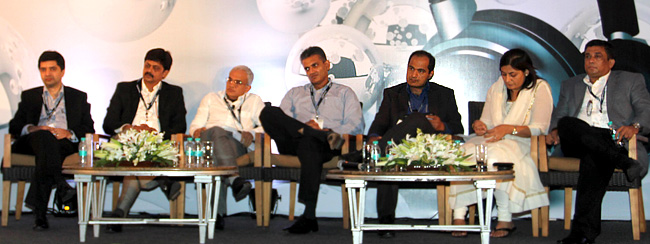


     

    Radio’s share of media spends, according to industry estimates, is expected to rise from 4 per cent to 5 per cent in two years. Among categories that advertise on Radio, Real Estate, Telecom, Retail, Education and TV channels are the ones advertise the most.


    What radio players say?

    Harshad Jain
    Joy Chakraborthy
    Joy Chakraborthy
    Apurva Purohit
    B Surender

    So, does radio still need to be evangalised? Is radio still insignificant to for advertisers? The India Radio Forum (IRF) 2012 discussed these issues. According to Mr Harshad Jain, Business Head – Radio and Entertainment, HT Media: “From a client standpoint, radio is still an insignificant medium. It all boils down to value addition of the medium – how can radio, as a medium, ensure value addition to its advertisers? The entire orientation has to be more than just vanilla FTCs. Radio is still an under-penetrated medium and has still a long way to go.”


    Mr Joy Chakraborthy, CEO, TV Today Network (which includes Oye! FM) pointed out that the Indian radio industry needs to stand united, not only on issues related to government regulations, but also for business related issues. “There needs to be some amount of unity among the radio fraternity. For the industry to survive we must stand together, not just for regulatory issues but even for businesses. Today radio is the most underpriced medium and unity within the industry will help us drive our sales.”


    Ms Apurva Purohit. CEO, Radio City was of the view that radio is still at an infancy stage and like any other medium, it will also take some time to evolve. She was quick to point out that television took many years to be what it is today. “Today the ad pie of radio is 4 per cent, the geographical coverage of radio is merely 30 per cent but, with Phase III the geographical coverage will see tremendous increase. Every year the number of advertisers on radio has only been growing, what we need to do now is to encourage these advertisers to spend more on radio and reach out to newer advertisers.”


    Mr B Surender, Senior Vice President and National Sales Head, Red FM said: “In the last two years radio saw tremendous growth. With the launch of Phase III also expected soon, the future of radio is certainly bright. Even radio stations outside metros saw tremendous growth, innovations in smaller towns and cities were high and in the next two years radio’s advertising pie is expected to reach 6 to 7 per cent.”


    The client perspective:

    Few years ago, radio was seen as a supplementary medium for advertisers wherein they would spend only the left over media spends on radio. This is said to be changing, slowly and steadily as advertisers are beginning to take radio seriously. There has also been an increase in the number of on-ground activations which has more or less become complementary for radio stations as a value addition to their clients. However, digital media, which was at one point in time an even smaller medium than radio is today, said to have become an even larger and a more powerful medium than radio and a possible reason could be because Internet, unlike radio, is a highly measureable medium.


    Giving a critical view on radio as an effective local medium, Mr Vinay Bhatia, Customer Care Associate and Senior Vice President Marketing and Loyalty said that radio has a very low share of mind and share of value medium to advertisers today. Digital on the other hand, which started off from 2 per cent of advertising share has a much higher share of mind and share of value. “To maximize assets, radio has to deliver business. Radio needs to world closely with clients, it can also look at which area of a city or town works better for clients. It can also partner with retailers to play radio in stores while customers are shopping. Radio is a response medium, therefore it allows a lot of engagement and interaction with listeners. However, there needs to be more innovations for advertisers on radio because clients love innovation and as a result innovation will bring more money for the radio station.”


    Arpita Menon, Head-Media Planning & Buying, Star India Pvt Ltd
    Premjeet Sodhi, COO, Lintas Media Group
    Harshad Jain, Business Head- Radio & Entertainment, HT Media

    Mr Shubhranshu Singh, Marketing Director-India and South Asia, Visa explained: “As far as Visa is concerned, radio has delivered us handsome returns. Radio, I believe, is economical and one can expect higher returns, it is certainly a cost effective medium. However, radio must come to clients as an industry and not as one single radio channel – it should be bolder in its approach towards clients and thus stay on top of mind of clients.”


    Mr Kartik Sharma, Managing Partner, Maxus had a slightly different take on the medium. He was of the view that radio is the oldest form of social media platform, it allows great amount of interactivity and engagement with the listeners. “Radio is in the business of producing great contents and so are the brands, I believe that both radio and digital can depend on each other. Radio is in the business of providing great content, the power of radio is sound and creativity therefore the mindset to learn this medium is very different.”


    Ms Shubha George, COO, MEC noted that in order to maximize radio’s asset and gain share of market spends, it needs to market itself more. She stated that radio today is sold and not marketed, what it needs is more marketing. She also pointed out that the industry must find ways to monetize every single phone calls and SMSes it receives and market them extensively.


    The Indian radio industry still needs a lot of evangelizing or marketing of the medium. Radio needs more nurturing, it needs to probably find newer ways of achieving better ROIs and thus increase greater share of media spends. More innovations in radio will also bring in more money and help it stay on top of advertisers’ minds. Radio needs to partner their clients and find newer ways to generate better ROIs for their clients. Radio needs to vigorously market itself to the advertisers and explain the power of the medium so that it becomes a primary medium for marketers.


    Image: Clipart, Imaging: Rafiq


  • Industry gears up for India Radio Forum 2012

    By A Correspondent


    It is that time of the year, when radio players across the country meet to discuss issues pertaining to the industry, listen to ideas from advertisers and agencies, celebrate creativity in radio advertising and commemorate the medium itself. The seventh edition of India Radio Forum (IRF), organized by Partners in Media Asia (PIM), will be held on May 22 at JW Marriot Hotel in Mumbai.


    Amitabh Srivastava, Country Manager – South Asia, Radio Netherlands Worldwide who has been attending the IRF since the last four years and plans to do so this year, explained that radio is still at a nascent stage, thus such forums on radio are good for the industry as it discusses critical issues, it provides a good platform for all stakeholders, and in the long run, such forum on radio will benefit the industry. He further said that in the last four years that he has attended the annual event, he observed that IRF has ensured that every stakeholder participates in the event. He also said that smaller stations have been given their due weightage and their issues have also been discussed at various events.


    George Sebastian, COO, Club FM and GM Marketing, Mathrubhumi and Ravindran Nair, Director Programmes, Radio Mango would also be among the attendees at IRF 2012. When asked whether smaller stations have been isolated at the IRF this year, Mr Sebastian said that he has been attending the IRF since its inception and found that even the issues of smaller stations are addressed at the IRF. “IRF used to be a full day event, now it has been reduced to a little more than a half day. This is the only regret I have towards IRF. Such events most certainly benefit the industry, particularly the awards which recognizes good talents.”


    Mr Nair of Radio Mango said: “IRF helps maintain the vitality of radio stations, it gives one insights into how radio has developed in other parts of the world; it also provides ideas and new ways to monitise contents as well as gives us the client perspective about the medium. The only irony, however, is that the IRF has been reduced from a two day event to merely one day.”


    Unlike previous years, Mr Naval Toshniwal, CEO Tomato FM and Vice President, Pudhari Publications will not be attending the IRF this year. Ms Monica Nayyar Patnaik, Joint Managing Director at Eastern Media Ltd is also among the few industry veterans who would not be attending the IRF this year for personal reasons.


    Speaking to MxMIndia, Ms Patnaik was of the view that such forums do benefit the industry as it helps one learn from each other, helps find solutions to overcome issues and challenges, provides creative ideas and that awards also contribute in a bigger way in recognizing ones creative talents.


    Another industry player who did not wish to be mentioned was of the view that such events do help the industry positively, however, it all depends on implementing the lessons learnt from the various presentations made and panel discussions. “IRF is a good forum, but the industry must learn to implement what is discussed at such events, which has not happened so far. There has to be an action plan to implement all that is discussed at such events, only then will we see the industry grow even further.”


    Anurradha Prasad, President of Association of Radio Operators for India (AROI) and Chairperson cum Managing Director, B.A.G Network will also not be able to attend the IRF this year due to prior commitments. She, however, added that right now everything boils down to the passage of the Copyright Bill in the Lok Sabha. It has already been passed in the Upper House (Rajya Sabha), and once it is passed in the Lower House (Lok Sabha) too, and becomes law, it will significantly improve the growth of the Indian radio industry.


    The speakers list at IRF 2012 comprises of industry veterans not only from the radio industry, but also advertisers, and veterans from the creative and media agencies. IRF 2012 will kick-start with the CEO Roundtable, wherein industry biggies will discuss the current strength and weaknesses of the radio industry, and strategic options to improve the business and their vision for the industry in the coming three years. The panelists will include Apurva Purohit, CEO, Radio City; B Surendar, Sr. VP & National Sales Head, Red FM; Harrish Bhatia, CEO, My FM; Harshad Jain, Business Head, Fever FM; Joy Chakraborthy, CEO, Oye FM; Prashant Panday, CEO, Radio Mirchi and Rabe Iyer, Business Head, Big FM. This session will be moderated by Atul Phadnis, CEO, What’s-On-India.


    The second session at the forum – ‘It’s the Message, not the Medium: Growing your Advertising Revenues,’ will delve on important creative attributes that make radio commercials more effective and the unique qualities of radio as an advertising medium. Jason Brownlee, Founder, Dollywagon Media Sciences will be the speaker of this session.


    Another interesting session at this year’s IRF is ‘Radio and Social Media’, a panel discussion on the effect of social media on the listeners and the radio industry. This session will be moderated by Suman Srivastava, Founder & Innovation Artist, Marketing Unplugged. The panelists of this session include Premjeet Sodhi, COO, Lintas Media Group; Raj Nayak, CEO, Colors – Viacom18; Satbir Singh, Managing Partner and Chief Creative Officer, Euro RSCG; and Tushar Vyas, Managing Partner, GroupM South Asia.


    There will also be a session on ‘Maximising Radio’s Asset: How to Gain Share of Market Spend’. This session will be moderated by Apurva Purohit, CEO,RadioCity. The panel members are Ajit Varghese, Managing Director – South Asia, Maxus and Motivator; Arpita Menon, Head – Media Planning & Buying, STAR TV; and Shubha George, COO, MEC. This session aims to provide the client point of view and that of media planners and buyers on radio’s critical role in meeting market challenges and opportunity it presents in achieving a better ROI and sales goals.


    ‘The Radio Pitch Challenge’, the last session just before the 2012 ‘Excellence in Radio Awards’, will see planning teams from media agencies invited to pitch a compelling and effective presentation to the judges. Each team will talk about a product or service in five minutes or less. They will present 16 slides with only 15 seconds per slide, ending with a radio promo not more than a minute long. The winning team will be awarded two tickets worth over Rs1,00,000 to the 2012 Singapore Formula1 Grand Prix.

  • The Anchor: Tarun Goyal on 4 things that should change in the radio industry today

    By Tarun Goyal


    1. Radio must have full-fledged news:

    Radio should be allowed to air news freely. By allowing the private radio stations to air news limited to only AIR is not sufficient, radio is a local medium, it must be given a free hand to broadcast news.


    2. Copyright issue must be resolved:

    The Government of India must make the copyright policy clear. The government should come out with a formula on revenue share basis as this will change the way the dynamics of the industry. We are sharing 4 per cent of the revenue with the government ofIndia, so why can’t we share the revenues with the music companies? I believe this model can solve most problems facing the radio industry today especially in programming.


    3. Government must be more supportive:

    The government should be more supportive in formatting their policies for radio because the government spending on radio is not sufficient enough for the growth of the industry.


    4. AROI should be more assertive

    Although the AROI is functioning well, the change I would like to see is that AROI should pursue be more assertive in meeting the needs of the radio industry. The AROI must function more aggressively and the government should also take the body seriously as AROI is a body which was formed by the radio broadcasters.


    Mr Tarun Goyal is the Founder, Director of Radio Chaska


  • The Anchor: 4 reasons why radio needs content innovation

    By Amitabh Srivastava


    #1 Emerging Technologies:

    Keeping in view the emerging technologies, it is very important that everything is taken into consideration; for instance social media can be of great help in terms of getting more interactive with listeners.


    #2 To Engage Listeners:

    These days the maximum listenership is through moving vehicles, so if there is some innovation catering to those audiences, then it would be a very good option.


    #3 Rise of Internet Radio:

    Internet radio is fast growing all over the world, and India is no exception. Internet radio will be emerging as the big thing very shortly.


    #4 Two-Way Communication:

    This is most important because the moment you get interactive there will be an increase in participation from the listeners also.


    Amitabh Srivastava is the Country Manager – South Asia, Radio Netherlands Worldwide.


  • Budget shows the finger to digitization


    By A Correspondent


    In the end, one hopes that the angel is in the details. On Day 3 of the annual Frames jamboree put up by industry body FICCI, one hoped that Finance Minister Pranab Mukherjee will announce sops for digitization. The broad proposals didn’t. And for once, one hopes that rather than find the devil, there’s an angel hidden out there.


    Okay, there are some nice things in there. Like sops early stage funding from Venture Capital companies to media companies. But the IBF director-finance Naresh Chahal’s outrage was understandable. The government – and infobroad secretary Uday Varma re-iterated it – is firm on the June 30 deadline for the four metros. “If India has to grow, digitization will be a vital ingredient for its growth and thus it is important that we be technologically updated. Digitization is here to stay and we need to embrace this change.” While set-top boxes may not have found favour, LED and LCD television panels and parts of mobile phone memory cards have been looked at favourably by Mr Mukherjee.


    So while the FM hasn’t made life tough by adding taxes, the fact that he didn’t cut or even totally drop duties on set-top boxes was a huge dampner. Doubtless, the economically weaker sections in the four metros of Kolkata, Chennai, Mumbai and New Delhi will be forced to cough up monies if they want to catch non-terrestrial entertainment.


    Meanwhile, Mr Rakesh Jariwala, Partner & Tax Expert, Media and Entertainment at leading consulting firm Ernst & Young said:  “The key takeaway from the Union Budget 2012 for the Media and Entertainment Sector (‘M&E’) is the exemption to be provided from service tax on Copyrights in Cinematographic films with the introduction of the negative list concept under the service tax legislation.”


    The non-inclusion of advertising in television and print in the negative list for service tax is also a dampner given that the levy has been increase from 10 to 12 per cent. This means that there will be a tighter squeeze on adspend budgets. While advertising on big ticket shows will not suffer, the small monies spent on digital, outdoor, radio and other experimental/BTL activities may take a hit given the 2 per cent additional squeeze.


    And then there’s an increase in excise duty too which will increase the burden on M&E professionals and corporates and with the easing of Income Tax slabs not quite balancing the increase in expenses elsewhere.


    However, the film industry and entertainment event organisers may find some benefit with the recommendations.”The proposed negative list legislation seeks to specifically exclude admission to entertainment events and access to amusement facilities, thereby granting a much needed relief to the entertainment industry,” Mr Jariwalla added. “For film industry, it is proposed that service tax will not apply on transactions between producer to distributor, distributor to exhibitor (by exempting copyrights in cinematographic films) and between exhibitor to cinema goer (by including admission to entertainment events in negative list),” he said.


    For entrepreneurs just getting into media and entertainment who were cold-shouldered by venture cap companies given the restrictions, the easing up of restrictions on funding should be a welcome move.


    Please refer to Microsite on Budget 2012 for the following stories which were uploaded on Saturday, March 17:

    Budget 2012: Ernst & Young Analysis of Direct & Indirect Tax proposals in M&E

    Budget 2012: What it means for India Inc

    Budget 2012: Reactions from Stakeholders

    Budget 2012: Video reactions from trade

    Budget 2012: Entrepreneurs may find fund-raising easy with removal of restrictions for VCs

    Budget 2012: Ranjona Banerji on how TV Channels fared with their Budget specials

    Budget 2012 Anchor: 5 M&E ways in which the govt can make monies on the Budget


  • 5 reasons why March is an unforgettable month

    By A N Chorrea


    It’s March 1. In the good old days on Radio Ceylon or Sri Lanka Broadcasting Corporation, we would hear the song ‘Din Hai Suhana Aaj Pehli Tareekh Hai’. I am not much of a radio person now (especially after Radio One turned Hindi and knocked out all its star RJs), but I think I do see an ad with that playing somewhere.


    So here are my five reasons why March is an unforgettable month.


    1. It’s 30 days and some hours for the year-end. Targets aren’t complete this year. The newspapers say the market’s looking up. But where the sugar are the monies?

    2. It’s the month, when the appraisal process starts in most organisations… chances are it’s already done in the boss’s mind

    3. It’s the month where one needs to make all the tax-saving investments… but where’s the money in the bank?

    4. It’s the month where the kids have their exams. And even if your kids are too small or big or you have none, there are several all around.

    5. It’s the month this year where the Union Budget is going to be announced which is a huge distraction for many big spenders… there are just 31 days in the month and we are losing a few thanks to the holidays (and, yes, Holi too!) and now the Budget too.


    Here’s wishing you a happy March. Enjoy