Tag: Radio

  • The Anchor: 5 reasons radio will flourish, forever

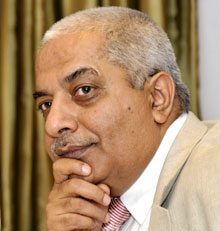
    By Sunil Kumar


    #1 It is Local:

    People are more curious about or interested in the happenings in their city or town. Interest in local culture is developing and radio caters to that local culture which other media just cannot. Radio is absolutely local.


    #2 It is Participative and Interactive:

    Radio is the only medium where people can air their voice… leave a request… and it provides numerous other ways for active listener participation. Increased density of mobile phones is encouraging this interactivity further. Even social media has its own set of limitations…


    #3 It has an Abundance of Content:

    Today different kind of music is played on radio. It is not limited to Bollywood. Since it is a local medium, the music played too is in local language and in accordance to local taste. Today large number of music is produced in India, especially local music. ‘Kolaveri Di’ is one example. Bhajans, Sufi music, or hymns are some other music one can hear in different parts of the Country. In addition to these, the availability of sports commentary and multiple frequencies will offer listeners with more even more differentiation of content.


    #4 Car Listenership is Rising:

    Nearly all cars today have FM stereo attached, and as the number of cars continues to increase, it will further increase car listenership. More cars on the road also means frequent traffic jams. There are also those who travel long distances, and as a result time spent in listening to radio is also likely to increase.


    #5 It’s Free:

    Unlike any other, radio happens to be the only medium which is actually free.


    Sunil Kumar is MD, Big River Radio and a veteran mediaperson

  • The Anchor: 8 key aspects of Phase III that radio companies need to address

    By Ashish Pherwani


    #1 Which licenses to bid for:

    The answer is quite complex, as it needs to consider the ability to sell the new stations both singly and as a bouquet, how well the new stations complement the existing bouquet of stations in terms of tactical sales, the future revenue potential from these stations both from the point of view of generating local revenues and adding on to the revenue generating ability of other stations, etc.


    #2 Bid values: 

    The bid value should logically be based on the revenue generating ability of the station over its license period, and expected costs.  But when you factor in that the revenue generating ability depends on the listenership position the station achieves, the rest of radio company’s station network, the efficiency of the sales team, expected competition in the market, etc, and the cost depends on variables like the license period (10 or 15 years), the rate of music royalties, the ability to share infrastructure and content, etc, it’s a complex decision to make!


    #3 Alliances:

    Some radio companies need to consider which stations to bid for on the assumption that they will form alliances with other networks that together will provide advertisers with national, regional or state-wide reach.  In addition, radio companies with existing ad sales alliances may need to reconsider these in the light of the licenses they propose to bid for.


    #4 Trade licenses that add value to other networks:  

    Radio networks are entering the phase where they will be able to begin trading their licenses.  Some radio companies may want to exit, and valuations aside, may find buyers in those wishing to enter the segment, as well as those which need to increase their presence through a more assured mechanism.  Particularly if multiple frequencies are permitted.


    #5 Using FDI effectively:

    Given the increase in foreign investment that is expected to be permitted, radio companies are already looking to identify partners / investors.  The long term strategic fit and the degree of control that is required to be diluted are key areas that need to be considered.  Particularly since there will also be a Phase 4 one day.


    #6 Go for multiple frequencies:

    If they do come into being, the key questions will pertain to the programming mix – what genre should the new station be? – and ad sales – how not to discount the existing station’s rates when selling space to advertisers.


    #7 Build better MIS and control mechanisms to prevent operational chaos:

    Given the growth in the number of stations, the need to refine processes, automate, and ensure an adequate level of controls in the new, and existing, stations, will be key.  As the span of controls increases, controls always get less effective.  Processes which were performed manually across 20 or 30 stations won’t continue to operate across a 100 stations.  Key persons from existing stations will be used across new station launches, and that could cause the controls environment in existing stations to get lax.  Integrating station infrastructure and content, centralising capex and support function, implementing standard operating procedures and accounting checklists could benefit radio companies.


    #8 Focus on people:

    When 300 stations become 900, the number of people is expected to grow by 175 percent as well.  Recruitment, training, and then monitoring the new set of radio operations will be a challenge by itself.  Not to mention managing the inevitable poaching!


    Ashish Pherwani is Associate Director, Advisory Services, Ernst & Young Private Limited.

  • The lesson so far for FM players

    By Robin Thomas


    FM Phase-I Policy was approved by the Government in July, 1999. Under Phase I policy, a total number of 21 FM radio channels are operational in 12 cities. FM Phase II on the other hand has a total of 336 channels in 90 cities across the Country whereas the much awaited FM Phase-III policy seeks to extend FM radio services to about 227 new cities. Phase-III will cover all cities with a population of one lakh and above, simultaneously, there will be a total of 839 new FM radio channels in 294 cities. In addition to this Foreign Direct Investment (FDI) in radio has been raised from 20 per cent to 26 per cent, if allowed, multiple frequencies will bring new genres in radio leading to content innovations, and the overall advertising pie is also expected to rise from the estimated 5 per cent.


    While the FM phase II may have been well received by the industry, all FM stations have reported break-even. Smaller FM stations are more likely to face huge challenges ahead especially since the music royalty issue is yet to be resolved. Overbidding in phase I and II could be just one of the issues, MxMIndia asks some of the industry players what lessons the FM radio industry can learn in Phase III from the earlier Phase I and II.

     

    Mr Prashant Panday
    Mr Rana Barua
    Mr Harrish M. Bhatia
    Mr. Harshad Jain
    Mr. Ashish Pherwani

    Mr Prashant Panday, CEO, Radio Mirchi observed, “One main lesson from Phase I and II – Do not bid so aggressively that you can never recover your investments. Those who bid sensibly in Phase-II (very few) are making PAT profits this year. Those who did not are at best making EBITDA break-even. Some are still making EBITDA losses. These people sometimes feel overjoyed that they have turned EBITDA positive; but fail to realise that the returns on investments only start after you turn PAT positive. There are barely 4-5 years left for the licenses to get over. If a company is not PAT positive yet, it has no hopes of generating any decent ROI. This is the main learning from the first two phases.”


    “The 2nd learning is about being able to bring brands. But to build brands, companies need profits. So again, if you have bid wrongly, you don’t have enough resources to build brands. That’s what our research shows every quarter. That except for Mirchi and maybe one-two other brands in some specific cities, no other radio station has been able to build a brand. They may have listenership, but they still don’t have a brand. There are no attributes that people assign to these brands. No values that the brands stand for. Without a solid brand, listenership suffers. Pricing suffers. And long term profitability suffers” he added.


    In an earlier interaction with MxMIndia, Mr Rana Barua, COO Red FM said, “One of the critical learning that a lot of us had in phase I and II is not to overestimate the potential of the market. The biggest challenge that lies for all of us is knowing that uncertainty has become such a huge thing today, therefore I think a cautious approach is going to be extremely critical.”


    According to Mr Harrish M. Bhatia, CEO, MY FM, “What was witnessed in Phase 1 and Phase 2 is totally different than Phase III. The Phase-3 rollout will increase radio penetration, making it a pan-India medium, reaching tier II & III towns. The most important thing that the radio players need to keep in mind is to bid realistically.”


    Mr. Harshad Jain, Business Head, Fever FM had a different viewpoint, he said, “The regulatory amendments in phase III are ultimately expected to facilitate industry growth.  FDI has been increased and might drive some additional investment in the industry. I do believe that FDI should have been raised further to actually fuel growth and overall industry development. Another key change is to allow multiple frequencies in the same city but we will have to wait and watch how this rolls out in practice. Another key shift in policy is the e-auctioning route as this will take the license fee to new highs, especially for frequencies in metros like Delhi and Mumbai.”


    Mr. Ashish Pherwani, Associate Director, Advisory Services, Ernst & Young, has seven point suggestions to the FM players, some of them are  the key aspects that all radio companies need to address vis a vis phase III are: –


    1. “Which licenses to bid for-  How well the new stations complement the existing bouquet of stations in terms of tactical sales, the future revenue potential from these stations both from the point of view of generating local revenues and adding on to the revenue generating ability of other stations, etc.”

    2. “Bid values- The bid value should logically be based on the revenue generating ability of the station over its license period, and expected costs.

    3. “Alliances.  Some radio companies need to consider which stations to bid for on the assumption that they will form alliances with other networks that together will provide advertisers with national, regional or state-wide reach.  In addition, radio companies with existing ad sales.” In addition to these, “Trade licenses that add value to other networks, Using FDI effectively, Build better MIS and control mechanisms to prevent operational chaos and Focus on People” are some of his suggestions to the FM players.


    As one of the industry player said FM Phase-III is not the same as Phase I and II, true, but it is bound to have challenges of its own perhaps even more bigger and tougher. MxMIndia will focus next on the challenges for FM radio in Phase-III.
  • FM stations go for out-of-the-box content

    By Robin Thomas


    Often criticized for airing uniform content across channels, FM radio stations have already begun exploring content that goes beyond just regular Bollywood music. Unlike print, television or the internet, radio in India continues to be a highly regulated medium. Contents across various radio channels are restricted to music, though multiple frequencies if allowed by the government is likely to change this. News on FM radio has already been given a nod by the government of India, but not everyone in the industry is chuffed about this development as it restricts news to be sourced only via AIR (All India Radio).


    Nisha Narayanan

    Meanwhile, even as the ups and downs over restrictions continue, FM stations are leaving no stone unturned to offer their listeners out-of-the-box content, each station wanting to sound different from the other. Fever FM for instance, has a mythological show, ‘Ramayan’ with huge fanfare and ‘From Russia with Love’, an infotainment programme. Radio Mirchi airs ‘Sunday Suspense’ in Kolkata, wherein the RJ (Radio Jockey) narrates stories written by authors like Satyajit Ray, Saradindu Bandhopadhyay among many others. Red FM on the other hand initiated shows like ‘Red Arrest’ and ‘The Mental Show’ in Delhi and Mumbai respectively.


    Ms Nisha Narayanan, Senior VP Projects & Programming, Red FM said, “Red is known for innovative programming. In the present, the two most innovative program initiatives are ‘Red Arrest’ in Delhi and ‘The Mental Show’ in Mumbai with Suresh and Hoezay. The treatment of both is edgy, humorous, shocking, tongue-in-cheek, and the response has been phenomenal. They both have been the talking point of Delhi and Mumbai Stations respectively and have gained tremendous traction. The mails , calls , responses have been consistently pouring in – and it’s not a surprise!”


    Mr Sriram Kilambi, Marketing Head, Radio Mirchi stated, “Sunday Suspense is an amazing show in Kolkata. It is produced in-house by our Mirchi Team in Kolkata. The show has many firsts to its credit – being the first in its genre – and has been supremely well received. The show is targeted at the general Kolkata public who is afraid that the current generation will start to lose touch with Bengali literature. This show has been one of our biggest successes thus far.


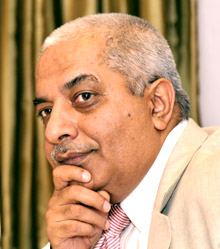
    Sunil Kumar

    “Sunday Music Company on the other hand is a show in Mumbai that basically talks to those behind the music of the latest release. So, while you get a lot of movie reviews, this is a one-of-a-kind music review that tells you about the music, its makers etc. Sundays have been very strong for Radio Mirchi, largely thanks to innovative shows like the SMC.” he added.


    According to Mr Sunil Kumar, MD, Big River Radio, “FM stations have experimented a lot with music content, and they are doing a good job by offering differentiated content within music itself. Today listeners are able to identify their favourite FM stations and very soon there will be further differentiation in content, with or without regulations.”


    Ashish Pherwani

    Mr Ashish Pherwani, Associate Director, Media & Entertainment, Ernst & Young observed, “Content innovation in FM radio still has a long way to go, as currently every other FM station is plays popular music with little bits of innovation here and there. I believe content innovations will actually happen once multiple frequencies are allowed which is likely to happen in phase III.”

  • RAM releases the first 9 cities sweeps

    RAM has released its first set of findings basis sweeps in nine cities. The findings have been arrived at, based on Universe Establishment Study and Panel based Respondent data collected during May-August 2011. These nine additional cities are Ahmedabad, Chennai, Hyderabad, Indore, Jaipur, Kanpur, Lucknow, Nagpur and Pune.


    For the last 4 years, RAM operated out of the four Indian metros – Bangalore, Delhi, Kolkata and Mumbai.


    As per RAM, This initiative will help the Radio industry – Broadcasters & Media Planning Agencies, to assess the impact that Radio medium is having on Audiences in towns other than the major Metros.


    RAM communiqué states that given the favorable response from across the industry, RAM will continue to undertake the next sweeps during February-March 2012.


    To quote LV Krishnan, CEO, TAM Media Research, “Our commitment to take RAM beyond the  four metros has fructified. This time, the RAM roll out is much wider and deeper. These 9 cities will throw light to Advertisers the interaction Radio is bringing to their Consumers and also help Broadcasters fine tune their basket of programming to these Audiences. This will help propel higher commercial viability for the Industry at large. As always, we will work very closely with the Industry to help them understand the dynamics of this very high potential communication and brand building medium from these markets as well. Like in 4 RAM metros earlier, we believe that in these 9 metros too, RAM’s entry will boost the Radio advertising investments.”


    The study offers trends about Radio listenership or consumption behaviour between the different cities. Some highlights are:


    • The universe size of the newly added 9 markets is an impressive 50% of the existing 4 RAM markets (Bangalore, Delhi, Kolkata and Mumbai).
    • Southern markets observe higher FM penetration as compared to northern markets.
    • On an average, there is 95% FM universe has been reached in a week across all the markets.
      • Chennai and Jaipur observe 100% weekly reach.
    • Time spent listening among the 9 new markets is comparatively more than the existing 4 metro markets. Markets like Nagpur and Jaipur observe 28.29 (hh:mm) and 24.05 (hh:mm) time spent on a weekly basis.
    • Indore and Lucknow observe least OOH listening among the new RAM markets.
    • Majority of the new markets have heavy composition from male audiences whereas existing Mumbai and Kolkata market witness substantial composition from female audiences.
    • Listenership in Northern cities like Delhi and Jaipur are skewed towards higher SECs. Market like Nagpur and Kanpur are skewed towards lower SECs.
    • Morning time band observes highest listenership contribution across the day. Indore market observes highest listenership contribution from Mid Morning time band

    Listenership contribution on Saturday and Sunday are higher for the new markets whereas in the existing markets Saturday observes least contribution

  • BIG FM does an item number for Diwali

    By A Correspondent

    It’s Diwali in the air, come October, and 92.7 BIG FM is joining the festivities with its game show, titled “Diwali Ke Item Bomb”.

    The main objective of this show will be to get as many people to win. In this on-air game listeners will be asked an extremely simple question, which if answered correctly will get them a chance to “spin” a roulette wheel on air and win fabulous prizes.

    The Diwali roulette wheel will spin across 30 markets and engage around a crore of consumers over six weeks through on-air and on-ground activities. With the game format designed keeping customer gratification in mind, the campaign is a major platform for brands to leverage.

    The on-ground activities will cover RWAs, schools and colleges where people will get to spin the wheel in person. To make it more exciting there is also a digital element to it, an application that allows people to test their minds, then spin the wheel and win.

    Commenting on the campaign, Mr Soumen Ghosh Choudhury, Business Head, 92.7 BIG FM said, “With our Diwali special property we promise to deliver highly engaging entertainment and more. With a reach across 30 markets and a well tailored offering that is designed to get one hooked and addicted, this property will allow listeners an excellent opportunity to win goodies this Diwali, while advertisers will find an appropriate platform to connect with Diwali revellers across the country.”

  • 94.3 Radio One empowers its listeners

    By A Correspondent

    Taking a leaf out of the current wave in the nation where people’s say cannot be ignored, 94.3 Radio One has also decided to follow this path. The station has just completed five years in the Bangalore market and has initiated a campaign  to give its listeners the power to choose what they want to hear on radio by organizing a public feedback forum for listeners’ to make themselves heard.

    Talking about the initiative, Shyju Varkey, National Marketing Head and Station Head-Bangalore, says, “On our 5th anniversary, we wanted to create an initiative where we could empower the listeners. We want to give our listeners the power to choose what they want to hear and what they don’t’ want to hear.  An initiative such as this has never been taken up by any radio station or any other medium before. “

    Radio One through this initiative will shortlist 600 candidates who are very well versed with Bollywood music to be a part of a research conducted by a prominent research agency.  These candidates will represent the listeners to choose the music they want to hear and decide on the most favorable tracks, which will ensure Radio One plays the music that the public desires. A reproduction of the playlist would then be announced on air after the research has been completed.

    “We were inspired by the various initiatives all around the country where people are striving to make themselves heard.  We being a radio station thus decided that we should do our part in giving citizens a voice through our station by making it completely 100 percent co-created by the listeners, for the listeners and of the listeners,” added Varkey.

  • The Anchor: Devraj Sanyal on the 10 songs you’re sure to hear on FM radio

    #1Satyameva Jayate: From the most awaited album SuperHeav’… It’s the track which brings the nation together… has that anthemic feel.

    #2 Lady Gaga, The Edge of Glory: A must-have artist in your playlist, the biggest pop icon the world is gaga over.

    #3 Enrique Iglesias, Dirty Dancer: The most loved artiste in India, one of the highest selling in the country.

    #4 JLO, On the Floor: The biggest club hit in recent times… gets JLo back on the music scene.

    #5 Raab Rakha, Love Breakups Zindagi: Very young and vibrant song, a direct connect to today’s youth.

    #6 Jessie J, Price Tag: Purely for its lyrics… It’s not about money money money.

    #7 Watch The Throne, I love you so: A must-have for hiphop fans – two hiphop idols in one album!

    #8 Pal Pal Dil Ke Paas, Blackmail: Played on all the radio stations on their classic shows… Kishore Kumar is definitely hamaare dil ke paas.

    #9 Yeh Dosti, Sholay: An evergreen friendship track.

    #10 Senorita, Zindagi Na Milegi Dobara: Very cool, very young, from a new-age young film.


    Devraj Sanyal is the Managing Director of Universal Music India