Tag: Piyush Pandey

  • DDB Mudra, Ogilvy win the Big Elephants @ Kyoorius


    By A Correspondent


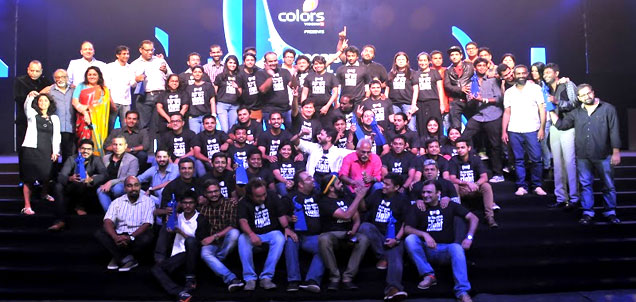
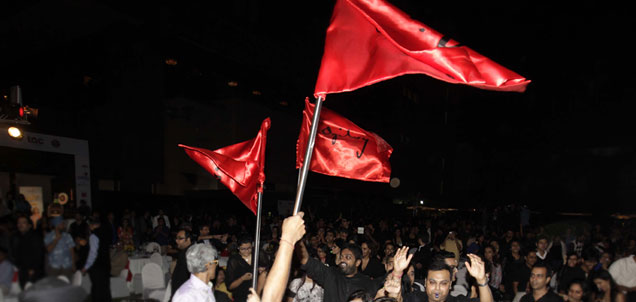
    In the news for the right reasons, screamed the T-shirts worn by the large contingent from DDB Mudra as they ran up to collect the only Black Elephant for Zydus Wellness Ltd’s Nutralite The Black Elephant is the highest award presented by Kyoorius and is the equivalent of the Grand Prix at the Goafest Abby.


    Kyoorius, in association with D&AD, the London-based body of creative, design and advertising communities, held an awards event to announce the winners of the second edition of the Kyoorius Advertising & Digital Awards at Dome, at the NSCI stadium in Mumbai. Over 1,800 advertising and marketing professionals from across India and abroad attended the event held on Friday evening.


    WINNERSPEAK:
     

    Piyush Pandey

    Executive Chairman and Creative Director, Ogilvy India

    I am so happy that we won 15 awards because the young people at Ogilvy are taking the tradition forward and making us look good, making me look good, and the brand Ogilvy look better, and they are making their clients look better. It feels good. I didn’t see much of mainline work today and I would like to see more of it next year. There is a lot of work that we as industry practitioners appreciate, but I would like to see more work that consumers appreciated and was good enough for the jury to appreciate as well. I miss some of that work. I think the jury was fantastic. I know many people on the jury; it was a wonderful jury. But I think the Indian jury should be more balanced, to get the sensibilities a little better. They are much better than I’ve ever seen, but we could get even better in the future.


    Madhukar Kamath

    Group CEO and MD, DDB Mudra group

    Good work rises to the top, appreciation is wonderful, the team is happy. Full credit to Sonal and his team for all the work they’ve been doing over the last few years. It is a vindication of the belief — work in silence and let success be your noise. It was good to see the quality of work right across different categories and feel happier that some of your work has risen to the top. It was a good body of work.


    (Talking about the jury )Every awards show has its own flavour. Globally, that’s also been the scenario. This is the type of jury that a Kyoorius puts together, which is good. I’ve always thought that as long as there is peer group appreciation, it is good.


    In India brands have been built over centuries. That does not mean that we’re not doing great work. I’ve never believed that India has been inferior. Here, you do work for India. Right from the beginning, we’ve built great brands here. Indian advertising has always been culturally contextual and it has been wonderful in terms of building brands for the country, because that is what advertising is all about, in terms of content that builds brands and connects to consumers.


    Rana Barua

    CEO, Contract Advertising

    The fact that Kyoorius has kept only one colour elephant is a good and interesting format for now. We’ll have to see in the long run how we can sustain something like this. We at Contract won a lot of awards. The quality of work is good, and clients are pushing us to do better, so that’s the big challenge. The jury is very prestigious, very eclectic, interesting. Only that sometimes you wonder whether they get the whole thing, because there is a lot of international jury judging Indian work. With a lot of Indian friends in the jury, I’m sure they understand what is happening. Maybe we need more Indian presence on the jury, because a lot of unique work happens within our country, because our country is a lot more unique than others. I think India is pretty sorted in the way we work, because it appeals to Indians. India itself is a nation of many countries put together. If our campaigns work for such a massive country, they will work anywhere in the world as well.

    (interviews by Dyanne Coelho)


    The next level of awards – the Blue Elephant — was presented for Creative (36 winners, 38 if you consider that two of them were shared by two agencies) and Digital Advertising (12 winners). Ogilvy bagged 13 Blue Elephants in Creative and two in Digital. Two of the Ogilvy creative awards were awarded jointly.


    From Times Square-inspired sets, to sound and motion graphics, the entire visual experience for the night was created by Dutch and Malaysian specialists. Hosts Suresh Venkat and Mandira Bedi regaled the crowd with witty banter in the 75-odd minute awards presentation.


    A total of 1,419 entries (up almost 40% from the previous year) were submitted across advertising and digital categories. Ogilvy, DDB Mudra, Contract Advertising, Ideas@Work, Scarecrow Communications, Soho Square, BBH, BBDO India, Dentsu Webchutney, Madison, Madison BMB, ITSA Brand Innovations, Experience Commerce, Rediffusion Y&R, BBH, Famous Innovations, Havas Worldwide, Fanatics Viscomm, Grey, Linen Lintas, PHD India, Sapient, Web Maffia, River Advertising, Creativeland Asia, Blink Digital, Whyness Worldwide, and TBWA were some of the agencies who were awarded the ‘Baby Elephant’ trophy as ‘In Book’ winners.


    Of the 163 In Book winners, also nominees for Blue Elephants, the advertising and digital juries awarded 36 Blue Elephants in Advertising and 12 Blue Elephants in Digital categories.


    In the advertising categories, the 36 Blue Elephant winners included campaigns by Contract Advertising, Ideas@Work, Creativeland Asia, Ogilvy, Early Man Film, DDB Mudra, BBDO, Fanatics, Grey, TBWA and Linen Lintas.


    In digital categories, 12 Blue Elephant winners included work by PHD India, Pigeon & Co., Quasar, Quidich, Dentsu Webchutney, Experience Commerce, Leaf Design, Madison Media, Sapient and Ogilvy.


    DDB Mudra was awarded the lone Black Elephant this year for the direct marketing campaign, Health Cha Shree Ganesh. The campaign for Nutralite, gave the Ganesh idol a healthy makeover – with a physically fit idol and equally fit priest, accompanied by sugarfree modaks and offerings at a pandal in Mumbai. Devotees could participate in Zumba workouts while waiting in line and ‘donate’ calories while working out on a treadmill.


    Said Aneil ‘Andee’ Deepak, Executive Director, DDB Mudra Group and Head of Ideas, DDB MudraMax and who now heads the agency’s experiential business after MudraMax President Mandeep Malhotra move on: “The standard of work that has come in this year has really improved and so have the judging standards. The judging is so top notch that winning here means everything. This is the best award show in India. We feel fantastic. I think the move of keeping only the Blue Elephant award, taking away division between categories of winning is a good move. It makes the hungrier survive. If you are hungry for that one black elephant, you better beat everyone else. It’s a great motivation to win the black elephant.”


    Rajesh Kejriwal, Founder-CEO of Kyoorius, said on the awards: “We are overwhelmed by the response. Our association with D&AD guarantees a transparent and neutral platform, with the jury representing the best of international and local talent.”


    When asked about the trends this year, he said: “We saw a lot of work around gender equality and women’s rights, reflecting the national sentiment on these issues. Plus, of course, in a World Cup year, loads of cricket.”


    Tim Lindsay, CEO of D&AD who is associated with Kyoorius for a second consecutive year (or a third, if you include the Design Awards that he is associated with for three years), said: “The Kyoorius Awards continue to grow in size and stature, and are an important indicator of the world-class standards of the Indian creative scene. But the real heroes are the creatives themselves, who are producing ever more engaging, emotional and beautifully-crafted work  D&AD are proud to partner.”  At the international D&AD awards, which were incidentally also held last week, Indian agencies won some ‘Pencils’, as the Metals?? medals?? are called there.


    Alongside the Elephant winners, all nominations will be featured in the Kyoorius Advertising Awards Annual and the Kyoorius Digital Awards Annual – distributed to over 5,000 corporates and creatives across India.


    The awards night marked the end of a two-day festival of creativity in advertising, media and marketing developed by Kyoorius in partnership with Zee, marketing services giant GroupM and D&AD.
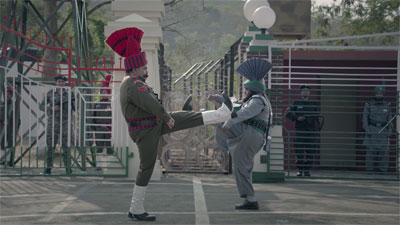
     

  • News-hour debates Fevikwik ad. Nation wants to know why Indian soldier touched feet of Pakistani soldier to repair shoe, thunders Arnab

    By Ravi Balarama


    The newsroom had shifted to the bustling Pan Bazaar locality in Guwahati yesterday.  The editor-in-chief was visiting his home, where he heard about this controversy and decided to convert it into a special show. After all, nothing works more with viewers than the nationalistic stuff.
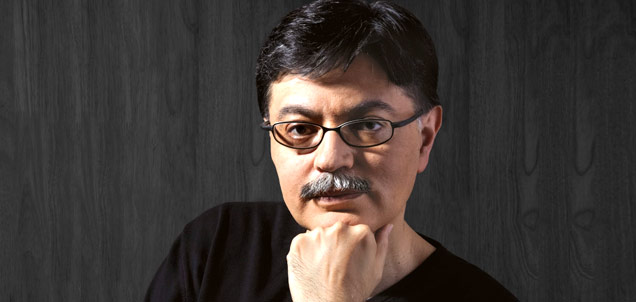

     

    Arnab started the show with his monologue. He aired the commercial and asked: Why is that the Indian soldier is made to fix the shoe of the Pakistani, why couldn’t it be the other way around. “I have three points to ask: One, Why, just why, did it have to be the Indian soldier almost touching the feet of the Pakistani chowkidaar?  Two (and he even speaks even louder): Should brands be allowed to play around with the sentiments of the country? And three, ladies and gentlemen on this first day of April 2015, it is indeed strange that a Pakistani soldier doesn’t carry his own adhesive. Doesn’t the country make its own adhesives? Does this tell a story of the Pakistan economy. Tonight ladies and gentlemen, we are going to discuss a very vital issue. But first should our soldier have a made a connect with the shoe of a Pakistani soldier. That’s the Burning Topic today and I invite our galaxy of greats. Remember your channel is the only channel with this story. Exclusive and first, as always.


    The guest coordinator had done her job. We had a retired army general, a foreign affairs expert, one guest from Islamabad and a strategic affairs commentator from the United States who had earned his stripes in the Vietnam war and finally the inhouse expert, possibly Maroof Razza. Well-known adman Prahlad Kakkar was also on the panel, and so was Piyush Pandey. Shobhaa De was likely to join as well as representatives from the BJP, Congress, Akali Dal and National Conference.


    But first Arnab started with Piyush Pandey, Executive Chairman and Creative Director-South Asia, Ogilvy: “Mr Pandey, we are delighted to have you on News-hour tonight. Sir, you have done some fantastic commercials. Why this? Do you think it works?”


    And this is how the conversation went:

    Pandey: “See, Arnab, it’s just an ad, it’s a funny situation, it’s”

    Arnab: “But fun at the country’s expense?”

    Pandey: “How  can”

    Arnab: “Not right, I disagree”

    Pandey: “you even say that”

    Arnab: “No way, No way”

    Pandey: “for a nationalistic brand like Fevikwik”


    The conversation went on. The guest from Islamabad spoke next. Click here to read the rest of this report.


  • Bonding takes a new meaning in Fevikwik’s latest TVC

    By A Correspondent


    Fevikwik unveiled its new TVC campaign titled Fevikwik ‘Todo Nahin, Jodo’. Launched during the India vs. Pakistan match during World Cup, 2015 the campaign incorporates humor to promote the message of peace and harmony using the theme of bonding. Titled as ‘Parade TVC’, it subtly weaves in the brand attributes of Fevikwik as an instant adhesive promoting the broader message of strengthening bond between people.


    Vivek Sharma, Chief Marketing Officer, Pidilite Industries Ltd, said, “Fevikwik as a brand is known for its instant adhesion quality. In line with Pidilite’s tradition of using humor in its advertising, the new TVC takes a witty perspective on human bonding. We launched the campaign with the India-Pakistan match at the World Cup 2015 because cricket, like Fevikwik, bonds people together. We believe the new Fevikwik TVC elevates the brand attribute of bonding from a functional to emotional level.”


    Commenting on the campaign, Piyush Pandey, Executive Chairman & Creative Director, South Asia- O&M said, “Fevikwik is about solving problems. Fevikwik is about bonding.  Fevikwik is about bringing a smile on the face of everyone in the world.”


    The TVC will be aired during the World Cup across key Hindi speaking and regional markets.


  • Very Premium. Very Alok Nanda


    There are creative professionals and creative professionals and then there’s Alok Nanda. Founder and CEO of Alok Nanda & Company (ANC), billed as India’s only brand and communications consultancy focused on the lifestyle and luxury space. Nanda started his career with the legendary creative agency Trikaya Advertising, where he rose to become  National Creative Director and then member of the Grey Asia-Pacific Creative Board. He left Trikaya (now Grey) to set up ANC in 1999 to bring together the worlds of advertising, design, experience design and branding under one roof. ANC has helped build brands like the Taj Hotels, Arrow, Wrangler, Sula wines, Lodha, Barista, Ambuja and Marico, to name a few.


    But, then creative design for Nanda extends beyond the advertising work. He sells art, runs a design lab as well as a brand engagement firm. Pradyuman Maheshwari had a freewheeling chat with Alok Nanda essentially on advertising, and a little more. Read on…


    You’ve been through the hyperactive days of Trikaya and are now part of the frenzied adworld of today. What according to you are the key differentiators between then and now? 

    It’s a huge sweep of time. At the time when I was just joining, clients were dictated by the advertising industry. Over the years, equations changed when agencies became suppliers to clients and there were these huge global manuals on following this and doing that. In the last couple of years, we have seen enough agencies and clients a communication partner can go to. From our perspective, the big change is you can choose to work for clients you love to work for and clients can choose agencies they love to work with.


    To an extent, it’s a bit of the old, right? There are people who have seen your work would want to come only to you. Or they would also want a Piyush Pandey or an R Balki…

    Very much. People know the kind of work they want and would come to you. Talking from a business relationship perspective, today we really only work with clients we want to work with. Ten or 15 years ago, you’d be driven by business imperatives. 25 years ago, it would’ve been the client chasing the agency. I’m seeing how the shifts have balanced out.


    How has the journey been for you over the last 15-odd years?

    It’s been pretty good. I wish I’d started earlier. Trikaya was where I learnt everything, I chose not to and I didn’t want to take any business from Trikaya when I left. Not sure, I could’ve easily taken business. There was the Grey part too, the global clients, they obviously wouldn’t consider me even if I wanted to consider them. Even though I had a good relationship with many clients, I was clear I was starting afresh. The drive was my fresh journey…


    What were your sentiments when the Trikaya brand name faded away from the agency?

     I’ve honestly lost touch with Grey, have no alignment with the rest of the industry. I don’t even have a clue what’s happening at Ogilvy. I don’t track it.


    Huh?

    It’s not out of arrogance. Our business lines are vastly different. Advertising is actually a fairly small portion of what we do. We’ve carved our own space and we’re very happy with it. What I did and learnt at Trikaya was all premium brands. I was never a part of FMCG, big mass brands, rural India. I’ve only done what I know the best. The market has come full circle. India has grown rich, there’s premiumisation happening.


    Did you intend ANC to be what it is today in terms of being a premium communication firm?

    In the broader sense, yes. When I set up ANC, I was clear India doesn’t need one more advertising agency.  I said we’ll be multi-disciplinary but without walls. We have multi-disciplinary people here, designers, retail designers, corporate communications people and advertising people. We all sit together, there is no centre. When a client comes, the answer is not advertising. Advertising may follow or may not even happen.


    Everyone in the advertising world talks about rural India, about being able to connect with the masses and making a difference and here you want to stick to the elite urban stuff? 

    We’ve no such ambitions. We’re very focused on the lifestyle, luxury and also because of my personal passion, the corporate brand business, all of this are very focused on the premium urban India.


    The advertising you said you want to do is has a different, premium feel. But your campaign for Lodha with the claim Wadala is the new Cuffe Parade, is typical of advertising. It’s hardsell? Isn’t calling Wadala the new Cuffe Parade outlandish? 

    Actually, there’s nothing new in it. If you study what happens worldwide, real estate is about creating destinations. If you go to New York, there’s a place called SoHo, created by the real estate industry. It didn’t actually exist. The city of London is about the size of a postage stamp. Every year they gobble up more villages and then they call it Greater London. Why? Why not give it the name of the village? When the government said they’re creating a new city the other side of the creek, didn’t they call it New Bombay? When the residents of York settled in America, they called it New York. There’s nothing new. I studied a lot of history of real estate when I entered the market. This emanates from there.


    So was the new Cuffe Parade your idea or that of your client?

     My idea and I’m extremely happy about it.


    While real estate is all about selling dreams, it’s finally about selling property.

    It’s about delivery at the end of the day.


    The delivery has to happen instantly. If an ad appears in today’s dna, they need to have the phones ringing from 7 or 8am onwards. Are you happy doing this kind of results-oriented advertising?

    Yes and No. Each client has its own requirement and needs. You need to balance out building a brand and business calls. What you’re referring to is the amount of direct response that has to be built into a campaign. Working with Lodha, we’ve arrived at a manner that works for them. To what degree do you build a brand and at what stage do you start ensuring the calls come? You can’t start getting calls if you don’t build a desirable brand.


    So, typically, after how many insertions do you expect the ad to make an impact to have the consumer to make a call?

    It varies from project to project. It also varies from the scarcity of demand. If you were going to launch a tower in South Bombay, given the scarcity of land, chances are, even before you release your first ad, they would have sold a large number. It really varies from what is your location, your play.


    Abhishek Lodha says you’re more than just an ad agency. You’ve partnered his projects. What is the degree of you involvement? Has this been out of the ordinary or is that the same with all your clients?

    It’s the same with all and I’ll come to Lodha specifically too. We don’t call ourselves an ad agency because of the nature of the multiple offerings we have. We call ourselves, for want of anything better; a communications consultancy. We deep dive into what a client wants. When we work with a Taj, we did their ads, we also designed the identities of all their famous restaurants. We’ve worked in immense detail, bringing design in to Taj, bringing advertising to launches of their properties worldwide…


    You have Lodhas, hardcore businessmen, and the folks at the Taj, who’ve earned their stripes in the hotel industry and understand their craft very well. Are they receptive to your kind of evolved communication practice?

    The Lodhas were in the real estate business for many years before they came to us.Their vision, pre-ANC was to be in the middle class department  in Thane and the suburbs. Abhishek came to us and we worked with him on re-envisioning the brand. I sat and worked with him and we were clear that Lodha is going to be playing a premium game, I said you can’t be seen as a builder. You need to become a lifestyle brand. That’s how my relationship started. One of the most powerful things we created for them is a brand architecture and brand identity. That’s how we grew and I go back to saying, life is too short to work with clients you don’t want to. One of the greatest joys of Lodha is to work with Abhishek!


    You have a mixed bag of clients.

    Real estate is visible because it’s visible in Mumbai. We do all corporate work for Gujarat Ambuja. We’ve managed their financial brand, we’re now managing their CSR brand. That’s my corporate financial side of work, not visible to the audience but to the investor audience.


    If a BJP were to come to you for branding, would you accept it as a client?

    I’d see if I were able to add value to the client, first. We’re in a situation where we don’t need to go back to business for business sake. I’d ask myself if I take them on, which is the other client I wouldn’t have to? At the end of the day, would I be successful for them and therefore would I have a case study for myself? That’s the only way I can grow. I can only grow by creating one case study after the other. Our vision is not to make 30 employees to 300. Our vision is actually margin driven, to put it from a different perspective. I’d seek higher margin business tan higher volume business. My clients know me that I’m expensive and they get value. If I was able to offer that to a political party, I have absolutely no problem. I prefer it that way. It’s not about ideology. That’s the other question you asked.


    It’s the flavour of the season to do something for the government, Swaccha Bharat… aren’t you looking at doing some?

    We devote almost 10 percent of our time on public service and charity. We work with hospitals, charities, do identities free for them. We’ve just finished doing one for a doctor who has pioneered free heart service for babies. He’s doing such wonderful work. We said we’ll support you in whatever communication we need. We’ll do our bit in that way.


    What are the other categories that interest you as a communicator?

    I’m really excited by education. The big thing about ANC and the joy is that we don’t just build brands, we build categories. We’ve transformed real estate, not just Lodha, in many ways. To me, the next big thing is education.


    You seem to have a likeness for businesses with many shades of grey?

    Education is getting corporatised. You’ll have chains with 500 schools. For the first time, they need branding. You need competitive positioning, schools competing for customers.


    I’ve never seen an ANC ad which is less than a half page in size and in education you have very small 10×2-sized ads.

    I think it will change when you see some of the things that hopefully will come out from us.


    How much of TVC work do you do?

    Very limited, lifestyle luxury is very limited on TV. Luxury certainly is the antithesis of television. Corporates also tends to not be on TV. We make films. For Lodha, for every project we make films that run on sites. We make corporate films…


    Advertising agencies typically make their money on TVCs, right?

    I’m sure, they do,  we don’t. Most of our business is fee-driven and we demand a premium fee, upfront.


    You say you don’t do much television and most of your advertising is done in English.

    99.9%.


    What about other languages? Has that come to you…

    We do a miniscule amount.


    You’ve never thought of creating a fair amount of advertising in languages. That’s where premium is going to extend to.

    You’re right, premium will extend in that space. That’s not where the immediate growth is going to be.


    You’re not aligned to any big network

    Yes, we aren’t.


    Don’t you intend doing that? There were some murmurs sometime back that you are looking to align

    I wouldn’t say we have no intention to. We’d want to find the right partner. That wouldn’t necessarily be an advertising network. It could be a more interesting entity that deals with design and graphics.


    WPP, for instance, has a Landor…

    Not that Landor is talking to us or we are talking to them. But, if we did, that would only fit in as far as our brand architecture business would go. What will then happen to my advertising business? We’ll need a free thinking organisation that fits for who we are. People who design their own products. We’ve ventured into arts, for instance in a very interesting way with a JV. It’s a different space.


    Is it a definite No to alignments or acquisitions in the near or distant future?

    Well, we are also interested in acquisitions. You never know what comes your way. Our focus, if it has been driven on higher margins, by definition, we have to go from specialization to super-specialization. Art is a direction. If we were to get into interiors, I’d get a quicker way to learn the business, to acquire an interiors business. Things like that is where I would look at acquisitions. Packaging, in a far deeper sense, where you get into material plays, morals etc. We’ve done a fabulous packaging for milk from Sarda Farms. That’s where we started getting into, it’s not just graphics, it’s weight, performance of glass etc. If you want to learn that at a more rapid space, a quicker way is to do an acquisition.


    Don’t you think this is the right time to align and grow?

    We are looking for people to partner with, but we’re in no hurry if we don’t find the right person. We’re unique from a pure physical construct of the work we do.


    Are you happy with the way advertising is going?

    Yes and No. It’s developed pretty well in certain areas. The craft and film is phenomenal. It’s really improved. If you ask me the rest of it, it really sucks. Our digital design sense is abysmal.


    A shorter version of this interview appeared in dna of brands dated February 2, 2015. And, btw, if you thought this 2500-word interview was long, the original transcript ran into some 6500 words.


  • JSW Group banks on ‘Inner Strength’ in new corporate campaign

    By A Correspondent


    JSW Group has launched a new television commercial ‘Will of Steel’ as part of a new brand campaign that it has embarked on.


    The TVC is based on the life of India’s first ever Gold Medallist female wrestler, GeetaPhogat, who made it to the top, against all odds, and that too in a sport that is typically male dominated and considered extremely unconventional for female athletes.  The central theme of the TVC is ‘inner strength’.


    Aptly titled “Will of Steel”, the commercial has been executed by Ogilvy. The TVC celebrates and showcases how human grit, determination and a steely resolve can catapult seemingly ordinary human beings to unparalleled levels of achievement and success.


    Commenting on the new TVC, Seshagiri Rao, Joint Managing Director & Group CFO, said, “GeetaPhogat, displayed a rare will of steel and her efforts and life-story are the inspiration for this campaign. By showcasing Geeta’s ‘Will Of Steel’ via a mass media campaign, we hope to inspire and encourage more and more people to overcome challenges in life”.


    Geeta comes from a conservative, patriarchal village, Balali in Haryana. The TVC gives a glimpse of her tough journey, how she defied societal norms, busted several myths, fought severe resistance and wrestled her way into success, all because she had the will power to achieve her dreams.


    “JSW Group is one of the leading business houses of the country and the will to succeed has kept us at the forefront in the core sectors of the economy and has seen us setting newer benchmarks from time to time. Since we demonstrate ‘Will Of Steel’ in our ideology and in our actions, the concept behind the TVC resonates very well with our corporate ethos.  We hope to encourage more and more people to come forward with their own ‘Will of Steel’ stories”, added Mr. Rao.


    Piyush Pandey, Chairman, Ogilvy and Mather, South East Asia said, “I am proud that Ogilvy and Mather is associated with this campaign of JSW Group which captures the spirit and power of the Indian woman. It is a great step in unleashing Indian women from the grip of our male chauvinistic society. This is only the beginning, watch out for more in this campaign.”


    The 60-second TVC will air in key markets nationwide, including the states of Karnataka, Kerala, Tamil Nadu, Andhra Pradesh, Telangana, Maharashtra, Goa and West Bengal.


  • Ogilvy India gets a new top deck of suits. Kunal Jeswani to be CEO

    By A Correspondent


    Ogilvy & Mather India has announced a new management structure. No, Piyush Pandey isn’t going anywhere. Yes, he isn’t. SN Rane will be there too.


    So what’s changing? Loads. But first read what Messrs Pandey and Rane have said in a statement:  “It is time that our very strong senior team joins us in all key management decisions of Ogilvy & Mather. Our clients should look forward to even greater impact from Ogilvy & Mather in the days ahead.”


    Effective March 1,2015, this is what the new structure will look like:

    :: Kunal Jeswani, currently Chief Digital Officer of Ogilvy India network, is promoted to CEO, Ogilvy & Mather India

    :: Hufrish Birdy, currently Exec Finance Director, Ogilvy India, is promoted to CFO, Ogilvy & Mather India
    :: Hephzibah Pathak, President – Advertising, Ogilvy India will assume a new role-Global Clients’ Director, Ogilvy & Mather India
    :: Kawal Shoor, earlier Head of Planning, Ogilvy India, has been promoted to National Planning Director-Ogilvy & Mather  India.


    Mr Shoor’s elevation had happened effective January 1. Meanwhile, the Board of Directors is also being expanded. Currently it comprises Piyush Pandey, SN Rane, Madhukar Sabnavis, Poran Malani, Hephzibah Pathak, Miles Young, Paul Heath, Paul Cocks and John Goodman. Kunal Jeswani  (CEO – India), Rajiv Rao (National Creative Director), Navin Talreja (President- Mumbai & Kolkata Geography Head) and Hufrish Birdy (CFO – India) will be Additional Directors.


    Ogilvy India has been CEO-less ever since Pratap Bose left the organisation in June 2008.  Mr Jeswani, a postgraduate in communications from MICA, started his career in advertising around two decades ago, joined Ogilvy in 2005 as Vice President-Client Servicing and has headed OgilvyOne Worldwide with the responsibility of managing Ogilvy’s digital business in India. Currently, he is Chief Digital Officer of the Ogilvy India group companies and he will retain this responsibility with his new role. He will report directly to the Chairmen’s office and will work in very close association with Geo/Discipline heads, Creative, Planning and business leaders. Last year, he was among the two captains of the crack Ogilvy group team appointed to orchestrate the BJP campaign.


  • Ogilvy flag flies high as India’s Most Effective


    By A Correspondent


    It was a victory that was sweeter than ever before. For, after having been beaten by Lowe Lintas last year, taking away the ‘Agency of the Year’ title at Effie 2014 was a huge morale-booster. While Ogilvy has always prided itself as one of the most creative advertising agencies in this part of the world, awards for effective advertising that are the most coveted. For, while good advertising by definition ought to be effective, creativity has traditionally been regarded as more cool.


    Creativity v/s Effectiveness… what’s more important?


    Piyush Pandey, Executive Chairman and Creative Director, Ogilvy:

    I ‘ve said this many times, we aren’t artists, we are commercial artists. We’re paid by somebody to do a certain job for them . We use creativity to make them look better. I’ve never forgotten that in my life and I never will. The day I want to mash mangoes and stick then on my wall because I love them, I will do that but I’ll do that in my house, but not on someone else’s money.


    My creativity is meant to make someone attain that objective that I’m being paid for. My creativity is useless if the person’s job doesn’t get done. Someone is paying and they must get the result. That’s the business I chose to be in. 


    Rohit Bhasin, Vice President (Skin Care) – South Asia: 

    If creativity is not effective, it ‘s not great. I have never seen a great creative which is not effective because I don’t define advertising as that. Advertising – if effective – is very creative, not the other way round.


    Historically , Unilever has been a company that has made iconic advertising. Whether it is the Lalitaji of Surf or Bhala Uski Sari Meri Sari Se Safed Kaise for Rin to the work we’re doing now it has always been based on a strong human insight. What I’m trying to say is that if advertising is based on strong human insight, it would be creative and effective. 


    “The Effies are the gold standard in effective communication. This year’s judging was extremely stringent in accordance with the global Effie standard set by our counterparts in New York,” said Pratap Bose, President, The Advertising Club on the awards as he kicked off the event’s proceedings.


    “I think creativity is extremely important but the importance of ideas is paramount – and that is what Effie stands for,” said Ajay Kakar, Chairman of the Effie Committee. When asked what is it that makes both Lowe and Ogilvy participate in the Effie given that they been staying away from the Abby creative awards, Kakar, who has been heading the award for four years, said matter-of-factly: “Effectiveness has won, so therefore Effie has won.”


    Added a senior industryperson requesting anonymity, “The fact that there is no controversy and it sees participation from 60-plus agencies with all the big ones participating and the clients themselves in attendance at the award speaks a lot about the awards. One only hopes that the Creative Abby too sees an equally enthusiastic participation.”


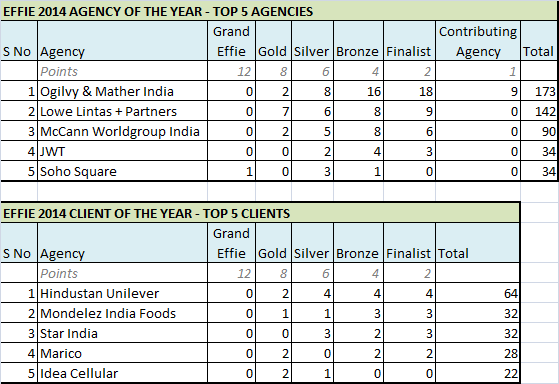
    The Effie is not just for the agencies alone and advertisers are also awarded jointly. Said Samir Singh, Executive Director, Personal Care, Hindustan Unilever Ltd: “It feels good to be the Client of the Year because this is the second time for Unilever in succession.”


    Effie 2014 has indeed been big for Ogilvy given that the parent Ogilvy & Mather India has come up tops with 173 points and younger sibling Soho Square was #5 with 34 points including the Grand Effie for the Bharatiya Janata Party (BJP) election campaign.


    Last year, in Effie 2013, Lowe Lintas was ahead of Ogilvy by 35 points, and this year the difference was similar: 31 points as Lowe Lintas generated 142 points (See Table). This year, in line with international Effie standards and in discussion with all participating agencies, marks were added for Finalist and Contributing Agency The heartening news for Lowe Lintas is that it won seven of the total 11 golds awarded at the Effie.


    What next? Hindustan Unilever and Singh in particular are looking forward to a hat-trick of wins next year. Ogilvy should be hoping that the top slot will also see the global rankings go up.


    Meanwhile, all eyes are on the Abby Awards hosted by the Advertising Club which are part of the Goafest to be held in April this year. Will Ogilvy and Lowe participate in that? As of today, the answer is “unlikely”, but, then, you never know.


    Big Story main image and all photographs by Abhinav Kocharekar/Courtesy DNA


  • Dear Santa…


    On the occasion of X’mas 2014 so we asked some industry captains to tell us what goodies they would like Santa Claus to bring them this Dec 25. Interviews by Shobhana Nair here goes:


    Srinivasan K Swamy, Chairman and Managing Director, RK Swamy BBDO

    If I were to wish for something, then this would be double digit GDP growth of our economy in 2015!


    M G Parameswaran, Member Management Board, FCB Ulka Advertising

    I wish Santa Claus to bring to the advertising agency business a big bottle of confidence tonic! An elixir that will infuse everyone in our exciting world of advertising with extra courage, confidence and spirit; to believe in the industry, to believe in their own competence and contribution to the success of brands and most importantly a unshakeable faith in the greater purpose of advertising: to move consumers from their inertia, to keep the wheels of industry moving, to make the world a better place, one OTS/ one TRP at a time!


    Piyush Pandey, Executive Chairman and Creative Director, South Asia

    Ogilvy & Mather India

    I’d like Santa to distribute small and beautiful packets of wisdom for everybody in the industry.


    Satyan Gajwani, CEO, Times Internet

    New consumers are buying smartphones everyday, but for them to be useful, the cost of data needs to reduce. When users want to pay for something, it shouldn’t be as cumbersome as it is today.


    Ashish Bhasin, Chairman & CEO South Asia – Dentsu Aegis Network

    If Santa Claus could meet with the Finance Minister and emphasize upon him that in the forthcoming budget he needs to give a sensible taxation regime, particularly with respect to service tax and VAT applicable on the advertising and marketing communications business, I think it will go a long way in helping our industry grow. A an industry, we want to show our creativity in the area of advertising and not in the area of creative accounting!


    Prashant Panday, MD & CEO, ENIL

    The one thing is that Phase-3 auctions get completed before March 31 and migration of 21 Phase-2 licences which are lapsing on March 31st happens on time.


    Anirudh Dhoot, Director, Videocon

    In line with our Prime Minister’s vision of “Make in India”, we expect policies and infrastructural support for electronic components and panel manufacturing in India. India has the potential to become a global electronics manufacturing hub not only for internal consumption but also satiating global requirement.


    Sanjay Mehta, Joint CEO, Social Wavelength

    The one thing that I’d want Santa Claus to bring to our industry, would be Better Retainer Fees :)  For all the hard work that the social media agencies do for clients, from strategy to execution, from creatives to media, from technology to ORM, we still don’t get adequate respect, reflected in terms of decent monthly retainer fees! As we get into 2015, I hope Santa Claus makes our clients acknowledge the role we play and compensate us better!


    Santosh Padhi, Chief Creative Officer & Co-Founder, Taproot India
    I’d want Santa to give us an emotional gift in the form of ‘unity within the industry’. We are fighting so much within ourselves and are even ready to kill each other for business. We are going from bad to worse now. There’s a long list of things that I am seeking from Santa but I definitely feel that people should follow ethics and morals. We need to make it a human industry. There’s just no humanity left and that’s a huge disconnect.


    Arvind Sharma, former President, AAAI

    There was a great deal of optimism and hope during BJP’s election campaign. And so far it has translated into foreign investment flowing into financial markets. But as far as the ground is concerned, things have to yet get better. We hope 2015 will bring strong growth in the economy for the overall business. Advertising industry depends on the client’s growing business, their budgets and spends. They have been really tight for the last two-and-a-half years. We hope that will change in the coming year.


  • Ogilvy & Mather powers government initiative to save 25,000 mw of electricity

    By Pritha Mitra Dasgupta


    The power ministry has launched a mega advertising campaign saying the country can save 25,000 MW of electricity every year by just being prudent. The first TV commercial of the campaign, with ‘Bijli Bachao, Desh Banao’ tagline, was unveiled on December 14 to mark the national energy conservation day.


    Piyush Pandey

    “This is part of a huge campaign which the ministry has planned and will be launched in phases,” said Piyush Pandey, executive chairman at Ogilvy & Mather India, which designed the campaign. The first leg of the campaign showcases school children as torchbearers of this initiative. The ministry has launched an on-ground school contact programme. The Bureau of Energy Efficiency hopes to register 1,000 schools on its portal in the next one year to will help spread the message.


    The power ministry recently roped in Pandey, Sam Balsara, CMD at Madison World, and Sunil Alagh, a marketing consultant, as part of its publicity committee. While the first leg of the ad campaign talks about saving domestic energy, the ministry has planned a separate campaign on how industries can save energy too.


    “The ministry will involve people from all walks of life to advocate the message as change of behaviour towards energy consumption and usage is the need of the day. I believe this campaign should go on even when we have saved enough power and energy,” said Pandey.


    Source:The Economic Times

    Copyright © 2014, Bennett, Coleman & Co. Ltd. All Rights Reserved

    Licensed to republish


  • Ogilvy unveils new campaign for IndiaProperty.com

    By A Correspondent


    Ogilvy India has unveiled a new campaign for IndiaProperty.com. With property search being a high involvement and complex task, the aim was to make the communication capture the psyche of a first-time home buyer, the fears, anxiety and the struggle he/she goes through while entering the home search maze and the role IndiaPropety.com plays in simplifyingthe experience.


    Ganesh Vasudevan, CEO IndiaProperty.com said, “We are very excited to announce our new brand identity, reflecting our promise of hand holding the user end to end in the home buying journey. For the campaign, we wanted to reflect the emotional state of a first time home buyer when he is making one of the biggest decisions of his lifetime. The creative team at O&M Mumbai got the brief perfectly and have moulded the idea that on one hand epitomises the first time home buyers hesitation and emotional state, while on the other hand addresses how our brand adds value to overcome a buyers fears through a combination of technology solutions and human touch.”


    Piyush Pandey

    Piyush Pandey, Executive Chairman & Creative Director O&M, South Asia said: “Buying a property is life’s biggest and toughest decision. Fear, anxiety, lack of clarity and trust are the emotions a property buyer goes through. They desperately seek assurance. The challenge was to think of a story, an idea that encapsulates this feeling best and is unique. The metaphor of a kid who is jumping into the pool as he doesn’t know swimming portrayed the emotions of the first time property buyer beautifully.”


  • Up, Close & Personal with Abhijit ‘Kinu’ Avasthi


    By Pradyuman Maheshwari


    He is a metallurgy graduate, has done various odd jobs before getting into advertising in 1997. Two years later, he joined Ogilvy and hasn’t look back ever since. Winning several Indian and international awards, on the jury of most big award shows and having done some superlative creative work. Last week, Ogilvy South Asia Executive Chairman & Creative Director Piyush Pandey , sent a mail out to employees that National Creative Director Abhijit Avasthi was moving on. November 30 will be his last day at work. The news sent shockwaves in the ad frat, because, one never thought he would quit. Excerpts from an interview…


    So what happened? How? Why?  The lyrics of a song from the 1972 Rajesh Khanna-starrer Amar Prem would possibly best capture my question: Yeh Kya Hua, Kaise Hua…

    Kyun Hua… Kuch toh log kahenge (laughs). While it may seem sudden, it’s something I’ve been mulling for a long, long time, and discussing with Piyush (Pandey) too. As I have maintained, there are many things I’ve enjoyed doing over and above advertising. There are certain products or opportunities outside that I would love to think about. There are problems that I would like to solve which need a totally different mind and head space to work on.


    Like?

    I enjoy absolutely everything.  While I like advertising , being from an engineering background, I love technology, design, history, music and maths. I love music to death. There are many things which I keep thinking about.


    So you want to wander?

    I want to wander and think about things a bit. I’ve always wanted to contribute in some way to society. There is a new government, there is an air of optimism, some change can genuinely happen. I would love to participate in a change like that and do whatever I can.


    Do you think it is the right thing to do when you are at the peak of your career? Just chuck your job to take a break?

    My heart tells me, so I think it’s right. I’ve never chased a career. I’ve never chased a designation. Even my entry into advertising was purely by chance. I am an engineer by training. I used to work in a steel plant. I used to sell sarees, I would work in a factory that made dyes for textile. I came to Mumbai in 1997 to figure what to do in life. Someone suggested advertising, so I got into it. I’ve loved advertising as it allows me to do lots of things. One day I will figure what I want to do and may be today is the time. I have the sense of this is really what my skills are, this is what I enjoy doing. This is where the opportunities are. This is a new age in India. May be the time has come to take a step back and say, ok, let’s pursue this, this seems like a good option.


    But look at it from the Ogilvy point of view. Here is a guy they’ve nurtured, believed in for 15 years. Now suddenly he wants to quit and go. From the agency’s point of view, it’s a huge loss.

    It’s a bit of both. Yes, it’s a loss, there’s no doubt. But that’s how all companies go. That’s how all individuals go. While I’ve been here, I’ve been nurturing a whole team and there are many Piyushs, Kinus and Rajivs waiting in Ogilvy. I think my exit may be a great opportunity for them to shine and come out. While I was here, I’ve served Ogilvy and its clients and its people with all my heart and mind. Every second of the day for the last 15 years. So I have received much and I have given whatever I have. And I think that’s the cycle of life.


    You and Ogilvy were like bonded with Fevicol.

    I thought so too. There’s still a Fevicol jod binding us. Just because I am moving out of Ogilvy does not mean I am not attached to the agency, or I don’t have an association with it or we won’t find some way of working together. Like I said, I am rolling so many things in my mind, may be I might stumble upon something whereby I need to collaborate with different disciplines or people in Ogilvy and move ahead. So it’s such a wide canvas.


    The clients who’ve trusted you much will now feel orphaned?

    No, I think that’s the amazing thing about Ogilvy. While I was the face, and yes I was the significant contributor to what they were doing. But I used to always work along a team. So they also know that when team makes a contribution and there is this Ogilvy culture and things will come to place and life will move on. And you know what, brand managers, managers, marketing heads change on the client side every 2-3 years. So here’s a guy who is leaving after 15 years.


    So are you getting into films? There are many adpersons out there.

    Unlikely. I think it is too much of work. Too much hard work.


    Advertising is also hard work!

     I am hoping to try out something really different.


    You wandered into advertising in 1997.  Did the fact that your uncle Piyush Pandey was in advertising influence you to join advertising?

    I’ve been very close to Piyush and Prasoon. They are more friends than anything else. So I would always love hanging around with them. I would see them come up with ideas, and would discuss with them. But in 1997 when I was in Mumbai and people said give advertising a shot and I also thought of the fact that I used to enjoy those moments with Piyush and Prasoon. I would just brainstorm with them and throw in my random idea and they’d say it was very cool. So it gave me a sense of confidence that maybe I should give it a shot.


    Why didn’t you join Ogilvy then?

    I was quite clear I wanted to earn my stripes elsewhere.


    And how did the transition to Ogilvy happen?

    I had a great time for the two years I was at Enterprise. I met my first art part Raj Kamble. But as I spent time there, I realised that my interest lay more in big brand stuff, in television than print. Then I had a chat with Mohammed Khan and said “Look, I need to move on”. There were friends at Ogilvy who were asking me to join, but I wasn’t ready.


    What was working with Mohammed Khan like?

    Absolutely fantastic. I had a great time working with him. His best quality is that he’ll never make you lose your passion for anything. Even if you’ve done something really crappy, he would never kill your enthusiasm, Of course he would be strong and strict and shout about at times. But I think he managed it in such a way that he would never kill one’s enthusiasm. I am quite grateful to him for that.


    And with Piyush… did the personal relationship impact your professional life? Or vice versa?

    Bobby Pawar and Anil Batwal hired me in 1999. But I have to admit, it was a little odd. I was always conscious of the fact that what will people would feel he is Piyush’s nephew… so what is he doing here? Is my work good enough or are people just being polite? What could they be saying behind my back? Those things use to bother me a lot. Initially things like what should I address Piyush as? I can’t call him Piyush, he is my uncle, my mama. It was very odd. Till date I don’t think I have ever addressed him in front of anybody because I refused to call him Piyush and I don’t think it’s right to call him mama in front of everybody in the office.


    You’ve haven’t been calling him anything for 15 years?

    I can’t call him Piyush, My values don’t allow me to call him by first name. It’s not possible. And I can’t call him mama in front of everybody. It’s an office, it’s a corporate setup. It’s just not done.


    And when you meet him one-on-one?

    Then of course I do refer to him as Mama.


    What do you do if you have to call his attention in a meeting?

    I find a way of addressing him.


    Like what?

    I have some tricks. I get his attention.


    He knows that?

    I’ve never mentioned it, but he must have figured it out.


    As you look back at the work you’ve done at Ogilvy, what can we say is a typical Abhijit Avasthi piece of work? Your signature style?

    I am hoping that nobody can say that this is an Abhijit Avasthi ad. If everything is going to have my style, then it’s not fair on the brand of the company. That’s my belief. Which is why my attempt is, and I don’t know how far I am successful, is to give varied flavour to different things. So I would be very happy if people say “are you saying that guy who did Fevicol bus ad is the same guy who did the Centre Shot ad?” I’d like to hear stuff like that. Rather than, oh this is also a Kinu ad, this is also a Kinu ad, this is also Kinu ad.


    How do you and Rajiv work along with each other…

    Yes, it’s all amazing that how Rajiv and I are working together. Till the time we became NCDs we’ve never worked with each other. So Piyush had put the two of us together. It’s just that we’ve been along for so long, we’ve put so much time together. We’ve joined in the same year, 1999, just a few months apart. We’ve always admired each other’s work. We’ve always been honest with each other. So when the NCD announcement came in, we never ever sat down to formally divide this is what you will do, this is how I will do. These disciplines you will look after, or these cities you will look after. Everything was natural and organic and it just happened instinctively. Both of us know our strengths and we know we are the persons can contribute so I seek pretty much every work he…


    And how is your work divided?

    It’s natural, it happened. The legacy business which I was involved in I continued on them, the legacy business he was involved in, Vodafone primarily, he continued. I am intelligent enough not to put my two bits in Vodafone and destroy it, because he has done something phenomenal. He has headed the Bengaluru office. So typically the most of the Bengaluru accounts he would look into. Some I would look into. And historically I’ve always been closer to the Delhi office, so everything was organic, we never sat and formally did anything, we had enough respect for each other.


    Do you critique each other’s work?


    So when I show him some stuff and what’s nice about Rajiv is he has no sense of diplomacy. So he’ll say Kinu this is rubbish. Which is very nice. There is no emotion.


    What about you?

    I try and cushion the blow!


    How much have you embraced the digital media yourself?

    I am very aware of what happens, what’s happening, what are the possibilities, but am I immersed in it myself? No I am not. I wish I was, but I think life is too busy.


    One thing which is said is that the reason why digital media hasn’t entirely grown  is because biggies like yourself are not doing too much digital advertising

    It’s a bit of both. I don’t agree with it entirely. Some great digital work is happening. See, everything our industry does is compared to what’s happening in the west. One must not forget that the societies there are much advanced and developed and digital is a way of life for people. So when you do something in the west, the man on the street gets it. Do I believe ad folk in India are capable of doing great digital work? Yes, they are. But the reality is that the person on the street is not digitally evolved. There is no point in doing a really creative digital innovation which the man on street doesn’t get.


    Any advertising from competition that you would have liked to do?

    Yes there are plenty. I think I enjoyed, rather than pick individual pieces, I would rather say the whole thought of ‘Daag ache hai’. It is a lovely campaign, I would loved to have done it. Some of the early Pepsi stuff, I would have loved if I’d done that. I think some of the work happening on Tanishq is fantastic.


    People whom you liked to work with? People who moved out of Ogilvy, whom you miss very much?

    Lots of them. I think one thing that keeps it going is more and more amazing people keep coming even though some amazing people leave. Yes, there are many, there use to be this guy called Avinash Baliga. I think he is one of those guys who understands my sense. He is the guy I genuinely believe who is way ahead of what India is now. He works in a hot shop in Argentina now. I think he is found his place over there. He is one guy, many a times I do think, if he had stuck on then things would have been really great.


    So effective December 1, we see you wander?

    Absolutely . , I won’t sit, I have some thoughts. I won’t lie that I don’t have thoughts. I have a sense on what is it that I should do next. I am not chasing money or some kind of crazy fame. Now is the time to put things down and evaluate, okay this could be some interesting place to go. For example, if I could use words, I would like to do some thing which is original, meaningful. Some thing where I could use all my skillsets over and above advertising.


    A shorter version of this appeared in ‘dna of brands’ dated November 3, 2014


  • Do looooong ads work for brands?


    By Priyanka Nair & Mukta Lad


    3.33. 3.53. 4.40. 7.16. Before you shut this paper and run a mile, we will have you know that this isn’t a complicated math problem coming your way, but the durations of some of the ads you’ve been seeing of late. With our daily dose of listicles masquerading as news for our seriously short attention spans, one would think quick and easy fixes are the way to go.


    The world of advertising begs to differ, though, offering a paradox. A spate of really long ads are the not-so-new kids on the block, where brands are taking the liberty to take as long as seven minutes to narrate their mostly heartwarming stories, The year is seeing a lot of the films that take their time to tell the tale, both internationally and back home.


    Pepsi’s ‘Ghar wali Diwali’
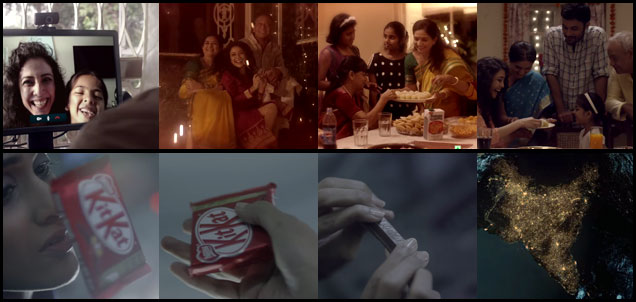
    KitKat’s Diwali
    Kissan’s ‘Joy of Togetherness’
    Fortune Oil’s ‘Ghar ka Khaana’
    Google’s ‘Reunion’
    Tata Sky’s ‘PrisonBreak’

    Most recently, KitKat and Pepsi jumped on the Diwali bandwagon, and two much talked about long-format films were born. They are usually released online, making it an inexpensive medium to tell powerful stories. But with such ads clearly becoming a regular trend, we have to ask; are brands really justifying the length of their communication with stories that are compelling enough? And do they work?


    Piyush Pandey executive chairman and creative director, Ogilvy & Mather India and South Asia, the man behind Fortune Oil’s emotive four-minute ‘Ghar ka khaana’ ad, believes, “With long-format, your single responsibility is to the viewer. It’s like people who make movies. A viewer of a long-format ad has made the effort to click on your film. It’s not like he was sitting around watching something else and the ad came on. It’s your responsibility to make sure he feels rewarded after the time spent and says ‘I must share this with my friends.’ I am assuming as professionals we know that we have a responsibility to the brand.”


    For T Gangadhar, MD, MEC India, it was the advertising during FIFA that has lingered on in his mind, especially the riveting spots by Nike and Adidas. “The episodic treatment, the fleshing out of the idea, the execution was such that there would have been no other way to create them except through the medium of long-format,” he says, admitting that he really didn’t notice the amount of time he was investing in watching them.


    Globally, too, brands have asked their agencies to deep dive into this particular style of creative build up for some time now. From Johnnie Walker to Dove and many in between, several brands have tried and tested using this narrative style for some years now.


    Apart from Fortune Oil, KitKat, Pepsi, Google’s ‘Reunion’ and #PledgeToVote, Tata Sky+’s ‘Prison Break’ and Kissan’s ‘Joy of Togetherness’ are some of the Indian ads that went much beyond the proverbial 30 seconds.


    Narayan Devanathan, EVP and national planning director, Dentsu India Group thinks of this trend as a fad, though. “To me, this seems like the work of diva creative directors who want to cash in on lack of extra mediabuying costs, the freedom the internet offers as a medium and the fact that they might be able to wiggle out a few favours from the directors in the same budget,” he says bluntly.


    Perhaps brand managers are looking at creating these epics as a feather in their cap. But Devanathan and Gangadhar would rather brands didn’t make long-format ads a fashion statement, please. It is best if the idea defines how much time it needs to unfold, instead of the other way around. But is there a formula as to who should or shouldn’t leverage this medium? “Boring brands have gone ahead to create some interesting long format ads, while some interesting brands have put out some boring ones,” says Gautam Kiyawat, CEO, Madison Media, implying that anyone with a good story should go ahead. But what makes marketers give a green signal to agencies?


    Mayur Bhargav, general manager (Chocolate and Confectionery), Nestlé India mentions that his digital centre noticed that India’s successful Mars mission was generating a lot of positive discussions on social media. They went ahead to create the KitKat Diwali film, knowing that its topical nature rated it high on the shareable scale.


    Gangadhar, however, wasn’t too convinced by the film. “If the video is going to be longer than 30 seconds, then it needs to become more content and less ‘advertising’, especially for the internet, where brands aim at making content people would want to share. The KitKat Diwali film, to me, was quite ‘addy’ in that sense.”


    Senthil Kumar, JWT India’s NCD and Suresh Eriyat, director, Eeksaurus, the men who made the KitKat film, believe that there making these spots can be a challenge. “It’s easier to hide the imperfections in 30 seconds, but the long format tests almost every limit that creative guys know of,” Kumar reveals. Eriyat elaborates, “Unlike short format ads, the biggest challenge in a long format ad is losing objectivity.


    Another danger is that it can end up becoming boring and monotonous. I am of the opinion that if one sees the KitKat campaign out of the context of Diwali, it may seem irrelevant.” At the end of the day, what do consumers feel about these ads, really? Devanathan, donning his planner’s hat, mentions, “The Pepsi ‘Ghar wali Diwali’ film, to me, lacked Pepsi’s youthfulness and Kurkure’s wackiness.”


    But advertising and planning be damned, he says, considering consumers didn’t really care about the ad’s length or whether it had the brand’s values at the core. They were touched by the emotion and shared the ad nevertheless, making it a viral success.


    The long and short of storytelling on digital is that the canvas is yet to reach its creative tipping point, as brands are taking their own sweet time exploring the medium.


    Source:The Economic Times

    Copyright © 2014, Bennett, Coleman & Co. Ltd. All Rights Reserved

    Licensed to republish