Lodha Group launched its first commercial TVC – ‘Find your Kingdom’. Centered on Lodha’s core philosophy of ‘Building a Better Life’, the campaign attempts to establish an emotional connect between consumer aspirations and the lifestyle experience delivered by the brand. Conceptualised by Ogilvy and Mather, the TVC narrates this experience through the journey of a little girl, where all her dreams get manifested into reality at her Lodha home.
The TVC begins with a little girl entering the room, holding a key in her hand. The protagonist first looks through the keyhole inquisitively and smiles before putting the key into the mysterious door and opening it. After which, she is shown passing through the door and entering into a magical home of her dreams. The inspiring VO starts by saying – “Ghar mera ek kile sa hai, Jismein sab kuch bada bada sa hain†and runs throughout the film where it depicts her aspirations of a dream home, with each scene in a poetic manner.
Commenting on the campaign, Viral Oza, Chief Marketing Officer, Lodha Group said, “Our new campaign is in line with our group philosophy of ‘Building a Better Life’. The TVC aims to depict life at Lodha and what consumers can expect from Lodha properties. The poem recital by a little girl about her kingdom conveys that the home you dreamt of as a child can be reality. Just like a kingdom, Lodha properties provide ample green and open spaces, a secure environment, facilities and amenities to improve quality of life and most importantly create communities to instill a sense of belonging.”
Said Piyush Pandey, Executive Chairman & Creative Director, South Asia, Ogilvy & Mather on the campaign, “Lodha is known for its quality homes, where lots of families live in comfort and luxury with facilities and security. To me, it’s like living in a fort. The campaign captures the dreams and desires of people, and offers Lodha as a modern=day fort.â€
Pidilite unveiled legendary actor Amitabh Bachchan as the ambassador for its Dr. Fixit range of waterproofing products and solutions. Bachchan, an icon of the silver screen, will spearhead Dr. Fixit’s flagship campaign and will act as its face across engagement platforms.
The campaign featuring Bachchan was rolled out on India’s 70th Independence Day with a multimedia campaign on digital, TV, retail activations, radio and outdoor.  As a leader in water-proofing solutions, Dr. Fixit aims to create awareness for pro-active water-proofing using modern methods at the beginning stage of building a new house.
Dr. Fixit commercials are known and loved by audiences for their light sense of humor. The new campaign stays true to this approach, with Bachchan bringing his own trademark style and wit to the TVC.
The opening TVC features Bachchan playing himself and portraying a romantic, restless man living in a home that hasn’t been waterproofed and has three beautiful women as neighbors. The TVC begins with him delivering a quixotic, Bollywood-style monologue, and wistfully thinking about his neighbors as water from their apartments leaks into his home. Then the TVC reveals a composed Bachchan wrapped up in a shawl who had been daydreaming about this fantasy. In reality, his wife had made sure that the house was waterproofed with Dr. Fixit at the construction stage itself. Thus, Bachchan’s feelings for his beautiful neighbors remain in his heart due to water-proofing by Dr. Fixit.
Vivek Sharma, Chief Marketing Officer, Pidilite Industries said, “Dr. Fixit is the market leader in water-proofing segment and it continues to play the role of creating the market for water-proofing using modern methods. This involves changing behavior of people through messages that are relevant, persuasive and delivered in a memorable way. Who other than Mr. Bachchan to deliver this convincingly, as he is not only loved and admired by all but also considered a person of immense credibility. â€
Commenting on the campaign, Piyush Pandey, Executive Chairman and Creative director, South Asia, Ogilvy & Mather- says, “No matter what section of the society one comes from, when your home leaks, your feeling of helplessness is identical. This campaign takes this insight and says it in a very entertaining fashion. Dr. Fixit is the leader in the category like Mr. Bachchan is, in the world of cinema. It’s a perfect jodi. Prasoon Pandey has put together this story in a beautiful and persuasive manner, making the communication watchable again and again.â€
Fevikwik is set to roll out a TV campaign for its new product variant, Fevikwik Gel. The ‘Total Control’ TVC is developed by O&M and the communication takes a step further to reinforce enhanced user experience.
The TVC emphasizes the total control characteristic of the gel variant in a playful manner. The clever use of the hockey player as a character who is much astonished about the control that he has over the ball during the game of hockey maintains the wit and humor quotient as always in a Fevikwik TVC.
Vivek Sharma, Chief Marketing Officer, Pidilite Industries said, “Fevikwik TVCs have invariably showcased the product attribute with a sense of humor. This TVC presents the new variant Fevikwik Gel that gives more control to user while doing what Fevikwik does best – sticking various broken objects instantly.â€
The TV campaign will be supported by an integrated digital marketing campaign. Apart from outdoors and increased visibility at trade outlets there are also executing a number of demand generation initiatives to reap maximum advantage of the new TVC.
Commenting on the concept, Piyush Pandey, Executive Chairman and Creative director, Ogilvy & Mather- South Asia says, “Fevikwik has always been characterized as a hero who comes out with its instant adhesive properties in all sorts of unexpected situations. We wanted to reiterate the heroics of Fevikwik and concurrently show an analogy that depicts total control characteristics of Fevikwik Gel.â€
A quick chat with Piyush Pandey, Executive Chairman and Creative Director of Ogilvy and Mather India and South Asia
What do you think led to the super success of the Reshma campaign?
I think the main reason is Reshma’s bravery. For a girl to come out and make a statement for other women in the country [is very brave]. I salute her bravery, and my team’s way of thinking about it and working closely with Reshma. It is a very sensitive way of being handled, and hats off to each one of them for collaborating for a cause.
In the last three years, you have endorsed the Kyoorius awards in a big way. But you are not participating in Goafest. Is there a reason you participate only in Kyoorius and not elsewhere?
I can provide a number of reasons, as we have discussed in the past. One of them is a standardisation of the jury, and a well-selected jury [at Kyoorius], which I find is more transparent.
The fact that Balki has selected an Ogilvy ad is a good thing too. He was the chairman of the jury.
Balki has always been fair. I have a high regard for Balki.
How much do awards matter for agencies like yours?
I think you have to look at the atmosphere here. It matters a lot when it comes to self-esteem. Does it convert into business? No. Does it motivate people? Yes.
You have creativity and you have effectiveness awards. Effectiveness awards are another area that Ogilvy scores high on. Which, to you, is most important?
If you are creative, it is better to be effective. If it is effective, and bad advertising, that means other elements of the product will not help your advertising. Good advertising must convert into effectiveness.
First appeared in dna of brands dated June 6, 2016
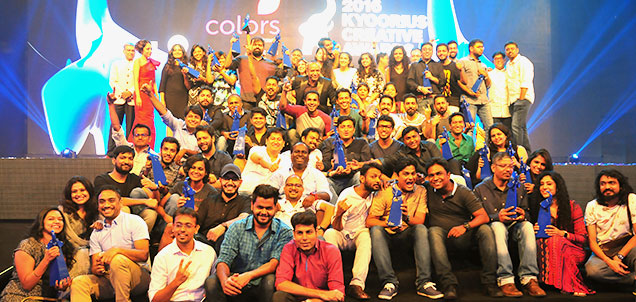
As any advertising veteran will tell you, there are always a lot of elephants in the room at awards shows. At the Kyoorius Awards 2016, there were only two: a Blue Elephant and a Black Elephant. The pachyderms are actually the top prizes at the Kyoorius Awards which, in their third year, are again being hosted in association with D&AD.
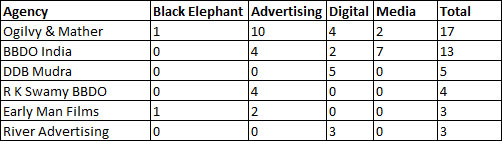
But the main event at this year’s edition of Kyoorius (its third), was watching Ogilvy & Mather and BBDO grab top honours across categories. While Ogilvy won 17 Elephants, including the coveted Black Elephant, the topmost honour, BBDO racked up an impressive tally of 13 Blue Elephants.
Two Black Elephants were awarded for groundbreaking work in a category that intended to create new conversations with its audience, or have a transformational impact on the industry. While Ogilvy & Mather won it for their creative, Beauty Tips by Reshma, Early Man Films won it for their Ambuja Cement ad that featured plus-sized wrestler Khali. Indeed, the Khali ad was much-talked-about that evening, as Bobby Pawar, Managing Director and Chief Creative Officer of Publicis Worldwide, which created the ad, also acknowledged. “It is one of the most talked about works and I am very proud of it,†Pawar later said. “At it’s most basic level it is a human story of a man who is born too big and strong for this world, and added to that is the element of humour of watching (Khali) him crash into and break things.† The Khali ad had also won the biggest prize at the Goafest Abby in April.
The Reshma ad, too, clearly touched a chord with people. As Piyush Pandey, Executive Chairman and Creative Director of Ogilvy and Mather India and South Asia, said: “I think the main reason is Reshma’s bravery. I salute her bravery — and my team’s way of thinking about it and working closely with Reshma. It is a very sensitive way of handling, and hats off to each one of them for collaborating for a cause.â€
This year’s Kyoorius, held at Mumbai’s NSCI Indoor Stadium, had some firsts. To begin with, there were three categories of awards — Advertising, Media and Digital – which reflect the reality of today. And, as the organisers said, there was at least a 30 per cent increase in the number of entries. A total of 1,863 entries were submitted this year, and each category was judged by its own jury, headed by chairmen/foremen Ralph Barnett, National Creative Director, SapientNitro (for digital), R Balki, Group Chairman, MullenLowe Lintas (for advertising) and Mike Florence, Head of Planning, PHD Media (for media). Some 164 entries were shortlisted as winners of the Baby Elephant (in-book winners), of which 69 were awarded the Blue Elephant, across the advertising, digital and media categories, and two were awarded the exclusive Black Elephant. Other winners included DDB Mudra, The Glitch, Dentsu India, River Advertising, SapientNitro, AIB Vigyapanti, Happy Creative and others.
The awards event was attended by more than 1,500 professionals, including CEOs, marketing directors, brand managers, creative and media gurus from the advertising, digital and media industries across the country. Hosts Lekha Washington and Colvyn Harris kicked off the evening by taking a friendly jibe at AIB comic Tanmay Bhat, whose recent Snapchat video had stirred a controversy. Harris, former JWT South Asia CEO, making his debut as an emcee: said “I have to do something new every year, I was asked by them and I said why not. I really enjoyed myself.â€
For advertising and media folk, no evening is complete – not even an awards one – is complete without some high-octane revelry. Addikt, which was in charge of ‘setting the mood’, had put up 180-degree LED screens to go with house beats and psychedelic displays. “What we try to do here is to create celebration instead of ceremony. It should be fun, wild and loud. That is why we switch on the big LEDs, add bright colours and loud music,†said Barry Schwarz, Creative Director of Addikt. When the advertising and media industry parties it up, nothing can be considered OTT.  Hmmm.
First appeared in dna of brands dated June 6, 2016
Fevicol has rolled out a new ‘Govinda’ themed TVC based on ‘dahi-handi’ celebrations to reinforce universal bonding that Fevicol has come to stand for.
Conceived and developed by Ogilvy & Mather, the TVC highlights how a strong bond and teamwork are central to forming the several-storey high human pyramid that characterizes ‘dahi-handi’ celebrations. Through the trademark ‘humour’ thatFevicol ads are known for, the TVC reinforces the promise of a strong bond that binds people to their culture, strengtheningFevicol’s positioning of being the ultimate adhesive.
Piyush Pandey Executive Chairman and Creative director, Ogilvy & Mather – South Asia says, “Fevicol has always stood for ultimate bonding. Bonding beyond its physical manifestations, bonding of culture and humanity.The new film takes the festival of Govinda (Lord Krishna’s birthday) which is celebrated across the country by people making human pyramids to climb and break the clay pot which is symbolic of Lord Krishna stealing buttermilk from the Gopis (or Gopikas which in Sanskrit refers to a person in charge of a herd of cows). Fevicol in its tongue and cheek humour has created a hyperbole by making a pyramid that can even move from one location to the other.
Vivek Sharma, Chief Marketing Officer, Pidilite Industries said, “Over the years, Fevicol has established itself as an iconic brand that has become synonymous with forging a strong bond. Fevicol has embedded itself in Indian consciousness and culture and is now part of everyday lingo. The new TVC reflects this generational bond and affinity that the people of India have for Fevicol.â€
Piyush Pandey – Executive Chairman & Creative Director of O&M India has been awarded the Padma Shri. The Padma Shri is conferred by the President of India, and Piyush is the first person ever in the Advertising and Communication category to be awarded this honour.
Padma Shree is the fourth highest civilian award in the Republic of India and is awarded by the Government of India, every year on January 26th, India’s Republic Day.
The Padma Awards were instituted in 1954 to be awarded to citizens of India in recognition of their distinguished contribution in various spheres of activity including science, medicine, arts, education, sports, public affairs, industrialists, cine stars to conservationists and farming. It has also been awarded to some distinguished individuals who were not citizens of India but did contribute in various ways to India.
Veteran adperson and Ogilvy bossman Piyush Pandey has been named as a Padma Shri recipient.
Piyush Pandey                                                                     Â
As reported by MxMIndia earlier today, Pandey was tipped to be named as a Padma Shri winner. He was the only representative of the advertising and marketing services fraternity in the list of 112 awardees, 83 of which are being accorded the Padma Shri. According to the grapevine, Ogilvy India bossman Piyush Pandey’s name is set to be announced in the list of Padma Vibhushan, Padma Bhushan and Padma Shri winners to be unveiled today.
The Rajasthan government announced a multi-year, multi-modal and multi-narrative domestic and international campaign that went live on January 15, 2016. Over the next few years the government is expected to spend over Rs.100 crore on this campaign that envisages rebranding Rajasthan Tourism including a new logo.
Despite wide and deep attractions, the state’s lack of tourism marketing over the last 25 years has resulted in the state falling considerably in international tourism and domestic tourism arrivals because of aggressive efforts from other states. This is not only a missed international opportunity but a missed opportunity for economic growth because tourism is one of the largest generators of employment in the world. Tourism is not only employment intensive but capital efficient: it generates 78 jobs per million rupees of investment compared to 45 jobs per million rupees in the manufacturing sector.
Shailendra Agarwal, Principal Secretary Tourism said: “Rajasthan has not conducted a tourism campaign for the last 25 years and this effort could attract at least 1 million incremental tourists with a considerable multiplier effect on growth and employment for our state.â€
The state has roped in Ogilvy & Mather as the creative agency. Ogilvy & Mather India has worked on tourism campaigns for Gujarat, MTDC, Madhya Pradesh, among others.
Piyush Pandey
Piyush Pandey, Executive Chairman & Creative Director, South Asia, Ogilvy & Mather said: “Rajasthan Tourism is the campaign I have been waiting for, for the last decade. It is my home state and I think I owe it an impactful and effective campaign. I am looking forward to the exciting times ahead.â€
The state government has also appointed a Steering Committee to monitor the creation and implementation of this campaign that includes Mira Mehrishi (Member Secretary Chief Ministers Advisory Council), Shailendra Agarwal (Principal Secretary Tourism), Malvika Singh (member Chief Ministers Advisory Council and Writer), Shoba Narayan (author and journalist), and Anil Chaplot, (Director tourism).
The campaign is part of an overall plan for Rajasthan Tourism 3.0. Rajasthan Tourism 1.0 was from Independence till the early 80s whose engine was the state’s landscape. Rajasthan 2.0 began with heritage hotels and forts. Now Rajasthan Tourism 3.0 will combine assets from both phases with an aggressive marketing campaign, a new logo and packed experience calendar that is being developed.
Besides annual literature festival in Jaipur in January and the Jodhpur RIFF festival at Jodhpur in October, the state hopes to build many new projects and events such as a Sacred Music Festival at Pushkar in November, an International Photography Festival, a World Music Festival, and much else. Amer near Jaipur has also become the first fort in India that has been specially lit for night viewing. A new Contemporary Art Centre at the revamped Jawahar Kala Kendra in Jaipur is being curated by India’s leading contemporary artist Bharti Kher. A Dastakaar crafts venue with live demos at Parasramdwar will also go live later this year.
The state government recently unveiled a tourism unit policy to attract investments and the Resurgent Rajasthan Investment Summit later this year will see the unveiling of a new tourism policy along with the new tourism campaign.
Until four years back, the Boys in Black would dominate proceedings at the Abby. The then only national awards for creativity and assorted advertising. The Abby, run by the Advertising Club Bombay and held annually part of Goafest (conducted jointly by the Ad Club and the Advertising Agencies Association of India), continues to be the biggest awards event endorsed by most industry associations.
However, all of this changed in 2013. As Piyush Pandey told the media in attendance on Tuesday, Ogilvywallahs would dominate the Abby so comprehensively, that he kinda found his colleagues according no respect for the metals received. They would often be placed on the floors. Strewn all over.
Even as Pandey was saying this, our inboxes received a missive saying Publics Worldwide boss Nakul Chopra was appointed chairman of the Goafest Organising Committee.
It was clear that Ogilvy isn’t going to participate in the Abby at Goafest. Or is in no hurry to do so.
But it will take all of Ad Club President Raj Nayak’s much known persuasive skills to bring Ogilvy back to send in entries. You can Salman and Shah Rukh together, why even India and Pakistan to try and sort their differences, but not Ogilvy or Lowe to the Ad Club awards. Hmmm.
But, heck, this isn’t a story about all the mess, controversies and politics about Indian advertising awards.
For the third year in a row, Ogilvy India conducted its Envies Awards.
Some 150 entries vied for 25 honours.
They were awarded in various categories, with just one in print.
The event had some interesting accompaniments, including this brilliant session by former Ogilvywallah Hanif Kureshi and his Kyoorius-awardwinning Street Art work.
The entire Ogilvy Mumbai office was in attendance, along with large contingents from elsewhere.
Good fun. Fantastically emcied by Sumanto Chattopadhyay.
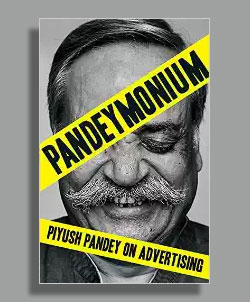
On Wednesday, Piyush Pandey’s memoirs ‘Pandeymonium’ was released in Mumbai with much fanfare with Amitabh Bachchan releasing the book and several dignitaries, family and friends in the audience. It was tough pulling out an extract from the book, but here’s one that we though we thought would interest MxMIndia readers…
By Piyush Pandey
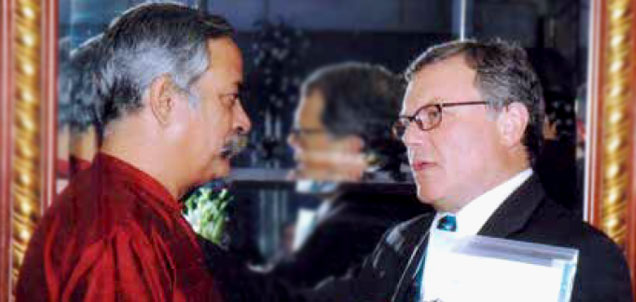
People would like to believe that Martin is a control freak—nothing could be further from the truth. Martin’s name is misused by his managers in the operating companies so as to help them achieve their own ends. Martin would not even be aware of many of the things that his managers claim that he has an opinion on. His interest is in communication, in the health of his companies, in the finances, in corporate-governance issues, in the stock price and in WPP’s shareholders. Martin does not interfere in the running of the companies and has little interest in decisions that ought to be taken by his local managers-which is perhaps why WPP does so well globally. The fact that India is so important to WPP now, and yet the Indian operations are run totally by Indian managers underlines his belief that global businesses are best run by managers who know the lay of the land.
If cigarettes helped me spend more time with David* than was warranted by my designation, it was cricket that helped build my relationship with Martin. Martin is a huge cricket fan, following the game from wherever he may be in the world. In London, he watches matches at Lord’s whenever he gets the opportunity. He plays as well, taking part in charity matches for causes that he believes in.
Review in 164 words. Unputdownable
By Pradyuman Maheshwari
Why a hundred and sixty four words? Piyush Pandey’s Pandeymonium can be reviewed in just one. Unputdownable.
It’s a breezy read. The way Piyush speaks. And the way his ‘curator’ Anant Rangaswami writes. You can read it in one post-dinner sitting.
The first part of the book is great fun. Depending on how much other people’s experiences move you, you can possibly have tears rolling a few times. I cried a bit.
The second part of the book gets him into talking specifics about Ogilvy. To those not into advertising and Oglivy, in particular, this could be a stretch, but Piyush ensures that he doesn’t get too much into details.
I was hoping to read some juicy comments and comments on people and issues, one has heard Piyush feels very strongly about. But there’s none of that.
Pandeymonium is a must-read for all those whose lives have been touched by Piyush or his advertising. It’s a mustest-read for those wanting to get into advertising.
Planning for one of his earlier trips to India, he mentioned to Ranjan Kapur that he wanted to play a cricket match in India. He asked him to get me to sort it out (he was aware that I had played first-class cricket). He wanted the teams to be formed from employees of the three larger agencies WPP had in India those days: Hindustan Thompson Associates (HTA); Contract (which was considered a separate company, though it was 100 per cent owned by HTA); and O&M. Martin also wanted a couple of former India cricketers to play so as to add some flavour to the match.
I did the maths and decided that each of the three agencies would contribute six players, making it eighteen players. Martin would make it nineteen. That would leave us three players short. I requested Bapu Nadkarni, Eknath Solkar and Ashok Mankad to play, and they all agreed.
We now had twenty-two players, and the next challenge was the composition of the two teams. I had some thoughts on that. I wrote to the managers of HTA and Contract asking each of them to send me the names of their six players—and their heights. They wrote back and asked me why I wanted to know about their heights. I told them that it was for the cricket whites that we needed to play in.
Martin was to captain one team, while I would captain the other. I divided the remaining twenty players into two teams.
Martin came to the ground and discovered that his team was called Short Legs XI and that mine was Long Legs XI. I had created the teams based on the heights of the players. Martin came up to me and said, ‘You cheeky bastard.’
For me, Martin is a human being and no more.
That match set the tone for my relationship with Martin. It allowed us to be relaxed, frank, trusting and honest with each other—and that makes for a profitable working relationship.
During another of Martin’s visit, I planned something else. When you entered the office, from far you could see a poster outside my room with ‘WPP’ written on it. WPP did not have an office at Ogilvy. So when Martin came, he saw the signage and walked to my room. From close, you could see the small letters between WPP. It said, ‘Worldwide Office of Piyush Pandey’. ‘Cheeky bastard’ is what he said to me again, as he laughed.
‘Cheeky bastard’ is a phrase that Martin loves to use, and I’ve been described as one by Martin on more than two occasions. In 2000, I was flying to judge the Cleo Awards at Aspen, Colorado. The perks of being a juror meant that I flew first class on British Airways. First class was a rarity as WPP’s policy did not allow it. I was in the first-class lounge in London, waiting for my connecting flight to the US, when I bumped into Martin. I walked up to him and said, ‘Hi, Martin, Cleo is paying for this trip. Just in case you call up Rane (my colleague and then Finance Head of Ogilvy in India) and ask him who is paying for this.’ ‘You cheeky bastard, did I ask you?’ He said. ‘No, you didn’t, but you would have called up Rane; I just saved you a couple of pounds on the phone call,’ I replied.
When we meet now, conversations are relaxed and direct. Martin discusses larger issues with me, such as the company’s reputation and corporate governance, two areas where he spends considerable time and energy. We hardly ever talk about work or revenues. Indeed, sometimes we have to contrive devices which get him to look at recent work that has been done; I do not think that he has ever asked for a formal review.
I’ve learnt so much from Martin-perhaps because I saw him as a human being and no more. Approach Martin with fear or trepidation or guile, as many do, and what you have achieved is to ensure that Martin doesn’t relax. That’s your loss.
* reference made to David Ogilvy whom he refers to earlier in the chapter
Pandeymonium
Piyush Pandey on Advertising
By Piyush Pandey
Penguin Books India (Portfolio)
Hardback, Pages 244
Rs 799
(Rs 556 on Flipkart)
​Excerpted with permission from the publisher​
We caught up with WPP’s chief Sir Martin Sorrell on the last day of Cannes Lions 2015, to talk shop and to clear the air on some rumours. The latter first: Piyush Pandey, the executive chairman and creative director of Ogilvy & Mather (O&M) India and South Asia (a WPP company), celebrated his 60th birthday in Goa earlier this year. While David Mackenzie Ogilvy, the founder of O&M, retired at the age of 62; the industry has been abuzz for quite some time about Pandey’s imminent retirement plans.
Is he finally retiring, we ask Sorrell. And he says: “I read an article featuring Maurice Saatchi, Jeremy Sinclair (founders of Saatchi & Saatchi and M&C Saatchi) and Bill Muirhead (executive director, M&C Saatchi) highlighting that these men were ruling their organisations at the age of 68-69. They said that the grumpy old men are going to carry on. Piyush is not a grumpy old man. He’s not dead yet. Neither am I.”
On being questioned about the succession plan for both Pandey and him (since he’s 70 himself), Sorrell says, “We have succession plans across the top 200 employees, but I’m not going to discuss that with you.”
Sorrell’s biggest concern
His biggest concern about this business is that clients are too short-term focused. They think about the bottom line, and not the top line, especially since the Lehman Brothers crash that heralded the financial crisis of 2008. “Clients have been very focused on cost and not on developing brands and top line, for understandable reasons,” he says. The global GDP growth rate has been slow at 5% nominal and 3-3.5% real. There’s very little price inflation. “As a result you see the rise of procurement department on the client’s end. They get to their numbers, they’re focused on cost rather than developing the revenue. Which is why the irony that people are looking for growth from Western Continental Europe when that’s the one part of the world that hasn’t supplied growth for seven years, since Lehman basically,” he explains.
Running a business between disruptors and investors
Sorrell talks about running a business where on one end you have disruptors like Uber and Airbnb (in the old days it was Google and Facebook, and still is to an extent), on the other end you have zero-based budgeters like 3G, Valeant and Endo. And in the middle are investors like Bill Ackman and Nelson Peltz running a legacy business. “The businesses that do best are those that get the concentration of ownership,” he notes. “Indian oligarchs control the ability to make decisions which is good,” he adds.
Narrowing gap between fast and slow growth markets
At the moment, there’s focus on cost because growth is hard to come by. The fast growth markets still give you more growth than the slow ones but it’s getting more difficult, he says. “The gap has narrowed.”
Why clients needs to shift focus from cost
If you were a client faced with slower top line growth, no pricing power, the disruptors on one end, zero-based budgeters on the other, and the activist investors in the middle, there’s no running away then, Sorrell points out.
“What you can do is map the top brands in every region using valuation techniques and you’ll find out that people who invest in brands grow their top line faster (which is logical, you would expect that). The biggest driver of total shareholder growth is revenue return, organic revenue growth,” he says.
Trying to get someone to act on that when it’s for the long term is very difficult when everyone is thinking short term, he rues. “What we have to do effectively, is spend money on an online+offline campaign, which clearly lays out the argument that marketing is an investment not a cost.”
Investing in tech, data and content – to differentiate the business meaningfully
WPP has been focusing on bolstering their portfolio across technology – with AdNexus (ad tech for targeted marketing) and Xaxis (programmatics software); data – with Rentrak, Comscore and Kantar; and content — with Media Rights Capital (producer of ‘House of Cards’, ‘Ted’ and ‘Elysium’), refinery29, Snapchat, Truffle and more. “To differentiate the business meaningfully, to win businesses for factors beyond just the talent of the presenter and the price, we have to get the client to focus on these,” he asserts.
On tech companies
“Tech companies have gotten very active. Google may have got softer because of some regulatory issues but Facebook is more aggressive than ever. In a non-constructive way I’d think because they feel more ballsy about catching up to Google on Mobile. Yahoo is very hungry, constructively so. Apple is much more open now. Microsoft is much more coordinated. Twitter, LinkedIn and BuzzFeed have interesting opportunities as well.”
 Lodha Group launched its first commercial TVC – ‘Find your Kingdom’. Centered on Lodha’s core philosophy of ‘Building a Better Life’, the campaign attempts to establish an emotional connect between consumer aspirations and the lifestyle experience delivered by the brand. Conceptualised by Ogilvy and Mather, the TVC narrates this experience through the journey of a little girl, where all her dreams get manifested into reality at her Lodha home.
 Pidilite unveiled legendary actor Amitabh Bachchan as the ambassador for its Dr. Fixit range of waterproofing products and solutions. Bachchan, an icon of the silver screen, will spearhead Dr. Fixit’s flagship campaign and will act as its face across engagement platforms.

 People would like to believe that Martin is a control freak—nothing could be further from the truth. Martin’s name is misused by his managers in the operating companies so as to help them achieve their own ends. Martin would not even be aware of many of the things that his managers claim that he has an opinion on. His interest is in communication, in the health of his companies, in the finances, in corporate-governance issues, in the stock price and in WPP’s shareholders. Martin does not interfere in the running of the companies and has little interest in decisions that ought to be taken by his local managers-which is perhaps why WPP does so well globally. The fact that India is so important to WPP now, and yet the Indian operations are run totally by Indian managers underlines his belief that global businesses are best run by managers who know the lay of the land.