Tag: Piyush Pandey

  • Vedanta unveils first ever national corporate campaign

    By A Correspondent


    The Vedanta Group, a globally diversified natural resources major with interests in aluminum, copper, zinc, lead, silver, iron ore and oil & gas, has unveiled its first ever national corporate campaign under the platform of ‘Creating Happiness’.


    The integrated campaign combines a unique first-of-its-kind film competition forIndia’s next-gen filmmakers along with social media and traditional media outreach. As a part of the campaign, Vedanta is releasing 39 films – a 90 seconds film by Piyush Pandey of O&M and 38 three minute films made by student film-makers from across the country.


    Vedanta Chairman Anil Agarwal’s vision of contributing to building sustainable communities and integrating sustainability as a core part of the business is at the heart of this campaign.


    114 students from top media and film schools in the country including FTII, Whistling Woods, Symbiosis, School of Convergence, MGR FTI, IIMC, Assam University, Xavier’s, Christ University, AAFT, ZIMA, Tezpur University, IP College and Ravenshaw have produced 38 short films that tell the stories of the people and communities whose lives have been changed by Vedanta’s community initiatives, creating happiness in the process. Each film was made by a group of three students.


    The students travelled to the interiors of Rajasthan, Goa, Karnataka, Tamil Nadu, Orissa, and Chhattisgarh to meet with an Indiathat is full of inspiring stories and came back with their experiences and films. The films are open for public voting on YouTube till 20th March, 2012. The films will also be judged by the jury that includes Piyush Pandey, Shyam Benegal and Gul Panag.


    The face of the campaign is ‘Binno’, a little girl who was chosen from one of Vedanta’s community initiatives in rural Rajasthan. The television ad film, which has been conceived and scripted by veteran adman Piyush Pandey takes a real slice out of Binno’s life, with her parents, friends, doctors and school teachers playing their parts.


    It shows how her life is different from that of her earlier generations, in the process, highlighting the many changes that have come about over the years.


    The film has been shot on location in Rajasthan by award-winning director Shivendra Dungarpur of Dungarpur Films and the music has been composed by Rajat Dholakia, who has won two national awards as best music director for ‘Dharavi’ and ‘Sunday’.


    The television campaign, with the Binno film, will go on air from January 30 and student films are available for public voting on youtube.com/Vedanta group.


    Piyush Pandey, Executive Chairman, O&M said: “The Vedanta ‘Creating Happiness’ campaign is extremely close to my heart for it’s all about enablingIndia. I have worked on this campaign along with my team as an excited young copywriter and I look forward to the people ofIndianot just appreciating Vedanta’s efforts, but getting inspired to do something on their own to makeIndiaa happier place.”


    Senjam Raj Sekhar, Director – Communications & Brand, Vedanta group said: “Vedanta has several compelling stories to tell about the work that is being done in community and sustainability. Our aim is to tell the world the Vedanta story under the platform of ‘Creating Happiness’. With the film competition, we opened up all our projects and locations to budding independent film makers. The idea was to enable them to experience it first hand and make films on impact that the projects were having on the community. The results are tremendous – we have got 38 heartwarming stories capturing hope, change and empowerment in rural India”


    Vedanta Resources plc (“Vedanta”) is aLondonlisted FTSE 100 diversified global natural resources major. The group produces aluminum, copper, zinc, lead, silver, iron ore, oil & gas and commercial power. Vedanta has presence in India, Zambia, Namibia, South Africa, Ireland, Liberia, Australia and Sri Lanka.


  • Industry veterans remember Ulka founder Bal Mundkur

    By a Correspondent


    Draftfcb Ulka Group held a prayer meeting in memory of the late Bal Mundkur, veteran adman and founder of what is today Draftfcb Ulka. The prayer meet was held on Thursday, January 19, 2012 at Yashwantrao Chavan Pratisthan in Nariman Point, Mumbai.


    Piyush Pandey, Executive Chairman and Creative Director, South Asia Ogilvy & Mather India; Alyque Padamsee, theatre personality and ad film-maker; Gerson da Cunha, stage and film actor, social worker and author; and theatre veteran Dolly Thakore were some of the notable personalities from the advertising and media fraternity, other than the leadership team from Draftfcb Ulka who attended the prayer meeting.


    Shashi Sinha, CEO, Lodestar UM remembered the late Mr Mundkur as a man who was always a leader, and never a follower. A man who was very generous, always ready to help those who needed help, and a man who did not work for money alone but, also for a lot of noble causes which he did not give up even after his retirement. Mr Sinha pointed out that Mr Mundkur had left his cushy job to start his own agency, and that he named the agency – Ulka – at his mother’s suggestion.


    A two-minute silent prayer was observed in memory of Mr Mundkur which was again followed by close friends, associates, former colleagues etc. sharing their thoughts and memories of the late advertising veteran.


    Mr da Cunha highlighted the recently released ‘Ad Katha’, a special volume tracking the history of Indian advertising, as one of Mr Mundkur’s huge achievements. Mr da Cunha was also quick to point out that a lot of people not just owed Mr Mundkur the brands he created for them, but many owed him their career as well. Mr Mundkur has created great professionals, he said, while dedicating the 300-page ‘Ad Katha’ to the memory of Mr Mundkur.


    Mr Alyque Padamsee was also among those who spoke about Mr Mundkur at the prayer meet, saying he remembered Mr Mundkur as a man of rumbustious character. A man who had big ideas and was determined to see each one through. Mr Padamsee also added that his inspiration comes from Mr Mundkur, who was always ready to defend someone – ie, if you believe in something then stand up and fight for it.


    Mr Mundkur passed away in Goa on January 7, 2012 due to heart failure. Mr Mundkur had founded Ulka in 1961, ten years after he joined the world of advertising. In a span of another ten years, Ulka had become the fourth largest agency in the country, and by far the largest independent Indian start-up.


  • The Anchor: Piyush Pandey picks his 6 all-time favourite Dev Anand numbers

    By Piyush Pandey 


    When asked to list my favourites, I actually wrote down these songs on a piece of envelope recalling his work. I don’t use the internet so I didn’t rely on Google to help me with these songs. These are songs that have left an impression on me and are stored somewhere within me. [First published: December 5, 2011, updated September 25, 2023]


    #1 Main zindagi ka saath nibhata chala gaya, har fikr ko dhuen main udata chala gaya from the movie Hum Dono. The philosophy of life that the lyrics of this song embody makes it my favourite. It’s about being happy, and not looking back but moving ahead in life.


    #2 Yeh dil na hota bechara, kadam na hote aawara from the movie Jewel Thief. All the songs I am listing express emotions in a beautiful manner. These do not rely on any kind of musical gimmick but are genuine pearls on life and its ways.


    #3 Hum bekhudi mein tumko pukare chale gaye, sagar mein zindagi ko utare chale gaye from Kala Pani. The song is a perfect example of stringing emotions with powerful lyrics.


    #4 Apni to har aah ik toofan hai, upar wala jaan kar anjaan hai from Kala Bazaar. The song plays a pun on the word uparwala. It’s picturised in a train and Dev Anand in the song actually means the girl on the upper berth but puns the word to signify uparwala as God.


    #5 Dil aaj shayar hai, gham aaj nagma hai from Gambler. Dev Anand’s songs, like the man himself, reflect his passion for life. He had been romancing life through all of his songs and somewhere this passion kind of drips from the work he did.


    #6 Phoolon ke rang se, dil ki kalam se tujhko likhi roz paati from Prem Pujari. I am a big fan of Dev Anand’s, and have seen some of his movies like Johnny Mera Naam repeatedly.


  • AdAsia: Change, the only constant


    By Shruti Pushkarna and Tuhina Anand

    [youtube width=”400″ height=”300″]http://www.youtube.com/watch?v=VswkUKXre-I[/youtube]


    The AdAsia 2011 conference opened to a jam-packed hall at the Taj Palace yesterday in New Delhi. Welcoming over 1200 delegates, Minister for Information and Broadcasting Ms Ambika Soni said who else but the government of India could understand the theme of this conference better, for which “uncertainty is truly the only certainty”. Going further with the Minister’s perception of change being the only constant, MxM India’s Shruti Pushkarna and Tuhina Anand caught up with a few delegates to see what ‘Uncertainty: The New Certainty’, the theme of this edition of AdAsia meant for them and their respective businesses.

    Through the sessions, speakers and delegates seemed to be in general agreement on how the world is changing rapidly, especially in terms of technological advancements, and it is the pace at which one adapts to this change that will determine how successful or unsuccessful one is.


    Michael Roth, Chairman and CEO, Interpublic

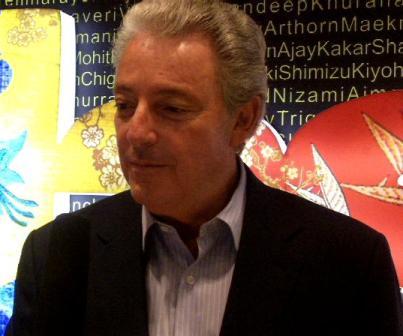
    Michael Roth, Chairman and CEO, Interpublic said that the focus is on change, and with the global economy changing, the highlight of this conference is the need to stay ahead of the curve in terms of new technology and new economies. While Piyush Pandey, Executive Chairman & Creative Director, South Asia Ogilvy & Mather also agreed that the focus of the theme is about keeping our minds open to change, he added, “It does not mean that you have to change tomorrow morning… but prepare yourself for the change, if you are not ready for it, you will get left behind.”


    Tom Doctoroff, JWT North Asia Area Director Greater China, CEO


    Tom Doctoroff, JWT North Asia Area Director Greater China, CEO, however also put some stress on consistency. He said while the theme of the conference might be provocative, we have to acknowledge that which remains timelessly true, like robust brand equity and big brand ideas.


    Vikram Sakhuja, CEO, GroupM South Asia

    Vikram Sakhuja, CEO, GroupM South Asia put it in simple terms, saying, “Uncertainty is the new certainty in the context of marketing primarily because communication to consumers has moved from a sequential, controlled, advertiser talking to consumer, to much more devolved, fluid and instant conversation with a consumer”.


    Ravi Deshpande, Chairman and CCO, Contract Advertising

    Talking about the correlation that the politico-social world shares with the sentiment or the idea of a brand in a consumer’s mind, Ravi Deshpande, Chairman and CCO, Contract Advertising said, “…You are bound to have an impact on marketing or advertising when the world around us keeps changing… if the world is uncertain, so are we in our business.”

  • AdAsia Exec Summary: Lively sessions mark Day One

    By Tuhina Anand

    AdAsia 2011 was inaugurated with the anthem of the Republic of AdAsia and a performance by the Shillong Choir Group.  This was followed by lighting of lamp by the Minister of Information & Broadcasting Ms Ambika Soni along with Dr Bhaskar Das, Co-Chairman of the Organising Committee and President, The Times of India Group and Mr Madhukar Kamath, Chairman Organising Committee for AdAsia and Group CEO and MD, Mudra Group. The flag for AdAsia was hoisted by Shahrukh Khan who also addressed the audience and reminded people of all the brands he has endorsed in his short speech. He however did emphasise that he believes advertising is not just for entertaining but about informing the consumer of a product so that when he or she is making a purchase he can make an informed choice.

    The keynote address was delivered by Mr Ram Charan, Author, Speaker and Business Advisor. The first session of the day was on ‘The Game Changers’ where Mr Harish Manwani, Chief Operating Officer, Unilever , and Chairman, Hindustan Unilever Ltd gave an insight into the company reinventing itself according to the changing times.  Mr Michael Roth, Chairman and CEO, Interpublic posed questions to Mr Manwani who answered all with aplomb. The key that emerged from this session was on the importance of adapting to the changing environment thus making the brands relevant to its consumers while at the same time being able to sell its products.

    The second session was on ‘Decoding the New Age Consumer’  where Mr Adil Zainulbhai, MD-India, McKinsey and Company Inc and Mr Laxman Narasimhan, Director, New Delhi, McKinsey & Company Inc, Mr Kochi Yamamoto, GM, Global Solutions Center, Dentsu tried to understand the behavioural pattern of the ‘New Age Consumer’.  The session gave insight into the changing world where the future remained uncertain and how marketers are grappling with this reality and trying to understand today’s consumers.

    Tom Doctoroff, JWT, North Asia, Area Director, Greater China CEO moderated the next session on ‘Asian Creative? A New Brief. On the panel were Akira Kagami, Global Executive Creative Advisor, Dentsu, Bruce Haines-Chief Strategy Officer, Cheil Worldwide, Kitty Lun, CEO, Lowe China and Piyush Pandey, Executive Chairman and CD, South Asia, O&M India. The panel gave an insight into creative from different countries where they operate including Japan, Korea, China and India. While Ms Lun talked about challenging authority and showing by example to help youngsters come up with great ideas. Mr Pandey brought into fore the relevant issue of remuneration where he stressed, ‘if you want good people, start paying them better’. Defending  standard of Indian advertsing, Mr Pandey said, “Just because a market is not in international domain for a century doesn’t mean that India is not into brand building.” He mentioned The Times of India and Cadbury’s advertising over the years that have made them successful brand in the country.

    Mr Kagami on the other hand who too was on the panel discussed the importance of corporate brand building that is critical in Japan as this helps in creating trust for thecorporate and its brands.

    Nikesh Arora, Senior Vice President and Chief Business Officer Google gave a ‘Google’ angle to his session where he began by asking people to put questions to him as QandA was not allowed in the earlier sessions. This set the mood for his session.  The next discussion was on ‘From Chat Rooms to Twitter…What Next?’. Kate Day, Communities Editor, Daily Telegraph Online, Arvind Rajan, MD and VP, Asia Pacific and Japan, LinkedIn, Earl Wilkinson, Executive Director and CEO, INMA were on the panel which was moderated by Rishad Tobaccowala, Chief Strategy and Innovation Officer, Vivaki.

    The last session of the AdAsia on Day 1 was on India 2020 where Kurush Grant, Executive Director, ITC, Sanjay Kapoor, CEO-Bharti Airtel Ltd, India and South Asia, Ravi Swaminathan, MD and Regional VP (Sales and Marketing), AMD South Asia shared views on how India can be made a truly global brand in the next 10 years. The session was moderated by Pankaj Ghemawat, Global Strategist.

  • Hard Knocks: Why does the ad world lose talent?

    During my interview with O&M’s chief Piyush Pandey for MxMIndia, he mentioned that the biggest challenge the industry faces today is one of hiring and retaining talented people. That some of the most interesting people don’t want in. His theory is that it has mainly to do with remuneration, and the problem of agencies not being able to pay people properly. Surely he’s right, he must know being an industry leader. But I think there’s more to it than money. Here are two other reasons why I believe the ad world does not attract as much talent as it should, and why many of its stars defect to other industries.


    One, there is killer competition amongst ad agencies, and the pressure and anxiety to win and retain accounts is intense. Now while business rivalry is healthy, when it borders on desperation, something’s gotta give. So not only do clients suck the agencies dry, some also tend to treat agency personnel with disdain and disrespect. This leads to loss of morale within an ad agency office, and the inevitable happens. One is always looking around for better career options. We must remember not all ad agencies are led by heavyweights like Piyush and Balki. Who can stand up to an unreasonable client. For most agencies, putting up with all sorts of demands from clients becomes a way of life. There’s the sword of losing a client perpetually hanging on the head. And frankly, I really can’t see a way out of this mess. It was like this decades ago, and it’s pretty much the same now.


    The other thing ad agencies have done is to give up the strategic planning function to the clients. Sure, large agencies have the so-called planning department, but these guys often do a cosmetic job for the brands. And are more like an extension of the market research agency. There was a time when client servicing people would offer major strategic insights. Now no one expects any from them. Either the creative directors figure out their own strategies, or the brand managers inflict one on the agency. It’s no longer cool being a suit in the agency business, it’s become more of a maintenance job. How can we then blame the officers for leaping over to brand management?


    And that’s also the case with media specialists, post the disbanding. I wonder if there are any media planners left. I only hear of media buyers being in demand purely for their abilities to cut sweet deals with media owners.


    It can’t be only about money. It never is.


    ***


    PS: With Twitter on a roll, every Seeta, Geeta and Reeta thinks she can be a journalist. Guys and gals, while I appreciate your enthu, do give us journos some credit, we must be in possession of at least a few skills, if not many! Ghazal master Jagjit Singh (who’s very much alive at the time of writing this, and all the best to him) was declared dead by some over-excited tweeters. Clearly, the khujli to “break news” is not restricted to the media.

    The lesson: Dear tweeters, leave news to us. And stick to sharing your lunch menu.

  • No place for Sonal Dabral and Prasoon Joshi at O&M


    By Anil Thakraney


    It has been a fantastic advertising career, to put it mildly, for the 56-year-young Piyush Pandey. Enough has been said about Ogilvy & Mather’s top dog and the Indian ad industry’s most celebrated player. So let’s just sneak in some yorkers and see if the bat still packs in the punch. It’s always a joy to meet the man because of his joie-de-vivre and the on-the-tap humour. Tonight it’s even more fun as we lounge by his sea-facing apartment off Shivaji Park, with Piyush downing vodka shots.


    Q: Don’t see you much in the media these days. Finally got fed up of the over-exposure?

    I have never approached any journalist ever in my life. And I have never said no to any journalist either. Actually, I have been travelling quite a bit these days. But I have never felt I am missing out on anything. And sometimes journalists call to ask about things one doesn’t know. Anything that happens, I get a call! (Laughs.) Also, in the earlier days, I used to attend parties but now I seldom go. I even avoid judging (ad competitions) these days because it takes away five days of my time.


    Q: You’ve spent a lifetime in the ad world. Still get the same buzz? Aren’t you bored?

    The day I stop getting excited about this business I will go. You don’t know what a kick I get out of this profession. Gratification comes to people from various things. Some get it by playing golf. Others by spending a day at the club. I get my kicks out of meeting people in my office, and out of the ideas. I have never thought of my job as a burden, I am having a ball.


    Q: Oh ok. After you built yourself that palace in Goa, I thought Piyush would disappear to the beaches.

    It’s a three-bedroom house, not a palace! And when I am in Goa, I look at my watch and say, “Oh! It’s only nine o’clock!”


    Q: O&M’s big boss, Shelley Lazarus, famously said you are the brightest mind in the network. And we all thought Piyush would take global charge of the agency.  

    It doesn’t make sense to the company and it doesn’t make sense to me. I do sit on the worldwide board, I have a view on the worldwide policies. But I will never re-locate myself. Also, I don’t believe in controlling the world, I enjoy being in India. I think we are still on a graph which is unfolding. And I love having Indians around me. So I can give all that I have learnt to the world, wherever relevant, but I don’t think that burden is mine. (Laughs.)


    Q: I suspect the key reason for your huge success is understanding the Indian culture and ethos. By extension, that means you will struggle in other nations.

    Markets don’t scare me, I do help if there’s a need somewhere. I go there and discuss the idea and then leave it to the locals to express it. What I once hated happening in the good old days, how can I do that to the others now that I am a worldwide board member? I will never do all those things which I disliked. Even when I discuss ideas with Pakistan, I tell them I don’t think I am capable of understanding their local nuances.


    Q: Ah, I get it. You don’t want to do what Neil French did to you. Which is to try and interfere in your work. I remember you told him this: “Neil, come help me, don’t f*** with me.”

    I did tell him that. Because he tried to (interfere). But he couldn’t do it. My first conversation with him was, “I will show you some work we have done for Cadbury’s and I don’t want your comment on it”. (Laughs.) I must share another incident with you. Many years later at a creative meet near Jodhpur, Neil saw the Hutch boy-and-dog film and tried to make fun of the song. And in the evening my boys went and got the Rajasthani musicians to sing the same song for him! (Laughs loudly.)


    Q: Your rival agency heads are pursuing other passions and enjoying a lot of success in those. Making movies, writing songs. You don’t feel the need to experiment?

    Those things come to you when you are bored of what you are doing. And I don’t think three hours is a greater achievement than one minute. I did it once, I wrote the script for the film ‘Dus’ for Mukul Anand but it never got completed because he passed away. But it (movies) never excited me. The kind of people who wanted me and Prasoon (Pandey) to write… from Yash Chopra to Subhash Ghai to Dev Anand… and I told all of them this is stuff I would do on a weekend or at night. That my first job is advertising. I can only handle one thing at a time.


    Q: New media is upon you in a big way. Ready for it? Honestly.

    One, we are investing heavily in the new media. There is no technology that we haven’t provided to our youngsters. And two, in my working life, things aren’t going to change. I see maximum activity in the mass media at least for the next five years. So the idea is to invest for the future. Which we are doing.


    Q: And you aren’t on Twitter or Facebook.

    I am not even on the internet. I don’t even know how to start a computer.


    Q: You are joking.

    I am not joking. I did not study all these years to become a typist. Every computer user is a fantastic typist. (Guffaws.)


    Q: So if a client wants to know how he can promote his brand on the digital media, you are in trouble.

    I will sit with him (the client) to assess the solution. And tell him that I have people on my side who will help him. To give you an analogy, I know what a good ball is, but I can’t bowl it. So I will get Kapil Dev to bowl it.
     

    Q: I think you are a test match player who now has to deal with the T20 format. And you don’t understand that game.

    I am saying to the client, I will put together a team that can satisfy his needs. I will not play the T20 match. But I will come and watch every match. I will hire the best T20 players. And I will cheerlead them.


    Q: There’s a flip side too. Does it worry you the excess use of tech may make the youngsters get disconnected from the real world? Which is where big ideas come from.

    I didn’t write the MP Tourism ad, the kids wrote it. Also the Asian Paints work featuring the two brothers. They wrote it. So I think the next generation is very savvy. They know that even in the digital space it is the idea that will win. The idea is to know the medium, but express the same kind of engagement that we have done all these years. But yes, about being buried in technology, there is a worry, and for the world at large, not just for Ogilvy. I say to the youngsters: go to Facebook, but don’t become faceless. That, interface is the greatest way to connect with people.


    Q: The one big challenge facing the ad world?

    We need better remuneration from clients to be able to hire interesting people in the industry. I don’t have the answer to this challenge right now. But before I leave this company, I will make every attempt to make sure this is solved. If we don’t pay people well, how will we get the best people into the industry? Every agency is under so much pressure, we are not negotiating properly with clients. Maybe clients are better negotiators than us. If other industries are taking our people away, then we have a problem.


    Q: Does it hurt when you nurture young guys, train them, and then they go and head rival agencies?

    Sometimes, yes. But not with guys who are leaving to do the same job that I am doing. That is a natural progression of life. I regret losing those people who had misconceptions about themselves and their abilities, and left to do it on their own. And then disappeared. And all that talent Ogilvy alone hasn’t lost, the industry has lost it. Because in the next job, if the guy is a failure, he simply disappears.


    Q: If Sonal Dabral and Prasoon Joshi wanted to return to O&M, and you had place only for one, who would you pick?

    None of them. Because our people have grown. And in the last five years, they’ve done work that’s the best in the industry. So why would I put anyone on top of them? Sometimes when you vacate a position, others grow into that position so fast, it becomes difficult for them to be brought back. If you missed three matches, and Vinod Kambli came and scored three double hundreds, how do you get Kambli out of there? It’s important for all of us to be at the right place at the right time. Suppose I decide, before my retirement, that I want to be in Goa and am going to write my book. Then somebody will obviously occupy my position here. Now if I want this position back two years later, and if that guy has done so well in the meanwhile, they’ll say ‘Sorry!’.


    Q: Are you planning to write a book?

    I will write one. But it will not be a prescriptive book. I will write something that people read between the lines. It will apply to life and not just advertising.


    Q: Any red hot-tips for youngsters?

    One, celebrate life. Don’t crib. Because if you crib four hours a day, you don’t approach anything with a positive mind. Two, if you are passionate about something, go ahead and do it. Don’t worry about society. You might actually become the role model for that. And three, in the world of communications, respect your environment. If you don’t think of the receiver, you will never make a good giver. For example, on your way to Jaisalmer, did you notice, in that 48 degrees heat, those guys who are tarring the roads, they are singing songs to distract themselves from the adversity? That is what will give you insights.


    Q: Your retirement is due in exactly two years. Will you actually leave?

    Maine aaj tak life plan nahin ki. Did you, in your younger years, ever hear from me that one day I want to be the Chairman of this company? You didn’t. I don’t make long-term plans, I only make plans for tomorrow. That I will wake up at five in the morning and go for my walk. And even that may not happen! (Laughs.)