Tag: Ormax Media

  • Front Page 2012: Salman Khan & Katrina Kaif ranked Most Popular Bollywood Stars of the Year

    According to the results of Front Page 2012: A Media & Entertainment Review, the Ormax Media yearender, Salman Khan and Katrina Kaif emerge as the Most Popular Bollywood Stars in the respective male and female categories for the second consecutive year.


    With the record-breaking success of Ek Tha Tiger, Salman leads with a huge margin. However, his share sees a marginal drop of 3% over the last year. Katrina, on the other hand, has only strengthened her already dominant position and occupies the highest share across all territories. Her combined share is higher than that of the female stars in the second and third positions.


    The table below captures the top 5 Bollywood stars – males & females for the year, with their respective popularity share:

    Males

    2012

    Females

    2012

    Salman Khan

    45

    Katrina Kaif

    54

    Shahrukh Khan

    27

    Kareena Kapoor

    33

    Hrithik Roshan

    22

    Priyanka Chopra

    18

    Akshay Kumar

    20

    Aishwarya Rai

    15

    Aamir Khan

    18

    Kajol

    11


    With the success of Jab Tak Hai Jaan, Shahrukh Khan ranks second with the 27% share, maintaining his dominance over the West Bengal Territory. Hrithik Roshan and Akshay Kumar have both gained momentum while Aamir Khan loses share despite his path-breaking television debut and the release of Talaash.  Emraan Hashmi though not on the top list, emerged as the success story of the year. He gained the highest share of 176% amongst all actors and it will be interesting to note his journey on the charts in 2013.


    Amongst female stars, Kareena Kapoor, with four releases this year, emerges as the second most popular star with 48% growth over the last year, followed by Priyanka Chopra who moved up from no. 5 to no. 3. She had two successful films in 2012 and this contributed to her growth on the charts.


    Vidya Balan added to her popularity with the success of Kahaani making her the success story amongst actresses. She has gained the highest share amongst actresses of an impressive 241% growth. A number of actresses made their debut in 2012, but only Parineeti Chopra (debut in Dec 2011, solo debut in May 2012) features in the top 15 actresses with a 2% share.


    The results are based on consumer research conducted amongst 39,000 theatre-goers through the year 2012 across 19 cities. MxMIndia is exclusive media partner for Ormax Media’s Front Page 2012. MxMIndia will carry exclusive coverage on the findings over the next few weeks.  Set up in 2008 by Vispy Doctor and Shailesh Kapoor, the Ormax Media partners with 76 leading media brands today, including Star India Network, Viacom 18 Television Network, Sony Television Network, Turner India, Disney India, Times Television, Yash Raj Films, Fox Star Studios, Viacom 18 Motion Pictures, DAR Motion Pictures, Group M India, Radio City, My FM and many others.


  • Front Page 2012: Bade Achhe Lagte Hain & Balika Vadhu Most Popular Hindi Fiction Shows

    By A Correspondent

    According to the results of Front Page 2012: A Media & Entertainment Review, the Ormax Media yearender, Bade Achhe Lagte Hain emerges as the Most Popular Hindi Fiction Show for the second consecutive year, followed by the long-running daily Balika Vadhu.

    The results are based on consumer research conducted amongst 34,400 Hindi GEC viewers (SEC ABC) through the year 2012 across 14 cities.

    Bade Achhe Lagte Hain saw a generation leap and the introduction of a new character Pihu, while Anandi was remarried in Balika Vadhu recently. These key events managed to sustain audience interest, ensuring that the popular serials continue to rule the audience charts.

    The table below captures the top 5 fiction programmes for the year, with a popularity score representing their audience response:

    Rank Show Channel Score

    1

    Bade Achhe Lagte Hain Sony

    24.7

    2

    Balika Vadhu Colors

    18.1

    3

    Taarak Mehta Ka Ooltah Chashmah SAB TV

    14.6

    4

    Diya Aur Baati Hum Star Plus

    12.3

    5

    Saath Nibhana Saathiya Star Plus

    10.1


    While Sony and Colors take the top slots, Star Plus is the only channel to feature twice in the Top 5 list. In a list dominated by female-centric programmes, SAB’s Taarak Mehta Ka Ooltah Chashma stands out with its family-inclusive content.


    In the Most Popular Hindi Non-Fiction Shows category, Kaun Banega Crorepati (Sony) continues to occupy the top position in 2012. The Dance India Dance franchise (Zee TV) emerges as the second most popular reality show in the year, with DID Season 3 and DID Li’l Masters on air during 2012.


    Given below is the list of the Top 5 Hindi Non-Fiction Shows in 2012:

    Rank Reality Show Channel Score
    1 Kaun Banega Crorepati Sony

    29.5

    2 Dance India Dance Zee TV

    22.4

    3 MTV Roadies MTV

    20.8

    4 Jhalak Dikhla Jaa Colors

    18.1

    5 Satyamev Jayate Star Plus

    16.1


    Owing to its strong equity among the college going youth, MTV Roadies features at the third position. The ninth season of the show with the tagline “Everything or Nothing” traveled to the United States of America.


    Celebrity dance show Jhalak Dikhla Jaa moved channels this year, from Sony to Colors,but continued to fare well, featuring at the No.4 position. Its social appeal, coupled with Aamir Khan’s sincerity, got Satyamev Jayate an entry into the Top 5 – the only programme on the list witho no previous season!


    MxMIndia is exclusive media partner for Ormax Media’s Front Page 2012. MxMIndia will carry exclusive coverage on the findings over the next few weeks.  Set up in 2008 by Vispy Doctor and Shailesh Kapoor, the Ormax Media partners with 76 leading media brands today, including Star India Network, Viacom 18 Television Network, Sony Television Network, Turner India, Disney India, Times Television, Yash Raj Films, Fox Star Studios, Viacom 18 Motion Pictures, DAR Motion Pictures, Group M India, Radio City, My FM and many others.


  • Ormax Media announces Front Page 2012 yearender

    By A Correspondent

    Ormax Media, leading consumer knowledge company specializing in media and entertainment insights, has announced the launch of its yearend report ‘Front Page 2012 – A Media & Entertainment Review’. Front Page 2012 will cover the highlights of the eventful year of 2012, across 51 categories based on television and film industries. All the results in Front Page 2012 will be based exclusively on viewer research conducted by Ormax Media. The report is scheduled for launch in the second part of January. MxMIndia is exclusive media partner for Front Page 2012. Watch this space for exclusive coverage on the findings over the next few weeks.

    The categories will cover not just national but regional businesses as well, with specific focus on Tamil, Telugu, Marathi and Bengali industries. The report will be based on the results of various surveys carried out by Ormax Media throughout the year, as well as on the results of syndicated Ormax researches such as Cinematix, Showbuzz, Heartbeats, Characters India Loves, Stars India Loves, Celebritix and Small Wonders.

    Shailesh Kapoor

    Speaking about the report, Shailesh Kapoor, CEO, Ormax Media says: “2011 saw the first edition of the Front Page report. This year, the report carries information on double the number of categories. It will be the only report that will chronicle what happened in 2012 purely from a consumer perspective, with no subjective trade perceptions at all.”

    Set up in 2008 by Vispy Doctor and Shailesh Kapoor, the company partners with 76 leading media brands today, including Star India Network, Viacom 18 Television Network, Sony Television Network, Turner India, Disney India, Times Television, Yash Raj Films, Fox Star Studios, Viacom 18 Motion Pictures, DAR Motion Pictures, Group M India, Radio City, My FM and many others.

  • Ormax Media strengthens research team

    By A Correspondent


    Ormax Media have strengthened their research team to meet the growing needs of their business. Anurag Bakhshi has recently joined the firm as ‘Head, Television Research’, while Gautam Jain, who has been with organization since 2010, has been elevated to the position of ‘Research Head, Films’. Mr Bakhshi comes with nine years of cross-functional television experience, where he worked with Zoom, Filmy and Imagine TV, across various functions, including marketing, content and presentation.


    Shailesh Kapoor

    Speaking about these changes, Shailesh Kapoor, CEO, Ormax Media, said, “We continue to witness amazing annual growth of about 35-40% for the last three years. As a result, an expansion of the research team has been on the cards for some time. Anurag and Gautam have the relevant experience, passion and skill sets for the television and films domains respectively.  I’m happy to see them lead the company in its next phase.”


    Ormax Media works with more than 55 channels in India today. The television research department manages flagship products such as Showbuzz, CIL and True Value, besides bespoke research projects, including large-scale quantitative and qualitative research projects.


    Speaking about his new role, Anurag Bakhshi said, “I’m extremely excited to be a part of the revolution that Ormax Media is bringing in the media & entertainment industry in India. The company has done seminal work in helping broadcasters use consumer knowledge to take key business decisions. I look forward to being a part of what I believe will be some very exciting years ahead, both for the television industry and for us at Ormax.”


    Ormax Media’s film research work is driven by its flagship products Cinematix and Moviescope, which are used by all the leading Bollywood studios and independent producers. The firm is widely recognized as the first and only company in India to have built film research and analytics capabilities.


    Speaking about his new role, Gautam Jain said, “When we started in 2010, we were not sure of the potential of ‘film research’ in India. But the whole-hearted acceptance from the industry has surpassed our expectations. At Ormax, I’ve been a part of pioneering work in film research in India. Now that we have created a separate film research vertical, I’m sure it will propel us even further.”


    Besides television, Ormax Media also does extensive research & analytics work in the areas of print, radio and branded entertainment.


  • Thackeray funeral & Kasab execution lead to news viewership spike: Ormax study

    By A Correspondent


    All leading news channels benefited from big news events in the week of Nov 18-24, according to Ormax Media’s syndicated research Ormax TV Track. The week saw Bal Thackeray’s funeral on Sunday, Kasab’s execution on Wednesday and start of the winter session of the Parliament from Thursday, besides other regular news events.


    Ormax TV Track records viewership of television channels based on day-after recall (DAR). The weekly research covers 1,400 respondents every week, across 17 cities.


    Based on the results, the news category showed 34% increase in its viewership, vis-a-vis the previous week (Nov 11-17). Category leader Aaj Tak showed an increase in its average daily reach from 17% to 23%, while ABP News jumped from 13% to 17% average daily reach.


    Shailesh Kapoor

    Commenting on the results, Shailesh Kapoor, CEO, Ormax Media, said: “Last week was an unusually busy week for news channels. An increase in recall is indicative of both a higher volume of audience, as well as higher engagement levels with the content. Movie channels were affected the most as a result, while GECs and other niche categories seemed unaffected.”


  • Do pre-release star appearances work?


    By Meghna Sharma


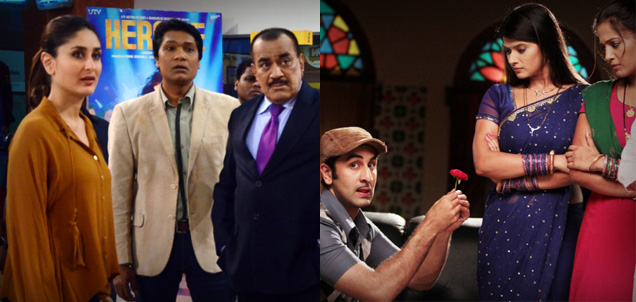
    What is common between Kareena Kapoor and Bipasha Basu? The answer is: CID. Yes, both the actors were rescued by none other than our very own team of ACP Pradyuman and his agents.


    Today, seeing actors on television is not a surprise. Most of them can be seen on the small screen as hosts or judges on reality shows. However, in the recent past one has seen them play a character or themselves in fictional shows where the plot of an episode is scripted around them. And the two actors are the latest to join the bandwagon of various other actors who have made a “special appearance” on the small screen to promote their upcoming film.


    Dinesh Rathore

    According to Dinesh Rathore, COO, Madison Media Omega, the difference between the big screen and the small screen faded away in the last decade as superstars entered the medium. “Actors making an appearance on television is a win-win situation for both. Television has vast reach so actors get to promote their films, and a channel can save money if the actor appears on their shows to promote his/her film.”


    He’s not alone, even broadcasters which are competing with each other to get the stars to their channel before others do also feel the same. Vivek Bahl, Chief Creative Director, Sony Entertainment Television says, “Big fiction shows with a dedicated & measurable viewer base is a great platform for an actor to promote his / her upcoming film with the show. And, for the show itself, one can always create buzz and sampling with the

    Vivek Bahl

    anticipation of a star appearance.”


    On the same note, Ajay Bhalwankar, ZEEL’s Content Head (Hindi GECs) feels that fiction shows are the staple diet of any General Entertainment Channel and the presence of a Bollywood celebrity is woven into the existing storyline of the fiction show, hence increasing the chances of a better recall. “As a medium TV cannot be ignored by marketers.”


    Prashaant Bhatt

    “Be it with a Jhalak Dikhhala Jaa or Madhubala, the audience for each show is varied and this is what works in favour of the movie that is promoted on the show,” explains Prashaant Bhatt, Weekday Programming Head of Colors, who believes that the trend is only going to move forward. “It is vital for any promotional activity to be present on all the mediums that helps them connect with the viewer. So, in the future, the trend could possibly be digital with the introduction of various apps etc, anywhere the audience/moviegoer is.”


    Shailesh Kapoor

    However, Shailesh Kapoor, CEO of Ormax Media feels that film star presence on fiction shows helps the films more than the channels. But the channels can use the stars in the promos and create buzz around it. It can give a viewership spike only if the star does something really interesting in the show. “In a recent study conducted by us, television emerged as the driver of both reach and appeal for film campaigns, way ahead of print and outdoor. I believe that channels should start charging film producers for such integrations, the way they charge advertisers.”


    Priti Murthy

    If both stars and broadcasters are winners here, Priti Murthy, National Director – Insights at Maxus India adds that viewers too don’t have much to lose out on. “I think even viewers win here as they get to see new faces or a new plot in their regular shows. Also, stars appearing on shows is a global phenomenon; in the west, stars appear on shows like Saturday Night Live.”


    It appears no one has anything to lose here!


  • New weekly column by Shailesh Kapoor: Primetime Fiction – Reasons for Seasons?

    By Shailesh Kapoor


    Of all my client interactions, I enjoy the ones with foreign clients (often from head offices of their Indian companies) the most. There’s a specific reason for it. The amazement and the child-like inquisitiveness with which they react to research based on mass Indian audiences is so gratifying. Our primetime fiction content is beyond the realms of their comprehension, let alone appreciation. I was once asked: “So are you telling me that every single show that comes on weekdays primetime in India is a family drama?” My attempt to explain that ‘family drama’ is an overarching box with about 7-8 genres within it lasted only a few seconds.


    However, one of the more relevant and genuinely thought-provoking questions I’ve been asked by broadcasters from outside India is: “Why don’t you have seasons in fiction shows in India? Why does everything go on and on and on?”


    We know the stereotypical responses to this, don’t we? Three most common answers will be:


    1. Indian audiences don’t know the concept of seasons. It is a foreign thing.

    2. Only one out of four fiction shows actually succeeds, so why give it a season’s break and run the risk of not getting the audiences back.

    3. It’s a drastic idea and we are not in a position to experiment right now.


    All these responses are based on a natural tendency to exercise risk aversion. But neither the (ex) television executive nor the researcher in me approves of any of these answers. In fact, I have a robust argument here to prove why a seasonal approach to daily fiction will be a runaway success in India.


    Primetime fiction in India is based on the premise of the audience, particularly women, being addicted (and I choose the word carefully) to watching the life of certain ordinary, people-like-us characters unfold in a dramatic, extraordinary manner. All the enduring success stories in the last 12 years have come from this central thought, which our foreign friends simplistically and erroneously classify as “family drama”.


    Then why do serials begin to lose audiences? It is popular knowledge that shelf life of serials today is significantly lesser than what is was before 2008. Most successful serials peak within one year, and are well past their prime by the end of their second year. Very few like Balika Vadhu manage to complete four years of a successful run, not withstanding the hiccups on the way. Is addiction so ephemeral?


    Serials lose audiences because there is an equally powerful force that counters ‘addiction’. I call it ‘extension’. If you have had the privilege (no other word describes the experience) of attending qualitative research on serials with housewives as the target audience, you will be familiar with two phrases: “Pehle achha tha, aajkal chewing (pronounced ‘chingum’) ki tarah kheench rahe hain” and “Story ko round-round ghuma rahe hain.”


    Almost every serial becomes a victim of this ‘extension’ once it completes about 100 episodes. It becomes the proverbial chewing gum, or the vicious circle in which it has trapped itself. Only to come out momentarily before being trapped again.


    Even before 2008, serials had extension issues. But at that time, options were far and few. The number of GECs were lesser, the number of TV channels even more so. The consumer was not spoilt for choices. She accepted extension as a part of her TV life. Today, she is exercising her choice and actively rejecting extension. Because she has another serial in the same slot, waiting with a sizeable dose of addiction that is currently free of extension.


    We all know why extension happens. Daily serial production, with 260 episodes a year, is a breathless, never-ending assembly line. There is no time to take a break, because there are no episodes in the bank. Anecdotes of content being recorded on the evening of the telecast are so common; no one bats an eyelid when you narrate them, except the foreign friends of course.


    It is humanly impossible to ideate at this fervent pace round the year. Even the smartest, most creative brains will operate at sub-optimal levels when consistently pushed against ridiculous timelines. And when that happens, extension, often unknowingly, is their best friend.


    My estimate is that about 70% of an executive producer’s time (both at the production house as well as the channel) is spent on operational running of his/ her programmes. Only 30% is spent on ideation and creativity, which incidentally form the bedrock of the job profile.


    Now imagine a scenario where a top-rated show comes in seasons – One season a year of about 4-6 months. But the team on the show works round the year to make this happen. Instantly, the extension issues will be solved. There will be scripts in the kitty and episodes in the bank. There will be time to breathe, to ideate and to execute with full strength. There will be no need to stretch the chewing gum or go on a merry-go-round trip.


    What about addiction? For me, that’s the best part of it. Seasonal breaks can fuel addiction like nothing else can. Internationally, this has been proven beyond doubt. Common-sensically, if you take away what she is addicted to, she will yearn for it even more. And when she gets it back, she will see it with fresh eyes, with even more excitement than before. As long as the addiction center (read lead character) is unchanged, this will always work.


    What’s the flipside? Only one. A seasonal approach requires a higher investment to make it deliver to its full potential, because you need to commit to a team on the show for the entire year, amortized over only about 100-130 episodes, instead of 260. But compare this incremental cost to the investment that’s sunk in a serial that fails, and you know that this is a non-issue.


    Is someone likely to try this anytime soon? I will not bet on it for 2013 at least. Our GECs are more cautious and less experimental today, than they were a few years ago. The seasons idea may be too bold to buy into currently, given the musical chairs battle for the top four spots that they are currently engaged in.


    But at some stage, the future should be more seasonal. Hopefully.


    Shailesh Kapoor is founder and CEO of media & entertainment research and consulting firm Ormax Media. He spent nine years in the television industry before turning entrepreneur. He can be reached at his Twitter handle @shaileshkapoor


  • MTunes HD launches ‘MTunes Trending20’

    By A Correspondent


    MTunes HD – the HD Bollywood music channel has announced the launch of a countdown show called ‘MTunes Trending20’, presented by Bharti Airtel. This is in keeping with the channel’s premise of delivering “music like never seen before”.


    Historically, countdown charts have been based on record sales. However, given the fact that music consumption is spread across multiple platforms these days, MTunes Trending20 brings to its viewers a comprehensive analysis of audience preferences across 5 platforms. The final chart will be compiled by leading media research firm Ormax Media.


    The five platforms will be Radio popularity compiled by Radio City, Digital downloads provided by Hungama, YouTube views & Heartbeats (weekly music research) by Ormax Media and audience preferences as recorded by MTunes HD. A normalized measurement formula based on TV Ratings Data, Radio Aircheck, SMS requests, downloads/usage tracking across mobile service providers and views count on popular internet video sites will be collated to generate the weekly chart.


    Presented by Bharti Airtel, the weekly show – scheduled to launch from August 04 every Saturday – will play the top 20 songs of the week. Through the week the top songs on MTunes Trending20 will also be highlighted on the daily play list.


    Speaking on the occasion, Saravanan P, CEO of MTunes HD said: “MTunes Trending20 is a reaffirmation of our promise to deliver ‘Music Like Never Seen Before’ and strengthens a long line-up of path-breaking formats like Kal Ka Superhits, Handmade and MBox already on the channel. We have pioneered the industry by launching the World’s first HD Bollywood Music Channel and are committed to consistently drive growth for our stakeholders. This show will deliver the gold standard of Bollywood music rankings to the industry and is among several initiatives in the pipeline that will make the MTunes HD viewers feel the music!” The channel is reportedly pricing the property at a premium and is confident of changing the game for the genre with its unique concept and distinct proposition.


    Shailesh Kapoor, CEO-Ormax Media added: “Today, music is consumed across media – television, radio, internet, mobile phones and other digital devices. MTunes Trending20 is a unique property that captures the combined effect of all these media.”


  • Fourtifying media & brands with research


    By Meghna Sharma


    In today’s world where there are plenty of brands for consumers to choose from, an in-depth knowledge about the target audience is as much as a necessity as breathing for any brand to become successful. Research now plays an increasingly important role in a brand’s lifeline.


    Entertainment industry today is growing at a fast pace and with number of options available to the TG, the brands need to know what will make the TG choose them over others.


    Ormax Media, a media & entertainment research and consulting firm, entered the industry four years ago (July 28, 2008) with a motto of helping brands understand and retain not only their target groups, but also help them grow in their respective fields.


    Clients Speak
    Raj Nayak, CEO, Colors

    Raj Nayak

    Ormax Media has opted for a very focused media research approach, which was a definite need gap for the industry, especially TV. Ormax has managed to capitalise on this opportunity with their innovative and robust tools specifically designed to cater to these needs. At Colors we have always had a research-oriented approach towards content development. In that context, we have been working with Ormax Media since the very beginning (interestingly both Colors and Ormax Media came into existence around the same time!).


    It has been a fruitful association so far, and I would believe this to be true for both the parties. While working on some really interesting projects together, there has been a lot of learning that has enabled us to know our viewers even better. An effective promo creative measurement tool, which builds in the crazy timelines of the creative getting ready and it hitting on-air, is something which I feel is still a need gap at this point of time. Keeping in line with their record for building research tools which have catered to the needs of the industry, this is one area where we see tremendous potential for Ormax.

    ____________________________________


    Chandramohan Puppala, business head, Saam TV

    Earlier, most of the companies used to rely on gut feelings or follow TAM to get an idea about what their audience wants. However, one couldn’t predict the change in trends or know their TG’s mindsets. It was a big challenge for channels, especially regional channels, to know their viewers. It was an even bigger challenge for regional channels, where Hindi was also the majority language. For instance, in Maharashtra, Hindi is also spoken by people. Also, in smaller markets, no matter how the sampling is done, choices differ from region to region. Hence, when research entered the entertainment industry, it helped channels to have a direct connect with the audience and guided them on how they can change their course to gain the most.


    Ormax Media adapts very quickly to what the clients’ want and provide a customized research which enhances their role among their TG.

    ____________________________________


    Ashit Kukian, COO and president, Radio City

    Ashit Kukian

    For any industry today, research is an important element. However, it is important for an organization to be very clear about what they want as an end result. The brief we gave to Ormax and their own learnings have made it a win-win situation for both. The inputs we get from research are visible in the results. So, as the industry gets more mature, there is going to be a robust growth in the field of research as well.

    ____________________________________


    Jai Lala, principal partner, Mindshare

    Jai Lala

    Since there is no syndicated data available, there can be a lot of fangs to it, especially in the television industry. Take sports broadcasting for instance, there are a lot of ground partners, so it is a complicated process. Hence, research helps us to understand the market and how to maximize from an event. Last year, for IPL we had done a joint research with Ormax Media and it was quite fruitful for us.

    ____________________________________


    Atul Phadnis, founder and CEO, What’s On India

    Atul Phadnis

    Ormax Media is spearheaded by people like Shailesh Kapoor who have practical knowledge about channels. So, it gives the organization an uncanny ability to know what the key questions are which need to be answered. This helps them to not only know what a channel wants, but also how the research must be conducted. Also, the organization offers customized and structural services which have helped the industry grow.


    As the firm celebrates its four years of existence, MxMIndia spoke to the founders to get an insight on how research has evolved over the years and how the journey has been for Ormax Media so far…
     

    Vispy Doctor

    “Till a few years ago, the phrase ‘consumer knowledge’, which is our prime derivable, wasn’t a common phenomenon. When we went to media clients in the entertainment space, for many of them research was a new thought.  So, we had to explain how it could help them create better products which will help them grow,” recalled Vispy Doctor, founder and managing director, Ormax Media.


    Over four years, Ormax Media has worked with 76 leading media and entertainment brands as business partners. In the first year, it focused on television, and GECs in particular. In the second year, the focus was expanded to other television genres as well as radio. In the third year, Bollywood became the priority. And now, at the end of the fourth year, the organization is set to offer unique and relevant offerings.

     

    Shailesh Kapoor

    Elaborating on Ormax’s four years, Shailesh Kapoor, CEO said: “The first four years of Ormax Media have been very eventful and successful. We have received great support from the media & entertainment industry, especially in our endeavour to create unique research products and approach entertainment research in ways that are unconventional and challenging, but also result oriented.”


    Growth matters

    The entertainment industry has its pros and cons and one of the biggest ‘cons’ of the industry is that it comes with a fairly low success rate – as low as 15 per cent. Therefore, the organization hopes to help the industry increase its success rate, even if by a small percentage.


    “Since we have been able to explain it to our clients, they have appreciated and accepted the concept of research. Hence, our growth has been fairly steep, and I can say that we are growing at a fairly high rate of 75-80 per cent, as we add more and more partners in our kitty,” said Mr Doctor.


    According to Mr Kapoor, the television industry has its cyclical changes, but is in a fairly stable state, vis-a-vis what it would have been 5-6 years ago. However, he does add that the definition of “stable” in television is very different from that in packaged goods and other sectors.


    As for the film industry, it is in an evolution stage, much like what the TV industry was in the late 90s and early 2000s. And one can see exciting times ahead for Bollywood, especially in research, where it has seen growing acceptance year-on-year.


    As far as Radio is concerned, it hinges a lot on the Phase 3 licenses. “Media & entertainment is a growing business, and research will continue to become more and more important as the market matures. We are all set for the challenges ahead,” Mr Kapoor added.


    Procedure: Easy or difficult?

    The organization offers a number of research products for various sectors of the entertainment industry. The list includes broadcast television networks, radio networks, film studios, newspapers, media agencies, DTH service providers, digital entertainment companies and production houses.


    So, when asked how difficult or easy the research procedure is for each variant, Mr Kapoor explained: “The larger GECs are the easier ones, as they are far more professional and they understand the value of research. Whereas in the more touchy-feely areas like films and creative companies, it becomes a little difficult as it is more about sentiments. However, it is difficult to rate them as it might be easier to work for a GEC, it might be more interesting for a film.”


    He added: “As a good service company, it becomes our job to orient ourselves to the client’s needs, but without compromising on the research rigor and correctness. That’s the balance that may be easy or tough. But it’s a part of our job.”


    A correct sample size plays is essential for any research to become successful and come out with results which will benefit the researcher. So how does the organization choose its sample?


    “For every client, the TG might different so we have to be careful about what attributes are they looking for in a sample size. For example, for a serial, it might be cultural overtones. So, how that serial is perceived in a city like Mumbai will be very different from how it is perceived in a small town like Indore. And if we are able to find this difference and collate preferences, it will help the channels,” explained Mr Doctor.


    Expansion plans

    The organization’s focus is to consolidate through new clients and repeat business. It now has 21 products for various sectors and plans to entirely focus on these products and getting them to become bigger and better in their own right. Also, it plans to target media agencies and advertisers through products like Celebritix, which was launched on July 25.


    “I’m often told that whichever channel you go to, Ormax gets mentioned in conversations consistently. We have a young team which made this happen. Four years ago, I would have bargained for much lesser. But again, this is only the start, and we know that we can achieve a lot more than what we have so far…” said Mr Kapoor.

     

  • Ormax to help brands pick right face with Celebritix

    By A Correspondent


    How many times you have watched an advertisement and wondered ‘how is this celeb relevant for the brand?’ And if you are from other side, ‘which celeb will suit my brand?’


    Now you can stop worrying and wondering, Ormax Media has come up with a new product, Celebritix – a celebrity evaluation software – which will make it all simple.


    The celebrity evaluation software allows brands to evaluate and select the best celebrities for endorsements and film tie-ups, based on the fit between the brand and the celebrity.


    According to the study done by the organisation, almost 16 per cent of the television advertisements feature celebrities. “It is important to know who the ‘right’ celebrity for a brand is and what he/she can do for it. A correct candidate not only helps to differentiate the brand but also builds visibility and drives sales,” said Shailesh Kapoor, CEO, Ormax Media while launching Celebritix.


    The software is targeted for mainly advertisers, media planners and celebrities firms to help them which attribute of a celeb suits a brand/product the most. As per the research done by Ormax, there are 20 most common attributes which can help in the process of finding the right face for a brand. Some of the attributes in the Celebritix list are vivacious, adventurous, bold, righteous and youthful.


    The software will allow the users to create a brand profile by assigning weights to different attributes that best describe the desired personality of the brand. Based on the brand profile, the software will recommend celebrities that best fit the brand, using a proprietary metric called the OCX (Ormax Celebritix) Score.


    The OCX Score can also be used for selection of films for associations, based on the fit between the star cast and the brand. Additionally, subscribers will have access to two other modules – Stars India Loves (SIL) and Box Office Forecast – that will allow them to take informed decisions on film tie-ups.


    SIL is Ormax Media’s monthly star popularity research product running since November 2010. In Box Office Forecast, the users will get an indicative estimate of the likely opening day performance of the film at the domestic box office, based on campaign tracking, category trends and normative data. The forecast will be available up to 12 months before the release of the film.


    Celebritix currently features a total of 36 celebrities from Bollywood and cricket. Every quarter, up to 10 new celebrities will be added to the tracking, based on market trends, box office and cricket performance. The research covers 4,000 respondents every quarter, across 20 attributes, in the target group of 18-44 yrs., SEC ABC, across Mumbai, Delhi, Bangalore, Ahmedabad and Lucknow.


  • Ormax Media to forecast TV viewership using True Value

    By A Correspondent


    Ormax Media announced the launch of the new version of its television content testing tool – True Value. Since its launch in 2009, True Value has been the television industry’s certified tool for content pre-testing. The tool has been used to test 146 programs across 19 channels.


    The new, enhanced version of True Value now allows broadcasters to forecast the viewership of new launches. The tool is available in three versions – for GEC fiction (Hindi & Regional), for all types of non-fiction (GECs & niche channels) and for kids channel animation content.


    True Value has two statistical tests built into its design – Go Or No Go (GONG) Test and Success Test. The GONG Test can be used to decide whether a program should be put on-air at all, while the Success Test can be used to predict if the program will fit the definition of ‘success’, as defined in the context of the genre and the channel.


    Shailesh Kapoor, CEO – Ormax Media said: “The previous version of True Value was more directional in nature, while the revamped version is more action-oriented. Its ability to forecast the steady-state viewership of a program makes it extremely useful for taking business decisions in the area of content selection. The television industry has been very supportive of the product, and the new version has been designed to meet their needs even better.”


  • Paritosh Joshi joins Ormax as Strategic Advisor

    By A Correspondent


    Paritosh Joshi, former CEO-Star CJ, will now be associated with media research and consulting firm Ormax Media as a Strategic Advisor. Mr Joshi recently decided to step away from the corporate world after a 27-year career that spanned from FMCG marketing and Commodity Trading to Perfumery and Broadcasting*.


    In his advisory role, Mr Joshi will engage with the research and business teams at Ormax Media across various aspects of their work. Speaking about the association, Shailesh Kapoor, CEO, Ormax Media, said: “I am delighted to announce that Paritosh has accepted our invitation to take up the role of Strategic Advisor. With his experience in the media business, as well as his close involvement in several industry initiatives, he will bring a unique and fresh perspective to the table, that will help us, and by implication, our valuable business partners’ community.”


    Speaking about his new role, Mr Joshi said: “Ormax Media are doing some path-breaking work in developing new metrics altogether for television and film industries. I have a deep interest in audience measurement, and this engagement is another way of delving into this vast landscape, even as I get to work alongside Shailesh and his splendid team.”


    Disclosure: Paritosh Joshi writes Media Matrix on MxMIndia.com every Thursday