Tag: Ogilvy

  • Will it be Ogilvy or Lowe Lintas or… ?


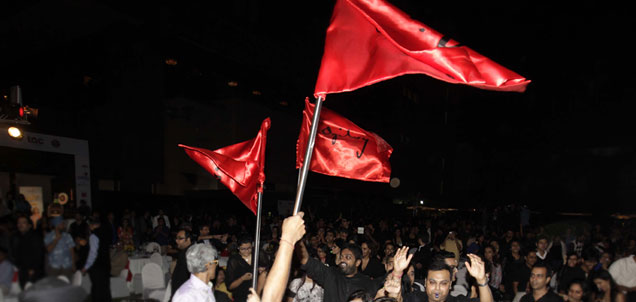
    It’s the Big Night for all the advertising agencywallahs. The Effie Awards, or the Effie’s as they are referred to, are happening today. At the Taj Lands End, Mumbai, 7pm onwards.

    Over a hundred brands that ran campaigns in India from October 1, 2014 to September 30, 2015 were eligible for entry and only a select few will be vying for the top honors across 26 award categories this evening, as can be seen in the shortlist announced by the Ad Club on Monday.


    The Advertising Club introduced many changes to revamp the awards. For one, entries could be submitted online. A new category called New Product or Service – Best Campaign for a Start-up, had been introduced for the Effies 2015. The erstwhile digital campaign category has been rechristened to the Integrated Marketing Category, underscoring the emergence of the digital medium as an inclusive rather than additional channel of marketing in today’s day and age.


    The question uppermost in everyone’s mind is on who will emerge winner of the coveted Agency of the Year title. Will it be Ogilvy yet again, or will Lowe Lintas seek revenge this year. Or could it be a slew of other players who have entered big skewing the scene a bit?


    Here’s the detailed shortlist of finalists for each category as received from the Ad Club:

  • Ogilvy celebrates its own at Envies 2015

    By  A Correspondent


    Until four years back, the Boys in Black would dominate proceedings at the Abby. The then only national awards for creativity and assorted advertising. The Abby, run by the Advertising Club Bombay and held annually part of Goafest (conducted jointly by the Ad Club and the Advertising Agencies Association of India), continues to be the biggest awards event endorsed by most industry associations.


    However, all of this changed in 2013. As Piyush Pandey told the media in attendance on Tuesday, Ogilvywallahs would dominate the Abby so comprehensively, that he kinda found his colleagues according no respect for the metals received. They would often be placed on the floors. Strewn all over.


    Even as Pandey was saying this, our inboxes received a missive saying Publics Worldwide boss Nakul Chopra was appointed chairman of the Goafest Organising Committee.


    It was clear that Ogilvy isn’t going to participate in the Abby at Goafest. Or is in no hurry to do so.


    But it will take all of Ad Club President Raj Nayak’s much known persuasive skills to bring Ogilvy back to send in entries. You can Salman and Shah Rukh together, why even India and Pakistan to try and sort their differences, but not Ogilvy or Lowe to the Ad Club awards. Hmmm.


    But, heck, this isn’t a story about all the mess, controversies and politics about Indian advertising awards.

    For the third year in a row, Ogilvy India conducted its Envies Awards.

    Some 150 entries vied for 25 honours.

    They were awarded in various categories, with just one in print.

    The event had some interesting accompaniments, including this brilliant session by former Ogilvywallah Hanif Kureshi and his Kyoorius-awardwinning Street Art work.

    The entire Ogilvy Mumbai office was in attendance, along with large contingents from elsewhere.


    Good fun. Fantastically emcied by Sumanto Chattopadhyay.


    Now check the xls.

  • Ogilvy & Make Love Not Scars seek participation to #ENDACIDSALE


    Ogilvy Mumbai, along with Make Love Not Scars has launched a campaign called Beauty Tips with Reshma. This is a series of three videos where a real acid attack survivor shares some beauty tips. Each vlog ended with a plea to crowd-source signatures on a petition addressed to the Prime Minister for enforcing the ban on open sale of acid.


    The campaign launched on The Logical Indian on August 30, 2015.


    The Supreme Court of India has banned over-the-counter sale of acid since 2013. Yet acid is easily available to the common man and the number of acid attacks are on the rise.


    The New York Times, The Wall Street Journal, BBC World, Mail Online, ABC News, TIME, Mashable, Mirror, People, The Independent, The Huffington Post and global personalities like Amitabh Bachchan, Ashton Kutcher have already joined the conversation for #ENDACIDSALE.


    Piyush Pandey, Executive Chairman & Creative Director, Ogilvy South Asia said: “An acid attack is a heinous crime and every attempt should be made to prevent such attacks. Make Love Not Scars is an organisation committed to persuading the government to pass legislation which prevents open sales of acids. Ogilvy is proud to participate in this cause and has created this commercial with a victim who agreed to participate in generating awareness and support. Ogilvy will continue to contribute to this cause to impact results that lead to safety of people and women in particular.”


    Rajiv Rao, National Creative Director, Ogilvy India said, “It’s a shame that even after a ban on the sale of acid, it seems to be selling openly and easily and helping the mindless young men of India to destroy a girl’s life forever. We wanted to create an awareness campaign in a powerful way to put an end to this ridiculous behaviour once and for all.”


    Two weeks later over 200,000 petitions addressed to the PM Narendra Modi have been signed.


  • Lenovo redefines ‘cool quotient’ for the youth with Yoga laptops

    By A Correspondent


    Lenovo has announced the launch of next generation Yoga laptops. With a screen that offers a 360 degree swivel that goes from laptop to tablet mode in one smooth movement, HD screen, Dolby sound and intel core i7 processor, these laptops offer an ideal combination of innovative design and powerhouse performance. With prices starting as low as Rs. 30,490/-, Lenovo Yoga is an ideal choice for the youth of today.


    The TVC introducing the next generation of Yoga laptops shows a young girl in a café calmly working on her Yoga laptop, observes a few bikers enter and misbehave with the staff. She decides to teach them a lesson without having to let go off her Yoga. To our surprise she turns out to be a martial art pro and leaves the goons feeling pretty stupid. Her Yoga laptop twists and turns to her moves, helping her carry her cool all the way.


    Rajiv Rao, NCD Ogilvy added, “Geeks represent the new cool. Their technology is their style. The usual and mundane doesn’t appeal to them. They need something new, something flaunt worthy… they need to ‘carry their cool’. The Lenovo Yoga laptops offer them just that!”


    Talking about the campaign, Bhaskar Choudhuri, Director Marketing – Lenovo India said, “Lenovo’s philosophy of bringing accessible products with innovative technology and ground-breaking features gets further magnified with the next generation of Yoga laptops. These ultra-thin and light convertibles are packed with top of the line features … making it an ideal choice for the youth.”


  • Are we making too much of our dismal showing at Cannes?


    India’s performance at the Cannes Lions this year left much to be desired. Being dubbed the worst ever – with just 13 metals in our kitty – the dismal showing has sparked debates about whether the advertising industry really has quality talent, or should we not make too much of deal of events like the Lions? Three creative gurus weigh in what might have gone wrong and whether we should care at all.


    Bobby Pawar

    Director and Chief Creative Officer – South Asia, Publicis Worldwide


    Frankly Cannes doesn’t matter. Not to our creativity. Certainly not to our business. Why? Our clients don’t care much about it. Our consumers, not at all. So the question is why we should we give a rat’s derriere? Why are we acting like our momma died and beating our chests in loud mourning? Cannes is a pissing contest and we pissed shorter. Today’s India doesn’t like that. And we shouldn’t. Many have argued that our limp performance was because our work isn’t creative enough. Maybe. But I venture we stepped onto the field pads, gloves and carrying a bat, when the world was playing soccer. The game has changed. If you take a look at our entries, I’ll smack my face with a cold pomfret if most of them weren’t in print, outdoor, design and craft. Old world categories, where the old world still plays a stronger game. (Don’t think so? How many Grand Prix’s has India won in them? There.)


    Now, should we change because we want to win awards? That’d be stupid. But the reality is we must, before clients and consumers force us to. If that means we win big at Cannes, great. If not, so be it.


    Prathap Suthan

    Managing Partner and Chief Creative Officer at Bang In The Middle


    There are a couple of reasons why I think we fell short. And I don’t think it an upsetting issue. There are things that we need to consider. The winning countries and the entries operate in spaces that are perhaps very difficult for us to match. The markets require a whole new wedge to drive noticeability, and at least for regular mainstream work, we operate below par. Those are media media-saturated markets, and more importantly creative saturated audiences. It’s a norm for them to do work and expect work that breaks a whole lot of glass ceilings. Our markets and audiences are still tottering around the mofussil of average communication. We don’t need to be creative for the sake of creative. No one has the extra moolah to ply and try to see if completely lateral ideas deliver market efficiency. We are still dealing with entertaining narratives and well crafted advertising pieces. Besides, the tech quotient at play is very far ahead in those competitive markets. There are specialised shops that drive tech ideas and integrate them backwards into communication and creative ideas. It’s a whole new dynamic and our industry infrastructure is not equipped to think or even deliver those solutions or ideas. This gulch is only going to widen. I would rather we focus on what we know best, and work in areas that we can hone to surpass existing levels. And thankfully, there are a lot of categories where we can truly dominate. We need to look our strengths and desist from getting into waters that we can’t cross. It is also important to calibrate the calibre of creative buyers. Truly how of our clients at the senior senior-most levels will push agencies to break every mould. And honestly how many them really know how to evaluate ideas and open up budgets for the greater glory of creative at global festivals?


    Abhijit Avasthi

    Founder, Sideways (ex-NCD, Ogilvy)


    I believe India’s showing at Cannes this year is a temporary blip in a long good run. It is also a reflection and a consequence of a few issues, which can be debated. In certain categories like print/design/promo/digital etc our work is not as cutting edge as the rest of the world. On the one hand, we can try and push that, but then it cannot be at the expense of compromising on its relevance to our markets. That’s a double-edged sword. When it comes to categories like film and radio, where I believe our best work is done, we do have an unfortunate handicap – a lack of awareness and appreciation of our culture, language, social structures and such. No matter how well somebody translates these, the magic of the nuances is lost on the international jurors. As a parallel example, imagine somebody trying to explain the impact of ‘Kitney aadmi they?’ to a film jury? On paper it sounds like the most pedestrian dialogue ever written. There is no way on earth any jury will consider that dialogue a masterpiece. C’est la vie. Our celebrities are not known, our relationships are different…just too many such gaps.


    So the way I look at it…if a piece of work wins at Cannes it is surely world class but if it doesn’t…that does not mean it is not. So we should not get overly dejected by this year’s show.


    Let’s all just focus on doing exceptional, original work for the man on the street in India.


  • O&M to handle creative mandate for Xrbia Developers

    By A Correspondent


    XRBIA Developers has awarded their creative mandate to Ogilvy and Mather with effect from April 2015.


    XRBIA Developers Ltd a unique housing brand established in the year 1996, is focused on building world-class cities that offers futuristic and sustainable housing solutions to every Indian. Promoted by Eiffel Group, XRBIA is headquartered in Pune – India with realty footprints spanning across Pune and Mumbai with over 6 million sq. ft. of existing development and 20 million sq. ft. of planned projects. The spends of the group is pegged at INR 80 crore for the current financial year


    Confirming the news, Rahul Nahar, Chairman and Managing Director, XRBIA Developers Ltd said, “Constant innovation and creative thinking have been the cornerstones of our value offerings and we found a perfect partner with Ogilvy & Mather as the extension of our creative team.”


    Kunal Jeswani

    Kunal Jeswani, CEO, Ogilvy & Mather, said “What excited me was the idea that they are bringing future ready homes to India.  Looking forward to this partnership.”


    XRBIA aims to provide sustainable housing solutions for every Indian and meet the need of infrastructural shortage by building 100 futuristic cities by 2030, out of which they have already announced the launch of 10 smart cities strategically located in value housing segment in the Mumbai Pune corridor.


  • Mondelez unveils ‘Jiyo Lightum Light’ moment for Perk

    By A Correspondent


    Mondelez India Foods Private Limited launched a new TVC for their popular chocolate brand Cadbury Perk. The brand has signed up young Bollywood actor Alia Bhatt as its ambassador. In the TVC, Alia is seen in a playful and mischievous avatar, bringing to life Perk’s new ‘Jiyo Lightum Light’ campaign.


    Known for its quirky communication, Perk’s new campaign, created by Ogilvy and produced by Tubelight Films, is all about enjoying the lighter moments of life.


    The storyline of the TVC begins with a shot of Alia enjoying a Perk bar with her girlfriend. The first bite of the chocolate sparks her naughty side and she goes on to play an innocent prank on two men in the vicinity.


    Commenting on the new TVC, Prashant Peres, Director, Marketing – Chocolates, Mondelez India Foods Private Ltd, said, “Perk is a brand that believes in infusing fun into the mundane and our new TVC hopes to trigger the quirky side in everyone. In the past, we have had vivacious personalities like Preity Zinta, Genelia D’souza, who embody what Perk stands for – youth, fun and mischief. So Alia Bhatt was our natural choice for the brand as she brings the ‘Jiyo Lightum Light’ tagline to life so effortlessly. Perk enjoys a great connect with consumers who believe in taking life lightly and now with the very popular and bubbly Alia on board, we believe this connect will only get stronger.”


  • Dr. Fixit unveil new TVC during World Cup

    By A Correspondent


    Pidilite Industries launched its second campaign during the ICC World cup 2015 during the India-South Africa match. The new TVC is aimed at educating consumers on preventive approach to waterproofing while constructing new homes.


    Vivek Sharma, Chief Marketing Officer, Pidilite Industries said, “Dr. Fixit offers a range of waterproofing products which address all the critical areas of waterproofing.  With this new TVC, we are educating consumers about preventive waterproofing, using Dr. Fixit LW+‘Tonic for Cement’ while building their homes. Dr. Fixit LW+ is advocated to be added to cement to build healthy homes.  The new TVC is humorous and encourages the consumers to adopt proactive, preventive approach to waterproofing and supports our efforts at educating them through our ‘Leak Free Home’ initiative.”


    Commenting on the concept, Amitabh Agnihotri, Sr. Creative Director, Ogilvy – Mumbai, says, “The idea was to shake people out of their indifference towards their waterproofing needs. We decided to make it in a manner that people remember the brand and mix LW+ with cement while building their homes”.


    The ad film is set in a village and opens with a dacoit threatening a villager at gunpoint. The other villagers are seen to be scared and crying for help. “Police ko kisne bataya,” the Dacoit asks the villager. Just as he is about to shoot him, a voice says “Main batata hoon.” The crowd of onlookers’ parts and a young man is seen standing there. He looks around and starts singing a song,


  • Very Premium. Very Alok Nanda


    There are creative professionals and creative professionals and then there’s Alok Nanda. Founder and CEO of Alok Nanda & Company (ANC), billed as India’s only brand and communications consultancy focused on the lifestyle and luxury space. Nanda started his career with the legendary creative agency Trikaya Advertising, where he rose to become  National Creative Director and then member of the Grey Asia-Pacific Creative Board. He left Trikaya (now Grey) to set up ANC in 1999 to bring together the worlds of advertising, design, experience design and branding under one roof. ANC has helped build brands like the Taj Hotels, Arrow, Wrangler, Sula wines, Lodha, Barista, Ambuja and Marico, to name a few.


    But, then creative design for Nanda extends beyond the advertising work. He sells art, runs a design lab as well as a brand engagement firm. Pradyuman Maheshwari had a freewheeling chat with Alok Nanda essentially on advertising, and a little more. Read on…


    You’ve been through the hyperactive days of Trikaya and are now part of the frenzied adworld of today. What according to you are the key differentiators between then and now? 

    It’s a huge sweep of time. At the time when I was just joining, clients were dictated by the advertising industry. Over the years, equations changed when agencies became suppliers to clients and there were these huge global manuals on following this and doing that. In the last couple of years, we have seen enough agencies and clients a communication partner can go to. From our perspective, the big change is you can choose to work for clients you love to work for and clients can choose agencies they love to work with.


    To an extent, it’s a bit of the old, right? There are people who have seen your work would want to come only to you. Or they would also want a Piyush Pandey or an R Balki…

    Very much. People know the kind of work they want and would come to you. Talking from a business relationship perspective, today we really only work with clients we want to work with. Ten or 15 years ago, you’d be driven by business imperatives. 25 years ago, it would’ve been the client chasing the agency. I’m seeing how the shifts have balanced out.


    How has the journey been for you over the last 15-odd years?

    It’s been pretty good. I wish I’d started earlier. Trikaya was where I learnt everything, I chose not to and I didn’t want to take any business from Trikaya when I left. Not sure, I could’ve easily taken business. There was the Grey part too, the global clients, they obviously wouldn’t consider me even if I wanted to consider them. Even though I had a good relationship with many clients, I was clear I was starting afresh. The drive was my fresh journey…


    What were your sentiments when the Trikaya brand name faded away from the agency?

     I’ve honestly lost touch with Grey, have no alignment with the rest of the industry. I don’t even have a clue what’s happening at Ogilvy. I don’t track it.


    Huh?

    It’s not out of arrogance. Our business lines are vastly different. Advertising is actually a fairly small portion of what we do. We’ve carved our own space and we’re very happy with it. What I did and learnt at Trikaya was all premium brands. I was never a part of FMCG, big mass brands, rural India. I’ve only done what I know the best. The market has come full circle. India has grown rich, there’s premiumisation happening.


    Did you intend ANC to be what it is today in terms of being a premium communication firm?

    In the broader sense, yes. When I set up ANC, I was clear India doesn’t need one more advertising agency.  I said we’ll be multi-disciplinary but without walls. We have multi-disciplinary people here, designers, retail designers, corporate communications people and advertising people. We all sit together, there is no centre. When a client comes, the answer is not advertising. Advertising may follow or may not even happen.


    Everyone in the advertising world talks about rural India, about being able to connect with the masses and making a difference and here you want to stick to the elite urban stuff? 

    We’ve no such ambitions. We’re very focused on the lifestyle, luxury and also because of my personal passion, the corporate brand business, all of this are very focused on the premium urban India.


    The advertising you said you want to do is has a different, premium feel. But your campaign for Lodha with the claim Wadala is the new Cuffe Parade, is typical of advertising. It’s hardsell? Isn’t calling Wadala the new Cuffe Parade outlandish? 

    Actually, there’s nothing new in it. If you study what happens worldwide, real estate is about creating destinations. If you go to New York, there’s a place called SoHo, created by the real estate industry. It didn’t actually exist. The city of London is about the size of a postage stamp. Every year they gobble up more villages and then they call it Greater London. Why? Why not give it the name of the village? When the government said they’re creating a new city the other side of the creek, didn’t they call it New Bombay? When the residents of York settled in America, they called it New York. There’s nothing new. I studied a lot of history of real estate when I entered the market. This emanates from there.


    So was the new Cuffe Parade your idea or that of your client?

     My idea and I’m extremely happy about it.


    While real estate is all about selling dreams, it’s finally about selling property.

    It’s about delivery at the end of the day.


    The delivery has to happen instantly. If an ad appears in today’s dna, they need to have the phones ringing from 7 or 8am onwards. Are you happy doing this kind of results-oriented advertising?

    Yes and No. Each client has its own requirement and needs. You need to balance out building a brand and business calls. What you’re referring to is the amount of direct response that has to be built into a campaign. Working with Lodha, we’ve arrived at a manner that works for them. To what degree do you build a brand and at what stage do you start ensuring the calls come? You can’t start getting calls if you don’t build a desirable brand.


    So, typically, after how many insertions do you expect the ad to make an impact to have the consumer to make a call?

    It varies from project to project. It also varies from the scarcity of demand. If you were going to launch a tower in South Bombay, given the scarcity of land, chances are, even before you release your first ad, they would have sold a large number. It really varies from what is your location, your play.


    Abhishek Lodha says you’re more than just an ad agency. You’ve partnered his projects. What is the degree of you involvement? Has this been out of the ordinary or is that the same with all your clients?

    It’s the same with all and I’ll come to Lodha specifically too. We don’t call ourselves an ad agency because of the nature of the multiple offerings we have. We call ourselves, for want of anything better; a communications consultancy. We deep dive into what a client wants. When we work with a Taj, we did their ads, we also designed the identities of all their famous restaurants. We’ve worked in immense detail, bringing design in to Taj, bringing advertising to launches of their properties worldwide…


    You have Lodhas, hardcore businessmen, and the folks at the Taj, who’ve earned their stripes in the hotel industry and understand their craft very well. Are they receptive to your kind of evolved communication practice?

    The Lodhas were in the real estate business for many years before they came to us.Their vision, pre-ANC was to be in the middle class department  in Thane and the suburbs. Abhishek came to us and we worked with him on re-envisioning the brand. I sat and worked with him and we were clear that Lodha is going to be playing a premium game, I said you can’t be seen as a builder. You need to become a lifestyle brand. That’s how my relationship started. One of the most powerful things we created for them is a brand architecture and brand identity. That’s how we grew and I go back to saying, life is too short to work with clients you don’t want to. One of the greatest joys of Lodha is to work with Abhishek!


    You have a mixed bag of clients.

    Real estate is visible because it’s visible in Mumbai. We do all corporate work for Gujarat Ambuja. We’ve managed their financial brand, we’re now managing their CSR brand. That’s my corporate financial side of work, not visible to the audience but to the investor audience.


    If a BJP were to come to you for branding, would you accept it as a client?

    I’d see if I were able to add value to the client, first. We’re in a situation where we don’t need to go back to business for business sake. I’d ask myself if I take them on, which is the other client I wouldn’t have to? At the end of the day, would I be successful for them and therefore would I have a case study for myself? That’s the only way I can grow. I can only grow by creating one case study after the other. Our vision is not to make 30 employees to 300. Our vision is actually margin driven, to put it from a different perspective. I’d seek higher margin business tan higher volume business. My clients know me that I’m expensive and they get value. If I was able to offer that to a political party, I have absolutely no problem. I prefer it that way. It’s not about ideology. That’s the other question you asked.


    It’s the flavour of the season to do something for the government, Swaccha Bharat… aren’t you looking at doing some?

    We devote almost 10 percent of our time on public service and charity. We work with hospitals, charities, do identities free for them. We’ve just finished doing one for a doctor who has pioneered free heart service for babies. He’s doing such wonderful work. We said we’ll support you in whatever communication we need. We’ll do our bit in that way.


    What are the other categories that interest you as a communicator?

    I’m really excited by education. The big thing about ANC and the joy is that we don’t just build brands, we build categories. We’ve transformed real estate, not just Lodha, in many ways. To me, the next big thing is education.


    You seem to have a likeness for businesses with many shades of grey?

    Education is getting corporatised. You’ll have chains with 500 schools. For the first time, they need branding. You need competitive positioning, schools competing for customers.


    I’ve never seen an ANC ad which is less than a half page in size and in education you have very small 10×2-sized ads.

    I think it will change when you see some of the things that hopefully will come out from us.


    How much of TVC work do you do?

    Very limited, lifestyle luxury is very limited on TV. Luxury certainly is the antithesis of television. Corporates also tends to not be on TV. We make films. For Lodha, for every project we make films that run on sites. We make corporate films…


    Advertising agencies typically make their money on TVCs, right?

    I’m sure, they do,  we don’t. Most of our business is fee-driven and we demand a premium fee, upfront.


    You say you don’t do much television and most of your advertising is done in English.

    99.9%.


    What about other languages? Has that come to you…

    We do a miniscule amount.


    You’ve never thought of creating a fair amount of advertising in languages. That’s where premium is going to extend to.

    You’re right, premium will extend in that space. That’s not where the immediate growth is going to be.


    You’re not aligned to any big network

    Yes, we aren’t.


    Don’t you intend doing that? There were some murmurs sometime back that you are looking to align

    I wouldn’t say we have no intention to. We’d want to find the right partner. That wouldn’t necessarily be an advertising network. It could be a more interesting entity that deals with design and graphics.


    WPP, for instance, has a Landor…

    Not that Landor is talking to us or we are talking to them. But, if we did, that would only fit in as far as our brand architecture business would go. What will then happen to my advertising business? We’ll need a free thinking organisation that fits for who we are. People who design their own products. We’ve ventured into arts, for instance in a very interesting way with a JV. It’s a different space.


    Is it a definite No to alignments or acquisitions in the near or distant future?

    Well, we are also interested in acquisitions. You never know what comes your way. Our focus, if it has been driven on higher margins, by definition, we have to go from specialization to super-specialization. Art is a direction. If we were to get into interiors, I’d get a quicker way to learn the business, to acquire an interiors business. Things like that is where I would look at acquisitions. Packaging, in a far deeper sense, where you get into material plays, morals etc. We’ve done a fabulous packaging for milk from Sarda Farms. That’s where we started getting into, it’s not just graphics, it’s weight, performance of glass etc. If you want to learn that at a more rapid space, a quicker way is to do an acquisition.


    Don’t you think this is the right time to align and grow?

    We are looking for people to partner with, but we’re in no hurry if we don’t find the right person. We’re unique from a pure physical construct of the work we do.


    Are you happy with the way advertising is going?

    Yes and No. It’s developed pretty well in certain areas. The craft and film is phenomenal. It’s really improved. If you ask me the rest of it, it really sucks. Our digital design sense is abysmal.


    A shorter version of this interview appeared in dna of brands dated February 2, 2015. And, btw, if you thought this 2500-word interview was long, the original transcript ran into some 6500 words.

     

  • Ogilvy flag flies high as India’s Most Effective


    By A Correspondent


    It was a victory that was sweeter than ever before. For, after having been beaten by Lowe Lintas last year, taking away the ‘Agency of the Year’ title at Effie 2014 was a huge morale-booster. While Ogilvy has always prided itself as one of the most creative advertising agencies in this part of the world, awards for effective advertising that are the most coveted. For, while good advertising by definition ought to be effective, creativity has traditionally been regarded as more cool.


    Creativity v/s Effectiveness… what’s more important?


    Piyush Pandey, Executive Chairman and Creative Director, Ogilvy:

    I ‘ve said this many times, we aren’t artists, we are commercial artists. We’re paid by somebody to do a certain job for them . We use creativity to make them look better. I’ve never forgotten that in my life and I never will. The day I want to mash mangoes and stick then on my wall because I love them, I will do that but I’ll do that in my house, but not on someone else’s money.

     

    My creativity is meant to make someone attain that objective that I’m being paid for. My creativity is useless if the person’s job doesn’t get done. Someone is paying and they must get the result. That’s the business I chose to be in. 


    Rohit Bhasin, Vice President (Skin Care) – South Asia: 

    If creativity is not effective, it ‘s not great. I have never seen a great creative which is not effective because I don’t define advertising as that. Advertising – if effective – is very creative, not the other way round.


    Historically , Unilever has been a company that has made iconic advertising. Whether it is the Lalitaji of Surf or Bhala Uski Sari Meri Sari Se Safed Kaise for Rin to the work we’re doing now it has always been based on a strong human insight. What I’m trying to say is that if advertising is based on strong human insight, it would be creative and effective. 


    “The Effies are the gold standard in effective communication. This year’s judging was extremely stringent in accordance with the global Effie standard set by our counterparts in New York,” said Pratap Bose, President, The Advertising Club on the awards as he kicked off the event’s proceedings.


    “I think creativity is extremely important but the importance of ideas is paramount – and that is what Effie stands for,” said Ajay Kakar, Chairman of the Effie Committee. When asked what is it that makes both Lowe and Ogilvy participate in the Effie given that they been staying away from the Abby creative awards, Kakar, who has been heading the award for four years, said matter-of-factly: “Effectiveness has won, so therefore Effie has won.”


    Added a senior industryperson requesting anonymity, “The fact that there is no controversy and it sees participation from 60-plus agencies with all the big ones participating and the clients themselves in attendance at the award speaks a lot about the awards. One only hopes that the Creative Abby too sees an equally enthusiastic participation.”


    The Effie is not just for the agencies alone and advertisers are also awarded jointly. Said Samir Singh, Executive Director, Personal Care, Hindustan Unilever Ltd: “It feels good to be the Client of the Year because this is the second time for Unilever in succession.”


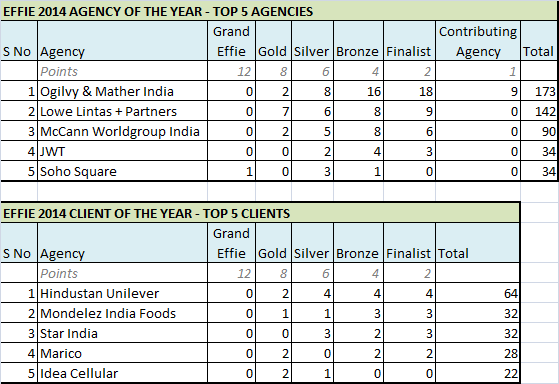
    Effie 2014 has indeed been big for Ogilvy given that the parent Ogilvy & Mather India has come up tops with 173 points and younger sibling Soho Square was #5 with 34 points including the Grand Effie for the Bharatiya Janata Party (BJP) election campaign.


    Last year, in Effie 2013, Lowe Lintas was ahead of Ogilvy by 35 points, and this year the difference was similar: 31 points as Lowe Lintas generated 142 points (See Table). This year, in line with international Effie standards and in discussion with all participating agencies, marks were added for Finalist and Contributing Agency The heartening news for Lowe Lintas is that it won seven of the total 11 golds awarded at the Effie.


    What next? Hindustan Unilever and Singh in particular are looking forward to a hat-trick of wins next year. Ogilvy should be hoping that the top slot will also see the global rankings go up.


    Meanwhile, all eyes are on the Abby Awards hosted by the Advertising Club which are part of the Goafest to be held in April this year. Will Ogilvy and Lowe participate in that? As of today, the answer is “unlikely”, but, then, you never know.


    Big Story main image and all photographs by Abhinav Kocharekar/Courtesy DNA


  • Ogilvy Mumbai wins creative mandate for ‘Shukran’

    By A Correspondent


    Ogilvy’s Mumbai office has been handling the creative duties for Home Centre in Middle East and North Africa for over a year and has now won the creative duties for Shukran – the loyalty programme of Landmark Group which is also the parent company of Home Centre. This was a result of a multi-agency pitch that saw the participation of several other creative agencies.


    Navin Talreja, President – Ogilvy Mumbai & Kolkata said, “Reputation as the most effective agency office in the world started getting clients across the world to recognise India, and specifically Ogilvy Mumbai as a center of excellence. The mandate from Home Centre for Middle East & North Africa last year and more recently winning the opportunity to build their loyalty program brand across eight countries, is proof that clients will go any distance to find the right partners.”


    Sumanto Chattopadhyay

    Sumanto Chattopadhyay, Executive Creative Director, South Asia said, “There is something deeply satisfying about creating work that works in markets beyond one’s home turf. The success of our Home Centre campaign has given us this opportunity to create greater brand value for the Landmark Group.”


    Rajesh Rishi, General Manager – Loyalty, Shukran said, “We were very clear that we wanted to work with the best team to take Shukran to the next level; after a rigorous process we found Ogilvy’s approach and methodology best fit to take on the unique challenge of taking a programme our size and business impact to the next level. Given Ogilvy’s expertise and diversity, we are looking forward to taking on these challenges together in unique and refreshing ways to strengthen our brand equity in the region and beyond.”


    As the region’s largest retail loyalty programme with over 6.5 million members in 8 countries, with over 50 brands spread across 1100 stores, Shukran aims to take the concept of ‘loyalty’ to an entirely new level, redefining rewards in every lifestyle category imaginable – including clothing, footwear, accessories, salons and spas, home furnishings, electronics, sports, entertainment and restaurants.


  • Ogilvy Bangalore launches CarWale campaign

    By A Correspondent


    CarWale has launched its first ever mass media campaign, spearheaded by a television commercial that makes a strong point with a tinge of humour.


    The strategy, as articulated by Ogilvy Bangalore, was to inextricably link CarWale to the car-buying process. This came to fore through consumer research which showed that there is a low awareness for the portal, and CarWale is still not the first point for them to gather information in their car buying process. In this digital age, consumers instead visit multiple car showrooms and seek opinions from people around them.


    Steven Hough, Executive Creative Director, Ogilvy Bangalore said, “It is a common insight that car buyers, especially in India, take everybody’s opinion before deciding on a car. We decided to capitalize on this and highlight the dilemma of the Indian car buyer in a series of amusing vignettes.


    Mohit Dubey, Co-founder and CEO, CarWale added: “We are extremely excited about our first foray into building brand CarWale with mass media advertising. We have timed this campaign keeping in mind buyer sentiment at this time of year, when pre-Diwali car research is at its peak, and the response we have received from both buyers and the industry is humbling.”