Tag: newspapers

  • Newspaper Industry in India after the Second Wave of the Pandemic


    By Indrani Sen


    Indrani SenThe Indian newspaper industry faced an unprecedented crisis last year after the National Lockdown was declared at a very short notice. Circulation fell drastically when many subscribers, particularly housing societies, shut their doors for the newspaper delivery persons for the fear of the contagious virus being carried by the newspapers or the delivery folk, leading to change is consumption pattern of newspapers. Lack of local transport also prevented the distributors and hawkers from reporting for work. This was followed by withdrawal of commercial advertising as advertisers were worried about a fall in circulation and readership and were themselves affected by choking of distribution pipelines and economic slowdown leading to loss in their sales. The FICCI EY Report on Indian M&E industry 2021 showed that ad revenue of Print came down from INR 206 billion in 2019 to INR 122 billion in 2020.


    After the National Lockdown was lifted in 2020, the newspaper industry tried its best to recover their lost grounds. As per the same FICCI EY report, it will take Print four to five years to regain the pre-Covid ad revenues level. However, the industry seemed to be recovering well during the first quarter of 2021 as TAM AdEx data for Jan-Mar 21 showed that 1350 new brands advertised on print during that period.  When compared with Jan-Mar 20, the quarter also showed 9% increase in ad space mostly from Hindi and other language newspapers. Similarly, April-May 2021 recorded better results compared to April-May 2020.


    As per TAM AdEx analysis in May 2021, when the second wave of the Covid-19 was at his peak, there was an average 58% growth in ad space per publication as compared to May 2020. However, all was not well as compared to February 2021 and March 2021, the ad space in Print saw a drop of 42% and 29% in April 2021 and May 2021 respectively. As the phased process of unlocking has begun, the newspaper publishers expect that both the ad volume and value would pick up by August 2021 and grow further during the festive season of 2021.


    It appears that newspapers were better prepared to handle the second wave of the pandemic in 2021 and the lockdowns imposed by various state governments across the country. Along with the process of gradual unlocking, the newspapers now are looking forward to recovering their lost grounds. The credibility of the printed word, the vaccination drive, revival of the corporate sector and good rain forecasts are the other factors which are expected to contribute to the overall growth of the newspaper industry in 2021. The Print industry has appealed to the government for a stimulus package and an increase in FDI in 2021. The government has not responded so far, but the industry is still hopeful of getting, some positive response though no relief was announced in terms of waiving the import duties on newsprint by the finance minister in her 2021 Union Budget.


    The newsprint prices, which saw a decline in the international market (below $300/metric tonne) in 2020, have started going up from the beginning of the calendar year 2021. The price was $670/tonne-$700/ tonne in April-May. The industry expects it to go up further. It appears that quite a few paper mills which used to export newsprint to India and other countries, either shut down their business or migrated to the businesses of producing brown papers and craft papers during last year when their business was hit due to the global pandemic.


    As India is far from being self-reliant in newsprint production, our newspaper industry, struggling to recover from the effects of the pandemic, has been hit further by this demand supply imbalance of newsprints in the international market. Many newspapers are increasing the use of indigenous newsprints to balance out their cost of productions.  However, most newspaper owners feel that this crisis of newsprint prices is not going to last for a long term and expect the international market to stabilise before our festive season in the third quarter of 2021.


    To sum up, the newspaper industry in India seems to be set on the path of recovery after a severe decline of both circulation revenue and advertising revenue in 2020. In recent times, during the second wave of the pandemic, the industry was not much affected and would have been in a better financial position if they were not hit by the crisis of newsprint prices. It is expected that by end of the calendar year 2021, their overall performance may be better than predicted earlier by media analysts.

  • Das ka Dum with Dr Bhaskar Das | A friend told us that the only reason he subscribes to newspapers is the need for various household requirements. News for him is from digital. Comments

    Bhaskar DasOkay, it’s a mean question to ask. But, then, that’s Das ka Dum for you. We ask what we think is good to ask. And our dear Wizard with Words answers everything. Sometimes giving it back to us. Let’s read Dr Bhaskar Das’s views on the question in the May 14 edition of Das ka Dum. Read on…

    If you wish to access the archives, please go to the Das Ka Dum tab on the website’s top navigation bar.


     Q. A friend told us that the only reason he subscribes to newspapers is the need for various household requirements. Also, on a Sunday, one gets the glazed, chikna paper. News for him is from digital. Comments


    A. That’s an unkind comment from your friend. It’s quite possible that he/she has deficiency of cognitive nutrition. Otherwise, extraction of some ancillary benefits by an individual can’t trivialise the dominant logic of subscribing a newspaper which is upgradation from the cacophony of infodemic that is prevailing, thanks to the social media. Finally, a sample of one isn’t statistically significant to be extrapolated to the universe population. After all cognitive malnutrition hasn’t been as yet an epidemic.


  • An Opportunity to Refocus for Newspapers


    By Sanjeev Kotnala


    My first reaction on one of the leading newspaper titles doing a 128-pagination in a Tier-II town, was to congratulate them. The title cautious claimed: ‘probably the highest ever pagination for any newspaper in India in recent times’. Apparently, the readers waited and welcomed the hawker delivering the newspaper with traditional tika. The title delivered higher pagination in other cities before delivering an 80 pager in Gujarat. Wow!


    I know what all goes into making it possible. How the teams strategise. How sales teams work on every front to deliver what could be showcased as a return of advertiser’s confidence in print. A brilliant move just before the festive period. Ads generate Ads in the newspaper business.


    It rightly claimed that the newspaper is still the most trusted information source. However, its claim of higher pagination reflects editorial excellence or advertisers’ interest, or revival of market situation should be taken with a pinch of salt. The PR release reiterated the point referring to a report that Tier-II and Tier-III cities are expected to lead the economic revival.  The title used the pagination story to even hint at them capturing the advertising spends across the markets it operates in. Maybe for that day, otherwise it is stretching things a bit far.


    The CIRCULATION safety net

    There is good news on the circulation front. The newspapers in the non-metro markets have reported catching up to the pre-COVID period circulation numbers. They claim of achieving 85-90% of circulation. That definitely is a show of confidence and engagement by the readers.


    The DOUBLE delight

    Meanwhile, an English Newspaper with some lagged insight and understanding of readers changing life behaviour served a double delight on Saturday. Understanding the readers having more time to spend, they decided to deliver two newspapers. Yes, two newspapers – two front pages, two business pages, two of everything possible. (The last Sunday though had only one edit and one sports page). Wow, this one was really reader-centric, twice the content. This newspaper has been at top of the newspaper marketing game and if you dig deep maybe you can smell marketing brilliance in the move. 


    The FAULT lines

    However, when I spoke to people in the market, I did not see advertisers and readers aligned to the newspaper publisher’s strategic moves. I reached out to our consultant friend Vermajee who has solved many issues for me. I met him over a cup of tea. He laughed at my designer mask and commented, ‘How can you be so blind to miss out seeing it from the readers and advertisers’ point of view. How you cannot read between the headlines and the retweets’.


    Vermajee’s VALID questions

    He looked at the visual documentation and asked a simple question. How often have you waited for the newspaper hawker? How many times have you rolled out such elaborate welcome kit? I said none. So, he raised his thick eyebrows pushed the specs on his nose and said, ‘Having answered the question. I must agree, it is excellent, even if it was staged. Marketing needs it’. I just agreed.

    Now, as for the content. The higher pagination or the double delight. Does it mean that on that fateful day there was too much news or the publication till now was not covering all the news? It tells you that the efficient and effective sales teams with strong market control have managed to get advertisements to fill the additional pages the management has strategically decided print.

    More pages cost money. The subscription price does not change. The hawker may demand more commission. Newspaper title do not print additional pages without a revenue justification.

    So, to keep the ad-edit ratio in some manageable limit, you need content. And with no tsunami of news flooding globally – you fill the additional space with featured articles and non-topical write-ups. That’s editorial excellence.

    Do not ever forget, people buy newspaper for News and topical issues.

    Moreover, readers know their newspapers. They have a peculiar way to navigate through pages. This is a critical part of the whole newspaper experience.

    So, when a reader who is habituated to 18-20 pages, is suddenly given 80 or 120 pages split into subsets, the reader is naturally at a loss. The readers are blind to the pagination and do not know the path beyond what the reader reads every day.

    The reader reads what he or she reads every day. The rest of the pages remain orphaned. To make ads seen on these pages, the publication must depend upon content pointers, advertisement placement or contest.


    ADVERTISERS are smart.

    Every client knows that a regular advertisement will get lost in on a day with higher pagination. To be seen, it has to be of a large size or positioned well or it will attract fewer eyeballs.


    Now, on a particular day, advertisers have been pooled in for relationship selling. They may have been given an offer they couldn’t resist or found too tough to refuse. Or they sold the concept of needing to prime the market. Or better still the newspaper created a new opportunity like Akshaya Tritiya.  The brands and local business seems to be ‘going all in’ this time.


    Now notice, editions carried higher pagination on different dates. Safe to presume there was no specific reason to advertise on these days. Start of Adhik Mass or end of Pitra Paksha or Mahalaya is no reason. Though the title did carry articles suggesting auspicious dates in Adhik Mass and that it was one in 160 days phenomenon. Trust. Normally, it is advised not to initiate any auspicious activities in Adhik Mass. But that debate is not for us.


    Whatever it may be. It is a marketing-sales win. One must congratulate the teams for it. The real test is coming now. Like every year, there are specific dates and days like Dussehra, Aksahya Tritiya, Dhan Terras, Ashtami, Diwali when pagination is expected to go up. Can the pagination go up on rest of the dates?


    READER’s JOY.

    Vermajee was in his element. Not all readers or shall I say consumers hate this navigation issue with double delight or higher pagination. Parchoon ki dukaan, tea vendor welcomes it. It also adds some radhi. Retired people, and the digital phobic people, who read newspaper start to end, welcome it. For the head of the family, that is mostly male, it is a shield of privacy, have you not heard. ‘papa ko disturb mat karna paper pad rahey hai’ ie don’t disturb your father he is reading the newspaper. Higher pagination, double delight all adds minutes and at times hours to the effectiveness of the shield. The question remains, how does the younger generation react and there is no good news there.


    Newspapers must manage the E-SQUARE-GAP.

    Every activity, including the reading of a newspaper, works on the principle of E-SQUARE GAP. Now E-square Gap is represented on two dimensions. Expectation and Experience. This is how perceptions are made or broken. Vermajee took a sip of his coffee and continued.

    Newspapers have an opportunity. The news channels are hardly doing the job and the social media is full of question marks. With low expectations, they can deliver a hugely positive experience. This can only happen with right, relevant and differentiated content. More advertisements, higher pagination or with a highly confusing double delight experiment add to the experience.


    And when they manage the E-square gap for the readers and the advertisers, newspapers will be in the win-win zone. The okay segment to operate is Low expectation- high experience and high expectation- high experience. One can survive with Low expectation- low experience, but a high expectation-low experience is just digging the grave.

    For example, the newspaper engages the readers when it masks the face of a minister while covering the news. When it says ‘Hum Aapka Chehra Nahi Dikate Jab Aap Mask Nahi lagatey’. ie, we won’t show your face if you don’t wear a mask. The newspaper makes a statement. This brilliant work was done by Dainik Bhakar in their Ratlam edition. There has to be more of such things.

    The newspaper does not have to claim to be the voice of the masses, the masses must identify it as the voice of the masses. Vermajee looked pleased with his master mantra and asked his secretary Aish to note it down. I knew it was going to cost me a bottle. 


    Vermajee believes Newspaper STILL has a lot of power

    The story that ‘Newspapers are dead’ is an old story where the bluff has been called many  times. It is still growing, though digital is making headway. But then digital is suffering from so many questions. That we will question some other day.

    Newspapers still remain the trusted information provider and the opinion maker. It is a dominant media, though with decreasing engagement. The polarisation of readers is a reality along with the not so favourable age skew.

    The attempts to get the new generation interested will continue with declining interest and confidence. The migration of readers to news digital avatar will keep showing mixed results.

    The titles need to give a reason for the audience to pay and invest their time. And it is possible. News sites like The Ken, Campaign, Wall Street Journal and National Geographic are already doing such work basis their content quality.

    The power will remain skewed towards the more significant titles. The smaller newspapers will slowly ease out of the ecosystem. The rate at which this happens depends upon how the newspapers manage the E-square gap.

    How they manage the digital migration. If they find ways to engage the new generation.  If they realise that they are in the business of NEWS and not necessarily NEWSPAPER. Where differentiated, maybe niche and relevant content are more critical than pagination or the format.


    EXPERIMENTS and EXPERIENCE.

    Print and News has a bright future till the time there are publishers willing to defend their turf, understand changing audience, new emerging consumption patterns, experiment, and experiment again.  Some experiment will always lead to criticism and maybe unexpected results. But that is part of the business.

    Dainik Bhaskar, Dainik Jagran, Rajasthan Patrika, Eenadu, Malayala Manorama, TOI and Hindustan Times are newspapers that are doing a great job. Hope they could have worked collectively for a larger cause.

    The edit-advertisement ratio has to improve further to be in sync with the media consumption pattern.  The subscription rates have to go up dramatically to reduce the dependence of advertisement. Possible. Can they trust each other and collectively take a call- is not a question – just a dream as the answer is known to most of us.

    The tea got over and I took leave of Vermajee. Vermajee fired his last question: Okay, so double delight because the reader has more time to invest. Then why not on Sunday Too- or that would have been too much. Or why not new format news at a glance on other days? What will I do without my dear consultant friend Vermajee?




  • Did the Indian media pass the journalism test with the Ayodhya verdict coverage? (+NewsStand)


    By Ranjona Banerji


    A senior journalist called on Sunday, shocked that the Indian media was so triumphalist about the Supreme Court decision on Ayodhya. He expected both restraint and objectivity from a profession he had spent his life in. Although he is well aware of the direction the Indian media has taken since 2011, he still expected more from journalism. He discussed the post-Babri Masjid demolition riots in Bombay, in 1992 and 1993 and the impact it made on the city, the nation, our lives.
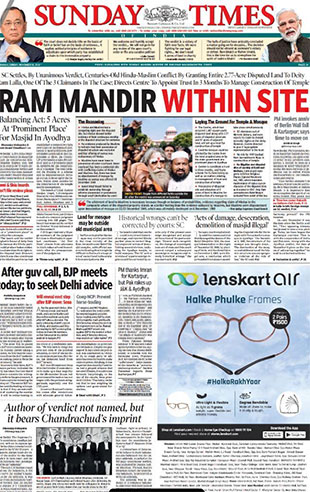
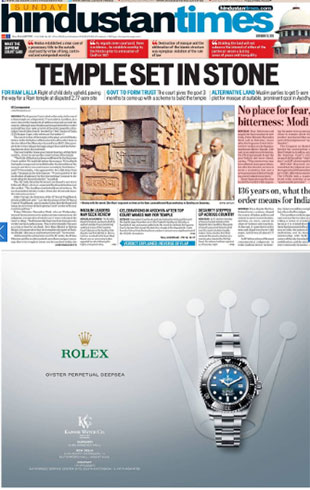
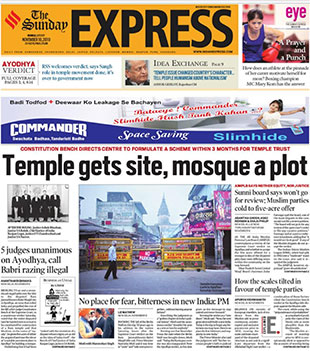
    Television let’s say is a gone case. They have increasingly over the past six years pushed an aggressive Hindu line, have attacked Muslims, Dalits and other religious and social minorities for demanding rights given to us all in the Constitution, some anchors have actively gone out of their way to engender hatred and social division. So who really had expectations from the TV media who toe and encourage the Modi government, BJP and Sangh Parivar lines?

    That Rajdeep Sardesai would be “objective” on India Today so that Rahul Kanwal and Gaurav Sawant could carry on with their majoritarian, state-sponsored agenda? That NDTV would try its hardest to be fair without aggravating the vindictive government into attacking it with more cases? I don’t have to name all the channels. You know what they do. May be that’s why you watch them. May be you have no option but to work for them because you have to make a living.

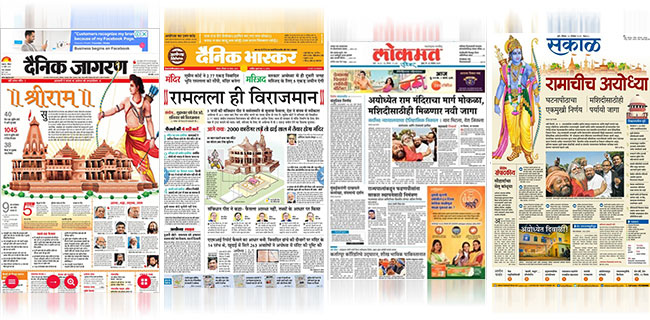
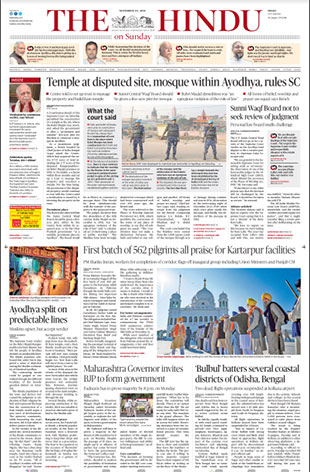
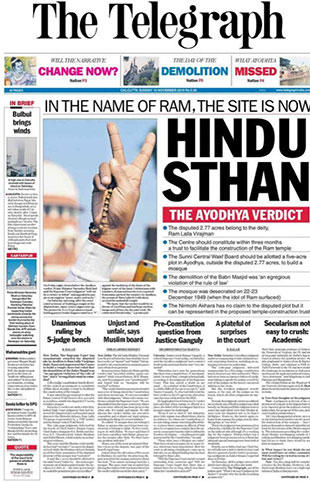
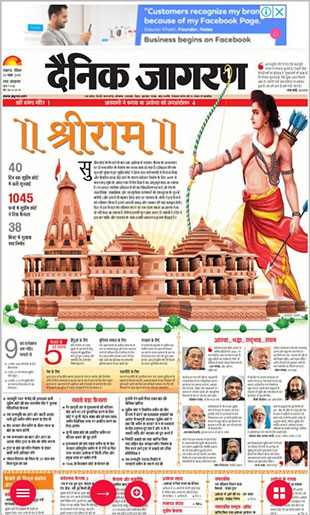
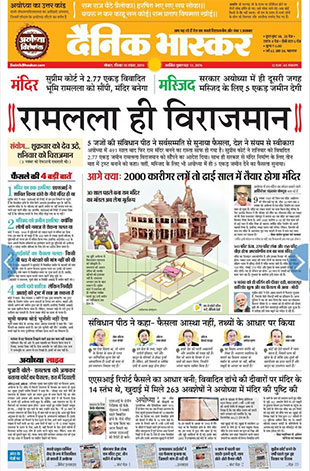
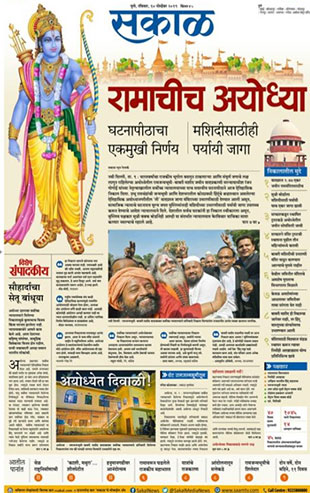
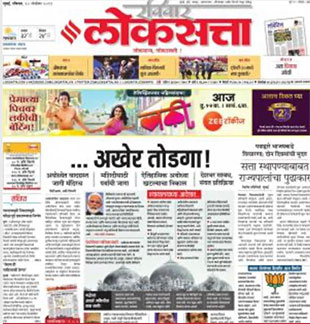
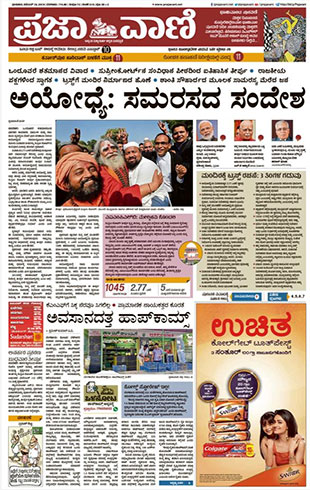
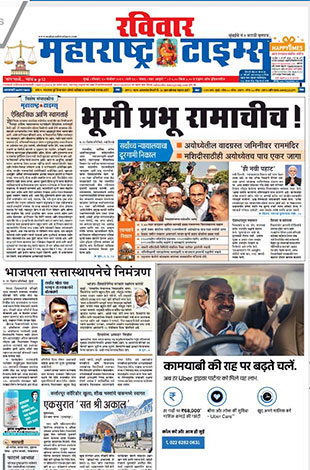
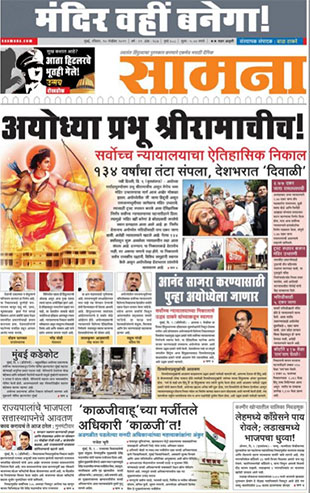
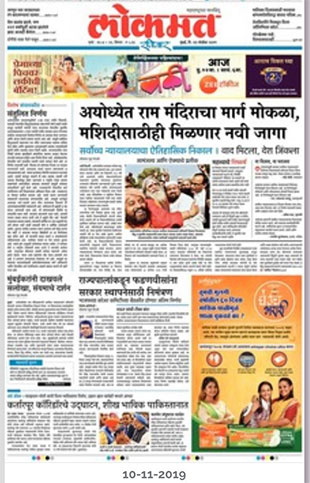
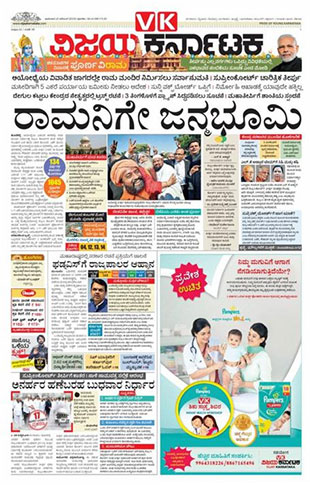
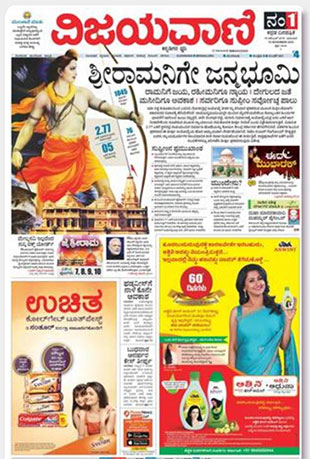
    And then, our newspapers. Most of them, especially the language papers, presented front pages that looked like tacky calendar art that made a mockery of Amar Chitra Katha illustrations, like the worst that Ramanand Sagar gave us in his serialisation of the Ramayana. Others carried agency photos of some unkempt men in apparently celebration mode. The Hindus had won was the sentiment and the Muslims better suck it up. Am I being crude? Remember there is a criminal case still ongoing about the demolition of the Babri Masjid. Who are the accused? But of course, it is more than likely that all those VHP, BJP, Bajrang Dal, Shiv Sena worthies will now be acquitted even though we all saw what happened that day in Ayodhya in 1992. And no doubt our TV patriots will rejoice.

    The inherent contradictions in the Supreme Court judgment are beyond my understanding of the law. I have searched for explanations and analyses of the judgment and while several outline these contradictions, so far I have not come across a cogent explanation for this judgment. And this is the Indian media’s other failure. Many journalists in their personal capacity have said things like: This chapter has now been closed, so now we can get on with it”. But get on with what? As journalists with even a slight knowledge of history, we should know that “closure” is not as easy as a Hollywood romcom’s tips on how to get over a cheating boyfriend. There are consequences and an aware media would tackle them. The very fact that we have an overwhelming number of newspapers sticking paintings of Lord Ram on their front pages is evidence of media failure when India most needs them.

    Even the venerable Hindu has an editorial about the importance of “closure” and that the Supreme Court chose peace over justice.

    If this is the argument that even intelligent people accept then what they are saying is that the fear of a backlash from Hindu forces was so strong that the esteemed judges decided to dump principles of justice. What that says about the future of our democracy, the already fragmented social fabric of India and the power of the Constitution is too scary to even think about.

    The court had its own reasons. But the Indian media has once against failed a basic journalism test.


    Ranjona Banerji is a senior journalist and commentator. She is also Consulting Editor, MxMIndia. Her views here are personal. 


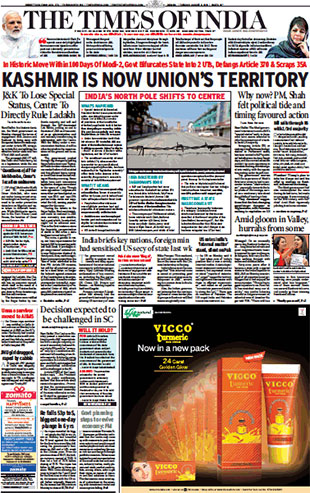
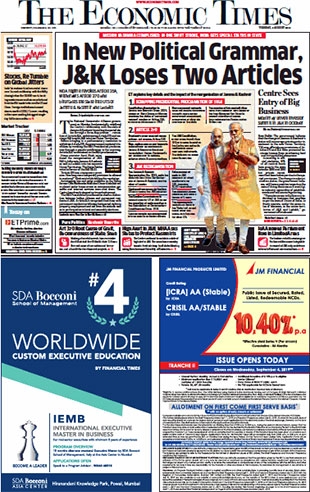
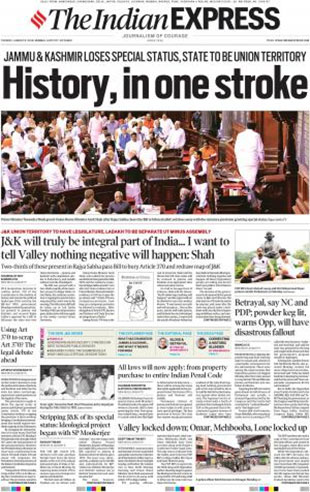
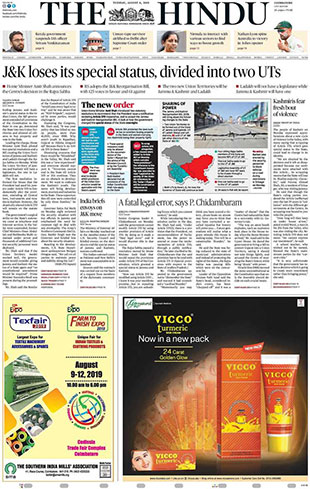
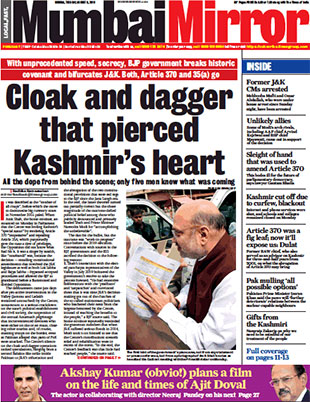
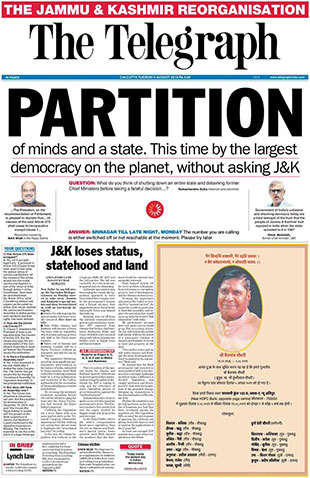
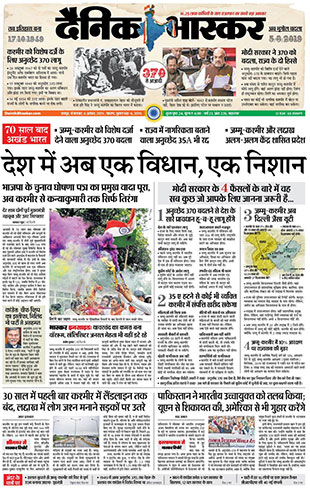
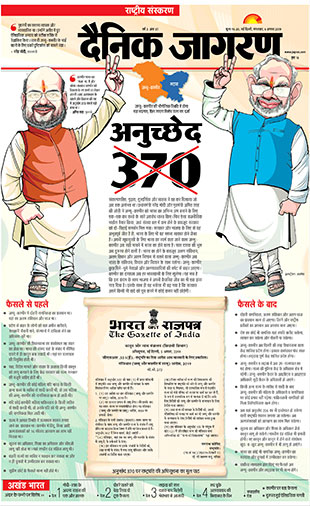
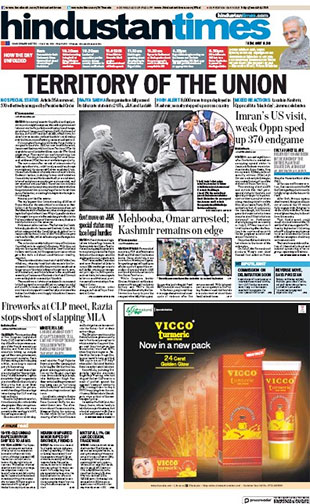
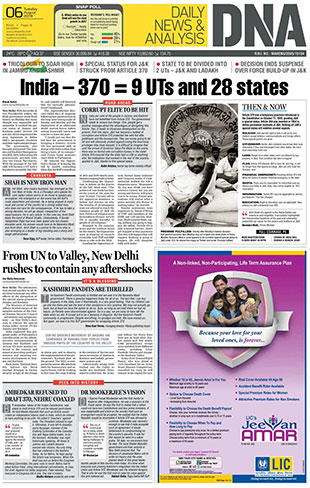
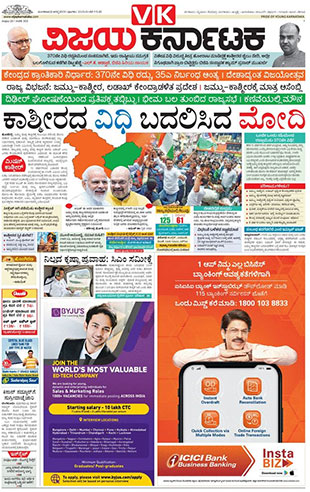
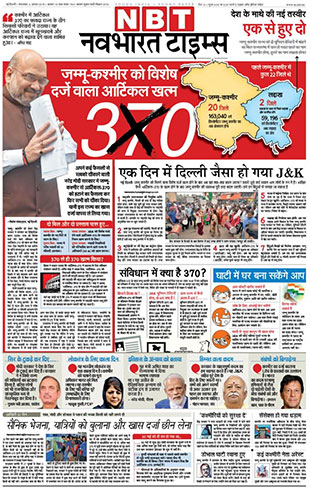
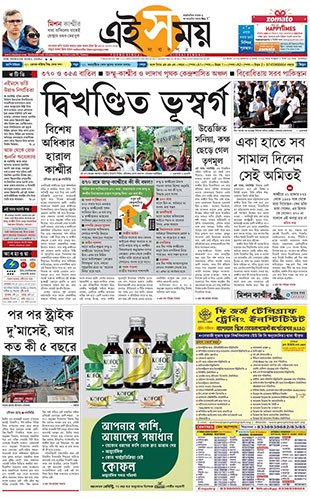
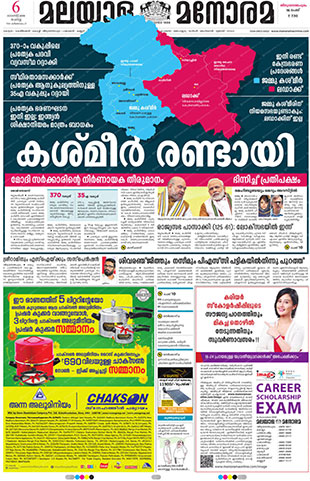
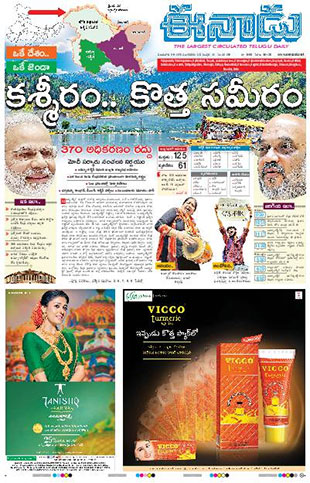
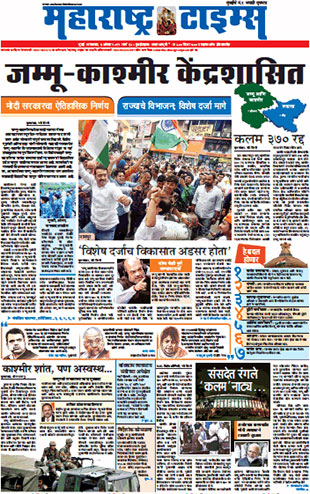
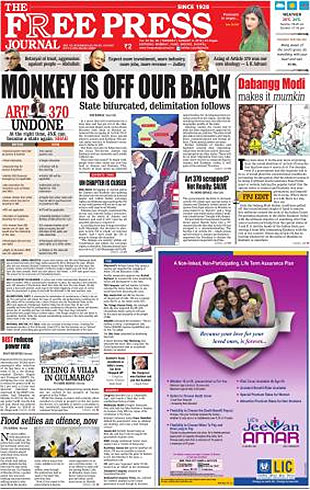
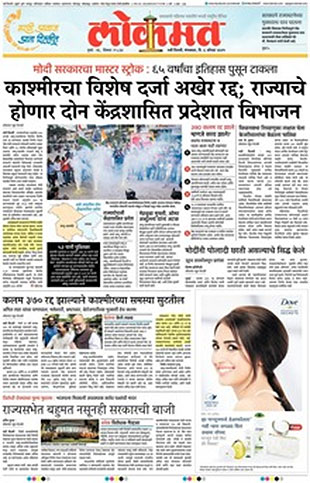
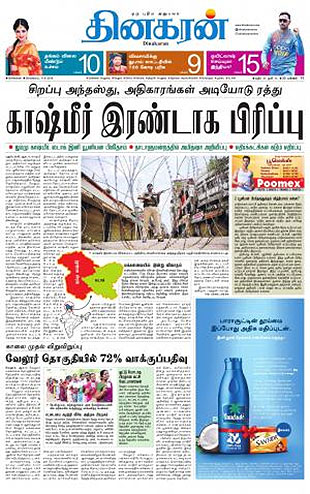
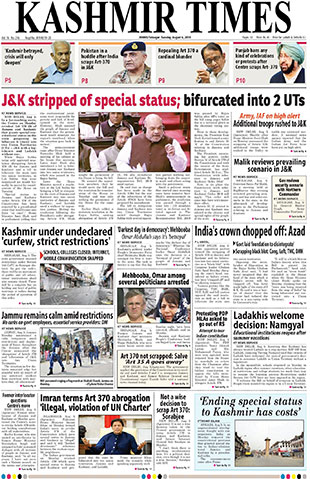
  • NewsStand: And this is how some of our newspapers featured the J&K announcements

    And this is how some of our newspapers featured the J&K announcements by Home Minister Amit Shah…


  • About a quarter of large US newspapers laid off staff in 2018


    By  A Correspondent

    This report is all about the state of affairs in the US news industry. But given the status of India’s own newspaper business – despite the growth claimed in the Indian Readership Survey, it merits notice.

    Layoffs continue to pummel newspapers in the United States with roughly a quarter of papers with an average Sunday circulation of 50,000 or more experienced layoffs in 2018, according to a new Pew Research Center analysis.

    The layoffs come on top of the roughly one-third of papers in the same circulation range that experienced layoffs in 2017. What’s more, the number of jobs typically cut by newspapers in 2018 tended to be higher than in the year before.

    Mid-market newspapers were the most likely to suffer layoffs in 2018 – unlike in 2017, when the largest papers most frequently saw cutbacks. Meanwhile, digital-native news outlets also faced continued layoffs: In 2018, 14% of the highest-traffic digital-native news outlets went through layoffs, down slightly from one-in-five in 2017.

    The following analysis examines layoffs at large newspapers and digital-native news outlets during the full 2017 and 2018 calendar years. An earlier analysis by the Center looked at layoffs at news organizations covering the period from January 2017 to April 2018.

    Roughly a third of newspapers that had layoffs in 2018 saw multiple rounds

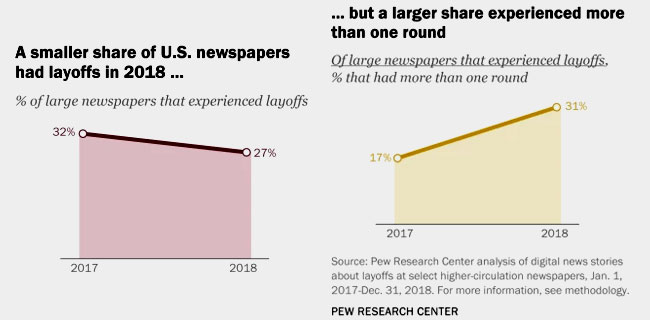
    About one-in-four U.S. newspapers with an average Sunday circulation of 50,000 or higher (27%) experienced one or more publicly reported layoffs in 2018, according to the study, which examined news articles that cited staff layoffs at these outlets. This is slightly lower than the 32% of newspapers in this circulation range in 2017.

    The specific papers with 50,000 or more Sunday circulation can vary year to year, but the vast majority (85%) fell into this category in both years included in this analysis. Of these, 9% had layoffs in 2017 and 2018. In other words, the papers that experienced staff losses in 2018 were for the most part different from those that did in 2017, widening the span of outlets with depleted staff.

    Some papers experienced more than one round of layoffs within the same year, particularly in 2018. Among the daily newspapers that had layoffs in 2018, about a third (31%) went through more than one round. This was about twice the rate in 2017, when 17% of newspapers that experienced layoffs endured multiple rounds.

    While news reports did not always provide the exact number of newsroom staff being laid off, some broad conclusions can be drawn from the data. Among the newspapers for which the Center could determine the number of laid-off staff, 62% laid off more than 10 people in 2018, more than the 42% that did the same in 2017. This suggests a year-over-year increase in the number of jobs typically cut by newspapers during layoffs.

    These findings come amid warnings that the news business is on pace for its worst job losses in a decade in 2019.


    Brunt of layoffs hit mid-market newspapers in 2018

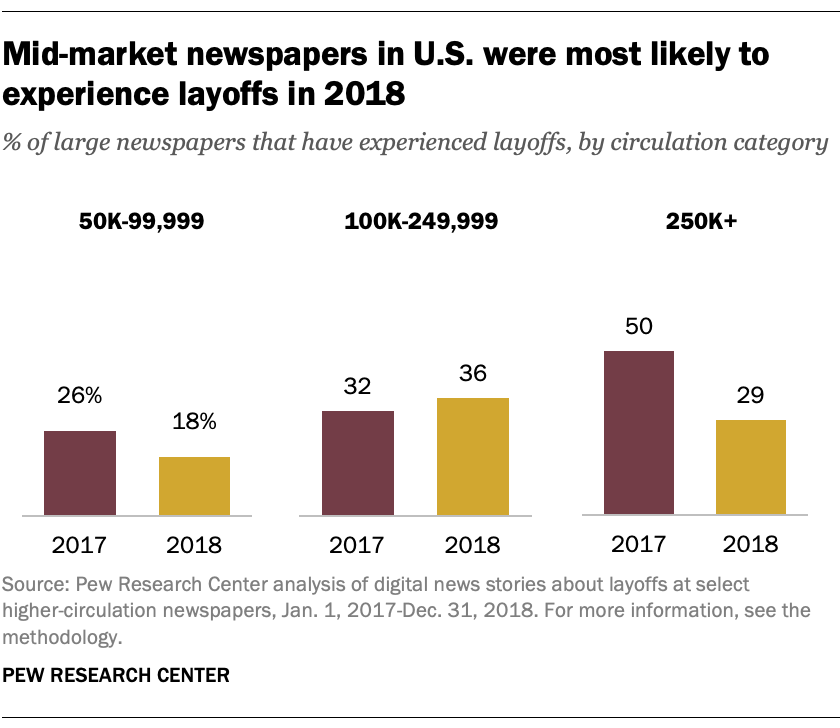
    Mid-market newspapers in U.S. were most likely to experience layoffs in 2018Mid-market newspapers – those with average Sunday circulations between 100,000 and 249,999 – were more likely than either lower- or higher-circulation newspapers to have experienced layoffs in 2018.

    Roughly a third of mid-market newspapers (36%) had layoffs, compared with 18% of lower-circulation newspapers (those with a circulation between 50,000 and 99,999) and 29% of high-circulation newspapers (at least 250,000).

    The share of layoffs at mid-market newspapers increased somewhat between 2017 and 2018, while it declined for both lower- and high-circulation papers.

    In addition to layoffs, newspapers also use buyouts to reduce staff and lower operating costs. In 2018, 14% of newspapers offered buyouts, about on par with the 18% that offered buyouts in 2017. In both years, mid- and-high-circulation papers were more likely than lower-circulation papers to offer buyouts.

  • Time for newspapers to up cover price!


    By Pradyuman Maheshwari


    The print media in India has reason to be sore with the government. Barring a few, most newspapers and magazine weren’t too negative on the previous regime, and in a sense contributed to its return to power. While some publications may indeed have aired anti-Narendra Modi views in the run-up to the elections, the dosage of that was limited and, one may say, controlled.

    Indian newspapers have forever worked on a lopsided business model. Masterminded by Times of India group vice-chairman Samir Jain in the 1980s, newspapers were being sold at very low cover price to attract and retain readers, and combat (and hence bleed) competition. The ‘invitation pricing’ policy was followed relentlessly by TOI and almost every old and new newspaper thereafter. Casseroles, soaps and assorted gifts were offered to readers in the form of subscription offers. But the price of the papers – especially the English-language ones – were far, far below the monies that went into the making of each issue.


    Newspapers that have profited over the last three decades have done so thanks to their leadership and thereby their ability to attract advertising or through allied or dramatically different businesses. Advertising from government or quasi-government organisations ensures that the money registers keep ringing even as the cost to consumer continues to be abysmally low.


    Over the last few years, as in the case of internationally sourced products like crude oil, the price of newsprint has also been rising. This has adversely impacted the bottomline of most print media businesses. In fact in the last few years, price of imported newsprint that is largely deployed by English as well as high quality regional papers, had skyrocketed. It went south in late-2018, but by then the ad volumes on print touched a new low. Adspends have been low for other media too, but print has been hit badly with digital steadily weaning away its readers. The Indian Readership Survey 2019 may have shown growth for newspapers but that’s only with the Total Readership metric. With the more widely acceptable Average Issue Readership, the future doesn’t look very bright – esp in the metros.


    So if the newsprint prices go north, the cover price should’ve also headed the same way, right? No, instead, newspapers have traditionally been quick to cut their content often even rejigging the mix. Publishers are worried that a hike in the cover price will impact their readership, which could well be true, but clearly the newspaper organisations need to integrate their digital operations better and foresee a future that helps them make monies from their e-presence.


    To blame the government for their new-found woes is incorrect. I am sure Prime Minister Narendra Modi will reverse the import duty hike. He has done that in the past, and could do it again.


    Yes, our readers are fickle in their ways. They don’t mind spending Rs 20 or whatever on a vada pav, idli sambar, chaat or jhaal-muri, but they will crib about Rs 10 for a copy of the morning newspaper or Rs 60 or 100 for a glossy and informative magazine.


    Newspaper owners meanwhile need to smell the coffee – or ink – and up the cover price. Over-dependence on government largesse is detrimental to an independent media. And it’s time that consumers learn to pay for quality content.


  • Newspaper degrowth: Reason to worry?

    By Ananya Saha


    Is the print market looking at bad times ahead? The recent IRS figures do compel one to think on those lines. Most of the print categories, including national and regional publications, have registered declining AIRs. Print Media witnessed a growth of 0.8 percent CAGR from 2012 Q2 to 2012 Q4. Though an increase, it is the least when compared to other media during the same period: TV (5.2%), Cable and Satellite (8.9%), Radio (1.9%), Cinema (11.6%), and Internet (24.2%). The 0.8 percent growth seems much less when literacy has increased at 3.7 percent CAGR during the said period.


    What the IRS says

    Jagran and Dainik Bhaskar, the top two Hindi dailies to lead in the Top 10 publications, have lost AIRs, going from 16.47 lakh in Q3 to 16.37 lakh in Q4 and 14.49 lakh in Q3 to 14.41 lakh in Q4 respectively. The only AIR gainers in the category are Dainik Bhaskar, Hindustan, Malayala Manorama and Rajasthan Patrika. Of the Top 10 Hindi Dailies, six show a decline in readership. The publications that saw a dip in AIRs include Dainik Jagran (1.04 lakh AIRs), Dainik Bhaskar (75,000 AIR), Amar Ujala (1.02 lakh AIR), Punjab Kesari 41,000 (AIR), Navbharat Times (6,000 AIR) and Nai Dunia (1.95 lakh AIR).


    TOP 10 PUBLICATIONS

    Publication Language Periodicity 2012 Q3 2012 Q4
    DainikJagran Hin D 16474 16370
    DainikBhaskar Hin D 14491 14416
    Hindustan Hin D 12242 12246
    MalayalaManorama Mal D 9752 9760
    Amar Ujala Hin D 8536 8434
    The Times Of India Eng D 7653 7615
    Daily Thanthi Tam D 7417 7334
    Lokmat Mar D 7409 7313
    Rajasthan Patrika Hin D 6818 6837
    Mathrubhumi Mal D 6415 6334


    The Times of India maintained leads the Top 10 English Dailies category but has registered negative growth and lost 38,000 AIRs: from 76.53 lakh in Q3 2012 to 76.15 lkah in Q4. On the second position, Hindustan Times has added 34,000 readers going from 37.86 lakh to 38.20 lakh readers. While the third daily in the category The Hindu has lost numbers, The Telegraph at fourth position has added AIRs. DNA, Mumbai Mirror and The Tribune have added AIRs while Deccan Chronicle, The Economic Times and The New Indian Express have seen a dip in readership.


    Top 10 English Dailies(AIR numbers; All figures in ‘000)

    Publication 2012 Q3 2012 Q4
    The Times Of India 7653 7615
    Hindustan Times 3786 3820
    The Hindu 2258 2164
    The Telegraph 1254 1265
    Deccan Chronicle 1051 1020
    DNA 962 972
    Mumbai Mirror 807 819
    The Economic Times 753 735
    The Tribune 653 671
    The New Indian Express 664 652


    Top 10 Language Dailies (AIR numbers; All figures in ‘000)

    Publication Language 2012 Q3 2012 Q4
    MalayalaManorama Mal 9752 9760
    Daily Thanthi Tam 7417 7334
    Lokmat Mar 7409 7313
    Mathrubhumi Mal 6415 6334
    Eenadu Tel 5957 5972
    Ananda Bazar Patrika Ben 5788 5750
    Sakshi Tel 5343 5379
    Gujarat Samachar Guj 5153 5114
    Dinakaran Tam 4912 4816
    Daily Sakal Mar 4403 4469


    The cause

    Sundeep Nagpal, Founder-Director of Stratagem Media, blames the decline on new media. Unsurprised by the degrowth he said, “Time has caught up with print media. Not-so-young people have been hooked onto tablets since nobody sees value in print media. I am not surprised by the figures.”


    A S Raghunath, senior print media brand consultant based in New Delhi NCR, disagreed and said, “The degrowth that one interprets on the basis of a quarter is not right. There is always a seasonality associated with print, and hence one should not look only at quarterly figures. There are seasons like monsoons or June-July when readership drops since people travel due to school holidays, or during exams etc.” According to him, due to new publications in a certain language, the universe of readers does migrate or changes. “According to the CAGR of one year, print has grown by one percent, and this is good news.” The worry should only be when the readers of a certain language decrease.


    English dailies have added 3.38 lakh readers in the last one year, and smaller dailies that have entered new regions have gained readers. In the past one year, the reigning leader The Times of India has lost readers while Hindustan Times has added readers. Hindi dailies have added 9.70 lakh readers in the last one year. Assamese, Oriya, Tamil, Telugu, Kannada dailies have added readers to its universe. However, Malayalam has lost the biggest chunk of 8.44 lakh readers in the last one year. The Bengali market, which saw the entry of TOI’s regional paper Ei Samay and ABP’s Ei Bela, has lost 5.16 lakh readers. “The reason could be the entry of new players or disenchantment with the existing dailies. Once the IRS figures of Ei Samay are out, only then would the reason be ascertained,” reasoned Mr Raghunath.


    One can say that new publications make the readers migrate from one product to another in a certain language universe but the losing readers is definitely a cause to worry. “For regional newspapers, the newer generation is not adapting to it. For them, news is not to be found in print or language paper. Obviously, there is a problem,” remarked Mr Nagpal.


    But Mr Raghunath is positive despite the figures. He maintained, “Major languages are doing well. For the languages that are losing readers, it is because the readers are migrating to newer platforms. News consumption, per se, has not gone down. News media cannot be threatened, individual platforms can be threatened.”


    Are the advertisers losing interest?

    The traditional media of print and TV has always managed to catch the fancy of an advertiser. While we are questioning the advertisers’ interest in internet and other new media, the loyalties to traditional media might also be undergoing a shift. Mr Nagpal reasoned, “Advertisers are also simultaneously moving to new medium since readers are moving. On the internet, ad dosage can be course-corrected according to usage. B2C believes in TV as a medium, so print loses out. Lots of categories are more internet-oriented. Hardly any e-commerce site has advertised in print.”


    Targeting a certain TG on the internet might obviously seem more cost-efficient and would also deliver ROI than advertising in print, which costs much more. Also, with the penetration of new devices such as phablets, tablets, smartphone, the lure of advertising in print media is shifting. What also needs to be considered is, that most of the news and in-depth news analysis (similar to as seen in print) available over internet, is English-based, and the universe of regional and Hindi news sites is still very small.


    Going forward

    Can print media revert to the days of glory? When magazines and newpapers did not fear the onslaught of online media? When digital was not a challenge? “Whatever print media could do to resurrect itself it has done. Anything more does not have cost benefit attached to it. The print has done lots of new things such as circulation schemes et al but it has not resulted in anything positive, given that revenues for newspapers are ad-driven. I cannot imagine change how and why it would change,” said Mr Nagpal.


    As Mr Raghunath sees it, the challenge for print is how to make news stand out for existing consumers and it is also a challenge for conventional journalists. While the signs do say that print media is facing tough times, the newer print publications are keeping the hope alive. Only if the degrowth story stops, will the picture be brighter.


  • Loss of plurality is worrying: Paranjoy Guha Thakurta

    Paranjoy Guha Thakurta

    By Paranjoy Guha Thakurta


    This sort of an acquisition is part of a growing trend of ‘corporatization’ of the media where big business houses such as the Aditya Birla Group and the Reliance Industries group are investing into existing media groups. Through this process of consolidation, they are also bailing out these groups.


    The Raghav Behl-led Network 18 and Ramoji Rao-led Eenadu are now part of one big conglomerate because Reliance Industries Ltd (RIL) has bailed out both by pumping in a huge amount of money. On paper, it appears as if they are still separate corporate entities, which they are, as per the laws of the land. But the kind of associations they have struck gives an impression that they are now going to work like a conglomerate. Now this is exactly what has happened in the case of Mr Aroon Pourie who heads the India Today group which is also going to be one major conglomerate. So what we are seeing, in that sense, is the ‘cartelization’ of the media. There are cartels being formed, there are oligopolies being formed.


    The recession in the west has led to shrinking of advertising expenditures for the media in India and across the world especially after 2008, and this has had a direct impact on the fortunes of media organizations. So this process of consolidation has got expedited. What this means is that the media in India is going to become less plural, it’s going to be dominated by relatively fewer groups. What you are really seeing is, large corporate groups exercising greater dominance on the media. Now there are two implications.


    Also read:

    AV Birla group buys 27.5% in India Today group


    Birla may use personal money for buy, Mail Today may now launch editions in Mumbai, other metros


    Why media purists needn’t worry about Kumar Mangalam Birla’s 27.5 % in Living Media

    One is, of course, you are finding telecom companies (Mr Aditya Birla also happens to be the head of Idea and Mr Mukesh Ambani’s RIL is a major player in the broadband wireless access space), which are providing you communications, are also now playing an important role in companies that produce content. So the content providers and content distributors are coming together. This, in my opinion, is going to result in a loss of heterogeneity, resulting in a loss of plurality. In a sense, the oligopolies that are going to be formed will also impact the listeners of content, the viewers of content, or the readers of content. The content they get will be less heterogeneous.


    The other part of the story is that these companies are also big advertisers. Therefore, the clout of the advertiser will go up. As I said, the telecom service providers are now becoming important stakeholders in companies that are producing content. So the distributors of content are becoming stakeholders in the producers of content. Similarly what you also see at another level, the companies which are big advertisers are also now becoming the owners of the media. So in my opinion, these trends towards ‘cartelization’, or the formation of these giant corporate conglomerates is not going to lead to greater plurality as far as the consumers of content are concerned.


    The numbers of TV channels and newspapers and websites often give you a very deceptive kind of a picture and the capital is a classic example of that.Delhiis the only city in the world with 16 English language daily newspapers. This gives you a misleading picture, that readers of English dailies inDelhihave a huge choice. But the fact of the matter is that two newspapers, The Times of India and Hindustan Times would account for well over three-fourths of the total market of all English daily newspapers. And if you add to that Economic Times, then these three publications put together would account for more than 80 per cent of the total circulation of all English newspapers in India. So, in terms of numbers it looks good, but if you look at the structure of the market, you see few dominant players.


    In India, unlike in other countries of the world, like US, UK or Australia, there are no cross-media restrictions. In other countries, there are both vertical as well as horizontal restrictions. Vertical restrictions mean that the content producer and the content distributor are different companies/groups. In India, the same guys who are producing content are also distributing the content. You have the DMK controlling the distribution channel and also producing the television channel; you have Zee News producing news and also controlling Dish TV. There are clear conflicts of interest that arise if your distributor and the provider are the same. That’s only one part of the story.


    The other is what is called horizontal cross media restrictions. That means, the same company dominates all forms of the media, like print, radio, TV, in the same geographical area. In our country we don’t have any legal restrictions on cross media holdings. As far as the media is concerned, the group concept or the conglomerate concept does not operate in our country. So you have Bennett Coleman Ltd which brings out various print publications, and then you have Times Global Broadcasting which brings out the television content. These two companies happen to be controlled by the same set of people. But because the legal restrictions that exist in India apply to individual entities and not to conglomerates, effectively you have no cross-media restriction.


    Speaking of editorial content, editors will not publish or broadcast anything that would go against the interest of the corporate that controls; these would become subtle forms of censorship and control. For instance, Living Media which includes, Aaj Tak, India Today, Headlines Today and Mail Today, these publications or these broadcasters are unlikely to publish anything negative that could affect the business interests of the Aditya Birla Group. So that could be an eminent danger, that degrees of freedom that editors and content providers would enjoy, would get curtailed not just because of the pattern of ownership but also because the owners of major conglomerates are also major advertisers.


    Even if on paper, the editors have the autonomy and independence to publish what they like, there could be subtle forms of censorship wherein editors would feel constrained or would think twice before publishing any story that could in any way go against the interest of the promoters of the company that control these media conglomerates.


    I am optimistic about the future of media in India but I am also concerned about the fact there is loss of heterogeneity, loss of choices to the consumer.


    (As told to Shruti Pushkarna)


    Paranjoy Guha Thakurta is a senior journalist, editor and broadcaster based in New Delhi.


  • [MJR] A little respect for readers, please

    By Ranjona Banerji


    Living in big cities, you accept the privileges given to you with an entitled sense of arrogance. Yes, we have pubs everywhere in Mumbai, dear Virginia, and women can walk out at any time without fear of being raped.


    But this grouse is not about that. It’s about trying to read a newspaper in non-big city India. The past three weeks in Dehra Dun mean that all the news in the English newspapers are between 24 and 48 hours old and given the pace at which TV spews out the stuff, completely outdated. Internet facilities in the capital of Uttarakhand – and I am stationed a few km above Dehra Dun – have improved considerably. This means that by the time you get The Times of India, The Hindustan Times or The Hindu in your hands, your only interest in the front page is which paper has given more importance to which news.


    I understand all the compulsions which newspapers face about printing and travelling times and the costs incurred in transportation. But there has to be a better way of dealing with “dak” or “mofussil” editions than methods used decades ago. In fact, just a decade ago when I was with The Times of India in Ahmedabad, we were aware of the problems faced by our readers in Vadodara and Surat and pushed the management to look closely at the logistics.


    The most amusing newspaper which we get here is The Asian Age, which really is a day old since it’s the Delhi edition. With it, you play the game to see which front page item is completely redundant.


    A little more respect for readers may not be such a bad thing, perhaps.


  • Need to relook at aid

    By Ranjona Banerji


    In a total break from television, let’s look at today’s newspapers and some thought-provoking opinion pieces. On The Times of India’s edit page, Ramesh Thakur looks at the conundrum of foreign aid which helps the donor more than the recipient. The issue has popped up again with the British media replaying Union finance minister Pranab Mukherjee’s year-old comment that the aid which India gets from Britain is “peanuts”.


    Thakur discusses how aid can often be crippling to a country trying to pick itself out of a crisis and what is most required is not handouts but forcing governments to perform. The Africa experience with aid has been much discussed and certainly no continent has suffered as much. Pakistan is also paying the price of too much and not even home-grown development.


    When India tried to stop aid from Britain, it was the British agencies which asked for the aid to continue. The call in Britain is to use that money internally, needed in times of cutbacks. It would make good sense perhaps for the governments of India and Britain to relook at aid to India. If we don’t need it and they do, why should we still take it?


    **


    In the Business Standard late last week, Mihir Sharma argued that contrary to popular belief, Indian governments give too many handouts to the rich and middle classes (“Handouts for the well-heeled”). It’s a well-argued piece, bolstered by facts, which should prove a shocker to middle class thinkers and people who usually see the poor as some undeserving, greedy, grasping lot who are a burden to the exchequer.


    **


    Sundeep Sengupta on the Hindu’s edit page puts into perspective how far India has strayed from its earlier stand on climate change and the consequences of conceding so much ground in Durban. Climate change no longer seems to be a hot ticket as far as the Indian media is concerned but that doesn’t make it any less important!
    Another subject which hasn’t perhaps been adequately discussed is the situation in Syria, especially from the Indian point of view. Krishnan Srinivasan, former Indian foreign secretary, has a look at the war-like situation in Syria and examines the role of UN sanctions.


    **


    Since it is Valentine’s Day, the Deccan Chronicle has looked at it seriously. Novelist Charu Nivedita questions whether India can know real love, hampered as it is by convention!


    On which note…


  • Claims, counter-claims rule IRS again


    By A Correspondent


    It’s ironic. Mumbai is where most of the biggie media agencies exist. Some of the largest spenders are headquartered here. Still, publications pull out all stops to make crazy claims.


    Okay, they aren’t incorrect and the initiated amongst them can obviously see through the claims, but those who don’t – the lay reader, the young homemaker or the senior citizen who is not in the know – is sure to wonder what the truth. And if he/she subscribes to more than one paper, we are sure there will be some confusion.


    Obviously, the belief is that the reader is an ass. But this is a policy that can backfire terribly.


    But the confusion in a city like Mumbai is thanks to the two types of data that MRUC throws up in its IRSes – Average Issue Readership (AIR) and Total Readership (TR). Publications put up the data which throws them in better light. Also, newspaper X is a compact (tabloid- like-sized) newspaper while Y is a broadsheet. So one may be the #2 overall, another may be #2 broadsheet. Z may be #2 by TR and Y may be #2 by AIR.


    Fact is AIR is the accepted currency and there is a section which believes that a newspaper that comes free with another paper shouldn’t be taken for review. But there is a section which says that if a newspaper is able to attract revenues separately, that’s decidedly the best yardstick for the product’s utility. Perceived or otherwise.


    Sadly, the conferences which the Market Research Users Council and Hansa Research Group would conduct to release every round of the Indian Readership Survey have been done away with. The detailed dump is no longer handed out to the trade media. All of this charade of X, Y, Z could’ve been avoided had we got city and region-wise numbers from the MRUC (or via Hansa), but that’s not to be.


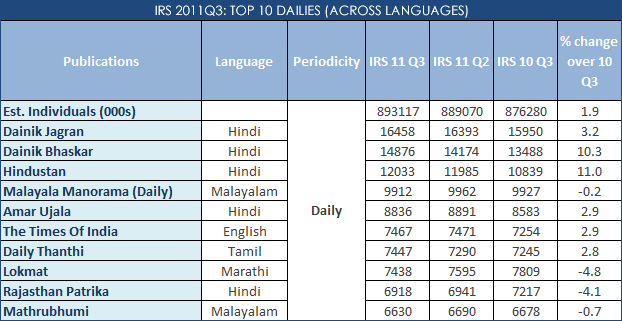
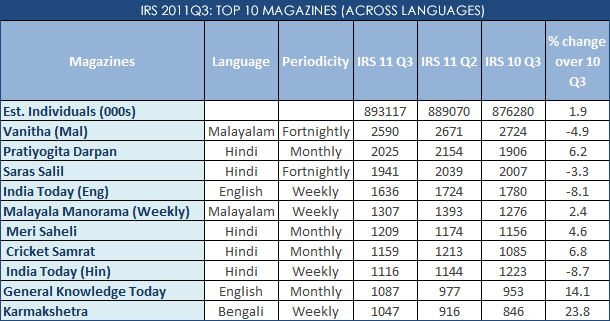
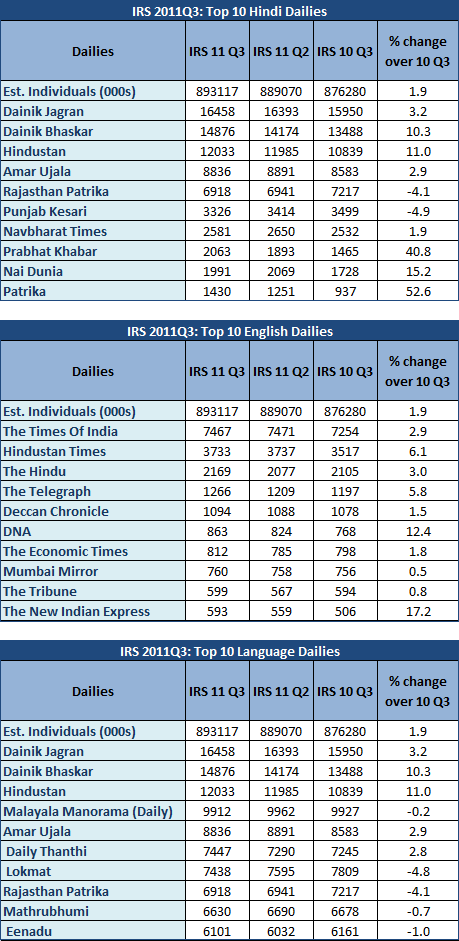
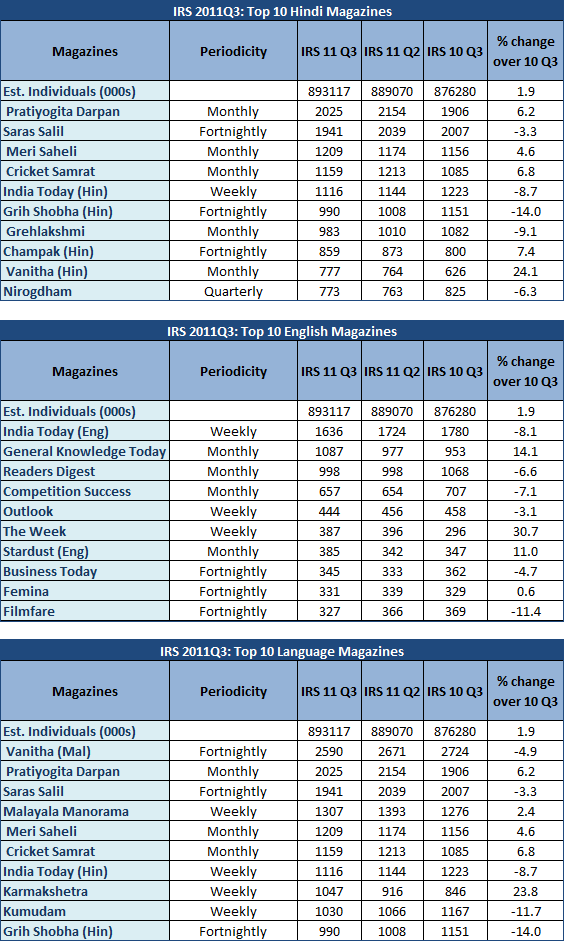
    Let’s look at the tables in detail (that we have based on the toplines publicly available).


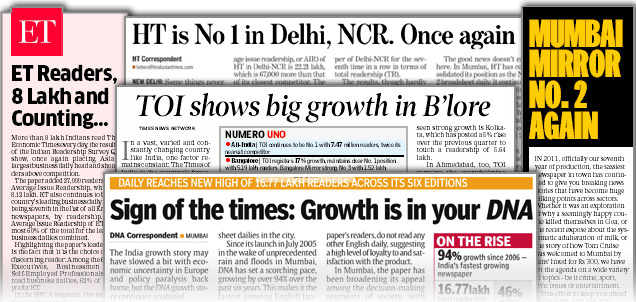
    There’s no need of words. The growth or degrowth percentages tell the story. Some spectacular successes. Others not so.