Wavemaker brought together an industry first musical association with the music maestro Ilaiyaraaja to compose the title track of Stranger Things Season 4 with an Indian twist.
Said Karthik Nagarajan, Chief Content Officer, Wavemaker India: “When we asked ourselves what is that one name that will resonate with multiple southern states and stand for all things ‘80s, there was only one answer – Raja sir. It has been an absolute privilege to work with him on this. As we listened to the track, he had composed in his studio which was a combination of his signature sounds, ending with the world famous Stranger Things theme, we had goose bumps. Netflix has gone the extra mile in reaching out to new regional audiences with this effort to make Stranger Things available in Tamil and Telugu. Today I’m sure Netflix has won a lot of hearts in the south with this video featuring the Maestro and we at Wavemaker are very proud to have made this happen along with our South entertainment partner One Mercuri and Still Water films. This association marks the beginning of the many firsts beautiful collaborations to come.”
Time was when radio was the go-to mass media for entertainment and news.
And then video sank the audio ship.
Broadcast TV ruled the roost for close to five decades. But, over the past couple of decades, the internet, social media and streaming have begun to eat broadcast TVs’ lunch.
However, though the delivery platforms might be changing, the content format remains the same – video and more video. From short-form videos to Netflix binge sessions, video probably accounts for more than 80% of media consumption among today’s young. So much so, that it is becoming a thumb rule in advertising that if you don’t say it in video, you have lost your young audience.
But then, every coin has its other side.
Screen fatigue is setting in with the young. Studies by The Mckinsey Global Institute and media research by IPA Touchpoints discern a significant shift in Gen Z, the generation born after 1995.
Gen Z seeks new experiences and likes to experiment with new identities.
In other words, they seek a greater agency for themselves – to be more in control of every experienced moment.
The passivity involved in watching a video lessens the agency of the individual. To watch a video is to surrender your senses to the video.
The consequence is that there are incipient signs of the young moving away from passive video watching.
Some media mavens believe that the maturing of VR leading to more immersive gaming and the metaverse will solve the passivity problem.
Perhaps so, but to my mind, the jury is still out on that assertion. Gen Z is also much more tech and marketing savvy than previous generations. As a result, they may see VR and the metaverse as marketing machinations that further reduce and not enhance their agency.
While the genuinely immersive and convenient VR and the metaverse are still years away, there is a medium that may replace video as the principal media consumption format among Gen Z.
There are already signs that streaming audio – music, podcasts and – audiobooks – are increasing their share of Gen Z’s media consumption. The IPA Touchpoints study offers an insight into why this is so. Many in Gen Z see streaming audio listened to on headrests as a pleasing, relaxing soundtrack to their lives. They dip in and dip out of it as they go about their lives – walking, trekking, shopping etc… An essential aspect of headset streamed audio is that it is intensely private, allowing one the choice to be secretly elsewhere when stuck in an unpleasant social situation. A recent ad campaign for Spotify India powerfully illustrated this. They depict teenagers’ content with their Spotify stream as they sit through otherwise awkward situations. Say, uncle types heatedly arguing about the obnoxious anchor as the TV news played in the background or auntie types harassing a talkative saree salesperson in a stuffy showroom.
A friend in the publishing world tells me that literature is making a comeback with the young with the emergence of richly-produced audiobooks.
The IPA Touchpoint study also reveals that Gen Z trusts information that they receive through podcasts more than through other media. This increased trust could be because they see podcasts as individuals’ products rather than faceless organisations. They also take them more seriously than social media posts as they recognise social media posts governed by a mad scramble for likes and followers.
Audio could take over Augmented Reality (AR) as AR becomes a part of day-to-day life. Instead of outputting visually-distracting text or video on your AR glasses, users might prefer audio outputs streamed through smart earpods.
Every science fiction film worth the label shows futuristic computers responding mainly to audio inputs. Siri and Alexa are leading the way. I believe that in the near term, an increasing number of smartphone functions will shift to intelligent earpods while the smartphone shrinks to become a wristphone a la Dick Tracy. Très chic!
To coincide with 75 years of independence, Netflix and the Ministry of Information and Broadcasting, have come together to honour unique real-life stories of extraordinary individuals through a series of inspiring short videos titled Azadi Ki Amrit Kahaniyan. This was launched in the presence of Anurag Thakur, Minister of Information and Broadcasting.
Said Bela Bajaria, Global Head of TV, Netflix: “Great stories can come from anywhere and are ever so inspiring when they are about people who rise against the odds. In partnership with The Ministry of Information and Broadcasting, Azadi Ki Amrit Kahaniyan focuses on celebrating remarkable individuals and their stories that can inspire people in India and around the world.”
Unless you are a Tata Sky subscriber or a digital algorithm picks you as a potential lead, you will likely miss out on these short, simple name change films. Additionally, these films talk of the new Tata Binge offer, including the addition of Netflix. The way the scriptwriter and the production team have managed the cast and the location itself with Covid restrictions is worth applauding.
The films feature the flamboyant Saif Ali Khan and beautiful Kareena Kapoor Khan. Saif continues to surprise us with his never acknowledged versatility. Kareena, like him, plays different avatars but with the same expression, smile and trademark pout. But, both deliver memorable short scripts. There are language films with different set of celebrities.
Is there a story there?
When a brand puts so much effort into Name Change, it suggests more than what meets the eye. The earlier name has the potential and most likely will come alive in a different Avatar sometime soon. Why would you otherwise spend so much time, effort, and media money to delink it from entertainment, TV, and Cable.
Is Tata Sky later going to the sky and being an airline. It is the right name for airline by the Tatas. Now, that is a guess and a long shot. However, even if Tata Sky never becomes the Airline it should be, I would still be at peace.
Did they leave the clue somewhere? What do you think?
Back To Tata Play.
SALESMAN- CUSTOMER PLAY
The first set is a customer-salesman interaction. The charming Saif Ali khan delivers for the brand, and Kareena does the rest. The story moves forward, and for a moment, I was taken back to Tata Chota Recharge memories and how successive episodes of TVC took the story further. The recharge advantage is shared in another short clip, and the Tata Binge app offer also gets delivered. Alas, the story shifts totally. Nevertheless, it is smartly done.
TEACHER PLAY
The next set of interplay is between two teachers. The History teacher enacted by Saif Ali Khan comments that Tata Sky ka Tata Play Hona eek historical moment hai. Was that more than necessary or a trap for people to think of Tata taking over Air India. The ad is nice.
The chemistry between the two actors is fabulous. Then it slowly weaves in the Free Service saving in a charming style. And the Netflix offer comes back.
DRIVER- MAID INTERPLAY.
The third set of scripts has the duo playing as Driver and the Maid. The interaction is still meticulously executed, and both actors deliver on the script. However, the series of messages primarily relate to name change, other than bringing alive the solo mobile viewing and the collective family viewing advantage on Tata Binge.
DIGITAL INTERPLAY.
The three different characters suggest selective advertisement placement based on consumer profile data. However, the characters and locations are not so polarized to make the best use of data that the brand and media could have. Maybe I am wrong, and the brand knows something more. However, on the Tata Play channels- all the advertisements continue in a loop.
However, the brand team, creative and production, have done commendable work in keeping it simple, engaging and delivering the message. Love the ads.
…………………
Tata Play films are also made in regional languages with appropriate celebrities from the zone.. Here is one such film.
………………………
JUST FOR CLICKS.
Here is one of my favourite communication from Tata Sky – 10 Rupay ka Chota Recharge. Enjoy.
Netflix India has announced Take Ten, a short film workshop and competition that aims to discover and support emerging filmmakers from diverse backgrounds in India. As a part of this, 10 filmmakers will be given an opportunity to attend workshops by the best in the creative industry and then to make a fully funded short film with a $10,000 grant. The films will be showcased on Netflix’s India YouTube channel.
Take Ten is sponsored by the Netflix Fund for Creative Equity, which has dedicated $100 million a year over five years to setting underrepresented communities up for success in the TV and film industries through programs all around the world.
Said Amy Sawitta Lefevre, Head of External Affairs, APAC, Netflix: “We’re excited to launch ‘Take Ten’ in India – a short film workshop and competition that will open up the chance for aspiring filmmakers from anywhere in India to tell their stories. Supported by Netflix’s Fund for Creative Equity, ‘Take Ten’ shows that great stories can come from anywhere and it creates new opportunities for filmmakers to receive training from some of the best in the industry.”
Added film critic, author and Film Companion editor, Anupama Chopra, who is leading the programme: “Take Ten is a celebration of storytelling and originality. The workshop and competition aim to be inclusive and showcase the diverse voices behind and in front of the camera in India,” “I hope Take Ten enables artists across India to find their footing and soar.”
Twenty twenty-one, with all its disruptions, saw a lot of content being produced and distributed in India, across media. While much of it did not have any lasting impact, some shows and films stood out during the year, not only because they received appreciation and commercial success, but also because they played a role in shaping the future of video entertainment in India. Here’s my list of the Top 10 shows or films of 2021:
10. Master: It needed a full-blown Tamil superstar vehicle to get audiences back to the theatres in January 2021. Even as Hindi cinema waited, this Vijay and Vijay Sethupathi entertainer reaffirmed that the big screen will never be out of business.
09. Money Heist: Netflix may have struggled with its Indian originals for most part of 2021. But the final season of Money Heist, with its multiple dubbed versions, managed to receive a lot of love from the audience, recording more viewership than most prominent Indian series in 2021.
08. The Great Indian Kitchen: The much-appreciated Malayalam film, along with Drishyam 2 and a few others, spearheaded the Malayalam cinema movement in 2021. The national audience, especially in big cities like Mumbai, Delhi, Pune and Kolkata, took notice of Malayalam films, which became a popular OTT sub-genre among those seeking discerning content.
07. Shershaah: While many theatrical films went the OTT way, very few of them made you feel they deserved a theatrical release. Captain Vikram Batra’s biopic Shershaah topped this list, and was also the soundtrack of the year by a wide margin.
06. Anupama: The lone GEC show in the list, Anupama set new benchmarks for success, breaking the 4-TVR barrier, something unthinkable for any show at the start of the year. The show continues to go strong, providing a silver lining to an otherwise inert year for Hindi GECs. You can read my recent column on the show here.
05. Sooryavanshi: It took a while, but Rohit Shetty’s Sooryavanshi finally got the Bollywood box-office back on track in Diwali 2021. Like Master, the film was a confirmation of the power of the theatrical medium, and of the value of larger-than-life, mass entertainers.
04. Spider-Man: No Way Home: In December 2021, the true might of the Marvel Cinematic Universe (MCU) was on display at the Indian box0office, as the new Spider-Man film became the biggest theatrical success of the year in India, becoming only the third Hollywood film to break the Rs 200 crore barrier at the Indian box-office.
03. The Family Man S2: In a year that saw many webseries (more than 130 in the Hindi language itself), one stood out as being head and shoulders above the rest. The first season of The Family Man was an unqualified success, but the second season actually managed to raise the bar further, with its nuanced handling of characters, relationships, politics and plot. From ‘Don’t Be A Minimum Guy’ to ‘Chellam Sir’, the show has found its way into pop culture too, and is now the definitive gold standard for Indian web-series to surpass.
02. Squid Game: Korean content found a sizeable audience in India in 2021. But it was Squid Game that went truly mass, attracting viewers from the smallest of towns in India, capturing their imagination through a story that combined human emotions with thrills and adrenaline.
01. Jai Bhim: It is only fitting that the top entry in this list is not in the Hindi language. Suriya-starrer Jai Bhim received whole-hearted appreciation from across the country, recording more viewership than many starcast-led Hindi films in the Hindi markets. The film worked both as social commentary and a legal drama, and proved decisively that good content can find audience across languages and geographies.
2021 has been a treacherous year, and it’s been generally hard to predict what’s in store next. Even as I write this on the last morning of the year, a third Covid wave knocks on our doors, and this time, we know it’s an inevitability. That it’s likely to be a wave of milder infections is the silver lining we latch on to.
The media and entertainment business has done well to stay afloat in a difficult year. Two categories had the maximum opportunity to make the most of it: OTT and News. The streaming players did their part, and came up with content across languages to keep us engaged while we were locked down. The focus, however, was on quantity over quality. More than 200 series and 75 films launched on streaming platforms in India in 2021, and only about a dozen of these managed to make an impact. It often came down to international content to save the day, such as Squid Game and Money Heist for Netflix. That does not reflect well on an industry that, till not very long ago, had announced itself as the torchbearer of a new content revolution in India.
The news story has been a dichotomous one. While television news shed all pretense and became unequivocally subservient to the powers that matter, the print media, especially in the Hindi language, kept the flag of good journalism flying high. If I had to choose a media brand of the year from India, I’d seriously consider Dainik Bhaskar for that award. It takes courage to go against the tide, and stand up for the truth. Even the subsequent IT raids did not deter them.
Digital news platforms were persistent in their coverage of the second wave too. But that ecosystem is still struggling to find a viable business model, as they try and convince Indians to pay for their news, which is at least two degrees away from the first frontier for any pay digital platform to surpass: To convince audience to pay for content, of any kind at all.
The television sector, in general, would have had another forgettable year, with stagnant viewership and no breakthrough achievement in content. But we can always bank on TRAI to inject some nuisance to counter the dullness. Much of the year saw broadcasters and TRAI tussle over NTO 2.0, and the last chapter of that story has still not been written. There was also the mega-merger of Zee and Sony, which opens immense opportunities for the new entity, with their complementary strengths. But that’s another topic for another day.
We can hope for a lot from 2022, but it’s not a year you want to write a script for. There are going to be surprises on the way, and this time, one hopes they are more pleasant than those in 2021.
Netflix India has launched a new campaign to promote its Hollywood blockbuster movie, ‘Red Notice’. Conceptualised by 22feet Tribal Worldwide, the campaign invites fans to experience an adrenaline rush at the ‘Red Notice Shop’, where everything is free if they can steal it.
The Red Notice Shop has been brought to life in a 3000 sq. ft. retail space at Phoenix Palladium, Mumbai. The space is guarded with lasers, sensors, secret codes, CCTV cameras, alarms, and top-notch security. The heist is successfully completed if one is able to steal from the Red Notice Shop. Prizes include not only goodies, tech delights, ownable shop merchandise but also three precious gold Faberge eggs from the film with exclusive rewards inside them.
Said Debashish Ghosh, National Creative Director, 22feet Tribal Worldwide: “Most viewers fantasise about being in a role similar to one of their favourite characters or plots in a film. We wanted to give them an unexpected leg-up. So, we set up a shop to pull off a heist where stealers are keepers if you don’t get caught. And if you do, you don’t land up behind bars. Either way, the experience leaves an indelible mark and lodges Netflix and Red Notice in your memory for good.”
A new WARC analysis of advertising spend forecasts for 100 markets worldwide and the results of a survey by GWI of more than 715,000 consumers, show that advertiser spend on TV and social media is highly inflated in relation to daily consumption. These findings are published today by WARC, the international marketing intelligence service, as part of its new WARC Data Premium suite, launched today.
The analysis finds that as of the first quarter of 2021, social media now attracts more investment from advertisers than linear TV for the first time, however both media draw far more of advertising budgets than the average consumer spends with these channels each day.
Social media, for example, is forecast to account for 39.1% of 2022 adspend among the eight media studied in the report – linear TV, online video, social media, print press, online press, podcasts, broadcast radio and online audio – but has a 21.4% share of daily media consumption, a discrepancy of 17.7 percentage points (pp) equivalent in value to $94.3bn.
Social media has accounted for over two hours of daily media consumption since Q2 2016, per GWI monitoring, and WARC Data Premium’s latest forecasts expect daily social time to reach 2:30 during the second half of next year.
Notably, all demographics measured in the report are set to spend twice as long with social media as they are with online press next year, despite ongoing trust issues – less than one-half of adults say advertising on social media is ‘somewhat’ or ‘very’ trustworthy, falling to 28% in China, 19% in the US and just 10% in the UK.
Despite this, the largest gaps between social consumption and adspend can be found in China (where advertiser spend is 3.3x consumption), the UK (2.2x) and the US (2.0x). Conversely, in Australia (0.9x), India (0.4x) and Russia (0.5x), social’s share of daily media consumption is higher than its share of advertising budgets – a potential indicator of opportunity for brands.
Linear TV adspend is 2x daily consumption, but online video investment is balanced Linear TV is forecast to account for a 31.5% share of advertising spend next year among the eight media studied, compared to a 16.1% share of daily media consumption. This would equate to an investment gap of $86.9bn worldwide next year.
An overspend in relation to consumption does not translate directly into waste, and proportions vary by size of budget. Successful high-budget campaigns spending over $10m, for example, typically allocate 60% of their budgets to TV, while successful alcoholic drinks campaigns typically allocate 44%.
While linear TV spend is inflated in relation to its consumption, online video is now close to parity after years of underinvestment. It is worth noting that the world’s largest online video platform – Netflix – is predominantly adfree, while platforms such as YouTube are prone to ad blocking on desktop and mobile devices.
Still, advertisers are forecast to spend $71.9bn on online video this year, a 13.6% share of the eight studies media which compares to a 12.9% of media consumption, or one hour 37 minutes.
Audio and online press heavily undervalued Data show that audio media appear highly undervalued – a trend that was recently highlighted by WARC in the US.
Perhaps most notably, podcasts are found to be undervalued by $40bn, with the greatest opportunities for advertisers among audiences aged 16-24, middle earners, and those educated until the age of 16.
One in three internet users now listens to a podcast each month, but a cost per thousand (CPM) of $23.55 is higher than even TV. Spotify has quickly gained ground on Apple to become the largest app for podcast streaming as of March this year.
Online press also appears to be another heavy undervalued medium: advertisers would need to spend $58.0bn on online press ads globally next year to achieve parity with consumption levels. Instead, forecast spend is just $12.8bn.
Business models in the publishing sector have been diversifying to counter the shortfall in advertising revenue; 76% of publishers are prioritising subscriptions this year.
Said James McDonald, Managing Editor, WARC Data, and author of the report: “The study shines a light on divergences between media investment and consumption, two metrics which are rarely seen to be in lockstep with one another. In some cases, particularly for undervalued audio formats such as podcasts, this presents a good opportunity for canny practitioners to reach audiences with comparatively little competition.
“For industry stalwarts like linear TV, the seemingly inflated investment gap actually speaks more to the enduring power of the medium – its vast reach combined with attentive audiences and the heightened impact of audiovisual creative. These traits allow it to command a premium in the media mix, one which is likely to sustain even as social media further grows its share of budgets.”
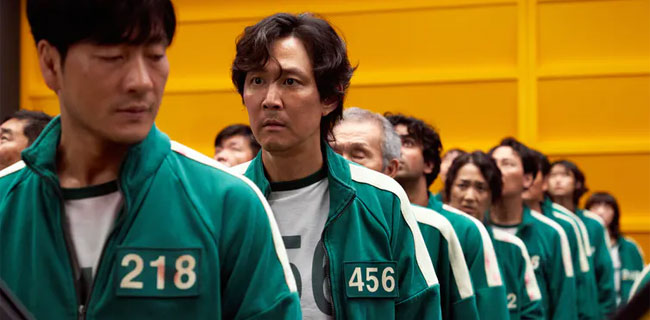
Squid Game, an original Netflix drama produced in South Korea, is a streaming phenomenon. Released on September 17, within two weeks, the series has become the most watched Netflix title in 76 countries, including the US, Australia and South Korea. (and India – Ed)
Across nine episodes, desperate people enmeshed in debt voluntarily participate in a sequence of six sadistic and lethal survival games. The prize for the winner is 46.5 billion won (around A$50 million). At the outset, the 456 participants are unaware there is a twist. There can only be one winner — and the rest of the contestants will die along the way.
This outcome is foreshadowed for viewers in a segment that precedes episode 1, in which two groups of children are seen playing the eponymous Squid Game (essentially a violent game played by Korean schoolboys). The groups struggle for possession of a squid-shaped area drawn on the ground. Both attackers and defenders must resist being pushed out of the play area, for, according to the commentary, if you are pushed out you “die”.
Such games are commonly metaphors for life experiences. Games structured as a struggle for possession, or with the goal of overcoming a player in a position of control, are often stories about social aspiration and limited social mobility.
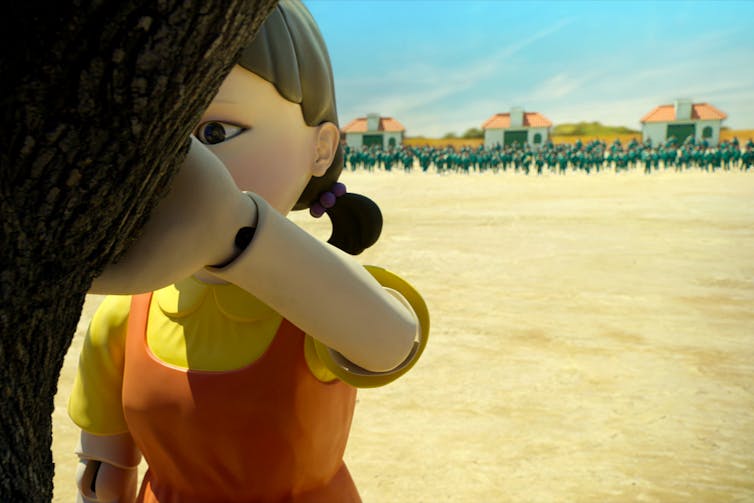
In the survival game played in episode 1, Red Light, Green Light (also known as “Hibiscus flowers have bloomed” in Korea and “Statues” elsewhere around the world), players can win if they can creep forward when the controlling figure’s back is turned. If seen to move, they are “eliminated” (and in this case, die).
The brutal adaptation of children’s games at the centre of Squid Game have clearly captured the imagination of the show’s viewers, and also provide a startlingly evocative metaphor for socio-economic inequality and capitalism.
Television drama frequently portrays Korea as a profoundly unequal and violent society. Its traumatic history throughout most of the twentieth century — Japanese colonisation, the Korean War, almost 40 years of military dictatorship, and financial crises — has left deep psychological scars on the national psyche.
Dark political narratives in TV and film continue to express the social impact of that history, such as the recent Netflix zombie series, Kingdom (2019–2021), along with D.P. (2021), Signal (2016) and Stranger (2015). The economic gap within Korean society is ever widening, and has become a recurrent motif in TV drama.
This unequal society is a staple of “Cinderella” stories in which protagonists are displaced into poverty and abused by those with wealth and power until they regain their place. It is also reflected in dramas about the super-rich such as Sky Castle (2018) and The Penthouse (2020-2021), which show how ultra-wealthy Koreans maintain their control over the country’s wealth.
Bong Joon-Ho’s Oscar-winning Parasite (2019) drew dramatic attention to the economic gap, as have several other films: Burning (2018), Veteran (2015) and Insiders (2015).
Lee Jung-jae as Squid Game protagonist Seong Gi-hun, a desperate gambler. YOUNGKYU PARK/ Netflix
Economic stress
Socio-economic inequality in Squid Game is explored through the often heartbeaking narratives of the contestant’s economic stress. These are shown to be often compounded by Korea’s lack of a social safety net and unregulated financial structures.
Employment in underclasses is precarious: chief protagonist Gi-hun (Lee Jung-jae) has been retrenched, has amassed gambling debts, cannot afford lifesaving surgery for his mother, and has tried to solve his financial problems by borrowing from loan sharks.
Television dramas widely depict this latter practice as a blight upon society: interest rates are extortionate and borrowers easily slip into a form of modern slavery through ever increasing debt.
Effective slavery is also depicted in Squid Game in the exploitation of North Korean refugees and South Asian migrant workers, often by other underclass members.
Squid Game participants who question their commitment to the violent game are warned by those in control that because of their poverty or level of debt they will be much worse off in the world outside. Episode 2, Hell, is a realistic account of the precarious life of marginalised people, and the motivations that drive them into the perilous game.
Red light, green light is one of the sadistic adaptations of children’s games in Squid Game. Netflix
The popularity of Squid Game
The global popularity of Squid Game can be attributed to various factors.
First, it draws on a worldwide cultural obsession with game shows, from quiz shows where winners hope to make a fortune to reality television programs such as Survivor.
As the participants wake on their first morning in their huge dormitory, the soundtrack rather comically consists of Haydn’s triumphalist Trumpet Concerto, which was previously used as signal music in a popular Korean quiz game titled Janghak Quiz (1973-1996).
Squid Game also includes a level of violence characteristic of western cinema but rare in Korean TV drama. It forms a potent metaphor for a deep social malaise.
The series also contains a lot of black comedy and even schadenfreude. There is a humorous contradiction between events on the screen, and the romantic music of the soundtrack.
For example, the ominous preparation for the first game, including passage along an Escher-inspired staircase, is accompanied by Johann Strauss’s Blue Danube waltz. Having forgotten his daughter’s birthday, Gi-hun gets her a mystery present which turns out to be a cigarette lighter in the shape of a gun. The moment when she opens her present is both very funny and heart-wrenching.
Finally, the series is a high-quality production. Its visuals are strong and it builds suspense very effectively. Such elements temper what otherwise might seem heavy-handed social critique.
The success first of Parasite and now of Squid Game is bringing Korean film and media into the international limelight in an unprecedented way.
Hwang Dong-hyuk, director of Squid Game, had to wait 12 years to find a backer for his script. He has been a highly successful film maker, known for Dogani (2011) and Miss Granny (2014), and currently seems to have his sights set on a return to the large screen. Perhaps he can be persuaded otherwise?
Sung-ae Lee, is Lecturer, Asian Studies, Macquarie University. This article is republished from The Conversation under a Creative Commons licence. Read the original article.
A post shared by Yashraj Mukhate (@yashrajmukhate)
Pepsi is gearing up to celebrate the finale of the Netflix series, Money Heist by hosting a virtual fan party.
Commenting on the upcoming event, Saumya Rathor, Category Lead, Pepsi Cola, PepsiCo India said: “Pepsi has always had a finger on the pulse of pop culture- thus, we’ve been able to bring forth relevant and exciting experiences for the SWAG generation. Pepsi is a quintessential party starter, and we look forward to creating the ultimate party experience for our consumers. In the first half of this campaign, we had the entire nation crave for the beautiful golden packs, and we are sure that this party will also be a celebration that everyone remembers.”
Shilpa Singh, Director, Marketing Partnerships, Netflix India, added: “At Netflix, we are always looking for innovative ways to engage with our fans. The upcoming virtual fan party with Pepsi is a powerful platform to celebrate the fandom for Money Heist. With celebrity performances, the virtual fan party will make for an unforgettable experience, just like the iconic series itself.”
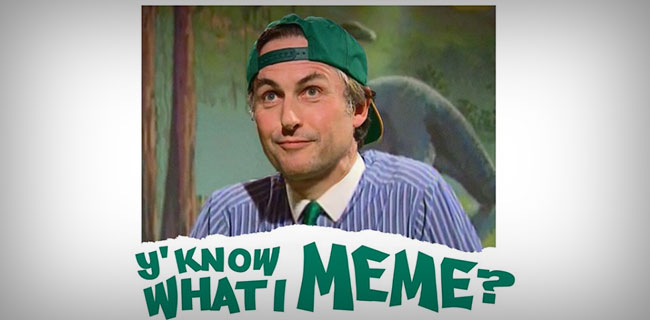
Different reports peg India’s social media user base anywhere between 350–400 million users. That is roughly the population of the United States. The millennial and Gen-Z generations that form a bulk of this number talk in a universal language of emojis and memes. Memes have penetrated our style of communication indelibly.
A subset of moment marketing – Memevertising – is not just having a moment but is here to stay. Like emojis, the language of memes is universal. Memes work because they take universally relatable scenarios coupled with a striking expression on the faces of the meme star(s). This creative hence can lend itself to multiple and different interpretations and hence spreads.
The word meme has its origins in the Greek word mimetic, which means to imitate. As per Wikipedia, a meme is formally defined as “a unit for carrying cultural ideas, symbols, or practices, that can be transmitted from one mind to another through writing, speech, gestures, rituals, or other imitable phenomena with a mimicked theme. Considering the increase in time spent online due to the pandemic, and difficulty in communicating via non-verbal signals, now more than ever before memes should be an essential part of a marketers toolkit.
In today’s hyper-connected world where all brands aspire to go ‘viral’ at all times meme marketing or memevertising is a great way to actually accomplish the goal.
Don’t be blatant, be subtle:
Memes have a unique structure in which they put a humorous or relatable twist in a piece of communication that is essentially derivative. However, the best memes do not reference brands via their name but the more intangible elements such as the personality, positioning and values. Like moment marketing, memes capitalise on contemporary situations such as sporting tournaments like IPL, Wimbledon, politics, trending TV shows and movies etc. Hence, most memes have a shelf life so timing becomes key.
Doing it right:
Today, brands have elaborate content calendars where in they play to every celebrated stereotype and day just to ride on the trend. A lot of this effort often gets lost because the messaging is generic, it doesn’t fit the target audience, and there is a glut of content. While leveraging memes, this risk is heightened, as memes by their nature are light-hearted. So treading with caution is essential to avoid a misfire.
The caveat is of course that even when consciously trying to ride on trends, brands must understand their brand, target audience, consumer behaviour profiles so that relevant people discover the generated virality.
Agility & Responsiveness:
Brands need to be agile and responsive to create and sustain brand value today. This is true of managing their reputation online, assessing dynamic consumer behaviors and moment marketing. Most of this, brands are already doing. Memevertising is but an extension of that. To capitalise on the day that social media posting has to create a few different expression and globally known stars.
Spreading the message:
In terms of the marketing funnel memevertising fits into ‘awareness’ stage. By capitalising on trends, brands have an opportunity to get discovered by an audience that may not have been exposed to the brand before.
Hence, if brands nail their memevertising they must ensure there is an effort to distribute their messaging. This can be done by animating memes into GIFs and sharing them on GIPHY, and Google-owned Tenor. These platforms allow brands to have brand channels and are integrated with social media platforms like Instagram, WhatsApp and Facebook etc.
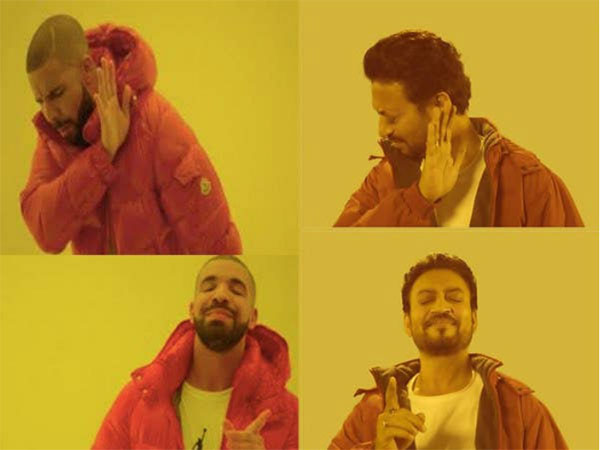
Netflix, Drake & Irrfan Khan – The meme:
More than his music, Drake would be remembered for how he has used memes to create his indelible brand across the world. Whether or not one has heard his music the world has definitely seen and mostly forwarded one of the renditions of his ‘Hotline Bling’ meme. A designed strategy, which has helped him gain worldwide, fame and has a million lessons for marketers.
Irrfan Khan also famously replicated this meme while marketing the film ‘Hindi Medium‘ with AIB in 2017. Khan replicated the Top 6 trending meme formats at the time. The irony of course is that all six original memes are as popular today as they were four years ago.
Netflix is another master at memevertising. A glance at their social media timeline is a lesson for budding memevertisers, because they are witty, on trend, never blatant about their brand name.
In conclusion, memes and gifs are here to stay and to brand must use them in their digital marketing calendars.

 Time was when radio was the go-to mass media for entertainment and news.
 Unless you are a Tata Sky subscriber or a digital algorithm picks you as a potential lead, you will likely miss out on these short, simple name change films. Additionally, these films talk of the new Tata Binge offer, including the addition of Netflix. The way the scriptwriter and the production team have managed the cast and the location itself with Covid restrictions is worth applauding.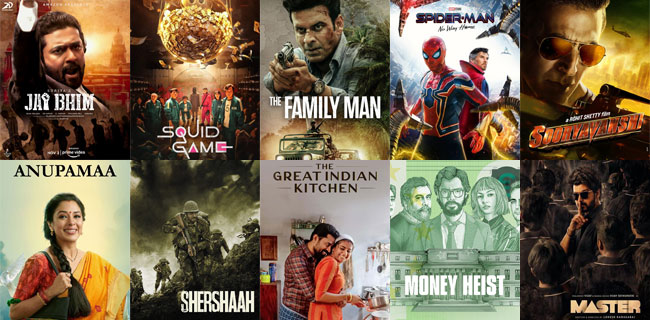
 Twenty twenty-one, with all its disruptions, saw a lot of content being produced and distributed in India, across media. While much of it did not have any lasting impact, some shows and films stood out during the year, not only because they received appreciation and commercial success, but also because they played a role in shaping the future of video entertainment in India. Here’s my list of the Top 10 shows or films of 2021:

 Different reports peg India’s social media user base anywhere between 350–400 million users. That is roughly the population of the United States. The millennial and Gen-Z generations that form a bulk of this number talk in a universal language of emojis and memes. Memes have penetrated our style of communication indelibly.