
उत्पादन कंपनी पूजा एंटरटेनमेंट की चल रही कानूनी लड़ाई हर दिन और उलझती जा रही है। पूजा एंटरटेनमेंट के निर्माता वाशु भगनानी ने अब स्ट्रीमिंग दिग्गज नेटफ्लिक्स के खिलाफ अपने मामले के सकारात्मक परिणाम के बारे में आशावाद व्यक्त करते हुए एक बयान दिया है। वाशु भगनानी ने कहा, “मैंने हमेशा सही काम करने में विश्वास किया है, और अपनी प्रतिबद्धताओं को पूरा करने के लिए कड़ी मेहनत की है। मुझे विश्वास है कि सच्चाई सामने आएगी और एक उचित समाधान की उम्मीद है। दशकों से, हम जुनून के साथ फिल्में बनाने के लिए समर्पित रहे हैं, और मैं उस प्रतिबद्धता पर कायम हूं। मुझे सकारात्मक उम्मीद है कि अधिकारी इस मामले में स्पष्टीकरण, समाधान और न्याय दिलाने में मदद करेंगे।” हाल ही में, मामले के संबंध में आर्थिक अपराध शाखा (ईओडब्ल्यू) द्वारा नेटफ्लिक्स के वरिष्ठ स्तर के अधिकारियों को तलब किया गया था, लेकिन वे पेश नहीं हुए, जिससे अधिकारियों ने कहा कि स्ट्रीमिंग दिग्गज जांच के दौरान बहुत सहयोग नहीं कर रही है। वरिष्ठ निरीक्षक रविंद्र अव्हाड, जो इस मामले को संभाल रहे हैं, ने पहले कहा था, “यह 47.37 करोड़ रुपये नेटफ्लिक्स को वाशु भगनानी को देने हैं। लेकिन नेटफ्लिक्स सहयोग नहीं कर रहा है। हमने उन्हें दो समन भेजे, लेकिन वे पेश नहीं हुए। भगनानी अप्रैल में हमारे पास आए, अपने बयान दिए, और दस्तावेज़ सौंपे। नेटफ्लिक्स ने समय मांगा लेकिन कभी पेश नहीं हुआ। वे निचले स्तर के कर्मचारियों को भेजते रहते हैं, लेकिन मोनिका शेरगिल (कंटेंट हेड, नेटफ्लिक्स इंडिया) को पेश होना चाहिए।” इस साल अप्रैल में, वाशु भगनानी ने शिकायत दर्ज कराई, जिसमें कहा गया कि नेटफ्लिक्स ने दो कंपनियों लॉस गेटोस प्रोडक्शन सर्विसेज इंडिया और ज़ू डिजिटल इंडिया के साथ मिलकर उनकी तीन फिल्मों, ‘हीरो नंबर 1’ (अभी भी फिल्मांकन हो रहा है), ‘मिशन रानीगंज’ और ‘बड़े मियां छोटे मियां’ में हस्तक्षेप किया, और कहा कि नेटफ्लिक्स को उनका पैसा देना है। पूजा एंटरटेनमेंट दो अलग-अलग मामलों में शामिल है, एक जहां उन्होंने नेटफ्लिक्स के खिलाफ आरोप लगाए हैं, और दूसरा जिसमें उत्पादन कंपनी ने निर्देशक अली अब्बास जफर के खिलाफ शिकायत दर्ज कराई है, जिन्होंने उनकी ‘बड़े मियां छोटे मियां’ का निर्देशन किया था, जो एक व्यावसायिक आपदा थी। इस महीने की शुरुआत में, अली ने आरोप लगाया था कि प्रोडक्शन हाउस ने उनकी 7.30 करोड़ रुपये की फीस का भुगतान नहीं किया है। अपनी जवाबी शिकायत में, पूजा एंटरटेनमेंट के वाशु भगनानी और जैकी भगनानी ने फिल्म निर्माता अली के खिलाफ कथित तौर पर सब्सिडी फंड को निकालने का आरोप लगाते हुए शिकायत दर्ज कराई, जो उन्होंने ‘बड़े मियां छोटे मियां’ की शूटिंग के दौरान अबू धाबी के अधिकारियों से लिया था। हालांकि, प्रोडक्शन हाउस द्वारा अली के खिलाफ मामला दर्ज करने की खबर आने के तुरंत बाद, ‘बड़े मियां छोटे मियां’ के क्रू सदस्यों ने अली अब्बास जफर का समर्थन किया, और पूजा एंटरटेनमेंट पर गलत होने का आरोप लगाया। फिल्म के कई क्रू सदस्यों ने अपने इंस्टाग्राम हैंडल पर पोस्ट किया और साझा किया कि उन्हें परियोजना के दौरान भुगतान नहीं किया गया था। इस साल की शुरुआत में, पूजा एंटरटेनमेंट के खिलाफ उसके क्रू सदस्यों के निचले स्तर की बकाया राशि का भुगतान न करने को लेकर भारी हंगामा हुआ था। –आईएएनएस
Tag: Netflix
-
Supari Studio is the content studio owned by Kulfi Collective Supari Studios creates End of Year campaign for Netflix
By Our Staff
Supari Studios, the Kulfi Collective content studio, has partnered Netflix India to bring the End Of The Year 2023 campaign to life.

Akshat Gupt Said Akshat Gupt, Co-Founder and Chief Creative Officer, Supari Studios: “We are thrilled to have partnered with Netflix India to bring forth the Netflix End of Year 2023 campaign. Our aim was to transcend conventional storytelling, infusing the essence of pop culture seamlessly into Netflix’s iconic moments. With a narrative that surprises, delights, and pays homage to the year’s most memorable moments, the campaign effectively encapsulates the essence of 2023 in a remarkably entertaining manner.”

Parikshit Vivekanand Added Parikshit Vivekanand, Senior Creative Director, Supari Studios: “The Netflix team was incredible to work with. They approached us with a great brief and gave us the liberty to exercise our creative muscles to bring the campaign to life. The result is a fun, engaging video that reflects the amazing year that was! This campaign is a testament to our relentless pursuit of crafting captivating narratives that resonate deeply while pushing the boundaries of creativity in storytelling”
-
Gets a new address Kapil Sharma forges long-term deal with Netflix
By Our Staff
Standup comic-turned-television biggie Kapil Sharma has teamed up with Netflix to bring a new comedy show
Said Monika Shergill, Vice President, Content, Netflix India: “Kapil Sharma is a huge entertainer whose legacy and comedy has made him a household name across India for many years. We’re incredibly proud to further our partnership with him and bring the King of Indian Comedy, alongside his beloved and well-known castmates, to Netflix for an all-new comedy show. Kapil will continue to make India laugh and also entertain millions of his viewers globally now, from his new address-Netflix.”
-
To elevates safety and skills for global best practices Netflix conducts workshop for stunts and SFX communities in India
By Our Staff
Netflix has announced taking care of safety and skills for the Stunts Community in India. It has partnered with the Movie Stunt Artist Association to conduct a stunt workshop aimed at demonstrating the global best practices in ensuring the safety of stunt performers and crew members during the production of films or series.
Said Aejaz Gulab, leading action director and the General Secretary of Movie Stunt Artist Association: “Our goal is to minimize the risks involved in performing stunts and creating stunning visuals on screen for the entertainment industry. We also aim to address the medical and legal responsibilities related to skill progression.”
Added Manas Malhotra, Director, Production at Netflix India: “Members of the stunts and SFX community have been doing inspiring work. This workshop focuses on bringing in global best practices and incorporating our learnings from other industries to elevate safety practices on sets in India. We believe in pushing the boundaries of creativity and innovation while ensuring that safety is never compromised.”
-
Following the success of ‘Scoop’ Netflix & Hansal Mehta enter partnership
By Our Staff
Netflix has announced a multi-year series partnership with filmmaker Hansal Mehta, after the launch of his maiden series with Netflix, Scoop. Taking this collaboration forward, Mehta will create multiple series for Netflix in the coming years.
Said Mehta: “As a filmmaker, the idea of creating diverse and dynamic stories constantly keeps me on my toes. What excites me about this partnership with Netflix, which is home to some of the finest talent, is the potential for my work to reach viewers across the world. As was the case with Scoop, Netflix is engaged in the creative process right from scripting, all the way to marketing and distribution which is critical for the success of any creative collaboration. This long-term partnership with them is only going to empower me to dive into a variety of undiscovered stories.”
Added Monika Shergill, Vice President – Content, Netflix India: “Hansal is a master of his craft and has an eye for spotting stories that have a broad appeal and are relevant to a wide audience. Being a nuanced storyteller, he is able to tell these stories like no other. Scoop marks yet another success for our series line-up this year, and with this partnership we look forward to never before seen stories that audiences will love.”
-
To manage brand consulting & licensing Black White Orange licensing agent for Netflix
By Our Staff
 Black White Orange, a brand licensing & consulting agency, has been chosen as Netflix’s exclusive licensing and merchandising agent in India and South Asia. Under the agreement, Black White Orange will manage brand consulting & licensing for Netflix’s expansive show portfolio, including major international titles like Squid Game, Stranger Things, Bridgerton, Rebel Moon, One Piece and Indian Originals like Archies, amongst a host of others.
Black White Orange will establish and develop Netflix’s consumer products business in India, as well as in Sri Lanka, Pakistan, Bangladesh & Nepal.
Said Mitali Desai, COO and Co-Founder, Black White Orange: “Netflix is an iconic brand in India and at BWO, we could not be more excited with the idea of launching consumer products for this legendary brand. Being superfans ourselves, we are thrilled to give fans a new way to own a piece of their favorite stories! Our strategy is to give consumers a never-before-seen merchandise experience that breaks away from the traditional mass market strategy. We’re thrilled to be working with the brilliant team at Netflix and cannot wait to get our partnership going.”
-
The Indian consumer is not just price conscious but value conscious too, writes Vikas Mehta Are you barking up the right tree?

With apologies to none at all
By Vikas Mehta
 Indians want free programming. Indians will not pay more for data. Indians buy the cheapest option.
Jio succeeded because it gave free data for more than six months. Netflix is not doing well because it is not cheap.
Sometimes, I am amused at such cliches which are used to define success or hide failures. Sure, price is important. Definitely, everyone loves free. But it would be imprudent to define failure or success due to such unidimensional thinking. And, no, Indians are not some out of the world consumers who live by a different paradigm.
There are two factors here. One is the definition of value and the second is the role of other marketing factors which accentuate the free or cheap story.
Let’s look at some examples. Netflix which became a household name globally worked on a simple premise. Great programming which is ad-free. The OTT channel invested a huge amount of money into producing independent programme content and dished it out on the back of subscription fees. It was lapped up globally and even in India its numbers initially were impressive. But then after it had reaped the low hanging fruit of urban, English-speaking affluent Indians, it stuttered and spluttered. The reason trotted out was its premiumness. Its subscription cost was Rs 799 per month. Compare that to Amazon Prime which then was Rs 999 a year and Hotstar which was around the same. Netflix was almost 10 times more expensive. To woo the Indian audience, the channel put out a Rs 199 a month mobile phone offer and then reduced that to Rs 149. Other rates were also slashed by around 20-60%. It seems, that barely moved the needle and Netflix subscription in India languishes at around 6 mllion subscribers.
So, the above statements about Indians and cheap or free etc.
But that’s barking up the wrong tree. Let’s look at the Netflix product. It has very little programming in Indian languages and the subtitles option relevant for India are only in Hindi and English. According to the 2011 census 46% of Indians claim Hindi to be the first language and 11% claim English to be the same. So, even if we ignore that some percentage of such Hindi speakers may not be comfortable reading Hindi, this means that more than 55% of Indians have a problem with Netflix as a product. And mind you, subtitles is always a compromised product. The bare minimum that Netflix needs to do in India is start dishing out subtitles in at least six-seven more languages.
This brings me to the second point. There is not much value to pay for a channel whose product to a big majority of Indians is not suitable. Specially, when compared to local competition like Hotstar or Amazon Prime or Sony Liv. Because these, offer something extra too. Some sports like cricket or football or free online delivery which Amazon Prime offers. And of course a deluge of Indian language programmes.
Indian consumer is not just price conscious but value conscious too.
What about Jio, you say. Of course, Jio gave free services for about 9 months after launch. But do not forget, it had a great product. Not only was it 4G but Jio was giving it out in spades. Till Jio came on the tariff of all telecom service providers was call centric. So many calls, so many SMSs and a miniscule amount of data per month. A typical post-paid plan which cost around Rs 400 per month would give 2-3 GB a month data. Jio turned it around on its head. It’s launch plan for Rs 149 for 28 days included 1.5 GB a day data and unlimited free calls and SMSs. The price was down by 80% and data had increased by almost 20 times. Was that cheap or was it more value?
Now let’s look at a category like soaps. This is a category where brand loyalty is tested quite often. And enough brands are available which cover not just all price segments but also all imaginable features and benefits. In the plethora of these brands Godrej No.1 was launched with a high TFM Grade 1 claim. Not an easy differentiation to express but they did a decent job. And they did not stop at that. They discovered a new pricing. Actually, pricing in the garb of an offer. Buy 3 get 1 free. And then they made only these packs available. Value? Yes. Indians love more value for the same price.
But India is not a large pack market. Sachets have revolutionised the Indian market. So, by making only buy 3-get-1 free packs available was Godrej barking up the wrong tree?
Actually, it was a classic case of right product with the right pricing, right promotion and also right retail push. Retail push because the retailer now had the opportunity to pocket more money. India being a single unit market, the retailer would break open the pack of four and sell each pack individually. Even if he sold it at a lower price than the MRP he was actually selling one extra pack, the whole value of which was his earning. Not just the margin but actually the selling price. And this was being done by the retailer. So, he was not just happy but would actually push the brand, citing TFM, grade1 soap. And currently I see the brand being sold in large packs only. Sometimes even pack of 8 or 9. It’s not being targeted just at the consumer but at the retailer. It’s value for the retailer too.
Value and price is fast evolving into a challenge for the brands. Traditional discounts are being traded with value. When one is dealing with aspirational products like say 5-star hotels, it hurts them if they have to offer big discounts during off season or when occupancy is low. If an average room costs Rs 25,000 per night and occupancy is low then the standard way of looking at the situation is to cut prices. For a hotel, at midnight the value of an unoccupied room becomes zero. Their thinking is that instead of zero even if I can get Rs 10,000 then it’s a bargain. Therefore late night deals and sites like booking.com give massive discounts to very late bookings. But Hotels now are changing the game. They are trying to attract a different target, those who aspire to stay at 5-star or want the comfort of a great room but till now cannot afford it. The concept being used is less value for less price. So, the room is available at Rs 15,000 or even Rs 12,000 but the resident cannot use the gym and the swimming pool and of course, no free breakfast. Suddenly, a whole new market opens up for the hotel.
We Indians are famous for jugaad. But the above sort of thinking where value is redefined, where product is redefined and where new rules are explored is what is redefining jugaad and making marketing more exciting today. The question that every marketer needs to ask themselves today is “Are we barking up the right tree?”
-
Here's Shailesh Kapoor's wishlist for related to the Indian M&E industry that I’m hoping to see, some of them only wishfully so, in the new year From RRR to TRAI… Five Wishes From 2023

By Shailesh Kapoor
 It’s a new year, and that’s a legit reason to be excited about what one can expect in the year ahead. Here are five things, in no particular order, related to the Indian M&E industry that I’m hoping to see, some of them only wishfully so, in the new year.
1. RRR at the Oscars
An Indian film being nominated in the main Best Picture category at the Academy Awards is an exciting thought. It’s never happened before, and there’s more than a decent chance that RRR may be the first. The film also hopes to be nominated in some other categories, especially Best Original Song (Naatu Naatu). I’m eagerly looking forward to January 24, when the nominations will be announced.
2. Box-office revival of Hindi cinema
2022 has been a tumultuous year for Hindi cinema at the box-office, with collections dropping by almost 30% compared to the pre-pandemic year 2019. Other major Indian languages, especially the South ones, have grown or stayed stable, and the overall India box-office has done quite well in 2022, which is only the second year after 2019 to have grossed more than ₹10,000 crore across languages put together. If Hindi cinema is back on its feet in 2023, starting with Pathaan in January, it is almost certain that 2023 will be the biggest-ever year for the Indian box-office.
3. Better non-scripted content
After all the exciting developments in the decade of 2000-2009, which saw the import of several international formats and creation of a few homegrown ones, non-scripted content on Indian television, and now streaming, has lost its innovative streak. Even the true crime genre, that saw Crime Patrol, and later Savdhaan India, create a category of their own, is languishing. Shark Tank India (Sony) and Indian Predator (Netflix) have come as beacons of hope. But they stand out more as aberrations, because the streamers are obsessed with fiction, and television is happy launching new seasons of their long-running international formats. It won’t be an over-statement to say that along with comedy, non-scripted content is currently the most under-served category in mainstream entertainment in India. Hope 2023 changes that, at least to some extent.
4. Reboot of Indian television news
I’m now entering wishful territory, by hoping that 2023 can see rejuvenation of Indian TV news. It’s not a realistic wish given the timing of the recent change-of-ownership at NDTV. Indian television news has slowly but surely acquired a spoof-ish imagery, and even though mass audiences continue to watch it, that’s more a testimony to the reach of television in India, than the quality of the content our news channels are dishing out. One would have used the phrase ‘trash television’ for it, but Indian TV news content is often purposefully idiotic or divisive. The good old days of UFOs lifting cows up from the fields suddenly seem quite acceptable, when you compare it to the communal ideas being spread through the news on primetime every night. While digital news platforms attempt to make a difference, they currently don’t have the reach and the budgets to make the larger national impact.
5. TRAI exits the television business
This is that joke wish, the kind that a media website can run as a Fool’s Day headline. It’s not going to happen (at least not in 2023), but nothing will make me, and the entire television industry, happier than seeing TRAI’s incessant meddling, which has damaged the business in more ways than one can imagine, stop in 2023.
-
His brand of humour was inclusive and accessible, words whose importance has been diminishing in a streaming-driven content ecosystem, writes Shailesh Kapoor Raju Srivastav: One of the Last Men Standing
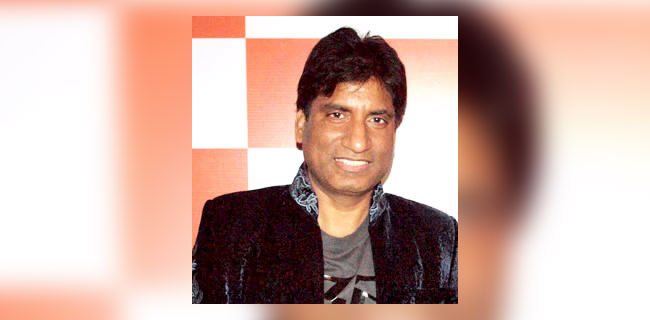
By Shailesh Kapoor
Season 1 of The Great Indian Laughter Challenge, aired on the then-newly-launched Star One in 2005, will rank high in the list of landmark Indian television shows in the satellite TV era. The season was a rip-roaring success, touching ratings unheard of outside Star Plus at that time. More importantly, it ushered in an era of stand-up comedy on mass Indian television, in turn giving birth to shows like Comedy Circus, and eventually to the biggest comedian India has seen till date, Kapil Sharma.Raju Srivastav, who passed away earlier this week, was the most popular face of that season. He eventually went on to finish third, behind Sunil Pal and Ahsaan Qureshi. But for almost 15 years since then, Srivastav has had a remarkable television and events career, and was the face of his genre till Sharma burst on the scene.
Over the last few years, stand-up comedy in India has seen a marked shift, with the rise of streaming platforms. Targeting younger and more cosmopolitan audiences than mass TV, platforms like Netflix and Amazon Prime Video have relied on more urban humor, often using liberal sprinkling of the English language in their shows and specials. Oddly enough, some of the TV attempts at stand-up comedy in the last few years have been misdirected, trying to get the attention of the streaming audience. What else explains the choice of judges or mentors in some of them, such as Zakir Khan, Mallika Dua and Hussain Dalal in the 2017 season of The Great Indian Laughter Challenge? Not surprisingly, there hasn’t been another season since.
Netflix, on the other hand, seems to have realized that even for their urban, sophisticated audience, a mass comedian like Kapil Sharma is a bigger draw. Their I’m Not Done Yet special with Sharma earlier this year found good traction, with an estimated viewership of 8.8 million audience in India as per Ormax Media estimates.
But nevertheless, mass comedy faces some sort of an identity crisis in India. The rooted, local humor needs a certain breed of comedians, like Srivastav, which the stand-up comedy scene and the open mics, and now even GEC executives, tend to look down upon. We haven’t had a name of any significance breaking out in the last decade, since Sharma’s meteoric rise to fame.
To that extent, Srivastav would be remembered as one of the last men standing, pun intended. His brand of humor was inclusive and accessible, words whose importance has been diminishing in a streaming-driven content ecosystem.
-
As their exclusive digital storage partner Western Digital partners with Alia Bhatt film ‘Darlings’
By Our Staff
Western Digital, a hard disk drive manufacturer and data storage company, has partnered with the film ‘Darlings’ as their exclusive digital storage partner. The film stars Alia Bhatt, Shefali Shah, Vijay Varma and Roshan Matthew, and is streaming on Netflix.
Said Gaurav Verma, Producer and COO, Red Chillies Entertainment: “As content producers, we know how important it is to find a safe and convenient way to store all the content related to a film. With Western Digital’s SanDisk® and SanDisk Professional line of products on board, all our data storage needs were handled seamlessly, and we are glad to have partnered with them on Darlings.”
Added Jaganathan Chelliah, Senior Director, Marketing, India Middle East and TIA, Western Digital: “Content consumers and creators alike want innovative storage solutions that are easy to use and are the right fit for their digital lifestyles. This DVC ties in with the film, Darlings, and highlights the increasing use of smartphones for content creation and the need for a device that can transfer the content easily and conveniently between different devices. This is something that SanDisk dual drives are perfect for.”
View this post on Instagram -
On The Gray Man as the official automotive brand featured in the film Audi teams up with Netflix
By Our Staff
Audi, the auto giant, and Netflix, the streaming giant, have collaborated on The Gray Man, an action thriller film, to spotlight four Audi vehicles.
Said Henrik Wenders, Head of Brand, Audi AG: “This film has a global appeal and intrigue. He explains the true extent of Audi’s role in creating the production, which went far beyond simply providing vehicles. This cooperation made us feel action and high speed. Like the Russo brothers we at Audi are leveraging technology to create something unseen and unexperienced before. Audi worked with the directors Joe and Anthony Russo on selecting the new cars. It was fascinating to be partners on this film production and to work closely with Netflix.”
Added Anthony Russo: “As storytellers, we have always been very interested in finding and exploring new technologies to find new tools to do something no one has ever done before. That’s what excites us. That kind of approach I would apply to anything particularly to the evolution that’s happening with cars right now. As much as I love the cars of the past and today, I am certainly most interested in where cars are going tomorrow. That is an exciting new frontier that’s going to bring whole new experiences for us not only as drivers or consumers but also as people who have to coexist with cars.”