Tag: Narendra Modi

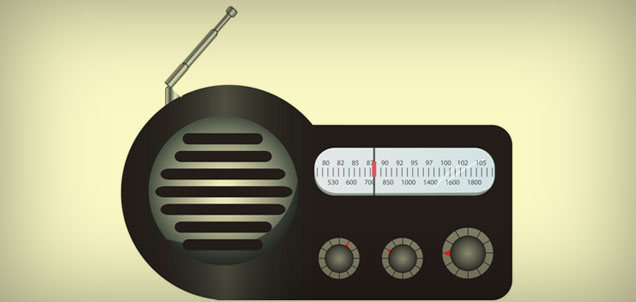
  • Does anyone care about radio?


    “Radio is a wonderful way to interact, learn & communicate. My own #MannKiBaat experience has connected me with people across India.” Prime Minister Narendra Modi was a huge thumbs up to the medium that is being celebrated across the world today. “Greetings on World Radio Day. I congratulate all radio lovers and those who work in the radio industry & keep the medium active & vibrant,” the PM tweeted earlier.

    Indeed it was the monthly ‘Mann Ki Baat’ airing soon after he assumed office that confirmed the reach, power and vibrancy of the medium. While television and the internet have assumed prominence, radio has been flourishing.

    In fact broadcasters are the biggest advertisers on radio, underscoring the fact that to be successful on telly, you can’t not be on radio.

    More Power to Radio on World Radio DayBy Sunil Kumar
    Today, the world has more radio than ever before. Almost every Feature Phone and an Android Smartphone offers local, analogue radio. (People the world over hate Apple not offering that on iPhones). So the number of people with personal access to radio in the world is pretty much uncountable. That aslo makes radio more intimate a medium than any other.

    There are more ‘radios’ than ever before, thanks to advances in engineering and technology. Digital Audio Broadcasting (DAB) has increased the number of local radio stations in many a country to a phenomenal number. As a matter of fact, Norway has shut down FM to optimise the use of available spectrum. Apps such as Tunein and Streema can get you a ‘local’ radio station from any part of the world to any other. And how can one miss the ‘radio’ button on any music streaming app – iTunes, Gaana, Wynk, Saavan.

    Live radio has far longer shelf life now by way of archives and Podcasts.

    Podcasting has meant emergence of thousands of listening communities, and they are largely about technology, news and current affairs, business, sports, literature, comedy, history, wellness, trivia, spirituality and so much else, not just music. That has made radio so much more democratic. Anyone can broadcast to anyone on this new form of radio. No regulation, no censorship, no major investment.

    Not to forget, India has more radio stations than ever before. We have 800 or so terrestrial stations in the country. We are going to have these many more in the next couple of years.

    All this means, people are consuming more radio than ever and advertisers are spending more money on it.

    Sunil Kumar is Managing Director of Big River Radio, a radio consulting firm; and Managing Partner of Blue Broadcast Systems, a company engaged in FM transmission infrastructure in the private sector. He moved from advertising to radio in 1993 and has since been actively evangelising the medium.


    On January 14, 2013, the United Nations General Assembly formally endorsed UNESCO’s proclamation of  World Radio Day. During its 67th Session, the UN General Assembly endorsed the resolution adopted during the 36th session of the UNESCO General Conference, proclaiming 13 February, the day United Nations Radio was established in 1946, as World Radio Day.World Radio Day is now in its 6th year and the 2017 edition being celebrated has seen UNESCO inviting radio stations and supporting organisations to join in to celebrate radio and how it helps shape our lives.

    In India, where some parts are media dark and literacy and income levels are low, radio plays a key role for information and entertainment.

    However, as Prime Minister greets us on World Radio Day, his government has done all that it could do to ensure the medium doesn’t stay active and vibrant.

    As per newspaper reports, the government has informed the Supreme Court that it is against permitting community and private FM radio stations to air news because of a “possible security ris.”

    Legal news portal quotes a Home Ministry Affidavit saying: “All these stations, channels are run mainly by NGO/other small organizations and private operators, several anti national radical elements within the country can misuse it for propagating their own agenda”.

    The apex court is is hearing a Public Interest Litigation (PIL) filed by NGO Common Cause in 2013, seeking a direction to the Centre to allow private radio stations and community radios to broadcast news, arguing that radio is a more accessible medium for the masses, particularly the poor, notes the LiveLaw.in report (http://www.livelaw.in/cant-allow-pvt-fm-stations-air-news-centre-sc/_). The NGO is being represented by noted lawyer Prashant Bhushan.

    “It is believed that news and current affairs, with their inherent capability to manipulate the minds of the people have been advisedly kept beyond the limits of private radio stations. Any shift in this policy would necessitate to an adherence adherence to a rigorous code of conduct; a proper monitoring mechanism and penal provisions of violation of such a broadcast code”, said the home ministry affidavit the report adds.

    India is perhaps the lone democracy where the dissemination of news and current affairs programmes on radio remains a monopoly of the Government-owned broadcaster, the PIL added as per the LiveLaw.in report.
     

  • Masses show ‘patient restraint’ post-demonetisation, says Maxus study

    The demonetisation of the Rs 500 and Rs 2000 currency notes at 8pm on the eve of the US election 2016 results by Prime Minister Narendra Modi was a surprise announcement that triggered a significant upward kink in social media chatter.

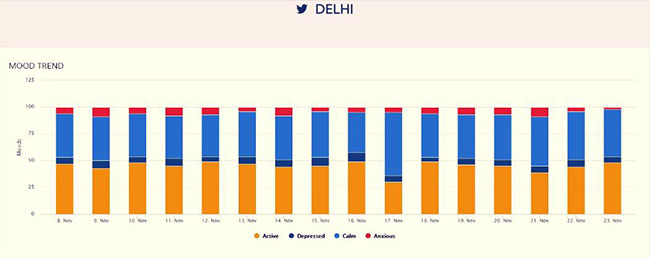
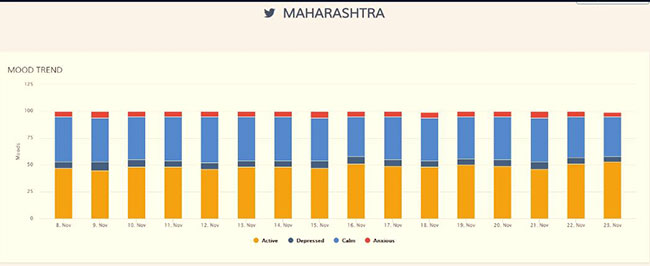
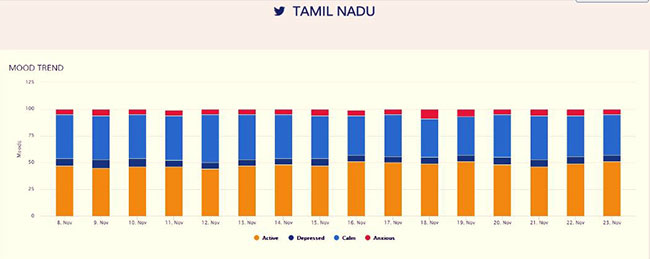
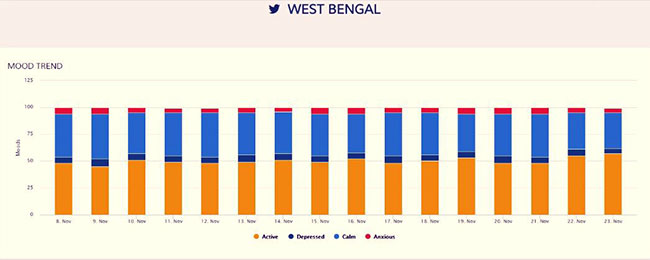
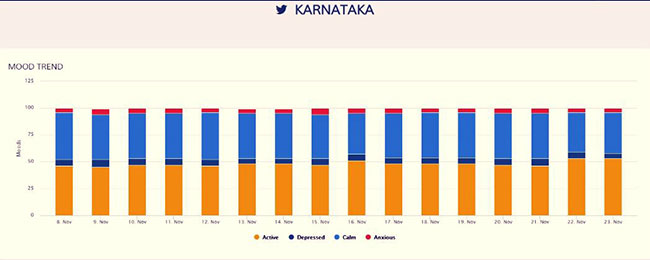
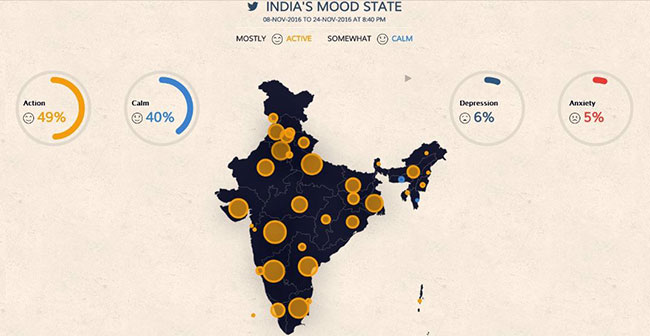
    Maxus Kaleidoscope mapped the mood basis the location based Twitter and Instagram conversations in India between November 8 and 24 by when one had a clearer picture of the how the initial euphoria of the demonetisation panned out over time.

    Location0based Tweets and Instagram Posts oscillated largely between Action oriented and Calm Moods in the fortnight since the demonetisation from an All India basis. Calm moods were dominant in the North Eastern states of Mizoram and Meghalaya as depicted in the map below.


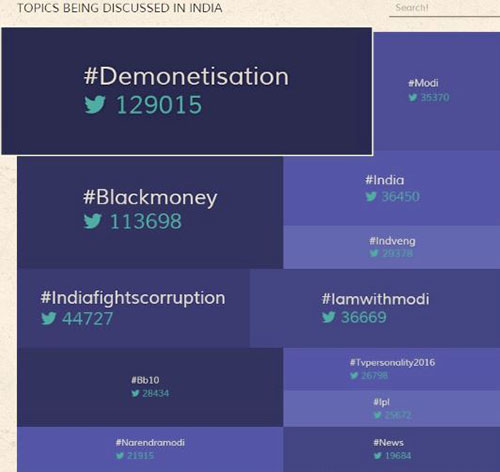
    Nearly 5 lakh conversations on Twitter and Instagram made up the Top 10 trending topics. Demonetisation accounted for six of the Top 10 trending topics since the announcement of which the Prime Minister garnered half of the trending topics. #IamwithModi and #Modi were the topics that made up for 19% of the conversations within the top 10 trends. Cricket shared a bit of the spotlight from demonetization thanks to the ongoing England-India test series.


    A total of 23 brands of were linked to the top 10 trending topics during the past fortnight. These brands factored in slightly over 30% of the total conversations of which PayTM (avg. 53% association) and SBI (avg. 16% association) carved out the larger part of the Brand Share of Conversation.

    Samsung and Amazon also managed to gain a significant share of overall conversations however Samsung conversations were largely based on humorous conversations around the Samsung Galaxy Note and demonetisation of currency notes.

    The Top 5 metros reflected similar patterns of Moods where Action dominated the moods however there were some days especially like November 17 in Delhi when the expression of Calm gave way to Action. Additionally Tamil Nadu showed a blip towards Anxiety on the November 18, 19 and 21 when subsequent announcements of the demonetisation easing by the government and news of the CM Ms. Jayalalithaa seemed to have driven up the specific mood.


    Overall, across the top cities in India there is a sense of patient restraint as the demonetisation moves on into the 3rd week and nears the critical end of the month period when cash flows really come into play.


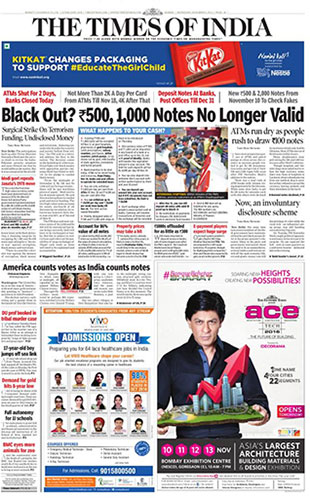
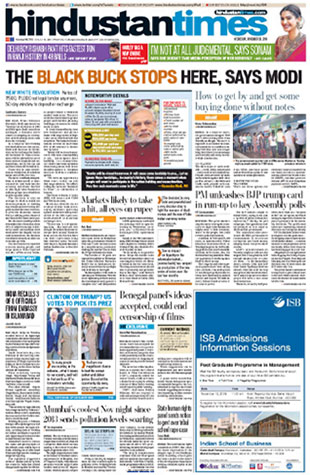
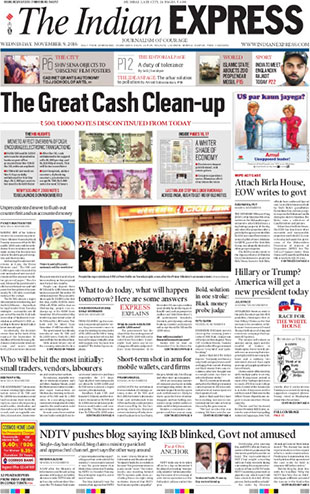
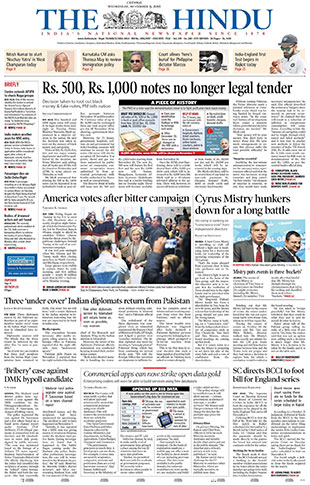
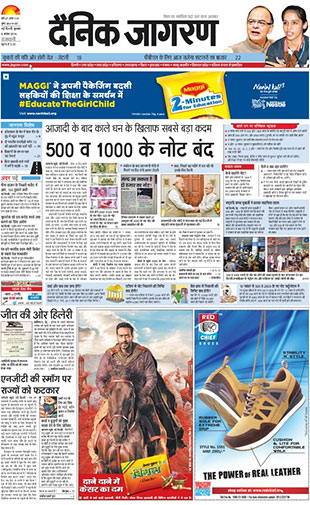
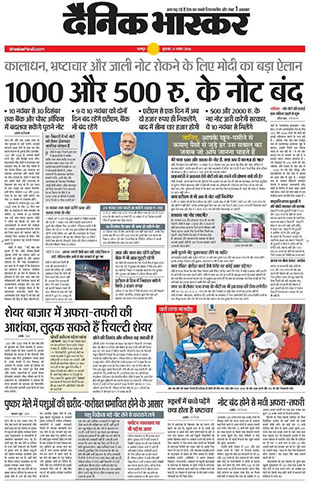
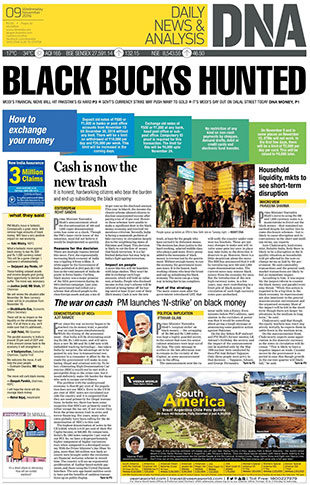
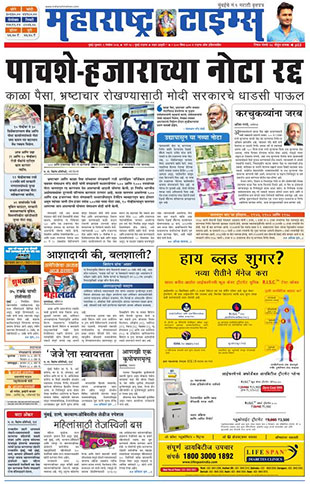
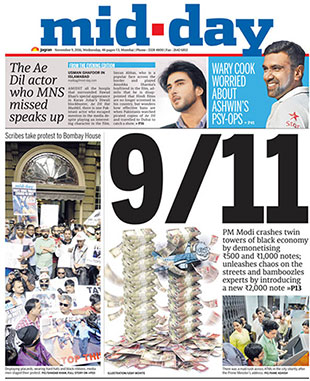
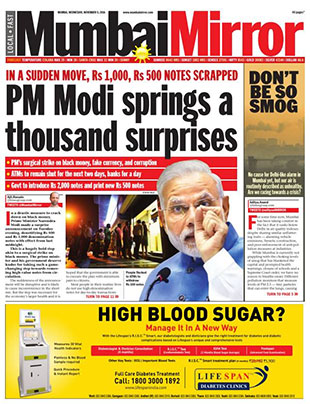
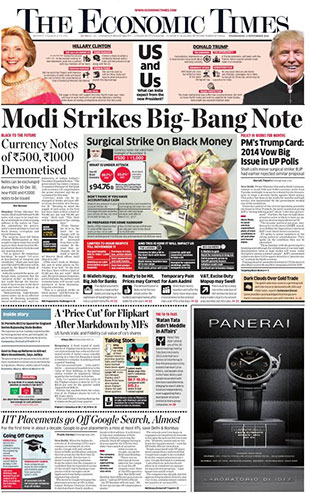
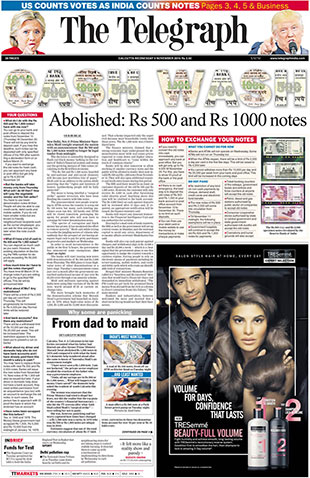
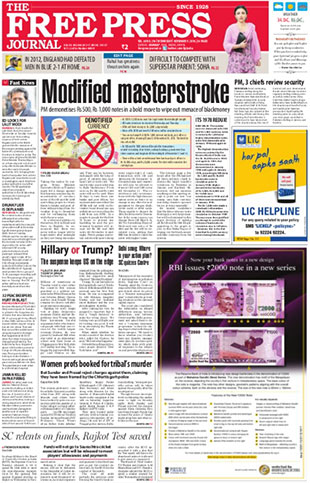
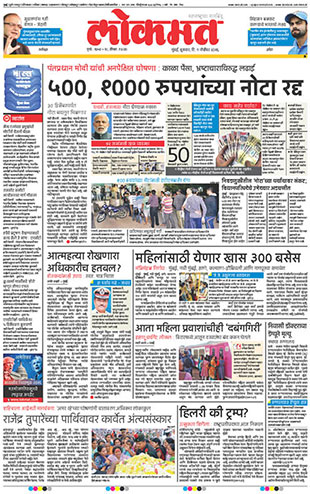
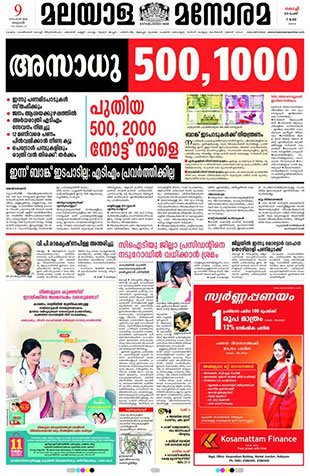
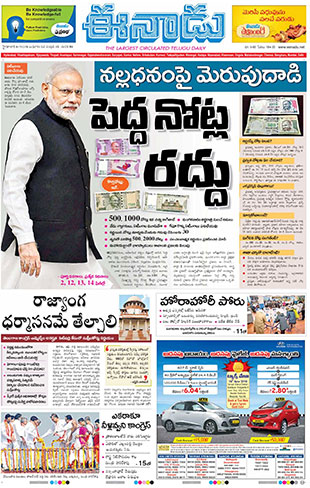
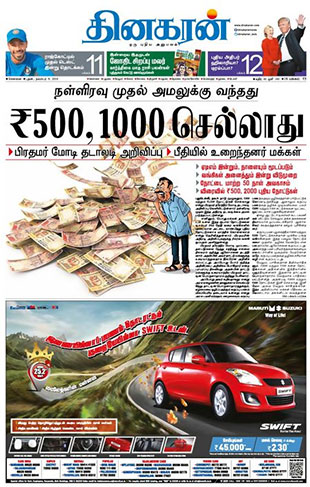
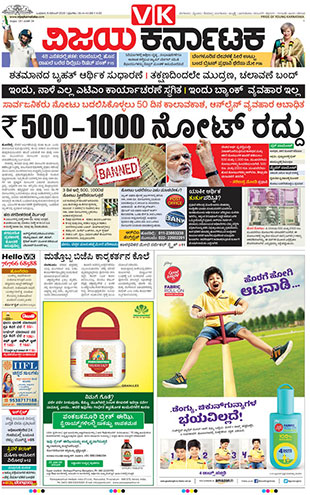
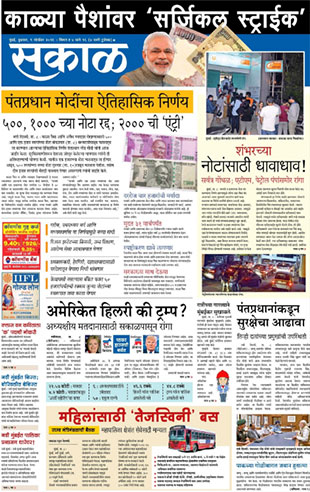
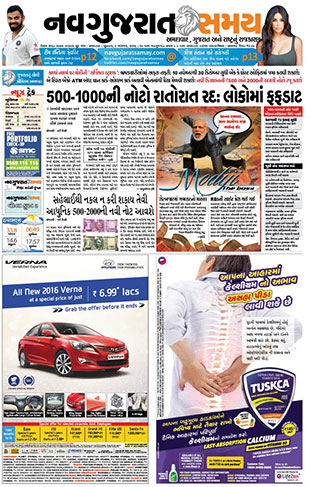
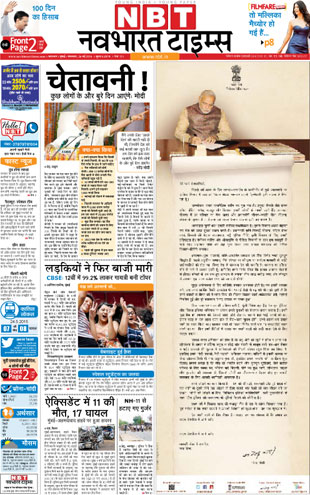
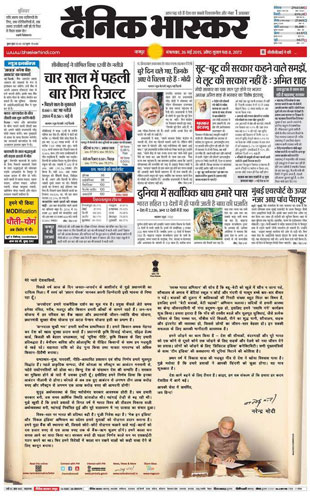
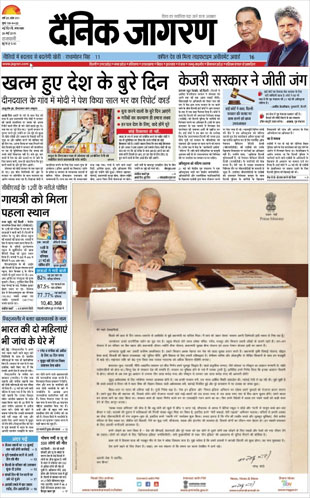
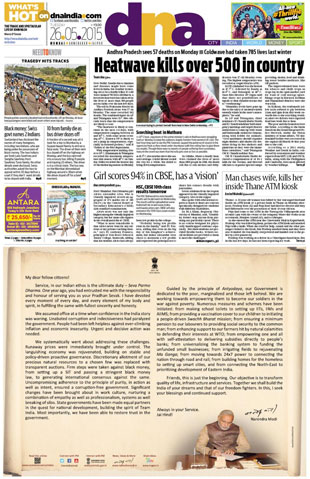
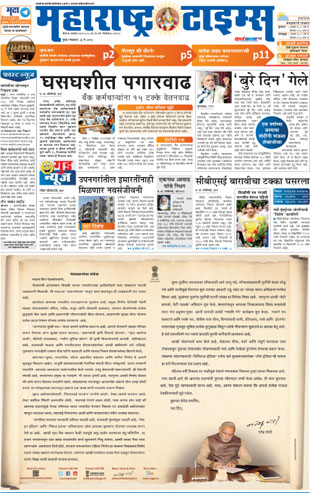
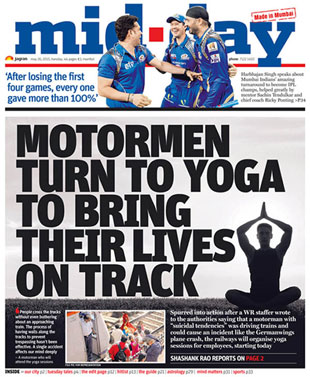
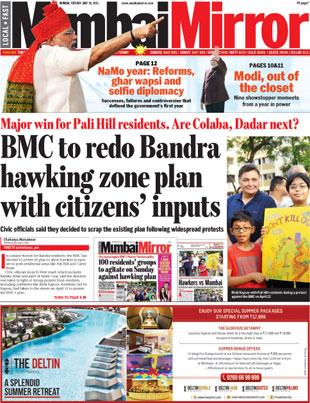
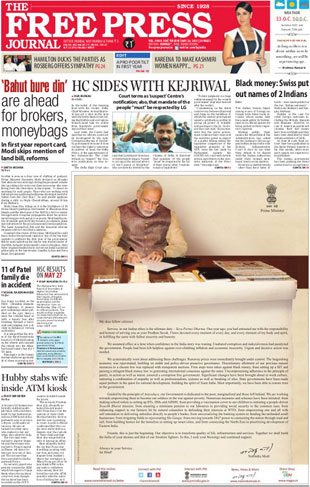
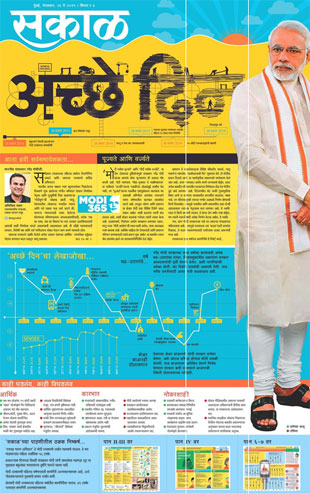
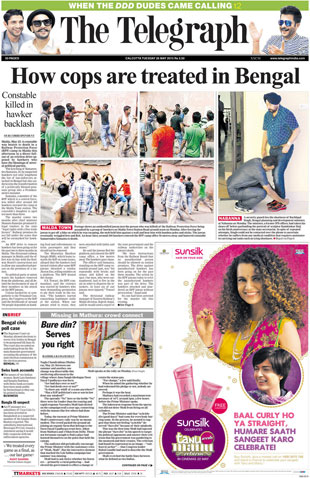
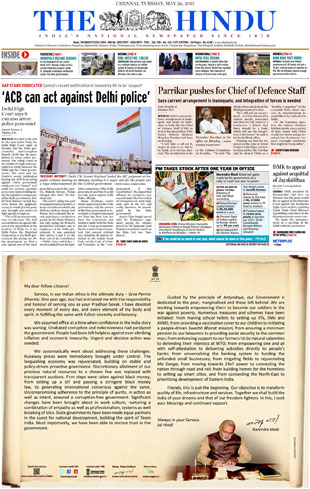
  • NewsStand: And this is how the papers covered the demonetisation…


    We seen various momentous events in recent times: elections, bandhs, the success or failure of the Indian cricket team, petrol price hikes, the passing away of a well-known person. But nothing has impacted the entire population as much as the demoneticisation decision by the Narendra Modi government on Tuesday.


    Our popular NewsStand feature brings you how some of the leading newspapers featured the announcement.View on…​


    We seen various momentous events in recent times: elections, bandhs, the success or failure of the Indian cricket team, petrol price hikes, the passing away of a well-known person. But nothing has impacted the entire population as much as the demoneticisation decision by the Narendra Modi government on Tuesday.

    Our popular NewsStand feature brings you how some of the leading newspapers featured the announcement.View on…​

  • M&E set to boom with Reliance Jio-led data thrust


    By A Correspondent


    It’s the last mile that matters. And it didn’t need any rocket science to appreciate that telecos will rule the next wave of media and entertainment across the world. But it needed the combination of vision and moneypower that Reliance Industries Chairman Mukesh Ambani has to realise the dreams of Prime Minister Narendra Modi’s dream of a digital India.


    If you think we’ve turned symapathisers for either Reliance Industries or the ruling dispensation, let’s put it down loud and clear: we haven’t. However, we can’t deny that the September 1 announcement at the RIL AGM, announcing the launch of Reliance Jio is perhaps the most significant development in not just telecom, but also media and entertainment in recent years.


    Ambani’s move of making voice and roaming free of cost is a masterstroke. For the real battle is in data. As he said, it’s going to be datagiri from now on. Right now though, as he hinted in his address, he is experiencing some dadagiri from some other players in terms of voice interconnect.


    The Jio Welcome Offer will be effective from September 5.  As part of the Jio Welcome Offer, users will have access to unlimited LTE data and national voice, video and messaging services along with the full bouquet of Jio applications and conten, free-of-cost up to December 31, 2016. The company has filed its tariff plans with the Telecom Regulatory Authority of India (“TRAI”).


    Ambani announced that domestic voice calls to any network across the country would be free for Jio subscribers even beyond the Jio Welcome Offer. Domestic roaming services would also not be charged separately. Average data prices would be around Rs. 50 per GB, which would be amongst the lowest in the world.


    The digital services business has been rolled out pan-India. In addition to fixed and wireless broadband connectivity offering voice and data services on an all-IP network, Jio will also offer end-to-end solutions that address the entire value chain across various digital services in key domains such as education, healthcare, security, communication, financial services, government-citizen interfaces and entertainment.

    Ambani spoke about the five fundamental pillars of the Jio ecosystem: (i) best quality

    broadband network with the highest capacity; (ii) A world of affordable, cutting-edge devices;

    (iii) Compelling applications and content; (iv) Superior digital service experiences; and

    (v) Affordable and simple tariffs.

    Ambani said that the key brand values for Jio included affordable, high quality and abundant data; connected intelligence; smart, simple and secure services; and bringing people together.

    He also announced the setting up of the Jio Digital India Start-up Fund. Jio will work on creating Jio Digital Entrepreneurship Hubs in key cities and towns of India. The Jio Digital India Startup Fund has set aside Rs 5000 crore to be invested over the next five years.

    AGM presentation slides


  • Media & 2 Years of Modi Rajya


    By Ranjona Banerji


    Two years ago, the Bharatiya Janata Party won the Lok Sabha in historic fashion. After decades of coalition rule, one single party won with a huge majority. The victory was attributed to a campaign that ran on the promise of one person: current Prime Minister Narendra Modi. “The Modi Wave” the media called it and indeed it was a tsunami in some areas.


    Most of the media immediately went into adulatory mode – that is, those who had not already become Modi cheerleaders during the campaign itself. One of the finest examples of the media’s Modi Media Fan Club at work was seen during the prime minister’s first US trip. The event at New York’s Madison Square Garden for non-resident Indians saw the Indian media calling him a “rock star” (was it Barkha Dutt who started it?) and getting brainwashed by such immense popularity.


    Most cynics know that such a honeymoon cannot last. It might be fair to say that in Modi’s case, the honeymoon lasted a little longer than most. Years ago, India Today (the magazine) had a cover on how cartoon depictions and caricatures of Rajiv Gandhi had changed in a year as he went from Mr Clean (after the Congress won with a massive majority following Indira Gandhi’s assassination) who promised youth and change to the same old same old. Made worse of course by Bofors.


    With Modi, the shift from “rah rah” to “ha ha” has been more subtle and incremental. Television and social media have changed the discourse and the news cycle. And the left-right-centre divide of Indian society has become more pronounced. Therefore, we still have news channels that are overtly pro-government, we have prominent journalists who are pro-government and we have websites pretending to be news websites that are almost government spokespersons.


    Let’s take a look at columnist Tavleen Singh who has a popular column in the Indian Express on Sunday. She promised her readers that Modi’s victory would bring a massive and wonderful change to India, as the nation needed to be rescued from the evil Congress and the even more diabolical Sonia Gandhi. But as time has changed, her column has made certain shifts. As the Modi government did not deliver on the promises she made, she started by blaming everyone around him.


    First, the Congress was to blame for its legacy. Then bureaucrats were to blame. Then other ministers were to blame. Then extreme Hindutva organisations were to blame. But now, two years in, now and then Singh finds that Modi himself is to blame. For a fan like Singh, is that a reality check or her fine journalistic prowess from the past re-asserting itself?


    The Times of India has declared itself a “federal” state. This means the newspapers say one thing, often critical of the government, and Arnab Goswami, ruler of Bennett Coleman’s news channels (Times Now, ET Now) says something quite else – hyper nationalism and a tendency to hold the Congress to account for this government’s failures.


    The Indian Express sticks to the old journalistic principle of holding a government in power to account. So does The Hindu. The Telegraph has perfected the fine art of holding a government in power to extreme ridicule, whether at the Centre or the state.


    Our other news channels walk their confused path. NDTV is accused of being anti-Modi and pro-Congress but often that just means that the channel tries to be balanced. The new avatar of CNN-News18 is far more balanced than it has been for three years – all the fears of Mukesh Ambani being only pro-Modi have not come quite true. With R Jagannathan leaving firstpost.com for Swarajya, the flagship website is also less tilted to the right. In fact, one might say Raghav Behl’s Network 18 was far more pro-Modi than the Ambani one. CNN-News18’s choice of “resident commentators” might give one a clue: Swapan Dasgupta (pro-BJP), Vir Sanghvi (not pro-BJP), Ajoy Bose (not pro-BJP) and Ayaz Memon (balanced).


    India Today TV remains the most everywhere. The cartoon series So Sorrry lampoons everyone equally. Rahul Kanwal and Gaurav Sawant are the best pro-Modi pro-BJP pro-nationalist and Super Patriotic TV journalists – my due apologies to Goswami for saying this – with Sawant having a slight edge over Kanwal. These two are balanced by the acerbic and sharp Karan Thapar and the even tone of Rajdeep Sardesai. So depending on time of day, you get a different India Today TV.


    News18 remains in a constant race to become Times Now with Rahul Shivshankar emulating his former boss Arnab Goswami as best he can. Which is not good enough by a long shot.


    May 19 and elections results of five states will be announced. Let’s see how many jump various ships then.


  • Media biggies meet Modi, want speeding up of TV digitisation

    By A Correspondent


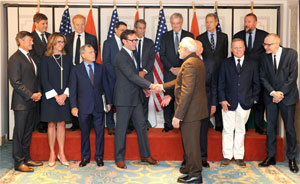
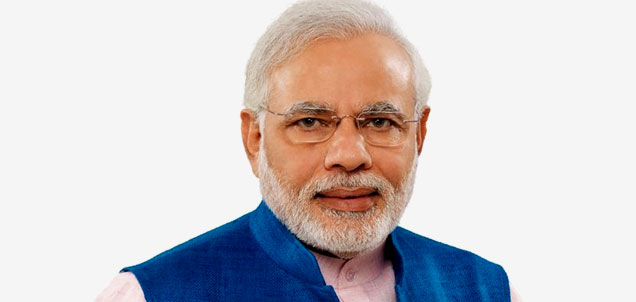
    Prime Minister Narendra Modi chaired a roundtable meeting with top American CEOs from the media and entertainment sector.  This happened last Thursday, September 24, to be precise.
     

    The CEOs present included Rupert Murdoch, Executive Chairman, News Corp and 21stCentury Fox; James Murdoch, CEO, 21st Century Fox; Robert Thompson, CEO, News Corp; David Zaslav, President and CEO, Discovery Communications; Michael Lynton, CEO, Sony Entertainment; Michael Roth, CEO, Interpublic Group of Companies; Shane Smith, CEO, Vice Media; Martin Sorrell, CEO, WPP; Jeff Bewkes, CEO, Time Warner; Nancy Dubuc, CEO, A&E Networks, Anthony Pratt, Chairman, Visy Industries; William Duhamel, Route One Investment Company; and Jeff Ubben, CEO, ValueAct Capital.  Uday Shankar, CEO, Star India was the only Indian M&E CEO in the meeting.


    According to a release, the CEOs appreciated the Prime Minister for energetic and dynamic leadership, and expressed optimism about the future of India. Specifically, the CEOs were enthusiastic about the digital transformation that is taking place in India through the Digital India initiative. They said that the current strong trajectory of the Indian economy makes it at a unique moment to accelerate growth in this sector.  The CEOs called for speeding up of television digitisation and strengthening of the cellular (mobile) infrastructure.


    The Prime Minister and CEOs observed that the changes in technology and media in recent times have led to an enormous democratisation of knowledge. The Prime Minister said that the world is now in a technology- driven era, where growth of digital infrastructure is as important as growth of physical infrastructure. He suggested to the CEOs that India represents both the biggest opportunity and the biggest challenge for them, and urged them to keep regional languages in mind, as they firm up investment plans for India. He spoke of his government’s vision to connect 600,000 villages through broadband connectivity. He asked CEOs to visualise the citizen of the 21st century, and think about what values s/he will represent and what challenges s/he will face. He also spoke of the role that digital technology can play in human resource development. The Prime Minister emphasised that he saw a key role for digital technology in further strengthening democracy, and in India’s development narrative.


  • Ranjona Banerji: Indian journalism exposed by ‘one year’ coverage


    By Ranjona Banerji


    The great gaps in Indian journalism have been exposed by the coverage of one year of the Narendra Modi government at the Centre. And also, the great divide within.


    The media, print, television and digital (if only we could add radio to this list), have embarked on a first anniversary analysis of the government’s performance. This includes report cards, which former prime minister Manmohan Singh used to do with his Cabinet.


    However, who do you find to both praise and critique the government’s performance and appear to be objective? Commentators and analysts have been very sharply divided between pro-Modi and anti-Modi since the nation kicked into election mode in 2014. The supporters are usually either BJP members or open admirers. The anti-brigade are the usual suspects and somewhat larger in number because they include academics and activists.


    The only recourse therefore to “balanced” coverage is to ask members of the BJP itself and BJP-appointed members of organisations or pro-BJP corporate to assess the government’s performance. Obviously there is no balance there at all but perhaps there is no option.


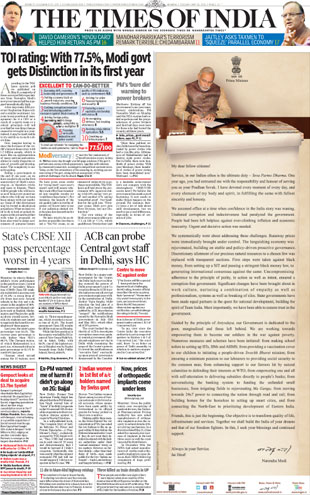
    So that’s as far as columnists and analysts go. What about bog-standard newspaper coverage? Here we see, more or less, straight outright hero worship. The Times of India’s Mumbai edition gives the Modi government over 77 per cent on May 26, the anniversary of the swearing-in or anointment as TV anchors preferred to gush. Oddly a survey for May 16, the first anniversary of the election results, in the same newspaper, showed many Indians, especially those living in Mumbai, not quite so happy with the government’s performance. Perhaps something dramatic happened in the last 10 days that the rest of us are unaware of?


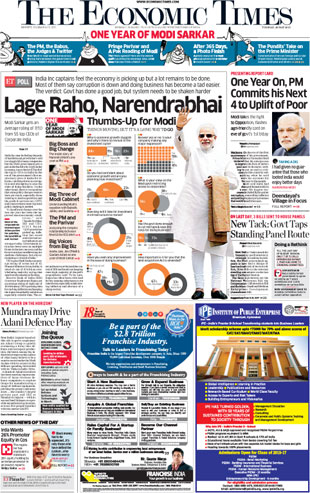
    The Economic Times outdid its sibling paper with its 20 or more days of coverage and analysis of the first year. The paper on May 26 led with the headline “Lage Raho Narendrabhai”, a salute to the successful Lage Raho Munnabhai movies about the life and times of a lovable petty gangster. Not sure if the editors saw the irony there or had not seen the movies… Judging by the gush and mush, I would reckon they thought they were just being super-clever.


    The Hindustan Times, Hindu, Telegraph, Indian Express and so on follow the model but with comparatively less hero worship… but am not sure that that’s saying a lot… TV is so idiotically breathlessly ra-ra that analysis is sometimes not possible. The websites have managed to be better sources of opinion than newspapers but is that because they depend not as much on advertising revenue?


    **


    Rather than speaking to so many “experts”, how would it have worked if newspaper reporters or maybe editors themselves, actually ventured out to the streets to speak to the general public. After all, they are the ones who vote and who wanted “achche din” after four years of stagnation. Had these people understood that the promises made were dismissed as “jumla” or that the promised good days were not supposed to arrive for the next 60 years?


    It might have been interesting to know how editors would spin the word on the street. Surveys are so much easier and so what if they’re not always right? You can always increase the margin of error to plus-minus 15 per cent, no?


    The foreign media, perhaps most interested in India because of Modi, has been more balanced in their assessment. This is actually a scathing indictment of the Indian media as a whole because it means that too many managements and editors put business interests ahead of truth… Hmm, what’s new, eh?


    **


    Meanwhile, some Hindi newspapers reported that chairs were broken by crowds angry with Modi’s one-year celebration speech in Mathura on Sunday. Did any English newspaper or TV channel report this?


    Ranjona Banerji is a senior journalist and commentator. She is also Consulting Editor, MxMIndia. The views expressed here are her own. She can be reached via Twitter at @ranjona


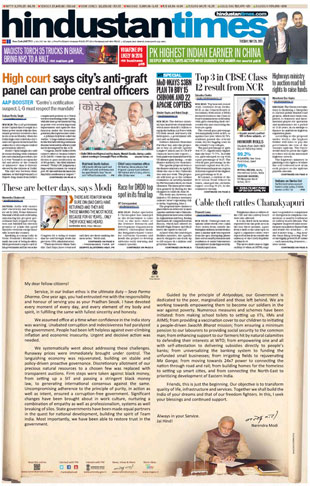
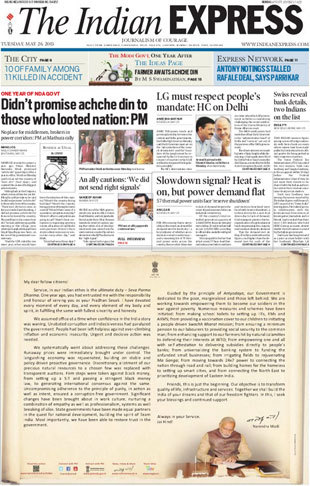
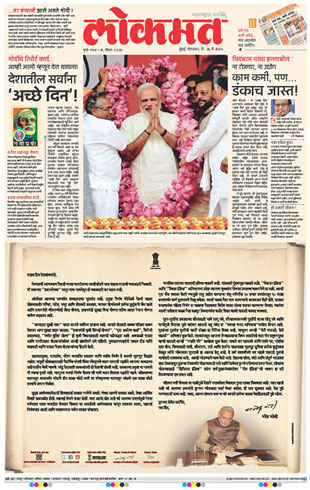
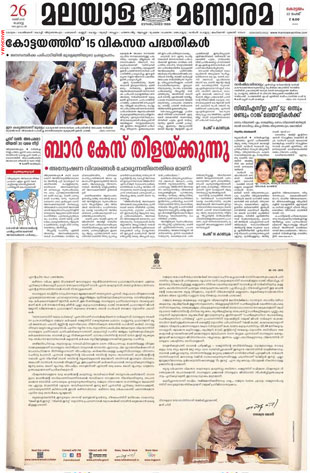
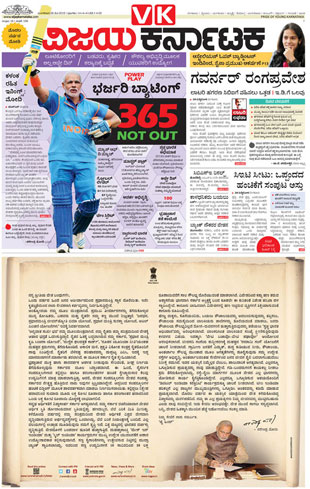
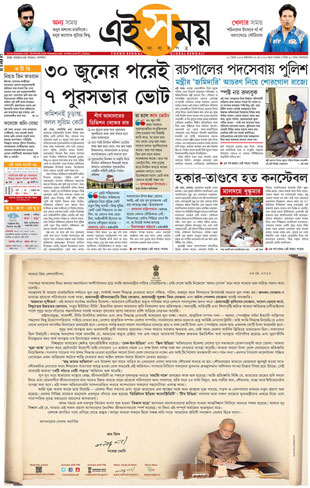
  • NewsStand: And this is how some Page1s looked this morning, displaying the news of the Narendra Modi govt’s year in office

    It’s one of MxMIndia’s most popular features… so we bring it again with the frontpages of some of the papers our team reads every morning


  • Grey India unveils new campaign to propagate Swach Bharat initiative

    By A Correspondent


    To support Prime Minister Narendra Modi’s Swach Bharat initiative, GREY group India, who was recently awarded to handle the creative duties of this mission has produced a new campaign as part of a larger campaign for the Swachh Bharat Mission.


    There are many offenders who have no qualms about throwing garbage on the street, littering on the streets, urinating in public etc., i.e. not contributing towards the social responsibility of keeping the nation clean. The central idea of the campaign is to “Shame” those offenders who do so. GREY¹s campaign aims at shaming those offenders, as the protagonist in the TV campaign is cheered or rather jeered by the people who have observed the protagonist’s dastardly act. This is the first phase of the campaigning, demonstrated by a 60 second TV commercial, which will be aired in 10 languages across all major networks.


    On the Swachh Bharat campaign, Samir Datar, VP & Branch Head, GREY Delhi says, “We are delighted to be part of Swachh Bharat initiative. We believe that the idea of shaming people who litter, is a compelling idea and can become a very effective behaviour change tool, once it gets traction in social media and ground activation.”


    GREY group is now working on the second phase to add momentum to this communication. GREY group India’s National Creative Director and EVP, Malvika Mehra said, “There is a saying in Hindi ‘jab ghee seedhi ungli se na niklay, tab ungli tedhi karni padti hai’. Despite countless ‘Keep India Clean’ efforts/messages by the government, we still see a total lack of involvement from our brethren for the cause. The sarcasm in the film is an attempt to drive home the point harder by now literally ‘humiliating’ the offender, albeit nicely. Hope such efforts lead to a Swachh Bharat indeed.”


  • Modi in the Media


    By Ranjona Banerji


    100 days is now a media mantra when it comes to anything at all. Should one go as far to say that this has something to do with the title of a book written by Gabriel Garcia Marquez? Probably not. So we have to assess 100 days of the Narendra Modi government at the Centre. Not three months (which would be around 90 days) and not 200 days but perhaps we’ll re-assess the government at 365 days and call it one year?

    I put “100 days Modi government” into Google and got stories headlined around that theme, in order, from IBNLive, DNA, Indian Express, LiveMint, India Today, Hindustan Times, NDTV, Zee News, Times of India and Economic Times. So much for originality…

    Having decided to play “follow the leader” on the 100 days theme however it has to be admitted that all media outlets did not take the same line. Some gushed, some focused on the misses, some talked about hits and misses both, some spoke to the Opposition.

    The biggest takeaway from all this seems to be that Modi has made his ministers accountable. According to a fascinating story carried in Niticentral, a rightwing website, this has been achieved by spying on his own ministers.  http://www.niticentral.com/2014/08/25/narendra-modi-enforces-tough-discipline-among-ministers-236467.html.

    So the100 days theme runs like this: Modi has cut through plenty of slack, he has improved systems by making sure his own ministers work, he has travelled to many countries, he has not spoken enough, he has not made good on several other promises, some of the benefits accrued to his government come from UPA policies, he has renamed certain existing schemes, he has made an Independence Day speech, he has fed fish in Japan, he has stopped his party people from talking too much, he has stopped his ministers from speaking almost completely, he has got rid of several governors, he has sidelined the old-timers in the BJP, he has made his right-hand man Amit Shah party president…

    How much of this is remarkable and how much is pedestrian perhaps lies in the eyes of the believer. As TV news tries to jump from issue to manufactured outrage and print sprints to keep pace, we see a fractured image. There is a larger-than-life Modi in carefully posed pictures in foreign lands, we have a Modi who promises security for women and toilets for all, we have a Modi who says everyone must have a bank account.

    We have a BJP which launches a campaign in Uttar Pradesh claiming that hordes of Muslim men are conspiring to make Hindu women fall in love with them to convert them to Islam and thus increase the number of Muslims in the nation. We have BJP-run state governments and the Union HRD ministry trying to manipulate history. We have local BJP units and BJP allies pushing for India as a “Hindu” state. We have the RSS jumping in and claiming credit for Modi’s victory.

    And we have a media which is unable to put all these refracted elements together. So Gaurav Sawant of Headlines Today and a reporter from CNN-IBN got to Japan and behaved like no one has ever been to Japan before. They make ridiculously banal comments about Japanese trains, they comment on cleanliness. They say: “Look at these Japanese people sitting silently on a train.” “When will India ever have such clean stations?”

    What is this? A delegation of idiots goes to Japan? Where is Mark Twain when you need him? The tenuous connection is the promise of a bullet train in India made by Modi. The obsequious brainlessness of some TV journalists and presumably their editors will be part of an ignominious chapter in the history of Indian journalism.

    P S:

    Meanwhile, scroll.in tells us that Shekhar Gupta is no longer vice-chairman of the India Today group. He is now an “advisor”. This is a mere two months after he took over, having ended a long stint at The Indian Express.

    What gives at India Today? Is it family matters or recalcitrant employees? MJ Akbar didn’t last too long, Siddharth Vardarajan didn’t get further than signing a contract and Gupta is out in two months…

    http://scroll.in/article/shekhar-guptas-return-to-india-today-group-ends-in-two-months-to-take-advisory-position/?id=677005


  • Flipkart to weave magic for Modi govt

    Online retailer Flipkart is all set to provide an online marketing platform to handloom weavers in the country. The Ministry of Textiles on Monday signed an MoU with Flipkart to provide online marketing platform to handloom weavers – an endeavour to boost the handloom sector, empower weavers and boost manufacturing in the country.


    Through this exclusive agreement, Flipkart will provide weavers in India online marketing platform, infrastructural support in data analytics and customer acquisition to help them get remunerative prices for their products and scale up their business, the press release said.


    Flipkart will provide online marketplace for sale of the products of the weavers/master craftsmen/national awardees/state level awardees and the others as advised by Development Commissioner for Handlooms.


    “This kind of a coordinated effort has been planned and executed for the first time with Flipkart for handloom weavers which will bridge the missing linkages of market intelligence, market access and logistics and help the Indian weavers in getting remunerative prices for their products,” the release added.


    According to the statement, “Flipkart aims to help weavers make optimal use of the available data to guide entrepreneurs and artisans on areas such as deciding on the right selling price, payment automation, proper packaging, transportation, brand building etc.”


    Commenting on the same, Minister of State (Independent Charge) Textiles Santosh Kumar Gangwar said, “The focus of this association should be to help weavers and weaver entrepreneurs to produce products in tune with the buyer requirements and grow significantly so that they may become manufacturers not only at a local but also at a national level.”


    Earlier this month, Flipkart signed an MoU with the Ministry of Labour and Employment’s Directorate General of Employment & Training ( DGET), aiming to train at least 5,000 students by December. Flipkart joined hands with the government to train people from semiurban and rural areas and possibly employ them at the company or its business partners.


    Source:The Economic Times

    Copyright © 2014, Bennett, Coleman & Co. Ltd. All Rights Reserved

    Licensed to republish


  • Tasks for the new I&B Minister


    When news came in late last week that Prime Minister Narendra Modi was keen on integrating similar ministries, I expected the progressive, media and more importantly one of the most digitally savvy politicians in the country, to integrate the ministries of I&B, telecom and I&T. While each may have areas that need special attention, there is need to look at communication of all kinds in a focussed manner.


    Prakash Javdekar was appointed Minister of State with independent charge of information and broadcasting. But along with that he was given charge of Environment, Forests and Climate Change. Also shared charge of Parliamentary Affairs. One learns that environment etc will be taken away as and when someone suitable is found.


    Here are 10 things that we would like Minister Javadekar to achieve in his tenure:


    #1 Only self-regulation

    Successive governments are known to tinker with the content freedom for news and current affairs, TV fiction and advertising. One hopes that Mr Javdekar will not succumb to these pressures and like Ambika Soni will keep all the sensitive souls at bay.


    #2 Ban paid content

    It’s a toughie and very difficult to police, but if the BJP is keen on rooting out corruption then it must wipe out all forms of paid content. It may mean taking on the big and mighty in media, but it’s got to be done.


    #3 Don’t interfere in Doordarshan and All India Radio

    Doordarshan will celebrate its 55th anniversary this year, but is a sleepy giant. And All India Radio is a forgotten one. Sadly, both entities reach out to more people in the country than all the private channels. The government must allow them to run independently and allow them to run without commercial pressures.


    #4 Push for news on FM Radio.

    There are a countless news channels and even more cable TV set-ups so one really doesn’t understand why news on FM is not allowed. By insisting on only AIR news to be carried is pointless. The minister must allow news on FM radio and let the medium flourish.


    #5. Clear the mess on distribution

    The TRAI has had to work overtime on distribution and the previous regime did some good work on digitization though with some mess in execution in between. The entire country is not digitized yet, so the minister needs to push things there. Then there is the issue of carriage fees which continues to be a matter of dispute between broadcasters and distributors


    06. New rules of social media

    Given that the social media has seen an explosion in the last five years, UPA-2 saw it embroiled in a few controversies around the social media and whether or not it should be policed. While there can be no denying the fact that one can’t condone defamation and unfair practices online in the name of freedom of expression, the government would do well to exercise caution before taking any action.


    07. Don’t get bullied by Big Media

    The problem with every successive government is that they buckle under pressure from the big media players. Whether it’s on DAVP rates or land at lower rates, the government would do well to ensure a level playing field for all media entities


    08. Promote low budget films

    The multiple and television revolution has helped the lot of film-makers who do not have access to big money. The government must do its bit to help in supporting those without access to big monies


    09. Content on telecom

    While we do not like the government to interfere in industry, it must ensure that content providers get their due from telecom players who have ensured that they keep the lion’s share of revenues


    10. Leave the business alone!

    Measurement, 10+2 ad cap, regulation… all issues that the I&B ministry has been busy with over the last few years. These should be best left to the industry players and associations. No need for the government to poke its nose