Tag: media

  • DDB MudraMax, Aircel flash mob promotes Pocket Internet Games card

    By A Correspondent


    Aircel in collaboration with DDB Mudra Max organized an ‘exhilarating and exciting’ Flash mob at the Express Avenue Mall to promote their newly launched Pocket Internet Games card. The crowd at the Express Avenue mall in Chennai were entertained with music, footwork and the live gaming activities of boxing and football.


    For starters, two men materialized out of nowhere and got into a heated argument. Their heated argument got the whole crowd interested and even as they listened to the peppy background music. On cue, the duo stripped down to boxing attire, a referee jumped into the fray, cordoned off an impromptu ring and began a round of boxing. Football followed similarly.


    Mandeep Malhotra, President, DDB MudraMax, said, “The ‘Aircel Pocket Internet Games’ Card is a unique property, and we wanted to do justice to the same.  When the word ‘flash mob’ is used, we automatically picture a group of people getting together and dancing on a song. We wanted to change this assumption, so we brought in the idea of gaming in the form of a flash mob.


    Commenting on the idea behind the flash mob, Gunjan Arora, Group Director, Brand Communications, DDB MudraMax, said that Aircel as a brand has always been open to new ideas and innovative practices to aggressively engage consumers and make an impact.


  • Innovative programming did the trick for Suvarna post-Kotyadhipathi

    By Tuhina Anand


    Kannadada Kotyadhipathi is gearing up for its second avatar on Suvarna, the Kannada General Entertainment Channel from Star Network. The channel plans to launch the show in March of 2013 with the host of its previous year Kannada superstar Puneeth Rajkumar. For the channel, Kotyadhipathi has been a big property which has propelled the channel to be a leader in the prime time category thus giving Udaya (the undisputed leader for long) much to worry.


    Post Kotyadhipathi, the channel revamped its prime time offering with new shows. It launched Amrutavarshini at the 9:30 pm  slot which Suvarna puts it as the number 1 show of Karnataka with an average TVR of 6.0 (CS4+, Karnataka market). In the 8:00 pm slot it launched Akashadeepa, Chukki at 10:00 pm and Pancharangi Pom Pom at 10.30 pm and all the shows are slot leaders.


    Anup Chandrasekharan – Business Head of Suvarna Channel, said, “For this year we had a conscious strategy to strengthen our fiction offering and the response for our newly launched fiction shows has been exceptional. We have firmly established ourselves as a family entertainment channel.”


    He elaborated, “In the year 2012, the channel conquered the key genres including Kannadada Kotyadhipathi which is the leading non-fiction show of the year, Amrutavarshini as the leading fiction show of Karnataka and Hudugaru our premier movie was the highest rated movie of the year.”


    While the current season of KBC in Hindi has generated a lukewarm response, there has been no such concern for its Kannada counterpart. The channel has witnessed repeat interest from its advertisers.


    Anil Narang – Head Marketing & Strategy, Suvarna, commented, “We are very confident about the success of the show. Hindi is a different market and that cannot be compared to Karnataka. Also we are in the second season of the show unlike Hindi which is in its 6th Season. Moreover, we have not made any changes in the telecast schedule like Hindi where they have made it a weekend show.”


    Mr Narang said that for Kotyadhipathi, there is big expectation from both audience and advertisers. In fact this year it is learnt that the client is coming with a premium.


    “Having been able to prove its success to both the trade and audience, in its second inning the Kotyadhipathi is seeing interest from all brands associated in its first time to come back,” Chandrasekharan added.


    The claim is that post Kotyadhipathi, the market share of the brands associated grew. In fact,  Sunfeast which had limited itself to computer branding is now the title sponsor for season 2.


    The show has been the number one show in Karnataka and has generated revenues in excess of Rs 35-40 crore. The plan for this year is to have revenue generated in the vicinity of Rs 40-45 crore.


    The numbers shared by Suvarna points that 11.3 million people has consumed the show making it biggest in Karnataka. Chandrasekharan, said, “Kannadada Kotyadhipathi had made Suvarna the No.1 channel in Week day Prime time, this show also led to increase in sampling of Amrutavarshini which we launched immediately after KK at 21:30. KK  brought in new viewers not only to Suvarna but also to Kannada General Entertainment. We are very happy with the response for season 1 and the on ground buzz for season 2 is exceptional.”


    For this year again the premise will be that the show will continue to change peoples’ lives. The channel will bank on emotional connect just like last year but the change this year will be that each week the focus will be on one district of Karnataka showcasing its rich culture and tradition. The tagline for this season of Kotyadhipathi is “Questions that can change your life”


    Here’s a look at Kotyadhipathi Season 1 numbers


    • On an average has been the No# 1 show of Karnataka since its launch
    • Has an average TVR of 5.5 (CS 4+, Karnataka Market)
    • Has a cume reach of 11.3 million people
    • 81% of the Karnataka Television audience has seen the show
    • Has a slot share of 43%
    • Maximum weekly avg rating is 7.1 (CS 4+, Karnataka Market)


    The auditions this year has seen more than 50 percent increase than the last year for calls for registrations. The show which will run for 20 weeks will see spend close to 4-5 crore on marketing.
    While KBC may have not done much for other regional channels but surely it has helped Suvarna. Their smart and consistent programming strategy has helped the channel continue the rise in numbers post KBC thus able to sustain the high wave. Udaya TV which has been traditionally leader has seen much change in in numbers especially during KBC period. With KBC 2, Suvarna hopes to further consolidate its position and if the focus on programming continues especially because of Star Network’s strength the numbers will become more consistent and Suvarna can be ahead of Udaya TV. But content is the key to this success.


    Expert Talk

    Karthik Lakshminarayan

    Karthik Lakshminarayan, COO, Crest- Madison Media
    Suvarna is the leading channel in Karnataka and is propelled by KBC alone. The channel did well in terms of numbers during the time of KBC (see data).

    Their programming strategy is sound as of date and if executed well should see them emerge as clear leaders. The channel has taken the step in trying different things and this approach of being different while being risky is a sign of a leader and it should help differentiate them from the others.


    Anilkumar Sathiraju

    Anilkumar Sathiraju, AVP and Head South, DDB Mudra Group

    Suvarna has been doing well over the last few months. Yes KBC has done the trick for them, not only that, few serials are also doing quite well. Among female audiences for one of our brands, Suvarna ranks at No.2 which is good. With better programming am sure Suvarna will reach the number one position.


  • FM radio will generate Rs 14bn in coming year: E&Y report

    By A Correspondent


    India’s private FM radio segment is expected to generate revenue of around Rs 14 billion in 2012–13. With 245 private FM stations operating in 86 cities, the sector has been growing at a CAGR of 14 percent annually. Furthermore, the sector is expected to grow to INR 23 billion, at a CAGR of 18 percent, within three years of Phase III being rolled out, according to ‘Poised for Growth: FM radio in India’, the latest study by CII and Ernst & Young. The sector accounts for around 4 percent of the country’s total ad industry. Globally, radio’s average share of the total ad industry is between 5 percent and 10 percent.


    According to IRS 2012 Q2 data, radio has an estimated audience of 158 million people (out of which FM radio accounts for 106 million), as compared to 563 million in the TV segment and 352 million in the print sector. Advertising revenues comprise more than 85-90 percent of the total revenue generated by FM radio companies; non-FCT sales can contribute up to 20 percent of a radio company’s total revenue today.


    Ashish Pherwani

    Ashish Pherwani, Partner, Ernst & Young said, “The report is a compilation of the views of 23 industry stakeholders including radio companies, regulators, music labels, etc. It highlights the need for a speedy implementation of Phase III, which can grow the radio industry from INR14 bn to INR23 bn in three years, subject to enabling networking and cost management, development of a measurement metric which supports the industry, and ensuring license fee prices during Phase III auctions are not irrational. The report also highlights operational, tax and technology implications of the industry.”


    Current state of the industry

    Radio is not considered a primary advertising medium due to its limited number of stations. While larger cities are mostly covered by it, advertisers interested in regional ad campaigns prefer using regional print (which can enable them to reach several more cities and towns than radio currently can) or regional TV, which has grown significantly since 2005. Therefore, radio is only used as a back-up medium for most ad campaigns. However, with the implementation of Phase III, with 839 frequencies being made available for auction, radio is expected to provide advertisers with a much deeper reach.


    More than 50 percent of FM radio consumption is in homes, followed by people listening in transit (on mobile phones and in-car listening) and out-of-home listening at restaurants, offices, shops and so forth. Around 25 percent of total radio listenership is now on mobile phones, fuelled by handset manufacturers that have made FM radio a standard feature in most of their models. Some radio companies claimed that their research indicates that mobile phone listenership in metros comprises more than 75 percent of their total listenership.


    The study highlights the fact that the key challenges faced by this industry today include limited inventory, inability to demonstrate ROI and slow recovery of ad effective rates (ERs). Therefore, the need of the hour is for radio industry is to collaborate and implement a measurement system that supports the growth of the industry.


    Phase III

    Phase III of FM radio licensing promises further growth opportunities for the Indian FM radio industry, since it covers 294 cities and 839 licenses.  However, only 52 of these licenses are in high revenue-generating category A+, A and B cities.


    They expect the share of local retail advertising to increase from current levels to more than 50 percent of the total revenues generated in the segment, and activations and other below-the-line marketing initiatives to play a more important role in generating revenues. The margins of radio stations are projected to decline in the short run, stabilize in three to five years and then rise. The growth in mobile and internet ad spends could, however, pose a threat to the rise of FM radio.


    Phase III is also likely to make the industry more conducive to M&A due to proposals such as reduction of the license lock-in period from 5-3 years, an increase in the license period from 10 to 15 years, significantly more networking between all the stations to enable cost optimization, ownership of multiple frequencies in a city and an increase in the foreign investment limit to 26 percent from the current 20 percent. The industry needs to push for parity with the FDI norms of other media segments such as broadcast TV.


    In the long term, significant growth for the private FM radio industry will only be possible if several thousand stations are operationalized, burden of high licence fees is removed by increasing the variable component and reducing fixed costs, and news dissemination is equated with other media.


  • How safe are women in news media?


    By Ananya Saha


    A recent incident when an Aaj Tak reporter was sexually harassed while reporting for a story raises concerns about women working in the media industry. We spoke to a few of them to know how they feel, and what have they been through.


    The number of working women is increasing, and so is the number of them working long hours. Journalists usually have to work late nights. While the work itself is not a cause for complaint, safety is a concern for most women journalists. In the wake of a rape case, a reporter was teased by a group of men (in a car) while reporting! Who is to be blamed for it? And how can the companies make them feel safer? There is hardly a woman in media who does not have a story to share about feeling unsafe or harassed. While stringent company policies have made offices a better place, while reporting or while stepping out of office, at least Delhi women have had a bad experience.


    The names in the story have been changed, on request.


    MxM View


    Write to us an editor@mxmindia.com if your newsroom is not taking good care of women employees


    MxMIndia has a clear view on the issue of the safety towards women in the news media. The people who run the newsrooms – owners, CxOs, editors, team leaders, and commentators — must ensure that we provide for the safety of our women colleagues. We know that the world outside our offices – including our public transport — is unsafe. We also know that expecting people around to protect women is too much to ask as we discovered when a senior news journalist was mute witness to an excess on a Mumbai local train.


    So, while it’s good to see the news media playing up the Delhi gangrape story, it’s critical that stiff laws are created. Our newsrooms must work towards taking care of the staff as they work odd hours.


    If you think your newsroom or that of a friend is not taking good care of its women employees, write to us ateditor@mxmindia.com. While we don’t guarantee a solution, we will take it up the bosses of the news media entity to ensure a better, safer world.


    - Pradyuman Maheshwari

    Editor-in-Chief and CEO, MxMIndia


    Sakshi Bhasin, a television journalist who works in Noida does not feel safe in Delhi. “There was an instance when at about 10.30pm, which is my usual time for leaving office, I stepped out to board my office cab only to find a car passing by in which the ‘men’ passed a comment ‘we’ll drop you home’. Not in the genuine sense of course!’ But as soon as they found I had a male colleague with me, they quickly drove past. I spoke to my HR head about the incident and she suggested sending a guard with me if I needed. I joked that rather than having two guys at that time of night in my cab (the second one being the driver), I’d rather go alone. Although it was a joke, it is sad that even professional women like me are fighting with the male psyche everywhere.”


    Kolkata-born Sumitra Bose who currently works in Delhi said, “Safety is always a concern when leaving in the late hours. Bahadur Shah Zafar Marg is a place where all the major newspaper offices are located, there is a police patrol van also deployed in the area but the walk till the metro station is filled with notorious elements and no one has been able to a thing about it. You cannot stand on the road to hail an auto rickshaw without having some bikers or hooligans pass a comment or two as you stand there, right under the nose of a police van. The underbridge that one has to cross, for instance, is replete with drunkards, homeless, beggars, and it has space enough to only walk to in a single file. There isn’t even a proper road.” However, she feels safe once aboard the metro.


    About the HR policies of her organisation, she said, “In my organisation there is a cell for women to complain for sexual harassment, and also like most other newspapers, they provide a drop facility after 10pm with a male escort. But if you are leaving at 9, then they probably think it is safe enough!”


    From the women on the MxMIndia team


    Ritu Midha

    As a media journalist you interact with a certain set of people – and in my off and on innings here I have not really faced any issues with the people I have interacted with.


    Commuting in Mumbai too has never been a problem – even with two cub female journalists in tow – I have, in the past, travelled from Bandra to Navi Mumbai in the middle of the night and even later. Having said that, bus travel has been minimum – and cabs are safer in Mumbai anyway.


    As for MXM India, it is a small team, and there is no question of things going wrong. A happy family. A comfortable place to be yourself! Having said that, to say that Mumbai corporate life does not have its fair share of ’embarrassing’. incidents would be a sham. Women employees do give up their jobs for being eyed and invited.


    However, in comparison to Delhi – it is a much better place to work for women in media I guess. As a journalism student in Delhi many years back, I do remember walking to the stop where bus initiated and got down two stops ahead to avoid the ‘rush’.  And also that in a posh South Delhi women’s hostel criteria for getting the room was taking the manager out for a movie!


    Sad part is we keep quiet, tell our youngsters to ignore (I too have advised one of my journalists to walk away from a drunk guy, instead of slapping him on his face), and society keeps getting sicker and sicker. Sometimes I wonder what kind of journalists we really are.


    Tuhina Anand

    Late night shifts or covering an event late night for female journalists is riddled with many issues. While the job profile requires one to attend events late night but traveling alone certainly is not advised. So you have to make arrangements to see that there is somebody to escort if the event finishes really late at night. I have done this as part of Delhi Times where you ended up covering events that ended late night or even at occasion left office late as filing stories took time. But never could I think of taking public transport or driving back alone hence had to look for someone to accompany which actually is such a pain as you are disturbing the peace of others too at some unholy hour. We have to accept that despite all talk of gender equality our work place and society is not women friendly especially not sensitive to late working hours for women.


    What can be done? I don’t really know because even if we take measures to make the work place environment conducive for working women, what can you do of rogues who are waiting on the streets to catch their next prey?


    Vidya Heble

    I’ve worked all shifts as a desk journalist in Mumbai and, touch wood, never had a problem going home from work at any time. Nevertheless, I take the usual precautions, such as keeping to better-lit parts in public, avoiding dark paths, and travelling in the ladies compartment of the local train which is nearest to the motorman’s cabin. There is a policeman stationed in the compartment, but in case of any problem I feel assured that I can lean out and call the motorman for help. So far, however, I have never had a problem even when I have caught the penultimate train to my destination 35 km away, and then taken an autorickshaw from the station. In general, I feel safer in BEST buses and the local trains, rather than in taxis and autorickshaws.


    But this is Mumbai. In Delhi, I would not dream of going anywhere. At all. My several visits to Delhi have left me very wary of the men in that city.


    I also did not face harassment at the workplace in Mumbai.


    But I’ve worked earlier in Goa, and it is a very different cup of tea. There was harassment there, both at the workplace as well as in public transport and public places. It’s a great place to live in but not to work!


    Ananya Saha

    I have had the opportunity to work in Delhi and Mumbai. And of course there is a stark difference of how both cities treat their women. Yes, we do feel safe when inside office or home, but the travelling alone to home or office never comes without concern. Since I work from home, I do not face the daily travelling ordeal but if travelling for work, by auto or cab, I always take down the vehicle number before boarding.


    While company policies have been stringent at most media houses, I know of a girl who was harassed by a male colleague. While she was asked to keep mum, she approached the proprietor of the company. The senior management protected him and he was let off after a warning. She quit after few months.


    I know of media organisations who do not even have ‘cab facilities’ for females who get late at work and some of them do not make sure if female colleagues is dropped first. While we wish to be independent, financially, I think it will take a long time to be truly independent. At least in Delhi.


    Stuti Bhattacharya has reported from various cities across India. She said that she felt the most unsafe in Delhi. “I have worked in all urban cities in India. Even returning home at 11pm in Hyderabad was safer than retuning from work at 9pm in Delhi. “Since I work for a newspaper, our shift usually ends pretty late around 8-9pm. I have had an incident while leaving office. I was accosted by a drunkard whom I pepper-sprayed. Then, I complained to the Police and Women Cell that resulted in patrolling of PCR vans for next two days. But today, it is back to square one. I prefer travelling with fellow colleagues for sense of security. I prefer travelling by metro, since it has separate coach for females, than travelling by auto or bus.” She feels that following any untoward incident involving a woman, the government blames the company or the individual. “It is the responsibility of the government to make us feel safe,” she opined.


    Megha Ghose, television producer with a leading news channel in Mumbai, was once stalked by a colleague for more than two weeks. She then made a police complaint, and the colleague was asked to leave the organisation. “What is strange is that he found a job the very next day at the competitors’ channel, who also knew about the whole episode. I wish it was not so easy for him,” she said.


    Kolkata-based magazine journalist Saroni Roy said that while she has not had any untoward incident at work, “I have to keep my family informed about where I am going for my assignment. Mostly, I travel by my own car and not the official cab. Who can you trust anyway? Company policies do not matter since your safety is your own concern.”


    Monica Kapur, a web journalist in Delhi said, “For most events that I cover, I get cab facility but still it does not make me feel safe. We have rotational shifts. Once I got free at 2am, and was driving back when another car started following me. I took a U-turn and went back to the office at 3 am.” Delhi-based TV Journalist Neha Bhasin said, “As a female journalist, I feel insecure if I work late at night and have to make my way to home on my own. I try and ensure that an office vehicle drops me home if I work beyond 10pm. However, at times when I drive to work, I need to drive back instead of using office vehicles and at such times I feel vulnerable. Thankfully I haven’t had to face a situation where I have felt threatened but the thought is always there at the back of my mind. I worry constantly if I will make it safely back home. Living in the capital city, it’s shameful that such a basic right – safety for women – is not ensured.”


    While women journalists struggle with the not-so-safe environment, Advocate Rekha Aggarwal, Supreme Court and Delhi High Court, told MxM India that there are no special privileges to protect the women working late hours. “It is not only media, but look at other professions where women work late. It is up to the companies to make such provisions for the safety of female staff. They have arranged cabs with male guards to drop female staff. But then I am not sure how safe it would make them. Yes, they can have special privileges such as regulated working hours where females are not allowed to stay in office beyond the said time, ‘work-from-home’ option for them. However, this should not come at a cost of lesser pay or lesser opportunities at work. But this would be a totally utopian situation. And I am not sure if we are ready for it. Not only the government, it is important that companies protect women employees.”


    Ensuring the safety of women in the supposedly egalitarian urban Indian society is a 360-degree issue. Everyone plays a part: employers, law-enforcers, infrastructure providers and the woman herself. Still, it is a long way before the Utopia of true safety can be achieved.


    Look out for Part 2 of our report on how safe are women in the rest of the media – advertising, marketing, experential media, public relations and non-journalists in the news media. If you wish to share an experience here, write to editor@mxmindia.com


    Image: Rafiq


  • Aaj Tak launches on Cogeco Cable, Canada

    By A Correspondent


    Hindi news channel Aaj Tak, part of the TV Today network, has launched on Cogeco Cable Inc, a major Canadian cable telecommunications company that is supposed to be the second largest cable system operator in Ontario and Quebec in terms of Basic Cable service customers served.


    With this launch, Aaj Tak will now be accessible to viewers in Ontario, expanding Aaj Tak’s presence in the Ontario market. The channels will be sold in the following package- ATN + Zee Cinema + Big Magic + Aaj Tak + Headlines Today for $25 per month.


    Commenting on the launch, Ashish Bagga, CEO, India Today Group said, “It is a step in our endeavour to expand our presence in key markets across the globe. We want to be easily accessible to all our viewers worldwide at economical prices. Moreover, Cogeco is a perfect choice for broadcasting Aaj Tak in Ontario. Cogeco is a very capable group and they are doing an excellent work in Cable communications industry. We are hopeful this launch will strengthen and benefit both Aaj Tak and Cogeco.”


    Slava Levin CEO of Ethnic Channels Group, TV Today’s exclusive partner in Canada said, “Aaj Tak is one of India’s leading TV brands. This launch will help more viewers connect with the brand.”


  • Is our TV measurement future-ready?


    By Bipin Mundhwa and Amit Nevrekar


    TV audience measurement through the ‘peoplemeter’ is accepted as the most appropriate technique among others for measuring TV audiences. However, the capability of the peoplemeter (an electronic device) is completely dependent upon external factors such as continuous human intervention (Manual Inputs). Viewers need to press their respective button on the peoplemeter remote (as assigned to them) to let the system capture the data on who is viewing what. Which means it is safe to say that it does not automatically capture the viewers and their viewing patterns. It requires the viewer to keep in mind that they have to press the respective button every time they leave the room and enter the room.


    In an age, where people forget to turn off the switches while not occupying the room or even turn off the water taps after use, do you think people will remember religiously to switch on and off their respective people-meter remote button every time they enter and leave the room?


    There are high chances that the viewer may get interrupted by something and leave the TV room or for a while take an exit to do some other household activities without pressing the exit button. In such situations, the people-meter does not stop capturing the viewership of the audience, even though he/she is no longer viewing. What could be more erroneous than this?


    Jaldi 5 with Bipin Mundhwa & Amit Nevrekar: No one influenced us to write book
    Bipin Mundhwa

    01. It’s interesting that your book is published around the time when TAM is being needled by many stakeholders. In fact it’s also being sued. Is it just a coincidence or planned… given that you’ve highlighted the T, A and M in your book title ‘The Advertising Mess’?

    Frankly speaking, we had planned the date for our book launch much before the announcement of non-reporting of viewership data by TAM. The main objective of our book was to provide the necessary practical literature on The Audience Measurement systems in India. Over the years, we have seen different methodologies for the same medium in the same period resulting in different findings and thereby creating a Mess in media buying and planning.

     

    Amit Nevrekar

    02. Having worked with TAM as also with other media organizations, why is it that you didn’t raise some of the issues earlier?

    Working with TAM was always a pleasure. And we constantly discussed many improvements as part of our professional duty.


    There may be people who may say that you have written this at the behest of someone wanting to take on TAM?

    Firstly, we have not condemned a particular organization or criticized upfront. The book is about ‘bridging the gap for accountable MarCom’, where we have presented the ‘Bridge’ model which provides a unified B-Score across mediums in a single metric based on engagement levels, rather than inflated exposures. No one can influence us for taking such a mammoth effort whilst working, especially in a media agency, media house with hectic working hours. It’s only our self-inspiration and passion for our industry.


    03. Given that there will always be television channels who feel aggrieved by any ratings, there will be people who will raise objections against any measurement system?

    Every media professional subscribing to the respective measurement system’s data has the right to raise questions to understand and utilize the data in most logical and appropriate manner.


    04. You’ve touched upon corruption. And you say that with digitization, it could only increase?

    Yes, we have identified some loopholes in the system which can simplify corruption post digitization and needs to be addressed for robust data representation.


    05. One of the primary motives of the book is to talk about the ‘Bridge’ model that both you have developed. Have you had any discussions with BARC about it?

    The bridge model is purely developed by us. We haven’t had any discussions with BARC as an organization but we certainly had series of discussions with members of BARC, MRUC and other media veterans of the industry.


    In the current peoplemeter, if the TV is ON but none of the panel members have logged in the system (that is, pressed the peoplemeter button), then the peoplemeter would prompt for an input to register the viewing occasion for the respective panel member.


    But what if the panel member has logged in the system and is not present in the room. Is there any kind of validation thought about?


    However, today’s technological advancement allows us to make every impossible thing ‘possible’. There are Pyroelectric (“Passive”) InfraRed sensors that can detect whether a human has moved in or out of the sensors range. And undoubtedly, these are very inexpensive chips.


    Another such technology is used by Microsoft in their Xbox 360 game console, ‘Kinect”, which is a motion sensing input device capable of facial recognition along with full-body 3D motion capture. Which means if incorporated in the peoplemeter, will not only sense the individuals present in the room, but also identify if they are viewing the TV along with their engagement through facial expressions.


    Also, a very interesting point crops up, which ideally should have been raised by MarCom professionals. Bear with us as we elaborate.


    With the new Digital Video Recorder now commonly available along with most of the DTH providers, individuals have now got into the habit of not watching programmes live, but recording their programmes of choice and watching at their convenience.


    For example, if a working individual chooses to record a programme which was telecast from 4 – 5 pm, reaches home at 8 pm, and watches this recorded programme from 9 – 10 pm.


    ANOTHER PROGRAMME BEING TELECAST FROM 9 – 10 PM ON SOME OTHER CHANNEL IS ALSO RECORDED BY HIM AT THE SAME TIME TO VIEW AT A FUTURE TIME OF HIS CONVENIENCE.


    The critical point we are making is, most people with DVR facility have now got into the habit of recording almost all programmes they wish to view, and while viewing the recorded programmes, most of them would forward and skip all the ads.


    The question is, at 9 pm in the case of the above example, what will the peoplemeter capture as viewership?


    Will it capture the 4 – 5 pm show which is being watched between 9 – 10 pm or will it capture the 9 – 10 pm show which is being recorded for future viewing at the same time?


    And will the peoplemeter be able to gauge whether the ads have been skipped by the viewer while watching the recorded programme, which is bound to happen in most cases?


    BECAUSE THE 10-MIN AD BREAK CAN BE FORWARDED AND SKIPPED IN A MATTER OF FEW SECONDS..


    Thus this DVR facility has the potential of making the peoplemeter defunct and useless.


    Definitely, the currencies such as TAM should be keeping up with these advances in technology. We are very sure they have an answer for the questions we have raised above.


    BUT, we are also sure the industry and MarCom professionals would love to see a practical demonstration, if they claim that the people-meter can take care of these issues. Speaking is so much easier than doing.


    According to research paper published by Andrew Green (2010), the people-meter is only capable of capturing what is being displayed on the TV screen and not the actual behaviour of viewers.


    Very interestingly, TV broadcasting would be going digital in coming days. It has already gone digital in the four metro cities of India as on November 2012.


    In future, there could be options of pay v/s free channels, where the pay channel will have only programme content and no advertisements, similar to the current HD channels.


    DVR (Digital Video Recording) technology is also expected to dominate in the near future, which means there would be more flexible and enhanced TV viewership. This would also include storing of favourite TV programmes by viewers who would watch them at their convenience while skipping the commercial breaks.


    There is also an increasing trend of VOD (Video on Demand) in direct-to-home households. Would this mean lower viewership for repeat telecast of TV content? Because as the name suggests, VOD is TV content that can be viewed at anytime as per the convenience of the individual viewer. More sob stories for MarCom due to digitization.


    The new-age television viewership will include CAS (set top box), as well as others like DTH, DVR, IPTV/VOD, internet TV, TV programmes via YouTube and mobile TV. Conventional wisdom says that subscribers of these technologies will have vastly differing lifestyle habits. As we say, “necessity is the mother of all invention”. For the first time, the audience will be in the driver’s seat for choosing their option of technology of reception. So is the case with TV channels that they wish to subscribe to.


    Now, looking at the traditional TV measurement system, the viewership base will be determined by subscription packages, as now the option of choosing a specific channel is available to the viewer. In the recently phased-out analogue system in 4 metros, for a fixed monthly subscription fee, subscribers got access to ALL TV channels.


    This means the sampling frame for estimating TV viewership is based on the audience pool that recently had access to all the channels for a fixed subscription fee.


    Whereas, the new technology of digitalized reception will make the subscriber’s pool asymmetric for sampling. There are bright chances that the universe (the channels which an individual subscribes to), will fluctuate depending on basis of favourite channel/popular programmes/sports seasons or a new series, as people may change their channel subscription from time to time.


    For example, let’s consider a household which has recently switched to the DTH system from the old analogue system. Now this particular household has not subscribed to a particular GEC channel because they felt it was not worth paying an extra fee as they were casual viewers of only one programme on this channel, as against other GEC channels where they watched multiple programmes.


    Now after a couple of months, this household again decides to subscribe to that GEC channel they had abandoned because of a new programme of interest to them, along with a sports-pack for the upcoming IPL cricket season. Post the IPL season, they again unsubscribe the sports-pack.


    This means the channel’s universe has now changed beyond recognition. This will keep happening as now it will be directly related to pay for what you watch.


    In such situation of switching subscription plan from analogue to digital, peoplemeter may capture the audience movement from analogue to digital. However, within digital, the viewership for channels may fluctuate significantly (as these are sample surveys, where 1 panel member’s viewership is extrapolated to around 20,000 audience or more). This could result into vague and half-hearted understanding of channel viewership as practitioners would not know the reason for volatility in channel viewership i.e. Subscribed but NOT viewing OR Channel NOT subscribed.


    Until now in analogue mode, the same set of channels that a household with a people-meter had was also the same set of channels that all other households had, so the household with the people-meter was representative of all other households in the universe, at least as far as availability and access to channels went.


    But now, with households free to choose and reject individual channels, it is not necessary that a household which has a peoplemeter will have similar channels as other households in the universe.


    In fact there could be thousands of permutations and combinations of households with different sets of channels. So how would one judge whether the peoplemeters households are truly representative of the universe.


    Now with due respect to the existing people-meter technology for capturing TV viewership data, can we ask ourselves how geared up are we to take on the future challenges of capturing TV viewership data in light of the above mentioned technological advancement.


    The story does not end here. The real challenge is still to be explained by us. TV as a medium was largely an ‘at-home’ medium. However, TV as a medium is now becoming highly portable. How are we going to measure the audience on portable TV?


    For example, most of the working population may watch IPL out-of-home such as at office, at a common friend’s place, on their laptop, etc. On weekends they would also go to restaurants and pubs to watch the game in a social gathering and cheer for their favourite team. Their receptivity to the programme may be higher but it does not get covered as the people-meter is not capturing out-of-home viewership.


    This may influence viewership of popular sports seasons and they may get under-reported as compared to actual viewing figures.


    According to Horrell (2008), IPTV (Internet Protocol Television) could offer some encouraging answers to audience measurement such as real-time audience measurement through return-path-data technology from TV owning households itself. Moreover, it allows broadcasters to divide audiences based on socio-economic class, geographies and basic demographics. This would enable advertisers and media planners to showcase lifestyle, socio-economic class and geographic location based Ad streaming. One can avail the technology now as this is reality.


    One of the sophisticated devices according to Pellegrini, Pasquale and Purdye, Ken (2004), for measuring out-of-home TV viewership is Arbitron’s Portable People-Meter for capturing passive viewership data based on encoded audio signals, embedded in the TV programmes being watched. This pager-like device would have to be carried by selected individuals to enable this device to capture the encoded audio signals. However, it could prove to be misleading if the audio signals are being captured in the vicinity but the individual is actually not watching it. For example, in a coffee shop, the PPM may record TV viewership for an individual but the selected individual is engrossed elsewhere.


    What does all this mean for advertisers? How will they optimize their media investment?


    In totality, TV as a medium which even today is highly fragmented with 700+ channels will have very tough and challenging days ahead as far as measurement goes.


    ‘The Future is now, but Measurement is Yesterday’


    Extracted with permission from

    The Advertising Mess

    By Bipin Mundhwa and Amit Nevrekar

    Published by Sci-MO

    Price Rs 249, 139 pages

    www.theadvertisingmess.com

     

  • Kolkata digitization: Tug-of-war between State and Centre

    By Ananya Saha


    The digitization conundrum in Kolkata is not likely to see a solution soon, it appears. While the Centre recently ordered the MSOs in the city to switch off analogue signals by December 27, the State wishes to take into account the ground realities and extend the deadline. The State government is also upset because of the pressure from the Centre.


    Swapan Chowdhury

    Swapan Chowdhury, General Secretary, Cable & Broadband Operators’ Welfare Association, Kolkata said, “Yesterday a meeting was called by the State Urban Development Minister Firhad Hakim with all the existing MSOs of Kolkata. He has categorically stated that no switchover will be done from December 27 onwards. When MSOs informed him that they have already written to MIB, he said that it was also a State issue.” The MSOs have been told to not follow the terms of the Central government.


    Mr Hakim also said that he was looking at a tripartite meeting between the Centre, State and local MSOs to sort the problem in a systematic manner.


    On the condition of anonymity, a local MSO said that situation is grim and 100 percent digitization might take more than a month in Kolkata. Sumit Bose, President, GTPL, said, “The State has their set of concerns and we respect those concerns. On the other hand, the law has to be respected.” He added, “As MSOs, we are keenly watching the situation. We would like to move on with the model.”


    “It is the matter of State issue also to look if the systems are followed or not. And MIB cannot pressure us if the realities do not match the goals. But because of the political tussle, the Centre is not ready to talk to the State govt. They are trying to do it forcibly, bypassing the State govt and the minister concerned,” said another cable operator, who did not wish to be named.


    “There is still a shortage of STBs in the city, and it will take some time to sort out. But non-availability of STBs is not the only problem; the State govt will not let MIB to build so much pressure. MSOs have obligation to local govt as well. The MSOs are currently ‘sandwiched’ between local and central govt,” Mr Chowdhury said. Mr Bose said, “There are various figures floating in the market about the digitization levels in Kolkata. It is not easy to estimate the exact numbers because of the Cable and Satellite homes. Even a 10% here and there can mean three lakh homes. But I would like to say that GTPL has fared well.”


    Kolkata was supposed to completely digital from December 28, according to the recent directive from MIB. According to Mr Chowdhury, the switch off of analogue signals was initiated from December 16, and was to switch to digital genre-wise.


    Needless to say, the stakeholders in this process are waiting for the stalemate to be sorted out. But when would the State and MIB, and the MSOs reach a common consensus is hard to say.


  • Designers showcased on TLC’s Project Runway

    By A Correspondent


    Lifestyle channel TLC is showing new episodes of Project Runway All Stars at 8pm on Sundays, with designers Isaac Mizrahi and Georgina Chapman as judges and model Angela Lindvall as series host.
     

    The series showcases 13 of Project Runway’s expert designers competing with one another, for prizes that include an exclusive designer’s boutique in select Neiman Marcus stores, $100,000 cash from L’Oreal Paris and a feature spread in Marie Claire, besides others.


    Participants have to create the best clothes given restrictions on time, materials and theme. Their designs are judged, and one or more designers are eliminated each week.


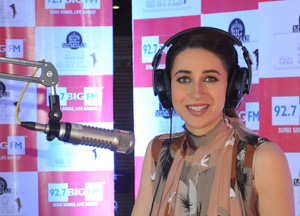
  • Karisma Kapoor debuts as RJ on 92.7 Big FM’s show

    By A Correspondent


    Actress Karisma Kapoor has taken on the mantle of an RJ with FM radio network 92.7 Big FM.

     

    On December 24, 2012 Ms Kapoor will debut as an RJ for a women-centric radio show called Big Memsaab. Through a specially conceptualized segment, ‘Big on Style’, she will play the role of a beauty and style guru who will share her expertise on fashion and trends. The segment will air on Big Memsaab every day between 11am and 12noon across 31 stations of the radio network.


    Apart from a multi-media marketing campaign across radio, television, outdoor, on ground and social media, contests will also be hosted on air, wherein lucky listeners from across the 31 cities stand to win a personalized grooming consultation with Ms Kapoor.


    Speaking about her association, Karisma Kapoor said, “Having worked in movies and television, I was extremely keen to try a new medium – so I decided to do radio. The Indian media scenario is constantly evolving and radio is the perfect medium for me to be closer to my fans than ever before. I am very excited about my radio debut on 92.7 Big FM’s afternoon show, Big Memsaab. I am confident that my fans will enjoy the show thoroughly and will continue to support me as I undertake this new journey.”


    Commenting on the occasion, Manav Dhanda, Network Programming Head, 92.7 Big FM, said, “Ms Kapoor makes a daily appointment with radio listeners, which is a pioneering move. The features of the show will be the first across media, which is very exciting. The format of the show, the pegs that we will touch upon and the innovations planned are what makes the show unique and appealed to her. Radio is a live medium and highly engaging allowing for direct interaction with crores of Indians and fans across the country for a celebrity.”


  • 94.3 My FM wins three awards

    By A Correspondent


    Harrish M Bhatia

    In an award-winning spree, radio station 94.3 My FM has bagged three major awards recently. It won the Asian Leadership Awards in Dubai, in the category ‘Radio Station of the Year’. It also won the award for ‘Brand excellence in Media & Entertainment’ category in the Global Awards for Brand Excellence organized by the World Brand Congress Awards in Mumbai. 94.3 My FM shared the award with SAB and Movies Now in the category.


    The station was also recognized for its new and innovative initiatives in the mobile application space. 94.3 My FM bagged the Best Mobile application in the media category award at the Mobbys Awards held recently in Mumbai. The mobile application from My FM which won the awards has unique integrated features for listeners to connect and engage with the station.  Features like My Connect allow users to go to their city-specific social media platforms. Other features include My Message where one can send a song request or contest participation SMS to My FM with a one-touch key and My Download where end users can download My FM tones as their mobile ringtones.


    “I am elated at the recent award wins and the industry recognition for the brand. It not only showcases the growing preference of the brand among its listeners but also strengthens our belief in the localized approach we take in the markets we operate in to reach out to our listeners. I would also like to thank my staff which has worked seamlessly for us to reach this level of excellence. With the recent award wins,  94.3 My FM has not only spelt out its brand pull but also the prominent position that it has taken in India’s radio market,” said Harrish M Bhatia, CEO, 94.3 My FM.


  • Let the (ratings) games re-begin!


    By A Correspondent


    After a brief two-month hiatus, the broadcast industry will be waiting with bated breath to lay their hands on the viewership data that will be released by TAM tomorrow – that is, December 19 2012. The day will be of utmost importance in the broadcasting fraternity as it marks the release of data post the digitization drive that transpired across four major metros and also for the fact that the industry expects new trends to emerge, something that was amiss when the analog world was largely in operation until October 31, 2012.


    Just to recap, TAM had stopped issuing ratings to the industry citing deferment. In wake of the phase-wise DAS implementation that was scheduled to take place across the four metros, the custodians of TAM Media Research – Advertisers (ISA), Media Agencies (AAAI) and TV Broadcasters (IBF) – had arrived at a joint consensus on the need to temporarily defer TAM TV Viewing data release for the All India market for a period of 9 Weeks starting Week 41 (October 7, 2012, Sunday) and ending Week 49 (December 8, 2012). This deferred data will now be released on December 19, 2012 along with data for Week 50 (December 9-15, 2012).


    LV Krishnan

    At a press conference last week, LV Krishnan, CEO, TAM Media, highlighted the progress that had been made so far post the switch to digitization by the four metros and what were the immediate trends that were showing up in the new universe. What was heartening to note was that most analog homes in Mumbai and Delhi had made the imperative switch to digital with Mumbai recording a 93 per cent conversion rate compared to Delhi that recorded an impressive 97 per cent. On the other hand, Kolkata witnessed only 70 per cent conversion from C&S homes to digital while Chennai recorded more abysmal figure of just 26 per cent homes that had moved on to digital.


    Emphasising on the new rating mechanism, Krishnan said that as per the advice of the CIC committee, TAM will not report homes in the DAS area that are not digital. This will lead to the universe also shrinking correspondingly. Thus while analogue data from Mumbai, Delhi and Kolkata will not be released, an exception will be made for Chennai where it will continue to report analogue data given the low conversion rate observed there. Krishnan added here that the Urban Agglomeration or non-municipal corporation areas in Mumbai that consist of Navi Mumbai, Thane, Dombivli, Kalyan etc will continue to release analog data as they would be liable for conversion when the second phase kicks in. Thus, going forward, the data that would be released will be reported at breaks of C&S 4+, NCS (Terrestrial), C&S Digital 4+ and C&S Analogue 4+ (for non-DAS areas).


    Among the few trends that were observed as a result of the digitization drive, Krishnan pointed out the move had been a boon for niche genres like English and kids entertainment that witnessed a spike in viewership (time spent) during this phase. He noted that about 60 percent of channels with a pre-DAS share between 0 and 0.5% gain in share had witnessed a 4 percent net share gain post digitization. This was not the case for larger market share channels that witnessed a slight reduction in the net share gain.


    In order to facilitate the ever-expanding universe size, TAM has said that it would be increasing its sample size by about 400 peoplemeter boxes in the Mumbai and Delhi markets starting from the first quarter of 2013. It has also decided to add another 250 peoplemeter boxes to centres such as Chennai, Hyderabad, Bangalore and Kolkata.


    While all systems are set for the December 19, 2012 release Krishnan stated that with digitization having set in it was important to be cautious when analysing data in this phase like for example taking averages, looking at trends, not cutting data too fine such as a particular half hour on a particular day, ensuring that sample sizes are sufficient etc. Asserting his gameplan for the future, Krishnan said that for Phase 2, TAM seeks to carry-forward the learnings and continue working with the committee to make it conducive and resourceful for the broadcast environment.


    MxMIndia spoke to a few members from the broadcast fraternity to see if not having data for two months made any difference to their survival and what would be their expectations from the new ratings that get released from December 19, 2012.


    Ajay Bhalwankar, Head- Content – Hindi GECs, ZEE

    “There is a myth about every Wednesday morning being a scary one….You won’t find us running helter-skelter every Wednesday. Ratings tell you what has been liked and what has not been liked but not what has to be done! So they are just a reference point. We have an internal meter which we follow to check whether our shows are creating magic or not. Initiatives on digital and social media brought us closer to our audiences. This internal judgement is important. I started my career in the ’90s and we had no ratings then for nearly eight years. So, ratings do not bother me.”


    Anand Chakravarthy, Business Head, BIG CBS Networks

    “Our issue with TAM has always been that the English entertainment genre has never been well represented. The fact is that the English entertainment speaking audiences are never fairly represented in the sample, due to which the data released is not quite comprehensive. As a network, we have never depended on numbers to sell; we’ve always talked about the quality of content and the quality of our offering which has been our strength. In fact we have always maintained that TAM data is not a yardstick for niche channels like the English entertainment channels because the sample size of TAM does not represent this audience well.


    Even with digitization happening, the question, is how well will the new sample represent households that watch English entertainment channels? There could be some amount of movement of market shares between genres as we know that some parts of metros are still not disconnected completely. Therefore the universe size may reduce in some markets that will lead to change in ratings from the larger genres to possibly the smaller genres. But the fundamental issue, does the TAM ratings represent the English entertainment genre well enough and does it have the right sample size and profile of people, the answer to that is no. It will continue to be a problem unless it is addressed very clearly and head-on. That’s an issue that needs to be addressed very quickly. We are working with TAM to see how we can better evolve the system so that the English entertainment space is represented well enough.”


    Nina Elavia Jaipuria, EVP & Biz Head – Sonic & Nickelodeon India

    “What happened was for the good of the industry because it was required that everybody come to a consensus and see that the data is sanitised thanks to the changing environment and that it would give us a better understanding of phase 2. So while life was disrupted for about 8 weeks, it was all for a good cause. But having said that, I also believe that TAM is the only currency that exists in this industry and therefore we did miss its release to some extent. But it was a minor hurdle and nothing major so as to change our lives drastically.


    As for the release of data once again from tomorrow, we have to see what the new TAM has in store for the industry. They must be having their hands full as of now but then there is a committee which is looking to sanitize data that gets released. With the digitization numbers already pouring in, we are eager to see the kind of trends that the kids entertainment genre has managed to throw up. I see content and marketing playing important roles as they will drive viewership to the genre. So I would wait to see what TAM has to offer and take that lesson to phase 2 of digitization. I am sure that TAM will keep themselves abreast of the sample size and formation based on the manner in which digitization gains acceptance. So the universe will also move accordingly and I am sure that TAM would have taken into account that factor. Whether it is SEC fragmentation or it is the universe movement, TAM surely would have taken all these things into account. Also, digitization will only help the industry in terms of it becoming more transparent and more measurable and the fact that the niche genres will have a better chance to survive.


    Also, it will become an environment where the reliance on ad-sales will witness a drop. It will not vanish completely but we will see more reliance on subscription, which will be a good thing. All this won’t happen overnight as only 4 metros have been included in phase 1, which will move to 38 other cities in phase 2 that will take another 4-6 months. But in the end the country will be digitized for good.


    From a qualitative perspective, we would like to see different slicing of data especially from a demographic and psychographic perspective in the kids’ genre. Traditionally we have been doing 4-14 yrs which is sliced 4-9 and 10-14 yrs and the more we look at kids today and the fact that they are becoming more dynamic today, there is a need to relook at the slicing by TAM.


    Ajay Trigunayat, CEO, English Entertainment Channels, Times Television Network

    We are of the view that it’s difficult to capture rapid macro-transitional changes:


    1. Analog >> Digital migration

    2. Panel Updation

    3. Change in SEC definition


    We certainly understand it’s a challenge to condense this transitional period but we are hopeful TAM will accurately reflect these changes soon.


  • Aaj Tak awarded CII Design Excellence Award

    By A Correspondent


    The ‘Aaj Tak font” from Aaj Tak, the Hindi news channel, has been announced the winner of the “Visual Communication award” at the CII Design Excellence Award in New Delhi. The award was presented by Confederation of Indian Industry (CII), which has been associated with Design Summit for the past 11 years.


    The font for Aaj Tak is designed to look strong, upright and with a little quirk of stubbornness for a channel that is stubborn to keep reporting the way things are and not package them in a ‘easy to digest’ form. The letterforms were designed as ‘open’ forms keeping in mind the small screen size which many Indian households still have. The design for ticker version was complex as it had to be used in small moving size.


    The CII Design Excellence award is the celebration of very best of Indian design over the past 24 months. It seeks to demonstrate the value of design to the Indian industry and will be a true acknowledgement of the prowess of Indian design, innovation and originality.


    Commenting on the achievement, Ashish Bagga, Group CEO, India Today Group said, “Congratulation to our design team for such a commendable job. Design plays an important role in differentiating our brand with the competition & making it stand out. Innovation has been core to our all our design and this award will motivate us to further enhance our capabilities.”


    The design award was presented to Aaj Tak on the first day of the summit in the overall category of visual communication.